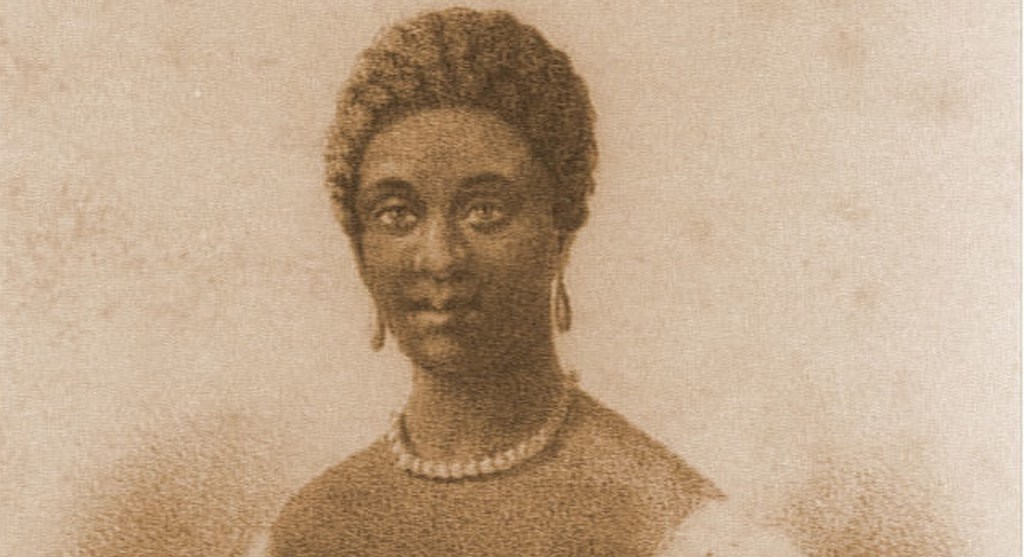
Image: Emily Dickinson – Amherst College – Daguerrotype of the poet at age 17, circa 1847 – likely the only authentic, extant likeness of the poet
Emily Dickinson’s “This was a Poet—It is That”
Emily Dickinson’s “This was a Poet—It is That” dramatizes the speaker’s perception and understanding of the poet as a mystical revealer of hidden reality.
Introduction and Text of “This was a Poet—It is That”
Emily Dickinson’s “This was a Poet—It is That” offers one of the poet’s clearest definitions of the poetic art and the role of the genuine poet. The speaker fashions a minimalist musing that reveals the poet’s ability to extract rare significance from ordinary experience and familiar objects.
Like many Dickinson poems, this lyric functions as a little philosophical drama. The speaker is not merely praising poets in general but is attempting to identify the mysterious process by which poetic vision transforms common reality into spiritual and artistic treasure.
The speaker’s insight aligns with the mystical intuition described in Paramahansa Yogananda’s teachings on intuition and soul perception, wherein the individual learns to perceive divine meaning hidden beneath material appearances. Dickinson’s speaker similarly insists that the poet sees beyond surfaces into enduring truth.
This was a Poet—It is That
This was a Poet—It is That Distills amazing sense From ordinary Meanings And Attar so immense
From the familiar species That perished by the Door We wonder it was not Ourselves Arrested it—before
Of Pictures, the Discloser The Poet—it is He Entitles Us—by Contrast To ceaseless Poverty
Of portion—so unconscious The Robbing—could not harm Himself—to Him—a Fortune Exterior—to Time
Commentary on “This was a Poet—It is That”
Emily Dickinson’s “This was a Poet—It is That” reveals the speaker’s conviction that the true poet transforms ordinary existence into spiritual wealth.
First Stanza: A Cryptic Announcement
This was a Poet—It is That Distills amazing sense From ordinary Meanings And Attar so immense
The speaker begins abruptly and somewhat cryptically by announcing, “This was a Poet—It is That.” The strange phrasing suggests that the poet cannot be defined through ordinary logical categories because poetic identity transcends temporal limitation.
Thus, the speaker is implying that the genuine poet remains perpetually alive through the continuing force of deep and universally significant poetic perception. Such awareness, of course, can only be spoken of as that of the soul because the physical encasement along with mental faculties remain mortal and pass away.
The speaker then offers one of Dickinson’s most remarkable metaphors, claiming that the poet “Distills amazing sense / From ordinary Meanings.” The verb “distills” invokes the careful extraction of essence from raw material, suggesting that poetry refines common experience into concentrated wisdom. Much as fragrance may be distilled from flowers, poetic insight may be distilled from commonplace events and objects.
The term “Attar” strengthens the image of spiritualized refinement because attar refers to concentrated perfume extracted from blossoms. The speaker implies that ordinary life contains hidden fragrance awaiting the poet’s transforming vision. Common reality may appear dull or repetitive to most observers, but the poet discovers within it rare beauty and significance.
This emphasis on intuition parallels the observations in my “Life Sketch of Emily Dickinson”, where Dickinson’s “active mind and mystical intuition” are identified as central to her poetic achievement.
The speaker’s claims also resemble Paramahansa Yogananda’s teaching that intuition perceives truth directly rather than through the senses. The poet’s task, therefore, becomes an act of revelation rather than simple description.
The speaker’s compact definition of poetry also reveals confidence in the permanence of art. If the poet can extract eternal fragrance from temporal experience, then poetry becomes capable of transcending ordinary decay. The poet preserves essence while physical forms perish.
Second Stanza: Addressing a Curious Blindness
From the familiar species That perished by the Door We wonder it was not Ourselves Arrested it—before
The speaker next turns attention toward the curious blindness of ordinary human perception. Familiar objects and experiences pass repeatedly “by the Door,” yet people fail to recognize their deeper significance until the poet reveals it.
The phrase “familiar species” broadens the reference beyond literal creatures to encompass all ordinary manifestations of earthly existence and even beyond earth life. Deep thinking human beings are wont to discern the likelihood of creations beyond their ken and that sentient beings no doubt abound on all levels of being.
The speaker suggests that meaningful realities have long existed directly before humanity, but most individuals remain too distracted or spiritually dull to apprehend them. Only after the poet arrests attention does the audience suddenly perceive what had always been present. The poet therefore acts as an awakener of dormant awareness.
The term “Arrested” becomes especially important because it implies both stopping and capturing. The poet halts the rushing stream of ordinary perception and compels observers to contemplate what they would otherwise overlook. Through poetic vision, fleeting reality becomes fixed long enough for contemplation.
The speaker also introduces a subtle element of self-reproach by wondering why “it was not Ourselves” who noticed these truths earlier. Human beings possess the capacity for insight, yet they often neglect to exercise it. The poet differs not by inhabiting a different universe but by seeing more deeply into the same universe others inhabit inattentively.
This notion resembles Dickinson’s frequent dramatization of hidden spiritual reality beneath ordinary appearances, as seen throughout my Dickinson commentaries. The speaker continually insists that profound truths surround humanity constantly. The tragedy lies not in absence of truth but in humanity’s failure to perceive it.
The stanza therefore elevates the poet into the rôle of spiritual intermediary. The poet does not invent reality but reveals its concealed dimensions. Such revelation becomes both artistic and sacred.
Third Stanza: Definition of a Poet
Of Pictures, the Discloser The Poet—it is He Entitles Us—by Contrast To ceaseless Poverty
The speaker now defines the poet as “Of Pictures, the Discloser.” The poet uncovers meanings embedded within the pictures and scenes of earthly existence. Nature, human experience, and imagination become symbolic landscapes through which deeper truths emerge.
The word “Discloser” emphasizes unveiling or revelation. The poet removes veils from perception, allowing readers to recognize riches previously hidden from them. Without the poet’s intervention, individuals remain spiritually impoverished because they fail to comprehend the significance of existence.
The speaker’s assertion that the poet “Entitles Us—by Contrast / To ceaseless Poverty” initially sounds paradoxical. Yet the speaker means that exposure to genuine poetry reveals how poor ordinary perception actually is. Once readers glimpse the poet’s elevated vision, they recognize the limitations of their former understanding.
The poet’s richness therefore illuminates the audience’s poverty by comparison. Still, this poverty is not merely negative because awareness of limitation may inspire spiritual and intellectual growth. The speaker is thus implying that poetry awakens aspiration toward higher consciousness.
Such aspiration resembles Yogananda’s insistence that human beings possess hidden divine capacities awaiting development through deeper awareness. The speaker similarly presents poetry as a means of expanding consciousness beyond material appearances. The poet becomes a guide toward subtler perception.
Dickinson’s speaker also demonstrates humility before poetic genius. The poet’s gift appears mysterious and virtually supernatural in origin. Ordinary language struggles to adequately define the magnitude of the poet’s visionary powers.
Fourth Stanza: What a Poet Possesses
Of portion—so unconscious The Robbing—could not harm Himself—to Him—a Fortune Exterior—to Time
In the final stanza, the speaker concludes that the poet possesses a “Fortune / Exterior—
to Time.” Unlike material wealth, poetic and spiritual riches cannot be diminished by temporal change or worldly theft. The poet’s treasure exists beyond ordinary limitation.
The speaker explains that the poet remains “so unconscious” of any robbery that such theft “could not harm.” Genuine poetic wealth derives from inward realization rather than external possession.
Because the poet’s riches arise from consciousness itself, they remain inaccessible to worldly corruption. (See my commentary on “I robbed the woods” for expansion of this concept.)
The speaker thus distinguishes between temporal and eternal value. Material fortunes decay, but spiritual and artistic insight survive beyond time’s destructive reach. The poet partakes of permanence precisely because poetic vision connects with enduring truth.
This conclusion harmonizes with the mystical strain running through many Dickinson poems and noted throughout my discussions of Dickinson’s spirituality. The speaker presents poetry as a vehicle for transcending material limitation and participating in immortal reality.
The poem finally stands as both tribute and testimony. The speaker honors the poet’s extraordinary powers while simultaneously revealing faith in the permanence of artistic and spiritual vision. Through poetry, ordinary life becomes transformed into enduring revelation.
Image: Emily Dickinson – Amherst College – Daguerrotype of the poet at age 17, circa 1847 – likely the only authentic, extant likeness of the poet
Emily Dickinson’s “I never lost as much but twice”
Emily Dickinson’s “I never lost as much but twice” dramatizes the speaker’s confrontation with devastating earthly loss and her anguished appeal to divine compensation.
Introduction and Text of “I never lost as much but twice”
Emily Dickinson’s “I never lost as much but twice” features one of the poet’s most compressed spiritual dramas. In only eight lines, the speaker moves from grief to restoration and then back again into deprivation, as she attempts to understand the mysterious machinations of the Divine.
The poem’s minimalist structure intensifies its emotional force, while its startling metaphors—“beggar,” “Burglar,” “Banker,” and “Father”—reveal a speaker wrestling with the paradox of God as both giver and taker.
I never lost as much but twice
I never lost as much but twice, And that was in the sod. Twice have I stood a beggar Before the door of God!
Angels – twice descending Reimbursed my store – Burglar! Banker – Father! I am poor once more!
Commentary on “I never lost as much but twice”
Emily Dickinson’s “I never lost as much but twice” portrays the speaker’s struggle to reconcile unbearable sorrow with faith in divine providence.
First Stanza: The Two-Fold Sorrow of Human Loss
I never lost as much but twice, And that was in the sod. Twice have I stood a beggar Before the door of God!
The speaker begins with a striking declaration that she has endured catastrophic loss only “twice,” and both occasions involved “the sod,” that ancient symbol for the grave and burial earth. Readers have often speculated that the losses refer to the deaths of loved ones, but the speaker wisely leaves the reference broad enough to encompass any profound bereavement. By refusing specificity, she elevates her suffering from the merely personal into a universal human condition.
The phrase “stood a beggar / Before the door of God” reveals a soul stripped of earthly confidence. The speaker no longer approaches the Divine as an equal child of Spirit but as one emptied by grief and compelled to plead for mercy.
The image recalls the teaching of Paramahansa Yogananda, which cautions against approaching God in spiritual beggary, insisting instead that the soul possesses a divine inheritance. Dickinson’s speaker, however, dramatizes the raw emotional reality that grief often reduces even strong souls to desperation.
The tension between earthly sorrow and spiritual assurance appears frequently in Dickinson’s poetry. In additional commentaries on Dickinson poems, I reveal that her speakers are often in the process of confronting the distance between mortal experience and eternal truth. This speaker occupies precisely that threshold, poised between despair and faith, unable to relinquish either one.
The exclamation point concluding the fourth line intensifies the speaker’s emotional urgency. She does not quietly petition heaven; she cries out from the depths of deprivation. Yet even in anguish, she stands “before the door of God,” not outside divine awareness altogether.
This image clearly indicates that despite suffering, the speaker still believes the Divine Presence remains accessible. The stanza also demonstrates Dickinson’s genius for compression and minimalism. In four brief lines, the speaker moves from memory to theological speculation and then from graveyard imagery to metaphysical yearning.
The emotional trajectory resembles Paramahansa Yogananda’s teaching from his talk Removing All Sorrow and Suffering that human beings seek release from suffering by lifting consciousness toward divine awareness. Dickinson’s speaker has not yet transcended grief, but she instinctively turns toward the Divine as the only possible source of restoration.
Second Stanza: Facing Loss a Third Time?
Angels – twice descending Reimbursed my store – Burglar! Banker – Father! I am poor once more!
The second stanza shifts dramatically from deprivation to restoration. The speaker reports that “Angels” descended twice and “reimbursed” her losses, suggesting moments of spiritual consolation or renewed blessings after earlier grief.
The financial language of “reimbursed my store” transforms emotional recovery into an economic transaction, as though heaven keeps careful accounts of human suffering. Yet the restoration proves temporary.
The astonishing line “Burglar! Banker – Father!” presents the Divine through three contradictory metaphors. God becomes simultaneously the thief who removes blessings, the banker who restores them, and the loving father who presides over both actions. Dickinson’s speaker refuses sentimental religion; instead, she confronts the terrifying mystery of a God who both wounds and heals.
The emotional complexity of this address resembles the spiritual paradox explored in Paramahansa Yogananda’s talk Awake in the Cosmic Dream, where the great Guru explains that worldly conditions continually shift while God alone remains permanent reality. Dickinson’s speaker suffers precisely because earthly attachments are unstable. Every restored joy remains vulnerable to removal, leaving the soul “poor once more.”
The final declaration carries tremendous emotional weight because the speaker offers no resistance or argument after naming God as “Father.” Despite bewilderment and pain, she still recognizes divine parentage.
Her faith survives, though stripped of comfort and certainty. The speaker’s endurance reflects Dickinson’s recurring fascination with the soul’s ability to continue seeking meaning even after repeated disappointment.
The repeated emphasis on poverty also deepens the poem’s spiritual resonance. Material poverty often signifies lack of worldly goods, but Dickinson transforms it into a symbol of emotional and spiritual depletion. Yet mystical traditions frequently teach that emptiness prepares the soul for greater realization.
Paramahansa Yogananda revealed in his writings on “Meditation & Kriya Yoga” that lasting peace arises only when one discovers inward communion beyond external conditions. Dickinson’s speaker has not yet achieved such peace, but her anguish pushes her toward that realization.
By ending the poem with “I am poor once more!” the speaker leaves readers suspended between despair and revelation. The line may sound tragic, yet it also suggests spiritual awakening through repeated loss.
Earthly possessions, relationships, and consolations vanish, but the soul’s dialogue with the Divine continues. Dickinson’s speaker therefore transforms grief into a profound metaphysical/mystical inquiry, revealing that suffering often becomes the doorway through which the soul most intensely seeks God.
Image: Emily Dickinson – Amherst College – Daguerrotype of the poet at age 17, circa 1847 – likely the only authentic, extant likeness of the poet
Emily Dickinson’s “Once more, my now bewildered Dove”
Emily Dickinson’s “Once more, my now bewildered Dove” dramatizes the soul’s anxious search for spiritual certainty while maintaining courageous hope amid uncertainty and isolation.
Introduction and Text of “Once more, my now bewildered Dove”
Emily Dickinson’s “Once more, my now bewildered Dove” employs a minimalist two-stanza structure to portray the soul’s repeated attempts to discover assurance in a troubled world. The speaker draws upon the biblical story of Noah’s dove to symbolize the restless human heart seeking divine confirmation and spiritual refuge.
As Paramahansa Yogananda taught, “The nature of Spirit is joy; and the nature of your soul is joy.” The speaker’s dove dramatizes that same longing for safe spiritual harbor within the storms of earthly uncertainty.
Once more, my now bewildered Dove
Once more, my now bewildered Dove Bestirs her puzzled wings Once more her mistress, on the deep Her troubled question flings –
Thrice to the floating casement The Patriarch’s bird returned, Courage! My brave Columba! There may yet be Land!
Commentary on “Once more, my now bewildered Dove”
Emily Dickinson’s “Once more, my now bewildered Dove” reveals the speaker’s spiritual resilience as she dramatizes the soul’s persistent search for divine certainty.
First Stanza: Soul as Bird
Once more, my now bewildered Dove Bestirs her puzzled wings Once more her mistress, on the deep Her troubled question flings –
In the first stanza, the speaker immediately introduces the symbolic “Dove,” a creature long associated with peace, innocence, and spiritual aspiration. Yet this dove appears “bewildered,” suggesting that the soul has encountered confusion while navigating the uncertainties of earthly existence.
The speaker’s use of “Once more” emphasizes repetition, implying that this struggle between doubt and faith recurs continually throughout human life. The dove’s “puzzled wings” suggest not only physical movement but also mental and spiritual agitation.
The soul desires elevation and freedom, yet uncertainty hampers its flight. In many Dickinson poems, the speaker dramatizes the soul as yearning to transcend earthly limitation, while simultaneously confronting the painful obscurity that veils spiritual truth from ordinary human perception.
The phrase “her mistress” identifies the speaker herself as the guiding consciousness behind the dove. The soul and the human personality remain intertwined, even while the personality attempts to direct the soul toward revelation.
The speaker’s “troubled question” cast “on the deep” suggests prayer, meditation, or inward spiritual inquiry hurled into the mysterious abyss of existence. The “deep” carries biblical and mystical implications.
The term evokes the vast floodwaters of Genesis while also symbolizing the unknowable dimensions of divine reality. As in many Dickinson riddles, the speaker refuses to explain fully the exact nature of the “question,” allowing readers to intuit the soul’s universal anxieties concerning meaning, permanence, and salvation.
The speaker’s dramatization resembles concepts frequently emphasized by Paramahansa Yogananda, who taught that the human heart continually seeks reassurance of divine presence amid worldly confusion.
The speaker’s symbolism also recalls observations from my earlier Dickinson commentaries at Linda’s Literary Home regarding the poet’s tendency to dramatize the inner life through compressed metaphysical imagery.
Rather than offering abstract philosophical assertions, the speaker embodies spiritual tension through vivid symbolic action. The fluttering dove becomes the visible representation of invisible yearning.
The stanza’s emotional force arises from the balance between uncertainty and persistence. Although the dove remains bewildered, she nevertheless “bestirs” her wings again. The speaker thus suggests that genuine spiritual seeking requires repeated effort despite the absence of immediate answers or comforting certainties.
Second Stanza: Allusion of Searching
Thrice to the floating casement The Patriarch’s bird returned, Courage! My brave Columba! There may yet be Land!
In the second stanza, the speaker introduces a direct biblical allusion to Noah’s ark. The “Patriarch’s bird” refers to the dove Noah released repeatedly after the floodwaters had submerged the earth. By invoking this familiar narrative, the speaker expands her private spiritual anxiety into a universal drama of humanity searching for signs of divine mercy and renewed stability.
The word “Thrice” carries symbolic significance, often suggesting spiritual completion or sacred persistence. Noah’s dove returned multiple times before finally discovering evidence of dry land. Likewise, the speaker implies that the soul may endure repeated disappointments before attaining spiritual assurance. The repeated return of the bird dramatizes patience rather than failure.
The “floating casement” offers an especially striking image. The ark’s window becomes both a literal opening and a symbolic threshold between fear and hope. The dove repeatedly departs from temporary safety into uncertain vastness, only to return again. Such movement reflects the soul’s oscillation between doubt and renewed aspiration.
The speaker’s cry, “Courage! My brave Columba!,” introduces sudden tenderness and encouragement. “Columba,” the Latin word for dove, heightens the spiritual dignity of the bird while lending the poem a liturgical tone. At the same time, the term subtly echoes the name “Columbus,” invoking the great explorer who crossed unknown seas searching for a new world.
That layered allusion enriches the poem’s central drama of spiritual searching. Like Columbus navigating dangerous and uncharted waters, the speaker’s symbolic dove ventures repeatedly into uncertainty, guided largely by intuition and hope rather than visible proof. The soul becomes both sacred dove and courageous explorer, willing to risk bewilderment in pursuit of discovery.
The speaker addresses the soul compassionately, recognizing both its exhaustion and its bravery in continuing the search. The exclamation “Courage!” therefore functions not merely as comfort but as a rallying cry urging the soul onward despite repeated returns without final resolution.
Dickinson’s speaker suggests that spiritual discovery, like earthly exploration, demands perseverance through vast stretches of apparent emptiness before glimpsing the longed-for italics-emphasized “Land.”
The concluding line, “There may yet be Land!” preserves uncertainty while simultaneously affirming hope. The speaker does not proclaim certainty that land exists; instead, she emphasizes the possibility of deliverance. Dickinson’s speakers often value the sustaining power of hope itself, even when ultimate knowledge remains inaccessible.
The great Guru Yogananda frequently stressed that spiritual realization demands steadfastness amid periods of apparent silence or darkness. He taught that the devotee must continue seeking divine truth even when external evidence seems absent. The speaker’s encouragement to the “brave Columba” echoes that same spiritual endurance and refusal to surrender to despair.
The poem’s final affirmation remains intentionally restrained. The speaker avoids triumphant certainty and instead offers courageous possibility. Such restraint strengthens the poem’s spiritual realism, for authentic faith often survives not through guaranteed answers but through the willingness to continue searching despite bewilderment.
Like many Dickinson lyrics, this compact poem transforms a brief symbolic scene into a profound musing on the soul’s inward pilgrimage. The dove’s repeated flight over uncertain waters becomes the enduring emblem of humanity’s determination to seek truth, peace, and divine refuge even while surrounded by mystery.
Image: Emily Dickinson – Amherst College – Daguerrotype of the poet at age 17, circa 1847 – likely the only authentic, extant likeness of the poet
Emily Dickinson’s “Heart! We will forget him!”
Emily Dickinson’s “Heart! We will forget him!” dramatizes the struggle between emotional attachment and disciplined resolve as the speaker attempts to command memory itself into silence.
Introduction and Text of “Heart! We will forget him!”
Emily Dickinson’s “Heart! We will forget him!” consists of two minimalist quatrains in which the speaker stages an internal dialogue between reason and emotion. The little drama reveals how difficult it becomes for the human heart to surrender attachment once affection and memory have become intertwined.
As in many Dickinsonian poems, the speaker compresses profound psychological and spiritual conflict into deceptively simple language.
Heart! We will forget him!
Heart! We will forget him! You and I – tonight! You may forget the warmth he gave – I will forget the light!
When you have done, pray tell me That I may straight begin! Haste! lest while you’re lagging I remember him!
Reading
Commentary on “Heart! We will forget him!”
Emily Dickinson’s “Heart! We will forget him!” reveals a speaker attempting to discipline the emotions through force of will while recognizing the nearly impossible task of erasing genuine affection.
First Stanza: Determination
Heart! We will forget him! You and I – tonight! You may forget the warmth he gave– I will forget the light!
The speaker begins abruptly with an exclamation addressed to her own “Heart!” The command sounds forceful and immediate, as though she fears hesitation will weaken her resolve. By pairing herself with her heart—“You and I”—the speaker divides the personality into reasoning consciousness and emotional memory, creating a tiny internal drama that exposes the divided nature of human awareness.
The declaration “tonight!” intensifies the urgency. The speaker seems to believe that forgetting must occur instantly or not at all. Yet even within the command lies evidence that forgetting cannot be simple, because the speaker must persuade her own heart rather than merely dismiss the beloved naturally.
The distinction between “warmth” and “light” deepens the poem’s symbolic resonance. Warmth suggests emotional comfort and earthly affection, while “light” implies inspirational guidance, or spiritual illumination. The speaker thus admits that the lost beloved affected not merely her feelings but also her inner vision and consciousness.
The speaker’s attempt to divide emotional and intellectual remembrance recalls Paramahansa Yogananda’s teaching that attachment clouds spiritual freedom. In Self-Realization Fellowship’s discussion of transcending suffering, the great Guru explains that suffering persists when consciousness remains chained to outward conditions instead of anchored in Divine Reality.
Dickinson’s speaker, however, remains suspended between attachment and liberation; she longs to forget but still treasures the very memories she condemns.
The speaker’s language also resembles the yogic injunction cited in my own sonnet sequence “Forget the Past”: A 10-Sonnet Sequence: “Forget the past. The vanished lives of all men are dark with many shames.”
Yet Dickinson’s speaker demonstrates how difficult that command becomes when memory carries emotional radiance instead of mere regret. The beloved’s “light” still shines in the speaker’s awareness even as she attempts to extinguish it.
The stanza’s brevity heightens the emotional pressure. No explanatory details about the relationship appear because the speaker focuses entirely on the inward struggle. Dickinson’s characteristic minimalist compression permits each word—“Heart,” “warmth,” “light”—to resonate beyond literal meaning into emotional and metaphysical suggestion.
Second Stanza: Keeping the Vow
When you have done, pray tell me That I may straight begin! Haste! lest while you’re lagging I remember him!
In the second stanza, the speaker’s confident command begins to unravel. She now admits that the heart must complete its forgetting before the conscious mind can even “begin.” The reversal subtly reveals that emotion governs memory more powerfully than rational intention.
The word “pray” introduces an almost desperate tone. Although still addressing her own heart, the speaker sounds less commanding and more pleading. Her urgency increases in “Haste!” because she recognizes that delay threatens the fragile vow she has attempted to establish.
Ironically, the speaker’s fear of remembering guarantees remembrance. Even while commanding forgetfulness, she continues repeating “him,” thus preserving the beloved through language itself. Dickinson frequently constructs such paradoxes, allowing the speaker’s effort to deny emotion to become proof of emotion’s endurance.
The phrase “while you’re lagging” personifies the heart as stubborn and reluctant. The speaker understands that emotional attachment cannot simply obey intellectual decree. The human heart retains impressions long after the rational mind wishes to dismiss them.
This tension resembles teachings found in “The Soul’s Nature Is Love” from Self-Realization Fellowship, where love is described as intrinsic to the soul itself. Dickinson’s speaker demonstrates that affection cannot easily be erased because genuine feeling leaves permanent impressions upon consciousness. The poem therefore becomes not merely a rejection of earthly attachment but also a revelation of love’s persistence.
A similar emotional undercurrent appears in my original poem “Between Us Is a Whirlwind”, where separated lovers remain psychologically bound despite physical distance. Dickinson’s speaker likewise discovers that inner attachment survives outward separation. The heart continues moving toward remembrance even while the intellect commands retreat.
The final line lands with remarkable subtlety. “I remember him!” sounds almost involuntary, as though memory has overtaken the speaker before the sentence can finish.
The poem closes not with successful forgetting but with the triumph of emotional recollection. Dickinson’s speaker ultimately reveals that the heart obeys its own mysterious laws, and memory itself becomes a testament to the enduring power of love—whether human or divine.
Image: Emily Dickinson – Amherst College – Daguerrotype of the poet at age 17, circa 1847 – likely the only authentic, extant likeness of the poet
Emily Dickinson’s “So has a Daisy vanished”
The speaker in Emily Dickinson’s “So has a Daisy vanished” wonders if the dead Daisy and other departing plant creatures of the field have gone off to be “with God.”
Introduction and Text of “So has a Daisy vanished”
The speaker of Emily Dickinson’s “So has a Daisy vanished,” who has a keen ability to observe her natural surroundings, has been moved to wonder about the soul of “a Daisy” and many other “slipper[s]” who have given up their physical encasements of beautiful blooms and glorious green stems and simply vanished. She wonders where they went, as she dramatizes their final days of earthly glory.
So has a Daisy vanished
So has a Daisy vanished From the fields today – So tiptoed many a slipper To Paradise away –
Oozed so in crimson bubbles Day’s departing tide – Blooming – tripping – flowing Are ye then with God?
Commentary on “So has a Daisy vanished”
The speaker in this brief drama wonders if the dead Daisy and other departing plant creatures of the field have gone off to be “with God.”
First Stanza: A Flower in Heaven
So has a Daisy vanished From the fields today – So tiptoed many a slipper To Paradise away –
The speaker begins with a statement informing her readers and listeners that a lovely flower has gone, disappeared “from the fields today.” She begins with the conjunctive adverb “so,” seeming to indicate that she is merely taking up a thought that began somewhere else and at an earlier interval.
Then again employing the telling “so,” the speaker adds that many other flowers have also tripped off to “Paradise.” Along with the lovely “Daisy,” the other “slipper[s]” have all gone missing, but the speaker suggests that they have metaphorically died and gone to Heaven. While the “Daisy” has rather generically “vanished,” the others have “tiptoed” off “to Paradise.”
The speaker is playing with the language of loss, which almost always produces a melancholy in the very sensitive hearts of keen observers. Instead of merely dying, the flowers vanish from the fields and tiptoe away.
That they all have metaphorically gone on to “Paradise” demonstrates that the faith and courage of the sensitive heart of this deep observer are fully operational. That the speaker allows that these creatures of nature have gone to Heaven or Paradise shows that she has a firm grasp on the existence of the soul as a permanent life force that plants as well as animals possess.
This speaker understands that all life is divinely endowed. The flowers leave behind their physical encasements, but they take their soul encasement and then scurry off to the astral world, from where they will likely return to the Earth or some other planet to continue working out their karma–an eventuality that informs the procedure for the animal kingdom as well.
Second Stanza: To Be with the Divine Creator
Oozed so in crimson bubbles Day’s departing tide – Blooming – tripping – flowing Are ye then with God?
While the speaker remains aware that plant life force is as eternal as that of the animal kingdom, she is not so sure about where each individual plant goes after its demise. Thus she wonders if they are “with God.”
Likely influenced by the Christian concepts of Heaven and Hell, the speaker no doubt wonders if plant behavior while on Earth may require a reckoning that leads to Heaven or Hell. That she asks in the more affirmative mood demonstrates her optimistic sensitivity.
Paramahansa Yogananda has likened life on Earth to vanishing bubbles. He has explained that many deep thinking philosophers, sages, and poets have realized that the things of this world are like bubbles in the ocean; those individual things such as stars, flowers, animals, and people suddenly appear, experience a life only for a brief period of time, and then they disappear as swiftly as they appeared.
In his poem, “Vanishing Bubbles,” the great yogi dramatizes that brief earthly sojourn of the myriad life forms, as he unearths the solution for those sensitive minds and hearts that grieve after the loss of those individuals whom they had loved and who yet must vanish like bubbles.
And that solution is the simple knowledge that although the physical encasement of each individual has indeed vanished, the soul of each individual continues to exist; therefore, there is no actual vanishing or death.
The speaker in Dickinson’s poem is suggesting that she is aware of the eternal, everlasting nature of the soul. After the lovely bloom has been maneuvered into the world on “crimson bubbles,” it will live its brief life, prancing about with the breeze, and then with the “departing tide,” its day will come to an end, but only for its physical encasement, which it will leave behind.
The speaker knows that its soul–its life force–will continue, and she wonders if those souls of all those lovely flowers she has been enjoying will then be “with God.” That she would ask hints that she believes the answer is yes.
Image:The Pacific Ocean – Encinitas, CA – Photo by Ron Grimes
Without the Waves
I exist without the cosmic shadow, But it could not live bereft of me; As the sea exists without the waves, But they breathe not without the sea.
—from “Samadhi” by Paramahansa Yogananda
“Be still, and know that I am God.” — from Psalm 46:10
In Memoriam: Bill Craig August 8, 1954 — February 6, 2025
Without the waves——I exist only as boundless sea. God’s boundless love has stemmed the tide. God’s bliss is mine——deep, wide, eternally free.
No more hemmed round in time, space, and memory, My soul will now and always in sacred Light abide. Without the waves——I exist only as boundless sea.
Satan’s veil is shed——my soul’s eye now can see Only holy Light no shadow can ever hide. God’s bliss is mine——deep, wide, eternally free.
My soul unborn of flesh, not changed through history— Like Christ I stand up to the trial that would divide. Without the waves——I exist only as boundless sea.
I listen only to angelic voices singing to me. Lesser music has vanished——noise has died. God’s bliss is mine——deep, wide, eternally free.
I take no thought for I live in celestial unity—— From former failures no need to hide. Without the waves——I exist only as boundless sea. God’s bliss is mine——deep, wide, eternally free.
Lenore’s most dreaded chore was picking up pop bottles. She had to tote a heavy pop crate while collecting the pop bottles from around the ponds. She trembled in fear while negotiating the sloping side of the pond because she could not swim . . .
Fiction Alert! This story is fiction. It does not depict any real person or actual event.
Lenore’s Dreaded Chore
Lenore Ellen Thompson spent her childhood at end of a long dirt road, where her family owned and operated pay fishing lakes—Thompson’s Ponds, later renamed Heavenly Lakes. The fellows who came fishing would get mighty thirsty, so the Thompson’s sold soda pop and other snacks in their concession stand that they nicknamed “The Shanty.”
Back then in the late 1950s and early 1960s, the pop was sold in 12 ounce returnable bottles, but the fishers would not bring back their bottles to “The Shanty.” Instead they simply threw them on the ground around the ponds, and Lenore would have to go out and gather them up, so they could return them to the Pop Man, who came every Saturday to deliver fresh bottles of pop from his big pop truck.
To gather up the pop bottles, Lenore would carry a pop crate that held about 20 or so bottles. She was always fearful when negotiating the sloping side of the ponds because she could not swim, and her inability to swim accounted for the reason that she feared picking up bottles on the sloping sides of the lakes. Sometimes she would pick them up around the level sides and just not bother with the sloping side.
But when she did that, her father would tell her she was lazy for not finishing her task, so to avoid being upbraided by her father, she determined to finish her task regardless of her safety. After a weekend of fairly heavy business, the Monday, June 17, 1957, at approximately 9 a.m., Lenore was hauling the pop crate along the sloping side of the Big Pond, as the family referred to the bigger pond back then. The other one was the Little Pond, naturally.
It had rained the night before and the ground was slippery with mud. There was only one person fishing in the lake, a very thin woman who was casting her line out and reeling in and casting out and reeling in, more as if she were practicing than fishing. As Lenore stepped down and reached out to retrieve a bottle from near the edge of the water, she slipped and went tumbling into the water. The pop crate tumbled in after her hitting her on the leg. She panicked, she could not feel the bottom of the lake under her feet, so she panicked some more.
Suddenly, her lungs felt as though they were going to burst. All at once, she realized that she was breathing under water, and she was shocked! She wondered how she would tell her mom and dad that she could breathe under water.
A Bizarre Thing Happened
But then a most bizarre thing happened. She lunged up out of the water, hovered over it, and then looked around for what to do next. She saw the woman, who was sitting in an odd position, cross-legged, on the hard ground, not moving, just staring off into space. It seemed that Lenore saw the woman open her brain and ask Lenore to enter it.
She did what the thin woman requested, and then after what must have been only seconds, Lenore realized that she no longer had the body of an eleven-year-old, but that of a woman who must have been in her thirties. Lenore got up and walked into a clump of trees up the sloping side of the pond. She sat down to decide what to do. She closed her eyes and began to pray.
Although she had never really prayed before, she couldn’t think of anything else to do, so she prayed for God or Someone or Something to tell her what to do. She knew she could not live as this woman—Lenore was still only eleven-years-old. What could she do? Lenore was guided to think hard about what she used to look like, and so she did that thinking for several minutes as hard as she could. Slowly, she could feel her body changing. She looked down at the hands; they were her hands.
The legs were her legs, and the arms her arms. She wondered if the face was her face, so she went down to the water’s edge and looked in and saw that, indeed, it was the face of eleven-year-old Lenore Ellen Thompson.
And she saw something that stunned her more than she had ever been stunned before: she saw her former body in the water. She was starting to panic again—this time not because of not being able to swim, because she knew that if she fell into the water now, she would be able to swim.
What if They Find the Body?
Lenore tried to figure what she would do when people find that body. Everybody knows that she is not twins. She searched for a long tree branch and shoved the body deeper into the water. Luckily, it finally disappeared so no one could see it from the bank, and she reasoned that because she was very much alive, no one would ever bother to look. She sat for a few moments trying to calm herself and figure what to do next.
She had been gone for what seemed a long time, and she knew her mother would begin to worry if she didn’t get back to the house soon. Then it hit her that she had that woman’s clothes on. They were so tight that she could barely breathe.
The woman, whose body she now inhabited, had been a very thin woman, and Lenore was a rather chubby girl. And she realized that her mother would know that those clothes were not Lenore’s shorts and top. She had to get into the house without her mother seeing her and get some of her own clothes.
So she sneaked up the hillside and waited until her mother came outside. Fortunately, her mother came out and went to the garden to pull weeds. Lenore ran as fast as she could, bounded into the house, changed her clothes, bundled up the thin woman’s clothes and then started to panic again.
What could she do with those clothes? Her mother would know that these were not hers. She looked out the window and saw that her mother had moved to the very far end of the garden, and thus could not see Lenore if she went outside.
Lenore thought at first that she could burn the clothes in a trash barrel drum that they were using to burn trash. But then she would have to account for the fire. The trash barrel was just a few yards away from their outdoor john, (they still had no indoor plumbing back then), and she got the idea to just toss them in the john, and that’s what she did.
It didn’t occur to her that anyone would look down into the excrement hard enough to recognize a pair of shorts and a blouse. But later that night, her father started complaining about the fishermen using their private toilet. He said somebody had put some clothes down in it. That’s all though. He and Lenore’s mother just thought that some fisherman had tossed those clothes down there. Luck was on Lenore’s side again.
Who Was That Woman?
Things settled down for Lenore Ellen Thompson over the next few days, months, years—at times, she wondered if that body would ever be discovered. But what bothered her most was, who was that woman who gave up her body for Lenore? Every time Lenore would hear of a woman missing, she wondered if it were that thin woman until she’d find out some fact that made it impossible.
For example, a woman in Eaton, Ohio, went missing, but they found her body later in Dayton in a hotel room, where she had committed suicide. Over the years, this fear finally faded. After earning her culinary certificate in Cooking Arts at the Culinary Institute in Rhode Island, Lenore married the chef Christopher Evanston.
They worked together in vegetarian restaurants in Chicago, Miami, and finally Encinitas, where they settled down to raise their two sons, Eliot and William. In her early thirties, Lenore encountered the teachings of Vedanta from which she learned some astounding concepts which gave her great comfort—like reincarnation and karma and how each human being is responsible for his/her own salvation.
According to those teachings, if we have led a life that has caused us great pain, we can change it, and follow a pathway that leads us to happiness in the future. And the heart of these teaching is meditation, which calms the body and mind, allowing the soul to find itself.
Discovering that each human body has a soul was a defining moment in the life of Lenore Ellen Thompson because she could now understand that it was her soul that left that body that day and entered the body of the thin woman. Who was the thin woman? Lenore still did not know.
But she thought that the woman was just an astral being used by the Divine Creator to allow Lenore to continue to live out her life. Also what the woman did for Lenore give her an experience base that would allow her to identify with the teachings of Vedanta—no one else in her family ever had such an experience base.
No one ever turned up missing who fit the thin woman’s description. And no one had bought a ticket to fish that morning that Lenore drowned while picking up pop bottles. No one saw the thin woman except Lenore.
Strange Teachings
Vedanta explains that vagrant souls exist and try to enter bodies of people who allow their minds to remain blank. At some point during Lenore’s death state, she became something like a vagrant soul. And the thin woman was waiting for Lenore to take over her body. Lenore comforted herself knowing that the thin woman invited her to do that; Lenore did not merely abscond with the woman’s physical encasement.
Lenore didn’t even know how she did it. It was as if forces were moving her and connecting her without much of her awareness. Lenore was guided to place her attention between her eyes and let the forces do the rest. Vedanta also explains that intense prayer can change the physical body. And at the time of her death and entry into that woman’s body, Lenore prayed with an intensity that she had never before or after experienced.
The Thin Woman Revisits
Despite her bizarre drowning death and rebirth, Lenore lived a fairly ordinary life. She was content in her marriage, motherhood, and loved working with her husband cooking in vegetarian restaurants. Both sons entered monastic life in the ashrams of Paramahansa Yogananda, and Lenore whole-heartedly approved of her sons’ life choices.
Lenore’s soul left its body with finality June 17, 2057, at 9:00 a.m.—exactly one hundred years after the bizarre drowning. Both sons were at her side as she slipped out of her physical encasement. Her belovèd husband had passed only days before. As she was entering the astral realm, Lenore was permitted a brief visitation with her belovèd husband and with several friends from her meditation group.
Then she saw a brilliant light that slowly formed itself into the image of the thin woman, who had offered Lenore her body that day by the Big Pond. The thin woman then welcomed Lenore’s soul to the astral world, where she continues on her journey back to the Infinite.
The speaker in Phillis Wheatley’s “On Virtue” is describing the characteristics of that quality, as she supplicates to the heavenly realms to enrich and enliven her creative ability to produce useful, genuine, and delightful poems.
Introduction and Text of “On Virtue”
Phillis Wheatley’s “On Virtue” creates a speaker who is paying tribute to the coveted life goal of virtue or the characteristic that results from righteousness, integrity, and dedication to the truth. Virtue takes its substance from behavior, that is, right behavior.
The virtuous are those who conduct their life in ways that contribute to freedom, prosperity, peace, and calmness of community. Without a plurality of virtuous folks, a community breaks down, becomes unlivable, causing the virtuous to flee.
The speaker is personifying the quality of virtue, invoking its essential quality to lend its powers to her, and especially to her ability to create her art: she wishes to create “a nobler lay.” Thus, after offering a colorful description of the behavior of “virtue,” the speaker offers a supplication, almost a prayer, that virtue visit her and direct her abilities.
On Virtue
O Thou bright jewel in my aim I strive To comprehend thee. Thine own words declare Wisdom is higher than a fool can reach. I cease to wonder, and no more attempt Thine height t’explore, or fathom thy profound. But, O my soul, sink not into despair, Virtue is near thee, and with gentle hand Would now embrace thee, hovers o’er thine head. Fain would the heav’n-born soul with her converse, Then seek, then court her for her promis’d bliss.
Auspicious queen, thine heav’nly pinions spread, And lead celestial Chastity along; Lo! now her sacred retinue descends, Array’d in glory from the orbs above. Attend me, Virtue, thro’ my youthful years! O leave me not to the false joys of time! But guide my steps to endless life and bliss. Greatness, or Goodness, say what I shall call thee, To give an higher appellation still, Teach me a better strain, a nobler lay, O thou, enthron’d with Cherubs in the realms of day!
Commentary on “On Virtue”
The speaker is Phillis Wheatley’s “On Virtue” is describing the qualities of virtue. As she muses upon the nature of that outstanding quality, she hopes not only to understand it better but also that it will assist her in creating her poems and songs.
First Stanza: A Valued Quality
O Thou bright jewel in my aim I strive To comprehend thee. Thine own words declare Wisdom is higher than a fool can reach. I cease to wonder, and no more attempt Thine height t’explore, or fathom thy profound. But, O my soul, sink not into despair, Virtue is near thee, and with gentle hand Would now embrace thee, hovers o’er thine head. Fain would the heav’n-born soul with her converse, Then seek, then court her for her promis’d bliss
The speaker begins by addressing her subject as “bright jewel.” This appellation demonstrates the value that the speaker is placing on her subject, virtue. To her, virtue is like a precious stone that is bright, thus, cheerful. She expresses the wish to understand exactly what “virtue” is. Virtue’s own synonyms demonstrate that the status of “wisdom” remains out of reach for the “fool.”
The speaker then confesses that she will stop musing and trying to examine a quality that remains at such a height and depth that it seems impossible for her to attain. Then the prospect that her soul might sink into despair at abandoning that quality gives rise to her command to her soul not to “sink . . . into despair.”
While she may not become one with virtue, that quality remains “near” her. Also, the “gentle hand” of that quality will continue to “embrace” the speaker. And it will continue to protect her as it “hovers o’er thine head.”
The soul gladly seeks to attain virtue, for that force is “heav’n-born.” The soul wishes to hold court with virtue, and it will seek to do so. And the soul will continue to pursue that quality in order to reach its goal of “bliss”—promised by all great spiritual leaders and avatars.
Second Stanza: A Supplication for Guidance
Auspicious queen, thine heav’nly pinions spread, And lead celestial Chastity along; Lo! now her sacred retinue descends, Array’’d in glory from the orbs above. Attend me, Virtue, thro’ my youthful years! O leave me not to the false joys of time! But guide my steps to endless life and bliss. Greatness, or Goodness, say what I shall call thee, To give an higher appellation still, Teach me a better strain, a nobler lay, O thou, enthron’d with Cherubs in the realms of day!
The speaker then addresses the quality of virtue as “[a]uspicious queen,” again sending the status of that quality into the higher realms, such as royalty. But this special queen possesses wings like an angel, and those wings not only fan out but also motivate the quality of “Chastity,” the state of purity that those seeking virtue gladly embrace.
The speaker begins describing the movement of that “auspicious queen,” as her “retinue” moves downward dressed in “glory” that belongs to the heavenly realm above it. She then commands “Virtue” to listen to her cries for guidance for her young soul during her maturing years.
She then requests that virtue not allow her to remain in the “false joys of time”—a supplication reminiscent of “lead us not into temptation but deliver us from evil” (Matthew 6:5-15 KJV). She is seeking the genuine that she knows her soul requires and craves.
She asks to be guided to a life of eternal bliss—the very desire that yoga avatars, such as Paramahansa Yogananda, insist remains inherent in every human soul that incarnates upon Mother Earth. The speaker then describes the quality of virtue as containing greatness and goodness, as she seeks an even “an high appellation” for the name of the quality.
Finally, the speaker supplicates for this blessed, high-moral quality to instruct her so that she may create “a nobler lay.” She reminds that quality—as a way of reminding herself—that virtue retains a celestial, mystic power because it is encircled by “Cherubs” even as the daylight hours grace the atmosphere.
Original Song: “Astral Mother” with Prose Commentary
This song is dedicated to my beautiful mother, Helen Richardson, whose soul left the physical planet Earth at the age of 58 and now resides in the astral world. By faith and deep love, I visit her there from time to time.
Introduction with Text of “Astral Mother”
My original song, “Astral Mother,” plays out in three verse-movements and two chorus-movements. A traditional verse is a unified set of lines—often four but through innovation the number is not consistent.
Thus, a verse-movement may be any number of lines or stanzas because the emphasis in on the theme of the movement. A movement depends upon theme rather than number of lines or stanzas.
On the astral plane, souls have shed their bodies of chemicals and dust and reside in bodies of light. Although the physical body is also made fundamentally of light, the astral body is perceived as light more easily than the “mud” covering the soul on the earthly plane.
After visiting my mother on the astral plane, I bring back images, ideas, and thoughts that I dedicate to her in poems and songs. The text of the song follows, and you are welcome to listen to the song on SoundCloud.
Astral Mother
In memoriam: Helen Richardson June 27, 1923 — September 5, 1981
for your beautiful soul
You are waiting now . . . A bright star light In the astral world
You have shed the mud That covers the soul On the earthly plane . . . —
Where you were my mother, and I was your child You were my mother, and I was your child . . .
You are watching for me . . . To catch my beam In the astral world
We will live again The love we lived On the earthly plane . . . —
Where you were my mother, and I was your child You were my mother, and I was your child . . .
We will understand the Spirit-made plan . . . That kept us a while . . . In this earthly world . . . —
Where you were my mother, and I was your child You were my mother, and I was your child . . .
O, my Divine Mother, make me Thy Divine Child! O, my Divine Mother, make me Thy Divine Child!
Commentary on “Astral Mother”
A daughter addresses her mother who has departed the earth and now resides in the astral world. Through faith and divine guidance, the daughter visits the mother and creates a tribute to her mother’s beautiful soul of light
First Verse-Movement: Living as Light in the Astral World
You are waiting now . . . A bright star light In the astral world
You have shed the mud That covers the soul On the earthly plane . . . —
From the earthly plane of existence, the singer/narrator is addressing a loved one who is residing on the astral plane of existence.
The soul of the departed loved one is now existing in her astral/causal bodies—where the soul continues without its physical encasement. Paramahansa Yogananda explains this phenomenon:
astral body. Man’s subtle body of light, prana or lifetrons; the second of three sheaths that successively encase the soul: the causal body (q.v.), the astral body, and the physical body. The powers of the astral body enliven the physical body, much as electricity illumines a bulb.
The astral body has nineteen elements: intelligence, ego, feeling, mind (sense consciousness); five instruments of knowledge (the sensory powers within the physical organs of sight, hearing, smell, taste, and touch); five instruments of action (the executive powers in the physical instruments of procreation, excretion, speech, locomotion, and the exercise of manual skill); and five instruments of life force that perform the functions of circulation, metabolization, assimilation, crystallization, and elimination.
The singer/narrator affirms that her loved one—her belovèd mother—is now “waiting” in her body of light as it exists on the astral plane. The singer/narrator in the second part of the movement refers to the physical body as “mud” which the astral mother has now “shed.” The physical body encases the soul on the earthly plane of existence.
The physical body may be metaphorically referred to as “mud” after the Biblical description of the human body:
In the sweat of thy face shalt thou eat bread, till thou return unto the ground; for out of it wast thou taken: for dust thou art, and unto dust shalt thou return. (KJV Genesis 3:19)
But after the soul leaves that physical encasement, it continues its existence in the two other bodies—astral and causal—on the astral plane where it is perceived only as light. Thus, the daughter/speaker has perceived her mother as a body of light, which she designates metaphorically as “a bright star light.”
Second Verse-Movement: Waiting to Spot a Familiar Dot of Light
You are watching for me . . . To catch my beam In the astral world
We will live again The love we lived On the earthly plane . . . —
The singer/narrator then affirms that the astral mother is waiting for her daughter to join her on the astral plane. The daughter will become a “beam” of light after she leaves her own physical encasement, entering the “astral world.”
The singer/narrator then affirms that the mother and daughter will experience that same love that they shared when they were both on the earth together. The “lived” love and they continue to live that love, but after they both are in the same level of existence, they are likely to recognize and have a deeper level of awareness of that love.
Third Verse-Movement: Understanding and Appreciating Love and Light
We will understand the Spirit-made plan . . . That kept us a while . . . In this earthly world . . . —
The singer/narrator finally affirms that after the mother and daughter are reunited, for however briefly that reunion might exist, they will understand more about the divine plan that God has for them.
They were both maintained on the earth planet for while; they no doubt had questions about the meaning of life and all of its vicissitudes. The singer/narrator predicts that after entering the astral plane, both she and her mother will understand more about meaning and purpose then they had before.
Experience is great teacher; and God puts His children in positions from which they may learn what they need in order to meet their karmic demands. The singer/narrator holds great faith that she and her mother on the path that leads to the ultimate enlightenment of union with the Divine.
Chorus-Movement 1: A Simple Statement of Fact
Where you were my mother, and I was your child You were my mother, and I was your child . . .
In the first chorus, the singer/narrator simply states the fact that the addressee in the song was the singer’s mother, and the singer was the child of the mother. On the earth plane, they were mother and daughter.
The simplicity of the statement may be misleading. This simple fact is, however, very important. On the earth plane, they were mother and daughter, but on the astral plane they are only two individual souls that are children of the One Father-Mother-God.
The mother/daughter relationship on earth is likely quite a different one from that relationship as two individual souls on the astral plane. Despite that obvious fact, the important fact to remember is that love exists between the two; it existed on earth and it will exist in the astral world.
Chorus-Movement 2: A Prayer-Chant to the Divine Mother
O, my Divine Mother, make me Thy Divine Child! O, my Divine Mother, make me Thy Divine Child!
The momentousness of the shift from the earth relationship of mother/daughter to Divine Mother/Divine Child cannot be overstated.
By ending with a chant-like prayer, the singer/narrator affirms that through the love relationship between earth mother and daughter, she has come to understand that both mother and daughter are children of the Divine Reality (Heavenly Father or Divine Mother) or God.
And the singer/narrator then supplicates to God as Divine Mother to help her realize her soul as that “Divine Child” that she is. The same supplication is offered on behalf of the astral mother, whom the singer/narrator has been addressing.
Both former earth mother and earth daughter are children of the Divine, and they both must one day come to realize that relationship to the Divine—and the singer/narrator prays for that to happen.
Commentaries on Paramahansa Yogananda’s Songs of the Soul
Each time my father, mother, friends Do loudly claim they did me tend, I wake from sleep to sweetly hear That Thou alone didst help me here. —from Paramahansa Yogananda’s “One Friend”
for Ron Grimes, my soul mate with whom I travel the spiritual path
This collection of personal commentaries is a companion to the book of spiritual poems, Songs of the Soul, written by Paramahansa Yogananda, the “Father of Yoga in the West.” While these commentaries offer elucidation of each poem, they cannot offer the beauty and majesty experienced by reading the poems themselves.
I have included only an excerpt from each poem preceding each commentary. I, therefore, humbly suggest that you acquire a copy of the great guru’s poems to experience them for yourself, along with my commentaries.
Paramahansa Yogananda’s Songs of the Soul is available at the Self-Realization Fellowship bookstore, Amazon, Barnes & Noble, and other online outlets, as well as in bookstores everywhere.
These commentaries are my personal responses to the poems in Paramahansa Yogananda’s Songs of the Soul. If they assist any reader in understanding the poetic language on a deeper level, then that is a bonus, for my only purpose is to offer my own personal, humble reading.
Brief Publishing History of Songs of the Soul
The first version of Paramahansa Yogananda’s Songs of the Soul appeared in 1923. He continued to revise the poems during the 1920s and 1930s, and the definitive revision that was authorized by the great guru was published in 1983, featuring many restored lines that had been excised from the first publication of the text.
The 1923 version of the collection of poems appears online at Internet Archive. For my commentaries, I rely on the printed text of the 1983 version; the current printing year for that version is 2014.The 1983 printing offers the final approved versions of these poems.
Special Purpose of the Poems in Songs of the Soul
The poems in Songs of the Soul come to the world not as mere literary pieces that elucidate and share common human experiences as most ordinary successful poems do, but these mystical poems also serve as inspirational guidance to enhance the study of the yoga techniques disseminated by the great guru, Paramahansa Yogananda.
He came to the West, specifically to Boston, Massachusetts, in the United States of America, to share his deep knowledge of yoga through techniques that lead the mind to conscious awareness of God, a phenomenon that he called “self-realization.”
The great guru published a series of lessons that contain the essence of his teaching as well as practical techniques of Kriya Yoga. His organization, Self-Realization Fellowship, has continued to publish collections of his talks in both print and audio format that he gave nationwide during the 1920s, 1930s, 1940s, and 1950s.
In addition to Songs of the Soul, the great guru/poet offers mystical poetic expressions in two other publications, Whispers from Eternity and Metaphysical Meditations, both of which serve in the same capacity that Songs of the Soul does, to assist the spiritual aspirant on the journey along the spiritual path.
This section features the commentaries, one for each of the 101 poems in Songs of the Soul. Each commentary is preceded by a brief introduction and excerpt from the poem. Here I am offering the first commentaries, each with an excerpt from the poem.
1. “Consecration”
In the opening poem, titled “Consecration,” the speaker humbly offers his works to his Creator. He offers the love from his soul to the One Who gives him his life and his creative ability, as he dedicates his poems to the Divine Reality or God.
Introduction and Excerpt from “Consecration”
Paramahansa Yogananda, the great guru/poet and founder of Self-Realization Fellowship, known as the “Father of Yoga in the West,” dedicates his book of mystical poems, Songs of the Soul, to his earthly father and consecrates it by offering it to his Heavenly Father (God—the Divine Creator). In dedicating his collection to his earthly father, the great guru writes,
Dedicated to my earthly father, who has helped me in all my spiritual work in India and America
The first poem appearing in the great yogi-poet’s book of spiritual poems is an American (innovative) sonnet, featuring two sestets and a couplet with the rime scheme AABBCC DDEFGGHH.
The first sestet is composed of three rimed couplets; the second sestet features two rimed couplets and one unrimed couplet that occupies the middle of the sestet.
This innovative form of the sonnet is perfectly fitted to the subject matter and purpose of the Indian yogi, who has come to America to minister to the waiting souls, yearning for the benefits of the ancient yogic techniques in which the great guru will instruct them.
The ancient Hindu yogic concepts offer assistance to Westerners in understanding their own spiritual traditions, including the dominant Christianity of which many are already devotees.
Excerpt from “Consecration”
At Thy feet I come to shower All my full heart’s rhyming* flower: Of Thy breath born, By Thy love grown, Through my lonely seeking found, By hands Thou gavest plucked and bound . . .
*The spelling, “rhyme,” was introduced into English by Dr. Samuel Johnson through an etymological error. As most editors require the Johnson-altered spelling of this poetic device, the text of Songs of the Soul also adheres to that requirement featuring the spelling, “rhyming.” However, when I employ that term in my commentaries, I use the original spelling, “rime.”
Commentary
These spiritual poems begin with their consecration, a special dedication that offers them not only to the world but to God, the Ultimate Reality and Cosmic Father, Mother, Friend, Creator of all that is created.
First Sestet: Dedication of Poetic Effort
The speaker proclaims that he has come to allow his power of poetry to fall at the feet of his Divine Belovèd Creator. He then avers that the poems as well as the poet himself are from God Himself.
The Divine Belovèd has breathed life into the poems that have grown out of the speaker’s love for the Divine. The speaker has suffered great loneliness in his life before uniting with his Divine Belovèd.
The spiritually striving speaker, however, has earnestly searched for and worked to strengthen his ability to unite with the Divine Creator, and he has been successful in attaining that great blessing.
The speaker/devotee is now offering that success to his Divine Friend because he knows that God is the ultimate reason for his capabilities to accomplish all of his worthwhile goals. As he feels, works, and creates as a devotee, he gives all to God, without Whom nothing that is would ever be.
Second Sestet: Poems for the Divine
In the second sestet, the speaker asserts that he has composed these poems for the Belovèd Creator. The collection of inspirational poetic works placed in these pages contains the essence of the guru-poet’s life and accomplishments made possible by the Supreme Spirit.
The writer asserts that from his life he has chosen the most pertinent events and experiences which will illuminate and inform the purpose of these poems.
The speaker is metaphorically spreading wide the petals of his soul-flowers to allow “their humble perfume” to waft generously.
He is offering these works not merely as personal effusions of shared experience for the purpose of entertainment or self-expression but for the upliftment and soul guidance of others, especially for his own devoted followers.
His intended audience remains the followers of his teachings, for he knows they will continue to require his guidance as they advance on their spiritual paths.
The Couplet: Humbly Returning a Gift
The speaker then with prayer-folded hands addresses the Divine directly, averring that he is in reality only returning to his Divine Belovèd that which already belongs to that Belovèd. He knows that as a writer he is only the instrument that the Great Poet has used to create these poems.
As the humble writer, he takes no credit for his works but gives it all to the Prime Creator. This humble poet/speaker then gives a stern command to his Heavenly Father, “Receive!”
As a spark of the Divine Father himself, this mystically advanced speaker/poet discerns that he has the familial right to command his Great Father Poet to accept the gift that the devotee has created through the assistance of the Divine Poet.
2. “The Garden of the New Year”
In “The Garden of the New Year,” the speaker celebrates the prospect of looking forward with enthusiastic preparation to live “life ideally!”
Introduction and Excerpt from “The Garden of the New Year”
The ancient tradition of creating New Year’s resolutions has situated itself in much of Western culture, as well as Eastern culture. As a matter of fact, world culture participates in this subtle ritual either directly or indirectly. This tradition demonstrates that hope is ever present in the human heart.
Humanity is always searching for a better way, a better life that offers prosperity, peace, and solace. Although every human heart craves those comforts, each culture has fashioned its own way of achieving them. And by extension, each individual mind and heart follows its own way through life’s vicissitudes.
The second poem is titled “The Garden of the New Year.” This poem dramatizes the theme of welcoming the New Year, using the metaphor of the garden where the devotee is instructed to pull out “weeds of old worries” and plant “only seeds of joys and achievements.”
The pulling out of weeds from the garden of life is a perfect metaphor for the concept of a New Year’s resolution. We make those resolutions for improvement and to improve we often find that we must eliminate certain behaviors in order to instill better ones.
The poem features five unrimed versagraphs*, of which the final two are excerpted.
Excerpt from “The Garden of the New Year”
. . . The New Year whispers: “Awaken your habit-dulled spirit To zestful new effort. Rest not till th’ eternal freedom is won And ever-pursuing karma outwitted!”
With joy-enlivened, unendingly united mind Let us all dance forward, hand in hand, To reach the Halcyon Home Whence we shall wander no more . . .
*The term, “versagraph,” is a conflation of “verse paragraph,” the traditional unit of lines for free verse poetry. I coined the term for use in my poem commentaries.
Commentary
This poem is celebrating living life “ideally,” through changing behavior that has limited that ability in the past.
First Versagraph: Out with the Old and in with the New
The speaker is addressing his listeners/readers as he asserts that the old year has left us, while the New Year is arriving. The old year did spread its “sorrow and laughter,” yet the New Year holds promises of brighter encouragement and hope.
The New Year’s “song-voice” offers grace to the senses, while commanding, “Refashion life ideally!”
This notion is universally played out as many people fashion New Year’s resolutions, hoping to improve their lives in the coming year. Because most people are always seeking to improve their situations, they determine how to do so and resolve that they will follow a new path that will lead to a better place.
Second Versagraph: Abandoning the Weed to Plant New Seeds
In the second versagraph, the speaker employs the garden metaphor to liken the old problematic ways to weeds that must be plucked out so that the new ways can be planted and grow.
The speaker instructs the metaphoric gardener to pull out the weeds of “old worries” and in their place plant “seeds of joys and achievements.” Instead of allowing the weeds of doubt and wrong actions to continue growing, the spiritual gardener must plant seeds of “good actions and thoughts, all noble desires.”
Third Versagraph: The Garden Metaphor
Continuing the garden metaphor, the speaker advises the spiritual aspirant to “sow in the fresh soil of each new day / Those valiant seeds.” After having sown those worthy seeds, the spiritual gardener must “water and tend them.”
The perfect metaphor for one’s life is the garden with its life-giving entities as well as its weeds. As one tends a garden, one must tend one’s life as well to make them both the best environment for life to thrive. By careful attention to the worthy, good seeds of attitudes and habits, the devotee’s life will become “fragrant / With rare flowering qualities.”
Fourth Versagraph: New Year as Spiritual Guide
The speaker then personifies the New Year as a spiritual guide who gives sage advice through whispers, admonishing the devotees to employ real effort to wake up their sleeping spirit that has become “habit-dulled.” This new spiritual guide advises the spiritual aspirant to continue struggling until their “eternal freedom” is gained.
The spiritual searchers must work, revise their lives, and continue their study until they have “outwitted” karma, the result of cause and effect that has kept them earth-bound and restless for aeons.
The beckoning New Year always promises a new chance to change old ways. But the seekers must do their part. They must cling to their spiritual path, and as soon as they veer off, they must return again and again until they have reached their goal.
Fifth Versagraph: A Benediction of Encouragement
The speaker then offers a benediction of encouragement, giving the uplifting nudge to all those spiritual aspirants who wish to improve their lives, especially their ability to follow their spiritual paths. The speaker invites all devotees to “dance forward” together “With joy-enlivened, unendingly united mind.”
The speaker reminds his listeners that their goal is to unite their souls with their Divine Beloved Who awaits them in their “Halcyon Home.” And once they achieve that Union, they will need no long venture out into the uncertainty and dangers as they exist on the physical plane.
The New Year always holds the promise, but the spiritual aspirant must do the heavy lifting to achieve the lofty goal of self-realization.
3. “My Soul Is Marching On”
This amazing poem, “My Soul Is Marching On,” offers a refrain which devotees can chant and feel uplifted in times of lagging interest and seeming spiritual dryness.
Introduction and Excerpt from “My Soul Is Marching On”
The poem, “My Soul Is Marching On,” offers five stanzas, each with the refrain, “But still my soul is marching on!” The poem demonstrates the soul’s power in contrast with the weaker powers of entities from nature. For example, as strong as the light of the sun may be, it vanishes at night, and will eventually be extinguished altogether in the long, long run of aeons of time.
Unlike those seemingly forceful, yet ultimately, much weaker physical, natural creatures, the soul of each individual human being remains a strong, vital, eternal, immortal force that will keep marching on throughout all time—throughout all of Eternity.
Devotees who have chosen the path toward self-realization may sometimes feel discouraged as they tread the path, feeling that they do not seem to be making any progress. But Paramahansa Yogananda’s poetic power comes to rescue them, giving in his poem a marvelous repeated line that the devotee can keep in mind and repeat when those pesky times of discouragement float across the mind.
Included here are the epigram and first two stanza of the poem, “My Soul Is Marching On.”
Excerpt from “My Soul Is Marching On”
Never be discouraged by this motion picture of life. Salvation is for all. Just remember that no matter what happens to you, still your soul is marching on. No matter where you go, your wandering footsteps will lead you back to God. There is no other way to go.
The shining stars are sunk in darkness deep, The weary sun is dead at night, The moon’s soft smile doth fade anon; But still my soul is marching on!
The grinding wheel of time hath crushed Full many a life of moon and star, And many a brightly smiling morn; But still my soul is marching on! . . .
Commentary
Before beginning his encouraging drama of renewal, Paramahansa Yogananda offers an epigram that prefaces the poem by stating forthrightly its intended purpose. In case the reader may fail to grasp the drama of the poetic performance, the epigram will leave no one in doubt.
The Epigram: A Balm to the Marching Soul
The great guru avers that there is no other reality but the soul’s forward march. Despite all circumstance to the contrary, the soul will, in fact, continue its march.
The devotee simply has to come to realize that fact that all “wandering footsteps” return to their home in the Divine. The guru then states unequivocally, “There is no other way to go.”
This amazing, inspiring statement culminates in the refrain that allows the devotee to take into mind a chant for upliftment anytime, anywhere it is needed.
First Stanza: The Soul Marches on in Darkness
The speaker begins by asserting that the bright bodies of the stars, sun, and moon are often hidden. The stars seem to sink into the black backdrop of the sky, or even remain hidden by day, as if never to be seen again, yet other times, they are completely invisible.
The largest dominant star of all—the sun—also seems to completely vanish from the sight of world-weary inhabitants of planet Earth. The sun seems to be “weary” as it has crossed the diurnal sky and then sinks out of sight.
The moon whose glow remains less bright compared to the sun, nevertheless, also fades out of sight. All of these bright orbs of such tremendous magnitude glow and fade, for they are mere physical beings.
The speaker then adds his marvelous, encouraging claim that becomes his refrain—”But still my soul is marching on!” The speaker will continue repeating this vital assertion as he dramatizes his poem to encourage and uplift devotees whose spirits may from time-to-time lag.
This refrain will then ring in their souls and urge them to keep marching because their souls are already continuing that march.
Second Stanza: Nothing Physical Can Halt the Spiritual
The speaker then reports that time has already smashed moons and stars and obliterated them from existence. Many cycles of creation and recreation have come and gone from the annals of eternity.
That eventuality remains the nature of physical creation: it emerges from the depths of the body of the Divine Creator and then later is taken back into that Divine Body, disappearing as if they had never been.
But regardless of what happens on the physical level, the soul remains an existing Entity throughout Eternity. The soul of each individual continues its journey. It makes no difference on which planet it may appear; it may continue from planet to planet, if necessary, as it marches back to its Creator.
That soul will continue its march to the Divine, despite all cosmic activity. Nothing can prevent the soul’s forward march, nothing can stop the marching soul, and nothing can hinder that march. The refrain shall again and again ring in the mind of the devotee who has begun this march to self-realization.
Third Stanza: The Evanescence of Nature
The speaker then reports on other natural phenomena. Marvelous, beautiful flowers have offered their colorful blooms to the eyes of humankind, but then they invariably fade and shrivel up to nothingness. The evanescence of beauty remains a conundrum for the mind of humankind.
Like the beauty yielding flowers, the gigantic trees offer their “bounty” for only a while, and then they too sink into nothingness. The naturally appearing entities that feed the human mind as well as the human body all mysteriously come under ” time’s scythe,” appearing and disappearing again and again.
But the soul again remains in contrast to these wonderful natural entities. The soul continues its eternal march, unlike the outer physical realities of flowers and trees.
The human soul will continue its march, as will the invisible souls of those seemingly vanishing nature’s living beings. The refrain must take hold in the mind of the devotee, who in times of lagging interest and self-doubt will chant its truth and become re-invigorated.
Fourth Stanza: As Physical Life Fades, The Soul Continues Unabated
All of the great emissaries sent by the Divine Creator continue to speed by. Vast swaths of time also speed by as creation seems to remain on a collision course with ultimate disaster.
The human being must remain in a perpetually vigilant state of mind just to remain alive in this dangerous and pestilent-filled world. Even human against human remains a continued concern as “man’s inhumanity to man” prevails in very age in every nation of planet Earth.
But the speaker is not only referring to the small planet at a short period of time; he is speaking cosmically of the entire history of all Creation. He is averring that being born a human being at any time in history brings that individual soul into the same arena of struggle.
As each human being lets fling his arrows in battle, the individual finds that all of his “arrows” have been used up. He finds his life ebbing away.
But again, while the physical body remains the battle ground of trials and tribulations, the soul is unaffected. It will continue on its path back to its Divine Haven, where it will no longer need those arrows. The devotee will continue to chant this truth again and again to spark his march to greater heights.
Fifth Stanza: The Refrain Must Remain
The speaker has observed that his fight with nature has been a fierce one. Failures have blocked his way. He has experienced the ravages of death’s destruction. He has had to face obstructions blocking “his path.”
All of nature has conspired to “block [his] path.” Nature has always been a challenging force, but the human being who has determined to overcome the ravages of nature will find that his “fight” is stronger than that of nature, despite the fact that nature remains a “jealous” power.
The soul continues to march to its home in God, where it will never again have to face the fading of beautiful light, the vanishing of colorful flowers, the failures that obstruct and slow one’s pace.
The soul will continue to march, to study, to practice, to meditate, and to pray until it at last experiences success, until it as last finds itself totally awake in the arms of the Blessed Divine Over-Soul, from which it has come. The devotee will continue to hear that amazingly uplifting line and continue to know that his/her “soul is marching on!”