Phillis Wheatley’s talent was questioned but then authenticated during her lifetime, and she is now hailed by all but the most cynical as one of America’s finest poetic voices.
Two Versions of a Publication History
Although Phillis Wheatley’s talent was at first questioned [1], her authenticity was finally established during her lifetime. Today, she is widely recognized by all, except the most cynical [2], as one of America’s finest poetic voices.
Phillis Wheatley’s first and only collection of published poetry was titled Poems on Various Subjects, Religious and Moral; it was published in England.
There are two versions of the history of this book’s publication [3]: one is that the Countess Selina of Huntington invited Phillis to London and found a publisher for the poet; the other is that Phillis suffered from asthma, and so the Wheatley family took her to England to recuperate, and while there, they sought publication of her work.
Either way, the book was published and Wheatley’s career was established. The Wheatley family’s insight played a major role in helping a slave rise above the hardships of that vile institution.
The Value of One Poem
In May 1968, one poem written by Phillis Wheatley brought $68,500 at Christie’s auction [4], Rockefeller Center in New York. It had been estimated to bring between $18,000 and $25,000.
The poem is titled “Ocean”; its seventy lines were written on three pages that had yellowed with time. It is thought to be the only copy.
Ocean
Now muse divine, thy heav’nly aid impart, The feast of Genius, and the play of Art. From high Parnassus’ radiant top repair, Celestial Nine! propitious to my pray’r. In vain my Eyes explore the wat’ry reign, By you unaided with the flowing strain. When first old Chaos of tyrannic soul Wav’d his dread Sceptre o’er the boundless whole, Confusion reign’d till the divine Command On floating azure fix’d the Solid Land, Till first he call’d the latent seeds of light, And gave dominion o’er eternal Night. From deepest glooms he rais’d this ample Ball, And round its walls he bade its surges roll; With instant haste the new made seas complyd, And the globe rolls impervious to the Tide; Yet when the mighty Sire of Ocean frownd “His awful trident shook the solid Ground.” The King of Tempests thunders o’er the plain, And scorns the azure monarch of the main, He sweeps the surface, makes the billows rore, And furious, lash the loud resounding shore. His pinion’d race his dread commands obey, Syb’s, Eurus, Boreas, drive the foaming sea! See the whole stormy progeny descend! And waves on waves devolving without End, But cease Eolus, all thy winds restrain, And let us view the wonders of the main Where the proud Courser paws the blue abode, Impetuous bounds, and mocks the driver’s rod. There, too, the Heifer fair as that which bore Divine Europa to the Cretan shore. With guileless mein the gentle Creature strays. Quaffs the pure stream, and crops ambrosial Grass. Again with recent wonder I survey The finny sov’reign bask in hideous play. (So fancy sees) he makes a tempest rise And intercept the azure vaulted skies. Such is his sport:—but if his anger glow What kindling vengeance boils the deep below! Twas but e’er now an Eagle young and gay Pursu’d his passage thro’ the aierial way. He aim’d his piece, would C[ale]f’s hand do more ? Yes, him he brought to pluto’s dreary shore. Slow breathed his last, the painful minutes move With lingring pace his rashness to reprove; Perhaps his father’s Just commands he bore To fix dominion on some distant shore. Ah! me unblest he cries. Oh! had I staid Or swift my Father’s mandate had obey’d. But ah! too late.—Old Ocean heard his cries. He stroakes his hoary tresses and replies: What mean these plaints so near our wat’ry throne, And what the Cause of this distressful moan? Confess. Iscarius, let thy words be true Not let me find a faithless Bird in you. His voice struck terror thro’ the whole domain. Aw’d by his frowns the royal youth began, Saw you not. Sire, a tall and Gallant ship Which proudly skims the surface of the deep? With pompous form from Boston’s port she came. She flies, and London her resounding name. O’er the rough surge the dauntless Chief prevails For partial Aura fills his swelling sails. His fatal musket shortens thus my day And thus the victor takes my life away. Faint with his wound Iscarius said no more. His Spirit sought Oblivion’s sable shore. This Neptune saw, and with a hollow groan Resum’d the azure honours of his Throne.
Coming to America
Phillis Wheatley was born in Senegal/Gambia, Africa, in 1753. At age seven, she was brought to America and sold to John and Susannah Wheatley of Boston. She soon became a family member instead of a slave. The Wheatleys taught Phillis to read, and she was soon reading classic literature in Greek and Latin, as well as English.
But her talent did not stop with reading, because she began to write poetry, influenced by the Bible and the English poets, particularly John Milton, Alexander Pope, and Thomas Gray. Her poetry reflected the classical forms and content which she closely studied [5].
Phillis wrote her first poem at age thirteen, “On Messrs. Hussey and Coffin,” which was published in 1767 in the Newport Mercury [6]. But she gained wide recognition as a poet with “On the Death of the Reverend Mr. George Whitefield,” which appeared only three years later. Chiefly, because of this poem, Phillis’ first book was later published. It is thought that she had a second book of poems, but the manuscript seems to have disappeared.
In 1778, Phillis married John Peters, a failed businessman. They had three children, all of whom died in childhood. Phillis’ final years were spent in extreme poverty, despite her work as a seamstress. She continued to write poetry and tried in vain to publish her second book of poetry. She died at age 31 in Boston.
The Poet’s Authenticity Questioned
As one might surmise, there was, indeed, a controversy over the authenticity of Phillis’ writing. That a young black slave girl could write like a John Milton was not a fact easily digested back in Colonial America, when slaves were considered something less than human.
Even Thomas Jefferson [7] showed disdain for Phillis’ writing; in his Notes on the State of Virginia, he remarked, “Religion indeed has produced a Phyllis Whately [sic] but it could not produce a poet. The compositions published under her name are below the dignity of criticism.”
Yet Jefferson goes ahead and offers criticism in his next remark, “The heroes of the Dunciad are to her, as Hercules to the author of that poem.”
Unlike Jefferson, George Washington [8].proved to be a fan; in 1776, she wrote a poem and a letter to Washington, who praised her efforts and invited her to visit. I wonder how seriously we can take Jefferson’s criticism, when he so badly misspelled her name; one wonders if he might be speaking of someone else.
Important American Poet
Readers can sample Phillis’ poetry online; her book of poems, Poems on Various Subjects, Religious and Moral, is offered in its entirety, including the front material that shows how strong the controversy over her talent was [9]. After suffering the ambivalence of the Colonial mind-set during her lifetime, today Phillis Wheatley is hailed as one of the most important early American poets.
Commentaries on Paramahansa Yogananda’s Songs of the Soul
Each time my father, mother, friends Do loudly claim they did me tend, I wake from sleep to sweetly hear That Thou alone didst help me here. —from Paramahansa Yogananda’s “One Friend”
for Ron Grimes, my soul mate with whom I travel the spiritual path
This collection of personal commentaries is a companion to the book of spiritual poems, Songs of the Soul, written by Paramahansa Yogananda, the “Father of Yoga in the West.” While these commentaries offer elucidation of each poem, they cannot offer the beauty and majesty experienced by reading the poems themselves.
I have included only an excerpt from each poem preceding each commentary. I, therefore, humbly suggest that you acquire a copy of the great guru’s poems to experience them for yourself, along with my commentaries.
Paramahansa Yogananda’s Songs of the Soul is available at the Self-Realization Fellowship bookstore, Amazon, Barnes & Noble, and other online outlets, as well as in bookstores everywhere.
These commentaries are my personal responses to the poems in Paramahansa Yogananda’s Songs of the Soul. If they assist any reader in understanding the poetic language on a deeper level, then that is a bonus, for my only purpose is to offer my own personal, humble reading.
Brief Publishing History of Songs of the Soul
The first version of Paramahansa Yogananda’s Songs of the Soul appeared in 1923. He continued to revise the poems during the 1920s and 1930s, and the definitive revision that was authorized by the great guru was published in 1983, featuring many restored lines that had been excised from the first publication of the text.
The 1923 version of the collection of poems appears online at Internet Archive. For my commentaries, I rely on the printed text of the 1983 version; the current printing year for that version is 2014.The 1983 printing offers the final approved versions of these poems.
Special Purpose of the Poems in Songs of the Soul
The poems in Songs of the Soul come to the world not as mere literary pieces that elucidate and share common human experiences as most ordinary successful poems do, but these mystical poems also serve as inspirational guidance to enhance the study of the yoga techniques disseminated by the great guru, Paramahansa Yogananda.
He came to the West, specifically to Boston, Massachusetts, in the United States of America, to share his deep knowledge of yoga through techniques that lead the mind to conscious awareness of God, a phenomenon that he called “self-realization.”
The great guru published a series of lessons that contain the essence of his teaching as well as practical techniques of Kriya Yoga. His organization, Self-Realization Fellowship, has continued to publish collections of his talks in both print and audio format that he gave nationwide during the 1920s, 1930s, 1940s, and 1950s.
In addition to Songs of the Soul, the great guru/poet offers mystical poetic expressions in two other publications, Whispers from Eternity and Metaphysical Meditations, both of which serve in the same capacity that Songs of the Soul does, to assist the spiritual aspirant on the journey along the spiritual path.
This section features the commentaries, one for each of the 101 poems in Songs of the Soul. Each commentary is preceded by a brief introduction and excerpt from the poem. Here I am offering the first commentaries, each with an excerpt from the poem.
1. “Consecration”
In the opening poem, titled “Consecration,” the speaker humbly offers his works to his Creator. He offers the love from his soul to the One Who gives him his life and his creative ability, as he dedicates his poems to the Divine Reality or God.
Introduction and Excerpt from “Consecration”
Paramahansa Yogananda, the great guru/poet and founder of Self-Realization Fellowship, known as the “Father of Yoga in the West,” dedicates his book of mystical poems, Songs of the Soul, to his earthly father and consecrates it by offering it to his Heavenly Father (God—the Divine Creator). In dedicating his collection to his earthly father, the great guru writes,
Dedicated to my earthly father, who has helped me in all my spiritual work in India and America
The first poem appearing in the great yogi-poet’s book of spiritual poems is an American (innovative) sonnet, featuring two sestets and a couplet with the rime scheme AABBCC DDEFGGHH.
The first sestet is composed of three rimed couplets; the second sestet features two rimed couplets and one unrimed couplet that occupies the middle of the sestet.
This innovative form of the sonnet is perfectly fitted to the subject matter and purpose of the Indian yogi, who has come to America to minister to the waiting souls, yearning for the benefits of the ancient yogic techniques in which the great guru will instruct them.
The ancient Hindu yogic concepts offer assistance to Westerners in understanding their own spiritual traditions, including the dominant Christianity of which many are already devotees.
Excerpt from “Consecration”
At Thy feet I come to shower All my full heart’s rhyming* flower: Of Thy breath born, By Thy love grown, Through my lonely seeking found, By hands Thou gavest plucked and bound . . .
*The spelling, “rhyme,” was introduced into English by Dr. Samuel Johnson through an etymological error. As most editors require the Johnson-altered spelling of this poetic device, the text of Songs of the Soul also adheres to that requirement featuring the spelling, “rhyming.” However, when I employ that term in my commentaries, I use the original spelling, “rime.”
Commentary
These spiritual poems begin with their consecration, a special dedication that offers them not only to the world but to God, the Ultimate Reality and Cosmic Father, Mother, Friend, Creator of all that is created.
First Sestet: Dedication of Poetic Effort
The speaker proclaims that he has come to allow his power of poetry to fall at the feet of his Divine Belovèd Creator. He then avers that the poems as well as the poet himself are from God Himself.
The Divine Belovèd has breathed life into the poems that have grown out of the speaker’s love for the Divine. The speaker has suffered great loneliness in his life before uniting with his Divine Belovèd.
The spiritually striving speaker, however, has earnestly searched for and worked to strengthen his ability to unite with the Divine Creator, and he has been successful in attaining that great blessing.
The speaker/devotee is now offering that success to his Divine Friend because he knows that God is the ultimate reason for his capabilities to accomplish all of his worthwhile goals. As he feels, works, and creates as a devotee, he gives all to God, without Whom nothing that is would ever be.
Second Sestet: Poems for the Divine
In the second sestet, the speaker asserts that he has composed these poems for the Belovèd Creator. The collection of inspirational poetic works placed in these pages contains the essence of the guru-poet’s life and accomplishments made possible by the Supreme Spirit.
The writer asserts that from his life he has chosen the most pertinent events and experiences which will illuminate and inform the purpose of these poems.
The speaker is metaphorically spreading wide the petals of his soul-flowers to allow “their humble perfume” to waft generously.
He is offering these works not merely as personal effusions of shared experience for the purpose of entertainment or self-expression but for the upliftment and soul guidance of others, especially for his own devoted followers.
His intended audience remains the followers of his teachings, for he knows they will continue to require his guidance as they advance on their spiritual paths.
The Couplet: Humbly Returning a Gift
The speaker then with prayer-folded hands addresses the Divine directly, averring that he is in reality only returning to his Divine Belovèd that which already belongs to that Belovèd. He knows that as a writer he is only the instrument that the Great Poet has used to create these poems.
As the humble writer, he takes no credit for his works but gives it all to the Prime Creator. This humble poet/speaker then gives a stern command to his Heavenly Father, “Receive!”
As a spark of the Divine Father himself, this mystically advanced speaker/poet discerns that he has the familial right to command his Great Father Poet to accept the gift that the devotee has created through the assistance of the Divine Poet.
2. “The Garden of the New Year”
In “The Garden of the New Year,” the speaker celebrates the prospect of looking forward with enthusiastic preparation to live “life ideally!”
Introduction and Excerpt from “The Garden of the New Year”
The ancient tradition of creating New Year’s resolutions has situated itself in much of Western culture, as well as Eastern culture. As a matter of fact, world culture participates in this subtle ritual either directly or indirectly. This tradition demonstrates that hope is ever present in the human heart.
Humanity is always searching for a better way, a better life that offers prosperity, peace, and solace. Although every human heart craves those comforts, each culture has fashioned its own way of achieving them. And by extension, each individual mind and heart follows its own way through life’s vicissitudes.
The second poem is titled “The Garden of the New Year.” This poem dramatizes the theme of welcoming the New Year, using the metaphor of the garden where the devotee is instructed to pull out “weeds of old worries” and plant “only seeds of joys and achievements.”
The pulling out of weeds from the garden of life is a perfect metaphor for the concept of a New Year’s resolution. We make those resolutions for improvement and to improve we often find that we must eliminate certain behaviors in order to instill better ones.
The poem features five unrimed versagraphs*, of which the final two are excerpted.
Excerpt from “The Garden of the New Year”
. . . The New Year whispers: “Awaken your habit-dulled spirit To zestful new effort. Rest not till th’ eternal freedom is won And ever-pursuing karma outwitted!”
With joy-enlivened, unendingly united mind Let us all dance forward, hand in hand, To reach the Halcyon Home Whence we shall wander no more . . .
*The term, “versagraph,” is a conflation of “verse paragraph,” the traditional unit of lines for free verse poetry. I coined the term for use in my poem commentaries.
Commentary
This poem is celebrating living life “ideally,” through changing behavior that has limited that ability in the past.
First Versagraph: Out with the Old and in with the New
The speaker is addressing his listeners/readers as he asserts that the old year has left us, while the New Year is arriving. The old year did spread its “sorrow and laughter,” yet the New Year holds promises of brighter encouragement and hope.
The New Year’s “song-voice” offers grace to the senses, while commanding, “Refashion life ideally!”
This notion is universally played out as many people fashion New Year’s resolutions, hoping to improve their lives in the coming year. Because most people are always seeking to improve their situations, they determine how to do so and resolve that they will follow a new path that will lead to a better place.
Second Versagraph: Abandoning the Weed to Plant New Seeds
In the second versagraph, the speaker employs the garden metaphor to liken the old problematic ways to weeds that must be plucked out so that the new ways can be planted and grow.
The speaker instructs the metaphoric gardener to pull out the weeds of “old worries” and in their place plant “seeds of joys and achievements.” Instead of allowing the weeds of doubt and wrong actions to continue growing, the spiritual gardener must plant seeds of “good actions and thoughts, all noble desires.”
Third Versagraph: The Garden Metaphor
Continuing the garden metaphor, the speaker advises the spiritual aspirant to “sow in the fresh soil of each new day / Those valiant seeds.” After having sown those worthy seeds, the spiritual gardener must “water and tend them.”
The perfect metaphor for one’s life is the garden with its life-giving entities as well as its weeds. As one tends a garden, one must tend one’s life as well to make them both the best environment for life to thrive. By careful attention to the worthy, good seeds of attitudes and habits, the devotee’s life will become “fragrant / With rare flowering qualities.”
Fourth Versagraph: New Year as Spiritual Guide
The speaker then personifies the New Year as a spiritual guide who gives sage advice through whispers, admonishing the devotees to employ real effort to wake up their sleeping spirit that has become “habit-dulled.” This new spiritual guide advises the spiritual aspirant to continue struggling until their “eternal freedom” is gained.
The spiritual searchers must work, revise their lives, and continue their study until they have “outwitted” karma, the result of cause and effect that has kept them earth-bound and restless for aeons.
The beckoning New Year always promises a new chance to change old ways. But the seekers must do their part. They must cling to their spiritual path, and as soon as they veer off, they must return again and again until they have reached their goal.
Fifth Versagraph: A Benediction of Encouragement
The speaker then offers a benediction of encouragement, giving the uplifting nudge to all those spiritual aspirants who wish to improve their lives, especially their ability to follow their spiritual paths. The speaker invites all devotees to “dance forward” together “With joy-enlivened, unendingly united mind.”
The speaker reminds his listeners that their goal is to unite their souls with their Divine Beloved Who awaits them in their “Halcyon Home.” And once they achieve that Union, they will need no long venture out into the uncertainty and dangers as they exist on the physical plane.
The New Year always holds the promise, but the spiritual aspirant must do the heavy lifting to achieve the lofty goal of self-realization.
3. “My Soul Is Marching On”
This amazing poem, “My Soul Is Marching On,” offers a refrain which devotees can chant and feel uplifted in times of lagging interest and seeming spiritual dryness.
Introduction and Excerpt from “My Soul Is Marching On”
The poem, “My Soul Is Marching On,” offers five stanzas, each with the refrain, “But still my soul is marching on!” The poem demonstrates the soul’s power in contrast with the weaker powers of entities from nature. For example, as strong as the light of the sun may be, it vanishes at night, and will eventually be extinguished altogether in the long, long run of aeons of time.
Unlike those seemingly forceful, yet ultimately, much weaker physical, natural creatures, the soul of each individual human being remains a strong, vital, eternal, immortal force that will keep marching on throughout all time—throughout all of Eternity.
Devotees who have chosen the path toward self-realization may sometimes feel discouraged as they tread the path, feeling that they do not seem to be making any progress. But Paramahansa Yogananda’s poetic power comes to rescue them, giving in his poem a marvelous repeated line that the devotee can keep in mind and repeat when those pesky times of discouragement float across the mind.
Included here are the epigram and first two stanza of the poem, “My Soul Is Marching On.”
Excerpt from “My Soul Is Marching On”
Never be discouraged by this motion picture of life. Salvation is for all. Just remember that no matter what happens to you, still your soul is marching on. No matter where you go, your wandering footsteps will lead you back to God. There is no other way to go.
The shining stars are sunk in darkness deep, The weary sun is dead at night, The moon’s soft smile doth fade anon; But still my soul is marching on!
The grinding wheel of time hath crushed Full many a life of moon and star, And many a brightly smiling morn; But still my soul is marching on! . . .
Commentary
Before beginning his encouraging drama of renewal, Paramahansa Yogananda offers an epigram that prefaces the poem by stating forthrightly its intended purpose. In case the reader may fail to grasp the drama of the poetic performance, the epigram will leave no one in doubt.
The Epigram: A Balm to the Marching Soul
The great guru avers that there is no other reality but the soul’s forward march. Despite all circumstance to the contrary, the soul will, in fact, continue its march.
The devotee simply has to come to realize that fact that all “wandering footsteps” return to their home in the Divine. The guru then states unequivocally, “There is no other way to go.”
This amazing, inspiring statement culminates in the refrain that allows the devotee to take into mind a chant for upliftment anytime, anywhere it is needed.
First Stanza: The Soul Marches on in Darkness
The speaker begins by asserting that the bright bodies of the stars, sun, and moon are often hidden. The stars seem to sink into the black backdrop of the sky, or even remain hidden by day, as if never to be seen again, yet other times, they are completely invisible.
The largest dominant star of all—the sun—also seems to completely vanish from the sight of world-weary inhabitants of planet Earth. The sun seems to be “weary” as it has crossed the diurnal sky and then sinks out of sight.
The moon whose glow remains less bright compared to the sun, nevertheless, also fades out of sight. All of these bright orbs of such tremendous magnitude glow and fade, for they are mere physical beings.
The speaker then adds his marvelous, encouraging claim that becomes his refrain—”But still my soul is marching on!” The speaker will continue repeating this vital assertion as he dramatizes his poem to encourage and uplift devotees whose spirits may from time-to-time lag.
This refrain will then ring in their souls and urge them to keep marching because their souls are already continuing that march.
Second Stanza: Nothing Physical Can Halt the Spiritual
The speaker then reports that time has already smashed moons and stars and obliterated them from existence. Many cycles of creation and recreation have come and gone from the annals of eternity.
That eventuality remains the nature of physical creation: it emerges from the depths of the body of the Divine Creator and then later is taken back into that Divine Body, disappearing as if they had never been.
But regardless of what happens on the physical level, the soul remains an existing Entity throughout Eternity. The soul of each individual continues its journey. It makes no difference on which planet it may appear; it may continue from planet to planet, if necessary, as it marches back to its Creator.
That soul will continue its march to the Divine, despite all cosmic activity. Nothing can prevent the soul’s forward march, nothing can stop the marching soul, and nothing can hinder that march. The refrain shall again and again ring in the mind of the devotee who has begun this march to self-realization.
Third Stanza: The Evanescence of Nature
The speaker then reports on other natural phenomena. Marvelous, beautiful flowers have offered their colorful blooms to the eyes of humankind, but then they invariably fade and shrivel up to nothingness. The evanescence of beauty remains a conundrum for the mind of humankind.
Like the beauty yielding flowers, the gigantic trees offer their “bounty” for only a while, and then they too sink into nothingness. The naturally appearing entities that feed the human mind as well as the human body all mysteriously come under ” time’s scythe,” appearing and disappearing again and again.
But the soul again remains in contrast to these wonderful natural entities. The soul continues its eternal march, unlike the outer physical realities of flowers and trees.
The human soul will continue its march, as will the invisible souls of those seemingly vanishing nature’s living beings. The refrain must take hold in the mind of the devotee, who in times of lagging interest and self-doubt will chant its truth and become re-invigorated.
Fourth Stanza: As Physical Life Fades, The Soul Continues Unabated
All of the great emissaries sent by the Divine Creator continue to speed by. Vast swaths of time also speed by as creation seems to remain on a collision course with ultimate disaster.
The human being must remain in a perpetually vigilant state of mind just to remain alive in this dangerous and pestilent-filled world. Even human against human remains a continued concern as “man’s inhumanity to man” prevails in very age in every nation of planet Earth.
But the speaker is not only referring to the small planet at a short period of time; he is speaking cosmically of the entire history of all Creation. He is averring that being born a human being at any time in history brings that individual soul into the same arena of struggle.
As each human being lets fling his arrows in battle, the individual finds that all of his “arrows” have been used up. He finds his life ebbing away.
But again, while the physical body remains the battle ground of trials and tribulations, the soul is unaffected. It will continue on its path back to its Divine Haven, where it will no longer need those arrows. The devotee will continue to chant this truth again and again to spark his march to greater heights.
Fifth Stanza: The Refrain Must Remain
The speaker has observed that his fight with nature has been a fierce one. Failures have blocked his way. He has experienced the ravages of death’s destruction. He has had to face obstructions blocking “his path.”
All of nature has conspired to “block [his] path.” Nature has always been a challenging force, but the human being who has determined to overcome the ravages of nature will find that his “fight” is stronger than that of nature, despite the fact that nature remains a “jealous” power.
The soul continues to march to its home in God, where it will never again have to face the fading of beautiful light, the vanishing of colorful flowers, the failures that obstruct and slow one’s pace.
The soul will continue to march, to study, to practice, to meditate, and to pray until it at last experiences success, until it as last finds itself totally awake in the arms of the Blessed Divine Over-Soul, from which it has come. The devotee will continue to hear that amazingly uplifting line and continue to know that his/her “soul is marching on!”
In dreams we happen to meet On some mystic, planetary hill — Poetry eludes us yet we commence Talking about the sham progress Bleeding hearts have inflicted.
The professor in you wants to align Wokeward but you cannot bring yourself To spring into the claptrap that clamped Shut on Ginsbergian filth, deviance And that mayhem of hairy irrelevance.
You think of your children Wading into the waters of vipers Nipping their ankles Snapping their necks Erasing their freedom and will.
You would have those you love Experience their own close calls — You crashed into your own As you flew those planes Over the Pacific, fighting that war —
Facing death, watching death Take soldier after soldier Leaving you with the intuition Outcomes cannot be guaranteed By bureaucratic Bolsheviks.
Only freedom of opportunity Guarantees free will remains free And life continues to beget life In the magnolious scheme that God Made man after His Own image.
4 Bone Couplets
“Flesh of my flesh, bone of my bone…” —Anne Bradstreet
They outshine the flesh in the reign of desire Where pink like a blush goes on shining like fire. Fat necked imbeciles, brain-numbed and wrong On every backboned thought that ever ran along The confines of the apple of Adam sweetened In the birdless cage rump-driven and weakened. Greed and swagger click the gangling matter Knuckles cling and circle each limb to tatter. Hipbones narrow in the faulty weather. The bare truth flies out on filth-tinged feather. Bring me back to the place where life can stand! Let me feel the smooth relief of pounding sand! This belly swore it would unburden the green. Within the sulking skull it makes its way to preen. In the sweet toned laughter where children move And every old fart says he will not prove Until the night breaks over those who pray And every chime kinks the ear heaven to delay. Relevant as an old donkey on an extended beach The moon sinks into ripe flesh as if to teach Those angry cells to leave off all that hunger. No years will ease—no one will grow younger Than the moth whose flame has singed his wings Clacking bare truth to the mercy of things.
5 A Terrible Fish
“In me she has drowned a young girl, and in me an old woman Rises toward her day after day, like a terrible fish. —Sylvia Plath’s “Mirror”
The nightmare repeats itself: A daughter clamped tight to each foot Pulling her down under The brute waters of the dark, deep lake — She gasps — imagines she’s drowning While her husband watching from the levy Wrings his hands, faints in the heavy fog. A terrible fish looms under her nose; She smells blood dripping From a dozen hooks dangling From his mouth. His eyeballs slide out easy As the drawer of a cash register. Each eye-socket a window To her own soul — $ bills With little jackpots on them Jump up and dance like clowns Poking out their tongues, Flapping signs of slogans With hammers, sickles, swastikas — She believes – ¡Sí, se puede! Morning shivers her awake again, Stumbling to the bathroom Where the mirror flashes In her face that same terrible fish That has been catching her dreams And throwing them back As she chases each $, Never quite able to grasp enough.
“When the yogi, like a tortoise withdrawing its limbs, can fully retire his senses from the objects of perception, his wisdom manifests steadiness.” —Bhagavad Gita II:58
Will you still love me if I finish first?
Slow as I am to you whose speed is your god, I move. Admiring really your shell-less existence— On my back it’s sometimes hard to right myself. In the soup they call me a delicacy, So I praise vegetarians, Though I myself sometimes snap At insects, small fish, & moving fingers.
But what’s a creature so heavy-laden to do?
O, lest I sound maudlin Or sorry for my webbed feet, I withdraw my questions Along with my head & legs And drop out of your race.
2 Starvers
for K. R.
She starves Her body & her mind Stands vacant haunted She’s dying To be thin She’s not Concerned With curves She wants Angles Points Narrow Hollow Spaces What she craves All starvers Understand A bulge around the middle Is a sin against God Thighs that spread out over a chair bottom Make you sick Breasts that mound under a sweater Make you gutter for breath Round arms full face big calves wide hips double chin A mighty army marching over your skeleton Capturing your pleasures Holding your life hostage You’re a prisoner in a guardhouse A dog in a pound Weight and measurement Are not useful tools They are obsessions She has starved Her body Thin But she cannot Exorcise that last Ghost of flesh That ghost that keeps adjusting the damn mirror that throws Back a size in your face a size that screams Just a little smaller Just a little thinner And then Everything Will be OK . . .
8 Metaphysical Reminders
Where that brain stores its loot There stands a cabin by the river, Where it dreamed a body too good For flesh and bones, Too good for breath and blood Where the clock spills stars, Hands that milk until honey flows, And a mouth that torches neck to toe.
And as it worked itself out there On that bed of river mud Squeezing and kneading Lust from every pore, As hips pushed and crushed, The end of an era seemed at hand, And if you slept through the night, You would awake with the clock And a note on your pillow Telling you to get yourself out of there— The river is rising.
24 Greek Skin
for my mother’s father, Gus Johnson
In a Kentucky coal mine he fell across the track and a loaded coal car cut off his right arm.
This world offers no shelter to nervous pilgrims; this world takes a dim view of pain even as it inflicts it, as if some people were meant to starve, as if some people were meant to speak English with a Greek accent, but my mother loved him so much that his death became her deepest grief, and when she crossed the bridge that connects this world with his, I hope he met and greeted her with both arms, he won’t let her fall through a hole in the sky, will he? And though he never had the chance to speak a word to me, I think he must have been a multitude of races and climates, my blood senses his Greek skin was tinged with Africa, my mother’s darkness and my father’s whiteness left me an odd shade of gray. It’s not so much confusion as an unwillingness to pray— Yet many fold their hands when trees lash in the violent air.
But if he knew my concern, he could wipe from my mind the dust that blew in from faraway places where they cut down all the trees and cut off the hands of innocent thieves and Greek slaves slaughtered each other to entertain a Roman tyrant.
92 Alex as Artist
It’s a dog’s life.
When he curls up beside me on the couch and settles into steady breathing, his ease of comfort flows like a polished sonnet. He has mastered the art of comfort.
When I cook, he perfects his craft of begging. Taking bits of food off the ends of fingers requires precise placement of teeth and tongue. He’s mastered the art of eating.
Some say he’s cowardly, but he’s just careful. The artist’s eye and ear perceive the world to be a dangerous place, so he’s crafty to run from loud noises and sudden moves.
Some say he’s dumb, but he’s just deliberate. He wants to keep body and soul together and retire a well-matured craftsman.
Unlike schemers, shams, and fantasizers, he takes his art quite literally,
and he has learned to simplify: beg food, bark, and sleep sleep sleep.
Since publication of Turtle Woman & Other Poems, I have revised “Alex as Artist” into the form of an American-Innovative sonnet:
Alex as Artist
It’s a dog’s life.
When he curls up beside me on the couch and settles into steady breathing, his ease of comfort flows like a polished sonnet. He has mastered the art of comfort.
When I cook, he perfects his craft of begging. Taking bits of food off the ends of fingers requires precise placement of teeth and tongue. He’s mastered the art of eating.
Some say he’s cowardly, but he’s just careful. The artist’s eye and ear perceive the world to be a dangerous place, so he’s crafty to run from loud noises and sudden moves.
Some say he’s dumb, but he’s just deliberate. He wants to keep body and soul together and retire a well-matured craftsman.
Unlike schemers, shams, and fantasizers, he takes his art quite literally, and he has learned to simplify: beg food, bark, and sleep sleep sleep.
Gary Clark’s “Mary’s Prayer”: A Yogic Interpretation
Employing the Christian iconic mother figure, the song “Mary’s Prayer” offers a marvelous corroboration of concepts between Christianity, taught by Jesus the Christ and Yoga, taught by Bhagavan Krishna.
Introduction and Excerpt from “Mary’s Prayer”
The song “Mary’s Prayer” is from the album Meet Danny Wilson by the 1980s Scottish rock band Danny Wilson. Lead singer of the group and the writer of the song is Gary Clark. About the song, Gary Clark, the songwriter, has explained,
There is a lot of religious imagery in the song but that is really just a device to relate past, present, and future. It is basically just a simple love song. In fact I like to think of it as being like a country and western song.
A Yogic Interpretation
By quipping that his song “is basically just a simple love song,” Gary Clark is being overly modest; on the other hand, he could possibly have meant the tune to be a “simple love song,” but its use of imagery opens the possibility of a deeper interpretation than one traditionally associated with a “simple love song.” Thus, I offer my interpretation of Clark’s song, based on my primary method of poetry interpretation, which I label “Yogic Interpretation.”
This yogic interpretation of Gary Clark’s “Mary’s Prayer” reveals the spiritual nature of the song. The allusion to the Christian icon “Mary” alerts the reader to the significance of the song as it transcends the stature of a love song to a human lover, although it can certainly be interpreted to include that possibility. The chorus of the tune offers a lengthening chant, which uplifts the mind directing it toward the Divine Goal of spiritual union.
The narrator/singer of the song “Mary’s Prayer” is revealing his desire to return to his path to Soul-Awareness, which he has lost by a mistaken act that turned his attention to the worldly thoughts and activities that replaced his earlier attention to his spiritual realm.
The noun phrase, “Mary’s Prayer,” functions as a metaphor for Soul-Awareness, (God-Union, Self-Realization, Salvation are other terms for this consciousness). That metaphor is extended by the allusions, “heavenly,” “save me,” “blessed,” “Hail Marys,” and “light in my eyes.” All of these allusions possess religious connotations often associated with Christianity.
The great spiritual leader, Paramahansa Yogananda, has elucidated the comparisons between original Christianity as taught by Jesus Christ and original Yoga as taught by Bhagavan Krishna.
Danny Wilson – “Mary’s Prayer”
Mary’s Prayer
Verse 1
Everything is wonderful Being here is heavenly Every single day she says Everything is free
Verse 2
I used to be so careless As if I couldn’t care less Did I have to make mistakes When I was Mary’s prayer?
Verse 3
Suddenly the heavens roared Suddenly the rain came down Suddenly was washed away The Mary that I knew
Verse 4
So when you find somebody to keep Think of me and celebrate I made such a big mistake When I was Mary’s Prayer
Chorus
So if I say save me, save me Be the light in my eyes And if I say ten Hail Marys Leave a light on heaven for me
Verse 5
Blessed is the one who shares Your power and your beauty, Mary Blessed is the millionaire Who shares your wedding day
Verse 6
So when you find somebody to keep Think of me and celebrate I made such a big mistake When I was Mary’s Prayer
Chorus
So if I say save me, save me Be the light in my eyes And if I say ten Hail Marys Leave a light on heaven for me
Save me, save me Be the light in my eyes And if I say ten Hail Marys Leave a light on heaven for me
Verse 7
If you want the fruit to fall You have to give the tree a shake But if you shake the tree too hard, The bough is gonna break
Verse 8
And if I can’t reach the top of the tree Mary you can blow me up there What I wouldn’t give to be When I was Mary’s prayer
Chorus
So if I say save me, me save me Be the light in my eyes And if I say ten Hail Marys Leave a light on heaven for me
Save me, save me Be the light in my eyes And if I say ten Hail Marys Leave a light on heaven for me
Save me, save me Be the light in my eyes
What I wouldn’t give to be When I was Mary’s prayer
What I wouldn’t give to be When I was Mary’s prayer
What I wouldn’t—save me—give to be When I was Mary’s prayer
Commentary on “Mary’s Prayer”
A yogic interpretation of Gary Clark’s “Mary’s Prayer” reveals the song’s spiritual nature. The allusion to the Christian icon “Mary” alerts the reader to the spiritual significance of the song causing it to transcend the stature of a love song to a human lover.
First Verse: Declaring a Spiritual Truth
Everything is wonderful Being here is heavenly Every single day, she says Everything is free
The narrator/singer begins by declaring a spiritual truth, “Everything is wonderful,” and that being alive to experience this wonderfulness is “heavenly.” The following lines report that each day provides a blank slate of freedom upon which each child of the Belovèd Creator may write his/her own life experiences.
“She” refers to Mary, who has authority to make such judgments, as the narrator states. The historical and biblical Mary, as the mother of one of the Blessèd Creator’s most important avatars, Jesus the Christ, holds special power to know the will of the Divine Creator and dispense wisdom to all children of that Creator.
Therefore, the prayer of Mary is dedicated to each child of the Heavenly Creator, and her only prayer can be for the highest good of the soul, and the highest good is that each offspring of the Belovèd Lord ultimately know him/herself as such.
Thus, Mary sends the faithful “every single day” and “everything is free.” Every creature, every human being, every creation of the Divine Creator’s is given for the nurturance, guidance, and progress of each soul made in the Creator’s image.
Second Verse: The Care and Feeding of the Soul
I used to be so careless As if I couldn’t care less Did I have to make mistakes? When I was Mary’s prayer
In the second verse, the narrator, having established his knowledge of the stature and desire of Mary, contrasts his own status. He was not been dedicated to his own salvation; he hardly paid any attention to the care and feeding of his soul. It’s as if he could not have “cared less” about the most important aspect of his being.
But that is the past, and the narrator now realizes that he made mistakes that have led him in the wrong direction, and he now wonders if he really had to make such a mess of his life. After all, he was “Mary’s prayer” — the Blessèd Mother had offered him the blessing of soul-union, but through his mistakes he had spurned that offering.
Third Verse: Losing Sight of the Blessèd Mother
Suddenly the heavens roared Suddenly the rain came down Suddenly was washed away The Mary that I knew So when you find somebody who gives Think of me and celebrate I made such a big mistake When I was Mary’s Prayer
The narrator then reveals that through some great and fearful event that caused the heavens to move and rain to pour down, his life had become devoid of the love and caring that had been bestowed on him by Mary. He no longer knew how to pray or how to feel the grace and guidance of the Blessèd Mother.
Fourth Verse: Missing a Great Opportunity
So when you find somebody to keep Think of me and celebrate I made such a big mistake When I was Mary’s Prayer
The singing narrator then offers his testimony that having a soul guide, who gives as the blessèd Mary gives, must be kept and celebrated and not merely cast off as the narrator had done. He confesses again that he “made such a big mistake” at a time that he could have just grasped the heavenly protection, while he was “Mary’s prayer.”
Chorus: Introduction of the Chant in Four Lines
So if I say save me save me Be the light in my eyes And if I say ten Hail Marys Leave a light on heaven for me
Turning to prayer can be difficult for the one who has deliberately left it behind and perhaps forgotten its efficacy. But the narrator is once again taking up his prayers. He is now calling out to the Blessèd One, even though he frames his supplication in “if” clauses: he cries, “So if I say save me, save me / Be the light in my eyes.” He demands from the Divine Mother that she return to him as the light of his eyes, which had left him.
Furthermore, and again framing his supplication in an “if” clause, he cries, “And if I say ten Hail Marys,” but yet again demands that she “Leave a light on in heaven for me.” The “if” clause followed by a demand seems contradictory, but the narrator is in distress and is confounded by his failures and his former indifference. The chorus of this song functions as a chant as it grows from four lines to its final iteration of sixteen lines that complete the song.
Fifth Verse: Rich in Spirit
Blessed is the one who shares The power and your beauty, Mary Blessed is the millionaire Who shares your wedding day
Still in supplication to the Divine Blessèd Mother, the narrator now simply voices what he knows to be the influence of the Divine One: anyone who accepts and transforms his life according to “the power and the beauty” of Mary will find him “a millionaire.” Not necessarily financially rich—but much more important, rich in spirit. The great wedding of the little soul to the Oversoul will be the richest blessing of all.
Sixth Verse: Emphasizing the Need to Celebrate and Remember
So when you find somebody to give Think of me and celebrate I made such a big mistake When I was Mary’s Prayer
The sixth verse is a repetition of the fourth. It functions to reiterate the importance of the narrator’s awareness of the need to celebrate those giving beings as well as the vital necessity that he realizes what a “big mistake” he made “when [he] was Mary’s Prayer.”
Chorus: Continuing the Chant with Repetition
So if I say save me, save me Be the light in my eyes And if I say ten Hail Marys Leave a light on heaven for me
Save me, save me Be the light in my eyes And if I say ten Hail Marys Leave a light on heaven for men
The chorus again becoming an enlarging presence serves to direct the mind Heaven-ward, while reminding the singer of his purpose for singing, for addressing his Divine Belovèd and keeping the mind steady.
Seventh Verse: Gathering the Effects of Yoga
If you want the fruit to fall You have to give the tree a shake But if you shake the tree too hard, The bough is gonna break
The penultimate verse offers a metaphor of gathering fruit from a tree which likens such gathering to the yoga practice that leads to Self-Realization or God-union. Shaking the tree gently will result in fruit falling, but shaking “the tree too hard” will break the bough. Yoga techniques must be practiced gently; straining in yoga practice is like shaking the tree too hard, which will result in failure to attain the yogic goals.
Eighth Verse: Upward Movement Through Faith
And if I can’t reach the top of the tree Mary you can blow me up there What I wouldn’t give to be When I was Mary’s prayer
The final verse also employs a tree metaphor. The narrator, who is once again firmly on his spiritual path, expresses an extremely important truth that each devotee must cultivate: faith that the target of his goal can lift the devotee at any time.
The narrator colorfully expresses this truth by stating, “And if I can’t reach the top of the tree / Mary you can blow me up there.” And finally, he expresses his regret for allowing Mary to escape him: he wants to become “Mary’s prayer” once again, and he would give anything to do so.
Chorus: The Efficacy of the Chant
So if I say save me, me save me Be the light in my eyes And if I say ten Hail Marys Leave a light on heaven for me
Save me, save me Be the light in my eyes And if I say ten Hail Marys Leave a light on heaven for me
Save me, save me Be the light in my eyes What I wouldn’t give to be When I was Mary’s prayer
What I wouldn’t give to be When I was Mary’s prayer What I wouldn’t—save me—give to be When I was Mary’s prayer
The chorus doubled from its first iteration of four lines featured after the fourth verse to eight lines following verse six. Then it doubles again following the final verse, finishing with sixteen lines.
The marvelous effect of the chant places the song squarely within the yogic practice of employing repetition to steady and direct the mind to its goal of union with the Divine. The song finishes with the much enlarged chorus, which is not only musically pleasing, but also shares the efficacy of a chant that draws the mind closer to its spiritual, yogic goal.
In the hands of a less skilled artist, the love theme of this lyric often trots out a tired cliché, but Sara Teasdale’s speaker makes it fresh and new.
Introduction and Text of “I Am Not Yours”
Taking the theme of deep and lasting love, the speaker in Sara Teasdale’s “I Am Not Yours” employs the poetic device of hyperbole to convey her emotion. Three riming quatrains using the traditional scheme of ABCB unfold the poem’s drama.
I Am Not Yours
I am not yours, not lost in you, Not lost, although I long to be Lost as a candle lit at noon, Lost as a snowflake in the sea.
You love me, and I find you still A spirit beautiful and bright, Yet I am I, who long to be Lost as a light is lost in light.
Oh plunge me deep in love—put out My senses, leave me deaf and blind, Swept by the tempest of your love, A taper in a rushing wind.
Commentary on “I Am Not Yours”
While lovers are prone to exaggerate in artistic endeavors the level to which they have become part of their love one, this speaker on Sara Teasdale’s “I Am Not Yours” dramatizes a very different approach: a series of negative exaggerations that emphasize the positive.
First Quatrain: No Romantic Exaggeration
I am not yours, not lost in you, Not lost, although I long to be Lost as a candle lit at noon, Lost as a snowflake in the sea.
The speaker directs her words to her beloved in an extraordinary manner, by claiming that she is not possessed by him and that she has not lost herself in his charms. While lovers are prone to exaggerate in artistic endeavors the level to which they have become part of their love one, this speaker dramatizes a very different approach.
Thus this speaker then changes her direction as she proclaims that even though she is “not lost in [him],” she desires wholeheartedly that she might become so. She, therefore, states that she would like to be as is “a candle lit at noon.” A candle at noon would barely show light at all as it would meld with the natural sunlight.
The speaker then asserts that she would like to become part of her beloved as “a snowflake in the sea.” The oceanic presence of her beloved has engulfed her heart in such as way that she can liken herself to the smallness and malleability of a flake of snow melting in the ocean.
The original claim that she does not belong to the addressee has now been set on its head. Although literally it will always be true that she is not his and she is not lost in him, her desire for that blending has caused her imagination to conjure such a state in a majestic manner of metaphorical supremacy.
Second Quatrain: Total Melding of Body, Mind, Soul
You love me, and I find you still A spirit beautiful and bright, Yet I am I, who long to be Lost as a light is lost in light.
The second quatrain confirms that the speaker is, indeed, loved by the target of her desire. As she claims, “I am I,” she hungers for annihilation of self, that is, to melt into her lover. Her drama continues the seeking after total blending of body, mind, and spirit with the beloved.
The speaker continues to wish for that complete melding with her lover, as she has shown from the beginning of her drama. She wants to be totally consumed in the love she feels for him: to be “lost [in him] as light is lost in light.”
Third Quatrain: Annihilation of Separation
Oh plunge me deep in love—put out My senses, leave me deaf and blind, Swept by the tempest of your love, A taper in a rushing wind.
The final quatrain finds the speaker essentially begging for the awareness of her wish to experience complete emersion in her beloved. She pleads, “Oh plunge me deep in love.” The speaker desires to exist so close to her beloved that she has no need to hear or see.
His love and affection will be her only awareness and guide. She begs that all her sense awareness become “swept by the tempest of your love.” Again, the speaker returns to the candle metaphor. She wishes to be so completely subsumed in him that she becomes a “taper in a rushing wind.” No longer is there a separation between the two lovers.
Avoiding the Tired, the Obnoxious, the Clichéd
The theme of this love lyric is a common one for lovers; pop lyrics use it over-abundantly. The idea of becoming so consumed by love that one wishes to melt into one’s lover has long been a cliché; the serious artist who employs this theme works to dramatize it in fresh, original ways.
That freshness is achieved by Teasdale in her opening remarks, “I am not yours, not lost in you” and in her use of light as the substance to which she compares her desired union with her beloved.
She avoids all of the tired and obnoxious sexual connotations that usually appear in portrayals of this theme. This lyric’s elocution remains so elevated that it could be interpreted as a devotee’s prayer to the Divine.
Renée Nicole Macklin’s “On Learning to Dissect Fetal Pigs”
The eight movements in this piece of postmodern doggerel serve to indict the scribbling as nothing more than a postmodern workshop exercise. It remains one of the most flagrant tells that something is wrong in education culture in the USA: this poem won the 2020 Academy of American Poets University & College Poetry Prize at Old Dominion University.
Introduction and Text of “On Learning to Dissect Fetal Pigs”
This piece “On Learning to Dissect Fetal Pigs” does not merely fail on its own terms; it exemplifies a system that has mistaken posture for poetry and grievance for vision. The entire spectrum along with its habits have become unmistakable—and depressingly standardized.
On Learning to Dissect Fetal Pigs
i want back my rocking chairs,
solipsist sunsets, & coastal jungle sounds that are tercets from cicadas and pentameter from the hairy legs of cockroaches.
i’ve donated bibles to thrift stores (mashed them in plastic trash bags with an acidic himalayan salt lamp— the post-baptism bibles, the ones plucked from street corners from the meaty hands of zealots, the dumbed-down, easy-to-read, parasitic kind):
remember more the slick rubber smell of high gloss biology textbook pictures; they burned the hairs inside my nostrils, & salt & ink that rubbed off on my palms. under clippings of the moon at two forty five AM I study&repeat ribosome endoplasmic— lactic acid stamen
at the IHOP on the corner of powers and stetson hills—
i repeated & scribbled until it picked its way & stagnated somewhere i can’t point to anymore, maybe my gut— maybe there in-between my pancreas & large intestine is the piddly brook of my soul.
it’s the ruler by which i reduce all things now; hard-edged & splintering from knowledge that used to sit, a cloth against fevered forehead. can i let them both be? this fickle faith and this college science that heckles from the back of the classroom
now i can’t believe— that the bible and qur’an and bhagavad gita are sliding long hairs behind my ear like mom used to & exhaling from their mouths “make room for wonder”— all my understanding dribbles down the chin onto the chest & is summarized as: life is merely to ovum and sperm and where those two meet and how often and how well and what dies there.
Commentary on “On Learning to Dissect Fetal Pigs”
Line breaks are not thoughts; failure to capitalize signals nothing profound. This piece strains to be original to the point of exhaustion. Its sprawling placement on the page does not equate to anything Whitmanesque; its mindless juxtapositions do little more than startle and stun and then fall flat.
First Movement: Nostalgia as Substitute for Form
i want back my rocking chairs,
solipsist sunsets, & coastal jungle sounds that are tercets from cicadas and pentameter from the hairy legs of cockroaches.
The piece opens with a whine rather than an image: “i want back my rocking chairs.” This awkwardly phrased salvo is not memory shaped by art; it is desire announced without effort. The rocking chair is a prefabricated symbol, wheeled in to signal premodern calm without earning it.
The gesture toward “tercets” and “pentameter” is particularly revealing. These features are not forms the poem employs but instead are terms it waves at the reader like credentials: “look I know some poetry terms I learned in my creative writing class.”
Meter becomes metaphor, form becomes flavoring. As Helen Vendler insists, poetry requires a thinking ear, not a decorative vocabulary [1]. This poem treats form the way lifestyle branding treats craft: as an aesthetic aura, not a discipline.
Second Movement: Desecration as Cultural Credential
i’ve donated bibles to thrift stores (mashed them in plastic trash bags… the dumbed-down, easy-to-read, parasitic kind):
Here we arrive at the first ritual sacrifice. Sacred texts are not confronted, questioned, or even read; they are disposed of theatrically. The Bible appears only as an evangelical pamphlet, never as literature, theology, or intellectual inheritance.
Such effusion is not critique; it is credentialing. George Steiner warned that modern art’s fixation on desecration often signals creative exhaustion rather than courage [2]. The poem performs disbelief the way a résumé lists internships. As Harold Bloom observed, contemporary poetry often avoids agon—the struggle with strong precursors—in favor of symbolic vandalism [3]. Trash bags replace thought.
Third Movement: Science as Vocabulary Trauma
remember more the slick rubber smell of high gloss biology textbook pictures; they burned the hairs inside my nostrils, & salt & ink that rubbed off on my palms. under clippings of the moon at two forty five AM I study&repeat ribosome endoplasmic— lactic acid stamen
Science enters the poem not as inquiry but as irritation. Scientific terms are recited like curse words, their meanings irrelevant. The poem resents knowledge without attempting to understand it.
James Longenbach has noted that free verse collapses when it merely records annoyance rather than transforming it [4]. Here, scientific language is treated as an assault on sensitivity, revealing not science’s limitations but the speaker’s refusal to engage it beyond syllabic discomfort.
Fourth Movement: Specificity as Alibi
at the IHOP on the corner of powers and stetson hills—
This line is the system’s shibboleth. The named diner is not symbol, setting, or pressure point—it is proof of authenticity. The poem assumes that coordinates equal meaning. Randall Jarrell warned that poetry which merely reports experience degenerates into prose with line breaks [5]. This IHOP does nothing but exist, which the poem treats as sufficient.
Fifth Movement: The Soul, Shrunk for Convenience
maybe there in-between my pancreas & large intestine is the piddly brook of my soul.
Here the poem congratulates itself for modesty by reducing the soul to runoff. Unlike metaphysical poetry, which used bodily imagery to heighten spiritual stakes, this poem uses anatomy to flatten them.
Christopher Ricks argued that metaphor should increase imaginative pressure [6]. This one relieves it. The soul becomes small enough not to trouble anyone—including the poet.
Sixth Movement: The Straw-Man Dialectic
this fickle faith and this college science that heckles from the back of the classroom
Faith and science are staged as cartoon antagonists: faith as comfort blanket, science as rude undergraduate. This weasel language is not dialectic; it is melodrama for the intellectually uncurious.
As T. S. Eliot warned, poetry that mistakes emotional dissatisfaction for insight substitutes complaint for thought [7]. The poem invents a conflict it cannot articulate and then sulks about it.
Seventh Movement: Wonder Infantilized
the bible and qur’an and bhagavad gita are sliding long hairs behind my ear like mom used to…
Wonder here is not earned but remembered—and remembered only as childhood comfort. Sacred texts become maternal figures, soothing rather than demanding.
Eliot cautioned against confusing regression with depth. This passage does exactly that. The poem inadvertently admits that its concept of wonder cannot survive adulthood and then blames knowledge for the failure.
Eighth Movement: The Grand Reduction (a.k.a. The Sulk)
life is merely to ovum and sperm and where those two meet and how often and how well and what dies there.
The poem concludes with the system’s obligatory finale: a reduction so crude it pretends to be brave. Life is reduced to sex and death, as though no one has ever thought this before.
No serious scientist, philosopher, or poet holds such a view, and the poem does not pretend to argue it. As Eliot observed, exhaustion presented as revelation is still exhaustion. The poem ends not with insight, but with a pout.
An Afterword: Dissatisfaction Does Not Bring Wisdom
Macklin’s “On Learning to Dissect Fetal Pigs” exemplifies the current rot that passes for poetry because it wants the authority of crisis without the labor of understanding. It rejects form while gesturing at it, dismisses belief without engaging it, and resents knowledge without learning it.
It longs for rocking chairs but refuses carpentry. What it offers instead is the familiar debris of postmodern workshop verse: fragments of feeling, gestures of rebellion, and the unexamined belief that dissatisfaction is a form of wisdom. It is not.
Readers might notice that this essay does not even begin to address the awkwardness of language use this piece, which would require another essay to fully engage the issue. Suffice it to say that said awkwardness could, in fact, result either from intent or simply lack of language acumen of the doggerelist.
Either reason aligns with postmodern thought that dismisses utility for heft and originality for quaint novelty. For the postmod mindset, Ezra Pound’s diktat “make it new” [8] has become “make it shockingly ugly.”
The speaker in Sylvia Plath’s masterpiece “Mirror” employs a double metaphor of personifying a mirror and then a lake to report the experience of observing a woman obsessed with the disfiguring of her aging face.
Introduction with Text of “Mirror”
One of the best American poems of the 20th century, Sylvia Plath’s “Mirror” plays out in only two unrimed, nine-line verse paragraphs (veragraphs). The theme of the poem focuses on the reality of the aging process. The personified mirror dramatizes its amazing skill in reflecting whatever is placed before it exactly as the object is.
A lake serving as a mirror performs the same function of truth-telling. It is the mirror as lake, however, who is assigned the privilege of reporting the flailing agitation and tears of the woman who watches and senses that her aging face resembles “a terrible fish” that is rising toward her.
The death of Sylvia Plath at the tender age of thirty renders unto this awesome poem an uncanny quality. Because Plath left this earth at such an early age, the poet put an end to the actuality that she could have undergone the aging process as the woman in the poem is doing.
Plath is grouped with the 20th century “Confessional Poets,” but she often wrote poems that cannot be labeled confessional in that they do not reflect her life experience. Rather than confessing in “Mirror,” the young poet is merely speculating through a speaker, as most poets of any stripe usually do.
Mirror
I am silver and exact. I have no preconceptions. Whatever I see I swallow immediately Just as it is, unmisted by love or dislike. I am not cruel, only truthful‚ The eye of a little god, four-cornered. Most of the time I meditate on the opposite wall. It is pink, with speckles. I have looked at it so long I think it is part of my heart. But it flickers. Faces and darkness separate us over and over.
Now I am a lake. A woman bends over me, Searching my reaches for what she really is. Then she turns to those liars, the candles or the moon. I see her back, and reflect it faithfully. She rewards me with tears and an agitation of hands. I am important to her. She comes and goes. Each morning it is her face that replaces the darkness. In me she has drowned a young girl, and in me an old woman Rises toward her day after day, like a terrible fish.
Reading of “Mirror”
Commentary on “Mirror”
The poem “Mirror” is arguably Sylvia Plath’s best poetic effort, and it is arguably also one of the best poems in American poetry.
First Versagraph: The Mirror Speaks
I am silver and exact. I have no preconceptions. Whatever I see I swallow immediately Just as it is, unmisted by love or dislike. I am not cruel, only truthful ‚ The eye of a little god, four-cornered. Most of the time I meditate on the opposite wall. It is pink, with speckles. I have looked at it so long I think it is part of my heart. But it flickers. Faces and darkness separate us over and over.
The personified mirror opens the poem with a clear and accurate boast that he holds no prior prejudice against or for whatever appears before him. The mirror continues to proclaim his uncanny truthful ability for over half the versagraph. He reports that he takes in whatever is placed before him with no compunction to change the subject in any way.
The mirror cannot be moved by emotion as human beings are so motivated. The mirror simply reflects back the cold hard facts, unfazed by human desires and whims. The mirror does, however, seem almost to possess the human quality of pride in its ability to remain objective.
As the mirror continues his objective reporting, he claims that he is “not cruel, only truthful.” Again, he is making his case for complete objectivity, making sure his listeners understand that he always portrays each object before him as the object actually is.
However, again he might go a little too far, perhaps spilling his pride of objectivity into the human arena, real as he proclaims himself to be as the eye of “a little god, four-cornered.” By overstating his qualities, and by taking himself so seriously as to deify himself, he begins to lose his credibility.
Bu then as the listener/reader may be starting to waver from too much truth telling, the mirror jolts the narrative to what he actually does: he habitually renders the color of the opposite wall that has speckles on it. And he avers that he has concentrated so long on that wall that he feels that the wall might be part of his own heart.
The listener/reader can then understand that a mirror with a heart might actually tend to exaggerate and even take on some tinge of human emotion, even though it is likely that a mirror’s heart would toil quite differently from the heart of a human being.
The mirror confesses that as the objects confront him, as these “faces” and “darkness” come and go, they effect a flicker that would no doubt agitate the mirror’s sensibilities, regardless of how objective and truthful the mirror remains in human terms.
Second Versagraph: The Lake Metaphor
Now I am a lake. A woman bends over me, Searching my reaches for what she really is. Then she turns to those liars, the candles or the moon. I see her back, and reflect it faithfully. She rewards me with tears and an agitation of hands. I am important to her. She comes and goes. Each morning it is her face that replaces the darkness. In me she has drowned a young girl, and in me an old woman Rises toward her day after day, like a terrible fish.
Reading a poem can deliver the reader into a state of “narrosis”—a state once rendered by Samuel Taylor Coleridge as a “willing suspension of disbelief for the moment, which constitutes poetic faith.” A reader must allow him/herself to believe, if only temporarily, what the narrative is saying.
It is with this “poetic faith” that a listener/reader must accept the claim that the “mirror” has now become a “lake.” The dramatic effect is all important here in order to have the woman bending over the water to continue that search for herself.
The woman hopes to find “what she really is,” according to the mirror/lake. While the mirror might believe that the woman is searching for her real self, readers will grasp immediately that her obsession centers on her desire to hold on to her youth.
The mirror/lake then ridicules the woman for wanting to believe, “those liars,” that is, “the candles or the moon,” whose lighting can be deceptive, filling in those facial wrinkles, allowing her to believe that she does not look as old as she really does in the full light of day.
The mirror/lake has come to understand how important he is to the woman, despite her agitated reaction as she looks into that aging face. While he might expect gratitude for his faithful reporting, the mirror/lake does not seem to receive any thanks from the woman.
Yet despite not being thanked for his service, the mirror/lake takes satisfaction in knowing how important he has become to the woman. After all, she looks into the mirror/lake every day, no doubt, many times a day. Such attention cannot be interpreted any other way by the mirror: he is convinced of his vital rôle in the woman’s daily life.
As the woman depends on the mirror to report her aging development, the mirror/lake has come to depend on the woman’s presence before him. He knows that “her face” will continue to “replace[] the darkness” every morning.
The mirror/lake knows that whatever the woman takes away from his reflection every morning has become such an internal part of her life that he can count on her being there. He will never be alone but will continue to report his findings, objectively and truthfully. The mirror/lake’s final statement is one of the most profound statements to ultimatize a poem:
In me she has drowned a young girl, and in me an old woman Rises toward her day after day, like a terrible fish.
Plath’s genius in fashioning a mirror that morphs into a lake allowed her to create these marvelous two final lines of her magnificent poem. If Sylvia Plath had produced nothing more than this poem, she would likely have become the great voice she is as a major twentieth-century poet.
No one can deny that a mirror becoming a lake is a stretch of the imagination that a in the hands of a less skillful wordsmith could have remained banal and even silly. But in the hands of a master poet that final two-line sentence grasps the mind of its readers/listeners. The genius of those lines delivers the poem into the natural world without one extraneous thought or word, rocking the world of literary studies.
Sara Teasdale’s “Barter” is a lyrical musing on the importance and value of beauty, stressing the indispensability of giving oneself up completely to any moment of loveliness that happens to appear before one’s consciousness.
Introduction and Text of “Barter”
Sara Teasdale’s “Barter” was first published in 1917 in her collection titled simply Love Songs. It is likely the poet’s most anthologized poem, for it remains one of her most crystallized expressions on loveliness, self-surrender, and sublimity.
In “Barter,” the poet has created a speaker who professes the belief that beauty is all encompassing in all of its aspects including its presence in nature, or in love between individuals, or in the soul’s quiet musings. To purchase such a rare commodity, one must be willing to pay any price.
Barter
Life has loveliness to sell, All beautiful and splendid things, Blue waves whitened on a cliff, Soaring fire that sways and sings, And children’s faces looking up Holding wonder like a cup.
Life has loveliness to sell, Music like a curve of gold, Scent of pine trees in the rain, Eyes that love you, arms that hold, And for your spirit’s still delight, Holy thoughts that star the night.
Spend all you have for loveliness, Buy it and never count the cost; For one white singing hour of peace Count many a year of strife well lost, And for a breath of ecstasy Give all you have been, or could be.
Commentary on “Barter”
The title “Barter”offers the first hint that the controlling metaphor of the poem will be that of commerce in the marketplace. The speaker then moves from description of worldly things of beauty to exhortation in demanding the audience’s complete surrender in order to acquire that beauty.
First Stanza: What Life Possesses
Life has loveliness to sell, All beautiful and splendid things, Blue waves whitened on a cliff, Soaring fire that sways and sings, And children’s faces looking up Holding wonder like a cup.
In the opening line, the speaker establishes the controlling metaphor for the poem: life is similar to a marketplace where its products are myriad forms of beauty. The speaker thus is personifying “Life” as a vendor, who is selling “loveliness.”
The speaker then begins a catalogue of examples of the things that are lovely, that is, they are “[a]ll beautiful and splendid things” such as ocean waves that whiten as they beat up against “a cliff,” fire that soars, sways, and sings, and the faces of little children as they look up in wonderment. The structure of the stanza features a quatrain with the rime scheme ABCB, and the final two lines are a rimed couplet. This structure is repeated in the remaining two stanzas.
Second Stanza: Things of Beauty
Life has loveliness to sell, Music like a curve of gold, Scent of pine trees in the rain, Eyes that love you, arms that hold, And for your spirit’s still delight, Holy thoughts that star the night.
Opening the second stanza, the speaker repeats the line “Life has loveliness to sell,” creating a chant-like rhythm and continuing the commerce metaphor. Then again following the same structure, the speaker offers another catalogue of the items for sale that are beautiful.
The four senses of hearing, smell, sight, and touch are represented. For hearing, there is music with its “curve of gold,” suggesting both melody and shape, along with value and warmth; this auditory image melds aesthetic and moral value: music soothes and inspires while gold glitters and is long lasting.
Representing the olfactory image, the “[s]cent of pine trees in the rain” brings to mind a pungent oder, wherein rain further enhances the scent by drawing out the resinous sharpness of the trees.
The sense of sight finds its ocular image in the “[e]yes that love you,” and the tactile image in the “arms that hold.” The human element brings to the poem an aura of intimacy and love, as these two images engage the emotion involved in the human acts of affection and protection.
The final couplet moves from the physical to the spiritual level of existence. The spirit (soul) also is afforded the quality of beauty in this marketplace. “Holy thoughts” offer pleasure to the soul as the stars offer loveliness to the night time sky.
Third Stanza: The Vital Importance of Experiencing Beauty
Spend all you have for loveliness, Buy it and never count the cost; For one white singing hour of peace Count many a year of strife well lost, And for a breath of ecstasy Give all you have been, or could be.
In the final stanza, the speaker moves from announcement and description to a direct command. Replacing the incantatory “Life has loveliness to sell” is the command to spend all that you possess in order to purchase this commodity called “loveliness.” Further commanding, the speaker insists that her listeners continue to purchase and give no thought as to how much is the price.
Conjoining color, sound, and time, the speaker commands her listeners to find it prudent to have lost “many a year of strife” for acquiring the amazing experience of “one white singing hour of peace.”
In the final couplet, the speaker presses forth her most intense commanding statement: for even a moment of the highest bliss, give up yourself entirely, including all you have been and all you could ever be. For this speaker the importance of experiencing even a brief moment of joyful beauty is worth all one can sacrifice.
Such a suggestion implies that the speaker believes that most beauty is lost through the human acts of non-observation and non-involvement with the things of this world that are indeed lovely if one looks with seeing eyes and an open loving heart.
The speaker of Paul Laurence Dunbar’s “Sympathy” metaphorically elucidates, through the employment of a “caged bird,” the stifling condition of a human soul locked in a human body.
Introduction with Text of “Sympathy”
Although at the literal level, Paul Laurence Dunbar’s poem “Sympathy” commits the pathetic fallacy [1], it makes a useful and accurate statement about the confinement of the human soul as it becomes aware of its stifling condition of being “caged” in a physical body.
In the fields of hard science, thinkers and researchers, who once insisted that the soul was only a religious construct or “an object of human belief” [2] are finally catching up with spiritual sages and avatars.
Spiritual adepts from time immemorial in religious scripture from the major world religions, including Hinduism [3] Christianity [4] and Islam [5], have explained that the soul, as a essential being of energy, is potentially capable of instantaneous flight to any location of its choice. The soul grapples with the slow, earth-bound limitations put on it by living in a human body under cosmic delusion.
Sympathy
I know what the caged bird feels, alas! When the sun is bright on the upland slopes; When the wind stirs soft through the springing grass, And the river flows like a stream of glass; When the first bird sings and the first bud opes, And the faint perfume from its chalice steals—
I know what the caged bird feels! I know why the caged bird beats his wing Till its blood is red on the cruel bars; For he must fly back to his perch and cling When he fain would be on the bough a-swing; And a pain still throbs in the old, old scars And they pulse again with a keener sting—
I know why he beats his wing! I know why the caged bird sings, ah me, When his wing is bruised and his bosom sore,— When he beats his bars and he would be free; It is not a carol of joy or glee, But a prayer that he sends from his heart’s deep core, But a plea, that upward to Heaven he flings— I know why the caged bird sings!
Maya Angelou recites
Commentary on “Sympathy”
The speaker of Paul Laurence Dunbar’s “Sympathy” employs the metaphor of the “caged bird” to elucidate the machinations of the soul contending with a physical encasement.
First Septet: Unfortunate Knowledge
I know what the caged bird feels, alas! When the sun is bright on the upland slopes; When the wind stirs soft through the springing grass, And the river flows like a stream of glass; When the first bird sings and the first bud opes, And the faint perfume from its chalice steals—
The speaker begins by employing the pathetic fallacy, asserting that he understands the feelings of a bird in a cage. He appends the interjection “Alas!”—indicating that that sensory knowledge is unfortunate.
Scientifically, the fact remains that the assertion of knowing how the caged bird feels cannot be accurate. Science cannot ascertain that avians and humans “feel” in a comparable manner. Nevertheless, poetic understanding can circumvent scientific facts, as they describe metaphorically ineffable knowledge.
Dunbar’s employment of the pathetic fallacy ascends to a level from which it has the ability to elucidate the claimed truth. Such an inference can be accepted as an appropriate comparison between a human soul incarnated in a human body and a “caged bird.”
The speaker creates a catalogue of all the beauties of nature that a bird while caged cannot enjoy: the bright sunshine, sloping hillsides, breezes through the new spring grass, streaming rivers running smooth and clear, the chirping songs of other avians, blossoms opening from buds emitting their “faint perfume.”
Obviously, the bird in a cage must stay in a limited space; a creature bestowed by its Creator with the enviable capability of flying through the air becomes confined, limiting its movements drastically.
The human heart and mind find it difficult to succumb to such limitations; thus, it seems nearly impossible to comprehend how the idea of placing bird in cage ever originated.
Still, birds in captivity do live longer [6]: they are afforded a constant and safe food supply and remain protected from predators. Nevertheless, the essence of human romanticism still craves and clings to the idea of a free ranging life for all living things.
To the very heart-core of humanity, it remains that living beings ought never become captives to other living beings. And as that captivity is observed, only the dreadful aspect of such captivity pings in the consciousness humanity.
Second Septet: Bleeding for Freedom
I know what the caged bird feels! I know why the caged bird beats his wing Till its blood is red on the cruel bars; For he must fly back to his perch and cling When he fain would be on the bough a-swing; And a pain still throbs in the old, old scars And they pulse again with a keener sting—
In the second stanza, the speaker moves on to the direct negative affects of having a bird caged up, as he laments the activities of the poor avian. This captive creature will “beat his wings” on the bars of the cage until they begin to bleed.
After beating his wings to a bloody mess, the poor injured creature can move only onto his perch in the cage; he cannot seek solace in the open branches of nature to where the bird would rather flee.
The bird again suffers the wounds of incarceration in addition to the wounds of damaged, bloody wings. The pain becomes ever more pronounced each time the bird tries to escape his confinement.
His memory of freedom may motivate him to continue to free himself, but his inability to access that freedom continues to force him to continue his attempts. By nature, he must continue his bloody struggles against confinement.
Third Septet: Singing for Freedom
I know why he beats his wing! I know why the caged bird sings, ah me, When his wing is bruised and his bosom sore,— When he beats his bars and he would be free; It is not a carol of joy or glee, But a prayer that he sends from his heart’s deep core, But a plea, that upward to Heaven he flings— I know why the caged bird sings!
The speaker now reiterates what has grown into a refrain; the human speaker knows why this caged bird continually beats his wings and bruises his breast on the hard bars of confinement. The speaker also understands why the avian sings.
The poor singing creature does not sing prompted by “joy or glee.” His song is not a carol but is instead a prayer of supplication to the Creator for deliverance from his captivity. The bird’s song is, in fact, a plea that the avian is flinging “upward to Heaven.” Yet, the speaker only implies the reason for that plea.
It should become perfectly obvious the reason that this bird is singing. He hopes that his plea, which is a prayer, will urge the heart of his sympathetic Creator to bring the creature release from his painful incarceration.
The speaker finalizes his claim, “I know why the caged bird sings!” With this repeated sentiment, the speaker wishes to make clear his understanding that the poor bird’s frustration is his own. The speaker thus is offering “Sympathy” to this poor, caged avian.
The Historical Aberration of Slavery and the Body-Caged Soul
Human history [7] is replete with despicable institutions of slavery—a people taking another people captive to procure their labor and resources in order to profit the enslavers.
The Romans [8] enslaved vast portions of the globe under the Roman Empire. Muslims [9] enslaved expansive areas of the Middle-East in their empire building era, which included the Ottoman Empire.
According to Thomas Sowell [10], Rose and Milton Friedman Senior Fellow at Stanford University’s Hoover Institution,
To me the most staggering thing about the long history of slavery — which encompassed the entire world and every race in it — is that nowhere before the 18th century was there any serious question raised about whether slavery was right or wrong. In the late 18th century, that question arose in Western civilization, but nowhere else. (my emphasis added)
The list of slave owning societies goes on and on, from Biblical times to the present day in some areas of the world. However, because of the relatively recent proximity to the enslavement of Africans on plantations in the United States, many history-deficient thinkers associate slavery solely with the American experience [11].
And the repercussions of that evil institution still vibrate throughout twenty-first century America.
Because the poet Paul Laurence Dunbar was black, readers may find it difficult to accept that this poem can be elucidating any issue other than black life in the USA—both before and after the Civil War. That narrowly interpreted version of the poem, however, limits the poem’s profundity.
If a black individual is denied by law or custom the ability to choose and follow his own path in life, his life is then circumscribe in such as way as to liken him to a bird in a cage. That fact cannot be disputed.
However, Dunbar’s achievement with his poem “Sympathy”is so much greater than the interpretation of a black life in a cage will allow. Such a limitation may be even considered racist, as well as reductionist.
Dunbar’s “Sympathy” expresses a cosmic—not merely cultural—truth. All human souls find representation in that poem—not just the soul of black individuals. Every human soul that becomes aware of itself encased in a human body feels like that bird in a cage.
Each human soul suffers the same suffocating confinement that the bird experiences because the bird and the soul are created to be far ranging, throughout the limitless sky of life.
The human soul has been created by the Divine Creator to be an immortal, eternal entity, with the power and the ability to experience the limitless expanse of Omnipresence. The soul is meant to exist everlastingly without any bindings of flesh or mental trammels that would cage it or hem it round.
Dunbar’s “Sympathy” features a useful description of the soul lodged in a human body-cage, employing metaphorically the caged bird. The poem’s achievement deserves to be celebrated because of its omnipresent universality and not merely read through a racial, temporal prism of culture.
The Late Maya Angelou’s First Memoir
Likely the line, “I know why the caged bird sings,” will be immediately recognized by many readers as the title of the late Maya Angelou’s first memoir. Maya Angelou gives credit to Abbey Lincoln Roach [12] for titling her book; yet, they both neglect to mention the Dunbar poem, about which one would expect not only a reference but an exact quotation featuring the line.
To her credit, Angelou did acknowledge the existence of Dunbar’s poem, and she read an excerpt from it in a PBS interview [13]. Angelou also composed a piece, which she titled, “Caged Bird” [14]. Angelou’s piece sports a sing-song rime and rhythm, pleasing to the ear but lacking the spiritual profundity that Dunbar’s far-superior poem achieves.
Sources
[1] Editors. “Pathetic Fallacy.” LitCharts. Accessed May 16, 2022.

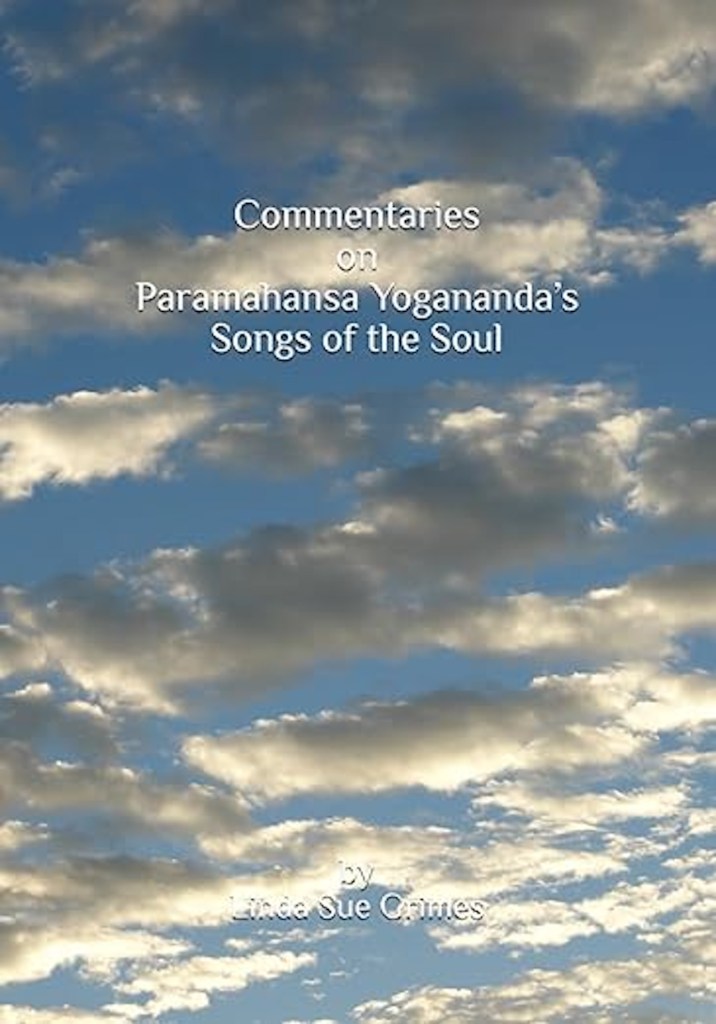





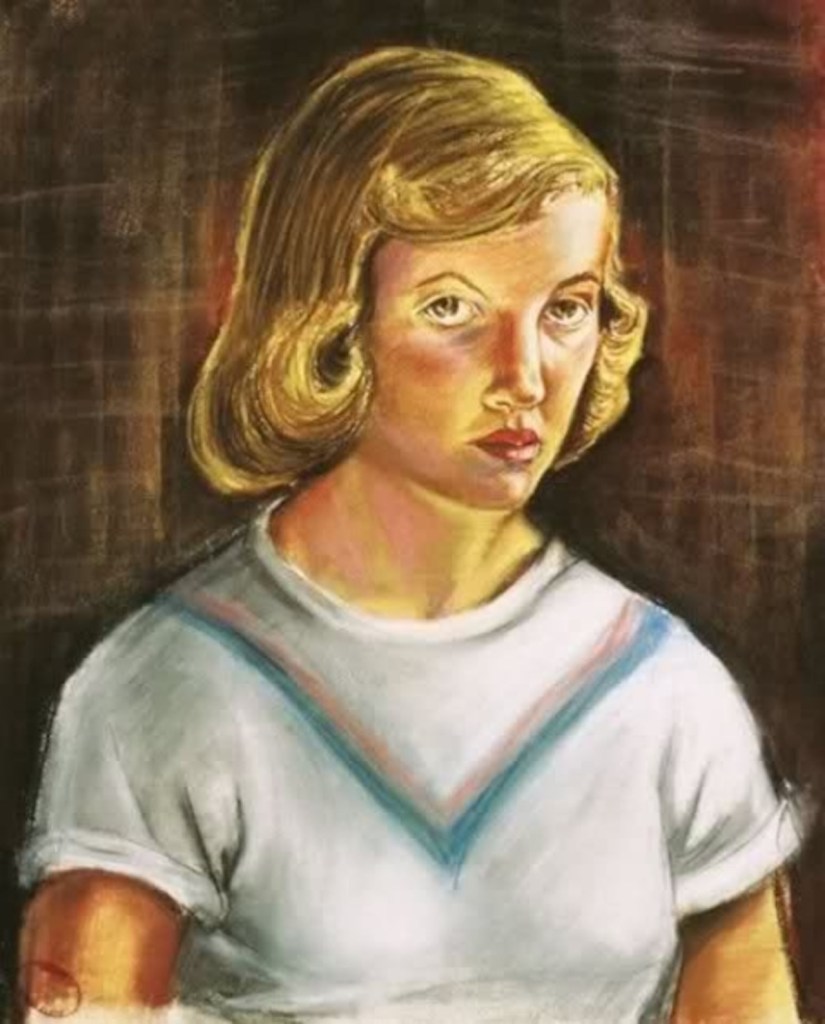


 Linda's Literary Home