Emily Dickinson’s “After great pain, a formal feeling comes”
Emily Dickinson’s “After great pain, a formal feeling comes” is the poem equivalent of a sculpture carved to represent grief; the poet has metaphorically carved from the rock of suffering a remarkable statue of the human mind that has experienced severe agony.
Introduction and Text of “After great pain, a formal feeling comes”
The speaker in Emily Dickinson’s “After great pain, a formal feeling comes” (number 341 in Thomas H. Johnson’s Complete Poems) is creating an intense drama that sets in center stage the bitter agony involved in experiencing utter torment.
The speaker does not name the origin of the certain type of “pain,” because she takes as her purpose only the illumination of the effect she is exploring. If the individual is grieving because of losing a loved one to death or possibly to the breaking up of a friendship, pain will affect that individual in a similar manner to one surfing from an fatal illness. The result of pain regardless of the cause is the issue, not the cause itself.
The tragedy of cause may be held in abeyance and explored separately. When pain itself is explored, it is not also necessary to make clear the original cause for the onset of the pain. The issue of pain itself and how the human heart and mind respond to that stimulus offer a sufficient quantity of material on which to focus.
The poem plays out in three stanzas; the first and third stand in quatrains, while the middle stanza is displayed in a cinquain. The poem features a masterful dramatization, resembling a sculpture set in stone. This poem testifies to the greatness of Emily Dickinson, not only as a poet but also as a lay psychologist.
That the poet was able to sculpt her poem from the stone of grief demonstrates her versatility and the ability to envision and craft into images the language of the heart and mind.
After great pain, a formal feeling comes –
After great pain, a formal feeling comes – The Nerves sit ceremonious, like Tombs – The stiff Heart questions was it He, that bore, And Yesterday, or Centuries before?
The Feet, mechanical, go round – Of Ground, or Air, or Ought – A Wooden Way Regardless grown, A Quartz contentment, like a stone –
This is the Hour of Lead – Remembered, if outlived, As Freezing persons, recollect the Snow – First – Chill – then Stupor – then the letting go –
Reading of “After great pain, a formal feeling comes”
Commentary on “After great pain, a formal feeling comes”
The images that represent hardness, stillness, and cold combine to create the substance out of which this intense drama grows into existence. The images, while mostly concentrated in the visual, however, bleed over into the other senses. One can virtually hear the hardness and stiffness that afflict the heart and mind as the individual suffers the great agony described so colorfully and precisely.
First Stanza: Stunned by the Onset of Grief
After great pain, a formal feeling comes – The Nerves sit ceremonious, like Tombs – The stiff Heart questions was it He, that bore, And Yesterday, or Centuries before?
The speaker begins the scene with a rather dramatic claim that after the experience of some great event causing suffering, a state of solemnity visits the heart and mind of the sufferer. This simple claim puts a label on the stunned feeling which has accompanied the sudden arrival of grief.
That grief results from having experienced some great tragic terror or torment, and that intense feeling can be described as “formal,” as the next step of trying to accept and overcome that pain must be taken. The opposite emotion would then necessarily be “informal,” wherein the individual would remain content or perhaps even in the neutrality of emotion that would cause not feeling at all.
The usual non-suffering consciousness retains no special form, as it spreads out over the heart and mind, formless, shapeless, and unrecognized until nudged into existence by its opposite—or near opposite. The neutrally existing emotion remains neutral or unfeeling until it is forced by circumstances to feel in order to act.
After the suffering begins, the consciousness becomes aware of itself as it begins to feel the sensations of cold, hard, and/or stiff, as in the colorful image, the “Nerves sit ceremonious, like Tombs.” Time then lets loose its strict hold on consciousness, prompted by the intensity of feeling.
The suffering victim can fanaticize that she has been feeling this new way for an eternity. The personified heart begins to pose questions to the mind, trying to distinguish just how long the pain has been afflicting it: did it happen yesterday or was it ages ago? Such a “stiff Heart” can no longer sense time—minutes, day, years all seem irrelevant to the individual suffering from fierce agony because in such distress, it seems that such a state will never end.
Second Stanza: The Expansion of Formal Stiffness throughout Body and Mind
The Feet, mechanical, go round – Of Ground, or Air, or Ought – A Wooden Way Regardless grown, A Quartz contentment, like a stone –
The sufferer may seem to pass through her hours and days as would an automaton. The stiffness seems to expand throughout the body from the heart to the feet that are no longer driven by organic impulse but by some “mechanical” motor. They go but without purpose or desire.
The suffering individual seems to be just “going through the motions” of living, or rather existing, for she has become incapable of sensitive living. Her life has become “Wooden”; she pays no attention to important details. She might as well be “a stone”—her ability to enjoy “contentment” is simply like a piece of “Quartz”—inanimate, hard, and cold. She has become a cliché, attempting to carve out her existence on this newly found pice of rock that she has experienced as inordinate pain.
Third Stanza: Uncertainty of Outliving the Trauma
This is the Hour of Lead – Remembered, if outlived, As Freezing persons, recollect the Snow – First – Chill – then Stupor – then the letting go –
This horrendous suffering has effected this hard, cold, stiff formality, and it has morphed into a dreadful “Hour of Lead, ” causing time to transform into an ocean of lead. The navigator on such a sea finds it virtually impossible to move forward.
Such pain must be overcome, if the individual is to continue living her life. Thus, the speaker must reach some satisfactory conclusion. So she arrives at the possibility that if the suffering soul can just manage to live through the painful event, she will still remember the experience.
The question then becomes how will looking back and recalling such pain affect the person’s life in future time. The speaker decides that recalling such an event will resemble remembering almost dying from freezing to death in the snow.
First, she will recall the freezing chill. Then she will remember nearly losing consciousness and remaining in a stupefied state of awareness. And finally she will realize that she can hold on no longer, and then she will allow herself simply to relax let go of all thoughts involving the trauma. As she remained in the throes of torment, the sufferer could not be assured that she could live through the event.
However, if she does outlive the tragedy, according to her conclusion, she should be able to look back and recall the pain as a cold, hard, stiff substance that stiffened her until she finally managed to control and lose the consciousness that felt that unendurable misery.
Taking his place among luminaries such as Dickinson and Whitman, Frost has remained one of the most widely anthologized American poets of all time. His poems are more complex than simple nature pieces; many are “tricky—very tricky,” as he once quipped about “The Road Not Taken.”
Robert Frost has earned his reputation as one of America’s most beloved poets. The poet holds the honor of being the first American poet to deliver his poems to the assembled celebrants at the 1961 inauguration of the 35th president of the United States of America, John F. Kennedy.
Early Life
Robert Frost’s father, William Prescott Frost, Jr., was a journalist, residing in San Fransisco, California, when Robert Lee Frost was born on March 26, 1874. Robert’s mother, Isabelle, was an immigrant from Scotland.
The young Frost spent the first eleven years of his childhood in San Fransisco. After his father died of tuberculosis, Robert’s mother relocated the family, including his sister, Jeanie, to Lawrence, Massachusetts, where they lived with Robert’s paternal grandparents.
In 1892, Robert graduated from Lawrence High School, where he and Elinor White, his future wife, served as co-valedictorians.
Robert then made his first attempt to attend college at Dartmouth College, but after only a few months, he left school and returned to Lawrence, where he began working a series of part-time jobs [1].
Marriage and Children
Elinor White, who had been Robert’s high school sweetheart, was attending St. Lawrence University when Robert proposed to her. She turned him down because she wanted to complete her college education before she married.
Robert then moved to Virginia, and then after he returned to Lawrence, again he proposed to Elinor, who had now completed her college education. The couple married on December 19, 1895. They produced six children.
Their son, Eliot, was born in 1896 but died in 1900 of cholera; their daughter, Lesley, lived from 1899 to 1983. Their son, Carol, born in in 1902 but committed suicide in 1940.
Their daughter, Irma, 1903 to 1967, battled schizophrenia for which she was confined in a mental hospital. Daughter, Marjorie, born 1905 died of puerperal fever after giving birth. Their sixth child, Elinor Bettina, who was born in 1907, died one day after her birth.
Only Lesley and Irma survived their father. Mrs. Frost suffered heart issues for most of her life. She was diagnosed with breast cancer in 1937 but the following year died of heart failure [2].
Farming and Writing
Robert then again attempted to attend college. In 1897, he enrolled in Harvard University, but because of health problems, he was forced to leave school again. He rejoined his wife in Lawrence. Their second child Lesley was born in 1899.
The family then relocated to a New Hampshire farm that Robert’s grandparents had procured for him. Robert’s farming phase thus began as he strove to farm the land while continuing his writing. The Frost’s farming endeavors continued to result in unsuccessful fits and starts. Frost became well adjusted to rustic life, despite his lack of success as a farmer.
On November 8, 1894, in The Independent, a New York newspaper, Frost’s first poem “My Butterfly” appeared in print. The next dozen years proved to be a difficult period in the poet’s personal life yet a fertile one for his writing. The poet’s writing life was launched in a impressive fashion, and the rural, rustic influence on his poems would set a tone and style for all of his works.
Nevertheless, despite the popularity of his individually published poems, such “The Tuft of Flowers” and “The Trial by Existence,” he could not secure a publisher for his collections of works [3].
Moving to England
In 1912, Frost sold the New Hampshire farm and relocated his family to England. Because of his failure to find a publisher in the US for his collections of poems, he decided to try his luck across the pond.
That moved turned out to be life-line for the young poet and his career. At age 38 in England, Frost found a publisher for his collection A Boy’s Will and soon after for his collection North of Boston.
In addition to securing publishers for his two books, the American poet became acquainted with Ezra Pound and Edward Thomas, two important contemporary poets. Pound and Thomas reviewed favorably Frost’s two book, and thus Frost’s career as a poet was launched.
Frost’s friendship with Edward Thomas became especially important, and Frost has revealed that the long walks taken by the two poet/friends had influenced his writing in a wonderfully constructive manner.
Frost has given credit to Thomas for one of his most famous poems, “The Road Not Taken,” which was influenced by Thomas’ attitude toward the fact of not being able to take two different paths on their long walks.
Returning to America
After World War 1 began in Europe, the Frosts moved back to the United States. Their brief stay in England had sparked useful results for the poet’s reputation, for even in his native country, he was becoming well known and loved.
American Publisher Henry Holt republished Frost’s earlier collections, and then published the poet’s third collection, Mountain Interval, which had been written while Frost was still living in England.
Frost began to experience the pleasing situation of having the same journals, such as The Atlantic, solicit his work, even though they had rejected those same works only a few years earlier.
In 1915, the Frosts purchased a farm, located in Franconia, New Hampshire. Their traveling days had come to and end, and Frost continued his writing career. Frost also taught intermittently at a number of colleges, including Dartmouth, University of Michigan, and especially Amherst College, where he served regularly from 1916 until 1938.
Amherst’s primary library is now the Robert Frost Library, in honor of the long-time educator and poet. Frost also spent most of his summers teaching English at Middlebury College in Vermont.
Frost never completed a university degree, but over his lifetime, he accumulated more than forty honorary degrees. Frost won the Pulitzer Prize four times for his books, New Hampshire, Collected Poems, A Further Range, and A Witness Tree.
Frost labeled himself a “lone wolf” in the world of poetry because he did not follow any current literary movements. His only motivation was to express the human condition in a world of duality.
Frost did not pretend to explain that condition; he sought solely to create his little dramas to reveal the nature of the emotional life in the mind and heart of a human being [4].
First American Inaugural Poet
Robert Frost had intended to star his occasional piece “Dedication” as a preface to the poem that the President-Elect John F. Kennedy had requested for his 1961 inauguration.
But the sun rendered Frost’s reading impossible, so he dropped “Dedication” but continued on to recite “The Gift Outright” from memory.
Introduction with Text of “Dedication”
On January 20, 1961, Robert Frost became the first American poet to deliver a poem at a presidential inauguration. He recited his poem “The Gift Outright” at the swearing in of John F. Kennedy as the 35th president of the United States of America. Frost had also written a new poem to preface his recitation of “The Gift Outright,” but he did not have time to commit his new piece to memory.
At the inauguration, Frost began to read the new piece, but he was unable to see clearly his copy of the poem because of the bright sunlight bouncing off the snow; he managed to stumble through the first 23 lines of the new poem [5]. But then he switched to reciting “The Gift Outright,” which he had by memory.
While Frost’s “Dedication” offers some useful and important historical features, it does reveal some of the fawning exaggeration that occasional poems [6] are often wont to suffer.
Dedication
Summoning artists to participate In the august occasions of the state Seems something artists ought to celebrate. Today is for my cause a day of days. And his be poetry’s old-fashioned praise Who was the first to think of such a thing. This verse that in acknowledgement I bring Goes back to the beginning of the end Of what had been for centuries the trend; A turning point in modern history. Colonial had been the thing to be As long as the great issue was to see What country’d be the one to dominate By character, by tongue, by native trait, The new world Christopher Columbus found. The French, the Spanish, and the Dutch were downed And counted out. Heroic deeds were done. Elizabeth the First and England won. Now came on a new order of the ages That in the Latin of our founding sages (Is it not written on the dollar bill We carry in our purse and pocket still?) God nodded his approval of as good So much those heroes knew and understood, I mean the great four, Washington, John Adams, Jefferson, and Madison So much they saw as consecrated seers They must have seen ahead what not appears, They would bring empires down about our ears And by the example of our Declaration Make everybody want to be a nation. And this is no aristocratic joke At the expense of negligible folk. We see how seriously the races swarm In their attempts at sovereignty and form. They are our wards we think to some extent For the time being and with their consent, To teach them how Democracy is meant. “New order of the ages” did they say? If it looks none too orderly today, ‘Tis a confusion it was ours to start So in it have to take courageous part. No one of honest feeling would approve A ruler who pretended not to love A turbulence he had the better of. Everyone knows the glory of the twain Who gave America the aeroplane To ride the whirlwind and the hurricane. Some poor fool has been saying in his heart Glory is out of date in life and art. Our venture in revolution and outlawry Has justified itself in freedom’s story Right down to now in glory upon glory. Come fresh from an election like the last, The greatest vote a people ever cast, So close yet sure to be abided by, It is no miracle our mood is high. Courage is in the air in bracing whiffs Better than all the stalemate an’s and ifs. There was the book of profile tales declaring For the emboldened politicians daring To break with followers when in the wrong, A healthy independence of the throng, A democratic form of right divine To rule first answerable to high design. There is a call to life a little sterner, And braver for the earner, learner, yearner. Less criticism of the field and court And more preoccupation with the sport. It makes the prophet in us all presage The glory of a next Augustan age Of a power leading from its strength and pride, Of young ambition eager to be tried, Firm in our free beliefs without dismay, In any game the nations want to play. A golden age of poetry and power Of which this noonday’s the beginning hour.
Commentary on “Dedication”
Robert Frost’s poem “The Gift Outright” remains the poem remembered for the inauguration of John F. Kennedy, and it also happens to be a much stronger poem than “Dedication.”
Frost once remarked [7] about his poem “The Gift Outright” that is was “a history of the United States in a dozen lines of blank verse.”
First Movement: Invocation to Artists
Summoning artists to participate In the august occasions of the state Seems something artists ought to celebrate. Today is for my cause a day of days. And his be poetry’s old-fashioned praise Who was the first to think of such a thing. This verse that in acknowledgement I bring Goes back to the beginning of the end Of what had been for centuries the trend; A turning point in modern history.
The speaker seems to be postponing his task of making this inauguration a grand and glorious event by remarking the efficacy and appropriateness of artists contributing to such an occasion. He likens his current effort to past glories of “poetry’s old-fashioned praise” of remarking that certain occasions are bound to point to historical trends.
The speaker’s claims remain rather vague and noncommittal but still leave open the possibility that things will become clearer and more specific as he continues to offer his gems of wisdom.
He claims that what he is doing, bringing verse to event, is as old as the beginning. But that beginning is then sparked by the “beginning of the end”; thus, the speaker is covering himself in case he may be proven wrong.
Second Movement: The Forming of a Nation
Colonial had been the thing to be As long as the great issue was to see What country’d be the one to dominate By character, by tongue, by native trait, The new world Christopher Columbus found. The French, the Spanish, and the Dutch were downed And counted out. Heroic deeds were done. Elizabeth the First and England won.
The speaker then draws an interesting picture of “colonial” America. He contends that the many nations that have found their progeny on the new shores were battling for dominance, putting forth the question: would France, Spain, or Holland take the lead in heading the American nation?
But then he answers the question by declaring England the winner, as “Elizabeth the First and England won.” Thus, the speaker provides answers to this question of whose characteristics, language, and traits would prevail: America would not adopt French or Spanish or Dutch as its native language; it would be English whose tongue the New World would speak.
Also, one can imagine the “native traits” including English style clothing, manners, and food. The other nations, while welcome, would take their place as an accompanying position.
Third Movement: Tribute to the Founding
Now came on a new order of the ages That in the Latin of our founding sages (Is it not written on the dollar bill We carry in our purse and pocket still?) God nodded his approval of as good So much those heroes knew and understood, I mean the great four, Washington, John Adams, Jefferson, and Madison So much they saw as consecrated seers They must have seen ahead what not appears, They would bring empires down about our ears And by the example of our Declaration Make everybody want to be a nation.
While this movement contains a number of historically accurate statements, it remains rather awkward in its structural execution. The parenthetical—”(Is it not written on the dollar bill / We carry in our purse and pocket still?)”— followed by the line,”God nodded his approval of as good” render their substance less impactful.
That “Latin of our founding sages” refers to “E Pluribus Unum,” (Out of the many, One) and loses it heft when placed as a parenthetical. Robert Frost was a somewhat religious agnostic. That he would claim that God was nodding approval of anything seems a bit out of character sparking a question of sincerity.
Because of Frost’s wholly secular take on the historical founding of a nation— despite the fact that one of the founding principles for founding this nation was religious—the questionable sincerity issue continues to present itself.
This issue is especially evident since the poem is an occasional poems specifically written to celebrate a politician in his ascendency to political office. The tribute to “Washington, / John Adams, Jefferson, and Madison,” whom the speaker designates “as consecrated seers” remains a wholly accurate statement.
And the final two lines appropriately celebrate the document the “Declaration of Independence” which along with the U. S. Constitution remain two of the most important texts ever to exist. The existence of those documents remains important both to the American nation and the world, making “everybody want to be a nation.”
Fourth Movement: Pursuing Life, Liberty, and Happiness
And this is no aristocratic joke At the expense of negligible folk. We see how seriously the races swarm In their attempts at sovereignty and form. They are our wards we think to some extent For the time being and with their consent, To teach them how Democracy is meant. “New order of the ages” did they say? If it looks none too orderly today, ‘Tis a confusion it was ours to start So in it have to take courageous part. No one of honest feeling would approve A ruler who pretended not to love A turbulence he had the better of.
The speaker then engages the issue of immigration to this newly formed nation. It makes perfect sense that folks from all over the world would desire to emigrate from totalitarian, freedom-squelching dictators in their own nations. And it remains quite sensible that they would want to relocate to this new land.
This new land from the beginning embraces freedom and individual responsibility while promising such in those documents delineating the basic human rights of “life, liberty, and the pursuit of happiness.”
The speaker denigrates the notion that only the aristocrats were appreciated and allowed to flourish in this new land. New immigrants may become our “ward,” but that status is only temporary and “with their consent.” In other words, new immigrants can become citizens of our new land of freedom because that new land represents the “[n]ew order of the ages.”
Fifth Movement: A Courageous Nation
Everyone knows the glory of the twain Who gave America the aeroplane To ride the whirlwind and the hurricane. Some poor fool has been saying in his heart Glory is out of date in life and art. Our venture in revolution and outlawry Has justified itself in freedom’s story Right down to now in glory upon glory. Come fresh from an election like the last, The greatest vote a people ever cast, So close yet sure to be abided by, It is no miracle our mood is high. Courage is in the air in bracing whiffs Better than all the stalemate an’s and ifs.
The speaker then focuses on the very specific event of the Wright Brothers (“the twain”) and their new invention “the aeroplane.” He then asserts that such feats have put the lie to the “poor fool” who thinks that there is no longer any “glory” in “life and art.” He insists that the American adventure story in “revolution and outlawry” has been gloriously vindicated and “justified [ ] in freedom’s story.”
The speaker then offers his take of how this recent election, whose result he is now celebrating, played out. He deems it the “greatest vote a people ever cast”—an obvious exaggeration. Yet, while the election was “close,” it will be “abided by.” The citizenry’s mood is “high,” and that fact is “no miracle.” He then asserts that such a situation arises out of the courage of the nation.
Sixth Movement: The Curse of the Inaugural Poem
There was the book of profile tales declaring For the emboldened politicians daring To break with followers when in the wrong, A healthy independence of the throng, A democratic form of right divine To rule first answerable to high design. There is a call to life a little sterner, And braver for the earner, learner, yearner. Less criticism of the field and court And more preoccupation with the sport. It makes the prophet in us all presage The glory of a next Augustan age Of a power leading from its strength and pride, Of young ambition eager to be tried, Firm in our free beliefs without dismay, In any game the nations want to play. A golden age of poetry and power Of which this noonday’s the beginning hour.
In the opening line of this final movement, the speaker alludes to John F. Kennedy’s book, Profiles in Courage—”book of profile tales.” Of course, the inaugural poet in his inaugural poem had to focus on the subject of this occasion, the new president of the United States, whom he is celebrating with his poem.
But then he becomes overly solicitous in his following remarks claiming that this president was a politician who can “break with followers when in the wrong.” The speaker furthers his fawning remarks by suggesting that this administration would be a “democratic form of right divine / To rule first answerable to high design.” This statement boarders on toadying flattery.
Then the puffery in the movement continues with the prediction of a “next Augustan age,” until the final unfortunate lines, “A golden age of poetry and power / Of which this noonday’s the beginning hour.”
Of course, hindsight now confirms that no “golden age” ever resulted for politics or poetry. And this president was assassinated before the completion of his first term in office.
While Frost’s “Dedication” offers some useful commentary, it still fails as a genuine poem. Even as an occasional poem in it final movement, it engages overzealously in exaggerated flattery.
One is reminded that fortunately, this piece did not see the light of day, as Frost was unable to read it as he intended. The poet was spared the drubbing he no doubt would have received had the sunlight not conspired to keep that piece in the dark.
Robert Frost’s “The Gift Outright”
Robert Frost’s “The Gift Outright” became the first inaugural poem, after President-Elect John F. Kennedy asked the famous poet to read at his swearing in ceremony—the first time a poet had read a poem at a presidential inauguration.
Introduction with Text of “The Gift Outright”
On January 20, 1961, John F. Kennedy was inaugurated the 35th president of the United States of America. For the inauguration ceremony, Kennedy had invited America’s most famous poet, Robert Frost, to write and read a poem. Frost rejected the notion of writing an occasional poem, and so Kennedy asked him to read “The Gift Outright.” Frost then agreed.
Kennedy then had one more favor to ask of the aging poet. He asked Frost the change the final line of the poem from “Such as she was, such as she would become” to “Such as she was, such as she will become.”
Kennedy felt that the revision reflected more optimism than Frost’s original. Frost did not like the idea, but he relented for the young president’s sake. Frost did, nevertheless, write a poem especially for the occasion titled “Dedication,” which he intended to read as a preface to “The Gift Outright.”
At the inauguration, Frost attempted to read his occasional poem, but because of the bright sunlight bouncing off the snow, his aging eyes could not see the poem well enough to read it. He then continued to recite “The Gift Outright.”
Regarding the changing of the final line: instead of merely reading the line with the revision Kennedy had requested, Frost stated,
Such as she was, such as she would become, has become, and I – and for this occasion let me change that to –what she will become. (my emphasis added)
Thus, the poet remained faithful to his own vision, while satisfying the presidential request. Robert Frost’s poem, “The Gift Outright,” offers a brief history of the USA, which has just elected and was in the process of inaugurating its 35th president.
The speaker of Frost’s poem, without becoming chauvinistically patriotic, manages to offer a positive view of the country’s struggle for existence, a struggle that can be deemed a gift that the Founding Fathers gave to themselves and the world.
To the question—“Well, Doctor, what have we got—a Republic or a Monarchy?”—regarding the product created by the Constitutional conveners during their meetings from May 25 to September 17, 1787, in Philadelphia, Founder Benjamin Franklin responded, “A Republic, if you can keep it” [8].
The US Constitution became a gift that has kept on giving in the best possible way. It replaced the old, weak Articles of Confederation and kept the nation in tact even during a bloody Civil War, nearly a century later.
The speaker in Frost’s poem offers a brief overview of the American struggle for existence, and he describes that struggle resulting in a Constitution as a gift the Founders gave themselves and to all the generations to follow.
The Gift Outright
The land was ours before we were the land’s. She was our land more than a hundred years Before we were her people. She was ours In Massachusetts, in Virginia, But we were England’s, still colonials, Possessing what we still were unpossessed by, Possessed by what we now no more possessed. Something we were withholding made us weak Until we found out that it was ourselves We were withholding from our land of living, And forthwith found salvation in surrender. Such as we were we gave ourselves outright (The deed of gift was many deeds of war) To the land vaguely realizing westward, But still unstoried, artless, unenhanced, Such as she was, such as she would become.
Robert Frost Reading “The Gift Outright”
At Inauguration
Commentary on “The Gift Outright”
Robert Frost’s inaugural poem offers a glimpse into the history of the country that has just elected its 35th president.
First Movement: The Nature of Possession
The land was ours before we were the land’s. She was our land more than a hundred years Before we were her people. She was ours In Massachusetts, in Virginia, But we were England’s, still colonials, Possessing what we still were unpossessed by, Possessed by what we now no more possessed.
The first movement begins by offering a brief reference to the history of the country over which the new government official would now preside. The speaker asserts that the men and women who had settled on the land, which they later called the United States of America, had begun their experiment in freedom living on the land which would later become their nation, and they would then become its citizens.
Instead of merely residing as a loosely held-together band of individuals, they would become a united citizenry with a name and government shared in common. The official birthdate of the United States of America is July 4, 1776; with the Declaration of Independence, the new country took its place among the nations of the world.
And the speaker correctly states that the land belonged to the people “more than a hundred years” before Americans became citizens of the country. He then mentions two important early colonies, Massachusetts and Virginia, which would become states (commonwealths) after the new land was no longer a possession of England.
Second Movement: The Gift of Law and Order
Something we were withholding made us weak Until we found out that it was ourselves We were withholding from our land of living, And forthwith found salvation in surrender.
During the period from 1776 to 1887, the country struggled to found a government that would work to protect individual freedom and at the same time provide a legal order that would make living in a free land possible. An important first step was the Articles of Confederation and Perpetual Union [9], the first constitution written in 1777, which was not ratified until 1781.
The Articles failed to provide enough structure for the growing nation, and by 1787, it was deemed that a new, stronger document was needed to keep the country functioning and united. Thus, the Constitutional Convention of 1787 [10] was convened to rewrite the Articles.
Instead of merely writing them, however, the Founding Fathers scrapped the old document and composed a new U.S. Constitution, which has remained the founding set of laws guiding America since it was finally ratified June 21, 1788 [11].
The speaker describes America’s early struggle for self governance as “something we were withholding,” and that struggle “made us weak.” But finally, we found “salvation in surrender,” that is, the Founding Fathers surrendered to a document that provided legitimate order but at the same time offered the greatest possible scope for individual freedom.
Third Movement: The Gift of Freedom
Such as we were we gave ourselves outright (The deed of gift was many deeds of war) To the land vaguely realizing westward, But still unstoried, artless, unenhanced, Such as she was, such as she would become.
The speaker describes the early turbulent history of his country as a time of “many deeds of war,” which would include the war [12] the early Americans had to fight against England—its mother country—to secure the independence that it had declared and demanded.
But the young nation wholeheartedly gave itself that “gift” of existence and freedom by continuing its struggle and continuing to grow by expanding “westward.” The people of this nation struggled on through many hardships “unstoried, artless, unenhanced” to become the great nation that now—at the time of the poet’s recitation—has elected its 35th president.
Sources
[1] Editors. “Robert Frost.” Poetry Foundation. Accessed March 26, 2023.
The speaker in William Butler Yeats’ “The Fisherman” is dramatically promoting a style of poetry that will become and remain meaningful to and beloved by the common folk.
Introduction with Text of “The Fisherman”
William Butler Yeats’ poem “The Fisherman” appears in the poet’s The Wild Swans at Coole, which was brought out in 1919. The poet’s collection features many of his most widely anthologized poems.
In “The Fisherman,” Yeats has created a speaker who is voicing a call for a genuine school of art for the common folk, an art that dramatizes the beauty and truth inherent in all great art.
The speaker is also decrying the cultural suicide being perpetrated by charlatans in art as well as their cohorts who are power-hungry politicians. He thus reveals contempt for fakes and frauds, while promoting an ideal that he strongly believes should be steering art and the cultural life of the nation.
Every nation throughout history has suffered from these same issues, as toppling governments and bloody wars testify. The poets have often spoken up, calling out names and insisting on reforms.
Despite the fact that poetry’s first function arises from personal experience, political controversy often intrudes into the realm of the personal and that is when poets are compelled to use their platform for activism.
Care must be taken, however, that the poet not become a brazen tool for propaganda. As an accomplished world poet and former Irish senator [1], Yeats possessed the acumen to broach issues of art, poetry, culture, and politics.
The former politician and literary Nobel Laureate [2] boasts numerous works that address culture and politics: “The Fisherman” remains one of the most colorful and culturally significant poems of the era.
The Fisherman
Although I can see him still, The freckled man who goes To a grey place on a hill In grey Connemara clothes At dawn to cast his flies, It’s long since I began To call up to the eyes This wise and simple man. All day I’d looked in the face What I had hoped ’twould be To write for my own race And the reality; The living men that I hate, The dead man that I loved, The craven man in his seat, The insolent unreproved, And no knave brought to book Who has won a drunken cheer, The witty man and his joke Aimed at the commonest ear, The clever man who cries The catch-cries of the clown, The beating down of the wise And great Art beaten down.
Maybe a twelvemonth since Suddenly I began, In scorn of this audience, Imagining a man And his sun-freckled face, And grey Connemara cloth, Climbing up to a place Where stone is dark under froth, And the down turn of his wrist When the flies drop in the stream: A man who does not exist, A man who is but a dream; And cried, “Before I am old I shall have written him one Poem maybe as cold And passionate as the dawn.”
Reading of “The Fisherman”
Commentary on “The Fisherman”
The speaker in William Butler Yeats’ poem is heralding a style of poetry that will be beloved by the common folk. He makes his contempt for charlatans known. He encourages the ideals that he believes must guide culture and art. Yeats was a promoter of the style of art that he thought was closest to the hearts and minds of the Irish.
First Movement: Recalling an Admired Man
Although I can see him still, The freckled man who goes To a grey place on a hill In grey Connemara clothes At dawn to cast his flies, It’s long since I began To call up to the eyes This wise and simple man.
The speaker appears to be remembering a special man whom he has respected: “[t]he freckled man” wearing “Connemara clothes.” This man has been in the habit of fishing at a “gray place on a hill.”
The speaker implies that in his mind’s eye, he can still perceive the man. And it may also be that the speaker literally meets the man occasionally in the village. However, the speaker has not as of late mused upon the man.
The speaker admires the man’s simple ways. He assumes that the man is “wise and simple.” The speaker then continues to cogitate upon those very same qualities as he continues his message.
The speaker entertains a deep desire to praise the virtues of simplicity and wisdom. He has observed those qualities in the folks who are doing ordinary, simple everyday tasks.
Second Movement: Researching History
All day I’d looked in the face What I had hoped ’twould be To write for my own race And the reality; The living men that I hate, The dead man that I loved, The craven man in his seat, The insolent unreproved,
The speaker has determined that he will make a plan to write for his own people, including the real experiences they all undergo. With the plan in mind, he has begun to research the history of his nation and its people. The speaker asserts that he hopes to reveal the reality of the lived experience of his fellow citizens.
Such a reality should well acquit itself and at the same time demonstrate and dramatize the exact truths that future generations will be likely to undergo.The speaker offers a catalogue of qualities that the men who make up the current political landscape have put on display.
Some of those men will be the recipients of his ire. He brazenly states that there are living men whom he hates. He then contrasts that negative emotion with its opposite by emphasizing that there is as well the “dead man that [he] loved.”
The speaker continues in his enflamed hatred by asserting that the “craven” exist while the “insolent” remain unrestricted in their perfidy. The speaker believes that by contrasting good and evil, he can demonstrate the efficacy of the arrival of a steady virtue upon which to build a better art and poetry that can represent Irish culture more faithfully and honestly.
Third Movement: The Guilty Avoiding Justice
And no knave brought to book Who has won a drunken cheer, The witty man and his joke Aimed at the commonest ear, The clever man who cries The catch-cries of the clown, The beating down of the wise And great Art beaten down.
The speaker continues referring to the rogues and knaves, who have thus far evaded justice though guilty. The speaker loathes those frauds who have “won a drunken cheer,” even as they have remained undeserving of celebrity and honor.
The speaker makes it clear that there is a sector of despicable characters who damage, cheapen, and pile shame on the culture. The speaker accuses such unscrupulous scoundrels of attempting to destroy the art of the nation.
They, in effect, denigrate “the wise” as they dismantle the “great Art” that they have inherited. The speaker grieves that these killers of culture have succeeded in their perfidy. Thus, he is calling attention to their misdeeds. He is proposing a change in focus in order to improve values. He is not suggesting censorship of the charlatans.
Fourth Movement: Cultural Assassins
Maybe a twelvemonth since Suddenly I began, In scorn of this audience, Imagining a man And his sun-freckled face, And grey Connemara cloth, Climbing up to a place Where stone is dark under froth,
The speaker then reports that for a while he has been incubating the idea of creating an uncomplicated, “sun-freckled face”—the man in “Connemara cloth.” For his effort, he has thus far received only “scorn” from the ilk of those culture killers and unscrupulous reprobates.
Nevertheless, the speaker has been pressing on, striving to envision a simple fisherman, who “climb[s] up to a place / Where stone is dark with froth,” a natural place that continues to be pristine and still remains alluring.
The speaker is crafting a symbolic being whom he can describe and on whom he can bestow the qualities that he deems must become and remain an important part of the natural art, belonging to the people of his environs.
Fifth Movement: The Importance of Simplicity
And the down turn of his wrist When the flies drop in the stream: A man who does not exist, A man who is but a dream; And cried, “Before I am old I shall have written him one Poem maybe as cold And passionate as the dawn.”
The speaker visualizes the fisherman’s wrist movement as the man casts his line into the water. He admits that this man does not yet exist, because he is still “but a dream.” The speaker’s keen sensibility is strong enough to bring to life such a simple, rustic character. He is urged then to take all pains to bring such a character to life.
Thus, while the poet is still young enough to use his God-given imagination, he vows to take on the task of writing this fisherman into existence and to compose for the man a poem “as cold / And passionate as the dawn.” The speaker continues to muse on simplicity. He passionately desires to create a new ideal that will produce meaningful, original, dramatic poetry.
He insists that that new poetry must be able to speak with genuine originality and that it thus should become a harbinger of the beginning of a new era in art of poetry. The speaker hopes to accomplish all of this despite the wrong-headedness and power-grabbing of too many of the political phonies—and despite the fraudulent deceivers whose selfishness is spreading the destruction of their own culture.
Gerard Manley Hopkins’ “Patience, hard thing! the hard thing but to pray”
This sonnet is counted as one of Father Hopkins’ six “terrible sonnets.”
Introduction and Text of “Patience, hard thing! the hard thing but to pray”
The speaker in Father Hopkins’ “Patience, hard thing! the hard thing but to pray” explores searchingly the nature of spiritual endurance. He is focusing on patience not as a soft virtue but as a challenging and difficult discipline, which oftentimes scars the pride, while exhausting the will.
But those actions still reflect and align with divine will and action. As he usually does, this speaker reveals the hard discipline of God remains always for the betterment of humankind. As human beings, we all search for—or at least wish for—our own betterment.
As a Jesuit priest, Father Hopkins made it his mission to seek divine guidance, and unlike us non-priestly poets, he focused primarily on religious and spiritual issues that affected him deeply.
Patience, hard thing! the hard thing but to pray
Patience, hard thing! the hard thing but to pray, But bid for, Patience is! Patience who asks Wants war, wants wounds; weary his times, his tasks; To do without, take tosses, and obey. Rare patience roots in these, and, these away, Nowhere. Natural heart’s ivy, Patience masks Our ruins of wrecked past purpose. There she basks Purple eyes and seas of liquid leaves all day.
We hear our hearts grate on themselves: it kills To bruise them dearer. Yet the rebellious wills Of us we do bid God bend to him even so. And where is he who more and more distils Delicious kindness? – He is patient. Patience fills His crisp combs, and that comes those ways we know.
Reading
Commentary on “Patience, hard thing! the hard thing but to pray”
As human beings, we learn early that patience is an important personal quality, but the speaker in this sonnet is revealing his inner turmoil as an argument against which he confronts resistance even as he refuses to decry the virtue that seems to be resisting him. He treats the virtue of patience in a realistic manner—not with sentimentality. He asserts that patience is both vitally necessary as well as deeply painful.
The humanity of his cries shows us that as we strive and struggle, all of humanity has done so. Father Hopkins lived in the 19th century—two centuries earlier than our own, and yet his struggles are our struggles.
Octave: “Patience, hard thing! the hard thing but to pray”
The speaker begins the octave with an effusive cry—no calm reflection here! He invokes “patience” immediately and pairs it with prayer; they are both difficult things to approach and accomplish. We often cry for what we seem to lack, even in the 21st century.
He knows that genuine prayer requires patience, and it is a kind of patience that the heart and mind naturally resist in a fallen world. The sharpness of his complaint is emphasized through repetition.
He then seems to create a stunning paradox in that patience is difficult, but it is also “bid for.” The speaker easily confesses that patience is not only endured, but it is sought and asked for, even though that asking heralds conflict.
Personified as a female figure who is doing the asking, Patience paradoxically “wants war, wants wounds,” and those qualities expose that there is a cost in acquiring her. She commands that one live a life without ease, which includes doing without things one might need for comfort, receiving blows that stun and hurt, all the while remaining obedient. Dame Patience then requires obedience under pressure with the willingness to accept pain, trials, and tribulations that seem arbitrary instead of well-deserved.
The speaker asserts that that kind of patience remains rare, even fragile. It takes hold only under these catastrophic conditions; for if they are removed them, there is not patience within existence. This insistence blows up the notion that patience can be a decorative virtue experienced in comfort; instead, patience makes it appearance only in deprivation, instability, and any other calamity.
Still through all this mayhem, the speaker refuses to qualify her as infertile. Through a striking shift in tone and assurance, patience then transforms into “Natural heart’s ivy” —a living being, covering “our ruins of wrecked past purpose.” We chafe under ruined purposes as we try to build a better world even in current times.
With that ivy image, the speaker is acknowledging that failure and collapse within the self, which include all past intentions are broken and defeated. Patience, however, does not convert them; she merely masks them by covering all that damage with new growth.
The final lines of the octave seems to complicate the struggle. Patience is basking in colorful accoutrements, yet luxuriant color and fluidity suggest abundance, as well as beauty, even though it is a beauty that grows over wreckage.
The speaker thus remains well aware that such patience beautifies what has been lost without denying the loss itself. The octave leaves the speaker’s fragility suspended between intense pain and strange fertility—between war and ivy.
Sestet: “We hear our hearts grate on themselves: it kills”
In the sestet, the speaker turns inward with even greater urgency. He hears that “our hearts grate on themselves”; this image is harsh and mechanical, suggesting inner resistance. And patience can be understood as not only difficult, but it is also possibly lethal, in that “it kills / To bruise them dearer.”
That claim is intimating that the heart continues to hang onto its own wounds because it would rather retain the familiar pain than to face the adversity made possible by surrender.
Especially within the confines of such thinking, the speaker has to surrender to an subtle prayer: “the rebellious wills / Of us we do bid God bend to him.” Even as the will resists God, it, at the same time, must supplicate to God to transcend its resistance. An exotic tension unfolds the divided mind/soul as it prays. It remains faithful but still defiant.
The main focus that has infused itself throughout the entire sonnet comes into sharp relief in the form of the question “where is the goodness that justifies all of this misery and suffering?” A question to haunts our current civilization as surely as it did two centuries ago!
The speaker responds not with an argumentative abstract notion, but with a person. “He is patient.” God’s kindness can come only slowly, similar to a liquid being “distilled,” drop by drop, rather than being poured out all at once. As science has shown us certain processes, poetry shows us the metaphorical value of understanding those processes.
Patience is not merely a virtue that human beings must learn; it is the basic method of God’s own divine action. The final image of “crisp combs” brings to mind honey made by bees that labor furiously as they produce such sweetness.
Patience “fills” them (all of creation’s creatures), and from that fullness comes kindness in “those ways we know,” as it ascends to human experience through evolutionary time rather than temporal spectacle.
In the sestet, the speaker comes close to showing how to defend one’s heart and mind in the struggle that humanity is engaged in. He does not provide direct relief from pain or a way to guard against rebellion.
But instead, the speaker suggests that the answer can only be understood in terms of what is human and what is divine; thus, human patience can be seen to resemble divine patience. The pain and suffering experiences by human beings can be converted into the divine stuff that produces sweetness, i.e., kindness.
The process, of course, is meditation and prayer, along with deep thought and service to humankind and the world at large, in whatever form that service must take—even writing poems, thus, can serve a divine purpose.
We struggle today as humanity has struggled in the past. From poets such as Father Hopkins, we can glean the depth of our sorrow but also we can be comforted that there is a light at the end of the tunnel of sad darkness, and we can determine that we will progress toward that light.
Gerard Manley Hopkins – National Portrait Gallery, London
Gerard Manley Hopkins’ “To seem the stranger lies my lot, my life”
The speaker in Gerard Manley Hopkins’ sonnet “To seem the stranger lies my lot, my life” explores the sense of spiritual, national, and personal estrangement during years in Ireland. Written with the same intensity that characterizes Hopkins’ work, the poem dramatizes exile as both an external condition and an inward trial.
In the octave, the speaker is focusing on separation from family and his country England, and in the sestet, he turns inward to the silence imposed by his vocation, leaving him isolated yet faithful.
Introduction and Text of “To seem the stranger lies my lot, my life”
Father Gerard Manley Hopkins, who was a Jesuit priest as well as a poet, wrote many of his most profound poems during periods of emotional strain and vocational doubt. He wrote “To seem the stranger lies my lot, my life” in 1889 during his final years in Ireland; he created a speaker in the poem who is reflecting an acute sense of displacement—geographical, familial, and spiritual.
Although Father Hopkins remained consistently obedient to his religious calling, he often felt alienated from England, misunderstood by authority, and silenced as a poet. This sonnet, however, reveals not rebellion but suffering endured with disciplined faith, unveiling exile as a severe trial for spiritual testing.
As the first of the six “terrible sonnets,” “To seem the stranger lies my lot, my life” remains distinctive because its sense of despair is aimed less at abstract spiritual terror and more at everyday human loss—failed relationships, missed vocations, and social estrangement.
However, like the others, it offers little comfort and speaks in a raw, urgent voice. It is unusual in how little it turns to nature or directly to Christ. Instead, it keeps its focus on the speaker’s painful isolation from family, community, and any sense of being useful as a priest.
To seem the stranger lies my lot, my life
To seem the stranger lies my lot, my life Among strangers. Father and mother dear, Brothers and sisters are in Christ not near And he my peace my parting, sword and strife. England, whose honour O all my heart woos, wife To my creating thought, would neither hear Me, were I pleading, plead nor do I: I wear- y of idle a being but by where wars are rife.
I am in Ireland now; now I am at a thírd Remove. Not but in all removes I can Kind love both give and get. Only what word Wisest my heart breeds dark heaven’s baffling ban Bars or hell’s spell thwarts. This to hoard unheard, Heard unheeded, leaves me a lonely began.
Reading
Commentary on “To seem the stranger lies my lot, my life”
Father Hopkins’ sonnet is a meditation on exile and silence. The octave emphasizes outward separation—from family, country, and recognition—while the sestet deepens the conflict by revealing an inward blockage: the poet’s inability to speak or be heard.
Octave: “To seem the stranger lies my lot, my life”
To seem the stranger lies my lot, my life Among strangers. Father and mother dear, Brothers and sisters are in Christ not near And he my peace my parting, sword and strife. England, whose honour O all my heart woos, wife To my creating thought, would neither hear Me, were I pleading, plead nor do I: I wear- y of idle a being but by where wars are rife.
The speaker open the octave with a stark declaration: “To seem the stranger lies my lot, my life.” The phrasing is deliberate and emphatic, with “lot” and “life” placed side by side to suggest that estrangement is not incidental but foundational. The speaker does not merely feel like a stranger; seeming a stranger has become the defining pattern of his existence. The verb “lies” suggests fate or destiny, implying that this condition is imposed rather than chosen.
The repetition of “stranger” in the second line—“Among strangers”—reinforces the sense of isolation. The speaker is not simply alone; he is surrounded by others from whom he feels fundamentally divided. This alienation is then specified in personal terms: separation from “Father and mother dear” and from “Brothers and sisters.”
These lines resonate deeply, as Hopkins had consciously embraced a religious vocation at the cost of ordinary familial intimacy. Yet the phrase “are in Christ not near” reveals a crucial nuance. The separation is not merely geographical or emotional but mediated through faith. His family exists “in Christ,” but spiritual unity does not erase physical absence.
Line four intensifies the tension through paradox: “And he my peace my parting, sword and strife.” The “he” here refers unmistakably to Christ, echoing Christ’s own words in the Gospel that he came not to bring peace but a sword.
Christ is simultaneously the speaker’s source of peace and the cause of painful division. This line crystallizes the poem’s central conflict: obedience to God has fractured his earthly attachments.
England emerges next as a figure of longing and betrayal. The speaker personifies the nation as a beloved woman: “England, whose honour O all my heart woos, wife / To my creating thought.” England is not merely homeland; it is the imaginative and cultural source of his poetry.
The speaker’s “creating thought” is bound to England’s landscape, language, and traditions. Yet this beloved “wife” refuses to listen. England “would neither hear / Me, were I pleading.” The rejection is imagined even before the plea is made.
Significantly, the speaker then states, “plead nor do I.” Either Pride, humility, or exhaustion restrains him from petitioning for recognition or return. The enjambment underscores weariness: “I wear- / y of idle a being but by where wars are rife.” The broken word “weary” visually enacts fatigue.
The speaker feels useless, idle, unless he is placed where conflict exists. The “wars” here may be literal—cultural and political unrest in Ireland—or spiritual, referring to inner trials. Either way, the octave closes with a man who sees struggle as the only justification for his continued existence.
Throughout the octave, the speaker’s syntax becomes knotted and his clauses have become compressed. This density mirrors his emotional burden. There is no lyric ease, no pastoral consolation. Instead, the octave establishes exile as a lived reality—accepted but not softened.
Sestet: “I am in Ireland now; now I am at a thírd”
I am in Ireland now; now I am at a thírd Remove. Not but in all removes I can Kind love both give and get. Only what word Wisest my heart breeds dark heaven’s baffling ban Bars or hell’s spell thwarts. This to hoard unheard, Heard unheeded, leaves me a lonely began.
The sestet shifts from the general condition of estrangement to a precise location: “I am in Ireland now.” The repetition of “now” emphasizes immediacy and finality. Ireland is not a temporary assignment but a present, enduring state.
The speaker then deepens the sense of displacement by calling this “a thírd / Remove.” The word “remove” suggests not travel but distance layered upon distance—England removed from family, and Ireland removed yet again from England.
(Note the acute accent mark over the “i” in third: Hopkins often placed accent marks to indicate a stress that might be passed over in a quick reading. He wanted to assure that his sprung rhythm received its full impact.)
The speaker then immediately qualifies this isolation: “Not but in all removes I can / Kind love both give and get.” Despite exile, he affirms the possibility of charity. This assertion is a theologically critical.
Love is not extinguished by displacement; grace operates even in separation. The line resists self-pity and aligns the speaker’s world view with Jesuit discipline, which demands adaptability and service wherever one is sent.
However, the speaker’s deepest anguish follows: “Only what word / Wisest my heart breeds dark heaven’s baffling ban / Bars or hell’s spell thwarts.” Here the speaker turns inward, focusing not on where he is but on what he cannot do. His “wisest” words—his poetry—are blocked.
Heaven itself seems to be imposing a “ban,” a prohibition that frustrates expression. The phrase “dark heaven” is especially striking. Heaven, normally associated with clarity and illumination, becomes obscure and baffling. The alternative force is equally terrifying: “hell’s spell.” Whether divine silence or demonic interference, the result is the same—his words are thwarted.
This line reveals one of the most painful aspects of the poet’s late life: the sense that his poetic gift, given by God, is simultaneously withheld by God. Silence becomes both command and punishment.
The final couplet intensifies the tragedy: “This to hoard unheard, / Heard unheeded, leaves me a lonely began.” The speaker is forced to “hoard” his words, storing them without release. Even when heard, they are “unheeded.”
The repetition emphasizes futility. The phrase “a lonely began” is deliberately and strangely ungrammatical. “Began” suggests something unfinished, a life or vocation that never reached fulfillment. The speaker is not calling himself a failure, but he is implying that he feel incomplete.
Yet even here, the speaker sees despair as part of his discipline. He is not accusing God; he is only lamenting his lot. The speaker conclude his revelation with witness not rebellion. The speaker is recording his condition faithfully; he trusts that meaning may lie well beyond his own understanding. Although the loneliness is real, he can bear it through obedience.
In the sestet, then, exile becomes interiorized. The outer fact of Ireland gives way to the inner trial of silence. The speaker’s greatest suffering is not being far from England but being cut off from utterance.
For this speaker, this wound is the deepest. Yet the very existence of the poem contradicts the ban it describes. In writing this sonnet, the poet speaks from within silence, transforming isolation into testimony.
Taken together, the octave and sestet reveal a soul suspended between fidelity and desolation. “To seem the stranger lies my lot, my life” is not a cry for rescue but a record of endurance.
The speaker/poet accepts exile as part of his vocation, even when it costs him voice, recognition, and comfort. The sonnet stands as one of his most austere achievements—a poem that does not resolve suffering but sanctifies it through truthful speech.
Rabindranath Tagore’s Gitanjali #48: “The morning sea of silence… “
Rabindranath Tagore’s poem elucidating a metaphorical and metaphysical journey is number 48 in his most noted collection titled Gitanjali. The poet received the Nobel Prize for Literature in 1913, specifically for that collection.
Introduction with Text from Gitanjali #48: “The Morning Sea of Silence”
Rabindranath Tagore, Nobel Laureate for Literature in 1013, translated his collection of poems, Gitanjali, from his original Bengali into English. He numbered each poem and rendered them as prose-poems, and they remain poetry of the highest order.
Readers may encounter Gitanjali #48 wide-spread across the internet titled “The Journey” playing out in eight traditional poetry stanzas. Tagore’s #48 displays in only six verse paragraphs (versagraphs), but those who converted the piece have separated the fourth versagraph into three separate units.
Tagore’s Gitanjali #48 metaphorically elucidates the spiritual journey of the speaker, even as at the outset, he and his fellow trekkers seem to be setting out on an ordinary hike through the landscape of beauty with flowers and birdsong. What happens to the speaker becomes truly astounding and inspiring, as he comes to understand the true nature of the idea of a spiritual journey.
In this poem, the term journey serves as an extended metaphor for meditation. The speaker takes his meditation seat and begins his practice in order to experience union with the Divine Belovèd (God). The speaker employs use of the extended metaphor to reveal dramatically his series of emotions as he continues his metaphorical journey.
Even though the source for the drama could credibly have remained a literal hike through the countryside on the lovely morning, the speaker of the poem remains focused on his inner spiritual journey to unite his soul with his Creator.
Gitanjali #48: “The Morning Sea of Silence”
The morning sea of silence broke into ripples of bird songs; and the flowers were all merry by the roadside; and the wealth of gold was scattered through the rift of the clouds while we busily went on our way and paid no heed.
We sang no glad songs nor played; we went not to the village for barter; we spoke not a word nor smiled; we lingered not on the way. We quickened our pace more and more as the time sped by.
The sun rose to the mid sky and doves cooed in the shade. Withered leaves danced and whirled in the hot air of noon. The shepherd boy drowsed and dreamed in the shadow of the banyan tree, and I laid myself down by the water and stretched my tired limbs on the grass.
My companions laughed at me in scorn; they held their heads high and hurried on; they never looked back nor rested; they vanished in the distant blue haze. They crossed many meadows and hills, and passed through strange, far-away countries. All honour to you, heroic host of the interminable path! Mockery and reproach pricked me to rise, but found no response in me. I gave myself up for lost in the depth of a glad humiliation in the shadow of a dim delight.
The repose of the sun-embroidered green gloom slowly spread over my heart. I forgot for what I had travelled, and I surrendered my mind without struggle to the maze of shadows and songs.
At last, when I woke from my slumber and opened my eyes, I saw thee standing by me, flooding my sleep with thy smile. How I had feared that the path was long and wearisome, and the struggle to reach thee was hard!
Reading of Gitanjali #48: “The Morning Sea of Silence”
Commentary on Gitanjali #48: “The Morning Sea of Silence”
The speaker engages a truly astounding spiritual event, placing his experience in a metaphysical setting, and metaphorically elucidating that experience as a simple hike across the landscape.
First Versagraph: The Welcoming Morning Landscape
The morning sea of silence broke into ripples of bird songs; and the flowers were all merry by the roadside; and the wealth of gold was scattered through the rift of the clouds while we busily went on our way and paid no heed.
In the first versagraph, the speaker begins by describing the beauty of the morning landscape that surrounds him and his fellow hikers as they set out on their walking excursion.
The first line offers an masterfully crafted metaphor: the early morning “silence” is likened to the waves of an ocean that break into “ripples of bird songs.” While the birds are singing, the flowers by the wayside appear to be “all merry.” The sky is spread out into a golden glow which is “scattered through the rift of the clouds.”
The speaker then states that he and his hiking buddies are in a hurry to get on with their trek, and they therefore take no notice of, and therefore do not cherish, the beauty that has already been bestowed upon them.
Second Versagraph:: Deadly Solemnity
We sang no glad songs nor played; we went not to the village for barter; we spoke not a word nor smiled; we lingered not on the way. We quickened our pace more and more as the time sped by.
The speaker then asserts that he and his fellow trekkers remain quite serious in their coming travel extravaganza; thus, they do not stop to play or sing happy songs. They did not even engage in cheerful banter with one another, nor do they stop in the village to make any purchases.
They remain so deadly solemn that not only do they not even bother to speak, but they also do not deign to smile. They refuse to linger anywhere. They remain in such a great hurry that they continue to speed by faster and faster as time wore on.
Third Versagraph: Taking Needed Rest
The sun rose to the mid sky and doves cooed in the shade. Withered leaves danced and whirled in the hot air of noon. The shepherd boy drowsed and dreamed in the shadow of the banyan tree, and I laid myself down by the water and stretched my tired limbs on the grass.
By noon, the speaker has become distracted by the position of the sun, noting that doves are making their cooing sounds in the shade of the trees. He then takes notice that a shepherd boy is resting in the shade under a tree.
While the sun is so hot and with the doves and shepherd boy enjoying a relief from action, the speaker decides to stop his own active walk. Thus, he lies down upon the grass by the water and stretches out his tired body to enjoy a respite from the strenuous task of hiking.
Fourth Versagraph: Ridicule for Taking a Rest
My companions laughed at me in scorn; they held their heads high and hurried on; they never looked back nor rested; they vanished in the distant blue haze. They crossed many meadows and hills, and passed through strange, far-away countries. All honour to you, heroic host of the interminable path! Mockery and reproach pricked me to rise, but found no response in me. I gave myself up for lost in the depth of a glad humiliation in the shadow of a dim delight.
The speaker’s walking buddies, however, chide him for wishing to take a break and rest. So, they continue on with their walk. As they continue, they strike supercilious poses with their heads in the air. They take no second notice of the speaker, as they disappear into “distant blue haze.”
Nevertheless, the speaker remains in his resting position with the determination to enjoy his leisurely rest, even as the others rapidly continue on with their swift strides. The speaker reports that his fellow hikers are pressing on as they continue to trek through the “meadows and hills.” They show that they are not as lazy as he is. The speaker’s fellows are continuing to push “through strange, far-away countries.”
He gives them credit for their adventuresome nature, and he confesses that he has experienced some guilt for remaining in leisure and not accompanying them, but he just could not urge himself on to continue this particular walking excursion.
The speaker also confesses that he has ambiguous feelings: on the one hand, he feels “lost” not remaining with the others, but on the other hand, he experiences a “glad humiliation,” feeling that he must be reclining “in the shadow of a dim delight.”
Fifth Versagraph: Rethinking the Reason for the Hike
The repose of the sun-embroidered green gloom slowly spread over my heart. I forgot for what I had travelled, and I surrendered my mind without struggle to the maze of shadows and songs.
As the speaker goes on lounging about, he takes notice that the sunset is “spread[ing] over his heart”—an act that unveils for a second time his emotions fraught with ambiguity. Such gloom is “sun-embroidered,” reminiscent of the old saw, “every cloud has a silver lining.”
The dawdling speaker then admits that he can no longer remember why he originally decided to set out on this hike. Thus, he just lets his mental body go, no longer struggling with his true urgings any more. He allows his heart and mind to continue musing through “the maze of shadows and songs.”
Sixth Versagraph: Nearing the Door-Heart of the Divine Creator
At last, when I woke from my slumber and opened my eyes, I saw thee standing by me, flooding my sleep with thy smile. How I had feared that the path was long and wearisome, and the struggle to reach thee was hard!
Finally, the speaker wakes up from his ambiguous torpor; he then realizes that he has discovered what he was searching for. He had surmised that walking such a spiritual path was out of his reach, as it was considered to be such an arduous task.
But after his discovery, he is able to realize that all he had to do was permit his inner self to be guided to the door-heart of the Divine Belovèd. All lesser journeys, including those on the physical plane, become irrelevant as one becomes ensconced in that sacred environment, near the door of the DivineCreator-Father.
Phillis Wheatley’s talent was questioned but then authenticated during her lifetime, and she is now hailed by all but the most cynical as one of America’s finest poetic voices.
Two Versions of a Publication History
Although Phillis Wheatley’s talent was at first questioned [1], her authenticity was finally established during her lifetime. Today, she is widely recognized by all, except the most cynical [2], as one of America’s finest poetic voices.
Phillis Wheatley’s first and only collection of published poetry was titled Poems on Various Subjects, Religious and Moral; it was published in England.
There are two versions of the history of this book’s publication [3]: one is that the Countess Selina of Huntington invited Phillis to London and found a publisher for the poet; the other is that Phillis suffered from asthma, and so the Wheatley family took her to England to recuperate, and while there, they sought publication of her work.
Either way, the book was published and Wheatley’s career was established. The Wheatley family’s insight played a major role in helping a slave rise above the hardships of that vile institution.
The Value of One Poem
In May 1968, one poem written by Phillis Wheatley brought $68,500 at Christie’s auction [4], Rockefeller Center in New York. It had been estimated to bring between $18,000 and $25,000.
The poem is titled “Ocean”; its seventy lines were written on three pages that had yellowed with time. It is thought to be the only copy.
Ocean
Now muse divine, thy heav’nly aid impart, The feast of Genius, and the play of Art. From high Parnassus’ radiant top repair, Celestial Nine! propitious to my pray’r. In vain my Eyes explore the wat’ry reign, By you unaided with the flowing strain. When first old Chaos of tyrannic soul Wav’d his dread Sceptre o’er the boundless whole, Confusion reign’d till the divine Command On floating azure fix’d the Solid Land, Till first he call’d the latent seeds of light, And gave dominion o’er eternal Night. From deepest glooms he rais’d this ample Ball, And round its walls he bade its surges roll; With instant haste the new made seas complyd, And the globe rolls impervious to the Tide; Yet when the mighty Sire of Ocean frownd “His awful trident shook the solid Ground.” The King of Tempests thunders o’er the plain, And scorns the azure monarch of the main, He sweeps the surface, makes the billows rore, And furious, lash the loud resounding shore. His pinion’d race his dread commands obey, Syb’s, Eurus, Boreas, drive the foaming sea! See the whole stormy progeny descend! And waves on waves devolving without End, But cease Eolus, all thy winds restrain, And let us view the wonders of the main Where the proud Courser paws the blue abode, Impetuous bounds, and mocks the driver’s rod. There, too, the Heifer fair as that which bore Divine Europa to the Cretan shore. With guileless mein the gentle Creature strays. Quaffs the pure stream, and crops ambrosial Grass. Again with recent wonder I survey The finny sov’reign bask in hideous play. (So fancy sees) he makes a tempest rise And intercept the azure vaulted skies. Such is his sport:—but if his anger glow What kindling vengeance boils the deep below! Twas but e’er now an Eagle young and gay Pursu’d his passage thro’ the aierial way. He aim’d his piece, would C[ale]f’s hand do more ? Yes, him he brought to pluto’s dreary shore. Slow breathed his last, the painful minutes move With lingring pace his rashness to reprove; Perhaps his father’s Just commands he bore To fix dominion on some distant shore. Ah! me unblest he cries. Oh! had I staid Or swift my Father’s mandate had obey’d. But ah! too late.—Old Ocean heard his cries. He stroakes his hoary tresses and replies: What mean these plaints so near our wat’ry throne, And what the Cause of this distressful moan? Confess. Iscarius, let thy words be true Not let me find a faithless Bird in you. His voice struck terror thro’ the whole domain. Aw’d by his frowns the royal youth began, Saw you not. Sire, a tall and Gallant ship Which proudly skims the surface of the deep? With pompous form from Boston’s port she came. She flies, and London her resounding name. O’er the rough surge the dauntless Chief prevails For partial Aura fills his swelling sails. His fatal musket shortens thus my day And thus the victor takes my life away. Faint with his wound Iscarius said no more. His Spirit sought Oblivion’s sable shore. This Neptune saw, and with a hollow groan Resum’d the azure honours of his Throne.
Coming to America
Phillis Wheatley was born in Senegal/Gambia, Africa, in 1753. At age seven, she was brought to America and sold to John and Susannah Wheatley of Boston. She soon became a family member instead of a slave. The Wheatleys taught Phillis to read, and she was soon reading classic literature in Greek and Latin, as well as English.
But her talent did not stop with reading, because she began to write poetry, influenced by the Bible and the English poets, particularly John Milton, Alexander Pope, and Thomas Gray. Her poetry reflected the classical forms and content which she closely studied [5].
Phillis wrote her first poem at age thirteen, “On Messrs. Hussey and Coffin,” which was published in 1767 in the Newport Mercury [6]. But she gained wide recognition as a poet with “On the Death of the Reverend Mr. George Whitefield,” which appeared only three years later. Chiefly, because of this poem, Phillis’ first book was later published. It is thought that she had a second book of poems, but the manuscript seems to have disappeared.
In 1778, Phillis married John Peters, a failed businessman. They had three children, all of whom died in childhood. Phillis’ final years were spent in extreme poverty, despite her work as a seamstress. She continued to write poetry and tried in vain to publish her second book of poetry. She died at age 31 in Boston.
The Poet’s Authenticity Questioned
As one might surmise, there was, indeed, a controversy over the authenticity of Phillis’ writing. That a young black slave girl could write like a John Milton was not a fact easily digested back in Colonial America, when slaves were considered something less than human.
Even Thomas Jefferson [7] showed disdain for Phillis’ writing; in his Notes on the State of Virginia, he remarked, “Religion indeed has produced a Phyllis Whately [sic] but it could not produce a poet. The compositions published under her name are below the dignity of criticism.”
Yet Jefferson goes ahead and offers criticism in his next remark, “The heroes of the Dunciad are to her, as Hercules to the author of that poem.”
Unlike Jefferson, George Washington [8].proved to be a fan; in 1776, she wrote a poem and a letter to Washington, who praised her efforts and invited her to visit. I wonder how seriously we can take Jefferson’s criticism, when he so badly misspelled her name; one wonders if he might be speaking of someone else.
Important American Poet
Readers can sample Phillis’ poetry online; her book of poems, Poems on Various Subjects, Religious and Moral, is offered in its entirety, including the front material that shows how strong the controversy over her talent was [9]. After suffering the ambivalence of the Colonial mind-set during her lifetime, today Phillis Wheatley is hailed as one of the most important early American poets.
Commentaries on Paramahansa Yogananda’s Songs of the Soul
Each time my father, mother, friends Do loudly claim they did me tend, I wake from sleep to sweetly hear That Thou alone didst help me here. —from Paramahansa Yogananda’s “One Friend”
for Ron Grimes, my soul mate with whom I travel the spiritual path
This collection of personal commentaries is a companion to the book of spiritual poems, Songs of the Soul, written by Paramahansa Yogananda, the “Father of Yoga in the West.” While these commentaries offer elucidation of each poem, they cannot offer the beauty and majesty experienced by reading the poems themselves.
I have included only an excerpt from each poem preceding each commentary. I, therefore, humbly suggest that you acquire a copy of the great guru’s poems to experience them for yourself, along with my commentaries.
Paramahansa Yogananda’s Songs of the Soul is available at the Self-Realization Fellowship bookstore, Amazon, Barnes & Noble, and other online outlets, as well as in bookstores everywhere.
These commentaries are my personal responses to the poems in Paramahansa Yogananda’s Songs of the Soul. If they assist any reader in understanding the poetic language on a deeper level, then that is a bonus, for my only purpose is to offer my own personal, humble reading.
Brief Publishing History of Songs of the Soul
The first version of Paramahansa Yogananda’s Songs of the Soul appeared in 1923. He continued to revise the poems during the 1920s and 1930s, and the definitive revision that was authorized by the great guru was published in 1983, featuring many restored lines that had been excised from the first publication of the text.
The 1923 version of the collection of poems appears online at Internet Archive. For my commentaries, I rely on the printed text of the 1983 version; the current printing year for that version is 2014.The 1983 printing offers the final approved versions of these poems.
Special Purpose of the Poems in Songs of the Soul
The poems in Songs of the Soul come to the world not as mere literary pieces that elucidate and share common human experiences as most ordinary successful poems do, but these mystical poems also serve as inspirational guidance to enhance the study of the yoga techniques disseminated by the great guru, Paramahansa Yogananda.
He came to the West, specifically to Boston, Massachusetts, in the United States of America, to share his deep knowledge of yoga through techniques that lead the mind to conscious awareness of God, a phenomenon that he called “self-realization.”
The great guru published a series of lessons that contain the essence of his teaching as well as practical techniques of Kriya Yoga. His organization, Self-Realization Fellowship, has continued to publish collections of his talks in both print and audio format that he gave nationwide during the 1920s, 1930s, 1940s, and 1950s.
In addition to Songs of the Soul, the great guru/poet offers mystical poetic expressions in two other publications, Whispers from Eternity and Metaphysical Meditations, both of which serve in the same capacity that Songs of the Soul does, to assist the spiritual aspirant on the journey along the spiritual path.
This section features the commentaries, one for each of the 101 poems in Songs of the Soul. Each commentary is preceded by a brief introduction and excerpt from the poem. Here I am offering the first commentaries, each with an excerpt from the poem.
1. “Consecration”
In the opening poem, titled “Consecration,” the speaker humbly offers his works to his Creator. He offers the love from his soul to the One Who gives him his life and his creative ability, as he dedicates his poems to the Divine Reality or God.
Introduction and Excerpt from “Consecration”
Paramahansa Yogananda, the great guru/poet and founder of Self-Realization Fellowship, known as the “Father of Yoga in the West,” dedicates his book of mystical poems, Songs of the Soul, to his earthly father and consecrates it by offering it to his Heavenly Father (God—the Divine Creator). In dedicating his collection to his earthly father, the great guru writes,
Dedicated to my earthly father, who has helped me in all my spiritual work in India and America
The first poem appearing in the great yogi-poet’s book of spiritual poems is an American (innovative) sonnet, featuring two sestets and a couplet with the rime scheme AABBCC DDEFGGHH.
The first sestet is composed of three rimed couplets; the second sestet features two rimed couplets and one unrimed couplet that occupies the middle of the sestet.
This innovative form of the sonnet is perfectly fitted to the subject matter and purpose of the Indian yogi, who has come to America to minister to the waiting souls, yearning for the benefits of the ancient yogic techniques in which the great guru will instruct them.
The ancient Hindu yogic concepts offer assistance to Westerners in understanding their own spiritual traditions, including the dominant Christianity of which many are already devotees.
Excerpt from “Consecration”
At Thy feet I come to shower All my full heart’s rhyming* flower: Of Thy breath born, By Thy love grown, Through my lonely seeking found, By hands Thou gavest plucked and bound . . .
*The spelling, “rhyme,” was introduced into English by Dr. Samuel Johnson through an etymological error. As most editors require the Johnson-altered spelling of this poetic device, the text of Songs of the Soul also adheres to that requirement featuring the spelling, “rhyming.” However, when I employ that term in my commentaries, I use the original spelling, “rime.”
Commentary
These spiritual poems begin with their consecration, a special dedication that offers them not only to the world but to God, the Ultimate Reality and Cosmic Father, Mother, Friend, Creator of all that is created.
First Sestet: Dedication of Poetic Effort
The speaker proclaims that he has come to allow his power of poetry to fall at the feet of his Divine Belovèd Creator. He then avers that the poems as well as the poet himself are from God Himself.
The Divine Belovèd has breathed life into the poems that have grown out of the speaker’s love for the Divine. The speaker has suffered great loneliness in his life before uniting with his Divine Belovèd.
The spiritually striving speaker, however, has earnestly searched for and worked to strengthen his ability to unite with the Divine Creator, and he has been successful in attaining that great blessing.
The speaker/devotee is now offering that success to his Divine Friend because he knows that God is the ultimate reason for his capabilities to accomplish all of his worthwhile goals. As he feels, works, and creates as a devotee, he gives all to God, without Whom nothing that is would ever be.
Second Sestet: Poems for the Divine
In the second sestet, the speaker asserts that he has composed these poems for the Belovèd Creator. The collection of inspirational poetic works placed in these pages contains the essence of the guru-poet’s life and accomplishments made possible by the Supreme Spirit.
The writer asserts that from his life he has chosen the most pertinent events and experiences which will illuminate and inform the purpose of these poems.
The speaker is metaphorically spreading wide the petals of his soul-flowers to allow “their humble perfume” to waft generously.
He is offering these works not merely as personal effusions of shared experience for the purpose of entertainment or self-expression but for the upliftment and soul guidance of others, especially for his own devoted followers.
His intended audience remains the followers of his teachings, for he knows they will continue to require his guidance as they advance on their spiritual paths.
The Couplet: Humbly Returning a Gift
The speaker then with prayer-folded hands addresses the Divine directly, averring that he is in reality only returning to his Divine Belovèd that which already belongs to that Belovèd. He knows that as a writer he is only the instrument that the Great Poet has used to create these poems.
As the humble writer, he takes no credit for his works but gives it all to the Prime Creator. This humble poet/speaker then gives a stern command to his Heavenly Father, “Receive!”
As a spark of the Divine Father himself, this mystically advanced speaker/poet discerns that he has the familial right to command his Great Father Poet to accept the gift that the devotee has created through the assistance of the Divine Poet.
2. “The Garden of the New Year”
In “The Garden of the New Year,” the speaker celebrates the prospect of looking forward with enthusiastic preparation to live “life ideally!”
Introduction and Excerpt from “The Garden of the New Year”
The ancient tradition of creating New Year’s resolutions has situated itself in much of Western culture, as well as Eastern culture. As a matter of fact, world culture participates in this subtle ritual either directly or indirectly. This tradition demonstrates that hope is ever present in the human heart.
Humanity is always searching for a better way, a better life that offers prosperity, peace, and solace. Although every human heart craves those comforts, each culture has fashioned its own way of achieving them. And by extension, each individual mind and heart follows its own way through life’s vicissitudes.
The second poem is titled “The Garden of the New Year.” This poem dramatizes the theme of welcoming the New Year, using the metaphor of the garden where the devotee is instructed to pull out “weeds of old worries” and plant “only seeds of joys and achievements.”
The pulling out of weeds from the garden of life is a perfect metaphor for the concept of a New Year’s resolution. We make those resolutions for improvement and to improve we often find that we must eliminate certain behaviors in order to instill better ones.
The poem features five unrimed versagraphs*, of which the final two are excerpted.
Excerpt from “The Garden of the New Year”
. . . The New Year whispers: “Awaken your habit-dulled spirit To zestful new effort. Rest not till th’ eternal freedom is won And ever-pursuing karma outwitted!”
With joy-enlivened, unendingly united mind Let us all dance forward, hand in hand, To reach the Halcyon Home Whence we shall wander no more . . .
*The term, “versagraph,” is a conflation of “verse paragraph,” the traditional unit of lines for free verse poetry. I coined the term for use in my poem commentaries.
Commentary
This poem is celebrating living life “ideally,” through changing behavior that has limited that ability in the past.
First Versagraph: Out with the Old and in with the New
The speaker is addressing his listeners/readers as he asserts that the old year has left us, while the New Year is arriving. The old year did spread its “sorrow and laughter,” yet the New Year holds promises of brighter encouragement and hope.
The New Year’s “song-voice” offers grace to the senses, while commanding, “Refashion life ideally!”
This notion is universally played out as many people fashion New Year’s resolutions, hoping to improve their lives in the coming year. Because most people are always seeking to improve their situations, they determine how to do so and resolve that they will follow a new path that will lead to a better place.
Second Versagraph: Abandoning the Weed to Plant New Seeds
In the second versagraph, the speaker employs the garden metaphor to liken the old problematic ways to weeds that must be plucked out so that the new ways can be planted and grow.
The speaker instructs the metaphoric gardener to pull out the weeds of “old worries” and in their place plant “seeds of joys and achievements.” Instead of allowing the weeds of doubt and wrong actions to continue growing, the spiritual gardener must plant seeds of “good actions and thoughts, all noble desires.”
Third Versagraph: The Garden Metaphor
Continuing the garden metaphor, the speaker advises the spiritual aspirant to “sow in the fresh soil of each new day / Those valiant seeds.” After having sown those worthy seeds, the spiritual gardener must “water and tend them.”
The perfect metaphor for one’s life is the garden with its life-giving entities as well as its weeds. As one tends a garden, one must tend one’s life as well to make them both the best environment for life to thrive. By careful attention to the worthy, good seeds of attitudes and habits, the devotee’s life will become “fragrant / With rare flowering qualities.”
Fourth Versagraph: New Year as Spiritual Guide
The speaker then personifies the New Year as a spiritual guide who gives sage advice through whispers, admonishing the devotees to employ real effort to wake up their sleeping spirit that has become “habit-dulled.” This new spiritual guide advises the spiritual aspirant to continue struggling until their “eternal freedom” is gained.
The spiritual searchers must work, revise their lives, and continue their study until they have “outwitted” karma, the result of cause and effect that has kept them earth-bound and restless for aeons.
The beckoning New Year always promises a new chance to change old ways. But the seekers must do their part. They must cling to their spiritual path, and as soon as they veer off, they must return again and again until they have reached their goal.
Fifth Versagraph: A Benediction of Encouragement
The speaker then offers a benediction of encouragement, giving the uplifting nudge to all those spiritual aspirants who wish to improve their lives, especially their ability to follow their spiritual paths. The speaker invites all devotees to “dance forward” together “With joy-enlivened, unendingly united mind.”
The speaker reminds his listeners that their goal is to unite their souls with their Divine Beloved Who awaits them in their “Halcyon Home.” And once they achieve that Union, they will need no long venture out into the uncertainty and dangers as they exist on the physical plane.
The New Year always holds the promise, but the spiritual aspirant must do the heavy lifting to achieve the lofty goal of self-realization.
3. “My Soul Is Marching On”
This amazing poem, “My Soul Is Marching On,” offers a refrain which devotees can chant and feel uplifted in times of lagging interest and seeming spiritual dryness.
Introduction and Excerpt from “My Soul Is Marching On”
The poem, “My Soul Is Marching On,” offers five stanzas, each with the refrain, “But still my soul is marching on!” The poem demonstrates the soul’s power in contrast with the weaker powers of entities from nature. For example, as strong as the light of the sun may be, it vanishes at night, and will eventually be extinguished altogether in the long, long run of aeons of time.
Unlike those seemingly forceful, yet ultimately, much weaker physical, natural creatures, the soul of each individual human being remains a strong, vital, eternal, immortal force that will keep marching on throughout all time—throughout all of Eternity.
Devotees who have chosen the path toward self-realization may sometimes feel discouraged as they tread the path, feeling that they do not seem to be making any progress. But Paramahansa Yogananda’s poetic power comes to rescue them, giving in his poem a marvelous repeated line that the devotee can keep in mind and repeat when those pesky times of discouragement float across the mind.
Included here are the epigram and first two stanza of the poem, “My Soul Is Marching On.”
Excerpt from “My Soul Is Marching On”
Never be discouraged by this motion picture of life. Salvation is for all. Just remember that no matter what happens to you, still your soul is marching on. No matter where you go, your wandering footsteps will lead you back to God. There is no other way to go.
The shining stars are sunk in darkness deep, The weary sun is dead at night, The moon’s soft smile doth fade anon; But still my soul is marching on!
The grinding wheel of time hath crushed Full many a life of moon and star, And many a brightly smiling morn; But still my soul is marching on! . . .
Commentary
Before beginning his encouraging drama of renewal, Paramahansa Yogananda offers an epigram that prefaces the poem by stating forthrightly its intended purpose. In case the reader may fail to grasp the drama of the poetic performance, the epigram will leave no one in doubt.
The Epigram: A Balm to the Marching Soul
The great guru avers that there is no other reality but the soul’s forward march. Despite all circumstance to the contrary, the soul will, in fact, continue its march.
The devotee simply has to come to realize that fact that all “wandering footsteps” return to their home in the Divine. The guru then states unequivocally, “There is no other way to go.”
This amazing, inspiring statement culminates in the refrain that allows the devotee to take into mind a chant for upliftment anytime, anywhere it is needed.
First Stanza: The Soul Marches on in Darkness
The speaker begins by asserting that the bright bodies of the stars, sun, and moon are often hidden. The stars seem to sink into the black backdrop of the sky, or even remain hidden by day, as if never to be seen again, yet other times, they are completely invisible.
The largest dominant star of all—the sun—also seems to completely vanish from the sight of world-weary inhabitants of planet Earth. The sun seems to be “weary” as it has crossed the diurnal sky and then sinks out of sight.
The moon whose glow remains less bright compared to the sun, nevertheless, also fades out of sight. All of these bright orbs of such tremendous magnitude glow and fade, for they are mere physical beings.
The speaker then adds his marvelous, encouraging claim that becomes his refrain—”But still my soul is marching on!” The speaker will continue repeating this vital assertion as he dramatizes his poem to encourage and uplift devotees whose spirits may from time-to-time lag.
This refrain will then ring in their souls and urge them to keep marching because their souls are already continuing that march.
Second Stanza: Nothing Physical Can Halt the Spiritual
The speaker then reports that time has already smashed moons and stars and obliterated them from existence. Many cycles of creation and recreation have come and gone from the annals of eternity.
That eventuality remains the nature of physical creation: it emerges from the depths of the body of the Divine Creator and then later is taken back into that Divine Body, disappearing as if they had never been.
But regardless of what happens on the physical level, the soul remains an existing Entity throughout Eternity. The soul of each individual continues its journey. It makes no difference on which planet it may appear; it may continue from planet to planet, if necessary, as it marches back to its Creator.
That soul will continue its march to the Divine, despite all cosmic activity. Nothing can prevent the soul’s forward march, nothing can stop the marching soul, and nothing can hinder that march. The refrain shall again and again ring in the mind of the devotee who has begun this march to self-realization.
Third Stanza: The Evanescence of Nature
The speaker then reports on other natural phenomena. Marvelous, beautiful flowers have offered their colorful blooms to the eyes of humankind, but then they invariably fade and shrivel up to nothingness. The evanescence of beauty remains a conundrum for the mind of humankind.
Like the beauty yielding flowers, the gigantic trees offer their “bounty” for only a while, and then they too sink into nothingness. The naturally appearing entities that feed the human mind as well as the human body all mysteriously come under ” time’s scythe,” appearing and disappearing again and again.
But the soul again remains in contrast to these wonderful natural entities. The soul continues its eternal march, unlike the outer physical realities of flowers and trees.
The human soul will continue its march, as will the invisible souls of those seemingly vanishing nature’s living beings. The refrain must take hold in the mind of the devotee, who in times of lagging interest and self-doubt will chant its truth and become re-invigorated.
Fourth Stanza: As Physical Life Fades, The Soul Continues Unabated
All of the great emissaries sent by the Divine Creator continue to speed by. Vast swaths of time also speed by as creation seems to remain on a collision course with ultimate disaster.
The human being must remain in a perpetually vigilant state of mind just to remain alive in this dangerous and pestilent-filled world. Even human against human remains a continued concern as “man’s inhumanity to man” prevails in very age in every nation of planet Earth.
But the speaker is not only referring to the small planet at a short period of time; he is speaking cosmically of the entire history of all Creation. He is averring that being born a human being at any time in history brings that individual soul into the same arena of struggle.
As each human being lets fling his arrows in battle, the individual finds that all of his “arrows” have been used up. He finds his life ebbing away.
But again, while the physical body remains the battle ground of trials and tribulations, the soul is unaffected. It will continue on its path back to its Divine Haven, where it will no longer need those arrows. The devotee will continue to chant this truth again and again to spark his march to greater heights.
Fifth Stanza: The Refrain Must Remain
The speaker has observed that his fight with nature has been a fierce one. Failures have blocked his way. He has experienced the ravages of death’s destruction. He has had to face obstructions blocking “his path.”
All of nature has conspired to “block [his] path.” Nature has always been a challenging force, but the human being who has determined to overcome the ravages of nature will find that his “fight” is stronger than that of nature, despite the fact that nature remains a “jealous” power.
The soul continues to march to its home in God, where it will never again have to face the fading of beautiful light, the vanishing of colorful flowers, the failures that obstruct and slow one’s pace.
The soul will continue to march, to study, to practice, to meditate, and to pray until it at last experiences success, until it as last finds itself totally awake in the arms of the Blessed Divine Over-Soul, from which it has come. The devotee will continue to hear that amazingly uplifting line and continue to know that his/her “soul is marching on!”
In dreams we happen to meet On some mystic, planetary hill — Poetry eludes us yet we commence Talking about the sham progress Bleeding hearts have inflicted.
The professor in you wants to align Wokeward but you cannot bring yourself To spring into the claptrap that clamped Shut on Ginsbergian filth, deviance And that mayhem of hairy irrelevance.
You think of your children Wading into the waters of vipers Nipping their ankles Snapping their necks Erasing their freedom and will.
You would have those you love Experience their own close calls — You crashed into your own As you flew those planes Over the Pacific, fighting that war —
Facing death, watching death Take soldier after soldier Leaving you with the intuition Outcomes cannot be guaranteed By bureaucratic Bolsheviks.
Only freedom of opportunity Guarantees free will remains free And life continues to beget life In the magnolious scheme that God Made man after His Own image.
4 Bone Couplets
“Flesh of my flesh, bone of my bone…” —Anne Bradstreet
They outshine the flesh in the reign of desire Where pink like a blush goes on shining like fire. Fat necked imbeciles, brain-numbed and wrong On every backboned thought that ever ran along The confines of the apple of Adam sweetened In the birdless cage rump-driven and weakened. Greed and swagger click the gangling matter Knuckles cling and circle each limb to tatter. Hipbones narrow in the faulty weather. The bare truth flies out on filth-tinged feather. Bring me back to the place where life can stand! Let me feel the smooth relief of pounding sand! This belly swore it would unburden the green. Within the sulking skull it makes its way to preen. In the sweet toned laughter where children move And every old fart says he will not prove Until the night breaks over those who pray And every chime kinks the ear heaven to delay. Relevant as an old donkey on an extended beach The moon sinks into ripe flesh as if to teach Those angry cells to leave off all that hunger. No years will ease—no one will grow younger Than the moth whose flame has singed his wings Clacking bare truth to the mercy of things.
5 A Terrible Fish
“In me she has drowned a young girl, and in me an old woman Rises toward her day after day, like a terrible fish. —Sylvia Plath’s “Mirror”
The nightmare repeats itself: A daughter clamped tight to each foot Pulling her down under The brute waters of the dark, deep lake — She gasps — imagines she’s drowning While her husband watching from the levy Wrings his hands, faints in the heavy fog. A terrible fish looms under her nose; She smells blood dripping From a dozen hooks dangling From his mouth. His eyeballs slide out easy As the drawer of a cash register. Each eye-socket a window To her own soul — $ bills With little jackpots on them Jump up and dance like clowns Poking out their tongues, Flapping signs of slogans With hammers, sickles, swastikas — She believes – ¡Sí, se puede! Morning shivers her awake again, Stumbling to the bathroom Where the mirror flashes In her face that same terrible fish That has been catching her dreams And throwing them back As she chases each $, Never quite able to grasp enough.
“When the yogi, like a tortoise withdrawing its limbs, can fully retire his senses from the objects of perception, his wisdom manifests steadiness.” —Bhagavad Gita II:58
Will you still love me if I finish first?
Slow as I am to you whose speed is your god, I move. Admiring really your shell-less existence— On my back it’s sometimes hard to right myself. In the soup they call me a delicacy, So I praise vegetarians, Though I myself sometimes snap At insects, small fish, & moving fingers.
But what’s a creature so heavy-laden to do?
O, lest I sound maudlin Or sorry for my webbed feet, I withdraw my questions Along with my head & legs And drop out of your race.
2 Starvers
for K. R.
She starves Her body & her mind Stands vacant haunted She’s dying To be thin She’s not Concerned With curves She wants Angles Points Narrow Hollow Spaces What she craves All starvers Understand A bulge around the middle Is a sin against God Thighs that spread out over a chair bottom Make you sick Breasts that mound under a sweater Make you gutter for breath Round arms full face big calves wide hips double chin A mighty army marching over your skeleton Capturing your pleasures Holding your life hostage You’re a prisoner in a guardhouse A dog in a pound Weight and measurement Are not useful tools They are obsessions She has starved Her body Thin But she cannot Exorcise that last Ghost of flesh That ghost that keeps adjusting the damn mirror that throws Back a size in your face a size that screams Just a little smaller Just a little thinner And then Everything Will be OK . . .
8 Metaphysical Reminders
Where that brain stores its loot There stands a cabin by the river, Where it dreamed a body too good For flesh and bones, Too good for breath and blood Where the clock spills stars, Hands that milk until honey flows, And a mouth that torches neck to toe.
And as it worked itself out there On that bed of river mud Squeezing and kneading Lust from every pore, As hips pushed and crushed, The end of an era seemed at hand, And if you slept through the night, You would awake with the clock And a note on your pillow Telling you to get yourself out of there— The river is rising.
24 Greek Skin
for my mother’s father, Gus Johnson
In a Kentucky coal mine he fell across the track and a loaded coal car cut off his right arm.
This world offers no shelter to nervous pilgrims; this world takes a dim view of pain even as it inflicts it, as if some people were meant to starve, as if some people were meant to speak English with a Greek accent, but my mother loved him so much that his death became her deepest grief, and when she crossed the bridge that connects this world with his, I hope he met and greeted her with both arms, he won’t let her fall through a hole in the sky, will he? And though he never had the chance to speak a word to me, I think he must have been a multitude of races and climates, my blood senses his Greek skin was tinged with Africa, my mother’s darkness and my father’s whiteness left me an odd shade of gray. It’s not so much confusion as an unwillingness to pray— Yet many fold their hands when trees lash in the violent air.
But if he knew my concern, he could wipe from my mind the dust that blew in from faraway places where they cut down all the trees and cut off the hands of innocent thieves and Greek slaves slaughtered each other to entertain a Roman tyrant.
92 Alex as Artist
It’s a dog’s life.
When he curls up beside me on the couch and settles into steady breathing, his ease of comfort flows like a polished sonnet. He has mastered the art of comfort.
When I cook, he perfects his craft of begging. Taking bits of food off the ends of fingers requires precise placement of teeth and tongue. He’s mastered the art of eating.
Some say he’s cowardly, but he’s just careful. The artist’s eye and ear perceive the world to be a dangerous place, so he’s crafty to run from loud noises and sudden moves.
Some say he’s dumb, but he’s just deliberate. He wants to keep body and soul together and retire a well-matured craftsman.
Unlike schemers, shams, and fantasizers, he takes his art quite literally,
and he has learned to simplify: beg food, bark, and sleep sleep sleep.
Since publication of Turtle Woman & Other Poems, I have revised “Alex as Artist” into the form of an American-Innovative sonnet:
Alex as Artist
It’s a dog’s life.
When he curls up beside me on the couch and settles into steady breathing, his ease of comfort flows like a polished sonnet. He has mastered the art of comfort.
When I cook, he perfects his craft of begging. Taking bits of food off the ends of fingers requires precise placement of teeth and tongue. He’s mastered the art of eating.
Some say he’s cowardly, but he’s just careful. The artist’s eye and ear perceive the world to be a dangerous place, so he’s crafty to run from loud noises and sudden moves.
Some say he’s dumb, but he’s just deliberate. He wants to keep body and soul together and retire a well-matured craftsman.
Unlike schemers, shams, and fantasizers, he takes his art quite literally, and he has learned to simplify: beg food, bark, and sleep sleep sleep.

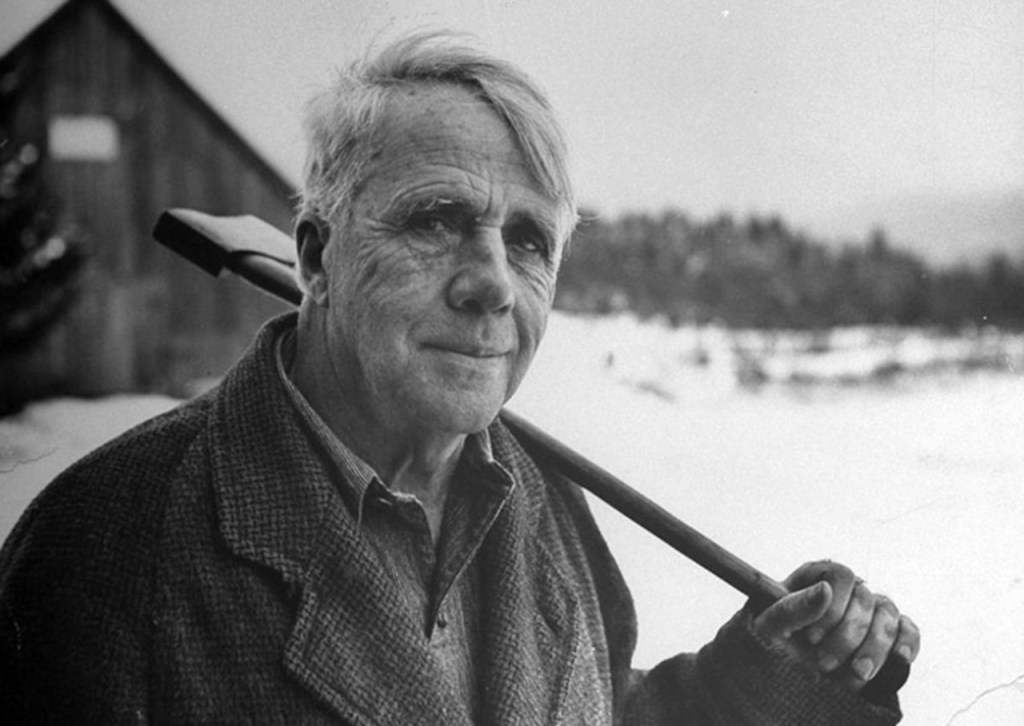

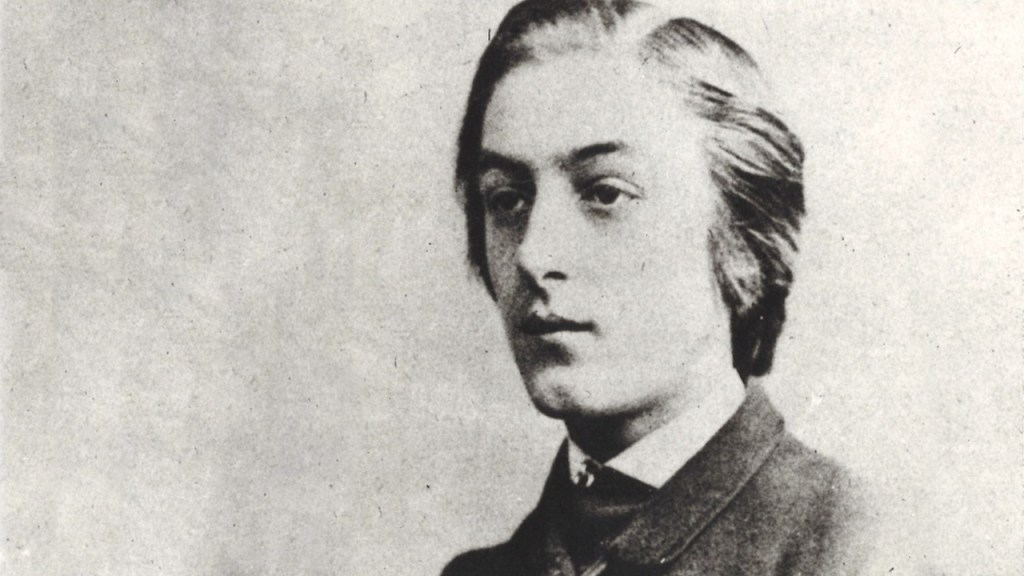

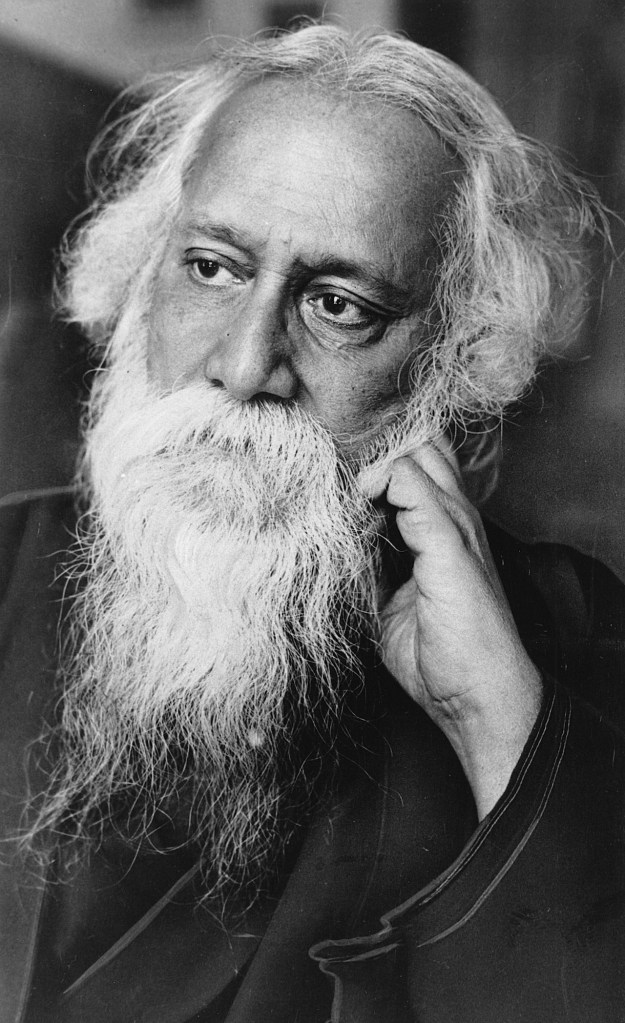
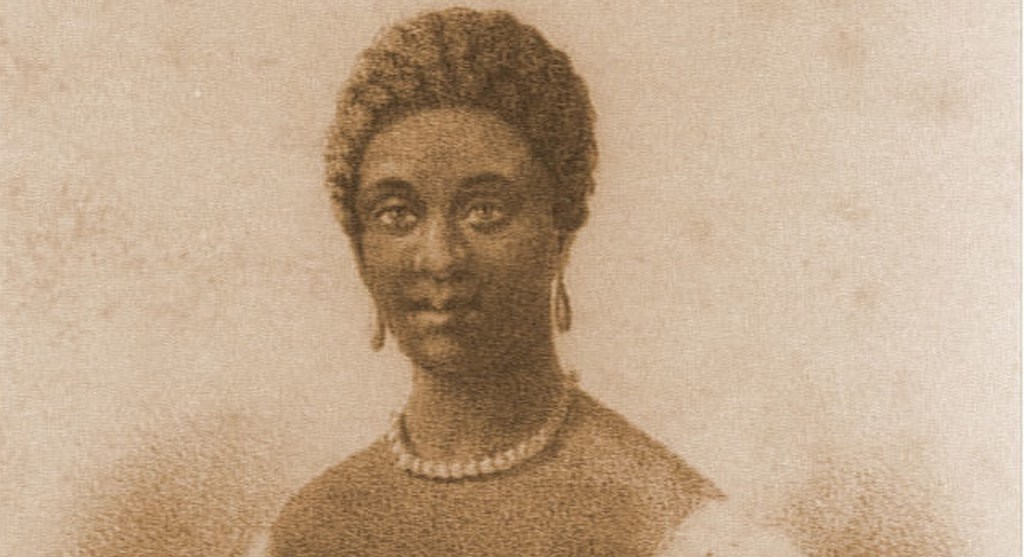

 Linda's Literary Home