Angela Manalang Gloria’s poem “To the Man I Married” presents an extended metaphor in which the speaker likens her love for her husband to her existential dependence on the earth.
Introduction and Text of “To the Man I Married”
This metaphor functions on both physical and spiritual levels, suggesting that her partner sustains and orients her life in a manner analogous to the natural elements necessary for survival.
To the Man I Married
I
You are my earth and all the earth implies: The gravity that ballasts me in space, The air I breathe, the land that stills my cries For food and shelter against devouring days.
You are the earth whose orbit marks my way And sets my north and south, my east and west, You are the final, elemented clay The driven heart must turn to for its rest.
If in your arms that hold me now so near I lift my keening thoughts to Helicon As trees long rooted to the earth uprear Their quickening leaves and flowers to the sun,
You who are earth, O never doubt that I Need you no less because I need the sky!
II
I cannot love you with a love That outcompares the boundless sea, For that were false, as no such love And no such ocean can ever be. But I can love you with a love As finite as the wave that dies And dying holds from crest to crest The blue of everlasting skies.
Section I
The first section of the poem adheres to the formal structure of the English (or Shakespearean) sonnet, consisting of three quatrains and a concluding couplet.
First Quatrain: The Husband as Life-Sustaining Force
You are my earth and all the earth implies: The gravity that ballasts me in space, The air I breathe, the land that stills my cries For food and shelter against devouring days.
The speaker opens with a striking declaration, asserting her husband’s indispensable role in her existence by comparing him to the earth itself. The metaphor extends through a catalogue of essential elements: gravity, air, land, and sustenance.
These earthly necessities are paralleled with emotional and material support offered by her husband, suggesting that her survival—both physical and emotional—depends as much on him as it does on the natural world.
Second Quatrain: He Provides Orientation and Final Rest
You are the earth whose orbit marks my way And sets my north and south, my east and west, You are the final, elemented clay The driven heart must turn to for its rest.
The second quatrain deepens the metaphor, portraying the husband as the source of direction and purpose in the speaker’s life. The reference to cardinal directions implies that her sense of order and orientation derives from their shared life.
The closing lines evoke mortality and rest, implying that just as the earth will eventually receive her physical body in death, her husband provides emotional and spiritual repose during life.
Third Quatrain: Acknowledging Other Affections
If in your arms that hold me now so near I lift my keening thoughts to Helicon As trees long rooted to the earth uprear Their quickening leaves and flowers to the sun,
Here, the speaker introduces a subtle shift. While affirming her deep attachment to her husband, she also acknowledges her intellectual and spiritual aspirations.
The allusion to Helicon, a mountain sacred to the Muses in Greek mythology, evokes poetic inspiration. Her longing for the transcendent does not diminish her love for her husband; rather, it coexists with it, just as rooted trees still reach toward the sun.
The Couplet: Coexistence of Earthly and Celestial Needs
You who are earth, O never doubt that I Need you no less because I need the sky!
The final couplet affirms the central thesis of the poem: the speaker’s need for transcendence (symbolized by “the sky”) does not negate her need for the grounding, stabilizing presence of her husband (symbolized by “the earth”).
Instead, both are essential, suggesting a balanced view of human experience as encompassing both the corporeal and the aspirational.
Section II
The second part of “To the Man I Married” diverges from the sonnet form and appears in two quatrains, adopting a more reflective tone. Here, the speaker qualifies the grand metaphors of the first section with a more tempered, realistic assessment of love.
First Quatrain: Rejection of Hyperbolic Metaphors
I cannot love you with a love That outcompares the boundless sea, For that were false, as no such love And no such ocean can ever be.
In this stanza, the speaker resists the temptation to describe her love through hyperbole. She dismisses the comparison to the “boundless sea” as false, recognizing the limitations of human emotion and language.
This moment of self-awareness introduces a more grounded view of romantic love.
Second Quatrain: Finite Love Reflecting the Infinite
But I can love you with a love As finite as the wave that dies And dying holds from crest to crest The blue of everlasting skies.
Although she renounces the oceanic metaphor, the speaker reintroduces the image of water through the wave. Unlike the sea, the wave is finite and mortal, yet it captures and reflects the sky’s infinity.
In this subtle turn, Gloria suggests that even within human limitations, love can embody and reflect transcendence.
The speaker in Auden’s “Doggerel by a Senior Citizen” is a man of certain age, warning listeners that what he is about to spew is doggerel. But the claim is made in ironic jest; what the “doggerelist” is about to spew is the bitter truth, or at least in his humble opinion, about societal progress.
Introduction with Text from “Doggerel by a Senior Citizen”
By ironically jesting that his utterance will be only a bit of doggerel, the speaker in W. H. Auden’s “Doggerel by a Senior Citizen” lightens any blame he may receive, or any pushback against his views. The views and the biting criticism remain perfectly in line with the poet’s views as expressed in his utterly serious works, such as “The Unknown Citizen.”
Doggerel by a Senior Citizen
Our earth in 1969 Is not the planet I call mine, The world, I mean, that gives me strength To hold off chaos at arm’s length.
My Eden landscapes and their climes Are constructs from Edwardian times, When bath-rooms took up lots of space, And, before eating, one said Grace.
The automobile, the aeroplane, Are useful gadgets, but profane: The enginry of which I dream Is moved by water or by steam.
Reason requires that I approve The light-bulb which I cannot love: To me more reverence-commanding A fish-tail burner on the landing.
My family ghosts I fought and routed, Their values, though, I never doubted: I thought the Protestant Work-Ethic Both practical and sympathetic.
When couples played or sang duets, It was immoral to have debts: I shall continue till I die To pay in cash for what I buy.
The Book of Common Prayer we knew Was that of 1662: Though with-it sermons may be well, Liturgical reforms are hell.
Sex was of course — it always is — The most enticing of mysteries, But news-stands did not then supply Manichean pornography.
Then Speech was mannerly, an Art, Like learning not to belch or fart: I cannot settle which is worse, The Anti-Novel or Free Verse.
Nor are those Ph.D’s my kith, Who dig the symbol and the myth: I count myself a man of letters Who writes, or hopes to, for his betters.
Dare any call Permissiveness An educational success? Saner those class-rooms which I sat in, Compelled to study Greek and Latin.
Though I suspect the term is crap, There is a Generation Gap, Who is to blame? Those, old or young, Who will not learn their Mother-Tongue.
But Love, at least, is not a state Either en vogue or out-of-date, And I’ve true friends, I will allow, To talk and eat with here and now.
Me alienated? Bosh! It’s just As a sworn citizen who must Skirmish with it that I feel Most at home with what is Real.
Commentary on “Doggerel by a Senior Citizen”
Claiming to be offering a piece of doggerel, this speaker/senior-citizen offers his personal evaluation about what things are like in the year 1969.
First Movement: A Different Planet from Yesteryear
Our earth in 1969 Is not the planet I call mine, The world, I mean, that gives me strength To hold off chaos at arm’s length.
My Eden landscapes and their climes Are constructs from Edwardian times, When bath-rooms took up lots of space, And, before eating, one said Grace.
The speaker begins by alerting his listeners that he is reporting from the year 1969, and he then makes clear through a bit of exaggeration that the earth no longer represents the same “planet” upon which he had formerly existed. This new “earth” “planet” “world” has become a place of mayhem, and the disorder is so bad that he has difficulty keeping it at bay or out of his own life.
The speaker suggests that his own preference is for the Edwardian age [1], a period of prosperity and especially important in the areas of fashion and art. The speaker hints that religion was still a central feature in the family, as they said “Grace” before dining.
The speaker makes it clear that for him those times were “[his] Eden”—likely he does mean prelapsarian Eden [2]. He employs the rest of his discourse to show how the times in which he is now living can be considered quite postlapsarian [3]
Second Movement: Nostalgia Outsmarts Novelty
The automobile, the aeroplane, Are useful gadgets, but profane: The enginry of which I dream Is moved by water or by steam.
Reason requires that I approve The light-bulb which I cannot love: To me more reverence-commanding A fish-tail burner on the landing.
The speaker refers to the common inventions of the day, calling the mode of travel by car and plane “useful” but “profane.” He still longs for the steam engine and old-timey wind sailing.
Although he feels that he is likely required to accept used of the “light-bulb,” he cannot bring himself to “love” the object. He prefers the gaslight resembling a fish tail, which resulted from two gas jets spewing through two holes that fanned out and formed the fish tail shaped flame. Nostalgia often overcomes efficacy when it comes to every-day useful appliances.
Third Movement: From the Work Ethic to Debt Accumulation
My family ghosts I fought and routed, Their values, though, I never doubted: I thought the Protestant Work-Ethic Both practical and sympathetic.
When couples played or sang duets, It was immoral to have debts: I shall continue till I die To pay in cash for what I buy.
The speaker has overcome the idiosyncrasies of family life, coming to love those whom he had earlier found unpleasant; he has, however, always accepted the basic moral rectitude of those family members. They adhered to the “Protestant Work-Ethic,” which the speaker has always deemed practical and proper.
Back during the time when party entertainment often consisted of “couples [playing or singing] duets,” the society deemed acquiring debt an immoral act. The speaker assures his listener that to his dying day he will continue to accept that societal feature and continue to pay “in cash for what I buy.”
Fourth Movement: The Weakness of Liturgical Reforms
The Book of Common Prayer we knew Was that of 1662: Though with-it sermons may be well, Liturgical reforms are hell.
Sex was of course — it always is — The most enticing of mysteries, But news-stands did not then supply Manichean pornography.
The speaker remembers that before certain religious reforms a “Book of Common Prayer” held sway, and it dated all the way back to 1662, during the era of the Restoration of King Charles II [4].
Religious reformation always comes about through controversy. Those who have become accustomed to certain practices of worship distain any change and thus argue against “liturgical reforms” [5]. This speaker has already placed his likely position on such reforms; he naturally comes down solidly on the side against them, labeling such actions “hell.”
The speaker then cites “sex,” which is always engulfed in “mysteries,” as an example of one phase of life that has suffered because of “liturgical reforms”: the obnoxious duality of “Manichean pornography” now sits on “news-stands,” whereas in the more modest past, such sights would not have been tolerated.
Fifth Movement: The Problem with Language Study
Then Speech was mannerly, an Art, Like learning not to belch or fart: I cannot settle which is worse, The Anti-Novel or Free Verse.
Nor are those Ph.D’s my kith, Who dig the symbol and the myth: I count myself a man of letters Who writes, or hopes to, for his betters.
The speaker now tackles “Speech,” the art of the word, the use of letters that creates literary art. But first he delves into the vulgar act of belching or farting, which along with the “mannerly” use of language, would not be acceptable. Children would then learn to avoid the grossness involved in such human effusions.
The speaker says he has not decided which art form is more vile: “the Anti-Novel” or “Free Verse.” The proliferation of those holding doctoral degrees, particularly the Ph.D., does not impress this speaker; he finds this who revel in “myth” and “symbol” hold little interest for him.
He contrasts himself with those book-learned fellows: he assures his listeners that he himself is “a man of letters.” But instead of trying to appeal to the vulgar, profane masses, he strives to compose for “his betters.” He remains a bit humble in his claim by inserting “or hopes to.”
Sixth Movement: Lack of Discipline
Dare any call Permissiveness An educational success? Saner those class-rooms which I sat in, Compelled to study Greek and Latin.
Though I suspect the term is crap, There is a Generation Gap, Who is to blame? Those, old or young, Who will not learn their Mother-Tongue.
The speaker then refers to permissiveness as the bane of success in education. He finds the old-fashioned disciplines focusing on learning “Greek and Latin” to be a much “saner” focus for the classroom. He was such a student and now feels he has benefited for the rigor of such study of language.
Mentioning the buzz-phrase of the late sixties “Generation Gap,” he says its likely a worthless expression, even though he does detect that such a thing exists. But he wonders who is to blame for it? Is the the “old or young”? But then he answers his question by asserting that both are to blame, that is, those who refuse to learn “their Mother-Tongue.”
Seventh Movement: Love and Reality
But Love, at least, is not a state Either en vogue or out-of-date, And I’ve true friends, I will allow, To talk and eat with here and now.
Me alienated? Bosh! It’s just As a sworn citizen who must Skirmish with it that I feel Most at home with what is Real.
The speaker concludes with some uplifting thoughts: love, for example, never goes out of style, and he retains good friends with whom he can pleasantly dine and converse.
He seems to reject the notion that he might feel “alienated,” but he does suggest that the loosening of societal mores causes him to “skirmish” with it all. He insists that he feels most comfortable with “what is Real.” He does not equivocate with what he thinks that reality entails; he has just laid it all out in his piece of “doggerel.”
Climate change alarmist Al Gore joked to his publisher that W. B. Yeats had penned the so-called poem “One thin September soon” in Gore’s latest book; sadly, the publisher seemed to fall for it, before Gore admitted to scribbling it.
Introduction with Text of “One thin September soon”
The former vice-president’s untitled piece appears in his book, Our Choice: A Plan to Solve the Climate Crisis, which purportedly offers the antidote to “global warming.” Al Gore’s untitled verse is chopped up into seven three-line sets, which may charitably be labeled tercets.
In this farcical piece of doggerel, the AGW (anthropogenic global warming) fanatic has his speaker pontificate from the position of a shepherd, who is crying to the world about the impending doom that human mankind is bringing on the world through the use of fossil fuels.
Through his many pontifications and written tracts on the politically fabricated issue of global warming, the former failed presidential candidate shows that he fancies himself a kind of modern-day John-the-Baptist crying in the wilderness, which is growing hotter and drier year after year, despite the fact that there has been no “warming” since the mid-1990s [1].
And now temperatures have actually started to cool [2], according to official NASA global temperature data.
Never mind the inconvenient facts, Gore heralds his speaker to bark loudly about the concocted problem and to offer his saintly wisdom in his untitled “poem”—wonder when Gore will publish a collection of his poetry. Likely, never. It seems that the political gasbag has penned only one “poem” which barely qualifies as doggerel.
One thin September soon
One thin September soon A floating continent disappears In midnight sun
Vapors rise as Fever settles on an acid sea Neptune’s bones dissolve
Snow glides from the mountain Ice fathers floods for a season A hard rain comes quickly
Then dirt is parched Kindling is placed in the forest For the lightning’s celebration
Unknown creatures Take their leave, unmourned Horsemen ready their stirrups
Passion seeks heroes and friends The bell of the city On the hill is rung
The shepherd cries The hour of choosing has arrived Here are your tools
Supposedly well read in scientific literature, climate alarmist Al Gore gets the science of the Earth wrong as he has his speaker claim to be “crying in the wilderness” like some modern day John-the-Climate-Change-Baptist.
First Tercet: Beginning with a Fantasy
One thin September soon A floating continent disappears In midnight sun
Gore’s speaker begins his piece by asserting that soon one of these Septembers—and it will be a “thin” September, not like the usual thick Septembers—the midnight sun will embrace the disappearance of a continent that floats.
This first assertion presents several problems:
it must be referring only to the continents at the Earth’s extreme north and south;
floating continents [3] exist only in fantasy [4],
he has to be referring to Antarctica because the Arctic is not a continent at all;
the midnight sun refers to a phenomenon that occurs in summer at each pole when the sun does not set.
For the midnight sun reference, the speaker has to be referring to the non-continent Arctic because he names the month of September. There is midnight sun in the first three weeks of September at the North Pole but not at the South, whose summer is from December 22 to March 21.
This confusion of poles gets the verse off to an inauspicious start.
On the one hand, the reader might remember that the composer of this pigswill is a man who is supposedly steeped in scientific studies in support of his global warming theory; yet, he engages a non-scientific fantasy and confuses the facts regarding activities at the Earth’s poles.
On the other hand, if one considers Gore’s academic accomplishment in the study of science —”According to his Harvard transcript, he earned a D in natural science his sophomore year”—[5], his error-prone nonsense makes perfect sense.
Second Tercet: The Conundrum of Postmodern Claptrap
Vapors rise as Fever settles on an acid sea Neptune’s bones dissolve
According to global warming proponents, ocean waters are becoming acidic because of the lethal effects that the warming is having on various sea creatures, including coral and urchins. Gore’s speaker refers to these sea creatures as Neptune’s bones that are dissolving.
The absurd conflation of the bones of a mythological god and sea creatures bends the piece to the frowziness of postmodernism, where nothing matters because nothing makes sense anyway. Yet this man of hard science wants to influence politicians and governments to make policies that will affect all citizens worldwide.
Third Tercet: A Pile of Images
Snow glides from the mountain Ice fathers floods for a season A hard rain comes quickly
Because of the warming, snows begin to loosen and slide down mountains while melting ice gluts the ocean, and then the rains begin, those horrid rains! And they are “hard” [6] rains—recall that other noted poetaster/plagiarist Bob Dylan [7].
The politician-cum-poetaster then makes those three claims of the melting that the earth is enduring: all obviously caused by the heat, all slapped together without punctuation or conjunction, possibly because everything is happening almost simultaneously. As the snow and ice suddenly become a hard rain, the reader might then suspect the prompt need of an ark.
Fourth Tercet: As Lightning Celebrates
Then dirt is parched Kindling is placed in the forest For the lightning’s celebration
However, the next scene takes the reader to dry land where dirt is parched, and out of the blue, someone has placed small slips of wood in a forest where lightning can catch them to flame as it celebrates.
The doggerelist does not reveal who placed that “[k]indling” in the forest so that lightning could set it aflame for its celebration. Why, one might wonder, would lightning be “celebrating” anyway? But by now the gentle reader has become aware that taking anything in this piece seriously is a fool’s errand.
Fifth Tercet: Getting Ready for the Apocalypse
Unknown creatures Take their leave, unmourned Horsemen ready their stirrups
There are many species of animals on Antarctica, but Gore’s speaker chooses to claim that they are unknown as they “[t]ake their leave.” It seems that such a situation would merit some drama, instead of the faint, euphemistic “take their leave.”
But then they are unmourned. He, no doubt, would at least have them be mourned, despite their being unknown. Perhaps the most bizarre and useless line in the entire piece is, “Horsemen ready their stirrups.” There seems to be no reason for that line, for it connects to nothing.
And if the bizarre notion of an allusion to the “Four Horsemen of the Apocalypse” springs to mind, it will offer no resolution of any kind. The Book of Revelation has suffered many absurd interpretations, and if Gore’s speaker is attempting to add another, it results in the lamest of the lame.
Sixth Tercet: A Gorean City on the Hill
Passion seeks heroes and friends The bell of the city On the hill is rung
The brave shepherd is passionately seeking others who will help him get his message out, that the earth is becoming a scorched, iceless dustbowl with the oceans rising. The speaker/shepherd now credits himself for ringing that all important bell in that all important place—that “city / On the hill.” The solipsism of this piece is nausea invoking.
Could the city on the hill be that same place to which President Ronald Reagan [8] referred?
A troubled and afflicted mankind looks to us, pleading for us to keep our rendezvous with destiny; that we will uphold the principles of self-reliance, self-discipline, morality, and, above all, responsible liberty for every individual that we will become that shining city on a hill.
It is likely that Gore’s speaker does, in fact, refer to that same place, but for very different reasons, for the policies thus far suggested to stop global warming would stifle the individualism and freedom of all world citizens, especially those in Third-World nations.
Seventh Tercet: The Shepherd Handing Over the Tools
The shepherd cries The hour of choosing has arrived Here are your tools
In the final three-line set, Gore’s speaker reports that he, as this good crying shepherd, is telling his listeners that the time for action is at hand, and he has hereby come to hand to them all the tools they need.
This self-important, junk-science spewing “shepherd” is offering in his new book the necessary “tools” that his sheep will need as they waddle with him down this fantastical path to an Earth-saving global temperature. Whatever that is?
(Please note: On Amazon, Fredrick P. Wilson, in his comment, “Ugly, Economically Disastrous, Green Choices,” offers a useful review of Gore’s book, Our Choice: A Plan to Solve the Climate Crisis.)
Sources
[1] Prof. Don J. Easterbrook. “Global Cooling is Here.” Global Research. November 2, 2008.
William Butler Yeats’ “The Second Coming” remains one of the most widely misunderstood poems of the 20th century. Many scholars and critics have failed to criticize the exaggeration in the first stanza and the absurd metaphor in the second stanza, which render a potentially fine poem a critical failure.
Introduction with Text of “The Second Coming”
Poems, in order to communicate, must be as logical as the purpose and content require. For example, if the poet wishes to comment on or criticize an issue, he must adhere to physical facts in his poetic drama. If the poet wishes to emote, equivocate, or demonstrate the chaotic nature of his cosmic thinking, he may legitimately do so without much seeming sense.
For example, Robert Bly’s lines—”Sometimes a man walks by a pond, and a hand / Reaches out and pulls him in” / / “The pond was lonely, or needed / Calcium, bones would do,”—are ludicrous [1] on every level. Even if one explicates the speaker’s personifying the pond, the lines remain absurd, at least in part because if a person needs calcium, grabbing the bones of another human being will not take care of that deficiency.
The absurdity of a lake needing “calcium” should be abundantly clear on its face. Nevertheless, the image of the lake grabbing a man may ultimately be accepted as the funny nonsense that it is. William Butler Yeats’ “The Second Coming” cannot be dismissed so easily; while the Yeats poem does not depict the universe as totally chaotic, it does bemoan that fact that events seem to be leading society to armageddon.
The absurdity surrounding the metaphor of the “rough beast” in the Yeats poem renders the musing on world events without practical substance.
The Second Coming
Turning and turning in the widening gyre The falcon cannot hear the falconer; Things fall apart; the centre cannot hold; Mere anarchy is loosed upon the world, The blood-dimmed tide is loosed, and everywhere The ceremony of innocence is drowned; The best lack all conviction, while the worst Are full of passionate intensity.
Surely some revelation is at hand; Surely the Second Coming is at hand. The Second Coming! Hardly are those words out When a vast image out of Spiritus Mundi Troubles my sight: somewhere in sands of the desert A shape with lion body and the head of a man, A gaze blank and pitiless as the sun, Is moving its slow thighs, while all about it Reel shadows of the indignant desert birds. The darkness drops again; but now I know That twenty centuries of stony sleep Were vexed to nightmare by a rocking cradle, And what rough beast, its hour come round at last, Slouches towards Bethlehem to be born?
Commentary on “The Second Coming”
William Butler Yeats’ “The Second Coming” remains one of the most widely anthologized poems in world literature. Yet its hyperbole in the first stanza and ludicrous “rough beast” metaphor in the second stanza result in a blur of unworkable speculation.
First Stanza: Sorrowful over Chaos
Turning and turning in the widening gyre The falcon cannot hear the falconer; Things fall apart; the centre cannot hold; Mere anarchy is loosed upon the world, The blood-dimmed tide is loosed, and everywhere The ceremony of innocence is drowned; The best lack all conviction, while the worst Are full of passionate intensity.
The speaker is sorrowing over the chaos of world events that have left in their wake many dead people. Clashes of groups of ideologues have wreaked havoc, and much blood shed has smeared the tranquil lives of innocent people who wish to live quiet, productive lives.
The speaker likens the seemingly out of control situation of society to a falconer losing control of the falcon as he attempts to tame it. Everyday life has become chaotic as corrupt governments have spurred revolutions. Lack of respect for leadership has left a vacuum which is filled with force and violence.
The overstated claim that “The best lack all conviction, while the worst / Are full of passionate intensity” should have alerted the poet that he needed to rinse out the generic hyperbole in favor of more accuracy on the world stage.
Such a blanket, unqualified statement, especially in a poem, lacks the ring of truth: it simply cannot be true that the “best lack all conviction.” Surely, some the best still retain some level of conviction, or else improvement could never be expected.
It also cannot be true that all the worst are passionate; some of the worst are likely not passionate at all but remain sycophantic, indifferent followers. Any reader should be wary of such all-inclusive, absolutist statements in both prose and poetry.
Anytime a writer subsumes an entirety with the terms “all,” “none,” “everything,” “everyone,” “always,” or “never,” the reader should question the statement for its accuracy. All too often such terms are signals for stereotypes, which produce the same inaccuracy as groupthink.
Second Stanza: What Revelation?
Surely some revelation is at hand; Surely the Second Coming is at hand. The Second Coming! Hardly are those words out When a vast image out of Spiritus Mundi Troubles my sight: somewhere in sands of the desert A shape with lion body and the head of a man, A gaze blank and pitiless as the sun, Is moving its slow thighs, while all about it Reel shadows of the indignant desert birds. The darkness drops again; but now I know That twenty centuries of stony sleep Were vexed to nightmare by a rocking cradle, And what rough beast, its hour come round at last, Slouches towards Bethlehem to be born?
The idea of “some revelation” leads the speaker to the mythological second coming of Christ. So he speculates on what a second coming might entail. However, instead of “Christ,” the speaker conjures the notion that an Egyptian-Sphinx-like character with ill-intent might arrive instead.
Therefore, in place of a second coming of godliness and virtue, as is the purpose of the original second coming, the speaker wonders: what if the actual second coming will be more like an Anti-Christ? What if all this chaos of bloodshed and disarray has been brought on by the opposite of Christian virtue?
Postmodern Absurdity and the “Rough Beast”
The “rough beast” in Yeats’ “The Second Coming” is an aberration of imagination, not a viable symbol for what Yeats’ speaker thought he was achieving in his critique of culture. If, as the postmodernists contend, there is no order [2] in the universe and nothing really makes any sense anyway, then it becomes perfectly fine to write nonsense.
Because this poet is a contemporary of modernism but not postmodernism [3], William Butler Yeats’ poetry and poetics do not quite devolve to the level of postmodern angst that blankets everything with the nonsensical. Yet, his manifesto titled A Vision is, undoubtedly, one of the contributing factors to that line of meretricious ideology.
Hazarding a Guess Can Be Hazardous
The first stanza of Yeats’ “The Second Coming” begins by metaphorically comparing a falconer losing control of the falcon to nations and governments losing control because of the current world disorder, in which “[t]hings fall apart; the centre cannot hold.”
Political factions employ these lines against their opposition during the time in which their opposition is in power, as they spew forth praise for their own order that somehow magically appears with their taking the seat of power.
The poem has been co-opted by the political class so often that Dorian Lynskey, overviewing the poem in his essay, “‘Things fall apart’: the Apocalyptic Appeal of WB Yeats’s The Second Coming,” writes, “There was apparently no geopolitical drama to which it could not be applied” [4].
The second stanza dramatizes the speaker’s musing about a revelation that has popped into his head, and he likens that revelation to the second coming of Christ; however, this time the coming, he speculates, may be something much different.
The speaker does not know what the second coming will herald, but he does not mind hazarding a dramatic guess about the possibility. Thus, he guesses that the entity of a new “second coming” would likely be something that resembles the Egyptian sphinx; it would not be the return of the Christ with the return of virtue but perhaps its opposite—vice.
The speaker concludes his guess with an allusion to the birth of such an entity as he likens the Blessed Virgin Mother to the “rough beast.” The Blessèd Virgin Mother, as a newfangled, postmodern creature, will be “slouching toward Bethlehem” because that is the location to which the first coming came.
The allusion to “Bethlehem” functions solely as a vague juxtaposition to the phrase “second coming” in hopes that the reader will make the connection that the first coming and the second coming may have something in common. The speaker speculates that at this very moment wherein the speaker is doing his speculation some “rough beast” might be pregnant with the creature of the “second coming.”
And as the time arrives for the creature to be born, the rough beast will go “slouching” towards its lair to give birth to this “second coming” creature: “its hour come round at last” refers to the rough beast being in labor.
The Flaw of Yeats’ “The Second Coming”
The speaker then poses the nonsensical question: “And what rough beast, its hour come round at last, / Slouches towards Bethlehem to be born?” In order to make the case that the speaker wishes to make, these last two lines should be restructured in one of two ways:
And what rough beast, its hour come round at last, Slouches towards Bethlehem to give birth?
or
And what rough beast’s babe, its time come at last, Is in transport to Bethlehem to be born?
An unborn being cannot “slouch” toward a destination. The pregnant mother of the unborn being can “slouch” toward a destination. But the speaker is not contemplating the nature of the rough beast’s mother; he is contemplating the nature of the rough beast itself.
The speaker does not suggest that the literal Sphinx will travel to Bethlehem. He is merely implying that a Sphinx-like creature might resemble the creature of the second coming. Once an individual has discounted the return of Jesus the Christ as a literal or even spiritual fact, one might offer personal speculation about just what a second coming would look like.
It is doubtful that anyone would argue that the poem is dramatizing a literal birth, rather than a spiritual or metaphorical one. It is also unreasonable to argue that the speaker of this poem—or Yeats for that matter—thought that the second coming actually referred to the Sphinx. A ridiculous image develops from the fabrication of the Sphinx moving toward Bethlehem. Yeats was more prudent than that.
Exaggerated Importance of Poem
William Butler Yeats composed a manifesto to display his worldview and poetics titled A Vision, in which he set down certain tenets of his thoughts on poetry, creativity, and world history. Although seemingly taken quite seriously by some Yeatsian scholars, A Vision is of little value in understanding either meaning in poetry or the meaning of the world, particularly in terms of historical events.
An important example of Yeats’ misunderstanding of world cycles is his explanation of the cyclical nature of history, exemplified with what he called “gyres” (pronounced with a hard “g.”) Two particular points in the Yeatsian explanation demonstrate the fallacy of his thinking:
In his diagram, Yeats set the position of the gyres inaccurately; they should not be intersecting but instead one should rest one on top of the other: cycles shrink and enlarge in scope; they do not overlap, as they would have to do if the Yeatsian model were accurate.
Image : Gyres – Inaccurate Configuration from A Vision
Image: Gyres – Accurate Configuration
2. In the traditional Second Coming, Christ is figured to come again but as an adult, not as in infant as is implied in Yeats’ poem “The Second Coming.”
Of great significance in Yeats’ poem is the “rough beast,” apparently the Anti-Christ, who has not been born yet. And most problematic is that the rough beast is “slouch[ing] towards Bethlehem to be born.” The question is, how can such a creature be slouching if it has not yet been born? There is no indication the speaker wishes to attribute this second coming fiasco to the mother of the rough beast.
This illogical event is never mentioned by critics who seem to accept the slouching as a possible occurrence. On this score, it seems critics and scholars have lent the poem an unusually wide and encompassing poetic license.
The Accurate Meaning of the Second Coming
Paramahansa Yogananda has explained in depth the original, spiritual meaning of the phrase “the second coming”[5] which does not signify the literal coming again of Jesus the Christ, but the spiritual awakening of each individual soul to its Divine Nature through the Christ Consciousness.
Paramahansa Yogananda summarizes his two volume work The Second Coming of Christ: The Resurrection of the Christ Within You:
In titling this work The Second Coming of Christ, I am not referring to a literal return of Jesus to earth . . .
A thousand Christs sent to earth would not redeem its people unless they themselves become Christlike by purifying and expanding their individual consciousness to receive therein the second coming of the Christ Consciousness, as was manifested in Jesus . . .
Contact with this Consciousness, experienced in the ever new joy of meditation, will be the real second coming of Christ—and it will take place right in the devotee’s own consciousness. (my emphasis added)
Interestingly, knowledge of the meaning of that phrase “the second coming” as explained by Paramahansa Yogananda renders unnecessary the musings of Yeats’ poem “The Second Coming”and most other speculation about the subject. Still, the poem as an artifact of 20th century thinking remains an important object for study.
In his poem, “The Hill Maiden,” Malcolm M. Sedam has created a speaker voicing cheerful vaticination that his teenage angst-ridden protégé will one day shed her nihilism and burst into life affirming joy. The best teachers are those who can inspire as well as instruct their students. This poem represents a stellar example of that kind of inspirational educator.
Introduction and Text of “The Hill Maiden”
Malcolm M. Sedam‘s “The Hill Maiden” features a teacher dramatizing his observations about a particularly inquisitive but melancholy student. His ultimate purpose is to instill in the student the notion that she will ultimately be able to appreciate the life that she seems to disdain.
The poem plays out in three movements of unrimed stanzas. This organization allows the speaker to touch lightly on the physical reality of the subject but then move more intensely to the mental and finally the spiritual possibility of the subject’s inclinations.
Because the speaker can only infer certain facts about his student, the poem remains metaphorically and imagistically implicative instead of unequivocally literal. For example, the teacher has no exact idea what the student does at her home; thus he places her in an image of “moving among the phantom rocks of reverie.”
The teacher/speaker knows from the negativity the student has been expressing to him that she mentally resides among hardness that causes her to imagine that things are worse than they are.
Mentally she travels like a rocket through her ghostly musings until night fall when she sleeps but likely gets little rest, accounting for the nervous, brittle energy the educator perceives in his young scholar.
Likely the adolescent girl is simply suffering the turbulence of teenage angst through which most individuals of that age group must travel. But the best, most effective teachers are those who can inspire as well as instruct their students. This poem represents a stellar example of that kind of inspirational educator.
As an educator, Mr. Malcolm M. Sedam wrote poems to many of his students, always with the goal of inspiring them to high thinking and plain living. Mr. Sedam once said he felt that his function as an educator was “to kick the dirt off of his students.” By that he meant to help them see life more clearly without the fog of stereotypes, prejudice, and provincialism.
The Hill Maiden
(for Linda, over in the valley)
She is moving among the phantom Rocks of reverie hurtling through By mind bringing days into darkness Where the pull of growth rings The heart and spurs the soul
Where her wish strings questions In the mysterious night of snow Bringing a promise that only the hills can sing. Her smile waits behind a frown of swords That rend her days
In the melancholy of the deep valley Of dreams where she lives among flowers Gathering her moods that may bring peace Once the sorrow of lonely distance Has closed on hands—
The same hands that Zen-like reach To answer each knock at the door of her heart Broken to be mended by tender time. Her mind is speeding through a galaxy Of intensity where the blood rose
Will speak to her frozen will All forgiven by decree in warring winds— The nature of her plight? Without wings She will still spring into flight.
Commentary on “The Hill Maiden”
Malcolm M. Sedam’s “The Hill Maiden” features a teacher, who is also a practicing poet, dramatizing his observance of an inquisitively intelligent but extremely melancholy student.
His only purpose is to instill in the student the notion that she will ultimately be able to appreciate the life that she seems now to disdain.
First Movement: Dreaming amongst the Hills
She is moving among the phantom Rocks of reverie hurtling through By mind bringing days into darkness Where the pull of growth rings The heart and spurs the soul
Where her wish strings questions In the mysterious night of snow Bringing a promise that only the hills can sing.
The speaker begins by placing the object of his speculative musing in an image that implies sharp but dream-like rigidity. Rocks appear ghost-like through a dream-scape as they bewilder the mental musings of the young girl with whom the mature educator is engaging both as a poetry mentor as well as a teacher.
Teachers often counsel their students who seek out their advice and direction even in issues outside of the academic sphere as well as within the educational arena. Those teachers who must essentially become counselors will either direct the students to other professionals, or they will attempt to offer their own gleanings from their life experience.
The teacher in this poem demonstrates that he is the latter kind of teacher, and he has given the mind of the young student some serious analysis. Thus he not only describes her environment, but he also speculates and then foreshadows what is likely to befall the girl once she is able to erase her current adolescent fog.
Until that glowing day arrives, however, the speaker sees that the girl’s maturing process weighs heavily on her heart and soul. She is full of questions brought on by the mystery of life.
The “snow” that brings beauty as it covers the hills also brings bitter cold and slippery conditions the cause the girl to miss the music that her hill-valley home affords her.
By pointing out these images of beauty and placing them a context of mystery and difficulty, the speaker hopes to allow his charge to contemplate the possibility that life is real and offers hope to those who search its reaches with an open mind and cheerful heart.
Second Movement: Frowning Swords
Her smile waits behind a frown of swords That rend her days
In the melancholy of the deep valley Of dreams where she lives among flowers Gathering her moods that may bring peace Once the sorrow of lonely distance Has closed on hands—
The same hands that Zen-like reach To answer each knock at the door of her heart Broken to be mended by tender time.
The speaker has observed the teen’s unwillingness to show a cheerful countenance. Her bitterness “behind a frown of swords” likely often gives the mentor a shudder at the likelihood that the girl is suffering intensely.
No doubt, he believes that at this point in her life, she should be dancing merrily among “flowers” and allowing her sorrowful moods to dissolve in the “deep valley of dreams.”
But again, he returns to prognostication that once she has learned to fold her hands in wonder and listen to the love that knocks at the “door of her heart,” her melancholy will be rendered null and void as “tender time” moves her through the rough spots of her anguish.
Again, the speaker chooses beauty—”flowers gathering”—to balance the “frown.” He offers the image of the heart’s door to harmonize with the environment that will reach her with the “Zen-like” hands of mystery and the ultimate gain-of-wisdom.
Like a Zen koan, the riddle of life will remain before her as she continues to search for answers to her perplexing questions.
Third Movement: Springing into Flight
Her mind is speeding through a galaxy Of intensity where the blood rose
Will speak to her frozen will All forgiven by decree in warring winds— The nature of her plight? Without wings She will still spring into flight.
Finally, the speaker makes his most striking vaticination after asserting that his young charge has a strong mind but also a tender heart that is quick to show intense emotion.
That the “blood rose” will speak itself undeniably to the girl’s will portends that all of her negativity and nihilism will be “forgiven” as she continues to navigate through the conflicts that life bestows on all searching souls.
Then the speaker offers the question that he is likely very content to answer. The frustrating situation that befuddles the young scholar’s mind and heart has been implied by all the imagery that went before, but then what will eventually be the path chosen by and/or for the student?
She will be able to navigate through all the trials and tribulations as a bird that so easily lifts it wings to the wind and takes to the air through the abundant space of sky.
The speaker is not so naïve as to insist that such navigation will come easily, but he does remain assured that the path will open to the girl, and she will become willing to follow it. Thus the speaker can conclude affirmatively that “Without wings, she will still spring into flight.”
Offered by a beloved and well-respected mentor, such faith in a young scholar’s ability to navigate life is bound to redound in blessings, despite the pitfalls and rough spots that her life, no doubt, will place sphinx-life before her mind and heart.
This commentary on Sterling A. Brown’s “Southern Cop” offers an alternative reading to the sycophantic interpretation given by postmodernists who subscribe to the prevailing ideology of victimhood. The curse of identity politics soft censors such stances; thus they remain rare.
Introduction with Text of “Southern Cop”
While the speaker in Sterling Brown’s “Southern Cop” seems to be exposing and rebuking racism, he actually engages in racism himself. This widely anthologized poem features the following scene: A rookie cop named Ty Kendricks has shot a man who was running out of an alley.
The poem does not report the reason that the man was running nor the reason that the police officer happened to be at the scene. However, the report clearly states that the man’s reason for running was not because of any guilt on his part. It is useful to keep in mind that the caveat stating that one is innocent until proven guilty applies to all citizens—even those who are running.
The speaker of the poem purports to represent the outraged citizenry, whose emotional reaction is so powerful that the speaker must turn to verbal irony in order to convey that outrage. The outraged speaker assumes that his audience is as offended as he is and thus will agree with his statements on all levels.
But the speaker also assumes that a racist audience will take him literally, even though brushing away the irony would demonstrate the utter bankruptcy of his intentionally ludicrous exhortations. The ideas that because Ty Kendricks was a rookie in the process of proving himself and that the citizenry should decorate him for shooting an innocent man cannot be taken literally.
The ideas of proving manhood and decorating a cop for shooting an innocent man are clearly absurd. The ideas are absolutely preposterous, yet the speaker does not suggest the course of action society should take in dealing with Ty Kendricks, the rookie cop, who likely made a mistake, without consideration of the race of the victim.
What does this rookie cop deserve? Who is to decide? An angry, disorderly mob? The speaker’s emotion becomes magnified with each stanza from the first line of the first stanza that would appear not to be ironic at all but quite literal to the first line of the last stanza that is undoubtedly filled with irony.
About half-way through the poem the irony becomes obvious. And the speaker then sets center stage his ironic barbs in his effusion.
Southern Cop
Let us forgive Ty Kendricks. The place was Darktown. He was young. His nerves were jittery. The day was hot. The Negro ran out of the alley. And so Ty shot.
Let us understand Ty Kendricks. The Negro must have been dangerous. Because he ran; And here was a rookie with a chance To prove himself a man.
Let us condone Ty Kendricks If we cannot decorate. When he found what the Negro was running for, It was too late; And all we can say for the Negro is It was unfortunate.
Let us pity Ty Kendricks. He has been through enough, Standing there, his big gun smoking, Rabbit-scared, alone, Having to hear the wenches wail And the dying Negro moan.
Commentary on “Southern Cop”
This irony-filled drama portrays a bundle of rage and racism. The attitude of the speaker weighs in at least as heavily as the actual event that the speaker is decrying.
Stanza 1: Forgiveness Is Good
Let us forgive Ty Kendricks. The place was Darktown. He was young. His nerves were jittery. The day was hot. The Negro ran out of the alley. And so Ty shot
The first stanza opens with the speaker seemingly quite controlled as he suggests that he and his milieu “forgive” the young cop named Ty Kendricks. The invocation of the Christian value of forgiveness offers no clue that the speaker would not, in fact, forgive this rookie cop. Of course, the biblical injunction demands that trespassers be forgiven.
However, in this particular scenario, what is the speaker suggesting be forgiven? He is urging forgiveness of Ty Kendricks the rookie cop who shot an man because he was running out of an alley. The speaker does not reveal the reason that the man was running, nor what caused the cop to shoot; the speaker is simply asking that the rookie be forgiven.
Stanza 2: Understanding Is Also a Good Thing
Let us understand Ty Kendricks. The Negro must have been dangerous. Because he ran; And here was a rookie with a chance To prove himself a man.
Next, the speaker asks that he and his listeners “understand” the rookie cop. Of course, they should try to understand both the perpetrators of crime and the enforcers of law. Otherwise, justice cannot prevail without understanding.
But then the speakers’s audience is apprised of what they are being commanded to forgive and to understand: the man was surely dangerous/guilty because he was running. Not only that, the rookie Ty Kendricks now has the opportunity to show himself to be a man.
Because running does not equal guilt, and the notion of proving manhood by shooting someone is ludicrous, it now becomes clear that the speaker is engaging in verbal irony to portray his true message. This speaker does not, in fact, want his audience to forgive nor understand Ty Kendricks, the rookie cop.
What does the speaker hope to accomplish with his use of irony? He intends to brand Ty Kendricks a racist and elicit sympathy for the man shot by this cop. Of course, the man who was shot deserves sympathy, but the speaker offers no evidence that Ty Kendricks was a racist cop.
That fact that Kendricks shot a man running out of an ally does not equal racism, despite the fact that the running man was black. All things being equal, Ty Kendricks would likely have shot any man of any race in this situation.
Stanza 3: Condoning the Killing of an Innocent Man
Let us condone Ty Kendricks If we cannot decorate. When he found what the Negro was running for, It was too late; And all we can say for the Negro is It was unfortunate.
Condoning this apparently despicable act of a rookie cop shooting an innocent victim becomes a near surreal request. But because the speaker is engaging in irony, he does not intend his listeners to “condone” but instead to “condemn” the rookie cop.
The cop’s reaction of shooting the running man became just another “unfortunate” event by the time the cop learned the reason for the running. But what is the efficacy of forgiving, condoning, and decorating a cop for a bad shoot?
The ironic use of the terms means that the speaker is in reality suggesting that his listeners continue to hold a grudge and to condemn cops, even those who might have mistakenly shot someone. The intensity of this verbal irony may possibly encourage speculation that the speaker is even attempting to instigate rioting, burning buildings, and killing other cops.
Stanza 4: Pity for All Involved
Let us pity Ty Kendricks. He has been through enough, Standing there, his big gun smoking, Rabbit-scared, alone, Having to hear the wenches wail And the dying Negro moan.
Finally, the speaker appears to return to some semblance of humanity, asking that he and his listeners “pity” this poor rookie cop. Of course, the cop deserves pity. Or more accurately, he deserves sympathy and support. Taking the life of a fellow human being causes emotional damage—even to the most well-adjusted veteran law enforcement officer.
And taking a human life constitutes a serious, deeply spiritual offense against Creation and the Creator, even though that Creator has arranged Creation to require such an offense at times. Even man’s law allows for self-defense.
But notice that the speaker is still in his own racist venue, as he applies his final acerbic barb of irony: he does not, in fact, want his audience to pity that rookie cop. Instead, he wants his readers to pity only the family of the deceased man: they stood there crying and moaning the loss of their loved one.
The speaker asks us to pity the rookie only because that rookie has to listen to that crying and moaning. By stating ironically that the pity should apply to Ty Kendricks and contrasting his situation with that of the deceased man and his family, the speaker is implying that any loss suffered by the cop remains negligible.
But suffering cannot be compared and contrasted especially in such a callous way. There is no way of calculating and weighing the suffering on either side: it’s a lose-lose situation.
Ultimately, there is no pity for Kendricks from this speaker and his ilk—only a hollow attempt to portray the cop as a criminal, not simply a human being who has made a mistake.
The Issue of Racism in the Poem
A cursory reading of Sterling A. Brown’s “Southern Cop” may result in the assumption of the stereotypical view that cops shoot young black men because they are black. An example of such a reading includes the following:
Sterling A. Brown’s poem “Southern Cop” published in 1936 is an extremely powerful piece of poetry in American history because it cuts at the heart of racism in America. Unfortunately, many of the points Brown makes are still relevant today. In fact, this poem could have been written after any number of recent events, Ferguson perhaps being the most well known, and it would be as pertenant (sic) as ever.[1]
The claim that this poem parallels the situation in “Ferguson” is patently false. The shooting in the poem “Southern Cop” and the shooting in Ferguson have nothing in common. In the “Ferguson” shooting, the race of the cop who shot and the race of the victim are known. In “Southern Cop,” the race of the cop can only be assumed—and then only prejudicially.
The “Hands up, don’t shoot!” claim, following the shooting of black teenager Michael Brown by white cop Darren Wilson in Ferguson, Missouri, in August 2014, has been debunked repeatedly; yet its basic impetus has refused to be abated [2] [3] [4] [5]. In fact, the only racism discoverable in the poem”Southern Cop” comes from the speaker, who identifies the victim as a “Negro” but does not ever mention the race of the cop who shot the “Negro.”
Because the stereotype of white racist cops, especially southern cops, is so ingrained in the culture, the speaker feels no need to identify the race of Ty Kendricks, who could as likely have been of any race. But because of the assumption that the cop is white, the speaker demonstrates his own racism by his utter contempt; he is deliberately attempting to pit the race of the shooting victim against the race of the shooter.
The speaker demonstrates sympathy only for the “Negro” while he attempts to promote hatred and contempt for the cop.
Before the late 1980s in the United States, the terms “Negro,” “colored,” and “black” were accepted widely in American English parlance.
While the term “Negro” had started to lose it popularity in the 1960s, it wasn’t until 1988 that the Reverend Jesse Jackson began insisting that Americans adopt the phrase “African American.” The earlier more accurate terms were the custom at the time that Sterling A. Brown was writing.
Suggestion for Students Writing Papers on Sterling A. Brown’s “Southern Cop” and Other Sensitive Issues
The following advice applies to students attending most American colleges and universities. Exceptions are Hillsdale College and a few others, where the First Amendment and other constitutional protections are still operative.
The current prevailing societal emphasis on identity and the politics of racial victimhood insures that my critical stance in this commentary is deemed unacceptable and will be at least soft censored, if not completely canceled.
So if you take such a stance in your classes, you are likely to be graded down or even censored—at best. At worst, you may be labeled racist, even expelled.
Therefore, please consider your options when writing on sensitive subjects like this one. Know your professors’ biases and use caution in crossing them.
However, the best outcome is that you are in position to take legal action against those professors who violate your constitutional rights. With such endeavors, I wish you all the best success.
The speaker of a poem is seldom the poet. A poem is a dramatization similar to a play. The speaker is a created character, crafted by the poet to speak the message of the poem. Even when a poet shares sentiment with the speaker, they should be considered separate entities.
Poet and Speaker of a Poem: Seldom the
While referring to the speaker of a poem, it is always more accurate and safer to say, “the speaker” instead of “the poet” because the speaker of a poem is not always the poet. A poem is a crafted performance, a portrayal, or a dramatization similar to a play. The speaker is quite often a created character, just as the characters who are on display in a play are created characters. Most poets keep a heartfelt, sincere fondness for their poems.
They give in to no compunction about claiming the importance of their life experience, their personal goals, dreams, and heartfelt struggles that inform their poems. Quite frankly, poetry could not be created without such profound feelings and struggles experienced by the creators of poetry.
But poets quite often create characters through which to expresses that experience and those struggles. Thus, the safer answer to the question—”Who speaks the poem?”—is “the speaker speaks the poem.”
Even if the speaker is obviously delving into her own feelings and situation, such as Elizabeth Barrett Browning’s Sonnets from the Portuguese, it remains more accurate to refer to the speaker of the poem as “the speaker” rather than “the poet,” “Elizabeth,” or “Barrett Browning.”
Speaking through Characters
Often poets may claim that their poems are their children; thus, it is important to keep in mind that children and their parents are not the same. Children may, and often do, hold very different ideas, beliefs and attitudes from those of their parents. A poem’s speaker may profess very different attitudes from the poet who wrote that speaker into existence—many times for that exact purpose.
Even though poets are close to their poems, they may not always place biographical information in their poems. Poets may not always reveal their exact beliefs in their poems. Like playwrights, poets usually create characters through which they speak in their poems.
Arthur Miller during Paddy Chayefsky’s Funeral at Riverside Memorial Chapel in New York City, NY, United States. (Photo by Ron Galella/WireImage)
Readers are not likely to confuse the characters in a play with the playwright. Thus, no one would make the mistake of thinking that Willie Loman, the character in Arthur Miller’s Death of a Salesman, is Miller himself. Miller has explained that the Loman character is, in fact, based on the experiences of one of Miller’s uncles.
Image d: Langston Hughes – Carl Van Vechten – The New Yorker
Yet because Langston Hughes has written in his poem titled “Cross,” “My old man is a white old man / And my old mothers black,” readers often surmise that Langston Hughes himself had a white father and a black mother. Both of Hughes’ parents, however, were black. Hughes has created a character in his poem, just as Arthur Miller created Willie Loman in his play.
The Speaker’s Voice
While discussing a poem, the reader is always on more solid ground if he refers to the person vocalizing the words as “the speaker,” instead of “the poet.” A poet can give his character any ideas or beliefs that are necessary for the execution of the poem’s purpose. According to Anna Story, discussing this issue in “How to Tell Who the Speaker Is in a Poem,”
The speaker is the voice or “persona” of a poem. One should not assume that the poet is the speaker, because the poet may be writing from a perspective entirely different from his own, even with the voice of another gender, race or species, or even of a material object. [1]
In his poem “Cross,” Langston Hughes explores the idea of how an individual of mixed race might feel. So he created a mixed race character and let him speak. Hughes, himself, cannot be testifying as to how that person feels, because he does not actually have the experience himself. But he is perfectly capable of exploring the idea, the “what if” situation that poets engage in quite often.
A Caveat: Observation vs Inner Sturm und Drang
Langston Hughes’ “Cross” would likely have been a better poem had he not chosen to engage the first person. Some issues simply cry out for authenticity that speculation of this kind cannot provide.
Hughes’ message could have remained somewhat similar, but he would have avoided the twofold issue that he would be mistaken for a mixed race individual and that the plight of the speaker remains under a cloud of doubt.
Image e: Emily Dickinson – Amherst College – Daguerrotype of the poet at age 17, circa 1847 – likely the only authentic, extant likeness of the poet
That fact does not detract from what other poets have achieved in their character creation. For example, Emily Dickinson assumes the persona of adult male to express the experience of “There’s been a Death, in the Opposite House,” and her portrayal remains genuine.
Unlike Hughes’ “Cross,” Dickinson’s speaker is reporting on an observation, not a deeply felt inner turmoil. Whether the speaker in Dickinson’s poem were a boy or a girl at the time of the observation matters very little, but if the poem had delved into deep seated feelings that the observation caused, it would have been less authentic to speak through the opposite sex.
Inner turmoil can be very differently experienced depending on the sex of the individual. As Paramahansa Yogananda has explained, females are guided more by feeling and males by reason; although both sexes possess both feeling and reason. In postlapsarian humanity, those qualities need to regain their balance and unity [2].
Exploration and Creativity
Poets, as well as novelists and playwrights, often explore feelings and thoughts and situations that they have not personally experienced. They often explore and dramatize beliefs that they do not necessarily hold.
For this reason, it is always safer to assume that the poet is creating a character rather than merely testifying, that he is exploring ideas rather than merely elaborating his own beliefs, thoughts, or feelings.Even though the poet may, in fact, be testifying and issuing her own beliefs, thoughts, or feelings, it is still more accurate and safer to assume that the poem is being spoken by a character, rather than by the poet.
William Butler Yeats’ reputation stands him as one of the towering figures of twentieth-century poetry, a master whose lyrical skill and evocative imagery earned him the Nobel Prize in Literature in 1923.
William Butler Yeats: A World-Class Poet
Many of William Butler Yeats’ poems, including “The Second Coming” and “Sailing to Byzantium,” reveal a profound sensitivity to the human condition, blending Irish myth with modern innovation.
Yet, beneath his celebrated poetry lies a less triumphant endeavor: A Vision, a sprawling metaphysical treatise first published in 1925 and revised in 1937. In A Vision, Yeats attempts to create a comprehensive system—a poetic ethic—that would unify history, personality, and art under a single rubric.
Despite Yeats’ stature as a world-class poet, A Vision represents a resounding failure. Far from establishing a coherent ethic, the work emerges as a cacophony of misguided notions, revealing Yeats’ superficial and often erroneous grasp of the Eastern religious traditions he claimed to have deeply studied.
Yeatsean Audacity
Yeats’ ambition in A Vision may be understood as the epitome of audacity. Supposedly inspired by automatic writing sessions with his wife, Georgie Hyde-Lees, beginning in 1917, the poet believed he had received revelations from spiritual “instructors” that offered a key to understanding human creativity as well as history.
The result was a system based on a cyclical theory of history, symbolized by interlocking gyres—conical spirals that represent the rise and fall of civilizations over 2,000-year periods. (For a discussion regarding the error of the gyres, please see “William Butler Yeats’ ‘The Second Coming’.”)
Yeats divided human personalities into 28 phases of the moon, each corresponding to a specific type, and posited that art, history, and the soul were governed by these cosmic rhythms. His goal was not merely philosophical; he aimed to craft a poetic ethic, a lens through which his poetry could be both generated and then interpreted.
This ambition, however, was challenged by Yeats’ intellectual limitations. While his poetic genius thrived on intuition and ambiguity,the success of a work such as A Vision demanded precision and coherence—qualities it sorely lacks.
Scholars such as Richard Ellmann have noted that Yeats himself admitted to the work’s thinness and opacity, famously remarking in a letter to Ethel Mannin that he wrote it “to keep myself from going mad” [1]. The treatise’s reliance on occult sources, including theosophy and Rosicrucianism, already situates it on shaky ground, but its most glaring and distressing failure lies in Yeats’ mishandling of Eastern religious concepts, which he claimed as foundational influences.
An Eastern Mirage: Yeats’ “Romantic Misunderstanding”
T. S. Eliot labeled Western misunderstanding of Eastern philosophy and religious concepts “Romantic misunderstanding.” He could have been pointing directly to Yeats in this evaluation.
Yeats’ engagement with Eastern religion was not a passing fancy. He was introduced to Hindu philosophy through his association with the Theosophical Society and his friendship with figures such as Sri Mohini Chatterjee, an Indian philosopher whom Yeats met in 1885. Yeats’ fascination deepened with readings of the Upanishads and the Bhagavad Gita, texts he revisited throughout his life.
In A Vision, Yeats explicitly invokes these traditions, particularly in his concepts of reincarnation, the eternal self, and the interplay of the pairs of opposites—ideas he aligns with his gyres and lunar phases. Yet, a closer examination reveals that Yeats’ interpretations are not only idiosyncratic but fundamentally at odds with the traditions he sought to integrate.
Take, for instance, Yeats’ treatment of reincarnation. In Hindu and Buddhist frameworks, reincarnation (samsara) is a process governed by karma, the moral law of cause and effect, aimed at liberation (samadhi in Hinduism, nirvana in Buddhism, salvation in Christianity).
The Brihadaranyaka Upanishad, a key text Yeats references, describes the soul’s journey as a quest for union with Brahman, the universal consciousness or God (as that concept is understood in Western culture) [2].
Yeats, however, reimagines reincarnation as a mechanistic cycle tied to his gyres, devoid of moral progression or spiritual liberation. This watering down of the concept of reincarnation obliterates its deep, spiritual purpose in the lives of humanity.
His 28 phases of the moon assign fixed personality types—such as the “Hunchback” or the “Saint”—with no clear path to transcendence, reducing a dynamic process to a deterministic wheel.
Again, Yeats misunderstanding results in a fatal flaw that limits the Eastern concepts to mere thought experiments, not profound truths that guide individuals on spiritual paths to a definite goal.
Scholar Harold Bloom observes Yeats’ limited awareness of Eastern religious concepts by suggesting that the poet’s understanding of reincarnation amounts to little more than a parody; in Yeats system the soul is trapped rather than liberated [3].
Similarly, Yeats’ appropriation of the Bhagavad Gita’s concept of dharma (duty) is distorted beyond recognition. In the Gita, Krishna advises Arjuna to act according to his rôle as a warrior, emphasizing selfless action within a cosmic order [4]. Yeats, however, interprets dharma as a fatalistic submission to historical forces, as seen in his analysis of civilizations’ rise and fall.
His gyres suggest that human agency is illusory, a stark departure from the Gita’s call to active participation in one’s destiny. This misreading reflects not a deep study but a superficial cherry-picking of Eastern ideas to bolster his preconceived system.
A Cacophony of Contradictions
The intellectual incoherence of A Vision extends beyond its Eastern distortions to its internal structure. Yeats’ gyres, meant to symbolize the dialectical interplay of opposites (primary and antithetical tinctures, in his terminology), collapse under scrutiny.
He asserts that history oscillates between unity and multiplicity, yet his examples—such as the fall of Troy or the rise of Christianity—are cherry-picked and lack rigorous historical grounding. Scholar Northrop Frye critiques this approach, arguing that the poet’s historical cycles are poetic fictions masquerading as metaphysics, unsupported by evidence or logic [5].
The treatise’s reliance on vague assertions—for example the suggestion that the end of an age, which always receives the revelation of the character of the next age, is represented by the coming of one gyre to its place of greatest expansion [6]. Such bland unexplained statements further muddy the work’s claims.
Moreover, the 28 lunar phases, intended as a typology of human character, devolve into arbitrary categorization. Yeats assigns historical figures like Shelley (Phase 17) and Napoleon (Phase 20) to these phases, but the criteria are inconsistent and subjective.
The system’s complexity overwhelms its usefulness, leaving readers with a tangled, labyrinthine taxonomy rather than a meaningful ethic. As critic T.R. Henn has avered that the work is less a philosophy than a privately concocted mythology, a wobbly scaffolding for Yeats’ imagination that collapses under its own weight [7].
The Poetic Ethic That Never Materialized
Yeats’ stated intention in formulating his treatise was to establish a poetic ethic, a poetic framework that would elevate his art and serve as a guide those who consume his art. Yet, A Vision fails to come together as either a practical guide or a philosophical statement.
Unlike Dante’s Divine Comedy, which integrates a clear Christian cosmology into its poetry, or Rabindranath Tagore’s works that reveal the Eastern concepts as they are meant to be understood through a poetry that resonates with appropriate imagery as it reveals those concepts, A Vision remains detached from Yeats’ best poetry; its unhinged rhetoric is a like a raft let loose to the wind.
Poems such as “The Second Coming” draw loosely on its imagery—for example, the “widening gyre”—but their power lies in their ambiguity, not in the treatise’s labored explanations. Scholar Helen Vendler has suggested that Yeats’ great poems transcend A Vision, and that they succeed despite it, not because of it [8].
This disconnect underscores the work’s failure as an ethic. An ethic, poetic or otherwise, requires clarity and applicability—qualities A Vision sorely lacks. Its esoteric jargon and convoluted diagrams (the gyres, the wheel, the unicorn) alienate rather than enlighten, rendering it inaccessible.
Even the most devoted Yeatsean acolytes have struggled to reveal any logic or utility in the work. Yeats’ Eastern borrowings, far from lending depth, expose his misunderstanding of traditions that emphasize simplicity and direct experience over intellectual abstraction.
The Zen Buddhist principle of direct insight, for instance, stands in stark contrast to Yeats’ overwrought theorizing, highlighting the huge gulf between his system and the philosophies he seemingly admired.
A Poet’s Folly
William Butler Yeats’ legacy as a poet is unassailable; his poetry remains a testimony to his genius. Yet, A Vision reveals the limits of that genius when applied to systematic thought.
Sadly, intended as a poetic ethic, the work instead emerges as a cacophony of wrong-headed ideas, its Eastern influences warped by misinterpretation and its structure undone by contradiction.
Yeats’ deep study of Hindu and Buddhist concepts, so proudly proclaimed, proves shallow in execution, a veneer of exoticism atop a fundamentally Western occult framework.
The treatise stands not as a triumph but as a cautionary tale: even a world-class poet can falter when straying too far from his craft. In the end, A Vision is less a vision than a mirage—a grand but misguided attempt to impose order on a world that resists such human intervention on a grand scale.
The late Maya Angelou was a poetaster, who also dabbled in the writing of essays, songs, and plays. She made her way from sex-worker to professor to world-wide, belovèd po-biz star on little writing talent. She possessed abundant quantities of the gift of gab and the skill to schmooze.
Wearing Many Hats
Critic Helen Razer [1] has said of Maya Angelou’s verse scribblings: “I won’t effectively urge you to critically read her poems, which are almost uniformly shit.” Razer still offered a certain level of praise for Angelou’s social activism.
Maya Angelou’s status as a sacred cow——i.e., one who is undeservedly immune to criticism——prevents most criticism, even the mildest form, from being leveled against this po-biz personality. Such critics often pay the price for criticizing these sacred cows.
Other more generous commentators have dubbed the former “madam” [2] a “renaissance woman” [3] for all of her so-called accomplishments such as poet(aster), essayist, songwriter, playwright, editor, actor, dancer, director, historian, and professor.
Included in Dr. Maya Angelou’s long list of professions is, indeed, the one considered the oldest profession; she worked as both a prostitute and a madam.
In her 1974 memoir, Gather Together in My Name, the former sex worker details her stint in that field of endeavor.
Angelou was also not shy about weighing in on politics: she was a “communist sympathizer” [4] and strong supporter of Cuba’s murdering dictator Fidel Castro.
Joining such luminaries as Louis Farrakhan and the Nation of Islam and the activists seeking release from prison the cop-killer Mumia Abu-Jamal, she supported many radical causes in the name of civil rights.
As Dr. Maya Angelou’s sycophants seek to elevate her as a renaissance women, the more clear-eyed critics realize she was little more than a “jack of all trades, master of none.”
The late poetaster dabbled in the writing of essays, songs, and plays in addition to verse.
After dipping into numerous professions of editor, dancer, director, actor, she was nominated for an Emmy award for her performance in Alex Haley’s Roots.
And she clawed her way from the degrading world of prostitution to become a world-wide, belovèd star, on little talent other than the gift of gab and the penchant for schmooze.
The Bogus Professor
When Dr. Maya Angelou was not traveling and delivering speeches, she occupied the Reynolds Professor of American Studies at Wake Forest University, where she “taught” beginning in 1981.
Hardly qualifying as a “professor,” Angelou taught only one course per semester, and students have reported that she occupied no office on campus.
According to John Meroney’s “The Real Maya Angelou” [5],”The office listed for her in the Wake Forest telephone directory is a storage closet in a building far from the main part of campus.”
Before the site finally eliminated her from its inclusion, her rating on “Rate My Professors” boasted a measly 2.6 on a 5-pont scale.”
One student had commented about the good Dr.’s teaching ability:
Arrogant, spiteful, rude, boring – and possessing a thoroughly mediocre intellect. The only thing that humanizes her is the suspicion that her incessant bullying stems from an awareness of just what a fraud she is. [6]
Star-struck Margaret Feinberg writes a glowing memory of an Angelou class, yet at the same time reveals the poverty of Angelou’s teaching style [7]; the phony professor spent the first three weeks of a semester having the students learn one anothers’ names!
Angelou was awarded numerous honorary doctorates, and she took full advantage of them, even calling herself “Dr.” Maya Angelou, an unearned title. According to Mark Oppenheimer, writer and podcast host,
. . . throughout academia, it is agreed that an honorary doctorate does not entitle one to call oneself “Dr.” The media generally agrees, and a good thing too. [8]
Marguerite Ann Johnson aka “Dr. Maya Angelou” did not earn a doctoral degree. Actually, she never even earned a bachelors or masters degree, having never attended college at all.
Of course, Ms Angelou has the last laugh on her critics regarding her lack of academic acumen: although she occupied no academic office space, she now boasts a residence hall standing in her name: Maya Angelou Hall! [9]
Since 2002, The “Maya Angelou Center for Health Equity” [10] has been studying the “racial and ethnic disparities in health care and health outcomes.”
Also in Angelou’s name was created the “Maya Angelou Presidential Chair” at Wake Forest, currently occupied [11] by race-baiter extremist Melissa Harris-Perry [12].
Sadly, Harris-Perry’s ranting is what currently passes for education in many of today’s universities [13], but on the bright side, note that MSNBC did have the good sense to fire her from her news anchor position.
Other Gigs
Dr. Maya Angelou teamed up with Target and the Poetry Foundation to create a project that introduces children and adults to poetry. The project is called “Dream in Color.”
Few individuals have exploited the color of their skin to the degree that the former Marguerite-Johnson-turned-Maya-Angelou did.
However, it is likely that Angelou’s best gig, the one formidably suited for her level of talent, was her stint with Hallmark Greeting cards [14].
Two samples of the drivel she created for Hallmark: “The wise woman wishes to be no one’s enemy, the wise woman refuses to be anyone’s victim” and “Life is a glorious banquet, a limitless and delicious buffet.”
A Childhood Trauma
Maya Angelou was born Marguerite Ann Johnson [15] in St. Louis on April 4, 1928. At age seven, she was raped by her mother’s boyfriend.
She confided this information only to her brother, but later she learned that one of her uncles had killed the man who raped her.
She claims melodramatically that fearing that her words had killed a man, she refused to speak and did not utter a word until she reached age thirteen.
She periodically lived with her mother and grandmother, who introduced her to literature.
Leaving high school for a short period, she became a cable car conductor in San Francisco. She returned to high school, and then she gave birth to a son a few weeks after graduation.
Although her life was difficult, she never gave up on her interests in the arts, dancing, and writing.
Marguerite Johnson Becomes Maya Angelou
After marrying Tosh Angelos, a Greek sailor, she got a job as a nightclub singer. She changed her name from Marguerite to Maya and altered the Angelos to Angelou and became “Maya Angelou” (pronounced “angelō” not “angeloo.”)
Angelou toured Europe with a production company, studied dance with Martha Graham, and released an album titled Calypso Lady in 1957.
Her interest in writing became strong, and she moved to New York, where she joined a Harlem writing group. She continued acting in off Broadway plays.
Years Abroad
In 1960, Maya Angelou met and married South African civil rights activist Vusumzi Make; the couple relocated to Cairo, Egypt, where Angelou worked as editor of the English language weekly paper The Arab Observer.
After this marriage dissolved, Angelou and her son moved to Ghana, where she worked as a music instructor at the University of Ghana; she also served as an editor at The African Review, while writing for The Ghanaian Times.
Returning to America
After Angelou returned to America in 1964, she began her writing career in earnest, producing I Know Why the Caged Bird Sings, her first autobiography, which was published in 1970.
This first autobiography gave Angelou national recognition. In all, Angelou penned seven autobiographies.
Angelou also wrote a book of essays titled, Letter to my Daughter, despite the fact that she had no daughters. Angelou’s play Georgia,Georgia was nominated for a Pulitzer Prize in 1972.
Presidential Appointments
President Gerald Ford appointed Maya Angelou to serve on the American Revolution Bicentennial Commission.
For President Jimmy Carter, she served on the Presidential Commission for the International Year of the Woman.
One of Angelou’s most famous pieces is “Phenomenal Woman.” This piece is quite accessible, as are all of her poems.
Angelou’s mystique is in her ability to perform many tasks and perform them well enough to make many people believe she is in fact a phenomenal woman, instead of simply an accomplished borderline grifter.
A Self-Invention: Famous for Being Famous
Angelou has explained that she decided to invent herself because she did not like the inventions that others had invented for her.
She was six feet tall, making her physically imposing. Angelou’s main talent was indeed in making a silk purse out of a sow’s ear——no small feat.
Despite her lack of true talent in any of her chosen fields of dabbling, she managed to gain recognition in many of them.
As some accomplishment-free yet widely celebrated folks like the Kardashians and Zsa Zsa Gabor are famous for being famous, Maya Angelou was noted for being noted.
Angelou did have the ability to make people notice her, but even more sweet for her was her ability to make herself seem accomplished when, in fact, her talent was mediocre at best.
Exposing a Sacred Cow
As a sacred cow of po-biz, Dr. Maya Angelou still benefits from an undeserved status.
Most scholars and critics shy away from pointing out the obvious about Ms. Angelou——that her talent as a writer, especially a poet, was meager at best, totally lacking at worst.
However, there are those brave commentators who ask the question, “Is it time yet to talk honestly about Maya Angelou?,” and then proceed to make that attempt.
Thus, the editor and co-founder at American Thinker Thomas Lifson [16] has begun the honest talk with the following:
There is an important phenomenon in cultural life that the hard left has exploited for many decades.
Most people cannot really tell what good poetry, or painting, or serious theatre (or artsy film, for that matter) is, but they fear looking stupid if they fail to appreciate what others say is good.
So, an “artist” in these semi-esoteric fields who is helped along by a claque of politically sympathetic cheerleaders in academia or journalism can become “widely acclaimed” and, if he or she plays the part well (as Angelou did), even “beloved.”
Still, the fact that Marguerite Johnson could transform her life in such a gigantic, flamboyant manner into the highly successful “Dr. Maya Angelou” on such little poetic talent speaks volumes for the grit and tenacity the woman possessed.
That feat may be something to be begrudgingly admired, even if not emulated.
The image is one of the most important literary devices—not only for poetry but for all forms of discourse. Poetaster Robert Bly does the device a great disservice by redefining it out of existence. Bly and his ilk have damaged the reputation and impact of the great art of poetry.
The Importance of the Image in Language
In Robert Bly’s attempted critical prose ramblings titled American Poetry: Wilderness and Domesticity [1], the quintessential poetaster and pobiz sacred cow defines the literary device known as “image”:
An image and a picture differ, in that the image being the natural speech of the imagination, cannot be drawn from or inserted back into the natural world.
Bly seems to be focusing entirely on visual imagery, as he defines “image” against “picture”; imagery, however, includes specific language that may appeal to any of the five senses, not just sight. An example of the image including the senses of sound and smell in addition to sight is Robert Browning’s “Meeting at Night”:
The gray sea and the long black land; And the yellow half-moon large and low; And the startled little waves that leap In fiery ringlets from their sleep, As I gain the cove with pushing prow, And quench its speed i’ the slushy sand.
Then a mile of warm sea-scented beach; Three fields to cross till a farm appears; A tap at the pane, the quick sharp scratch And blue spurt of a lighted match, And a voice less loud, thro’ its joys and fears, Than the two hearts beating each to each!
The poem begins and ends steeped in imagery [2]—mostly visual, but two lines contain images that appeal to sight, sound, and smell: “A tap at the pane (visual/auditory), the quick sharp scratch (auditory) / And blue spurt of a lighted match (olfactory).”
These lines portray a lover tapping at the window of his beloved: readers/listeners can see him and hear his tapping.
The lover then strikes a match, and readers/listeners can hear the match head scraping against some rough object, they can visualize the flame, and they can also smell the sulfur from the match as it bursts into flame.
But according to Bly these images are not images at all, they are merely pictures. They all do appear in nature; they all are retained in the memory so that after re-encountering them, the reader/listener can grasp the scene that the lover is experiencing in the poem.
Imagination and Memory
As the poet’s audience experiences the poem, they have, indeed, used their imaginations to help them see, hear, and smell these Brownian images—not only imagination but also memory.
Readers/listeners of Browning’s “Meeting at Night” must be able to remember the smell of a match and the sound of a tap on a windowpane, in order to be able to grasp the drama that Browning has created.
Is this portrayal simply “picturism” because our grasp of it “can be drawn from [and] inserted back into the natural world”? Imagination and memory work together in our understanding of any text.
The memory consists of information that is in the memory repository (the subconscious, often misconstrued as “the unconscious”), while the imagination works at connecting information gathered from experience, feelings, and thoughts, all of which are represented by language.
If our memory and imagination were not capable of acting on language this way, we would not be able to understand any text.
We cannot understand a language we have not learned, because words of the foreign language are not stored in our memory; the imagination has nothing to which it can connect the unknown words.
If, however, an image is, as Bly defines it, “the natural speech of the imagination” but “cannot be drawn from or inserted back into the natural world,” then how can we ever understand the meaning of the words expressing the image?
If the imagination is a place where sight, sound, smell, taste, and touch do not hold those things that comprise the “natural world,” then what is within the purview of the imagination?
Of course, there are connections that the memory and imagination can make that are on their face absurd, surreal, or simply false.
But those connections are not the stuff of poetry or any art, unless they are being used in the art for refutation against counterfeiting.
Such phenomena may also comprise the initial writing exercises known as brain-storming or pre-writing, but if they are left in an unformed, unpolished state, they will remain incommunicable at best and ugly at worst.
Image vs Picture
Bly has offered for comparison the following phrases, one he considers an image and one he considers a picture. His example of an image is Bonnefoy’s “interior sea lighted by turning eagles,” which he contrasts with Pound’s “Petals on a wet black bough.”
According to Bly, Bonnefoy’s phrase is not taken from nature and cannot be inserted back into the natural world, while Pound’s can be. Keep in mind that Bly has called for poets to “ask the unconscious . . . to enter the poem and contribute a few images that we may not fully understand.”
Misconstruing “unconscious” for “subconscious,” Bly is begging for absurdity. He wishes to experience gibberish phrases, for that is all they can ever be, if not based on a language that is common to us all.
And is it really true that Bonnefoy’s phrase is not taken from nature and cannot be inserted back into the natural world?
An “interior sea” obviously represents metaphorically the mind (and possibly the soul), while the “turning eagles” are certain thoughts that are illuminating the surface of that sea.
If the components of that phrase (the content words)—”sea,” “lighted,” “eagles”—appeared nowhere in nature but only in the subconscious of the poet, they would not be intelligible to anyone conversant in the English language.
Bly is skirting the real issue of language, attempting to explain the unexplainable or perhaps by simply remaining unaware of the distinction between the phenomenon of what is effable and what is ineffable.
The ineffable—that is, the world beyond the physical level of being—is not explainable in worldly language. (This fact remains the foundation on which atheism is built.)
Therefore, the poetry devices of metaphor, simile, image, and often personification are employed to make that valiant attempt to communicate what exists and what is happening on that ineffable level of being.
Bly likely employs vagueness and skirting because his secularism has overtaken his ability to vouchsafe that a spiritual level of existence is real. His pedestrian thinking keeps him focused on a kind of never-never land beyond human language.
He seems to be unable to comprehend that the ineffable cannot be described without metaphors, images, and other poetic devices. Two examples of Bly’s own so-called images further demonstrate the poverty of his image vs picture claims.
In his piece titled “Driving Toward Lac Qui Parle River,” he concocts the lines: “water kneeling in the moonlight” and “The lamplight falls on all fours in the grass.” The absurdity of personified water going down on its knees is simply one of the nonsense creations that upon further consideration could find a better phrasing.
And making an animal of lamplight screams out, “look at me, I’m saying something totally original.” With both lines, the scribbler is merely “counterfeiting.” He has nothing to say and so he knows it matters not one whit how he does not say it.
His claim that he wants the unconscious “to enter the poem and contribute a few images that we may not fully understand” remains just one silly way of covering obfuscation and disingenuousness. If we do not understand the “images,” how can the poem communicate?
Today’s Poetry Is without the Image?
While Bly’s definition of the image as something that cannot be drawn from or returned to the natural world is absurd, so is his claim, “The poetry we have now is a poetry without the image.”
This statement is false, not only false but impossible, as private tutor Kerry Kiefer [3] has opined, after being asked the question, “[are] there any poems with no imagery in them that are good?”:
Poetry relies heavily upon imagery, and there is no instance of any poem of which I am aware that lacks imagery altogether.
Your question might be answered more satisfactorily by a linguist: one who studies the underlying principles of language could tell you more exactly why it is impossible for human beings to communicate without imagery. I just instinctively know it is impossible.
Here are a few examples of contemporary poems that definitely are not without the image:
Linda Pastan’s “The Cossacks”: “those are hoofbeats / on the frosty autumn air”
Ted Kooser’s “Dishwater”: “a bridge that leaps from her hot red hands / and hangs there shining for fifty years / over the mystified chickens”
Donald Hall’s “The Painted Bed”: “Grisly, foul, and terrific / is the speech of bones.”
These images and all the many poems that employ imagery testify to the false Bly claim that today’s poetry is imageless. However, the Bly defined image does not and cannot appear in poetry without its concomitant clash with understanding and appreciation.
If the poetaster had claimed that the image according to this Blyian definition does not exist, he would be spot on. Because his own absurd examples do not exist as poetry but mere debris of language twaddle. Basically, the impossibility of making a image according the Bly’s definition remains fact.
Counterfeiting
In his American Poetry: Wilderness and Domesticity, Bly assaults the work of the poet Robert Lowell, particularly Lowell’s For the Union Dead.
(Note: The following shows Bly’s sloppiness in his writing. He begins his rant in this chapter titled “Robert Lowell’s Bankruptcy” by misconfiguring T. S. Eliot’s title “The Waste Land” as The Wasteland. Eliot’s “The Waste Land” is a fairly long poem 433 lines, but standing alone it is not a book-length poem requiring italics, plus waste and land are separate words.)
Without identifying the poem from which he has taken it, Bly quotes the following Lowell passage which he particularly despises, calling it “coarse and ugly” and “unimaginative”:
Horrible the connoisseur tyrant’s querulous strut; an acorn dances in a girdle of green oak leaves up the steps of the scaffold to the block, square bastard of an oak
Instead of explaining why this passage is “coarse and ugly” and “unimaginative,” Bly merely makes a further unsubstantiated assertion:
[Lowell] is counterfeiting intellectual energy, pretending to be saying passionate things about tyrants and hangings, but in fact he gives only a series of violent words set next to each other; the indignation is ersatz, and the passage means nothing at all.
The passage taken out of context makes it easy to target for claiming meaninglessness. Meaning of specific passages often depends upon what went before and after the passage itself.
(For readers who wish to experience the entire poem from which Bly has excerpted the above quotation, please visit “Lady Ralegh’s Lament” in Life Studies and For the Union Dead at Google Books.)
The claim of “counterfeiting intellectual energy” is itself a pretense about saying something meaningful: what does “intellectual energy” mean? As structured, Bly seems to be saying that “intellectual energy” is “saying passionate things.”
But again without elucidation, according to Bly, Lowell is merely faking his saying of “passionate things.”
And then Bly makes a completely false statement when he asserts that “only a series of violent words set next to each other.”
Such a claim means that there is a catalogue or list of words without connecting text. Clearly, no such list exists in that passage. And how Bly assumes “indignation” remains unexplained.
And that that “indignation” is “ersatz” just offers further evidence of Bly’s own counterfeiting at offering a criticism of the passage.
That collection of prose ramblings demonstrates the bankruptcy of Bly’s own critical vision, and his chapter on Lowell is one of the most revealing; the exact weaknesses for which Bly criticizes Lowell attach only to Bly in his poetry as well as he criticism.
Quite possibly, Bly reveals the reason that he has been able to “counterfeit” a career in poetry, when he says, “. . . for American readers are so far from standing at the center of themselves that they can’t tell when a man is counterfeiting and when he isn’t” (my emphasis).
Is this, perhaps, an admission regarding his own art?
If an artist espouses such a derogatory notion about his audience, what is there to keep him honest? What does this imply about the integrity of his own art?
By the time Bly wrote these vacuous pieces of literary criticism, he had become a sacred cow in the world of poetry. His reputation was set so that critics shied away from countering anything Bly set down in writing.
Redefining the Image into Nothingness
In order to claim that images are not images but pictures and that there are no images in today’s poetry, Bly has concocted an impossible, unworkable, and totally fraudulent definition of “image.”
To perpetuate such a gross literary scam upon the already destitute literary world is, indeed, a travesty.
According to Kevin Bushell [4], “Such vague and metaphorical theoretical statements are characteristic of Bly, who seems reluctant to speak about technique in conventional terms.”
According to Robert Richman, “Bly provided the generation of poets coming of age in the Seventies with plenty of examples of anti-poetic poetry to accompany his anti-critical rhetoric” [5].
It is little wonder that poetry possesses little heft in the 21st century, after the drubbing it has taken at the hands of modernists, postmodernists, and outright scam artists like Robert Bly and his ilk in the 20th century.
Sources
[1] Robert Bly. American Poetry: Wilderness and Domesticity. HarperPerennial Edition. 1991. Print.

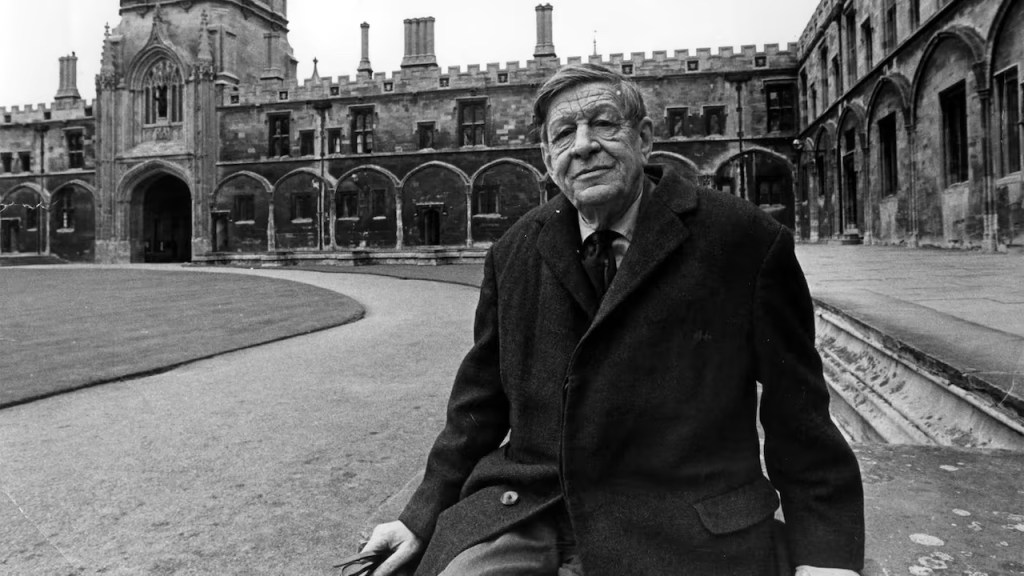


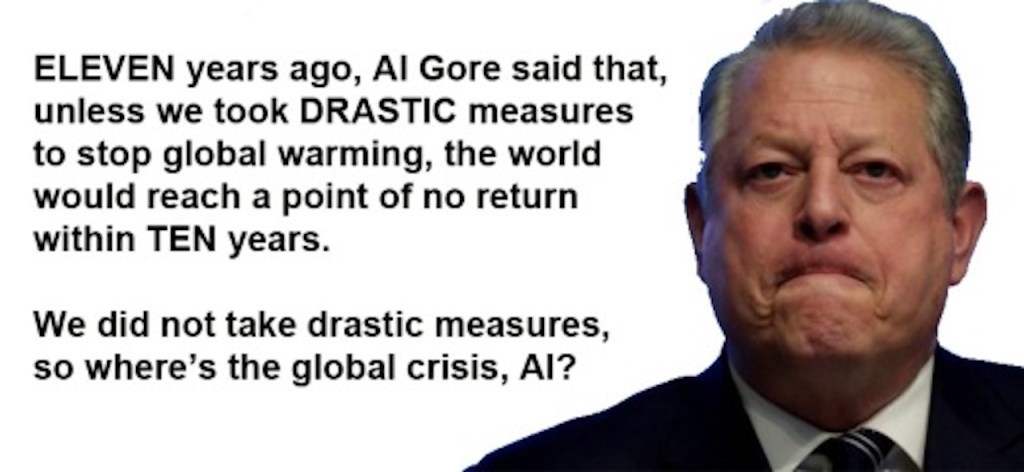


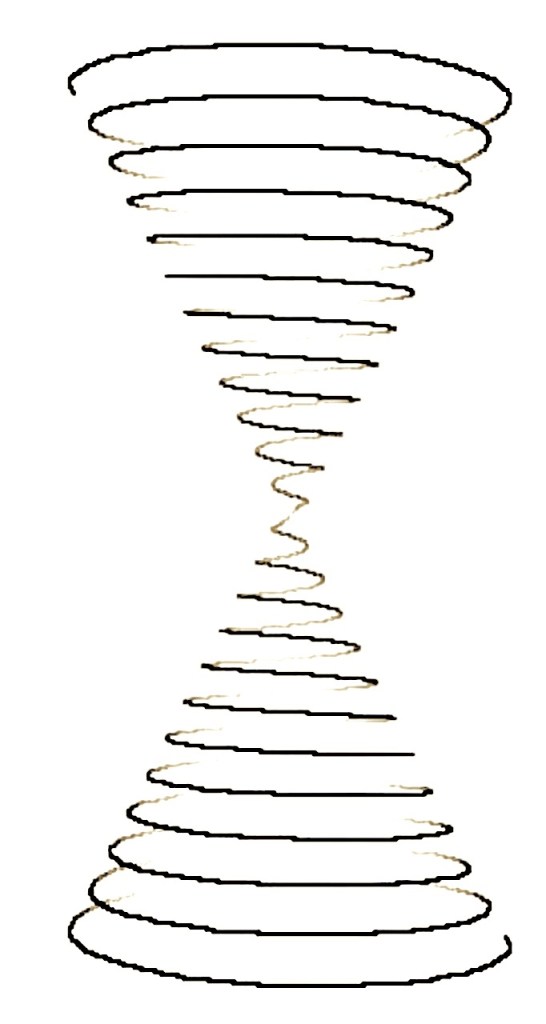
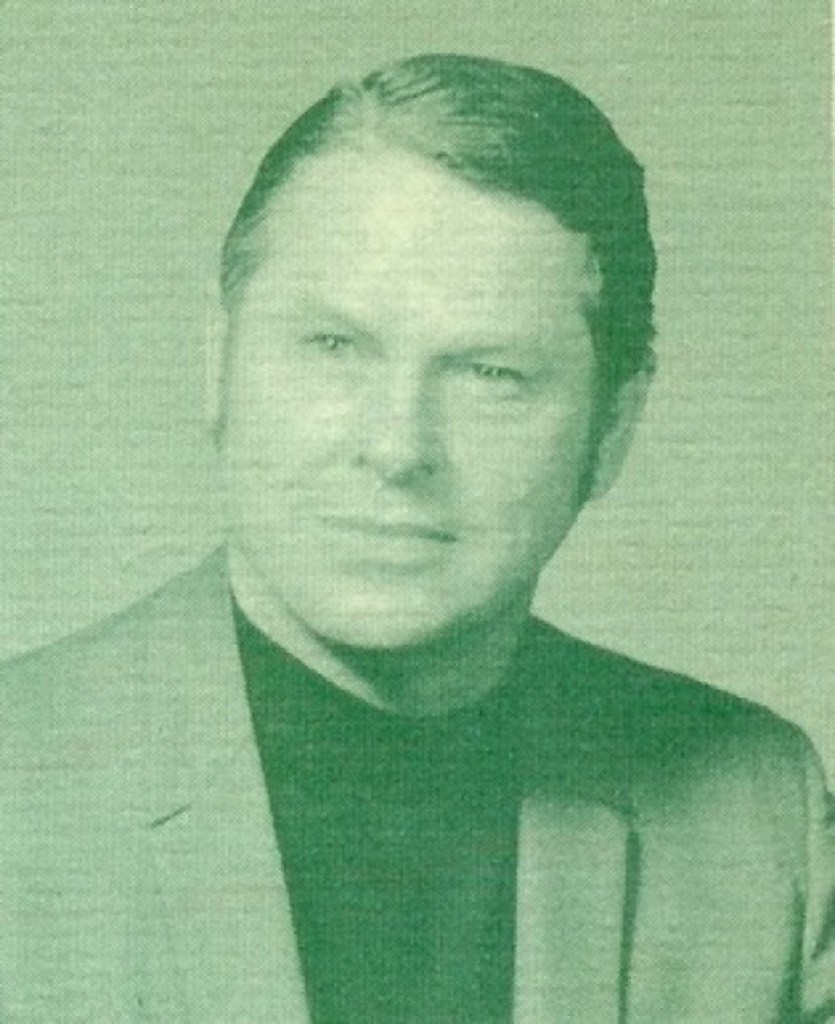

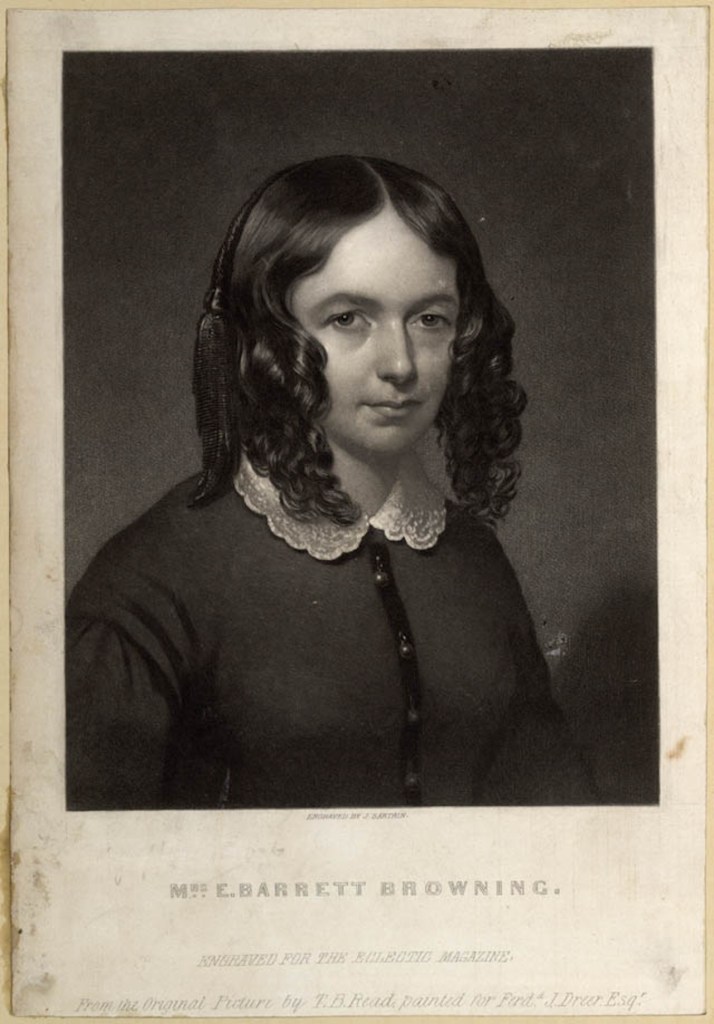
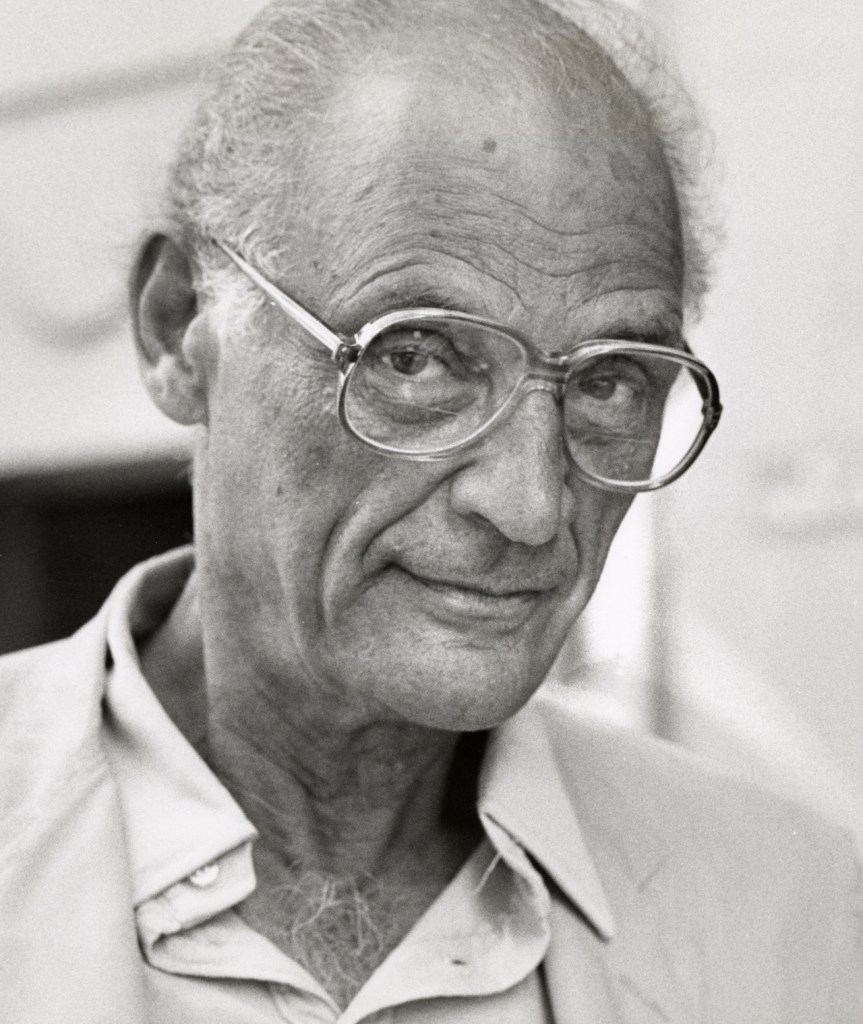
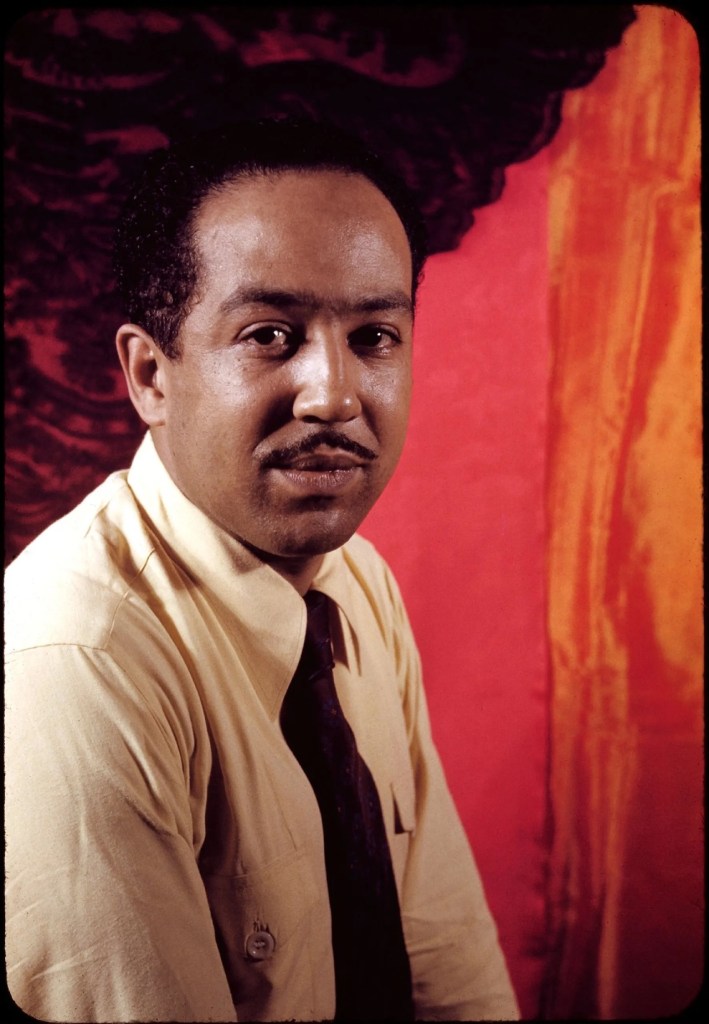
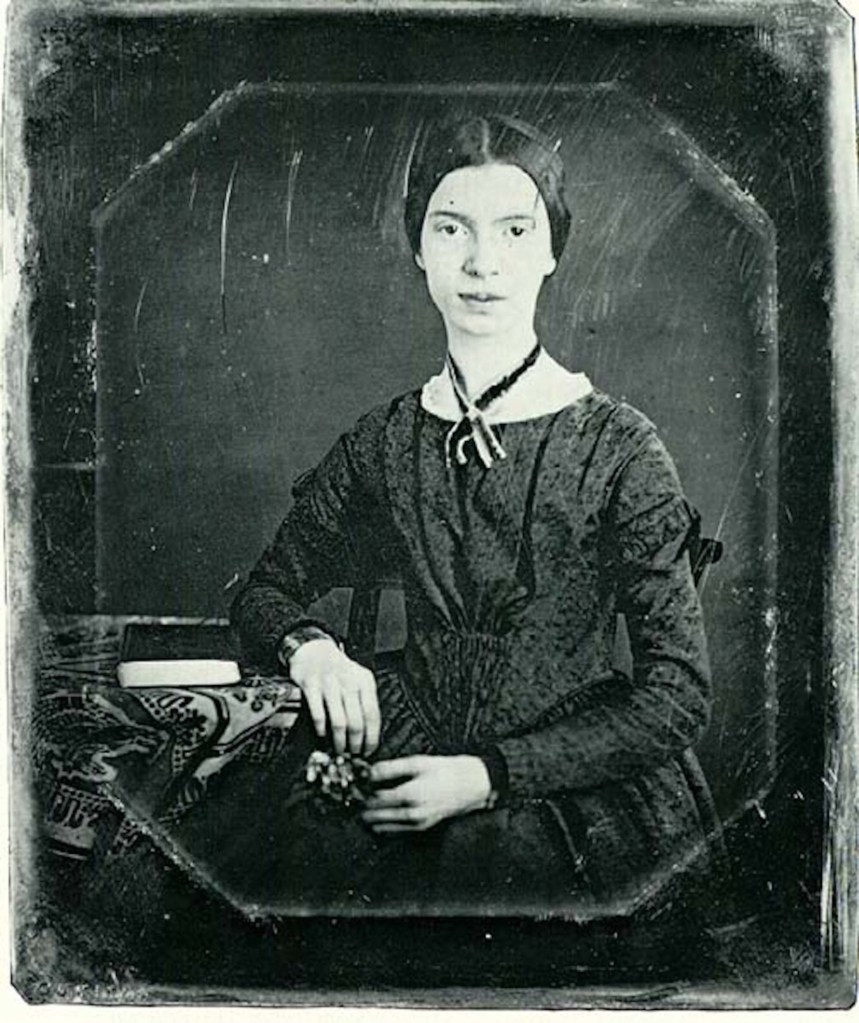

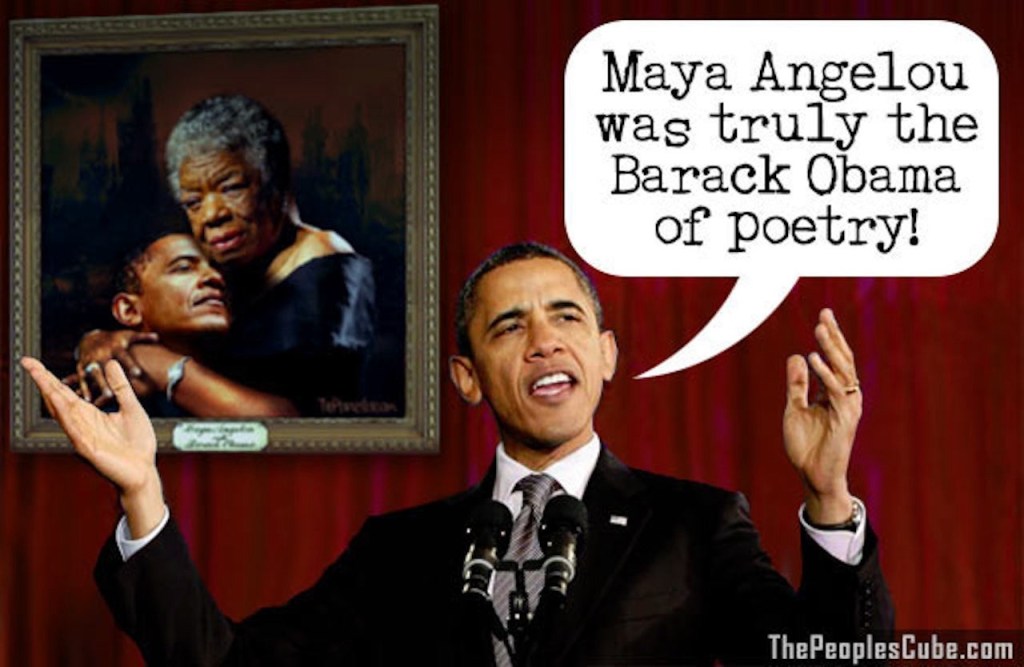


 Linda's Literary Home
