Linda's Literary Home

Tag: poetry

  • Emily Dickinson’s “My wheel is in the dark!”

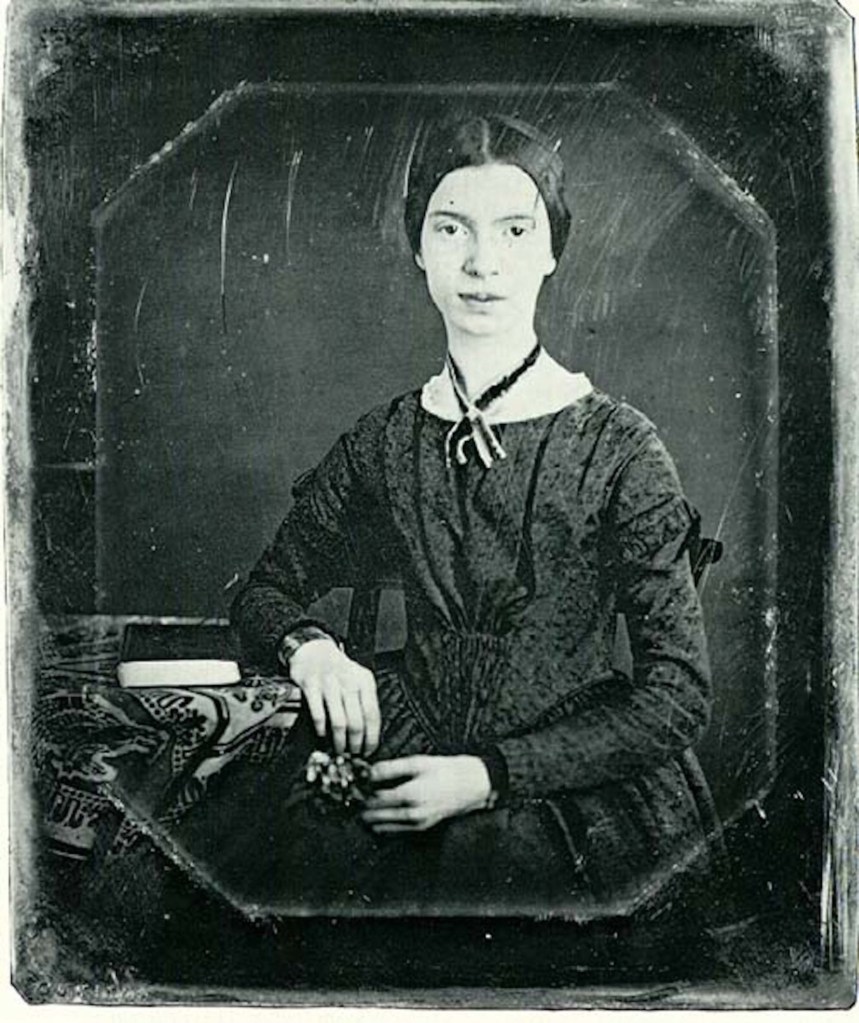
    Image: Emily Dickinson – Amherst College – Daguerrotype of the poet at age 17, circa 1847 – likely the only authentic, extant likeness of the poet

    Emily Dickinson’s “My wheel is in the dark!”

    The speaker in Emily Dickinson’s “My wheel is in the dark!” is making a statement about knowing without sense perception.  This subject especially interested the poet, who was specifically concerned with issues such as immortality and life after death.

    Introduction and Text of “My wheel is in the dark!”

    Despite the grammatical error in the last line of Emily Dickinson’s “My wheel is in the dark!,” the speaker’s revelation shines through clearly and offers a unique perspective about the nature of understanding and explaining the ineffable.

    My wheel is in the dark!

    My wheel is in the dark!
    I cannot see a spoke
    Yet know its dripping feet
    Go round and round.

    My foot in on the Tide!
    An unfrequented road –
    Yet have all roads
    A clearing in the end –

    Some have resigned the Loom –
    Some in the busy tomb
    Find a quaint employ –

    Some with new – stately feet –
    Pass royal through the gate –
    Flinging the problem back
    At you and I!

    Commentary on “My wheel is in the dark!”

    Rendering information about the ineffable level of being is virtually impossible, but through use of poetic devices and other literary language that rendering becomes somewhat meaningful and therefore understandable to the mind and heart.

    First Stanza:  Vision by Implication

    My wheel is in the dark!
    I cannot see a spoke
    Yet know its dripping feet
    Go round and round.

    The speaker reports that she is capable of knowing that the spoke on a wheel moves in a circular motion as it drips water even though there is no light on the wheel.  She is revealing that she, as all human beings are, is able to infer information without direct sense perception that might otherwise reveal such knowledge.

    Human beings prefer to rely on what they can “see” or “hear.”  But sometimes seeing and hearing are not possible.  For example, human beings are convinced that love and hate both exist, even though they cannot see the concepts to which those nouns refer. 

    The ultimate argument ensues from the issue of whether God exists.  Some will argue that because he cannot “see” God, then God must not exist.  The argument runs further as the atheist insists that he also cannot hear, feel, taste, or touch God—and what cannot be experienced through the senses, therefore, does not exist.

    The speaker in “My wheel is in the dark!” thus counters such an argument by demonstrating that not only is metaphysical knowledge based on intuition and inference but also simple knowledge about things like wet wheels that go round and round in the dark.

    Second Stanza:  An Uncharted Path

    My foot in on the Tide!
    An unfrequented road –
    Yet have all roads
    A clearing in the end –

    The speaker continues with her comparison stating that she is walking an uncharted path, but she knows, again by intuition and inference, that this road will eventually lead to “a clearing.”  

    Despite the danger, such as would be experienced by having one’s foot “on the Tide,” the speaker can, with fairly great certainty, be assured that all the danger and complexity of the road she walks will end, and all will be understandable when she moves into that landscape which features clarity.

    The speaker places that clarity at the end, which is at the end of her life, a time at which she will come to the end of the path and enter the “clearing.”  Her “unfrequented road” is unique as is each road each soul must frequent as it passes through life on the physical level of being.

    Third Stanza t:  Resigning the Loom

    Some have resigned the Loom –
    Some in the busy tomb
    Find a quaint employ –

    The speaker now reports that others have departed from this world.  She indicates that departure by referring to their occupation while alive.  She colorfully claims that some of the folks who have died simply “resigned the Loom.” 

    But she does not offer a catalogue or list of what resigners have resigned.  By mentioning one earthly occupation only, she implies that that “Loom” not only refers to the occupation of weaving but also to the fabric that exists as life itself.

    Thus those “some” that have “resigned” from the fabric of life find a different way to engage their time and effort “in the busy tomb”; she claims that they “find a quaint employ.” 

    The speaker is reporting from her intuition that after death the soul will continue its engagements, even though its engagements after leaving the physical encasement will be different.  They nevertheless will be “quaint,” an obviously optimistic claim.

    Fourth Stanza:  Remaining Mum about the Afterlife

    Some with new – stately feet –
    Pass royal through the gate –
    Flinging the problem back
    At you and I!

    Those souls who will remain busy with quaint engagements, however, are not the only class of souls that the speaker intuits.  In addition to those who engage in the those quaint pursuits, there are those who will become similar to royalty.  They will possess “stately feet” and enter the kingdom of heaven on those stately feet.

    The speaker then returns to the world but without any definitive answer about what the real differences are between life and afterlife.  When those of the royal, stately feet pass through that gate into paradise, they will not reveal their new experiences; they will simply be “flinging the problem” into the faces of those left watching for wheels “in the dark” and walking “on the Tide.”  

    Only those who have actually passed through that heavenly gate will understand what that experience offers.  Thus we–”you and I”–will continue to speculate about that experience, as the speaker has done in this poem and the many more that are to come.

    Dickinson and Grammar

    As Dickinson’s readers discover, the poet often misspelled words and left her grammatical constructions a little cockeyed.  Thomas H. Johnson, the editor of The Complete Poems of Emily Dickinson, who restored her poems to their near originals, has revealed that he did correct some misspellings. 

    And it remains unclear why he left the inaccurate grammatical construction, “At you and I!”; the correct pronoun form in that prepositional phrase is “me” instead of “I”—the objective case is required after a preposition.  

    A reason for leaving such an error could be to complete a rime scheme, but that is not the case with this line.  As a matter of fact, by inserting “me” instead of “I,” a partial rime would be achieved: “feet” would become a partial rime with “me.”    Nevertheless, this problem remains a slight one. No meaning is lost despite the grammatical error.   Such errors may interfere with the total enjoyment of a poem.

    However, readers need not become alarmed about them unless they interfere with understanding. Luckily, this error does not confound meaning, and comprehension of the poem remains clear and unobstructed, despite the slight distraction that inaccurate pronoun inflicts.

  • Emily Dickinson’s “Through lane it lay – through bramble”

    Image: Emily Dickinson – Amherst College – Daguerrotype of the poet at age 17, circa 1847 – likely the only authentic, extant likeness of the poet

    Emily Dickinson’s “Through lane it lay – through bramble”

    Emily Dickinson’s speaker employs an extended metaphor that likens the human’s path through life on a troubled planet to a simple walk through the woods—a woods that is, however, anything but ordinary.

    Introduction and Text of “Through lane it lay – through bramble”

    The speaker in Dickinson’s “Through lane it lay – through bramble” takes her audience through an imaginary journey that on the superficial level remains a journey of fantasy filled with danger, as it is colorfully allusive to mythological creatures attempting to attack a flock of children as they venture home.

    But Dickinson never leaves her readers moving gleefully from the adventure story stage; thus, her simple adventure is actually performing as an extended metaphor likening the life of human beings on this earth to a dangerous journey through a mythological forest.

    Through lane it lay – through bramble

    Through lane it lay – through bramble –
    Through clearing and through wood –
    Banditti often passed us
    Upon the lonely road.

    The wolf came peering curious –
    The owl looked puzzled down –
    The serpent’s satin figure
    Glid stealthily along –

    The tempests touched our garments –
    The lightning’s poinards gleamed –
    Fierce from the Crag above us
    The hungry Vulture screamed –

    The satyr’s fingers beckoned –
    The valley murmured “Come” –
    These were the mates –
    This was the road
    Those children fluttered home.

    Commentary on “Through lane it lay – through bramble”

    The speaker in “Through lane it lay – through bramble” is using an extended metaphor, likening the human life-path on a distressed planet to a simple walk through a woodland; however, this woodland is quite extraordinary.

    First Stanza:  Another Jaunty Riddle

    Through lane it lay – through bramble –
    Through clearing and through wood –
    Banditti often passed us
    Upon the lonely road.

    In the opening stanza, the speaker begins rather quietly and again almost hinting that this poem will be another jaunty riddle.  She inserts that nebulous “it,” only stating where it “lay” and led:  in a lane and rambled through “bramble”; it also ran through a “clearing” and also through a “wood.”

    The speaker then identifies the “it” as a “lonely road,” in the same breath as asserting that the little group of folks was often passed by marauding robber gangs, or “banditti.”   She employs the rare spelling for “bandits.”  

    One can imagine the poet running upon that word and laying it away for later use in a poem.  Dickinson did enjoy the appearance of cosmopolitanism; she was amused by the charm of worldly engagement, even as she peered intensely into the ultra personal, the ultimate individual soul.

    Second Stanza:  The Fantastic Journey

    The wolf came peering curious –
    The owl looked puzzled down –
    The serpent’s satin figure
    Glid stealthily along –

    The speaker continues the fantastic journey.  After describing the “lonely road” on which the travelers are traveling, she now describes animals that the group encounters.  Wolves that seem quite nosey come and stare at them.  From up in trees, “puzzled” owls peer down at them.  They even observe snakes slithering “stealthily along.”

    The speaker skillfully now begins to drop hints that this is no ordinary walk through the woods.  After providing imagery that has thus far remained quite literally earthly, she employs the term “serpent” for snake.  

    The term “serpent” adds heft to the image of the creature that simply glides upon the earth because that term immediately identifies that creature as the creature from the biblical Genesis–that evil one who tempted the first pair of human beings to ignore the only commandment placed upon them by their Creator-God.  

    Third Stanza:  No Ordinary Journey

    The tempests touched our garments –
    The lightning’s poinards gleamed –
    Fierce from the Crag above us
    The hungry Vulture screamed –

    The speaker continues to deviate her description from an ordinary jaunt through the  woods.  Now she asserts that their clothes were disheveled by “tempests” – not merely did a storm blow up and get them wet.  

    The storms were “tempests,” or many violent storms, a term which again increases the severity the situation and likely alludes to the Shakespeare play, “The Tempest,” which featured a convoluted tale of intrigue and romance, in other words, a simulacrum of the world with its trials and tribulations along with intrigue and romance.

    As the speaker describes the lightning from these “tempests,” she employs the term “poinards.”  That French term “poignard” means dagger.  When anglicized, the correct spelling of the term is “poniard.”  

    Yet for some reason Dickinson has once again baffled her readers with an obvious departure from the accurate spelling of the term.  And again one wonders why Thomas H. Johnson, the editor who restored Dickinson’s poems to the forms that more closely represent her originals, did not quietly correct that spelling.

    Regardless of the reasoning behind the spelling “poinards,” the speaker uses the term for the continued purpose of supporting the extended metaphor of a treacherous journey through life on earth.  Just as the storms are “tempests,” the lightning gleams in daggers.  

    The claims of the scenarios must remain somewhat exaggerated in order to deepen and widen the metaphor from simple journey through the woods to complex journey on the path of life through a threatening world.

    The speaker thus continues to transport her audience from that simply walk through the woods to the journey on the path of life through a menacing world.  

    Fourth Stanza:  The Allure of Lust

    The satyr’s fingers beckoned –
    The valley murmured “Come” –
    These were the mates –
    This was the road
    Those children fluttered home.

    The final movement finds the speaker addressing the issue of human lust.  Just as the first pair was hassled by the serpent and urged to commit the one sin that would banish them from their garden paradise, all of the children resulting from that pair’s falling are hassled and urged to commit that same sin repeatedly.  

    This “road’ through life is replete with the fingers of lust luring, “beckon[ing]” the children to “come” into that “valley” of lustful pleasure.  The not-so-subtle images of “fingers” and “valley” complete the metaphor and remind the audience that those “mates” on this road have caused “those children” the misery of having to “flutter” on their way home.

    The only bright and optimistic hope is that those children are, in fact, on their way home, and that they will finally begin to realize that those satyr “fingers” plunging into those “valleys” only beckon one to death, not to the pleasure promised by those liars.

  • The Shakespeare Lyric “Orpheus”

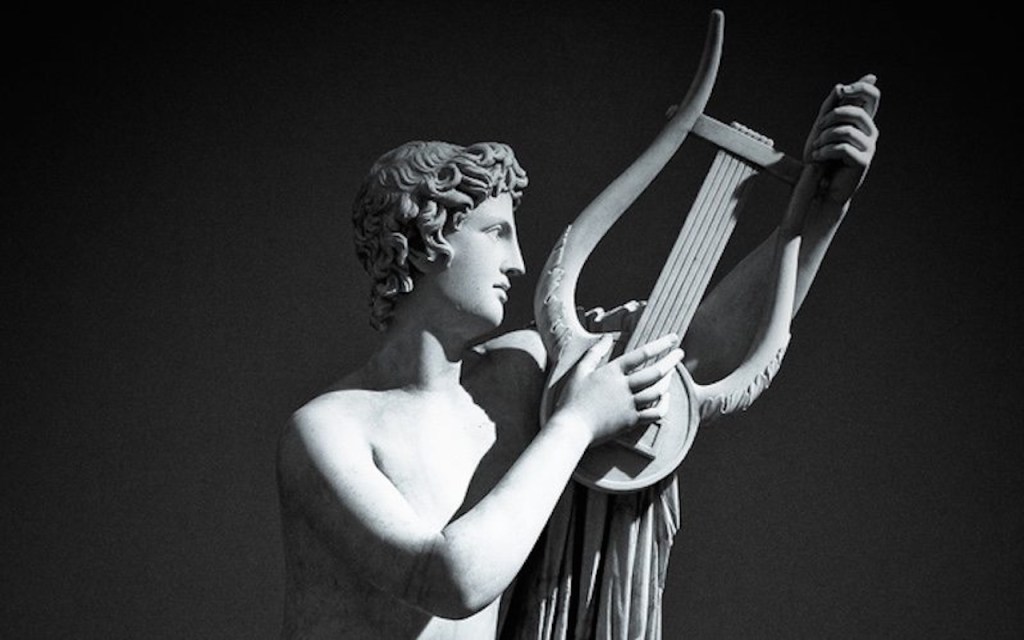
    Image: Orpheus playing lyre

    The Shakespeare Lyric “Orpheus”

    The Shakespearean speaker presents Orpheus as the embodiment of music’s power, showing how art, particularly music, has the ability to harmonize nature and relieve human suffering through its transformative, calming influence.

    Introduction and Text of the “Shakespeare Lyric ‘Orpheus’”

    Excerpted from Henry VIII (Act III, Scene 1), this brief lyric distills the ancient myth of Orpheus into a musing on the transformational and consolatory power of music. 

    The speaker expresses a vision in which art exerts a gentle but irresistible authority over nature itself, bringing harmony where there is chaos, motion where there is stillness, and rest where there is unrest.

    The figure of Orpheus becomes less a mythological character than an emblem of art’s highest potential: to reshape the external world and quiet the inward life.  I have employed the Orpheus ethos in my plea for more control and better expression in the art of poetry.

    “Orpheus”  (from Henry VIII  – Act III, Scene 1)

    Orpheus with his lute made trees
    And the mountain tops that freeze
    Bow themselves when he did sing:
    To his music plants and flowers
    Ever sprung; as sun and showers
    There had made a lasting spring.

    Every thing that heard him play,
    Even the billows of the sea,
    Hung their heads and then lay by.
    In sweet music is such art,
    Killing care and grief of heart
    Fall asleep, or hearing, die.

    Commentary on “The Shakespeare Lyric ‘Orpheus’”

    In this Shakespeare excerpt that functions as a stand-alone poem, the speaker is alluding to the Greek mythological character Orpheus to celebrate music as a force of order, renewal, and inward healing.  Orpheus was the god of music and poetry i Greek mythology.

    Stanza 1:  Music’s Powerful Influence

    Orpheus with his lute made trees
    And the mountain tops that freeze
    Bow themselves when he did sing:
    To his music plants and flowers
    Ever sprung; as sun and showers
    There had made a lasting spring

    The speaker opens with a striking assertion of music’s powerful influence over the natural world.  The phrasing remains condensed, as though the act of music itself compresses time and causation. Trees and mountain tops do not merely respond; they are “made” or commanded to respond by bowing to the sound of Orphean singing. 

    This shaping force exerts itself to images of rigidity and lifeless cold. That mountain summits are called to “bow themselves” introduces a paradox: what is fixed becomes responsive, what is cold becomes animate, and what is elevated yields in humility.

    The verb “bow” carries a dual resonance. It suggests both submission and grace, implying that nature’s response is not actually coerced but harmonized. The speaker presents music not as domination but as persuasion, a gentle authority that draws all things into alignment. Even the harshest elements—frozen peaks—are softened by sound, indicating that art reaches where physical force cannot.

    The hyperbole exerted in these images is astounding, leading not to disbelief but to the famous Romantic assertion by Samuel Taylor Coleridge “that willing suspension of disbelief for the moment, which constitutes poetic faith.” After all, the purpose of exaggeration is only to emphasize a claim, not to make a melodramatic spectacle.

    The stanza then shifts from gesture to growth: “plants and flowers / Ever sprung.” The effect is not momentary but continuous, captured in the word “ever.” Music generates an ongoing fertility, a perpetual blossoming that resists decay. 

    The comparison to “sun and showers” grounds this transformation in natural cycles, yet the phrase “lasting spring” exceeds ordinary seasonal change. Spring, typically transient, becomes permanent under the influence of music. The speaker thus elevates art above nature’s own processes, suggesting that while sun and rain produce life, music sustains it indefinitely.

    The imagery moves from rigidity (mountains) to vitality (flowers), tracing a progression from stillness to generative abundance. The speaker’s syntax reinforces this flow, with lines that seem to unfold organically, mirroring the growth they describe. Music becomes both cause and condition of harmony, a principle that unifies disparate elements—earth, air, and life itself.

    What emerges is not merely a portrait of Orpheus but an argument about art’s capacity to reconcile opposites: cold and warmth, height and humility, barrenness and fertility. The speaker implies that music achieves what nature alone cannot—a permanence of renewal, a “lasting spring” that suspends the ordinary limits of time and change.

    Again, as in most successful art, the tension of the pairs of opposites makes an appearance.  As the great Guru Paramahansa Yogananda has explained, the force of Maya, the very cause of the material level of being, works through the pairs of opposites.

    Stanza 2:   The Universal Influence of Music

    Every thing that heard him play,
    Even the billows of the sea,
    Hung their heads and then lay by.
    In sweet music is such art,
    Killing care and grief of heart
    Fall asleep, or hearing, die.

    The second stanza broadens the scope from land to sea, extending the reach of music to “Every thing that heard him play.” The universality is emphatic; nothing remains outside the sphere of music’s influence. 

    While the first stanza emphasizes growth and animation, the second turns toward quieting and rest. The “billows of the sea,” emblematic of motion and unrest, are personified “h[anging] their heads and then l[ying] by.” The image suggests human beings becoming calm after turbulence, with ceaseless motion transforms into stillness.

    The phrase “hung their heads” echoes the earlier “bow themselves,” reinforcing the motif of submission, yet here it carries a more subdued, almost weary connotation. The sea, often a symbol of emotional excess or instability, is brought into repose. The progression from bowing to lying still marks a deepening effect: music does not merely elicit acknowledgment; it also induces tranquility.

    The final lines turn inward with even more gravity, shifting from the external world to the human condition: “care and grief of heart.” The speaker identifies these as persistent burdens, analogous to the restless sea. 

    Music’s power is now psychological and emotional, not merely physical. The phrase “killing care” is striking in its severity; music does not soothe lightly but eradicates distress at its root.

    Yet the resolution is nuanced: care and grief either “fall asleep, or hearing, die.” The dual possibility suggests degrees of relief. Sleep implies temporary suspension, while death indicates permanent release. The ambiguity allows for a range of experience—music may offer respite or complete transformation. In either case, it alters the condition of suffering.

    The line “In sweet music is such art” functions as a reflective statement, drawing together the stanza’s implications. “Sweet” emphasizes harmony and pleasure, but “art” underscores intention and craft. The speaker presents music as both aesthetic and efficacious, capable of shaping not only perception but feeling itself.

    The movement of the stanza—from the vast sea to the inner heart—compresses the scale of influence, suggesting that the same force governs both realms. The calming of waves parallels the quieting of grief, establishing a correspondence between outer and inner worlds. Music becomes a mediating principle, aligning nature and human emotion within a single order of harmony.

    The final stanza affirms that art’s highest function lies not merely in delight but in restoration. It brings the restless to rest, the troubled to peace, and in doing so, offers a vision of existence in which discord is not denied but resolved.

    Image: Edward de Vere, 17th Earl of Oxford The “Shakespeare” Writer
  • Emily Dickinson’s “On this wondrous sea”

    Image: Emily Dickinson – Amherst College – Daguerrotype of the poet at age 17, circa 1847 – likely the only authentic, extant likeness of the poet

    Emily Dickinson’s “On this wondrous sea”

    In the first movement of Dickinson’s “On this wondrous sea,” the speaker addresses God as the metaphorical pilot of a metaphorical seafaring vessel; in the second movement, the speaker allows that “pilot” to speak as He answers her supplicating question.

    Introduction and Text of “On this wondrous sea”

    Emily Dickinson’s fourth poem in Thomas H. Johnson’s The Complete Poems of Emily Dickinson may be thought of as the beginning of her true style and content.  The first three poems feature two Valentine messages ( “Awake ye muses nine, sing me a strain divine” and “Sic transit gloria mundi“) and an invitation (“There is another sky”) to her brother, Austin, to come and experience the new world she is creating with her poetry.

    In contrast to the first three entries in Dickinson’s complete poems, “On this wondrous sea” sets out on a journey of poetry creation that will involve her belovèd Creator, whom she will beseech and at times even argue with in her zeal to substantiate truth and beauty in her other “sky.”

    In a very real sense, the Dickinson speaker is performing a set of little dramas that resemble that of the speaker of the Shakespeare sonnets.  The Shakespeare sonneteer was interested only in preserving truth, beauty, and love in his creations for future generations.  

    In the course of those sonnets, especially the section known as “The Muse Sonnets,” the Shakespeare writer expresses his desire repeatedly to present only truth, beauty, and love in his works, in contrast to the slathering on of tinsel and meaningless blather sent out by non-serious artist wannabes, known as poetasters.

    The Dickinson speaker demonstrates the same proclivities, and it also becomes evident that she shows a keen ability to observe the tiniest detail in her environment.  Yet, even as she focuses on those details, her vision never lowers from her mystic sight.

    It is in that focus that Dickinson differs dramatically from the Shakespearean sonneteer.  While he reveals his devout awareness of the mystical in his life, he remains a mere observer compared to the active mysticism of the Dickinson speaker.

    Emily Dickinson’s rare ability to communicate the ineffable has earned her a place in American letters that no other literary figure in the English language has been able to outpace.

    On this wondrous sea

    On this wondrous sea
    Sailing silently,
    Ho! Pilot, ho!
    Knowest thou the shore
    Where no breakers roar —
    Where the storm is o’er?

    In the peaceful west
    Many the sails at rest —
    The anchors fast —
    Thither I pilot thee —
    Land Ho! Eternity!
    Ashore at last!

    Commentary on “On this wondrous sea”

    The whole physical world becomes an ocean on which the speaker finds herself tossed and wondering if she will ever be returned to the safety of land.

    First Movement:  The Sea as Metaphor

    The speaker begins by creating a metaphor for the physical level of being, this wide world, in which she finds herself tempest tossed and uncertain of the way to safety.  Calling this world a “wondrous sea,” she reports that she is quietly sailing upon this ocean of chaos, then suddenly she cries out: “Ho! Pilot, ho!”

    And then she demands of the pilot to know if he knows where there is safety, where there are no trials and tribulations, where one can find rest from the many upheavals and battles that continually confront each inhabitant of this world.  Upon first encountering, it may seem that the speaker is addressing some sea captain as she rides in some maritime vessel.

    But it quickly becomes apparent that the speaker is addressing the Creator of the universe, and she wants to know if the Creator of this seemingly confusing Creation knows where she can go to come out of “the storm.”  As the “sea” is a metaphor for the world, the “Pilot” is the metaphor for the Creator (or God), Who directs and leads His children through this confusing place.  

    As a pilot would steer a ship, God steers the ship of life, the ship of this world that only He has created.  Thus the speaker appeals to God for an answer to her question, is there anywhere that can offer peace to the poor soul who must navigate the churning waters of this world?

    Second Movement:  Where Peace Reigns Supreme

    In the second stanza, the speaker shifts from the supplicant to the Blessèd Creator, Who bestows on the questioner the answer to her question.  The storm is over where peace reigns supreme.  Metaphorically, the speaker chooses to locate the peaceful place in the “west,” likely to rime it with “rest.”  

    In that peaceful west, one can cease the constant struggle with the dualities of this world.  One can feel secure with “anchors fast,” unlike the constant heaving and tossing back and forth that the rough sea causes.  The sails can be lowered and remain in that position because the journey has reached its destination.

    The piloting Creator then assures His traveling, storm-tossed child that, in fact, He is taking her there as she speaks.  The words, “Thither I pilot thee,” must ring in the ears of this supplicant as a true balm of heaven, comforting her every nervous inclination; she knows that she is safe with this “Pilot,” Who knows where to take her and is piloting her there now.

    Then suddenly, the coveted land is in sight and the land is “Eternity.”  The speaker now knows she is being guided safely and surely through her life by the One, Who can take her “ashore” and keep her secure throughout eternity.  Immortality is hers and peace will be her existence in this eternal resting place where the soul resides with its Divine Over-Soul Creator.

  • Emily Dickinson’s “Awake ye muses nine, sing me a strain divine”

    Image: Emily Dickinson – Amherst College – Daguerrotype of the poet at age 17, circa 1847 – likely the only authentic, extant likeness of the poet

    Emily Dickinson’s “Awake ye muses nine, sing me a strain divine”

    The first poem in  Thomas H. Johnson’s The Complete Poems of Emily Dickinson is a Valentine aimed at persuading a young man to marry and is quite atypical of the poet’s style in her canon of 1,775 poems.

    Introduction with Text of “Awake ye muses nine, sing me a strain divine”

    In The Complete Poems of Emily Dickinson, edited and returned to Dickinson’s idiosyncratic style by Thomas H. Johnson, the first poem sports a whopping 40 lines of 20 riming couplets.   It is Dickinson’s longest published poem and departs in style greatly from the remaining 1,774 in the volume.

    Emily Dickinson’s “Awake ye muses nine, sing me a strain divine” begins with a traditional invocation to the muses; however, instead of displaying in  quatrains, as most of the poet’s poems do, it rests as a single lump chunk down the page.  

    The poet’s Germanic influenced capitalization of nouns and her many sprinklings of dashes are missing; yet, she does insert two dashes into the last three lines. Dickinson’s speaker addresses a young man, urging him to choose a young lady and propose marriage to her.  

    The central theme of this piece plays out in a similar manner to the Shakespeare “Marriage Sonnets,” in which the speaker is exhorting a young man to marry and produce beautiful offspring.   However, the Dickinson poem remains a playful piece focusing on the Valentine season, while the Shakespeare “Marriage Sonnets” remain quite serious in their urgency.

    Richard B. Sewall’s The Life of Emily Dickinson has asserted that the young gentleman addressed in this poem is Elbridge Bowdoin, a partner in the Dickinson father’s law firm.  

    The poet’s Valentine was sent in 1850 in a book that she was returning to Bowdoin.   The poem seems to be quite flirtatious. Bowdoin, nevertheless, did not appear to take notice. It seems he snubbed the advice in the poem by remaining a life-long bachelor.

    Awake ye muses nine, sing me a strain divine

    Awake ye muses nine, sing me a strain divine,
    Unwind the solemn twine, and tie my Valentine!

    Oh the Earth was made for lovers, for damsel, and hopeless swain,
    For sighing, and gentle whispering, and unity made of twain.
    All things do go a courting, in earth, or sea, or air,
    God hath made nothing single but thee in His world so fair!
    The bride, and then the bridegroom, the two, and then the one,
    Adam, and Eve, his consort, the moon, and then the sun;
    The life doth prove the precept, who obey shall happy be,
    Who will not serve the sovereign, be hanged on fatal tree.
    The high do seek the lowly, the great do seek the small,
    None cannot find who seeketh, on this terrestrial ball;
    The bee doth court the flower, the flower his suit receives,
    And they make merry wedding, whose guests are hundred leaves;
    The wind doth woo the branches, the branches they are won,
    And the father fond demandeth the maiden for his son.
    The storm doth walk the seashore humming a mournful tune,
    The wave with eye so pensive, looketh to see the moon,
    Their spirits meet together, they make their solemn vows,
    No more he singeth mournful, her sadness she doth lose.
    The worm doth woo the mortal, death claims a living bride,
    Night unto day is married, morn unto eventide;
    Earth is a merry damsel, and heaven a knight so true,
    And Earth is quite coquettish, and beseemeth in vain to sue.
    Now to the application, to the reading of the roll,
    To bringing thee to justice, and marshalling thy soul:
    Thou art a human solo, a being cold, and lone,
    Wilt have no kind companion, thou reap’st what thou hast sown.
    Hast never silent hours, and minutes all too long,
    And a deal of sad reflection, and wailing instead of song?
    There’s Sarah, and Eliza, and Emeline so fair,
    And Harriet, and Susan, and she with curling hair!
    Thine eyes are sadly blinded, but yet thou mayest see
    Six true, and comely maidens sitting upon the tree;
    Approach that tree with caution, then up it boldly climb,
    And seize the one thou lovest, nor care for space, or time!
    Then bear her to the greenwood, and build for her a bower,
    And give her what she asketh, jewel, or bird, or flower –
    And bring the fife, and trumpet, and beat upon the drum –
    And bid the world Goodmorrow, and go to glory home!

    Commentary on “Awake ye muses nine, sing me a strain divine”

    The first poem in Emily Dickinson’s Complete Poems is a Valentine aimed at persuading a young man to marry and is quite atypical of the poet’s style in her canon of 1,775 poems.

    First Movement:  Invocation to the Muses

    Awake ye muses nine, sing me a strain divine,
    Unwind the solemn twine, and tie my Valentine!

    Oh the Earth was made for lovers, for damsel, and hopeless swain,
    For sighing, and gentle whispering, and unity made of twain.

    The ancient epics of Homer and Virgil begin with an invocation to the muse, wherein the speaker asks for guidance as he narrates his tales of adventure.   In her Valentine poem, Emily Dickinson has playfully added an invocation to all nine muses to help her with her little drama aimed at the young man for the Valentine season.

    Dickinson has her speaker command all nine muses to wake up and sing her a little ditty that she may relay to inflame her Valentine’s heart to do as she requests.  She then begins by describing how things of the earth all come in pairs.  

    One part of the pair seeks and unites with the other: the damsel is courted by the “hopeless swain” and there is whispering and sighing as a “unity” brings the “twain” together.

    Second Movement:   Earth Creatures Pair Up

    All things do go a courting, in earth, or sea, or air,
    God hath made nothing single but thee in His world so fair!
    The bride, and then the bridegroom, the two, and then the one,
    Adam, and Eve, his consort, the moon, and then the sun;
    The life doth prove the precept, who obey shall happy be,
    Who will not serve the sovereign, be hanged on fatal tree.
    The high do seek the lowly, the great do seek the small,
    None cannot find who seeketh, on this terrestrial ball;
    The bee doth court the flower, the flower his suit receives,
    And they make merry wedding, whose guests are hundred leaves;
    The wind doth woo the branches, the branches they are won,
    And the father fond demandeth the maiden for his son.
    The storm doth walk the seashore humming a mournful tune,
    The wave with eye so pensive, looketh to see the moon,
    Their spirits meet together, they make their solemn vows,
    No more he singeth mournful, her sadness she doth lose.
    The worm doth woo the mortal, death claims a living bride,
    Night unto day is married, morn unto eventide;
    Earth is a merry damsel, and heaven a knight so true,
    And Earth is quite coquettish, and beseemeth in vain to sue.

    After alluding to a human pair, the speaker then narrates her observation that everything on this earth seems to be courting its mate, not only on dry land but also in the “sea, or air.”  In the next twenty or so lines, she supplies an abundant sampling of things of the earth that pair up.  

    She exaggerates for comedic affect that God has made nothing in the world “single” except for the target of her discourse, who is the young man. The speaker then tells the young man that the bride and bridegroom pair up and become one.  Adam and Eve represent the first pair, and then there is the heavenly united pair, the sun and the moon.  

    And those who follow the precept of coupling live happily, while those who avoid this natural act end up “hanged on fatal tree.”  Again, she is exaggerating for the fun of it! The speaker then assures the young man that no one who looks will not find.  After all, the earth as she has said, was “made for lovers.”  

    She then begins her catalogue of earth things that make up the two part of a unified whole:  the bee and flower marry and are celebrated by a “hundred leaves.”  In two masterful lines, the speaker creates a metaphorical and symbolic wedding of bee and flower:   “The bee doth court the flower, the flower his suit receives, / And they make merry wedding, whose guests are hundred leaves.”

    The speaker continues the catalogue of earth things that make up a unified pair:  the wind and the boughs, the storm and the seashore, the wave and the moon, night and day.  

    She sprinkles in references to the human realm with such lines as, “the father fond demandeth the maiden for his son,” “The worm doth woo the mortal, death claims a living bride,” and “Earth is a merry damsel, and heaven a knight so true.”

    With the line regarding the worm wooing the mortal, the speaker, similar to the Shakespearean speaker, is reminding her target that life on this planet does not last forever, and each human physical encasement is subject to death and decay.   It is because of this plight that she is urging the young man not to allow his life to speed by without fulfilling his duty as part of a unified couple.

    Third Movement:  Thus It Follows That

    Now to the application, to the reading of the roll,
    To bringing thee to justice, and marshalling thy soul:
    Thou art a human solo, a being cold, and lone,
    Wilt have no kind companion, thou reap’st what thou hast sown.
    Hast never silent hours, and minutes all too long,
    And a deal of sad reflection, and wailing instead of song?

    Now, the speaker announces what has to happen because of her description of  the way life goes “on this terrestrial ball.”  The single man must be brought to justice.    The speaker then remarks bluntly, “Thou art a human solo,” along with a melancholy description of unhappiness that being alone can bring.  She rhetorically asks if he does not spend many hours and sad minutes of reflecting on this situation.

    Of course, she is implying that she knows he does wallow in this sorrowful state, and thus she has the antidote for eliminating all the miserable melancholy.  She will turn his melancholic “wailing” back into “song.”  If only he will follow her sage advice, he will become the happy soul he wishes to be.

    Fourth Movement:   A Shakespearean Command

    There’s Sarah, and Eliza, and Emeline so fair,
    And Harriet, and Susan, and she with curling hair!
    Thine eyes are sadly blinded, but yet thou mayest see
    Six true, and comely maidens sitting upon the tree;
    Approach that tree with caution, then up it boldly climb,
    And seize the one thou lovest, nor care for space, or time!
    Then bear her to the greenwood, and build for her a bower,
    And give her what she asketh, jewel, or bird, or flower —
    And bring the fife, and trumpet, and beat upon the drum —
    And bid the world Goodmorrow, and go to glory home!

    The speaker now names six young damsels—Sarah, Eliza, Emeline, Harriet, and Susan; she refers to the sixth young damsel—herself—without naming her, only that she is “she with curling hair.”  

    The speaker opines that any one of these young ladies is fit to become a valuable partner for her solo, sad, single young man. The speaker commands the young bachelor to choose one and take her home to be his wife.  

    In order to make that demand, she creates a little drama by having the ladies situated up in a tree. She commands the young man to climb the tree boldly but with caution, paying no attention to “space, or time.”

    The young man then is to select his love and run off to the forest and build her a “bower” and lavish upon her what she wishes, “jewel, or bird, or flower.”  After a wedding of much music and dancing, he and his bride will flit away in glory as they head home.

  • Emily Dickinson’s “Winter is good – his Hoar Delights”

    Image: Emily Dickinson – Amherst College – Daguerrotype of the poet at age 17, circa 1847 – likely the only authentic, extant likeness of the poet

    Emily Dickinson’s “Winter is good – his Hoar Delights”

    For Emily Dickinson, the seasons offered ample opportunities for verse creation, and her love for all of the seasons is quite evident in her poems.  However, her poetic dramas become especially deep and profound in her winter poems.

    First Winter Poem: “Winter is good – his Hoar Delights”

    Emily Dickinson creates speakers who are every bit as a tricky as Robert Frost’s tricky speakers. Her two-stanza, eight-line lyric announcing, “Winter is good” attests to the poet’s skill of seemingly praising while showing disdain in the same breath.

    The rime scheme of “Winter is good – his Hoar Delights” enforces the slant rime predilection with the ABAB approximation in each stanza.  All of the rimes are near or  slant in the first stanza, while the second boasts a perfect rime in Rose/goes.

    Winter is good – his Hoar Delights

    Winter is good – his Hoar Delights
    Italic flavor yield –
    To Intellects inebriate
    With Summer, or the World –

    Generic as a Quarry
    And hearty – as a Rose –
    Invited with Asperity
    But welcome when he goes.

    Commentary on “Winter is good – his Hoar Delights”

    Emily Dickinson loved all of the seasons, and she found them inspiringly colorful in their many differing attributes.  These seasonal characteristics gave this observant poet much material for her creative little dramas.

    First Stanza: Winter’s Buried Charms

    Winter is good – his Hoar Delights
    Italic flavor yield –
    To Intellects inebriate
    With Summer, or the World –

    The speaker claims rather blandly that “Winter is good” but quickly adds not so plainly that his frost is delightful. That winter’s frost would delight one, however, depends on the individual’s ability to achieve a level of drunkenness with “Summer” or “the World.” 

    For those who fancy summer and become “inebriat[ed]” with the warm season’s charms, winter takes some digging to unearth its buried charm.  And the speaker knows that most folks will never bother to attempt to find anything charming about the season they least favor.

    But those frozen frosts will “yield” their “Italic flavor” to those who are perceptive and desirous enough to pursue any “Delights” that may be held there.  The warmth of the Italian climate renders the summer flavors a madness held in check by an other-worldliness provided by the northern climes.

    The speaker’s knowledge of the climate of Italy need be only superficial to assist in making the implications this speaker makes.  Becoming drunk with winter, therefore, is a very different sport from finding oneself inebriated with summer, which can be, especially with Dickinson, akin to spiritual intoxication.

    Second Stanza: Repository of Fine Qualities

    Generic as a Quarry
    And hearty – as a Rose –
    Invited with Asperity
    But welcome when he goes.

    Nevertheless, the speaker, before her hard-hitting yet softly-applied critique, makes it clear that winter holds much to be honored; after all, the season is “Generic as a Quarry / And hearty – as a Rose.”  It generates enough genuine qualities to be considered a repository like a stone quarry that can be mined for all types of valuable rocks, gems, and granite.

    The season is “hearty” in the same manner that a lovely flower is “hearty.” The rose, although it can be a fickle and finicky plant to cultivate, provides a strength of beauty that rivals other blossoms.    That the freezing season is replete with beauty and its motivating natural elements render it a fertile time for the fertile mind of the poet.

    But despite the useful and luxuriant possibilities of winter, even the mind that is perceptive enough to appreciate its magnanimity has to be relieved when that frozen season leaves the premises or as the speaker so refreshingly puts it, he is “welcome when he goes.” The paradox of being “welcome” when “he goes” offers an apt conclusion to this tongue-in-cheek, left-handed praise of the coldest season.  

    The speaker leaves the reader assured that although she recognizes and even loves winter, she can well do without his more stark realities as she welcomes spring and welcomes saying good-bye to the winter months.

    Full Image: Emily Dickinson – Amherst College – Daguerrotype of the poet at age 17, circa 1847 – likely the only authentic, extant likeness of the poet
  • Elizabeth Barrett Browning’s Sonnet 44 “Belovèd, thou hast brought me many flowers”

    Image: Elizabeth Barrett Browning – NPG, London

    Elizabeth Barrett Browning’s Sonnet 44 “Belovèd, thou hast brought me many flowers”

    Elizabeth Barrett Browning’s final sonnet 44 “Belovèd, thou hast brought me many flowers”  from the sequence assures her belovèd that she has finally accepted his gift of love.

    Introduction and Text of Sonnet 44 “Belovèd, thou hast brought me many flowers”

    Elizabeth Barrett Browning’s final sonnet from the Sonnets from the Portuguese sequence assures her belovèd that she has finally accepted his gift of love.  Sonnet 44 “Belovèd, thou hast brought me many flowers” is the final poem, which completes this remarkable sequence of love poems.  

    This sonnet finds the speaker musing on the flowers that her belovèd has brought to her.   The speaker quickly transforms the physical blossoms into metaphysical blooms that symbolize the lovers’ bond.

    After all the handwringing of self-doubt that has plagued the speaker throughout this sequence, she must now find a way to assure both herself and her belovèd that her mind set has transformed itself from the dull negative to a shining positive.  The speaker must show her fiancé that they are bound together with an exceptional love.  She must also make it clear that she understands the strong ties they now possess.

    The speaker’s metaphoric comparison of the love gifts of  physical flowers and the symbolic flowers that she has created from her own heart soil will remain an eternal reminder to both herself and her belovèd as they travel the road of marriage together.

    Sonnet 44 “Belovèd, thou hast brought me many flowers”

    Belovèd, thou hast brought me many flowers
    Plucked in the garden, all the summer through
    And winter, and it seemed as if they grew
    In this close room, nor missed the sun and showers.
    So, in the like name of that love of ours,
    Take back these thoughts which here unfolded too,
    And which on warm and cold days I withdrew
    From my heart’s ground. Indeed, those beds and bowers
    Be overgrown with bitter weeds and rue,
    And wait thy weeding; yet here’s eglantine,
    Here’s ivy!—take them, as I used to do
    Thy flowers, and keep them where they shall not pine
    Instruct thine eyes to keep their colors true,
    And tell thy soul their roots are left in mine.

    Commentary on Sonnet 44 “Belovèd, thou hast brought me many flowers”

    The final sonnet in the sequence assures the speaker’s belovèd that she has finally accepted his gift of love, without any further doubts.

    First Quatrain:  A Gift of Flowers

    Belovèd, thou hast brought me many flowers
    Plucked in the garden, all the summer through
    And winter, and it seemed as if they grew
    In this close room, nor missed the sun and showers.

    The speaker muses about the flowers that her belovèd has given her during summer. To her it seems that the flowers have remained as vibrant indoors in her “close room” as they were outside in the “sun and showers.” 

    These miraculous flowers seem to have remained healthy and glowing even during winter.  The speaker then insists that they “grew / In this close room” and that they did not miss “the sun and showers.” 

    Of course, the physical flowers are just the motivation for the musing, which transforms the physical blooms into flowers of a metaphysical sort—those that have impressed images upon her soul, beyond the image on the retina.

    Second Quatrain:   Sonnets as Flower-Thoughts

    So, in the like name of that love of ours,
    Take back these thoughts which here unfolded too,
    And which on warm and cold days I withdrew
    From my heart’s ground. Indeed, those beds and bowers

    Thus the speaker commands her belovèd to “take back these thoughts which here unfolded too.” She is referring to her sonnets, which are her flower-thoughts given to her belovèd to honor their love. 

    The speaker affirms that she has plucked her sonnet-flowers “from [her] heart’s ground.” And the creative speaker has composed her tributes on “warm and cold days.” 

    The weather in the speaker’s heart and soul was always equal to producing fine blossoms for her loved one.   As the speaker basked in his love, the flower “beds and bowers” produced these poems with floral fragrance and hues.

    First Tercet:  Correcting Her Clumsiness

    Be overgrown with bitter weeds and rue,
    And wait thy weeding; yet here’s eglantine,
    Here’s ivy!—take them, as I used to do

    The speaker then inserts her usual self-deprecatory thoughts, admitting that her floral efforts are surely, “overgrown with bitter weeds and rue,” but she gladly submits them for him to “weed” as needed. 

    The speaker’s gifted and talented belovèd can correct her clumsiness. She names two of her poems “eglantine” and “ivy” and commands him to “take them,” as she used to take his gifts of flowers, and probably gifts of his own poems to her as well.

    Second Tercet:  In His Care

    Thy flowers, and keep them where they shall not pine
    Instruct thine eyes to keep their colors true,
    And tell thy soul their roots are left in mine.

    The speaker commands her belovèd to safeguard her pieces so “they shall not pine.” In his care, she will also not pine.  And the poem will “instruct [his] eyes” to the true feelings she bears for him.

    The speaker’s poems will henceforth remind him that she feels bound to him at the soul.  Soul qualities have always been more important to this speaker than physical and mental qualities.  

    The “colors true” of this speaker’s sonnets will continue to pour forth her love for her belovèd and “tell [his] soul their roots are left in [hers].”   Each sonnet will reinforce their love and celebrate the life they will make together.

  • Elizabeth Barrett Browning’s Sonnet 43 “How do I love thee? Let me count the ways”

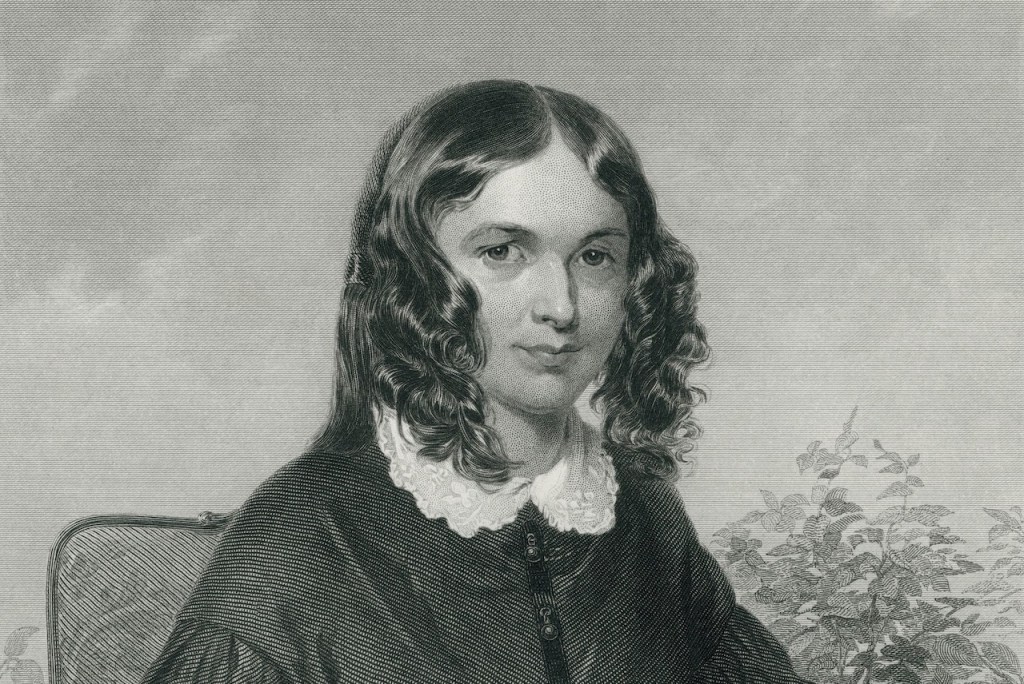
    Image: Elizabeth Barrett Browning – Engraving from original Painting by Chappel, 1872. (Photo by: Universal History Archive/Universal Images Group via Getty Images)

    Elizabeth Barrett Browning’s Sonnet 43 “How do I love thee? Let me count the ways”

    The sonnet “How do I love thee? Let me count the ways”—number 43 in Sonnets from the Portuguese—remains the most famous and widely read sonnet of the sequence.  The speaker is offering a summary of all the ways she has come to love her soon to be husband.

    Introduction and Text of Sonnet 43 “How do I love thee? Let me count the ways”

    Sonnet 43 “How do I love thee?  Let me count the ways” is the most widely anthologized sonnet from Elizabeth Barrett Browning’s sequence titled Sonnets from the Portuguese. It is likely the many high school or college graduates remember that line but may have remained unaware that it is only #43 from its accompanying sequence of 43 other sonnets.  

    The sonnet is a Petrarchan sonnet as are all of the other sonnets in the sequence.  In the octave, the speaker is musing about how much she loves her belovèd suitor, and she asks the question, “How do I love thee?” 

    Then the speaker proceeds to answer the question, so the reader becomes aware that the speaker is not literally addressing her belovèd, but she is addressing the thought or perhaps even an image of that belovèd.  In the sestet, the speaker counts three definite ways and one possible way that she will love him throughout eternity.

    Sonnet 43 “H0w do I love thee? Let me count the ways”

    How do I love thee? Let me count the ways.
    I love thee to the depth and breadth and height
    My soul can reach, when feeling out of sight
    For the ends of Being and ideal Grace.
    I love thee to the level of everyday’s Most quiet need, by sun and candle-light.
    I love thee freely, as men strive for Right;
    I love thee purely, as they turn from Praise.
    I love thee with the passion put to use
    In my old griefs, and with my childhood’s faith. I love thee with a love I seemed to lose
    With my lost saints,—I love thee with the breath,
    Smiles, tears, of all my life!—and, if God choose,
    I shall but love thee better after death.

    Commentary on Sonnet 43 “How do I love thee? Let me count the ways”  

    Sonnet 43 “How do I love thee? Let me count the ways” remains the most famous and widely read sonnet of the sequence.

    First Quatrain:  An Emphatic Rhetorical Question

    How do I love thee? Let me count the ways.
    I love thee to the depth and breadth and height
    My soul can reach, when feeling out of sight
    For the ends of Being and ideal Grace.

    The speaker asks an obvious rhetorical question that requires only her feeling to fill out; thus she continues, “Let me count the ways.” She loves him with all her soul, as that soul strives for an idealism that has to be left up to faith.  The soul searches in all directions through “depth and breadth and height” for this idealism, which this speaker calls “the ends of Being and ideal Grace.”

    Second Quatrain:  Love and All Levels

    I love thee to the level of everyday’s Most quiet need, by sun and candle-light.
    I love thee freely, as men strive for Right;
    I love thee purely, as they turn from Praise.

    The speaker has begun with the sublime, ethereal level of her love by invoking how she loves her belovèd on the spiritual level.  The speaker then brings herself quickly back to the mundane activities of daily life by saying that another way she loves him is through even the smallest daily act whether that act is performed during the daylight hours or during the night, “by sun and candle-light.”

    The speaker then asserts that her love for her belovèd is spontaneous and “freely” given; therefore, she loves him in the way humankind loves freedom and acts correctly in striving to secure and maintain that freedom. She then claims that her love is as pure as those who are humble when praised.  In the octave, the speaker has signified four ways she loves her belovèd: spiritually, materially, “freely,” and “purely.”

    First Tercet:   All Encompassing Love

    I love thee with the passion put to use
    In my old griefs, and with my childhood’s faith. I love thee with a love I seemed to lose

    The speaker loves him with the same ardor that used to grip her when she faced difficulties, but this “passion” is tempered by the fact that that love is also similar to the love that childhood provided her, an opposite kind of emotion from the one that caused her “old griefs.”  This love includes the polar opposites of fear and love, with love tempering the fear in a balanced and useful way.

    The speaker also loves her belovèd life mate with a kind of respect and admiration that she thought she had outgrown; this group of people could be a fairly large one, including friends, teachers, relatives, and even religious “saints,” the term she uses.  But the key word is that she “seemed” to lose this love, but with her belovèd suitor, that love is returned to her.

    Second Tercet:   Love unto Eternity

    With my lost saints,—I love thee with the breath,
    Smiles, tears, of all my life!—and, if God choose,
    I shall but love thee better after death.

    The next way she loves her belovèd she asserts in a breathless, almost ecstatic pronouncement: “— I love thee with the breath, / Smiles, tears, of all my life! —.”  Placed between dashes, these terms then signal an emphasis of expression.

    This assertion captures the excitement and underscores the passion in the speaker’s claim, while it prepares the reader or listener, for the last breathtaking claim that, “if God choose, I shall but love thee better after death.”

    So in the sestet, the speaker again professes four ways in which she loves the belovèd: with a passion of meeting former challenges but tempered by a childlike faith, with a kind of love she thought she had lost, and with her whole being.  But most importantly for this speaker, she has faith that she will love this belovèd soul mate eternally.

  • Some Bones

    Image:  Created by Grok inspired by the poem

    Some Bones

    Some bones stand like corn stalks
    After late harvest. They bristle in the field.
    They remain unclean though they look
    Bleached and scrubbed.

    Skeletons may hang in closets
    But not these bones—the ones
    That are losing themselves
    As they scream and pound sand.

    Some bones cry for a thinner cloak
    But unlike some hearts
    They have never broken themselves
    Over the pain of this mud ball.

    Some bones slash themselves in early spring
    And cleave to youth too late in summer.
    A young brain cannot pool its dreams
    To yield the pith of adult philosophy.

    Some bones have no star to guide errant ways.
    They may stitch themselves by valves
    But sense no light in the chambers
    That wobble and bleed ugly passions.

    Some bones keep wobbling, sputtering,
    Spitting in the face of any thought
    That might hold them to account
    Lingering in the mud of passing time.

    A Prose Commentary on My Original Poem “Some Bones”

    In my poem “Some Bones,” I have created a speaker who is musing on fragmentation, arrested development, and the failure of inner cohesion, using the recurring image of bones—stripped, exposed, and stubbornly animate—as a controlling metaphor for the human condition when it is cut off from spiritual integration. 

    Unlike the quiet endurance of stone, bone suggests a harsher, more restless existence: something once living that refuses, even in its partial ruin, to settle into peace.  Such failure epitomizes the blocked condition of generations of unhappy, prideful, and dangerous individuals who have remained strangers to themselves.

    The language remains constructively physical—bones, closets, sand, mud, valves—yet it continually gesticulates toward psychological and spiritual disarray. My speaker does not offer consolation; instead, she allows the imagery to confront the reader with a kind of unresolved agitation. Where wisdom might emerge, it does so jarringly, often obstructed by immaturity, illusion, or sheer refusal.

    Underlying the poem is my own sense that without a guiding metaphysical orientation—whether one names it divine light, higher consciousness, or moral clarity—the human being risks becoming disjointed, reactive, and perpetually unfinished.  Such an orientation of mind has been instilled in my mindset by my blessèd Guru Paramahansa Yogananda.

    First Stanza: Residue after Harvest

    In the opening stanza, my speaker presents bones as remnants, likened to corn stalks left standing after harvest. This simile is intentional: what remains is not fruitful but residual, something overlooked, perhaps even abandoned. The bones “bristle,” suggesting defensiveness, a kind of posturing that masks emptiness.

    Though they appear “bleached and scrubbed,” they remain “unclean.” This contradiction establishes a central tension: outward purification does not equate to inner transformation. 

    The bones carry a stain that cannot be washed away by exposure or time alone. I wanted the speaker to imply that mere survival or endurance does not guarantee wisdom; one can persist and yet remain fundamentally unresolved.

    Second Stanza: Refusal of Containment

    Here, my speaker contrasts the familiar idiom of “skeletons in closets” with these bones, which refuse concealment. They are not hidden but actively “losing themselves / As they scream and pound sand.” The image is specifically chaotic and futile—pounding sand accomplishes nothing, yet it expresses frustration and desperation.

    These bones are not passive relics but disintegrating agents, unable to maintain coherence. The phrase “losing themselves” suggests a failure of identity, a dissolution rather than a stable essence. The speaker is emphasizing a kind of existential noise: movement without direction, expression without meaning—a condition that will remind my readers of the influence of postmodernism on poetry.

    Third Stanza: Avoidance of True Suffering

    In this stanza, the bones “cry for a thinner cloak,” desiring relief or escape, yet my speaker contrasts them with hearts that have “broken themselves / Over the pain of this mud ball.” The implication is that these bones have avoided the kind of deep suffering that refines and transforms.

    There is, in my view, a necessary breaking that accompanies genuine emotional or spiritual growth. These bones, however, remain intact in a superficial sense precisely because they have not undergone that process. 

    Their complaint is shallow; they seek comfort without having earned insight. The “mud ball” underscores the earth’s dirty imperfection, a condition that must be confronted rather than evaded.

    Fourth Stanza: Temporal Dislocation and Immaturity

    The fourth stanza examines the misalignment of time and development. The bones “slash themselves in early spring” and “cleave to youth too late in summer,” suggesting a disordered relationship to life’s natural phases. There is both premature self-harm and delayed attachment to youth.

    The concluding line suggests frenetically what the imagery implies: maturity requires synthesis. Dreams alone, without discipline or time, cannot produce wisdom. I wanted the speaker to assert that intellectual and spiritual depth cannot be rushed or improvised; it must be cultivated through experience and reflection.

    Fifth Stanza: Absence of Guiding Light

    Here, my speaker turns sternly to the absence of direction. The image that “Some bones have no star to guide errant ways” invokes the ancient image of navigation by the heavens. Without such a reference point, these bones attempt a kind of self-repair—“stitch themselves by valves”—but the effort is mechanical and insufficient.

    The “chambers” evoke both the heart and the mind, yet they “sense no light.” This lack is crucial: the structure exists, but illumination does not. The result is a system that “wobbles and bleed[s] ugly passions,” governed not by clarity but by disorder. The speaker is averring that without an orienting principle, human faculties become unstable, even grotesque.

    Sixth Stanza: Defiance and Stagnation

    In the final stanza, the bones persist in their agitation—“wobbling, sputtering”—but now their resistance is directed against accountability itself. They reject introspection or discipline.

    The closing image, “Lingering in the mud of passing time,” echoes to the earlier “mud ball,” but now it emphasizes stagnation. Time moves, yet the bones do not progress; they remain mired, neither decaying fully nor transforming. 

    This eventuality is, perhaps, the most severe judgment in the poem: not suffering, not even failure, but refusal—the unwillingness to engage the very processes that might lead to growth.

    An Afterthought

    In “Some Bones,” I have attempted to portray a condition of partial existence—one in which the human being retains structure and motion but lacks integration, direction, and illumination. The bones are not dead, but neither are they fully alive in any meaningful sense.

    Where my earlier musing on stone suggested endurance and the possibility of quiet wisdom, here I explore a more troubled state: persistence without purpose, animation without coherence. 

    The poem ultimately argues, though indirectly, that without a willingness to suffer, to mature, and to orient oneself toward a higher principle, one risks becoming like these bones—restless, exposed, and perpetually incomplete.

  • Elizabeth Barrett Browning’s Sonnet 39 “Because thou hast the power and own’st the grace”

    Image: Elizabeth Barrett Browning – Getty Images –

    Elizabeth Barrett Browning’s Sonnet 39 “Because thou hast the power and own’st the grace”

    In sonnet 39 “Because thou hast the power and own’st the grace,” the speaker is crediting her belovèd with being able to see her true soul through all of the despair that the years have heaped upon her. 

    Introduction and Text of Sonnet 39 “Because thou hast the power and own’st the grace”

    In Elizabeth Barrett Browning’s sonnet 39 from Sonnets from the Portuguese, the speaker endeavors to leave her former diminished stature behind now that she is unconditionally loved by a wonderful man.  

    The speaker is heaping all the credit upon her belovèd fiancé for her acquiring the ability to perceive her true nature despite all of the sorrow that years of pining away have left in her life.

    Sonnet 39 “Because thou hast the power and own’st the grace”

    Because thou hast the power and own’st the grace
    To look through and behind this mask of me
    (Against which years have beat thus blanchingly
    With their rains), and behold my soul’s true face,
    The dim and weary witness of life’s race,—
    Because thou hast the faith and love to see,
    Through that same soul’s distracting lethargy,
    The patient angel waiting for a place
    In the new Heavens,—because nor sin nor woe,Nor God’s infliction, nor death’s neighborhood, Nor all which others viewing, turn to go,
    Nor all which makes me tired of all, self-viewed,—
    Nothing repels thee, … Dearest, teach me so
    To pour out gratitude, as thou dost, good!

    Commentary on Sonnet 39 “Because thou hast the power and own’st the grace”

    The speakers revealing the importance of the influence of her belovèd for her newly acquired, delicious ability to see her true soul through all of the despair that the years have foisted upon her.

    First Quatrain:  Powers of Vision

    Because thou hast the power and own’st the grace
    To look through and behind this mask of me
    (Against which years have beat thus blanchingly
    With their rains), and behold my soul’s true face,

    Addressing her belovèd, the speaker credits him with the ability to see through the veil she has drooped around herself for protection.  Throughout her life, the years of feeling sad and sorrowful have taken a tremendous toll on her physical beauty and mental attitude.

    However, her new love is able to pierce through those superficialities to perceive the value of her soul.  The speaker implies that she has spent many hours crying; therefore, she metaphorically transforms the tears and years into “rains” that have “beat thus blanchingly.”

    Second Quatrain:  A Forlorn Life

    The dim and weary witness of life’s race,—
    Because thou hast the faith and love to see,
    Through that same soul’s distracting lethargy,
    The patient angel waiting for a place

    The speaker avers that her forlorn life has been witnessed by her soul, which has come to identify itself as “dim and weary.”   The melancholy speaker then reports and concludes that her new love has both the “faith and love” that enable him to intuit the true nature or her soul.  

    Though the speaker’s soul has been abused in the senses as she experienced so much pain, doubt, and anguish and thus has grown dull with “distracting lethargy,” it remained a “patient angel,” biding its time for better things to come.

    First Tercet:  A New Blossoming

    In the new Heavens,—because nor sin nor woe,Nor God’s infliction, nor death’s neighborhood, Nor all which others viewing, turn to go,
    Nor all which makes me tired of all, self-viewed,—
    Nothing repels thee, … Dearest, teach me so
    To pour out gratitude, as thou dost, good!

    As the speaker’s heavy-burdened soul waited “for a place / / In the new Heavens,” she now realizes the extent to which she has become aware of a new blossoming through the love of her suitor.  The speaker then begins a catalogue of negativity that has not been able to impede her belovèd from sensing the face of her real soul. 

    That list includes “nor sin nor woe.”   Furthermore, “God’s infliction” and “death’s neighborhood” could not hide her soul from him. And even other impediments of her personality that repelled others could not make her belovèd abandon her.

    Second Tercet:  A Catalogue of Maladies

    Nor all which makes me tired of all, self-viewed,—
    Nothing repels thee, … Dearest, teach me so
    To pour out gratitude, as thou dost, good!

    Continuing the catalogue of maladies, the speaker includes “all which makes me tired of all, self-viewed.” When she judged herself most harshly, she had found so many imperfections that the accumulation of them weakened her will to live a productive life.    Yet even these worst qualities of character have not been able to route the speaker’s new love from her, and her final remark shows the nature of her true soul. 

    The recovering melancholic speaker now commands her belovèd to offer her instruction in remaining and showing thankfulness. The speaker’s miserable life has made her feel that she hitherto had nothing for which to be thankful, and now she needs to learn how to show gratitude, instead of masking it behind a  veil of tears.

    The speaker finally asserts that her belovèd has the ability to pour out “good” with such a spontaneous ease that she wants to learn to do so as well.   If her belovèd suitor is so generous with being “good,” then the speaker wants to become generous in being thankful.