Walt Whitman’s “When I Heard the Learn’d Astronomer”
Walt Whitman’s sprawling eight-line poem showcases the poet’s freewheeling style while dramatizing the wildly romantic world view portrayed in almost all of his poems.
Introduction and Text “When I Heard the Learn’d Astronomer”
Whitman’s “When I Heard the Learn’d Astronomer” provides a study in contrasts between science and poetry. The speaker makes his preference known that he favors looking at the stars over studying them. The speaker is a transcendentalist-romantic individual who is more interested in the life of the senses than the life of the mind.
Interestingly, however, this speaker demonstrates that, in certain instances, the senses can lead to a more spiritual experience than the mind. The speaker prefers to indulge his fancy rather than pay attention to the measured distances between heavenly bodies.
When I Heard the Learn’d Astronomer
When I heard the learn’d astronomer, When the proofs, the figures, were ranged in columns before me, When I was shown the charts and diagrams, to add, divide, and measure them, When I sitting heard the astronomer where he lectured with much applause in the lecture-room, How soon unaccountable I became tired and sick, Till rising and gliding out I wander’d off by myself, In the mystical moist night-air, and from time to time, Look’d up in perfect silence at the stars.
Reading:
Commentary on ““When I Heard the Learn’d Astronomer”
Walt Whitman’s sprawling eight-line poem showcases the poet’s freewheeling style while dramatizing the wildly romantic world view portrayed in almost all of his poems.
First Movement: When vs After
When I heard the learn’d astronomer, When the proofs, the figures, were ranged in columns before me, When I was shown the charts and diagrams, to add, divide, and measure them, When I sitting heard the astronomer where he lectured with much applause in the lecture-room
The first movement of Whitman’s influential poem consists of four adverbial clauses beginning with “when”:
1. when he listened to the lecture, 2. when the numbers were presented, 3. when “the charts and the diagrams” were shown, 4. when he heard the audience’s cheer the “learn’d astronomer.”
A fascinating riddle poses the question: “When the man jumped off the building, where was he?”
Possible answers: —Until he hit the ground, he was in the air— What’s wrong with that answer? That was “after” he jumped.
Then the person riddled might respond: —still standing on the top of the building— Wrong because, that was “before” he jumped.
This riddle is instructive for language use especially use in poetry. The adverb “when” is a flabby word, causing the ambiguity of unclarity as associated with an action. Thus if possible, one needs to consider whether the action occurred “before” or “after” the first event.
Whitman was such an astute observer of both events and language, but this poem could use one last revision changing the “when” clauses to “after” clauses because that is the accurate time frames for each of the actions that he mentions.
The reader will note that is was, actually, “after” all the following that he became “tired and sick” and determined to get up and leave:
1. after he had heard the scientist 2. after he had seen the stats and numbers 3. after he had been presented the charts 4. after he had heard the other audience members applauding the astronomer.
Second Movement: After Growing Sick and Tired
How soon unaccountable I became tired and sick, Till rising and gliding out I wander’d off by myself, In the mystical moist night-air, and from time to time, Look’d up in perfect silence at the stars.
After the speaker had listened to a portion of the lecture, he gets up and leaves the lecture hall, goes out into the refreshing night air and looks up at the stars. The event is simple, but the speaker’s dramatic portrayal of his actions enhances the act and makes it so much more interesting and meaningful than the mere event.
For example, the use of the word “unaccountable” contrasts with all the counting that was going on by the lecturer. The speaker is simply remarking that he grew “tired and sick” while listening, but he does not know why.
The speaker seems to have no reason for this reaction. He is cleverly leaving that reasoning up the reader to discern, after he paints his portrait of natural beauty in the final three lines, in which reports that he rose from his seat, moved out into the night alone, and then off and on gazed upward to the heavens where he was treated to the “perfect silence at the stars.”
Those final lines contrast the stuffy lecture hall with the lushness of the great outdoors; they contrast the enjoyment of being alone as opposed to being surrounded by people in the stuffy lecture hall. The night air is “mystical”—the speaker is carried to a transcendental height by the simple “moist night-air.”
And the best of all the observant speaker saves for the last; in contrast to the steady pace of the lecture, he leisurely “from time to time”—no hurry, no schedule, no following someone else’s line of thought—gazes up into the heavens and observes the brilliance of the stars themselves, instead of merely hearing about them through charts, diagrams, and numbers.
Walt Whitman remains one of the most important poets in American history. He has influenced every generation of poets since he first began to publish. He is rightly credited for leading American poetry into modernity. His long-lined, sprawling style is always easily recognized.
Early Life, Education, Early Career
Walter Whitman, Jr., was born on May 31, 1819, in West Hills, Long Island, New York, to Walter Whitman, Sr., and Louisa Van Velsor Whitman, a lower middle class family [1]. Walt, Jr’s early life greatly influenced his idiosyncratic world-view and artistic outlook. He became known as “Bard of Democracy” [2] because of his liberating employment of his cosmic, singular poetic voice.
His working-class parents worked hard to meet expenses, and the family changed residences often during Walt’s early years, in order to find better employment. These frequent new locations exposed the future poet to various environments, giving him an expansive outlook on life, as he experienced many different people from various backgrounds.
Walt was the second of nine Whitman children, and similar to the TV family “The Waltons,” the Whitman family often encountered scarce resources and many hardships as the parents labored to meet the needs of a family of eleven.
The poet’s father worked as a carpenter and as a farmer, but his laboring efforts never led to prosperity. This family dynamic led Walt to entering the workforce at an early age in order to help with family stay afloat financially.
The ancestors of the Whitman family had arrived in America as early as the 17th century, which rooted the family’s affection for their country very deeply, as the future poet would so often express in his works.
The poet remained close to his mother for his whole life. Louisa was a very affectionate and compassionate human being, and her positive attitude toward life proved to be a great influence on the life of her son. The poet could always count on his mother for unconditional love and support throughout his life.
Walt Whitman’s experience with formal schooling was virtually nil: he abandoned formal education after he turned eleven years old [3]. After a short stint in the public school system in Brooklyn, he made a swift departure because he family needed him to work and earn money to assist with family finances.
Despite leaving the formal schooling of the public eduction system, Walt continued to read, study, think deeply for the rest of his life. He pursued knowledge as assiduously as a bird seeks its daily nutritional intake. He maintained a life-long, insatiable thirst for knowledge.
After abandoning public education, Walt took a job as an office boy in Brooklyn [4]. After serving as an office boy, he became a printer’s apprentice, eagerly learning the craft of print- and typesetting. Such on-the-job experience brought Walt in contact with literary composition through manipulation of words, making them ready to publish.
Whitman later engaged in school teaching in a number of rural schools on Long Island. The sensationalism of a rumor has it that Whitman was tarred and feathered and chased out of the town of Southold for committing sodomy [5] on a student.
The likelihood of that particular rumor being true is virtually nil, because it has not been clearly established that Whitman ever taught in Southold. Whitman simply abandoned teaching because he found the work stultifying.
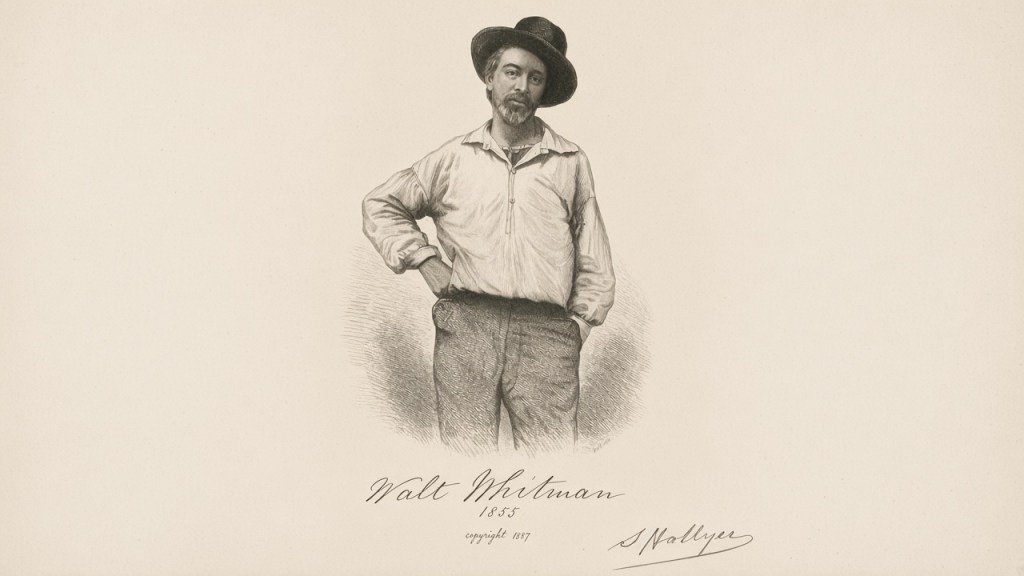
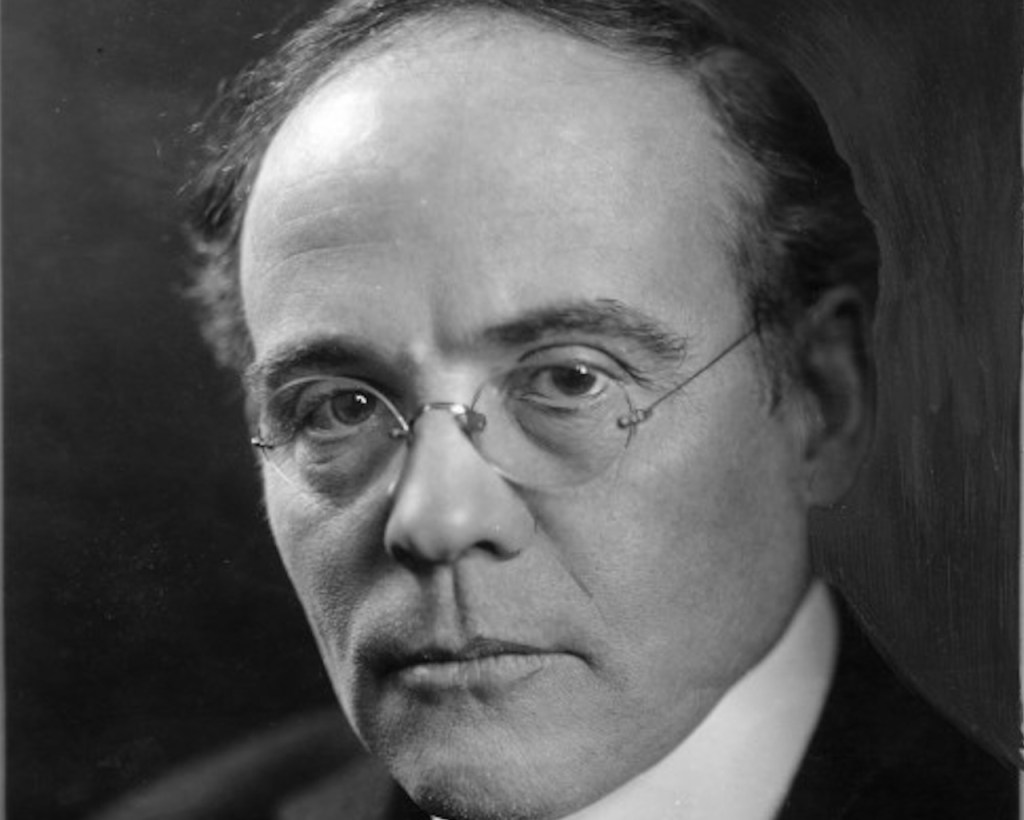
Image b: Walt Whitman portrait engraved by Samuel Hollyer, frontispiece to first edition of Leaves of Grass, 1855
Work in the Field of Journalism
Whitman’s actual career in journalism began in the late 1830s [6]. He founded and edited the Long Islander newspaper in Huntington. His early experience in the field of journalism allowed him to develop his writing skills and engage in public discourse.
At age 23, Whitman became the chief editor of the New York Aurora. By September of 1845, four months after turning 26 years of age, he had newspaper experience from working for at least a dozen newspapers.
He flitted from one newspaper to the next, often holding editorial duties. Whitman worked for several different papers in Brooklyn and New York City, including the Daily Aurora and the Brooklyn Eagle. His time as an editor sharpened his skills in crafting clear, concise prose. He also learned to handle deadlines.
Whitman’s experience in the field of journalism afforded him a stage upon which to elucidate his opinions and insight into political as well as social. issues. He became a staunch advocate for democratic principles and often broached topics such as abolition and temperance. His many editorials revealed his growing social awareness and reformist consciousness.
Dedication to Poetry
The publication of Leaves of Grass in 1855 [7], heralded a new era in American literature. Whitman self-published the first edition, which contained only twelve untitled poems. This innovative work defied conventional ideas of poetry, as it brazenly put on display free verse and non-traditional subject matter.
Famously, Whitman continued to revise and expand Leaves of Grass throughout his entire life, producing multiple editions. Each new revision revealed Whitman’s continuing artistic growth as well as the changing social worldviews and mores. The manuscript through its ever widening scope seemed to reflect the very growth of the nation itself.
His poetic style played out in a sweeping scope and direct address, all in celebration of the individual and the everyday person. Whitman wrapped his mind and heart around the entire spectrum of human experience—from the ordinary to the extraordinary, from the mundane to the transcendent. Within his poetry, Whitman strove to include all of America and all of what Americans had to offer the world.
Civil War and Humanitarian Work
The American Civil War (1861—1865) had a profound impact on the poet [8]. He diverted his intensity from writing to humanitarian efforts. He went to Washington, D.C., in 1862 after his brother George was wounded in battle. This experience showed the poet first hand the immense suffering caused by the war.
Whitman then became devoted to giving care to wounded soldiers in the military hospitals of Washington. He spent many hours calming and comforting the ill and dying.
Whitman helped the recovering soldiers write letters, and he even dressed their wounds, which was greatly appreciated by the overworked doctors and nurses. These selfless compassionate duties became the cardinal core of Whitman’s identity as a human being, as well as an expansive poet.
Whitman’s war-years experiences greatly affected his later poetry, particularly in works such as Drum-Taps and Memories of President Lincoln. He bore witness to the grim realities of conflict but also to the resilience of the human spirit. The war profoundly contributed to his understanding of the American identity.
Following the war, Whitman continued working in government offices, even as his health began to suffer. In 1873, he was afflicted by a paralytic stroke, severely limiting his ability to walk. Despite his physical health issues, he continued his writing and revising Leaves of Grass.
Whitman relocated to Camden, New Jersey and spent his final years in that city [9]. In Camden, he received visitors from around the world [10] who sought out the beloved poet. His home became a pilgrimage site for admirers of his innovative and influential works that focused on democratic ideals.
Walt Whitman died on March 26, 1892 [11], leaving an exceptional literary legacy. His Leaves of Grass remains a monumental achievement, influencing the course of American poetry for generations. The poet remains a towering, renowned personality in world of literature and literary studies, celebrated for his creativity, individualism, and originality.
Legacy
Whitman’s influence [12] has extended far beyond the field of poetry; it has continued to attract successive generations of poets, essayist, journalists, and thinkers. Whitman’s celebration of democratic principles, individualism, as well as the interconnectedness of all things continues to find positive responses from new readers.
The Whitman legacy, similar to that of Ella Wheeler Wilcox, can serve as a mollifying corrective to the obstructive impact that postmodernism has inflicted upon the poetry world. Decade upon decade, Walt Whitman’s poetry and prose, as well as his fascinating life story, continue to offer testimony to the power and influence of a truly unique voice.
Sources
[1] Editors. “Walt Whitman.” Family Search. Accessed September 19, 2026. [2] Curators. “Walt Whitman: Bard of Democracy.” The Morgan Library an Museum. Accessed June 2, 2025. [3] Ed Folsom and Kenneth M. Price. “Self-Education.” Walt Whitman Archive. Accessed June 2, 2025. [4] Editors. “Walt Whitman.” Biography. Updated: September 14, 2022. [5] Editors. “Schoolteaching Years.” Walt Whitman Archive. Accessed September 19, 2026. [6] Philip Eil. “On Walt Whitman, Unsung Newspaperman.” Literary Hub. May 29, 2019. [7] Editors. “Leaves of Grass, 1855-1861.” Library of Congress. Accessed September 19, 2026. [8] Editors. “Walt Whitman and the Civil War.” PBS. Accessed September 19, 2026. [9] Curators. “Walt Whitman.” The Historical Marker Database. Accessed September 19, 2026. [10] Curators. “Welcome.” The Walt Whitman House. Accessed September 19, 2026. [11] Rhys Griffiths. “Death of Walt Whitman.” History Today. March 3, 2017. [12] Curators. “The Powerful Influence of Walt Whitman.” Crystal Bridges Museum of American Art. April 27, 2017.
Recommended Print Sources for Walt Whitman
Gay Wilson Allen. The Solitary Singer: A Critical Biography of Walt Whitman. New York: The Macmillan Company. 1955.
James E. Miller, Jr., editor. Complete Poetry and Selected Prose by Walt Whitman. Boston: Houghton Mifflin Company. Riverside Editions. 1959. Walt Whitman. Leaves of Grass: The Deathbed Edition. New York: Simon & Schuster. 1992.
“My mistress’ eyes are nothing like the sun” —Shakespeare Sonnet #130
If he thinks my eyes are not like the sun, He must think someone else’s are, And her lips are red as coral, I suspect. And on her head grows flaxen silk Not like the dark wires that stick out of mine. He probably hears tunes in her voice, Though he says he loves to hear me talk. She, no doubt, exhales expensive perfumes, When he gets his nose next to her mouth. He must think she glides along the earth like Athena, But I just plod the ground in my flat shoes. If his love for me is so goddam rare, Why do I come out sounding like Just another one of his shittin’ sonnets?
Idioms of myriad worlds spiral down the begging path. The grain feathers tangle in the sandbar on the rim, Ending in the dwelling of manifest wrath With stupor offering its clank to the whim.
No one dreamed the others into swerving. Few sacrificed fathers and mothers for priding. Several rounded the edges on the curving. Many chafed at the marble pine for hiding.
The scooped talons of white crowing Dip under the sea-broad sky. Fleet winged bandies blowing Stretch and dither on the fly.
No tongue shatters so many brains as munificence. No tooth clatters the rain so well as malfeasance.
Edgar Lee Masters’ character, a dentist named Sersmith, pontificates on the political atmosphere, using rhetorical questions to emphasize his stance.
Introduction and Text of “Sersmith the Dentist”
In Edgar Lee Masters’ “Sersmith the Dentist” from the American classic Spoon River Anthology, the speaker asks four rhetorical questions and then offers a final philosophical summation.
This dentist proves to be one of the more bankrupt characters of the lot. He sees everything in terms of money. Although he does not offer a personal complaint as most of the speakers do, he goes on carping about societal and political issues.
Unfortunately, Sersmith’s clouded mind remains a one dimension of mediocrity and error. Misinterpreting religious and historical events leads him to ludicrous conclusions. While Sersmith the Dentist surely thinks himself clever as he remarks about the hollow tooth filled up with gold, his quip merely signals the hollow mind of the speaker.
Sersmith the Dentist
Do you think that odes and sermons, And the ringing of church bells, And the blood of old men and young men, Martyred for the truth they saw With eyes made bright by faith in God, Accomplished the world’s great reformations? Do you think that the Battle Hymn of the Republic Would have been heard if the chattel slave Had crowned the dominant dollar, In spite of Whitney’s cotton gin, And steam and rolling mills and iron And telegraphs and white free labor? Do you think that Daisy Fraser Had been put out and driven out If the canning works had never needed Her little house and lot? Or do you think the poker room Of Johnnie Taylor, and Burchard’s bar Had been closed up if the money lost And spent for beer had not been turned, By closing them, to Thomas Rhodes For larger sales of shoes and blankets, And children’s cloaks and gold-oak cradles? Why, a moral truth is a hollow tooth Which must be propped with gold.
Commentary on “Sersmith the Dentist”
While Sersmith the Dentist no doubt thinks himself a clever fellow as he remarks about the hollow tooth filled up with gold, his quip merely signals the hollow mind of the dentist.
First Movement: The Rhetorical No
Do you think that odes and sermons, And the ringing of church bells, And the blood of old men and young men, Martyred for the truth they saw With eyes made bright by faith in God, Accomplished the world’s great reformations?
First, Sersmith denigrates religion. His question reveals that he thinks “odes and sermons,” “the ringing of church bells,” and people whose faith brighten their spirit did not, in fact, “accomplish [ ] the world’s great reformations.”
By forming his deliberations into questions, Sersmith tries to emphasize the resounding “no” that he believes is the correct answer to each query. In fact, the dentist’s narrow-minded view can easily be refuted by pointing to the meaning of great historical movements: the birth of each of the world’s five major religions, Hinduism, Buddhism, Judaism, Christianity, and Islam demolishes his putative claims utterly.
Each religion has had its martyrs and their names live in the hearts of the reformed. Thus the “no” that Sersmith expects is not forthcoming. Rhetorical questions can also be employed as weasel questions signaling that the questioner is basically unsure of his stance. While the effective rhetorical question offers a unique emphasis for its truth, when employed by imbeciles and jerkwaters, the device falls flat.
Second Movement: Revisionist History
Do you think that the Battle Hymn of the Republic Would have been heard if the chattel slave Had crowned the dominant dollar, In spite of Whitney’s cotton gin, And steam and rolling mills and iron And telegraphs and white free labor?
Sersmith’s second question is merely foolish. Slavery was abolished primarily because of moral reasons, not economical ones. Those who take the bash-America-first side always look for ways to malign events that prove otherwise.
Those who continue to disparage the United States over slavery turn a willful blind eye to the fact that hundreds of thousands of brave men and women died in order to accomplish that feat. As an educated man, Sersmith should know this historical fact.
Third Movement: Lack of Credibility
Do you think that Daisy Fraser Had been put out and driven out If the canning works had never needed Her little house and lot?
Sersmith now alludes to the character, “Daisy Fraser,” a prostitute who seems to know all kinds of lurid details about other members of the Spoon River community. Unfortunately, Daisy’s credibility is suspect, and now by associating his lot with hers. Sersmith adds yet another block of incredulity to his stack.
Fourth Movement: The Spoonian Evil
Or do you think the poker room Of Johnnie Taylor, and Burchard’s bar Had been closed up if the money lost And spent for beer had not been turned, By closing them, to Thomas Rhodes For larger sales of shoes and blankets, And children’s cloaks and gold-oak cradles? Why, a moral truth is a hollow tooth Which must be propped with gold.
Beginning to repeat himself, again Sersmith decries the selling off of one establishment in order to benefit another. He invokes the name, “Thomas Rhodes,” which becomes a spoonian meme for evil. “Thomas Rhodes” turns up often throughout the Spoon River Anthology, whenever a villain is needed.
Fifth Movement: The Vacuous Mindset
Why, a moral truth is a hollow tooth Which must be propped with gold.
Sersmith’s final couplet attempts to couple his dental wisdom and his political acumen by likening a “moral truth” to a “hollow tooth” which is filled with gold. The dentist’s quip is more comical than wise, more pathetic than informative. Such is the nature of this mindset, forever and anon.
Origin of the “Sexsmith” Error
The title of this Edgar Lee Masters’ epitaph “Sersmith the Dentist” is often misspelled across the Internet as “Sexsmith the Dentist.” In all published print copies of the Spoon River Anthology in which that epitaph appears, beginning with the 1916 edition published by Macmillan in New York, the spelling is “Sersmith” not “Sexsmith.”
The “Sexsmith” misspelling appears in a number of contemporary sources, such as a bartleby.com entry from July 1999. Other current reprints replicate this error, including youtube. Other errors appear here, here, and here. Unfortunately, these sites are not the only ones perpetuating this error.
Fraktur: Possible Reason for the Error
This misspelling likely comes from an optical character recognition (OCR) error in reading the ornate typeset in which the titles were displayed in that early edition of the Spoon River Anthology.
In that first edition in which the Sersmith epitaph appears, titles are displayed in a font called “Fraktur,” which is a typeface style developed in the early 16th century in Germany.
The typeface Fraktur is ornate, rather flowery with curves and spikes, and thus it is highly decorative. It was widely used in German printing until the 20th century. (See image below.)
I Your six two, one eighty eases these bleary eyes that brighten for pretty things, and the screen adores every inch and pound. You throb this old girl’s eyeballs now that David Hasselhoff’s Baywatch is rendering up reruns of reruns; your Renegade dismisses my school daze. A martial artist, kicking in heads, then beautifully escaping the corrupt cops that would corrupt your loveliness in a gray cell, and leave your fresh flesh rotting on death row, victim of their frame-up.
I tingle like a school girl watching your long legs and bulbed muscles. Your divine face proves God. Angels sigh when you speak. From hair to boots you remind me that there is so much more to pleasure than is dreamed of by nervous network executives. I’ll write you into the script of my poems, because your form is blazing across the marquee of my mind.
II In my temple of dreams you carry candles & light up Indiana & the church swells with voices of answered prayers. Although I’ve never motorcycled, I’ve a mind to hog now that I’ve caught your long hair stroking your shoulders & that shadow of Latin manhood stressing your sleek jaw. I fancy I’ll ride with you awhile. My body tight against yours as you whisk us off to—oh, maybe San Diego or Mexico.
III Your divine face proves God, and angels sigh when you speak. The cleverest magician could not conjure up the magic your image impresses on my soul. I’ve known beauty in the human form before, or at least I thought I had: the gods of Greece flicker in the light of your Latin flame.
But you were not born with the silver spoon of beauty in your mouth: you’ve pumped iron and jogged, and grown lean on dinner salads. your appearance in Grease affirms your youthful form clothed itself in baby fat; that mute, blond, Nordic jock you portrayed did not hint at the solid rock of muscle you stock, and long, slim lines you draw now.
Griffy waxes philosophical about life from his experience as a cooper. But his thinking results in an unprincipled point of view. He shows himself to be weak as his diatribe remains trivial even nonsensical.
Introduction and Text of “Griffy the Cooper”
In Edgar Lee Masters’ “Griffy the Cooper” from the American classic Spoon River Anthology, the speaker, known only as Griffy, expounds on his expertise as a maker of tubs, extending his knowledge to a supposed profound conclusion that because of societal moral restraints, living life is like a living in a tub.
While the speaker’s metaphor is somewhat clever, it eventually falls flat because his attempt to give advice remains weak and ineffectual. Griffy’s premise that to escape the “tub” citizens should break societal “[t]aboos and rules” remains dangerously faulty. Such nonsense would ultimately lead to the penitentiary, the biggest “tub” of all.
This speaker apparently is unaware that to break out the societal prison, one must look within, not try to interfere with the very laws and rules that allow society to function. Griffy is simply a name-calling lout, among the many others like him, trying to elevate his own worth by lessening that of others, as he spouts is pedestrian view of behavior.
Griffy the Cooper
The cooper should know about tubs. But I learned about life as well, And you who loiter around these graves Think you know life. You think your eye sweeps about a wide horizon, perhaps, In truth you are only looking around the interior of your tub. You cannot lift yourself to its rim And see the outer world of things, And at the same time see yourself. You are submerged in the tub of yourself— Taboos and rules and appearances, Are the staves of your tub. Break them and dispel the witchcraft Of thinking your tub is life! And that you know life!
Commentary on “Griffy the Cooper”
Griffy waxes philosophical about life from his experience as a cooper. But his thinking results in an unprincipled point of view. He shows himself to be weak as his diatribe remains trivial even nonsensical.
First Movement: What He Should Know About
The cooper should know about tubs. But I learned about life as well, And you who loiter around these graves Think you know life.
Griffy begins by touting his own knowledge about what he should know and that is, of course, “about tubs.” But he then begins his discourse on learning about life in addition to his expertise in tub-making.
Griffy then insults the folks who would come around “these graves” by calling them loiterers who think they know about life. But Griffy has some news for them, and he will show them that they do not know about life, but he does.
Second Movement: Inside Their Own Tubs
You think your eye sweeps about a wide horizon, perhaps, In truth you are only looking around the interior of your tub.
Griffy says to those who loiter about the graves that they think they see so widely “about a wide horizon,” but in fact they are really only seeing the “interior of [their] tub.” A useful example would have added to Griffy’s discourse, but then his offering such an example likely would have detracted from Griffy’s intellectual bankruptcy. Thus Griffy’s diatribe remains vague and hollow.
Third Movement: No True Frame of Reference
You cannot lift yourself to its rim And see the outer world of things, And at the same time see yourself.
So, with the metaphor established that all of the grave-loiterers are firmly ensconced in their own tub, Griffy explains that from that tub they cannot lift “[themselves] to its rim.”
Because they cannot lift themselves, they cannot see what is actually happening outside of their tubs. He says they have no true frame of reference, because they cannot see “the outer world of things” and “at the same time see [themselves].” At this point, Griffy has begun a useful analogy, but can he make it work for a useful conclusion?
Fourth Movement: A Tub of Rules
You are submerged in the tub of yourself— Taboos and rules and appearances, Are the staves of your tub.
According to Griffy, the people are “submerged in the tub of [themselves].” And societal rules, taboos, and outward appearances form the “staves of [their] tub.” In other words, people are imprisoned by the very schema that allows a civilized society to function. Maybe Griffy should have tried a little harder to see over the lip of his own tub before drawing conclusions that would hold less water than his tubs.
Fifth Movement: The Efficacy of Breaking Rules
Break them and dispel the witchcraft Of thinking your tub is life! And that you know life!
The bankruptcy of Griffy’s philosophy is conclusively revealed by his last proclamation. He simply commands his audience, that is, those loitering around the graves, to break those annoying “staves” and just stop thinking “your tub is life!”
That is Griffy’s advice: “Break them and dispel the witchcraft / Of thinking your tub is life!” “Them” invariably includes all the laws that keep society functioning. And. no doubt, while Griffy is referring to religious law as “witchcraft,” he has no substantial knowledge about the history and purpose of the great world religions.
Griffy implores his listeners to stop thinking “that you know life!” Then what? He then puts a hold on his diatribe before he could fill out his philosophy and explain the consequences of his demands.
This state of affairs remains rather typical for the Spoon River inmates who are big on hot-air inflated rhetoric and small on truth and logic. The reader will assign Griffy to the category of pathetic blow-hards whose epitaphs reek of a pompous nihilism.
Image: Emily Dickinson – Amherst College – Daguerrotype of the poet at age 17, circa 1847 – likely the only authentic, extant likeness of the poet
Emily Dickinson’s “Ambition cannot find him”
The speaker contemplates the profound transition from worldly obscurity to eternal stature following the quiet arrival of death.
Introduction and Text of “Ambition cannot find him”
In Emily Dickinson’s “Ambition cannot find him,” the speaker contemplates the dramatic transformation that takes place when a soul departs from its physical encasement. Death elevates the individual far beyond mundane human striving, creating an insurmountable distance between earthly concerns and spiritual liberation.
The speaker observes that earthly desires, emotional attachments, and social strivings lose all traction once a person steps across the mortal threshold. Transitioning into the unseen realm places the departed soul beyond the reach of both personal fame and human affection.
In my earlier essays on Dickinsonian poems, I have discussed the speaker’s habit of elevating inner awareness over outer circumstance. Here, the speaker asserts that the true elevation of the soul occurs far from mortal sight.
Ambition cannot find him
Ambition cannot find him. Affection doesn’t know How many leagues of nowhere Lie between them now.
Yesterday, undistinguished! Eminent Today For our mutual hone, Immortality!
Commentary on “Ambition cannot find him”
The speaker explores death’s shifting of a person’s status from complete earthly obscurity into infinite spiritual significance.
First Stanza: “Ambition cannot find him”
Ambition cannot find him. Affection doesn’t know How many leagues of nowhere Lie between them now.
The speaker begins by personifying “Ambition,” declaring that this driving human force can no longer reach or influence the deceased. Earthly drives lose all relevance once the soul departs the physical realm.
Human “Affection” also suffers a complete loss of contact, remaining entirely unaware of the vast expanse that now separates the living from the dead; mortal love cannot bridge this gap.
The speaker describes this spatial separation as “leagues of nowhere.” This phrase emphasizes the vast, unmeasurable vacuum that divides physical life from the metaphysical state. This vast void creates an absolute boundary. The departed soul exists entirely beyond the reach of human emotional calls or worldly seeking.
The speaker emphasizes that earthly perceptions fail to comprehend the realm of the departed. Human relationships are bound by space, whereas the soul transcends all material dimensions.
In my earlier essays on Dickinsonian poems, I have discussed the speaker’s preference for solitary spiritual journeys over communal ties. The departed soul embarks on a path where worldly bonds naturally dissolve.
The great Guru Paramahansa Yogananda explains that death is similar to a change of clothing. The speaker reflects this truth as the soul transitions into a completely different sphere of existence.
Through contemplative musing, the speaker recognizes that the vast distance between realms protects the departed soul. Unseen boundaries keep it safe from all earthly turbulence.
Second Stanza: “Yesterday, undistinguished!”
Yesterday, undistinguished! Eminent Today For our mutual hone, Immortality!
The speaker highlights a startling contrast, noting that the departed individual was “undistinguished” during earthly life. Yesterday, the person possessed no special fame or worldly acclaim; ”Today,” however, that same individual becomes “Eminent.”
The act of dying immediately elevates the soul above all mortal titles and achievements.
This elevation occurs because the soul has entered “Immortality.” Eternal life bestows a true dignity that no earthly praise could ever match.
The speaker refers to immortality as “our mutual hone,” implying that the material, earthly plane is not the soul’s native home: the old blue grass song “This World Is Not My Home” addresses and celebrate that theme. This shared destiny sharpens and refines human consciousness, preparing every soul for ultimate spiritual elevation.
Bill Monroe & His Blue Grass Boys perform “This World Is Not My Home”
Through contemplative musing, the speaker shows that true distinction comes from entering the eternal realm, not from acquiring fleeting worldly honors. Greatness is re-defined through the lens of eternity. What seemed ordinary in the physical world becomes glorious upon crossing into spirit.
Paramahansa Yogananda explains that the soul’s true nature is divine and eternal, far transcending any temporary physical identity. Dickinson’s speaker captures this profound realization through the quiet triumph of death.
The poem concludes with a celebration of the soul’s sudden transition. Entering immortality grants every individual an enduring grandeur that earthly life and a physical encasement can never offer.







 Linda's Literary Home