Linda's Literary Home

Tag: poetry

  • Malcolm M. Sedam’s “The Hill Maiden”

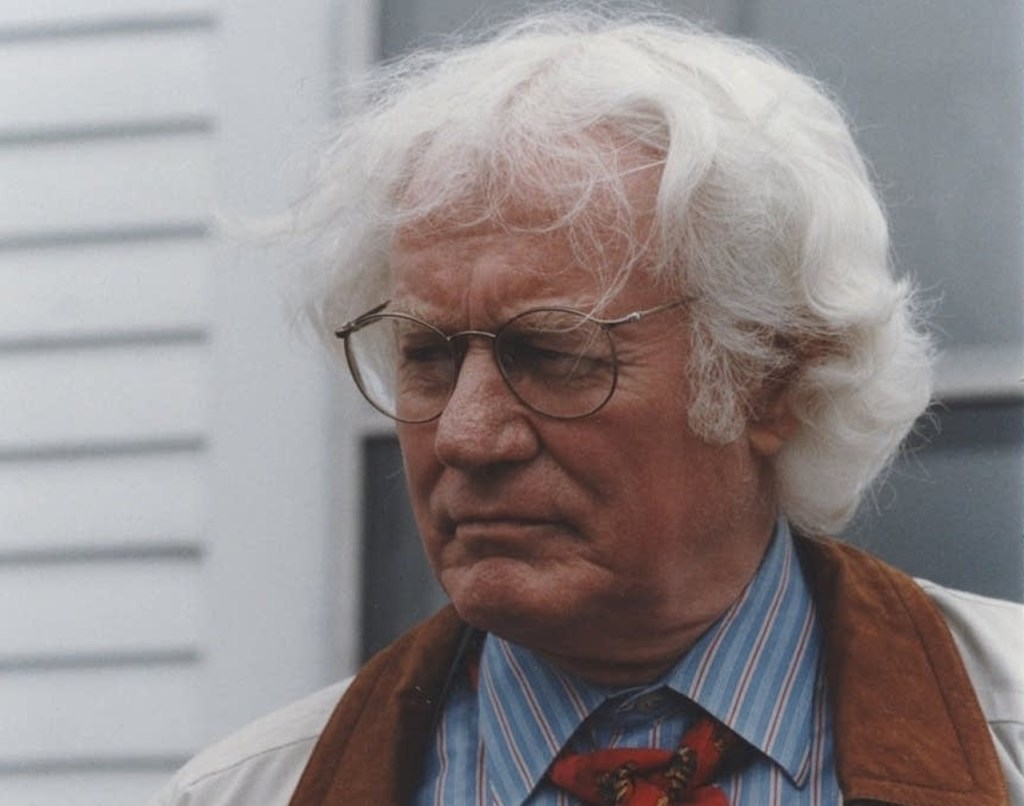
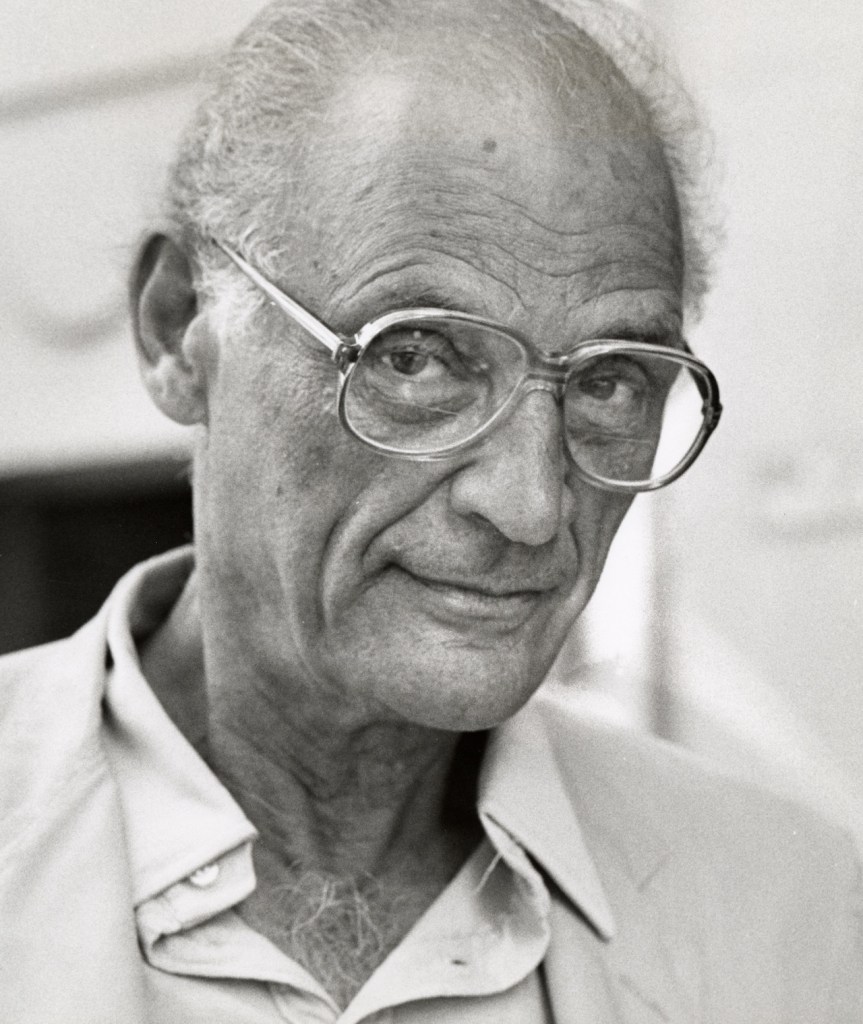
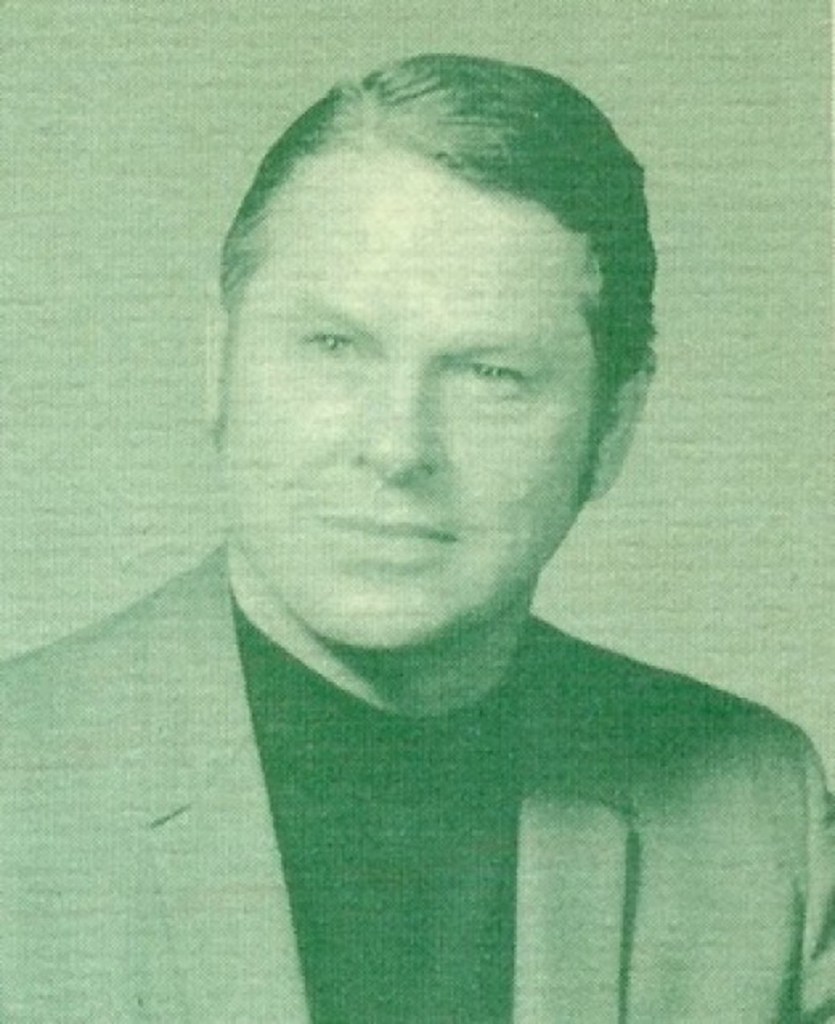
    Image: Malcolm M. Sedam

    Malcolm M. Sedam’s “The Hill Maiden”

    In his poem, “The Hill Maiden,” Malcolm M. Sedam has created a speaker voicing cheerful vaticination that his teenage angst-ridden protégé will one day shed her nihilism and burst into life affirming joy.  The best teachers are those who can inspire as well as instruct their students.  This poem represents a stellar example of that kind of inspirational educator.

    Introduction and Text of “The Hill Maiden”

    Malcolm M. Sedam‘s “The Hill Maiden” features a teacher dramatizing his observations about a particularly inquisitive but melancholy student.  His ultimate purpose is to instill in the student the notion that she will ultimately be able to appreciate the life that she seems to disdain.

    The poem plays out in three movements of unrimed stanzas.  This organization allows the speaker to touch lightly on the physical reality of the subject but then move more intensely to the mental and finally the spiritual possibility of the subject’s inclinations. 

    Because the speaker can only infer certain facts about his student, the poem remains metaphorically and imagistically implicative  instead of unequivocally literal.  For example, the teacher has no exact idea what the student does at her home; thus he places her in an image of “moving among the phantom rocks of reverie.”  

    The teacher/speaker knows from the negativity the student has been expressing to him that she mentally resides among hardness that causes her to imagine that things are worse than they are.

    Mentally she travels like a rocket through her ghostly musings until night fall when she sleeps but likely gets little rest, accounting for the nervous, brittle energy the educator perceives in his young scholar.

    Likely the adolescent girl is simply suffering the turbulence of teenage angst through which most individuals of that age group must travel.  But the best, most effective teachers are those who can inspire as well as instruct their students.  This poem represents a stellar example of that kind of inspirational educator.

    As an educator, Mr. Malcolm M. Sedam wrote poems to many of his students, always with the goal of inspiring them to high thinking and plain living.  Mr. Sedam once said he felt that his function as an educator was “to kick the dirt off of his students.”  By that he meant to help them see life more clearly without the fog of stereotypes, prejudice, and provincialism.  

    The Hill Maiden

    (for Linda, over in the valley)

    She is moving among the phantom
    Rocks of reverie hurtling through
    By mind bringing days into darkness
    Where the pull of growth rings
    The heart and spurs the soul

    Where her wish strings questions
    In the mysterious night of snow
    Bringing a promise that only the hills can sing.
    Her smile waits behind a frown of swords
    That rend her days

    In the melancholy of the deep valley
    Of dreams where she lives among flowers
    Gathering her moods that may bring peace
    Once the sorrow of lonely distance
    Has closed on hands—

    The same hands that Zen-like reach
    To answer each knock at the door of her heart
    Broken to be mended by tender time.
    Her mind is speeding through a galaxy
    Of intensity where the blood rose

    Will speak to her frozen will
    All forgiven by decree in warring winds—
    The nature of her plight?
    Without wings
    She will still spring into flight.

    Commentary on “The Hill Maiden”

    Malcolm M. Sedam’s “The Hill Maiden” features a teacher, who is also a practicing poet, dramatizing his observance of an inquisitively intelligent but extremely melancholy student.  

    His only purpose is to instill in the student the notion that she will ultimately be able to appreciate the life that she seems now to disdain.

    First Movement:  Dreaming amongst the Hills

    She is moving among the phantom
    Rocks of reverie hurtling through
    By mind bringing days into darkness
    Where the pull of growth rings
    The heart and spurs the soul

    Where her wish strings questions
    In the mysterious night of snow
    Bringing a promise that only the hills can sing.

    The speaker begins by placing the object of his speculative musing in an image that implies sharp but dream-like rigidity.  Rocks appear ghost-like through a dream-scape as they bewilder the mental musings of the young girl with whom the mature educator is engaging both as a poetry mentor as well as a teacher.

    Teachers often counsel their students who seek out their advice and direction even in issues outside of the academic sphere as well as within the educational arena.  Those teachers who must essentially become counselors will either direct the students to other professionals, or they will attempt to offer their own gleanings from their life experience.

    The teacher in this poem demonstrates that he is the latter kind of teacher, and he has given the mind of the young student some serious analysis.  Thus he not only describes her environment, but he also speculates and then foreshadows what is likely to befall the girl once she is able to erase her current adolescent fog.

    Until that glowing day arrives, however, the speaker sees that the girl’s maturing process weighs heavily on her heart and soul.  She is full of questions brought on by the mystery of life.  

    The “snow” that brings beauty as it covers the hills also brings bitter cold and slippery conditions the cause the girl to miss the music that her hill-valley home affords her.

    By pointing out these images of beauty and placing them a context of mystery and difficulty, the speaker hopes to allow his charge to contemplate the possibility that life is real and offers hope to those who search its reaches with an open mind and cheerful heart.

    Second Movement:  Frowning Swords

    Her smile waits behind a frown of swords
    That rend her days

    In the melancholy of the deep valley
    Of dreams where she lives among flowers
    Gathering her moods that may bring peace
    Once the sorrow of lonely distance
    Has closed on hands—

    The same hands that Zen-like reach
    To answer each knock at the door of her heart
    Broken to be mended by tender time.

    The speaker has observed the teen’s unwillingness to show a cheerful countenance.   Her bitterness “behind a frown of swords” likely often gives the mentor a shudder at the likelihood that the girl is suffering intensely.

    No doubt, he believes that at this point in her life, she should be dancing merrily among “flowers” and allowing her sorrowful moods to dissolve in the “deep valley of dreams.”

    But again, he returns to prognostication that once she has learned to fold her hands in wonder and listen to the love that knocks at the “door of her heart,” her melancholy will be rendered null and void as “tender time” moves her through the rough spots of her anguish.

    Again, the speaker chooses beauty—”flowers gathering”—to balance the “frown.”  He offers the image of the heart’s door to harmonize with the environment that will reach her with the “Zen-like” hands of mystery and the ultimate gain-of-wisdom.  

    Like a Zen koan, the riddle of life will remain before her as she continues to search for answers to her perplexing questions.  

    Third Movement:  Springing into Flight

    Her mind is speeding through a galaxy
    Of intensity where the blood rose

    Will speak to her frozen will
    All forgiven by decree in warring winds—
    The nature of her plight?
    Without wings
    She will still spring into flight.

    Finally, the speaker makes his most striking vaticination after asserting that his young charge has a strong mind but also a tender heart that is quick to show intense emotion.  

    That the “blood rose” will speak itself undeniably to the girl’s will portends that all of her negativity and nihilism will be “forgiven” as she continues to navigate through the conflicts that life bestows on all searching souls.

    Then the speaker offers the question that he is likely very content to answer.  The frustrating situation that befuddles the young scholar’s mind and heart has been implied by all the imagery that went before, but then what will eventually be the path chosen by and/or for the student?   

    She will be able to navigate through all the trials and tribulations as a bird that so easily lifts it wings to the wind and takes to the air through the abundant space of sky.

    The speaker is not so naïve as to insist that such navigation will come easily, but he does remain assured that the path will open to the girl, and she will become willing to follow it. Thus the speaker can conclude affirmatively that “Without wings, she will still spring into flight.”

    Offered by a beloved and well-respected mentor, such faith in a young scholar’s ability to navigate life is bound to redound in blessings, despite the pitfalls and rough spots that her life, no doubt, will place sphinx-life before her mind and heart.


  • Sterling A. Brown’s “Southern Cop”

    Image:  Sterling A. Brown  Academy of American Poets

    Sterling A. Brown’s “Southern Cop”

    This commentary on Sterling A. Brown’s “Southern Cop” offers an alternative reading to the sycophantic interpretation given by postmodernists who subscribe to the prevailing ideology of victimhood.  The curse of identity politics soft censors such stances; thus they remain rare.

    Introduction with Text of “Southern Cop”

    While the speaker in Sterling Brown’s “Southern Cop” seems to be exposing and rebuking racism, he actually engages in racism himself. This widely anthologized poem features the following scene: A rookie cop named Ty Kendricks has shot a man who was running out of an alley. 

    The poem does not report the reason that the man was running nor the reason that the police officer happened to be at the scene.  However, the report clearly states that the man’s reason for running was not because of any guilt on his part. It is useful to keep in mind that the caveat stating that one is innocent until proven guilty applies to all citizens—even those who are running.

    The speaker of the poem purports to represent the outraged citizenry, whose emotional reaction is so powerful that the speaker must turn to verbal irony in order to convey that outrage. The outraged speaker assumes that his audience is as offended as he is and thus will agree with his statements on all levels. 

    But the speaker also assumes that a racist audience will take him literally, even though brushing away the irony would demonstrate the utter bankruptcy of his intentionally ludicrous exhortations. The ideas that because Ty Kendricks was a rookie in the process of proving himself and that the citizenry should decorate him for shooting an innocent man cannot be taken literally.

    The ideas of proving manhood and decorating a cop for shooting an innocent man are clearly absurd. The ideas are absolutely preposterous, yet the speaker does not suggest the course of action society should take in dealing with Ty Kendricks, the rookie cop, who likely made a mistake, without consideration of the race of the victim. 

    What does this rookie cop deserve? Who is to decide? An angry, disorderly mob? The speaker’s emotion becomes magnified with each stanza from the first line of the first stanza that would appear not to be ironic at all but quite literal to the first line of the last stanza that is undoubtedly filled with irony. 

    About half-way through the poem the irony becomes obvious. And the speaker then sets center stage his ironic barbs in his effusion.

    Southern Cop

    Let us forgive Ty Kendricks.
    The place was Darktown. He was young.
    His nerves were jittery. The day was hot.
    The Negro ran out of the alley.
    And so Ty shot.

    Let us understand Ty Kendricks.
    The Negro must have been dangerous.
    Because he ran;
    And here was a rookie with a chance
    To prove himself a man.

    Let us condone Ty Kendricks
    If we cannot decorate.
    When he found what the Negro was running for,
    It was too late;
    And all we can say for the Negro is
    It was unfortunate.

    Let us pity Ty Kendricks.
    He has been through enough,
    Standing there, his big gun smoking,
    Rabbit-scared, alone,
    Having to hear the wenches wail
    And the dying Negro moan.

    Commentary on “Southern Cop”

    This irony-filled drama portrays a bundle of rage and racism. The attitude of the speaker weighs in at least as heavily as the actual event that the speaker is decrying.

    Stanza 1:  Forgiveness Is Good

    Let us forgive Ty Kendricks.
    The place was Darktown. He was young.
    His nerves were jittery. The day was hot.
    The Negro ran out of the alley.
    And so Ty shot

    The first stanza opens with the speaker seemingly quite controlled as he suggests that he and his milieu “forgive” the young cop named Ty Kendricks. The invocation of the Christian value of forgiveness offers no clue that the speaker would not, in fact, forgive this rookie cop. Of course, the biblical injunction demands that  trespassers be forgiven.

    However, in this particular scenario, what is the speaker suggesting be forgiven? He is urging forgiveness of Ty Kendricks the rookie cop who shot an man because he was running out of an alley.  The speaker does not reveal the reason that the man was running, nor what caused the cop to shoot; the speaker is simply asking that the rookie be forgiven. 

    Stanza 2:  Understanding Is Also a Good Thing

    Let us understand Ty Kendricks.
    The Negro must have been dangerous.
    Because he ran;
    And here was a rookie with a chance
    To prove himself a man.

    Next, the speaker asks that he and his listeners “understand” the rookie cop. Of course, they should try to understand both the perpetrators of crime and the enforcers of law. Otherwise, justice cannot prevail without understanding. 

    But then the speakers’s audience is apprised of what they are being commanded to forgive and to understand: the man was surely dangerous/guilty because he was running.  Not only that, the rookie Ty Kendricks now has the opportunity to show himself to be a man.

    Because running does not equal guilt, and the notion of proving manhood by shooting someone is ludicrous, it now becomes clear that the speaker is engaging in verbal irony to portray his true message.  This speaker does not, in fact, want his audience to forgive nor understand Ty Kendricks, the rookie cop.

    What does the speaker hope to accomplish with his use of irony? He intends to brand Ty Kendricks a racist and elicit sympathy for the man shot by this cop. Of course, the man who was shot deserves sympathy, but the speaker offers no evidence that Ty Kendricks was a racist cop.  

    That fact that Kendricks shot a man running out of an ally does not equal racism, despite the fact that the running man was black. All things being equal, Ty Kendricks would likely have shot any man of any race in this situation.

    Stanza 3:  Condoning the Killing of an Innocent Man

    Let us condone Ty Kendricks
    If we cannot decorate.
    When he found what the Negro was running for,
    It was too late;
    And all we can say for the Negro is
    It was unfortunate.

    Condoning this apparently despicable act of a rookie cop shooting an innocent victim becomes a near surreal request.  But because the speaker is engaging in irony, he does not intend his listeners to “condone” but instead to “condemn” the rookie cop.

    The cop’s reaction of shooting the running man became just another “unfortunate” event by the time the cop learned the reason for the running.  But what is the efficacy of forgiving, condoning, and decorating a cop for a bad shoot? 

    The ironic use of the terms means that the speaker is in reality suggesting that his listeners continue to hold a grudge and to condemn cops, even those who might have mistakenly shot someone. The intensity of this verbal irony may possibly encourage speculation that the speaker is even attempting to instigate rioting, burning buildings, and killing other cops.

    Stanza 4:  Pity for All Involved

    Let us pity Ty Kendricks.
    He has been through enough,
    Standing there, his big gun smoking,
    Rabbit-scared, alone,
    Having to hear the wenches wail
    And the dying Negro moan.

    Finally, the speaker appears to return to some semblance of humanity, asking that he and his listeners “pity” this poor rookie cop.  Of course, the cop deserves pity. Or more accurately, he deserves sympathy and support. Taking the life of a fellow human being causes emotional damage—even to the most well-adjusted veteran law enforcement officer.

    And taking a human life constitutes a serious, deeply spiritual offense against Creation and the Creator, even though that Creator has arranged Creation to require such an offense at times. Even man’s law allows for self-defense.

    But notice that the speaker is still in his own racist venue, as he applies his final acerbic barb of irony: he does not, in fact, want his audience to pity that rookie cop. Instead, he wants his readers to pity only the family of the deceased man: they stood there crying and moaning the loss of their loved one. 

    The speaker asks us to pity the rookie only because that rookie has to listen to that crying and moaning.  By stating ironically that the pity should apply to Ty Kendricks and contrasting his situation with that of the deceased man and his family, the speaker is implying that any loss suffered by the cop remains negligible.

    But suffering cannot be compared and contrasted especially in such a callous way. There is no way of calculating and weighing the suffering on either side: it’s a lose-lose situation.

    Ultimately, there is no pity for Kendricks from this speaker and his ilk—only a hollow attempt to portray the cop as a criminal, not simply a human being who has made a mistake.

    The Issue of Racism in the Poem

    A cursory reading of Sterling A. Brown’s “Southern Cop” may result in the assumption of the stereotypical view that cops shoot young black men because they are black.  An example of such a reading includes the following:

    Sterling A. Brown’s poem “Southern Cop” published in 1936 is an extremely powerful piece of poetry in American history because it cuts at the heart of racism in America. Unfortunately, many of the points Brown makes are still relevant today. In fact, this poem could have been written after any number of recent events, Ferguson perhaps being the most well known, and it would be as pertenant (sic) as ever. [1]

    The claim that this poem parallels the situation in “Ferguson” is patently false.  The shooting in the poem “Southern Cop” and the shooting in Ferguson have nothing in common.  In the “Ferguson” shooting, the race of the cop who shot and the race of the victim are known.  In “Southern Cop,” the race of the cop can only be assumed—and then only prejudicially.

    The “Hands up, don’t shoot!” claim, following the shooting of black teenager Michael Brown by white cop Darren Wilson in Ferguson, Missouri, in August 2014, has been debunked repeatedly; yet its basic impetus has refused to be abated [2] [3] [4] [5].   In fact, the only racism discoverable in the poem”Southern Cop” comes from the speaker, who identifies the victim as a “Negro” but does not ever mention the race of the cop who shot the “Negro.”  

    Because the stereotype of white racist cops, especially southern cops, is so ingrained in the culture, the speaker feels no need to identify the race of Ty Kendricks, who could as likely have been of any race. But because of the assumption that the cop is white, the speaker demonstrates his own racism by his utter contempt; he is deliberately attempting to pit the race of the shooting victim against the race of the shooter. 

    The speaker demonstrates sympathy only for the “Negro” while he attempts to promote hatred and contempt for the cop. 

    Sources

    [1]  WESSWIDEREK.  “Southern Cop.” ENGL 213: Modernist Lit & Culture.  November 14, 2016.

    [2]  Noah Rothman.  “‘Hands up, Don’t Shoot’: The Myth That Refuses to Fade.”  Hotair.  December 03, 2014.

    [3]  Andrew C. Mccarthy. “Progressive Mythography.”  National Review.  November 29, 2014.

    [4]  Nick Gass.  “‘Hands up, Don’t Shoot’ Ranked One of Biggest ‘Pinocchios’ of 2015.”  Politico.  December 14, 2015.

    [5]  William A. Jacobson.  “Reminder: “Hands up, Don’t Shoot” Is a Fabricated Narrative from the Michael Brown Case.”    LI: Legal Insurrection.  June 4, 2020.

    Note on Usage

    Before the late 1980s in the United States, the terms “Negro,” “colored,” and “black” were accepted widely in American English parlance. 

    While the term “Negro” had started to lose it popularity in the 1960s, it wasn’t until 1988 that the Reverend Jesse Jackson began insisting that Americans adopt the phrase “African American.”  The earlier more accurate terms were the custom at the time that Sterling A. Brown was writing.

    Suggestion for Students Writing Papers on Sterling A. Brown’s “Southern Cop” and Other Sensitive Issues

    The following advice applies to students attending most American colleges and universities.  Exceptions are Hillsdale College and a few others, where the First Amendment and other constitutional protections are still operative.

    The current prevailing societal emphasis on identity and the politics of racial victimhood insures that my critical stance in this commentary is deemed unacceptable and will be at least soft censored, if not completely canceled.

    So if you take such a stance in your classes, you are likely to be graded down or even censored—at best.  At worst, you may be labeled racist, even expelled.   

    Therefore, please consider your options when writing on sensitive subjects like this one.  Know your professors’ biases and use caution in crossing them.

    However, the best outcome is that you are in position to take legal action against those professors who violate your constitutional rights. With such endeavors, I wish you all the best success.