Linda's Literary Home

Tag: writing

  • Emily Dickinson’s “All these my banners be”

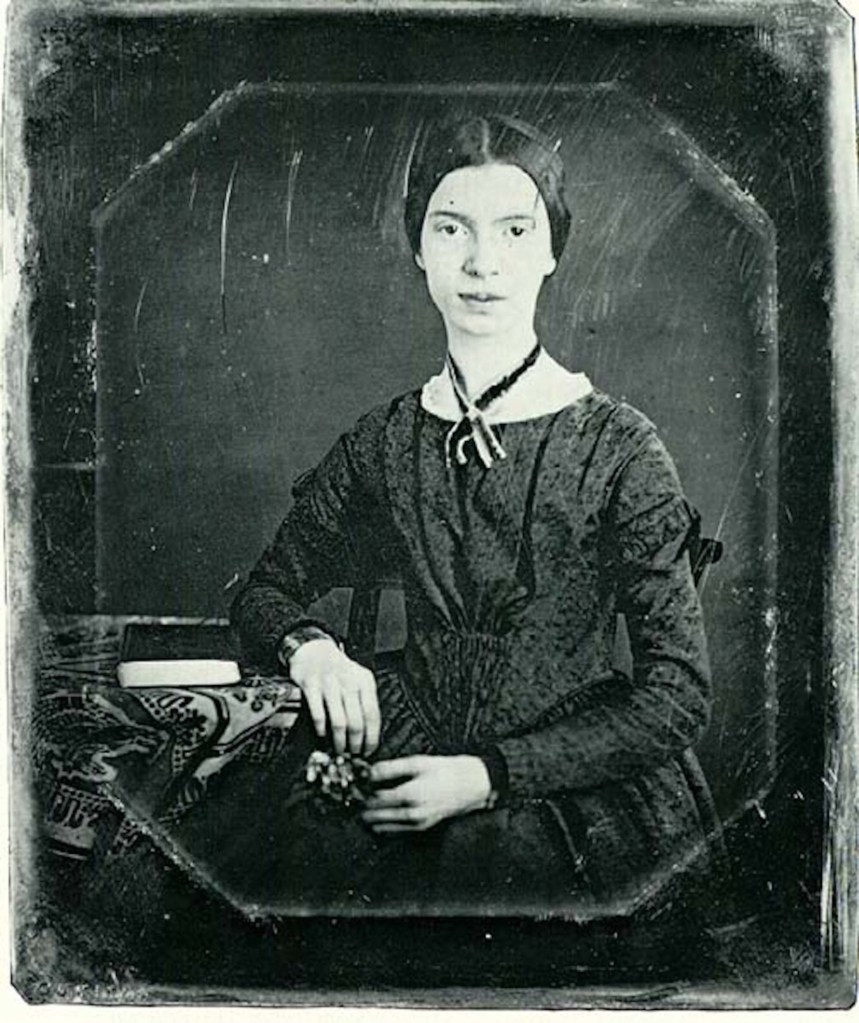
    Image: Emily Dickinson – Amherst College – Daguerrotype of the poet at age 17, circa 1847 – likely the only authentic, extant likeness of the poet

    Emily Dickinson’s “All these my banners be”

    The speaker celebrates the beauty of wildflowers, which metaphorically represent their mystical counterpart in the spiritual garden, created by the speaker’s powerful and fertile imagination.

    Introduction with Text of “All these my banners be”

    Like a garden or landscape imbued with numerous colorful wildflowers, the poetic garden that Emily Dickinson’s speaker is creating holds all of the poet’s numerous, colorful poems.  She celebrates those natural wildflowers as she showcases the permanence of her own creations.

    This speaker, like the Shakespearean speaker, has planted her flag in the ever-existing land of creativity.  In that special spiritual garden, she can plant any flower she chooses and in places where she knows they will continue to shed their perfume to noses and their beauty to eyes, as well as their music to ears.

    All these my banners be

    All these my banners be.
    I sow my pageantry
    In May –
    It rises train by train –
    Then sleeps in state again –
    My chancel – all the plain
    Today.

    To lose – if one can find again –
    To miss – if one shall meet –
    The Burglar cannot rob – then –
    The Broker cannot cheat.
    So build the hillocks gaily
    Thou little spade of mine
    Leaving nooks for Daisy
    And for Columbine –
    You and I the secret
    Of the Crocus know –
    Let us chant it softly –
    “There is no more snow!”

    To him who keeps an Orchis’ heart –
    The swamps are pink with June.

    Reading of “All these my banners be” 

    Commentary on “All these my banners be”

    The speaker is celebrating her spiritual garden of verse, wherein like the beauty of literal wildflowers, the beauty of her poems retain the delicious ability to remain ever existing.

    First Stanza:  Planting Flags of Sacred Beauty

    All these my banners be.
    I sow my pageantry
    In May –
    It rises train by train –
    Then sleeps in state again –
    My chancel – all the plain
    Today.

    On the literal level, the speaker is celebrating wildflowers, claiming them as her nation or state, and implying that she is planting them as one would plant a flag to possess a territory or mark the discovery of some formerly distant land. 

    One may be put in mind of the moon-landing at which time the American astronauts planted the flag of the USA on the moon. Thus, she begins by asserting that all of these flowers are her “banners” or flags.  

    Interestingly, there is a type of Daylily that sports the nickname “Grand Old Flag,” or as my mother referred to them as “Flags.”  These wildflowers grow abundantly along rivers, old country roads, and even along busy highways.  They are quite hardy, so hardy, in fact, that some folks actually disdain their presence and seek to halt their spreading abundance.

    This speaker adores her expanse of wildflowers.  After claiming them as her “banners,” she claims that she is sowing these, her “pageantry,” in the late spring month of May. She colorfully reports that they come shooting up through the earth like trains with a long string of cars that continue to move until they “sleep in state again” or halt from their journey.  

    The speaker then remarks that this bannered, colorful, and divine expanse of land—”all the land”—is her “chancel” today.  Her love and devotion rise to the spiritual level as she calls that “land” metaphorically a “chancel.”

    Second Stanza:  Creating a Mystical Garden

    To lose – if one can find again –
    To miss – if one shall meet –
    The Burglar cannot rob – then –
    The Broker cannot cheat.
    So build the hillocks gaily
    Thou little spade of mine
    Leaving nooks for Daisy
    And for Columbine –
    You and I the secret
    Of the Crocus know –
    Let us chant it softly –
    “There is no more snow!”

    As she eases into the metaphoric level, the speaker first waxes philosophical about losing and missing things—a state of consciousness that refers to the changing of the seasons.

    Seasons with their abundant lush growth on the landscape are routinely followed by seasons in which no growth occurs, and the observer then finds she has lost something that she misses.  

    It remains the duty of this highly creative and talented speaker to eliminate all those pesky periods of losing, and she can do that metaphorically by creating her own sacred, spiritual garden filled with the flowers that are her poems.  

    In her mystically created garden, no “Burglar” can “rob,” and no “Broker” can “cheat.”  Thus, the various flowers named in the stanza stand both for themselves as well as serving as a metaphoric flower representing her poems. 

    The speaker then commands her poetic ability, represented metonymically by the “little spade” which becomes a symbol for her writing, to “build the hillock gaily” or get on with creating these marvelous little dramas that keep her enthralled.  

    That “little spade” carves out “nooks for Daisy” and “for Columbine”—a colorful, fascinating way of asserting that her writing ability produces poems that stand as strong, colorful, and divinely beautiful as those flowers that she names—”Daisy” and “Columbine.”

    The speaker intimates to her “little spade” that they two are privy to the same secret known by “the Crocus,” and she insists that they “chant it softly” in that delicious atmosphere in which “There is no more snow!”  

    The speaker would desire “no more snow” for the simple reason that literal flowers do not spring up in winter.  Thus, she is robbed of their beauty, and she misses them.  And thus the “no more snow” season for her writing has the power to encompass all the seasons, wherein those objects of beauty can continue to grow and flourish and provide beauty.

    Third Stanza:  Perpetual June

    To him who keeps an Orchis’ heart –
    The swamps are pink with June.

    The speaker then again waxes philosophical about her spiritual garden of flowers.  It is an attitude that prevails to cause one to be able to accept the mystical level of being as more alluring and even more beautiful than the physical level that points to it.  

    As the physical level of being, which is created out of atoms and molecules, contains beauty but that beauty fades and is never permanent, the mystical level, which is created out of inextinguishable light, can remain eternally.  

    For the earth-bound human being, the concept of and desire for things to exist eternally remain instilled in the heart, mind, and soul.  For the mystically inclined individual, the “swamps” remain eternally “pink” as though it were always “June.”

    In other words, the individual steeped in spiritual, mystic ardor and filled with creative juices needs only to create a spiritual garden—mystical world—in which permanence does reign eternally.

    Video:  Orange Daylily
  • Emily Dickinson’s “There’s been a Death, in the Opposite House”

    Image: Emily Dickinson – Amherst College – Daguerrotype of the poet at age 17, circa 1847 – likely the only authentic, extant likeness of the poet

    Emily Dickinson’s “There’s been a Death, in the Opposite House”

    Emily Dickinson’s “There’s been a Death, in the Opposite House” features a glimpse at the skill of this poet as she speaks through a created character—an adult male looking back at the daunting experience of becoming aware that a neighbor had died.

    Introduction with Text of “There’s been a Death, in the Opposite House”

    The following version of Emily Dickinson’s “There’s been a Death, in the Opposite House” in Thomas Johnson’s The Complete Poems of Emily Dickinson displays the poem as the poet wrote it.  

    Some editors have tinkered with Dickinson’s texts over the years to make her poems look more “normal,” i.e., without so many dashes, capitalizations, and seemingly odd spacing, and in this poem, they convert the fifth stanza into a perfect quatrain.

    Dickinson’s poems, however, actually depend on her odd form to express her exact meaning.  Editors who tinker with her oddities fritter away the poet’s actual achievement.

    There’s been a Death, in the Opposite House

    There’s been a Death, in the Opposite House,
    As lately as Today –
    I know it, by the numb look
    Such Houses have – alway –

    The Neighbors rustle in and out –
    The Doctor – drives away –
    A Window opens like a Pod –
    Abrupt – mechanically –

    Somebody flings a Mattress out –
    The Children hurry by –
    They wonder if it died – on that –
    I used to – when a Boy –

    The Minister – goes stiffly in –
    As if the House were His –
    And He owned all the Mourners – now –
    And little Boys – besides –

    And then the Milliner – and the Man
    Of the Appalling Trade –
    To take the measure of the House –

    There’ll be that Dark Parade –

    Of Tassels – and of Coaches – soon –
    It’s easy as a Sign –
    The Intuition of the News –
    In just a Country Town –

    Reading 

    Commentary on “There’s been a Death, in the Opposite House”

    This poem offers much food for thought: Dickinson’s use of a male character and the perfidy of editors who regularize her text, as well as the events depicted in the narrative.

    Stanza 1:   The House Speaks of Death

    There’s been a Death, in the Opposite House,
    As lately as Today –
    I know it, by the numb look
    Such Houses have – alway –

    The speaker announces that he can tell that a death has occurred in the house just across the street from where he lives.  He then explains that he can tell by the “numb look” the house has, and he intuits that the death has taken place quite recently.

    Note that I have designated that the speaker is male as I call him “he.”  In stanza 3, it will be revealed that the speaker is indeed an adult male, who mentions what he wondered about “when a Boy.”   Thus it becomes apparent that Dickinson is speaking through a character she has created specifically for this little drama.

    Stanza 2:  The Comings and Goings

    The Neighbors rustle in and out –
    The Doctor – drives away –
    A Window opens like a Pod –
    Abrupt – mechanically –

    The speaker then continues to describe the scene he has observed which offers further evidence that a death has recently occurred in that opposite house.  He sees neighbors coming and going.  He sees a physician leave the house, and then suddenly someone opens a window, and the speaker claims that the person abruptly “mechanically” opens the window.

    Stanza 3:  The Death Bed

    Somebody flings a Mattress out –
    The Children hurry by –
    They wonder if it died – on that –
    I used to – when a Boy –

    The speaker then sees why the window was opened: someone then throws out a mattress.  Then gruesomely he adds that it is likely that the person died on that mattress, and the children who are scurrying past the house likely wonder if that is why the mattress was tossed out.  The speaker then reveals that he used to wonder that same thing when he was a boy.

    Stanza 4:  The Mourners Are Owned by Clergy

    The Minister – goes stiffly in –
    As if the House were His –
    And He owned all the Mourners – now –
    And little Boys – besides –

    Continuing to describe the macabre events occurring across the street, the speaker then reports seeing “the Minister” enter the house.  It seems to the speaker that the minister behaves as if he must take possession of everything even “the Mourners”—and the speaker adds that the minister also owns the “little Boys” as well.

    Stanza 5:   That Eerie Funeral Procession

    And then the Milliner – and the Man
    Of the Appalling Trade –
    To take the measure of the House –

    There’ll be that Dark Parade –

    The speaker then reports that the milliner, who will dress the body, has arrived.  Then finally the mortician, who will measure both the corpse and the house for the coffin.  The speaker finds the mortician’s “Trade” to be “Appalling.”

    The line “There’ll be that Dark Parade –” is separated from the first three lines of the stanza.  This placement adds a nuance of meaning as it imitates what will happen:  the funeral procession, “Dark Parade,” will separate from the house.  And the line departing from the rest of the stanza demonstrates that action quite concretely and literally.  (More on this below in “Regularizing Emily Dickinson’s Text”)

    Stanza 6:   Intuition Spells News

    Of Tassels – and of Coaches – soon –
    It’s easy as a Sign –
    The Intuition of the News –
    In just a Country Town –

    The speaker then finishes his description of the “Dark Parade” with its “Tassels” and “Coaches” and finally concludes by remarking how easy it is to spot a house whose residents have become mourners.  All those people and events elaborated by the speaker add up to “Intuition of the News” in the simple “Country Town.”

    The Created Character

    The poet has offered a genuine depiction of what is occurring in present time as well as what occurred in the past. And she is doing so using the character of an adult male who is looking back to his memories of seeing such a sight as a child.

    The authenticity of a woman speaking though a male voice demonstrates the mystic as well as poetic skill of this poet to put herself in the persona of the opposite sex in order to create a dramatic event. Poets, however, need not be mystically inclined to achieve this level of authenticity, but certainly not all poets can pull off such a feat.  

    For example, Langston Hughes created a mixed race character in his poem “Cross” and spoke in first person, but his depiction remains questionable as he assigned feelings to a person not of his own ethnicity based solely on stereotypes. 

    Dickinson’s character is offering insights into an event that are not limited to the observations of one sex; a little girl could make those same observations.   Dickinson’s reason for creating a male character to report this event remains unknown, but it is likely she simply felt a more compelling drama could be achieved if her character were a little boy.

    Regularizing Emily Dickinson’s Text

    One of the many arguments over the reclusive 19th century American poet, Emily Dickinson, includes the one directed at editors who regularize Dickinson’s idiosyncratic style—her many dashes, her seemingly haphazard capitalization, and her sometimes irregular use of spacing.

    One can sympathize with those editors who wish to make Emily Dickinson’s poems more palatable for readers, but now and then one can find instances in which the editor’s regularization has limited the poet’s meaning.  That limitation occurs in this poem, “There has been a Death, in the Opposite House.” 

    Poetry textbook editors Louis Simpson (Introduction to Poetry) and Robert N. Linscott (Selected Poems and Letters of Emily Dickinson) alter the text of this Dickinson’s poem in a way that weakens the total impact of the poem. 

    The widely noted textbook editor Laurence Perrine employed that altered form until the ninth edition of his Sound and Sense: An Introduction to Poetry, when he changed it to reflect Dickinson’s meaning more accurately, after reading my explication of the poem in The Explicator

    (Thomas Arp, Perrine’s coeditor, related to me that that change was Perrine’s last editorial decision before turning over the editorship to Arp.)

    Limiting Meaning

    That slight alteration is the omission of the empty line separating the last line of the fifth stanza from the preceding three.  That omission regularizes the stanza, resulting in a poem of six four-line stanzas.   Closing up stanza five gives the poem a uniform appearance but limits Dickinson’s meaning. 

    Considering the meaning of the line that Dickinson separated from the rest of the stanza, I suggest that she had a specific reason for the separation.  The line “There’ll be that Dark Parade” indicates that a funeral procession will soon be seen.  

    The lines preceding this one state that various persons who serve the dead will be appearing, including the “Man / Of the Appalling Trade – / To take the measure of the House.” 

    The funeral procession “that Dark Parade” will occur after the measurement of the house and will literally separate itself from the house; and Dickinson, to show this progression concretely, separated the line from the rest of the stanza, whose last word is “House.” By regularizing Dickinson’s stanza, the editors make her poem look neater, but they eliminate the special nuance of meaning that Dickinson achieved in her original.

    In Thomas H. Johnson’s The Complete Poems of Emily Dickinson, the line is not attached to the previous three, as shown above in the text of the poem.  Johnson restored Dickinson’s poems to their original forms, without intrusions that would change meaning.  

    He did make quiet changes in spelling such as “visiter” to “visitor” and repositioned misplaced apostrophes such as “does’nt” to “doesn’t.” Dickinson’s own handwritten version of the poem can be seen in R. W. Franklin’s The Manuscript Books of Emily Dickinson or on theEmily Dickinson Archive site that clearly shows the poet’s intension that the line be separated from the rest of the stanza.

  • Emily Dickinson’s “The feet of people walking home”

    Image: Emily Dickinson – Amherst College – Daguerrotype of the poet at age 17, circa 1847 – likely the only authentic, extant likeness of the poet

    Emily Dickinson’s “The feet of people walking home”

    In a uniquely dramatic way, Dickinson’s speaker reveals the simple truth that people are happier when they are on their way home.

    Introduction with Text of “The feet of people walking home”

    Emily Dickinson’s “The feet of people walking home” plays out its little drama in three octaves or eight-line stanzas.  Instead of the literal meaning of the word, “home,” this poem employs the figurative meaning as in the old hymn lyric “This World Is Not My Home.”  This Dickinson poem features highly symbolic imagery, while at times seeming to point to things of this physical world. 

    Every image works in service of supporting the claim that each human soul wears “gayer sandals” as it strides toward its permanent “home” in the abode of the Divine Creator.  Again, the Dickinsonian mysticism provides the poet’s speaker with an abundance of mystic meaning garnered from that “Bird” of hers that ventures out and returns with new melodies.

    The feet of people walking home

    The feet of people walking home
    With gayer sandals go  –
    The Crocus  – till she rises
    The Vassal of the snow  –
    The lips at Hallelujah
    Long years of practise bore
    Till bye and bye these Bargemen
    Walked singing on the shore.

    Pearls are the Diver’s farthings
    Extorted from the Sea  –
    Pinions  – the Seraph’s wagon
    Pedestrian once  – as we  –
    Night is the morning’s Canvas
    Larceny  – legacy  –
    Death, but our rapt attention
    To Immortality.

    My figures fail to tell me
    How far the Village lies  –
    Whose peasants are the angels  –
    Whose Cantons dot the skies  –
    My Classics vail their faces  –
    My faith that Dark adores  –
    Which from its solemn abbeys
    Such resurrection pours.

    Reading: 

    Commentary on “The feet of people walking home”

    In a uniquely dramatic way, Dickinson’s speaker reveals the simple truth that people are happier when they are on their way home–especially as they are making progress toward their Divine Abode.

    First Stanza:  Happier on the Way Home

    The feet of people walking home
    With gayer sandals go  –
    The Crocus  – till she rises
    The Vassal of the snow  –
    The lips at Hallelujah
    Long years of practise bore
    Till bye and bye these Bargemen
    Walked singing on the shore.

    A paraphrase of the first two lines of Dickinson’s “The feet of people walking home” might be:  People are happier when they are on their way back to the abode of the Divine Creator.  The physical earthly place called “home” serves as a metaphor for Heaven or the Divine Place where the belovèd Lord resides.  

    That “Divine Place” is ineffable, and therefore has no earthly counterpart, but for most human beings and especially for Emily Dickinson, home is the nearest thing on earth, that is, in this world to the spiritual level of being known as “Heaven.”    So according to this speaker even the shoes of people who are on their way “home” are “gayer,” happier, more peaceful, filled with delight.  

    The speaker then begins to offer support for her claim: the flower exemplified by the “Crocus” is restrained by the “snow” until it pushes up through the ground and displays it marvelous colors.   Similarly, the human soul remains restrained by maya delusion until it pushes up through the dirt of this world to reveal its true colors in God.  

    Those who have practiced meditating on the name of the Divine for many years ultimately find themselves walking and “singing on the shore” like “Bargemen,” who have come ashore after a long haul of work.

    Second Stanza:  The Value of Commodities

    Pearls are the Diver’s farthings
    Extorted from the Sea  –
    Pinions  – the Seraph’s wagon
    Pedestrian once  – as we  –
    Night is the morning’s Canvas
    Larceny  – legacy  –
    Death, but our rapt attention
    To Immortality.

    Further examples of those who are going “home” are divers for pearls who are able to “extort” those valuable commodities “from the sea.”  Again, highly symbolic is the act of diving for pearls.  The meditating devotee is diving for the pearls of love and wisdom that only the Blessed Creator provides his striving children.  

    This image is comparable to the line in the chant by Paramahansa Yogananda “Today My Mind Has Dived”:  “Today my mind has dived deep in Thee / for Thy pearls of love from my depthless sea.”  

    The metaphoric diving for pearls enlivens and strengthens the message regarding the spiritual seeker’s search for God’s wisdom and love.  In both discourses, the “sea” serves as a metaphor for the Divine.   

    The “Seraph” before getting his wings once was confined to walking, not riding in a wagon.  His wings or pinions now serve him as a useful vehicle to alleviate his need to take the shoe-leather express.  “Night” serves the “morning” as a “canvas” on which can be painted taking and giving.  

    If in dreams, the poet can see herself as a channel for providing mystic truths, she will be leaving a “legacy,” but if she has envisioned only selfish wish fulfillment, she will be committing “larceny.”   

    Therefore, as night serves morning, morning serves the soul as it allows expression to blossom.   “Death” is not the end of life, not the life of the soul, because the soul is immortal; therefore, the only purpose for death is to focus the human being’s mind on the ultimate fact of “Immortality.”  Without the duality of death vs immortality, the latter could not be grasped in the physical world on the material plane.

    Third Stanza:  Ultimate Home in Heaven

    My figures fail to tell me
    How far the Village lies  –
    Whose peasants are the angels  –
    Whose Cantons dot the skies  –
    My Classics vail their faces  –
    My faith that Dark adores  –
    Which from its solemn abbeys
    Such resurrection pours.

    The speaker now admits that she has no idea how far away the “Village” is, that is, how far or how long it will take to reach her Ultimate Home in Heaven.   But she then makes sure that her audience knows that she is indeed referring to Heaven when she asserts that Heaven’s “peasants are the angels.”  

    The souls that have already entered that Kingdom of Ineffable Reality have joined the angels.  The speaker then refers to the stars calling them “Cantons” that “dot the skies.”   The speaker is implying that the “Village” she speaks of is full of light, and the only earthly comparison is the stars in the sky.  The speaker reports that her old, established expressions have hidden themselves, as her faith remains cloistered and “solemn.”

    But from those “abbeys” of her faith, she senses that the “resurrection” of her soul is certain, as the pouring out of sunshine from a dark cloud that divides to reveal those marvelous, warm rays.

    Dickinson’s Grammar/Spelling Errors

    Some of Dickinson’s poems contain grammatical and/or spelling errors; for example, in “The feet of people walking home” in line 6,”Long years of practise bore,” she employs the British spelling—a verb form—instead of the noun form “practice,” which is actually required in this phrase.  

    Interestingly, while American English currently uses “practice” for both noun and verb, the British forms use “practice” to function as a noun and “practise” as a verb. It remains unclear why editor Thomas H. Johnson did not quietly correct that error, because he reports in the introduction to his The Complete Poems of Emily Dickinson

    I have silently corrected obvious misspelling (witheld, visiter, etc), and misplaced apostrophes (does’nt).

    However, those errors do tend to give her work a human flavor that perfection would not have rendered.

    The Metaphor of Divinity

    The impossibility of expressing the ineffable has scooped up poets of all ages.   The poet who intuits that only the Divine exists and that all Creation is simply a plethora of manifestations emanating from that Ultimate Reality has always been motivated to express that intuition.  

    But putting into words that which is beyond words remains a daunting task.   Because Dickinson was blessed with a mystic’s vision, she was able to express metaphorically her intuition that the soul of the human being is immortal, even though her sometimes awkward expressions seem to lurch forward in fits and starts.   But many of her best efforts feature the divine drama, which she often plays out in her poems.

  • Emily Dickinson’s “Frequently the woods are pink”

    Image: Emily Dickinson – Amherst College – Daguerrotype of the poet at age 17, circa 1847 – likely the only authentic, extant likeness of the poet

    Emily Dickinson’s “Frequently the woods are pink”

    Emily Dickinson’s “Frequently the woods are pink” offers a fanciful jaunt around the Sun. 

    Introduction with Text of “Frequently the woods are pink “

    Emily Dickinson’s “Frequently the woods are pink” plays out in three quatrains.  Each quatrain presents a unique movement of the poem’s theme which sets out to reveal a changing landscape from spring to winter.

    The unfortunate error in terminology may likely be excused.  The terms “rotation” and “revolution” for the movement of the Earth have become interchangeable in modern parlance.  Dickinson’s  poem seems to reveal that the same interchangeable usage was in effect in her day and age.

    Frequently the woods are pink

    Frequently the woods are pink –
    Frequently are brown.
    Frequently the hills undress
    Behind my native town.
    Oft a head is crested
    I was wont to see –
    And as oft a cranny
    Where it used to be –
    And the Earth – they tell me –
    On its Axis turned!
    Wonderful Rotation!
    By but twelve performed!

    Reading  

    Commentary on “Frequently the woods are pink”

    The observant speaker is reporting her observations, focusing first on the varied colorings that appears in the woods “behind my native town.”   But she does more than that by taking her audience through the year in twelve lines.

    The twelve-line journey takes the speaker and her audience around the Sun, or through a year’s worth of changes in the landscape, one of Dickinson’s favorite subjects.

    First Movement:  The Colorful Woods

    Frequently the woods are pink –
    Frequently are brown.
    Frequently the hills undress
    Behind my native town.

    The speaker in Emily Dickinson’s “Frequently the woods are pink” begins by reporting that often the woods behind where she lives look pink.  The color pink, no doubt, indicates spring with trees, such as the redbud, that open up in the springtime into blossoms and then moving into summer replace their blossoms with leaves.

    Then later the leaves turn brown, and after they leave the trees, that is, the trees “undress” in autumn, they reveal further brown because only the tree trunks and naked branches are visible.

    Second Movement:  Observing a Bird

    Oft a head is crested
    I was wont to see –
    And as oft a cranny
    Where it used to be –

    The speaker reveals that she has frequently observed a bird’s head as she peered into the frequently changing woods.  But then later when she looked, she could detect merely a “cranny” or empty space where that bird’s head had been appearing.  

    The word “crested” identifies the head as bird’s head without the speaker having the employ the word, bird.  The word, “cranny,” indicates how small a space the head of a bird would have occupied.  The report of the viewing a bird’s head and then viewing its former space moves the poem’s theme from merely a seasons poem.    The speaker could likely observe birds in the woods anytime of year.

    Third Movement:  The Reason for the Changes

    And the Earth – they tell me –
    On its Axis turned!
    Wonderful Rotation!
    By but twelve performed!

    In the final movement, the speaker reports the reason for the change in her view, particularly the fact that at times the woods are pink and at other times brown.  The Earth has moved through the year changing seasons as it goes; it has revolved around the Sun and completed one revolution, which causes certain areas of the Earth to experience changing landscape.

    The speaker is in awe of this marvelous change as the Earth has turned, “On its Axis.”  She calls this turn “wonderful.”  And then she claims that only “twelve” had performed this wonderful feat.  

    Of course, those twelve are the twelve months of the year–through that twelve-month period, she has been given the gift of observing a changing landscape that thrills her adventurous soul.

    Regarding the scientific error:  The Earth rotates on its axis once in 24 hours; it revolves around the Sun once in 12 months.  Thus, to be scientifically factual the “Wonderful Rotation!” should be “Wonderful Revolution!”

    Interestingly, the term “revolution” here in conjunction with “wonderful” might sound political in nature.  It is quite possible that Dickinson was satisfied with a slight scientific error to avoid the possibility of being misconstrued.


    A musical rendition of “Frequently the woods are pink” 

  • Emily Dickinson’s “A Bird came down the Walk”

    Image: Emily Dickinson – Amherst College – Daguerrotype of the poet at age 17, circa 1847 – likely the only authentic, extant likeness of the poet

    Emily Dickinson’s “A Bird came down the Walk”

    Emily Dickinson’s “A Bird came down the Walk” using clever plays on words offers a keen observation, reminding listeners and readers of images which they can likely recognize.

    Introduction with Text of “A Bird came down the Walk”

    Emily Dickinson’s “A Bird came down the Walk” is one of the poet’s many fun poems loaded with clever word plays—a technique that creates a drama based on keen observation.

    The little drama functions to remind readers and listeners of images stored in memory and scenes that they have also experienced in their lifetimes.  In other words, the little fun poem is performing the primary function of any genuine poem. This Dickinson poem (#328 in Thomas H. Johnson’s Complete Poems) is one of the poet’s most anthologized poems. 

    The poem displays in five quatrains, employing a loose rime scheme in which the second and fourth lines sound out in either perfect (saw-raw) or slant (around-Head) rimes. Thomas H. Johnson’s Complete Poems offers the version that most closely represents the  Dickinson manuscript, in which the line is “That hurried all around.”  

    Some editors have tried to improve or correct the poet’s rime scheme by changing “around” to “abroad.”  The notion is that “abroad” is a better rime with “head” than “around.” But, as is nearly always the case, the poet’s subtle meanings are lost with these unfortunate editorial “corrections.”

    For example, “abroad” suggests a much farther distance than “around.”  The bird simply moved its head in such a way as to glimpse its immediate surroundings. The bird did not attempt to look searching into areas as far from it as in another country, as the term “abroad” suggests.

    A Bird came down the Walk

    A Bird came down the Walk –
    He did not know I saw –
    He bit an Angleworm in halves
    And ate the fellow, raw,

    And then he drank a Dew
    From a convenient Grass –
    And then hopped sidewise to the Wall
    To let a Beetle pass –

    He glanced with rapid eyes
    That hurried all around –
    They looked like frightened Beads, I thought –
    He stirred his Velvet Head

    Like one in danger, Cautious,
    I offered him a Crumb
    And he unrolled his feathers
    And rowed him softer home –

    Than Oars divide the Ocean,
    Too silver for a seam –
    Or Butterflies, off Banks of Noon
    Leap, plashless as they swim.

    Reading 

    Commentary on “A Bird came down the Walk”

    Emily Dickinson’s poem “A Bird came down the Walk” is one of the poet’s many fun poems filled  with entertaining plays on words.  The little drama originates from the poet’s keen observation, and it functions as do all genuine poems to engage the reader’s own lived experience.

    First Quatrain:  Human Eyes Observe a Bird

    A Bird came down the Walk –
    He did not know I saw –
    He bit an Angleworm in halves
    And ate the fellow, raw,

    In the first quatrain, the speaker states simply that “A Bird came down the Walk.” Then she reports what happened next after assuring her audience that the bird remained unaware that it was being closely observed by a pair of inquisitive human eyes.

    The bird grasps a worm, clips the worm in two pieces, and then swallows the unlucky creature.   The bird does not bother to cook the worm—just gobbles it up “raw.” Dickinson seems to enjoy inserting some fun into her poems, and this one put on displays her sense of hilarity.

    Second Quatrain:  Clever and Playful Use of Terms

    And then he drank a Dew
    From a convenient Grass –
    And then hopped sidewise to the Wall
    To let a Beetle pass –

    The speaker then continues to report to her audience what she sees next: the bird sips some water from a blade of grass and then jumps out of the way so a beetle could crawl by.  The poet must have enjoyed the cleverness of saying that the bird “drank a Dew / From a convenient Grass.”

    The term “grass” clearly will remind the reader of the term “glass” from which the human beings are accustomed to drinking. While having the bird take a sip of the dew off a piece of grass is perfectly natural, it is equally convenient that the words so seemingly accidentally align with human experience.   

    After imbibing his sip of dew, the polite avian steps aside allowing another creature of nature to continue on with his journey.  The speaker is portraying little acts of civility a she describes the antics of nature which she has so keenly observed.

    Third Quatrain:  Fidgeting, Frightened Eyes

    He glanced with rapid eyes
    That hurried all around –
    They looked like frightened Beads, I thought –
    He stirred his Velvet Head

    The speaker then reports the details regarding  the eyes of the bird. This report seems to suggest the speaker was quite close to the bird.  She was able to detect that his eyes moved quickly as they glimpsed “all around.”  She also noticed that they resembled “frightened Beads.”

    The absurdity of beads having the sensibility to become frightened simply strikes the consciousness as an appropriate use of exaggeration.  No one would be confused and think that the speaker actually believes beads can experience emotion—especially since the speaker employs a simile and then inserts the claim “I thought.”

    Also, it is likely that somewhere in the reader’s memory is the same sight—having seen a bird’s rapid eye movement.  Thus, in this poem, the poet’s dramatic re-creation gives the reader back that image stored in memory.   The observation, the image, the memory, and the experience all coming to support the fact that the claim is absolutely accurate.

    It is, in fact, a perfectly accurate observation:  those little black avian eyes “looked like frightened Beads.”   And then the bird’s head begins to move: “He stirred his Velvet Head.”

    Fourth Quatrain:   Fear of Feeding

    Like one in danger, Cautious,
    I offered him a Crumb
    And he unrolled his feathers
    And rowed him softer home –

    The speaker understands exactly why the bird seemed suddenly to experience frightened eyes.  And the bird begins to move his head because he has become fearful that the speaker has approached so close to the bird—close enough to attempt to bestow on him a morsel of food.  The speaker says she offered him “a Crumb.” 

    Immediately after she offers him a bit of food, he does not stick around to accept that crumb—he flies off.   The speaker then dramatizes that avian exit: “he unrolled his feathers / And rowed him softer home.”

    Fifth Quatrain:  Seamless Rowing

    Than Oars divide the Ocean,
    Too silver for a seam –
    Or Butterflies, off Banks of Noon
    Leap, plashless as they swim.

    In the final quatrain, the speaker fashions her vitally important re-creation of the velvety smoothness of the bird’s flight.  At the end of the fourth quatrain, the speaker had begun a comparison, stating that “he rowed him softer home.  

    She then continues and concludes that comparison in the first line of the final quatrain with “Than oars divide the Ocean.”   The bird’s flight through the air remains invisible, as one does not see the air parting as the bird’s wings cut through it.

    Thus, the bird flight is much softer in sight and sound than when one rows a boat through water using oars.  The bird’s “rowing” was “Too silver for a seam.”  And not only was it softer and seamless compared to rowing a boat on water, the bird’s flight was even smoother than the flight of butterflies jumping into the rivers of “Noon” swimming and splashing about.  

    The line “off Banks of Noon” likely encouraged another smile of satisfaction to poet’s face as she swam around in her own drama of cleverness.  After all, she had created those immortal images that will reawaken the dormant memories in readers and listeners years and years hence.

    🕉

    You are welcome to join me on the following social media:
    TruthSocial, Locals, Gettr, X, Bluesky, Facebook, Pinterest 

    🕉

    Share

  • Emily Dickinson’s “It did not surprise me”

    Image: Emily Dickinson – Amherst College – This daguerrotype circa 1847 at age 17 is likely the only authentic, extant image of the poet.

    Emily Dickinson’s “It did not surprise me”

    In Emily Dickinson’s “It did not surprise me,” the speaker has created a bird metaphor as she begins to muse on the unlikely event that she may lose her intuitive ability to perceive beyond sense awareness.

    Introduction with Text of “It did not surprise me”

    With a similar motivational purpose of her riddle-poem “I have a Bird in spring,” Emily Dickinson’s speaker in “It did not surprise me” employs a bird metaphor to contemplate the notion that her special intuitive ability to perceive events, ideas, and entities beyond sense awareness might abandon her.

    The bird metaphor remains a useful poetic device for Emily Dickinson‘s speakers as they bestow flight on their ability to create poetic dramas. Also, similar to her riddle-poem “I have a Bird in spring” in this little drama, the speaker is unveiling the metaphorical bird as a mystical muse, as the speaker ruminates on the idea that if that little birdling were to fly away from her, she would become heartbroken.

    However, unlike the riddle aspect in “I have a Bird in spring,” the poet allows her speaker to report first as if she is merely describing a literal bird. The speaker then moves into a questioning format which shines a light on the possibility that her muse might just up and fly off as any real bird might do.

    The speaker is obliged, however, to leave the issue without answering it, because she will keep that question as long as she continues in her mission of poetry creation. Ultimately, no creative artist can ever know in advance, if or when inspiration will vanish and possibly never return.

    Despite temporary flights into the clairvoyance of certain noumena, as long as the poet remains earth bound, she remains dependent to a certain extent on ordinary sense awareness.

    It did not surprise me

    It did not surprise me –
    So I said – or thought –
    She will stir her pinions
    And the nest forgot,

    Traverse broader forests –
    Build in gayer boughs,
    Breathe in Ear more modern
    God’s old fashioned vows – 

    This was but a Birdling –
    What and if it be
    One within my bosom
    Had departed me?

    This was but a story –
    What and if indeed
    There were just such coffin
    In the heart instead?

    Reading of “It did not surprise me”  

    Commentary on “It did not surprise me”

    Dickinson’s speaker metaphorically likens her muse—which she knows is bound to her mystical insight—to a bird, as she contemplates the possibility of losing the blessing provided by her innate, God-given talent and mystical ability.

    First Stanza:  A Thought Awakening

    It did not surprise me –
    So I said  –  or thought –
    She will stir her pinions
    And the nest forgot,

    The speaker begins her soliloquy by admitting that her lack of “surprise” at some event has been prompted by the thought of a bird stirring and flying off from its nest.  Between her opening statement and the bird’s first movement, the speaker asserts that upon realizing her lack of surprise, she spoke out but then changed her claim to the fact that she merely thought about the coming event without actually giving it voice.

    The final two lines of the stanza express the possibility of an activity as she states that this particular bird will start fluttering its wings, readying itself for flight and then fly off from its nest.  Such an avian forsaking its nest will then likely not even recall that it had ever stayed there.

    That status is simply the essential nature of natural creatures, as well as specific metaphorical birds that may be likened to the muse.  If this style of muse abandons its target permanently, it will likely not recall that it had ever inspired any such soul.

    Interestingly, Dickinson has her speaker employ the past tense “forgot” but clearly the actual meaning is present tense “forget.”  She possibly employed the past tense because it stands in as a closer rime to “thought.”  

    However, a different interpretation of the meaning may call for the term “forgot” to be understood as the shortened form of the past participle, as in the nest will be “forgotten.”  Through her widespread employment of minimalism and ellipsis, the poet has her speaker leave out “nest will be,” requiring the phrase to be understood and, therefore, supplied by the reader’s mind.

    Second Stanza:  Ranging to New Territories

    Traverse broader forests –
    Build in gayer boughs,
    Breathe in Ear more modern
    God’s old fashioned vows –

    After rousing its pinions and flying from its nest, this bird will roam in new territories or through “broader forests.”  It may reconstruct a new nest in a place deemed happier for its circumstances, that is, “gayer boughs.”  The bird will listen to fresh sounds, as it enjoys the many blessings of its Divine Creator, Who has promised to guard and guide all of His creatures.

    At this point, the bird has taken on only a few metaphorical qualities.  The message could thus be that of merely dramatizing what any young bird might do, after awakening to the marvelous reality of possessing the delicious ability to fly and range wide from its original location.

    Third Stanza:  Bird in the Heart

    This was but a Birdling –
    What and if it be
    One within my bosom
    Had departed me?

    The speaker now admits that the little flying creature she has been describing was, in actuality, a simple little bird, or “Birdling.”  But then she changes her focus to the “One” that lives in her heart, asking the basic question—what if my little bird-muse leaves me?

    In her poem “I have a Bird in spring,” the poet also had her speaker describe her mystical muse as a bird.   That poem also plays out as one of her numerous riddle-poems, as she seems to be describing some impossible entity that can fly from her but then return to her and  bring her gifts from beyond the sea.  

    That special metaphorical bird has the power to calm her in times of stress.  Similar to “I have a Bird in spring,” which is one of her most profound poems, this one, “It did not surprise me,” remains on the exact same consistent plane of mystical perception.  

    Unquestionably, the natural creature known as a “bird” as a metaphorical vehicle for the soul (muse or mystically creative spirit) remains quite appropriate, as poet Paul Laurence Dunbar has also demonstrated in his classic masterpiece “Sympathy.”

    Fourth Stanza:  A Intriguing Inquiry

    This was but a story –
    What and if indeed
    There were just such coffin
    In the heart instead?

    The speaker offers another admission that up to this point she has been merely speculating about her bird/muse flying off from its nest in her heart/mind/soul.  She crafts another inquiry, repeating the curious phrase “[w]hat and if” before her question.

    This poignant question employs the term “coffin” indicating the drastic and deadly situation that would exist in her mind/heart/soul, if her bird/muse did actually fly off from her to explore more extensive forests and build nests on more joyful boughs.  The speaker affirms her belief that such a loss to her heart and mind would materialize that “coffin,” if such an event ever transpired.

    🕉

    You are welcome to join me on the following social media:
    TruthSocial, Locals, Gettr, X, Bluesky, Facebook, Pinterest 

    🕉

    Share

  • Emily Dickinson’s “I have a Bird in spring”

    Image: Emily Dickinson – Amherst College – This daguerrotype circa 1847 at age 17 is likely the only authentic, extant image of the poet.

    Emily Dickinson’s “I have a Bird in spring”

    Emily Dickinson’s riddle-poem “I have a Bird in spring” features the speaker’s musing on her ability to sense existence beyond the earthly, material level of physical reality. She also expresses her confidence that the “Bird” she possesses is not one that she could ever lose.

    Introduction with Text of “I have a Bird in spring”

    Emily Dickinson’s “I have a Bird in spring” exemplifies the poet’s oft-employed strategy of creating little dramas that not only function as poems, but they also work well as fascinating riddles.

    The speaker never states the name of this strange bird that can fly away from her and then return bringing her new melodies from far beyond the sea.  

    This metaphoric avian winging its way beyond a metaphoric sea possesses the delicious power to calm any doubts and fears that might molest the speaker. That a mere bird could retain such seemingly magical powers renders this Dickinsonian riddle one of her most profound and most captivating little dramas.

    I have a Bird in spring

    I have a Bird in spring
    Which for myself doth sing  –
    The spring decoys.
    And as the summer nears  –
    And as the Rose appears,
    Robin is gone.

    Yet do I not repine
    Knowing that Bird of mine
    Though flown  –
    Learneth beyond the sea
    Melody new for me
    And will return.

    Fast in safer hand
    Held in a truer Land
    Are mine  –
    And though they now depart,
    Tell I my doubting heart
    They’re thine.

    In a serener Bright,
    In a more golden light
    I see
    Each little doubt and fear,
    Each little discord here
    Removed.

    Then will I not repine,
    Knowing that Bird of mine
    Though flown
    Shall in distant tree
    Bright melody for me
    Return.

    Reading of “I have a Bird in spring”  

    Commentary on “I have a Bird in spring”

    The speaker muses on and dramatizes the activity of a metaphoric bird that can bring to her wonderful bits of information from beyond the material level of existence.

    First Stanza:  A Strange Bird

    I have a Bird in spring
    Which for myself doth sing  –
    The spring decoys.
    And as the summer nears  –
    And as the Rose appears,
    Robin is gone.

    The speaker begins employing a rather straight forward claim that becomes ever more mysterious as she continues.  She reports that she is in possession of “a Bird in spring.” However, that “Bird” sings for her alone.  Such a statement remains intriguing because it seems obvious that birds sing for everyone, or rather perhaps they sing for no one but themselves and likely other birds.  

    Even if this speaker is creating her little ditty about a pet bird that she keeps in a cage, that bird likely would not sing simply for his care-taker.  Paul Laurence Dunbar’s speaker has averred in his poem “Sympathy” that he “knows why the caged bird sings,” and the bird does not sing only for the one who has caged him.

    Thus, the puzzle continues to plays out. Why is this “Bird” singing only for his owner/care-taker?  Thus, the speaker then asserts that as spring moves on, the season lures her away from her “Bird.” But then as she moves into summer, she becomes attracted by the beauty of “the Rose,” but then her “Bird,” whom she now calls “Robin” has flown away.

    The first stanza leaves the audience cogitating on such a mystifying conundrum:  an unusual bird that seems to belong to a person, simply up and disappears as the season of spring with all of its lushness has captured the individual’s attention and as roses are starting to blow forth for summer.

    Second Stanza:  Not a “bird”  – but a “Bird”

    Yet do I not repine
    Knowing that Bird of mine
    Though flown  –
    Learneth beyond the sea
    Melody new for me
    And will return.

    The speaker then offers yet another surprising claim.  She reports that she does not worry that the bird has vanished.  She remains confident that this special “Bird” has simply winged its way “beyond the sea” where he will accrue some new melodies. 

    The bird with his newly learned repertoire will then return to her.  Once again, the speaker has offered an even more puzzling event for the audience to ponder.  Her rare bird has apparently flown away, but the avian’s owner/care-taker seems to remain convinced that he will fly back to her.  The likelihood of any person recognizing the same bird that had flown far way from her remains next to nil.  

    As thousands of birds appear and fly away chirping throughout the land or landing in trees, the ability to distinguish the same bird as the exact one that flew away and then returned would be a stunning feat.

    The speaker’s claim seems ridiculous—however,  it may not be ridiculous because that “Bird” that she owns is not a “bird.” Instead the avian referred to by the speaker is, in fact, a “Bird.”  It is thus a metaphorical bird.  And because he is a metaphoric not a literal bird, the audience has to rethink all those claims that seemed so terribly unusual. 

    In order to take this confusing discourse seriously, the reader must interpret a metaphorical bird. How can a bird be metaphorical?   The speaker is calling a bird a “Bird,” and that figurative “Bird”  is not a literal bird.

    Third Stanza:  Divine Creator as Muse

    Fast in safer hand
    Held in a truer Land
    Are mine  –
    And though they now depart,
    Tell I my doubting heart
    They’re thine.

    The speaker then makes it clear that this metaphorical “Bird” is her muse.  Her muse thus retains the qualities, features, and aspects of her soul.  Those soul qualities and functions permit her to fashion a new creation, such as her magnificent other “sky,” which includes her marvelously perpetual “garden” of poetry.  Thus, the speaker creates her garden of verse, where she can spend her time, her effort, and her love.  In this metaphysical world, she can continue to  fashion a different world.  

    Even as she lives in the world of physical, material, earthly existence, because she communes with her inner being—her soul which is a spark of the Ultimate Creator (God)—she can create just the Creator does.

    Her soul—through the instrumentality of her metaphysical “Bird”— bestows on her the ability to comprehend that fact that she along with her talent remains secure in the presence of the Divine Creator.  

    The speaker, her soul, her muse, and her talent are all “Held in a truer Land”—a metaphorical, cosmic location that remains more real because it is ever existing as well as eternally present, unlike the planet called Earth, on which immortality and eternity do not exist.  

    Aging, fading, destruction, and death obtain on the physical level of existence, for example, on such place as the Earth planet.  The speaker’s compendium of joy includes her mental abilities, her writing talent, and her love and appreciation of beauty, poetry, and the arts and science.

    This compendium the speaker has fashioned into  a metaphorical, metaphysical “Bird” is secured “fast” by a “safer hand.”   The speaker’s Heavenly Father, Divine Creator (God) guides and guards her in myriad mystery-making ways.  She remains aware, however, that she follows that guidance through faith because she continues to work and ponder with a “doubting heart.”  

    However, she informs her doubting heart that the compendium of joyous qualities, metaphorically fashioned into her “Bird,” still belong to her.  Though at times they may seem to move beyond her sight, her strong faith keeps her mind convinced that immortality and eternity belong to her.

    As the Shakespearean sonneteer, who often complains about periods of creative dryness that afflict him, this speaker confesses that certain entities and events of spring and summer may distract her, allowing her “Bird” to seem to fly off and disappear for long whiles.   Nevertheless, she finds relief through the understanding that her talent is merely resting and likely experiencing further development somewhere out of her vision.

    Her “Bird” is just off somewhere learning new melodies for her to sing and fashion into new dramas.  Even more important is that she need not entertain doubts about the return of that special bird.  They will return to her because “They’re [hers].”  What belongs to her, she cannot lose.

    Fourth Stanza:  Seeing through Mystic Eyes

    In a serener Bright,
    In a more golden light
    I see
    Each little doubt and fear,
    Each little discord here
    Removed.

    The speaker moves on detailing the reasoning that allows her to be sure that her “Bird” will return to her.   During her periods of clear sight which she at times experiences even with the absence of her “Bird,” she can sense in a “more golden light” that all her doubts, worries, fears, and discordant thoughts “here” can be removed.  

    As she remains living upon this Earth planet, she acknowledges that her fears will likely persist in attacking her. However, because of her assurance of her own divinity through her the power of her soul—that spark of the Divine Creator—she remains capable of realizing that those trials and tribulations brought on by the dualities and pairs of opposites of Earth life are time-stamped.

    In opposition to the temporal, her soul power is permanent without any limitation or stamp of time.  The speaker possesses to ability to perceive through mystic eyes in a “serener Bright” and “golden light.”   These cosmic lights bestow upon her the ability to quiet her doubting heart.

    She possesses the awareness that Eternity and Immortality are hers.  Her capacity to continue creating her own “sky” and “garden” remains absolute—the knowledge of the Absolute has the power to quiet and even eliminate fears and doubts.

    Fifth Stanza:  The Virtue of Patience

    Then will I not repine,
    Knowing that Bird of mine
    Though flown
    Shall in distant tree
    Bright melody for me
    Return.

    The speaker can finally report that she will no longer fuss and fret if her “Bird” remains away from her for extended periods.  She will remain confident that he will return to her and bring with him beautiful, glowing melodies.  

    Even though that “Bird of [hers]” may retain a inclination for disappearing from her sight, she is sure that her own consciousness is simply being distracted by other entities and events of “spring” and “summer.”   Those warm seasonal activities just permit her “Bird” to flutter deep into the darkened areas of her mental sphere.

    The speaker experiences great joy in creating her little dramatic pieces, and also once again similar to the Shakespearean sonneteer, she possesses the great ability to create her dramas even as she appears to be experiencing a blockage in the flowing of her words.  

    Incubation and Writing

    Writing teachers and rhetoricians explain the concept of incubation as a stage of the writing process, a period of time when the writer seems not to be thinking directly about his writing project but to be allowing his thoughts to quietly proliferate, even as he goes about performing other activities. 

    Dickinson and the Shakespearean sonneteer, as creative writers, were able to use that concept for creating their little dramas, even as they, no doubt, chafed under their seeming inability to create.

    Dickinson’s mystic sight afforded her an even stronger talent for delivering her mind to performance because she knew her soul to be immortal, and she was able to see mystically beyond the physical, Earth-level of being.   The Shakespeare writer’s faith was strong enough to render him nearly as capable as Dickinson, as his “Muse” sonnet sequence (Part 1 and Part 2) testifies.

  • Emily Dickinson’s “There is another sky”

    Image: Emily Dickinson – Amherst College – This daguerrotype circa 1847 at age 17 is likely the only authentic, extant image of the poet.

    Emily Dickinson’s “There is another sky”

    Emily Dickinson’s “There is another sky” reveals the speaker’s confidence in her creation of a world of beauty that will exist in perpetuity.  She is envisioning a world beyond the physical level of existence, where permanence prevails in things of beauty.

    Introduction with Text of “There is another sky”

    Emily Dickinson’s “There is another sky” is an American-Innovative sonnet. Each line is short, featuring only 3 to 5 metric feet, and with Dickinson’s characteristic slant or near rime; the rime scheme plays out roughly, ABCBCDECFCGHIH.  

    This American-Innovative sonnet thematically sections itself into two quatrains and a sestet, making it a gentle melding of the English (Shakespeare) and Italian (Petrarchan) sonnets.  The speaker of the poem is previewing  her intention to establish a world where the pairs of opposites do not obstruct the lives of the inhabitants.  

    Such beloved features and qualities of life, such as beauty, peace, harmony, balance, and love will hold sway uninterrupted by pesky things like change and disfigurement in her newly created “garden.”   On a second note, she is also inviting her brother to enter her new garden that exists under a different sky so that he too may enjoy the divinely fragranced atmosphere of her new creation.

    On the literal level, the poet is creating a speaker who is announcing her audacious plan to create a brand new world with her poetry.  It will be such a special place so other-worldly that nothing  unpleasant that exists in earthly reality will exist there.  

    Because everything she creates will be based on her imagination and intuition, she can fashion her “garden” to grow anything she finds feasible.  That she anticipates no arrival of “frost,’ she can guarantee that flowers will not “fade.” Also leaves will be able to remain “ever green.”  

    Posing as a invitation, Dickinson’s little drama serves as a clever ruse to persuade her brother to come and experience her poetry.  By promising him a whole new, different world, she no doubt hopes he will be more likely to take her up on her offer.

    There is another sky

    There is another sky,
    Ever serene and fair,
    And there is another sunshine,
    Though it be darkness there;
    Never mind faded forests, Austin,
    Never mind silent fields –
    Here is a little forest,
    Whose leaf is ever green;
    Here is a brighter garden,
    Where not a frost has been;
    In its unfading flowers
    I hear the bright bee hum:
    Prithee, my brother,
    Into my garden come!

    Reading of “There is another sky” 

    Commentary on “There is another sky”

    Emily Dickinson’s “There is another sky” reveals an attitude dramatized in the Shakespeare sonnets: the poet’s confidence in her creation of a world of beauty that will last forever.

    The poem is a literal invitation from the poet to her brother Austin to read her poetry, where she is erecting a new place to exist, a beautiful garden free of the decay that literal gardens must undergo.

    First Quatrain:  Physical Sky vs Metaphysical Sky

    There is another sky,
    Ever serene and fair,
    And there is another sunshine,
    Though it be darkness there;

    In the first quatrain, the speaker begins by alerting readers that in addition to the “sky” and “sunshine” that already experience on the earthly level, there exist a different sky and a different sunshine.

    The other sky about which the speaker is declaiming is always “serene and fair.  Thus, no thunder storms or dark clouds intrude into this new sky’s space.  The beauty and calmness of a clear blue sky offer an inviting and intriguing possibility.

    The speaker then announces the existence of “another sunshine.”  But this sunshine seems to have the magic and delicious power to shining even through the darkness.  This claim is the first flag that the speaker will be referring to a mystical or metaphysical place that only the soul can perceive.

    Behind the darkness of closed eyes, the only “sunshine” or light that can be seen is that of the spiritual eye.  Although the speaker cannot guarantee that her entire audience will be able to see such “sunshine,” she is sure that on a mental level they can imagine such a heavenly place.

    Second Quatrain:  No Fading in the Metaphysical Universe


    Never mind faded forests, Austin,
    Never mind silent fields –
    Here is a little forest,
    Whose leaf is ever green;

    The speaker then directly addresses someone, admonishing him to pay no attention to “faded forests.” She then the addresses the individual by name, “Austin. ” Austin is the name of Dickinson’s brother. She then admonishes Austin to ignore the “silent fields.”

    The reason that Austin should ignore those faded forests and silent fields is that in this place to which she is inviting him, the “little forest” presents leaves that remain perpetually green.  And the fields will remain perpetually filled with fruitful crops, never having to lie fallow.

    While dropping hints throughout, he speaker remains illusive regarding the whereabouts of this place where the sky, the sun, forests and fields, and leaves all behave differently from that of the physical universe that humanity must experience on the earthly plane.

    Sestet:  Invitation to the Metaphysical Garden

    Here is a brighter garden,
    Where not a frost has been;
    In its unfading flowers
    I hear the bright bee hum:
    Prithee, my brother,
    Into my garden come!

    The speaker now offers some further description of this new place with a new sky and new sun;  she then states that that place is “a brighter garden.” As earthly gardens are bright, mystical or metaphysical gardens remain even brighter.

    In the metaphysical garden, there is never a fear of “frost” that kills earthly plants with its sting.  Flowers will not fade because of frost or from simply aging.  The magic of her garden will guarantee that the beauty of the flowers will bloom forth in perpetuity.

    Because of the ability of the flowers to remain “unfading,” bees will always be able to partake of their nectar any time they choose.  Thus, the speaker avers that she can “hear the bright bee hum.”  

    The bright bee is, no doubt, brighter than the ordinary, earthly, literal bee.  And because of the permanence of her newly created metaphysical garden, she can listen to the pleasant hum any time she wishes.

    In the final couplet, the speaker sets forth the clear invitation to her brother, virtually begging him to come into her garden.  She employs the archaic expression “[p]rithee” (conflation of “pray thee”) to emphasize her desire that he take her up on her offer to visit her “garden.”

    On the literal level, the poet has created a speaker who extends an invitation to the poet’s brother to read her poems.  She has offered an alluring set of reasons to try to capture the brother’s imagination and interest.  

    And to her other readers, the poet has created a speaker to extend that same invitation, as she hopes the notion of a new, permanent, created world will capture their imaginations also.

    Dickinson Riddles

    Emily Dickinson’s  American-Innovative sonnet “There is another sky” is one of the poet’s many riddles.  Her speaker never states directly that the garden is her poetry, but still, she is inviting her brother in to read her poems. 

    The speaker continues to imply throughout the sonnet that she has constructed a whole new world, where things can live unmolested by the irritants that exist on the physical plane of life.  The sky can remain “serene and fair”—no storms, tornadoes, hurricanes, heavy rainstorms that frighten and damage.

    And the sunshine can present itself even through the darkness. Forests never fade and die out, and the fields remain always bursting with life; they never lie fallow or turn to dust as on the real, earthy plane—that literal world. 

    The trees can enjoy wearing green leaves and never have to drop them after they turn all brown or rusty. The speaker is privy to all these utopian-sounding acts because she has created it. 

    And like the master writer of the Shakespeare sonnets, Dickinson’s speaker knows that she has fashioned out of crude, earthly nature an art that will provide pleasure in perpetuity to the minds and hearts of those who have the ability to imagine and intuit along with her.

    This speaker further demonstrates a certain level of cheek and courage by inviting her own brother into her creation.  While she no doubt quietly wonders if he will be as impressed as she is, she shows a certain level of confidence by offering such an invitation.

    Full Image: Emily Dickinson – Amherst College – This daguerrotype circa 1847 at age 17 is likely the only authentic, extant image of the poet.
  • Emily Dickinson’s “After great pain, a formal feeling comes”

    Emily Dickinson’s “After great pain, a formal feeling comes”

    Emily Dickinson’s “After great pain, a formal feeling comes” is the poem equivalent of a sculpture carved to represent grief; the poet has metaphorically carved from the rock of suffering a remarkable statue of the human mind that has experienced severe agony.

    Introduction and Text of “After great pain, a formal feeling comes”

    The speaker in Emily Dickinson’s “After great pain, a formal feeling comes” (number 341 in Thomas H. Johnson’s Complete Poems) is creating an intense drama that sets in center stage the bitter agony involved in experiencing utter torment. 

    The speaker does not name the origin of the certain type of “pain,” because she takes as her purpose only the illumination of the effect she is exploring.  If the individual is grieving because of losing a loved one to death or possibly to the breaking up of a friendship, pain will affect that individual in a similar manner to one surfing from an fatal illness.  The result of pain regardless of the cause is the issue, not the cause itself.

    The tragedy of cause may be held in abeyance and explored separately.  When pain itself is explored, it is not also necessary to make clear the original cause for the onset of the pain.  The issue of pain itself and how the human heart and mind respond to that stimulus offer a sufficient quantity of material on which to focus.

    The poem plays out in three stanzas; the first and third stand in quatrains, while the middle stanza is displayed in a cinquain. The poem features a masterful dramatization, resembling a sculpture set in stone.  This poem testifies to the greatness of Emily Dickinson, not only as a poet but also as a lay psychologist.

    That the poet was able to sculpt her poem from the stone of grief demonstrates her versatility and the ability to envision and craft into images the language of the heart and mind.

    After great pain, a formal feeling comes –

    After great pain, a formal feeling comes –
    The Nerves sit ceremonious, like Tombs –
    The stiff Heart questions was it He, that bore,
    And Yesterday, or Centuries before?

    The Feet, mechanical, go round –
    Of Ground, or Air, or Ought –
    A Wooden Way
    Regardless grown,
    A Quartz contentment, like a stone –

    This is the Hour of Lead –
    Remembered, if outlived,
    As Freezing persons, recollect the Snow –
    First – Chill – then Stupor – then the letting go –

    Reading of “After great pain, a formal feeling comes” 

    Commentary on “After great pain, a formal feeling comes”

    The images that represent hardness, stillness, and cold combine to create the substance out of which this intense drama grows into existence.  The images, while mostly concentrated in the visual, however, bleed over into the other senses.   One can virtually hear the hardness and stiffness that afflict the heart and mind as the individual suffers the great agony described so colorfully and precisely. 

    First Stanza:  Stunned by the Onset of Grief

    After great pain, a formal feeling comes –
    The Nerves sit ceremonious, like Tombs –
    The stiff Heart questions was it He, that bore,
    And Yesterday, or Centuries before?

    The speaker begins the scene with a rather dramatic claim that after the experience of some great event causing suffering, a state of solemnity visits the heart and mind of the sufferer.  This simple claim puts a label on the stunned feeling which has accompanied the sudden arrival of grief.  

    That grief results from having experienced some great tragic terror or torment, and that intense feeling can be described as “formal,” as the next step of trying to accept and overcome that pain must be taken.  The opposite emotion would then necessarily be “informal,” wherein the individual would remain content or perhaps even in the neutrality of emotion that would cause not feeling at all.  

    The usual non-suffering consciousness retains no special form, as it spreads out over the heart and mind, formless, shapeless, and unrecognized until nudged into existence by its opposite—or near opposite.    The neutrally existing emotion remains neutral or unfeeling until it is forced by circumstances to feel in order to act.

    After the suffering begins, the consciousness becomes aware of itself as it begins to feel the sensations of cold, hard, and/or stiff, as in the colorful image, the “Nerves sit ceremonious, like Tombs.”   Time then lets loose its strict hold on consciousness, prompted by the intensity of feeling.  

    The suffering victim can fanaticize that she has been feeling this new way for an eternity.   The personified heart begins to pose questions to the mind, trying to distinguish just how long the pain has been afflicting it: did it happen yesterday or was it ages ago? Such a “stiff Heart” can no longer sense time—minutes, day, years all seem irrelevant to the individual suffering from fierce agony because in such distress, it seems that such a state will never end.

    Second Stanza:  The Expansion of Formal Stiffness throughout Body and Mind

    The Feet, mechanical, go round –
    Of Ground, or Air, or Ought –
    A Wooden Way
    Regardless grown,
    A Quartz contentment, like a stone –

    The sufferer may seem to pass through her hours and days as would an automaton.  The stiffness seems to expand throughout the body from the heart to the feet that are no longer driven by organic impulse but by some “mechanical” motor.  They go but without purpose or desire.

    The suffering individual seems to be just “going through the motions” of living, or rather existing, for she has become incapable of sensitive living.  Her life has become “Wooden”; she pays no attention to important details.  She might as well be “a stone”—her ability to enjoy “contentment” is simply like a piece of “Quartz”—inanimate, hard, and cold.  She has become a cliché, attempting to carve out her existence on this newly found pice of rock that she has experienced as inordinate pain.

    Third Stanza:  Uncertainty of Outliving the Trauma

    This is the Hour of Lead –
    Remembered, if outlived,
    As Freezing persons, recollect the Snow –
    First – Chill – then Stupor – then the letting go –

    This horrendous suffering has effected this hard, cold, stiff formality, and it has morphed into a dreadful “Hour of Lead, ” causing time to transform into an ocean of lead.  The navigator on such a sea finds it virtually impossible to move forward.

    Such pain must be overcome, if the individual is to continue living her life.  Thus, the speaker must reach some satisfactory conclusion.  So she arrives at the possibility that if the suffering soul can just manage to live through the painful event, she will still remember the experience.  

    The question then becomes how will looking back and recalling such pain affect the person’s life in future time.  The speaker decides that recalling such an event will resemble remembering almost dying from freezing to death in the snow.

    First, she will recall the freezing chill.  Then she will remember nearly losing consciousness and remaining in a stupefied state of awareness.   And finally she will realize that she can hold on no longer, and then she will allow herself simply to relax let go of all thoughts involving the trauma.  As she remained in the throes of torment, the sufferer could not be assured that she could live through the event.  

    However, if she does outlive the tragedy, according to her conclusion, she should be able to look back and recall the pain as a cold, hard, stiff substance that stiffened her until she finally managed to control and lose the consciousness that felt that unendurable misery.

  • Emily Dickinson’s “Because I could not stop for Death”

    Image: Emily Dickinson  This daguerrotype, circa 1847 at age 17,  is likely the only authentic, extant image of the poet.

    Emily Dickinson’s “Because I could not stop for Death”

    Emily Dickinson’s mystical drama features a carriage driver who appears to be a gentleman caller.  The speaker abandons both her work and leisure in order to accompany the kind gentleman on a carriage ride.  Dickinson’s mystical tendencies are on pull display in this poem.

    Introduction with Text of “Because I could not stop for Death”

    Emily Dickinson’s mystical drama “Because I could not stop for Death” plays out with a carriage driver who appears to be a gentleman calling on a lady for an evening outing.  The speaker leaves off her work as well as her leisure activities in order to accompany the gentleman on the carriage ride to their unspecified festivities.

    Certain childhood memories occasionally spur poets to compose verse that is thus influenced by such musing on past memories.  Examples of such nostalgic daydreaming include Dylan Thomas’ “Fern Hill,” Theodore Roethke’s “My Papa’s Waltz,” and a nearly perfect American-Innovative sonnet by Robert Hayden “Those Winter Sundays.” 

    In Emily Dickinson’s “Because I could not stop for Death,” the speaker is also gazing back into her past, but this occasion is a much more momentous musing than merely an ordinary childhood recollection.  The speaker in this memory poem is recalling the day she died. 

    The speaker frames the occasion as a metaphoric carriage ride with Death as the gentleman caller. This speaker is peering intuitively into the plane of existence well beyond that of the earth and into the eternal, spiritual level of being.

    Interestingly, the procession that the carriage ride follows seems to be echoing the concept that in the process of leaving the physical body at death, the mental faculty encased in the soul, experiences past scenes from its current existence. 

    Examples of such past-experienced scenes include the riding by a school and observing that the children were playing at recess; then, they drive by a field of grain and observe the sunset. These are scenes that the speaker has undoubtedly experienced during her current incarnational lifetime.

    Because I could not stop for Death

    Because I could not stop for Death –
    He kindly stopped for me –
    The Carriage held but just Ourselves –
    And Immortality.

    We slowly drove – He knew no haste,
    And I had put away
    My labor and my leisure too,
    For His Civility –

    We passed the School, where Children strove
    At recess – in the ring –
    We passed the Fields of Gazing Grain –
    We passed the Setting Sun –

    Or rather – He passed Us –
    The Dews drew quivering and chill –
    For only Gossamer, my Gown –
    My Tippet – only Tulle –

    We paused before a House that seemed
    A Swelling of the Ground –
    The Roof was scarcely visible –
    The Cornice – in the Ground –

    Since then – ’tis centuries – and yet
    Feels shorter than the Day
    I first surmised the Horses’ Heads
    Were toward Eternity –

    Reading of “Because I could not stop for Death” 

    Commentary on “Because I could not stop for Death”

    The speaker avers that she had no inclination to stop what she was doing for the sake of “Death.”  Nevertheless, Death—as a kindly carriage driver, appearing to be a gentleman caller—was polite enough to invite her to join him on an outing.  

    Because of this kind gentleman’s polite demeanor, the speaker gladly leaves off both her ordinary, daily work plus her free time hours in order to accompany the gentleman on what portends to be a simple, pleasant carriage ride, perhaps including some evening social event.

    First Stanza: An Unorthodox Carriage Ride

    Because I could not stop for Death –
    He kindly stopped for me –
    The Carriage held but just Ourselves –
    And Immortality.

    In the first stanza, the speaker claims startlingly that she was unable to avail herself to cease her work and leave off her free time for a certain gentleman, whom she names “Death.”

    However, that gentleman Death had no problem in stopping for her, and he did so in such a polite fashion that she readily acquiesced to his kindness and agreed to join him for a carriage ride. 

    The speaker offers an additional shocking remark, noting that the carriage, in which the speaker and gentleman caller Death rode, was transporting not only the speaker and the gentleman but also one other passenger—”Immortality.”  Thus, the speaker has begun to dramatize an utterly unorthodox buggy ride. 

    The kind gentleman Death has picked up the speaker as if she were his date for a simple carriage ride through the countryside, but something otherworldly intrudes immediately with the presence of the third passenger.

    By personifying “Death” as a gentleman caller, the speaker imparts to that act a certain level of rationality that levels out fear and trepidation usually associated with the idea of dying.  

    Second Stanza:  The Gentleman Caller

    We slowly drove – He knew no haste,
    And I had put away
    My labor and my leisure too,
    For His Civility –

    The speaker then describes her momentous event. She has not only ceased her ordinary work, but she has also concluded her leisure–certainly not unusual for someone who dies.

    The gentleman caller Death has been so persuasive in suggesting a carriage ride that the speaker has easily complied with his suggestion. This kind and gracious man was in no hurry; instead, he offered a rhythmically methodical ushering into realms of peace and quiet.

    Third Stanza: A Review of a Life Lived

    We passed the School, where Children strove
    At recess – in the ring –
    We passed the Fields of Gazing Grain –
    We passed the Setting Sun –

    Next, the speaker reports that she was able to observe children playing at school during recess. She also views cornfields or perhaps fields of wheat.  She, then, views the setting of the sun. 

    The images observed by the speaker may be interpreted as symbols of three stages in each human life:  (1) children playing representing childhood, (2) the growing fields of grain symbolizing adulthood, and (3) the setting sun representing old age.

    The imagery also brings to mind the well-known concept that a dying person may experience the passing of scenes from one’s life before the mind’s eye.   The experience of viewing of past scenic memories from the dying person’s life seems likely to be for the purpose of readying the human soul for its next incarnation.

    Fourth Stanza:  The Passing Scenes

    Or rather – He passed Us –
    The Dews drew quivering and chill –
    For only Gossamer, my Gown –
    My Tippet – only Tulle –

    The speaker reveals that she is dressed in very light clothing.  On the one hand, she experiences a chill at witnessing the startling images passing before her sight.  But is it the light clothing or is it some other phenomenon causing the chill?

    Then on the other hand, it seems that instead of the carriage passing those scenes she has described of children playing, grain growing, and sun setting, those scenes may actually be passing the carriage riders.  The uncertainly regarding this turn of events once again supports the commonly held notion that the speaker is viewing her life passing before her eyes.

    Fifth Stanza:  The Pause

    We paused before a House that seemed
    A Swelling of the Ground –
    The Roof was scarcely visible –
    The Cornice – in the Ground –

    By now, the carriage has almost reached its destination, and instead of a gala or festive outing, it is the speaker’s gravesite before which the carriage has momentarily stopped. 

    Apparently, without shock or surprise, the speaker now dramatically unveils the image of the grave:  she sees a mound of dirt, but she cannot see the roof of the building that she expected, and any ornamental moulding that might have decorated the house also remains out of the sight of the speaker who assumes it is “in the Ground.”

    Sixth Stanza: Looking Back from Eternity

    Since then – ’tis centuries – and yet
    Feels shorter than the Day
    I first surmised the Horses’ Heads
    Were toward Eternity –

    In the final scene, the speaker is calmly reporting that she remains now—and has been all along—centuries in future time. She speaks plainly from her cosmic, eternal home on the spiritual/astral level of being. She has been reporting only on how events seemed to go on the day she died, that is, that day that her soul left its physical encasement.

    She recalls what she saw only briefly just after leaving her physical encasement (body). Yet, the time from the day she died to her time now centuries later feels to her soul as if it were a very short period of time. 

    The time that has passed, though it may be centuries, seems to the speaker relatively shorter than the earthly day of 24 hours.  The speaker avers that on that day the heads of the horses drawing the carriage were pointing “toward Eternity.” 

    The speaker has unequivocally described through metaphor and metaphysical terminology the transition from life to death. That third occupant of the carriage offered the assurance that the speaker’s soul had left the body but continued to exist beyond that body.