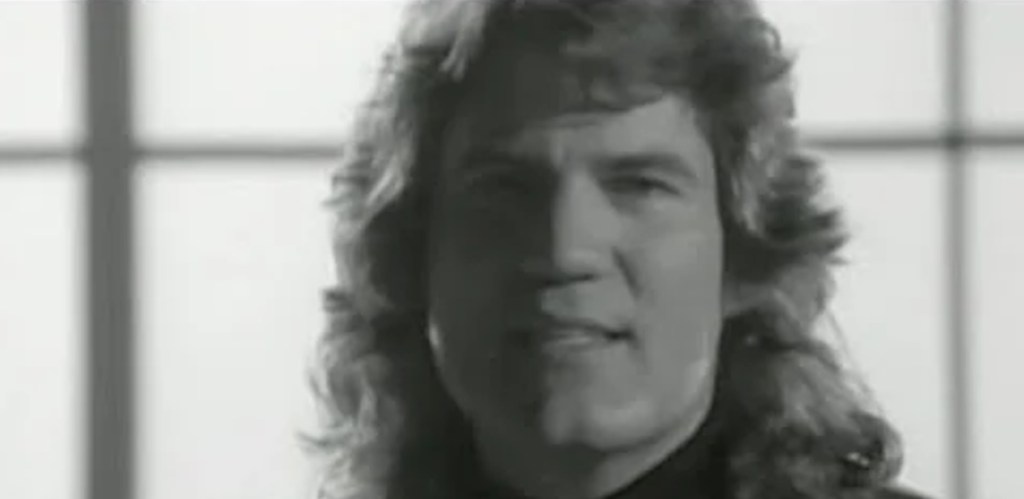
Image: .38 Special “Second Chance” Official Music Video
.38 Special’s “Second Chance”: A Yogic Interpretation
The song “Second Chance” expresses the very human regret that occurs after a relationship has been threatened by the unfaithfulness of one partner, but it also redounds to the broader human longing for forgiveness and renewal. Being born a human being with the original taint of fallen humanity, the human heart and mind not only need a “second chance” given by a human partner but also need that “second chance” given by the Creator.
Introduction and Lyric “Second Chance”
The song “Second Chance” appears on Rock & Roll Strategy (1988), the eighth studio album by the southern rock band .38 Special, formed in Jacksonville, Florida, in 1974 [1].
The band .38 Special took its name from the .38 Special revolver cartridge, after an event involving the police. In the mid-1970s in Jacksonville, Florida, while rehearsing in a locked shack, the band attracted police attention because neighbor complaining about the noise from the band’s rehearsal.
Unable to open the padlocked door, they heard an officer say he would let his .38 Special “do the talking” and shot the lock off. The phrase struck their fancy, so they adopted “.38 Special” as their band name for its gritty, humorous appeal. [2].
The song “Second Chance” was written by keyboardist Max Carl, guitarist Jeff Carlisi, and songwriter Cal Curtis, and it was released as the second single from Rock & Roll Strategy in 1989 [3]. The song traces its origins to an early Carlisi–Curtis demo titled “I Never Wanted Anyone Else But You,” which was revised by Max Carl after he joined the band, producing the now-familiar repetition, “a heart needs a second chance.”
Carl’s lead vocals and the softer, introspective arrangement of “Second Chance” was a stylistic departure from the band’s earlier Southern rock sound. The track became the band’s highest-charting [4] U.S. pop single, peaking at No. 6 on the Billboard Hot 100 and No. 1 on the Adult Contemporary chart, expanding their audience beyond rock listeners.
A Yogic Interpretation
The song “Second Chance” is most commonly received and interpreted as a traditional pop ballad of romantic regret, but that superficial reading misses the lyric’s deeper implications. The lyric’s poetic economy, its chant-like repeated plea that “a heart needs a second chance,” and its focus on guilt admission and longed-for reconciliation suggest the universal human yearning for moral and emotional renewal.
In a yogic interpretative frame, the chorus functions as a chant-like invocation to the Universal Father-Creator, elevating the listener’s attention above the earthly, material, interpersonal context of a human romantic relationship.
While the plea for forgiveness may certainly be directed toward a human partner, and of course in this song it is, still it also points to a larger spiritual and moral aspiration: the opportunity to amend past human error in order to restore soul integrity to become spiritually enlightened and self-realized. It aligns with John Donne’s “Holy Sonnets” in its recognition of past human error and craving for future soul renewal.
Thus, “Second Chance” transcends the pop ballad genre, as it presents itself to be a reflective text concerned with accountability, grace, and the enduring human desire for transformation — qualities that align naturally with yogic goal of self-realization.
Sources
[1] Rock & Roll Strategy. A&M Records. 1988. On A&M Records official discography.
[2] .38 Special Official Website. 50 Years of 38 Special.
[3].Brian Kachejian.“38 Special’s Best Song On Each Of Their Studio Albums.” 3 ClassicRockHistory.com. 2025,
[4] Jennifer Tyler. “Rock Moment – .38 Special ‘Second Chance’.” Houston’s Eagle Music Commentary. October 2, 2025.
Second Chance
Since you been gone
I feel my life slipping away
I look to the sky
And everything is turnin’ gray
All I made was one mistake
How much more will I have to pay
Why can’t you think it over
Why can’t you forget about the past
When love makes this sound baby
A heart needs a second chance
Don’t put me down babe
Can’t you see I love you
Since you’ve been gone I’ve been in a trance
This heart needs a second chance
Don’t say it’s over I just can’t say goodbye
So this is love
Standing in the pouring rain
I fooled on you
But she never meant a thing
And I know I ain’t got no right
To ask you to sympathize
But why can’t you think it over
Why can’t you forget about the past
When love makes this sound baby
A heart needs a second chance
Don’t put me down baby
Can’t you see I love you
Since you been gone I’ve been in a trance
This heart needs a second chance
Don’t say it’s over I just can’t say goodbye
I never loved her
I never needed her
She was willing and that’s all there is to say
Don’t forsake me
Please don’t leave me now
A heart needs a second chance
Yeah, you’ve been gone and I’ve been in a trance
This heart needs a second chance
Don’t say it’s over I just can’t say goodbye
Please forgive me and forget it
I was wrong and I admit it
Why can’t we talk it over
Why can’t we forget about, forget about the past
(A heart needs a second chance)
When love makes this sound baby
(A heart needs a second chance)
Don’t put me down babe
You’ve been gone I’ve been in a trance
This heart needs a second chance
Don’t say it’s over I just can’t say goodbye
(A heart needs a second chance)
When love makes this sound babe
(A heart needs a second chance)
(A heart needs a second chance)
When love makes this sound baby
(A heart needs a second chance)
Commentary on “Second Change”
While this song remains a well-written lyric and beautifully performed video, it also points to a higher, spiritual urge that is basic to human consciousness: the desire for forgiveness of past errors and unity with the Ultimate Reality.
Verse 1: “Since you’ve been gone”
Since you been gone
I feel my life slipping away
I look to the sky
And everything is turnin’ gray
All I made was one mistake
How much more will I have to pay
Why can’t you think it over
Why can’t you forget about the past
The speaker/singer is directly addressing his romantic partner. It is not clear if they are married or if they simply live together. It is clear that their relationship has been broken. “Since you’ve been gone” clearly signals that the partner has left the relationship.
Immediately, the speaker/singer confirms that he is devastated by the break-up. He feels his life is leaving him. The sky looks gray, nay, not only the sky but “everything is turnin’ gray.” To the human being suffering in pain and anguish, all of nature seems to be a mass of unpleasantness.
Thus, the pathetic fallacy was born and employed in literary works. Nature does not care that the human being is suffering, but to the sufferer everything looks different—including nature.
The speaker/singer then admits that he made a mistake; it was just “one mistake,” but it was a highly destructive one, and it obviously hurt deeply his loved one so much that she has left him. But at his point, the man is focusing on his own sorrow. He asks her just how much suffering does he have to endure for just one mistake.
He then asks her why can she not give the situation some thought and then do what he hopes for: that upon reflection she can forget about the past. Forgetting about the past is actually a yogic injunction, invoked by Swami Sri Yukteswar in Paramahansa Yogananda’s Autobiography of a Yogi:
Forget the past. The vanished lives of all men are dark with many shames. Human conduct is ever unreliable until man is anchored in the Divine. Everything in future will improve if you are making a spiritual effort now.
The man’s conduct has obviously been the result of human conduct being unreliable because he has committed this dark shame. But does he not now have the right, even the obligation, to try to correct his past?
Chorus: “When love makes a sound, babe”
When love makes this sound baby
A heart needs a second chance
Don’t put me down babe
Can’t you see I love you
Since you’ve been gone I’ve been in a trance
This heart needs a second chance
Don’t say it’s over I just can’t say goodbye
The song’s next movement becomes its chorus. The first chorus line “When love makes this sound, babe” remains rather empty if one is experiencing it only as text on a page, but the performance of the song, for example in the video, provides the sound of a crying guitar. That painful sound-riff becomes the signal for something restorative.
That something is “A heart needs a second chance.” The important repeated line includes the title of the song itself. The speaker/singer then commands his beloved one not to diminish him by putting him down; he then adds the extremely important claim, phrasing it as a rhetorical question, “Can’t you see I love you?”
He loves her, and that love is at the heart of his suffering. He would not be suffering, if he did not love her. Next, he begins to explain; thus, returns the first line “Since you’ve been gone” but then followed by his description of how he had taken her being gone: he has been in a trance, suggesting that his consciousness has been numbed, he is dazed, unable to completely engage in his own life.
(It is such phrases “don’t put me down, babe,” and other conversational, talky language, and the use of the term “trance” that make this piece a song and not a poem. For a song, it is exquisitely masterful; as a poem, it would be bordering on doggerel—a distinction that can be made about almost all popular songs, even some spiritually inclined hymns.)
The next line “This heart needs a second chance” reappears for the second time, and at this point it becomes clear that this all important line is, indeed, the heart and soul of the song, its raison d’être.
The final line of the chorus again is making the plea for his beloved not to leave him. He does not want the relationship to end; thus, he fashions his plea as a command. He simply does not feel that he is able to let her go. He cannot say goodbye to the one he still loves much.
Verse 2: “So this is love”
So this is love
Standing in the pouring rain
I fooled on you
But she never meant a thing
And I know I ain’t got no right
To ask you to sympathize
But why can’t you think it over
Why can’t you forget about the past
In verse 2, the speaker/singer engages in reflection about the nature of love. The line “standing in the pouring rain” signals tears; this lost love has him crying real tears that so often appear in popular songs as rain. He then admits his dark shame: he fooled around on his love one. But he quickly assures her that the nature of that fooling around was simply or sexual gratification, for the woman did not mean anything to him.
He knows he cannot expect his loved one to “sympathize” with his explanation; still he want her to think it over. Again, he is asking her to rethink losing the relationship, and again he suggests through a question that she “forget about the past.”
Next, the chorus is repeated.
Bridge: “I never loved her”
I never loved her
I never needed her
She was willing and that’s all there is to say
Don’t forsake me
Please don’t leave me now
A heart needs a second chance
The bridge finds the speaker/singer further revealing his true feelings. He never loved the other woman; he never need her. It’s just that she was willing to engage with him sexually; he took advantage of the situation, and he’d like to drop it because he has nothing further to say about his dark shame.
The second half of the bridge again returns to the man’s pleading: don’t forsake me, don’t leave me (which he prefaces with “Please”), give me a second chance. With that all important line “A heart needs a second chance.”
Vitally Important Lines
After the bridge, a repeat of some of the opening sentiments appears, and then these all important lines
Please forgive me and forget it
I was wrong and I admit it
Why can’t we talk it over
Why can’t we forget about, forget about the past
The poor man makes one final plea, asking for forgiveness and asking the failure be forgotten. Then confesses that he was wrong and he is admitting his error. Again, he suggests they talk it over, and hopefully “forget the past.”
Innovative Form and Musical Intensity
The song “Second Chance” exhibits a unique form. While it displays some of the usual kinds of repetitions of songs, its final lines can plausibly be described as chant-like. The vitally significant line, “A heart needs a second chance” is repeated, alternating with “when love makes this sound, babe” as the tune fades out.
 Welcome to Linda's Literary Home
Leave a comment