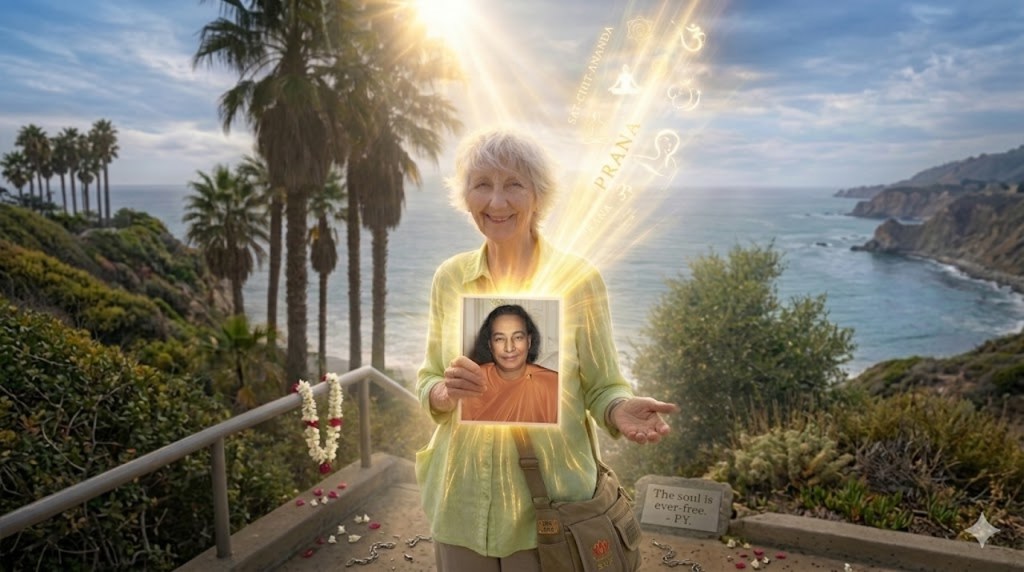
Breaking the Coffee Habit: A Devotee’s Reflection in the Spirit of Paramahansa Yogananda
“The soul is ever-free. It is deathless because it is birthless. It cannot be regimented by the stars.”—Paramahansa Yogananda in Autobiography of a Yogi
There is a light within each human being that has never dimmed. It shone before your first sip of coffee and will blaze undimmed long after the last cup is set aside. This light is no fleeting glow borrowed from caffeine—it is the eternal flame of the Atman, the divine Self that the great guru Paramahansa Yogananda (Guruji*) devoted his life to revealing.
Though the soul itself remains ever-free—untouched by birth, death, or any compulsion—it is the mind, clouded by identification with the physical encasement (body), that feels bound. To release the subtle dependency on caffeine is to loosen the mind’s grip on external props, allowing the soul’s innate radiance to shine through unobstructed.
Liberation: Practicing Non-Attachment
Paramahansa Yogananda taught that the spiritual path is, at its essence, liberation from all bondages. Every habit, however mild, forms an invisible chain that restrains the mind’s will and veils the soul’s bliss. Vairagya—non-attachment—was for him not austere denial but a joyful turning toward God, peeling away artificial stimulations so the natural joy of the soul might emerge.
The morning reach for coffee whispers to the mind: “You are not enough. You need something outside to awaken, to be alert, to live.” Each conscious choice to set the cup aside answers with the authority of the Self (Soul): “I am sufficient. God’s energy sustains me. I need nothing but the Infinite.”
In this small act of detachment lies a direct practice of the renunciation Guruji praised as the foundation of lasting happiness. (See his “How to Free Yourself from Bad Habits” in The Divine Romance.)
Prana: The Divine Source of Vitality
Guruji offered his disciples something far more potent than any earthly brew: the science of prana, the cosmic life-force that animates all creation, the very breath of God flowing through every cell. Through his Energization Exercises, Hong-Sau and Om Techniques, and Kriya Yoga, he showed how to draw consciously upon this inexhaustible, cosmic vitality.
Caffeine provides only borrowed energy—stimulating yet depleting, agitating the nerves, inflaming emotions, and leaving behind the fatigue it momentarily masked. Prana, in contrast, restores, regenerates, and uplifts without rebound. To detach from caffeine is to make space for this greater gift. It is to declare to the Universe: “I am ready to receive Thine energy directly, without the veil of stimulants.”
Those who meditate deeply know the truth from experience: after genuine stillness comes an alertness and joy no cup could produce—a clear, steady luminosity of mind that calms rather than jangles, sustains without craving, and reveals the ever-new bliss of Sat-Chit-Ananda. What the mind once sought clumsily in a morning ritual was always a veiled longing for this divine state—available within, waiting to be claimed.
The Will: God’s Greatest Gift to the Mind
Yoganandaji held the human will in profound reverence as the soul’s instrument for mastery over body and senses. The greater the will, the greater the flow of energy. Every victory over a habit strengthens this divine faculty; every surrender dulls it.
Guruji recommends beginning with small disciplines, sustained with determination and devotion, for such discipline burns away dependency and forges the will in purifying fire. Yet he was ever tender and non-judgmental, counseling patience, humor, and prayer in moments of weakness.
When craving arises, sit quietly, breathe deeply, and inwardly call: “Divine Mother, fill me now with Your energy.” To transcend through such prayer is genuine alchemy—the mind’s transformation by grace.
The Body as Temple: Cultivating Sattva
Guruji regarded the physical encasement as a sacred temple hosting the soul for its earthly evolution. He guided toward sattvic living—purity, clarity, lightness—in diet, habits, and rest, while cautioning against rajasic influences that stir restlessness.
Caffeine, by its stimulating nature, is rajasic: it agitates the nervous system, disrupts emotional balance, and creates cycles of artificial highs and lows that hamper meditation and obscure the still, small voice within.
Letting go that stimulant honors the temple’s potential for steadiness. Devotees who make this shift often marvel at the results: moods even out, sleep deepens, morning meditation quiets, and the mind settles into God’s intended rhythm—where inner hearing becomes clear and natural.
Sacred Tradition: Offering Love to the Guru
In the sacred tradition of discipleship, giving up a cherished habit becomes an act of devotion—an offering laid at the Guru’s feet. It says, “I trust Thy guidance more than this craving.” Guruji taught that the Guru cherishes not perfection but sincere effort, the heart’s turning. (See “The Bad Man Who Was Preferred by God)
Each morning that you choose prana over stimulation, stillness over restlessness, the soul’s light over borrowed brightness, you place another garland before Guruji. In the silent ways of the Guru-disciple bond, he receives it and strengthens you for the next choice. Devotees quickly learn that by the grace of the Guru, all difficulties are resolved and all good things are possible.
A Personal Quip: My Quest for God
Since March 1978, I have walked this path charted by my Guru Paramahansa Yogananda and his organization Self-Realization Fellowship—meditating, praying, serving, studying under Guruji’s grace. I have made my humble attempts to offer as much as possible to this quest for God.
This one small, sacred surrender—to free my mind from yet another veil of dependency—lies well within my power. The same will that drew me to my Guru’s feet can gently break this last chain, allowing fuller realization of my ever-free soul.
I must follow this sacred path with greater trust and faith. I must strengthen it daily in meditation. I must know with certainty: the bliss tasted in my deepest meditations is the immortal energy that will sustain me and transform every craving into quiet, unshakable joy. The light within needs no fuel but God, the Divine Stimulant.
O Divine Belovèd! Let my mind’s clouds part, and let the light shine free.
—————
*Guruji is the reverential appellation that devotees use in addressing or referring to their beloved Guru; this is the appellation I personally prefer. Other devotees prefer referring to Paramahansa Yogananda as Master, who was and is the master over his human and divine Self.
 Linda's Literary Home
Good faith questions and comments welcome!