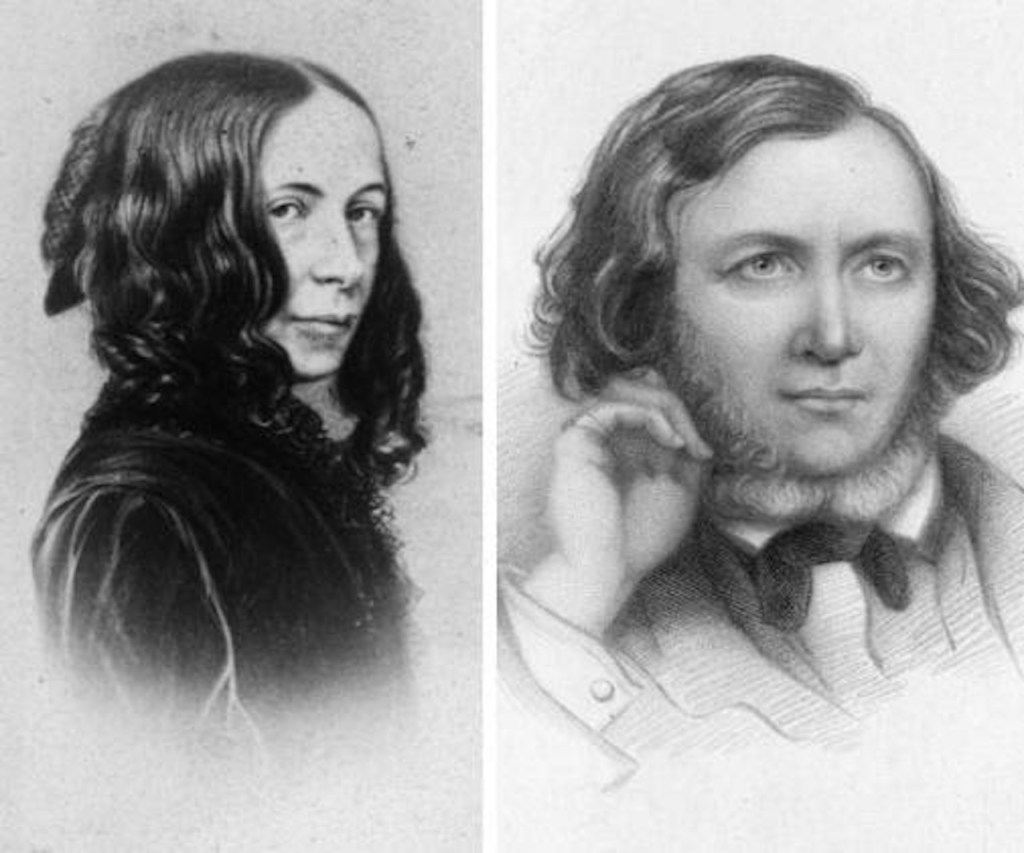
Elizabeth Barrett Browning’s Sonnet 38 “First time he kissed me, he but only kissed”
Elizabeth Barrett Browning’s sonnet 38 “First time he kissed me, he but only kissed” dramatizes the speaker’s elated feelings after the first three kisses shared with her belovèd: the first was on her hand with which she writes, the second was on her forehead, and third on her lips.
Introduction and Text of Sonnet 38 “First time he kissed me, he but only kissed”
In Elizabeth Barrett Browning’s sonnet 38 “First time he kissed me, he but only kissed, ” the speaker demonstrates that the love relationship with her suitor has continued to grow stronger even as she has continued to have serious doubts about it.
Readers likely have begun to wonder if this speaker will ever surrender to this desire and accept the fact that her suitor is actually offering her the love she so desperately wants to accept. In this sonnet, the speaker hints that she is ready to surrender to the love that she doubted even as it has grown stronger.
Sonnet 38 “First time he kissed me, he but only kissed”
First time he kissed me, he but only kissed
The fingers of this hand wherewith I write;
And ever since, it grew more clean and white,
Slow to world-greetings, quick with its “Oh, list,”
When the angels speak. A ring of amethyst
I could not wear here, plainer to my sight,
Than that first kiss. The second passed in height
The first, and sought the forehead, and half missed,
Half falling on the hair. O beyond meed!
That was the chrism of love, which love’s own crown, With sanctifying sweetness, did precede.
The third upon my lips was folded down
In perfect, purple state; since when, indeed,
I have been proud and said, “My love, my own.”
Commentary on Sonnet 38 “First time he kissed me, he but only kissed”
Even as their love relationship grows stronger, there still remains a tinge of doubt that the speaker will ever completely surrender to that love.But it remains clear that she is striving sincerely to accept that the relationship is genuine and will endure.
First Quatrain: Kissing the Hand
First time he kissed me, he but only kissed
The fingers of this hand wherewith I write;
And ever since, it grew more clean and white,
Slow to world-greetings, quick with its “Oh, list,”
The speaker’s belovèd first kissed her on her writing hand. After this first kiss, she has noticed a remarkable transition of that hand: it appears cleaner and lighter. That hand has grown “slow to world-greetings,” but “quick” to caution her to listen to the angels when they speak.
In a stroke of technical brilliance, the speaker/poet again uses the device of breaking the line between “Oh, list,” and “When angels speak,” over the two quatrains. This improvised special emphasis gives the same sense as an extended sigh with the facial expression of one seeing some magical being.
Second Quatrain: The Honored Kiss
When the angels speak. A ring of amethyst
I could not wear here, plainer to my sight,
Than that first kiss. The second passed in height
The first, and sought the forehead, and half missed,
The speaker’s hand could not be more real and have any better decoration, such as “a ring of amethyst,” than it does now that her belovèd has honored it with his kiss. The enchanted speaker then scurries on to report about the second kiss, which sounds rather comical: the second kiss was aimed at her forehead, but “half-missed” and lands half in her hair and half on the flesh.
First Tercet: Ecstatic Joy
Half falling on the hair. O beyond meed!
That was the chrism of love, which love’s own crown, With sanctifying sweetness, did precede.
Despite the comical half-hair/half-forehead miss, the speaker is carried away in an ecstatic joy, “O beyond meed!” The clever speaker puns on the word “meed” to include the meaning of “reward” as well as the famously intoxicating beverage mead. The speaker has become drunk with the delight of this new level of intimacy.
This kiss is “the chrism of love”; she is baptized in the love of her belovèd suitor. This kiss is also “love’s own crown”; again, similar to the “meed” pun, the speaker exploits the double meaning of the term “crown,” as the headdress of a king or simply the crown of the head. The “sanctifying sweetness” of this kiss has preceded and grown out of the love that now is so sweet and electrifying.
Second Tercet: A Royal Kiss
The third upon my lips was folded down
In perfect, purple state; since when, indeed,
I have been proud and said, “My love, my own.”
Finally, the third kiss “folded down” “upon [her] lips.” And it was perfect. It possessed her in a “purple state.” This royal kiss elevated her mind to pure royalty. She thus returns again to referring to her belovèd in royal terms as she had done in earlier sonnets.
So since that series of kisses, especially that third royal embrace, the speaker has “been proud and said, ‘My love, my own.’” This reluctant speaker is finally accepting her belovèd as the love of her life and allows herself the luxury of placing her newly awakened faith in his love.
 Linda's Literary Home
Good faith questions and comments welcome!