Thou wak’st my senses to clear sight, glorious sound, Intelligent touch, pure fragrance, tempered taste. Thou wak’st my senses by immersing them in Glory Inundating them in the silence of Thy vastness, Spilling on them the majestic light show Of Thy body, bound by boundlessness.
In the ocean of Thy love, my bubble heart Contracts and expands to eternity. My restless brain shrinks and extends Its reach to unknown realms of wisdom. My soul knows itself in the crash of breaking worlds Where it stands unshaken hand in hand with Thee. As Thou dost, so I wish to do forever, Engulfed in the Glory of Thy sacred presence.
Image: Emily Dickinson – Amherst College – Daguerrotype of the poet at age 17, circa 1847 – likely the only authentic, extant likeness of the poet
Emily Dickinson’s “I never told the buried gold”
In Emily Dickinson’s “I never told the buried gold,” the speaker has made an amazing discovery; she then creates a little drama in which she muses on whether to reveal that discovery.
Introduction with Text of “I never told the buried gold”
The speaker in Emily Dickinson’s “I never told the buried gold” seems to be sharing a secret, but it is a secret so bizarre that she must couch it deeply in mystery.
She has realized a possession that is buried so deep in her psyche that she must dramatize it by creating a parable-like discourse, and she yet remains so ambivalent about revealing it that she seems to continue to waver as her drama unfolds.
I never told the buried gold
I never told the buried gold Upon the hill – that lies – I saw the sun – his plunder done Crouch low to guard his prize.
He stood as near As stood you here – A pace had been between – Did but a snake bisect the brake My life had forfeit been.
That was a wondrous booty – I hope ’twas honest gained. Those were the fairest ingots That ever kissed the spade!
Whether to keep the secret – Whether to reveal – Whether as I ponder Kidd will sudden sail –
Could a shrewd advise me We might e’en divide – Should a shrewd betray me – Atropos decide!
Commentary on “I never told the buried gold”
The speaker is dramatizing her process of decision-making involving a recent discovery.
First Stanza: Revealing a Secret
I never told the buried gold Upon the hill – that lies – I saw the sun – his plunder done Crouch low to guard his prize.
The speaker begins by reporting that she has never told anyone about this treasure that she possesses. Then immediately she begins to liken it to the valuable metal, “gold.” She places that gold upon a hill where the sun is guarding it. This gold belongs to the sun in the same way that her possession belongs to her.
The sun seems to “plunder” as it moves about in its shining rays over the landscape, and it then stoops over the hill where the gold is buried; in stealth, the sun watches over its treasure. The speaker has observed this odd behavior of the heavenly orb.
Thus, she likens her own guarding of her “prize” to that of the sun guarding the gold. The speaker intends to guard her prize because of its unusual nature, but the sun will continue to keep its prize safe out of sheer natural necessity.
Second Stanza: The Shock of Recognition
He stood as near As stood you here – A pace had been between – Did but a snake bisect the brake My life had forfeit been.
The speaker now has the sun standing near her, as near as the imaginary audience she is addressing. There is, however, “a pace” between them.
And then a snake slithers through the thicket, dividing the foliage as it is wont to do. (This image is reminiscent of the line, “The Grass divides as with a Comb,” in Dickinson’s riddle poem, “A narrow Fellow in the Grass.”)
The speaker then makes the odd claim that her life had been forfeited, suggesting that for an instant she likely gave out a gasp of fear before regaining her equilibrium enough to continue living, thinking, and creating her drama. The snake supplies the impetus for the notion of life forfeiting.
While the speaker suddenly experiences the epiphany that she was in possession of this magnificent, golden gift, she also experiences a shock that unsettled her for at least a brief moment.
Third Stanza: Desire to be Worthy
That was a wondrous booty – I hope ’twas honest gained. Those were the fairest ingots That ever kissed the spade!
The speaker now admits that what she has realized about herself is tantamount to coming into the possession of large storehouse of amazing gifts or treasure. She calls her treasure “wondrous booty,” and then she indicates that she hopes she has earned this amazing treasure-trove, and not merely stolen it or been given it willy-nilly, or inexplicably.
The speaker then sizes up the value of this mysterious possession, by continuing the “gold” metaphor. Now calling her possession “ingots,” she estimates their value as the “fairest” “that ever kissed the spade.”
Of course, ingots must be dug out of the ground, and when they are found by the excavating shovel, those ingots meet the metal of the “spade” with resounding touch, which the speaker calls a “kiss.”
Fourth Stanza: Whether to Reveal the Secret
Whether to keep the secret – Whether to reveal – Whether as I ponder Kidd will sudden sail –
Again, the speaker becomes ambivalent about revealing this amazing “secret.” She lists her toggling of the mind that cannot decide if she should keep hidden this new knowledge or whether she ought to announce it.
As the speaker muses on the issue—whether to tell or not, she reckons that Captain Kidd might just be sailing to retrieve his own booty of treasure, which by legend he had buried in the Caribbean.
This clever employment of “Kidd” and the allusion that it implies deepens the “gold” and treasure metaphor, continuing the revelation of the value the speaker has placed on this mysterious treasure of which she has become aware.
Fifth Stanza: Leaving the Mystery to Eternity
Could a shrewd advise me We might e’en divide – Should a shrewd betray me – Atropos decide!
The speaker then makes a hilarious admission. If someone who is smart enough to know whether she should reveal her treasure should let her know what is appropriate, she would be willing to give that person part of her treasure.
But she does not know if there is such a knowledgeable person who is trustworthy. If she reveals her secret to the wrong “shrewd,” she might live to regret it. She could be ridiculed and left to suffer much betrayal.
By calling her potential advisor a “shrewd,” the speaker is making fun of such individuals whom she thinks might believe they are, in fact, capable of advising her. But because she allows that a “shrewd” could likely betray her confidence, she remains ambivalent about seeking their advice.
Instead of making a definite decision about whether to seek counsel from one of those shrewds, the speaker decides not to decide. She will leave the decision to “Atropos,” one of the Greek Fates, who is responsible for deciding the exact time for the end of each human life. Atropos held the scissors that cut the thread of life.
The speaker thus decides to leave her decision to the ultimate decision-maker, one whose decision is not only final but made without equivocation. The speaker will remain in humble possession of her knowledge that she owns a mystic, creative soul that will from now on guide her in her creation of little dramas on her pathway through life.
Without having revealed her secret to the wide, gaping yet eyeless majority of the world, the speaker has revealed her secret only to those who will understand. It is in that respect that the speaker’s poem is like a parable of Lord Jesus the Christ, who spoke through that form only to those who had ears to hear.
Image: Emily Dickinson – Amherst College – Daguerrotype of the poet at age 17, circa 1847 – likely the only authentic, extant likeness of the poet
Emily Dickinson’s “My wheel is in the dark!”
The speaker in Emily Dickinson’s “My wheel is in the dark!” is making a statement about knowing without sense perception. This subject especially interested the poet, who was specifically concerned with issues such as immortality and life after death.
Introduction and Text of “My wheel is in the dark!”
Despite the grammatical error in the last line of Emily Dickinson’s “My wheel is in the dark!,” the speaker’s revelation shines through clearly and offers a unique perspective about the nature of understanding and explaining the ineffable.
My wheel is in the dark!
My wheel is in the dark! I cannot see a spoke Yet know its dripping feet Go round and round.
My foot in on the Tide! An unfrequented road – Yet have all roads A clearing in the end –
Some have resigned the Loom – Some in the busy tomb Find a quaint employ –
Some with new – stately feet – Pass royal through the gate – Flinging the problem back At you and I!
Commentary on “My wheel is in the dark!”
Rendering information about the ineffable level of being is virtually impossible, but through use of poetic devices and other literary language that rendering becomes somewhat meaningful and therefore understandable to the mind and heart.
First Stanza: Vision by Implication
My wheel is in the dark! I cannot see a spoke Yet know its dripping feet Go round and round.
The speaker reports that she is capable of knowing that the spoke on a wheel moves in a circular motion as it drips water even though there is no light on the wheel. She is revealing that she, as all human beings are, is able to infer information without direct sense perception that might otherwise reveal such knowledge.
Human beings prefer to rely on what they can “see” or “hear.” But sometimes seeing and hearing are not possible. For example, human beings are convinced that love and hate both exist, even though they cannot see the concepts to which those nouns refer.
The ultimate argument ensues from the issue of whether God exists. Some will argue that because he cannot “see” God, then God must not exist. The argument runs further as the atheist insists that he also cannot hear, feel, taste, or touch God—and what cannot be experienced through the senses, therefore, does not exist.
The speaker in “My wheel is in the dark!” thus counters such an argument by demonstrating that not only is metaphysical knowledge based on intuition and inference but also simple knowledge about things like wet wheels that go round and round in the dark.
Second Stanza: An Uncharted Path
My foot in on the Tide! An unfrequented road – Yet have all roads A clearing in the end –
The speaker continues with her comparison stating that she is walking an uncharted path, but she knows, again by intuition and inference, that this road will eventually lead to “a clearing.”
Despite the danger, such as would be experienced by having one’s foot “on the Tide,” the speaker can, with fairly great certainty, be assured that all the danger and complexity of the road she walks will end, and all will be understandable when she moves into that landscape which features clarity.
The speaker places that clarity at the end, which is at the end of her life, a time at which she will come to the end of the path and enter the “clearing.” Her “unfrequented road” is unique as is each road each soul must frequent as it passes through life on the physical level of being.
Third Stanza t: Resigning the Loom
Some have resigned the Loom – Some in the busy tomb Find a quaint employ –
The speaker now reports that others have departed from this world. She indicates that departure by referring to their occupation while alive. She colorfully claims that some of the folks who have died simply “resigned the Loom.”
But she does not offer a catalogue or list of what resigners have resigned. By mentioning one earthly occupation only, she implies that that “Loom” not only refers to the occupation of weaving but also to the fabric that exists as life itself.
Thus those “some” that have “resigned” from the fabric of life find a different way to engage their time and effort “in the busy tomb”; she claims that they “find a quaint employ.”
The speaker is reporting from her intuition that after death the soul will continue its engagements, even though its engagements after leaving the physical encasement will be different. They nevertheless will be “quaint,” an obviously optimistic claim.
Fourth Stanza: Remaining Mum about the Afterlife
Some with new – stately feet – Pass royal through the gate – Flinging the problem back At you and I!
Those souls who will remain busy with quaint engagements, however, are not the only class of souls that the speaker intuits. In addition to those who engage in the those quaint pursuits, there are those who will become similar to royalty. They will possess “stately feet” and enter the kingdom of heaven on those stately feet.
The speaker then returns to the world but without any definitive answer about what the real differences are between life and afterlife. When those of the royal, stately feet pass through that gate into paradise, they will not reveal their new experiences; they will simply be “flinging the problem” into the faces of those left watching for wheels “in the dark” and walking “on the Tide.”
Only those who have actually passed through that heavenly gate will understand what that experience offers. Thus we–”you and I”–will continue to speculate about that experience, as the speaker has done in this poem and the many more that are to come.
Dickinson and Grammar
As Dickinson’s readers discover, the poet often misspelled words and left her grammatical constructions a little cockeyed. Thomas H. Johnson, the editor of The Complete Poems of Emily Dickinson, who restored her poems to their near originals, has revealed that he did correct some misspellings.
And it remains unclear why he left the inaccurate grammatical construction, “At you and I!”; the correct pronoun form in that prepositional phrase is “me” instead of “I”—the objective case is required after a preposition.
A reason for leaving such an error could be to complete a rime scheme, but that is not the case with this line. As a matter of fact, by inserting “me” instead of “I,” a partial rime would be achieved: “feet” would become a partial rime with “me.” Nevertheless, this problem remains a slight one. No meaning is lost despite the grammatical error. Such errors may interfere with the total enjoyment of a poem.
However, readers need not become alarmed about them unless they interfere with understanding. Luckily, this error does not confound meaning, and comprehension of the poem remains clear and unobstructed, despite the slight distraction that inaccurate pronoun inflicts.
Image: Emily Dickinson – Amherst College – Daguerrotype of the poet at age 17, circa 1847 – likely the only authentic, extant likeness of the poet
Emily Dickinson’s “Through lane it lay – through bramble”
Emily Dickinson’s speaker employs an extended metaphor that likens the human’s path through life on a troubled planet to a simple walk through the woods—a woods that is, however, anything but ordinary.
Introduction and Text of “Through lane it lay – through bramble”
The speaker in Dickinson’s “Through lane it lay – through bramble” takes her audience through an imaginary journey that on the superficial level remains a journey of fantasy filled with danger, as it is colorfully allusive to mythological creatures attempting to attack a flock of children as they venture home.
But Dickinson never leaves her readers moving gleefully from the adventure story stage; thus, her simple adventure is actually performing as an extended metaphor likening the life of human beings on this earth to a dangerous journey through a mythological forest.
Through lane it lay – through bramble
Through lane it lay – through bramble – Through clearing and through wood – Banditti often passed us Upon the lonely road.
The wolf came peering curious – The owl looked puzzled down – The serpent’s satin figure Glid stealthily along –
The tempests touched our garments – The lightning’s poinards gleamed – Fierce from the Crag above us The hungry Vulture screamed –
The satyr’s fingers beckoned – The valley murmured “Come” – These were the mates – This was the road Those children fluttered home.
Commentary on “Through lane it lay – through bramble”
The speaker in “Through lane it lay – through bramble” is using an extended metaphor, likening the human life-path on a distressed planet to a simple walk through a woodland; however, this woodland is quite extraordinary.
First Stanza: Another Jaunty Riddle
Through lane it lay – through bramble – Through clearing and through wood – Banditti often passed us Upon the lonely road.
In the opening stanza, the speaker begins rather quietly and again almost hinting that this poem will be another jaunty riddle. She inserts that nebulous “it,” only stating where it “lay” and led: in a lane and rambled through “bramble”; it also ran through a “clearing” and also through a “wood.”
The speaker then identifies the “it” as a “lonely road,” in the same breath as asserting that the little group of folks was often passed by marauding robber gangs, or “banditti.” She employs the rare spelling for “bandits.”
One can imagine the poet running upon that word and laying it away for later use in a poem. Dickinson did enjoy the appearance of cosmopolitanism; she was amused by the charm of worldly engagement, even as she peered intensely into the ultra personal, the ultimate individual soul.
Second Stanza: The Fantastic Journey
The wolf came peering curious – The owl looked puzzled down – The serpent’s satin figure Glid stealthily along –
The speaker continues the fantastic journey. After describing the “lonely road” on which the travelers are traveling, she now describes animals that the group encounters. Wolves that seem quite nosey come and stare at them. From up in trees, “puzzled” owls peer down at them. They even observe snakes slithering “stealthily along.”
The speaker skillfully now begins to drop hints that this is no ordinary walk through the woods. After providing imagery that has thus far remained quite literally earthly, she employs the term “serpent” for snake.
The term “serpent” adds heft to the image of the creature that simply glides upon the earth because that term immediately identifies that creature as the creature from the biblical Genesis–that evil one who tempted the first pair of human beings to ignore the only commandment placed upon them by their Creator-God.
Third Stanza: No Ordinary Journey
The tempests touched our garments – The lightning’s poinards gleamed – Fierce from the Crag above us The hungry Vulture screamed –
The speaker continues to deviate her description from an ordinary jaunt through the woods. Now she asserts that their clothes were disheveled by “tempests” – not merely did a storm blow up and get them wet.
The storms were “tempests,” or many violent storms, a term which again increases the severity the situation and likely alludes to the Shakespeare play, “The Tempest,” which featured a convoluted tale of intrigue and romance, in other words, a simulacrum of the world with its trials and tribulations along with intrigue and romance.
As the speaker describes the lightning from these “tempests,” she employs the term “poinards.” That French term “poignard” means dagger. When anglicized, the correct spelling of the term is “poniard.”
Yet for some reason Dickinson has once again baffled her readers with an obvious departure from the accurate spelling of the term. And again one wonders why Thomas H. Johnson, the editor who restored Dickinson’s poems to the forms that more closely represent her originals, did not quietly correct that spelling.
Regardless of the reasoning behind the spelling “poinards,” the speaker uses the term for the continued purpose of supporting the extended metaphor of a treacherous journey through life on earth. Just as the storms are “tempests,” the lightning gleams in daggers.
The claims of the scenarios must remain somewhat exaggerated in order to deepen and widen the metaphor from simple journey through the woods to complex journey on the path of life through a threatening world.
The speaker thus continues to transport her audience from that simply walk through the woods to the journey on the path of life through a menacing world.
Fourth Stanza: The Allure of Lust
The satyr’s fingers beckoned – The valley murmured “Come” – These were the mates – This was the road Those children fluttered home.
The final movement finds the speaker addressing the issue of human lust. Just as the first pair was hassled by the serpent and urged to commit the one sin that would banish them from their garden paradise, all of the children resulting from that pair’s falling are hassled and urged to commit that same sin repeatedly.
This “road’ through life is replete with the fingers of lust luring, “beckon[ing]” the children to “come” into that “valley” of lustful pleasure. The not-so-subtle images of “fingers” and “valley” complete the metaphor and remind the audience that those “mates” on this road have caused “those children” the misery of having to “flutter” on their way home.
The only bright and optimistic hope is that those children are, in fact, on their way home, and that they will finally begin to realize that those satyr “fingers” plunging into those “valleys” only beckon one to death, not to the pleasure promised by those liars.
Image: Emily Dickinson – Amherst College – Daguerrotype of the poet at age 17, circa 1847 – likely the only authentic, extant likeness of the poet
Emily Dickinson’s “There is a word”
Emily Dickinson’s “There is a word” features one of the poet’s many poems that may qualify as riddles. She keeps the reader guessing until the end when she finally reveals the “word” that “bears a sword.”
Introduction and Text of “There is a word”
Many of Emily Dickinson’s riddle poems never mention the word or thing her speaker is describing. Examples of two of those mentionless riddles are, “It sifts from Leaden Sieves,” and “I like to see it lap the Miles.”
While Dickinson’s “There is a word” does begin as a riddle, it only remains so until the final line, in which the speaker does reveal what word it is that she is finding so troublesome.
There is a word
There is a word Which bears a sword Can pierce an armed man – It hurls its barbed syllables And is mute again – But where it fell The saved will tell On patriotic day, Some epauletted Brother Gave his breath away.
Wherever runs the breathless sun – Wherever roams the day – There is its noiseless onset – There is its victory! Behold the keenest marksman! The most accomplished shot! Time’s sublimest target Is a soul “forgot!”
Commentary on “There is a word”
This poem is one of the poet’s many poems that may qualify as a riddle. She keeps her audience guessing about the word she is describing until the end when she finally reveals the “word” that “bears a sword.”
First Movement: The Riddle Begins
There is a word Which bears a sword Can pierce an armed man – It hurls its barbed syllables And is mute again –
The speaker begins with what seems to be a riddle by asserting that a certain word exists that carries “a sword.” This word must be very sharp indeed because it can “pierce an armed man.” This sharp word has “barbed syllables,” and after it “hurls” those sharp syllables, it returns to silence.
The first movement then has set up a scenario in which a certain “word” is dramatized with the unsavory characteristic of a weapon. This claim might offer a contradiction to the little ditty that goes, “Sticks and stones may break my bones, but words can never hurt me.”
The “sticks and stone” claim used to be offered to children to assist them in dealing with a bully. It was meant to deflect the child’s mind from taking the bullying as a personal affront.
If someone breaks your bones with a weapon, you have little recourse but to allow time to heal your broken bones. If someone hurls painful rhetoric at you, you have the option of not keeping your mind focused on that rhetoric and thus, you are not hurt.
However, there is a school of thought that has always found the “sticks and stones” advice wanting, claiming that words can definitely hurt one. And of course, both schools of thought have their merits.
A sharp, weaponized “word” hurled even at an “armed man” can pierce the psyche and render untold damage, if the victim finds it difficult to place her mind on other things.
Second Movement: A Metaphorical Weapon
But where it fell The saved will tell On patriotic day, Some epauletted Brother Gave his breath away.
In the second movement, the speaker metaphorically likens a fallen victim of some weaponized word to a martyr to the cause of patriotism. Like an “epauletted Brother” who fights to protect the citizens of his nation, who willingly gives “his breath away,” the victim of this sharp word will be praised by those the brother saved.
This speaker is demonstrating that she is referring to words that hurt the psyche, not necessarily the bones or the flesh. But in order to dramatize the scenario, she metaphorically paints the images in military terms, which she continues through the remaining two movements.
Third Movement: An Astounding Notion
Wherever runs the breathless sun – Wherever roams the day – There is its noiseless onset – There is its victory!
That the sun may be considered “breathless” is an astounding notion. But that notion along with the roaming of the day places the entire scene beyond the physical level of being. The “noiseless onset” is the space wherein that weaponized word has failed to penetrate.
Had that failure of penetration continued, there would have been a great “victory.” But that victory does not materialize. It cannot as it is placed in an impossible location where the sun runs breathless and where the day may be understood to have the ability to “roam.”
Without breath, the human being cannot utter any word, weaponized or not. And that silent space of time remains a blessed opposition to the battleground where pain and suffering occur.
Beyond that battleground, that is, beyond the physical level of existence, those who have achieved the status of “breathless sun” will achieve their victory over those weaponized words.
Fourth Movement: Again, the Military Metaphor
Behold the keenest marksman! The most accomplished shot! Time’s sublimest target Is a soul “forgot!”
Again, employing the military metaphor, the speaker commands her listener/reader to observe and consider the “keenest marksman,” who has accomplished the highest level of shooting ability.
Finally, the speaker reveals that word that she finds to be the one that “bears a sword.” That word is the simple word “forgot.” But she has framed that word by claiming it is “Time’s sublimest target” which is, “a soul” “forgot!”
The exclamation point following the word “forgot” is vital to the total meaning of the poem. By placing that punctuation mark outside the quotation marks, the emphasis on the word is removed.
The ambiguity of the following two-line sentence continues to keep the poem a riddle:
Time’s sublimest target Is a soul “forgot!”
That sentence can be understood two ways:
The most difficult thing for any human being is that her mind has forgotten that she is a soul.
The hardest thing for a person to hear is that she has been forgotten by someone else.
Interestingly, the ambiguity of those final two lines, that is, the two alternate interpretations give the poem its depth of meaning. The result of anything that has been “forgot” remains a disfiguring absence to any human being—physically, mentally, or spiritually.
When the two instances of forgetting are bound up into one painful event, even the “armed man” who has been shot by the “keenest marksman” will fall victim and suffer from the barbed syllables hurled at him.
The climate changes itself to suit itself. Humankind’s arrogant bluster adds nor Subtracts not a tittle in the gravity of things. Rioting winds have destroyed and played On the flood plain since time began.
Humans controlling climate change is like Humans saving time: Daylight Saving Time— That imaginary figment of someone’s fevered brain: Imagine making a blanket longer by cutting off One end and sewing it to the other.
When the Divine Creator fashioned this mud ball Of a planet, he gave some people the ability to sense That this Earth is a really big orb, and no number Of little human beings no matter how much they breathe Can ever change what God made immutable.
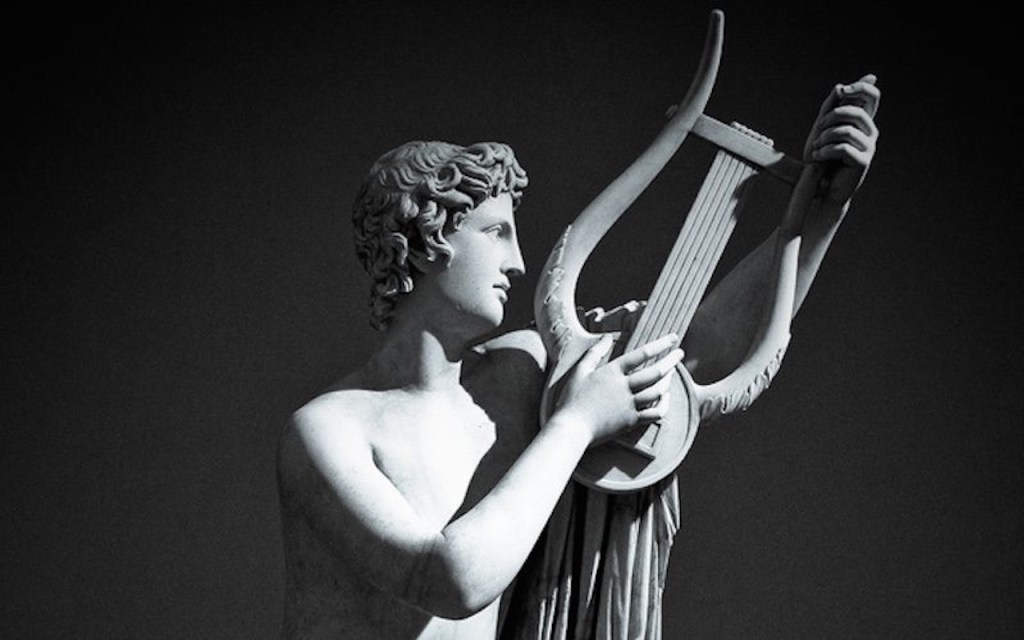
The Shakespearean speaker presents Orpheus as the embodiment of music’s power, showing how art, particularly music, has the ability to harmonize nature and relieve human suffering through its transformative, calming influence.
Introduction and Text of the “Shakespeare Lyric ‘Orpheus’”
Excerpted from Henry VIII (Act III, Scene 1), this brief lyric distills the ancient myth of Orpheus into a musing on the transformational and consolatory power of music.
The speaker expresses a vision in which art exerts a gentle but irresistible authority over nature itself, bringing harmony where there is chaos, motion where there is stillness, and rest where there is unrest.
The figure of Orpheus becomes less a mythological character than an emblem of art’s highest potential: to reshape the external world and quiet the inward life. I have employed the Orpheus ethos in my plea for more control and better expression in the art of poetry.
“Orpheus” (from Henry VIII – Act III, Scene 1)
Orpheus with his lute made trees And the mountain tops that freeze Bow themselves when he did sing: To his music plants and flowers Ever sprung; as sun and showers There had made a lasting spring.
Every thing that heard him play, Even the billows of the sea, Hung their heads and then lay by. In sweet music is such art, Killing care and grief of heart Fall asleep, or hearing, die.
Commentary on “The Shakespeare Lyric ‘Orpheus’”
In this Shakespeare excerpt that functions as a stand-alone poem, the speaker is alluding to the Greek mythological character Orpheus to celebrate music as a force of order, renewal, and inward healing. Orpheus was the god of music and poetry i Greek mythology.
Stanza 1: Music’s Powerful Influence
Orpheus with his lute made trees And the mountain tops that freeze Bow themselves when he did sing: To his music plants and flowers Ever sprung; as sun and showers There had made a lasting spring
The speaker opens with a striking assertion of music’s powerful influence over the natural world. The phrasing remains condensed, as though the act of music itself compresses time and causation. Trees and mountain tops do not merely respond; they are “made” or commanded to respond by bowing to the sound of Orphean singing.
This shaping force exerts itself to images of rigidity and lifeless cold. That mountain summits are called to “bow themselves” introduces a paradox: what is fixed becomes responsive, what is cold becomes animate, and what is elevated yields in humility.
The verb “bow” carries a dual resonance. It suggests both submission and grace, implying that nature’s response is not actually coerced but harmonized. The speaker presents music not as domination but as persuasion, a gentle authority that draws all things into alignment. Even the harshest elements—frozen peaks—are softened by sound, indicating that art reaches where physical force cannot.
The hyperbole exerted in these images is astounding, leading not to disbelief but to the famous Romantic assertion by Samuel Taylor Coleridge “that willing suspension of disbelief for the moment, which constitutes poetic faith.” After all, the purpose of exaggeration is only to emphasize a claim, not to make a melodramatic spectacle.
The stanza then shifts from gesture to growth: “plants and flowers / Ever sprung.” The effect is not momentary but continuous, captured in the word “ever.” Music generates an ongoing fertility, a perpetual blossoming that resists decay.
The comparison to “sun and showers” grounds this transformation in natural cycles, yet the phrase “lasting spring” exceeds ordinary seasonal change. Spring, typically transient, becomes permanent under the influence of music. The speaker thus elevates art above nature’s own processes, suggesting that while sun and rain produce life, music sustains it indefinitely.
The imagery moves from rigidity (mountains) to vitality (flowers), tracing a progression from stillness to generative abundance. The speaker’s syntax reinforces this flow, with lines that seem to unfold organically, mirroring the growth they describe. Music becomes both cause and condition of harmony, a principle that unifies disparate elements—earth, air, and life itself.
What emerges is not merely a portrait of Orpheus but an argument about art’s capacity to reconcile opposites: cold and warmth, height and humility, barrenness and fertility. The speaker implies that music achieves what nature alone cannot—a permanence of renewal, a “lasting spring” that suspends the ordinary limits of time and change.
Again, as in most successful art, the tension of the pairs of opposites makes an appearance. As the great Guru Paramahansa Yogananda has explained, the force of Maya, the very cause of the material level of being, works through the pairs of opposites.
Stanza 2: The Universal Influence of Music
Every thing that heard him play, Even the billows of the sea, Hung their heads and then lay by. In sweet music is such art, Killing care and grief of heart Fall asleep, or hearing, die.
The second stanza broadens the scope from land to sea, extending the reach of music to “Every thing that heard him play.” The universality is emphatic; nothing remains outside the sphere of music’s influence.
While the first stanza emphasizes growth and animation, the second turns toward quieting and rest. The “billows of the sea,” emblematic of motion and unrest, are personified “h[anging] their heads and then l[ying] by.” The image suggests human beings becoming calm after turbulence, with ceaseless motion transforms into stillness.
The phrase “hung their heads” echoes the earlier “bow themselves,” reinforcing the motif of submission, yet here it carries a more subdued, almost weary connotation. The sea, often a symbol of emotional excess or instability, is brought into repose. The progression from bowing to lying still marks a deepening effect: music does not merely elicit acknowledgment; it also induces tranquility.
The final lines turn inward with even more gravity, shifting from the external world to the human condition: “care and grief of heart.” The speaker identifies these as persistent burdens, analogous to the restless sea.
Music’s power is now psychological and emotional, not merely physical. The phrase “killing care” is striking in its severity; music does not soothe lightly but eradicates distress at its root.
Yet the resolution is nuanced: care and grief either “fall asleep, or hearing, die.” The dual possibility suggests degrees of relief. Sleep implies temporary suspension, while death indicates permanent release. The ambiguity allows for a range of experience—music may offer respite or complete transformation. In either case, it alters the condition of suffering.
The line “In sweet music is such art” functions as a reflective statement, drawing together the stanza’s implications. “Sweet” emphasizes harmony and pleasure, but “art” underscores intention and craft. The speaker presents music as both aesthetic and efficacious, capable of shaping not only perception but feeling itself.
The movement of the stanza—from the vast sea to the inner heart—compresses the scale of influence, suggesting that the same force governs both realms. The calming of waves parallels the quieting of grief, establishing a correspondence between outer and inner worlds. Music becomes a mediating principle, aligning nature and human emotion within a single order of harmony.
The final stanza affirms that art’s highest function lies not merely in delight but in restoration. It brings the restless to rest, the troubled to peace, and in doing so, offers a vision of existence in which discord is not denied but resolved.