Linda's Literary Home

Category: Edgar Lee Masters

  • Edgar Lee Masters’ “Hod Putt”

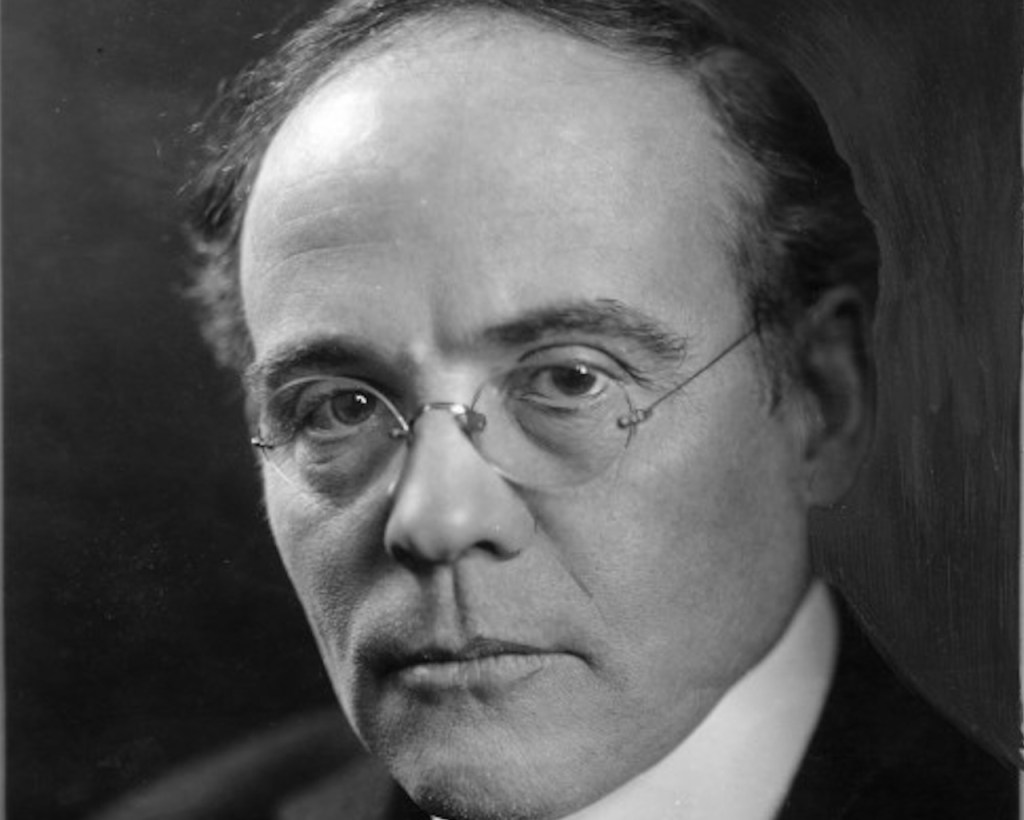
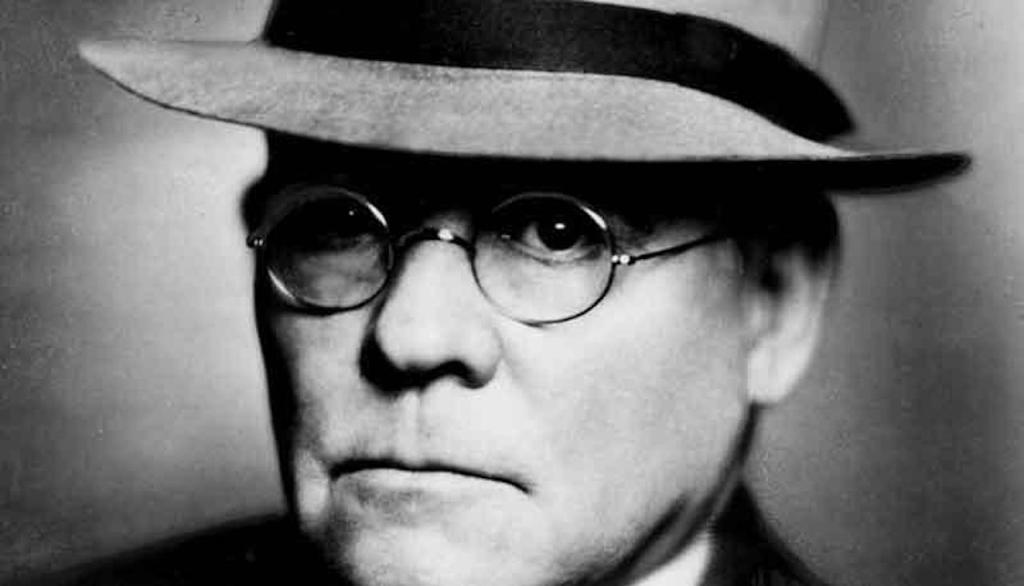
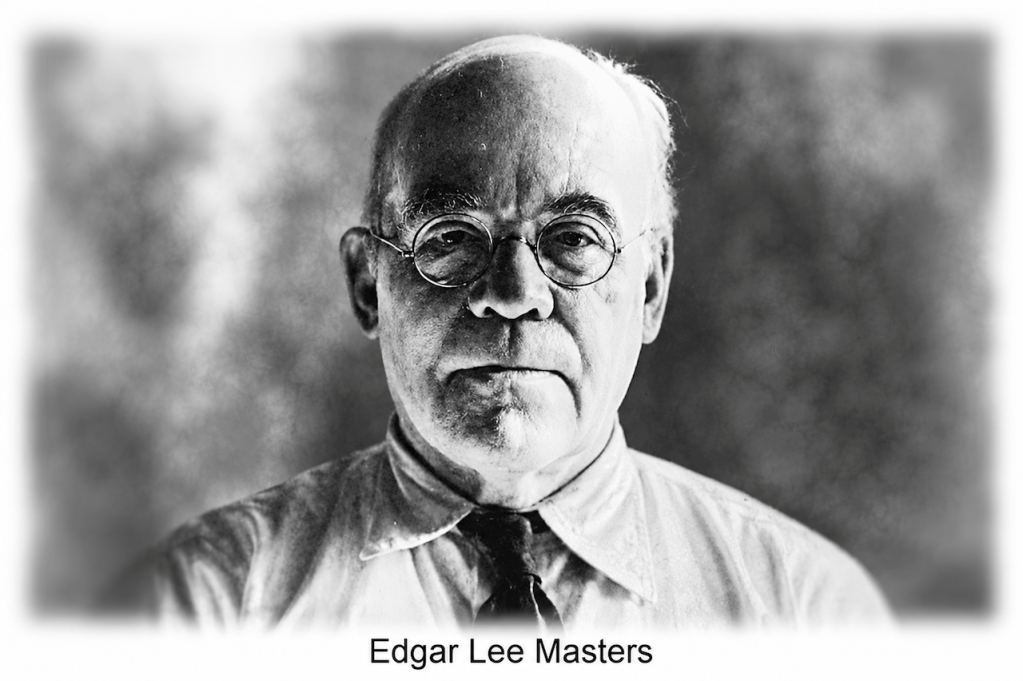
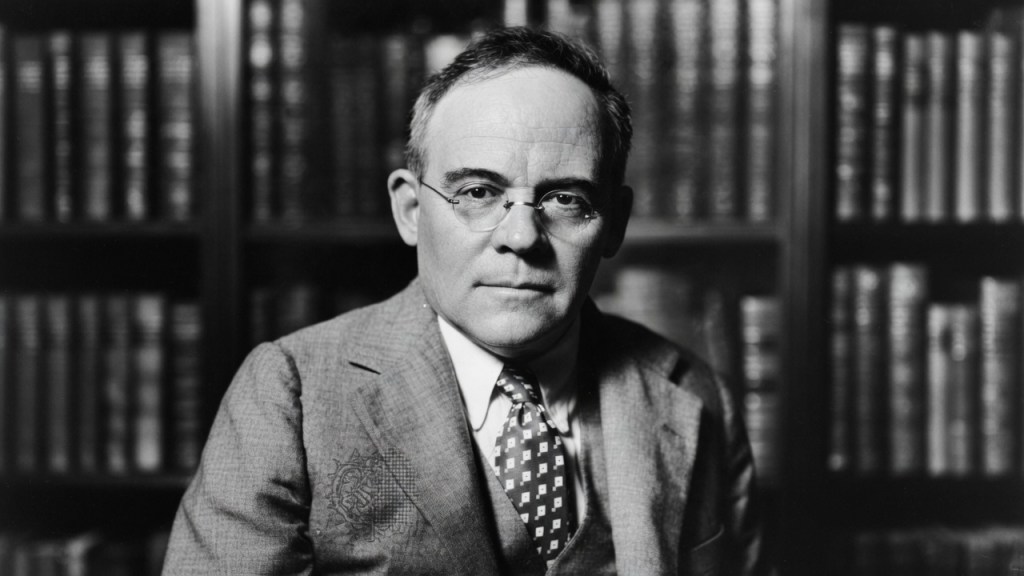
    Image:   Edgar Lee Masters  https://www.best-poems.net/edgar_lee_masters/index.html#google_vignette
    Image: Edgar Lee Masters

    Edgar Lee Masters’ “Hod Putt”

    Hod Putt chafed at his low station in life as an unsuccessful laborer who never seemed able to get ahead. His intense envy of those who were successful lead him down a path to perdition.

    Introduction and Text of “Hod Putt”

    The deceased inhabitants of the fictional village of Spoon River in Edgar Lee Masters’ American classic, Spoon River Anthology, are finally free to let loose their venom on whoever crossed them in life.  They now feel free to testify, but their testimony is only their side of it.  They can say whatever they like without being rebuked, reprimanded, or criticized.

    The advantage of this kind of scenario, masterfully created by the poet, is that each dead person has the same stage to make his/her claims.  The study thus reveals differing points of view, as they sometimes focus on similar circumstances.

    The Spoon River character study begins with an epitaph that qualifies as a versanelle, which is a short, pithy verse with a gripping punch that offers a scope on human nature, featuring the character “Hod Putt.”  The poem delivers that interesting punch as it reveals a truth about human nature and its desire to justify the unjustifiable to flatter the ego.

    Hod Putt 

    Here I lie close to the grave
    Of Old Bill Piersol,  
    Who grew rich trading with the Indians, and who
    Afterwards took the bankrupt law  
    And emerged from it richer than ever.
    Myself grown tired of toil and poverty
    And beholding how Old Bill and others grew in wealth,
    Robbed a traveler one night near Proctor’s Grove,
    Killing him unwittingly while doing so,
    For the which I was tried and hanged.
    That was my way of going into bankruptcy.
    Now we who took the bankrupt law in our respective ways  
    Sleep peacefully side by side.

    Commentary on “Hod Putt”

    Apparently, considering himself a failure in life’s rat race for riches, this speaker Hod Putt envied those who were successful or at least more successful than he was.

    From his perch in the afterworld, Putt attempts to improve his lack of substance by concocting an equivalence between his moral bankruptcy and the financial bankruptcy experienced by “Old Bill Piersol.”

    Putt belongs to that classification of Spoon River inmates who try to assuage their own guilt by laying a thick blanket of culpability onto others.  Readers can see clearly that these scofflaws are merely cutting off the heads of others so that they may appear to stand taller.

    First Movement:   Blinding Jealousy

    Here I lie close to the grave
    Of Old Bill Piersol,
    Who grew rich trading with the Indians, and who
    Afterwards took the bankrupt law
    And emerged from it richer than ever. 

    Hod Putt informs his audience that his grave lies near the “grave / Of Old Bill Piersol.” He reports that Piersol was an Indian trader who became wealthy through his lucrative trade association.

    Piersol, however, went bankrupt but then recovered his wealth quickly and grew “richer than ever”; these events cause Putt’s jealous nature to overcome his ability to think clearly.

    Second Movement:  A Double Felony

    Myself grown tired of toil and poverty
    And beholding how Old Bill and others grew in wealth,
    Robbed a traveler one night near Proctor’s Grove, 

    Putt implies that he was somewhat lackadaisical with no deep interest in high achievement; just keeping bread on the table caused him to grow “tired of toil and poverty.” While not fond of work, he also found poverty inconvenient.

    Putt assumed that “Old Bill and others” had used the system to become wealthy; thus he assumed he could also use the system for his own purposes.  He, therefore, dreamed up a plan: instead of working for his pay, he would take from others. He began his new endeavor in crime by robbing a traveler “near Proctor’s Grove.”

    Third Movement: Faulty Logic

    Killing him unwittingly while doing so,
    For the which I was tried and hanged.
    That was my way of going into bankruptcy.

    To Putt’s chagrin, he kills the victim while trying to take his property. This felony then gets Putt “tried and hanged.” Like any other act of faulty logic, he asserts that his act just constituted “bankruptcy.”

    He, no doubt, believes he is clever in comparing his crimes to what he assumes to be the crimes of others, as he draw a moral equivalency between financial bankruptcy and moral bankruptcy.  But his utterly counterfeit comparison to businessmen who declare legitimate bankruptcy according to the law demonstrates the criminal nature of Putt’s mind.

    Fourth Movement: Morally Bankrupt

    Now we who took the bankrupt law in our respective ways
    Sleep peacefully side by side.

    Putt shows that he is morally bankrupt; he concocts a moral equivalency between his felonious crimes and those of successful men, in this case, Old Bill Piersol, who merely followed bankruptcy laws.

    The smug Putt claims that he and Piersol “sleep peacefully side by side”; this claim implies that their “bankruptcies” are just the same.

    A Two-Fold Felon

    Readers will understand the difference between the two “bankruptcies”: Hod Putt is a criminal trying to vindicate himself while, in fact, revealing his felonious nature. Bankruptcy laws work within the legal system for those who declare bankruptcy.

    The laws governing bankruptcy do not exist in order to encourage theft but to allow the unfortunate to place their financial endeavor on the path to recovery. Putt declares that he intended to rob a man, but while committing the robbery, he killed the man.

    It is not likely that he intended to kill the man as he was committing his intensional felony.  But then, because of the accidental killing, Putt becomes a two-fold felon, failing to even understand his criminal acts. 

    Now after death, he disingenuously claims to be “sleeping peacefully side by side” with Old Bill Piersol. In his own imagination, Putt is free to believe that his “sleep” after death and that of a legitimate businessman are the same. 

    But imagination does not make it so.  The karma of all individuals dictates how well they rest—not how things may seem at any given time. Apparently, Putt remains blissfully unaware that karma will reckon with him—if not today, nor tomorrow, then sometime in future.

  • Life Sketch of Edgar Lee Masters and Spoon River Commentaries

    Edgar Lee Masters’ American classic, Spoon River Anthology, brought the poet into the literary world, and no other work from his extensive writings has garnered more attention, including his sequel to the original, The New Spoon River.
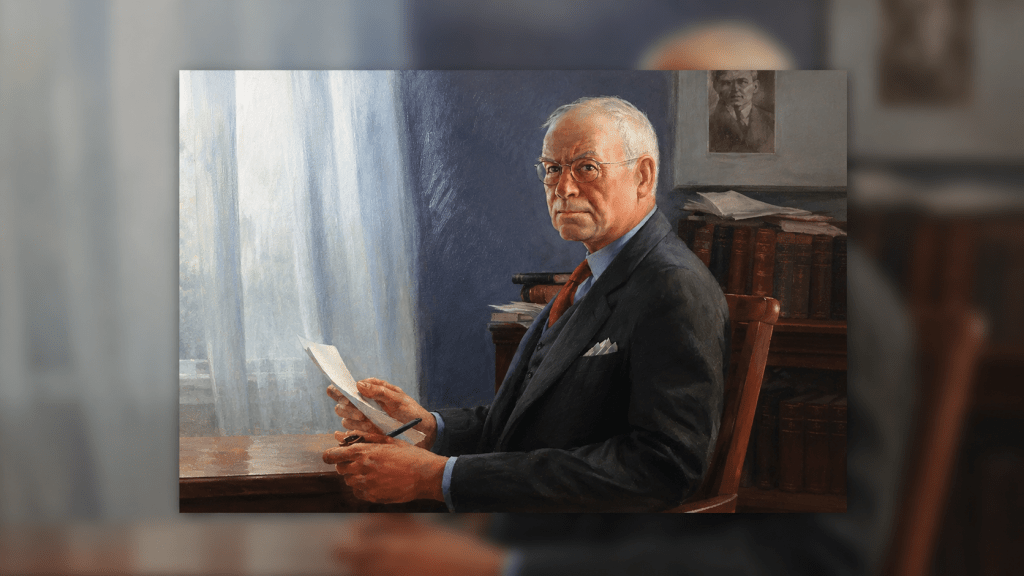
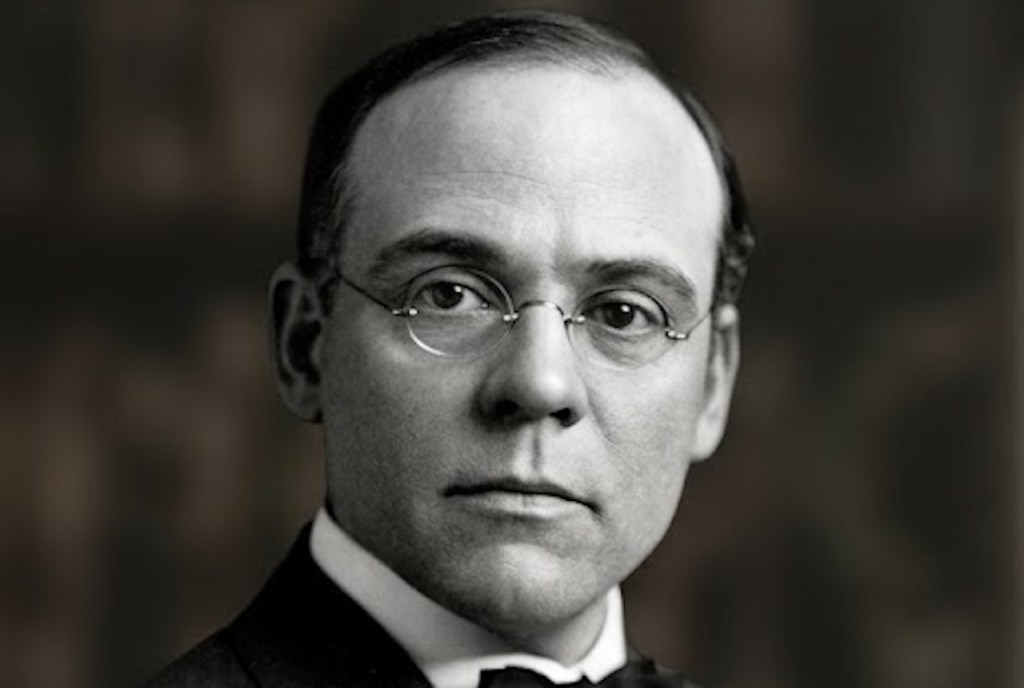
    Image: Edgar Lee Masters – Chicago Literary Hall of Fame

    Life Sketch of Edgar Lee Masters

    Edgar Lee Masters’ American classic, Spoon River Anthology, brought the poet into the literary world, and no other work from his extensive writings has garnered more attention, including his sequel to the original, The New Spoon River.

    Early Life and Education

    Edgar Lee Masters was born on August 23, 1868, to Hardin Wallace Masters and Emma Dexter Masters in Garnett, Kansas, where Hardin Masters had established a law firm [1].  After the failure of his law firm, Masters moved his family to his parents’ farm near Petersburg, IL.  In 1880, the Masters family relocated to Lewistown, Illinois, where Edgar attended high school.

    After high school, Edgar attended the Knox Academy preparatory program offered by Knox College, but he had to drop out because his family was unable to financially support his education.  Despite his lack of a college education, Edgar studied law in his father’s law office and successfully passed the bar in 1891.

    Law Career

    After being admitted to the bar in 1891, Edgar worked in his father’s law firm and then in 1893 joined the firm of Kickham Scanlan.  He later entered a partnership in the law office of Clarence Darrow, whose fame spread far and wide because of the Scopes Trial—The State of Tennessee v. John Thomas Scopes—also known jeeringly as the “Monkey Trial.” At the Darrow firm, Edgar’s worked mainly on cases involving the poor.  

    After his three-year stint in the Darrow firm, Edgar left and formed his own firm.  His years with Darrow has been turbulent owing to arguments with Darrow, as well as Edgar’s own misbehavior of engaging in adulterous affairs, damaging the firm’s reputation.

    Marriage

    In 1898, Edgar married Helen Jenkins, and his marriage brought him nothing but heartache.  In his memoir, Across Spoon River, his wife features prominently in his narrative, but he never reveals her name; he calls Helen the “Golden Aura,” and he is doing so in a derisive tone.  Clearly he hated the woman and all she stood for.

    Edgar and the “Golden Aura” produced three children but finally divorced in 1923.   He had abandoned his marriage by 1920 as well as the practice of law, relocating to New York to concentrate on his writing.  In 1926, he married Ellen Coyne and together they produced one child, Hardin.

    Literary Career

    Edgar Lee Masters wrote and published some 39 books in addition to his American classic, Spoon River Anthology, but nothing in his canon ever gained the wide-spread fame and acclaim that the 243 reports of people speaking from the beyond the grave brought him.  Even the sequel to Spoon River Anthology, titled The New Spoon River [2], failed to garner success equal to the original.

    Even though Spoon River Anthology was banned for a time in his hometown, it returned because of its popularity elsewhere and that fact that it contained some the best poetry even penned in America [3].

    Masters was awarded the Poetry Society of America Award, the Academy Fellowship, the Shelley Memorial Award, and he was also the recipient of a grant from the American Academy of Arts and Letters.

    Edgar Lee Masters had an unpleasant personality. His behavior often bordered on misanthropic in his displays of jealousy and hatred.  He likely diminished his literary reputation through his unseemly, disingenuous portrayal of Abraham Lincoln in his 1931 biographical piece focusing on the sixteenth president, titled Lincoln: The Man.

    Bethany Villaruz [4]  has opined that the Lincoln diatribe was aimed more at Carl Sandburg than the former president:  

    Sandburg’s Lincoln books were “so popular that it was making people think of Sandburg rather than Masters when they spoke of the New Salem-Petersburg area.” Masters regarded Sandburg’s success as an encroachment on the literary landscape that he believed his own work had helped define.

    Carl Sandburg was likely aware of Masters’ petty jealousy and wrote the following in his personal copy of Masters’ Lincoln biography:  “long sustained Copperhead hymn of hate reversing the views of a Masters I knew well 10 and 15 years before he wrote these sickly venomous pages” (my emphasis added.)  

    Agreeing with Sandburg’s estimation, a New York Times reviewer opined that the book featured views that not even a Jefferson Davis would write, but instead sounded more in line with venom spewed by a Ku Klux Klan member.

    Masters had been an admirer of Stephen Douglas and Douglas’ defeat by Lincoln was likely part of Masters’ motivation to trash Lincoln in his book for which he did little to no research.  Regarding Masters’ motivation and the subsequent reception of the Lincoln biography, Matthew D. Norman [5]  has explained, 

    Lincoln: The Man was a product of the Great Depression, written by a disillusioned champion of Stephen A. Douglas and Jeffersonian republicanism. Though Spoon River Anthology was both a critical and commercial success that established Masters’s reputation as a poet, nothing he wrote during the 1920s came close to matching his initial triumph. By early 1930, he and the country were in distress. Masters was far removed from his “spiritual home” of Menard County in the spring of 1930 when he wrote Lincoln: The Man in less than two months while residing at the Hotel Chelsea in New York City.  Lincoln scholar Harry Pratt and Carl Sandburg both believed that Lincoln: The Man revealed much more about Masters’s own personal tribulations than it did about the life of Abraham Lincoln. Pratt concluded that Masters’s financial troubles and conflicts with wives, publishers, and Clarence Darrow caused him to build up so much bile that “It just boiled out on Lincoln by chance.”

    Masters claimed he wanted to present only a true account of the man called Abraham Lincoln, but he completely misread the mood of the nation when he decided to trash Lincoln instead of reveal him.  It is likely that Masters’ reputation took a greater hit than did Lincoln’s, even though those misanthropes who seize on any discourse to denigrate Republicans have put Masters’ nastiness to use.

    Spoon River Anthology

    Spoon River is a fictional town, which is a composite of Lewistown and Petersburg, IL, where Edgar grew up and where his grandparents lived respectively.  Although the town of Spoon River was a fictional creation of Edgar’s imagination, there is an Illinois river named “Spoon River,” which is a tributary of the Illinois River in the west-central part of the state, running a 148-mile-long stretch between Peoria and Galesburg.

    In 1914, Edgar had begun to publish his poems focusing on the rantings of disgruntled dead people interred in the Spoon River Cemetery, located atop a hill overlooking the fictional town of Spoon River.  Edgar had seized on an ancient structural form to have these characters working out their dirty laundry as they speak from beyond the grave.  

    Nevertheless, he published under the pseudonym Webster Ford in Reedy’s Mirror, a literary magazine based in St. Louis.  Likely fearing controversy that would clash with his profession as an attorney, he employed the nom de plume until after he left the legal profession.

    In addition to the individual reports, or “epitaphs,” as Edgar called them, the Anthology sports three other long poems, offering summaries or other material relevant to the cemetery reporters or the atmosphere of the fictional town of Spoon River:  #1 “The Hill,”#245 “The Spooniad,” and #246 “Epilogue.”

    Harriet Monroe, editor of Poetry Magazine in Chicago, encouraged and assisted with the publication of Spoon River Anthology, and the collection became an instant success.  After having been published in 1915, by 1961 the collection had gone through seventy editions.  It has been made into an American play and an Italian opera, performed at La Scala.  Spoon River Anthology has also been translated into eight languages.

    Death

    Five months before turning 82, Edgar Lee Masters died on March 5, 1950, in a nursing facility in Melrose Park, Pennsylvania.  His body was transported back to  Oakland Cemetery in Petersburg, Illinois, for burial.  The following inscription appears on his grave marker:

    Good friends, let’s to the fields . . .
    After a little walk and by your pardon,
    I think I’ll sleep, there is no sweeter thing.
    Nor fate more blessed than to sleep.

    I am a dream out of a blessed sleep —
    Let’s walk, and hear the lark.

    And on a stone nearby his grave,  Masters’ epitaph, “Anne Rutledge,” which contains an ironic dig at Lincoln, the Mastersian nemesis, is carved:

    Ann Rutledge

    Out of me unworthy and unknown
    The vibrations of deathless music;
    “With malice toward none, with charity for all.”
    Out of me the forgiveness of millions toward millions,
    And the beneficent face of a nation
    Shining with justice and truth.
    I am Anne Rutledge who sleep beneath these weeds,
    Beloved in life of Abraham Lincoln,
    Wedded to him, not through union,
    But through separation.
    Bloom forever, O Republic,
    From the dust of my bosom!

    Masters spent his lifetime producing a plethora of writings, including 19 books of poems, 12 plays, six novels, and seven biographies.  His biographies, in addition to the Lincoln embarrassment, include those of Walt Whitman, Mark Twain, and Vachel Lindsay.

    Edgar Lee Masters was the sad little man, but no one can diminish the success he achieved with his Spoon River Anthology, which has risen to the status of an American classic, despite its being filled with disgruntled individuals.  He well understood the nature of those characters, being himself a disgruntled, agitated soul.

    Sources

    [1]  Herbert K. Russell. Edgar Lee Masters: A Biography. University of Illinois Press. 2001.

    [2]  Edgar Lee Masters. The New Spoon River.  Macmillan. New York. 1924. Print.

    [3]  Laura Wolff Scanlan.  “How the Once-Banned Spoon River Anthology Made a Comeback in Lewistown.”  Humanities:  The Magazine for the National Endowment for the Humanities. November/December 2015.

    [4]  Bethany Villaruz.  “The Sangamon, Soured: Lincoln, The Man & Its Twisted Tropes.”  Friends of the Lincoln Collection.  Accessed June 15, 2026..

    [5]  Matthew D. Norman.  “An Illinois Iconoclast: Edgar Lee Masters and the Anti-Lincoln Tradition.”  Journal of the Abraham Lincoln Association.  Winter 2003.

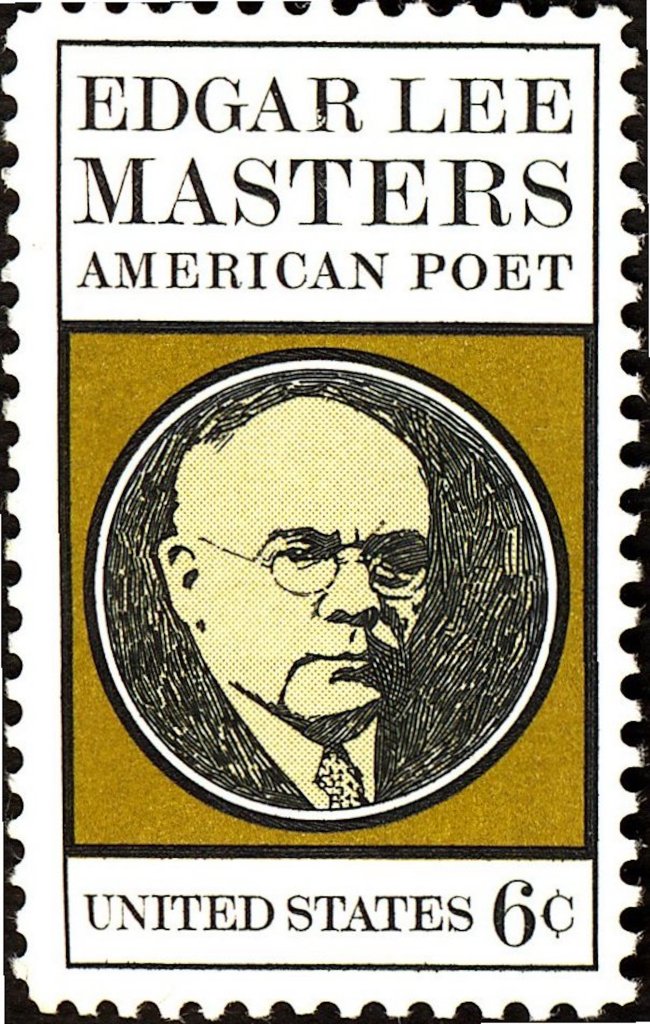
    Image: Edgar Lee Masters – Commemorative Stamp

    Poem Commentaries on Spoon River Anthology

    1. The Hill
    2. Hod Putt