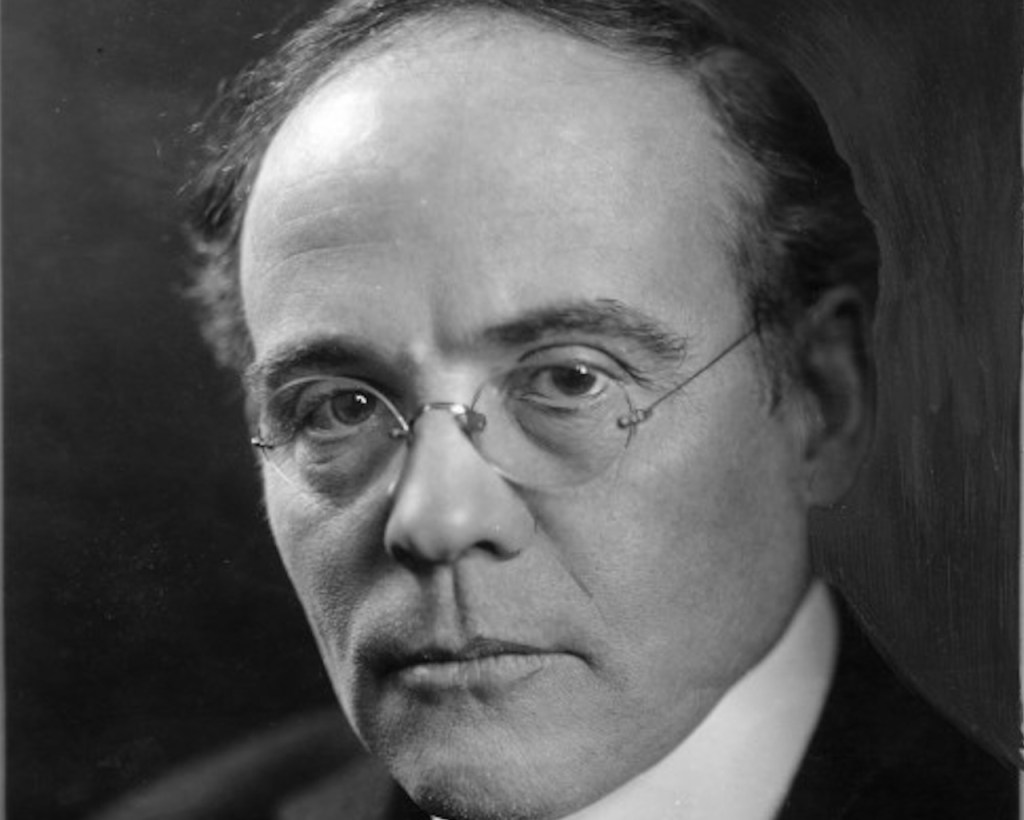
Edgar Lee Masters’ “Hod Putt”
Hod Putt chafed at his low station in life as an unsuccessful laborer who never seemed able to get ahead. His intense envy of those who were successful lead him down a path to perdition.
Introduction and Text of “Hod Putt”
The deceased inhabitants of the fictional village of Spoon River in Edgar Lee Masters’ American classic, Spoon River Anthology, are finally free to let loose their venom on whoever crossed them in life. They now feel free to testify, but their testimony is only their side of it. They can say whatever they like without being rebuked, reprimanded, or criticized.
The advantage of this kind of scenario, masterfully crafted by the poet, is that the dead people have the same stage to make their claims. The study thus reveals differing points of view, even as the individual speakers sometimes focus on similar circumstances.
The Spoon River character study begins with an epitaph featuring the character “Hod Putt,” which qualifies as a versanelle, a short, pithy verse with a gripping punch offering a glimpse at human nature. The poem delivers that interesting punch as it reveals a truth about human nature and its desire to justify the unjustifiable to flatter the ego.
Hod Putt
Here I lie close to the grave
Of Old Bill Piersol,
Who grew rich trading with the Indians, and who
Afterwards took the bankrupt law
And emerged from it richer than ever.
Myself grown tired of toil and poverty
And beholding how Old Bill and others grew in wealth,
Robbed a traveler one night near Proctor’s Grove,
Killing him unwittingly while doing so,
For the which I was tried and hanged.
That was my way of going into bankruptcy.
Now we who took the bankrupt law in our respective ways
Sleep peacefully side by side.
Commentary on “Hod Putt”
Apparently, considering himself a failure in life’s rat race for riches, this speaker Hod Putt envied those who were successful or at least more successful than he was.
From his perch in the afterworld, Putt attempts to improve his lack of substance by concocting an equivalence between his moral bankruptcy and the financial bankruptcy experienced by “Old Bill Piersol.”
Putt belongs to that classification of Spoon River inmates who try to assuage their own guilt by laying a thick blanket of culpability onto others. Readers can see clearly that these scofflaws are merely cutting off the heads of others so that they may appear to stand taller.
First Movement: Blinding Jealousy
Here I lie close to the grave
Of Old Bill Piersol,
Who grew rich trading with the Indians, and who
Afterwards took the bankrupt law
And emerged from it richer than ever.
Hod Putt informs his audience that his grave lies near the “grave / Of Old Bill Piersol.” He reports that Piersol was an Indian trader who became wealthy through his lucrative trade association.
Piersol, however, went bankrupt but then recovered his wealth quickly and grew “richer than ever”; these events cause Putt’s jealous nature to overcome his ability to think clearly.
Second Movement: A Double Felony
Myself grown tired of toil and poverty
And beholding how Old Bill and others grew in wealth,
Robbed a traveler one night near Proctor’s Grove,
Putt implies that he was somewhat lackadaisical with no deep interest in high achievement; just keeping bread on the table caused him to grow “tired of toil and poverty.” While not fond of work, he also found poverty inconvenient.
Putt assumed that “Old Bill and others” had used the system to become wealthy; thus he assumed he could also use the system for his own purposes. He, therefore, dreamed up a plan: instead of working for his pay, he would take from others. He began his new endeavor in crime by robbing a traveler “near Proctor’s Grove.”
Third Movement: Faulty Logic
Killing him unwittingly while doing so,
For the which I was tried and hanged.
That was my way of going into bankruptcy.
To Putt’s chagrin, he kills the victim while trying to take his property. This felony then gets Putt “tried and hanged.” Like any other act of faulty logic, he asserts that his act just constituted “bankruptcy.”
He, no doubt, believes he is clever in comparing his crimes to what he assumes to be the crimes of others, as he draw a moral equivalency between financial bankruptcy and moral bankruptcy. But his utterly counterfeit comparison to businessmen who declare legitimate bankruptcy according to the law demonstrates the criminal nature of Putt’s mind.
Fourth Movement: Morally Bankrupt
Now we who took the bankrupt law in our respective ways
Sleep peacefully side by side.
Putt shows that he is morally bankrupt; he concocts a moral equivalency between his felonious crimes and those of successful men, in this case, Old Bill Piersol, who merely followed bankruptcy laws.
The smug Putt claims that he and Piersol “sleep peacefully side by side”; this claim implies that their “bankruptcies” are just the same.
A Two-Fold Felon
Readers will understand the difference between the two “bankruptcies”: Hod Putt is a criminal trying to vindicate himself while, in fact, revealing his felonious nature. Bankruptcy laws work within the legal system for those who declare bankruptcy.
The laws governing bankruptcy do not exist in order to encourage theft but to allow the unfortunate to place their financial endeavor on the path to recovery. Putt declares that he intended to rob a man, but while committing the robbery, he killed the man.
It is not likely that he intended to kill the man as he was committing his intensional felony. But then, because of the accidental killing, Putt becomes a two-fold felon, failing to even understand his criminal acts.
Now after death, he disingenuously claims to be “sleeping peacefully side by side” with Old Bill Piersol. In his own imagination, Putt is free to believe that his “sleep” after death and that of a legitimate businessman are the same.
But imagination does not make it so. The karma of all individuals dictates how well they rest—not how things may seem at any given time. Apparently, Putt remains blissfully unaware that karma will reckon with him—if not today, nor tomorrow, then sometime in future.
 Linda's Literary Home
Good faith questions and comments welcome!