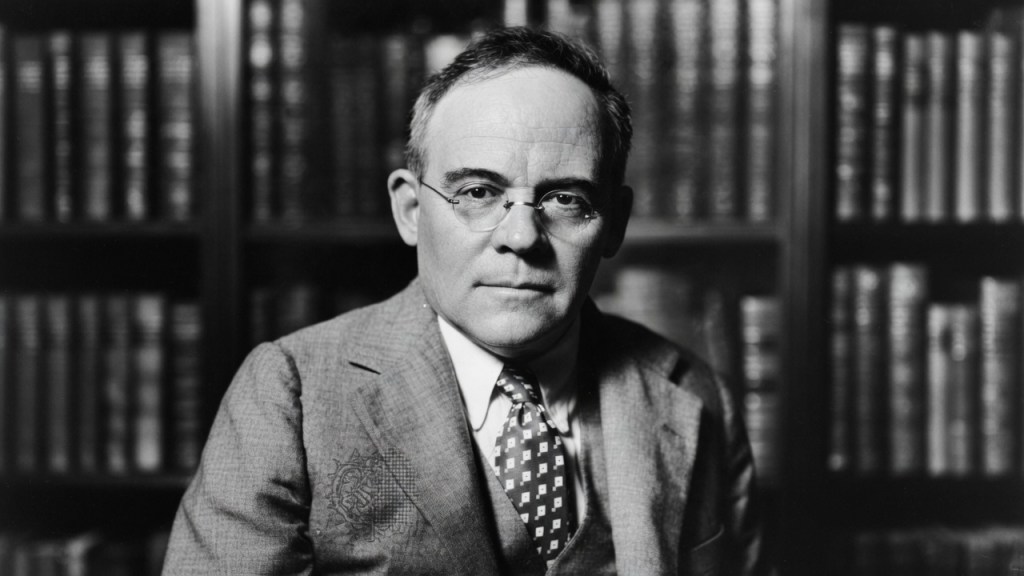
Edgar Lee Masters’ “The Hill”
The poem “The Hill” opens Edgar Lee Masters’ American classic Spoon River Anthology, which is told in a series of dramatic epitaphs by the deceased residents of Spoon River, an imaginary town in Illinois. The work might be considered a character study in poetry.
Introduction and Text of “The Hill”
Edgar Lee Masters’ Spoon River Anthology has become an American classic in poetry. The sequence consists of 246 poems, each of which the poet called an “epitaph.” The following three pieces differ from the predominant form of the relatively short epitaph:
#1 “The Hill” locates the cemetery and offers a brief overview of the nature of the characters who will be speaking
#245 “The Spooniad,” whose title is a play on Jonathan Swift’s The Dunciad, offers a unifying piece to the disparate nature of the many idiosyncratic voices of the Spoon River cemetery deceased
#246 “Epilogue” concludes with several voices waxing philosophical about various and sundry profound topics.
The bulk of the poems, the remaining 243, feature dramatic epitaphs spoken by the deceased, former residents of the fictional Illinois town Spoon River. The speakers now all reside in the hill cemetery from which they report their various current states of mind, based primarily on the lives they lived while they were citizens of the fictional town.
The first offering “The Hill” opens the American classic and features seven free verse paragraphs (versagraphs). It offers an introduction to some the characters who will be speaking later for themselves.
The Hill
Where are Elmer, Herman, Bert, Tom and Charley,
The weak of will, the strong of arm, the clown, the boozer, the fighter?
All, all, are sleeping on the hill.
One passed in a fever,
One was burned in a mine,
One was killed in a brawl,
One died in a jail,
One fell from a bridge toiling for children and wife—
All, all are sleeping, sleeping, sleeping on the hill.
Where are Ella, Kate, Mag, Lizzie and Edith,
The tender heart, the simple soul, the loud, the proud, the happy one?—
All, all, are sleeping on the hill.
One died in shameful child-birth,
One of a thwarted love,
One at the hands of a brute in a brothel,
One of a broken pride, in the search for heart’s desire,
One after life in far-away London and Paris
Was brought to her little space by Ella and Kate and Mag—
All, all are sleeping, sleeping, sleeping on the hill.
Where are Uncle Isaac and Aunt Emily,
And old Towny Kincaid and Sevigne Houghton,
And Major Walker who had talked
With venerable men of the revolution?—
All, all, are sleeping on the hill.
They brought them dead sons from the war,
And daughters whom life had crushed,
And their children fatherless, crying—
All, all are sleeping, sleeping, sleeping on the hill.
Where is Old Fiddler Jones
Who played with life all his ninety years,
Braving the sleet with bared breast,
Drinking, rioting, thinking neither of wife nor kin,
Nor gold, nor love, nor heaven?
Lo! he babbles of the fish-frys of long ago,
Of the horse-races of long ago at Clary’s Grove,
Of what Abe Lincoln said
One time at Springfield.
tom o’bedlam https://www.youtube.com/watch?v=DgDIXF-KR1U&t=33s
Commentary on “The Hill”
“The Hill” opens Edgar Lee Masters’ Spoon River Anthology, an American classic. Spoon River Anthology remains a useful character study, told in a sequence of dramatic epitaphs by the deceased residents of Spoon River, an imaginary town in Illinois.
First Versagraph: A Rhetorical Inquiry
Where are Elmer, Herman, Bert, Tom and Charley,
The weak of will, the strong of arm, the clown, the boozer, the fighter?
All, all, are sleeping on the hill.
In Edgar Lee Masters’ “The Hill,” the speaker begins by inquiring into the whereabouts of five individuals: “Elmer, Herman, Bert, Tom and Charley.” The speaker then adds a brief description of each man: one was weak-willed, one had strong arms, one was a clown, one was a drunkard, and one was a brawler. The speaker then answers his original question by reporting that they are all dead, and they are all located on the hill in the Spoon River Cemetery.
Second Versagraph: Character Descriptions
One passed in a fever,
One was burned in a mine,
One was killed in a brawl,
One died in a jail,
One fell from a bridge toiling for children and wife—
All, all are sleeping, sleeping, sleeping on the hill.
The speaker continues his description of the men he had earlier named. He reports how each one died: one died of a fever, one burned to death, one was killed in a fight, one died in jail, which says where but not actually how, and finally, on died after falling from a bridge.
Even though they all died under very different circumstances, some obviously more honorably than others, they all are dead, that is, euphemistically “sleeping on the hill.” The speaker repeats the euphemism “sleeping” to drive home the fact that he is employing the term as a metaphor for “dead.”
Third Versagraph: What Happened to the Ladies?
Where are Ella, Kate, Mag, Lizzie and Edith,
The tender heart, the simple soul, the loud, the proud, the happy one?—
All, all, are sleeping on the hill.
The speaker turns next to five women. Again, the speaker is seeking to find out the whereabouts of these ladies. He want to know the location of “Ella, Kate, Mag, Lizzie and Edith.”
Also, as with the men, the speaker offers a brief descriptor of each lady: one was tender-hearted, one was a simple soul, one was loud, one was proud, and one was simply happy.
Fourth Versagraph: More Biographical Tidbits
One died in shameful child-birth,
One of a thwarted love,
One at the hands of a brute in a brothel,
One of a broken pride, in the search for heart’s desire,
One after life in far-away London and Paris
Was brought to her little space by Ella and Kate and Mag—
All, all are sleeping, sleeping, sleeping on the hill.
Also, again, as with the men, the speaker offers a bit more biographical information about each woman, about how each died. One died giving birth. One succumbed after being jilted. Another was killed in a house of prostitution. One died because of loss of pride and will to live, and one passed while living far away.
Apparently, Ella, Kate, and Mag brought home the body of the one who died far away. And yet again, the women just as the men, are all euphemistically “sleeping on the hill.”
Fifth Versagraph: They Are All Dead in the Cemetery
Where are Uncle Isaac and Aunt Emily,
And old Towny Kincaid and Sevigne Houghton,
And Major Walker who had talked
With venerable men of the revolution?—
All, all, are sleeping on the hill.
The speaker continues to ask where certain folks are: Uncle Isaac and Aunt Emily, Towny Kincaid and Sevigne Houghton. The speaker then wants to know where is the old military man, Major Walker. The major had spoken with the honorable men “of the revolution.” But yet again, all of these folks are “sleeping on the hill.”
Sixth Versagraph: The War Dead
They brought them dead sons from the war,
And daughters whom life had crushed,
And their children fatherless, crying—
All, all are sleeping, sleeping, sleeping on the hill.
The speaker then reports that other dead that occupy space in the cemetery on the hill are the war dead. “They” had to bring the fallen sons home from “the war.”
The imprecise “they” likely refers to authorities, perhaps military officers responsible for transporting the fallen soldiers back to their home for burial. But also this indefinite “they” had to bring home “daughters whom life had crushed.” And children were left “fatherless, crying.” Again, the speaker reports that they are all “sleeping on the hill.”
Seventh Versagraph: A Memorable Character
Where is Old Fiddler Jones
Who played with life all his ninety years,
Braving the sleet with bared breast,
Drinking, rioting, thinking neither of wife nor kin,
Nor gold, nor love, nor heaven?
Lo! he babbles of the fish-frys of long ago,
Of the horse-races of long ago at Clary’s Grove,
Of what Abe Lincoln said
One time at Springfield.
The speaker concludes his overview of the cemetery’s residents by asking about one final deceased man, a colorful character called, “Old Fiddler Jones.” This old fellow lived to be ninety years old. The speaker claims Fiddler Jones played with life, likely alluding to his playing the fiddle for many of the picnics and other Spoon River gatherings.
The speaker seems to recall that Old Fiddler Jones’ liked to repeat stories about “fish-frys” and “horse-races,” and he also liked to report on “what Abe Lincoln said” the time that Lincoln visited Springfield, the capital of Illinois. The poet is engaging the strategic use of literary devices to render his character study more than a mere prose exposition.
The mundane fact that all of these folks are dead and buried in the cemetery on the hill is rendered poetic and dramatic through the use of the literary devices of metaphor, the rhetorical question, and euphemism.
 Linda's Literary Home
Good faith questions and comments welcome!