Linda's Literary Home

Category: Original Poems

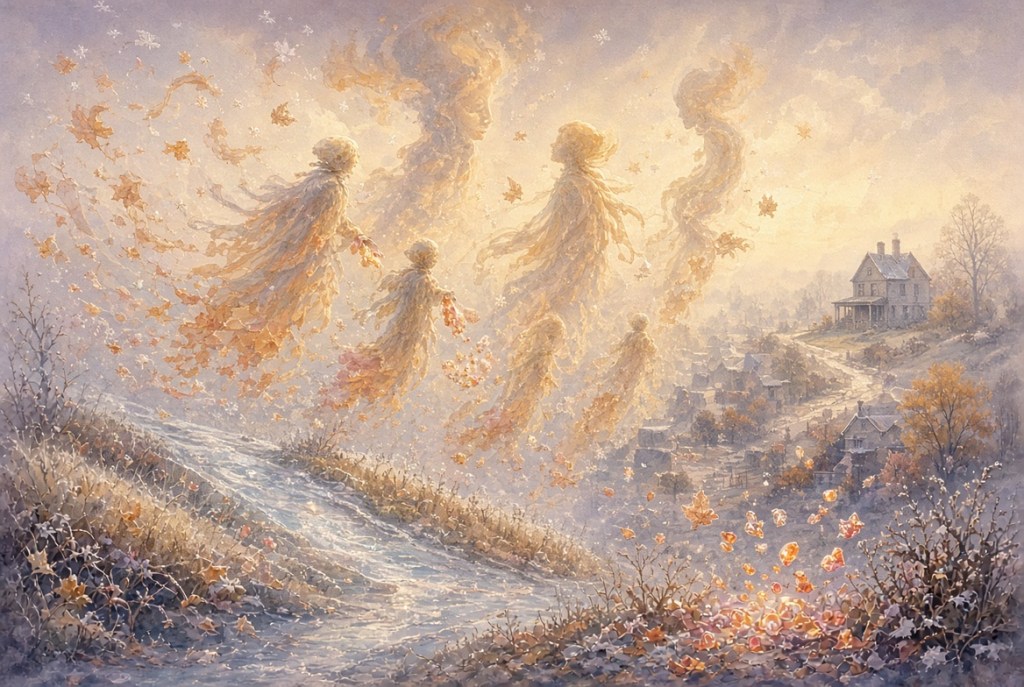
  • With Thy Song in My Soul

    Image was created by Grok inspired by the poem
    Image: Created by Grok inspired by by the poem

    With Thy Song in My Soul

    —after “When Thy Song Flows Through Me”

    Duality rules, but Thy song is stronger
    Than the death-dealing demagogue:

    Living flows like honey, dying
    Is only a dream,
    With Thy song in my heart.

    Joy tastes of sweet nectar, sorrow
    Is only a dream,
    With Thy song in my brain.

    Health is divine wine, illness
    Is only a dream,
    Why Thy song in my mind.

    Praise is a shining bauble, blame
    Is only a dream,
    With Thy song in my soul.

    I scurry from all dreams
    To seek out Thy trove
    With Thy song transporting me.

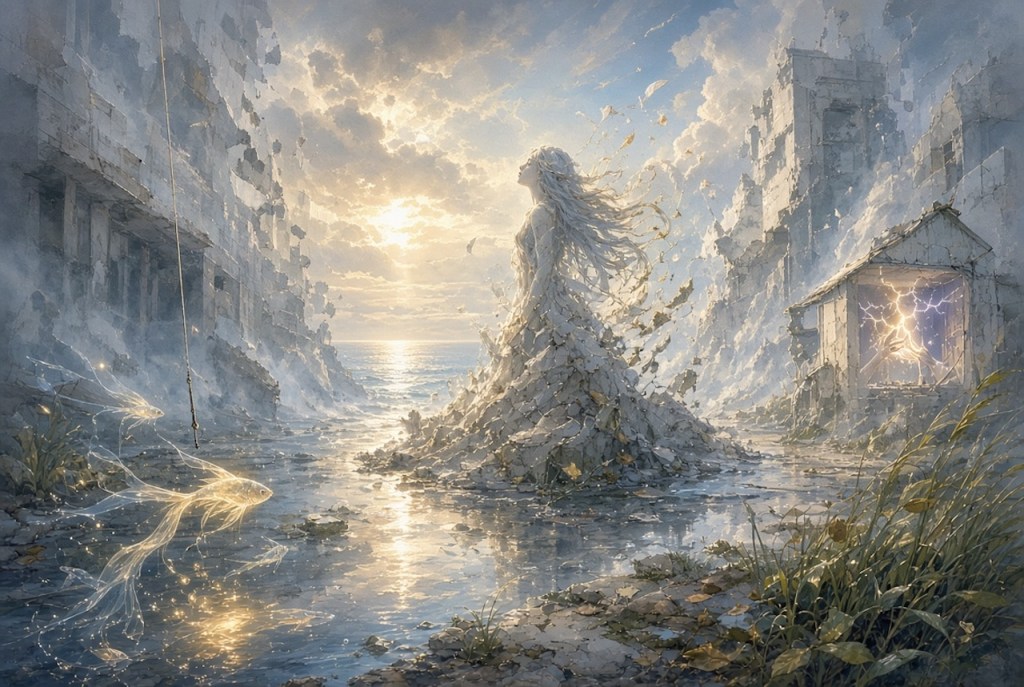
  • Where Dreams Are no More

    Image was created by Gork inspired by the poem
    Image: Created by Gork inspired by the poem

    Where Dreams Are no More

    —after “When My Dream’s Dream Is Done”

    Where was I before I woke
    To dream this dream
    That so often is a nightmare?

    Where will I go after I go
    To sleep again to this
    World’s waking and dreaming?

    Divine Mother will enfold me
    In Her arms and comfort me
    In the land where dreams
    Are no more.

  •  They Have Caught a Syllable

    Image was created by ChatGPT, inspired by the poem
    Image: Created by ChatGPT, inspired by the poem

     They Have Caught a Syllable

    —after “They Have Heard Thy Name”

    (A prayer for agnostics and atheists)

    Thou must have seen them
    Struggling to keep their pace,
    Not knowing they are blind,
    Crippled, and alone.
    They would come to Thee
    If only they knew.  How can they know?
    When they are blind and deaf?
    Thy Name is everywhere,
    But they cannot hear it.
    Thy Name is in their hearts,
    But they do not feel it.
    O Divine Beloved,
    Give Thyself to them anyway.
    They are Thy wondering pilgrims
    Though they know it not.
    O Divine Beloved,
    Grip their souls so tight
    That they can no longer
    Walk this hell
    With their smug hatred
    Of the Name they cannot hear,
    Of the Name they cannot say.
    O Divine Beloved,
    They have caught a syllable,
    They have caught a glimmer
    Of Thy sacredness.
    Give them more, give them more
    So they will know that they
    Can no longer go on without Thee.

    In a slightly different version of this poem/prayer appearing in my collection Singing in Soul Silence:  Voice of Faith, I employed the modern use of second person singular.  

  • Little Tippler

    Image - Created by ChatGPT inspired by the poem
    Image: Created by ChatGPT inspired by the poem

    Little Tippler

    —after “I Will Sing Thy Name”
    and Emily Dickinson’s “I taste a liquor never brewed

    Drunk and swaying to Thy Name
    Lifted above the world of praise and blame.

    Little Tippler leaning against a sunbeam
    Drunk and singing, singing, singing Thy Name.

    Thy joyful name, Om,  Guru, Om—
    Thy holy name, Om, Guru, Om.

    Drunk on the wine never brewed
    Little Tippler leaning against a sunbeam.

  • Thy Divine Effulgence 

    Thy Divine Effulgence 

    —after “O God Beautiful”

    The world is blessed with Thy divine effulgence:

    Forests whisper Thy lush leafiness.
    Mountains testify to Thy majesty.
    Restless rivers rush to Thy unguarded sea
    Where Thy grave hand marks their madness.

    O Divine Effulgence,
    We bow before Thy Beauty!
    O Divine Effulgence,
    We humbly bow to Thy Bounty!

    Servers serve for Thy pleasure!
    Lovers love only through Thy treasure!
    Mourners mourn for Thee alone, Thee alone!
    Only Thy pure-hearted ones know Thy bliss!

    Only Thy saints and yogis approach Thy bliss!

    O Divine Effulgence,
    We bow before Thy Beauty!
    O Divine Effulgence,
    We humbly bow to Thy Bounty!

  • All Tinsel and Tinker  

    Image:  Created by ChatGPT inspired by the poem
    Image: Created by ChatGPT inspired by the poem

    All Tinsel and Tinker  

    —after “In the Valley of Sorrow”

    I will wait for Thee, for no other
    Choice have I.  There is nowhere
    Else to go, but to Thee.

    Deceitfully, this land of sorrow
    Offers joy as well, but back to sorrow
    It always again returns.

    This land of sorrow offers honey
    That often hides a little poison
    And too often too much poison.

    Knowing the pessimist, I have chosen
    The optimist only the learn the truth
    Was with the pessimist.

    In this land of sorrow, only the love
     Of God and Guru is worth pursuing.
    All else is tinsel and tinker.

    All else is but a prod to remembrance
    Of the flameless flame, the soundless song—
    Where thirst is quenched by the soul’s living waters.

  • The Naughty Child 

    Image created by ChatGPT inspired by "Naughty Child"
    Image: Created by ChatGPT inspired by “Naughty Child”

    The Naughty Child 

    —after “Divine Mother’s Song to the Devotee”

    Divine Mother:  O my child, what do you want now?

    Naughty Child:  O dear Mother Divine, I want nothing but Thy love and care!

    Divine Mother:   But dear child of mine, I cannot give those to you; I would lose myself in your little ways.

    Naughty Child:  O Mother Divine, what may I ask from Thee, then?

    Divine Mother:   Ask me to save you from your little cares.  Ask me for salvation, but don’t ask me for my love and devotion.  I would become poor without them.

    Naughty Child:  O Mother Divine!  I already have your salvation!  Do not play Thy games of tit for tat, this for that.  Thou canst not save me lest Thou lovest me.

    Divine Mother:   Funny little child of mine.  You are beginning to understand.  Let’s sit and watch the Eternal Sun in the East, and you will know and feel all you wish, all your little heart’s desires will be fulfilled.

    Naughty Child:  O Mother Divine!  I bow at Thy feet again and again.  Set Thy blue lotus feet upon my brow as Thou wilt.  Aum!  Peace!  Amen!

  • Sipping Dew-Drops of Celestial Wine

    Image accompanying the poem “Sipping Dew-Drops of Celestial Wine”
    Image: Creataed by ChatGPT inspired by the poem

    Sipping Dew-Drops of Celestial Wine

    —after “I Am the Sky”

    My soul goes on spreading across this land.
    Across the sea, my boundless soul goes on
    Expanding beyond this earth,
    Beyond the moon and sun—
    Frolicking from planet to planet
    Nipping off rays from heavenly bodies,
    Sipping dew-drops of celestial wine
    From the myriad goblet-stars.

    Across the sky, my soul melts and stretches,
    Frozen no more in this little body,
    Frozen no more in this caged mind,
    Frozen no more, this soul expands
    Throughout Infinity, throughout Eternity
    In Bliss! Bliss! Ever more Bliss!

    A slightly different version of this poem appears in my collection Singing in Soul Silence: Voices of FaithThe original last line was “In joy, joy, ever more joy!”

  • Emily Dickinson’s “She slept beneath a tree” and “It’s all I have to bring today”

    Image: Emily Dickinson – Amherst College – Daguerrotype of the poet at age 17, circa 1847 – likely the only authentic, extant likeness of the poet

    Emily Dickinson’s “She slept beneath a tree” and “It’s all I have to bring today”

    These two Dickinson poems seem to grow out of a singular event on a certain day, likely in early spring, when nature is waking up bringing its flowered and bird-song beauty to the eyes and ears.  No one is better prepared to report on that beauty than Emily Dickinson.

    Introduction and Text of  “She slept beneath a tree” and “It’s all I have to bring today”

    The first installment of this mini-series, “She slept beneath a tree,” offers up one of those famous Dickinson riddles.  She only describes her subject but never names it, leaving that up to her readers to guess.  

    The second installment, “It’s all I have to bring today,” sounds almost as if she is offering a continuation of the first offering.  One can imagine that the “it” in the first line refers to the subject of the “She slept beneath a tree.”   It offers an interesting contrast to read the second in tandem with the first as opposed to reading it as standing alone.  

    Thomas H. Johnson returned Emily Dickinson’s poems to a closer facsimile of their original.  Other editors of Dickinson had given her poems titles and regularized her idiosyncratic style, such as the liberal spray of dashes, capitalizations, and many other grammatical ellipses.

    In an earlier edition of the Dickinson poems, “She slept beneath a tree” was given the title “The Tulip.”  Dickinson would not have approved of this titling, because the poem is one of her obvious riddles, which leaves the subject of the poem up to the reader to suss out.  

    The reading of the poem in the video below uses the mistitled version of the poem; still the sense of the piece can be appreciated by the reading, even though the printed form of the poem varies from the Johnson version, which offers Emily’s original and intended style.

    She slept beneath a tree  

    She slept beneath a tree –
    Remembered but by me.
    I touched her Cradle mute –
    She recognized the foot –
    Put on her carmine suit
    And see!

    Reading of “She slept beneath a tree” 

    It’s all I have to bring today

    It’s all I have to bring today –
    This, and my heart beside –
    This, and my heart, and all the fields –
    And all the meadows wide –
    Be sure you count – should I forget
    Some one the sum could tell –
    This, and my heart, and all the Bees
    Which in the Clover dwell.

    Reading of “It’s all I have to bring today”  

    Commentary on  “She slept beneath a tree”

    This riddle poem “She slept beneath a tree” remains mysteriously vague, as the speaker plays with the reader’s sensibilities.  While the subject of the riddle might be interesting, more important is the effect that child of nature has on the speaker.

    First Movement:   A Riddle

    She slept beneath a tree –
    Remembered but by me.
    I touched her Cradle mute –

    The speaker reports that the subject of her riddle had been sleeping at the foot of tree.  No one had remembered or taken note of the subject except for the speaker, who visits the subject and “touched her Cradle.”  The cradle was mute or perhaps it was the speaker who remained mute.  By allowing the ambiguity, the speaker amplifies the impact of the riddle.

    Second Movement:  Remarkable Claim

    She recognized the foot –
    Put on her carmine suit
    And see!

    The speaker then makes a remarkable claim, reporting that her subject was aware of the speaker’s identity because of the sound of her football.  The speaker is now playing with her readers, telling them that she, in fact, is the one who was able to remember and spot the subject.

    Even more remarkable and cagey of the speaker is that after the subject of her discourse recognizes the speaker, the subject dresses herself out in a “carmine suit.”  The dark red coloring of the subject might offer a clue to her identity, but it might also obfuscate that identify.

    The speaker then excitedly cries, “And see!”  She is pointing to the subject, telling her companion, who may be real or imagined, to observe the fascinating, unusual color of the subject.  

    The speaker makes little known about the subject itself; her description seems to cover more than uncover, yet it reveals much about the speaker, who has demonstrated her joy, even glee, at the opportunity to discover and visit this nature’s child who sleeps beneath a tree and then turns red at the mere presence of the speaker’s aura.

    So who is this child of nature sleeping beneath and tree?  The speaker does not name the subject of this riddle poem, because she wants her audience to participate in wonder and amazement as they try to suss out exactly who that entity is.

    Reading of “It’s all I have to bring today”  

    Commentary on “It’s all I have to bring today”

    The poem begins in humble recognition of a humble offering but then expands to include all the speaker’s circumference.

    First Movement:  A Blooming Statement

    It’s all I have to bring today –
    This, and my heart beside –
    This, and my heart, and all the fields –
    And all the meadows wide –

    The speaker begins small with a statement that sounds quite limiting.  She apparently is porting something and says that’s all she has brought today.  But she seems immediately to contradict that limiting statement by opening up to a whole wide world of other things she is bringing.

    In addition to the object she has brought, she is also bringing “her heart,” “all the fields,” as well as “all the meadows.”  Her statement seems to fan out like one of those Japanese folding fans that folds up and then spreads out for use in moving the air about one’s face.

    Second Movement:  Reckoning God

    Be sure you count – should I forget
    Some one the sum could tell –
    This, and my heart, and all the Bees
    Which in the Clover dwell.

    To her audience, the speaker then commands that they also include God, that is, “some one the sum could tell.”  Only God is able to reckon all the creation that the speaker has chosen to allude to in her expanding report.

    The speaker then reiterates that she is bringing “this” along with her heart and then expands further by including “all the Bees” that live in the clover.  She has gone from bringing only a seeming token to bringing all that her eyes can detect or all that he mind can discern.  

    This humble speaker is simply offering all that she is, all that she sees, and all that she knows to the Blessèd Creator, Who has fashioned all of this magnificent nature that she adores with her heart, mind, and soul.

    Taken Together: An Alternative View

    Looking at each installment of this mini-series individually returns a commingling of two slightly differing views as described in the commentaries above.  But a slightly different view may be taken by using a small adjustment.

    If one interprets the “it” in the second part of the series as referring to the subject of the first installment, then the speaker seems to have plucked the tulip and is now offering it at her altar for her meditation and prayer.

    Actually, everything else remains the same; her humble offering to God has caused her mind to expand from simple awareness of the tulip to acknowledgment of all God’s creation–including her heart, the fields, the meadows, and, of course, all the bees in the clover.

    Thomas H. Johnson's The Complete Poems of Emily Dickinson - The text of Dickinson poems that i use for my commentaries on her poems
    Image: Thomas H. Johnson’s The Complete Poems of Emily Dickinson

  • From Dream to Dream

    Image: Created by ChatGPT inspired by “From Dream to Dream”

    From Dream to Dream

    —after “From This Sleep, Lord”

    Blessèd Lord,
    Wake me from this worldly delusion.
    From dream to dream I move
    In the sea of a million things.

    Blessèd Lord,
    Wake me from this world of pain.
    Allow me to enter the golden kingdom
    Of light where all things are real.

    From dream to dream,
    From sleeping blindness
    Clear my thoughts,
    Clear my eyes.

    Lead me into Thy sacred sea
    Where I rise dripping
    Awake in Thy golden dream
    Awake in Thy pure loving Love.

    A slightly different version of this poem appears in my collection Singing in Soul Silence: Voices of Faith.