Linda's Literary Home

Category: Original Poems

  • The Blank Page of Posterity

    Original poem appearing in my collection titled “If My Words Could Rise,” available on Amazon as paperback or Kindle.
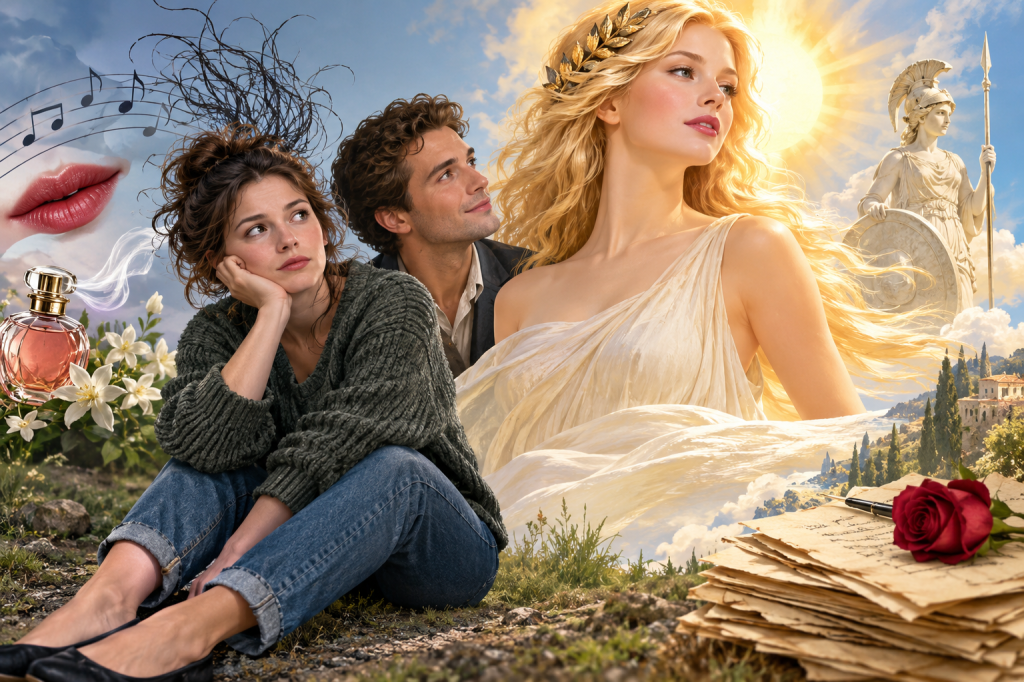
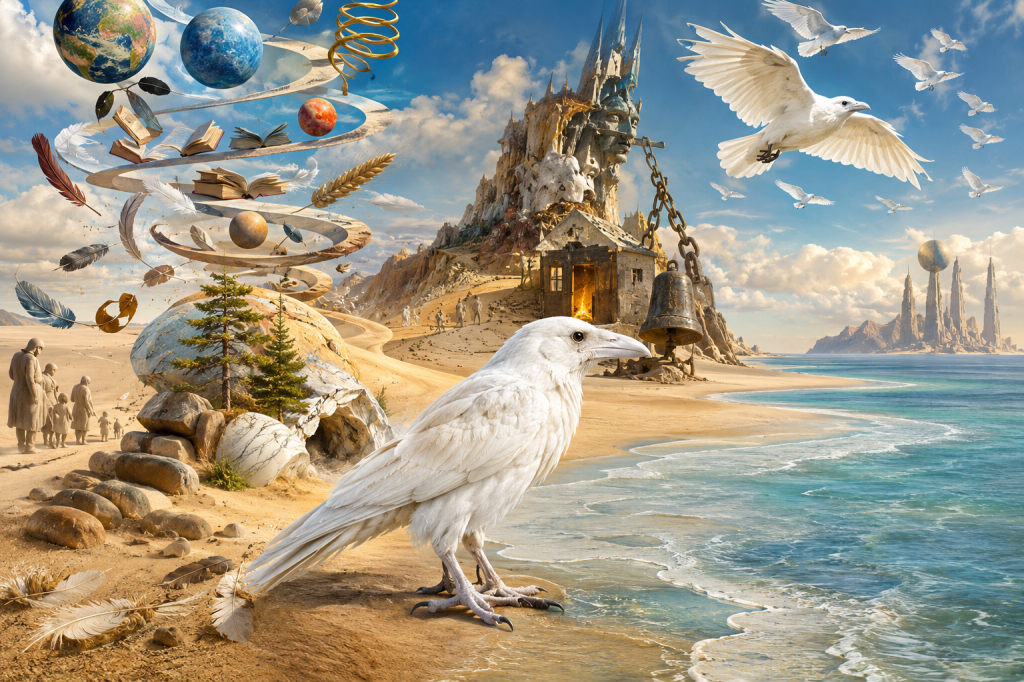
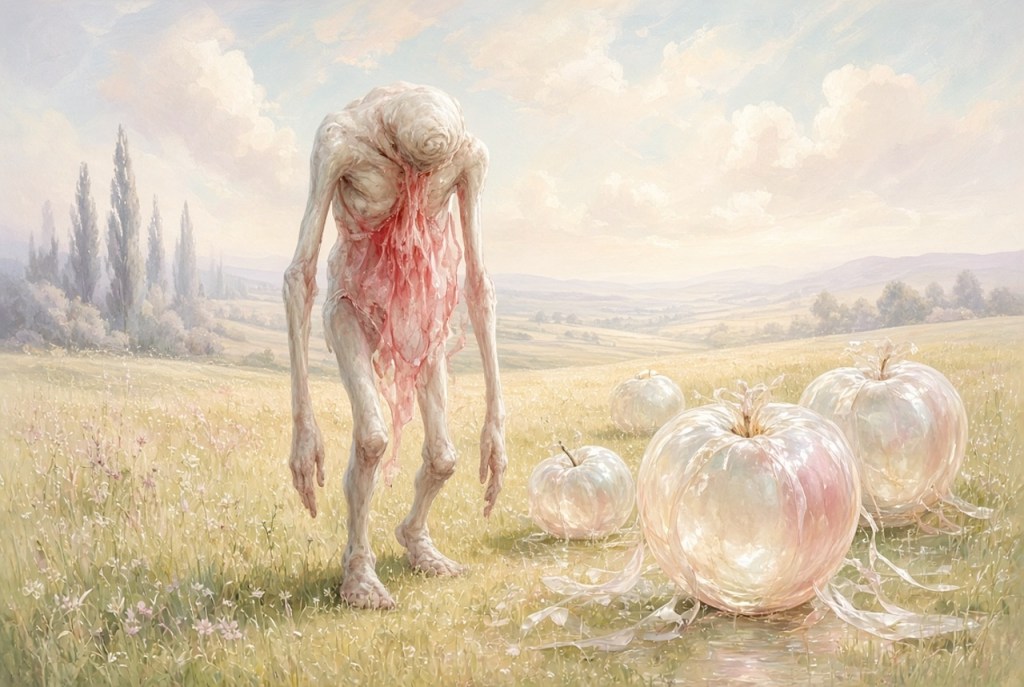
    Image: Created by ChatGPT inspired by the poem

    The Blank Page of Posterity

    Best & worst teen years

    It’s a sunny day by the water.
    I face myself in a skewed after-thought.
    What do I see, what do I hear?

    Green water, soft-murmuring splashes
    The lake offers for musing.
    What will I be in future?
    What will I do tomorrow?

    By the success of schoolgirl dreams
    I can only whisper possible scenes
    That come crashing like a nightmare
    Holding hostage my heart
    That tries to keep up with its blood
    Fusing each blank page for posterity.

    What will my children think of me?

  • Original Poem “Frosty Fantasy” with Prose Commentary

    Frosty Fantasy

    The hill gives my legs an excuse to bend
    And my arms a chance to steady their trembling
    But my back holds firm as I negotiate each step.
    What were they thinking, my parents, who
    Built their home so far from town?
    I never wished for more than heaven.

    You, however, who grew up far from the midland,
    Kept your heart in a duffle bag, stuffed with straw.
    Sure, I’m only guessing, but you gave me the material:
    Sick laughter, sour smells clinging to your clothes,
    Boasting pride breaking your potential
    Which was poetry itself, sometimes sublime.

    But you allowed your fangs of frosty fantasy
    To make a bloody truant of your future.

    Commentarian Hat Image

    A Prose Commentary on My Original Poem “Frosty Fantasy”

    In my poem “Frosty Fantasy,” I have created a speaker who reflects upon the divergent paths of two lives: one rooted in place, discipline, and spiritual aspiration, the other undermined by self-deception and squandered promise.

    The poem unfolds as a personal address, but beneath its conversational surface lies a musing on character, destiny, and the consequences of embracing illusion over authentic growth.

    The title itself is deliberately ironic. Fantasy ordinarily suggests imagination, creativity, and possibility. Yet the fantasy explored here is “frosty”—cold, sterile, and ultimately destructive. Rather than nurturing the future, it freezes it. 

    The poem’s emotional movement progresses from the speaker’s own grounded perspective toward an examination of another individual whose considerable gifts have been compromised by pride and self-delusion.

    Underlying the poem is the conviction that talent alone cannot sustain a meaningful life. Potential must be guided by self-knowledge, humility, and higher aspiration. Without such guidance, even genuine brilliance may become an instrument of self-sabotage.

    First Stanza:  The Discipline of Ascent

    The hill gives my legs an excuse to bend
    And my arms a chance to steady their trembling
    But my back holds firm as I negotiate each step.
    What were they thinking, my parents, who
    Built their home so far from town?
    I never wished for more than heaven.

    In the opening stanza, my speaker begins with a physical ascent up a hill. The hill is not merely geographical; it serves as a metaphor for the challenges inherent in human life. Each part of the body participates in the effort. The legs bend, the arms steady themselves, and the back remains firm. This catalog of bodily responses emphasizes perseverance and balance.

    The speaker then turns briefly toward the parents who built their home “so far from town.” The question, “What were they thinking?” introduces a touch of humor and mild complaint, but the complaint quickly dissolves into a larger perspective. The concluding line, “I never wished for more than heaven,” transforms what might have remained an ordinary recollection into a spiritual declaration.

    The speaker suggests that physical distance from worldly activity may have fostered a deeper orientation toward transcendent values. The ascent of the hill thus becomes inseparable from the ascent of consciousness.

    Second Stanza:  A Portrait of Displacement

    You, however, who grew up far from the midland,
    Kept your heart in a duffle bag, stuffed with straw.
    Sure, I’m only guessing, but you gave me the material.
    Sick laughter, sour smells clinging to your clothes,
    Boasting pride breaking your potential
    Which was poetry itself, sometimes sublime.

    The second stanza shifts attention toward the person being addressed. Unlike the speaker, this individual is portrayed as fundamentally unsettled. The image of keeping one’s heart “in a duffle bag, stuffed with straw” suggests emotional impermanence and spiritual emptiness.

    A duffle bag is designed for movement and transience; it has no permanence or rootedness. The straw further implies something artificial, a substitute for genuine substance. The heart has become portable but hollow.

    The speaker acknowledges uncertainty with the phrase “Sure, I’m only guessing,” yet immediately asserts that the evidence for such speculation has been provided by the subject himself. This rhetorical maneuver allows the speaker to maintain both humility and authority.

    The subsequent images become increasingly severe. “Sick laughter” and “sour smells” create an atmosphere of moral and psychological decay. These sensory details suggest that inner disorder eventually manifests outwardly. The speaker is less concerned with literal odors or sounds than with the lingering effects of a troubled character.

    The latter portion of the second stanza introduces the poem’s central sorrow. The addressed individual possesses remarkable potential. The speaker observes that his potential “was poetry itself, sometimes sublime.”

    This line is intentionally generous. The poem does not depict an ordinary failure but the squandering of exceptional gifts. The word “sublime” elevates the subject’s capacities beyond mere competence into the realm of genuine artistic and spiritual possibility.

    Yet this praise is immediately juxtaposed against “Boasting pride.” The contrast is crucial. The obstacle is not lack of talent but an inflated sense of self. Pride becomes the force that fractures the connection between potential and fulfillment.  The speaker therefore presents a familiar but painful truth: greatness is often destroyed not by external enemies but by internal weaknesses.

    Third Stanza:  The Tyranny and Tragedy of Illusion

    But you allowed your fangs of frosty fantasy
    To make a bloody truant of your future.

    The final stanza—which is only an unrimed couplet—condenses the poem’s judgment into a single powerful image. The “fangs of frosty fantasy” transform fantasy from a harmless indulgence into a predatory force. Fangs suggest aggression, danger, and injury. 

    The fantasy has become something that bites and wounds. The adjective “frosty” reinforces the image of emotional coldness and spiritual paralysis. Rather than inspiring growth, these fantasies freeze the individual within a false vision of himself.

    The phrase “make a bloody truant of your future” is deliberately startling. A truant abandons responsibility and neglects obligation. Here the future itself becomes the truant, absent because the subject’s choices have driven it away.

    The image suggests that the future was once available but has been injured and expelled through self-defeating behavior. What might have become a life of accomplishment and creative fulfillment has instead been sacrificed to illusion.  The poem ends without reconciliation because the speaker wishes to leave the consequences visible and unresolved. The loss itself becomes the final lesson.

    An Afterthought

    In “Frosty Fantasy,” the speaker examines the painful distance between promise and fulfillment. The poem contrasts two modes of living: one grounded in perseverance, aspiration, and rootedness, the other consumed by pride, instability, and self-deception.

    The speaker’s judgment is severe but not entirely condemnatory. Embedded within the criticism is an acknowledgment that the addressed individual possessed genuine gifts, perhaps even extraordinary ones. This recognition makes the loss more poignant, not less. In fact, that loss may be designated a tragedy in the original usage of the term.

    Ultimately, the poem suggests that imagination detached from truth becomes fantasy, and fantasy detached from discipline becomes destructive. The speaker portrays a life in which illusion gradually eclipses possibility, leaving behind not the fulfillment of potential but the lingering shadow of what might have been.

  • As I Sit Alone, Musing

    As I Sit Alone, Musing

    Singing spreads through the wires
    Of my brain in young years
    As I grew taller but remained short.
    In the music, I felt secure
    That one day I would encounter
    Some perfect way of being
    And knowing and feeling.

    Where is the singing from the heart?
    Where the soul holds sway.
    Where is soul speaking with silent tongue?
    Where the mind changes but grows still
    With each touch of the Divine.
    And the music grows stronger
    As I sit alone, musing. 

    The shadow of the song
    Graces the night with the perfume
    Of love and wisdom.

    Each day with music
    Renders passion a foe
    Of tranquility
    Allowing flesh to dominate
    The flow of blood in wistful veins.
    The music heals
    As new wounds open.

    Singing in the silence of the soul
    Brings a new day to peace
    Calming the blood, soothing restlessness.

  • The Flowers Are Bright Today

    Image:  Created by Grok inspired by the poem
    Image: Created by Grok inspired by the poem

    The Flowers Are Bright Today

    The flowers are bright today.
    They take on an ethereal glow.
    They bloom in the flames of my tongue—
    And then remain silent.

    They give off joy from a sacred place.
    Their fragrance shies away from contempt.
    As dumb as trees, they speak a holy tongue.
    Noise has no sway with their beauty.

    They employ no mask to obfuscate dawn.
    They seek no retribution in the storm.
    They bend as needed—
    Not to a dictator but to their Liberator.

    In the fires of eternity, they sing eternally.
    They rock their love in the equation
    Where humankind wishes to exist.

  • Haunting the Trees

    Haunting the Trees

    Making the sky look pink under the gray clouds. — Anonymous

    Every spectacle flits itself upon some podium.
    Hear the word pablum spew from despotic veins.
    Vines tangle in the wind.
    Rain beats against the tin roof of sorrow.

    Making truth is not making blather.
    Dogs grunt, run, and die.
    Over the hill go trains of thought.
    We look, learn, like, but fail to listen.

    In the glow of day, the rocks whiten.
    Lights go on at dusk in the starry afterthought.
    Saving time is not saving love.
    There is no “I” in “lost.”

    I confess to confession for the sake of
    Professing whatever is necessary.
    Each sentence completes itself
    Even in a tempest.

    Later is sooner than never,
    And I tell myself to wait and be patient.
    But I never listen, unless I feel bothered
    By other lies that scold me.

    You may paint your ceiling black
    And seek solace in some pretty face
    But you will never straighten your crooked
    Brain by faking the words of the ancients.

    Turn away, I keep saying to the wind—
    The wind that remains ghostly
    Keeping memory at bay
    While haunting the trees.

  • Leave off the Past Again and Again

    Image-Created by ChatGPT inspired by the poem
    Image: Created by ChatGPT inspired by the poem

    Leave off the Past Again and Again

    for Me as a Young Girl

    Leave off the past again and again—
    Because I got used to trying to run
    When I was too young to know,
    I didn’t have to run but merely walk well.

    The others seemed to be always ahead
    And I could never catch up.
    The pain in my side told me
    I could not compete.

    But I wore my misery like a veil
    Covering some future tranquility
    That I could never achieve
    In the darkness of adolescence.

    Why did I not see that I could breathe
    Free in the air of ancient philosophy? —
    Even after I learned to walk with tenets
    And practice techniques for freedom?

    Peace is a heavenly state of being,
    Secured by tranquility and mindfulness,
    But it is not easy to sit still
    With a body screaming out pain.

    The more I put off, the more I fail
    But I seem to know what I do not know
    Even as I break my heart over
    My vague thoughts and prayers.

  • Bridge of Eternity

    Image-Created by ChatGPT inspired by the poem
    Image: Created by ChatGPT inspired by the poem

    Bridge of Eternity

    The riddle takes the black tick and runs laughing
    Down the path to the doggy life of flukes.
    Don’t get me going if you won’t follow
    For questions may continue to erupt.

    Being strong may be illusive in the dusk.
    But weakness has its own sundowning
    Flipping and flopping like a big fish on a hook.
    Stay gutless if you can, while you ring the mold
    From your lips, as sunlight defies your spin.

    Righting each wrong will take forever,
    It will seem, as you sculpt each lie
    To connect your heart to a lifejacket
    Tacked onto the bridge of eternity.

    Love cannot seep through chicken wire
    And your smooth tongue will plaster your eyeballs.
    Satan will not pluck the weed of sorrow
    Even as you wait for feathers from the duck face—
    Whose nose will enjoy your scent?

    Don’t listen to me, for I have nothing to say
    To pigs and fleas, and I insist you defy matter
    By displaying both.  Selfish bloat and twitches.
    You resemble bitter fruit, displayed but seasonless. 

    The crimes we commit will tackle us
    And some of us will lie and try to avoid
    Our just deserts as if we deserve more. 
    But prison waits as sure as your moldy tongue
    And we cannot avoid what is coming to us.

  • Like a Shadow

    Image:  Created by Gemini inspired by the poem
    Image: Created by Gemini inspired by the poem

    Like a Shadow

    Shall I offer some well-etched question?
    What well-defined answer would you accept?
    Questions, like clouds shrouding the moon—
    Live in your ego like the dust of hooves
    Coating and smiting your blotched being.

    Who are you to finger my history?
    You, who remember nothing but crabs
    And jinxed fixes in the noon brain—
    Who, indeed, is your guide?
    Would you follow if you had a good one?

    You can scoff but the world will wait
    Until your karma rings your skin
    And pushes your mental kinks
    Into the abyss of drowning mold—
    Only then may you begin to laugh.

    On the other hand—if the first hand can abide—
    You may find peace in your self-induced dementia.
    No one will question your state of mind
    When you begin to sputter lies debunked by historians
    Who prove the real has outlasted the fake.

    The human shame that attaches to the weak
    Will not save you from yourself.
    Finding and clutching, running and falling,
    Delusion renders fools of us all, even as we suffer
    From falsehoods delivered by the powerful.

    The pockets of rich administrators limned with gold
    Will not suffice in the blue-black rhythm of maya.
    But you will not listen to any voice in the red moonlight
    Where spirit reigns but remains hidden by evil—
    You chose a tangled path, and it is will strangle you.

    Listening to frogs by the swamp may give some relief
    From certain evil acts, but you cannot hear them
    Thus you pretend they do not sing, that their chorus,
    Simply dreams in the land of silk and fleece.
    You may find that thorns await in the thicket.

    I do not know anything about the turtles you have killed.
    But I am sure they exist in the afterlife like a shadow.

  • Sundry Commands

    201a Image-Created by Grok inspired by the poem.jpg
    Image: Created by Grok inspired by the poem

    Sundry Commands

    Bring your toys, play with boats and rings,
    Bright strings of angels float about cool things.
    Wake up the sloth in your bonnet; red ribbons
    Tied to the anchor of drowning load the harbor.
    Quiet the noise in your brain, solace your neighbor.

    String your tunes onto the backs of commands.
    You have known steady loons to break in memory.
    Wake up in a drawing room filled with letters.
    Take responsibility for your own doings.
    Make apples turn brown in crusty weather.

    Do all in gentle rain that keeps the flow.
    Make haste to relinquish the death handle.
    Your parents had steel spines and fevered brains
    Yet their hearts kept time with the astral drum.
    Squelch the noise in your ear and fly over scum.

    Sing songs that spill rivers in the minds of harps.
    Don’t break the momentum of falling leaves.
    The floor of each heart is scattered with regrets.
    Go dumb in the face of disingenuity.
    Bring a noisy lantern that scrubs flaccid wine.

    Sing more songs, compose poetry for the ages.
    Copy the style but not the brunt of sages.
    Each balloon that pops drops a bird.
    Make each crisis sing with loud abandon
    That the noise in your brain flee to the outskirts.

  • Spring in a Small Indiana Town

    Image:  Created by Grok inspired by the poem
    Image: Created by Grok inspired by the poem

    Spring in a Small Indiana Town

    for Ron

    The maple leaflets spreading
    Out against the morning sky
    In April rain flutter at the clouds

    As if they could sweep them together
    And keep them forever—
    As if I could write my love for you

    With the sweep of a felt tip.
    And the morning clouds will ride
    To noon with the sun at their backs.

    But the leaflets just grow until fall
    And I just scribble out these verses
    That water my heart’s thirst.

    And all the while, water seeps out
    Where they cut through the rocks
    Along Highway 101 outside of Brookville.