Linda's Literary Home

Tag: books

  • Emily Dickinson’s “After great pain, a formal feeling comes”

    Emily Dickinson’s “After great pain, a formal feeling comes”

    Emily Dickinson’s “After great pain, a formal feeling comes” is the poem equivalent of a sculpture carved to represent grief; the poet has metaphorically carved from the rock of suffering a remarkable statue of the human mind that has experienced severe agony.

    Introduction and Text of “After great pain, a formal feeling comes”

    The speaker in Emily Dickinson’s “After great pain, a formal feeling comes” (number 341 in Thomas H. Johnson’s Complete Poems) is creating an intense drama that sets in center stage the bitter agony involved in experiencing utter torment. 

    The speaker does not name the origin of the certain type of “pain,” because she takes as her purpose only the illumination of the effect she is exploring.  If the individual is grieving because of losing a loved one to death or possibly to the breaking up of a friendship, pain will affect that individual in a similar manner to one surfing from an fatal illness.  The result of pain regardless of the cause is the issue, not the cause itself.

    The tragedy of cause may be held in abeyance and explored separately.  When pain itself is explored, it is not also necessary to make clear the original cause for the onset of the pain.  The issue of pain itself and how the human heart and mind respond to that stimulus offer a sufficient quantity of material on which to focus.

    The poem plays out in three stanzas; the first and third stand in quatrains, while the middle stanza is displayed in a cinquain. The poem features a masterful dramatization, resembling a sculpture set in stone.  This poem testifies to the greatness of Emily Dickinson, not only as a poet but also as a lay psychologist.

    That the poet was able to sculpt her poem from the stone of grief demonstrates her versatility and the ability to envision and craft into images the language of the heart and mind.

    After great pain, a formal feeling comes –

    After great pain, a formal feeling comes –
    The Nerves sit ceremonious, like Tombs –
    The stiff Heart questions was it He, that bore,
    And Yesterday, or Centuries before?

    The Feet, mechanical, go round –
    Of Ground, or Air, or Ought –
    A Wooden Way
    Regardless grown,
    A Quartz contentment, like a stone –

    This is the Hour of Lead –
    Remembered, if outlived,
    As Freezing persons, recollect the Snow –
    First – Chill – then Stupor – then the letting go –

    Reading of “After great pain, a formal feeling comes” 

    Commentary on “After great pain, a formal feeling comes”

    The images that represent hardness, stillness, and cold combine to create the substance out of which this intense drama grows into existence.  The images, while mostly concentrated in the visual, however, bleed over into the other senses.   One can virtually hear the hardness and stiffness that afflict the heart and mind as the individual suffers the great agony described so colorfully and precisely. 

    First Stanza:  Stunned by the Onset of Grief

    After great pain, a formal feeling comes –
    The Nerves sit ceremonious, like Tombs –
    The stiff Heart questions was it He, that bore,
    And Yesterday, or Centuries before?

    The speaker begins the scene with a rather dramatic claim that after the experience of some great event causing suffering, a state of solemnity visits the heart and mind of the sufferer.  This simple claim puts a label on the stunned feeling which has accompanied the sudden arrival of grief.  

    That grief results from having experienced some great tragic terror or torment, and that intense feeling can be described as “formal,” as the next step of trying to accept and overcome that pain must be taken.  The opposite emotion would then necessarily be “informal,” wherein the individual would remain content or perhaps even in the neutrality of emotion that would cause not feeling at all.  

    The usual non-suffering consciousness retains no special form, as it spreads out over the heart and mind, formless, shapeless, and unrecognized until nudged into existence by its opposite—or near opposite.    The neutrally existing emotion remains neutral or unfeeling until it is forced by circumstances to feel in order to act.

    After the suffering begins, the consciousness becomes aware of itself as it begins to feel the sensations of cold, hard, and/or stiff, as in the colorful image, the “Nerves sit ceremonious, like Tombs.”   Time then lets loose its strict hold on consciousness, prompted by the intensity of feeling.  

    The suffering victim can fanaticize that she has been feeling this new way for an eternity.   The personified heart begins to pose questions to the mind, trying to distinguish just how long the pain has been afflicting it: did it happen yesterday or was it ages ago? Such a “stiff Heart” can no longer sense time—minutes, day, years all seem irrelevant to the individual suffering from fierce agony because in such distress, it seems that such a state will never end.

    Second Stanza:  The Expansion of Formal Stiffness throughout Body and Mind

    The Feet, mechanical, go round –
    Of Ground, or Air, or Ought –
    A Wooden Way
    Regardless grown,
    A Quartz contentment, like a stone –

    The sufferer may seem to pass through her hours and days as would an automaton.  The stiffness seems to expand throughout the body from the heart to the feet that are no longer driven by organic impulse but by some “mechanical” motor.  They go but without purpose or desire.

    The suffering individual seems to be just “going through the motions” of living, or rather existing, for she has become incapable of sensitive living.  Her life has become “Wooden”; she pays no attention to important details.  She might as well be “a stone”—her ability to enjoy “contentment” is simply like a piece of “Quartz”—inanimate, hard, and cold.  She has become a cliché, attempting to carve out her existence on this newly found pice of rock that she has experienced as inordinate pain.

    Third Stanza:  Uncertainty of Outliving the Trauma

    This is the Hour of Lead –
    Remembered, if outlived,
    As Freezing persons, recollect the Snow –
    First – Chill – then Stupor – then the letting go –

    This horrendous suffering has effected this hard, cold, stiff formality, and it has morphed into a dreadful “Hour of Lead, ” causing time to transform into an ocean of lead.  The navigator on such a sea finds it virtually impossible to move forward.

    Such pain must be overcome, if the individual is to continue living her life.  Thus, the speaker must reach some satisfactory conclusion.  So she arrives at the possibility that if the suffering soul can just manage to live through the painful event, she will still remember the experience.  

    The question then becomes how will looking back and recalling such pain affect the person’s life in future time.  The speaker decides that recalling such an event will resemble remembering almost dying from freezing to death in the snow.

    First, she will recall the freezing chill.  Then she will remember nearly losing consciousness and remaining in a stupefied state of awareness.   And finally she will realize that she can hold on no longer, and then she will allow herself simply to relax let go of all thoughts involving the trauma.  As she remained in the throes of torment, the sufferer could not be assured that she could live through the event.  

    However, if she does outlive the tragedy, according to her conclusion, she should be able to look back and recall the pain as a cold, hard, stiff substance that stiffened her until she finally managed to control and lose the consciousness that felt that unendurable misery.

  • Emily Dickinson’s “Because I could not stop for Death”

    Image: Emily Dickinson  This daguerrotype, circa 1847 at age 17,  is likely the only authentic, extant image of the poet.

    Emily Dickinson’s “Because I could not stop for Death”

    Emily Dickinson’s mystical drama features a carriage driver who appears to be a gentleman caller.  The speaker abandons both her work and leisure in order to accompany the kind gentleman on a carriage ride.  Dickinson’s mystical tendencies are on pull display in this poem.

    Introduction with Text of “Because I could not stop for Death”

    Emily Dickinson’s mystical drama “Because I could not stop for Death” plays out with a carriage driver who appears to be a gentleman calling on a lady for an evening outing.  The speaker leaves off her work as well as her leisure activities in order to accompany the gentleman on the carriage ride to their unspecified festivities.

    Certain childhood memories occasionally spur poets to compose verse that is thus influenced by such musing on past memories.  Examples of such nostalgic daydreaming include Dylan Thomas’ “Fern Hill,” Theodore Roethke’s “My Papa’s Waltz,” and a nearly perfect American-Innovative sonnet by Robert Hayden “Those Winter Sundays.” 

    In Emily Dickinson’s “Because I could not stop for Death,” the speaker is also gazing back into her past, but this occasion is a much more momentous musing than merely an ordinary childhood recollection.  The speaker in this memory poem is recalling the day she died. 

    The speaker frames the occasion as a metaphoric carriage ride with Death as the gentleman caller. This speaker is peering intuitively into the plane of existence well beyond that of the earth and into the eternal, spiritual level of being.

    Interestingly, the procession that the carriage ride follows seems to be echoing the concept that in the process of leaving the physical body at death, the mental faculty encased in the soul, experiences past scenes from its current existence. 

    Examples of such past-experienced scenes include the riding by a school and observing that the children were playing at recess; then, they drive by a field of grain and observe the sunset. These are scenes that the speaker has undoubtedly experienced during her current incarnational lifetime.

    Because I could not stop for Death

    Because I could not stop for Death –
    He kindly stopped for me –
    The Carriage held but just Ourselves –
    And Immortality.

    We slowly drove – He knew no haste,
    And I had put away
    My labor and my leisure too,
    For His Civility –

    We passed the School, where Children strove
    At recess – in the ring –
    We passed the Fields of Gazing Grain –
    We passed the Setting Sun –

    Or rather – He passed Us –
    The Dews drew quivering and chill –
    For only Gossamer, my Gown –
    My Tippet – only Tulle –

    We paused before a House that seemed
    A Swelling of the Ground –
    The Roof was scarcely visible –
    The Cornice – in the Ground –

    Since then – ’tis centuries – and yet
    Feels shorter than the Day
    I first surmised the Horses’ Heads
    Were toward Eternity –

    Reading of “Because I could not stop for Death” 

    Commentary on “Because I could not stop for Death”

    The speaker avers that she had no inclination to stop what she was doing for the sake of “Death.”  Nevertheless, Death—as a kindly carriage driver, appearing to be a gentleman caller—was polite enough to invite her to join him on an outing.  

    Because of this kind gentleman’s polite demeanor, the speaker gladly leaves off both her ordinary, daily work plus her free time hours in order to accompany the gentleman on what portends to be a simple, pleasant carriage ride, perhaps including some evening social event.

    First Stanza: An Unorthodox Carriage Ride

    Because I could not stop for Death –
    He kindly stopped for me –
    The Carriage held but just Ourselves –
    And Immortality.

    In the first stanza, the speaker claims startlingly that she was unable to avail herself to cease her work and leave off her free time for a certain gentleman, whom she names “Death.”

    However, that gentleman Death had no problem in stopping for her, and he did so in such a polite fashion that she readily acquiesced to his kindness and agreed to join him for a carriage ride. 

    The speaker offers an additional shocking remark, noting that the carriage, in which the speaker and gentleman caller Death rode, was transporting not only the speaker and the gentleman but also one other passenger—”Immortality.”  Thus, the speaker has begun to dramatize an utterly unorthodox buggy ride. 

    The kind gentleman Death has picked up the speaker as if she were his date for a simple carriage ride through the countryside, but something otherworldly intrudes immediately with the presence of the third passenger.

    By personifying “Death” as a gentleman caller, the speaker imparts to that act a certain level of rationality that levels out fear and trepidation usually associated with the idea of dying.  

    Second Stanza:  The Gentleman Caller

    We slowly drove – He knew no haste,
    And I had put away
    My labor and my leisure too,
    For His Civility –

    The speaker then describes her momentous event. She has not only ceased her ordinary work, but she has also concluded her leisure–certainly not unusual for someone who dies.

    The gentleman caller Death has been so persuasive in suggesting a carriage ride that the speaker has easily complied with his suggestion. This kind and gracious man was in no hurry; instead, he offered a rhythmically methodical ushering into realms of peace and quiet.

    Third Stanza: A Review of a Life Lived

    We passed the School, where Children strove
    At recess – in the ring –
    We passed the Fields of Gazing Grain –
    We passed the Setting Sun –

    Next, the speaker reports that she was able to observe children playing at school during recess. She also views cornfields or perhaps fields of wheat.  She, then, views the setting of the sun. 

    The images observed by the speaker may be interpreted as symbols of three stages in each human life:  (1) children playing representing childhood, (2) the growing fields of grain symbolizing adulthood, and (3) the setting sun representing old age.

    The imagery also brings to mind the well-known concept that a dying person may experience the passing of scenes from one’s life before the mind’s eye.   The experience of viewing of past scenic memories from the dying person’s life seems likely to be for the purpose of readying the human soul for its next incarnation.

    Fourth Stanza:  The Passing Scenes

    Or rather – He passed Us –
    The Dews drew quivering and chill –
    For only Gossamer, my Gown –
    My Tippet – only Tulle –

    The speaker reveals that she is dressed in very light clothing.  On the one hand, she experiences a chill at witnessing the startling images passing before her sight.  But is it the light clothing or is it some other phenomenon causing the chill?

    Then on the other hand, it seems that instead of the carriage passing those scenes she has described of children playing, grain growing, and sun setting, those scenes may actually be passing the carriage riders.  The uncertainly regarding this turn of events once again supports the commonly held notion that the speaker is viewing her life passing before her eyes.

    Fifth Stanza:  The Pause

    We paused before a House that seemed
    A Swelling of the Ground –
    The Roof was scarcely visible –
    The Cornice – in the Ground –

    By now, the carriage has almost reached its destination, and instead of a gala or festive outing, it is the speaker’s gravesite before which the carriage has momentarily stopped. 

    Apparently, without shock or surprise, the speaker now dramatically unveils the image of the grave:  she sees a mound of dirt, but she cannot see the roof of the building that she expected, and any ornamental moulding that might have decorated the house also remains out of the sight of the speaker who assumes it is “in the Ground.”

    Sixth Stanza: Looking Back from Eternity

    Since then – ’tis centuries – and yet
    Feels shorter than the Day
    I first surmised the Horses’ Heads
    Were toward Eternity –

    In the final scene, the speaker is calmly reporting that she remains now—and has been all along—centuries in future time. She speaks plainly from her cosmic, eternal home on the spiritual/astral level of being. She has been reporting only on how events seemed to go on the day she died, that is, that day that her soul left its physical encasement.

    She recalls what she saw only briefly just after leaving her physical encasement (body). Yet, the time from the day she died to her time now centuries later feels to her soul as if it were a very short period of time. 

    The time that has passed, though it may be centuries, seems to the speaker relatively shorter than the earthly day of 24 hours.  The speaker avers that on that day the heads of the horses drawing the carriage were pointing “toward Eternity.” 

    The speaker has unequivocally described through metaphor and metaphysical terminology the transition from life to death. That third occupant of the carriage offered the assurance that the speaker’s soul had left the body but continued to exist beyond that body.

  • Emily Dickinson’s “Nature – the Gentlest Mother is”

    Image: Emily Dickinson – Amherst College – Daguerrotype of the poet at age 17, circa 1847 – likely the only authentic, extant likeness of the poet

    Emily Dickinson’s “Nature – the Gentlest Mother is”

    In a unique mystical voice, Emily Dickinson’s speaker is dramatizing a number of the many ways in which Mother Nature takes care of her children.  Dickinson’s keep observation and knowledge of science allowed her the ability to skillfully create her little dramas about her surroundings.

    Introduction with Text of “Nature – the Gentlest Mother is”

    Emily Dickinson’s love of nature was deep and abiding.  Along with her intense study of and research in the sciences, she observed her surroundings keenly and those activities bestowed on her the ability to render into art her amazingly beautiful and accurate statements regarding how nature functions.

    Dickinson discovered the careful nurturing as well as the softly discipling forces of nature, and she observed those qualities in both the animal and plant kingdoms.  Those natural qualities motivated a deep affection for the workings of all of God’s creation.

    This poem contrasts greatly with her riddle-poems, for it states explicitly the target of her observation—nature.  After he clear statement of focus, she demonstrates how keen were her powers of observation and then how skillful she was in transforming those observations into art.

    Nature – the Gentlest Mother is

    Nature – the Gentlest Mother is,
    Impatient of no Child –
    The feeblest – or the waywardest –
    Her Admonition mild –

    In Forest – and the Hill –
    By Traveller – be heard –
    Restraining Rampant Squirrel –
    Or too impetuous Bird –

    How fair Her Conversation –
    A Summer Afternoon –
    Her Household – Her Assembly –
    And when the Sun go down –

    Her Voice among the Aisles
    Incite the timid prayer
    Of the minutest Cricket –
    The most unworthy Flower –

    When all the Children sleep –
    She turns as long away
    As will suffice to light Her lamps –
    Then bending from the Sky –

    With infinite Affection –
    And infiniter Care –
    Her Golden finger on Her lip –
    Wills Silence – Everywhere –

    Commentary on “Nature – the Gentlest Mother is”

    Emily Dickinson’s speaker is employing her unique mystical voice as she dramatizes a catalogue of the myriad ways in which Mother Nature nurtures the beings under her care.  She has determined that the Mother that mothers nature uses the softest touch, thus earning the title of “Gentlest Mother.”

    First Stanza:  The Mothering from Mother Nature

    Nature – the Gentlest Mother is,
    Impatient of no Child –
    The feeblest – or the waywardest –
    Her Admonition mild –

    The speaker in Emily Dickinson’s “Nature – the Gentlest Mother is assigns to Mother Nature the superb quality of “Gentlest Mother.”

    The speaker is also reporting to her audience that this gentlest of mothers has abundant patience in dealing with her charges.

    Mother Nature, this gentlest mother, guides in an even tempered way those who are the weakest.  And she addresses and corrects in a “mild” manner those who are the most recalcitrant.

    Second Stanza:  Disciplining Methods

    In Forest – and the Hill –
    By Traveller – be heard –
    Restraining Rampant Squirrel –
    Or too impetuous Bird

    As Mother Nature’s human progeny moves over the hills and go riding through the woodlands, they are apt to hear that Gentlest Mother as she restrains an excited “Squirrel,” or as she tones down a very tempestuous bird.

    The speaker expresses the natural behavior of animals in terms of the disciplining methods used by the “Gentlest Mother.”

    Animal behavior quite often requires that a higher force guide them in their impetuousness.  And thus the gentlest mother deals with them as they require.  In her tenderness, they are permitted to flourish and to grow.  In their life span, they remain in the embrace of the mother’s caring, tender arms.

    Third Stanza:  Measured Ways

    How fair Her Conversation –
    A Summer Afternoon –
    Her Household – Her Assembly –
    And when the Sun go down –

    The speaker observes that this gentlest mother’s discussions with her charges always remains completely balanced.

    The speaker relates how on a beautifully peaceful summer afternoon this perfect mother maintained her “Household,” while gathering together all the fine qualities of her very being, and those of her little family.

    The speaker then commences her next idea in this stanza but leaves it conclusion in the fourth stanza.  The skillful placement of this statement permits the action taken in “And when the Sun do down” to become finalized; then, she moves on the remainder of the thought.

    Fourth Stanza:  Bringing Forth Prayer

    Her Voice among the Aisles
    Incite the timid prayer
    Of the minutest Cricket –
    The most unworthy Flower –

    The speaker places this gentlest Mother “among the Aisles” from where she can bring forth from the attendees their “timid prayer.”

    In an earlier poem, the poet has reported that her “church” remains where the creatures of nature abide; they luckily appear nearby her home which serves her as her cloister:

    Some keep the Sabbath going to Church –
    I keep it, staying at Home –
    With a Bobolink for a Chorister –
    And an Orchard, for a Dome

    Therefore, in this fourth stanza of “Nature – the Gentlest Mother is,” her speaker can assert that this gentlest Mother may be found bringing forth a prayer from the smallest “Cricket” and “The most unworthy Flower.”

    Naturally, the human notion of “unworthy” cannot be not applied to the evaluation by this  gentlest mother, because she accepts all prayers equally.  She applies the same level of justice to all of her children.

    Fifth Stanza:  Dousing the Lights for Sleep

    When all the Children sleep –
    She turns as long away
    As will suffice to light Her lamps –
    Then bending from the Sky –

    As the day progresses to its end—”when all the Children sleep”—this gentlest mother quietly moves to put one her lamps. And of course those lamps are the moon and stars.

    Here again in this stanza, the speaker begins an idea, but then again puts off its conclusion to the next stanza.

    The speaker has begun the thought of the mother “bending” from her perch in the heavens. She thus travels very far to light her lamps, and then she must return to her children.

    Sixth Stanza:  Hushing for Slumber

    With infinite Affection –
    And infiniter Care –
    Her Golden finger on Her lip –
    Wills Silence – Everywhere –

    It is with great affection and tender care that this gentlest mother moves her “Golden finger” to her lips, signaling for “silence.”  Night is now embracing her children who are spread far and wide.

    The mother now calls for silence so that her charges may peacefully slumber.  The mother bestows on them a great stillness that is night time, so that they may rest from the day’s activities. And so that they they recharge for the coming events of the coming day.

    (Note:  To see a Dickinson hand-written version of this poem, please visit “Nature – the Gentlest Mother is“)

  • Emily Dickinson’s “Publication – is the Auction”

    Image: Emily Dickinson – Amherst College – Daguerrotype of the poet at age 17, circa 1847 – likely the only authentic, extant image of the poet

    Emily Dickinson’s “Publication – is the Auction”

    Emily Dickinson’s “Publication – is the Auction” remains one of the poet’s starkest statements on  the value of authenticity in creative effort—in her case the writing of poetry. 

    Introduction and Text of Emily Dickinson’s “Publication – is the Auction”

    In her poem “Publication – is the Auction,” Emily Dickinson has created a speaker who is musing on the issue of allowing one’s inner thoughts to be made public through publication in media, including newspapers, magazines, or books.

    Ultimately, she is saying that remaining true to one’s values and beliefs is more important than writing to sell to a wide audience.  Dickinson’s spirituality, contingent upon mysticism, gave her the strong will to continue exploring the world for truth and then telling it without reservation.

    Her speaker avers that publication of literary works can even become a threat to one’s inner life, as achievement is so often shunted aside solely for the purpose of increasing sales.  Her speaker engages metaphors and images in areas of commerce and religion in order to approach a notion of purity.

    Her speaker feels that reverence for one’s mental faculties will naturally garner restraint that will ethically prevent rash decisions to expose one’s inner talent to a world interested primarily in financial achievement over literary accomplishments. 

    Publication – is the Auction

    Publication – is the Auction
    Of the Mind of Man –
    Poverty – be justifying
    For so foul a thing

    Possibly – but We – would rather
    From Our Garret go
    White – unto the White Creator –
    Than invest – Our Snow –

    Thought belong to Him who gave it –
    Then – to Him Who bear
    Its Corporeal illustration – Sell
    The Royal Air –

    In the Parcel – Be the Merchant
    Of the Heavenly Grace –
    But reduce no Human Spirit
    To Disgrace of Price –

    Commentary on “Publication – is the Auction”

    Emily Dickinson published very few poems during her lifetime.  Although she seemed to seek publication as she first conversed with Thomas  Wentworth Higginson, her ultimate goal was to produce a body of work the meant something for her soul.  She seemed to learn very quickly and early that publication had its pitfalls, and it seems that she struggled to avoid them.

    Stanza 1: “Publication – is the Auction”

    Publication – is the Auction
    Of the Mind of Man –
    Poverty – be justifying
    For so foul a thing

    The speaker opens with a candid statement that publishing is tantamount to selling one’s soul.  Although she buffers the claim by inserting “Mind” instead of soul, the ultimate meaning of inner awareness becomes more comparable to soul-awareness than mere mental capacity and observance.

    The speaker avers that selling one’s words is equal to selling one’s own consciousness, not merely the paper, ink, and stream of words across a page.  Such an insistence makes it abundantly clear that such a sale cannot be justified.  In fact, remaining in “Poverty” is better than engaging in “so foul a thing” as selling one’s inner being.

    The speaker then is implying that the creative writer’s mind becomes a mere object that is diminished by such a sordid undertaking.  The economy with which the speaker has presented such a sapient idea demonstrates the strength her metaphor is exerting.

    One can imagine an auctioneer rattling off numbers above the head of man, who is selling his head’s contents to the highest bidder.  Such a scenario mocks the very notion of trying to sell one’s wares that have come into being through deep thought about spiritually vital things.

    One might question such a strong stance against publication for money, but it is important to keep in mind that the speaker is no doubt referring to the creation and sale of poetry.  The genesis of poetry remains a very different one from writing expository and informative essays and/or news articles.  

    Even the writing of fiction such as plays, short stories, or novels carries a different moral impact.  If the speaker were focusing on those genres, the poem would have undoubtedly taken a very different approach.

    Stanza 2: “Possibly – but We – would rather”

    Possibly – but We – would rather
    From Our Garret go
    White – unto the White Creator –
    Than invest – Our Snow –

    In the second  stanza, the speaker switches from the general to the personal.  Employing the editorial “We,” she asserts that despite the possibly of living in poverty, first principles and ethics remain inviolable.

    Thus, if the poet must leave her “Garret”—symbol for poverty—she need not go rushing toward the marketplace.  Instead, she can and must associate herself with purity: she employs “White” as a symbol of that purity.  Thus, rather than “invest” her “Snow”—another symbol of purity as well as a metaphor for her creative writing pieces—she will go toward the “White Creator”—the Ultimate symbol of purity.

    Investing one’s “Snow” signals turning one’s purity (works of art) into money, and such an exchange would cause those works and the mind that created them to become contaminated.  Imagine handling a ball of snow—it does not remain snow but instead it melts into a pool of water.

    Although water is a useful commodity, after melting from snow the original element has lost its original defining qualities.  A work of art/poem may become further damaged even by the process of being readied for publication: how often have we heard writers lament that their original words were changed by an editor?

    The speaker then is asserting that she prefers total obscurity to the compromise  demanded by attempts at publication. And she is not asserting this stance out fear but instead out of fidelity to her ethical position regarding her sacred principles and values.

    She is implying rather strongly that remaining in poverty is the better way to preserve her inner dedication to truth; that way she need never make excuses for losing spiritual purity.

    Stanza 3: “Thought belong to Him who gave it”

    Thought belong to Him who gave it –
    Then – to Him Who bear
    Its Corporeal illustration – Sell
    The Royal Air –

    The speaker now offers her most profound reason for eschewing publication:  because all thought belongs to the Ultimate Reality or God.  God owns all thought just as He owns all of the air we breathe.  Selling thought then becomes tantamount to selling air—a truly absurd notion, easily assimilated and understood.

    The writer/artist becomes an instrument of the Divine, a steward not a proprietor.  Ownership is not conferred by merely having taken a thought and shaped it into a poem;  the Divine Poet, who awarded the poem to the poet, still owns the work.

    Stanza 4: “In the Parcel – Be the Merchant”

    In the Parcel – Be the Merchant
    Of the Heavenly Grace –
    But reduce no Human Spirit
    To Disgrace of Price –

    In the final stanza, the speaker commands her audience of artists—and likely most important herself as a poet—to accept the package (the art work/poem but think of it as coming from its Divine Source.  By thinking thusly, the poet/artist can happily continue to create—as the Great Creator does—but without the stain conferred by the fickle marketplace.

    The artist must remain true to her own inner values, and the most natural and divine way to do that is to realize their Source—create for the original Creator alone; the art that is thus produced will reflect only love, beauty, and truth. These qualities are the only ones with which the true artist can contend, for they remain free from taint, stain, and corruption that surge by trying to please multifaceted humankind.

  • William Butler Yeats’ “The Second Coming”

    Image: William Butler Yeats – Howard Coster – National Portrait Galley, London

    William Butler Yeats’ “The Second Coming”

    William Butler Yeats’ “The Second Coming” remains one of the most widely misunderstood poems of the 20th century. Many scholars and critics have failed to criticize the exaggeration in the first stanza and the absurd metaphor in the second stanza, which render a potentially fine poem a critical failure.

    Introduction with Text of “The Second Coming”

    Poems, in order to communicate, must be as logical as the purpose and content require. For example, if the poet wishes to comment on or criticize an issue, he must adhere to physical facts in his poetic drama. If the poet wishes to emote, equivocate, or demonstrate the chaotic nature of his cosmic thinking, he may legitimately do so without much seeming sense.

    For example, Robert Bly’s lines—”Sometimes a man walks by a pond, and a hand / Reaches out and pulls him in” / / “The pond was lonely, or needed / Calcium, bones would do,”—are ludicrous [1] on every level.   Even if one explicates the speaker’s personifying the pond, the lines remain absurd, at least in part because if a person needs calcium, grabbing the bones of another human being will not take care of that deficiency. 

    The absurdity of a lake needing “calcium” should be abundantly clear on its face.  Nevertheless, the image of the lake grabbing a man may ultimately be accepted as the funny nonsense that it is.   William Butler Yeats’ “The Second Coming” cannot be dismissed so easily; while the Yeats poem does not depict the universe as totally chaotic, it does bemoan that fact that events seem to be leading society to armageddon.

    The absurdity surrounding the metaphor of the “rough beast” in the Yeats poem renders the musing on world events without practical substance.

    The Second Coming

    Turning and turning in the widening gyre   
    The falcon cannot hear the falconer;
    Things fall apart; the centre cannot hold;
    Mere anarchy is loosed upon the world,
    The blood-dimmed tide is loosed, and everywhere   
    The ceremony of innocence is drowned;
    The best lack all conviction, while the worst   
    Are full of passionate intensity. 

    Surely some revelation is at hand;
    Surely the Second Coming is at hand.   
    The Second Coming! Hardly are those words out  
    When a vast image out of Spiritus Mundi
    Troubles my sight: somewhere in sands of the desert   
    A shape with lion body and the head of a man,   
    A gaze blank and pitiless as the sun,   
    Is moving its slow thighs, while all about it   
    Reel shadows of the indignant desert birds.   
    The darkness drops again; but now I know   
    That twenty centuries of stony sleep
    Were vexed to nightmare by a rocking cradle,  
    And what rough beast, its hour come round at last,   
    Slouches towards Bethlehem to be born? 

    Commentary on “The Second Coming”

    William Butler Yeats’ “The Second Coming” remains one of the most widely anthologized poems in world literature.  Yet its hyperbole in the first stanza and ludicrous “rough beast” metaphor in the second stanza result in a blur of unworkable speculation.

    First Stanza: Sorrowful over Chaos

    Turning and turning in the widening gyre   
    The falcon cannot hear the falconer;
    Things fall apart; the centre cannot hold;
    Mere anarchy is loosed upon the world,
    The blood-dimmed tide is loosed, and everywhere   
    The ceremony of innocence is drowned;
    The best lack all conviction, while the worst   
    Are full of passionate intensity. 

    The speaker is sorrowing over the chaos of world events that have left in their wake many dead people.  Clashes of groups of ideologues have wreaked havoc, and much blood shed has smeared the tranquil lives of innocent people who wish to live quiet, productive lives. 

    The speaker likens the seemingly out of control situation of society to a falconer losing control of the falcon as he attempts to tame it.   Everyday life has become chaotic as corrupt governments have spurred revolutions.  Lack of respect for leadership has left a vacuum which is filled with force and violence.

    The overstated claim that “The best lack all conviction, while the worst / Are full of passionate intensity” should have alerted the poet that he needed to rinse out the generic hyperbole in favor of more accuracy on the world stage.  

    Such a blanket, unqualified statement, especially in a poem, lacks the ring of truth:  it simply cannot be true that the “best lack all conviction.”  Surely, some the best still retain some level of conviction, or else improvement could never be expected.  

    It also cannot be true that all the worst are passionate; some of the worst are likely not passionate at all but remain sycophantic, indifferent followers.  Any reader should be wary of such all-inclusive, absolutist statements in both prose and poetry.  

    Anytime a writer subsumes an entirety with the terms “all,” “none,” “everything,” “everyone,” “always,” or “never,” the reader should question the statement for its accuracy.  All too often such terms are signals for stereotypes, which produce the same inaccuracy as groupthink.

    Second Stanza: What Revelation?

    Surely some revelation is at hand;
    Surely the Second Coming is at hand.   
    The Second Coming! Hardly are those words out  
    When a vast image out of Spiritus Mundi
    Troubles my sight: somewhere in sands of the desert   
    A shape with lion body and the head of a man,   
    A gaze blank and pitiless as the sun,   
    Is moving its slow thighs, while all about it   
    Reel shadows of the indignant desert birds.   
    The darkness drops again; but now I know   
    That twenty centuries of stony sleep
    Were vexed to nightmare by a rocking cradle,  
    And what rough beast, its hour come round at last,   
    Slouches towards Bethlehem to be born? 

    The idea of “some revelation” leads the speaker to the mythological second coming of Christ.  So he speculates on what a second coming might entail.  However, instead of “Christ,” the speaker conjures the notion that an Egyptian-Sphinx-like character with ill-intent might arrive instead.  

    Therefore, in place of a second coming of godliness and virtue, as is the purpose of the original second coming, the speaker wonders:  what if the actual second coming will be more like an Anti-Christ?  What if all this chaos of bloodshed and disarray has been brought on by the opposite of Christian virtue?

    Postmodern Absurdity and the “Rough Beast”

    The “rough beast” in Yeats’ “The Second Coming” is an aberration of imagination, not a viable symbol for what Yeats’ speaker thought he was achieving in his critique of culture. If, as the postmodernists contend, there is no order [2] in the universe and nothing really makes any sense anyway, then it becomes perfectly fine to write nonsense. 

    Because this poet is a contemporary of modernism but not postmodernism [3], William Butler Yeats’ poetry and poetics do not quite devolve to the level of postmodern angst that blankets everything with the nonsensical.  Yet, his manifesto titled A Vision is, undoubtedly, one of the contributing factors to that line of meretricious ideology. 

    Hazarding a Guess Can Be Hazardous

    The first stanza of Yeats’ “The Second Coming” begins by metaphorically comparing a falconer losing control of the falcon to nations and governments losing control because of the current world disorder, in which “[t]hings fall apart; the centre cannot hold.” 

    Political factions employ these lines against their opposition during the time in which their opposition is in power, as they spew forth praise for their own order that somehow magically appears with their taking the seat of power.

    The poem has been co-opted by the political class so often that Dorian Lynskey, overviewing the poem in his essay, “‘Things fall apart’: the Apocalyptic Appeal of WB Yeats’s The Second Coming,” writes, “There was apparently no geopolitical drama to which it could not be applied” [4].

    The second stanza dramatizes the speaker’s musing about a revelation that has popped into his head, and he likens that revelation to the second coming of Christ; however, this time the coming, he speculates, may be something much different.  

    The speaker does not know what the second coming will herald, but he does not mind hazarding a dramatic guess about the possibility.   Thus, he guesses that the entity of a new “second coming” would likely be something that resembles the Egyptian sphinx; it would not be the return of the Christ with the return of virtue but perhaps its opposite—vice. 

    The speaker concludes his guess with an allusion to the birth of such an entity as he likens the Blessed Virgin Mother to the “rough beast.”   The Blessèd Virgin Mother, as a newfangled, postmodern creature, will be “slouching toward Bethlehem” because that is the location to which the first coming came.  

    The allusion to “Bethlehem” functions solely as a vague juxtaposition to the phrase “second coming” in hopes that the reader will make the connection that the first coming and the second coming may have something in common.  The speaker speculates that at this very moment wherein the speaker is doing his speculation some “rough beast” might be pregnant with the creature of the “second coming.” 

    And as the time arrives for the creature to be born, the rough beast will go “slouching” towards its lair to give birth to this “second coming” creature: “its hour come round at last” refers to the rough beast being in labor. 

    The Flaw of Yeats’ “The Second Coming” 

    The speaker then poses the nonsensical question: “And what rough beast, its hour come round at last, / Slouches towards Bethlehem to be born?”   In order to make the case that the speaker wishes to make, these last two lines should be restructured in one of two ways: 

    And what rough beast, its hour come round at last,
    Slouches towards Bethlehem to give birth? 

     or

    And what rough beast’s babe, its time come at last,
    Is in transport to Bethlehem to be born?

    An unborn being cannot “slouch” toward a destination.  The pregnant mother of the unborn being can “slouch” toward a destination.   But the speaker is not contemplating the nature of the rough beast’s mother; he is contemplating the nature of the rough beast itself.  

    The speaker does not suggest that the literal Sphinx will travel to Bethlehem. He is merely implying that a Sphinx-like creature might resemble the creature of the second coming.  Once an individual has discounted the return of Jesus the Christ as a literal or even spiritual fact, one might offer personal speculation about just what a second coming would look like. 

    It is doubtful that anyone would argue that the poem is dramatizing a literal birth, rather than a spiritual or metaphorical one.    It is also unreasonable to argue that the speaker of this poem—or Yeats for that matter—thought that the second coming actually referred to the Sphinx.   A ridiculous image develops from the fabrication of the Sphinx moving toward Bethlehem. Yeats was more prudent than that. 

    Exaggerated Importance of Poem

    William Butler Yeats composed a manifesto to display his worldview and poetics titled A Vision, in which he set down certain tenets of his thoughts on poetry, creativity, and world history.   Although seemingly taken quite seriously by some Yeatsian scholars, A Vision is of little value in understanding either meaning in poetry or the meaning of the world, particularly in terms of historical events.  

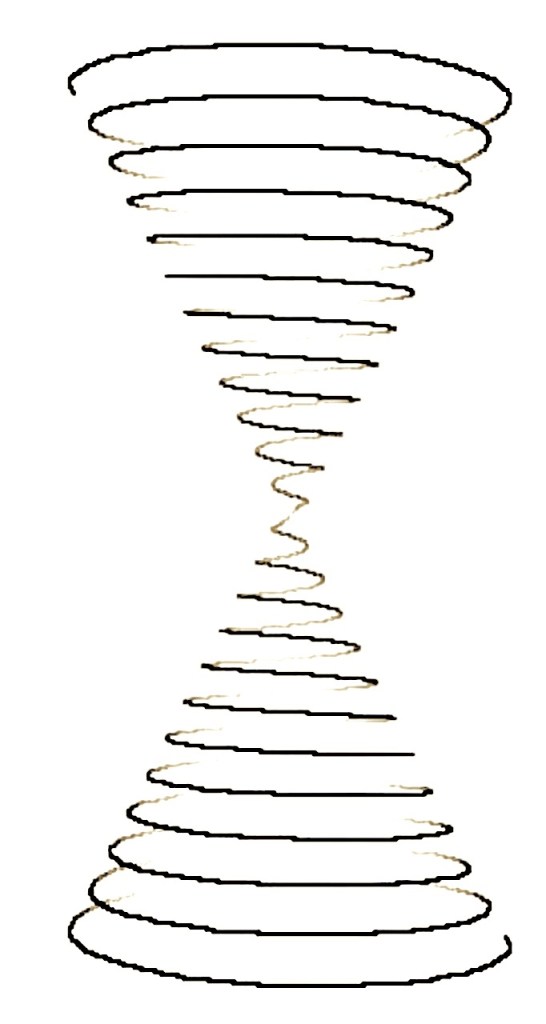
    An important example of Yeats’ misunderstanding of world cycles is his explanation of the cyclical nature of history, exemplified with what he called “gyres” (pronounced with a hard “g.”)  Two particular points in the Yeatsian explanation demonstrate the fallacy of his thinking:

    1. In his diagram, Yeats set the position of the gyres inaccurately; they should not be intersecting but instead one should rest  one on top of the other:  cycles shrink and enlarge in scope; they do not overlap, as they would have to do if the Yeatsian model were accurate. 

    Image :  Gyres – Inaccurate Configuration from A Vision

    Image:  Gyres –  Accurate Configuration

    2.  In the traditional Second Coming, Christ is figured to come again but as an adult, not as in infant as is implied in Yeats’ poem “The Second Coming.”

    Of great significance in Yeats’ poem is the “rough beast,” apparently the Anti-Christ, who has not been born yet.  And most problematic is that the rough beast is “slouch[ing] towards Bethlehem to be born.”  The question is, how can such a creature be slouching if it has not yet been born?  There is no indication the speaker wishes to attribute this second coming fiasco to the mother of the rough beast.

    This illogical event is never mentioned by critics who seem to accept the slouching as a possible occurrence.  On this score, it seems critics and scholars have lent the poem an unusually wide and encompassing poetic license.

    The Accurate Meaning of the Second Coming

    Paramahansa Yogananda has explained in depth the original, spiritual meaning of the phrase “the second coming”[5] which does not signify the literal coming again of Jesus the Christ, but the spiritual awakening of each individual soul to its Divine Nature through the Christ Consciousness.  

    Paramahansa Yogananda summarizes his two volume work The Second Coming of Christ: The Resurrection of the Christ Within You:

    In titling this work The Second Coming of Christ, I am not referring to a literal return of Jesus to earth . . . 

    A thousand Christs sent to earth would not redeem its people unless they themselves become Christlike by purifying and expanding their individual consciousness to receive therein the second coming of the Christ Consciousness, as was manifested in Jesus . . . 

    Contact with this Consciousness, experienced in the ever new joy of meditation, will be the real second coming of Christ—and it will take place right in the devotee’s own consciousness. (my emphasis added)

    Interestingly, knowledge of the meaning of that phrase “the second coming” as explained by Paramahansa Yogananda renders unnecessary the musings of Yeats’ poem “The Second Coming”and most other speculation about the subject. Still, the poem as an artifact of 20th century thinking remains an important object for study. 

    Sources

    [1]  Linda Sue Grimes.  “Robert Bly’s ‘The Cat in the Kitchen’ and ‘Driving to Town Late to Mail a Letter’.”  Linda’s Literary Home. December 24, 2025. 

    [2]  David Solway.  “The Origins of Postmodernitis.”  PJ Media.  March 25, 2011.  

    [3]  Linda Sue Grimes. “Poetry and Politics under the Influence of Postmodernism.” Linda’s Literary Home.  Accessed December 3, 2025.

    [4]  Dorian Lynsey. “‘Things fall apart’: the Apocalyptic Appeal of WB Yeats’s The Second Coming.” The Guardian.  May 30, 2020.

    [5]  Editors. “The Truth Hidden in the GospelsSelf-Realization Fellowship. Accessed October 27, 2023.

  • Langston Hughes’ “Goodbye, Christ”

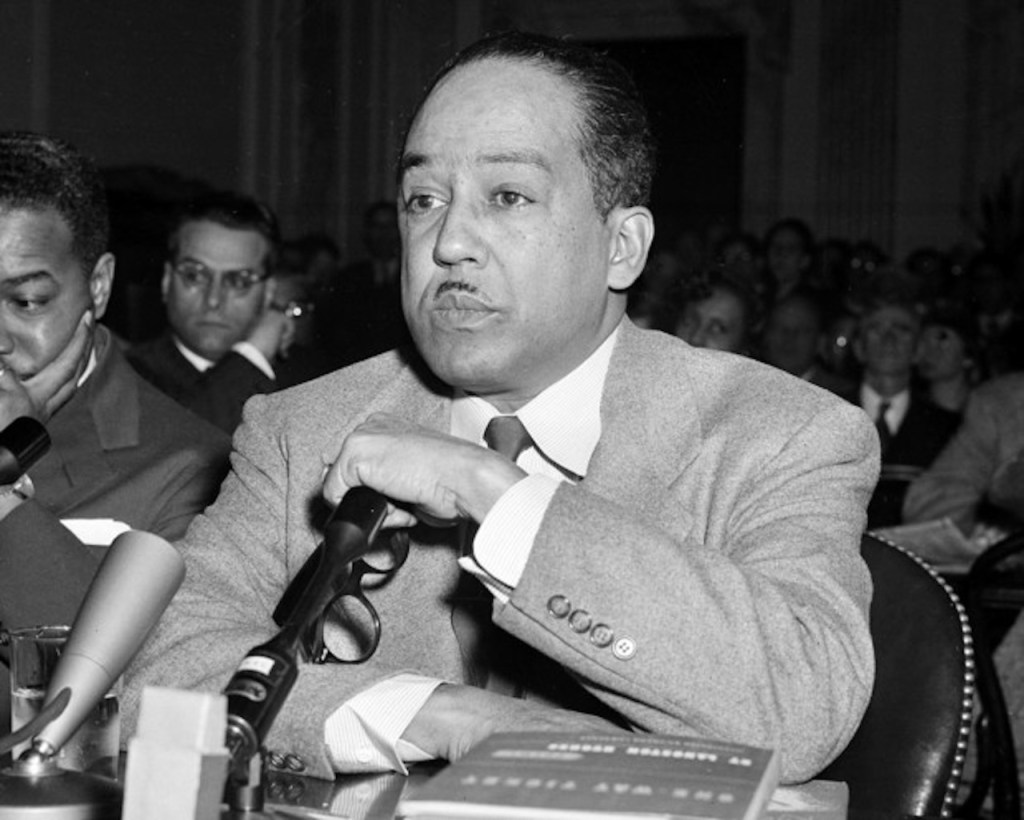
    Image:  Langston Hughes– Appearing before Joseph McCarthy’s Senate Permanent Subcommittee on Investigations – March 24, 1953

    Note on Term Usage:  Before the late 1980s in the United States, the terms “Negro,” “colored,” and “black” were accepted widely in American English parlance.   While the term “Negro” had started to lose it popularity in the 1960s, it wasn’t until 1988 that the Reverend Jesse Jackson began insisting that Americans adopt the phrase “African American.”  The earlier more accurate terms were the custom at the time that Langston Hughes was writing.

    Langston Hughes’ “Goodbye, Christ”

    Langston Hughes wrote “Goodbye, Christ” in 1931. It was published in a statist publication called “The Negro Worker” in 1932, but Hughes later withdrew it from publication.

    Introduction with Text of “Goodbye, Christ”

    Nine years after the publication of Langston Hughes’ “Goodbye, Christ,” on January 1, 1941, the poet was scheduled to deliver a talk about Negro folk songs at the Pasadena Hotel. Members of Aimee Semple McPherson’s Temple of the Four Square Gospel picketed the hotel with a sound truck playing “God Bless America.”   

    Likely those members of the McPherson temple became aware of the poem because McPherson is mentioned in it. The protestors passed out copies of Hughes’ poem, “Goodbye, Christ,” even though they had not secured permission to copy and distribute it. 

    A few weeks later, The Saturday Evening Post, heretofore no friend to black writers, also mentioned in the poem, also printed the poem without permission. The poem had received little attention until these two events.  

    But Hughes had been criticized for his “revolutionary” writings and apparent sympathy for the Soviet form of government. On March 24, 1953, Hughes was called to testify before the Joseph McCarthy’s Senate Permanent Subcommittee on Investigations.

    Goodbye, Christ

    Listen, Christ,
    You did alright in your day, I reckon-
    But that day’s gone now.
    They ghosted you up a swell story, too,
    Called it Bible-
    But it’s dead now,
    The popes and the preachers’ve
    Made too much money from it.
    They’ve sold you to too many
    Kings, generals, robbers, and killers-
    Even to the Tzar and the Cossacks,
    Even to Rockefeller’s Church,
    Even to THE SATURDAY EVENING POST.
    You ain’t no good no more.
    They’ve pawned you
    Till you’ve done wore out.
    Goodbye,
    Christ Jesus Lord God Jehova,
    Beat it on away from here now.
    Make way for a new guy with no religion at all-
    A real guy named
    Marx Communist Lenin Peasant Stalin Worker ME-
    I said, ME!
    Go ahead on now,
    You’re getting in the way of things, Lord.
    And please take Saint Gandhi with you when you go,
    And Saint Pope Pius,
    And Saint Aimee McPherson,
    And big black Saint Becton
    Of the Consecrated Dime.
    And step on the gas, Christ!
    Move!
    Don’t be so slow about movin?
    The world is mine from now on-
    And nobody’s gonna sell ME
    To a king, or a general,
    Or a millionaire.

    Commentary on “Goodbye, Christ”

    Langston Hughes’ poem “Goodbye, Christ” is a dramatic monologue. The speaker is addressing Christ, telling him to leave because He is no longer wanted. The speaker is employing irony and sarcasm to express his distrust and disapproval of the many people, including the clergy, who have used religion only for financial gain.

    Serving God or Mammon 

    In the first verse paragraph (versagraph), the speaker explains to Christ that things are different now from the way they were back in Christ’s day; the speaker figures that back then Christ’s presence might have been appreciated, but now “[t]he popes and the preachers’ve / Made too much money from [your story].”  

    And that complaint is addressed in the poem that certain individuals and organizations have used the name of Christ to make money: “They’ve pawned you / Till you’ve done wore out.”  

    The speaker makes it clear that it is not only Christianity that has been desecrated, for he also includes Hinduism when he tells Christ “please take Saint Gandhi with you when you go.”  It is not only white people like McPherson, but also “big black Saint Becton,” a charlatan preacher Hughes mentions in his autobiography, The Big Sea

    Hughes is, in no way, repudiating Jesus Christ and true religion. He is, however, excoriating those whom he considers charlatans, who have profited only financially without highlighting the true meaning of Christ’s (or other religions’) teachings. 

    Langston Hughes on “Goodbye, Christ” 

    In editor Faith Berry’s Good Morning Revolution: Uncollected Writing of Langston Hughes, Berry brings together a large collection of writings for which Hughes did not seek wide publication.  Some of his early politically statist-leaning poems, which had appeared in obscure publications, managed to circulate, and Hughes was labeled a Communist, which he always denied in his speeches. 

    About “Goodbye, Christ,” Hughes has explained that he had withdrawn the poem from publication, but it had appeared without his permission and knowledge.  Hughes also insisted that he had never been a member of the Communist Party.  He went so far as to say he wished Christ would return to save humanity, which was in dire need of saving, as it could not save itself. 

    Earlier in his immaturity, Hughes had believed that the communist form of government would be more favorable to black people, but he became aware that his VIP treatment in Russia was a ruse, calculated to make people of color think that communism was friendlier to them than capitalism while ultimately hoodwinking them just as the Democratic Party did later on in the century.  (Also see Carol Swain’s “The Inconvenient Truth about the Democratic Party”)

    In his senate committee testimony on March 24, 1953, Hughes makes his political inclinations clear that he had never read any book on the theory of socialism and communism.  Also, he had not delved into the stances of the Republican and Democrat parties in the United States.

    Hughes claimed that his interest in politics was prompted solely by his emotion.  Only through his own emotions had he glanced at what politics might have to offer him in figuring out personal issues with society.  So in “Goodbye, Christ,” the following versagraph likely defines the poet’s attitude at its emotional depths:

    Goodbye,
    Christ Jesus Lord God Jehova,
    Beat it on away from here now.
    Make way for a new guy with no religion at all—
    -A real guy named
    Marx Communist Lenin Peasant Stalin Worker ME—
    I said, ME!

    Hughes spent a year in Russia and came back to America writing glowing reports of the wonderful equalities enjoyed by all Russians, which many critics wrongly interpreted to indicate that Hughes became a communist.   On January 1, 1941, Hughes wrote the following clear-eyed explanation that should once and for all put to rest the notion that his poem was meant to serve blasphemous purposes:

    “Goodbye, Christ” does not represent my personal viewpoint.  It was long ago withdrawn from circulation and has been reprinted recently without my knowledge or consent.  I would not now use such a technique of approach since I feel that a mere poem is quite unable to compete in the power to shock with the current horrors of war and oppression abroad in the greater part of the world.

    I have never been a member of the Communist party.  Furthermore, I have come to believe that no system of ethics, religion, morals, or government is of permanent value which does not first start with and change the human heart.  Mortal frailty, greed, and error know no boundary lines.  

    The explosives of war do not care whose hand fashions them.  Certainly, both Marxists and Christians can be cruel.  Would that Christ came back to save us all. We do not know how to save ourselves. (my emphasis added) —from  Good Morning Revolution: Uncollected Writing of Langston Hughes, page 149.

    The Importance of Understanding the Irony in “Goodbye, Christ”

    While it may be difficult for devout Christians, who love Christ and his teachings, to read such seemingly blasphemous writing, it is important to distinguish between the literal and the figurative:  Hughes’ “Goodbye, Christ” must be read through the lens of irony and sarcasm, and realized as a statement against the financial usurpation of religion, and not a repudiation of Christ and the great spiritual masters of all religions.

    It should be remembered that Hughes’ seemingly blasphemous poem simply creates a character who was speaking ironically, even sarcastically, in order to call out the actual despicable blasphemers who desecrate true religion with duplicity and chicanery.

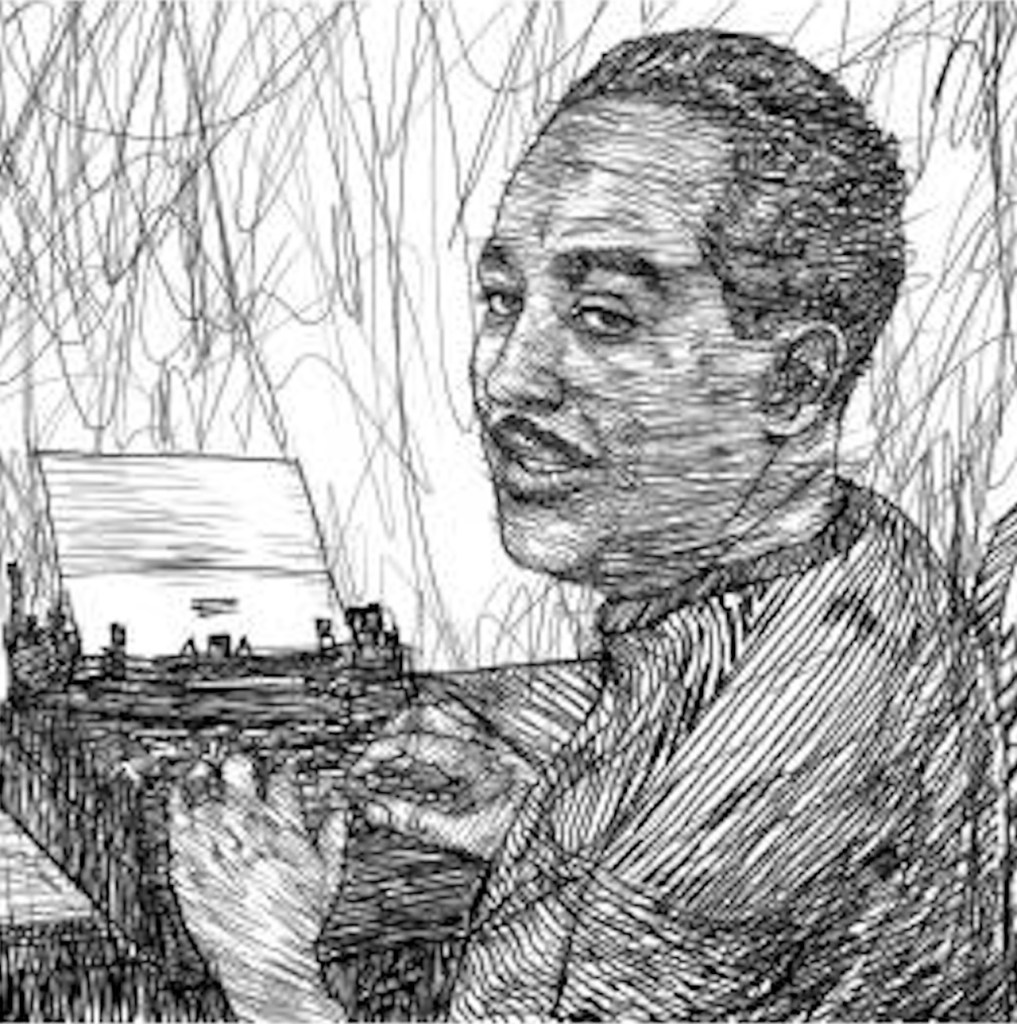
    Image:  Ink Drawing of Langston Hughes– Ink Portrait – Fabrizio Cassett

  • Rabindranath Tagore’s “The Last Bargain”

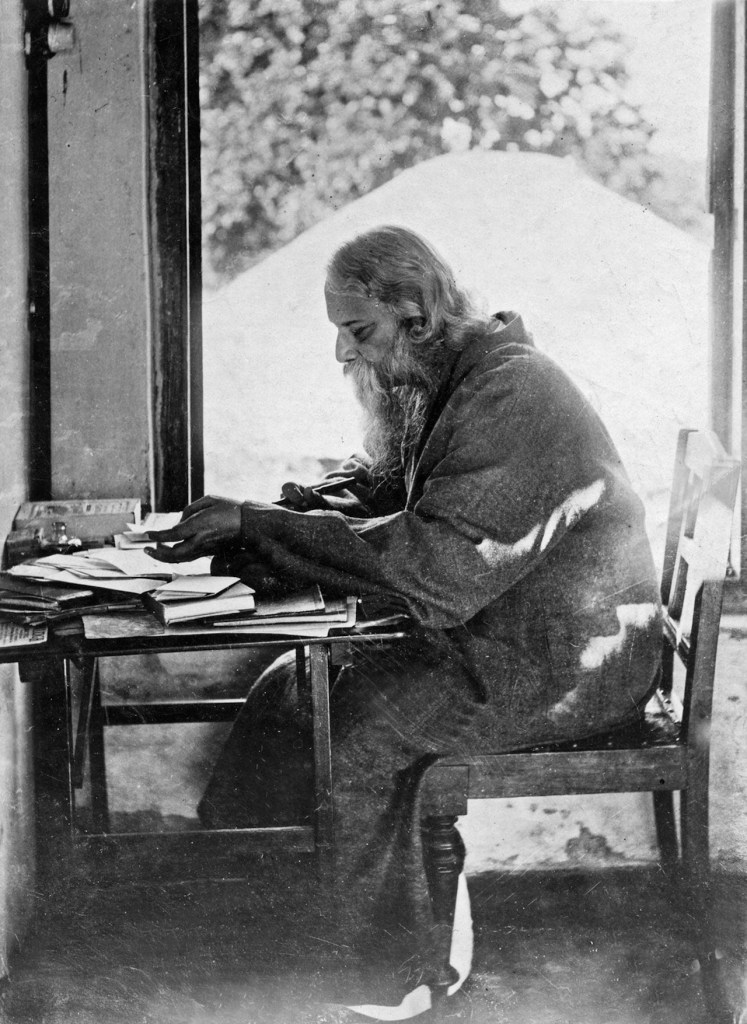
    Image:  Rabindranath Tagore  -  Britannica

    Image:  Rabindranath Tagore  – Britannica

    Rabindranath Tagore’s “The Last Bargain”

    Rabindranath Tagore’s “The Last Bargain” focuses on what seems to be an quandary:  how is it that a child’s offering of “nothing” to a seeker becomes the “last bargain” as well as the best bargain?

    Introduction and Text of “The Last Bargain”

    The human mind/hear/soul engages in the spiritual search in order to gain freedom and bliss.  Much sorrow and pain afflict those who focus solely on the material level of existence.  

    As the speaker in Rabindranath Tagore’s “The Last Bargain” searches for a job, he is, in fact, demonstrating the difference between focusing on the material level of being and focusing on the spiritual level.

    The Last Bargain

    “Come and hire me,” I cried, while in the morning I was walking on the stone-paved road.
    Sword in hand, the King came in his chariot.
    He held my hand and said, “I will hire you with my power.”
    But his power counted for nought, and he went away in his chariot.

    In the heat of the midday the houses stood with shut doors.
    I wandered along the crooked lane.
    An old man came out with his bag of gold.
    He pondered and said, “I will hire you with my money.”
    He weighed his coins one by one, but I turned away.

    It was evening. The garden hedge was all aflower.
    The fair maid came out and said, “I will hire you with a smile.”
    Her smile paled and melted into tears, and she went back alone into the dark.

    The sun glistened on the sand, and the sea waves broke waywardly.
    A child sat playing with shells.
    He raised his head and seemed to know me, and said, “I hire you with nothing.”
    From thenceforward that bargain struck in child’s play made me a free man.

    Commentary on “The Last Bargain”

    Rabindranath Tagore’s “The Last Bargain” presents an enigma:  how can it be that a child offering nothing can be the bargain that makes a “free man” of the seeker?

    First Movement:   Seeking Employment

    “Come and hire me,” I cried, while in the morning I was walking on the stone-paved road.
    Sword in hand, the King came in his chariot.
    He held my hand and said, “I will hire you with my power.”
    But his power counted for nought, and he went away in his chariot.

    The opening movement taking place in the morning finds the speaker apparently seeking employment; thus he announces, “Come and hire me.”  A king then comes on the scene, offering the individual employment through his “power.”

    However, the job seeker determines that the king’s power held very little value.  The king then moves away in his “chariot.”  Then the speaker continues to search.  Now, the reader is likely to suspect that this speaker is not seeking a job on the material, planet Earth, physical sense.

    Second Movement:  Continuing the Search

    In the heat of the midday the houses stood with shut doors.
    I wandered along the crooked lane.
    An old man came out with his bag of gold.
    He pondered and said, “I will hire you with my money.”
    He weighed his coins one by one, but I turned away.

    The speaker keeps up his search, and the time now is “midday.”  He takes notice that the doors to all of the houses are closed.  All of a sudden, an old man comes on the scene; he is carrying a “bag of gold.” The old man then inform the seeker that he will offer him a job “with [his] money.”

    The old man counts out his coins piece by piece, which demonstrates his attachment to money—a physical level necessity and reality.  However, that display of physical attachment annoys this spiritual seeker, who then turns away in disgust.

    The speaker remains unimpressed by the power of a king, and he is not favorable to an old man’s “gold.”  The reader can now be assured that the speaker is not seeking an earthly job and thus not seeking worldly goods; instead, he is searching for the spiritual love that comes only from God.  Worldly wealth and power hold no importance for him.

    Third Movement:    Experiencing a Change

    It was evening. The garden hedge was all aflower.
    The fair maid came out and said, “I will hire you with a smile.”
    Her smile paled and melted into tears, and she went back alone into the dark.

    However, the seeker continues on well into evening, when he sees, a “garden hedge [ ] all aflower.”  Then he encounters a “fair maid” who says, “I will hire you with a smile.”  But he inevitably experiences the transformation that comes to the aged human being as the smile “paled and melted into tears.”  Thus rejected, the maiden “went back alone into the dark.”

    Fourth Movement:   The Best Bargain

    The sun glistened on the sand, and the sea waves broke waywardly.
    A child sat playing with shells.
    He raised his head and seemed to know me, and said, “I hire you with nothing.”
    From thenceforward that bargain struck in child’s play made me a free man.

    In the final movement, the speaker, as he is walking along the ocean’s shore, watching the turbulent waves, and meeting a child who is playing on the shore, is afforded his final bargain: the child affirms, “I hire you with nothing.”  This final bargain thus results in a situation that ultimately becomes the best bargain.

    The best bargain is the one that liberates the seeker from searching for satisfaction from earthly things.  He, then instead, may focus his attention on his own soul, where the real “job” of seeking freedom, liberation, and bliss exist.

    It is the quiet Spirit—the seeming nothingness contrasting with materiality, the space transcending time and matter—that turns out to be the genuine, true employer.  Working for the Celestial, Divine Employer (God) affords the laborer the true freedom, soul realization, and bliss—none of which can achieved by earthly power, gold, and physical affection.

  • Langston Hughes

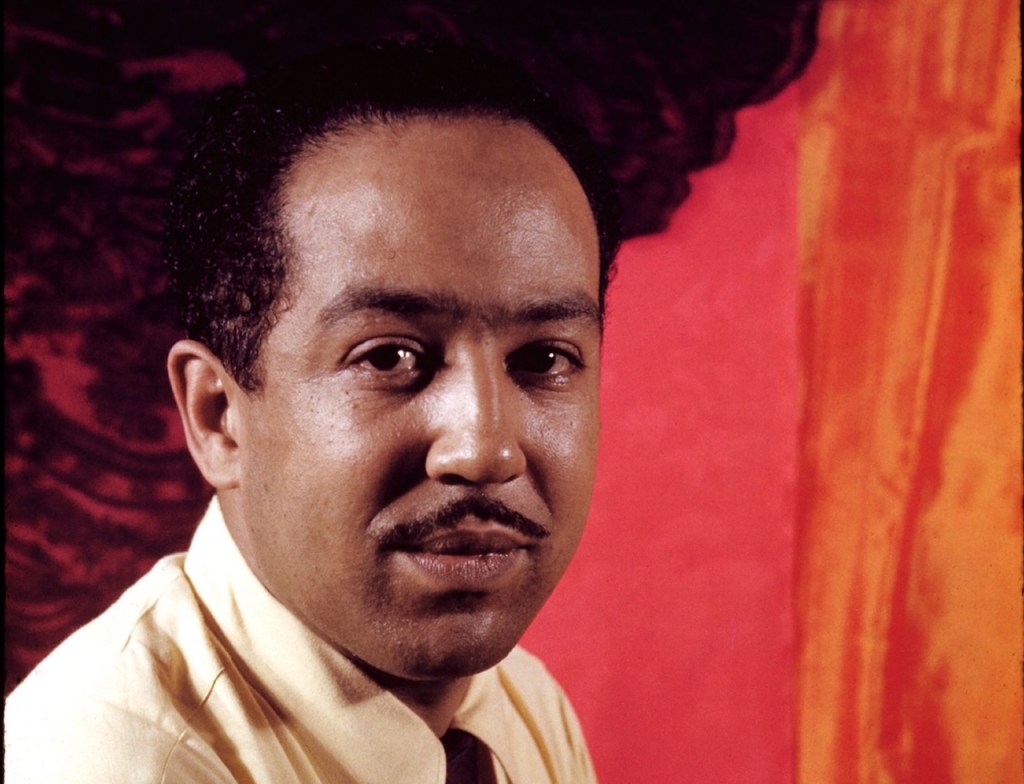
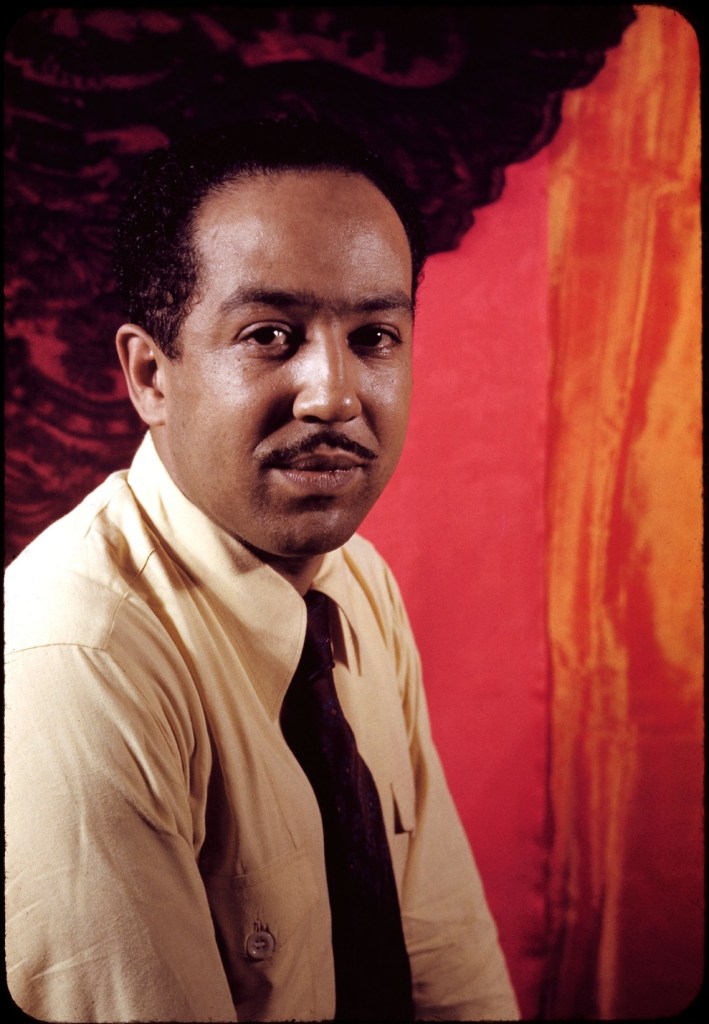
    Image: Langston Hughes  Carl Van Vechten Trust / Beinecke Library, Yale

    Life Sketch of Langston Hughes

    Hoyt W. Fuller, critic, editor, and founder of the Organization of Black American Culture (OBAC), has pointed out that Langston Hughes possessed a “deceptive and profound simplicity.”  Fuller insists that understanding these qualities in Hughes is key to understanding and appreciating his poetry.

    Early Life and Education

    On February 1, 1902, Langston Hughes was born in Joplin, Missouri, to James Nathaniel Hughes and Caroline Mercer Langston. The poet’s full name is James Mercer Langston Hughes. His parents divorced when Langston was very young, and he was raised primarily by his grandmother in Lawrence, Kansas [1].    In his first autobiography, The Big Sea, Hughes reveals,

    My grandmother raised me until I was twelve years old.  Sometimes I was with my mother, but not often.  My mother and father had separated.  And my mother, who worked, always traveled about a great deal, looking for a better job.

     When I first started to school, I was with my mother a while in Topeka. (And later, for a summer in Colorado, and another in Kansas City.)  She was a stenographer for a colored lawyer in Topeka, named Mr. Guy.  She rented a room near his office, downtown. So I went to a “white” school in the downtown district.[2]

    The poet’s father James Hughes had studied law and had planned to practice, but Jim Crow laws prevented him from taking the bar exam.  The elder Hughes then moved to Mexico, where not only was he admitted to the bar, but he also became very successful through the practice of law.  

    Langstons’ father’s financial success allowed him to become the owner of much property in Mexico City, where nearby he purchased and resided on a huge ranch in the hills.  He also became a money lender and foreclosed on mortgages.

    About his father, the poet has remarked, “my father was interested in making money to keep.”  This attitude contrasted with his mother and his stepfather, who were interested in making money to spend.  Thus, his mother and stepfather moved around a great deal to take advantage of better employment.

    In 1920, Langston Hughes graduated from Central High School in Cleveland, Ohio.  He had hopes of attending Columbia University to study to become a writer, but his father refused to pay for his son’s schooling unless the younger Hughes studied engineering. 

    Hughes started his university studies at Columbia but stayed for only a year.  He found racism at the school intolerable, so he left the university and took a number of jobs to support himself.  

    In 1929, Hughes completed his university studies at Lincoln University in Pennsylvania.   The school pays tribute to their most famous graduate with a library named in his honor, Langston Hughes Memorial Library [3].

    Full Image: Langston Hughes  Carl Van Vechten Trust / Beinecke Library, Yale

    Poetry

    Langston Hughes opens his first autobiography, The Big Sea, by reporting on a melodramatic event: he is tossing into the ocean one by one all the books he had studied while at Columbia University.  

    He had recently joined the large merchant ship S. S. Malone as a seaman; he was only twenty-one years old, and he made up his mind that nothing would ever again happen to him that he did not want to have happen.  

    He became intent on  securing his own freedom with his little dramatic ritual of unloading his college books into the ocean.  In the life of Langston Hughes, one poetic act often led to another.   Four years before this important, liberating act, however, the poet had traveled to Mexico to visit his father to ask for financial assistance to attend the university.  

    But he reports that his visits with his father in Mexico were mostly unsatisfactory; he could not identify with his father’s mindset.  His father hated his own race of people, and he was interested only in making money.  However, Langston needed his father’s financial support, so he spent time with him in Mexico.

    On this particular trip, while Hughes was only seventeen years old, the poet composed one of his most anthologized poems “The Negro Speaks of Rivers.”  He gives details of his inspiration for this poem in The Big Sea; he wrote the poem “just outside of St. Louis, as the train rolled toward Texas”:

    It came about in this way.  All day on the train I had been thinking about my father and his strong dislike of his own people.   I didn’t understand it, because I was a Negro, and I liked Negroes very much.

    He then describes meeting a number of blacks who had come “up from the South” as he worked at one of his “happiest jobs” at a soda fountain.   He reports that he enjoyed “hearing them talk, listening to the thunderclaps of their laughter, to their trouble, to their discussions of the war and the men who had gone to Europe from the Jim Crow South, their complaints over the high rent. . . .”   To Hughes, these people seemed to be the “gayest and bravest people possible” as they worked “trying to get somewhere in the world.”

    Crossing the Mississippi River at sunset, Hughes peered out of the Pullman window and saw “the great muddy river flowing down toward the heart of the South,” and he started musing on “what the river, the old Mississippi, has meant to Negroes in the past.”  

    He mused on the tragedy of slaves being sold down the river as the “worst fate” that a slave could suffer.  He then began musing on President Abraham Lincoln’s having rafted on the Mississippi down to New Orleans.  Lincoln had seen “slavery at it worst, and had decided within himself that it should be removed from American life.”

    Hughes’ musing in this creative reverie then turned to additional rivers that had affected the lives of members of his ethnicity: the Congo, the Niger, and the Nile.  And then the thought came to him: “I’ve known rivers.”  

    He wrote down that one line on an envelope holding the letter from his father which he carried in his pocket, and then within the next fifteen minutes, he had composed his magnificent poem, which he titled “The Negro Speaks of Rivers.”

    As one of the most important creative contributors to the Harlem Renaissance, Hughes has offered many poems to the American literary canon.  A small sample of his poems include “A Mother to Son,”  “Madame’s Calling Cards,” “Theme for English B,” “Night Funeral in Harlem,”  “Goodbye, Christ,” and “Cross.”

    Supporting Himself by Writing

    Langston Hughes has been most noted as a poet, and he managed to finish his college education after being awarded a full scholarship based on his proficiency as a poet.  After receiving his B.A. degree in 1929, he continued to publish widely, earning for himself the achievement of being a writer, who was able to support himself as an adult solely with his writings [4].

    In addition to poetry, which remained his first love, Hughes published three novels, Not without Laughter (1932), Scottsboro Limited (1932), and The Ways of White Folks (1934).   In 1935, Hughes was awarded a Guggenheim Fellowship.  The Gilpin Players (Karamu House) produced six of the poet’s plays in 1936 and 1937.  Hughes founded the Negro Theater in Los Angeles in 1939 and composed the script “Way Down South.”

    Hughes published eight collections of poems; he also published four books of fiction and six books for children and teens.  He added three books of humor to his resume as well as two autobiographies.  He also wrote essays and a number of books on black history.  As a prominent figure in the civil rights movement, he traveled and lectured widely throughout the world [5].

    Illness and Death

    In 1967,  at the Stuyvesant Polyclinic in New York City, Hughes submitted to t0 a surgical procedure to treat prostate cancer.  The surgery was a tragic failure, and he died from complications arising from that medical procedure [6].  Hughes’ body underwent cremation, and his ashes remain interred at the Schomburg Center for Research in Black Culture in Harlem, under the floor of the foyer in the institute.  

    The artwork on the flooring features a medallion of a human being formed by rivers and includes the line, “My soul has grown deep like the rivers,” from the poet’s inspirational poem “The Negro Speaks of Rivers.”

    Sources

    [1] Editors.  “Langston Hughes: 1902–1967.”  Poetry Foundation.  Accessed January 12, 2026.

    [2] Langston Hughes.  The Big Sea: An Autobiography.  Thunder’s Mouth Press.  New York.  1940. 1986. Print.

    [3] Editors.  “About the Library.”  Lincoln University.  Accessed January 12, 2026.

    [4] Langston Hughes.  I Wonder as I Wander: An Autobiographical Journey.  Thunder’s Mouth Press.  New York.  1956. 1986. Print.

    [5] Curators.  The Langston Hughes Society.  Horsham, Pennsylvania.  Accessed January 12, 2026.

    [6] Editors.  “Langston Hughes.”  Encyclopedia of Cleveland History: Case Western Reserve University.  Accessed January 12, 2026.

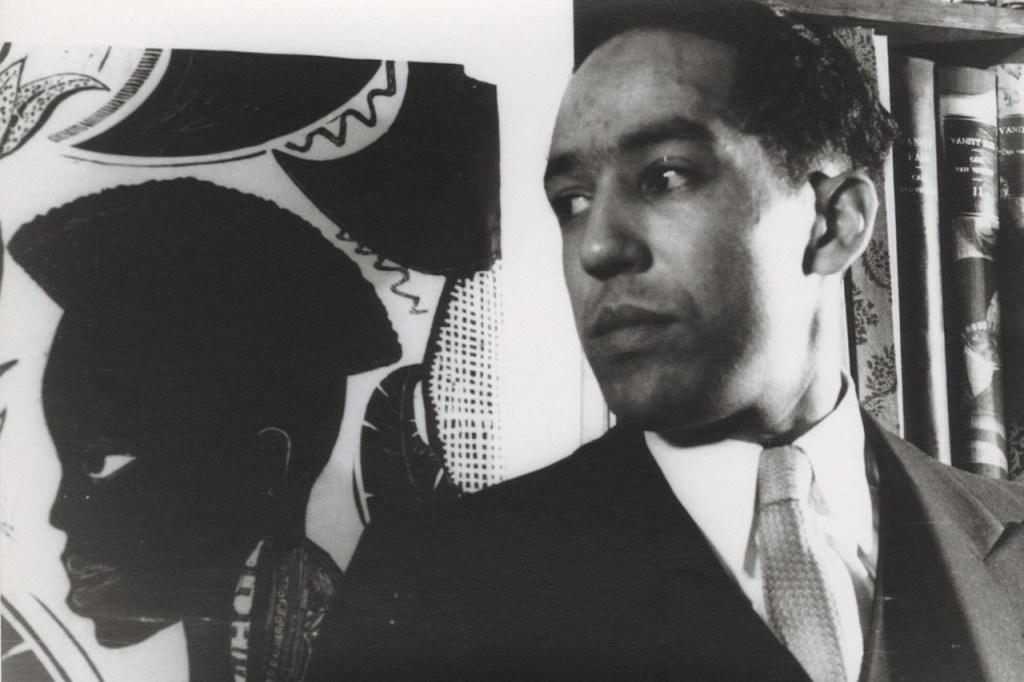
    Image: Langston Hughes – Poetry Foundation

    Commentaries on Langston Hughes Poems

    Note on Term Usage:  Before the late 1980s in the United States, the terms “Negro,” “colored,” and “black” were accepted widely in American English parlance.   While the term “Negro” had started to lose it popularity in the 1960s, it wasn’t until 1988 that the Reverend Jesse Jackson began insisting that Americans adopt the phrase “African American.”  The earlier more accurate terms were the custom at the time that Langston Hughes was writing.

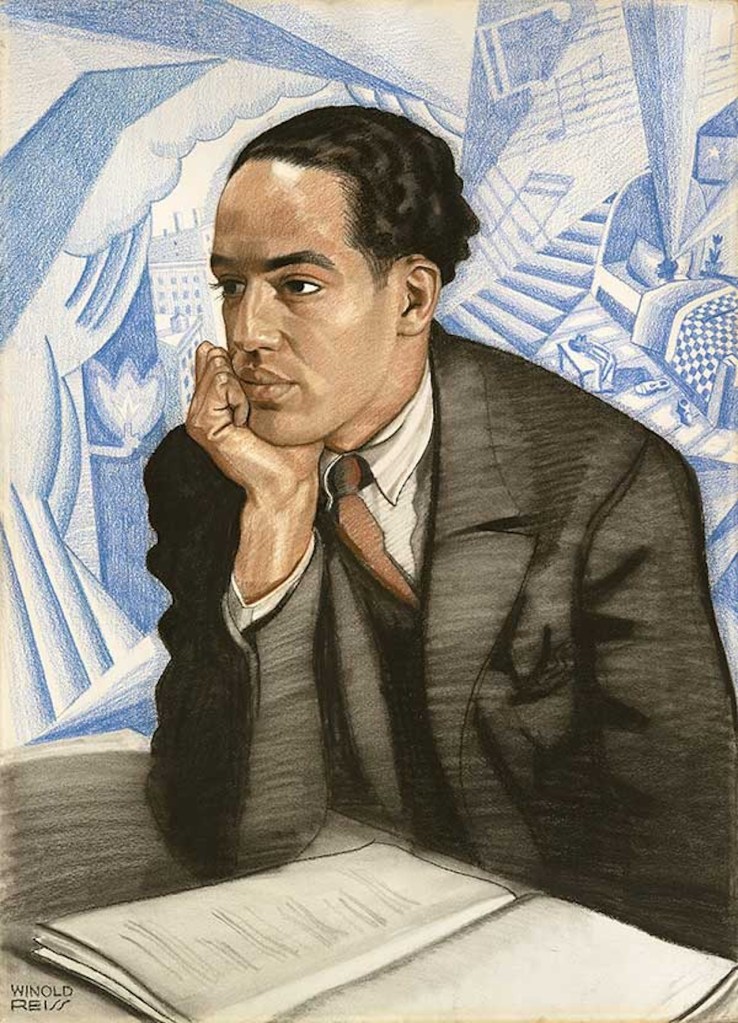
    Image: Langston Hughes.    Portrait by Winold Reiss (1886–1953) – National Portrait Gallery, Smithsonian Institution.

  • Gerard Manley Hopkins

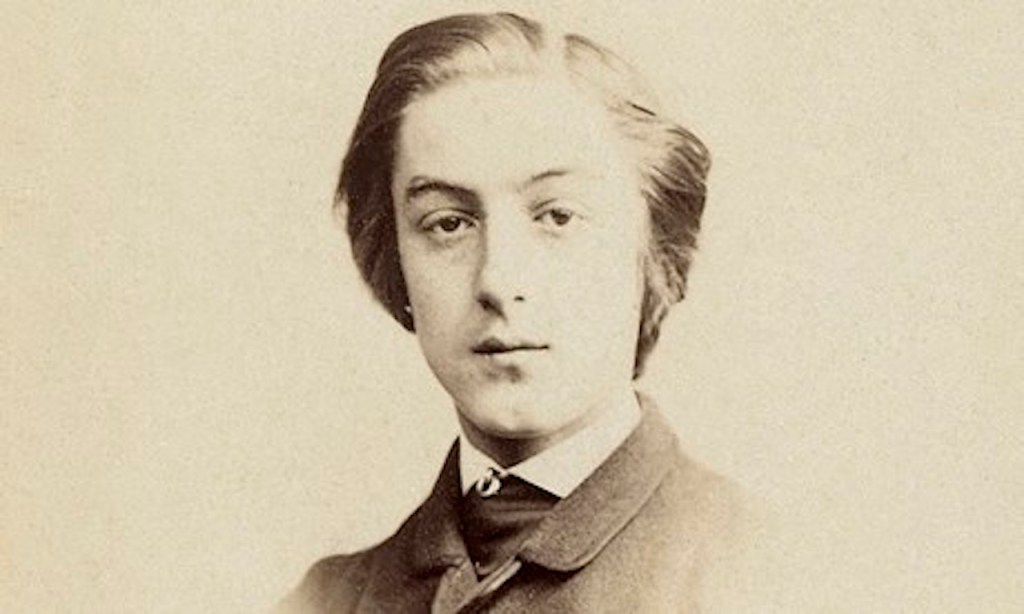
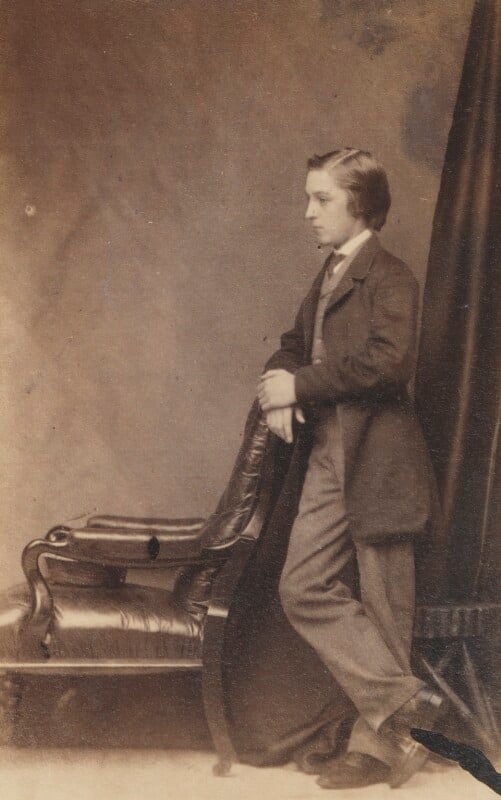
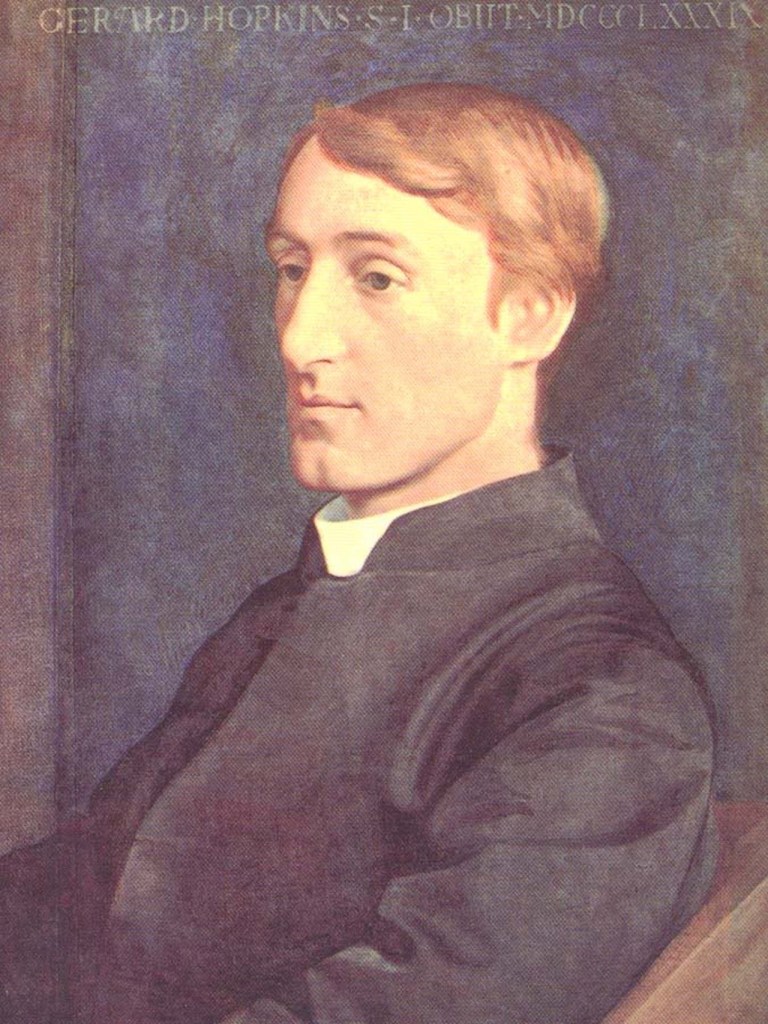
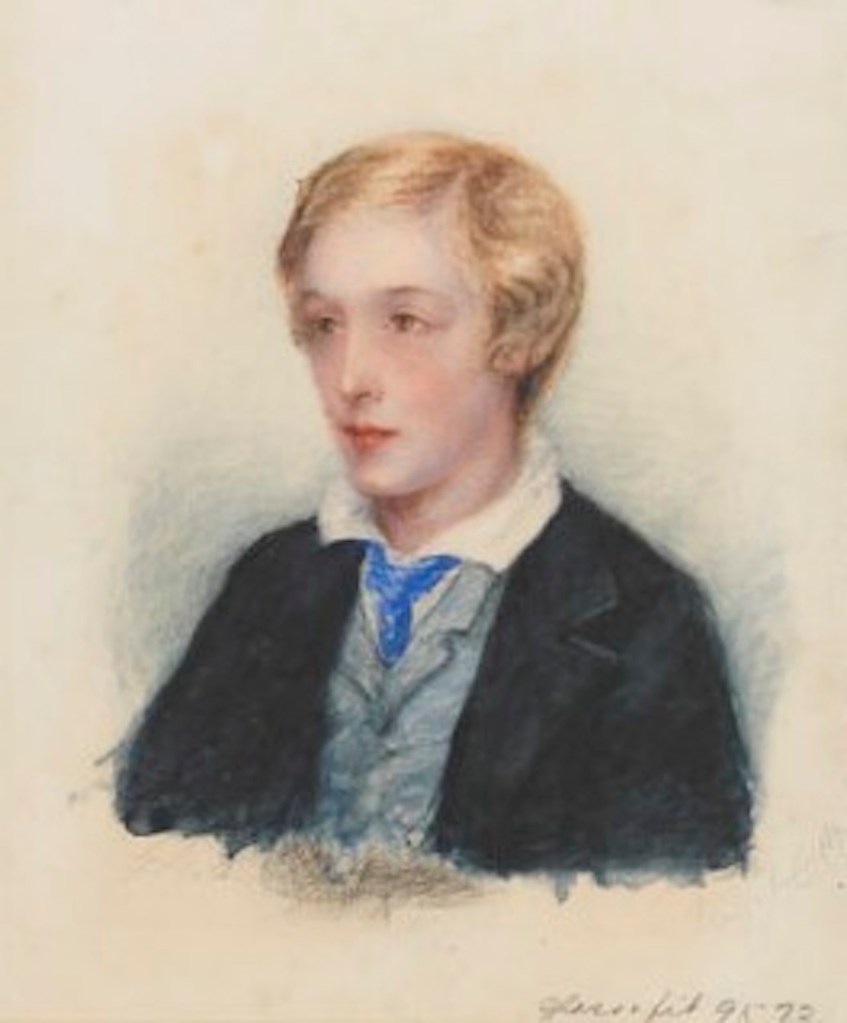
    Gerard Manley Hopkins – National Portrait Gallery, London

    Life Sketch of Gerard Manley Hopkins

    Gerard Manley Hopkins (1844–1889) was a poet of exceptional originality, with an innovative approach to language.  He remains one of English literature’s most enigmatic figures—a poet-priest whose work combines Victorian sensibilities with modernist experimentation.

    Introduction: Early Life and Family Background

    Though Gerard Manley Hopkins work was largely unpublished during his lifetime, the poet is now celebrated as one of the most significant poets of the Victorian era and a precursor to modernist poetry. 

    His life was marked by a profound tension between his religious vocation as a Jesuit priest and his artistic calling as a poet, a tension that shaped both his personal struggles and his creative achievements.

    Gerard Manley Hopkins was born on July 28, 1844, in Stratford, Essex (now part of Greater London), into a middle-class family with strong artistic and religious inclinations. He was the oldest of nine children born to Manley Hopkins and Catherine Smith Hopkins. 

    His father was a successful marine insurance adjuster, who also wrote poetry and published works such as A Philosopher’s Stone and Other Poems (1843) [1]. His mother Catherine was deeply religious and musically gifted, fostering an environment where intellectual and artistic pursuits were encouraged [2].

    The Hopkins household emphasized education and creativity. Gerard’s siblings also displayed artistic talents: his brother Arthur became an illustrator for Punch magazine, while another brother Everard pursued his calling to architecture [3]. The family’s Anglican faith played a central role in their lives; Gerard’s early exposure to religious devotion would later profoundly influence his poetry.

    Gerard Manley Hopkins – National Portrait Gallery, London

    Education at Highgate School

    In 1854, at the age of ten, Hopkins began attending Highgate School in London, where he excelled academically and demonstrated his early poetic talent. His school years were marked by a deep engagement with Romantic poetry, particularly the works of John Keats and Percy Bysshe Shelley. Keats’s lush imagery and musicality left a lasting impression on the young poet, as can be seem in some of his earliest compositions.

    While at Highgate, Hopkins also developed an interest in drawing and painting. He considered pursuing art as a career before ultimately deciding to focus on literature. While his early poems from this period reflect the Romantic tradition, they also hint at the originality that would later define his mature work [4].

    The Oxford Years: Intellectual Growth and Conversion

    In 1863, Hopkins entered Balliol College, Oxford, where he studied the Classics. Oxford in the mid-19th century was a hub of intellectual ferment, particularly regarding questions of faith and theology. 

    The Oxford Movement, led by figures such as John Henry Newman, sought to revive Catholic elements within Anglicanism [5]. This movement profoundly influenced Hopkins during his time at the university.

    At Balliol, Hopkins excelled academically and formed lasting friendships with notable contemporaries such as Robert Bridges (later Poet Laureate of England). Bridges would play a crucial role in preserving and publishing Hopkins’s poetry after his death. During this period, Hopkins continued writing poetry but also began engaging with questions of faith that would lead to a dramatic transformation of his life

    In 1866, under the influence of Newman’s writings and teachings, Hopkins converted to Roman Catholicism. This decision caused significant tension in his family, all of whom were devout Anglicans. However, for Hopkins, the conversion represented a profound spiritual awakening that would shape both his personal life and his artistic vision.

    Gerard Manley Hopkins – National Portrait Gallery, London

    Religious Vocation: Joining the Jesuit Order

    After graduating from Oxford with first-class honors in the Classics in 1867, Hopkins decided to pursue a religious vocation In 1868, he joined the Society of Jesus (the Jesuits), beginning his novitiate at Manresa House in Roehampton. As part of his training, he took vows of poverty, chastity, and obedience.

    Hopkins believed that his religious commitment required him to renounce personal ambition, including his aspirations as a poet. In an act of self-denial characteristic of his Jesuit discipline [3], he burned many of his early poems upon entering the order. For several years, he refrained from writing any poetry at all.

    During this pause from creative writing, Hopkins’s religious studies deepened his understanding of theology and philosophy. He studied at Stonyhurst College in Lancashire before moving to St. Beuno’s College in North Wales to study theology [6]. It was during this period that he began to reconcile his poetic gift with his spiritual calling.

    The Wreck of the Deutschland: A Return to Poetry

    In 1875, an event occurred that reignited Hopkins’ poetic creativity: the wreck of the German ship Deutschland off the coast of England. Among those who perished were five Franciscan nuns fleeing anti-Catholic persecution in Germany [1]. Deeply moved by their sacrifice and martyrdom, Hopkins composed The Wreck of the Deutschland, a long narrative poem that marked his return to writing.

    The poem is notable for its novel experimentation with language and form. It introduced what Hopkins called “sprung rhythm,” a metrical system based on stressed syllables rather than traditional foot-based metrics. Sprung rhythm allowed him greater flexibility in capturing natural speech patterns while maintaining musicality.

    Although The Wreck of the Deutschland was not published during Hopkins’s lifetime (it was deemed too unconventional), it signaled the beginning of his mature poetic phase. Over the next decade, he would compose some of his most celebrated and later anthologized works.

    Major Themes and Innovations

    Hopkins’s poetry is characterized by its vivid imagery, innovative use of language, and deep spiritual resonance. Central themes include the following:

    Nature

    Hopkins viewed nature as a manifestation of God’s glory—a concept he expressed through what he called “inscape,” or the unique essence of each created thing. Poems like “Pied Beauty” celebrate the variety and intricacy of nature:

    “Glory be to God for dappled things—
    For skies of couple-colour as a brinded cow;”

    Religion

    As a devout Jesuit priest, Hopkins often explored themes of faith, grace, and divine presence.  In “God’s Grandeur,” he reflects on humanity’s relationship with the Divine Reality (God):  “The world is charged with the grandeur of God.” 

    Human Struggle

    Hopkins did not shy away from depicting despair and inner turmoil. His so-called “terrible sonnets,” written during periods of depression in Dublin later in life (“No Worst There Is None” and “I Wake And Feel The Fell Of Dark”), are raw expressions of spiritual desolation.

    Language

    Hopkins’s creative inventiveness set him apart from other Victorian poets. He employed compound words (“dapple-dawn-drawn”), alliteration (“kingdom of daylight’s dauphin”), and unconventional syntax to create striking effects.  It might be noted that E. E. Cummings’ innovation remains a 20th century parallel to that of Father Hopkins 19th century foray into stylizing novelty.

    Academic Career in Dublin

    In 1884, after years serving as a parish priest in England and Scotland (often under challenging conditions), Hopkins was appointed Professor of Greek Literature at University College Dublin. 

    While teaching brought him some satisfaction intellectually, he still continued to struggled with feelings of isolation as an Englishman residing and working in Ireland during a time of political upheaval.

    Gerard Manley Hopkins – National Portrait Gallery, London

    Death and Legacy

    Father Hopkins’ final years were marked by declining health and bouts of depression—what he referred to as “the long dark night.” Despite these challenges, he continued writing poetry until shortly before his death.

    Father Hopkins died on June 8, 1889, at the age of 44 from typhoid fever in Dublin. At the time of his death, none of his major poems had been published; they existed only in manuscript form.

    It was not until 1918—nearly three decades after his death—that Robert Bridges edited and published  the collection simply titled Poems, bringing Hopkins’ work to public attention for the first time. The collection received mixed reviews initially but gained increasing recognition over time.

    By the mid-20th century, critics such as F.R. Leavis had established Hopkins as one of the most original voices in English poetry. His innovative techniques anticipated modernist trends seen later in poets like T.S. Eliot, Dylan Thomas, and E. E. Cummings.

    Father Gerard Manley Hopkins remains one of English literature’s most enigmatic figures—a poet-priest whose work brought together certain Victorian sensibilities with modernist experimentation. His legacy rests not only in his technical innovations but also in his ability to convey profound spiritual truths through language that continues to resonate with readers today.

    Sources

    [1]  Gerard Manley Hopkins. Poems. Edited by Robert Bridges. Oxford University Press. 1918.

    [2]  Gerard Manley Hopkins. Poems and Prose. Edited by W. H. Gardner. Penguin Classics. 1953.

    [3]  Eleanor Ruggles. Gerard Manley Hopkins: A Life. New York: W.W. Norton & Co. 1944.

    [4]  Norman H. Mackenzie. A Reader’s Guide to Gerard Manley Hopkins. Cornell U P. 1981.

    [5] John Cowie Reid.  “Gerard Manley Hopkins.” Encyclopaedia Britannica. Accessed January 1, 2026.

    [6] Curators. “Gerard Manley Hopkins.” Poetry Foundation.  Accessed January 1, 2026.

    🕉

    Poem Commentaries

    • God’s Grandeur” Father Gerard Manley Hopkins’ motivation to imitate Spirit (God) prompts him to craft his poems in forms, as Spirit creates entities in forms—from rocks to animals to plants to the human body.
    • Pied Beauty” Gerard Manley Hopkins’ “Pied Beauty” is an eleven-line curtal sonnet dedicated to honoring and praising God for the special beauty of His creation.  Father Hopkins coined the term “curtal” to label his eleven-line sonnets.
    • The Habit of Perfection”  The title “The Habit of Perfection” of Gerard Manley Hopkins’ poem features a pun on the term “habit.” As a monk, the poet had accepted the garb of the monastic, sometimes called a habit

    The Terrible Sonnets

    •  “To seem the stranger lies my lot, my life” Written with the same intensity that characterizes Hopkins’ work, the poem dramatizes exile as both an external condition and an inward trial.
    • I wake and feel the fell of dark, not day” The speaker Gerard Manley Hopkins’ “I wake and feel the fell of dark, not day” is confronting spiritual desolation, interior darkness, and the sense of abandonment by God. 
    • No worst, there is none.  Pitched past pitch of grief” The third in the group of sonnets widely known as “the terrible sonnets, this one,“No worst, there is none. Pitched past pitch of grief,” presents a speaker experiencing grief so intense that it feels beyond limit or measure.
    • Not, I’ll not, carrion comfort, Despair, not feast on thee” Father Hopkins’ “Not, I’ll not, carrion comfort, Despair, not feast on thee” dramatizes an intense spiritual struggle in which the speaker resists despair while enduring profound inner torment. 
    • Patience, hard thing! the hard thing but to pray” This terrible sonnet explores searchingly the nature of  spiritual endurance. The speaker is focusing on patience not as a soft virtue but as a challenging and difficult discipline, which oftentimes scars the pride, while exhausting the will. 
    • My own heart let me more have pity on; let” The speaker in this sonnet examines his inward struggle, through which he has learned mercy toward the self (soul) while undergoing heavy, sustained spiritual pressure.  My personal issue with this pressure assures me that Father Hopkins well understood its vicissitudes as well as its rewards.

  • Phillis Wheatley

    Image: Phillis Wheatley 

    Life Sketch of Phillis Wheatley

    Phillis Wheatley’s talent was questioned but then authenticated during her lifetime, and she is now hailed by all but the most cynical as one of America’s finest poetic voices.

    Two Versions of a Publication History

    Although Phillis Wheatley’s talent was at first questioned [1], her authenticity was finally established during her lifetime. Today, she is widely recognized by all, except the most cynical [2], as one of America’s finest poetic voices.  

    Phillis Wheatley’s first and only collection of published poetry was titled Poems on Various Subjects, Religious and Moral; it was published in England.

    There are two versions of the history of this book’s publication [3]: one is that the Countess Selina of Huntington invited Phillis to London and found a publisher for the poet; the other is that Phillis suffered from asthma, and so the Wheatley family took her to England to recuperate, and while there, they sought publication of her work.  

    Either way, the book was published and Wheatley’s career was established. The Wheatley family’s insight played a major role in helping a slave rise above the hardships of that vile institution.

    The Value of One Poem

    In May 1968, one poem written by Phillis Wheatley brought $68,500 at Christie’s auction [4], Rockefeller Center in New York. It had been estimated to bring between $18,000 and $25,000.  

    The poem is titled “Ocean”; its seventy lines were written on three pages that had yellowed with time. It is thought to be the only copy.  

    Ocean

    Now muse divine, thy heav’nly aid impart,
    The feast of Genius, and the play of Art.
    From high Parnassus’ radiant top repair,
    Celestial Nine! propitious to my pray’r.
    In vain my Eyes explore the wat’ry reign,
    By you unaided with the flowing strain.
    When first old Chaos of tyrannic soul
    Wav’d his dread Sceptre o’er the boundless whole,
    Confusion reign’d till the divine Command
    On floating azure fix’d the Solid Land,
    Till first he call’d the latent seeds of light,
    And gave dominion o’er eternal Night.
    From deepest glooms he rais’d this ample Ball,
    And round its walls he bade its surges roll;
    With instant haste the new made seas complyd,
    And the globe rolls impervious to the Tide;
    Yet when the mighty Sire of Ocean frownd
    “His awful trident shook the solid Ground.”
    The King of Tempests thunders o’er the plain,
    And scorns the azure monarch of the main,
    He sweeps the surface, makes the billows rore,
    And furious, lash the loud resounding shore.
    His pinion’d race his dread commands obey,
    Syb’s, Eurus, Boreas, drive the foaming sea!
    See the whole stormy progeny descend!
    And waves on waves devolving without End,
    But cease Eolus, all thy winds restrain,
    And let us view the wonders of the main
    Where the proud Courser paws the blue abode,
    Impetuous bounds, and mocks the driver’s rod.
    There, too, the Heifer fair as that which bore
    Divine Europa to the Cretan shore.
    With guileless mein the gentle Creature strays.
    Quaffs the pure stream, and crops ambrosial Grass.
    Again with recent wonder I survey
    The finny sov’reign bask in hideous play.
    (So fancy sees) he makes a tempest rise
    And intercept the azure vaulted skies.
    Such is his sport:—but if his anger glow
    What kindling vengeance boils the deep below!
    Twas but e’er now an Eagle young and gay
    Pursu’d his passage thro’ the aierial way.
    He aim’d his piece, would C[ale]f’s hand do more ?
    Yes, him he brought to pluto’s dreary shore.
    Slow breathed his last, the painful minutes move
    With lingring pace his rashness to reprove;
    Perhaps his father’s Just commands he bore
    To fix dominion on some distant shore.
    Ah! me unblest he cries. Oh! had I staid
    Or swift my Father’s mandate had obey’d.
    But ah! too late.—Old Ocean heard his cries.
    He stroakes his hoary tresses and replies:
    What mean these plaints so near our wat’ry throne,
    And what the Cause of this distressful moan?
    Confess. Iscarius, let thy words be true
    Not let me find a faithless Bird in you.
    His voice struck terror thro’ the whole domain.
    Aw’d by his frowns the royal youth began,
    Saw you not. Sire, a tall and Gallant ship
    Which proudly skims the surface of the deep?
    With pompous form from Boston’s port she came.
    She flies, and London her resounding name.
    O’er the rough surge the dauntless Chief prevails
    For partial Aura fills his swelling sails.
    His fatal musket shortens thus my day
    And thus the victor takes my life away.
    Faint with his wound Iscarius said no more.
    His Spirit sought Oblivion’s sable shore.
    This Neptune saw, and with a hollow groan
    Resum’d the azure honours of his Throne.

    Coming to America

    Phillis Wheatley was born in Senegal/Gambia, Africa, in 1753. At age seven, she was brought to America and sold to John and Susannah Wheatley of Boston. She soon became a family member instead of a slave.  The Wheatleys taught Phillis to read, and she was soon reading classic literature in Greek and Latin, as well as English. 

    But her talent did not stop with reading, because she began to write poetry, influenced by the Bible and the English poets, particularly John Milton, Alexander Pope, and Thomas Gray. Her poetry reflected the classical forms and content which she closely studied [5].

    Phillis wrote her first poem at age thirteen, “On Messrs. Hussey and Coffin,” which was published in 1767 in the Newport Mercury [6]. But she gained wide recognition as a poet with “On the Death of the Reverend Mr. George Whitefield,” which appeared only three years later.   Chiefly, because of this poem, Phillis’ first book was later published. It is thought that she had a second book of poems, but the manuscript seems to have disappeared.

    In 1778, Phillis married John Peters, a failed businessman. They had three children, all of whom died in childhood. Phillis’ final years were spent in extreme poverty, despite her work as a seamstress.   She continued to write poetry and tried in vain to publish her second book of poetry. She died at age 31 in Boston.

    The Poet’s Authenticity Questioned

    As one might surmise, there was, indeed, a controversy over the authenticity of Phillis’ writing.   That a young black slave girl could write like a John Milton was not a fact easily digested back in Colonial America, when slaves were considered something less than human.

    Even Thomas Jefferson [7] showed disdain for Phillis’ writing; in his Notes on the State of Virginia, he remarked, “Religion indeed has produced a Phyllis Whately [sic] but it could not produce a poet. The compositions published under her name are below the dignity of criticism.”

    Yet Jefferson goes ahead and offers criticism in his next remark, “The heroes of the Dunciad are to her, as Hercules to the author of that poem.”

    Unlike Jefferson, George Washington [8].proved to be a fan; in 1776, she wrote a poem and a letter to Washington, who praised her efforts and invited her to visit. I wonder how seriously we can take Jefferson’s criticism, when he so badly misspelled her name; one wonders if he might be speaking of someone else.

    Important American Poet

    Readers can sample Phillis’ poetry online; her book of poems, Poems on Various Subjects, Religious and Moral, is offered in its entirety, including the front material that shows how strong the controversy over her talent was [9].  After suffering the ambivalence of the Colonial mind-set during her lifetime, today Phillis Wheatley is hailed as one of the most important early American poets.

    Sources

    [1]  Joel Gladd.  “Phillis Wheatley, Thomas Jefferson, and the Debate over Poetic Genius.”  CWI.  Accessed August 25, 2023.

    [2]  R. Lynn Matson.  “Phillis Wheatley—Soul Sister?Phylon (1960-), vol. 33, no. 3, 1972, pp. 222–30. JSTOR.

    [3]   Sondra A. O’Neale.  “Phillis Wheatley.”  Poetry Foundation.  Accessed August 25, 2023.

    [4] Paul P. Reuben.  “Phillis Wheatley.”  Perspectives in American Literature.  Accessed August 25, 2023.

    [5] Sydney Vaile.  “Phillis Wheatley’s Poetic Use of Classical Form and Content in Revolutionary America, 1767–1784.”  Researchgate. April 2015.

    [6]  Debra Michals.  “Phillis Wheatley.”  National Women’s History Museum.  2015.

    [7] Thomas Jefferson.  “Notes on the State of Virginia: Queries 14 and 18.”  Teaching American History.  Accessed August 25, 2023.

    [8] George Washington.  “George Washington to Phillis Wheatley, February 28, 1776.” Library of Congress.  Accessed August 25, 2023.

    [9]  Phillis Wheatley.  Poems on Various Subjects, Religious and Moral.  Gutenberg Project.  Accessed August 25, 2023.

    Commentaries on Phillis Wheatley Poems