I believe In fact I know it is so That the time for acting has come And I must play all of the parts; Cast in this trauma of lines The danger of saying too much Yet I fear more That silence or soliloquy That deadens the soul, So I grow more and less Baptized with fire Searching for a purpose In pleasure and pain Moving always toward the unknown — I will be lover — poet — warrior — Warmer — wiser — dead But on this stage all truth is shown And now I know why I was born Neither too young nor too old Just right for this war.
2 DEATH SONG
The sun will shine in the sky forever . . . I emptied my guns while I bled — The earth will grow new grass forever . . . I plunged to the ground in flames — Mr. Fugi will rise from the plain forever . . . Let my bones rest on her side.
3DEATH OF A MARINE
Watching the imperial call Draining away his will The thing I remember most: The incredible blue of his eyes, More than the blood-soaked shirt More than the shell-torn isle More than the greater war In our last words: “You’ll see a better day, “ I started; He smiled and was gone.
4 FOR FREEDOM
How fantastic is war But more the military mind, That epitome of pride That turns the Spartan mill And grinds everything Into a grey nothing . . . Remembering how we looked As a measureless mass And knew we no longer existed.
5 BEAUTY
(Years Later)
It was a long time ago it seems The gilded daisy of plane with props The heights And damned desire to live — almost as if The training tales were true The stimulus of danger The belonging Flying for something greater — It’s strange The things you think about God . . . Mr. Fugi And Dave Sherrin High wide and blown from his glory.
6INTERRGATION
I stand arrayed As if for one last flight Giving everything Even my thoughts Of that spectacular place and time; I saw a vision Eternal as Fugi Framed in the eyes of man Then I remember A swift and violent scene A flaming plane Disintegrating . . . Against the perfect whiteness I was forced to believe That there were no gods.
7 RENDEZVOUS AT MT. FUJI
Vectored Into eternity The legend fell As the Japanese morning Disappeared into the hills, We With the look of eagles Discovered ourselves skyward Taught beyond our will — There In the advent of blood We formed the incongruous ring Of our childhood days, We were the smallest things Bare understandings Circling a stranger god — Again The old apprehension Turned on the honor point, Climbing Throttles forward Our endurance Shuddered under the weight — Heading Toward that unknown fastness The sun lined our cry With the last whisper of spring, We were old at twenty-three — It was a good day to die.
8SECOND COMING
And it came to pass In those days, that he returned And they recognized him not But thought he was a traveler And inquired of his ways; And said unto them: “I am looking for Prester John, There must be a Christian here somewhere.”
9ABRAHAM AT MORIAH
Trusting His promise: Unto thy seed will I give this land; I went on and on believing That my descendants would be, many Like the sands among the sea, That He would make of me a great nation; I sired a son when I was very old, Proved I had magical powers
Perhaps so great I challenged even His, For jealously He asked me for this son; My will divined the purpose of the Rod, No man would kill his son for any God, And knowing well His promise I had blessed I thought it time to put Him to a test — And so with Isaac I traveled to that place And took along a ram Just in case . . .
10AL BARGAHER
When that burst of flak Tore off your wing And sent you spinning through the sky, You looked just like a maple seed Floating into the water On a bright May day.
I’m sorry you were chosen To remind me of Spring.
11NO GREATER LOVE HATH . . .
Flying Toward the strange white night We thought of deliverance from the terror of choice, The difference The splendor of our scheme We could not sleep and refuse tomorrow’s voice; Compelled We thrust the unknown With outstretched wings, a naked bond between And then a distant light when we had come alive — A flame burst over the harsh beauty of the sea And Keith was gone.
12LAST WILL AND TESTAMENT
I God Being of sound mind and body (And quite tired of it all) Do hereby give, devise and bequeath To Adam and Eve and family One restored garden With a snake-proof fence.
13WHEN I DIE
When I die Grant me the infinite peace which comes only From thoroughly confounding my aggravators; Mask me in a grin, Then place me in an upright position With my face pointing toward the East And my hand extended with thumb at nose, Respectfully of course, And if perchance it is decreed I took more from this world than I gave, Display me . . . and charge admission.
14 MIGRATION
I have walked the hills for years And have never seen a burning bush Though I have seen a few miracles, So call me a pantheist if you will, For I know it makes you feel better To know that I believe in something;
You think that you hear the grass grow, But Genesis and Spinoza told me nothing — I saw it! The mosquito drinking may blood, The oriole weaving its basket nest, And I rose from the reflective trees, Lemming-like swimming in the sky, Until I filtered into the plan Of orderly defeat and exquisite show;
I breathed the thin pure air And suffocated from the strange loneliness.
15 GREEN JOURNEY
Once out of the Garden Let us beguile ourselves And dwell in simple things, This liberation, The tree beyond the knowledge A pleasure in finding The smallest caring Swift brilliance Run and flow Spontaneity Where life came as it must With a promise Of rhythm in body and soul — Bring forth the child That we may have miracles A poem again in our keeping That from the earth grows immortal.
16 BLOOD BROTHERS
We Who had never learned patience Rose from the cloistered walls Became the searchers Creation born Became the sufferers Torn from the fact of the sun; Icarus Would they believe What you and I have known: We dare and fell from grace But we have flown.
17 THE RESURRECTION
(Painting an Easter Storm)
A crucified beam Slants from the moon-gate Over the drift of death
Blue . . . is water
The mist merges A stormed excitement With the low hills
Green . . . is land
The naked trees Shed their limbs In the wetted wood
Yellow . . . is light
New lines of urge Rise to the call Of the winds
Red . . . is life
Huge doors Open the sky To the returning sun
Clear . . . is time.
18 MATURITY PAINS
I have resolved my quarrel with the snake And I will accept him a one of God’s creatures But with the bit of a small boy that is left in me, You may expect that I will from year to year, Throw a few rocks in His direction.
19 CAIN’S WIFE
I remember the first time I saw him Walking along the life’s enormous weight, His memory bore a mark troubled and dark As if he had been punished by the Sun; Out of the dread night, I heard him cry; “Murderer, I am a murderer!” But I knew not of theses words, Only the sound of his loneliness That his separation was death; “Who are you?” he asked unknowing That want had begotten me “And where did you come from?” And I could not answer him But offered him my warmth —
Then silently along the earthly footpath Creation’s ghost returned Infinitely old, eternally new Spawned from the myriad cells That matched our difference, And finally he closed his eyes And saw the magic of existence
The woman that God had not explained; At dawn His affirmation turned from the bitter wind And together we walked into a promised land Where life gave unto life And we were born.
20 ORGANIZATION GOD
Perhaps you will understand Your place in the new order Now that you realize That we have created you In our own image;
Let us say That you were kicked upstairs And there you all stay Until we call upon you To lead our bloody schemes.
21 DOCTRINE OF ORIGINAL SEX
Hear me now All those who bow The plight I will explain It was like this: In time I stood against the wind And called his name, In faith he came And in faith he fell But he knew — Only God was naive.
22 ESAU ISAACSON
Proprietor and Sole owner
Originally we were a family concern A monopoly of sorts Dealers in asses and goats And backed by the highest O. T. Agency; Grandfather founded the firm own principles: Never trust nobody, not even relatives But father forgot and so did I Lost out in a take-over bid When Mother voted her stock; You remember that brother of mine The one with hairy schemes, Went right up to the top Until the crash caught up with him But let me tell you about that: In time I wrestled for control, Lost again, threw in with him And let him run it by the Book; I was the junior partner, a very minor sort But through my Philistine friends I learned the art of selling short; Then opportunity came Jakie told me about this scheme The hairiest one of all Something about a ladder To a golden street, a steal . . . I said, “Brother, it’s a deal! At last we’re seeing eye for eye”; I even waived the matter, How and when to cut the pie, What matter . . . I held the ladder.
23 GOLGOTHA
(For Mary, One of my Students)
When I proclaim the world is flat And that I’m searching for an edge I am only rounding a vision for you; I stand, a son of man, not God And I could be called Paul as we as Peter: I speak for our sons and daughters And had I known, it should be thus explained: That we have all failed in our historical sense, There was manipulation at the manger Saul died on the way to Damascus And Simon was wholly afraid; Only from that shipwreck of faith Did l learn to walk upon the water So what matter, then, you call me in this place A heretic, to give the cup and cross For I accept, knowing I can live through a long series of deaths Believing in your all-essential good And would not change your world in any way Except to lead you gently into spring.
24 RHYTHM METHOD
Poetry is a human trait We fall into it Naturally Inevitably Stroke a few lines Then peter out.
25ZEN
(For W. H. Auden)
When From the mountains of choice I asked the sage The nature of my plight, He replied: Leap! And I cried: Unwise! He knew I had no wings Yet I complied, And in time I found He had had tricked me into flight.
26 TO CATHÉ
(Who sits on the front row)
I cannot fail To see in you unmistakable goodness When you ask: “Why don’t you write nice poetry” And regretfully I’ve seen the world this way And worse — Perhaps, though, there’s a hope — Your innocence tells me I should not fail To write that nice poem . . . tomorrow.
27 RAIN
. . . and I came With the storm And let you take me High and against the sun To create in you An immortality From the first clouds Becoming All lost worlds Of bright togethers In warring winds And flaming sounds — Then I The emptied one Fell down in the sky Unforgiven by time.
28 CASCADE
Here Where the river starts From the snow forgotten I float motionless At the moon-beak— Below An intensity rises A blood theme In a summer swirl — The day comes Bringing only A promise of the hills Behold! I too shall create!
29 WHY
When was it when We were condemned To be free and lost To our instincts Knowing How it is how we are severed And sewn shut With abstracts Threading Where it was where We were given To choose and lose In the grandeur of want?
30 GADFLY
Dangling in the intricate maze Struggling in the evening web Drowning in the jeweled dew Knowing the spider will be here soon But that flies have all the fun.
31 WHERE IN THE EARTH’S CONSCIENCE
Where in the earth’s conscience Can we justify ourselves? Our day has wandered away The mysterious night is here Out of this memory of breaking strings We will save nothing — Then who shall we blame New or never Knowing that someday we’ll say goodbye Like . . . tomorrow.
32 DR. LINCOLN PRESCRIBES:
“With malice toward none And charity for some And a big tube of ointment For Clement Vallandidgham Who was singed When we burned off the brush To smoke out the copperheads.”
33 EXPENSE ACCOUNT
Stopped In this state Shocked Bleeding inside himself He stares at the hostess who smiles Oblivious of her own nakedness — Her siren song Salt for his would He could quench this thirst in other lands And he would if he could but he can’t; Propriety tells him to drink and he does, Quicker than the psychiatrist and cheaper too,
He retires Mourning the alcoholic way And tomorrow He submission is recorded As allowable expense.
34 FINALE
In Conservia My friend sits wondering What will become of us all, Truth is dead The world is Red And all’s been said And more’s been done than said all wrong —
The election confirmed That decadence had wormed It way into the nations’s soul And on the while His role is dead —
It died way back there In Conservia Where my friend sits awaiting the end —
Ex-boozer Ex-gambler Ex-chaser
now —
Ex-reformer.
35 LEE ANNE
(On Her Seventh Birthday)
Walking This side of her When trees are bare And distance sharpens the cold Into a clear necessity A turning goodbye As time reveals her role — What calmness Lies behind the voice When she asks, “Why are we walking his road?”
36DEATH AND REBIRTH
We have com to the end which is not the end And age and resolve have solved nothing, Our monstrous child towers over us And we cannot love what we create; What will stand in the place of death But grand endurance that cannot sing and if we stop who waits to listen It worlds that go too soon unsung; Born again and again to weep bitterly Sharing the dreadful joy of another sun Where love kills love in the cauldron of want And we who are dead, survive.
37 RETROSPECT
Of this I have seen The sober quality of a woman’s hand Waving good-bye The delicate sheen covering of love And the possibilities of me —
Of this I have known This calmness of that beauty Offset a gloomy past And I stood smiling naive as a child Thinking there would be another time.
38E = MC2
Surmounting all obstacles Our affinity, concealed, Awakened and opened its eyes To be born To be revealed anew, Transmutation in the greatest fire — Ah! Love should leave a memory, Yet, after all that We parted as perfect strangers.
39 SPRING
. . . and it come again Irresistibly drawn From the white darkness An intense recoil Of lithe life leaping In a sea of green And a raven-haired Image of eternity Straining the end Of the crazy cord.
40 LOST BOY
Caught in the glow of the moon An apparition crosses the sky, Then and again in the wind, A father’s far-a-way cry — An unexplainable sadness Comes from the night beyond A terror mysteriously formed And then I slowly remember A lonely boy running away.
41 HILLTOP
The eleventh hour of hypnotic touch Not from my memory But in an inverted dream — What pleasure it was, this torment And what possible salvation for me Except at that time Between sleeping and waking Life was wonderfully good.
42 TRANSIENT DREAM
When in a transient dream The clouds opened Creating a sun And I discovered myself — To see beyond I climbed higher Asking only for time But when I found that place Its origin was emptiness.
43 TO JOHN
(Who sits on the back row)
So I’ll admit That you as a solid football player Should never be caught standing on the your toes With your head sticking up through a cloud, But do not so loudly proclaim That you’ll have none of my game, I know it was you Who wrote that poetry on the rest room walls.
44 SPEAKING OF YOUTH
If I say anything of my youth I will say I was small for my size And got the Hell kicked out of me Purposely — It was essential To be ugly To be welcome.
45 ROLE CALL
Somewhat invested with beauty She nevertheless replies: “I’m dreadfully pregnant,” But I am envious — She can do something That I can’t do.
46 WINTER NIGHT
A singular light Across the snow-field plain, The distance to there . . . The cold.
47 OWL SPIRITS
Lightly Life comes upon him Nightly As though the day Were guilty by decree And I his honored guest Too long in earth’s repose Softly Fly away with him.
48 MARCH
The sun Cold eye of morning, Its invitation to spring Declined — When was it When the flowers last grew here?
49 MORNING GLORY
I crept into being Faintly purple Found myself a spring And touched the shyness of the sun Then On a sudden path I ran Until time had lost its meaning.
50 NIHILIST
The world A rimless zero I perceive And beyond that — Nothing.
51 REVELATION
In an otherwise cloudless sky I saw a strange formation — I am tempted to start A new religion.
52WINTER DAWN
At first When the seed opened I found nothing But time and the subtle essence Produced a flower Then From the dream silence A distant drum throbbed And in a summer mood I was born; Was it real? I yielded the pillow And in the red moon I saw the gods depart — It is quiet once more.
53 SIXTH SENSE
When the warm winds came I walked the willow edge Searching . . . listening . . . Though her footfall was soundless Her reflection was real — I looked into the stream And watched it flow uphill.
54TRAGEDY
At last We forget We forget A saving grace allowed to us And yet The memory A thousand winds beget — Perpetual loneliness.
55HOAR FROST
But For a moment The crystalled fog captures the sun And wantonly the trees smile again Then After a warm tinge of conscience They cry their jewels away.
56COLLISION COURSE
The knowledge before And the knowledge after The wind voice calls As the great door closes — I would move mountains And burn utterly away.
57 ICONOCLAST
Time and proximity Created the image With an unlikeness To any realness And it stood motionless While the flowers Formed from the shadows Of a spring song;
Time and propriety Weighted its wings With the incense Of summer mysteries But it grew restless In the growing storm Wondering and searching Autumn prophecies;
Time and anxiety Tangled and taut Tested it magic To tangible touch And it broke with a kiss — And she ran away Scattering the pieces In the dying wind.
58OBJECTIVE CASE
From symbols of love I grew A tangle of eyes and feet And could I have stayed there I would have been secure, But I insisted on a room with a view — One yank And I came from darkness, One smack And I felt tomorrow And falling backwards, I cried an eternity.
59 CLOTHES MAKE THE MAN
I have noticed that We are both impeccably dressed, But that you prefer To make your appearance In black and white, While I prefer A variety of colors. This difference, I believe, Stems from the fabric Of our hair shirts; Yours seems to scratch you While mine only tickles.
(This poem was first published in the Ball State Teachers College FORUM, Spring, 1963.)
60ON THE DAYS THAT I SAW CLEARLY
On the days that I saw clearly In the quandary of time’s coming, My intellect strayed and I could not escape; I drank intoxicating myths But I created no gods, And then the leaves fell from the tree And I recognized you as the new ghost of the sun;
Though I sensed the contradiction I was afraid to wait While time came circling the seasons And I was renewed in its flight So I have written you into being And if this divine seed should fail, So be it, for I was saved When I gave the miracle a chance.
61INTRIGUE
Wandering On a snow-night With the autumn of things A linden grove In the purple lea of time The heart leaves With her beauty, knowing That snow inevitably covers The nature of things And I never knew her — Then why do I grieve?
62LET IT BE SAID
Let it be said Then say no more of this — Too late we remembered How we had come Or when we had found This meadow land; The why is lost Here where the hill fell down, This is the relation The first and last The only one An all we’ll ever need.
Publication Status of Mr. Sedam’s Between Wars
Because Mr. Sedam’s Between Wars was published by now a defunct press, acquiring copies takes some searching. However, with a little luck, one can still find copies offered through various sellers on Amazon or Abe Books, for example, Amazon now features two copies of Between Wars, reasonably priced at $15 and $15.89. Please check back to this site or on Amazon for updates on this book’s availability.
Elizabeth Barrett Browning’s Sonnet 2 “But only three in all God’s universe”
Elizabeth Barrett Browning’s second sonnet from Sonnets from the Portuguese reports that her relationship with her life-mate is granted by God, and thus, it cannot be broken or disavowed.
Introduction and Text of Sonnet 2 “But only three in all God’s universe”
Elizabeth Barrett Browning’s sonnet 2 focuses on her growing relationship with her beloved life partner, Robert Browning. In this sonnet, the poet creates a speaker who insists that the relationship is the destiny of this couple; it is karmically determined, and therefore, nothing in this world could have kept them apart once God had issued the decree for them to come together.
The speaker’s faith allows her to begin a healing process that had begun with the onset of the relationship that would result in permanent love and affection between the two. Still, she will continue to muse and ruminate on her lot; she will remain cautious until she can become totally enveloped in the notion that she is loved as much as she had longed for and hoped.
Sonnet 2 “But only three in all God’s universe”
But only three in all God’s universe Have heard this word thou hast said,—Himself, beside Thee speaking, and me listening! and replied One of us … that was God, … and laid the curse So darkly on my eyelids, as to amerce My sight from seeing thee,—that if I had died, The deathweights, placed there, would have signified Less absolute exclusion. “Nay” is worse From God than from all others, O my friend! Men could not part us with their worldly jars, Nor the seas change us, nor the tempests bend; Our hands would touch for all the mountain-bars: And, heaven being rolled between us at the end, We should but vow the faster for the stars.
Reading
Commentary on Sonnet 2 “But only three in all God’s universe”
In sonnet 2, the speaker reports that her relationship with her life-mate is granted by God, and thus, it cannot be broken or disavowed.
First Quatrain: A Private and Holy Trinity
But only three in all God’s universe Have heard this word thou hast said,—Himself, beside Thee speaking, and me listening! and replied One of us … that was God, … and laid the curse
The speaker avers that in the couple’s relationship, there are only three beings who have been privy to “this word thou hast said.” When her partner first told her that he loved her, she senses that God was speaking His own love for her as well.
As she excitedly but tenderly took in the meaning of the declaration of love, she realized what her lot might have become without this happy turn of events. She responds rather hesitantly, even awkwardly recalling her physical illnesses that she labels “the curse.”
Second Quatrain: The Curse of the Body
So darkly on my eyelids, as to amerce My sight from seeing thee,—that if I had died, The deathweights, placed there, would have signified Less absolute exclusion. “Nay” is worse
The speaker’s reference to the “curse” is an exaggeration of the earthly physical body’s many issues with the pain of having to exist in a physical body. Additionally, it might be helpful for readers to know that the poet did suffer much physical illness during her lifetime.
Thus, she can rightly allow her speaker to focus on the inharmonious circumstances that have disrupted but also informed the dramatic issues infusing her poetics. This particular “curse” that was put “[s]o darkly on [her] eyelids” might have hampered her ability to see her beloved. Even if she had died, her separation from him would have been no worse then her inability to see him in this life.
First Tercet: God’s No
From God than from all others, O my friend! Men could not part us with their worldly jars, Nor the seas change us, nor the tempests bend;
The speaker then truthfully responds that when God hands down a “no,” it has meaning beyond the kin of the human mind and heart, and regardless of what humanity thinks, what God assigns reigns.
If God’s answer to a mortal’s most ardent prayer is a resounding no, then that supplicant will suffer more than being turned down by a mere fellow mortal. The suffering is likely to continue until that deluded soul finally reaches emancipation, thereby understanding all. But by good fortune, God brought this pair together, and thus, nothing any person could do or say could alter that fact that God bestowed this love on this couple.
The speaker is echoing the marriage vow: “what God hath joined together, let no man put asunder.” Thus, the speaker is asserting that the bond that rendered her happiest on this earthly plane of being is the one with her beloved partner and future husband.
Second Tercet: Ordained by God
Our hands would touch for all the mountain-bars: And, heaven being rolled between us at the end, We should but vow the faster for the stars.
The speaker then reveals that she has confidence that the union with her beloved is ordained by God. With such assurance, she knows that even if “mountain-bars” tried to separate them, their “hands would touch.”
So completely confident is she that she can declare that even if after death, if heaven tried to disrupt in any way or intrude in their union, the couple’s bond would become even tighter, protecting the love that is blessing them. Not even the influence of astral movements could begin to intrude upon the God-given bond this couple has gained and nourished.
Image: SRF Mother Center Lotus – Photo by Ron W. G.
My Spiritual Sanctuary
My spiritual journey began in earnest in 1978, when I became a devotee of Paramahansa Yogananda’s teachings and a member of his organization Self-Realization Fellowship. As a Kriyaban since 1979, I have completed the four Kriya Initiations, and I continue to study the teachings and practice the yoga techniques as taught by the great spiritual leader, who is considered to be the “Father of Yoga in the West.”
I practice the chants taught by the great guru accompanying myself on the harmonium and serve at the local SRF Meditation Group as one of the chant leaders.
“By ignoble whips of pain, man is driven at last into the Infinite Presence, whose beauty alone should lure him.” –a wandering sadhu, quoted in Autobiography of a Yogi by Paramahansa Yogananda
Salvation Is a Personal Responsibility
I am a Self-Realization Yogi because the teachings of Paramahansa Yogananda, who in 1920 founded Self-Realization Fellowship, make sense to me. Paramahansa Yogananda teaches that we are immortal souls, already connected to the Divine Reality, but we have to “realize” that divine connection.
Knowing the Great Spirit (God) is not dependent upon merely claiming to believe in a divine personage, or even merely following the precepts of a religion such as the Ten Commandments.
Knowing the Creator is dependent upon “realizing” that the soul is united with that Creator. To achieve that realization we have to develop our physical, mental, and spiritual bodies through exercise, scientific techniques, and meditation.
There are many good theorists who can help us understand why proper behavior is important for our lives and society, but Paramahansa Yogananda’s teachings offer definite, scientific techniques that we practice in order to realize our oneness with the Divine Power or God.
It makes sense to me that my salvation should be primarily my own responsibility.
No Religious Tradition
I did not grow up with a religious tradition. My mother was a Baptist, who claimed that at one time she felt she was saved, but then she backslid. I learned some hymns from my mother. But she never connected behavior with religion.
My father was forced to attend church when he was young, and he complained that his church clothes were uncomfortable as was sitting on the hard pews.
My father disbelieved in the miracles of Jesus, and he poked fun at people who claimed to have seen Jesus “in the bean rows.” My mother would not have doubted that a person might see Jesus, because she saw her father after he had died.
My mother characterized my father as agnostic, and she lived like an agnostic, but deep down I think she was a believer after the Baptist faith.
Here’s a little story that demonstrates how ignorant about religion I was as a child: When I was in first or second grade, I had a friend. At recess one day at the swings, she wanted to confide something to me, and she wanted me to keep it secret.
She said I probably wouldn’t believe it, but she still wanted to tell me. I encouraged her to tell me; it seemed exciting to be getting some kind of secret information. So she whispered in my ear, “I am a Quaker.”
I had no idea what that was. I thought she was saying she was magic like a fairy or an elf or something. So I said, “Well, do something to prove it.” It was my friend’s turn to be confused then.
She just looked very solemn. So I asked her to do something else to prove it. I can’t remember the rest of this, but the point is that I was so ignorant about religion.
The Void in My Life and My First Trauma
Looking back on my life as a child, teenager, young adult, and adult up to the age of 32, I realize that the lack of a religious tradition left a great void in my life. Although my father was on the fence regarding religion, he would listen to Billy Graham preach on TV.
I hated it whenever Billy Graham was preaching on TV. His message scared me. Something like the way I felt when my father’s mother would come and visit us, and when my father would let out a “Goddam” or other such swear word, Granny would say he was going to hell for talking that way.
I was afraid for my father. And Billy Graham made me afraid for myself and all of us because we did not attend church. I never believed that things like swearing and masturbation could send a soul to hell. But then back then I had no concept of “soul” or “hell.” I believed it was wrong to kill, steal, and to lie. But I’m not sure how these proscripts were taught to me.
I guess by example. It seems that I had no real need for God and spirituality until I was around thirty years old.
My life went fairly smoothly except for two major traumas before age thirty. The first trauma was experiencing a broken heart at age eighteen and then undergoing a failed marriage, after which I thought I would never find a mate to love me. But I did meet a wonderful soulmate when I was 27.
Heretofore I had thought finding the proper marriage partner would solve all my problems, but I learned that my difficulties were very personal and at the level where we are all totally alone, despite any outward relationships.
The Second Trauma
A second trauma that added to my confusion was being fired twice from the same job at ages 22 and 27. By age 27 things started to make no sense. And it started to bother me intensely that things made no sense.
I had always been a good student in grade school and high school, and I was fairly good in college, graduating from Miami University with a 3.0 average. That grade point average bothered me because I thought I was better than that, but I guess I was wrong.
But then not being able to keep my teaching job and not being able to find another one after I had lost it very much confused me. It seemed that I had lost touch with the world. School had been my world, and my teachers and professors had expected great things from me. But there I was at age 27 and couldn’t get connected to school again.
Feminism and Zen
I began reading feminist literature starting with Betty Friedan’s Feminine Mystique, continuing with Ms. Magazine, and many others. The result of taking in the feminist creed led me to believe that I had someone to blame for my failure—men; men had caused the world to be arranged so that women cannot succeed outside the home.
I began writing again, an endeavor I have sporadically engaged in most of my life from about age sixteen.
I decided to apply for a graduate assistantship in English at Ball State University, feeling that I was ready to get out in the man’s world and show it what a woman could do. I felt confident that I could succeed now that I knew what the problem was. But that didn’t work out either.
I finished the year without a master’s degree in English, and then there I was, confused again, and still searching for something that made sense.
I had heard about the Eastern philosophy known as “Zen” at Ball State, and I started reading a lot about that philosophy. Zen helped me realize that men were not the problem, attitude was. I kept on writing, accumulating many poems, some of which I still admire.
And I kept reading Zen, especially Alan Watts, but after a while the same ideas just kept reappearing with no real resolution, that is, even though the Zen philosophy did help me understand the world better, it was not really enough. I got the sense that only I could control my life, but just how to control it was still pretty much a mystery.
Autobiography of a Yogi
In 1977, my husband Ron and I went on one of our book shopping trips. I spied a book, Paramahansa Yogananda’s “Autobiography of a Yogi,” and I recommended it to Ron because he liked biographies. Strangely, I said to him about the man on the cover: “He’s a good guy!” Strange, because I had no idea if the individual was a good guy or not, being the first time I ever saw him. So, we purchased poetry books, and we also purchased the autobiography for him.
Ron did not get around to reading it right away, but I did, and I was totally amazed at what I read. It all made sense to me; it was such a scholarly book, clear and compelling. There was not one claim made in the entire 500 plus pages that made me say “what?” or even feel any uncertainty that this writer knew exactly whereof he spoke.
Paramahansa Yogananda was speaking directly to me, at my level, where I was in my life, and he was connecting with my mind in a way that no writer had ever done. For example, the book offers copious notes, references, and scientific evidence that academics will recognize as thorough research.
This period of time was before I had written a PhD dissertation, but all of my years of schooling including the writing of many academic papers for college classes had taught me that making claims and backing them up with explanation, analysis, evidence, and authoritative sources were necessary for competent, persuasive, and legitimate exposition.
Paramahansa Yogananda’s autobiography contained all that could appeal to an academic and much more because of the topic he was addressing. As the great spiritual leader recounted his own journey to self-realization, he was able to elucidate the meanings of ancient texts whose ideas have remained misunderstood for many decades and even centuries.
The book contained a postcard that invited the reader to send for lessons that teach the techniques for becoming self-realized. I sent for them, studied them, and I have been practicing them since 1978. They do, indeed, hold the answer to every human problem.
I know it is difficult for most educated people to believe that all human problems can be solved, but that’s because they get stuck in the thought that they cannot.
If you believe that you can never really know something, then you can’t, because if you believe that you can never really know something, you won’t try to know it.
Yogananda gives a map with directions to reaching God, and realizing that one’s soul is united with God brings about the end of all sorrow and the beginning of all joy.
Just knowing the precepts intellectually does not cause this realization, but it goes a long way toward eliminating much suffering.
The faith that we can overcome all suffering is a great comfort, even if we are not there yet. I realize that God is knowable, but most important is that I know I am the only one who can connect my soul to God—and that is the spiritual journey I am now on.
In Audre Lorde’s “Father Son and Holy Ghost,” the speaker revisits memories of a beloved father, who has died and who served as a rôle model for moral and ethical behavior. The speaker reveals her deep affection for her late father as she relives special features of her father’s behavior and her reaction to them.
Introduction with Text of “Father Son and Holy Ghost”
Although Audre Lorde is well known as a black lesbian poet, who wrote on issues of identity, she also wrote more personal pieces that address themes common to all of humanity. The death of a father is one such theme.
In her elegy “Father Son and Holy Ghost,” Lorde creates a speaker, who is remembering various aspects of her father’s behavior while he was alive. But she begins by strangely emphasizing that she has not as yet visited her father’s grave.
That admission alerts the reader that the poem is focusing on earlier memories. While that first impression prompts questions in the reader’s mind, answers begin to form in the second movement. Another question might be begged regarding the title and what it implies.
By invoking the Christian Holy Trinity, the speaker is implying that the spiritual nature of her memory will include three levels of understanding of the father: he was the progenitor of the speaker (Father), he lived a life of consistent, respectable, and moral behavior (Son), and he revered his wife, the mother of his children (Holy Ghost).
Her admiration for her father is displayed in a Dickinsonian, elliptical style; the poet has not added any unnecessary word to her drama.
For example, instead of merely stating that her father arrived home in the evening, grasped the doorknob, and entered the home, she shrinks all of that information in “our evening doorknobs.”
Because doorknobs remain the same whether it be morning, noon, evening, or night, the speaker metaphorically places the time of her father’s arrival by describing the doorknob by the time of day of his arrival.
Father Son and Holy Ghost
I have not ever seen my father’s grave.
Not that his judgment eyes have been forgotten nor his great hands’ print on our evening doorknobs one half turn each night and he would come drabbled with the world’s business massive and silent as the whole day’s wish ready to redefine each of our shapes but now the evening doorknobs wait and do not recognize us as we pass.
Each week a different woman regular as his one quick glass each evening pulls up the grass his stillness grows calling it weed. Each week a different woman has my mother’s face and he who time has changeless must be amazed who knew and loved but one.
My father died in silence loving creation and well-defined response he lived still judgments on familiar things and died knowing a January 15th that year me.
Lest I go into dust I have not ever seen my father’s grave.
Commentary on “Father Son and Holy Ghost”
In her elegy to her father’s memory, the speaker is offering a tribute the demonstrates a special love and affection, along with her deep admiration for his fine qualities.
First Movement: An Unusual Admission
The speaker begins by reporting that she has never visited her father’s grave. This startling suggestion has to wait for explanation, but the possibilities for the speaker’s reasons assert themselves for the reader immediately.
Because seeing the grave of a deceased loved one is customarily part of the funeral experience, it seems anomalous that the speaker would have skipped that part of the ceremony.
On the other hand, because she does not tell the reader otherwise, she might have skipped the funeral entirely. But whether the failure to visit the grave is associated with a close or distant relationship with the father remains to be experienced.
And oddly, either situation could be prompting that failure to visit the grave or attend the funeral: if there is resentment at the parent, one might fail to visit in order to avoid those feelings.
Or if there is deep pain because of a close, loving relationship with the parent, then seeing the grave would remind the bereft that that relationship has been severed.
By choosing not to explain or even assert certain facts, the speaker points only to the facts and events that are important for her purpose. And her purpose, as the title alerts, will be to associate her father’s death with profundity and devotion stemming from his deep religious dedication.
Second Movement: Not Forgotten
The speaker now asserts that just because she had not visited his grave does not mean that she has forgotten her father’s characteristics; she still remembers his “judgment eyes.”
Her father demonstrated the ability to guide and guard his family through his ability to see the outcome of certain situations, likely retaining the ability to encourage positive results. He was able to steers his children in the right direction.
She also remembers his arriving home from work in the evenings, turning the doorknobs just a “half turn.” It was likely it was the sound of that doorknob that alerted the speaker that her father was home.
The father’s work has left him “drabbled,” but he was a large man and remained “silent,” indicating that he was a thoughtful man, who likely entertained a “whole day’s wish” to return home to his family.
He apparently paid attention to his children, likely instructing them to “shape” up, assisting them in becoming the respectable people he knew they could be.
Now, those same “evening doorknobs” that sounded out under the grasp of her father’s large hand simply “wait,” for he will no longer be grasping them and entering his home every evening.
Oddly, those doorknobs can no longer sense the household members as they pass them. This personification of “doorknobs” indicates that the speaker is asserting that anyone seeing those family members would see a changed lot of people—changed because of the absence of a father.
Third Movement: Consistency of Behavior
The speaker then reports that her father brought home a “different woman” every week, and his act of bringing home that different woman was always the same. He also remained consistent in taking only one glass of liquor and a small amount of marijuana.
That the father grew in “stillness” suggests that he took the alcohol and weed simply to calm his nerves from the day’s work, not to simply get high.
The speaker seems to be suggesting that those women supplied the “weed,” pulling a bag of the herbage up out of their bags. (The terms “grass” and “weed” are slang labels for marijuana, along with “pot” and “Mary Jane,” and many others.) That the women suppled the weed is in perfect alignment with the father’s character: he likely kept legal alcohol in his home but not illegal products like “weed.”
That the father took only one drink and a limited amount of “grass” or “weed” becomes a characteristic to be understood and admired, even emulated. His consistency has made a positive impression upon the speaker, and she remains content in observing with respect his even-tempered behavior.
Repeating the claim of a “different woman” every week, the speaker remarks that each woman had her “mother’s face.” She then asserts the reason for the women with her mother’s face is that her father “knew and loved / but one.”
She is likely employing the term “knew” in the biblical sense; thus she may be implying that her father’s relationship with those women remained platonic. The speaker remains cognizant of the father’s consistent personality and behavior.
While it may be expected that a man would engage with other women after his wife’s death, that he remained attached to his wife’s visage and engaged sexually only with his wife because he loved only her remains unusual and makes its mark on the speaker’s memory. Her father’s respectability and morality have caught the speaker’s attention and those qualities remain in her memory of his behavior.
Fourth Movement: A Well-Lived Life
The speaker says that her father “died in silence.” She asserts that he loved “creation,” and he lived in a way that appropriately corresponded with that love.
Because of the positive, admirable aspects of her father’s personality and behavior, she understands the appropriateness of his “judgments” especially “on familiar things.” As he judged his family, he was able to guide them in appropriate and uplifting ways.
That he died on “January 15th” signals that everything he knew about his daughter stopped on that date, and the speaker/daughter knows that anything she accomplishes after that date will remain unknown to her father. Likely, she is saddened, knowing this limit will remain, and she has no way of controlling that situation.
Fifth Movement: Life’s Fulfillment
The speaker then asserts again that she has never visited her father’s grave, but in concluding, she claims that she had never done so because it might make her “go into dust.” The biblical passage in Genesis 3:19 asserts,
In the sweat of thy face shalt thou eat bread, till thou return unto the ground; for out of it wast thou taken: for dust thou art, and unto dust shalt thou return.
The speaker seems to imply that she fears her strong reaction to visiting her father’s grave might result in her own death. And while she may also be remembering the Longfellow quatrain from “A Psalm of Life,” featuring the assertion, “‘Dust thou art, to dust returnest’, / Was not spoken of the soul,” she is not ready to leave her physical encasement just yet.
The ultimate atmosphere of the poem “Father Son and Holy Ghost” suggests a certain understated fulfillment in the father’s life: he strived to live a moral, well-balanced, consistent life, which the speaker can contemplate in loving memory, even if she may not be able to celebrate openly by visiting his grave.
Audre Lorde was born on February 18, 1934, in New York City to Frederic and Linda Lorde, who came to the USA from Grenada. Her father was a carpenter and real estate agent, and her mother had been a teacher in Grenada. Frederic Lorde was known for his nature as a well-disciplined man of great ambition.
Their daughter Audre became a prominent American poet. Her works are filled with passion, making her lyrical verses a riot of emotion. But she also took an interest in social issues, seeking justice for the marginalized members of society.
Lorde began writing poems as a high school student; she published her first poem [1] while still in school. After high school, she attended Hunter College, earning a B.A. degree in 1959. She then went on to study at Columbia University and completed an MLS degree in 1961.
Publication
Audre Lorde’s first collection of poems, The First Cities, was published in 1968 [2]. Critics have described her voice as one that has developed though profound introspection, as she examines themes focusing on identity, the nature of memory, and how all things are affected by mortality.
She followed up The First Cities in 1970 with Cables to Rage. Three years later she published From a Land Where Other People Live. Then in 1974, she brought out the cleverly titled New York Head Shop and Museum.
Lorde continued to focus on personal musings as she broadened her scope with criticism of cultural injustice. She often created speakers who run up against unfair modes of behavior. She also touches on issues that reveal the nature of individual sensuality and the power of inner fortitude in struggles with life’s trials and tribulations.
In her first mainstream published collection titled Coal, which she brought out in 1976, she experimented with formal expressions. In 1978, her collection, The Black Unicorn, earned for the poet her greatest recognition as critics and scholars labeled the work a masterpiece in poetry.
In her masterpiece, Lorde employed African myths [3], coupled with tenets from feminism’s most widely acclaimed accomplishments. She also gave a nod to spirituality as she seemed to strive for a more universal flavor in her works.
Legacy and Death
Audre Lorde’s work has received many prestigious awards, including the Walt Whitman Citation of Merit. She also earned a fellowship from the National Endowment for the Arts. She served as poet laureate of New York from 1919 until her death.
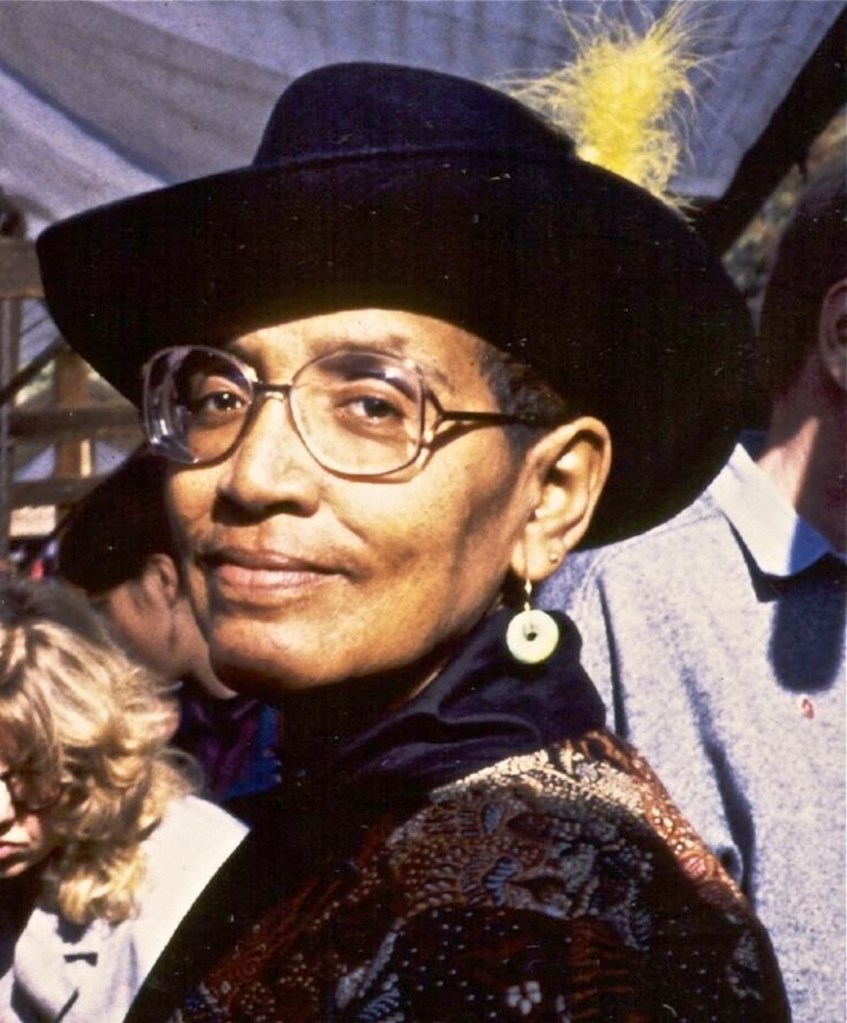
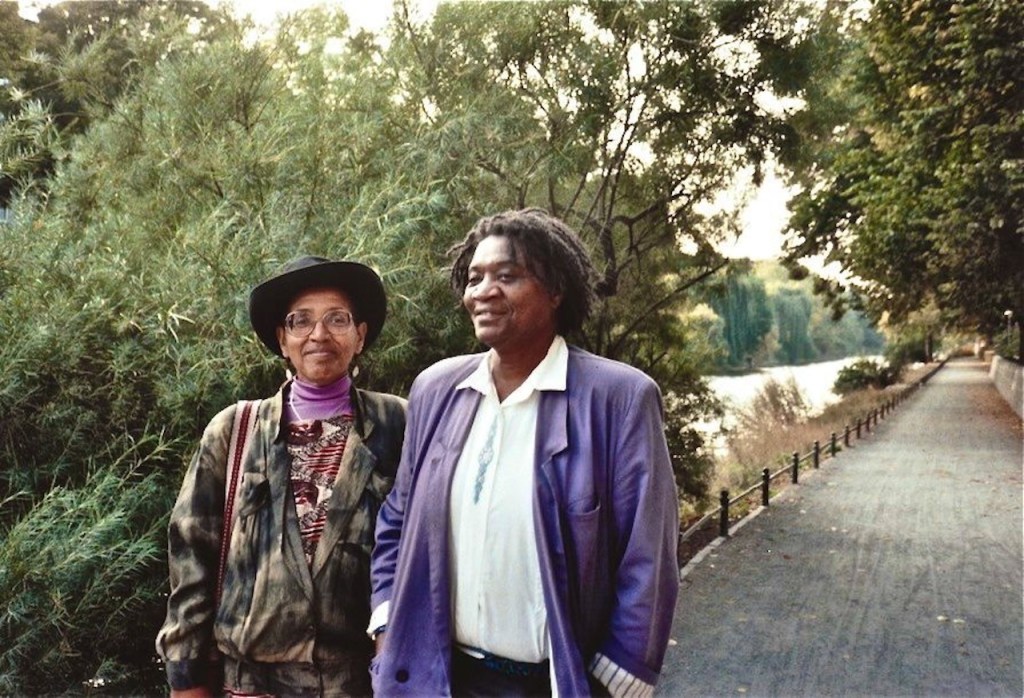
Lorde died of breast cancer on November 17, 1992, in St. Croix, Virgin Islands, where she and her partner Gloria Joseph had been residing since 1986. Lorde’s physical enactment was cremated, and her ashes were scattered over the ocean [4] around St. Croix.
Sources for Life Sketch
[1] Editors. “Audre Lorde.” Poetry Foundation. Accessed June 29, 2025
[4] Curators. “Audre Lorde.” Find a Grave. Accessed June 29, 2025.
Tricky Lines
As Robert Frost admitted that his poem “The Road Not Taken” was very tricky and admonished readers “to be careful with that one,” the following lines of the third movement from Audre Lorde’s poem “Father Son and Holy Ghost” have proved tricky:
Each week a different woman regular as his one quick glass each evening pulls up the grass his stillness grows calling it weed. Each week a different woman has my mother’s face and he who time has changeless must be amazed who knew and loved but one.
Scouring the Internet for analyses of Lorde’s poem, one finds a particularly absurd interpretation of those lines has taken hold. That misreading states that every week a different woman comes to the father’s grave to pull up weeds, thereby keeping the gravesite neat, and each woman’s face reminds the speaker of her mother.
However, that reading misses the mark for several reasons:
Misreading of the Terms “Grass” and “Weed”
It is quite obvious that the terms “grass” and “weed” are not literally referring to the botanical herbage, growing in abundance on the soil virtually everywhere, but are slang terms for marijuana.
Notice that the terms are used in juxtaposition to the father’s having “one quick glass,” an obvious reference to an alcoholic beverage. Also note that the speaker uses the term “weed” not “weeds” which would be the plants excised to keep a gravesite neat.
2. Misreading the Time-Frame
The speaker is looking back to when the father was alive and how he behaved. The different women pulling weeds (“weed”) at a grave jumps forward to the father being dead and in his grave.
But the speaker is reporting that the father brought home a different woman each week, have one small drink, and engage a small amount of marijuana—all while he was alive.
3. Forgetting the Speaker’s First Claim
The speaker begins by stating that she has never seen her father’s grave. There is no way she could have seen these different women pulling up weeds (“weed”) at his grave if she has never been there.
4. Misreading or Forgetting the Setting
All of the images in the poem point to the speaker’s setting the poem in the home, not at his gravesite. For example, “evening doorknobs,” “one quick glass each evening,” and “his stillness grows” all place the father in the home, not in a cemetery.
Stillness in this sense after death is an absolute, not a situation in which stillness can grow. If anything the decaying body might be thought of as the opposite of stillness with the activity of bacterial organisms ravaging the flesh.
It bears repeating because it must be remembered that the speaker has claimed she has never seen her father’s grave; so reporting on any activity at a his gravesite is impossible.
5. Father-Daughter Relationship
According to Jerome Brooks, Frederick Lorde, Audre’s father, was, in fact, “a vital presence in her life.” Her father provided “the solid ‘intellectual and moral’ vision that centered her sense of the world.”
Unfortunately, feminist critics have so overemphasized Audre Lorde’s identity as a “black lesbian” that they can assume only a railing against the patriarchy for the poet. Her true personal feelings for the first man in her life must blocked in order to hoist the poet onto the anti-patriarchal standard.
But as Brooks has contended,
In Zami, Lorde implies that her father, who shared his decisionmaking power with his wife when tradition dictated it was his alone, was profoundly moral. She also felt most identified with and supported by him as she writes in Inheritance—His: “I owe you my Dahomian jaw/ the free high school for gifted girls/ no one else thought I should attend/ and the darkness we share.”
Reading vs Appreciating a Poem
Reading and appreciating a poem are two distinctive activities. While it may be unfair to claim absolute correctness in any interpretation, still some readings can clearly be flawed because poems can remain Frostian “tricky.” It would seem that it is difficult if not impossible to appreciate a poem if one accepts a clearly inaccurate reading of the poem.
Still, it is up to each reader to determine which interpretation he will accept. And the acceptance will most likely be based on experience both in life and in literary study.
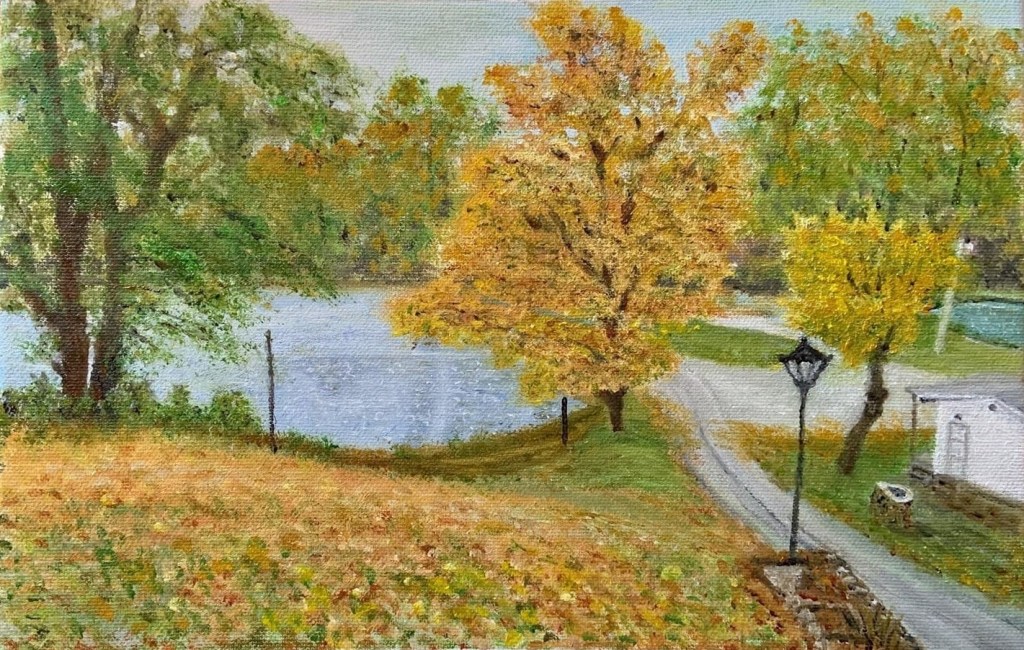
Image: The Old Homestead by Ron W. G. The image is a painting by my sweet husband, Ron, who relied on a photo taken by my sister, Carlene Craig, who still lives there. The old homestead is the place where I grew up—a place of beauty that holds many memories of a young girl growing up in the turbulent times of the 50s and 60s.
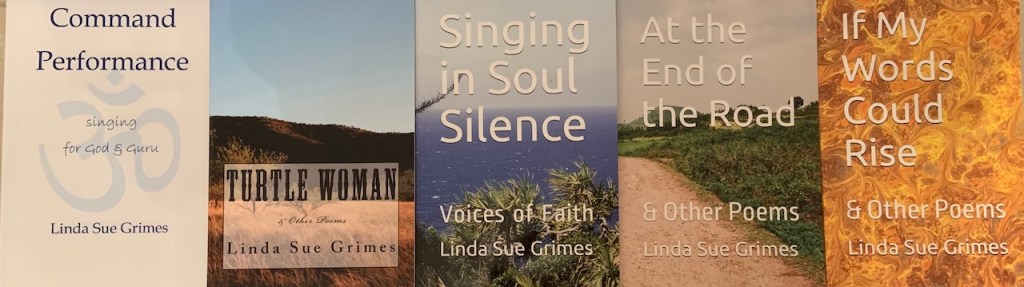
Welcome to My Original Poems
My literary focus remains primarily on poetry and songwriting, but as a life-long creative writer, I have also dabbled in many other forms: short stories, flash fiction, memoir.
I also compose literary and expository essays, focusing on a variety of topics including history and politics—even some science/medical issues, especially those that remain controversial.
This room in my literary home provides links to my original poems.
Literary art—somewhat like science—is never truly settled or complete; thus I will be continuing to add—and even to revise— material from time to time.
As a poet, I take the art of poetry very seriously and thus I swear to the following oath:
As I, Linda Sue Grimes, engage in my career as a poet, I solemnly swear to remain faithful to the tenets of the following covenant to the best of my ability:
I will respect and study the significant artistic achievements of those poets who precede me, and I will humbly share my knowledge with those who seek my advice. I will dedicate myself to my craft using all my talent while avoiding those two evils of (1) effusiveness of self-indulgence and (2) pontification on degradation and nihilism.
I will remember that there is a science to poetry as well as an art, and that spirituality, peace, and love always eclipse metaphors and similes. I will not bring shame to my art by pretending to knowledge I do not have, and I will not cut off the legs of colleagues that I may appear taller.
I will respect readers and ever be aware that not all readers are as well-versed in literary matters as I am. I will not take advantage of their ignorance by writing nonsense and then pretending it is the reader’s fault for not understanding my disingenuity. Regardless of the level of fame and fortune I reach, I will remain humble and grateful, not arrogant nor condescending.
I will remember that poetry requires revision and close attention; it does not just pour out of me onto the page, as if opening a vein and letting it drip. Writing poetry requires thinking as well as feeling.
I will continue to educate myself in areas other than poetry so that I may know a fair amount about history, geography, science, math, philosophy, foreign language, religion, economics, sociology, politics, and other fields of endeavor that result in bodies of knowledge.
I will remember that I am no better than prose writers, songwriters, musicians, or politicians; all human beings deserve respect as well as scrutiny as they perform their unique duties, whether artist or artisan.
I will not rewrite English translations of those who have already successfully translated and pretend that I too am a translator. I will not translate any poem that I cannot read and comprehend in the original.




 Linda's Literary Home