Linda's Literary Home

Tag: faith

  • Emily Dickinson’s “The Soul selects her own Society”

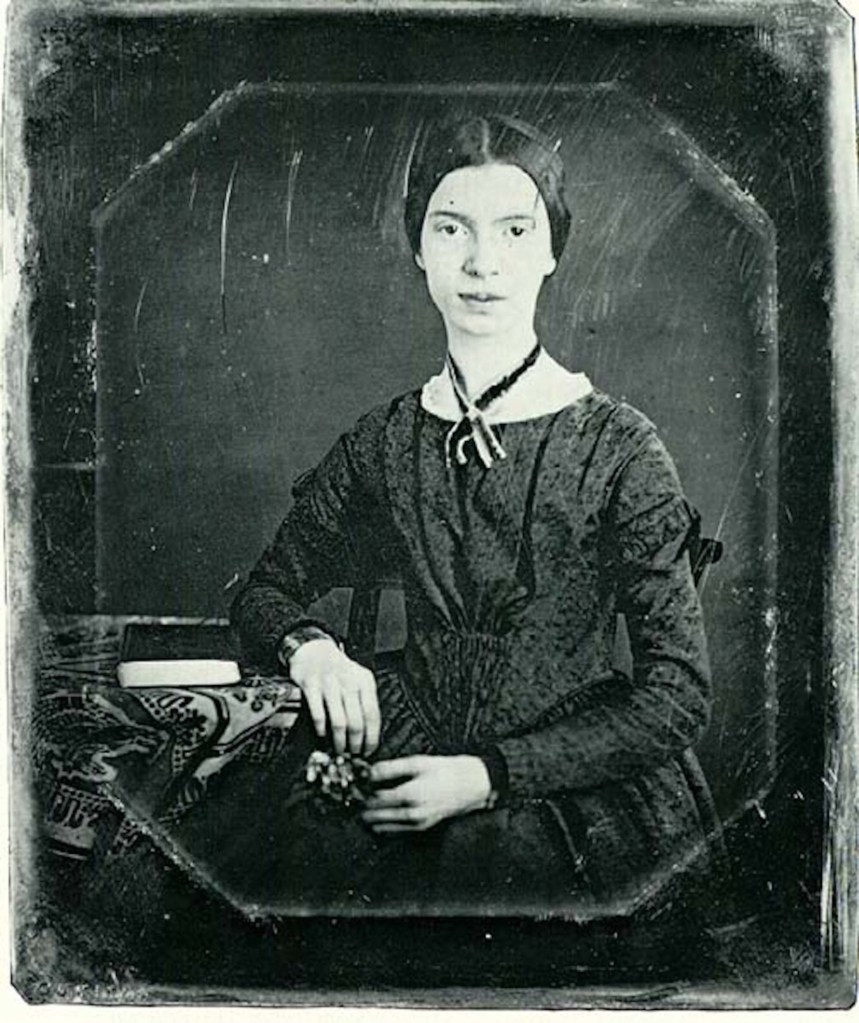
    Image: Emily Dickinson – Amherst College – Daguerrotype of the poet at age 17, circa 1847 – likely the only authentic, extant likeness of the poet

    Emily Dickinson’s “The Soul selects her own Society”

    Emily Dickinson’s “The Soul selects her own Society” portrays the nature of individual self-sufficiency, spiritual power, and the deliberate choice of isolation over social engagement.  The result is a positive statement that the strength of the soul remains ascendent, despite a world of chaos.

    Introduction and Text of “The Soul selects her own Society”

    In only three innovative quatrains, Emily Dickinson’s poem, “The Soul selects her own Society,” reveals the power of the soul’s skill in selecting its companions and rejecting external influences.  

    This profound theme is one of many that similarly focus on issues of individuality in Dickinson’s 1775 span of poems. The poet grappled with questions of personal autonomy and the inner life by creating speakers who address those inquiries in unique, strong voices.

    Emily Dickinson’s themes, poetic techniques, as well as the cultural and philosophical contexts that inform her poems all lend heft to the notion that the poet remained steadfast in her determination to live deliberately and independently.

    The claims that Dickinson’s speaker makes about the soul’s choices illuminate this poem’s celebration of individuality, and those claims offer a subtle critique of societal pressures. This important theme can be found in a number of Dickinson’s poems. The poet continued to create speakers who share her love of privacy.

    The Soul selects her own Society –

    The Soul selects her own Society –
    Then – shuts the Door –
    To her divine Majority –
    Present no more –

    Unmoved – she notes the Chariots – pausing –
    At her low Gate –
    Unmoved – an Emperor be kneeling
    Upon her Mat –

    I’ve known her – from an ample nation –
    Choose One –
    Then – close the Valves of her attention –
    Like Stone –

    Commentary on “The Soul selects her own Society”

    Emily Dickinson’s “The Soul selects her own Society” stands as the emblematic poem for not only the poet’s entire oeuvre but also for her life choice of isolation as well.  She continued to create speakers, whose voices remain strong and unique.  Her elliptical, minimalist expressions demonstrate an economy of language use seldom experienced to such a high degree.

    First Stanza: The Soul’s Decision

    The Soul selects her own Society –
    Then – shuts the Door –
    To her divine Majority –
    Present no more –

    The first stanza establishes the soul’s autonomy and power as the target of the poem. Dickinson’s speaker is personifying the soul as a feminine being, a choice that comports with her frequent portrayal of the self as an introspective consciousness. 

    The verb “selects” remains essential in distinguishing a deliberate act of choice. Unlike passive acceptance or arbitrary selection, the soul’s decision to choose its “Society” reflects a profound exercise of individual agency and strength. 

    The capitalization of “Soul” and “Society” ennobles these terms, attesting to spiritual and metaphysical power.  “Society” indicates a selected group of companions that the soul deems worthy of its attention.

    The second line, “Then – shuts the Door,” introduces an intense metaphor of exclusion. The act of shutting the door symbolizes the rejection of all that lies outside the soul’s chosen circle. 

    This exclusionary image invokes both physical and psychological barriers, making clear that the soul’s decision is not merely a preference but instead remains a absolute act of isolation. 

    The door, a boundary between the inner and outer worlds, becomes an instrument of both inclusion and exclusion, emphasizing the soul’s desire for control over its environment.

    The phrase “divine Majority” in the third line refers to a spiritual unity, such as a divine assembly representing the will of a Higher Power, and the soul accepts that “Majority” and its divinity as evidence of its own affirmative judgment. 

    The “divine Majority” also includes tangentially certain members of the broader societal collective–family and friends–on the earth plane, implying that the soul dismisses the opinions or expectations of the masses but accepts willingly and graciously all those who understand and respect the choices of the speaker.   

    The adjective “divine” imbues this majority with a sacred quality that it must possess, if the speaker is to sanction it.  The final line, “Present no more,” reinforces the irrevocability of this decision. The soul’s chosen society is now its sole focus, and all others are rendered absent, both physically and metaphysically.

    Interestingly, the word “present” can be interpreted as either an adjective or a verb, but either interpretation results in the same meaning of the phrase in this context.  As a verb, it is a command, “Offer no more suggestions for my perusal.”   As an adjective, the speaker is making the simple statement that other than her chosen “divine Majority,” no further admittance is allowed; her group remains complete.

    Dickinson’s use of her liberal spray of dashes throughout the stanza creates a spacing  rhythm, mirroring the deliberate and measured nature of the soul’s actions. These pauses invite readers or listeners to linger on each phrase, reflecting the weight of the soul’s choices. 

    The stanza’s brevity and syntactic compression further enhance its impact, distilling complex ideas into a few carefully chosen words. By framing the soul’s selection as both an act of inclusion and exclusion, the speaker has set the stage for the poem’s expression of individualism and its consequences.

    Second Stanza: Resisting External Influence

    Unmoved – she notes the Chariots – pausing –
    At her low Gate –
    Unmoved – an Emperor be kneeling
    Upon her Mat –

    The second stanza shifts its focus from it affirmative declaration to the soul’s unwavering stance in the face of external temptations, reinforcing the theme of absolute individual sovereignty. 

    The repetition of “Unmoved” at the beginning of the first and third lines serves as a rhetorical anchor, emphasizing the soul’s emotional detachment and unchanging resolve. 

    This word choice suggests not only indifference but also a deliberate refusal to be swayed by external grandeur or authority. The soul’s ability to remain “unmoved” underscores its inner strength, positioning it as a self-sustaining entity invulnerable to worldly, earthly allure.

    The imagery of “Chariots – pausing – / At her low Gate” heralds a scene of pomp and power, seeking entry. Chariots, often associated with military might or royal processions, symbolize societal prestige and influence. 

    This chariots pausing at the soul’s “low Gate” creates a striking contrast between the grandeur of the material world-at-large and the humility of the soul’s inner mystical domain. 

    The adjective “low” suggests simplicity and humility—qualities that perfectly align with Dickinson’s speakers’ recurring portrayal of the self as unpretentious yet profoundly self-aware.  The gate, like the door in the first stanza, functions as a boundary, reinforcing the soul’s control over who may enter its realm.

    The second image of “an Emperor be kneeling / Upon her Mat” magnifies this contrast. The emperor, a figure of supreme authority, is portrayed in a position of supplication—”kneeling” on the soul’s humble mat. 

    This inversion of power dynamics is astonishing: the soul—humble, modest, and tranquil—commands the respect of even the most powerful figures.  The mat, a simple household item, further emphasizes  the soul’s unassuming nature, yet its presence in this context elevates it to a symbol of the soul’s complete sovereignty. 

    The emperor’s kneeling suggests not only deference but also a recognition of the soul’s authority, which transcends all worldly hierarchies. Dickinson’s traditional, abundant splash of dashes in this stanza furthers the pauses, mirroring the soul’s contemplative resistance. Each dash invites the reader to pause and consider the significance of the soul’s indifference to such potent symbols of power. 

    The stanza’s structure, with its parallel clauses beginning with “Unmoved,” reinforces the soul’s consistency and resolve. By juxtaposing the soul’s simplicity with the grandeur of chariots and emperors, the speaker celebrates the power of inner conviction over external splendor, a theme that resonates with the Dickinsonian broader critique of societal conformity.

    Third Stanza: The Final Choice

    I’ve known her – from an ample nation –
    Choose One –
    Then – close the Valves of her attention –
    Like Stone –

    The third stanza shifts to a personal perspective, as the speaker reveals intimate knowledge of the soul’s behavior with the phrase “I’ve known her.” This shift to the first person opens up her deep familiarity, confirming the speaker’s own experience as one who often chooses solitude over societal engagement. 

    The phrase “from an ample nation” implies a vast array of potential companions, whether individuals, ideas, or influences. The word “ample” denotes abundance, yet the soul’s choice is singular and exclusive, as it selects only “One.”  This act of choosing remains both deliberate as well as reductive, narrowing the soul’s focus to a single entity or ideal.

    The metaphor of closing “the Valves of her attention” is particularly salient. The term “Valves” introduces a mechanical image, indicating a controlled and deliberate mechanism for regulating attention.  Unlike the organic imagery of doors or gates, valves imply precision and finality, as if the soul is sealing off its consciousness with mechanical efficacy. 

    The simile, “Like Stone,” further emphasizes this irrevocability, vouchsafing an unyielding, determined state. Stone is nearly immutable and enduring, indicating that the soul’s decision is permanent and secure against change.  This image also carries a sense of weight and stillness, contrasting with the dynamic imagery of chariots and emperors in the previous stanza.

    The stanza’s brevity enhances its impact, as each line dramatically builds toward the final, evocative image of stone. The dashes keep their rhythm punctuating the lines, creating the important pauses that reflect the gravity of the soul’s withdrawal. 

    By framing the soul’s choice as selective—inclusive as well as exclusive—the speaker emphasizes the result of such individual autonomy: the soul expresses its sovereignty, and the less important connection with the broader world is exposed and laid to rest. 

    A Resolute Act of Agency

    Emily Dickinson’s “The Soul selects her own Society” is a masterful exploration of individuality, autonomy, and the consequences of deliberate isolation. Through its three quatrains, the poem traces the soul’s journey from selection to rejection to final withdrawal, each stage completed by a resolute act of agency. 

    The first stanza establishes the soul’s sovereignty through its careful selection of companions, while the second illustrates its resistance to external temptations, and the third underscores the finality of its withdrawal. 

    Dickinson’s use of vivid imagery–doors, gates, chariots, emperors, valves, and stone–creates a rich tapestry of meaning, inviting readers to contemplate the power and cost of personal choice.  The poem’s formal elements, including its concise structure, halting rhythm, and strategic use of dashes, enhance its thematic depth. 

    The dashes, in particular, serve as a stylistic hallmark, creating pauses that mirror the soul’s contemplative resolve and invite readers to engage with the text on a deeper level.

    The capitalization of key terms, such as “Soul,” “Society,” and “Majority,” imbues them with metaphysical significance, elevating the poem’s exploration of individuality to a universal plane.

    Contextually, the poem reflects Dickinson’s own life as a poet who chose solitude over societal engagement. Living in Amherst, Massachusetts, Dickinson maintained a reclusive lifestyle, corresponding with a select few while withdrawing from public life.  This personal context informs the poem’s celebration of inner conviction, as well as its acknowledgment of the isolation that such conviction entails. 

    Philosophically, the poem aligns with transcendentalist ideas of self-reliance, as espoused by contemporaries like Ralph Waldo Emerson, though Dickinson’s perspective is more introspective and less optimistic about the individual’s connection to the broader world.

    Ultimately, “The Soul selects her own Society” is a testament to Dickinson’s ability to distill complex ideas into concise, evocative verse. The poem invites readers to reflect on the nature of choice, the value of autonomy, and the delicate balance between connection and solitude. 

    By portraying the soul as a sovereign entity capable of shaping its own destiny, Dickinson’s speaker has affirmed the power of individuality while acknowledging the profound solitude that accompanies such freedom.
  • Emily Dickinson’s “All these my banners be”

    Image: Emily Dickinson – Amherst College – Daguerrotype of the poet at age 17, circa 1847 – likely the only authentic, extant likeness of the poet

    Emily Dickinson’s “All these my banners be”

    The speaker celebrates the beauty of wildflowers, which metaphorically represent their mystical counterpart in the spiritual garden, created by the speaker’s powerful and fertile imagination.

    Introduction with Text of “All these my banners be”

    Like a garden or landscape imbued with numerous colorful wildflowers, the poetic garden that Emily Dickinson’s speaker is creating holds all of the poet’s numerous, colorful poems.  She celebrates those natural wildflowers as she showcases the permanence of her own creations.

    This speaker, like the Shakespearean speaker, has planted her flag in the ever-existing land of creativity.  In that special spiritual garden, she can plant any flower she chooses and in places where she knows they will continue to shed their perfume to noses and their beauty to eyes, as well as their music to ears.

    All these my banners be

    All these my banners be.
    I sow my pageantry
    In May –
    It rises train by train –
    Then sleeps in state again –
    My chancel – all the plain
    Today.

    To lose – if one can find again –
    To miss – if one shall meet –
    The Burglar cannot rob – then –
    The Broker cannot cheat.
    So build the hillocks gaily
    Thou little spade of mine
    Leaving nooks for Daisy
    And for Columbine –
    You and I the secret
    Of the Crocus know –
    Let us chant it softly –
    “There is no more snow!”

    To him who keeps an Orchis’ heart –
    The swamps are pink with June.

    Reading of “All these my banners be” 

    Commentary on “All these my banners be”

    The speaker is celebrating her spiritual garden of verse, wherein like the beauty of literal wildflowers, the beauty of her poems retain the delicious ability to remain ever existing.

    First Stanza:  Planting Flags of Sacred Beauty

    All these my banners be.
    I sow my pageantry
    In May –
    It rises train by train –
    Then sleeps in state again –
    My chancel – all the plain
    Today.

    On the literal level, the speaker is celebrating wildflowers, claiming them as her nation or state, and implying that she is planting them as one would plant a flag to possess a territory or mark the discovery of some formerly distant land. 

    One may be put in mind of the moon-landing at which time the American astronauts planted the flag of the USA on the moon. Thus, she begins by asserting that all of these flowers are her “banners” or flags.  

    Interestingly, there is a type of Daylily that sports the nickname “Grand Old Flag,” or as my mother referred to them as “Flags.”  These wildflowers grow abundantly along rivers, old country roads, and even along busy highways.  They are quite hardy, so hardy, in fact, that some folks actually disdain their presence and seek to halt their spreading abundance.

    This speaker adores her expanse of wildflowers.  After claiming them as her “banners,” she claims that she is sowing these, her “pageantry,” in the late spring month of May. She colorfully reports that they come shooting up through the earth like trains with a long string of cars that continue to move until they “sleep in state again” or halt from their journey.  

    The speaker then remarks that this bannered, colorful, and divine expanse of land—”all the land”—is her “chancel” today.  Her love and devotion rise to the spiritual level as she calls that “land” metaphorically a “chancel.”

    Second Stanza:  Creating a Mystical Garden

    To lose – if one can find again –
    To miss – if one shall meet –
    The Burglar cannot rob – then –
    The Broker cannot cheat.
    So build the hillocks gaily
    Thou little spade of mine
    Leaving nooks for Daisy
    And for Columbine –
    You and I the secret
    Of the Crocus know –
    Let us chant it softly –
    “There is no more snow!”

    As she eases into the metaphoric level, the speaker first waxes philosophical about losing and missing things—a state of consciousness that refers to the changing of the seasons.

    Seasons with their abundant lush growth on the landscape are routinely followed by seasons in which no growth occurs, and the observer then finds she has lost something that she misses.  

    It remains the duty of this highly creative and talented speaker to eliminate all those pesky periods of losing, and she can do that metaphorically by creating her own sacred, spiritual garden filled with the flowers that are her poems.  

    In her mystically created garden, no “Burglar” can “rob,” and no “Broker” can “cheat.”  Thus, the various flowers named in the stanza stand both for themselves as well as serving as a metaphoric flower representing her poems. 

    The speaker then commands her poetic ability, represented metonymically by the “little spade” which becomes a symbol for her writing, to “build the hillock gaily” or get on with creating these marvelous little dramas that keep her enthralled.  

    That “little spade” carves out “nooks for Daisy” and “for Columbine”—a colorful, fascinating way of asserting that her writing ability produces poems that stand as strong, colorful, and divinely beautiful as those flowers that she names—”Daisy” and “Columbine.”

    The speaker intimates to her “little spade” that they two are privy to the same secret known by “the Crocus,” and she insists that they “chant it softly” in that delicious atmosphere in which “There is no more snow!”  

    The speaker would desire “no more snow” for the simple reason that literal flowers do not spring up in winter.  Thus, she is robbed of their beauty, and she misses them.  And thus the “no more snow” season for her writing has the power to encompass all the seasons, wherein those objects of beauty can continue to grow and flourish and provide beauty.

    Third Stanza:  Perpetual June

    To him who keeps an Orchis’ heart –
    The swamps are pink with June.

    The speaker then again waxes philosophical about her spiritual garden of flowers.  It is an attitude that prevails to cause one to be able to accept the mystical level of being as more alluring and even more beautiful than the physical level that points to it.  

    As the physical level of being, which is created out of atoms and molecules, contains beauty but that beauty fades and is never permanent, the mystical level, which is created out of inextinguishable light, can remain eternally.  

    For the earth-bound human being, the concept of and desire for things to exist eternally remain instilled in the heart, mind, and soul.  For the mystically inclined individual, the “swamps” remain eternally “pink” as though it were always “June.”

    In other words, the individual steeped in spiritual, mystic ardor and filled with creative juices needs only to create a spiritual garden—mystical world—in which permanence does reign eternally.

    Video:  Orange Daylily

  • Emily Dickinson’s “Summer for thee, grant I may be”

    Image: Emily Dickinson – Amherst College – Daguerrotype of the poet at age 17, circa 1847 – likely the only authentic, extant likeness of the poet

    Emily Dickinson’s “Summer for thee, grant I may be”

    Addressing the Divine Belovèd, Emily Dickinson’s speaker prays to remain a special musical and visual spark in the creation of everlasting, eternal, immortal Bliss.

    Introduction with Text of “Summer for thee, grant I may be”

    Many of Emily Dickinson’s poems prominently feature humble prayers to the Blessèd Creator.  As she adored nature’s many sounds and varieties of colors, she sought to feel her connection through the spiritual level of being to all that makes up the created world.  Her favorite season of summer often served as the resplendent muse that allowed her entry into the mystical nature of sound and sight.  

    Although, on their physical level, those sense-tinged images are beautiful and inspiring, Dickinson created characters to demonstrate the profound awareness that a deeper, even more beautiful and inspiring level of existence could be intuited.   As her speakers approach the ineffable, the language grows more intensely mystical, requiring that special reading that all poetry requires but on an ever deeper level.

    Summer for thee, grant I may be

    Summer for thee, grant I may be
    When Summer days are flown!
    Thy music still, when Whipporwill
    And Oriole – are done!

    For thee to bloom, I’ll skip the tomb
    And row my blossoms o’er!
    Pray gather me –
             Anemone –
    Thy flower – forevermore!

    Reading

    Commentary on “Summer for thee, grant I may be”

    Emily Dickinson’s speaker is addressing her Creator, her Heavenly Father (God), praying to retain her special knowledge of musical and visual imagery that have been especially brought into existence for understanding creation through the art of poetry. 

    First Stanza:  Mystical Metaphors

    Summer for thee, grant I may be
    When Summer days are flown!
    Thy music still, when Whippoorwill
    And Oriole – are done!  

    The speaker begins by addressing the Divine Belovèd, imploring the Heavenly Father to allow her continued mystical existence even after the beautiful summer season’s glowing days “are flown!” 

    The inspiration in which she has reveled is exemplified in the music of the “Whippoorwill” and the “Oriole.”   Both the music of the bird songs and the warmth and beauty of a summer day are contained in the mere reference in the half line “Thy music still . . . .”  

    The use of the familiar second person pronouns, thee and thy, hint that the speaker is addressing God.  Only God, the Heavenly Reality, the Over-Soul, is close enough to the individual soul to require such a personally familiar pronoun in the Dickinsonian era of common parlance, as well as in that of present day English. 

    Dickinson’s innate ability to intuit from nature the creative power of the Creator urged the poet in her to build entirely new worlds in which she mentally resided, as her soul overflowed with ever new bliss of knowledge.    Such knowledge did not arrive in pairs of opposites as earthly knowledge does, but rather that state of knowing afforded her direct perception of truth and reality.

    Thus, she employed metaphor as readily as a child employs new and special ways of putting into language concepts he/she has never before encountered.  A useful example of this child-metaphor engagement can be observed when hearing little toddler girl call a hangnail a string.  

    The toddler who had experienced a hangnail but had no name for it still manages to communicate the reality of the hangnail because she does know the nature of both the finger condition and what a string looks like.   Although Dickinson is communicating well beyond earthly reality, she can produce a metaphor for the ineffable as easily as a child can name a hangnail a string.

    Second Stanza:  Rowing in Bliss

    For thee to bloom, I’ll skip the tomb
    And row my blossoms o’er!
    Pray gather me –
             Anemone –
    Thy flower – forevermore!  

    The speaker then offers a very cheeky remark in claiming she will “skip the tomb.”  But she can do so because she has already just revealed the reason for such an ability. The Divine Reality has been blossoming in her.

    She can tout her connection and continued existence through Immortality because she knows her soul is everliving, everlasting, and remains a spark of ever-new power. The speaker then rows her immortal sea craft–the soul–which blooms eternally like the most beautiful flowers that earth has to offer.  

    But even with such knowledge of such power, she remains humble, praying that the Divine Belovèd continues to “gather [her]” as bouquets of other earthly flowers are gathered.  She then names the beautiful flower which metaphorically represents her blossoming soul, “Anemone.” 

    The flower’s musical name as well as variety of colors play in the minds and hearts of readers, as perfect metaphorical representations of the ineffable entity–the ever blissful soul. The minimalism of the Dickinson canon speaks volumes–more than any voluminous text could do.  

    Such an accomplishment belongs to the wisdom of the ages and to the musing, meditative mind that enters the hallways of reality on the astral and causal levels of existence where artists find their most profound inspiration.  

    Those who can turn those inspirations into words will always find an audience down through the centuries as long as this plane of earthly existence continues its twirl through space.

    🕉

    You are welcome to join me on the following social media:
    TruthSocial, Locals, Gettr, X, Bluesky, Facebook, Pinterest 

    🕉

    Share

  • Emily Dickinson’s “I have a Bird in spring”

    Image: Emily Dickinson – Amherst College – This daguerrotype circa 1847 at age 17 is likely the only authentic, extant image of the poet.

    Emily Dickinson’s “I have a Bird in spring”

    Emily Dickinson’s riddle-poem “I have a Bird in spring” features the speaker’s musing on her ability to sense existence beyond the earthly, material level of physical reality. She also expresses her confidence that the “Bird” she possesses is not one that she could ever lose.

    Introduction with Text of “I have a Bird in spring”

    Emily Dickinson’s “I have a Bird in spring” exemplifies the poet’s oft-employed strategy of creating little dramas that not only function as poems, but they also work well as fascinating riddles.

    The speaker never states the name of this strange bird that can fly away from her and then return bringing her new melodies from far beyond the sea.  

    This metaphoric avian winging its way beyond a metaphoric sea possesses the delicious power to calm any doubts and fears that might molest the speaker. That a mere bird could retain such seemingly magical powers renders this Dickinsonian riddle one of her most profound and most captivating little dramas.

    I have a Bird in spring

    I have a Bird in spring
    Which for myself doth sing  –
    The spring decoys.
    And as the summer nears  –
    And as the Rose appears,
    Robin is gone.

    Yet do I not repine
    Knowing that Bird of mine
    Though flown  –
    Learneth beyond the sea
    Melody new for me
    And will return.

    Fast in safer hand
    Held in a truer Land
    Are mine  –
    And though they now depart,
    Tell I my doubting heart
    They’re thine.

    In a serener Bright,
    In a more golden light
    I see
    Each little doubt and fear,
    Each little discord here
    Removed.

    Then will I not repine,
    Knowing that Bird of mine
    Though flown
    Shall in distant tree
    Bright melody for me
    Return.

    Reading of “I have a Bird in spring”  

    Commentary on “I have a Bird in spring”

    The speaker muses on and dramatizes the activity of a metaphoric bird that can bring to her wonderful bits of information from beyond the material level of existence.

    First Stanza:  A Strange Bird

    I have a Bird in spring
    Which for myself doth sing  –
    The spring decoys.
    And as the summer nears  –
    And as the Rose appears,
    Robin is gone.

    The speaker begins employing a rather straight forward claim that becomes ever more mysterious as she continues.  She reports that she is in possession of “a Bird in spring.” However, that “Bird” sings for her alone.  Such a statement remains intriguing because it seems obvious that birds sing for everyone, or rather perhaps they sing for no one but themselves and likely other birds.  

    Even if this speaker is creating her little ditty about a pet bird that she keeps in a cage, that bird likely would not sing simply for his care-taker.  Paul Laurence Dunbar’s speaker has averred in his poem “Sympathy” that he “knows why the caged bird sings,” and the bird does not sing only for the one who has caged him.

    Thus, the puzzle continues to plays out. Why is this “Bird” singing only for his owner/care-taker?  Thus, the speaker then asserts that as spring moves on, the season lures her away from her “Bird.” But then as she moves into summer, she becomes attracted by the beauty of “the Rose,” but then her “Bird,” whom she now calls “Robin” has flown away.

    The first stanza leaves the audience cogitating on such a mystifying conundrum:  an unusual bird that seems to belong to a person, simply up and disappears as the season of spring with all of its lushness has captured the individual’s attention and as roses are starting to blow forth for summer.

    Second Stanza:  Not a “bird”  – but a “Bird”

    Yet do I not repine
    Knowing that Bird of mine
    Though flown  –
    Learneth beyond the sea
    Melody new for me
    And will return.

    The speaker then offers yet another surprising claim.  She reports that she does not worry that the bird has vanished.  She remains confident that this special “Bird” has simply winged its way “beyond the sea” where he will accrue some new melodies. 

    The bird with his newly learned repertoire will then return to her.  Once again, the speaker has offered an even more puzzling event for the audience to ponder.  Her rare bird has apparently flown away, but the avian’s owner/care-taker seems to remain convinced that he will fly back to her.  The likelihood of any person recognizing the same bird that had flown far way from her remains next to nil.  

    As thousands of birds appear and fly away chirping throughout the land or landing in trees, the ability to distinguish the same bird as the exact one that flew away and then returned would be a stunning feat.

    The speaker’s claim seems ridiculous—however,  it may not be ridiculous because that “Bird” that she owns is not a “bird.” Instead the avian referred to by the speaker is, in fact, a “Bird.”  It is thus a metaphorical bird.  And because he is a metaphoric not a literal bird, the audience has to rethink all those claims that seemed so terribly unusual. 

    In order to take this confusing discourse seriously, the reader must interpret a metaphorical bird. How can a bird be metaphorical?   The speaker is calling a bird a “Bird,” and that figurative “Bird”  is not a literal bird.

    Third Stanza:  Divine Creator as Muse

    Fast in safer hand
    Held in a truer Land
    Are mine  –
    And though they now depart,
    Tell I my doubting heart
    They’re thine.

    The speaker then makes it clear that this metaphorical “Bird” is her muse.  Her muse thus retains the qualities, features, and aspects of her soul.  Those soul qualities and functions permit her to fashion a new creation, such as her magnificent other “sky,” which includes her marvelously perpetual “garden” of poetry.  Thus, the speaker creates her garden of verse, where she can spend her time, her effort, and her love.  In this metaphysical world, she can continue to  fashion a different world.  

    Even as she lives in the world of physical, material, earthly existence, because she communes with her inner being—her soul which is a spark of the Ultimate Creator (God)—she can create just the Creator does.

    Her soul—through the instrumentality of her metaphysical “Bird”— bestows on her the ability to comprehend that fact that she along with her talent remains secure in the presence of the Divine Creator.  

    The speaker, her soul, her muse, and her talent are all “Held in a truer Land”—a metaphorical, cosmic location that remains more real because it is ever existing as well as eternally present, unlike the planet called Earth, on which immortality and eternity do not exist.  

    Aging, fading, destruction, and death obtain on the physical level of existence, for example, on such place as the Earth planet.  The speaker’s compendium of joy includes her mental abilities, her writing talent, and her love and appreciation of beauty, poetry, and the arts and science.

    This compendium the speaker has fashioned into  a metaphorical, metaphysical “Bird” is secured “fast” by a “safer hand.”   The speaker’s Heavenly Father, Divine Creator (God) guides and guards her in myriad mystery-making ways.  She remains aware, however, that she follows that guidance through faith because she continues to work and ponder with a “doubting heart.”  

    However, she informs her doubting heart that the compendium of joyous qualities, metaphorically fashioned into her “Bird,” still belong to her.  Though at times they may seem to move beyond her sight, her strong faith keeps her mind convinced that immortality and eternity belong to her.

    As the Shakespearean sonneteer, who often complains about periods of creative dryness that afflict him, this speaker confesses that certain entities and events of spring and summer may distract her, allowing her “Bird” to seem to fly off and disappear for long whiles.   Nevertheless, she finds relief through the understanding that her talent is merely resting and likely experiencing further development somewhere out of her vision.

    Her “Bird” is just off somewhere learning new melodies for her to sing and fashion into new dramas.  Even more important is that she need not entertain doubts about the return of that special bird.  They will return to her because “They’re [hers].”  What belongs to her, she cannot lose.

    Fourth Stanza:  Seeing through Mystic Eyes

    In a serener Bright,
    In a more golden light
    I see
    Each little doubt and fear,
    Each little discord here
    Removed.

    The speaker moves on detailing the reasoning that allows her to be sure that her “Bird” will return to her.   During her periods of clear sight which she at times experiences even with the absence of her “Bird,” she can sense in a “more golden light” that all her doubts, worries, fears, and discordant thoughts “here” can be removed.  

    As she remains living upon this Earth planet, she acknowledges that her fears will likely persist in attacking her. However, because of her assurance of her own divinity through her the power of her soul—that spark of the Divine Creator—she remains capable of realizing that those trials and tribulations brought on by the dualities and pairs of opposites of Earth life are time-stamped.

    In opposition to the temporal, her soul power is permanent without any limitation or stamp of time.  The speaker possesses to ability to perceive through mystic eyes in a “serener Bright” and “golden light.”   These cosmic lights bestow upon her the ability to quiet her doubting heart.

    She possesses the awareness that Eternity and Immortality are hers.  Her capacity to continue creating her own “sky” and “garden” remains absolute—the knowledge of the Absolute has the power to quiet and even eliminate fears and doubts.

    Fifth Stanza:  The Virtue of Patience

    Then will I not repine,
    Knowing that Bird of mine
    Though flown
    Shall in distant tree
    Bright melody for me
    Return.

    The speaker can finally report that she will no longer fuss and fret if her “Bird” remains away from her for extended periods.  She will remain confident that he will return to her and bring with him beautiful, glowing melodies.  

    Even though that “Bird of [hers]” may retain a inclination for disappearing from her sight, she is sure that her own consciousness is simply being distracted by other entities and events of “spring” and “summer.”   Those warm seasonal activities just permit her “Bird” to flutter deep into the darkened areas of her mental sphere.

    The speaker experiences great joy in creating her little dramatic pieces, and also once again similar to the Shakespearean sonneteer, she possesses the great ability to create her dramas even as she appears to be experiencing a blockage in the flowing of her words.  

    Incubation and Writing

    Writing teachers and rhetoricians explain the concept of incubation as a stage of the writing process, a period of time when the writer seems not to be thinking directly about his writing project but to be allowing his thoughts to quietly proliferate, even as he goes about performing other activities. 

    Dickinson and the Shakespearean sonneteer, as creative writers, were able to use that concept for creating their little dramas, even as they, no doubt, chafed under their seeming inability to create.

    Dickinson’s mystic sight afforded her an even stronger talent for delivering her mind to performance because she knew her soul to be immortal, and she was able to see mystically beyond the physical, Earth-level of being.   The Shakespeare writer’s faith was strong enough to render him nearly as capable as Dickinson, as his “Muse” sonnet sequence (Part 1 and Part 2) testifies.

  • Emily Dickinson’s “Because I could not stop for Death”

    Image: Emily Dickinson  This daguerrotype, circa 1847 at age 17,  is likely the only authentic, extant image of the poet.

    Emily Dickinson’s “Because I could not stop for Death”

    Emily Dickinson’s mystical drama features a carriage driver who appears to be a gentleman caller.  The speaker abandons both her work and leisure in order to accompany the kind gentleman on a carriage ride.  Dickinson’s mystical tendencies are on pull display in this poem.

    Introduction with Text of “Because I could not stop for Death”

    Emily Dickinson’s mystical drama “Because I could not stop for Death” plays out with a carriage driver who appears to be a gentleman calling on a lady for an evening outing.  The speaker leaves off her work as well as her leisure activities in order to accompany the gentleman on the carriage ride to their unspecified festivities.

    Certain childhood memories occasionally spur poets to compose verse that is thus influenced by such musing on past memories.  Examples of such nostalgic daydreaming include Dylan Thomas’ “Fern Hill,” Theodore Roethke’s “My Papa’s Waltz,” and a nearly perfect American-Innovative sonnet by Robert Hayden “Those Winter Sundays.” 

    In Emily Dickinson’s “Because I could not stop for Death,” the speaker is also gazing back into her past, but this occasion is a much more momentous musing than merely an ordinary childhood recollection.  The speaker in this memory poem is recalling the day she died. 

    The speaker frames the occasion as a metaphoric carriage ride with Death as the gentleman caller. This speaker is peering intuitively into the plane of existence well beyond that of the earth and into the eternal, spiritual level of being.

    Interestingly, the procession that the carriage ride follows seems to be echoing the concept that in the process of leaving the physical body at death, the mental faculty encased in the soul, experiences past scenes from its current existence. 

    Examples of such past-experienced scenes include the riding by a school and observing that the children were playing at recess; then, they drive by a field of grain and observe the sunset. These are scenes that the speaker has undoubtedly experienced during her current incarnational lifetime.

    Because I could not stop for Death

    Because I could not stop for Death –
    He kindly stopped for me –
    The Carriage held but just Ourselves –
    And Immortality.

    We slowly drove – He knew no haste,
    And I had put away
    My labor and my leisure too,
    For His Civility –

    We passed the School, where Children strove
    At recess – in the ring –
    We passed the Fields of Gazing Grain –
    We passed the Setting Sun –

    Or rather – He passed Us –
    The Dews drew quivering and chill –
    For only Gossamer, my Gown –
    My Tippet – only Tulle –

    We paused before a House that seemed
    A Swelling of the Ground –
    The Roof was scarcely visible –
    The Cornice – in the Ground –

    Since then – ’tis centuries – and yet
    Feels shorter than the Day
    I first surmised the Horses’ Heads
    Were toward Eternity –

    Reading of “Because I could not stop for Death” 

    Commentary on “Because I could not stop for Death”

    The speaker avers that she had no inclination to stop what she was doing for the sake of “Death.”  Nevertheless, Death—as a kindly carriage driver, appearing to be a gentleman caller—was polite enough to invite her to join him on an outing.  

    Because of this kind gentleman’s polite demeanor, the speaker gladly leaves off both her ordinary, daily work plus her free time hours in order to accompany the gentleman on what portends to be a simple, pleasant carriage ride, perhaps including some evening social event.

    First Stanza: An Unorthodox Carriage Ride

    Because I could not stop for Death –
    He kindly stopped for me –
    The Carriage held but just Ourselves –
    And Immortality.

    In the first stanza, the speaker claims startlingly that she was unable to avail herself to cease her work and leave off her free time for a certain gentleman, whom she names “Death.”

    However, that gentleman Death had no problem in stopping for her, and he did so in such a polite fashion that she readily acquiesced to his kindness and agreed to join him for a carriage ride. 

    The speaker offers an additional shocking remark, noting that the carriage, in which the speaker and gentleman caller Death rode, was transporting not only the speaker and the gentleman but also one other passenger—”Immortality.”  Thus, the speaker has begun to dramatize an utterly unorthodox buggy ride. 

    The kind gentleman Death has picked up the speaker as if she were his date for a simple carriage ride through the countryside, but something otherworldly intrudes immediately with the presence of the third passenger.

    By personifying “Death” as a gentleman caller, the speaker imparts to that act a certain level of rationality that levels out fear and trepidation usually associated with the idea of dying.  

    Second Stanza:  The Gentleman Caller

    We slowly drove – He knew no haste,
    And I had put away
    My labor and my leisure too,
    For His Civility –

    The speaker then describes her momentous event. She has not only ceased her ordinary work, but she has also concluded her leisure–certainly not unusual for someone who dies.

    The gentleman caller Death has been so persuasive in suggesting a carriage ride that the speaker has easily complied with his suggestion. This kind and gracious man was in no hurry; instead, he offered a rhythmically methodical ushering into realms of peace and quiet.

    Third Stanza: A Review of a Life Lived

    We passed the School, where Children strove
    At recess – in the ring –
    We passed the Fields of Gazing Grain –
    We passed the Setting Sun –

    Next, the speaker reports that she was able to observe children playing at school during recess. She also views cornfields or perhaps fields of wheat.  She, then, views the setting of the sun. 

    The images observed by the speaker may be interpreted as symbols of three stages in each human life:  (1) children playing representing childhood, (2) the growing fields of grain symbolizing adulthood, and (3) the setting sun representing old age.

    The imagery also brings to mind the well-known concept that a dying person may experience the passing of scenes from one’s life before the mind’s eye.   The experience of viewing of past scenic memories from the dying person’s life seems likely to be for the purpose of readying the human soul for its next incarnation.

    Fourth Stanza:  The Passing Scenes

    Or rather – He passed Us –
    The Dews drew quivering and chill –
    For only Gossamer, my Gown –
    My Tippet – only Tulle –

    The speaker reveals that she is dressed in very light clothing.  On the one hand, she experiences a chill at witnessing the startling images passing before her sight.  But is it the light clothing or is it some other phenomenon causing the chill?

    Then on the other hand, it seems that instead of the carriage passing those scenes she has described of children playing, grain growing, and sun setting, those scenes may actually be passing the carriage riders.  The uncertainly regarding this turn of events once again supports the commonly held notion that the speaker is viewing her life passing before her eyes.

    Fifth Stanza:  The Pause

    We paused before a House that seemed
    A Swelling of the Ground –
    The Roof was scarcely visible –
    The Cornice – in the Ground –

    By now, the carriage has almost reached its destination, and instead of a gala or festive outing, it is the speaker’s gravesite before which the carriage has momentarily stopped. 

    Apparently, without shock or surprise, the speaker now dramatically unveils the image of the grave:  she sees a mound of dirt, but she cannot see the roof of the building that she expected, and any ornamental moulding that might have decorated the house also remains out of the sight of the speaker who assumes it is “in the Ground.”

    Sixth Stanza: Looking Back from Eternity

    Since then – ’tis centuries – and yet
    Feels shorter than the Day
    I first surmised the Horses’ Heads
    Were toward Eternity –

    In the final scene, the speaker is calmly reporting that she remains now—and has been all along—centuries in future time. She speaks plainly from her cosmic, eternal home on the spiritual/astral level of being. She has been reporting only on how events seemed to go on the day she died, that is, that day that her soul left its physical encasement.

    She recalls what she saw only briefly just after leaving her physical encasement (body). Yet, the time from the day she died to her time now centuries later feels to her soul as if it were a very short period of time. 

    The time that has passed, though it may be centuries, seems to the speaker relatively shorter than the earthly day of 24 hours.  The speaker avers that on that day the heads of the horses drawing the carriage were pointing “toward Eternity.” 

    The speaker has unequivocally described through metaphor and metaphysical terminology the transition from life to death. That third occupant of the carriage offered the assurance that the speaker’s soul had left the body but continued to exist beyond that body.

  • Two Winter Poems: Emily Dickinson’s “Winter is good – his Hoar Delights” and “Like Brooms of Steel”

    Image: Emily Dickinson – Amherst College  – This daguerrotype of the poet at age 17 is likely the only extant authentic image of Emily Dickinson.

    Two Winter Poems: Emily Dickinson’s “Winter is good – his Hoar Delights” and “Like Brooms of Steel”

    For Emily Dickinson, the seasons offered ample opportunities for verse creation, and her love for all of the seasons is quite evident in her poems.  However, her poetic dramas become especially deep and profound in her winter poems.

    First Winter Poem: “Winter is good – his Hoar Delights”

    Emily Dickinson creates speakers who are every bit as a tricky as Robert Frost’s tricky speakers. Her two-stanza, eight-line lyric announcing, “Winter is good” attests to the poet’s skill of seemingly praising while showing disdain in the same breath.

    The rime scheme of “Winter is good – his Hoar Delights” enforces the slant rime predilection with the ABAB approximation in each stanza.  All of the rimes are near or  slant in the first stanza, while the second boasts a perfect rime in Rose/goes.

    Winter is good – his Hoar Delights

    Winter is good – his Hoar Delights
    Italic flavor yield –
    To Intellects inebriate
    With Summer, or the World –

    Generic as a Quarry
    And hearty – as a Rose –
    Invited with Asperity
    But welcome when he goes.

    Commentary on “Winter is good – his Hoar Delights”

    Emily Dickinson loved all of the seasons, and she found them inspiringly colorful in their many differing attributes.  These seasonal characteristics gave this observant poet much material for her creative little dramas.

    First Stanza: Winter’s Buried Charms

    Winter is good – his Hoar Delights
    Italic flavor yield –
    To Intellects inebriate
    With Summer, or the World –

    The speaker claims rather blandly that “Winter is good” but quickly adds not so plainly that his frost is delightful. That winter’s frost would delight one, however, depends on the individual’s ability to achieve a level of drunkenness with “Summer” or “the World.” 

    For those who fancy summer and become “inebriat[ed]” with the warm season’s charms, winter takes some digging to unearth its buried charm.  And the speaker knows that most folks will never bother to attempt to find anything charming about the season they least favor.

    But those frozen frosts will “yield” their “Italic flavor” to those who are perceptive and desirous enough to pursue any “Delights” that may be held there.  The warmth of the Italian climate renders the summer flavors a madness held in check by an other-worldliness provided by the northern climes.

    The speaker’s knowledge of the climate of Italy need be only superficial to assist in making the implications this speaker makes.  Becoming drunk with winter, therefore, is a very different sport from finding oneself inebriated with summer, which can be, especially with Dickinson, akin to spiritual intoxication.

    Second Stanza: Repository of Fine Qualities

    Generic as a Quarry
    And hearty – as a Rose –
    Invited with Asperity
    But welcome when he goes.

    Nevertheless, the speaker, before her hard-hitting yet softly-applied critique, makes it clear that winter holds much to be honored; after all, the season is “Generic as a Quarry / And hearty – as a Rose.”  It generates enough genuine qualities to be considered a repository like a stone quarry that can be mined for all types of valuable rocks, gems, and granite.

    The season is “hearty” in the same manner that a lovely flower is “hearty.” The rose, although it can be a fickle and finicky plant to cultivate, provides a strength of beauty that rivals other blossoms.    That the freezing season is replete with beauty and its motivating natural elements render it a fertile time for the fertile mind of the poet.

    But despite the useful and luxuriant possibilities of winter, even the mind that is perceptive enough to appreciate its magnanimity has to be relieved when that frozen season leaves the premises or as the speaker so refreshingly puts it, he is “welcome when he goes.” The paradox of being “welcome” when “he goes” offers an apt conclusion to this tongue-in-cheek, left-handed praise of the coldest season.  

    The speaker leaves the reader assured that although she recognizes and even loves winter, she can well do without his more stark realities as she welcomes spring and welcomes saying good-bye to the winter months.

    Second Winter Poem: “Like Brooms of Steel”

    Emily Dickinson’s “Like Brooms of Steel” features the riddle-like metaphoric usage that the poet so often employs.  She playfully turns the natural elements of snow and wind into brooms made of steel and allows them to sweep the streets, while the coldness draws stillness through the landscape.

    Like Brooms of Steel

    Like Brooms of Steel
    The Snow and Wind
    Had swept the Winter Street –
    The House was hooked
    The Sun sent out
    Faint Deputies of Heat —
    Where rode the Bird
    The Silence tied
    His ample — plodding Steed
    The Apple in the Cellar snug
    Was all the one that played.

    Commentary  on “Like Brooms of Steel”

    For Emily Dickinson the seasons offered ample opportunities for verse creation, and her love for all of the seasons is quite evident in her poems.  However, her poetic dramas become especially deep and profound in her winter poems.

    First Movement:   The Nature of Things in Winter

    Like Brooms of Steel
    The Snow and Wind
    Had swept the Winter Street —

    The speaker has been observing and musing on the nature of things in winter. She finally speaks and makes the remarkable claim that the “Winter Street” looks as if it has been swept by “Brooms of Steel.” The “Snow and Wind” are the agencies that have behaved like those hard, industrial brooms.  In Dickinson’s time were decidedly absent those big plows we have today that come rumbling down the streets, county roads, and interstates.

    But those simple natural elements of snow and wind have moved the snow down the street in such a way that it looks as if it has been swept with a broom. And not just a straw broom would do, but it had to be a steel broom, an anomaly even in Dickinson’s century.

    Second Movement:  House as Big Warm Rug

    The House was hooked
    The Sun sent out
    Faint Deputies of Heat –

    The speaker then remarks about “the House,” which looked as if it had been, “hooked.” She is referring to the process of creating a rug with a loom that employs a hook.  The house is like a big warm rug as “The Sun sent out / Faint Deputies of Heat.” Of course, the sun will always be sending out heat, but this speaker looks upon those dribbles of warmth as mere “Deputies.”  They are sent in place of the sheriff, who will not appear until summer, or late spring at the most.

    Third Movement:  A Tree Steed

    Where rode the Bird
    The Silence tied
    His ample – plodding Steed

    The speaker then spies a bird, who seems to have ridden in on a “plodding Steed.” But the steed has been stilled by “silence”—denoting that the steed was indeed a tall tree. The tree is silenced by fall having blown away all of his leaves. He no longer rustles in the wind, but he does serve as a useful vehicle for both bird and poet.

    Fourth Movement:   Silent, Frozen

    The Apple in the Cellar snug
    Was all the one that played.

    The winter scene is filled with things that are still, silent, frozen in place by those agents of cold. The still bird sits in the still tree, silent, waiting in the frozen atmosphere. The musing speaker detects both silence and stillness and makes them vibrant with an inner, spiritual movement.

    Yet, the speaker has to confess that the only real movement, things that might be said to have “played” that cold day, belongs to the “Apple in the Cellar.” The apple is “snug,” wrapped in tissue paper, preserved for the long winter months. 

    Or perhaps even some apple wine is “snug” in its bottle, and might even be a better candidate for playing.  But they differ greatly from those outdoor creatures; those apples possess a level of warmth that allows them to play, although the irony of such playing might intrigue and tickle the fancy of the musing mind that deigns to contemplate the icy bitterness of winter.

    Misplaced Line Alters Meaning

    A number of sites that offer this poem—for example, bartleby.com—misplace the line, “The Apple in the Cellar snug,” relocating it after “Faint Deputies of Heat.”

    This alteration changes the meaning of the poem:  Dickinson’s poem makes it clear that it is the “apple” that is the only one who played.  While it might seem more sensible to say a horse played instead of an apple, that is not what the original poem states.   And, in actuality, the apple does, in fact, do some moving as it will begin to decay even though it is securely wrapped for winter and stored in the cellar.

    The problem is, however, that the speaker has said that silence has “tied” or stilled the steed; he is not moving, which means that the bird is not moving. So to claim that the steed is playing gives motion to the bird, which the speaker claims is still.

    The only thing that makes sense is that the speaker is exaggerating the stillness by saying that the snug apple is playing. The irony of a playing apple does not contradict the stillness that the speaker is painting, while the playing steed would violate and confuse that meaning.

    Full daguerrotype image of Dickinson at age 17

    🕉

    You are welcome to join me on the following social media:
    TruthSocial, Locals, Gettr, X, Bluesky, Facebook, Pinterest 

    🕉

    Share

  • Emily Dickinson’s “Nature – the Gentlest Mother is”

    Image: Emily Dickinson – Amherst College – Daguerrotype of the poet at age 17, circa 1847 – likely the only authentic, extant likeness of the poet

    Emily Dickinson’s “Nature – the Gentlest Mother is”

    In a unique mystical voice, Emily Dickinson’s speaker is dramatizing a number of the many ways in which Mother Nature takes care of her children.  Dickinson’s keep observation and knowledge of science allowed her the ability to skillfully create her little dramas about her surroundings.

    Introduction with Text of “Nature – the Gentlest Mother is”

    Emily Dickinson’s love of nature was deep and abiding.  Along with her intense study of and research in the sciences, she observed her surroundings keenly and those activities bestowed on her the ability to render into art her amazingly beautiful and accurate statements regarding how nature functions.

    Dickinson discovered the careful nurturing as well as the softly discipling forces of nature, and she observed those qualities in both the animal and plant kingdoms.  Those natural qualities motivated a deep affection for the workings of all of God’s creation.

    This poem contrasts greatly with her riddle-poems, for it states explicitly the target of her observation—nature.  After he clear statement of focus, she demonstrates how keen were her powers of observation and then how skillful she was in transforming those observations into art.

    Nature – the Gentlest Mother is

    Nature – the Gentlest Mother is,
    Impatient of no Child –
    The feeblest – or the waywardest –
    Her Admonition mild –

    In Forest – and the Hill –
    By Traveller – be heard –
    Restraining Rampant Squirrel –
    Or too impetuous Bird –

    How fair Her Conversation –
    A Summer Afternoon –
    Her Household – Her Assembly –
    And when the Sun go down –

    Her Voice among the Aisles
    Incite the timid prayer
    Of the minutest Cricket –
    The most unworthy Flower –

    When all the Children sleep –
    She turns as long away
    As will suffice to light Her lamps –
    Then bending from the Sky –

    With infinite Affection –
    And infiniter Care –
    Her Golden finger on Her lip –
    Wills Silence – Everywhere –

    Commentary on “Nature – the Gentlest Mother is”

    Emily Dickinson’s speaker is employing her unique mystical voice as she dramatizes a catalogue of the myriad ways in which Mother Nature nurtures the beings under her care.  She has determined that the Mother that mothers nature uses the softest touch, thus earning the title of “Gentlest Mother.”

    First Stanza:  The Mothering from Mother Nature

    Nature – the Gentlest Mother is,
    Impatient of no Child –
    The feeblest – or the waywardest –
    Her Admonition mild –

    The speaker in Emily Dickinson’s “Nature – the Gentlest Mother is assigns to Mother Nature the superb quality of “Gentlest Mother.”

    The speaker is also reporting to her audience that this gentlest of mothers has abundant patience in dealing with her charges.

    Mother Nature, this gentlest mother, guides in an even tempered way those who are the weakest.  And she addresses and corrects in a “mild” manner those who are the most recalcitrant.

    Second Stanza:  Disciplining Methods

    In Forest – and the Hill –
    By Traveller – be heard –
    Restraining Rampant Squirrel –
    Or too impetuous Bird

    As Mother Nature’s human progeny moves over the hills and go riding through the woodlands, they are apt to hear that Gentlest Mother as she restrains an excited “Squirrel,” or as she tones down a very tempestuous bird.

    The speaker expresses the natural behavior of animals in terms of the disciplining methods used by the “Gentlest Mother.”

    Animal behavior quite often requires that a higher force guide them in their impetuousness.  And thus the gentlest mother deals with them as they require.  In her tenderness, they are permitted to flourish and to grow.  In their life span, they remain in the embrace of the mother’s caring, tender arms.

    Third Stanza:  Measured Ways

    How fair Her Conversation –
    A Summer Afternoon –
    Her Household – Her Assembly –
    And when the Sun go down –

    The speaker observes that this gentlest mother’s discussions with her charges always remains completely balanced.

    The speaker relates how on a beautifully peaceful summer afternoon this perfect mother maintained her “Household,” while gathering together all the fine qualities of her very being, and those of her little family.

    The speaker then commences her next idea in this stanza but leaves it conclusion in the fourth stanza.  The skillful placement of this statement permits the action taken in “And when the Sun do down” to become finalized; then, she moves on the remainder of the thought.

    Fourth Stanza:  Bringing Forth Prayer

    Her Voice among the Aisles
    Incite the timid prayer
    Of the minutest Cricket –
    The most unworthy Flower –

    The speaker places this gentlest Mother “among the Aisles” from where she can bring forth from the attendees their “timid prayer.”

    In an earlier poem, the poet has reported that her “church” remains where the creatures of nature abide; they luckily appear nearby her home which serves her as her cloister:

    Some keep the Sabbath going to Church –
    I keep it, staying at Home –
    With a Bobolink for a Chorister –
    And an Orchard, for a Dome

    Therefore, in this fourth stanza of “Nature – the Gentlest Mother is,” her speaker can assert that this gentlest Mother may be found bringing forth a prayer from the smallest “Cricket” and “The most unworthy Flower.”

    Naturally, the human notion of “unworthy” cannot be not applied to the evaluation by this  gentlest mother, because she accepts all prayers equally.  She applies the same level of justice to all of her children.

    Fifth Stanza:  Dousing the Lights for Sleep

    When all the Children sleep –
    She turns as long away
    As will suffice to light Her lamps –
    Then bending from the Sky –

    As the day progresses to its end—”when all the Children sleep”—this gentlest mother quietly moves to put one her lamps. And of course those lamps are the moon and stars.

    Here again in this stanza, the speaker begins an idea, but then again puts off its conclusion to the next stanza.

    The speaker has begun the thought of the mother “bending” from her perch in the heavens. She thus travels very far to light her lamps, and then she must return to her children.

    Sixth Stanza:  Hushing for Slumber

    With infinite Affection –
    And infiniter Care –
    Her Golden finger on Her lip –
    Wills Silence – Everywhere –

    It is with great affection and tender care that this gentlest mother moves her “Golden finger” to her lips, signaling for “silence.”  Night is now embracing her children who are spread far and wide.

    The mother now calls for silence so that her charges may peacefully slumber.  The mother bestows on them a great stillness that is night time, so that they may rest from the day’s activities. And so that they they recharge for the coming events of the coming day.

    (Note:  To see a Dickinson hand-written version of this poem, please visit “Nature – the Gentlest Mother is“)

  • William Butler Yeats’ “The Indian upon God”

    Image 1:  Williams Butler Yeats – Chicago History Museum

    William Butler Yeats’ “The Indian upon God”

    Alluding to the Genesis concept of the image of God, the speaker parallels the Eastern spiritual tradition of pantheism to dramatize the full implication of that venerable concept.

    Introduction with Text of “The Indian upon God”

    William Butler Yeats’ poem “The Indian upon God” is displayed in ten riming couplets.   The theme of the poem dramatizes the biblical concept that God made man in His own image: 

    So God created man in his own image, in the image of God created he him; male and female created he them… (King James Version, Genesis 1:27).

    The full implication of this fascinating dictum is that God, in fact, created all of creation after His own image.   And while—because of the influence of postmodernism—that concept often receives short shrift in Western art culture, Eastern culture has long embraced it fully.

    William Butler Yeats became fascinated by Eastern philosophy and religion.  And while Yeats also fell victim to the “romantic misunderstanding” of many of the concepts pointed out by T. S. Eliot, Yeats still managed to dramatize certain ideas appropriately.

    This poem “The Indian upon God” remains one of his most accurate offerings from among the pieces that he based upon his take on Eastern philosophy.

    The Indian upon God

    I passed along the water’s edge below the humid trees,
    My spirit rocked in evening light, the rushes round my knees,
    My spirit rocked in sleep and sighs; and saw the moorfowl pace
    All dripping on a grassy slope, and saw them cease to chase
    Each other round in circles, and heard the eldest speak:
    Who holds the world between His bill and made us strong or weak
    Is an undying moorfowl, and He lives beyond the sky.
    The rains are from His dripping wing, the moonbeams from His eye.
    I passed a little further on and heard a lotus talk: 
    Who made the world and ruleth it, He hangeth on a stalk,
    For I am in His image made, and all this tinkling tide
    Is but a sliding drop of rain between His petals wide.
    A little way within the gloom a roebuck raised his eyes
    Brimful of starlight, and he said: The Stamper of the Skies,  
    He is a gentle roebuck; for how else, I pray, could He
    Conceive a thing so sad and soft, a gentle thing like me?
    I passed a little further on and heard a peacock say:
    Who made the grass and made the worms and made my feathers gay,
    He is a monstrous peacock, and He waveth all the night      
    His languid tail above us, lit with myriad spots of light.   

    Commentary on “The Indian upon God”

    The speaker is paralleling the Eastern spiritual tradition of pantheism to dramatize the full impact of that venerable concept presented in Genesis:  creation—including  all created beings along with humankind—is created in the image of the Creator (God).

    Image 2:   Moorfowl Bird Guides

    First Movement:  The Moorfowl

    I passed along the water’s edge below the humid trees,
    My spirit rocked in evening light, the rushes round my knees,
    My spirit rocked in sleep and sighs; and saw the moorfowl pace
    All dripping on a grassy slope, and saw them cease to chase
    Each other round in circles, and heard the eldest speak:
    Who holds the world between His bill and made us strong or weak
    Is an undying moorfowl, and He lives beyond the sky.
    The rains are from His dripping wing, the moonbeams from His eye. 

    The speaker of the poem opens his musings by placing himself alongside a body of water as he walks under trees that he senses to have been moistened likely by a recent rain. In a meditative mood, he muses on the spiritual atmosphere of his locus.  

    He spies some birds pacing about and begins to consider how the moorfowl would elucidate his existence if he could do so in words.  He continues musing on the birds as they are leisurely moving about.

    Finally, the speaker, in his mind’s ear, imagines that the oldest bird begins to declaim about his existence.  That discourse is roughly paraphrased by the following:  

    my Maker is an immortal moorfowl, Who has created all the world, and He remains hidden behind His skyey perch from where He sends the rains and lights His creation with “His eye.”

    The moorfowl visualizes his Creator as a glorious version of himself.  His Creator possesses a “bill” and a “wing,” and the rains drop from His wings, while the moonbeams shoot from His eye.

    Image 3 Lotus – Photo by Ron Grimes

    Second Movement:  Lotus

    I passed a little further on and heard a lotus talk: 
    Who made the world and ruleth it, He hangeth on a stalk,
    For I am in His image made, and all this tinkling tide
    Is but a sliding drop of rain between His petals wide. 

    The speaker then moves on a short distance and begins his musing on what a lotus might say in explaining his origin: thus, the lotus also holds forth about his Creator:  

    my Maker and the ruler of the world “hang[s] on a stalk.”  I am made in His image, and this rain He is sending from between His enormous petals

    The lotus also describes his Creator as an embellished version of himself.  His Creator “hangeth on a stalk,” just as the lotus flower does, and his Maker also causes the rain to fall.  

    And similar to the moorfowl’s conception that the rain drips from the Supreme Moorfowl’s wings, the lotus’ Creator lets the rain “slide” between His petals. 

    Image 4: Roebuck – iStock

    Third Movement: Roebuck

    A little way within the gloom a roebuck raised his eyes
    Brimful of starlight, and he said: The Stamper of the Skies,  
    He is a gentle roebuck; for how else, I pray, could He
    Conceive a thing so sad and soft, a gentle thing like me? 

    The speaker continues on and crafts the fulmination of a roebuck, whose eyes were full of “starlight,” as he, too, explains his creative origin, labeling his Maker, “The Stamper of the Skies“:

    the creator of the world is a tender and mild roebuck, who else could have thought to fashion such a being as myself who remains so sorrowful yet so softly gentle?

    The roebuck concludes that his Creator has to be like himself in order to be able to fashion his unique characteristics of sadness, softness, and gentleness.  It is noteworthy that the roebuck makes his claim through a rhetorical question, which appears to humble his claim yet at the same time gives it particular emphasis.

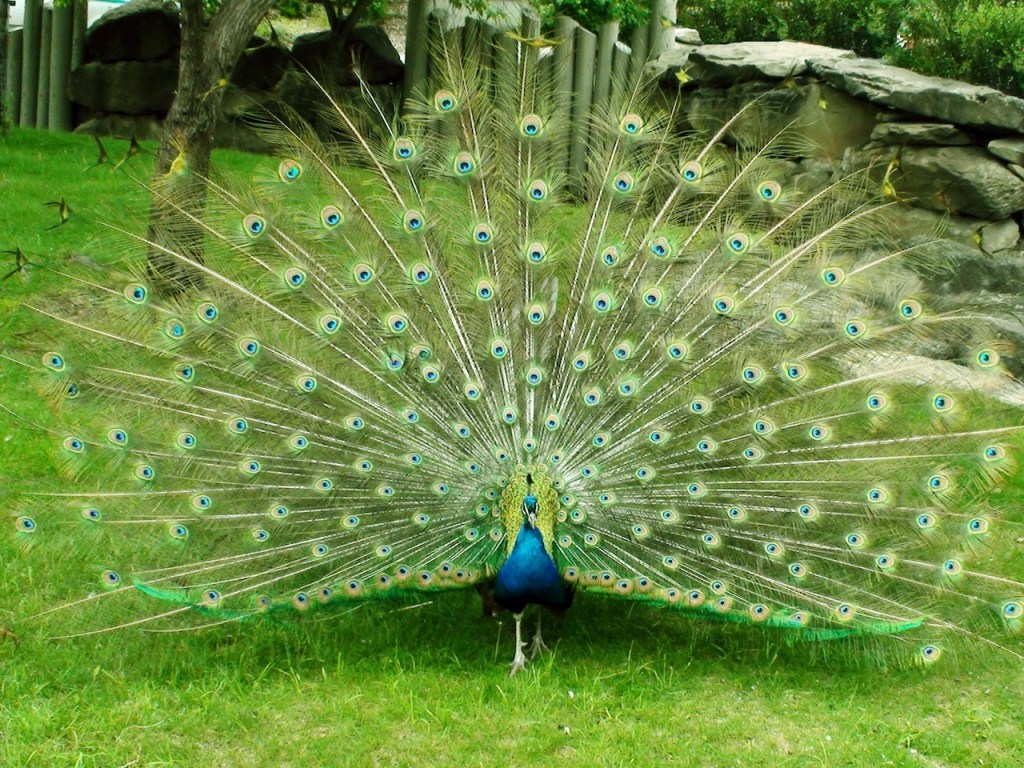
    Image 5: Peacock – Animal Wildlife

    Fourth Movement:  Peacock

    I passed a little further on and heard a peacock say:
    Who made the grass and made the worms and made my feathers gay,
    He is a monstrous peacock, and He waveth all the night      
    His languid tail above us, lit with myriad spots of light. 

    The speaker moves farther along, and listening to a peacock, he muses that the bird would describe his origin as the following: 

    I was created by a huge peacock who also created all vegetation and all other animals.  My Maker moves His bright features through the sky, from where He sends to us the light from the stars.

    Again, the animal describes his Creator in terms of his own characteristics. The peacock, however, verges on the boastful with his description, claiming that the “monstrous peacock,” or more glorious version of himself, also made the grass and worms.  

    The peacock implies that his Creator has made these creatures for the sake of the peacock.  And the peacock also likens his beautiful tail feathers to stars hanging in the skies.

    Image 6: Divine Mother  – Self-Realization Fellowship

    Creation: Image of the Divine

    The philosophy portrayed in William Butler Yeats’ poem is pantheism, the concept that God is everything.  If man (humankind) correctly discerns that God created human beings in His image, then God, in fact, created everything else that exists in His image.  

    If all things are reflections of one Creator, then each thing created can rightly aver that it is made in the image of the Divine. Pantheism is also logically monotheism:  all of creation taken together is one entity.  

    The monotheistic religions of empirical reality—as opposed to that of the  mythological Greek and Roman pantheon of gods—all expound the nature of God as a trinity—one being expressing in three aspects.  For example, in Hinduism the trinity is Sat-Tat-Aum (also expressed as Sat-Chit-Ananda).  The Christian trinity is expressed a Father-Son-Holy Spirit.

    All of the five major world religions—Hinduism, Buddhism, Judaism, Christianity, and Islam—are monotheistic.  Hinduism is often mistakenly referred to a a polytheistic religion by commentators who confuse the names for the various aspects of God as separate gods. 

    Capitalizing Pronouns Referring to God

    The King Jame Version of the Holy Bible does not capitalize the pronouns referring to God; that custom is a 19th century invention.   However, I usually capitalize pronouns referring to the Deity to make clear that such references are, in fact, referring to God.   In this commentary,  I have capitalized the pronouns primarily to make clear that the various individuals are referring to their Maker or God.

  • Gerard Manley Hopkins’ “My own heart let me more have pity on; let”

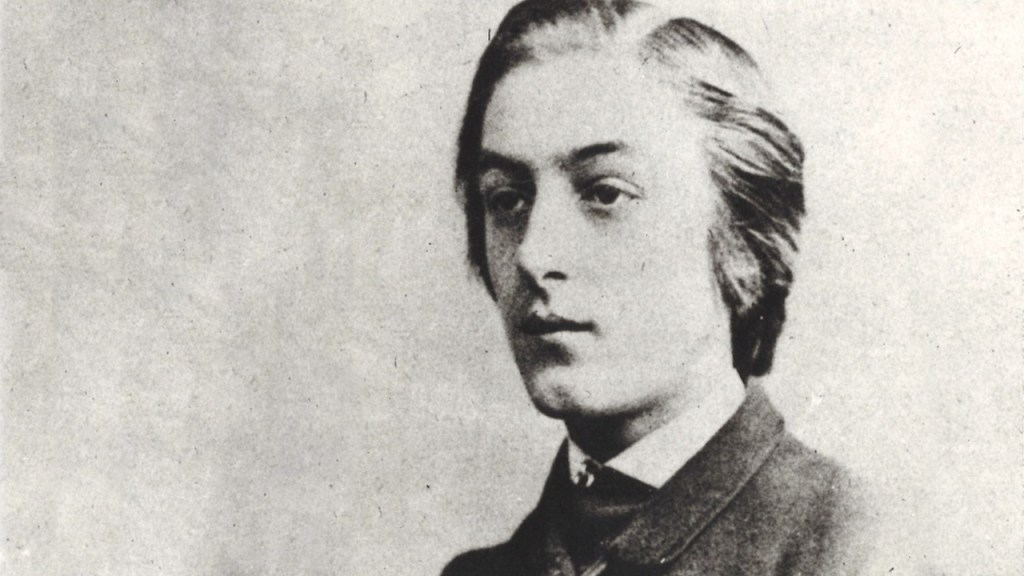
    Image: Gerard Manley Hopkins – National Portrait Gallery, London

    Gerard Manley Hopkins’ “My own heart let me more have pity on; let”

    The speaker in this sonnet examines his inward struggle, through which he has learned mercy toward the self (soul) while undergoing heavy, sustained spiritual pressure.  My personal issue with this pressure assures me that Father Hopkins well understood its vicissitudes as well as its rewards.

    Introduction and Text of “My own heart let me more have pity on; let”

    In this final terrible sonnet, the speaker turns inward to speak directly to his own heart; he does so with urgency but restraint. The sonnet foregrounds his own personal moral and spiritual reckoning.  In that accounting, he has found that self-pity is not indulgence but instead it is simply charity rightly ordered and affirmed. 

    The poetic language pushes as well as it knots itself into compression.  It portrays the pressure exerted on a mind that has been tormented to the point of exhaustion.  Thus, now that exhausted mind must seek a genuine place to rest.

    Readers may note that Father Hopkins has separated  both the octave and the sestet into two quatrains in the octave and two tercets in the sestet.  This kind of separation adds to the dramatic effect that each stanza represents.  

    The sonnet could be interpreted as consisting of four movements; however, for consistency of preserving the Petrarchan model, I have kept them grouped in my commentary as simply octave and sestet.

    My own heart let me more have pity on; let

    My own heart let me more have pity on; let
    Me live to my sad self hereafter kind,
    Charitable; not live this tormented mind
    With this tormented mind tormenting yet.

    I cast for comfort I can no more get
    By groping round my comfortless, than blind
    Eyes in their dark can day or thirst can find
    Thirst’s all-in-all in all a world of wet.

    Soul, self; come, poor Jackself, I do advise
    You, jaded, lét be; call off thoughts awhile
    Elsewhere; leave comfort root-room; let joy size

    At God knows when to God knows what; whose smile
    ‘S not wrung, see you; unforeseen times rather—as skies
    Betweenpie mountains—lights a lovely mile.

    Reading

    Commentary on “My own heart let me more have pity on; let”

    The sonnet dramatizes four movements, as mentioned above,  from self-laceration to self-mercy, which has led to the discovery of hope—not by force of harsh discipline but by soft, divinely inspired release.

    Octave: “My own heart let me more have pity on; let”

    My own heart let me more have pity on; let
    Me live to my sad self hereafter kind,
    Charitable; not live this tormented mind
    With this tormented mind tormenting yet.

    I cast for comfort I can no more get
    By groping round my comfortless, than blind
    Eyes in their dark can day or thirst can find
    Thirst’s all-in-all in all a world of wet.

    The speaker begins the octave by offering a plea that is, however, also a command.  He is directly addressing his own heart as both somewhat metaphorically as both judge and defendant. The line “Let me more have pity on” signals a deliberate act of will: pity must be allowed to exist and work its power, not merely be passively felt. 

    The speaker then labels his accustomed cruelty toward himself: he has become a “tormented mind” that compounds his suffering by continually rehearsing it. The repetition of “tormented” mimics the cycle he is condemning; his has become a mind that had kept turning upon itself without pause to rest. 

    Charity here does not engage merely for sentimental purposes; it remains a necessary,  ethical discipline, employing the discipline to refuse to continually inflict self-harm, even under the guise of rigor.

    The second quatrain moves quite quickly but assertively, and then it intensifies the uselessness of the same old, ordinary search for simple, quiet comfort. Casting “for comfort” metaphorically creates the two leisure activities of  fishing and gambling. Both of these activities involve chance, and uncertainty often hands over nothing to the player after plunging much effort into them. 

    The “blind/Eyes” image sharpens the deadlock: Blind eyes cannot see daylight simply by groping, while thirst cannot be slaked by being dunked in water that is not fit to drink.  Again, the poet has been performing his duty of giving back to the reader his own experience.  And the mark of a great poet is that he does so completely in a natural, believable voice, as Father Hopkins does here.

    The paradox of “thirst’s all-in-all in all a world of wet” completely and earnestly captures spiritual barrenness as it spirits about in a world of abundance, where remedies for maladies surround the suffering soul yet remain remote and unreachable. 

    The octave thus has closed every false door. The  activities of exerting much effort, of analyzing each sorrow’s parts, and then groping toward some restless search have only deepened the dryness of the  issue. The speaker’s understanding and honesty now clear the way for a genuine rejoinder that does not hang on mastery or grasping.

    The minds and hearts of all humanity remain in search of such genuineness, especially as it contemplates it own mortality.  The winds of change may threaten the material world, but the astral and causal levels of being hold promises that humanity keeps deep in its bosom.

    Sestet: “Soul, self; come, poor Jackself, I do advise”

    Soul, self; come, poor Jackself, I do advise
    You, jaded, lét be; call off thoughts awhile
    Elsewhere; leave comfort root-room; let joy size

    At God knows when to God knows what; whose smile
    ‘S not wrung, see you; unforeseen times rather—as skies
    Betweenpie mountains—lights a lovely mile.

    The speaker in the sestet now is able to turn advice into consolation, as he discovers joy; and this joy was not seized by groping fingers but granted by steady grace, which arrived without exertion and through patience.

    In the sestet, the direct address broadens as the “Soul, self” bring together the divided mind/heart into a single event. The affectionate diminutive “Jackself” calms the weather of judgment, while weariness is acknowledged but without contempt. 

    The advice remains as simple as it is radical—“let be.” Thought itself must be allowed to rest “awhile,” not disappeared but its temperature lowered. The speaker suggests a turning “elsewhere,” away from the former obsessive peer into inwardness, leaving “comfort root-room.” Comfort cannot be bludgeoned at the root, an joy must be afforded a place to increase.

    The speaker then suspends time as well as outcome, when he asserts “At God knows when to God knows what.” This line refuses acts that schedule or  measure. It finds that hope exists only under divine discretion. The smile then appears quite naturally because it is “not wrung”; it is not forced by circumstances , neither is it caught up by the will. Instead, this divine joy may come like a flash in “unforeseen times,” and the speaker compares that flash colorfully to the sudden light that appears between mountains. 

    This image then significantly gives honor to the obstruction without dragging in the issue of despair: the mountains still remain mountains, but between them, a mile or so  has been wonderfully lighted.   The sonnet concludes with a vista—limited, lovely, and sufficient. Mercy toward the self has become the condition for perceiving the divine light, for experiencing joy, and it is patience that remains the means by which that blessed condition endures.

  • Gerard Manley Hopkins’ “Patience, hard thing! the hard thing but to pray”

    Image: Gerard Manley Hopkins – Inspirational Jesuits

    Gerard Manley Hopkins’ “Patience, hard thing! the hard thing but to pray”

    This sonnet is counted as one of Father Hopkins’ six “terrible sonnets.”

    Introduction and Text of “Patience, hard thing! the hard thing but to pray”

    The speaker in Father Hopkins’ “Patience, hard thing! the hard thing but to pray” explores searchingly the nature of  spiritual endurance. He is focusing on patience not as a soft virtue but as a challenging and difficult discipline, which oftentimes scars the pride, while exhausting the will.  

    But those actions still reflect and align with divine will and action. As he usually does, this speaker reveals the hard discipline of God remains always for the betterment of humankind.  As human beings, we all search for—or at least wish for—our own betterment.

    As a Jesuit priest, Father Hopkins made it his mission to seek divine guidance, and unlike us non-priestly poets, he focused primarily on religious and spiritual issues that affected him deeply.

    Patience, hard thing! the hard thing but to pray

    Patience, hard thing! the hard thing but to pray,
    But bid for, Patience is! Patience who asks
    Wants war, wants wounds; weary his times, his tasks;
    To do without, take tosses, and obey.
    Rare patience roots in these, and, these away,
    Nowhere. Natural heart’s ivy, Patience masks
    Our ruins of wrecked past purpose. There she basks
    Purple eyes and seas of liquid leaves all day.

    We hear our hearts grate on themselves: it kills
    To bruise them dearer. Yet the rebellious wills
    Of us we do bid God bend to him even so.
    And where is he who more and more distils
    Delicious kindness? – He is patient. Patience fills
    His crisp combs, and that comes those ways we know.

    Reading

    Commentary on “Patience, hard thing! the hard thing but to pray”

    As human beings, we learn early that patience is an important personal quality, but the speaker in this sonnet is revealing his inner turmoil as an  argument against  which he confronts resistance even as he refuses to decry the virtue that seems to be resisting him.   He treats the virtue of patience in a realistic manner—not with sentimentality.  He asserts that patience is both vitally necessary as well as deeply painful.

    The humanity of his cries shows us that as we strive and struggle, all of humanity has done so.  Father Hopkins lived in the 19th century—two centuries earlier than our own, and yet his struggles are our struggles.

    Octave: “Patience, hard thing! the hard thing but to pray”

    The speaker begins the octave with an effusive cry—no calm reflection here!  He invokes “patience” immediately and pairs it with prayer; they are both difficult things to approach and accomplish.  We often cry for what we seem to lack, even in the 21st century.

    He knows that genuine prayer requires patience, and it is a kind of patience that the heart and mind naturally resist in a fallen world.   The sharpness of his complaint is emphasized through repetition.

    He then seems to create a stunning paradox in that patience is difficult, but it is also “bid for.” The speaker easily confesses that patience is not only endured, but it is sought and asked for, even though that asking heralds conflict. 

    Personified as a female figure who is doing the asking, Patience paradoxically “wants war, wants wounds,” and those qualities expose that there is a cost in acquiring her. She commands that one live a life without ease, which includes doing without things one might need for comfort, receiving blows that stun and hurt, all the while remaining obedient.  Dame Patience then requires obedience under pressure with the willingness to accept pain, trials, and tribulations that seem arbitrary instead of well-deserved.

    The speaker asserts that that kind of patience remains rare, even fragile. It takes hold only under these catastrophic conditions; for if they are removed them, there is not patience within existence.  This insistence blows up the notion that patience can be a decorative virtue experienced in comfort; instead, patience makes it appearance only in deprivation, instability, and any other calamity. 

    Still through all this mayhem, the speaker refuses to qualify her as infertile. Through a striking shift in tone and assurance,  patience then transforms into “Natural heart’s ivy” —a living being, covering “our ruins of wrecked past purpose.” We chafe under ruined purposes as we try to build a better world even in current times.

    With that ivy image, the speaker is acknowledging that failure and collapse within the self, which include all past intentions are broken and defeated. Patience, however, does not convert them; she merely masks them by covering all that damage with new growth.

    The final lines of the octave seems to complicate the struggle. Patience is basking in colorful accoutrements, yet luxuriant color and fluidity suggest abundance, as well as beauty, even though it is a beauty that grows over wreckage. 

    The speaker thus remains well aware that such patience beautifies what has been lost without denying the loss itself. The octave leaves the speaker’s fragility suspended between intense pain and strange fertility—between war and ivy.

    Sestet: “We hear our hearts grate on themselves: it kills”

    In the sestet, the speaker turns inward with even greater urgency. He hears that “our hearts grate on themselves”; this image is harsh and mechanical, suggesting inner resistance. And patience can be understood as not only difficult, but it is also possibly lethal, in that “it kills / To bruise them dearer.” 

    That claim is intimating that the heart continues to hang onto its own wounds because it would rather retain the familiar pain than to face the adversity made possible by surrender. 

    Especially within the confines of such thinking,  the speaker has to surrender to an subtle prayer: “the rebellious wills / Of us we do bid God bend to him.” Even as the will resists God, it, at the same time, must supplicate to God to transcend its resistance.  An exotic tension unfolds the divided mind/soul as it prays. It remains faithful but still defiant.

    The main focus that has infused itself throughout the entire sonnet comes into sharp relief in the form of the question “where is the goodness that justifies all of this misery and suffering?”  A question to haunts our current civilization as surely as it did two centuries ago!

     The speaker responds not with an argumentative abstract notion, but with a person. “He is patient.” God’s kindness can come only slowly, similar to a liquid being “distilled,” drop by drop, rather than being poured out all at once.  As science has shown us certain processes, poetry shows us the metaphorical value of understanding those processes.

    Patience is not merely a virtue that human beings must learn; it is the basic method of God’s own divine action. The final image of “crisp combs” brings to mind honey made by bees that labor furiously as they produce such sweetness. 

    Patience “fills” them (all of creation’s creatures), and from that fullness comes kindness in “those ways we know,” as it ascends to human experience through evolutionary time rather than temporal spectacle.

    In the sestet, the speaker comes close to showing how to defend one’s heart and mind in the struggle that humanity is engaged in.  He does not provide direct relief from pain or a way to guard against rebellion. 

    But instead, the speaker suggests that the answer can only be understood in terms of what is human and what is divine; thus, human patience can be seen to resemble divine patience.  The pain and suffering experiences by human beings can be converted into the divine stuff that produces sweetness, i.e., kindness.

    The process, of course, is meditation and prayer, along with deep thought and service to humankind and the world at large, in whatever form that service must take—even writing poems, thus, can serve a divine purpose.

    We struggle today as humanity has struggled in the past.  From poets such as Father Hopkins, we can glean the depth of our sorrow but also we can be comforted that there is a light at the end of the tunnel of sad darkness, and we can determine that we will progress toward that light.