Linda's Literary Home

Tag: God

  • Original Song: “Twixt Good and Evil” and Prose Commentary 

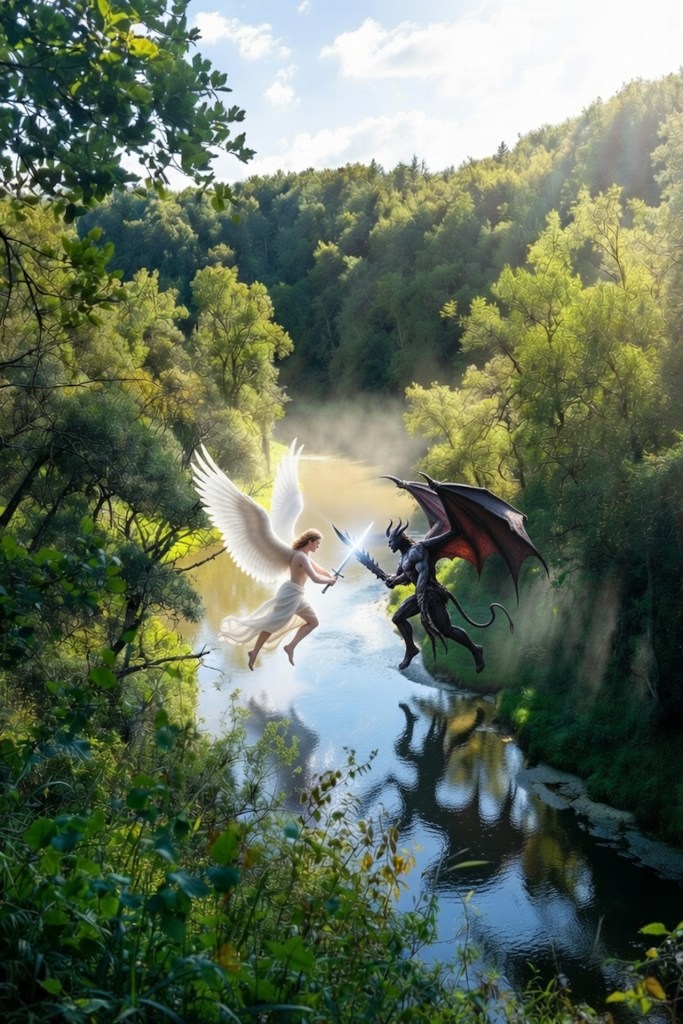
    Image: Created by Grok

    Original Song: “Twixt Good and Evil” and Prose Commentary 

    I chose the quotation from Isaiah because it demonstrates the omnipotence and omnipresence of the Almighty Creator.  Some religionists, especially Christian, argue that God is all good and therefore could not have created evil.  But such a claim limits God’s power and ability—an odd thing to do since they claim that God is omnipotent and omnipresent!

    Twixt Good and Evil

    I form the light, and create darkness: I make peace, and create evil: I the Lord do all these things.”    —Isaiah 45:7

    Chorus

    In the fight twixt good and evil
    Good will always win;
    For God created the devil
    Just tempt us all to sin.
    God doesn’t cause us to bear sorrow;

    He tries to lead us to His light,
    And His Word guides our tomorrow
    If we learn to read It right.

    First Verse 

    Good morning, Satan!
    Are you doing OK?
    What kinds of nasty
    You going to throw at me today?
    Will my daughter get cancer?
    Will my son fall off his bike?
    Will my husband crash his truck?
    Will my dog lie down and die?

    Second Verse

    Good morning, Devil!
    Are you doing just fine?
    How will you try to tempt me
    To cross that boundary line?
    Will you make me think I’m sexy?
    Will you make me want to flirt?
    Will you take me to a place
    I’d never go without your dirt?

    Third Verse

    Good morning, Lucifer!
    How’s it going, Old Dude?
    What you got in store for me today—
    What kind of rude and crude?
    Will you shine your light on sorrow?
    Will you tempt me to believe
    I’ll be so good tomorrow
    That today I can misbehave?

    Fourth Verse

    Good morning, Maya!
    Of all the things in the fold
    Which one will grab my thoughts today
    To divert me from my goal?
    Will I seize upon another’s mote
    Though there’s one in my own eye?
    Will I hurt anyone whose handy?
    Or will I just sit, sigh, and cry?

    Chorus

    In the fight twixt good and evil
    Good will always win;
    For God created the devil
    Just tempt us all to sin.

    God doesn’t cause us to bear sorrow;
    He tries to lead us to His light,
    And His Word guides our tomorrow
    If we learn to read It right.

    To listen to the recorded version, please visit “Twixt Good and Evil” on soundcloud.

    Commentary on “Twixt Good and Evil”

    Epigram:  “I form the light, and create darkness: I make peace, and create evil: I the Lord do all these things.”    —Isaiah 45:7

    I chose this quotation from Isaiah because it demonstrates the omnipotence and omnipresence of the Almighty Creator.  Some religionists, especially Christian, argue that God is all good and therefore could not have created evil.  

    But such a claim limits God’s power and ability and at the same time introduces a second force into being.  Because there can be no second force, only God can be responsible for all that exists, including evil.  In the Isaiah quotation, God is speaking and He clearly says, “I . . . create evil.”

    At first, such a claim may seem paradoxical, but just because God creates evil does not make God evil: it makes Him all powerful, the very quality that Christians believe God to possess.

    So with that fact established, the next question is why did/does God create/allow evil?  And the answer is so that a physical creation can exist.  Without pairs of opposites, there can be so creation: forces rub against forces; conflict pits good and evil against each other.

    We cannot recognize a quality unless we have something to which we can  compare or contrast it.  Image that only good things had happened to you in your life.  How would you know that only good things had happened if you had never experienced the less than good or the bad?  

    Humanity is faced with these forces in order to learn and to evolve.  According to Paramahansa Yogananda and other great spiritual leaders, the only purpose of life is to unite the soul with the Over-Soul or God.  In order to do that, each human being has to work out its karma, its issues that lead it to believe it is nothing more than a bag of bone and flesh.  

    Each human being must learn that he or she is essentially a soul that has a physical body.  That soul is already perfect but because it lost its divine awareness by being born in a physical encasement, it has to relearn to be divine.

    Now, why did God make such a plan, such an existence?  Why not just let us  keep our divine status and not have to go through incarnations that may take many millennia?  Only God knows the answer to that question.  Offering one possible explanation, Paramahansa Yogananda contends that creation is God’s lila or play, and He made for his own enjoyment.  

    Because that explanation may not satisfy, the following exchange between Sri Yukteswar, the guru of Paramahansa Yogananda, and a student suggests additional reasoning:

    “Why did God ever join soul and body?” a class student asked one evening. “What was His purpose in setting into initial motion this evolutionary drama of creation?” Countless other men have posed such questions; philosophers have sought, in vain, fully to answer them.

    “Leave a few mysteries to explore in Eternity,” Sri Yukteswar used to say with a smile. “How could man’s limited reasoning powers comprehend the inconceivable motives of the Uncreated Absolute? T

    he rational faculty in man, tethered by the cause-effect principle of the phenomenal world, is baffled before the enigma of God, the Beginningless, the Uncaused. Nevertheless, though man’s reason cannot fathom the riddles of creation, every mystery will ultimately be solved for the devotee by God Himself.” (my emphasis added)

    The opening quotation, therefore, establishes the spiritual nature of the song: a monotheistic worldview in which nothing—light or darkness, peace or evil—exists outside God’s sovereignty.

    By invoking Isaiah 45:7, I preempt the simplistic dualism: evil is not an equal rival to God but a force that God Himself created to serve a divine purpose. This contention prepares the listener/reader to understand temptation and suffering not as evidence of God’s absence, but as part of a moral testing ground in which human choice matters.

    Thus, although the singer/speaker has undergone all of these tests foisted by Satan, the Devil, Lucifer, and Maya—all of which are simply different names for the same force—she seems to be implying that she is transcending them because she realizes that God only created these forces to tempt his children. 

    She is also implying that she has learned to read God’s word correctly and now she understands that by not allowing that evil force to dominate her she will no longer suffer.

    Chorus: “In the fight twixt good and evil”

    In the fight twixt good and evil
    Good will always win;
    For God created the devil
    Just tempt us all to sin.

    God doesn’t cause us to bear sorrow;
    He tries to lead us to His light,
    And His Word guides our tomorrow
    If we learn to read It right.


    The chorus opens the song/poem with its theme, which focuses on the battle between good and evil in the world of humankind. It makes the explicit claim that “good will always win,” and then it explains that the devil is just a tempter—not a separate force— because God Himself “created the devil.” 

    That “God created the devil / Just to tempt us all to sin” reflects the exact message of the Isaiah quotation. God made the devil to introduce temptation in our lives, but God allows it, and He did not create temptation to make us suffer, at least, not eternally. 

    We  know of God’s intention because God has offered a guide in written scripture, which all religions and spiritual faiths possess.  But it is interpreting those pages of guidance that confounds us and keep us in darkness.  God wants to lead us to light, and learning to interpret his Word correctly and effectively can lead us there.

    First Verse: “Good morning, Satan!”

    Good morning, Satan!
    Are you doing OK?
    What kinds of nasty
    You going to throw at me today?
    Will my daughter get cancer?
    Will my son fall off his bike?
    Will my husband crash his truck?
    Will my dog lie down and die?


    The singer/speaker addresses Satan directly, asking quite conversationally how he’s doing?  Assuming that he is doing “OK.”  Then she pitches a series of questions at him.  These question involve “nasty” events that no one wants to experience:  a daughter getting cancer, an son falling off his bike, a husband crashing his truck, a dog dying.

    The answer to each of these questions is yes: Satan will throw all of these things at me eventually.  And I personally have experienced every one of them.  So addressing Satan in such a friendly way must be understood a high sarcasm. 

    Satan will always remain the adversary, but showing him that I can take him lightly lessens his power over me.  Besides, I have already told you in the chorus that I know the score on these issues.  Satan does not hold the power; God does.

    Second Verse:  “Good morning, Devil!”

    Good morning, Devil!
    Are you doing just fine?
    How will you try to tempt me
    To cross that boundary line?
    Will you make me think I’m sexy?
    Will you make me want to flirt?
    Will you take me to a place
    I’d never go without your dirt?

    Addressing Devil with the same tone expressed when she addressed Satan, the singer/speaker assumes Devil is “doing just fine.”  Again, with a series of questions:  how are you going to temp the today?  will you use sex and promiscuity to make me do things that otherwise I would deplore?  

    Because vanity and sex lead to so much mischief and depravity in the world, one would likely be a consummate prevaricator to deny having been caught up in such “dirt.”  That’s all the personal confession and testimony I will offer for this one. But obviously, again, the from Devil, the answer is “Yep, I’ll get you, my Pretty, and you little dog, too!”

    Third Verse:  “Good morning, Lucifer!”

    Good morning, Lucifer!
    How’s it going, Old Dude?
    What you got in store for me today—
    What kind of rude and crude?
    Will you shine your light on sorrow?
    Will you tempt me to believe
    I’ll be so good tomorrow
    That today I can misbehave?

    Addressing the devil/satan in his light-bearer form, Lucifer, the singer/speaker makes no assumption but simply asks how things are going for the “Old Dude. Then again wants to know that the Light-Bearer has “in store” for her.”  She knows that whatever it is it will likely be “rude and crude.”  She has learned about this being’s ways in earlier verses.

    She wonders if Lucifer will put a spotlight on self-pity and thus allow her to engage in sorrowful feelings.  Then abruptly, she shifts to wondering if he will encourage her think she will behave tomorrow so well that today she can engage in all manner of  debauchery.

    This verse captures the moral danger of self-bargaining and the illusion of future repentance as permission for present wrongdoing.

    Fourth Verse:

    Good morning, Maya!
    Of all the things in the fold
    Which one will grab my thoughts today
    To divert me from my goal?
    Will I seize upon another’s mote
    Though there’s one in my own eye?
    Will I hurt anyone whose handy?
    Or will I just sit, sigh, and cry?


    In this final verse, I address the evil one as Maya, which means delusion, and is the Hindu concept for Satan/Devil/Lucifer.  Maya seems less judgmental and harsh than the Christians concepts, although the end result of “delusion” is the same as the end result of sin.  It is delusion that causes us to “misbehave” and therefore “suffer.”  

    The satanic, evil, mayic force all steer the human being to engage in sense gratification, and such activities divert the person from seeking Divine Awareness, which is the goal of life, according to Paramahansa Yogananda.

    When I reference the “mote” and the “beam,” I am, of course, echoing Christ’s teaching on judgment, offering that as the first possible wrong thing I might do today.  Then again I continue questions as I wonder what the magic Satan/Maya will do today to “divert me from my goal.” 

    I might engage in activities that hurt people, or maybe I will just sit, think useless, thought, become maudlin and then “cry.”  The negativity supports the wretched influences that has been on display in the entire song/poem.  

    Chorus:  In the fight twixt good and evil”

    In the fight twixt good and evil
    Good will always win;
    For God created the devil
    Just tempt us all to sin.

    God doesn’t cause us to bear sorrow;
    He tries to lead us to His light,
    And His Word guides our tomorrow
    If we learn to read It right.

    What saves the whole mess from languishing in pool of sorrowful dreck is the chorus, which is repeated at the end.  Despite the battle each human being has to face each day, eventually according to each person’s karma “good will always win.”

  • Original Song:  “River Spirit” and Prose Commentary

    Image: “Whitewater River Songs – Album Cover” Photo by Ron W. G.

    Original Song:  “River Spirit” and Prose Commentary

    I wrote “River Spirit” circa 1980 then made a homemade recording of it around 20 around 2004.  In 2023, my husband Ron—whom I call “My Sweet Ron”—created the video featuring his own photos and videos selections along with the song.  

    Introduction to and Lyric of “River Spirit”

    The lyric of “River Spirit” plays out in four stanzas of tercets, with one couplet appearing as the second stanza.  It sports no traditional rime-scheme but does offer one set of perfect rime in “hand/sand” in the second and third lines.  Other slant—or more accurately ghost rimes—appear in “water/before” in the couplet.

    Ghost rimes also make an appearance with “bed/edge” and “changes/images.”  The time frame begins in spring, as the singer begins to report what she sees along the river after the cold hard season of winter has given way to the warmth of spring.

    The theme of the song is the mystery the singer feels at seeing that the landscape along the river has been radically transformed from what she had observed during the summer before this transforming winter had its sway.  The singer poses questions about how the trees got uprooted and the path along the river has shifted, as even the stones are taking on new patterns.

    The singer then announces what she had thought to be the agent of the transformations; however, she is ultimately revealing—in the title—that what she “guessed” back in the day, she now knows to be the work of the Divine Reality, the “River Spirit”—or God (see “Names for the Ineffable God”).

    (Please note:  Dr. Samuel Johnson introduced the form “rhyme” into English in the 18th century, mistakenly thinking that the term was a Greek derivative of “rythmos.”  Thus “rhyme” is an etymological error. For my explanation for using only the original form “rime,” please see “Rime vs Rhyme: Dr. Samuel Johnson’s Error.”)

    River Spirit

    Every spring along the Whitewater River
    I saw that some mysterious hand
    Had rearranged the rocks and sand.

    The path I followed the summer before
    Was slipping off into the water.
    I could not figure out whose force
    Could drive that water among the reeds
    & shift the river in its bed

    Whose muscles uprooted those trees?
    Whose fingers patterned those stones
    Along the edge?  

    I guessed only that the spring thaw
    Conjured up the changes
    In those sleeping river images.

    Commentary on “River Spirit”

    The time frame is spring, as the singer begins to muse on what she observes along the river after the cold, hard season of winter has given way to the warmth of spring.  Her earlier guess about that riverbank rearrangement has now become an article of faith, and she proclaims in the title the answer to her earlier inquiry.

    First Movement:  The Hand of Mystery

    Every spring along the Whitewater River
    I saw that some mysterious hand
    Had rearranged the rocks and sand.

    The singing narrator launches right into her story by making the claim that she observed a change in the pattern of stones and sand along the river’s edge, and she make this observation “every spring.”  She had thus a recollection of having experiences these changes many times.

    She colorfully attributes those rearrangements to “some mysterious hand.”  At this point, it may sound a bit odd that a river walker would think a hand had been involved in what went on along the riverbank in her absence.

    Second Movement:  River Features Shifting

    The path I followed the summer before
    Was slipping off into the water.

    After setting the stage for mystery and rearrangement of river features, the singer offers a very specific change.  She had walk along a path during the preceding summer, and now that path simply veered off into the river water.  Such a change would likely be quite jarring for the hiker, who would necessarily be obliged to alter her walking pattern.

    Third Movement:  Puzzling over the Changes 

    I could not figure out whose force
    Could drive that water among the reeds
    & shift the river in its bed

    The singer now inserts her puzzlement.  She becomes curious as to how such changes could have occurred.  She sees that the river has now shifted its course, plunging into the reeds along the bank.

    The mere fact of the river shifting “in its bed” seems Herculean in prospect.  The river is such a large body of moving water that the notion of it shifting surely requires a force that strikes the singer an unimaginable at this point.

    Fourth Movement:  Who Made Those Changes?

    Whose muscles uprooted those trees?
    Whose fingers patterned those stones
    Along the edge?  

    The singer then again adds more specificity to her inquiry.  She sees that trees have been “uprooted,” and she observes that the stones along the river’s edge have been rearranged in a different pattern from the summer before.

    Again, she colorfully attributes those “changes” to a seemingly human agency of “muscles” and “fingers.”  But behind those specific agents must lie some metaphysical force that at this point the singer cannot name, cannot even offer a guess about.

    Fifth Movement:  Guessing at the Conjuring

    I guessed only that the spring thaw
    Conjured up the changes
    In those sleeping river images.

    Now the singer offers what she thought to be an answer to her inquiry: Well, it was likely that not any hands, muscles, or fingers enforced all of these changes; it was simply the process of thawing out from the ice during the warming movements brought on by spring.

    Sure, that’s it: the spring movements of thawing influenced those inert river features to alter themselves into differing patterns from the summer before.  What else could it be?  But the singer is understating what she really believes now.  She “guessed” about the “spring thaw”—but that was then, this is now.

    Thus the singer through anthropomorphic images of hands, muscles, fingers has proclaimed that a humanlike power has, in fact, mades these changes.  Not an actual human being on its own however.  But some power that retains in its Being the image of the human form, power,  and ingenuity.

    Simply, the title of the lyric has already stated what the singer pretends to guess about as she unfurls the song:  God (as the “River Spirit”) has performed His magic on these “sleeping river images.” God has “conjured up” those alterations in those river images as they moved from a frozen, winter sleep to vital spring time awakening.

  • Original Song:  “Astral Mother” with Prose Commentary

    Image: Mommy and MePhoto by Ron W. G.

    Original Song:  “Astral Mother” with Prose Commentary

    This song is dedicated to my beautiful mother, Helen Richardson, whose soul left the physical planet Earth at the age of 58 and now resides in the astral world.  By faith and deep love, I visit her there from time to time.

    Introduction with Text of “Astral Mother”

    My original song, “Astral Mother,” plays out in three verse-movements and two chorus-movements.  A traditional verse is a unified set of lines—often four but through innovation the number is not consistent.

    Thus, a verse-movement may be any number of lines or stanzas because the emphasis in on the theme of the movement.  A movement depends upon theme rather than number of lines or stanzas.

    On the astral plane, souls have shed their bodies of chemicals and dust and reside in bodies of light.  Although the physical body is also made fundamentally of light, the astral body is perceived as light more easily than the “mud” covering the soul on the earthly plane.

    After visiting my mother on the astral plane, I bring back images, ideas, and thoughts that I dedicate to her in poems and songs.  The text of the song follows, and you are welcome to listen to the song on SoundCloud.

    Astral Mother

    In memoriam:
    Helen Richardson
    June 27, 1923 — September 5, 1981

    for your beautiful soul

    You are waiting now . . .
    A bright star light
    In the astral world

    You have shed the mud
    That covers the soul
    On the earthly plane . . . —

    Where you were my mother, and I was your child
    You were my mother, and I was your child . . . 

    You are watching for me . . .
    To catch my beam
    In the astral world

    We will live again
    The love we lived
    On the earthly plane . . . —

    Where you were my mother, and I was your child
    You were my mother, and I was your child . . .

    We will understand the Spirit-made plan . . .
    That kept us a while . . .
    In this earthly world . . . —

    Where you were my mother, and I was your child
    You were my mother, and I was your child . . .

    O, my Divine Mother, make me Thy Divine Child!
    O, my Divine Mother, make me Thy Divine Child!

    Commentary on “Astral Mother”

    A daughter addresses her mother who has departed the earth and now resides in the astral world.  Through faith and divine guidance, the daughter visits the mother and creates a tribute to her mother’s beautiful soul of light

    First Verse-Movement:  Living as Light in the Astral World

    You are waiting now . . .
    A bright star light
    In the astral world

    You have shed the mud
    That covers the soul
    On the earthly plane . . . —

    From the earthly plane of existence, the singer/narrator is addressing a loved one who is residing on the astral plane of existence.  

    The soul of the departed loved one is now existing in her astral/causal bodies—where the soul continues without its physical encasement.  Paramahansa Yogananda explains this phenomenon:

    astral body. Man’s subtle body of light, prana or lifetrons; the second of three sheaths that successively encase the soul: the causal body (q.v.), the astral body, and the physical body. The powers of the astral body enliven the physical body, much as electricity illumines a bulb. 

    The astral body has nineteen elements: intelligence, ego, feeling, mind (sense consciousness); five instruments of knowledge (the sensory powers within the physical organs of sight, hearing, smell, taste, and touch); five instruments of action (the executive powers in the physical instruments of procreation, excretion, speech, locomotion, and the exercise of manual skill); and five instruments of life force that perform the functions of circulation, metabolization, assimilation, crystallization, and elimination.

    The singer/narrator affirms that her loved one—her belovèd mother—is now “waiting” in her body of light as it exists on the astral plane. The singer/narrator in the second part of the movement refers to the physical body as “mud” which the astral mother has now “shed.”  The physical body encases the soul on the earthly plane of existence.

    The physical body may be metaphorically referred to as “mud” after the Biblical description of the human body:

    In the sweat of thy face shalt thou eat bread, till thou return unto the ground; for out of it wast thou taken: for dust thou art, and unto dust shalt thou return. (KJV Genesis 3:19)

    But after the soul leaves that physical encasement, it continues its existence in the two other bodies—astral and causal—on the astral plane where it is perceived only as light. Thus, the daughter/speaker has perceived her mother as a body of light, which she designates metaphorically as “a bright star light.”

    Second Verse-Movement:  Waiting to Spot a Familiar Dot of Light

    You are watching for me . . .
    To catch my beam
    In the astral world

    We will live again
    The love we lived
    On the earthly plane . . . —

    The singer/narrator then affirms that the astral mother is waiting for her daughter to join her on the astral plane.  The daughter will become a “beam” of light after she leaves her own physical encasement, entering the “astral world.”

    The singer/narrator then affirms that the mother and daughter will experience that same love that they shared when they were both on the earth together.   The “lived” love and they continue to live that love, but after they both are in the same level of existence, they are likely to recognize and have a deeper level of awareness of that love.

    Third Verse-Movement:  Understanding and Appreciating Love and Light

    We will understand the Spirit-made plan . . .
    That kept us a while . . .
    In this earthly world . . . —

    The singer/narrator finally affirms that after the mother and daughter are reunited, for however briefly that reunion might exist, they will understand more about the divine plan that God has for them.

    They were both maintained on the earth planet for while; they no doubt had questions about the meaning of life and all of its vicissitudes.  The singer/narrator predicts that after entering the astral plane, both she and her mother will understand more about meaning and purpose then they had before.

    Experience is great teacher; and God puts His children in positions from which they may learn what they need in order to meet their karmic demands. The singer/narrator holds great faith that she and her mother on the path that leads to the ultimate enlightenment of union with the Divine.

    Chorus-Movement 1:  A Simple Statement of Fact

    Where you were my mother, and I was your child
    You were my mother, and I was your child . . .

    In the first chorus, the singer/narrator simply states the fact that the addressee in the song was the singer’s mother, and the singer was the child of the mother.   On the earth plane, they were mother and daughter.

    The simplicity of the statement may be misleading.  This simple fact is, however, very important.  On the earth plane, they were mother and daughter, but on the astral plane they are only two individual souls that are children of the One Father-Mother-God.

    The mother/daughter relationship on earth is likely quite a different one from that relationship as two individual souls on the astral plane.  Despite that obvious fact, the important fact to remember is that love exists between the two; it existed on earth and it will exist in the astral world.

    Chorus-Movement 2:  A Prayer-Chant to the Divine Mother

    O, my Divine Mother, make me Thy Divine Child!
    O, my Divine Mother, make me Thy Divine Child!

    The momentousness of the shift from the earth relationship of mother/daughter to Divine Mother/Divine Child cannot be overstated.  

    By ending with a chant-like prayer, the singer/narrator affirms that through the love relationship between earth mother and daughter, she has come to understand that both mother and daughter are children of the Divine Reality (God).

    And the singer/narrator then supplicates to God as Divine Mother to help her realize her soul as that “Divine Child” that she is.  The same supplication is offered on behalf of the astral mother, whom the singer/narrator has been addressing.

    Both former earth mother and earth daughter are children of the Divine, and they both must one day come to realize that relationship to the Divine—and the singer/narrator prays for that to happen.

  • Original Song: “River of Time” with Commentary

    Image: Whitewater River, Richmond IN  

    Original Song: “River of Time” with Commentary

    My original song “River of Time” is a hymn to my Divine Belovèd, featuring a chorus that functions as a chant.

    Introduction with Text of Lyric “River of Time”

    Because music was my first love that I remember from the earliest age, I have always been attracted by the sounds from inspiring music.  

    I began writing songs seriously around age 32, and I especially enjoy and appreciate my songs that turn into hymns to the Divine Belovèd.  “River of Time” is such a hymn.  

    I am strongly influenced by the Cosmic Chants of my guru (spiritual leader) Paramahansa Yogananda.  Many of my original hymns have a chant-like element—a repetition that takes the minds within or bespeaks some spiritual truth for mental awareness.

    River of Time

    A hymn to my Divine Belovèd

    Verse
    Waiting by the river of time—
    My beloved keeps His rime
    In the sunlight that sings in stars
    The moon will wax in tune

    Verse
    Flowing with the river of time—
    Do you feel the rhythm that glides
    As you sing each lingering verse?
    Your soul will chant in bliss

    Verse
    Once beyond the river of time—
    Where you seek your ultimate rime,
    Where you need to battle no more
    You’ve reached that heavenly shore

    Chorus
    Every moment is light infused  
    Behind the darkness of closed eyes
    Seek no more for all is here
    Nothing more to do or fear

    Video by Carlene Craig

    Commentary on “River of Time”

    The singer/seeker/devotee in this hymn does not directly address her Heavenly Father-God.  She suggests the target of her report in subtle ways by essentially addresses her own self or soul. She sings to remind herself of her goal of soul- or self-realization, unity with the Divine Belovèd.

    First Verse:  Existence on the Physical Plane

    Waiting by the river of time—
    My beloved keeps His rime
    In the sunlight that sings in stars
    The moon will wax in tune

    The singer/devotee exists along a continuum that the human mind and heart often liken metaphorically to a river—a “river of time.”  Time seems to flow, meander, going somewhere.

    Intuition tells the human mind and heart that the soul is moving as on a flowing body of water to somewhere that must be wonderful.

    The beloved who is causing this river to flow displays his wares in light—sunlight and moonlight.  Science tells humanity that sunlight is reflected in the stars, and the moon also reflects that important, life-sustaining orb.

    The singer/devotee implies that her beloved is a poetic artist because he keeps “His rime” visible in the light of the sun and the moon.

    Second Verse:  The Rhythm of Soul Bliss

    Flowing with the river of time—
    Do you feel the rhythm that glides
    As you sing each lingering verse?
    Your soul will chant in bliss

    The singer then states that her soul is, in fact, moving down this metaphorical river.  She poses a rhetorical question of her self to ascertain if she is really sensing the rhythmic sway of the music of her verses.

    As she sings, she has become aware of her soul flowing into its natural state of “bliss.”  The verses that linger in the heart and mind bestow on her a marvelous state of awareness and joy.

    Third Verse:  Transcending Physical Existence

    Once beyond the river of time—
    Where you seek your ultimate rime,
    Where you need to battle no more
    You’ve reached that heavenly shore

    The singer then begins to speculate about the existence to be experienced after transcending the physical level of existence, metaphorically named the “river of time.”  

    Beyond that locus is where the ultimate poetry and music hold sway, where humanity no longer is required to struggle with life’s vicissitudes, trails, and tribulations.  Once the soul has become self-realized, it knows only divine joy and love.

    Chorus:  Moving into the Joy of the Light

    Every moment is light infused  
    Behind the darkness of closed eyes
    Seek no more for all is here
    Nothing more to do or fear

    The singer’s repeated, chant-like chorus is an affirmative statement about what goes on after she closes her eyes to the physical level of existence.

    She need not continue searching for she has arrived at the Goal of life. United with the Divine Belovèd, there is nothing that she will ever have to fear.

    Video:  Whitewater River-Tim Bowman-East Fork of the Whitewater River-near Brownsville IN 

  • Original Song: “Against” with Prose Commentary

    Image:  Linda Sue Grimes at the SRF Windmill Chapel at Lake Shrine Photo by Ron Grimes (Ron W. G.).

    Original Song: “Against” with Prose Commentary

    The singer/devotee is entreating her soul to forsake worldly things and ways, which according to Emily Dickinson, “hold so,” and follow the way of spirit.  The way of spirit protects “against”  all the things that damage the individual physically, mentally, and spiritually.

    Introduction with Text of Lyric “Against”

    Many old spirit-infused hymns sing about the futility of this world to the point of asserting that this world is not even our true home [1].   Paramahansa Yogananda has explained that one’s engagement with sense pleasure must be carefully observed lest they ensnare the soul, preventing it from experiencing the higher pleasures of soul-awareness [2].  

    Removing the flesh motivating experiences becomes one’s highest duty.  While the first step to soul-awareness appears to be a struggle “against” the senses and all worldly endeavors, that opposition must not become so intrenched that it impels one to judge others harshly and act on that judgment.

    Instead simply remaining mindful of one’s own behavior opens one’s heart to soul power. Creatively fashioning the experiences and thoughts on the journey to soul awareness adds to the reality and beauty that the world actually provides. 

    Against

    The Blessed Divine gave us all the gifts that we must learn to enjoy but without becoming entangled and attached; it is with that non-attachment in mind that the following hymn is offered to the Blessed Spirit Who inspires true music.

    Chorus: 

    Against the tone of heartbreak
    Against the stone of night ache
    Against the wrong that leads you
    Against the blood that speeds you

    1st Verse

    Whisper into the drum and see the bay of stars
    That permeate the golden night in silver bars
    Usher to the harp the placid palms of notes
    That wistfully breathe on strings of hope

    2nd Verse

    Quaff the mist of years, past where you thought
     That dwarves were playing in the valley of rock
    Don’t listen to a decibel lower than the sound
    Of the one hand raised in perfect redound

    3rd Verse

    Bless your father and your mother whose ears
    Have turned to stone with worries and fears
    They planted their flag in the wind by the sea
    They pray on the ghost ridge and wait to be free

    4th Verse

    Whisper again and listen for the echo
    That lingers in the valley you used to know
    Keep a clear watch how the strain will peel you
    Keep your mind in tow for the brain will steel you 

    5th Verse

    Into the light, where you bow
    Where you offer news of then and now
    Where you fold your hands and wonder as you pray
    If you heard that thunder across the bay

    6th Verse

    Whisper blowing, softly into the day
    Let no shaft of light escape your sight today
    Listen to your commandments, as they
    Lead you to the words you hunger to pray

    To listen to an audio recording of this song, please visit “Against.”

    Commentary on “Against”

    My original song “Against” is a lament for our times—for all times.  The devotee/singer begs her soul to forsake the things of this world, which become so attractive that they hold one’s attention to the detriment of the soul.

    The spiritual aspirant, however, wishes to follow the way of spirit.  The way of spirit protects the individual “against”  all the things that hurt one physically, mentally, and spiritual.

    Chorus:  A Lament and Call to Struggle

    Against the tone of heartbreak
    Against the stone of night ache
    Against the wrong that leads you
    Against the blood that speeds you

    The broken heart, the mental-pain-induced inability to sleep, behaving inappropriately, and allowing the physical body to dictate one’s thoughts and behavior are all things the devotee of spirit must battle “against.” 

    Allowing the voice to express opposition through melody tempers the heart and mind, allowing soul power to influence the senses that have the tendency to become so greedy and obstructive.

    1st Verse:  Listening to the Music of the Spheres

    Whisper into the drum and see the bay of stars
    That permeate the golden night in silver bars
    Usher to the harp the placid palms of notes
    That wistfully breathe on strings of hope

    The singer demands of her soul that it listen to the music of the spheres [3], to observe the night sky for inspiration to follow the way of spirit.   The singer remains in search of hope through beauty of sight and sound.  The stars at night accompany the beauty of melody that the seeker/singer tis striving to engage.

    Quaff the mist of years, past where you thought
     That dwarves were playing in the valley of rock
    Don’t listen to a decibel lower than the sound
    Of the one hand raised in perfect redound

    2nd Verse:  Command to Turn Inward

    The singer commands her soul to move past the past—reflecting on the Zen koan, “The sound of the one hand” [4].

    By imbibing the tears of many years passed without knowledge, singer drinks her own heart’s deepest desires which turn the eye and the mind inward in search of the indwelling Lord, to Whom all reverence and devotion are due.

    3rd Verse:  The Unforgiven and Prayer

    Bless your father and your mother whose ears
    Have turned to stone with worries and fears
    They planted their flag in the wind by the sea
    They pray on the ghost ridge and wait to be free

    The singer commands her mind to forgive the sins of her forebears, who were innocent and did their best, even though they were ignorant of the exact way of spirit.   As the immature look about their environment, they crave to find a place more suitable to their talents. It is that impetus that drives the soul to eventually find its path back to its true home.

    4th Verse:  Focusing on Spirit

    Whisper again and listen for the echo
    That lingers in the valley you used to know
    Keep a clear watch how the strain will peel you
    Keep your mind in tow for the brain will steel you 

    The singer again commands her mind to take the lessons of her past gingerly, while recalling in the present that stress is the enemy of spiritual progress—keeping the mind focused is at the heart of the way of spirit.

    5th Verse:  Acknowledging Soul Reality

    Into the light, where you bow
    Where you offer news of then and now
    Where you fold your hands and wonder as you pray
    If you heard that thunder across the bay

    The devotee/singer acknowledges that she has progressed into awareness of “the light” and she continues to pray and supplicate. The singer then acknowledges that the heart and mind will continue to reflect on past and present even while seeking the way of spirit.

    6th Verse:  The Hunger to Pray the Right Prayer

    Whisper blowing, softly into the day
    Let no shaft of light escape your sight today
    Listen to your commandments, as they
    Lead you to the words you hunger to pray

    The singer then admonishes herself to step lightly and watch for any sightings of spiritual light, and above all to continue to follow the way of spirit as it leads her to its golden gate. She knows that she needs more exact words to offer the Divine, and she remains confident that she will find them through her dedicated prayer.

    Sources

    [1] The Monroe Brothers. “This World Is Not My Home.”  YouTube. Accessed October 29, 2025.

    [2] Paramahansa Yogananda. “The Purpose of Life.”  Self-Realization Fellowship. Accessed October 29, 2025.

    [3] M. N. K. Mander.  “Milton and the Music of the Spheres.”  Vol. 24, No. 2, May 1990. Milton Quarterly.  Via JSTOR.

    [4]  Yoel Hoffman.  The Sound of the One Hand.  Bantam. 1977. Print.  Online at Internet Archive.  Accessed October 29, 2025.

  • If My Words Could Rise & Other Poems

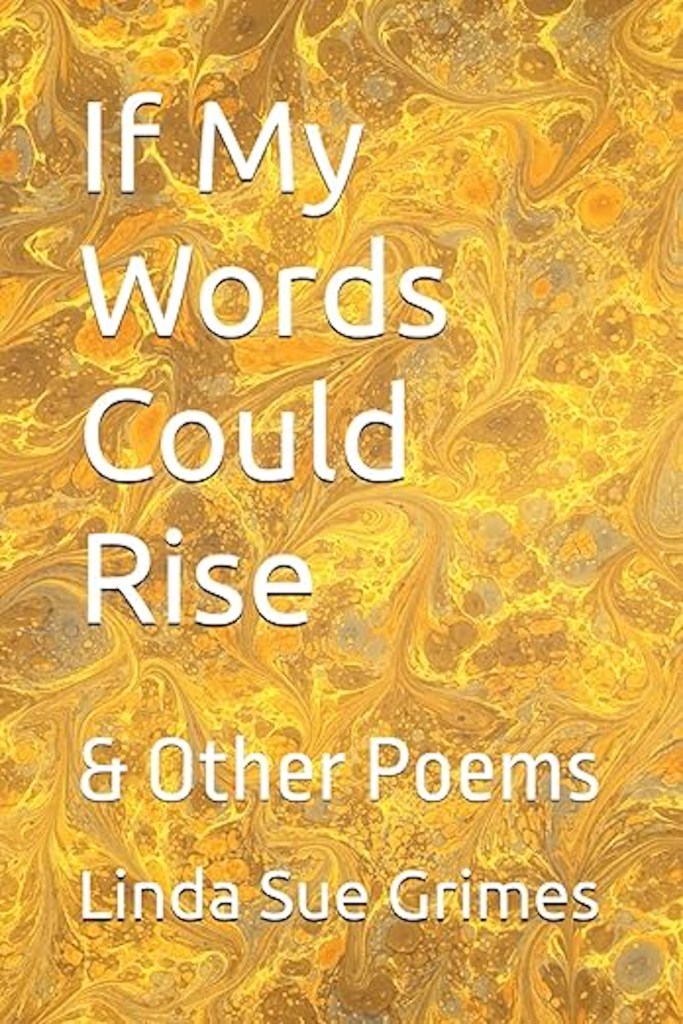
    Image: If My Words Could Rise & Other Poems

    Dedicated with my love and gratitude 
    to my sweet Ron

    The following poems appear in my collection titled If My Words Could Rise, available on Amazon as paperback or Kindle.

    If My Words Could Rise

    Dedicated to my sweet Ron

    If my words could rise
    Like smoke
    They would form your face
    In the clouds
    They would hang
    In the tops of the trees
    Looking for a nest
    Where a mother bird sits
    On eggs
    The color of your eyes

    2 In the Tops of the Trees

    “As soon as you hear the sound of marching in the tops of the trees, then attack, for God has attacked in front of you to defeat the Philistine army.” —2 Samuel 5:25 Common English Bible

    –for the moldman, who screeched, “That’s my line!”

    No, dude, that is not your line!
    No matter how many times
    Or with how much spit
    You spew it.

    Trees and their tops
    And the words they live in
    Belong to all of us.  Go!
    Dig your hole–grovel in your slime.

    3 Dreams and Days

    “His tongue cuts / Slices of meat / From the hearts / And livers / Of those / Who would love him” – “Between Slices of Bread” —from Linda Sue Grimes’ At the End of the Road

    I quote myself, well then,
    I quote myself —
    I include multitudes —
    Uncle Walt taught me that much.

    The man in the poem
    Cannot bring himself to say
    Or to pray about his own lividness
    He shuts out spaces and commas
    Lives in his own relevance.

    He murders his own children
    With his viper attitude
    And nibbles the ankles
    Of prostitutes
    Who erase his will to power on.

    You have seen him
    Perhaps did not recognize him —
    He has sat in your parlor
    Sipping your coffee
    Dusting off his duplicitous moves —

    He fears death but not yours
    He imagines you at the bottom
    Of a cold, black ocean
    Your tongue bait for the fishes
    His Bolshevik brain conjures.

    Your freedom is a fantasy 
    If you remain too close to his heat
    Get your life back – get your love back
    Where God made you in his image
    And you are close to seeing it.

    4 Flesh and Desire

    Humankind cannot bear very much reality.”  —T. S. Eliot

    Into the fire of wisdom, thoughts go to perish.
    “Get thee behind me, Satan!” Christ commands.
    But we still wobble behind the Devil
    Hoping to be snatched from the arms of death
    In time for supper and for the many tomorrows
    We image we still possess.
    In the valley of dreck and poison, I have lived
    Even as I knew better or thought I did.
    No, I am not here to testify.
    Although a word or two of testimony
    May slip out every line or so!
    I can pound sand with the best of them.
    But I can also bitch and moan.
    Where is the beginning of joy and rectitude?
    One might ask.  Where is the promise?
    O, come on!  You know where the promise is . . .
    Yes, just testing the waters and they are warm.
    Every time I delay, I am warned.  Just pray
    And wait and listen close and tight to the hum
    In the brain.  I will follow.  I will follow close.
    Yes, I will.  And flesh with its crude desire
    Will no longer taint the years
    With their distractions.
    The mercy of Spirit will wipe my tears. 

  • At the End of the Road & Other Poems

    Image:  At the End of the Road & Other Poems

    At the End of the Road & Other Poems

    Dedicated to the memory of my father and mother:
    Bert Richardson, January 12, 1913–August 5, 2000
    & Helen Richardson, June 27, 1923–September 5, 1981

    The following poems appear in my collection titled At the End of the Road & Other Poems available on Amazon.

    1 Earned Pain

    —owed to Emily Dickinson’s “Joy to have merited the Pain

    Earned pain fades into joy,
    Gains a vivid, long liberation.
    Each phase dissolving into joy –
    Then paradise on the horizon.

    Absolved, my eyes grow strong,
    Peering into the ancient eye,
    Improved and brooking no wrong
    Approaching paradise, I realize.

    That these eyes glimpse Thine eye
    And that Thou glimpst mine atone
    And attest that my brown eyes
    And Thy sacred sight are one.

    Thou consumest all time, remaining
    Infinitely present, never astray –
    An eastern spirit explaining
    Morning to the day.

    Evoking Thy highest peak
    And the valley far below,
    My voice can speak
    Inside the darkest shadow,

    Spiritualizing all space and time
    As years drop eternally
    Ghost day by ghost night
    Journeying through eternity. 

    2 A Summer Dream Phantasm

    sweet dreams for the monster

    At the edge of the water
    We sit together
    Talking about heaven & earth
    Poems & love.

    You ask if I still think of you
    While you are away.
    I throw a stone into the water.
    The answer is the ripples.

    3 In Dreams We Happen to Meet

    for Mr. Sedam, my poetry benefactor

    “I protest your protest its hairy irrelevancy” —”Malcolm M. Sedam’s ‘Desafinado’

    In dreams we happen to meet
    On some mystic, planetary hill —
    Poetry eludes us yet we commence
    Talking about the sham progress
    Bleeding hearts have inflicted.

    The professor in you wants to align
    Wokeward but you cannot bring yourself
    To spring into the claptrap that clamped
    Shut on Ginsbergian filth, deviance
    And that mayhem of hairy irrelevance.

    You think of your children
    Wading into the waters of vipers
    Nipping their ankles
    Snapping their necks
    Erasing their freedom and will.

    You would have those you love
    Experience their own close calls —
    You crashed into your own
    As you flew those planes
    Over the Pacific, fighting that war —

    Facing death, watching death
    Take soldier after soldier
    Leaving you with the intuition
    Outcomes cannot be guaranteed
    By bureaucratic Bolsheviks.

    Only freedom of opportunity
    Guarantees free will remains free
    And life continues to beget life
    In the magnolious scheme that God
    Made man after His Own image.

    4 Bone Couplets

    Flesh of my flesh, bone of my bone…”  —Anne Bradstreet

    They outshine the flesh in the reign of desire
    Where pink like a blush goes on shining like fire.
    Fat necked imbeciles, brain-numbed and wrong
    On every backboned thought that ever ran along
    The confines of the apple of Adam sweetened
    In the birdless cage rump-driven and weakened.
    Greed and swagger click the gangling matter
    Knuckles cling and circle each limb to tatter.
    Hipbones narrow in the faulty weather.
    The bare truth flies out on filth-tinged feather.
    Bring me back to the place where life can stand!
    Let me feel the smooth relief of pounding sand!
    This belly swore it would unburden the green.
    Within the sulking skull it makes its way to preen.
    In the sweet toned laughter where children move
    And every old fart says he will not prove
    Until the night breaks over those who pray
    And every chime kinks the ear heaven to delay.
    Relevant as an old donkey on an extended beach
    The moon sinks into ripe flesh as if to teach
    Those angry cells to leave off all that hunger.
    No years will ease—no one will grow younger
    Than the moth whose flame has singed his wings
    Clacking bare truth to the mercy of things.

    5 A Terrible Fish

    “In me she has drowned a young girl, and in me an old woman
      Rises toward her day after day, like a terrible fish.  —Sylvia Plath’s “Mirror”

    The nightmare repeats itself:
    A daughter clamped tight to each foot
    Pulling her down under
    The brute waters of the dark, deep lake —
    She gasps — imagines she’s drowning
    While her husband watching from the levy
    Wrings his hands, faints in the heavy fog.
    A terrible fish looms under her nose;
    She smells blood dripping
    From a dozen hooks dangling
    From his mouth.
    His eyeballs slide out easy
    As the drawer of a cash register.
    Each eye-socket a window
    To her own soul — $ bills
    With little jackpots on them
    Jump up and dance like clowns
    Poking out their tongues,
    Flapping signs of slogans
    With hammers, sickles, swastikas —
    She believes – ¡Sí, se puede!
    Morning shivers her awake again,
    Stumbling to the bathroom
    Where the mirror flashes
    In her face that same terrible fish
    That has been catching her dreams
    And throwing them back
    As she chases each $,
    Never quite able to grasp enough.

  • Command Performance: Singing for God and Guru

  • Singing in Soul Silence: Voices of Faith 

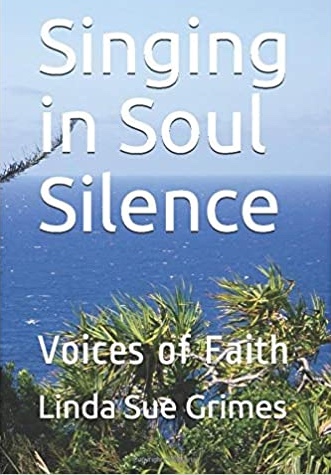
    Image:  Singing in Soul Silence: Voices of Faith 

    Singing in Soul Silence: Voices of Faith 

    for Ron, who makes my life a place for poetry

    The following poems appear in my collection titled Singing in Soul Silence: Voices of Faith available on Amazon.

    1 Invitation

    Into my garden of weeds 
    Come, Eternal Gardener— 
    Teach me to plant and prune fine foliage.
    Show me where to set the lilies and tulips
    And where the roses should grow.
    Guide my choices of herbs and vegetables.
    Give me knowledge of fertilizer and fences.

    Into my garden of words
    Come, Eternal Poet—
    Make my poems exude divine ardor.
    Fashion my thoughts to bow at your feet.
    Make my images spout living waters
    From an enlightened fount
    To refresh all who dip a cup.

    2 In My Spiritual Garden

    In my spiritual garden
    I walk with you when the sun is medicine
    And the rain suckles the beets and corn.
    I walk with you between the rows of memories
    Where love holds you between peppers and tomatoes.

    I walk with you along the fence
    And touch your hand and step across
    Thinking of you as I pick the peas,
    Still thinking of you as I weed 
    The beans and cucumbers.

    I walk with you and with every silent step
    And every moment of your absence
    That would weaken the faith of one
    Less in love, my love grows deep
    Like the roots of the bamboo and my love
    Grows straight like the stalks of asparagus.

    In my spiritual garden I will always grow you
    In the medicine sun and the suckling rain.

    3 Divine Gardner

    After we scoop the soil
    over the seeds
    & sprinkle the water
    & pluck the weeds,

    you will tend the growing
    & tempt the eye with green
    & yellow peppers,
    & tempt the tongue
    with onions & corn,
    & invite us to taste your flesh
    in cucumbers & tomatoes.

    I will stand at the edge of the garden,
    my lips & tongue tending the silence
    I learn to thank you with.

    4 My Divine Beloved

    When spring comes
    Tilling the ground
    I will plant seeds
    And think of you
    You are earth
    You build my body.

    When spring comes
    Showering young plants
    I will sing with raindrops
    And think of you
    You are water
    You carry my life.

    When spring comes
    Warming my limbs
    I will brown my skin
    And think of you
    You are fire
    You inflame my heart.

    When spring comes
    Swirling on the wind
    I will lean into it
    And think of you
    You are air
    You clear my mind.

    When spring comes
    Rising from winter’s tomb
    I will sing devotion
    And think of you
    You are my Divine Beloved
    You revive my soul.

    5 Your Divine Love

    My heart is a lake I swim in,
    But I want to float in the ocean of your love.

    My mind is a sky I fly through,
    But I want to soar through your omniscient love.

    My soul is an undiscovered star,
    But I want to find it shining in your flaming love.

    My dream spreads out in all directions,
    Searching for the boundary of your Divine Love.

    6 Cosmic Beloved

    Though my heart is fickle
    And strays from you,
    You never stray from me.
    Your love for me
    Never waivers.

    You came to me in youth’s naiveté
    And married my folly,
    And for a time I slept without rest
    In the arms of a splintering sorrow
    Deep within a cave of madness.
    When I emerged from that black night,
    You greeted me as my daughter.
    You blessed the rest of my life
    With a holy union when you became 
    My true mate with whom I rest
    In the cave of a peaceful heart.
    And you greet me as my son.

    When I go off from time to time
    To carouse with the lesser lights
    Of poets and painters and dabblers
    In pursuit of knowledge,
    You become each one of them
    So you can stay by my side—

    You love me that much.

    © Linda Sue Grimes 2013.  All rights reserved.

  • Gary Clark’s “Mary’s Prayer”: A Yogic Interpretation

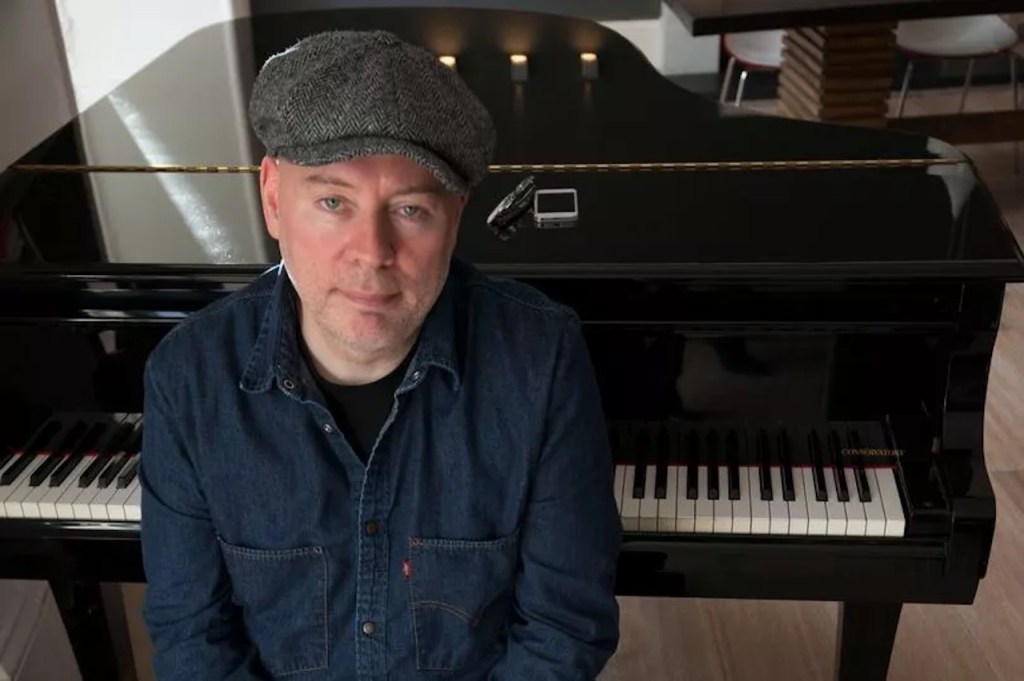
    Image:  Gary Clark  – Daily Record

    Gary Clark’s “Mary’s Prayer”: A Yogic Interpretation

    Employing the Christian iconic mother figure, the song “Mary’s Prayer” offers a marvelous corroboration of concepts between Christianity, taught by Jesus the Christ and Yoga, taught by Bhagavan Krishna.

    Introduction and Excerpt from “Mary’s Prayer”

    The song “Mary’s Prayer” is from the album Meet Danny Wilson by the 1980s Scottish rock band Danny Wilson. Lead singer of the group and the writer of the song is Gary Clark.  About the song, Gary Clark, the songwriter, has explained

    There is a lot of religious imagery in the song but that is really just a device to relate past, present, and future. It is basically just a simple love song. In fact I like to think of it as being like a country and western song.

    A Yogic Interpretation

    By quipping that his song “is basically just a simple love song,” Gary Clark is being overly modest; on the other hand, he could possibly have meant the tune to be a “simple love song,” but its use of imagery opens the possibility of a deeper interpretation than one traditionally  associated with a “simple love song.”  Thus, I offer my interpretation of Clark’s song, based on my primary method of poetry interpretation, which I label “Yogic Interpretation.”

    This yogic interpretation of Gary Clark’s “Mary’s Prayer” reveals the spiritual nature of the song.  The allusion to the Christian icon “Mary” alerts the reader to the significance of the song as it transcends the stature of a love song to a human lover, although it can certainly be interpreted to include that possibility.  The chorus of the tune offers a lengthening chant, which uplifts the mind directing it toward the Divine Goal of spiritual union.

    The narrator/singer of the song “Mary’s Prayer” is revealing his desire to return to his path to Soul-Awareness, which he has lost by a mistaken act that turned his attention to the worldly thoughts and activities that replaced his earlier attention to his spiritual realm.

    The noun phrase, “Mary’s Prayer,” functions as a metaphor for Soul-Awareness, (God-Union, Self-Realization, Salvation are other terms for this consciousness).  That metaphor is extended by the allusions, “heavenly,” “save me,” “blessed,” “Hail Marys,” and “light in my eyes.”  All of these allusions possess religious connotations often associated with Christianity.  

    The great spiritual leader, Paramahansa Yogananda, has elucidated the comparisons between original Christianity as taught by Jesus Christ and original Yoga as taught by Bhagavan Krishna.

    Danny Wilson – “Mary’s Prayer” 

    Mary’s Prayer

    Verse 1

    Everything is wonderful
    Being here is heavenly
    Every single day she says
    Everything is free 

    Verse 2

    I used to be so careless
    As if I couldn’t care less
    Did I have to make mistakes
    When I was Mary’s prayer? 

    Verse 3

    Suddenly the heavens roared
    Suddenly the rain came down
    Suddenly was washed away
    The Mary that I knew 

    Verse 4

    So when you find somebody to keep
    Think of me and celebrate
    I made such a big mistake
    When I was Mary’s Prayer

    Chorus

    So if I say save me, save me
    Be the light in my eyes
    And if I say ten Hail Marys
    Leave a light on heaven for me 

    Verse 5

    Blessed is the one who shares
    Your power and your beauty, Mary
    Blessed is the millionaire
    Who shares your wedding day 

    Verse 6

    So when you find somebody to keep
    Think of me and celebrate
    I made such a big mistake
    When I was Mary’s Prayer

    Chorus

    So if I say save me, save me
    Be the light in my eyes
    And if I say ten Hail Marys
    Leave a light on heaven for me

    Save me, save me
    Be the light in my eyes
    And if I say ten Hail Marys
    Leave a light on heaven for me

    Verse 7

    If you want the fruit to fall
    You have to give the tree a shake
    But if you shake the tree too hard,
    The bough is gonna break 

    Verse 8

    And if I can’t reach the top of the tree
    Mary you can blow me up there
    What I wouldn’t give to be
    When I was Mary’s prayer

    Chorus

    So if I say save me, me save me
    Be the light in my eyes
    And if I say ten Hail Marys
    Leave a light on heaven for me 

    Save me, save me
    Be the light in my eyes
    And if I say ten Hail Marys
    Leave a light on heaven for me

    Save me, save me
    Be the light in my eyes

    What I wouldn’t give to be
    When I was Mary’s prayer

    What I wouldn’t give to be
    When I was Mary’s prayer

    What I wouldn’t—save me—give to be
    When I was Mary’s prayer

    Commentary on “Mary’s Prayer”

    A yogic interpretation of Gary Clark’s “Mary’s Prayer” reveals the song’s spiritual nature.   The allusion to the Christian icon “Mary” alerts the reader to the spiritual significance of the song causing it to transcend the stature of a love song to a human lover.

    First Verse:   Declaring a Spiritual Truth

    Everything is wonderful
    Being here is heavenly
    Every single day, she says
    Everything is free 

    The narrator/singer begins by declaring a spiritual truth, “Everything is wonderful,” and that being alive to experience this wonderfulness is “heavenly.”  The following lines report that each day provides a blank slate of freedom upon which each child of the Belovèd Creator may write his/her own life experiences. 

    “She” refers to Mary, who has authority to make such judgments, as the narrator states. The historical and biblical Mary, as the mother of one of the Blessèd Creator’s most important avatars, Jesus the Christ, holds special power to know the will of the Divine Creator and dispense wisdom to all children of that Creator.

    Therefore, the prayer of Mary is dedicated to each child of the Heavenly Creator, and her only prayer can be for the highest good of  the soul, and the highest good is that each offspring of the Belovèd Lord ultimately know him/herself as such.

    Thus, Mary sends the faithful “every single day” and “everything is free.” Every creature, every human being, every creation of the Divine Creator’s is given for the nurturance, guidance, and progress of each soul made in the Creator’s image.

    Second Verse:  The Care and Feeding of the Soul

    I used to be so careless
    As if I couldn’t care less
    Did I have to make mistakes?
    When I was Mary’s prayer 

    In the second verse, the narrator, having established his knowledge of the stature and desire of Mary, contrasts his own status. He was not been dedicated to his own salvation; he hardly paid any attention to the care and feeding of his soul. It’s as if he could not have “cared less” about the most important aspect of his being. 

    But that is the past, and the narrator now realizes that he made mistakes that have led him in the wrong direction, and he now wonders if he really had to make such a mess of his life.  After all, he was “Mary’s prayer” — the Blessèd Mother had offered him the blessing of soul-union, but through his mistakes he had spurned that offering.

    Third Verse:  Losing Sight of the Blessèd Mother

    Suddenly the heavens roared
    Suddenly the rain came down
    Suddenly was washed away
    The Mary that I knew
    So when you find somebody who gives
    Think of me and celebrate
    I made such a big mistake
    When I was Mary’s Prayer

    The narrator then reveals that through some great and fearful event that caused the heavens to move and rain to pour down, his life had become devoid of the love and caring that had been bestowed on him by Mary.  He no longer knew how to pray or how to feel the grace and guidance of the Blessèd Mother.

    Fourth Verse:  Missing a Great Opportunity

    So when you find somebody to keep
    Think of me and celebrate
    I made such a big mistake
    When I was Mary’s Prayer

    The singing narrator then offers his testimony that having a soul guide, who gives as the blessèd Mary gives, must be kept and celebrated and not merely cast off as the narrator had done. He confesses again that he “made such a big mistake” at a time that he could have just grasped the heavenly protection, while he was “Mary’s prayer.”

    Chorus:  Introduction of the Chant in Four Lines

    So if I say save me save me
    Be the light in my eyes
    And if I say ten Hail Marys
    Leave a light on heaven for me 

    Turning to prayer can be difficult for the one who has deliberately left it behind and perhaps forgotten its efficacy. But the narrator is once again taking up his prayers. He is now calling out to the Blessèd One, even though he frames his supplication in “if” clauses: he cries, “So if I say save me, save me / Be the light in my eyes.” He demands from the Divine Mother that she return to him as the light of his eyes, which had left him.

    Furthermore, and again framing his supplication in an “if” clause, he cries, “And if I say ten Hail Marys,” but yet again demands that she “Leave a light on in heaven for me.” The “if” clause followed by a demand seems contradictory, but the narrator is in distress and is confounded by his failures and his former indifference. The chorus of this song functions as a chant as it grows from four lines to its final iteration of sixteen lines that complete the song. 

    Fifth Verse:  Rich in Spirit

    Blessed is the one who shares
    The power and your beauty, Mary
    Blessed is the millionaire
    Who shares your wedding day

    Still in supplication to the Divine Blessèd Mother, the narrator now simply voices what he knows to be the influence of the Divine One: anyone who accepts and transforms his life according to “the power and the beauty” of Mary will find him “a millionaire.” Not necessarily financially rich—but much more important, rich in spirit. The great wedding of the little soul to the Oversoul will be the richest blessing of all.

    Sixth Verse:  Emphasizing the Need to Celebrate and Remember

    So when you find somebody to give
    Think of me and celebrate
    I made such a big mistake
    When I was Mary’s Prayer

    The sixth verse is a repetition of the fourth. It functions to reiterate the importance of the narrator’s awareness of the need to celebrate those giving beings as well as the vital necessity that he realizes what a “big mistake” he made “when [he] was Mary’s Prayer.”

    Chorus:  Continuing the Chant with Repetition

    So if I say save me, save me
    Be the light in my eyes
    And if I say ten Hail Marys
    Leave a light on heaven for me

    Save me, save me
    Be the light in my eyes
    And if I say ten Hail Marys
    Leave a light on heaven for men

    The chorus again becoming an enlarging presence serves to direct the mind Heaven-ward, while reminding the singer of his purpose for singing, for addressing his Divine Belovèd and keeping the mind steady.

    Seventh Verse:  Gathering the Effects of Yoga

    If you want the fruit to fall
    You have to give the tree a shake
    But if you shake the tree too hard,
    The bough is gonna break

    The penultimate verse offers a metaphor of gathering fruit from a tree which likens such gathering to the yoga practice that leads to Self-Realization or God-union.  Shaking the tree gently will result in fruit falling, but shaking “the tree too hard” will break the bough. Yoga techniques must be practiced gently; straining in yoga practice is like shaking the tree too hard, which will result in failure to attain the yogic goals.

    Eighth Verse:   Upward Movement Through Faith

    And if I can’t reach the top of the tree
    Mary you can blow me up there
    What I wouldn’t give to be
    When I was Mary’s prayer

    The final verse also employs a tree metaphor. The narrator, who is once again firmly on his spiritual path, expresses an extremely important truth that each devotee must cultivate: faith that the target of his goal can lift the devotee at any time. 

    The narrator colorfully expresses this truth by stating, “And if I can’t reach the top of the tree / Mary you can blow me up there.”  And finally, he expresses his regret for allowing Mary to escape him: he wants to become “Mary’s prayer” once again, and he would give anything to do so.

    Chorus:  The Efficacy of the Chant

    So if I say save me, me save me
    Be the light in my eyes
    And if I say ten Hail Marys
    Leave a light on heaven for me 

    Save me, save me
    Be the light in my eyes
    And if I say ten Hail Marys
    Leave a light on heaven for me

    Save me, save me
    Be the light in my eyes
    What I wouldn’t give to be
    When I was Mary’s prayer

    What I wouldn’t give to be
    When I was Mary’s prayer
    What I wouldn’t—save me—give to be
    When I was Mary’s prayer

    The chorus doubled from its first iteration of four lines featured after the fourth verse to eight lines following verse six.  Then it doubles again following the final verse, finishing with sixteen lines.  

    The marvelous effect of the chant places the song squarely within the yogic practice of employing repetition to steady and direct the mind to its goal of union with the Divine. The song finishes with the much enlarged chorus, which is not only musically pleasing, but also shares the efficacy of a chant that draws the mind closer to its spiritual, yogic  goal.