Linda's Literary Home

Tag: Jesus

  • Gerard Manley Hopkins’ “My own heart let me more have pity on; let”

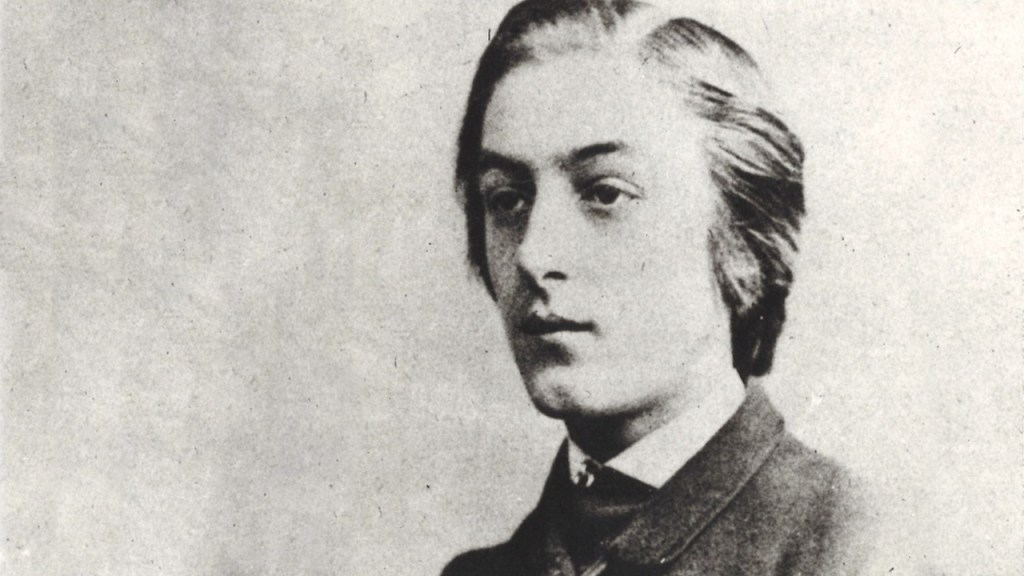
    Image: Gerard Manley Hopkins – National Portrait Gallery, London

    Gerard Manley Hopkins’ “My own heart let me more have pity on; let”

    The speaker in this sonnet examines his inward struggle, through which he has learned mercy toward the self (soul) while undergoing heavy, sustained spiritual pressure.  My personal issue with this pressure assures me that Father Hopkins well understood its vicissitudes as well as its rewards.

    Introduction and Text of “My own heart let me more have pity on; let”

    In this final terrible sonnet, the speaker turns inward to speak directly to his own heart; he does so with urgency but restraint. The sonnet foregrounds his own personal moral and spiritual reckoning.  In that accounting, he has found that self-pity is not indulgence but instead it is simply charity rightly ordered and affirmed. 

    The poetic language pushes as well as it knots itself into compression.  It portrays the pressure exerted on a mind that has been tormented to the point of exhaustion.  Thus, now that exhausted mind must seek a genuine place to rest.

    Readers may note that Father Hopkins has separated  both the octave and the sestet into two quatrains in the octave and two tercets in the sestet.  This kind of separation adds to the dramatic effect that each stanza represents.  

    The sonnet could be interpreted as consisting of four movements; however, for consistency of preserving the Petrarchan model, I have kept them grouped in my commentary as simply octave and sestet.

    My own heart let me more have pity on; let

    My own heart let me more have pity on; let
    Me live to my sad self hereafter kind,
    Charitable; not live this tormented mind
    With this tormented mind tormenting yet.

    I cast for comfort I can no more get
    By groping round my comfortless, than blind
    Eyes in their dark can day or thirst can find
    Thirst’s all-in-all in all a world of wet.

    Soul, self; come, poor Jackself, I do advise
    You, jaded, lét be; call off thoughts awhile
    Elsewhere; leave comfort root-room; let joy size

    At God knows when to God knows what; whose smile
    ‘S not wrung, see you; unforeseen times rather—as skies
    Betweenpie mountains—lights a lovely mile.

    Reading

    Commentary on “My own heart let me more have pity on; let”

    The sonnet dramatizes four movements, as mentioned above,  from self-laceration to self-mercy, which has led to the discovery of hope—not by force of harsh discipline but by soft, divinely inspired release.

    Octave: “My own heart let me more have pity on; let”

    My own heart let me more have pity on; let
    Me live to my sad self hereafter kind,
    Charitable; not live this tormented mind
    With this tormented mind tormenting yet.

    I cast for comfort I can no more get
    By groping round my comfortless, than blind
    Eyes in their dark can day or thirst can find
    Thirst’s all-in-all in all a world of wet.

    The speaker begins the octave by offering a plea that is, however, also a command.  He is directly addressing his own heart as both somewhat metaphorically as both judge and defendant. The line “Let me more have pity on” signals a deliberate act of will: pity must be allowed to exist and work its power, not merely be passively felt. 

    The speaker then labels his accustomed cruelty toward himself: he has become a “tormented mind” that compounds his suffering by continually rehearsing it. The repetition of “tormented” mimics the cycle he is condemning; his has become a mind that had kept turning upon itself without pause to rest. 

    Charity here does not engage merely for sentimental purposes; it remains a necessary,  ethical discipline, employing the discipline to refuse to continually inflict self-harm, even under the guise of rigor.

    The second quatrain moves quite quickly but assertively, and then it intensifies the uselessness of the same old, ordinary search for simple, quiet comfort. Casting “for comfort” metaphorically creates the two leisure activities of  fishing and gambling. Both of these activities involve chance, and uncertainty often hands over nothing to the player after plunging much effort into them. 

    The “blind/Eyes” image sharpens the deadlock: Blind eyes cannot see daylight simply by groping, while thirst cannot be slaked by being dunked in water that is not fit to drink.  Again, the poet has been performing his duty of giving back to the reader his own experience.  And the mark of a great poet is that he does so completely in a natural, believable voice, as Father Hopkins does here.

    The paradox of “thirst’s all-in-all in all a world of wet” completely and earnestly captures spiritual barrenness as it spirits about in a world of abundance, where remedies for maladies surround the suffering soul yet remain remote and unreachable. 

    The octave thus has closed every false door. The  activities of exerting much effort, of analyzing each sorrow’s parts, and then groping toward some restless search have only deepened the dryness of the  issue. The speaker’s understanding and honesty now clear the way for a genuine rejoinder that does not hang on mastery or grasping.

    The minds and hearts of all humanity remain in search of such genuineness, especially as it contemplates it own mortality.  The winds of change may threaten the material world, but the astral and causal levels of being hold promises that humanity keeps deep in its bosom.

    Sestet: “Soul, self; come, poor Jackself, I do advise”

    Soul, self; come, poor Jackself, I do advise
    You, jaded, lét be; call off thoughts awhile
    Elsewhere; leave comfort root-room; let joy size

    At God knows when to God knows what; whose smile
    ‘S not wrung, see you; unforeseen times rather—as skies
    Betweenpie mountains—lights a lovely mile.

    The speaker in the sestet now is able to turn advice into consolation, as he discovers joy; and this joy was not seized by groping fingers but granted by steady grace, which arrived without exertion and through patience.

    In the sestet, the direct address broadens as the “Soul, self” bring together the divided mind/heart into a single event. The affectionate diminutive “Jackself” calms the weather of judgment, while weariness is acknowledged but without contempt. 

    The advice remains as simple as it is radical—“let be.” Thought itself must be allowed to rest “awhile,” not disappeared but its temperature lowered. The speaker suggests a turning “elsewhere,” away from the former obsessive peer into inwardness, leaving “comfort root-room.” Comfort cannot be bludgeoned at the root, an joy must be afforded a place to increase.

    The speaker then suspends time as well as outcome, when he asserts “At God knows when to God knows what.” This line refuses acts that schedule or  measure. It finds that hope exists only under divine discretion. The smile then appears quite naturally because it is “not wrung”; it is not forced by circumstances , neither is it caught up by the will. Instead, this divine joy may come like a flash in “unforeseen times,” and the speaker compares that flash colorfully to the sudden light that appears between mountains. 

    This image then significantly gives honor to the obstruction without dragging in the issue of despair: the mountains still remain mountains, but between them, a mile or so  has been wonderfully lighted.   The sonnet concludes with a vista—limited, lovely, and sufficient. Mercy toward the self has become the condition for perceiving the divine light, for experiencing joy, and it is patience that remains the means by which that blessed condition endures.
  • Gerard Manley Hopkins’ “Patience, hard thing! the hard thing but to pray”

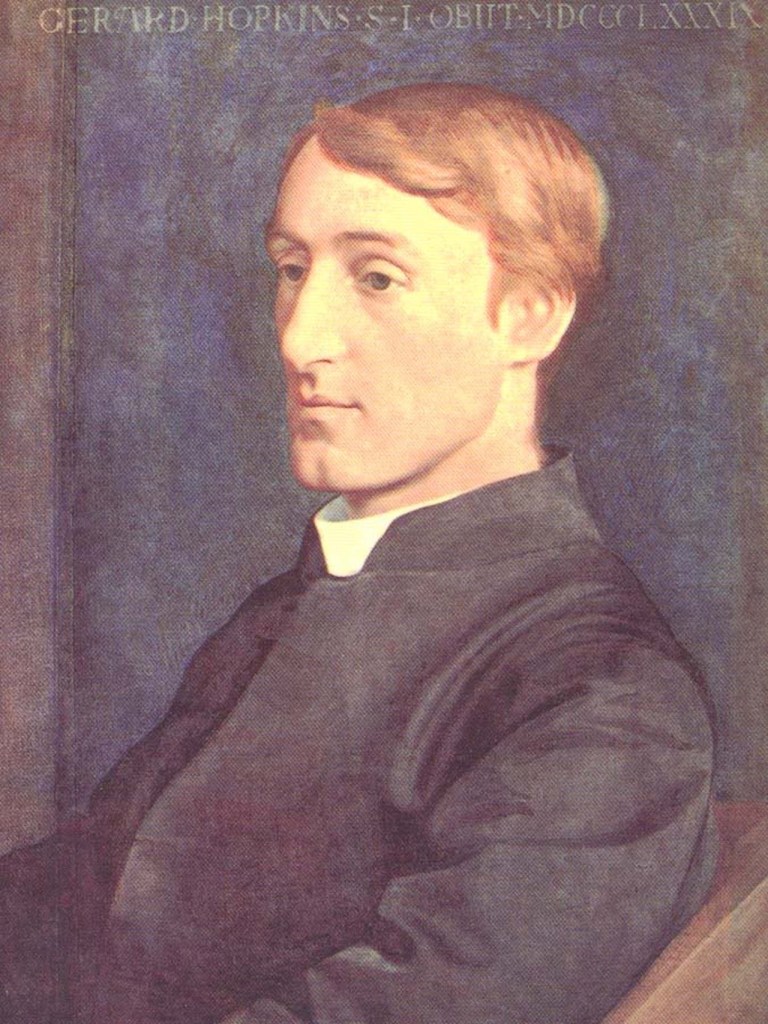
    Image: Gerard Manley Hopkins – Inspirational Jesuits

    Gerard Manley Hopkins’ “Patience, hard thing! the hard thing but to pray”

    This sonnet is counted as one of Father Hopkins’ six “terrible sonnets.”

    Introduction and Text of “Patience, hard thing! the hard thing but to pray”

    The speaker in Father Hopkins’ “Patience, hard thing! the hard thing but to pray” explores searchingly the nature of  spiritual endurance. He is focusing on patience not as a soft virtue but as a challenging and difficult discipline, which oftentimes scars the pride, while exhausting the will.  

    But those actions still reflect and align with divine will and action. As he usually does, this speaker reveals the hard discipline of God remains always for the betterment of humankind.  As human beings, we all search for—or at least wish for—our own betterment.

    As a Jesuit priest, Father Hopkins made it his mission to seek divine guidance, and unlike us non-priestly poets, he focused primarily on religious and spiritual issues that affected him deeply.

    Patience, hard thing! the hard thing but to pray

    Patience, hard thing! the hard thing but to pray,
    But bid for, Patience is! Patience who asks
    Wants war, wants wounds; weary his times, his tasks;
    To do without, take tosses, and obey.
    Rare patience roots in these, and, these away,
    Nowhere. Natural heart’s ivy, Patience masks
    Our ruins of wrecked past purpose. There she basks
    Purple eyes and seas of liquid leaves all day.

    We hear our hearts grate on themselves: it kills
    To bruise them dearer. Yet the rebellious wills
    Of us we do bid God bend to him even so.
    And where is he who more and more distils
    Delicious kindness? – He is patient. Patience fills
    His crisp combs, and that comes those ways we know.

    Reading

    Commentary on “Patience, hard thing! the hard thing but to pray”

    As human beings, we learn early that patience is an important personal quality, but the speaker in this sonnet is revealing his inner turmoil as an  argument against  which he confronts resistance even as he refuses to decry the virtue that seems to be resisting him.   He treats the virtue of patience in a realistic manner—not with sentimentality.  He asserts that patience is both vitally necessary as well as deeply painful.

    The humanity of his cries shows us that as we strive and struggle, all of humanity has done so.  Father Hopkins lived in the 19th century—two centuries earlier than our own, and yet his struggles are our struggles.

    Octave: “Patience, hard thing! the hard thing but to pray”

    The speaker begins the octave with an effusive cry—no calm reflection here!  He invokes “patience” immediately and pairs it with prayer; they are both difficult things to approach and accomplish.  We often cry for what we seem to lack, even in the 21st century.

    He knows that genuine prayer requires patience, and it is a kind of patience that the heart and mind naturally resist in a fallen world.   The sharpness of his complaint is emphasized through repetition.

    He then seems to create a stunning paradox in that patience is difficult, but it is also “bid for.” The speaker easily confesses that patience is not only endured, but it is sought and asked for, even though that asking heralds conflict. 

    Personified as a female figure who is doing the asking, Patience paradoxically “wants war, wants wounds,” and those qualities expose that there is a cost in acquiring her. She commands that one live a life without ease, which includes doing without things one might need for comfort, receiving blows that stun and hurt, all the while remaining obedient.  Dame Patience then requires obedience under pressure with the willingness to accept pain, trials, and tribulations that seem arbitrary instead of well-deserved.

    The speaker asserts that that kind of patience remains rare, even fragile. It takes hold only under these catastrophic conditions; for if they are removed them, there is not patience within existence.  This insistence blows up the notion that patience can be a decorative virtue experienced in comfort; instead, patience makes it appearance only in deprivation, instability, and any other calamity. 

    Still through all this mayhem, the speaker refuses to qualify her as infertile. Through a striking shift in tone and assurance,  patience then transforms into “Natural heart’s ivy” —a living being, covering “our ruins of wrecked past purpose.” We chafe under ruined purposes as we try to build a better world even in current times.

    With that ivy image, the speaker is acknowledging that failure and collapse within the self, which include all past intentions are broken and defeated. Patience, however, does not convert them; she merely masks them by covering all that damage with new growth.

    The final lines of the octave seems to complicate the struggle. Patience is basking in colorful accoutrements, yet luxuriant color and fluidity suggest abundance, as well as beauty, even though it is a beauty that grows over wreckage. 

    The speaker thus remains well aware that such patience beautifies what has been lost without denying the loss itself. The octave leaves the speaker’s fragility suspended between intense pain and strange fertility—between war and ivy.

    Sestet: “We hear our hearts grate on themselves: it kills”

    In the sestet, the speaker turns inward with even greater urgency. He hears that “our hearts grate on themselves”; this image is harsh and mechanical, suggesting inner resistance. And patience can be understood as not only difficult, but it is also possibly lethal, in that “it kills / To bruise them dearer.” 

    That claim is intimating that the heart continues to hang onto its own wounds because it would rather retain the familiar pain than to face the adversity made possible by surrender. 

    Especially within the confines of such thinking,  the speaker has to surrender to an subtle prayer: “the rebellious wills / Of us we do bid God bend to him.” Even as the will resists God, it, at the same time, must supplicate to God to transcend its resistance.  An exotic tension unfolds the divided mind/soul as it prays. It remains faithful but still defiant.

    The main focus that has infused itself throughout the entire sonnet comes into sharp relief in the form of the question “where is the goodness that justifies all of this misery and suffering?”  A question to haunts our current civilization as surely as it did two centuries ago!

     The speaker responds not with an argumentative abstract notion, but with a person. “He is patient.” God’s kindness can come only slowly, similar to a liquid being “distilled,” drop by drop, rather than being poured out all at once.  As science has shown us certain processes, poetry shows us the metaphorical value of understanding those processes.

    Patience is not merely a virtue that human beings must learn; it is the basic method of God’s own divine action. The final image of “crisp combs” brings to mind honey made by bees that labor furiously as they produce such sweetness. 

    Patience “fills” them (all of creation’s creatures), and from that fullness comes kindness in “those ways we know,” as it ascends to human experience through evolutionary time rather than temporal spectacle.

    In the sestet, the speaker comes close to showing how to defend one’s heart and mind in the struggle that humanity is engaged in.  He does not provide direct relief from pain or a way to guard against rebellion. 

    But instead, the speaker suggests that the answer can only be understood in terms of what is human and what is divine; thus, human patience can be seen to resemble divine patience.  The pain and suffering experiences by human beings can be converted into the divine stuff that produces sweetness, i.e., kindness.

    The process, of course, is meditation and prayer, along with deep thought and service to humankind and the world at large, in whatever form that service must take—even writing poems, thus, can serve a divine purpose.

    We struggle today as humanity has struggled in the past.  From poets such as Father Hopkins, we can glean the depth of our sorrow but also we can be comforted that there is a light at the end of the tunnel of sad darkness, and we can determine that we will progress toward that light.

  • Gerard Manley Hopkins’ “I wake and feel the fell of dark, not day”

    Image: Gerard Manley Hopkins – National Portrait Gallery, London

    Gerard Manley Hopkins’ “I wake and feel the fell of dark, not day”

    The speaker Gerard Manley Hopkins’ “I wake and feel the fell of dark, not day” is confronting spiritual desolation, interior darkness, and the sense of abandonment by God. 

    Awakening into psychological night, the speaker measures time not in hours but in years of suffering. His cries feel unheard, like letters sent to one who lives far away. In the sestet, suffering turns inward as his soul becomes both the source and the punishment of torment.

    Introduction and Text of “I wake and feel the fell of dark, not day”

    This sonnet is the second installment belonging to the group of six poems often called the “terrible sonnets.”  They focus on intense inward struggle in highly compressed language, and they reveal a profound sense of spiritual trial. The speaker is describing an internal condition of darkness that persists even after waking. 

    The poem follows the traditional Petrarchan structure, but the poet displayed the poem on the page separating the octave into two quatrains and the sestet into two tercets. The octave presents the condition of suffering, followed by the sestet which deepens and internalizes that suffering. The language remains quite visceral, yet sacramental and judicial, suggesting punishment and endurance.

    I wake and feel the fell of dark, not day

    I wake and feel the fell of dark, not day.
    What hours, O what black hours we have spent
    This night! what sights you, heart, saw; ways you went!
    And more must, in yet longer light’s delay.

    With witness I speak this. But where I say
    Hours I mean years, mean life. And my lament
    Is cries countless, cries like dead letters sent
    To dearest him that lives alas! away.

    I am gall, I am heartburn. God’s most deep decree
    Bitter would have me taste: my taste was me;
    Bones built in me, flesh filled, blood brimmed the curse.

    Selfyeast of spirit a dull dough sours. I see
    The lost are like this, and their scourge to be
    As I am mine, their sweating selves, but worse.

    Reading

    Commentary on “I wake and feel the fell of dark, not day”

    In the octave, the speaker presents spiritual suffering as prolonged night and unanswered prayer, while the sestet reveals suffering as internalized judgment.

    Octave: “I wake and feel the fell of dark, not day.”

    I wake and feel the fell of dark, not day.
    What hours, O what black hours we have spent
    This night! what sights you, heart, saw; ways you went!
    And more must, in yet longer light’s delay.

    With witness I speak this. But where I say
    Hours I mean years, mean life. And my lament
    Is cries countless, cries like dead letters sent
    To dearest him that lives alas! away.

    The octave opens abruptly: “I wake and feel the fell of dark, not day.” The speaker awakens, yet awakening does not bring light. The word fell suggests something savage, cruel, or deadly, as though darkness itself were an attacking force. 

    Day has failed to arrive, not externally but internally. The speaker’s consciousness remains trapped in night. This darkness is not merely the absence of light but a palpable weight that can be felt.

    The second line intensifies this experience. The repetition emphasizes exhaustion. These hours are not ordinary; they are “black hours,” heavy with dread.   The speaker addresses his own heart directly, asking it to remember what it has seen and where it has wandered, suggesting a night filled with disturbing thoughts, memories, or spiritual visions that cannot be escaped even in sleep.

    The line “And more must, in yet longer light’s delay” extends the suffering into the future. Relief is postponed; light is delayed. The speaker anticipates further endurance without comfort. The octave has thus established a defining theme: suffering continues; the speaker is conscious of the fact that it is also unavoidable.

    In the second quatrain, the speaker asserts his testimony.  He is not exaggerating or indulging emotion; instead, he is claiming authority as one who has endured. Yet immediately, time expands. When he says “hours,” he means “years,” and beyond that, “life.” What began as a single night becomes a metaphor for an entire existence marked by anguish. The darkness is not episodic but continually defining.

    The lament itself takes the form of “cries countless.” These cries are compared to missives sent to a loved one far away.   The metaphor is striking. The speaker believes his cries are addressed to God, “dearest him,” yet they receive no reply. Like letters that never reach their destination, these prayers feel wasted, unheard, and perhaps unopened. God is known to be living, yet distant.

    The emotional force of the octave lies in this tension: the speaker continues to cry out, continues to bear witness, even while believing those cries go unanswered.  The speaker is not revealing disbelief but instead he is demonstrating faith that yet suffers. 

    The speaker holds no compunction to deny God’s existence, a suffering humanity often is wont to do; instead, he suffers under God’s silence. The speaker therefore is expressing despair not as rebellion but as endurance under abandonment. The night continues, the cries continue, and the speaker remains awake within it.

    Sestet: “I am gall, I am heartburn. God’s most deep decree”

    I am gall, I am heartburn. God’s most deep decree
    Bitter would have me taste: my taste was me;
    Bones built in me, flesh filled, blood brimmed the curse.

    Selfyeast of spirit a dull dough sours. I see
    The lost are like this, and their scourge to be
    As I am mine, their sweating selves, but worse.

    The sestet takes a decisive inward turn. Where the octave emphasized time and unanswered cries, the sestet focuses on the body and self as the site of punishment.  The speaker does not merely feel bitterness; he is bitterness. Gall, a bitter substance associated with suffering and poison, suggests spiritual nausea. Heartburn implies a burning from within, a pain generated internally rather than inflicted from without.

    The speaker attributes this condition to “God’s most deep decree.” This suffering is not accidental or random. It is permitted, even ordained. The bitterness is something the speaker must taste, yet the shocking revelation follows: “my taste was me.” The self (soul) becomes both the instrument and the substance of suffering. There is no external punishment necessary; identity itself is the affliction.

    The line “Bones built in me, flesh filled, blood brimmed the curse” intensifies the embodiment of despair.  The curse is not simply symbolic; it saturates the physical body. Bones, flesh, and blood—the fundamental elements of life—are all implicated. Suffering is total, leaving no refuge within the soul. The speaker’s claims suggest a complete inhabitation or incarnation of pain, as though despair has become structural.

    The metaphor of fermentation is created in the line “Selfyeast of spirit a dull dough sours.” Yeast is normally a source of growth and life, but here it produces sourness. The spirit works upon itself destructively. The self generates its own decay. This image reinforces the idea that suffering is self-contained, inescapable, but continuous.

    In the final lines, the speaker broadens his vision.  He recognizes his condition as a foretaste of damnation. The lost are punished not by external flames but by being trapped within themselves. Their scourge is to be “their sweating selves.” The speaker identifies with this fate, acknowledging that he already experiences something like it, though he believes theirs will be worse.

    The sestet ends without consolation. There is no resolution, no light breaking through. Instead, the poem concludes with recognition and endurance. The speaker understands the nature of suffering more clearly, but understanding does not remove it. The sonnet closes in grim clarity rather than hope.

  • Gerard Manley Hopkins’ “God’s Grandeur”

    Image: Gerard Manley Hopkins

    Gerard Manley Hopkins’ “God’s Grandeur”

    Despite the “smudge” and “smear” from some human activity, the speaker is offering assurance that the Creator’s blessings and restoration of Planet Earth remain in effect through the “grandeur” of that Creative Force-God.  Instead of instilling fear of earthly events, he encourages worship.

    Introduction with Text of  “God’s Grandeur”

    Father Gerard Manley Hopkins’ motivation to imitate Spirit (God) prompts him to craft his poems in forms, as Spirit creates entities in forms—from rocks to animals to plants to the human body. 

    Father Hopkins often employs the sonnet form. “God’s Grandeur” is a sonnet—fourteen lines, more similar to the Petrarchan than the Elizabethan. The first eight lines (octave) present an issue; then, the remaining six lines (sestet) address that issue.  

    Father Hopkins’ rime scheme is typically ABBAABBA CDCDCD, which also resembles the Petrarchan rime scheme in the octave. He employs iambic pentameter but varies from spondee to trochee.  Father Hopkins’ called his unique form “sprung rhythm.”

    God’s Grandeur

    The world is charged with the grandeur of God.
        It will flame out, like shining from shook foil;
        It gathers to a greatness, like the ooze of oil
    Crushed. Why do men then now not reck his rod?
    Generations have trod, have trod, have trod;
        And all is seared with trade; bleared, smeared with toil;
        And wears man’s smudge and shares man’s smell: the soil
    Is bare now, nor can foot feel, being shod. 

    And for all this, nature is never spent;
        There lives the dearest freshness deep down things;
    And though the last lights off the black West went
        Oh, morning, at the brown brink eastward, springs —
    Because the Holy Ghost over the bent
        World broods with warm breast and with ah! bright wings.

    Reading:  

    Commentary on “God’s Grandeur”

    Decrying the “smudge” and “smear” from human activity, the speaker asserts that despite humankind’s penchant for defiling nature, the Creator continues to bless and restore the world—a message that flies in the face of climate alarmists.

    However, in today’s smudged, postmodern world, one pays a price for criticizing climate alarmists who have replaced faith in the Creator with constant agitation for political ascendency.

    The Octave:  Pantheistic View of God

    The world is charged with the grandeur of God.
        It will flame out, like shining from shook foil;
        It gathers to a greatness, like the ooze of oil
    Crushed. Why do men then now not reck his rod?
    Generations have trod, have trod, have trod;
        And all is seared with trade; bleared, smeared with toil;
        And wears man’s smudge and shares man’s smell: the soil
    Is bare now, nor can foot feel, being shod. 

    The speaker in this Petrarchan sonnet sees God everywhere: “The world is charged with the grandeur of God.”  His soul is convinced, but his senses tell him that people do not behave as if this were true: “Why do men then not reck his rod?” 

    Not only do men, i.e. humankind, not heed the Divine, they also seem content to exist in darkness from where they spread gloom on the environment.   The speaker contends that whole generations of humanity have trampled the earth, defiling nature as they apply their systems of “trade.”

    The speaker is dramatizing Father Hopkins’ sense that human beings have become more interested in materialistic gain and possessions than in celebrating the glory of a loving, merciful, Heavenly Father. 

    The Sestet:  God’s Gifts Cannot Be Exhausted

    And for all this, nature is never spent;
        There lives the dearest freshness deep down things;
    And though the last lights off the black West went
        Oh, morning, at the brown brink eastward, springs —
    Because the Holy Ghost over the bent
        World broods with warm breast and with ah! bright wings.

    The octave has presented the issue: humankind is oblivious to God’s gifts and thus defiles them.  The sestet addresses the issue: despite indifference to the Creator, humankind cannot exhaust the gifts that the Creator bestows, because nature continues to renew itself through the agency of the Divine.  

    Thus, a “dearest freshness” continues to assert itself, despite the dirty ways of humankind.  Humankind may disregard God’s grandeur, but everything renews despite human activity.

    The speaker’s faith leaves him no room for doubt, because that faith has infused in him the intuition that the “Holy Ghost” is always watching over humankind, the children of Spirit-God, somewhat like a mother bird watches over her little flock.

    The Holy Ghost (Divine Mother) will ever mother humanity—Her little birds. Father Hopkins’ mystical insight brings him to the faith that throbs in his soul—in his “inscape,” his unique term for his inner landscape. 

    The Mystical Poet and God’s Creation

    And “in the beginning was the Word, and the Word was with God, and the Word was God” (KJV, John 1:1).  This line speaks gently but firmly to the inner ear of mystically inclined poets.  

    As originally determined, a poet is a word craftsman, and when the poet of genuine faith builds with words, he is imitating God, taking his discourse out of dogma and into true spirituality.  The form of “God’s Grandeur” closely resembles Father Hopkins’ other poems. 

    In “The Windhover,” the rime scheme is the same as that of “God’s Grandeur.” The same is true for “The Lantern out of Doors,” “Hurrahing in Harvest,” and “As Kingfishers Catch Fire.”

    Father Hopkins sonnets celebrate Spirit and continue the search for a deeper relationship with the Mastercraftsman (God). Occasionally, as he structures his sonnets, they produce an order that further marks a style uniquely his own.

    Readers do not encounter any structure resembling “Stirred for a birds, the achieve of, the mastery of the thing” in a Thomas Hardy or A. E. Housman poem—or that of any other poet—the uniqueness of Father Hopkins is so firmly established. 

    Also, a typical line of Father Hopkins is “Let him easter in us, be a dayspring to the dimness of us, be a crimson-cresseted east,” which contains the example of his meter and content.

    Divine Melancholy 

    The melancholy experienced by Father Gerard Manley Hopkins is of divine origin. The ameliorist in Thomas Hardy produces in his poems a different sort of melancholy.    Father Hopkins has faith; Hardy has hope.  One may deem Hardy spiritually adrift on the sea of humankind’s woe, even when he sings, 

    I talk as if the things were born
    With sense to work its mind;
    Yet it is but one mask of many worn
    By the Great Face behind.

    Referring to the veiled nature of God, Hardy seems to bemoan it rather than celebrate it, as Father Hopkins does.   Housman is preoccupied with endings. He says, “And since to look at things in bloom / Fifty springs are little room” and “sharp the link of life will snap.” 

    Of course, all poets are concerned with endings, but each poet in his work will treat those concerns in distinctive ways, according to their levels of understanding and faith.   Hardy, Housman, and many other poets remain earthbound looking for answers to ultimate questions among the various outlets for human intellectual expression.  And their search is a vital one for humankind.

    However, Father Hopkins’ “God’s Grandeur” along with the rest of his canon affords the reader the experience of hearing beautiful singing loud and sweet a poet’s song of the love for the Divine.  

    Father Hopkins’ faith set him free to pursue and express Divine Love, instead of endless searching for that something-else that the faithless heart craves as it laments the trammels of Earth.

  • Original Song: “Twixt Good and Evil” and Prose Commentary 

    Image: Created by Grok

    Original Song: “Twixt Good and Evil” and Prose Commentary 

    I chose the quotation from Isaiah because it demonstrates the omnipotence and omnipresence of the Almighty Creator.  Some religionists, especially Christian, argue that God is all good and therefore could not have created evil.  But such a claim limits God’s power and ability—an odd thing to do since they claim that God is omnipotent and omnipresent!

    Twixt Good and Evil

    I form the light, and create darkness: I make peace, and create evil: I the Lord do all these things.”    —Isaiah 45:7

    Chorus

    In the fight twixt good and evil
    Good will always win;
    For God created the devil
    Just tempt us all to sin.
    God doesn’t cause us to bear sorrow;

    He tries to lead us to His light,
    And His Word guides our tomorrow
    If we learn to read It right.

    First Verse 

    Good morning, Satan!
    Are you doing OK?
    What kinds of nasty
    You going to throw at me today?
    Will my daughter get cancer?
    Will my son fall off his bike?
    Will my husband crash his truck?
    Will my dog lie down and die?

    Second Verse

    Good morning, Devil!
    Are you doing just fine?
    How will you try to tempt me
    To cross that boundary line?
    Will you make me think I’m sexy?
    Will you make me want to flirt?
    Will you take me to a place
    I’d never go without your dirt?

    Third Verse

    Good morning, Lucifer!
    How’s it going, Old Dude?
    What you got in store for me today—
    What kind of rude and crude?
    Will you shine your light on sorrow?
    Will you tempt me to believe
    I’ll be so good tomorrow
    That today I can misbehave?

    Fourth Verse

    Good morning, Maya!
    Of all the things in the fold
    Which one will grab my thoughts today
    To divert me from my goal?
    Will I seize upon another’s mote
    Though there’s one in my own eye?
    Will I hurt anyone whose handy?
    Or will I just sit, sigh, and cry?

    Chorus

    In the fight twixt good and evil
    Good will always win;
    For God created the devil
    Just tempt us all to sin.

    God doesn’t cause us to bear sorrow;
    He tries to lead us to His light,
    And His Word guides our tomorrow
    If we learn to read It right.

    To listen to the recorded version, please visit “Twixt Good and Evil” on soundcloud.

    Commentary on “Twixt Good and Evil”

    Epigram:  “I form the light, and create darkness: I make peace, and create evil: I the Lord do all these things.”    —Isaiah 45:7

    I chose this quotation from Isaiah because it demonstrates the omnipotence and omnipresence of the Almighty Creator.  Some religionists, especially Christian, argue that God is all good and therefore could not have created evil.  

    But such a claim limits God’s power and ability and at the same time introduces a second force into being.  Because there can be no second force, only God can be responsible for all that exists, including evil.  In the Isaiah quotation, God is speaking and He clearly says, “I . . . create evil.”

    At first, such a claim may seem paradoxical, but just because God creates evil does not make God evil: it makes Him all powerful, the very quality that Christians believe God to possess.

    So with that fact established, the next question is why did/does God create/allow evil?  And the answer is so that a physical creation can exist.  Without pairs of opposites, there can be so creation: forces rub against forces; conflict pits good and evil against each other.

    We cannot recognize a quality unless we have something to which we can  compare or contrast it.  Image that only good things had happened to you in your life.  How would you know that only good things had happened if you had never experienced the less than good or the bad?  

    Humanity is faced with these forces in order to learn and to evolve.  According to Paramahansa Yogananda and other great spiritual leaders, the only purpose of life is to unite the soul with the Over-Soul or God.  In order to do that, each human being has to work out its karma, its issues that lead it to believe it is nothing more than a bag of bone and flesh.  

    Each human being must learn that he or she is essentially a soul that has a physical body.  That soul is already perfect but because it lost its divine awareness by being born in a physical encasement, it has to relearn to be divine.

    Now, why did God make such a plan, such an existence?  Why not just let us  keep our divine status and not have to go through incarnations that may take many millennia?  Only God knows the answer to that question.  Offering one possible explanation, Paramahansa Yogananda contends that creation is God’s lila or play, and He made for his own enjoyment.  

    Because that explanation may not satisfy, the following exchange between Sri Yukteswar, the guru of Paramahansa Yogananda, and a student suggests additional reasoning:

    “Why did God ever join soul and body?” a class student asked one evening. “What was His purpose in setting into initial motion this evolutionary drama of creation?” Countless other men have posed such questions; philosophers have sought, in vain, fully to answer them.

    “Leave a few mysteries to explore in Eternity,” Sri Yukteswar used to say with a smile. “How could man’s limited reasoning powers comprehend the inconceivable motives of the Uncreated Absolute? T

    he rational faculty in man, tethered by the cause-effect principle of the phenomenal world, is baffled before the enigma of God, the Beginningless, the Uncaused. Nevertheless, though man’s reason cannot fathom the riddles of creation, every mystery will ultimately be solved for the devotee by God Himself.” (my emphasis added)

    The opening quotation, therefore, establishes the spiritual nature of the song: a monotheistic worldview in which nothing—light or darkness, peace or evil—exists outside God’s sovereignty.

    By invoking Isaiah 45:7, I preempt the simplistic dualism: evil is not an equal rival to God but a force that God Himself created to serve a divine purpose. This contention prepares the listener/reader to understand temptation and suffering not as evidence of God’s absence, but as part of a moral testing ground in which human choice matters.

    Thus, although the singer/speaker has undergone all of these tests foisted by Satan, the Devil, Lucifer, and Maya—all of which are simply different names for the same force—she seems to be implying that she is transcending them because she realizes that God only created these forces to tempt his children. 

    She is also implying that she has learned to read God’s word correctly and now she understands that by not allowing that evil force to dominate her she will no longer suffer.

    Chorus: “In the fight twixt good and evil”

    In the fight twixt good and evil
    Good will always win;
    For God created the devil
    Just tempt us all to sin.

    God doesn’t cause us to bear sorrow;
    He tries to lead us to His light,
    And His Word guides our tomorrow
    If we learn to read It right.


    The chorus opens the song/poem with its theme, which focuses on the battle between good and evil in the world of humankind. It makes the explicit claim that “good will always win,” and then it explains that the devil is just a tempter—not a separate force— because God Himself “created the devil.” 

    That “God created the devil / Just to tempt us all to sin” reflects the exact message of the Isaiah quotation. God made the devil to introduce temptation in our lives, but God allows it, and He did not create temptation to make us suffer, at least, not eternally. 

    We  know of God’s intention because God has offered a guide in written scripture, which all religions and spiritual faiths possess.  But it is interpreting those pages of guidance that confounds us and keep us in darkness.  God wants to lead us to light, and learning to interpret his Word correctly and effectively can lead us there.

    First Verse: “Good morning, Satan!”

    Good morning, Satan!
    Are you doing OK?
    What kinds of nasty
    You going to throw at me today?
    Will my daughter get cancer?
    Will my son fall off his bike?
    Will my husband crash his truck?
    Will my dog lie down and die?


    The singer/speaker addresses Satan directly, asking quite conversationally how he’s doing?  Assuming that he is doing “OK.”  Then she pitches a series of questions at him.  These question involve “nasty” events that no one wants to experience:  a daughter getting cancer, an son falling off his bike, a husband crashing his truck, a dog dying.

    The answer to each of these questions is yes: Satan will throw all of these things at me eventually.  And I personally have experienced every one of them.  So addressing Satan in such a friendly way must be understood a high sarcasm. 

    Satan will always remain the adversary, but showing him that I can take him lightly lessens his power over me.  Besides, I have already told you in the chorus that I know the score on these issues.  Satan does not hold the power; God does.

    Second Verse:  “Good morning, Devil!”

    Good morning, Devil!
    Are you doing just fine?
    How will you try to tempt me
    To cross that boundary line?
    Will you make me think I’m sexy?
    Will you make me want to flirt?
    Will you take me to a place
    I’d never go without your dirt?

    Addressing Devil with the same tone expressed when she addressed Satan, the singer/speaker assumes Devil is “doing just fine.”  Again, with a series of questions:  how are you going to temp the today?  will you use sex and promiscuity to make me do things that otherwise I would deplore?  

    Because vanity and sex lead to so much mischief and depravity in the world, one would likely be a consummate prevaricator to deny having been caught up in such “dirt.”  That’s all the personal confession and testimony I will offer for this one. But obviously, again, the from Devil, the answer is “Yep, I’ll get you, my Pretty, and you little dog, too!”

    Third Verse:  “Good morning, Lucifer!”

    Good morning, Lucifer!
    How’s it going, Old Dude?
    What you got in store for me today—
    What kind of rude and crude?
    Will you shine your light on sorrow?
    Will you tempt me to believe
    I’ll be so good tomorrow
    That today I can misbehave?

    Addressing the devil/satan in his light-bearer form, Lucifer, the singer/speaker makes no assumption but simply asks how things are going for the “Old Dude. Then again wants to know that the Light-Bearer has “in store” for her.”  She knows that whatever it is it will likely be “rude and crude.”  She has learned about this being’s ways in earlier verses.

    She wonders if Lucifer will put a spotlight on self-pity and thus allow her to engage in sorrowful feelings.  Then abruptly, she shifts to wondering if he will encourage her think she will behave tomorrow so well that today she can engage in all manner of  debauchery.

    This verse captures the moral danger of self-bargaining and the illusion of future repentance as permission for present wrongdoing.

    Fourth Verse:

    Good morning, Maya!
    Of all the things in the fold
    Which one will grab my thoughts today
    To divert me from my goal?
    Will I seize upon another’s mote
    Though there’s one in my own eye?
    Will I hurt anyone whose handy?
    Or will I just sit, sigh, and cry?


    In this final verse, I address the evil one as Maya, which means delusion, and is the Hindu concept for Satan/Devil/Lucifer.  Maya seems less judgmental and harsh than the Christians concepts, although the end result of “delusion” is the same as the end result of sin.  It is delusion that causes us to “misbehave” and therefore “suffer.”  

    The satanic, evil, mayic force all steer the human being to engage in sense gratification, and such activities divert the person from seeking Divine Awareness, which is the goal of life, according to Paramahansa Yogananda.

    When I reference the “mote” and the “beam,” I am, of course, echoing Christ’s teaching on judgment, offering that as the first possible wrong thing I might do today.  Then again I continue questions as I wonder what the magic Satan/Maya will do today to “divert me from my goal.” 

    I might engage in activities that hurt people, or maybe I will just sit, think useless, thought, become maudlin and then “cry.”  The negativity supports the wretched influences that has been on display in the entire song/poem.  

    Chorus:  In the fight twixt good and evil”

    In the fight twixt good and evil
    Good will always win;
    For God created the devil
    Just tempt us all to sin.

    God doesn’t cause us to bear sorrow;
    He tries to lead us to His light,
    And His Word guides our tomorrow
    If we learn to read It right.

    What saves the whole mess from languishing in pool of sorrowful dreck is the chorus, which is repeated at the end.  Despite the battle each human being has to face each day, eventually according to each person’s karma “good will always win.”

  • Original Song:  “Where You Are”  with Prose Commentary

    Image: Pacific Ocean – August 2015 – Self-Realization Fellowship Meditation Gardens – Encinitas CA – Photo by Ron W. G.

    Original Song:  “Where You Are”  with Prose Commentary

    This song Where You Are” is one of my original compositions. The video accompanying it was created by landscape artist/photographer Ron Grimes.

    Introduction and Text of “Where You Are”

    My original song “Where You Are”is based on a simple premise: the singer is addressing her Divine Belovèd (God), asserting to the Belovèd the desire to be where the Ultimate Loved One is.

    Each verse features rhetorical questions and musings upon the actual location of the Divine Creator.  Because the Creator/Father of all creation is both within creation and outside of creation, the answer to all of the rhetorical questions is, naturally, yes.

    Nevertheless, being where the Divine Belovèd is cannot be the same situation as being where a human friend or beloved is.   Because it seems that God is playing hide and seek with his children, the singer asserts that her soul “soul tugs at the veil hiding You from me.”

    Where You Are

    First Verse

    Are You standing on top of a mountain?
    Are You sitting beside the vast grave sea?
    How can I ever approach You?
    Will You ever just come to me?

    Second Verse

    Are You speaking to me through my loved ones?
    Are You quietly whispering through the silver stars?
    Are You waiting to hear what my songs will sing?
    Do You listen to the rapid beat of my heart?

    Third Verse  

    If I offer You all in my stillness—
    If I silently listen to the hum in my mind—
    If I patiently fast from all my senses—
    Will You break Your vow of silence and just come to me!

    Chorus 

    Where You are is where I long to be.
    I cannot understand where else I could seek.
    My soul tugs at the veil hiding You from me.
    Where You are is where I long to be.

    Video: Linda Sue Grimes performing “Where You Are”  

    SoundCloud:  Linda Sue Grimes performing “Where You Are” 

    Commentary on “Where You Are”

    After much questioning, contemplating, and ultimately meditating, the devotee will find that the soul will remove the veil hiding it from the Over-Soul—the soul’s Creator, the Divine Belovèd, or any of the preferred name for the Ineffable (God).

    First Verse:  “Are You standing on top of a mountain?”

    Are You standing on top of a mountain?
    Are You sitting beside the vast grave sea?
    How can I ever approach You?
    Will You ever just come to me?

    The singer opens with four rhetorical questions to the Divine Reality.  The first two questions reveal earthly locations that are considered sanctuaries of sacredness, holiness, or just ordinary vacation escapes:  mountain tops and sea sides. 

    The next two questions reveal that the devotee is still walking the sacred, devotional path to soul-realization (also known as self-realization or God-realization).  

    Before final liberation, the devotee experiences the separation from her Goal to be a heavy burden.  That burden causes her to wonder if she, in fact, will ever be able to unite with the Creator/Father.

    In her melancholy and sorrowful mourning because of the seeming distance, the devotee often wonders if the Lord will ever appear to her and make her know that she is His own child.   Will she ever be able to attain the Sacred Goal of self-realization and experience unity with her Belovèd Divine Creator?

    Second Verse:  “Are You speaking to me through my loved ones?”

    Are You speaking to me through my loved ones?
    Are You quietly whispering through the silver stars?
    Are You waiting to hear what my songs will sing?
    Do You listen to the rapid beat of my heart?

    In the second verse, the singer/devotee continues with rhetorical questions.  Intuiting the answer yet not knowing the fullness of each answer, she inquires of the Divine Belovèd if He is communicating with her through her family and friends.

    The singer likely is aware that God is speaking to her through everyone she knows and meets.  But without that last step in the process of enlightenment, she does not know exactly what is being said or exactly what all that conversation might ultimately mean to her.

    Thus, she also wonders if the One Who fashioned the “silver stars” may be signaling to her through those heavenly entities.  Again, she likely knows it to be a fact, but that separation continues to prompt questions.  

    The singer wonders if Divine Mother anticipates what she sings in her songs.  She wonders if her musical worship is reaching its intended Goal.

    The singer/devotee often becomes anxious with a rapid heart beat, knowing that that heart beat needs to become calm to achieve stillness.  She therefore wonders if the Creator Divine cares to listen to that rapid heart beat.  And she wonders if the Ultimate Physician will perform some medical heavenly magic to help her still her rapid heart.

    Third Verse:  “If I offer You all in my stillness”

    If I offer You all in my stillness—
    If I silently listen to the hum in my mind—
    If I patiently fast from all my senses—
    Will You break Your vow of silence and just come to me!

    The singer/devotee’s questioning becomes even more intense in the lyric of the final verse.    She has shown that she knows that she must still the rapid beat of her heart, but she also must still all of her senses as she offers her every atom to the Divine Essence.

    The devotee/singer shows awareness that she must listen the divine hum of the cosmic motor, the sacred AUM (Om) sound that upholds all of creation.  She knows that she must remove her attention from worldly things and events and place that attention upon the locus beyond the senses, where the soul resides.

    The singer/devotee remains certain that after she is able to accomplish all that is implied in her questions and musings, the Divine Belovèd Presence will, in fact, “break [that] vow of silence and [ ] come to [her].”

    Chorus:  “Where You are is where I long to be”

    Where You are is where I long to be.
    I cannot understand where else I could seek.
    My soul tugs at the veil hiding You from me.
    Where You are is where I long to be.

    The chorus, instead of offering mere rhetorical questions and musings, makes an affirmative statement:  the singer asserts that she wants to be where her Divine Beloved is.   She reveals her intuition that she cannot find love, peace, fulfillment on the physical, earthly plane.

    The singer/devotee insists that her soul is attempting to rend the cloth of separation from the Divine, as it “tugs at the veil” that keeps her from uniting with the Creator Belovèd. 

    The final line emphasizes as it repeats the important desire: “Where You are is where I long to be.”  The importance of the chorus is demonstrated by its repetition after every verse.

  • Original Song: “Against” with Prose Commentary

    Image:  Linda Sue Grimes at the SRF Windmill Chapel at Lake Shrine Photo by Ron Grimes (Ron W. G.).

    Original Song: “Against” with Prose Commentary

    The singer/devotee is entreating her soul to forsake worldly things and ways, which according to Emily Dickinson, “hold so,” and follow the way of spirit.  The way of spirit protects “against”  all the things that damage the individual physically, mentally, and spiritually.

    Introduction with Text of Lyric “Against”

    Many old spirit-infused hymns sing about the futility of this world to the point of asserting that this world is not even our true home [1].   Paramahansa Yogananda has explained that one’s engagement with sense pleasure must be carefully observed lest they ensnare the soul, preventing it from experiencing the higher pleasures of soul-awareness [2].  

    Removing the flesh motivating experiences becomes one’s highest duty.  While the first step to soul-awareness appears to be a struggle “against” the senses and all worldly endeavors, that opposition must not become so intrenched that it impels one to judge others harshly and act on that judgment.

    Instead simply remaining mindful of one’s own behavior opens one’s heart to soul power. Creatively fashioning the experiences and thoughts on the journey to soul awareness adds to the reality and beauty that the world actually provides. 

    Against

    The Blessed Divine gave us all the gifts that we must learn to enjoy but without becoming entangled and attached; it is with that non-attachment in mind that the following hymn is offered to the Blessed Spirit Who inspires true music.

    Chorus: 

    Against the tone of heartbreak
    Against the stone of night ache
    Against the wrong that leads you
    Against the blood that speeds you

    1st Verse

    Whisper into the drum and see the bay of stars
    That permeate the golden night in silver bars
    Usher to the harp the placid palms of notes
    That wistfully breathe on strings of hope

    2nd Verse

    Quaff the mist of years, past where you thought
     That dwarves were playing in the valley of rock
    Don’t listen to a decibel lower than the sound
    Of the one hand raised in perfect redound

    3rd Verse

    Bless your father and your mother whose ears
    Have turned to stone with worries and fears
    They planted their flag in the wind by the sea
    They pray on the ghost ridge and wait to be free

    4th Verse

    Whisper again and listen for the echo
    That lingers in the valley you used to know
    Keep a clear watch how the strain will peel you
    Keep your mind in tow for the brain will steel you 

    5th Verse

    Into the light, where you bow
    Where you offer news of then and now
    Where you fold your hands and wonder as you pray
    If you heard that thunder across the bay

    6th Verse

    Whisper blowing, softly into the day
    Let no shaft of light escape your sight today
    Listen to your commandments, as they
    Lead you to the words you hunger to pray

    To listen to an audio recording of this song, please visit “Against.”

    Commentary on “Against”

    My original song “Against” is a lament for our times—for all times.  The devotee/singer begs her soul to forsake the things of this world, which become so attractive that they hold one’s attention to the detriment of the soul.

    The spiritual aspirant, however, wishes to follow the way of spirit.  The way of spirit protects the individual “against”  all the things that hurt one physically, mentally, and spiritual.

    Chorus:  A Lament and Call to Struggle

    Against the tone of heartbreak
    Against the stone of night ache
    Against the wrong that leads you
    Against the blood that speeds you

    The broken heart, the mental-pain-induced inability to sleep, behaving inappropriately, and allowing the physical body to dictate one’s thoughts and behavior are all things the devotee of spirit must battle “against.” 

    Allowing the voice to express opposition through melody tempers the heart and mind, allowing soul power to influence the senses that have the tendency to become so greedy and obstructive.

    1st Verse:  Listening to the Music of the Spheres

    Whisper into the drum and see the bay of stars
    That permeate the golden night in silver bars
    Usher to the harp the placid palms of notes
    That wistfully breathe on strings of hope

    The singer demands of her soul that it listen to the music of the spheres [3], to observe the night sky for inspiration to follow the way of spirit.   The singer remains in search of hope through beauty of sight and sound.  The stars at night accompany the beauty of melody that the seeker/singer tis striving to engage.

    Quaff the mist of years, past where you thought
     That dwarves were playing in the valley of rock
    Don’t listen to a decibel lower than the sound
    Of the one hand raised in perfect redound

    2nd Verse:  Command to Turn Inward

    The singer commands her soul to move past the past—reflecting on the Zen koan, “The sound of the one hand” [4].

    By imbibing the tears of many years passed without knowledge, singer drinks her own heart’s deepest desires which turn the eye and the mind inward in search of the indwelling Lord, to Whom all reverence and devotion are due.

    3rd Verse:  The Unforgiven and Prayer

    Bless your father and your mother whose ears
    Have turned to stone with worries and fears
    They planted their flag in the wind by the sea
    They pray on the ghost ridge and wait to be free

    The singer commands her mind to forgive the sins of her forebears, who were innocent and did their best, even though they were ignorant of the exact way of spirit.   As the immature look about their environment, they crave to find a place more suitable to their talents. It is that impetus that drives the soul to eventually find its path back to its true home.

    4th Verse:  Focusing on Spirit

    Whisper again and listen for the echo
    That lingers in the valley you used to know
    Keep a clear watch how the strain will peel you
    Keep your mind in tow for the brain will steel you 

    The singer again commands her mind to take the lessons of her past gingerly, while recalling in the present that stress is the enemy of spiritual progress—keeping the mind focused is at the heart of the way of spirit.

    5th Verse:  Acknowledging Soul Reality

    Into the light, where you bow
    Where you offer news of then and now
    Where you fold your hands and wonder as you pray
    If you heard that thunder across the bay

    The devotee/singer acknowledges that she has progressed into awareness of “the light” and she continues to pray and supplicate. The singer then acknowledges that the heart and mind will continue to reflect on past and present even while seeking the way of spirit.

    6th Verse:  The Hunger to Pray the Right Prayer

    Whisper blowing, softly into the day
    Let no shaft of light escape your sight today
    Listen to your commandments, as they
    Lead you to the words you hunger to pray

    The singer then admonishes herself to step lightly and watch for any sightings of spiritual light, and above all to continue to follow the way of spirit as it leads her to its golden gate. She knows that she needs more exact words to offer the Divine, and she remains confident that she will find them through her dedicated prayer.

    Sources

    [1] The Monroe Brothers. “This World Is Not My Home.”  YouTube. Accessed October 29, 2025.

    [2] Paramahansa Yogananda. “The Purpose of Life.”  Self-Realization Fellowship. Accessed October 29, 2025.

    [3] M. N. K. Mander.  “Milton and the Music of the Spheres.”  Vol. 24, No. 2, May 1990. Milton Quarterly.  Via JSTOR.

    [4]  Yoel Hoffman.  The Sound of the One Hand.  Bantam. 1977. Print.  Online at Internet Archive.  Accessed October 29, 2025.

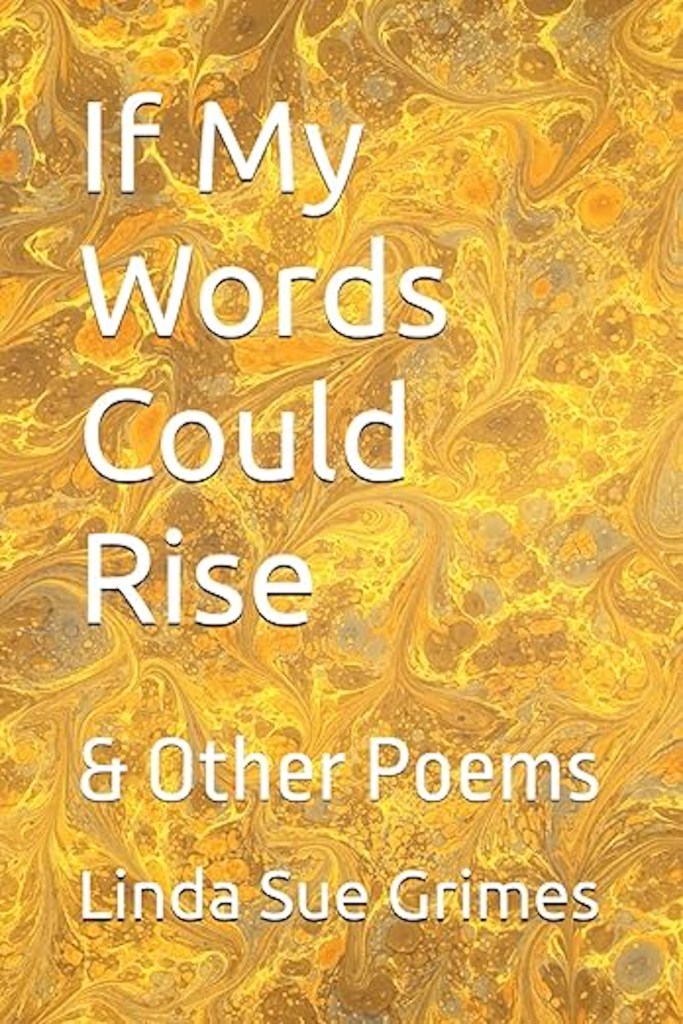
  • If My Words Could Rise & Other Poems

    Image: If My Words Could Rise & Other Poems

    Dedicated with my love and gratitude 
    to my sweet Ron

    The following poems appear in my collection titled If My Words Could Rise, available on Amazon as paperback or Kindle.

    If My Words Could Rise

    Dedicated to my sweet Ron

    If my words could rise
    Like smoke
    They would form your face
    In the clouds
    They would hang
    In the tops of the trees
    Looking for a nest
    Where a mother bird sits
    On eggs
    The color of your eyes

    2 In the Tops of the Trees

    “As soon as you hear the sound of marching in the tops of the trees, then attack, for God has attacked in front of you to defeat the Philistine army.” —2 Samuel 5:25 Common English Bible

    –for the moldman, who screeched, “That’s my line!”

    No, dude, that is not your line!
    No matter how many times
    Or with how much spit
    You spew it.

    Trees and their tops
    And the words they live in
    Belong to all of us.  Go!
    Dig your hole–grovel in your slime.

    3 Dreams and Days

    “His tongue cuts / Slices of meat / From the hearts / And livers / Of those / Who would love him” – “Between Slices of Bread” —from Linda Sue Grimes’ At the End of the Road

    I quote myself, well then,
    I quote myself —
    I include multitudes —
    Uncle Walt taught me that much.

    The man in the poem
    Cannot bring himself to say
    Or to pray about his own lividness
    He shuts out spaces and commas
    Lives in his own relevance.

    He murders his own children
    With his viper attitude
    And nibbles the ankles
    Of prostitutes
    Who erase his will to power on.

    You have seen him
    Perhaps did not recognize him —
    He has sat in your parlor
    Sipping your coffee
    Dusting off his duplicitous moves —

    He fears death but not yours
    He imagines you at the bottom
    Of a cold, black ocean
    Your tongue bait for the fishes
    His Bolshevik brain conjures.

    Your freedom is a fantasy 
    If you remain too close to his heat
    Get your life back – get your love back
    Where God made you in his image
    And you are close to seeing it.

    4 Flesh and Desire

    Humankind cannot bear very much reality.”  —T. S. Eliot

    Into the fire of wisdom, thoughts go to perish.
    “Get thee behind me, Satan!” Christ commands.
    But we still wobble behind the Devil
    Hoping to be snatched from the arms of death
    In time for supper and for the many tomorrows
    We image we still possess.
    In the valley of dreck and poison, I have lived
    Even as I knew better or thought I did.
    No, I am not here to testify.
    Although a word or two of testimony
    May slip out every line or so!
    I can pound sand with the best of them.
    But I can also bitch and moan.
    Where is the beginning of joy and rectitude?
    One might ask.  Where is the promise?
    O, come on!  You know where the promise is . . .
    Yes, just testing the waters and they are warm.
    Every time I delay, I am warned.  Just pray
    And wait and listen close and tight to the hum
    In the brain.  I will follow.  I will follow close.
    Yes, I will.  And flesh with its crude desire
    Will no longer taint the years
    With their distractions.
    The mercy of Spirit will wipe my tears. 

  • Command Performance: Singing for God and Guru

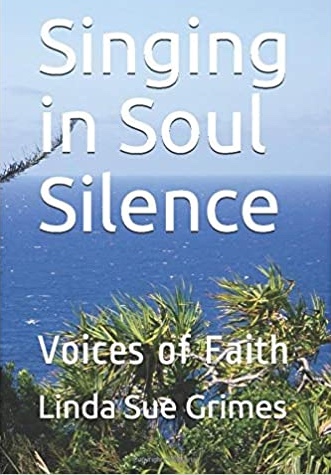
  • Singing in Soul Silence: Voices of Faith 

    Image:  Singing in Soul Silence: Voices of Faith 

    Singing in Soul Silence: Voices of Faith 

    for Ron, who makes my life a place for poetry

    The following poems appear in my collection titled Singing in Soul Silence: Voices of Faith available on Amazon.

    1 Invitation

    Into my garden of weeds 
    Come, Eternal Gardener— 
    Teach me to plant and prune fine foliage.
    Show me where to set the lilies and tulips
    And where the roses should grow.
    Guide my choices of herbs and vegetables.
    Give me knowledge of fertilizer and fences.

    Into my garden of words
    Come, Eternal Poet—
    Make my poems exude divine ardor.
    Fashion my thoughts to bow at your feet.
    Make my images spout living waters
    From an enlightened fount
    To refresh all who dip a cup.

    2 In My Spiritual Garden

    In my spiritual garden
    I walk with you when the sun is medicine
    And the rain suckles the beets and corn.
    I walk with you between the rows of memories
    Where love holds you between peppers and tomatoes.

    I walk with you along the fence
    And touch your hand and step across
    Thinking of you as I pick the peas,
    Still thinking of you as I weed 
    The beans and cucumbers.

    I walk with you and with every silent step
    And every moment of your absence
    That would weaken the faith of one
    Less in love, my love grows deep
    Like the roots of the bamboo and my love
    Grows straight like the stalks of asparagus.

    In my spiritual garden I will always grow you
    In the medicine sun and the suckling rain.

    3 Divine Gardner

    After we scoop the soil
    over the seeds
    & sprinkle the water
    & pluck the weeds,

    you will tend the growing
    & tempt the eye with green
    & yellow peppers,
    & tempt the tongue
    with onions & corn,
    & invite us to taste your flesh
    in cucumbers & tomatoes.

    I will stand at the edge of the garden,
    my lips & tongue tending the silence
    I learn to thank you with.

    4 My Divine Beloved

    When spring comes
    Tilling the ground
    I will plant seeds
    And think of you
    You are earth
    You build my body.

    When spring comes
    Showering young plants
    I will sing with raindrops
    And think of you
    You are water
    You carry my life.

    When spring comes
    Warming my limbs
    I will brown my skin
    And think of you
    You are fire
    You inflame my heart.

    When spring comes
    Swirling on the wind
    I will lean into it
    And think of you
    You are air
    You clear my mind.

    When spring comes
    Rising from winter’s tomb
    I will sing devotion
    And think of you
    You are my Divine Beloved
    You revive my soul.

    5 Your Divine Love

    My heart is a lake I swim in,
    But I want to float in the ocean of your love.

    My mind is a sky I fly through,
    But I want to soar through your omniscient love.

    My soul is an undiscovered star,
    But I want to find it shining in your flaming love.

    My dream spreads out in all directions,
    Searching for the boundary of your Divine Love.

    6 Cosmic Beloved

    Though my heart is fickle
    And strays from you,
    You never stray from me.
    Your love for me
    Never waivers.

    You came to me in youth’s naiveté
    And married my folly,
    And for a time I slept without rest
    In the arms of a splintering sorrow
    Deep within a cave of madness.
    When I emerged from that black night,
    You greeted me as my daughter.
    You blessed the rest of my life
    With a holy union when you became 
    My true mate with whom I rest
    In the cave of a peaceful heart.
    And you greet me as my son.

    When I go off from time to time
    To carouse with the lesser lights
    Of poets and painters and dabblers
    In pursuit of knowledge,
    You become each one of them
    So you can stay by my side—

    You love me that much.

    © Linda Sue Grimes 2013.  All rights reserved.