Linda's Literary Home

Tag: literature

  • William Butler Yeats’ “The Second Coming”

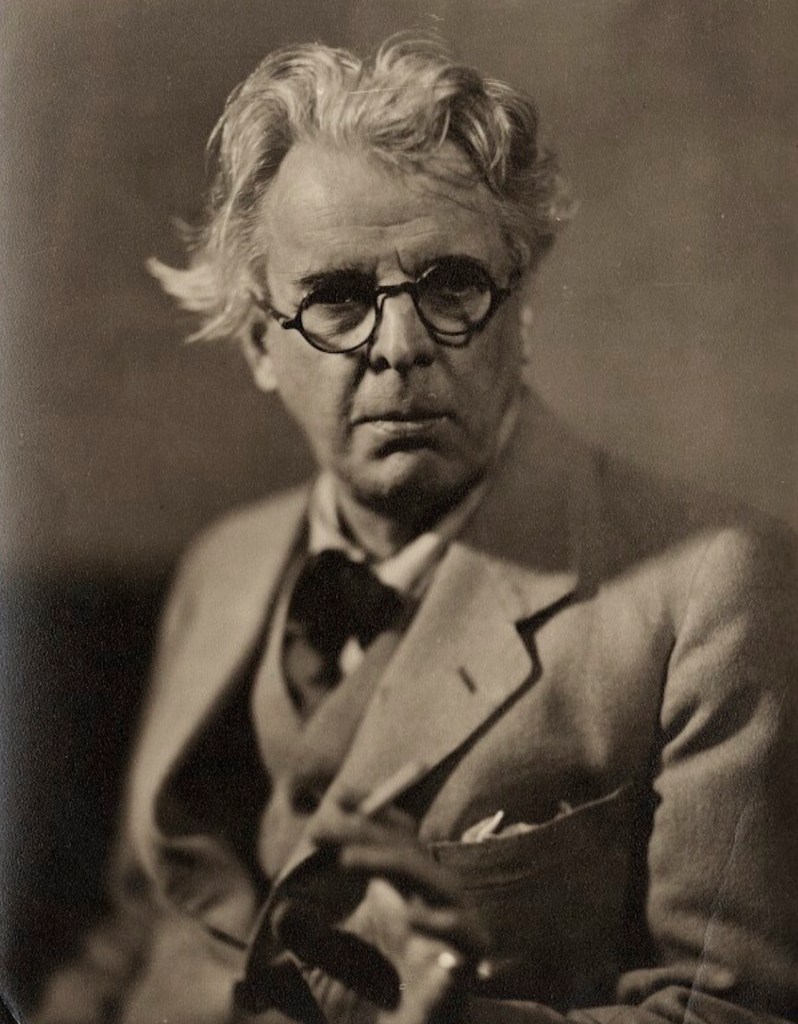
    Image: William Butler Yeats – Howard Coster – National Portrait Galley, London

    William Butler Yeats’ “The Second Coming”

    William Butler Yeats’ “The Second Coming” remains one of the most widely misunderstood poems of the 20th century. Many scholars and critics have failed to criticize the exaggeration in the first stanza and the absurd metaphor in the second stanza, which render a potentially fine poem a critical failure.

    Introduction with Text of “The Second Coming”

    Poems, in order to communicate, must be as logical as the purpose and content require. For example, if the poet wishes to comment on or criticize an issue, he must adhere to physical facts in his poetic drama. If the poet wishes to emote, equivocate, or demonstrate the chaotic nature of his cosmic thinking, he may legitimately do so without much seeming sense.

    For example, Robert Bly’s lines—”Sometimes a man walks by a pond, and a hand / Reaches out and pulls him in” / / “The pond was lonely, or needed / Calcium, bones would do,”—are ludicrous [1] on every level.   Even if one explicates the speaker’s personifying the pond, the lines remain absurd, at least in part because if a person needs calcium, grabbing the bones of another human being will not take care of that deficiency. 

    The absurdity of a lake needing “calcium” should be abundantly clear on its face.  Nevertheless, the image of the lake grabbing a man may ultimately be accepted as the funny nonsense that it is.   William Butler Yeats’ “The Second Coming” cannot be dismissed so easily; while the Yeats poem does not depict the universe as totally chaotic, it does bemoan that fact that events seem to be leading society to armageddon.

    The absurdity surrounding the metaphor of the “rough beast” in the Yeats poem renders the musing on world events without practical substance.

    The Second Coming

    Turning and turning in the widening gyre   
    The falcon cannot hear the falconer;
    Things fall apart; the centre cannot hold;
    Mere anarchy is loosed upon the world,
    The blood-dimmed tide is loosed, and everywhere   
    The ceremony of innocence is drowned;
    The best lack all conviction, while the worst   
    Are full of passionate intensity. 

    Surely some revelation is at hand;
    Surely the Second Coming is at hand.   
    The Second Coming! Hardly are those words out  
    When a vast image out of Spiritus Mundi
    Troubles my sight: somewhere in sands of the desert   
    A shape with lion body and the head of a man,   
    A gaze blank and pitiless as the sun,   
    Is moving its slow thighs, while all about it   
    Reel shadows of the indignant desert birds.   
    The darkness drops again; but now I know   
    That twenty centuries of stony sleep
    Were vexed to nightmare by a rocking cradle,  
    And what rough beast, its hour come round at last,   
    Slouches towards Bethlehem to be born? 

    Commentary on “The Second Coming”

    William Butler Yeats’ “The Second Coming” remains one of the most widely anthologized poems in world literature.  Yet its hyperbole in the first stanza and ludicrous “rough beast” metaphor in the second stanza result in a blur of unworkable speculation.

    First Stanza: Sorrowful over Chaos

    Turning and turning in the widening gyre   
    The falcon cannot hear the falconer;
    Things fall apart; the centre cannot hold;
    Mere anarchy is loosed upon the world,
    The blood-dimmed tide is loosed, and everywhere   
    The ceremony of innocence is drowned;
    The best lack all conviction, while the worst   
    Are full of passionate intensity. 

    The speaker is sorrowing over the chaos of world events that have left in their wake many dead people.  Clashes of groups of ideologues have wreaked havoc, and much blood shed has smeared the tranquil lives of innocent people who wish to live quiet, productive lives. 

    The speaker likens the seemingly out of control situation of society to a falconer losing control of the falcon as he attempts to tame it.   Everyday life has become chaotic as corrupt governments have spurred revolutions.  Lack of respect for leadership has left a vacuum which is filled with force and violence.

    The overstated claim that “The best lack all conviction, while the worst / Are full of passionate intensity” should have alerted the poet that he needed to rinse out the generic hyperbole in favor of more accuracy on the world stage.  

    Such a blanket, unqualified statement, especially in a poem, lacks the ring of truth:  it simply cannot be true that the “best lack all conviction.”  Surely, some the best still retain some level of conviction, or else improvement could never be expected.  

    It also cannot be true that all the worst are passionate; some of the worst are likely not passionate at all but remain sycophantic, indifferent followers.  Any reader should be wary of such all-inclusive, absolutist statements in both prose and poetry.  

    Anytime a writer subsumes an entirety with the terms “all,” “none,” “everything,” “everyone,” “always,” or “never,” the reader should question the statement for its accuracy.  All too often such terms are signals for stereotypes, which produce the same inaccuracy as groupthink.

    Second Stanza: What Revelation?

    Surely some revelation is at hand;
    Surely the Second Coming is at hand.   
    The Second Coming! Hardly are those words out  
    When a vast image out of Spiritus Mundi
    Troubles my sight: somewhere in sands of the desert   
    A shape with lion body and the head of a man,   
    A gaze blank and pitiless as the sun,   
    Is moving its slow thighs, while all about it   
    Reel shadows of the indignant desert birds.   
    The darkness drops again; but now I know   
    That twenty centuries of stony sleep
    Were vexed to nightmare by a rocking cradle,  
    And what rough beast, its hour come round at last,   
    Slouches towards Bethlehem to be born? 

    The idea of “some revelation” leads the speaker to the mythological second coming of Christ.  So he speculates on what a second coming might entail.  However, instead of “Christ,” the speaker conjures the notion that an Egyptian-Sphinx-like character with ill-intent might arrive instead.  

    Therefore, in place of a second coming of godliness and virtue, as is the purpose of the original second coming, the speaker wonders:  what if the actual second coming will be more like an Anti-Christ?  What if all this chaos of bloodshed and disarray has been brought on by the opposite of Christian virtue?

    Postmodern Absurdity and the “Rough Beast”

    The “rough beast” in Yeats’ “The Second Coming” is an aberration of imagination, not a viable symbol for what Yeats’ speaker thought he was achieving in his critique of culture. If, as the postmodernists contend, there is no order [2] in the universe and nothing really makes any sense anyway, then it becomes perfectly fine to write nonsense. 

    Because this poet is a contemporary of modernism but not postmodernism [3], William Butler Yeats’ poetry and poetics do not quite devolve to the level of postmodern angst that blankets everything with the nonsensical.  Yet, his manifesto titled A Vision is, undoubtedly, one of the contributing factors to that line of meretricious ideology. 

    Hazarding a Guess Can Be Hazardous

    The first stanza of Yeats’ “The Second Coming” begins by metaphorically comparing a falconer losing control of the falcon to nations and governments losing control because of the current world disorder, in which “[t]hings fall apart; the centre cannot hold.” 

    Political factions employ these lines against their opposition during the time in which their opposition is in power, as they spew forth praise for their own order that somehow magically appears with their taking the seat of power.

    The poem has been co-opted by the political class so often that Dorian Lynskey, overviewing the poem in his essay, “‘Things fall apart’: the Apocalyptic Appeal of WB Yeats’s The Second Coming,” writes, “There was apparently no geopolitical drama to which it could not be applied” [4].

    The second stanza dramatizes the speaker’s musing about a revelation that has popped into his head, and he likens that revelation to the second coming of Christ; however, this time the coming, he speculates, may be something much different.  

    The speaker does not know what the second coming will herald, but he does not mind hazarding a dramatic guess about the possibility.   Thus, he guesses that the entity of a new “second coming” would likely be something that resembles the Egyptian sphinx; it would not be the return of the Christ with the return of virtue but perhaps its opposite—vice. 

    The speaker concludes his guess with an allusion to the birth of such an entity as he likens the Blessed Virgin Mother to the “rough beast.”   The Blessèd Virgin Mother, as a newfangled, postmodern creature, will be “slouching toward Bethlehem” because that is the location to which the first coming came.  

    The allusion to “Bethlehem” functions solely as a vague juxtaposition to the phrase “second coming” in hopes that the reader will make the connection that the first coming and the second coming may have something in common.  The speaker speculates that at this very moment wherein the speaker is doing his speculation some “rough beast” might be pregnant with the creature of the “second coming.” 

    And as the time arrives for the creature to be born, the rough beast will go “slouching” towards its lair to give birth to this “second coming” creature: “its hour come round at last” refers to the rough beast being in labor. 

    The Flaw of Yeats’ “The Second Coming” 

    The speaker then poses the nonsensical question: “And what rough beast, its hour come round at last, / Slouches towards Bethlehem to be born?”   In order to make the case that the speaker wishes to make, these last two lines should be restructured in one of two ways: 

    And what rough beast, its hour come round at last,
    Slouches towards Bethlehem to give birth? 

     or

    And what rough beast’s babe, its time come at last,
    Is in transport to Bethlehem to be born?

    An unborn being cannot “slouch” toward a destination.  The pregnant mother of the unborn being can “slouch” toward a destination.   But the speaker is not contemplating the nature of the rough beast’s mother; he is contemplating the nature of the rough beast itself.  

    The speaker does not suggest that the literal Sphinx will travel to Bethlehem. He is merely implying that a Sphinx-like creature might resemble the creature of the second coming.  Once an individual has discounted the return of Jesus the Christ as a literal or even spiritual fact, one might offer personal speculation about just what a second coming would look like. 

    It is doubtful that anyone would argue that the poem is dramatizing a literal birth, rather than a spiritual or metaphorical one.    It is also unreasonable to argue that the speaker of this poem—or Yeats for that matter—thought that the second coming actually referred to the Sphinx.   A ridiculous image develops from the fabrication of the Sphinx moving toward Bethlehem. Yeats was more prudent than that. 

    Exaggerated Importance of Poem

    William Butler Yeats composed a manifesto to display his worldview and poetics titled A Vision, in which he set down certain tenets of his thoughts on poetry, creativity, and world history.   Although seemingly taken quite seriously by some Yeatsian scholars, A Vision is of little value in understanding either meaning in poetry or the meaning of the world, particularly in terms of historical events.  

    An important example of Yeats’ misunderstanding of world cycles is his explanation of the cyclical nature of history, exemplified with what he called “gyres” (pronounced with a hard “g.”)  Two particular points in the Yeatsian explanation demonstrate the fallacy of his thinking:

    1. In his diagram, Yeats set the position of the gyres inaccurately; they should not be intersecting but instead one should rest  one on top of the other:  cycles shrink and enlarge in scope; they do not overlap, as they would have to do if the Yeatsian model were accurate. 

    Image :  Gyres – Inaccurate Configuration from A Vision

    Image:  Gyres –  Accurate Configuration

    2.  In the traditional Second Coming, Christ is figured to come again but as an adult, not as in infant as is implied in Yeats’ poem “The Second Coming.”

    Of great significance in Yeats’ poem is the “rough beast,” apparently the Anti-Christ, who has not been born yet.  And most problematic is that the rough beast is “slouch[ing] towards Bethlehem to be born.”  The question is, how can such a creature be slouching if it has not yet been born?  There is no indication the speaker wishes to attribute this second coming fiasco to the mother of the rough beast.

    This illogical event is never mentioned by critics who seem to accept the slouching as a possible occurrence.  On this score, it seems critics and scholars have lent the poem an unusually wide and encompassing poetic license.

    The Accurate Meaning of the Second Coming

    Paramahansa Yogananda has explained in depth the original, spiritual meaning of the phrase “the second coming”[5] which does not signify the literal coming again of Jesus the Christ, but the spiritual awakening of each individual soul to its Divine Nature through the Christ Consciousness.  

    Paramahansa Yogananda summarizes his two volume work The Second Coming of Christ: The Resurrection of the Christ Within You:

    In titling this work The Second Coming of Christ, I am not referring to a literal return of Jesus to earth . . . 

    A thousand Christs sent to earth would not redeem its people unless they themselves become Christlike by purifying and expanding their individual consciousness to receive therein the second coming of the Christ Consciousness, as was manifested in Jesus . . . 

    Contact with this Consciousness, experienced in the ever new joy of meditation, will be the real second coming of Christ—and it will take place right in the devotee’s own consciousness. (my emphasis added)

    Interestingly, knowledge of the meaning of that phrase “the second coming” as explained by Paramahansa Yogananda renders unnecessary the musings of Yeats’ poem “The Second Coming”and most other speculation about the subject. Still, the poem as an artifact of 20th century thinking remains an important object for study. 

    Sources

    [1]  Linda Sue Grimes.  “Robert Bly’s ‘The Cat in the Kitchen’ and ‘Driving to Town Late to Mail a Letter’.”  Linda’s Literary Home. December 24, 2025. 

    [2]  David Solway.  “The Origins of Postmodernitis.”  PJ Media.  March 25, 2011.  

    [3]  Linda Sue Grimes. “Poetry and Politics under the Influence of Postmodernism.” Linda’s Literary Home.  Accessed December 3, 2025.

    [4]  Dorian Lynsey. “‘Things fall apart’: the Apocalyptic Appeal of WB Yeats’s The Second Coming.” The Guardian.  May 30, 2020.

    [5]  Editors. “The Truth Hidden in the GospelsSelf-Realization Fellowship. Accessed October 27, 2023.

  • William Butler Yeats’ “The Fisherman”

    William Butler Yeats’ “The Fisherman”

    The speaker in William Butler Yeats’ “The Fisherman” is dramatically promoting a style of poetry that will become and remain meaningful to and beloved by the common folk.

    Introduction with Text of “The Fisherman”

    William Butler Yeats’ poem “The Fisherman” appears in the poet’s The Wild Swans at Coole, which was brought out in 1919. The poet’s collection features many of his most widely anthologized poems.

    In “The Fisherman,” Yeats has created a speaker who is voicing a call for a genuine school of art for the common folk, an art that dramatizes the beauty and truth inherent in all great art. 

    The speaker is also decrying the cultural suicide being perpetrated by charlatans in art as well as their cohorts who are power-hungry politicians.  He thus reveals contempt for fakes and frauds, while promoting an ideal that he strongly believes should be steering art and the cultural life of the nation.

    Every nation throughout history has suffered from these same issues, as toppling governments and bloody wars testify.  The poets have often spoken up, calling out names and insisting on reforms.  

    Despite the fact that poetry’s first function arises from personal experience, political controversy often intrudes into the realm of the personal and that is when poets are compelled to use their platform for activism.

    Care must be taken, however, that the poet not become a brazen tool for propaganda. As an accomplished world poet and former Irish senator [1], Yeats possessed the acumen to broach issues of art, poetry, culture, and politics.

    The former politician and literary Nobel Laureate [2] boasts numerous works that address culture and politics: “The Fisherman” remains one of the most colorful and culturally significant poems of the era.

    The Fisherman

    Although I can see him still,
    The freckled man who goes
    To a grey place on a hill
    In grey Connemara clothes
    At dawn to cast his flies,
    It’s long since I began
    To call up to the eyes
    This wise and simple man.
    All day I’d looked in the face
    What I had hoped ’twould be
    To write for my own race  
    And the reality;  
    The living men that I hate,
    The dead man that I loved,
    The craven man in his seat,
    The insolent unreproved,
    And no knave brought to book  
    Who has won a drunken cheer,  
    The witty man and his joke
    Aimed at the commonest ear,
    The clever man who cries
    The catch-cries of the clown,
    The beating down of the wise
    And great Art beaten down.

    Maybe a twelvemonth since
    Suddenly I began,  
    In scorn of this audience,  
    Imagining a man
    And his sun-freckled face,  
    And grey Connemara cloth,
    Climbing up to a place  
    Where stone is dark under froth,
    And the down turn of his wrist
    When the flies drop in the stream:
    A man who does not exist,
    A man who is but a dream;
    And cried, “Before I am old
    I shall have written him one
    Poem maybe as cold
    And passionate as the dawn.”

    Reading of “The Fisherman”

    Commentary on “The Fisherman”

    The speaker in William Butler Yeats’ poem is heralding a style of poetry that will be beloved by the common folk.  He makes his contempt for charlatans known. He encourages the ideals that he believes must guide culture and art.  Yeats was a promoter of the style of art that he thought was closest to the hearts and minds of the Irish.

    First Movement:  Recalling an Admired Man

    Although I can see him still,
    The freckled man who goes
    To a grey place on a hill
    In grey Connemara clothes
    At dawn to cast his flies,
    It’s long since I began
    To call up to the eyes
    This wise and simple man.

    The speaker appears to be remembering a special man whom he has respected: “[t]he freckled man” wearing “Connemara clothes.”  This man has been in the habit of fishing at a “gray place on a hill.”  

    The speaker implies that in his mind’s eye, he can still perceive the man. And it may also be that the speaker literally meets the man occasionally in the village. However,  the speaker has not as of late mused upon the man.

    The speaker admires the man’s simple ways.  He assumes that the man is “wise and simple.”  The speaker then continues to cogitate upon those very same qualities as he continues his message.

    The speaker entertains a deep desire to praise the virtues of simplicity and wisdom.  He has observed those qualities in the folks who are doing ordinary, simple everyday tasks.

    Second Movement:  Researching History

    All day I’d looked in the face
    What I had hoped ’twould be
    To write for my own race  
    And the reality;  
    The living men that I hate,
    The dead man that I loved,
    The craven man in his seat,
    The insolent unreproved,

    The speaker has determined that he will make a plan to write for his own people, including the real experiences they all undergo.  With the plan in mind, he has begun to research the history of his nation and its people.  The speaker asserts that he hopes to reveal the reality of the lived experience of his fellow citizens. 

     Such a reality should well acquit itself and at the same time demonstrate and dramatize the exact truths that future generations will be likely to undergo.The speaker offers a catalogue of qualities that the men who make up the current political landscape have put on display.  

    Some of those men will be the recipients of his ire.  He brazenly states that there are living men whom he hates.  He then contrasts that negative emotion with its opposite by emphasizing that there is as well the “dead man that [he] loved.” 

    The speaker continues in his enflamed hatred by asserting that the “craven” exist while the “insolent” remain unrestricted in their perfidy. The speaker believes that by contrasting good and evil, he can demonstrate the efficacy of the arrival of a steady virtue upon which to build a better art and poetry that can represent Irish culture more faithfully and honestly.

    Third Movement:  The Guilty Avoiding Justice

    And no knave brought to book  
    Who has won a drunken cheer,  
    The witty man and his joke
    Aimed at the commonest ear,
    The clever man who cries
    The catch-cries of the clown,
    The beating down of the wise
    And great Art beaten down.

    The speaker continues referring to the rogues and knaves, who have thus far evaded justice though guilty. The speaker loathes those frauds who have “won a drunken cheer,” even as they have remained undeserving of celebrity and honor.  

    The speaker makes it clear that there is a sector of despicable characters who damage, cheapen, and pile shame on the culture.   The speaker accuses such unscrupulous scoundrels of attempting to destroy the art of the nation. 

    They, in effect, denigrate “the wise” as they dismantle the “great Art” that they have inherited.  The speaker grieves that these killers of culture have succeeded in their perfidy. Thus, he is calling attention to their misdeeds. He is proposing a change in focus in order to improve values.  He is not suggesting censorship of the charlatans.

    Fourth Movement:  Cultural Assassins

    Maybe a twelvemonth since
    Suddenly I began,  
    In scorn of this audience,  
    Imagining a man
    And his sun-freckled face,  
    And grey Connemara cloth,
    Climbing up to a place  
    Where stone is dark under froth,

    The speaker then reports that for a while he has been incubating the idea of creating an uncomplicated, “sun-freckled face”—the man in “Connemara cloth.”   For his effort, he has thus far received only “scorn” from the ilk of those culture killers and unscrupulous reprobates.

    Nevertheless, the speaker has been pressing on, striving to envision a simple fisherman, who “climb[s] up to a place / Where stone is dark with froth,” a natural place that continues to be pristine and still remains alluring.

    The speaker is crafting a symbolic being whom he can describe and on whom he can bestow the qualities that he deems must become and remain an important part of the natural art, belonging to the people of his environs.

    Fifth Movement:  The Importance of Simplicity

    And the down turn of his wrist
    When the flies drop in the stream:
    A man who does not exist,
    A man who is but a dream;
    And cried, “Before I am old
    I shall have written him one
    Poem maybe as cold
    And passionate as the dawn.”

    The speaker visualizes the fisherman’s wrist movement as the man casts his line into the water. He admits that this man does not yet exist, because  he is still “but a dream.”  The speaker’s keen sensibility is strong enough to bring to life such a simple, rustic character.  He is urged then to take all pains to bring such a character to life.

    Thus, while the poet is still young enough to use his God-given imagination, he vows to take on the task of writing this fisherman into existence and to compose for the man a poem “as cold / And passionate as the dawn.”   The speaker continues to muse on simplicity.  He passionately desires to create a new ideal that will produce meaningful, original, dramatic poetry.

    He insists that that new poetry must be able to speak with genuine originality and that it thus should become a harbinger of the beginning of a new era in art of poetry. The speaker hopes to accomplish all of this despite the wrong-headedness and power-grabbing of too many of the political phonies—and despite the fraudulent deceivers whose selfishness is spreading the destruction of their own culture.

    Sources

    [1]  Editors. “William Butler Yeats.” Poetry Foundation.  Accessed October 3, 2023.

    [2]  Daniel Mulhall. “W.B. Yeats and the Ireland of his time.” Embassy of Ireland.  Accessed October 3, 2023.

  • Gerard Manley Hopkins’ “The Habit of Perfection”

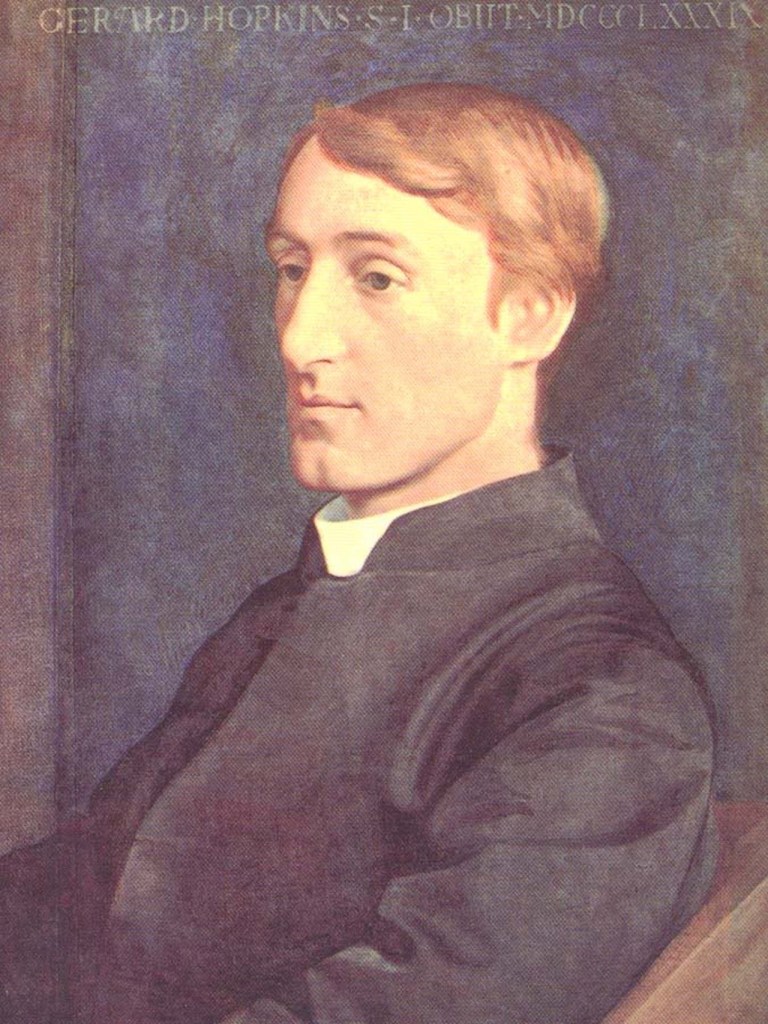
    Image: Gerard Manley Hopkins – Inspirational Jesuits

    Gerard Manley Hopkins’ “The Habit of Perfection”

    Father Gerard Manley Hopkins’ poem “The Habit of Perfection” dramatizes the importance of silencing and stilling each of the five senses in order to advance in the spiritual realm.

    Introduction with Text of “The Habit of Perfection”

    The title “The Habit of Perfection” of Gerard Manley Hopkins’ poem features a pun on the term “habit.” As a monk, the poet had accepted the garb of the monastic, sometimes called a habit. Of course, the ordinary meaning of common routine also functions fully.

    About the importance of silence, Paramahansa Yogananda has averred, “What joy awaits discovery in the silence behind the portals of your mind no human tongue can tell” (Spiritual Diary).

    Jesuit Priest Gerard Manley Hopkins concurs with the Indian guru’s claim. Father Hopkins’ poem dramatizes the bliss of silence in seven rimed quatrains, each with the rime scheme, ABAB, featuring his famous sprung rhythm and inscape techniques.  The devotee/speaker commands each of his senses to cease their normal functioning, in order that his soul may meditate in holy silence and commune with the Divine.

    The Habit of Perfection

    Elected Silence, sing to me
    And beat upon my whorlèd ear,
    Pipe me to pastures still and be
    The music that I care to hear.

    Shape nothing, lips; be lovely-dumb:
    It is the shut, the curfew sent
    From there where all surrenders come
    Which only makes you eloquent.

    Be shellèd, eyes, with double dark
    And find the uncreated light:
    This ruck and reel which you remark
    Coils, keeps, and teases simple sight.

    Palate, the hutch of tasty lust,
    Desire not to be rinsed with wine:
    The can must be so sweet, the crust
    So fresh that come in fasts divine!

    Nostrils, your careless breath that spend
    Upon the stir and keep of pride,
    What relish shall the censers send
    Along the sanctuary side!

    O feel-of-primrose hands, O feet
    That want the yield of plushy sward,
    But you shall walk the golden street
    And you unhouse and house the Lord.

    And, Poverty, be thou the bride
    And now the marriage feast begun,
    And lily-coloured clothes provide
    Your spouse not laboured-at nor spun.

    Reading

    Commentary on “The Habit of Perfection”

    Father Hopkins’ poem “The Habit of Perfection” dramatizes the importance of silencing and stilling each of the five senses in order to advance spiritually to experience union with the Divine Reality.

    First Quatrain: Devotee of the Spiritual Path

    Elected Silence, sing to me
    And beat upon my whorlèd ear,
    Pipe me to pastures still and be
    The music that I care to hear.

    The speaker reveals himself to be a devotee on the spiritual path, as he converses with “Elected Silence.” The devotee chooses silence as the place where inner awareness starts, remembering the biblical injunction, “Be still, and know that I am God” (Psalm 46:10 King James Version).

    The speaker metaphorically likens his Elected Silence to music, capable of singing to him and beating upon his eardrum.  This silence “pipe[s him] to pastures” in the mind which he wants to still. He, therefore, asks silence to be “the music that [he cares] to hear.”

    Second Quatrain:  Commanding the Senses

    Shape nothing, lips; be lovely-dumb:
    It is the shut, the curfew sent
    From there where all surrenders come
    Which only makes you eloquent.

    As an adjunct to the auditory sense, speaking or moving the lips must cease as well as catching sounds with the ear; thus, the speaker bids his lips to remain “lovely-dumb.”  He tells his lips to form no sounds, stressing that the eloquent speech of the devotee is in his surrender to the Divine. The devotee must remain silent in order to hear the voice of Divinity.

    Third Quatrain:   Calming the Sense of Sight

    Be shellèd, eyes, with double dark
    And find the uncreated light:
    This ruck and reel which you remark
    Coils, keeps, and teases simple sight.

    The speaker then bids his eyes remain closed. He commands them to seek “double dark” beyond which they can encounter the “uncreated light.” In their seeking, the eyes may experience flashes of unearthly light that “[c]oils, keeps, and teases simple sight.”  But the devotee’s goal is to become so calm that the physical eyes cease to catch mere glimpses, while the single spiritual eye becomes operational.

    Fourth Quatrain:   Calming the Sense of Taste

    Palate, the hutch of tasty lust,
    Desire not to be rinsed with wine:
    The can must be so sweet, the crust
    So fresh that come in fasts divine!

    The speaker/devotee orders his sense of taste to cease its intrusion upon the soul. He specifically commands his taste buds not to crave wine.  The sense of taste must be subdued by fasting, wherein the urge for food and drink become swallowed up in the bliss of Divine communion.

    Fifth Quatrain:   Calming the Sense of Smell

    Nostrils, your careless breath that spend
    Upon the stir and keep of pride,
    What relish shall the censers send
    Along the sanctuary side!

    The sense of smell accompanies the act of breathing, and in meditation, breathing slows until it stops in deepest awareness of the Divine Essence.  The speaker commands his nose by asserting the premise that it functions through a sense of pride, which is damaging to the humbleness necessary for Divine awareness.

    Sixth Quatrain:  Calming the Sense of Touch

    O feel-of-primrose hands, O feet
    That want the yield of plushy sward,
    But you shall walk the golden street
    And you unhouse and house the Lord.

    The speaker then promises his greedy hands and feet, which desire softness and comfort, that they will be rewarded to walk the golden street, if they cooperate in sacrificing their worldly comforts for heavenly ones.

    Seventh Quatrain:  Union of Soul and Divine

    And, Poverty, be thou the bride
    And now the marriage feast begun,
    And lily-coloured clothes provide
    Your spouse not laboured-at nor spun.

    In the final quatrain, the speaker alludes to the Christ’s command not to become overly conscious about one’s clothes: 

    And why take ye thought for raiment? Consider the lilies of the field, how they grow; they toil not, neither do they spin: And yet I say unto you, That even Solomon in all his glory was not arrayed like one of these.  (Matthew 6:28-29 KJV)

    The speaker avers that taking Poverty as his bride, he will enjoy all the comforts of heaven. As a monastic, the speaker has taken a vow of poverty or simplicity because he is seeking treasures not afforded by the material world. 

    As he silences and calms all the senses, his true marriage feast begins, his marriage or union with the Divine Over-Soul, in Whom all worthwhile treasures are acquired and all worthy goals are achieved.

  • Langston Hughes’ “Harlem”

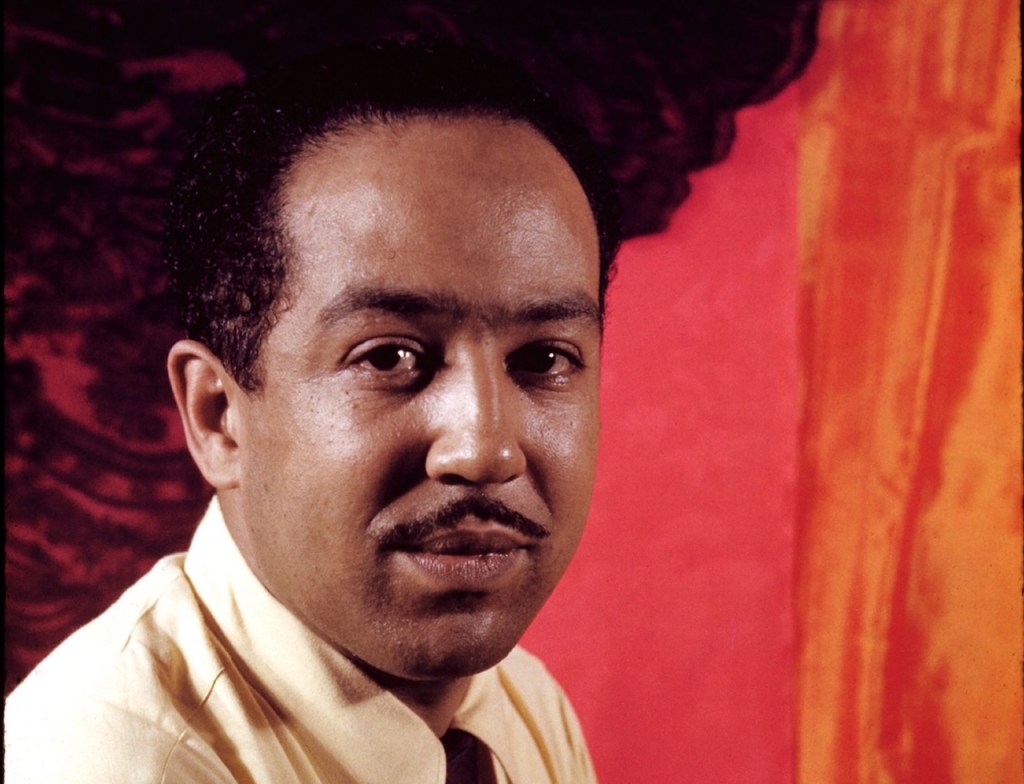
    Image:  Langston Hughes – Carl Van Vechten

    Langston Hughes’ “Harlem”

    Langston Hughes’ “Harlem” examines the potential effects of having to postpone dreams or goals.  The result of such delay may present itself in numerous ways, and the speaker explores them in this poem through colorful imagery in five dramatic similes and one explosive metaphor.

    Introduction with Text of “Harlem”

    The title of Langston Hughes’ “Harlem” may be considered somewhat ironic.  The Harlem Renaissance became a colorful, vibrant period of flourishing in literary, musical, visual, and other forms of art.    Several civil rights activists, including the excellent poet/activist James Weldon Johnson, were active contributors to this flourishing movement.

    The irony, however, rests in that fact that many dreams, especially of black American artists, were being realized as never before, yet, the poem engages in speculation about the events that may transpire if dreams are postponed, remaining unrealized.

    Still, on the other hand, systemic racism in America was not eliminated until enactment of the Civil Right Act of 1964.  Thus Hughes’ speaker was quite timely in speculation that much of the black population was still being subjected to unfavorable conditions, including having to postpone certain dreams of equality of opportunity.

    Because this poem’s speaker makes no mention of anything referring to race or ethnicity, the poem’s “dream” could be any desired goal held by any member of any race or ethnic group. 

    The message of this poem can be applied to any “dream” or “goal” that would have to be postponed, especially if postponed by coercion or unfair competition. The poem’s universal message is what makes it a great poem.

    This poem appears in Langston Hughes’ 1951 collection, Montage of a Dream Deferred.  The theme of the poem explores the mental and emotional states that the human mind might undergo if forced to postpose or abandon one’s heartfelt dreams and life goals.   The poem primarily employs similes but concludes with one explosive metaphor to convey its impact.

    The speaker opens the poem questioning what happens when a dream has to be postponed.  He moves on to make four further inquiries; he then provides a suggestion and finally concludes with a shocking, explosive question.   The inquiries that employ the use of similes turn out to be rhetorical questions; answers to these questions are actually featured within the questions themselves.  

    This strategy leaves no doubt about the answers to those questions.  They are yes/no questions, and the obvious answer is yes in all cases.  As “yes or no” questions, they require no further elaboration.  The speaker’s point of view on the issue is quite clear:  he holds the notion that a dream postponed indefinitely can result in all sorts of damage, including death. 

    The similes— “like a raisin in the sun,” “like a sore,” “like rotten meat,” “like a syrupy sweet,” “like a heavy load”—form the questioning pattern, with the final simile, however,  expressed as a suggestion.  Then the metaphor in the conclusion bursts forth with, “or does it explode?“—the most volatile question of all—therefore it receives added italic emphasis.

    No one wants to postpone a dream, that is, a goal, regardless of whether it is to buy a new phone or start that new career.  But what happens to that dream if it does have to be put off for any reason?  Maybe it just languishes in the back of the mind or maybe it causes the individual to behave in a destructive manner. 

    In roughly 50 words, the speaker has explored a human phenomenon that most, if not all human beings, have experienced in their time on earth.  The degree of intensity to which each dream deferred has been subjected is the main theme of the poem.  With colorful imagery presented through rhetorical questions, the speaker has created a memorable drama, focusing on a universal human condition.

    Harlem

    What happens to a dream deferred?

    Does it dry up
    like a raisin in the sun?
    Or fester like a sore—
    And then run?
    Does it stink like rotten meat?
    Or crust and sugar over—
    like a syrupy sweet?

    Maybe it just sags
    like a heavy load.

    Or does it explode?

    Commentary on “Harlem”

    Langston Hughes’ poem features several perfect rimes in “sun-run,” “meat-sweet,” “load-explode.” The poem employs images: “raisin in the sun,” “fester like a sore,” “stink like rotten meat.”   Even the metaphor that contains no noun suggests the subliminal vision of an exploding bomb which includes all the five senses for which the imagery is employed.

    First Movement:  The Delaying

    What happens to a dream deferred?

    Most mature, well-adjusted, thinking human beings entertain dreams and goals that they strive to achieve. This poem full of questions begins with a question seeking to know what events might occur after a dream has been postponed: what might such a delay cause the dreamer to do?

    Although it surely must be assumed that the “dream” referred to in this poem is one vital to human nature and dignity, such as the desire for individual freedom, personal security, and individual achievement, in reality, it does not matter what the dream is, because each person reacts differently to different circumstances.

    Some human minds and hearts are more patient than others. What may set off a volatile reaction from one person may be well tolerated by another.  Still, dreams and goals are so important to the life of the dreamer that they occupy the dreamer’s attention in the consciousness much of the time during the day and possibly even in sleep.

    It is, therefore, little wonder that if the dreamer hits a roadblock that stalls his/her continuing on the path to fulfillment of a goal, s/he may become disturbed.  The speaker in the poem is exploring a range of possible outcomes that may be experienced by differing personalities.

    Second Movement: The Drying Up

    Does it dry up
    like a raisin in the sun?

    After a dream or goal is allowed to “dry up like a raisin in the sun,” that dream or goal will lose its value. A raisin is a sweet, nutritious food but left out in the sun, it will harden and lose its flavor as well as its nutritional value.  The life’s goal of a human being performs a vital role in making that person a successful, contributing member to the culture and society of the human race.

    However, if an individual is put off over and over again, admonished that s/he simply has to wait for society’s laws and attitudes to change before s/he can start a business, or become a doctor, lawyer, teacher, or artist, that individual is likely to wither away or “dry up,” particularly emotionally and mentally.

    The speaker wishes to place into the consciousness of society that the notion of delaying the dreams of individuals will become an impediment to progress. Talent and ingenuity require nurturing. not being postponed.

    Desire to flourish must be encouraged, not kept in the dark of indifference. The drying up of human talent and energy is a waste of human capital; thus the slogan “a mind is a terrible thing to waste” offers a useful claim as well as a clever advertisement for colleges.

    The waste of that mind not only affects the individual, but it also affects the entire community and eventually the whole of society.  If a country continues to denigrate its native talent, that country is bound to fail.

    Third Movement:  The Festering

    Or fester like a sore—
    And then run?

    The speaker then considers another issue that might arise from a delayed dream; instead of drying up, maybe it will run like a sore that has festered and become all pus infused. We all want our sores to dry up; we do not want them to fester and continue to run.

    Restless dissatisfaction might occur if a dream festers and runs. The innocent dreamer might transform into a criminal, perpetrating criminal offenses against whom or what s/he believes to be standing in the way of his/her dreams.  Again, the whole of society is lessened by such behavior.

    Fourth Movement:  The Stinking

    Does it stink like rotten meat?

    Rotten meat gives off a definite, unpleasant odor. A dream allowed to lie untended in the mind might decay and give off the stench of unfulfilled desires. The unpleasant odor comes from the dead dream, just as the stink spreads from rotten animal flesh.

    The “rotten meat” simile is particularly powerful. The stench of decayed flesh remains nearly unbearable to the human nostrils. The speaker has grown particularly suspicious that deferred dreams can ever produce anything resembling a pleasant outcome.

    Fifth Movement:  The Crusting Over

    Or crust and sugar over—
    like a syrupy sweet?

    The dried accumulation that forms on syrup or honey bottles left unused for quite some time presents as an unpleasant crust. It is the lack of use has caused that unpleasant accumulation.

    The contents of the bottle will become unusable if left long enough, and so it becomes with dreams. Elderly folks often complain that they failed to pursue certain dreams when they were young, and now those dreams have become a bitter memory, a crusty accumulation at the top their bottle of life.  The crusted over dreams may present themselves as emotions of hatred, doubt, anger, and despair.

    Sixth Movement:  The Sagging

    Maybe it just sags
    like a heavy load.

    This stanza does not pose a question; it offers a suggestion that perhaps the postponed dream just bends because of the “heavy load” of deferral. The dreamer has become lazy and lethargic, even clumsy, as s/he trudges along under the heavy load that has become a mighty burden.

    The dream continues to weigh heavily on the mind of the dreamer who keeps on wondering what s/he might have accomplished, if given the opportunity. Thus from carrying the burden of doubt, the dreamer may become depressed even lacking the ability to be at all productive.

    Seventh Movement: The Exploding

    Or does it explode?

    All of the possibilities heretofore mentioned in the similes and in the sagging heavy load suggestion of suffering a dream deferred are deficient, shoddy, even possibly life-threatening. While negative in their description, all of the earlier questions imply a certain level of tolerance.

    The deferral of those dreams referred to in the similes have affected mostly the dreamer. But the question metaphorically expressed in the final line becomes literally and definitely explosively life-threatening, not only to the dreamer but to his/her surroundings.

    The speaker asks, “does it explode?” Bombs explode—as well as anything in a container in which pressure has built up to the point that the container is no longer capable of expanding to accommodate that pressure.  If the dreamers no longer harbor a shred of hope for their dreams, they may become such a container under pressure.  They may figuratively become a human bomb by employing a destructive device that can maim and kill others in the person’s vicinity.

    Miserable dreamers full of despair, grief, and hopelessness may engage in any number of dangerous, life-threatening acts, as they try to hold responsible those they consider to blame for their inability to realize their dreams and life goals.

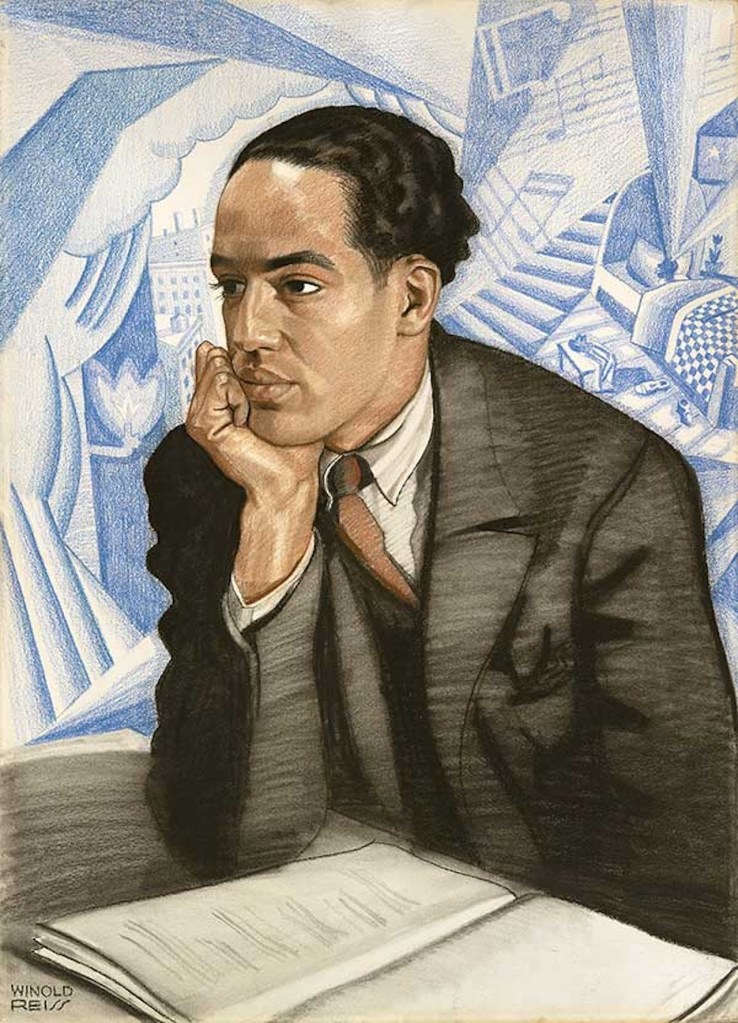
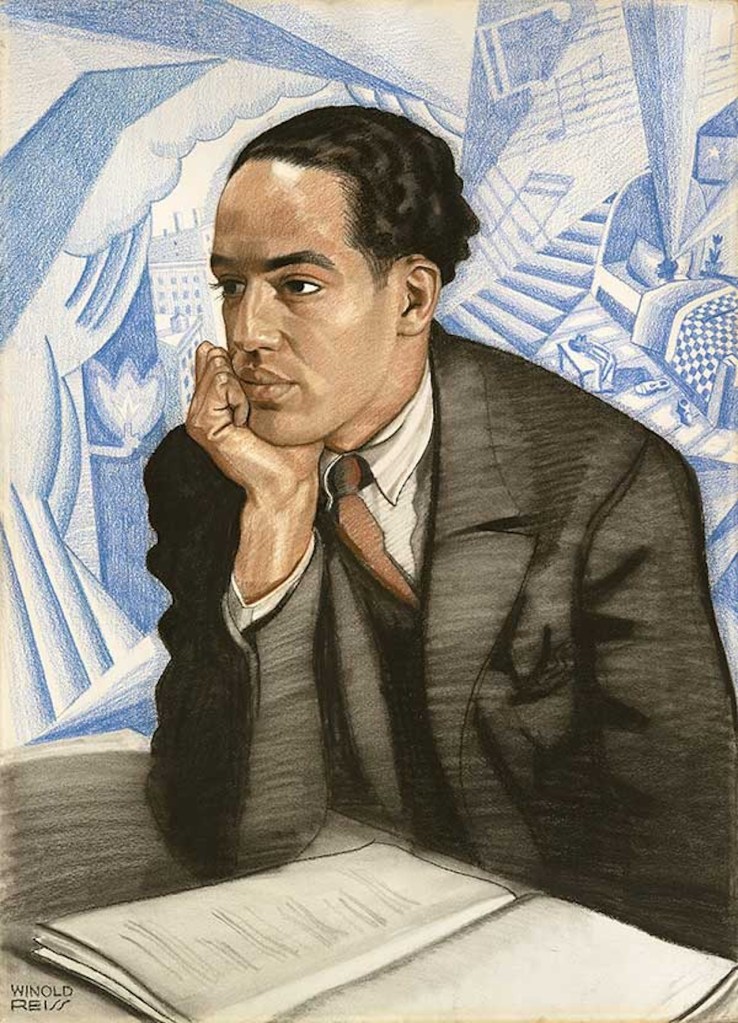
    Image:  Portrait of  Langston Hughes – Winold Reiss – National Portrait Gallery


    Video: Langston Hughes: Leading Voice of the Harlem Renaissance | Biography

    🕉

    You are welcome to join me on the following social media:
    TruthSocial, Locals, Gettr, X, Bluesky, Facebook, Pinterest 

    🕉

    Share

  • Langston Hughes’ “The Negro Speaks of Rivers”

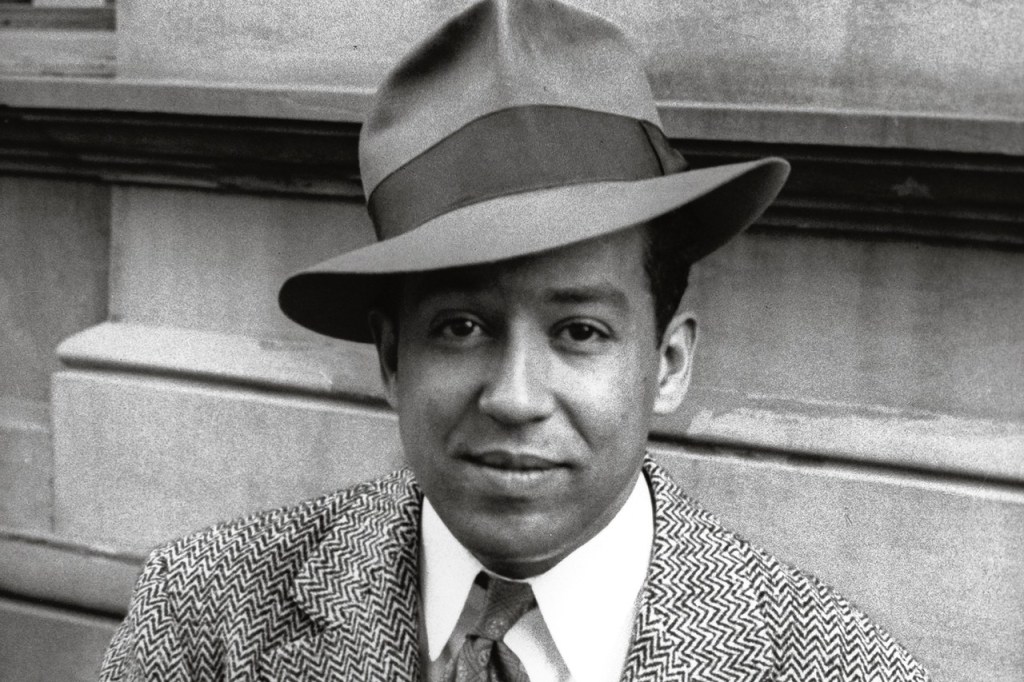
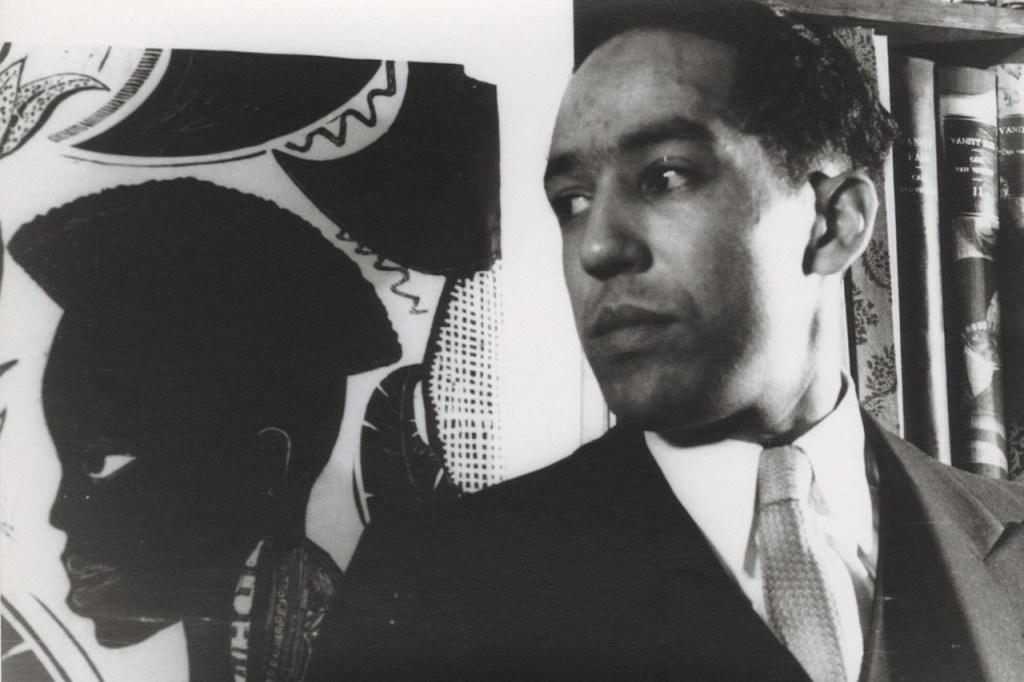
    Image:  Langston Hughes.  Library of Congress. Photographer Gordon Parks 

    Langston Hughes’ “The Negro Speaks of Rivers”

    Langston Hughes’ speaker in “The Negro Speaks of Rivers” displays his message in five versagraphic movements, thematically exploring his soul experience with a “cosmic voice,” which includes and unites all of humanity.

    Introduction and Text of “The Negro Speaks of Rivers”

    Langston Hughes’ speaker in “The Negro Speaks of Rivers” displays his message with a “cosmic voice,” which includes and unites all of humanity.  The poem plays out in five versagraphic movements, focusing on the theme of soul exploration.

    The Cosmic Voice in Poetry

    Writers, especially poets, often employ the “cosmic voice” in order to provide a deep and wide view of historical events and vast swaths of space.  A device called the omniscient speaker is often used in fiction; that voice is similar to the cosmic voice but much more limited.

    Time and space may stretch or contract as needed as the cosmic seer narrates what he experiences.  The “cosmic voice” may come to a poet through a vivid imagination; however, it transcends the imagination as a truth teller.   Only a few poets have been blessed with such a voice; examples are Emily Dickinson, Rabindranath Tagore, Paramahansa Yogananda, and to a limited degree Walt Whitman.

    The cosmic voice imparts truth through deep intuition.  The soul of the speaker employing the cosmic voice is, even if only temporarily as is the case with Langston Hughes, becomes aware of its vast and profound knowledge.  The cosmic voice speaks from a place far beyond ordinary sense awareness.  

    Individuals who comprehend the cosmic voice are bequeathed a consciousness far beyond their own sense awareness and thus comprehend the unity of all created things.  Those individuals are heralded into the realm of the Cosmic Creator and often remain transformed beings for having experienced that Sacred Locus.

    Langston Hughes and the Cosmic Voice

    The voice employed in “The Negro Speaks of Rivers” is not a whining, complaining one so often heard in the protest voices of activists; instead Hughes is employing the cosmic voice—the voice of the soul that knows itself to be a divine entity.  That voice speaks with inherent authority; it reports its intuitions so that others might hear and regain their own experiences through its guidance.

    Langston Hughes’ speaker in “The Negro Speaks of Rivers” imparts his discourse in five versagraphic movements.  His theme explores with the cosmic voice that unites all of humanity.  

    The vital lines that serve as a refrain—”I’ve known rivers” and “My soul has grown deep like the rivers”—work like a chant, instilling in the listener the truth that the speaker wishes to impart.  That Langston Hughes was able to employ a cosmic voice in a poem at age seventeen is quite remarkable.  

    Although some of his later work, even as much of it remained important and very entertaining, descended into the banal and at times even slipshod, no one can deny his marvelous accomplishment with this early poem in which he speaks as a master craftsman.

    The Negro Speaks of Rivers 

    I’ve known rivers:
    I’ve known rivers ancient as the world and older than the flow
    of human blood in human veins.

    My soul has grown deep like the rivers.

    I bathed in the Euphrates when dawns were young.
    I built my hut near the Congo and it lulled me to sleep.
    I looked upon the Nile and raised the pyramids above it.
    I heard the singing of the Mississippi when Abe Lincoln
         went down to New Orleans, and I’ve seen its muddy
         bosom turn all golden in the sunset.

    I’ve known rivers:
    Ancient, dusky rivers.

    My soul has grown deep like the rivers.

    Reading:   Langston Hughes reads his poem “The Negro Speaks of Rivers”

    Commentary on “The Negro Speaks of Rivers”

    Langston Hughes’ speaker in “The Negro Speaks of Rivers” stands as high testimony to the poet’s ability to craft genuine, heartfelt poetry.  To have composed such a profound piece of art at such an early age bespeaks a literary marvel.

    First Movement:  The River as a Symbol

    I’ve known rivers:
    I’ve known rivers ancient as the world and older than the flow
    of human blood in human veins.

    The poem opens with the speaker remarking rather nonchalantly that he has experienced the natural phenomenon known as “rivers.”  He has no doubt observed rivers flowing in their channels, and he has become aware that rivers flow through the earth as blood flows through the veins of human beings.  

    Both flowing rivers and flowing blood must be ancient, but the speaker intuits that the flow of the rivers surely predates that of the appearance of the human being upon the planet. The river image becomes a symbol linking all of humanity from the pre-historic era to the present day.   

    As the “river” has served to carry the physical encasements (bodies) and mental bodies over the rough terrain of land and rocks, the symbolic river carries the soul on its Divine journey.   Readers and listeners will easily intuit the significance of the speaker’s focus as it ranges far beyond the boundaries of the physical, material universe.

    Second Movement:  Intuitive Awareness

    My soul has grown deep like the rivers.

    This line indicates that the speaker has become aware that through his own soul he can intuit historical events, places, and people, who have existed from the beginning to time.  The line becomes a refrain and will be encountered again in the poem because of its great importance.  

    It becomes quite obvious that the speaker would not have been able to know literally the rivers of antiquity that he claims to “know.”  However, through his soul, or mystical awareness, he can.  Thus, he again employs the cosmic, thus mystical, voice to fashion his assertion.

    Third Movement: Historical Unity

    I bathed in the Euphrates when dawns were young.
    I built my hut near the Congo and it lulled me to sleep.
    I looked upon the Nile and raised the pyramids above it.
    I heard the singing of the Mississippi when Abe Lincoln
         went down to New Orleans, and I’ve seen its muddy
         bosom turn all golden in the sunset.

    The speaker claims that he “bathed in the Euphrates” at the dawning of Western civilization.  From the Euphrates to the Mississippi Rivers, the speaker offers a huge expansion of time and place.  

    In biblical times to present time, he lays claim to knowledge, again impossible except for soul consciousness. Awareness through the soul is unlimited, unlike the limitations of body and mind.  The speaker could not have experienced the Euphrates when “dawns were young.”  

    But the cosmic voice of the speaker can place itself at any point along the time line of civilization or cosmic creation. In claiming to have built his “hut near the Congo,” the speaker continues his cosmic, mystically inspired journey.  He “looked upon the Nile”  and “raised the pyramids” only as a cosmic-voiced speaker.

    People of all times and climes have been influenced by the river experience.  The speaker can thus unite all races, nationalities, creeds, and religions in his gathering of historic experiences within which all those peoples have lived.   And he accomplishes this feat through employment of the symbolic force of the “river.” 

    Emphasizing the American experience, the speaker claims to have “heard the singing of the Mississippi when Abe Lincoln / went / down to New Orleans . . . .”   The allusion to President Abraham Lincoln reminds the reader of the process of slave emancipation.

    As with all the rivers mentioned, the Mississippi River, an American river, stands as a symbol of the blood of the human race—not naturally segregated into color and national categories. The American Mississippi River, as the earlier mention of rivers has done, symbolizes the human blood of the human race—the only race that scientifically exists.

    Fourth Movement:  A Soul Chant

    I’ve known rivers:
    Ancient, dusky rivers.

    Because of the importance of the “river” as a symbol, the speaker repeats the line, “I’ve known rivers.”  Like the line, “My soul has grown deep like the rivers,” this one also  serves as a refrain.   If the speaker had chanted the line many more times, the poem’s delightful charm would have even been enhanced—that line is that crucial!

    The soul, the river, the depth of the soul and the river—all force history to yield a mighty blessing on those who have “known rivers,”  and whose souls have grown deep like those rivers. 

    Thus the speaker offers a brief description of how those river appear:  they are extremely old, and they are mystically dark, a measure that alludes to the dark-skinned race with graceful precision, even as it holds all races as having experienced the nature of the mystic river.

    Fifth Movement: Life Force and the Symbol of the River

    My soul has grown deep like the rivers.

    The speaker’s soul has grown profoundly deep like the rivers and along with the rivers.  Civilizations have grown up and grown deep along rivers all over Planet Earth. The soul that possesses the body is the life force informing and maintaining that body. 

    Likewise, rivers streaming through the earth give life force to civilizations and also assist in maintaining those civilization with the products and supplies that river travel has allowed over the centuries.

    The speaker is taking his own identity from the energetic force of the soul and the river force of the earth.  The children of the Divine Creative Reality (God) all spring forth from a common ancestry, a symbolic set of original parents.   It has always been rivers that link all of those ancestors as the blood in their veins links them into one family—the Human Race.

    The cosmic voice of a young poet—who happened possess the darker hue of skin along the color spectrum—has rendered a statement that could enlighten and reconnect all peoples if only they could listen with their own cosmic awareness.  

    At the soul level, all human beings remain eternally linked as children of the Great Divine River King (God). That River God flows in the blood of His offspring. And that same River God flows in the rivers of the planet on which they find themselves too often segregated by ignorance of their own common being as sparks of the Divine.

    Instead of identifying with the perishable body and changeable mind that too often rule, the simple act of identifying with their own cosmic nature would allow individuals to experience the cosmic voice of their own soul. The simple poet named Langston Hughes has offered a useful template for viewing the world through a cosmic lens in his nearly perfect poem.

    🕉

    You are welcome to join me on the following social media:
    TruthSocial, Locals, Gettr, X, Bluesky, Facebook, Pinterest 

    🕉

    Share

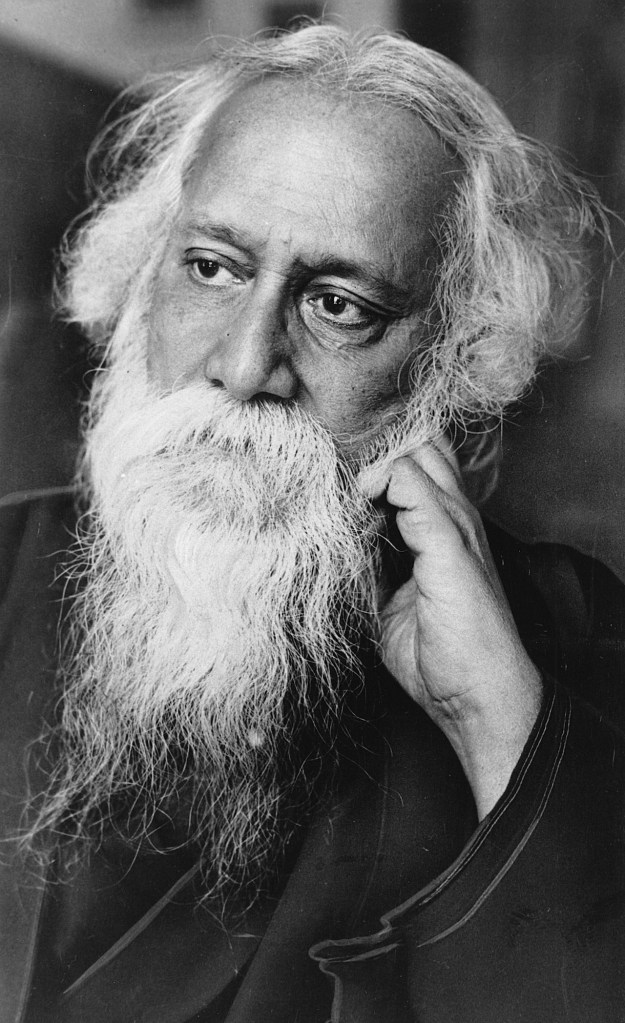
  • Rabindranath Tagore’s Gitanjali #48: “The morning sea of silence… “

    Image:  Rabindranath Tagore Wallpapers 

    Rabindranath Tagore’s Gitanjali #48: “The morning sea of silence… “

    Rabindranath Tagore’s poem elucidating a metaphorical and metaphysical journey is number 48 in his most noted collection titled Gitanjali. The poet received the Nobel Prize for Literature in 1913, specifically for that collection.

    Introduction with Text from Gitanjali #48: “The Morning Sea of Silence”

    Rabindranath Tagore, Nobel Laureate for Literature in 1013, translated his collection of poems, Gitanjali, from his original Bengali into English.  He numbered each poem and rendered them as prose-poems, and they remain poetry of the highest order.

    Readers may encounter Gitanjali #48 wide-spread across the internet titled “The Journey” playing out in eight traditional poetry stanzas.  Tagore’s #48 displays in only six verse paragraphs (versagraphs), but those who converted the piece have separated the fourth versagraph into three separate units.

    Tagore’s Gitanjali #48 metaphorically elucidates the spiritual journey of the speaker, even as at the outset, he and his fellow trekkers seem to be setting out on an ordinary hike through the landscape of beauty with flowers and birdsong.  What happens to the speaker becomes truly astounding and inspiring, as he comes to understand the true nature of the idea of a spiritual journey.

    In this poem, the term journey serves as an extended metaphor for meditation. The speaker takes his meditation seat and begins his practice in order to experience union with the Divine Belovèd (God).  The speaker employs use of the extended metaphor to reveal dramatically his series of emotions as he continues his metaphorical journey.

    Even though the source for the drama could credibly have remained a literal hike through the countryside on the lovely morning, the speaker of the poem remains focused on his inner spiritual journey to unite his soul with his Creator.

    Gitanjali #48: “The Morning Sea of Silence”

    The morning sea of silence broke into ripples of bird songs; and the flowers were all merry by the roadside; and the wealth of gold was scattered through the rift of the clouds while we busily went on our way and paid no heed.

    We sang no glad songs nor played; we went not to the village for barter; we spoke not a word nor smiled; we lingered not on the way. We quickened our pace more and more as the time sped by.

    The sun rose to the mid sky and doves cooed in the shade. Withered leaves danced and whirled in the hot air of noon. The shepherd boy drowsed and dreamed in the shadow of the banyan tree, and I laid myself down by the water and stretched my tired limbs on the grass.

    My companions laughed at me in scorn; they held their heads high and hurried on; they never looked back nor rested; they vanished in the distant blue haze. They crossed many meadows and hills, and passed through strange, far-away countries. All honour to you, heroic host of the interminable path! Mockery and reproach pricked me to rise, but found no response in me. I gave myself up for lost in the depth of a glad humiliation in the shadow of a dim delight.

    The repose of the sun-embroidered green gloom slowly spread over my heart. I forgot for what I had travelled, and I surrendered my mind without struggle to the maze of shadows and songs.

    At last, when I woke from my slumber and opened my eyes, I saw thee standing by me, flooding my sleep with thy smile. How I had feared that the path was long and wearisome, and the struggle to reach thee was hard!

    Reading of Gitanjali #48: “The Morning Sea of Silence”  

    Commentary on Gitanjali #48: “The Morning Sea of Silence”

    The speaker engages a truly astounding spiritual event, placing his experience in a metaphysical setting, and metaphorically elucidating that experience as a simple hike across the landscape.

    First Versagraph:  The Welcoming Morning Landscape

    The morning sea of silence broke into ripples of bird songs; and the flowers were all merry by the roadside; and the wealth of gold was scattered through the rift of the clouds while we busily went on our way and paid no heed.

    In the first versagraph, the speaker begins by describing the beauty of the morning landscape that surrounds him and his fellow hikers as they set out on their walking excursion. 

    The first line offers an masterfully crafted metaphor: the early morning “silence” is likened to the waves of an ocean that break into “ripples of bird songs.”  While the birds are singing, the flowers by the wayside appear to be “all merry.” The sky is spread out into a golden glow which is “scattered through the rift of the clouds.”   

    The speaker then states that he and his hiking buddies are in a hurry to get on with their trek, and they therefore take no notice of, and therefore do not cherish, the beauty that has already been bestowed upon them.

    Second Versagraph::  Deadly Solemnity

    We sang no glad songs nor played; we went not to the village for barter; we spoke not a word nor smiled; we lingered not on the way. We quickened our pace more and more as the time sped by.

    The speaker then asserts that he and his fellow trekkers remain quite serious in their coming travel extravaganza; thus, they do not stop to play or sing happy songs.  They did not even engage in cheerful banter with one another, nor do they stop in the village to make any purchases.

    They remain so deadly solemn that not only do they not even bother to speak, but they also do not deign to smile.  They refuse to linger anywhere. They remain in such a great hurry that they continue to speed by faster and faster as time wore on.

    Third Versagraph:  Taking Needed Rest

    The sun rose to the mid sky and doves cooed in the shade. Withered leaves danced and whirled in the hot air of noon. The shepherd boy drowsed and dreamed in the shadow of the banyan tree, and I laid myself down by the water and stretched my tired limbs on the grass.

    By noon, the speaker has become distracted by the position of the sun, noting that doves are making their cooing sounds in the shade of the trees.  He then takes notice that a shepherd boy is resting in the shade under a tree.  

    While the sun is so hot and with the doves and shepherd boy enjoying a relief from action, the speaker decides to stop his own active walk.  Thus, he lies down upon the grass by the water and stretches out his tired body to enjoy a respite from the strenuous task of hiking.

    Fourth Versagraph:   Ridicule for Taking a Rest

    My companions laughed at me in scorn; they held their heads high and hurried on; they never looked back nor rested; they vanished in the distant blue haze. They crossed many meadows and hills, and passed through strange, far-away countries. All honour to you, heroic host of the interminable path! Mockery and reproach pricked me to rise, but found no response in me. I gave myself up for lost in the depth of a glad humiliation in the shadow of a dim delight.

    The speaker’s walking buddies, however, chide him for wishing to take a break and rest. So, they continue on with their walk.  As they continue, they strike supercilious poses with their heads in the air.  They take no second notice of the speaker, as they disappear into “distant blue haze.”

    Nevertheless, the speaker remains in his resting position with the determination to enjoy his leisurely rest, even as the others rapidly continue on with their swift strides.  The speaker reports that his fellow hikers are pressing on as they continue to trek through the “meadows and hills.”  They show that they are not as lazy as he is.  The speaker’s fellows are continuing to push “through strange, far-away countries.” 

    He gives them credit for their adventuresome nature, and he confesses that he has experienced some guilt for remaining in leisure and not accompanying them, but he just could not urge himself on to continue this particular walking excursion. 

    The speaker also confesses that he has ambiguous feelings: on the one hand, he feels “lost” not remaining with the others, but on the other hand, he experiences a “glad humiliation,” feeling that he must be reclining “in the shadow of a dim delight.” 

    Fifth Versagraph:   Rethinking the Reason for the Hike

    The repose of the sun-embroidered green gloom slowly spread over my heart. I forgot for what I had travelled, and I surrendered my mind without struggle to the maze of shadows and songs.

    As the speaker goes on lounging about, he takes notice that the sunset is “spread[ing] over his heart”—an act that unveils for a second time his emotions fraught with ambiguity. Such gloom is “sun-embroidered,” reminiscent of the old saw, “every cloud has a silver lining.” 

    The dawdling speaker then admits that he can no longer remember why he originally decided to set out on this hike.  Thus, he just lets his mental body go, no longer struggling with his true urgings any more. He allows his heart and mind to continue musing through “the maze of shadows and songs.” 

    Sixth Versagraph:   Nearing the Door-Heart of the Divine Creator

    At last, when I woke from my slumber and opened my eyes, I saw thee standing by me, flooding my sleep with thy smile. How I had feared that the path was long and wearisome, and the struggle to reach thee was hard!

    Finally, the speaker wakes up from his ambiguous torpor; he then realizes that he has discovered what he was searching for. He had surmised that walking such a spiritual path was out of his reach, as it was considered to be such an arduous task.

    But after his discovery, he is able to realize that all he had to do was permit his inner self to be guided to the door-heart of the Divine Belovèd.  All lesser journeys, including those on the physical plane, become irrelevant as one becomes ensconced in that sacred environment, near the door of the DivineCreator-Father. 

    Video of Rabindranath Tagore 

  • Langston Hughes

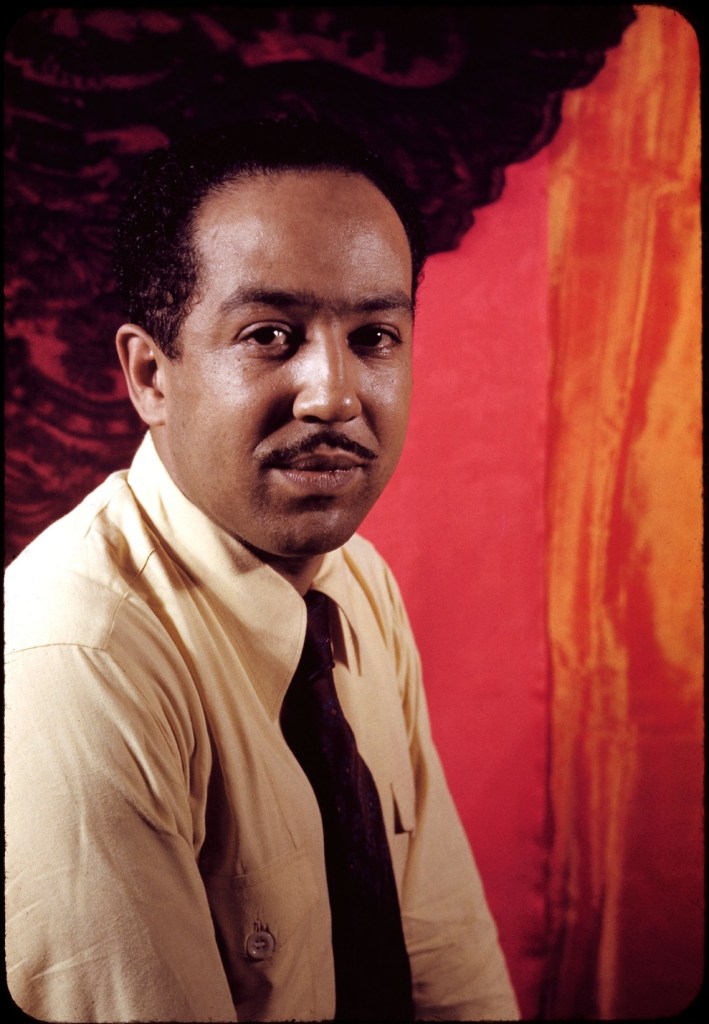
    Image: Langston Hughes  Carl Van Vechten Trust / Beinecke Library, Yale

    Life Sketch of Langston Hughes

    Hoyt W. Fuller, critic, editor, and founder of the Organization of Black American Culture (OBAC), has pointed out that Langston Hughes possessed a “deceptive and profound simplicity.”  Fuller insists that understanding these qualities in Hughes is key to understanding and appreciating his poetry.

    Early Life and Education

    On February 1, 1902, Langston Hughes was born in Joplin, Missouri, to James Nathaniel Hughes and Caroline Mercer Langston. The poet’s full name is James Mercer Langston Hughes. His parents divorced when Langston was very young, and he was raised primarily by his grandmother in Lawrence, Kansas [1].    In his first autobiography, The Big Sea, Hughes reveals,

    My grandmother raised me until I was twelve years old.  Sometimes I was with my mother, but not often.  My mother and father had separated.  And my mother, who worked, always traveled about a great deal, looking for a better job.

     When I first started to school, I was with my mother a while in Topeka. (And later, for a summer in Colorado, and another in Kansas City.)  She was a stenographer for a colored lawyer in Topeka, named Mr. Guy.  She rented a room near his office, downtown. So I went to a “white” school in the downtown district.[2]

    The poet’s father James Hughes had studied law and had planned to practice, but Jim Crow laws prevented him from taking the bar exam.  The elder Hughes then moved to Mexico, where not only was he admitted to the bar, but he also became very successful through the practice of law.  

    Langstons’ father’s financial success allowed him to become the owner of much property in Mexico City, where nearby he purchased and resided on a huge ranch in the hills.  He also became a money lender and foreclosed on mortgages.

    About his father, the poet has remarked, “my father was interested in making money to keep.”  This attitude contrasted with his mother and his stepfather, who were interested in making money to spend.  Thus, his mother and stepfather moved around a great deal to take advantage of better employment.

    In 1920, Langston Hughes graduated from Central High School in Cleveland, Ohio.  He had hopes of attending Columbia University to study to become a writer, but his father refused to pay for his son’s schooling unless the younger Hughes studied engineering. 

    Hughes started his university studies at Columbia but stayed for only a year.  He found racism at the school intolerable, so he left the university and took a number of jobs to support himself.  

    In 1929, Hughes completed his university studies at Lincoln University in Pennsylvania.   The school pays tribute to their most famous graduate with a library named in his honor, Langston Hughes Memorial Library [3].

    Full Image: Langston Hughes  Carl Van Vechten Trust / Beinecke Library, Yale

    Poetry

    Langston Hughes opens his first autobiography, The Big Sea, by reporting on a melodramatic event: he is tossing into the ocean one by one all the books he had studied while at Columbia University.  

    He had recently joined the large merchant ship S. S. Malone as a seaman; he was only twenty-one years old, and he made up his mind that nothing would ever again happen to him that he did not want to have happen.  

    He became intent on  securing his own freedom with his little dramatic ritual of unloading his college books into the ocean.  In the life of Langston Hughes, one poetic act often led to another.   Four years before this important, liberating act, however, the poet had traveled to Mexico to visit his father to ask for financial assistance to attend the university.  

    But he reports that his visits with his father in Mexico were mostly unsatisfactory; he could not identify with his father’s mindset.  His father hated his own race of people, and he was interested only in making money.  However, Langston needed his father’s financial support, so he spent time with him in Mexico.

    On this particular trip, while Hughes was only seventeen years old, the poet composed one of his most anthologized poems “The Negro Speaks of Rivers.”  He gives details of his inspiration for this poem in The Big Sea; he wrote the poem “just outside of St. Louis, as the train rolled toward Texas”:

    It came about in this way.  All day on the train I had been thinking about my father and his strong dislike of his own people.   I didn’t understand it, because I was a Negro, and I liked Negroes very much.

    He then describes meeting a number of blacks who had come “up from the South” as he worked at one of his “happiest jobs” at a soda fountain.   He reports that he enjoyed “hearing them talk, listening to the thunderclaps of their laughter, to their trouble, to their discussions of the war and the men who had gone to Europe from the Jim Crow South, their complaints over the high rent. . . .”   To Hughes, these people seemed to be the “gayest and bravest people possible” as they worked “trying to get somewhere in the world.”

    Crossing the Mississippi River at sunset, Hughes peered out of the Pullman window and saw “the great muddy river flowing down toward the heart of the South,” and he started musing on “what the river, the old Mississippi, has meant to Negroes in the past.”  

    He mused on the tragedy of slaves being sold down the river as the “worst fate” that a slave could suffer.  He then began musing on President Abraham Lincoln’s having rafted on the Mississippi down to New Orleans.  Lincoln had seen “slavery at it worst, and had decided within himself that it should be removed from American life.”

    Hughes’ musing in this creative reverie then turned to additional rivers that had affected the lives of members of his ethnicity: the Congo, the Niger, and the Nile.  And then the thought came to him: “I’ve known rivers.”  

    He wrote down that one line on an envelope holding the letter from his father which he carried in his pocket, and then within the next fifteen minutes, he had composed his magnificent poem, which he titled “The Negro Speaks of Rivers.”

    As one of the most important creative contributors to the Harlem Renaissance, Hughes has offered many poems to the American literary canon.  A small sample of his poems include “A Mother to Son,”  “Madame’s Calling Cards,” “Theme for English B,” “Night Funeral in Harlem,”  “Goodbye, Christ,” and “Cross.”

    Supporting Himself by Writing

    Langston Hughes has been most noted as a poet, and he managed to finish his college education after being awarded a full scholarship based on his proficiency as a poet.  After receiving his B.A. degree in 1929, he continued to publish widely, earning for himself the achievement of being a writer, who was able to support himself as an adult solely with his writings [4].

    In addition to poetry, which remained his first love, Hughes published three novels, Not without Laughter (1932), Scottsboro Limited (1932), and The Ways of White Folks (1934).   In 1935, Hughes was awarded a Guggenheim Fellowship.  The Gilpin Players (Karamu House) produced six of the poet’s plays in 1936 and 1937.  Hughes founded the Negro Theater in Los Angeles in 1939 and composed the script “Way Down South.”

    Hughes published eight collections of poems; he also published four books of fiction and six books for children and teens.  He added three books of humor to his resume as well as two autobiographies.  He also wrote essays and a number of books on black history.  As a prominent figure in the civil rights movement, he traveled and lectured widely throughout the world [5].

    Illness and Death

    In 1967,  at the Stuyvesant Polyclinic in New York City, Hughes submitted to t0 a surgical procedure to treat prostate cancer.  The surgery was a tragic failure, and he died from complications arising from that medical procedure [6].  Hughes’ body underwent cremation, and his ashes remain interred at the Schomburg Center for Research in Black Culture in Harlem, under the floor of the foyer in the institute.  

    The artwork on the flooring features a medallion of a human being formed by rivers and includes the line, “My soul has grown deep like the rivers,” from the poet’s inspirational poem “The Negro Speaks of Rivers.”

    Sources

    [1] Editors.  “Langston Hughes: 1902–1967.”  Poetry Foundation.  Accessed January 12, 2026.

    [2] Langston Hughes.  The Big Sea: An Autobiography.  Thunder’s Mouth Press.  New York.  1940. 1986. Print.

    [3] Editors.  “About the Library.”  Lincoln University.  Accessed January 12, 2026.

    [4] Langston Hughes.  I Wonder as I Wander: An Autobiographical Journey.  Thunder’s Mouth Press.  New York.  1956. 1986. Print.

    [5] Curators.  The Langston Hughes Society.  Horsham, Pennsylvania.  Accessed January 12, 2026.

    [6] Editors.  “Langston Hughes.”  Encyclopedia of Cleveland History: Case Western Reserve University.  Accessed January 12, 2026.

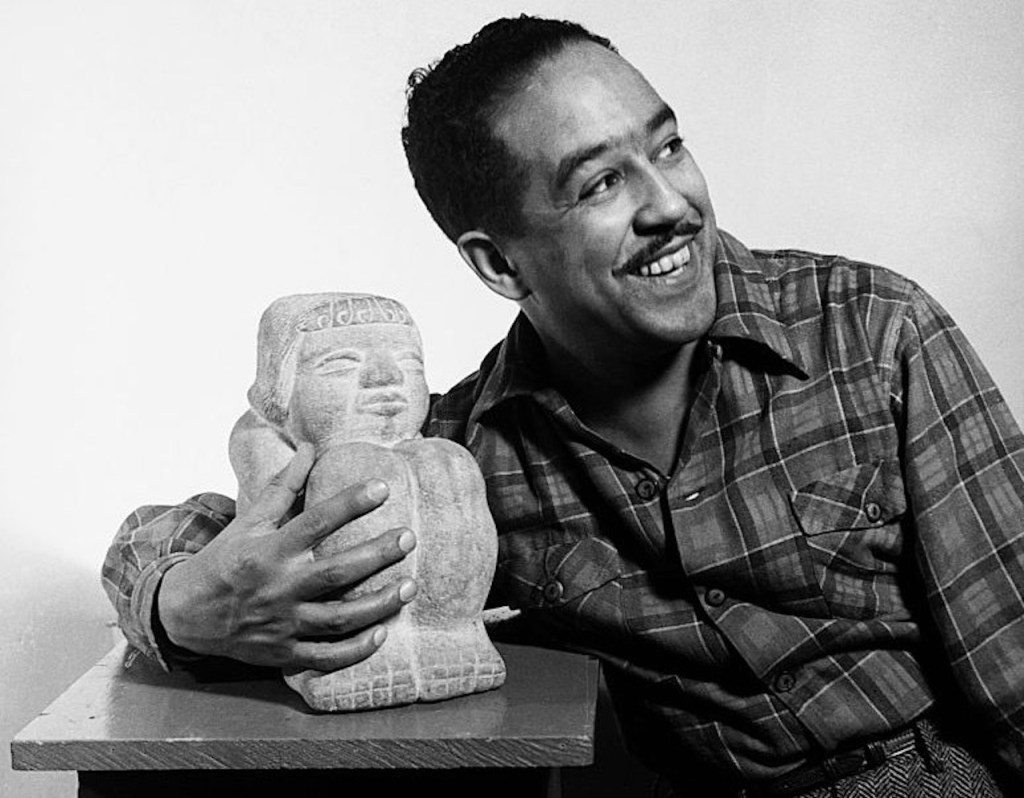
    Image: Langston Hughes – Poetry Foundation

    Commentaries on Langston Hughes Poems

    Note on Term Usage:  Before the late 1980s in the United States, the terms “Negro,” “colored,” and “black” were accepted widely in American English parlance.   While the term “Negro” had started to lose it popularity in the 1960s, it wasn’t until 1988 that the Reverend Jesse Jackson began insisting that Americans adopt the phrase “African American.”  The earlier more accurate terms were the custom at the time that Langston Hughes was writing.

    Image: Langston Hughes.    Portrait by Winold Reiss (1886–1953) – National Portrait Gallery, Smithsonian Institution.

  • Gerard Manley Hopkins

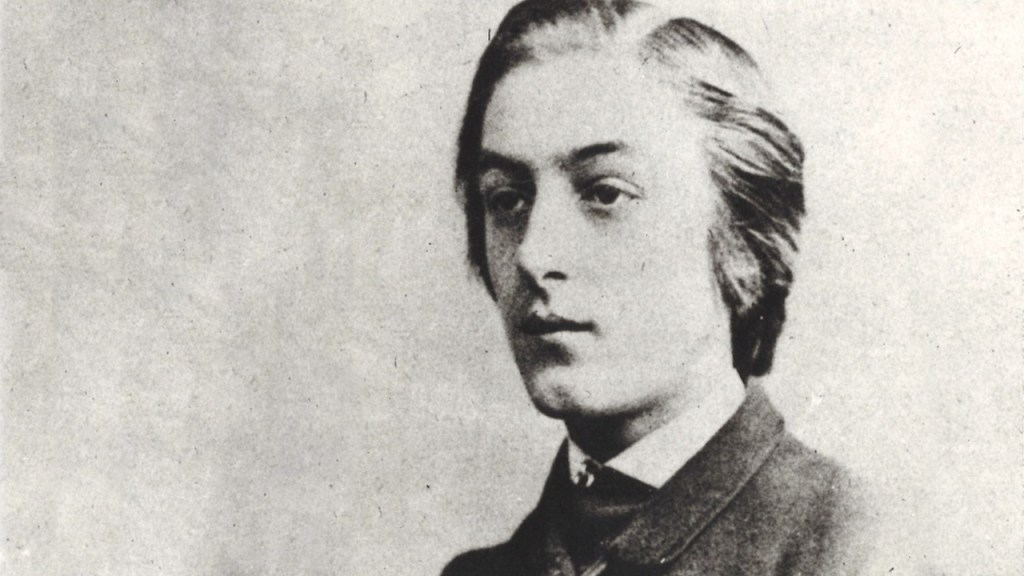
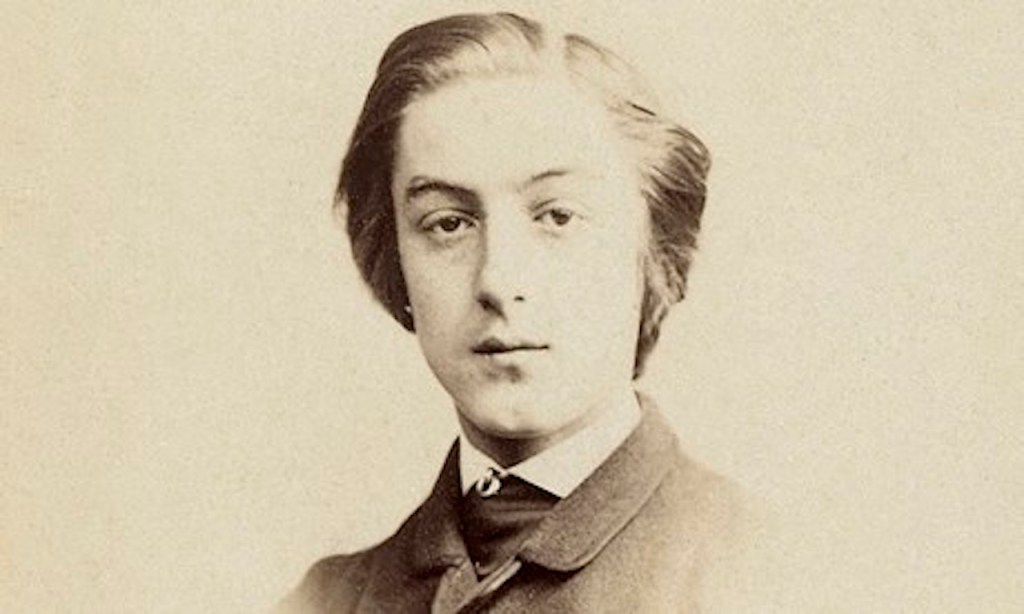
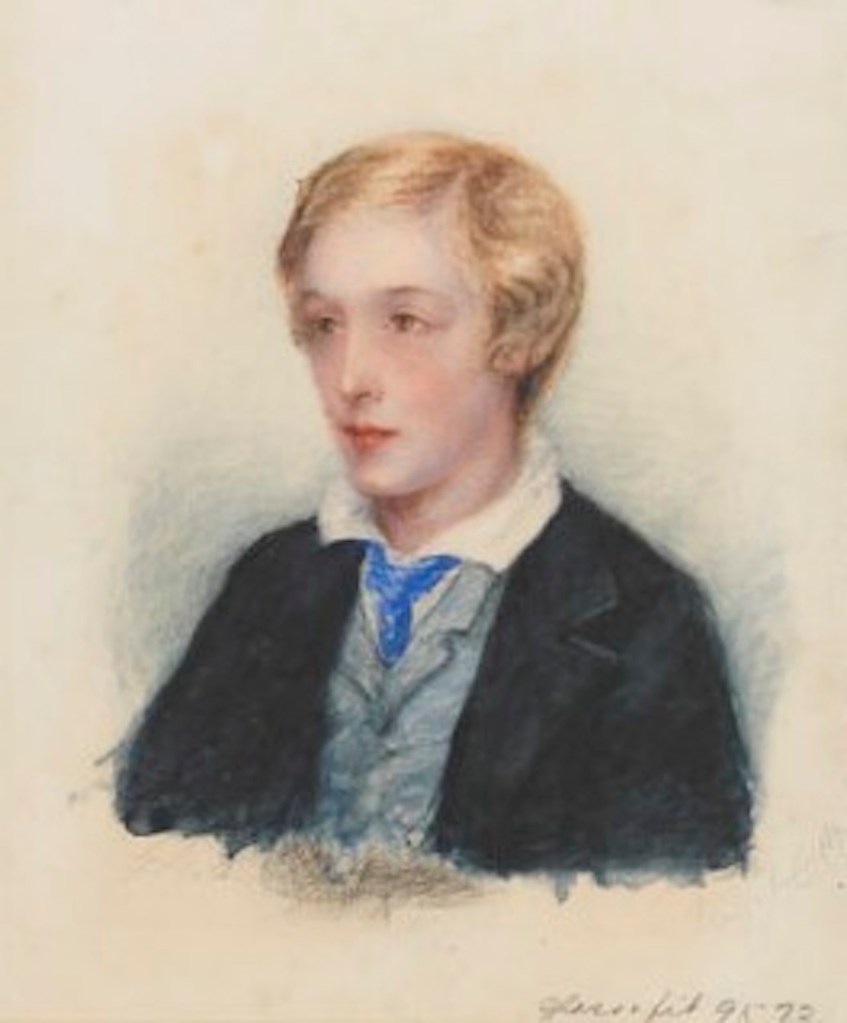
    Gerard Manley Hopkins – National Portrait Gallery, London

    Life Sketch of Gerard Manley Hopkins

    Gerard Manley Hopkins (1844–1889) was a poet of exceptional originality, with an innovative approach to language.  He remains one of English literature’s most enigmatic figures—a poet-priest whose work combines Victorian sensibilities with modernist experimentation.

    Introduction: Early Life and Family Background

    Though Gerard Manley Hopkins work was largely unpublished during his lifetime, the poet is now celebrated as one of the most significant poets of the Victorian era and a precursor to modernist poetry. 

    His life was marked by a profound tension between his religious vocation as a Jesuit priest and his artistic calling as a poet, a tension that shaped both his personal struggles and his creative achievements.

    Gerard Manley Hopkins was born on July 28, 1844, in Stratford, Essex (now part of Greater London), into a middle-class family with strong artistic and religious inclinations. He was the oldest of nine children born to Manley Hopkins and Catherine Smith Hopkins. 

    His father was a successful marine insurance adjuster, who also wrote poetry and published works such as A Philosopher’s Stone and Other Poems (1843) [1]. His mother Catherine was deeply religious and musically gifted, fostering an environment where intellectual and artistic pursuits were encouraged [2].

    The Hopkins household emphasized education and creativity. Gerard’s siblings also displayed artistic talents: his brother Arthur became an illustrator for Punch magazine, while another brother Everard pursued his calling to architecture [3]. The family’s Anglican faith played a central role in their lives; Gerard’s early exposure to religious devotion would later profoundly influence his poetry.

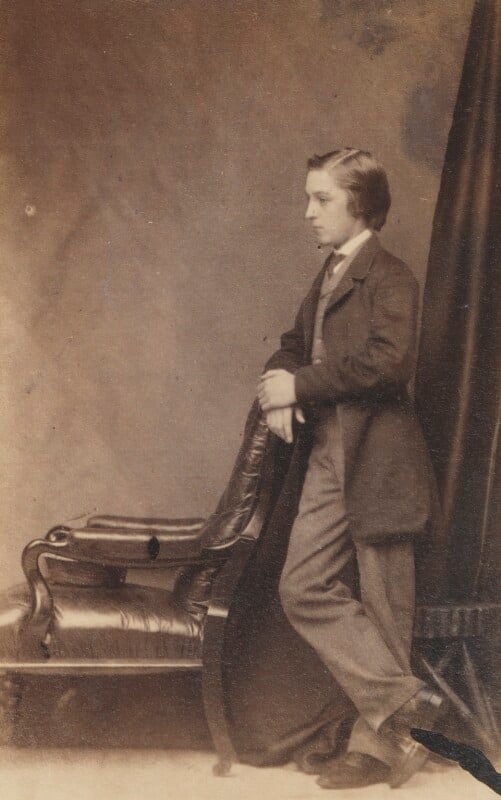
    Gerard Manley Hopkins – National Portrait Gallery, London

    Education at Highgate School

    In 1854, at the age of ten, Hopkins began attending Highgate School in London, where he excelled academically and demonstrated his early poetic talent. His school years were marked by a deep engagement with Romantic poetry, particularly the works of John Keats and Percy Bysshe Shelley. Keats’s lush imagery and musicality left a lasting impression on the young poet, as can be seem in some of his earliest compositions.

    While at Highgate, Hopkins also developed an interest in drawing and painting. He considered pursuing art as a career before ultimately deciding to focus on literature. While his early poems from this period reflect the Romantic tradition, they also hint at the originality that would later define his mature work [4].

    The Oxford Years: Intellectual Growth and Conversion

    In 1863, Hopkins entered Balliol College, Oxford, where he studied the Classics. Oxford in the mid-19th century was a hub of intellectual ferment, particularly regarding questions of faith and theology. 

    The Oxford Movement, led by figures such as John Henry Newman, sought to revive Catholic elements within Anglicanism [5]. This movement profoundly influenced Hopkins during his time at the university.

    At Balliol, Hopkins excelled academically and formed lasting friendships with notable contemporaries such as Robert Bridges (later Poet Laureate of England). Bridges would play a crucial role in preserving and publishing Hopkins’s poetry after his death. During this period, Hopkins continued writing poetry but also began engaging with questions of faith that would lead to a dramatic transformation of his life

    In 1866, under the influence of Newman’s writings and teachings, Hopkins converted to Roman Catholicism. This decision caused significant tension in his family, all of whom were devout Anglicans. However, for Hopkins, the conversion represented a profound spiritual awakening that would shape both his personal life and his artistic vision.

    Gerard Manley Hopkins – National Portrait Gallery, London

    Religious Vocation: Joining the Jesuit Order

    After graduating from Oxford with first-class honors in the Classics in 1867, Hopkins decided to pursue a religious vocation In 1868, he joined the Society of Jesus (the Jesuits), beginning his novitiate at Manresa House in Roehampton. As part of his training, he took vows of poverty, chastity, and obedience.

    Hopkins believed that his religious commitment required him to renounce personal ambition, including his aspirations as a poet. In an act of self-denial characteristic of his Jesuit discipline [3], he burned many of his early poems upon entering the order. For several years, he refrained from writing any poetry at all.

    During this pause from creative writing, Hopkins’s religious studies deepened his understanding of theology and philosophy. He studied at Stonyhurst College in Lancashire before moving to St. Beuno’s College in North Wales to study theology [6]. It was during this period that he began to reconcile his poetic gift with his spiritual calling.

    The Wreck of the Deutschland: A Return to Poetry

    In 1875, an event occurred that reignited Hopkins’ poetic creativity: the wreck of the German ship Deutschland off the coast of England. Among those who perished were five Franciscan nuns fleeing anti-Catholic persecution in Germany [1]. Deeply moved by their sacrifice and martyrdom, Hopkins composed The Wreck of the Deutschland, a long narrative poem that marked his return to writing.

    The poem is notable for its novel experimentation with language and form. It introduced what Hopkins called “sprung rhythm,” a metrical system based on stressed syllables rather than traditional foot-based metrics. Sprung rhythm allowed him greater flexibility in capturing natural speech patterns while maintaining musicality.

    Although The Wreck of the Deutschland was not published during Hopkins’s lifetime (it was deemed too unconventional), it signaled the beginning of his mature poetic phase. Over the next decade, he would compose some of his most celebrated and later anthologized works.

    Major Themes and Innovations

    Hopkins’s poetry is characterized by its vivid imagery, innovative use of language, and deep spiritual resonance. Central themes include the following:

    Nature

    Hopkins viewed nature as a manifestation of God’s glory—a concept he expressed through what he called “inscape,” or the unique essence of each created thing. Poems like “Pied Beauty” celebrate the variety and intricacy of nature:

    “Glory be to God for dappled things—
    For skies of couple-colour as a brinded cow;”

    Religion

    As a devout Jesuit priest, Hopkins often explored themes of faith, grace, and divine presence.  In “God’s Grandeur,” he reflects on humanity’s relationship with the Divine Reality (God):  “The world is charged with the grandeur of God.” 

    Human Struggle

    Hopkins did not shy away from depicting despair and inner turmoil. His so-called “terrible sonnets,” written during periods of depression in Dublin later in life (“No Worst There Is None” and “I Wake And Feel The Fell Of Dark”), are raw expressions of spiritual desolation.

    Language

    Hopkins’s creative inventiveness set him apart from other Victorian poets. He employed compound words (“dapple-dawn-drawn”), alliteration (“kingdom of daylight’s dauphin”), and unconventional syntax to create striking effects.  It might be noted that E. E. Cummings’ innovation remains a 20th century parallel to that of Father Hopkins 19th century foray into stylizing novelty.

    Academic Career in Dublin

    In 1884, after years serving as a parish priest in England and Scotland (often under challenging conditions), Hopkins was appointed Professor of Greek Literature at University College Dublin. 

    While teaching brought him some satisfaction intellectually, he still continued to struggled with feelings of isolation as an Englishman residing and working in Ireland during a time of political upheaval.

    Gerard Manley Hopkins – National Portrait Gallery, London

    Death and Legacy

    Father Hopkins’ final years were marked by declining health and bouts of depression—what he referred to as “the long dark night.” Despite these challenges, he continued writing poetry until shortly before his death.

    Father Hopkins died on June 8, 1889, at the age of 44 from typhoid fever in Dublin. At the time of his death, none of his major poems had been published; they existed only in manuscript form.

    It was not until 1918—nearly three decades after his death—that Robert Bridges edited and published  the collection simply titled Poems, bringing Hopkins’ work to public attention for the first time. The collection received mixed reviews initially but gained increasing recognition over time.

    By the mid-20th century, critics such as F.R. Leavis had established Hopkins as one of the most original voices in English poetry. His innovative techniques anticipated modernist trends seen later in poets like T.S. Eliot, Dylan Thomas, and E. E. Cummings.

    Father Gerard Manley Hopkins remains one of English literature’s most enigmatic figures—a poet-priest whose work brought together certain Victorian sensibilities with modernist experimentation. His legacy rests not only in his technical innovations but also in his ability to convey profound spiritual truths through language that continues to resonate with readers today.

    Sources

    [1]  Gerard Manley Hopkins. Poems. Edited by Robert Bridges. Oxford University Press. 1918.

    [2]  Gerard Manley Hopkins. Poems and Prose. Edited by W. H. Gardner. Penguin Classics. 1953.

    [3]  Eleanor Ruggles. Gerard Manley Hopkins: A Life. New York: W.W. Norton & Co. 1944.

    [4]  Norman H. Mackenzie. A Reader’s Guide to Gerard Manley Hopkins. Cornell U P. 1981.

    [5] John Cowie Reid.  “Gerard Manley Hopkins.” Encyclopaedia Britannica. Accessed January 1, 2026.

    [6] Curators. “Gerard Manley Hopkins.” Poetry Foundation.  Accessed January 1, 2026.

    🕉

    Poem Commentaries

    • God’s Grandeur” Father Gerard Manley Hopkins’ motivation to imitate Spirit (God) prompts him to craft his poems in forms, as Spirit creates entities in forms—from rocks to animals to plants to the human body.
    • Pied Beauty” Gerard Manley Hopkins’ “Pied Beauty” is an eleven-line curtal sonnet dedicated to honoring and praising God for the special beauty of His creation.  Father Hopkins coined the term “curtal” to label his eleven-line sonnets.
    • The Habit of Perfection”  The title “The Habit of Perfection” of Gerard Manley Hopkins’ poem features a pun on the term “habit.” As a monk, the poet had accepted the garb of the monastic, sometimes called a habit

    The Terrible Sonnets

    •  “To seem the stranger lies my lot, my life” Written with the same intensity that characterizes Hopkins’ work, the poem dramatizes exile as both an external condition and an inward trial.
    • I wake and feel the fell of dark, not day” The speaker Gerard Manley Hopkins’ “I wake and feel the fell of dark, not day” is confronting spiritual desolation, interior darkness, and the sense of abandonment by God. 
    • No worst, there is none.  Pitched past pitch of grief” The third in the group of sonnets widely known as “the terrible sonnets, this one,“No worst, there is none. Pitched past pitch of grief,” presents a speaker experiencing grief so intense that it feels beyond limit or measure.
    • Not, I’ll not, carrion comfort, Despair, not feast on thee” Father Hopkins’ “Not, I’ll not, carrion comfort, Despair, not feast on thee” dramatizes an intense spiritual struggle in which the speaker resists despair while enduring profound inner torment. 
    • Patience, hard thing! the hard thing but to pray” This terrible sonnet explores searchingly the nature of  spiritual endurance. The speaker is focusing on patience not as a soft virtue but as a challenging and difficult discipline, which oftentimes scars the pride, while exhausting the will. 
    • My own heart let me more have pity on; let” The speaker in this sonnet examines his inward struggle, through which he has learned mercy toward the self (soul) while undergoing heavy, sustained spiritual pressure.  My personal issue with this pressure assures me that Father Hopkins well understood its vicissitudes as well as its rewards.

  • Phillis Wheatley

    Image: Phillis Wheatley 

    Life Sketch of Phillis Wheatley

    Phillis Wheatley’s talent was questioned but then authenticated during her lifetime, and she is now hailed by all but the most cynical as one of America’s finest poetic voices.

    Two Versions of a Publication History

    Although Phillis Wheatley’s talent was at first questioned [1], her authenticity was finally established during her lifetime. Today, she is widely recognized by all, except the most cynical [2], as one of America’s finest poetic voices.  

    Phillis Wheatley’s first and only collection of published poetry was titled Poems on Various Subjects, Religious and Moral; it was published in England.

    There are two versions of the history of this book’s publication [3]: one is that the Countess Selina of Huntington invited Phillis to London and found a publisher for the poet; the other is that Phillis suffered from asthma, and so the Wheatley family took her to England to recuperate, and while there, they sought publication of her work.  

    Either way, the book was published and Wheatley’s career was established. The Wheatley family’s insight played a major role in helping a slave rise above the hardships of that vile institution.

    The Value of One Poem

    In May 1968, one poem written by Phillis Wheatley brought $68,500 at Christie’s auction [4], Rockefeller Center in New York. It had been estimated to bring between $18,000 and $25,000.  

    The poem is titled “Ocean”; its seventy lines were written on three pages that had yellowed with time. It is thought to be the only copy.  

    Ocean

    Now muse divine, thy heav’nly aid impart,
    The feast of Genius, and the play of Art.
    From high Parnassus’ radiant top repair,
    Celestial Nine! propitious to my pray’r.
    In vain my Eyes explore the wat’ry reign,
    By you unaided with the flowing strain.
    When first old Chaos of tyrannic soul
    Wav’d his dread Sceptre o’er the boundless whole,
    Confusion reign’d till the divine Command
    On floating azure fix’d the Solid Land,
    Till first he call’d the latent seeds of light,
    And gave dominion o’er eternal Night.
    From deepest glooms he rais’d this ample Ball,
    And round its walls he bade its surges roll;
    With instant haste the new made seas complyd,
    And the globe rolls impervious to the Tide;
    Yet when the mighty Sire of Ocean frownd
    “His awful trident shook the solid Ground.”
    The King of Tempests thunders o’er the plain,
    And scorns the azure monarch of the main,
    He sweeps the surface, makes the billows rore,
    And furious, lash the loud resounding shore.
    His pinion’d race his dread commands obey,
    Syb’s, Eurus, Boreas, drive the foaming sea!
    See the whole stormy progeny descend!
    And waves on waves devolving without End,
    But cease Eolus, all thy winds restrain,
    And let us view the wonders of the main
    Where the proud Courser paws the blue abode,
    Impetuous bounds, and mocks the driver’s rod.
    There, too, the Heifer fair as that which bore
    Divine Europa to the Cretan shore.
    With guileless mein the gentle Creature strays.
    Quaffs the pure stream, and crops ambrosial Grass.
    Again with recent wonder I survey
    The finny sov’reign bask in hideous play.
    (So fancy sees) he makes a tempest rise
    And intercept the azure vaulted skies.
    Such is his sport:—but if his anger glow
    What kindling vengeance boils the deep below!
    Twas but e’er now an Eagle young and gay
    Pursu’d his passage thro’ the aierial way.
    He aim’d his piece, would C[ale]f’s hand do more ?
    Yes, him he brought to pluto’s dreary shore.
    Slow breathed his last, the painful minutes move
    With lingring pace his rashness to reprove;
    Perhaps his father’s Just commands he bore
    To fix dominion on some distant shore.
    Ah! me unblest he cries. Oh! had I staid
    Or swift my Father’s mandate had obey’d.
    But ah! too late.—Old Ocean heard his cries.
    He stroakes his hoary tresses and replies:
    What mean these plaints so near our wat’ry throne,
    And what the Cause of this distressful moan?
    Confess. Iscarius, let thy words be true
    Not let me find a faithless Bird in you.
    His voice struck terror thro’ the whole domain.
    Aw’d by his frowns the royal youth began,
    Saw you not. Sire, a tall and Gallant ship
    Which proudly skims the surface of the deep?
    With pompous form from Boston’s port she came.
    She flies, and London her resounding name.
    O’er the rough surge the dauntless Chief prevails
    For partial Aura fills his swelling sails.
    His fatal musket shortens thus my day
    And thus the victor takes my life away.
    Faint with his wound Iscarius said no more.
    His Spirit sought Oblivion’s sable shore.
    This Neptune saw, and with a hollow groan
    Resum’d the azure honours of his Throne.

    Coming to America

    Phillis Wheatley was born in Senegal/Gambia, Africa, in 1753. At age seven, she was brought to America and sold to John and Susannah Wheatley of Boston. She soon became a family member instead of a slave.  The Wheatleys taught Phillis to read, and she was soon reading classic literature in Greek and Latin, as well as English. 

    But her talent did not stop with reading, because she began to write poetry, influenced by the Bible and the English poets, particularly John Milton, Alexander Pope, and Thomas Gray. Her poetry reflected the classical forms and content which she closely studied [5].

    Phillis wrote her first poem at age thirteen, “On Messrs. Hussey and Coffin,” which was published in 1767 in the Newport Mercury [6]. But she gained wide recognition as a poet with “On the Death of the Reverend Mr. George Whitefield,” which appeared only three years later.   Chiefly, because of this poem, Phillis’ first book was later published. It is thought that she had a second book of poems, but the manuscript seems to have disappeared.

    In 1778, Phillis married John Peters, a failed businessman. They had three children, all of whom died in childhood. Phillis’ final years were spent in extreme poverty, despite her work as a seamstress.   She continued to write poetry and tried in vain to publish her second book of poetry. She died at age 31 in Boston.

    The Poet’s Authenticity Questioned

    As one might surmise, there was, indeed, a controversy over the authenticity of Phillis’ writing.   That a young black slave girl could write like a John Milton was not a fact easily digested back in Colonial America, when slaves were considered something less than human.

    Even Thomas Jefferson [7] showed disdain for Phillis’ writing; in his Notes on the State of Virginia, he remarked, “Religion indeed has produced a Phyllis Whately [sic] but it could not produce a poet. The compositions published under her name are below the dignity of criticism.”

    Yet Jefferson goes ahead and offers criticism in his next remark, “The heroes of the Dunciad are to her, as Hercules to the author of that poem.”

    Unlike Jefferson, George Washington [8].proved to be a fan; in 1776, she wrote a poem and a letter to Washington, who praised her efforts and invited her to visit. I wonder how seriously we can take Jefferson’s criticism, when he so badly misspelled her name; one wonders if he might be speaking of someone else.

    Important American Poet

    Readers can sample Phillis’ poetry online; her book of poems, Poems on Various Subjects, Religious and Moral, is offered in its entirety, including the front material that shows how strong the controversy over her talent was [9].  After suffering the ambivalence of the Colonial mind-set during her lifetime, today Phillis Wheatley is hailed as one of the most important early American poets.

    Sources

    [1]  Joel Gladd.  “Phillis Wheatley, Thomas Jefferson, and the Debate over Poetic Genius.”  CWI.  Accessed August 25, 2023.

    [2]  R. Lynn Matson.  “Phillis Wheatley—Soul Sister?Phylon (1960-), vol. 33, no. 3, 1972, pp. 222–30. JSTOR.

    [3]   Sondra A. O’Neale.  “Phillis Wheatley.”  Poetry Foundation.  Accessed August 25, 2023.

    [4] Paul P. Reuben.  “Phillis Wheatley.”  Perspectives in American Literature.  Accessed August 25, 2023.

    [5] Sydney Vaile.  “Phillis Wheatley’s Poetic Use of Classical Form and Content in Revolutionary America, 1767–1784.”  Researchgate. April 2015.

    [6]  Debra Michals.  “Phillis Wheatley.”  National Women’s History Museum.  2015.

    [7] Thomas Jefferson.  “Notes on the State of Virginia: Queries 14 and 18.”  Teaching American History.  Accessed August 25, 2023.

    [8] George Washington.  “George Washington to Phillis Wheatley, February 28, 1776.” Library of Congress.  Accessed August 25, 2023.

    [9]  Phillis Wheatley.  Poems on Various Subjects, Religious and Moral.  Gutenberg Project.  Accessed August 25, 2023.

    Commentaries on Phillis Wheatley Poems

  • William Butler Yeats

    Image:  William Butler Yeats NPG, London

    Life Sketch of William Butler Yeats

    William Butler Yeats possessed a lifelong dedication to the cultural and political rebirth of Ireland. He experienced life as a poet, playwright, and senator as he lived during turbulent shifts in Irish politics.  He had a lifelong unquenchable thirst for artistic and spiritual truth.

    William Butler Yeats remains one of the most influential literary figures of the modern era.  His canon, which includes examples of his interest in Eastern philosophy, Irish folklore, and the vicissitudes of life, eventually resulted in the production of various literary forms such as poetry, drama, and essays [1].

    Early Life and Education

    Born on June 13, 1865, in Sandymount, County Dublin, William Butler Yeats was raised in a household that placed a high value on intellectual curiosity bolstered by cultural heritage.

    His father, John Butler Yeats, was a skilled portrait painter, and his mother, Susan Pollexfen, created an environment steeped in Irish history and folklore. His early exposure to art, literature, and the stories of ancient Ireland instilled in Yeats a deep appreciation for myth and legend that would later become central themes in his work.

    As a young man, Yeats attended the Metropolitan School of Art in Dublin, where he developed keen observational skills and his ability to capture what he saw into dramatic literary form such as poetry and plays. 

    His early attempts to write poetry were heavily influenced by Romanticism, and he found inspiration in the rich treasure house of Irish mythology and the natural world. These early experiences laid the groundwork for a lifelong exploration of the interplay between the tangible and the transcendent [2].

    The Celtic Revival

    In the 1880s and 1890s, Yeats became as a principal figure in the Celtic Revival—a cultural movement, aimed at reclaiming Ireland’s heritage from centuries of British domination. 

    Along with contemporaries such as Lady Gregory and Edward Martyn, Yeats sought to regain Irish identity through renewed interest and influence of its ancient myths and folklore.   Yeats’ first poetry collections, including The Wanderings of Oisin and Other Poems (1889), offered a vision of Ireland as a land of fantastic beauty and heroic legend.

    Yeats’ involvement in the Irish literary revival was not merely rhetorical and philosophical; he assisted in the founding of the National Literary Society and became a driving force behind the establishment of the Abbey Theatre, which became the center stage for modern Irish drama. 

    Through the Abbey Theatre, Yeats teamed up with playwrights and dramatists to stage works, combining Irish mythology with contemporary social and political issues; thus he became responsible for creating a distinctly Irish voice in the performing arts [3].

    Changing Style and Interest in the Mysticism

    As Yeats’ career progressed, his creative writings faced an important transformation.  As he moved away from his early Romanticism, he took up themes of aging, disillusionment, and the search for spiritual meaning. This shift was influenced by his increasing interest in Eastern Philosophy and mystical traditions. 

    Yeats’ lifelong engagement with esoteric philosophy—ranging from Theosophy to the study of Eastern Philosophy—found expression in poems such as “The Second Coming” (1919) and “The Indian upon God” (1927). These works reflect a mind grappling with the decline of traditional values and the potential for rebirth through art and myth.

    Yeats’ fascination with mysticism was not a mere intellectual exercise; it became deeply personal. He was a member of the Hermetic Order of the Golden Dawn, an organization dedicated to the study and practice of magical rituals and mysticism. 

    This involvement influenced his poems with symbolic imagery and complex mythological references that continue to captivate readers. The cyclical view of history that Yeats espoused—wherein civilizations rise, decay, and ultimately transform—became a recurring theme of his later work.

    Unfortunately, Yeats’ study of Eastern Philosophy/Religion at times led him astray.  Some of his works demonstrated that he failed to understand [4] the most important aspects of the concepts that he tried to portray in his poems. 

    While his poem “The Indian upon God” accurately reflects Eastern tenets, his “The Second Coming” and “Lapis Lazuli” go far astray.  The bulk of his understanding of Eastern philosophical and religious concepts may be described no less than by the term assigned  by T. S. Eliot “romantic misunderstanding.”

    Politics and the Poet in Society

    The early twentieth century was a period of political upheaval in Ireland, and Yeats became increasingly involved with the nationalist movement.   Even though he never fully aligned himself with any particular political party, his writings and public statements often reflected a profound concern for the fate of his country. His poetry became the main medium through which he expressed hope but also anxiety about the future of his country.

    Poems such as “Easter 1916” suggest that whatever happens no one can deny that those rebels will have died for their dreams. This speaker still cannot completely commit to those dreams. All he can admit is that everything has changed and “A terrible beauty is born.”

    The Yeatsian musing of drama ultimately finds only that things have changed. The speaker cannot say if they have changed for better for worse. He and his generation will have to wait to see how that “terrible beauty” matures.   However, this duality—of destruction and creation—reflects the eternal cycles that he so frequently explored in his verse.

    Beyond his poetry, Yeats contributed directly to the political life of his nation. He served from 1922-1928 in the senate of the newly formed Irish Free State [5].  Although he was often seen as an outsider by both traditional nationalists and modernists, Yeats’ presence in the Senate suggested a belief in the vital role that artists and intellectuals play in shaping public discourse and guiding cultural evolution.

    Image b: Yeats and Gonne  

    Personal Life and Love

    Yeats’ personal life was distressed by a long, unrequited love for Maud Gonne [6], an Irish revolutionary and actress. His feelings for Gonne inspired many of his poems, imbuing them with themes of love, loss, and longing. Gonne’s rejection of his marriage proposals did not deter Yeats from writing some of his most passionate poetry, where she often appears as a muse or an ideal.

    Later in life, Yeats married Georgie Hyde-Lees, who not only became his companion but also a collaborator in his mystical explorations. They had two children, Anne and Michael, and their family life was documented in some of Yeats’ more personal poems, such as “A Prayer for My Daughter” and “The Circus Animals’ Desertion.”

    The Alignment of Myth and Modernity

    A central aspect of Yeats’ enduring appeal is his ability to weave together disparate strands of experience—myth and modernity, beauty and decay, hope and despair—into a coherent vision of the human condition. His poetry often reads as if it were both a dream and a prophecy, a blend of personal reflection and universal truth. 

    For instance, in “Sailing to Byzantium,” Yeats contrasts the ephemeral nature of the physical world with the possibility of spiritual transcendence [7]. The poem’s vivid imagery and rhythmic cadence invite readers to contemplate the eternal in the midst of the temporal, a duality that lies at the heart of Yeats’ artistic endeavor.

    Yeats’ engagement with myth was not limited to the realm of poetry; it also informed his political and cultural projects. By reviving ancient Irish legends and traditions, he sought to restore a sense of identity and continuity to a country grappling with the forces of modernity and colonialism. His poem “The Fisherman” offers an example of this engagement.

    His work with the Abbey Theatre was driven by the conviction that drama rooted in myth could foster a national spirit and provide a counterpoint to the homogenizing effects of globalization. In this way, Yeats not only redefined the poetic landscape but also contributed to a broader cultural renaissance in Ireland.

    An Enduring Influence on Literature and Beyond

    The influence of William Butler Yeats extends far beyond the confines of his own time. His exploration of spiritual and metaphysical themes paved the way for subsequent generations of poets and writers who sought to reconcile the material and the mystical. In the decades following his death, critics and scholars have revisited his work, probing its layers of symbolism and historical context to uncover new meanings and insights.

    Contemporary literary critics often highlight the innovative structure and language of Yeats’ later poetry, noting how his use of recurring symbols and motifs creates a dense network of associations that invites endless interpretation. 

    His ability to encapsulate the complexities of Irish identity, the ravages of time, and the interplay between art and life continues to resonate in today’s discussions of literature and culture. 

    Moreover, Yeats’ political engagement and his belief in the transformative power of art have inspired not only writers but also activists and cultural leaders who view the arts as a vital force for social change [8].

    That political engagement, however, begs for a caveat.  As postmodernism crept ever nearer the hearts of the contemporary artists, the loss of skill and lack of interest in truth began to blight both poetry and criticism.  That postmodern mind-set has little hope of heralding and power to transform society for the better.

    Yeats’ Legacy

    William Butler Yeats’ life and work remain a testament to the power of art to illuminate the deepest mysteries of existence. From his early days steeped in Irish folklore to his later explorations of mystical symbolism and political transformation, he navigated the tumultuous currents of change with a keen and reflective mind. His ability to articulate the paradoxes of beauty and decay, hope and despair, has left an indelible mark on the world of literature.

    Yeats’ legacy is a reminder that art is not merely a reflection of life but also can serve as an agent of transformation, when steeped in desire for truth. His vision of history as a series of cyclic renewals, his embrace of the occult and the mythical, and his commitment to cultural and political renewal have all contributed to a body of work that continues to inspire and challenge readers. In celebrating Yeats, one celebrates the eternal quest for meaning—a quest that, like his poetry, transcends time and place.

    Through his poetic innovations and his fervent commitment to the rebirth of Irish culture, William Butler Yeats carved out a unique space in the annals of literary history. His words continue to echo in classrooms, theaters, and the hearts of those who dare to dream beyond the confines of the everyday routine. 

    Death

    In his later years, Yeats’ poetry grew increasingly reflective and introspective. The themes of mortality, the nature of artistic creation, and the inexorable passage of time became ever more emphasized. 

    Works such as The Tower (1928) and The Winding Stair and Other Poems (1933) reveal a man deeply aware of his own aging and the inevitable approach of death. Yet, even as he grappled with the transient nature of human life, he remained committed to the idea that art could capture eternal truths.

    Despite experiencing poor health, Yeats continued to write and speak out on matters of art, politics, and philosophy until his final days. On the French Riviera, he spent his last months in quiet musing, as he sought solace and reflection away from the public eye. 

    On January 28, 1939, in Menton, France, [9] William Butler Yeats passed away peacefully . The world mourned not just the passing of a literary giant, but also the departure of a visionary who had continually challenged and enriched the cultural landscape of Ireland and beyond. 

    One of the most profound memorial poems to Yeats is W. H. Auden’s “In Memory of W. B. Yeats.”  The following excerpt contains some of the poem’s most memorable lines, for example, “Mad Ireland hurt you into poetry”:

    You were silly like us; your gift survived it all:
    The parish of rich women, physical decay,
    Yourself. Mad Ireland hurt you into poetry.
    Now Ireland has her madness and her weather still,
    For poetry makes nothing happen: it survives
    In the valley of its making where executives
    Would never want to tamper, flows on south
    From ranches of isolation and the busy griefs,
    Raw towns that we believe and die in; it survives,
    A way of happening, a mouth.

    Sources

    [1]  Richard Ellmann. Yeats. New York. Oxford University Press, 1989.

    [2]  Mark Fryer. The Life of W.B. Yeats: A Critical Biography. London. Bloomsbury Academic. 2001.

    [3]  A. Norman Jeffares. The Cambridge Companion to W.B. Yeats.  Cambridge University Press, 2006.

    [4]  Linda S. Grimes.  “William Butler Yeats’ Transformations of Eastern Religious Concepts.”  Ball State University. PhD Dissertation. 1987. 

    [5] Editors.  “W. B. Yeats:  Irish Author and Poet.”  Britannica.  Accessed February 22, 2025.

    [6] Lisa Fortin Jackson.  “Great Irish Romances: W.B. Yeats and Maud Gonne.”  Wild Geese.  February 4, 2014.

    [7]  C. S. Lieber. The Collected Works of W.B. Yeats. New York. Knopf.  1963.

    [8] William Butler Yeats. The Collected Poems of W.B. Yeats. Edited by Richard J. Finneran, New York. 2009.

    [9] Editors.  “William Butler Yeats.”  Biography. August 17, 2020.

    Commentaries on Yeats Poems

    • The Indian upon God” This poem is displayed in ten riming couplets. The theme of the poem dramatizes the biblical concept that God made man in His own image.
    • The Fisherman” In “The Fisherman,” Yeats has created a speaker who is voicing a call for genuine art for the common folk, an art that dramatizes the beauty and truth inherent in all great art.
    • The Second Coming” One of the most overrated and misunderstood works of the Western literary canon.
    • Sailing to Byzantium” This poem is a profound meditation on aging, art, and the quest for spiritual transcendence, despite his failure to clearly grasp the Eastern religious/philosophical concepts he strived to portray.
    • “Leda and the Swan”  Focuses on the ancient Greek myth, wherein the woman, Leda, wife of Tyndareus, was impregnated by the god Zeus in disguise as a swan. Yeats’ speaker is musing regarding the nature of such an act and how it might have impacted Leda’s mental capacities afterward.
    • “Among School Children”  One of Yeats’ most anthologized poems, this poem features numerous allusions to ancient Greek mythology and philosophy. Yeats was always a thinker, even if not always a clear thinking one.
    • “Lapis Lazuli”  In this poem,  William Butler Yeats has his speaker explore the issue of peace and tranquility despite a chaotic environment.