The speaker of a poem is seldom the poet. A poem is a dramatization similar to a play. The speaker is a created character, crafted by the poet to speak the message of the poem. Even when a poet shares sentiment with the speaker, they should be considered separate entities.
Poet and Speaker of a Poem: Seldom the
While referring to the speaker of a poem, it is always more accurate and safer to say, “the speaker” instead of “the poet” because the speaker of a poem is not always the poet. A poem is a crafted performance, a portrayal, or a dramatization similar to a play. The speaker is quite often a created character, just as the characters who are on display in a play are created characters. Most poets keep a heartfelt, sincere fondness for their poems.
They give in to no compunction about claiming the importance of their life experience, their personal goals, dreams, and heartfelt struggles that inform their poems. Quite frankly, poetry could not be created without such profound feelings and struggles experienced by the creators of poetry.
But poets quite often create characters through which to expresses that experience and those struggles. Thus, the safer answer to the question—”Who speaks the poem?”—is “the speaker speaks the poem.”
Even if the speaker is obviously delving into her own feelings and situation, such as Elizabeth Barrett Browning’s Sonnets from the Portuguese, it remains more accurate to refer to the speaker of the poem as “the speaker” rather than “the poet,” “Elizabeth,” or “Barrett Browning.”
Speaking through Characters
Often poets may claim that their poems are their children; thus, it is important to keep in mind that children and their parents are not the same. Children may, and often do, hold very different ideas, beliefs and attitudes from those of their parents. A poem’s speaker may profess very different attitudes from the poet who wrote that speaker into existence—many times for that exact purpose.
Even though poets are close to their poems, they may not always place biographical information in their poems. Poets may not always reveal their exact beliefs in their poems. Like playwrights, poets usually create characters through which they speak in their poems.
Arthur Miller during Paddy Chayefsky’s Funeral at Riverside Memorial Chapel in New York City, NY, United States. (Photo by Ron Galella/WireImage)
Readers are not likely to confuse the characters in a play with the playwright. Thus, no one would make the mistake of thinking that Willie Loman, the character in Arthur Miller’s Death of a Salesman, is Miller himself. Miller has explained that the Loman character is, in fact, based on the experiences of one of Miller’s uncles.
Image d: Langston Hughes – Carl Van Vechten – The New Yorker
Yet because Langston Hughes has written in his poem titled “Cross,” “My old man is a white old man / And my old mothers black,” readers often surmise that Langston Hughes himself had a white father and a black mother. Both of Hughes’ parents, however, were black. Hughes has created a character in his poem, just as Arthur Miller created Willie Loman in his play.
The Speaker’s Voice
While discussing a poem, the reader is always on more solid ground if he refers to the person vocalizing the words as “the speaker,” instead of “the poet.” A poet can give his character any ideas or beliefs that are necessary for the execution of the poem’s purpose. According to Anna Story, discussing this issue in “How to Tell Who the Speaker Is in a Poem,”
The speaker is the voice or “persona” of a poem. One should not assume that the poet is the speaker, because the poet may be writing from a perspective entirely different from his own, even with the voice of another gender, race or species, or even of a material object. [1]
In his poem “Cross,” Langston Hughes explores the idea of how an individual of mixed race might feel. So he created a mixed race character and let him speak. Hughes, himself, cannot be testifying as to how that person feels, because he does not actually have the experience himself. But he is perfectly capable of exploring the idea, the “what if” situation that poets engage in quite often.
A Caveat: Observation vs Inner Sturm und Drang
Langston Hughes’ “Cross” would likely have been a better poem had he not chosen to engage the first person. Some issues simply cry out for authenticity that speculation of this kind cannot provide.
Hughes’ message could have remained somewhat similar, but he would have avoided the twofold issue that he would be mistaken for a mixed race individual and that the plight of the speaker remains under a cloud of doubt.
Image e: Emily Dickinson – Amherst College – Daguerrotype of the poet at age 17, circa 1847 – likely the only authentic, extant likeness of the poet
That fact does not detract from what other poets have achieved in their character creation. For example, Emily Dickinson assumes the persona of adult male to express the experience of “There’s been a Death, in the Opposite House,” and her portrayal remains genuine.
Unlike Hughes’ “Cross,” Dickinson’s speaker is reporting on an observation, not a deeply felt inner turmoil. Whether the speaker in Dickinson’s poem were a boy or a girl at the time of the observation matters very little, but if the poem had delved into deep seated feelings that the observation caused, it would have been less authentic to speak through the opposite sex.
Inner turmoil can be very differently experienced depending on the sex of the individual. As Paramahansa Yogananda has explained, females are guided more by feeling and males by reason; although both sexes possess both feeling and reason. In postlapsarian humanity, those qualities need to regain their balance and unity [2].
Exploration and Creativity
Poets, as well as novelists and playwrights, often explore feelings and thoughts and situations that they have not personally experienced. They often explore and dramatize beliefs that they do not necessarily hold.
For this reason, it is always safer to assume that the poet is creating a character rather than merely testifying, that he is exploring ideas rather than merely elaborating his own beliefs, thoughts, or feelings.Even though the poet may, in fact, be testifying and issuing her own beliefs, thoughts, or feelings, it is still more accurate and safer to assume that the poem is being spoken by a character, rather than by the poet.
William Butler Yeats’ reputation stands him as one of the towering figures of twentieth-century poetry, a master whose lyrical skill and evocative imagery earned him the Nobel Prize in Literature in 1923.
William Butler Yeats: A World-Class Poet
Many of William Butler Yeats’ poems, including “The Second Coming” and “Sailing to Byzantium,” reveal a profound sensitivity to the human condition, blending Irish myth with modern innovation.
Yet, beneath his celebrated poetry lies a less triumphant endeavor: A Vision, a sprawling metaphysical treatise first published in 1925 and revised in 1937. In A Vision, Yeats attempts to create a comprehensive system—a poetic ethic—that would unify history, personality, and art under a single rubric.
Despite Yeats’ stature as a world-class poet, A Vision represents a resounding failure. Far from establishing a coherent ethic, the work emerges as a cacophony of misguided notions, revealing Yeats’ superficial and often erroneous grasp of the Eastern religious traditions he claimed to have deeply studied.
Yeatsean Audacity
Yeats’ ambition in A Vision may be understood as the epitome of audacity. Supposedly inspired by automatic writing sessions with his wife, Georgie Hyde-Lees, beginning in 1917, the poet believed he had received revelations from spiritual “instructors” that offered a key to understanding human creativity as well as history.
The result was a system based on a cyclical theory of history, symbolized by interlocking gyres—conical spirals that represent the rise and fall of civilizations over 2,000-year periods. (For a discussion regarding the error of the gyres, please see “William Butler Yeats’ ‘The Second Coming’.”)
Yeats divided human personalities into 28 phases of the moon, each corresponding to a specific type, and posited that art, history, and the soul were governed by these cosmic rhythms. His goal was not merely philosophical; he aimed to craft a poetic ethic, a lens through which his poetry could be both generated and then interpreted.
This ambition, however, was challenged by Yeats’ intellectual limitations. While his poetic genius thrived on intuition and ambiguity,the success of a work such as A Vision demanded precision and coherence—qualities it sorely lacks.
Scholars such as Richard Ellmann have noted that Yeats himself admitted to the work’s thinness and opacity, famously remarking in a letter to Ethel Mannin that he wrote it “to keep myself from going mad” [1]. The treatise’s reliance on occult sources, including theosophy and Rosicrucianism, already situates it on shaky ground, but its most glaring and distressing failure lies in Yeats’ mishandling of Eastern religious concepts, which he claimed as foundational influences.
An Eastern Mirage: Yeats’ “Romantic Misunderstanding”
T. S. Eliot labeled Western misunderstanding of Eastern philosophy and religious concepts “Romantic misunderstanding.” He could have been pointing directly to Yeats in this evaluation.
Yeats’ engagement with Eastern religion was not a passing fancy. He was introduced to Hindu philosophy through his association with the Theosophical Society and his friendship with figures such as Sri Mohini Chatterjee, an Indian philosopher whom Yeats met in 1885. Yeats’ fascination deepened with readings of the Upanishads and the Bhagavad Gita, texts he revisited throughout his life.
In A Vision, Yeats explicitly invokes these traditions, particularly in his concepts of reincarnation, the eternal self, and the interplay of the pairs of opposites—ideas he aligns with his gyres and lunar phases. Yet, a closer examination reveals that Yeats’ interpretations are not only idiosyncratic but fundamentally at odds with the traditions he sought to integrate.
Take, for instance, Yeats’ treatment of reincarnation. In Hindu and Buddhist frameworks, reincarnation (samsara) is a process governed by karma, the moral law of cause and effect, aimed at liberation (samadhi in Hinduism, nirvana in Buddhism, salvation in Christianity).
The Brihadaranyaka Upanishad, a key text Yeats references, describes the soul’s journey as a quest for union with Brahman, the universal consciousness or God (as that concept is understood in Western culture) [2].
Yeats, however, reimagines reincarnation as a mechanistic cycle tied to his gyres, devoid of moral progression or spiritual liberation. This watering down of the concept of reincarnation obliterates its deep, spiritual purpose in the lives of humanity.
His 28 phases of the moon assign fixed personality types—such as the “Hunchback” or the “Saint”—with no clear path to transcendence, reducing a dynamic process to a deterministic wheel.
Again, Yeats misunderstanding results in a fatal flaw that limits the Eastern concepts to mere thought experiments, not profound truths that guide individuals on spiritual paths to a definite goal.
Scholar Harold Bloom observes Yeats’ limited awareness of Eastern religious concepts by suggesting that the poet’s understanding of reincarnation amounts to little more than a parody; in Yeats system the soul is trapped rather than liberated [3].
Similarly, Yeats’ appropriation of the Bhagavad Gita’s concept of dharma (duty) is distorted beyond recognition. In the Gita, Krishna advises Arjuna to act according to his rôle as a warrior, emphasizing selfless action within a cosmic order [4]. Yeats, however, interprets dharma as a fatalistic submission to historical forces, as seen in his analysis of civilizations’ rise and fall.
His gyres suggest that human agency is illusory, a stark departure from the Gita’s call to active participation in one’s destiny. This misreading reflects not a deep study but a superficial cherry-picking of Eastern ideas to bolster his preconceived system.
A Cacophony of Contradictions
The intellectual incoherence of A Vision extends beyond its Eastern distortions to its internal structure. Yeats’ gyres, meant to symbolize the dialectical interplay of opposites (primary and antithetical tinctures, in his terminology), collapse under scrutiny.
He asserts that history oscillates between unity and multiplicity, yet his examples—such as the fall of Troy or the rise of Christianity—are cherry-picked and lack rigorous historical grounding. Scholar Northrop Frye critiques this approach, arguing that the poet’s historical cycles are poetic fictions masquerading as metaphysics, unsupported by evidence or logic [5].
The treatise’s reliance on vague assertions—for example the suggestion that the end of an age, which always receives the revelation of the character of the next age, is represented by the coming of one gyre to its place of greatest expansion [6]. Such bland unexplained statements further muddy the work’s claims.
Moreover, the 28 lunar phases, intended as a typology of human character, devolve into arbitrary categorization. Yeats assigns historical figures like Shelley (Phase 17) and Napoleon (Phase 20) to these phases, but the criteria are inconsistent and subjective.
The system’s complexity overwhelms its usefulness, leaving readers with a tangled, labyrinthine taxonomy rather than a meaningful ethic. As critic T.R. Henn has avered that the work is less a philosophy than a privately concocted mythology, a wobbly scaffolding for Yeats’ imagination that collapses under its own weight [7].
The Poetic Ethic That Never Materialized
Yeats’ stated intention in formulating his treatise was to establish a poetic ethic, a poetic framework that would elevate his art and serve as a guide those who consume his art. Yet, A Vision fails to come together as either a practical guide or a philosophical statement.
Unlike Dante’s Divine Comedy, which integrates a clear Christian cosmology into its poetry, or Rabindranath Tagore’s works that reveal the Eastern concepts as they are meant to be understood through a poetry that resonates with appropriate imagery as it reveals those concepts, A Vision remains detached from Yeats’ best poetry; its unhinged rhetoric is a like a raft let loose to the wind.
Poems such as “The Second Coming” draw loosely on its imagery—for example, the “widening gyre”—but their power lies in their ambiguity, not in the treatise’s labored explanations. Scholar Helen Vendler has suggested that Yeats’ great poems transcend A Vision, and that they succeed despite it, not because of it [8].
This disconnect underscores the work’s failure as an ethic. An ethic, poetic or otherwise, requires clarity and applicability—qualities A Vision sorely lacks. Its esoteric jargon and convoluted diagrams (the gyres, the wheel, the unicorn) alienate rather than enlighten, rendering it inaccessible.
Even the most devoted Yeatsean acolytes have struggled to reveal any logic or utility in the work. Yeats’ Eastern borrowings, far from lending depth, expose his misunderstanding of traditions that emphasize simplicity and direct experience over intellectual abstraction.
The Zen Buddhist principle of direct insight, for instance, stands in stark contrast to Yeats’ overwrought theorizing, highlighting the huge gulf between his system and the philosophies he seemingly admired.
A Poet’s Folly
William Butler Yeats’ legacy as a poet is unassailable; his poetry remains a testimony to his genius. Yet, A Vision reveals the limits of that genius when applied to systematic thought.
Sadly, intended as a poetic ethic, the work instead emerges as a cacophony of wrong-headed ideas, its Eastern influences warped by misinterpretation and its structure undone by contradiction.
Yeats’ deep study of Hindu and Buddhist concepts, so proudly proclaimed, proves shallow in execution, a veneer of exoticism atop a fundamentally Western occult framework.
The treatise stands not as a triumph but as a cautionary tale: even a world-class poet can falter when straying too far from his craft. In the end, A Vision is less a vision than a mirage—a grand but misguided attempt to impose order on a world that resists such human intervention on a grand scale.
The late Maya Angelou was a poetaster, who also dabbled in the writing of essays, songs, and plays. She made her way from sex-worker to professor to world-wide, belovèd po-biz star on little writing talent. She possessed abundant quantities of the gift of gab and the skill to schmooze.
Wearing Many Hats
Critic Helen Razer [1] has said of Maya Angelou’s verse scribblings: “I won’t effectively urge you to critically read her poems, which are almost uniformly shit.” Razer still offered a certain level of praise for Angelou’s social activism.
Maya Angelou’s status as a sacred cow——i.e., one who is undeservedly immune to criticism——prevents most criticism, even the mildest form, from being leveled against this po-biz personality. Such critics often pay the price for criticizing these sacred cows.
Other more generous commentators have dubbed the former “madam” [2] a “renaissance woman” [3] for all of her so-called accomplishments such as poet(aster), essayist, songwriter, playwright, editor, actor, dancer, director, historian, and professor.
Included in Dr. Maya Angelou’s long list of professions is, indeed, the one considered the oldest profession; she worked as both a prostitute and a madam.
In her 1974 memoir, Gather Together in My Name, the former sex worker details her stint in that field of endeavor.
Angelou was also not shy about weighing in on politics: she was a “communist sympathizer” [4] and strong supporter of Cuba’s murdering dictator Fidel Castro.
Joining such luminaries as Louis Farrakhan and the Nation of Islam and the activists seeking release from prison the cop-killer Mumia Abu-Jamal, she supported many radical causes in the name of civil rights.
As Dr. Maya Angelou’s sycophants seek to elevate her as a renaissance women, the more clear-eyed critics realize she was little more than a “jack of all trades, master of none.”
The late poetaster dabbled in the writing of essays, songs, and plays in addition to verse.
After dipping into numerous professions of editor, dancer, director, actor, she was nominated for an Emmy award for her performance in Alex Haley’s Roots.
And she clawed her way from the degrading world of prostitution to become a world-wide, belovèd star, on little talent other than the gift of gab and the penchant for schmooze.
The Bogus Professor
When Dr. Maya Angelou was not traveling and delivering speeches, she occupied the Reynolds Professor of American Studies at Wake Forest University, where she “taught” beginning in 1981.
Hardly qualifying as a “professor,” Angelou taught only one course per semester, and students have reported that she occupied no office on campus.
According to John Meroney’s “The Real Maya Angelou” [5],”The office listed for her in the Wake Forest telephone directory is a storage closet in a building far from the main part of campus.”
Before the site finally eliminated her from its inclusion, her rating on “Rate My Professors” boasted a measly 2.6 on a 5-pont scale.”
One student had commented about the good Dr.’s teaching ability:
Arrogant, spiteful, rude, boring – and possessing a thoroughly mediocre intellect. The only thing that humanizes her is the suspicion that her incessant bullying stems from an awareness of just what a fraud she is. [6]
Star-struck Margaret Feinberg writes a glowing memory of an Angelou class, yet at the same time reveals the poverty of Angelou’s teaching style [7]; the phony professor spent the first three weeks of a semester having the students learn one anothers’ names!
Angelou was awarded numerous honorary doctorates, and she took full advantage of them, even calling herself “Dr.” Maya Angelou, an unearned title. According to Mark Oppenheimer, writer and podcast host,
. . . throughout academia, it is agreed that an honorary doctorate does not entitle one to call oneself “Dr.” The media generally agrees, and a good thing too. [8]
Marguerite Ann Johnson aka “Dr. Maya Angelou” did not earn a doctoral degree. Actually, she never even earned a bachelors or masters degree, having never attended college at all.
Of course, Ms Angelou has the last laugh on her critics regarding her lack of academic acumen: although she occupied no academic office space, she now boasts a residence hall standing in her name: Maya Angelou Hall! [9]
Since 2002, The “Maya Angelou Center for Health Equity” [10] has been studying the “racial and ethnic disparities in health care and health outcomes.”
Also in Angelou’s name was created the “Maya Angelou Presidential Chair” at Wake Forest, currently occupied [11] by race-baiter extremist Melissa Harris-Perry [12].
Sadly, Harris-Perry’s ranting is what currently passes for education in many of today’s universities [13], but on the bright side, note that MSNBC did have the good sense to fire her from her news anchor position.
Other Gigs
Dr. Maya Angelou teamed up with Target and the Poetry Foundation to create a project that introduces children and adults to poetry. The project is called “Dream in Color.”
Few individuals have exploited the color of their skin to the degree that the former Marguerite-Johnson-turned-Maya-Angelou did.
However, it is likely that Angelou’s best gig, the one formidably suited for her level of talent, was her stint with Hallmark Greeting cards [14].
Two samples of the drivel she created for Hallmark: “The wise woman wishes to be no one’s enemy, the wise woman refuses to be anyone’s victim” and “Life is a glorious banquet, a limitless and delicious buffet.”
A Childhood Trauma
Maya Angelou was born Marguerite Ann Johnson [15] in St. Louis on April 4, 1928. At age seven, she was raped by her mother’s boyfriend.
She confided this information only to her brother, but later she learned that one of her uncles had killed the man who raped her.
She claims melodramatically that fearing that her words had killed a man, she refused to speak and did not utter a word until she reached age thirteen.
She periodically lived with her mother and grandmother, who introduced her to literature.
Leaving high school for a short period, she became a cable car conductor in San Francisco. She returned to high school, and then she gave birth to a son a few weeks after graduation.
Although her life was difficult, she never gave up on her interests in the arts, dancing, and writing.
Marguerite Johnson Becomes Maya Angelou
After marrying Tosh Angelos, a Greek sailor, she got a job as a nightclub singer. She changed her name from Marguerite to Maya and altered the Angelos to Angelou and became “Maya Angelou” (pronounced “angelō” not “angeloo.”)
Angelou toured Europe with a production company, studied dance with Martha Graham, and released an album titled Calypso Lady in 1957.
Her interest in writing became strong, and she moved to New York, where she joined a Harlem writing group. She continued acting in off Broadway plays.
Years Abroad
In 1960, Maya Angelou met and married South African civil rights activist Vusumzi Make; the couple relocated to Cairo, Egypt, where Angelou worked as editor of the English language weekly paper The Arab Observer.
After this marriage dissolved, Angelou and her son moved to Ghana, where she worked as a music instructor at the University of Ghana; she also served as an editor at The African Review, while writing for The Ghanaian Times.
Returning to America
After Angelou returned to America in 1964, she began her writing career in earnest, producing I Know Why the Caged Bird Sings, her first autobiography, which was published in 1970.
This first autobiography gave Angelou national recognition. In all, Angelou penned seven autobiographies.
Angelou also wrote a book of essays titled, Letter to my Daughter, despite the fact that she had no daughters. Angelou’s play Georgia,Georgia was nominated for a Pulitzer Prize in 1972.
Presidential Appointments
President Gerald Ford appointed Maya Angelou to serve on the American Revolution Bicentennial Commission.
For President Jimmy Carter, she served on the Presidential Commission for the International Year of the Woman.
One of Angelou’s most famous pieces is “Phenomenal Woman.” This piece is quite accessible, as are all of her poems.
Angelou’s mystique is in her ability to perform many tasks and perform them well enough to make many people believe she is in fact a phenomenal woman, instead of simply an accomplished borderline grifter.
A Self-Invention: Famous for Being Famous
Angelou has explained that she decided to invent herself because she did not like the inventions that others had invented for her.
She was six feet tall, making her physically imposing. Angelou’s main talent was indeed in making a silk purse out of a sow’s ear——no small feat.
Despite her lack of true talent in any of her chosen fields of dabbling, she managed to gain recognition in many of them.
As some accomplishment-free yet widely celebrated folks like the Kardashians and Zsa Zsa Gabor are famous for being famous, Maya Angelou was noted for being noted.
Angelou did have the ability to make people notice her, but even more sweet for her was her ability to make herself seem accomplished when, in fact, her talent was mediocre at best.
Exposing a Sacred Cow
As a sacred cow of po-biz, Dr. Maya Angelou still benefits from an undeserved status.
Most scholars and critics shy away from pointing out the obvious about Ms. Angelou——that her talent as a writer, especially a poet, was meager at best, totally lacking at worst.
However, there are those brave commentators who ask the question, “Is it time yet to talk honestly about Maya Angelou?,” and then proceed to make that attempt.
Thus, the editor and co-founder at American Thinker Thomas Lifson [16] has begun the honest talk with the following:
There is an important phenomenon in cultural life that the hard left has exploited for many decades.
Most people cannot really tell what good poetry, or painting, or serious theatre (or artsy film, for that matter) is, but they fear looking stupid if they fail to appreciate what others say is good.
So, an “artist” in these semi-esoteric fields who is helped along by a claque of politically sympathetic cheerleaders in academia or journalism can become “widely acclaimed” and, if he or she plays the part well (as Angelou did), even “beloved.”
Still, the fact that Marguerite Johnson could transform her life in such a gigantic, flamboyant manner into the highly successful “Dr. Maya Angelou” on such little poetic talent speaks volumes for the grit and tenacity the woman possessed.
That feat may be something to be begrudgingly admired, even if not emulated.
The image is one of the most important literary devices—not only for poetry but for all forms of discourse. Poetaster Robert Bly does the device a great disservice by redefining it out of existence. Bly and his ilk have damaged the reputation and impact of the great art of poetry.
The Importance of the Image in Language
In Robert Bly’s attempted critical prose ramblings titled American Poetry: Wilderness and Domesticity [1], the quintessential poetaster and pobiz sacred cow defines the literary device known as “image”:
An image and a picture differ, in that the image being the natural speech of the imagination, cannot be drawn from or inserted back into the natural world.
Bly seems to be focusing entirely on visual imagery, as he defines “image” against “picture”; imagery, however, includes specific language that may appeal to any of the five senses, not just sight. An example of the image including the senses of sound and smell in addition to sight is Robert Browning’s “Meeting at Night”:
The gray sea and the long black land; And the yellow half-moon large and low; And the startled little waves that leap In fiery ringlets from their sleep, As I gain the cove with pushing prow, And quench its speed i’ the slushy sand.
Then a mile of warm sea-scented beach; Three fields to cross till a farm appears; A tap at the pane, the quick sharp scratch And blue spurt of a lighted match, And a voice less loud, thro’ its joys and fears, Than the two hearts beating each to each!
The poem begins and ends steeped in imagery [2]—mostly visual, but two lines contain images that appeal to sight, sound, and smell: “A tap at the pane (visual/auditory), the quick sharp scratch (auditory) / And blue spurt of a lighted match (olfactory).”
These lines portray a lover tapping at the window of his beloved: readers/listeners can see him and hear his tapping.
The lover then strikes a match, and readers/listeners can hear the match head scraping against some rough object, they can visualize the flame, and they can also smell the sulfur from the match as it bursts into flame.
But according to Bly these images are not images at all, they are merely pictures. They all do appear in nature; they all are retained in the memory so that after re-encountering them, the reader/listener can grasp the scene that the lover is experiencing in the poem.
Imagination and Memory
As the poet’s audience experiences the poem, they have, indeed, used their imaginations to help them see, hear, and smell these Brownian images—not only imagination but also memory.
Readers/listeners of Browning’s “Meeting at Night” must be able to remember the smell of a match and the sound of a tap on a windowpane, in order to be able to grasp the drama that Browning has created.
Is this portrayal simply “picturism” because our grasp of it “can be drawn from [and] inserted back into the natural world”? Imagination and memory work together in our understanding of any text.
The memory consists of information that is in the memory repository (the subconscious, often misconstrued as “the unconscious”), while the imagination works at connecting information gathered from experience, feelings, and thoughts, all of which are represented by language.
If our memory and imagination were not capable of acting on language this way, we would not be able to understand any text.
We cannot understand a language we have not learned, because words of the foreign language are not stored in our memory; the imagination has nothing to which it can connect the unknown words.
If, however, an image is, as Bly defines it, “the natural speech of the imagination” but “cannot be drawn from or inserted back into the natural world,” then how can we ever understand the meaning of the words expressing the image?
If the imagination is a place where sight, sound, smell, taste, and touch do not hold those things that comprise the “natural world,” then what is within the purview of the imagination?
Of course, there are connections that the memory and imagination can make that are on their face absurd, surreal, or simply false.
But those connections are not the stuff of poetry or any art, unless they are being used in the art for refutation against counterfeiting.
Such phenomena may also comprise the initial writing exercises known as brain-storming or pre-writing, but if they are left in an unformed, unpolished state, they will remain incommunicable at best and ugly at worst.
Image vs Picture
Bly has offered for comparison the following phrases, one he considers an image and one he considers a picture. His example of an image is Bonnefoy’s “interior sea lighted by turning eagles,” which he contrasts with Pound’s “Petals on a wet black bough.”
According to Bly, Bonnefoy’s phrase is not taken from nature and cannot be inserted back into the natural world, while Pound’s can be. Keep in mind that Bly has called for poets to “ask the unconscious . . . to enter the poem and contribute a few images that we may not fully understand.”
Misconstruing “unconscious” for “subconscious,” Bly is begging for absurdity. He wishes to experience gibberish phrases, for that is all they can ever be, if not based on a language that is common to us all.
And is it really true that Bonnefoy’s phrase is not taken from nature and cannot be inserted back into the natural world?
An “interior sea” obviously represents metaphorically the mind (and possibly the soul), while the “turning eagles” are certain thoughts that are illuminating the surface of that sea.
If the components of that phrase (the content words)—”sea,” “lighted,” “eagles”—appeared nowhere in nature but only in the subconscious of the poet, they would not be intelligible to anyone conversant in the English language.
Bly is skirting the real issue of language, attempting to explain the unexplainable or perhaps by simply remaining unaware of the distinction between the phenomenon of what is effable and what is ineffable.
The ineffable—that is, the world beyond the physical level of being—is not explainable in worldly language. (This fact remains the foundation on which atheism is built.)
Therefore, the poetry devices of metaphor, simile, image, and often personification are employed to make that valiant attempt to communicate what exists and what is happening on that ineffable level of being.
Bly likely employs vagueness and skirting because his secularism has overtaken his ability to vouchsafe that a spiritual level of existence is real. His pedestrian thinking keeps him focused on a kind of never-never land beyond human language.
He seems to be unable to comprehend that the ineffable cannot be described without metaphors, images, and other poetic devices. Two examples of Bly’s own so-called images further demonstrate the poverty of his image vs picture claims.
In his piece titled “Driving Toward Lac Qui Parle River,” he concocts the lines: “water kneeling in the moonlight” and “The lamplight falls on all fours in the grass.” The absurdity of personified water going down on its knees is simply one of the nonsense creations that upon further consideration could find a better phrasing.
And making an animal of lamplight screams out, “look at me, I’m saying something totally original.” With both lines, the scribbler is merely “counterfeiting.” He has nothing to say and so he knows it matters not one whit how he does not say it.
His claim that he wants the unconscious “to enter the poem and contribute a few images that we may not fully understand” remains just one silly way of covering obfuscation and disingenuousness. If we do not understand the “images,” how can the poem communicate?
Today’s Poetry Is without the Image?
While Bly’s definition of the image as something that cannot be drawn from or returned to the natural world is absurd, so is his claim, “The poetry we have now is a poetry without the image.”
This statement is false, not only false but impossible, as private tutor Kerry Kiefer [3] has opined, after being asked the question, “[are] there any poems with no imagery in them that are good?”:
Poetry relies heavily upon imagery, and there is no instance of any poem of which I am aware that lacks imagery altogether.
Your question might be answered more satisfactorily by a linguist: one who studies the underlying principles of language could tell you more exactly why it is impossible for human beings to communicate without imagery. I just instinctively know it is impossible.
Here are a few examples of contemporary poems that definitely are not without the image:
Linda Pastan’s “The Cossacks”: “those are hoofbeats / on the frosty autumn air”
Ted Kooser’s “Dishwater”: “a bridge that leaps from her hot red hands / and hangs there shining for fifty years / over the mystified chickens”
Donald Hall’s “The Painted Bed”: “Grisly, foul, and terrific / is the speech of bones.”
These images and all the many poems that employ imagery testify to the false Bly claim that today’s poetry is imageless. However, the Bly defined image does not and cannot appear in poetry without its concomitant clash with understanding and appreciation.
If the poetaster had claimed that the image according to this Blyian definition does not exist, he would be spot on. Because his own absurd examples do not exist as poetry but mere debris of language twaddle. Basically, the impossibility of making a image according the Bly’s definition remains fact.
Counterfeiting
In his American Poetry: Wilderness and Domesticity, Bly assaults the work of the poet Robert Lowell, particularly Lowell’s For the Union Dead.
(Note: The following shows Bly’s sloppiness in his writing. He begins his rant in this chapter titled “Robert Lowell’s Bankruptcy” by misconfiguring T. S. Eliot’s title “The Waste Land” as The Wasteland. Eliot’s “The Waste Land” is a fairly long poem 433 lines, but standing alone it is not a book-length poem requiring italics, plus waste and land are separate words.)
Without identifying the poem from which he has taken it, Bly quotes the following Lowell passage which he particularly despises, calling it “coarse and ugly” and “unimaginative”:
Horrible the connoisseur tyrant’s querulous strut; an acorn dances in a girdle of green oak leaves up the steps of the scaffold to the block, square bastard of an oak
Instead of explaining why this passage is “coarse and ugly” and “unimaginative,” Bly merely makes a further unsubstantiated assertion:
[Lowell] is counterfeiting intellectual energy, pretending to be saying passionate things about tyrants and hangings, but in fact he gives only a series of violent words set next to each other; the indignation is ersatz, and the passage means nothing at all.
The passage taken out of context makes it easy to target for claiming meaninglessness. Meaning of specific passages often depends upon what went before and after the passage itself.
(For readers who wish to experience the entire poem from which Bly has excerpted the above quotation, please visit “Lady Ralegh’s Lament” in Life Studies and For the Union Dead at Google Books.)
The claim of “counterfeiting intellectual energy” is itself a pretense about saying something meaningful: what does “intellectual energy” mean? As structured, Bly seems to be saying that “intellectual energy” is “saying passionate things.”
But again without elucidation, according to Bly, Lowell is merely faking his saying of “passionate things.”
And then Bly makes a completely false statement when he asserts that “only a series of violent words set next to each other.”
Such a claim means that there is a catalogue or list of words without connecting text. Clearly, no such list exists in that passage. And how Bly assumes “indignation” remains unexplained.
And that that “indignation” is “ersatz” just offers further evidence of Bly’s own counterfeiting at offering a criticism of the passage.
That collection of prose ramblings demonstrates the bankruptcy of Bly’s own critical vision, and his chapter on Lowell is one of the most revealing; the exact weaknesses for which Bly criticizes Lowell attach only to Bly in his poetry as well as he criticism.
Quite possibly, Bly reveals the reason that he has been able to “counterfeit” a career in poetry, when he says, “. . . for American readers are so far from standing at the center of themselves that they can’t tell when a man is counterfeiting and when he isn’t” (my emphasis).
Is this, perhaps, an admission regarding his own art?
If an artist espouses such a derogatory notion about his audience, what is there to keep him honest? What does this imply about the integrity of his own art?
By the time Bly wrote these vacuous pieces of literary criticism, he had become a sacred cow in the world of poetry. His reputation was set so that critics shied away from countering anything Bly set down in writing.
Redefining the Image into Nothingness
In order to claim that images are not images but pictures and that there are no images in today’s poetry, Bly has concocted an impossible, unworkable, and totally fraudulent definition of “image.”
To perpetuate such a gross literary scam upon the already destitute literary world is, indeed, a travesty.
According to Kevin Bushell [4], “Such vague and metaphorical theoretical statements are characteristic of Bly, who seems reluctant to speak about technique in conventional terms.”
According to Robert Richman, “Bly provided the generation of poets coming of age in the Seventies with plenty of examples of anti-poetic poetry to accompany his anti-critical rhetoric” [5].
It is little wonder that poetry possesses little heft in the 21st century, after the drubbing it has taken at the hands of modernists, postmodernists, and outright scam artists like Robert Bly and his ilk in the 20th century.
Sources
[1] Robert Bly. American Poetry: Wilderness and Domesticity. HarperPerennial Edition. 1991. Print.
Image: Symbolizing of the American Presidential Inaugural Poet – Created by Grok
Six Inaugural Doggerels
The tradition of presidential inaugural poetry in the United States, while relatively young, has become a significant cultural touchstone. However, a critical examination of these pieces reveals a troubling pattern of failure—with the notable exception of Robert Frost’s “The Gift Outright.”
Robert Frost: “The Gift Outright” – January 20, 1961 (John F. Kennedy)
Robert Frost’s recitation of “The Gift Outright” at John F. Kennedy’s inauguration in 1961 stands as the pinnacle of inaugural poetry. Originally written in 1942, this poem was not specifically composed for the occasion, which definitely contributed to its success. Frost’s work masterfully encapsulates the American experience in just sixteen lines of iambic pentameter.
The poem’s strength lies in its ability to combine historical narrative with poetic artistry. Frost personifies the land as a feminine entity, creating a metaphorical relationship between the American people and their country. This personification allows Frost to explore complex themes of ownership, identity, and national destiny in a concise and powerful manner.
Critics have praised “The Gift Outright” for its technical proficiency and thematic depth. The poem’s conversational tone, coupled with its use of everyday speech, belies its sophisticated structure. Frost’s ability to create memorable phrases such as “vaguely realizing westward” and “unstoried, artless, unenhanced” demonstrates his mastery of language.
Furthermore, the poem’s division into two rhetorical halves allows Frost to present a nuanced view of American history. The first half explores the colonial period, while the second half delves into the nation’s growth and self-awareness. This structure enables Frost to create a narrative arc that resonates with the American experience.
However, the poet initially intended to preface his recitation of “The Gift Outright” with his new work “Dedication,” which he had composed especially for the occasion [1]. Critical analysis of the intended occasion piece reveals that it, too, succumbs to the same unfortunate level of failure and flaws that afflict the other pieces recited at American presidential inaugurations.
The Failures Following Frost
As Robert Bernard Hass has averred,
No American poet—not even Robert Frost—has written a good, let alone marginally acceptable inaugural poem. Puffed up with political pieties and generally employing coma-inducing, bureaucratic language, American inaugural poems lack the energy and insight of their authors’ best poems and, by and large, remain wholly forgettable. [12]
The subsequent inaugural poems following Frost—Maya Angelou’s “On the Pulse of Morning,” Miller Williams’ “Of History and Hope,” Elizabeth Alexander’s “Praise Song for the Day,” Richard Blanco’s “One Today,” and Amanda Gorman’s “The Hill We Climb”—have failed as literary works.
Literary critics and scholars have consistently highlighted their flaws: a tendency toward didacticism, lack of poetic depth, and an inability to transcend the occasional nature of their composition.
With the exception of Robert Frost’s “The Gift Outright,” these inaugural poems fail as poetry because of their subordination to political agendas, their stylistic weaknesses, and their critical rejection as art.
Maya Angelou: “On the Pulse of Morning” January 20, 1993 (Bill Clinton)
Maya Angelou’s “On the Pulse of Morning,” delivered at Bill Clinton’s first inauguration, exemplifies the pitfalls of occasional poetry when it prioritizes message over craft. The piece seeks to unify America by invoking natural symbols—a rock, a river, a tree—and tracing a hopeful arc from historical strife to communal renewal.
Yet, its ambition is undermined by what critics describe as a “preachy” tone and prosaic execution. Literary scholar Siobhan Phillips notes that Angelou’s work assumes a “racist ignorance” in its oversimplified narrative of American progress, glossing over complex histories with broad, sentimental strokes [2]. This didacticism sacrifices nuance for accessibility, a flaw that alienates the poem from the subtlety expected of great poetry.
Critics like Harold Bloom have been particularly harsh, arguing that “On the Pulse of Morning” lacks the linguistic rigor and imaginative leap of Angelou’s better prose works [3]. Its reliance on repetitive phrasing—”A Rock, A River, A Tree”—and predictable rimes* dilutes its impact, rendering it more sermon than song.
The Washington Post, covering the event, praised Angelou’s commanding delivery but sidestepped the poem’s literary merit, suggesting its success lay in performance, not text [4]. Such praise remains faint praise at best, and as Alexander Pope quipped: “Damn with faint praise, assent with civil leer, / And without sneering, teach the rest to sneer [5].”
Clinton’s decision to revive the inaugural poetry tradition aimed to signal cultural sophistication, yet the poem’s reception reveals a consensus: it fails to stand alone as art, tethered instead to the moment it was meant to embellish [6]. As Jay Parini observes, its “stuffy, pompous” quality reflects the inherent tension of poetry serving a public, political function.
Miller Williams: “Of History and Hope” January 20, 1997 (Bill Clinton)
Miller Williams’ “Of History and Hope,” recited at Clinton’s second inauguration, fares no better than Angelou’s under critical scrutiny. Intended as a meditation on America’s past and future, the poem employs a conversational tone and straightforward prosaic language: “We have memorized America, / how it was born and who we have been and where.”
While this accessibility aligns with the inaugural setting, it exposes the work’s primary flaw—its lack of poetic ambition. Critics argue that Williams sacrifices depth for clarity, producing a piece that feels more like a civics lesson than a literary creation.
Literary critic Marit MacArthur contends that the poem’s “loose unrhymed iambic pentameter” lacks the mastery Frost brought to the form, resulting in a “thin” and “uninspired” effort [4].
Its focus on collective memory and hope—”We mean to be the people we meant to be”—reads as platitudinous, failing to engage with the specific tensions of Clinton’s second term, such as political polarization or economic uncertainty.
The New York Times review of the inauguration noted Williams’ reading as a “quiet moment” but offered no praise for the poem itself, implying its forgettability, again reminiscent of Pope’s “faint praise.”
Scholar Jay Harvey [7] critiques its inability to address the presidential transition meaningfully, a failing shared by most inaugural poems but absent in Frost’s intended “Dedication,” which, though not delivered, aimed higher. Williams’ work, while earnest, collapses under its own simplicity, lacking the complexity or innovation to endure beyond its occasion.
Elizabeth Alexander: “Praise Song for the Day” January 20, 2009 (Barack Obama)
Elizabeth Alexander’s “Praise Song for the Day,” performed at Barack Obama’s first inauguration, promised a poetic reflection on daily American life amid historic change. Its opening lines—”Each day we go about our business, / walking past each other, catching each other’s eyes”—suggest a grounded, observational approach.
However, the poem quickly devolves into a catalogue of clichés and vague platitudes, earning it widespread critical disdain. Literary critics argue that its attempt to balance the mundane with the monumental results in a work that is neither profound nor memorable.
Helen Vendler, a prominent poetry critic, dismissed “Praise Song for the Day” as “prosaic and processional,” lacking the “imaginative leap” that distinguishes poetry from prose [1] . Its structure—a series of loosely connected vignettes—feels disjointed, and its language, such as “love with no need to preempt grievance,” is nothing more than sentimental abstraction.
The poem’s nod to Obama’s election as a transformative moment—”Say it plain: that many have died for this day”—is undercut by its failure to evoke specific emotion or imagery, a stark contrast to Frost’s vivid historical compression in “The Gift Outright.”
The Poetry Foundation’s coverage noted Alexander’s intent to capture a “public voice” but concluded that the result was “stilted” and overly cautious [2]. Critics agree that its reliance on generality over specificity renders it a poetic failure, overshadowed by the occasion it sought to elevate.
Richard Blanco: “One Today” January 21, 2013 (Barack Obama)
Richard Blanco’s “One Today,” delivered at Obama’s second inauguration, aimed to celebrate American diversity through a journey from dawn to dusk across the nation’s landscapes.
Its panoramic scope—spanning the Smoky Mountains to the Mississippi River—reflects an stilted inclusivity, particularly as the first inaugural poem by a Latino and purposefully openly gay poet. Thus this breadth comes at the cost of depth, and critics have panned its execution as overly descriptive and lacking in poetic resonance.
Scholar Natalie Bober critiques “One Today” for its “prosaic sprawl,” arguing that its litany of geographic and human details—”the empty desks of twenty children marked absent”—feels more like a travelogue than a poem [6]. The attempt to unify America under “one sun” and “one light” leans heavily on repetition but lacks the rhythmic or sonic sophistication to sustain it.
The Los Angeles Times praised Blanco’s personal story but found the poem itself “earnest but unremarkable” [4]. Compared to Frost’s taut 16 lines, Blanco’s expansive 80-line effort dilutes its impact, succumbing to what critic John Burnside calls the “outmoded triumphalist vision” of inaugural poetry [8]. Its critical reception underscores a recurring flaw: the inability to transcend the ceremonial context and achieve lasting literary value.
For my full commentary on this poem, please visit “Richard Blanco’s ‘One Today’.” (forthcoming)
Amanda Gorman: “The Hill We Climb” January 20, 2021 (Joe Biden)
Amanda Gorman’s “The Hill We Climb,” recited at Joe Biden’s inauguration, captured global attention with its youthful energy and timely references to the January 6 Capitol issue.
At 22, Gorman became the youngest inaugural poet, and her performance was widely celebrated for its charisma and optimism: “The new dawn blooms as we free it / For there is always light.” Yet, beneath the applause, literary critics have identified significant shortcomings that align it with its flawed predecessors rather than Frost’s exception.
Jay Harvey argues that “The Hill We Climb” fails to engage meaningfully with the presidency’s role or the specific challenges of Biden’s administration, opting instead for a “lofty appeal to our better selves” that skirts political substance [7].
Its heavy reliance on alliteration—”we’ve braved the belly of the beast”—and rimed couplets feels forced, prioritizing oral impact over textual depth. Critic Siobhan Phillips echoes this, noting that Gorman’s “global citizenship” rhetoric, while aspirational, lacks the historical grounding of Frost’s work, rendering it “shopworn” and detached from the occasion’s gravity [2].
The New Yorker lauded Gorman’s presence but critiqued the poem’s “unfinished” quality, mirroring her own metaphor for America but exposing its artistic limits [4]. Scholars agree that its success as a cultural moment overshadows its failure as a standalone poem, reinforcing the pattern of inaugural poetry’s literary inadequacy.
For my full commentary on this poem, please visit, Amanda Gorman’s “The Hill We Climb.” (forthcoming)
Graveyard for Poetic Ambition
Scholar A. R. Coulthard offers the following critique that perfectly encapsulates the flaws and failures of not only his target, Maya Angelou’s “On the Pulse of Morning,” but the other poets who have dared to share their wares at the American Presidential Inaugural ceremonies:
Polemical is almost always bad art because it assumes that worthy ideas are enough. Literary political crusaders who also honor the craft of their work, as Shelley did in some of his proletarian poems, are rare.
More typically, the dogma-driven poet pays insufficient heed to artistic demands, such as the excellent one expressed by the poet-priest Gerard Manley Hopkins when he defined poetry as “speech framed … to be heard for its own sake over and above its interest in meaning.”
The hack polemicist expects his or her words to soar on noble ideas rather than on the wings of poesy. “On the Pulse of Morning” perfectly exemplifies this attitude. [11]
Robert Frost’s “The Gift Outright” remains the gold standard for inaugural poetry, its 16 lines weaving a complex historical narrative with poetic precision that has weathered critical scrutiny.
Frost had intended to read “Dedication,” a longer, more explicit tribute to Kennedy’s administration, but glare from the sun and his own failing eyesight forced him to recite “The Gift Outright” from memory instead [1].
Frost inferior piece,”Dedication,” with its dense 80 lines and overly specific praise—”This is the day the Lord hath made”—was critiqued by Frost himself as less effective, yet its failure underscores the triumph of “The Gift Outright,” which distilled America’s essence without pandering.
In contrast, the works of Angelou, Williams, Alexander, Blanco, and Gorman—despite their moments of public acclaim—have been universally faulted by literary critics and scholars for their flaws: didacticism, lack of depth, and subservience to political spectacle. Such flaws devolves poetry into polemics, as described by Coulthard.
Frost’s poem, even when recited by necessity rather than choice, transcends its occasion; the others remain shackled to theirs. The tradition of inaugural poetry, while a noble gesture toward culture, reveals a persistent tension between art and utility.
As these critiques demonstrate, the poems’ failures stem not solely from their poets’ talents but from the impossible task of crafting lasting art under the weight of presidential expectation. Until a poet can match Robert Frost’s balance of craft and context, the inaugural stage will remain a graveyard for poetic ambition.
[3] Harold Bloom. The Best Poems of the Twentieth Century. HarperCollins. 1998. Print.
[4] Various Authors. Newspaper reviews from The Washington Post, The New York Times, and Los Angeles Times, cited in relevant inauguration coverage, 1993-2021.
[8] John Burnside. The Music of Time: Poetry in the Twentieth Century. Princeton University Press. 2020. Print.
[11] A. R. Coulthard. “Poetry as Politics: Maya Angelou’s Inaugural Poem, ‘On the Pulse of Morning’.” Notes on Contemporary Literature. Vol. XXVIII. No. 1. January, 1999. pp. 2–5. Via eNotes. Accessed March 3, 2025.
Robert Frost had intended to preface his recitation of “The Gift Outright” with a recently created “Dedication,” but the sun rendered Frost’s reading impossible, so he dropped “Dedication” but continued on to recite “The Gift Outright” from memory.
Introduction with Text of “Dedication”
On January 20, 1961, Robert Frost became the first American poet to present a poem at a presidential inauguration. During the swearing-in of John F. Kennedy as the 35th president of the United States, Frost recited his poem, “The Gift Outright.” Although Frost had composed a new poem, “Dedication,” intended as a preface to his recitation of “The Gift Outright,” he had not committed it to memory in time for the ceremony.
At the inauguration, Frost attempted to read “Dedication” but was hindered by the intense sunlight reflecting off the snow, which obscured his view of the text. He managed to deliver the first 23 lines before abandoning the effort and transitioning to “The Gift Outright,” which he recited from memory [1]. While “Dedication” contains valuable historical insights, it also exhibits some of the exaggerated sentimentality that is often characteristic of occasional poetry [2].
Dedication
Summoning artists to participate In the august occasions of the state Seems something artists ought to celebrate. Today is for my cause a day of days. And his be poetry’s old-fashioned praise Who was the first to think of such a thing. This verse that in acknowledgement I bring Goes back to the beginning of the end Of what had been for centuries the trend; A turning point in modern history. Colonial had been the thing to be As long as the great issue was to see What country’d be the one to dominate By character, by tongue, by native trait, The new world Christopher Columbus found. The French, the Spanish, and the Dutch were downed And counted out. Heroic deeds were done. Elizabeth the First and England won. Now came on a new order of the ages That in the Latin of our founding sages (Is it not written on the dollar bill We carry in our purse and pocket still?) God nodded his approval of as good So much those heroes knew and understood, I mean the great four, Washington, John Adams, Jefferson, and Madison So much they saw as consecrated seers They must have seen ahead what not appears, They would bring empires down about our ears And by the example of our Declaration Make everybody want to be a nation. And this is no aristocratic joke At the expense of negligible folk. We see how seriously the races swarm In their attempts at sovereignty and form. They are our wards we think to some extent For the time being and with their consent, To teach them how Democracy is meant. “New order of the ages” did they say? If it looks none too orderly today, ‘Tis a confusion it was ours to start So in it have to take courageous part. No one of honest feeling would approve A ruler who pretended not to love A turbulence he had the better of. Everyone knows the glory of the twain Who gave America the aeroplane To ride the whirlwind and the hurricane. Some poor fool has been saying in his heart Glory is out of date in life and art. Our venture in revolution and outlawry Has justified itself in freedom’s story Right down to now in glory upon glory. Come fresh from an election like the last, The greatest vote a people ever cast, So close yet sure to be abided by, It is no miracle our mood is high. Courage is in the air in bracing whiffs Better than all the stalemate an’s and ifs. There was the book of profile tales declaring For the emboldened politicians daring To break with followers when in the wrong, A healthy independence of the throng, A democratic form of right divine To rule first answerable to high design. There is a call to life a little sterner, And braver for the earner, learner, yearner. Less criticism of the field and court And more preoccupation with the sport. It makes the prophet in us all presage The glory of a next Augustan age Of a power leading from its strength and pride, Of young ambition eager to be tried, Firm in our free beliefs without dismay, In any game the nations want to play. A golden age of poetry and power Of which this noonday’s the beginning hour.
Commentary on “Dedication”
Robert Frost’s “Dedication,” while providing some insightful commentary, falls short of achieving the status of a genuine poetic work. Even when considered as an occasional poem, its final movement exhibits an excessive tendency towards hyperbolic adulation.
It is worth noting that the poem’s public recitation was ultimately prevented due to Frost’s inability to read it as planned [3]. This fortuitous circumstance may have inadvertently shielded the poet from potential criticism that likely would have ensued had the work been presented in its entirety. The glare of the sun, which impeded Frost’s ability to read the text, served to obscure this less successful composition from public scrutiny.
First Movement: Invocation to Artists
Summoning artists to participate In the august occasions of the state Seems something artists ought to celebrate. Today is for my cause a day of days. And his be poetry’s old-fashioned praise Who was the first to think of such a thing. This verse that in acknowledgement I bring Goes back to the beginning of the end Of what had been for centuries the trend; A turning point in modern history.
The speaker appears to defer the task of transforming the inauguration into a grand and memorable event by emphasizing the value and relevance of artists’ contributions to such occasions.
He draws a parallel between his current endeavor and the historical tradition of “poetry’s old-fashioned praise,” suggesting that certain ceremonial moments inherently reflect broader historical patterns. The speaker’s assertions remain ambiguous and noncommittal, yet they leave room for the possibility of greater clarity and specificity as his discourse progresses.
He posits that his act of integrating verse into the event is rooted in an ancient tradition. However, he juxtaposes this notion with the phrase “the beginning of the end,” thereby hedging his position to account for potential criticism or failure.
This rhetorical strategy allows the speaker to simultaneously evoke a sense of timelessness while maintaining a degree of self-protection against possible counterarguments.
Second Movement: Forming a New Sovereign Nation
Colonial had been the thing to be As long as the great issue was to see What country’d be the one to dominate By character, by tongue, by native trait, The new world Christopher Columbus found. The French, the Spanish, and the Dutch were downed And counted out. Heroic deeds were done. Elizabeth the First and England won.
The author presents a nuanced portrayal of colonial America, characterized by a complex interplay of European powers vying for supremacy in the New World. The narrative posits a critical question regarding which nation—France, Spain, or the Netherlands—would ultimately shape the nascent American identity.
However, the author resolves this query by asserting England’s ascendancy, attributing this triumph to Queen Elizabeth I. This pivotal development had far-reaching consequences for the cultural and linguistic landscape of the emerging nation. Consequently, the English language, rather than French, Spanish, or Dutch, became the predominant tongue of the New World.
Furthermore, one can infer that this English dominance extended beyond language to encompass broader cultural elements, including clothing preferences, social etiquette, and culinary traditions. While other European nations maintained a presence in the colonies, their influence was relegated to a secondary rôle in shaping the overarching colonial identity.
This perspective underscores the profound impact of England’s colonial success on the foundational characteristics of American society, highlighting the enduring legacy of early English settlements in molding the cultural fabric of the nation.
Third Movement: Tribute to the Founding Fathers
Now came on a new order of the ages That in the Latin of our founding sages (Is it not written on the dollar bill We carry in our purse and pocket still?) God nodded his approval of as good So much those heroes knew and understood, I mean the great four, Washington, John Adams, Jefferson, and Madison So much they saw as consecrated seers They must have seen ahead what not appears, They would bring empires down about our ears And by the example of our Declaration Make everybody want to be a nation.
The third movement, while containing historically accurate statements, exhibits structural inefficiencies that diminish its overall impact. The parenthetical remark “(Is it not written on the dollar bill / We carry in our purse and pocket still?)” followed by the assertion “God nodded his approval of as good” reduces the potency of the content. The phrase “Latin of our founding sages,” referring to “E Pluribus Unum” (Out of many, One), loses its significance when presented parenthetically.
Robert Frost’s religious views, characterized by agnostic tendencies, render the attribution of divine approval incongruous with his established persona, raising questions of authorial sincerity. This issue is further compounded by Frost’s secular interpretation of national founding principles, despite the historical significance of religious motivations in the nation’s establishment.
The poem’s nature as an occasional piece, composed to commemorate a politician’s ascension to office, further accentuates the problematic aspects of sincerity. However, the tribute to “Washington, / John Adams, Jefferson, and Madison” as “consecrated seers” remains an accurate historical characterization.
The concluding lines appropriately celebrate the Declaration of Independence, which, alongside the U.S. Constitution, represents one of the most significant texts in both American and global history. The enduring importance of these documents in inspiring national aspirations worldwide is accurately conveyed in the statement “our Declaration / Make everybody want to be a nation.”
Fourth Movement: Pursuing Natural Rights
And this is no aristocratic joke At the expense of negligible folk. We see how seriously the races swarm In their attempts at sovereignty and form. They are our wards we think to some extent For the time being and with their consent, To teach them how Democracy is meant. “New order of the ages” did they say? If it looks none too orderly today, ‘Tis a confusion it was ours to start So in it have to take courageous part. No one of honest feeling would approve A ruler who pretended not to love A turbulence he had the better of.
The author addresses the topic of immigration to the newly established nation. It is logical that individuals from various parts of the world would seek to emigrate from authoritarian regimes that suppress freedom in their countries of origin. Furthermore, it is reasonable that these individuals would desire to relocate to this newly formed nation.
This nascent nation, from its inception, embraces the principles of liberty and individual accountability, as enshrined in foundational documents that articulate the fundamental human rights of “life, liberty, and the pursuit of happiness.” The author refutes the notion that only the privileged class was valued and permitted to thrive in this new society.
Newly arrived immigrants may initially be considered wards of the state, but this status is temporary and contingent upon their consent. In essence, these immigrants have the opportunity to attain citizenship in this new land of freedom, as it embodies the concept of a “new order of the ages.”
Fifth Movement: The Courage of a Young Nation
Everyone knows the glory of the twain Who gave America the aeroplane To ride the whirlwind and the hurricane. Some poor fool has been saying in his heart Glory is out of date in life and art. Our venture in revolution and outlawry Has justified itself in freedom’s story Right down to now in glory upon glory. Come fresh from an election like the last, The greatest vote a people ever cast, So close yet sure to be abided by, It is no miracle our mood is high. Courage is in the air in bracing whiffs Better than all the stalemate an’s and ifs.
The speaker then focuses on the very specific event of the Wright Brothers (“the twain”) and their new invention “the aeroplane.” He then asserts that such feats have put the lie to the “poor fool” who thinks that there is no longer any “glory” in “life and art.” He insists that the American adventure story in “revolution and outlawry” has been gloriously vindicated and “justified [ ] in freedom’s story.”
The speaker then offers his take of how this recent election, whose result he is now celebrating, played out. He deems it the “greatest vote a people ever cast”—an obvious exaggeration.
Yet, while the election was “close,” it will be “abided by.” The citizenry’s mood is “high,” and that fact is “no miracle.” He then asserts that such a situation arises out of the courage of the nation.
Sixth Movement: The Misfortune of the Inaugural Poem
There was the book of profile tales declaring For the emboldened politicians daring To break with followers when in the wrong, A healthy independence of the throng, A democratic form of right divine To rule first answerable to high design. There is a call to life a little sterner, And braver for the earner, learner, yearner. Less criticism of the field and court And more preoccupation with the sport. It makes the prophet in us all presage The glory of a next Augustan age Of a power leading from its strength and pride, Of young ambition eager to be tried, Firm in our free beliefs without dismay, In any game the nations want to play. A golden age of poetry and power Of which this noonday’s the beginning hour.
The speaker subsequently directs attention to the specific accomplishment of the Wright Brothers, referred to as “the twain,” and their groundbreaking invention, the airplane. The author contends that such technological advancements refute the notion held by skeptics who believe that “life and art” no longer possess any inherent value or significance.
Furthermore, the speaker asserts that the American narrative of innovation and progress, characterized by “revolution and outlawry,” has been substantiated and validated within the context of the nation’s pursuit of freedom.
The speaker then provides an analysis of a recent electoral event, the outcome of which is being commemorated. While employing hyperbole, the speaker characterizes this election as the most significant democratic exercise in history.
Despite acknowledging the narrow margin of victory, the speaker emphasizes that the results will be respected. He notes the elevated morale of the citizenry, attributing this not to chance but to the inherent courage and resilience of the nation.
Robert Frost’s “The Gift Outright”
Robert Frost’s “The Gift Outright” became the first inaugural poem, read at John F. Kennedy’s swearing-in ceremony. This marked the first time a poet had participated in a presidential inauguration, setting a precedent for the inclusion of poetry in such events. The poet Robert Frost’s involvement, at Kennedy’s request, highlighted poetry’s cultural significance in American society.
Introduction with Text of “The Gift Outright”
On January 20, 1961, John F. Kennedy’s inauguration as the 35th president of the United States of America (35) took place. For this momentous occasion, Kennedy extended an invitation to America’s preeminent poet, Robert Frost, to compose and recite a poem.
Initially, Frost declined the proposition of crafting an occasional poem, prompting Kennedy to request a recitation of “The Gift Outright.” The poet acquiesced to this proposal. Kennedy then made an additional request of the venerable poet. He suggested altering the poem’s final line from “Such as she was, such as she would become” to “Such as she was, such as she will become.”
Kennedy believed this revision conveyed a more optimistic sentiment than Frost’s original. Though initially reluctant, Frost ultimately conceded to accommodate the young president’s wishes. Nevertheless, the poet did compose a poem specifically for the event, titled “Dedication,” intended as a prelude to “The Gift Outright.”
During the inauguration ceremony, Frost attempted to read the occasional poem. However, because of the intense sunlight reflecting off the snow, his aging vision was impaired, rendering the text illegible.
Consequently, the poet proceeded to recite “The Gift Outright” from memory. Regarding the alteration of the final line, rather than simply reciting Kennedy’s requested revision, Frost stated:
Such as she was, such as she would become, has become, and I – and for this occasion let me change that to –what she will become. (my emphasis added)
Thus, Frost maintained fidelity to his original vision while fulfilling the presidential request. “The Gift Outright” presents a concise historical narrative of the United States, which had just elected and was in the process of inaugurating its 35th president.
The speaker in the poem, without resorting to chauvinistic patriotism, manages to convey a positive perspective on the nation’s struggle for existence, framing it as a gift bestowed upon themselves and the world by the Founding Fathers.
In response to the query—”Well, Doctor, what have we got—a Republic or a Monarchy?”—regarding the outcome of the Constitutional Convention held from May 25 to September 17, 1787, in Philadelphia, Founding Father Benjamin Franklin replied, “A Republic, if you can keep it” [4].
The U.S. Constitution has proven to be an enduring gift. It supplanted the ineffectual Articles of Confederation and preserved the nation’s integrity even during the tumultuous Civil War nearly a century later.
The speaker in the poem offers a succinct overview of America’s struggle for existence, portraying this struggle and the resulting Constitution as a gift the Founders bestowed upon themselves and subsequent generations.
The Gift Outright
The land was ours before we were the land’s. She was our land more than a hundred years Before we were her people. She was ours In Massachusetts, in Virginia, But we were England’s, still colonials, Possessing what we still were unpossessed by, Possessed by what we now no more possessed. Something we were withholding made us weak Until we found out that it was ourselves We were withholding from our land of living, And forthwith found salvation in surrender. Such as we were we gave ourselves outright (The deed of gift was many deeds of war) To the land vaguely realizing westward, But still unstoried, artless, unenhanced, Such as she was, such as she would become.
Robert Frost Reading “The Gift Outright”
At Inauguration
Commentary on “The Gift Outright”
Robert Frost’s inaugural poem offers a brief view into a slice of the history of the United States of America that has just elected its 35th president.
First Movement: The Nature of Possessing
The land was ours before we were the land’s. She was our land more than a hundred years Before we were her people. She was ours In Massachusetts, in Virginia, But we were England’s, still colonials, Possessing what we still were unpossessed by, Possessed by what we now no more possessed.
The speaker commences the initial movement by presenting an allusion to the historical context of the nation over which the newly appointed government official would now preside.
The speaker posits that the individuals who had established settlements on the territory, subsequently denominated as the United States of America, had initiated their endeavor in liberty while inhabiting the land that would eventually constitute their nation, and they would subsequently become its citizens.
Rather than merely existing as a loosely amalgamated collective of individuals, they would evolve into a unified citizenry sharing a common nomenclature and governance. The official date of inception for the United States of America is July 4, 1776; with the promulgation of the Declaration of Independence, the nascent nation assumed its position among the global community of nations.
The speaker accurately asserts that the land was in the possession of the populace “more than a hundred years” prior to the inhabitants attaining citizenship status within the country.
The speaker then references two significant early colonies, Massachusetts and Virginia, which would transition to statehood (commonwealths) following the cessation of English dominion over the new territory.
Second Movement: The Blessings of Law and Order
Something we were withholding made us weak Until we found out that it was ourselves We were withholding from our land of living, And forthwith found salvation in surrender.
The period from 1776 to 1887 was characterized by the nascent United States’ endeavor to establish a governmental framework that would simultaneously safeguard individual liberties and institute a legal order conducive to life in a free society.
A significant initial step in this process was the formulation of the Articles of Confederation and Perpetual Union [5], the inaugural constitution drafted in 1777, which did not achieve ratification until 1781.
The Articles, however, proved inadequate in providing sufficient structure for the burgeoning nation. By 1787, it became apparent that a new, more robust document was necessary to ensure the country’s continued functionality and unity. Consequently, the Constitutional Convention of 1787 [6] was convened with the ostensible purpose of revising the Articles.
Rather than merely amending the existing document, the Founding Fathers opted to discard it entirely and draft a new U.S. Constitution. This document has remained the foundational set of laws governing the United States since its ratification on June 21, 1788 [7]. The struggle for effective self-governance in early America can be poetically described as “something we were withholding,” a reticence that “made us weak.”
Ultimately, the nation found “salvation in surrender,” as the Founding Fathers acquiesced to a document that not only provided legitimate order but also afforded the maximum possible scope for individual freedom. This compromise between structure and liberty has been a defining characteristic of the American governmental system since its inception.
Third Movement: The Blessing of Freedom
Such as we were we gave ourselves outright (The deed of gift was many deeds of war) To the land vaguely realizing westward, But still unstoried, artless, unenhanced, Such as she was, such as she would become.
The speaker characterizes the early, tumultuous history of the nation as a period marked by “many deeds of war,” referring to the conflict [8] in which early Americans engaged against England, their mother country, in pursuit of the independence they had both declared and demanded.
However, the nascent nation resolutely bestowed upon itself the “gift” of existence and liberty by persisting in its struggle and advancing through territorial expansion “westward.”
The populace endured numerous hardships—remaining “unstoried, artless, unenhanced”—as they persevered in their efforts to shape the nation into the powerful entity that, by the time of the poet’s recitation, had elected its 35th president.
Maya Angelou read her poem, “On the Pulse of Morning,” at Bill Clinton’s first inauguration, January 20, 1993. It was the first time a poem had been included in this ceremony since 1961, when aging poet Robert Frost plied his wares to celebrate John F. Kennedy’s swearing-in.
Introduction and Except from “On the Pulse of Morning”
Maya Angelou’s “On the Pulse of Morning,” recited at President Bill Clinton’s 1993 inauguration, is often lauded as a unifying emblem of American hope and resilience. However, a rigorous examination reveals it to be a flawed piece of discourse, displaying little more poetic skill or enduring value than a Hallmark card verse.
Its reliance on clichéd imagery, prosaic language, lack of structural sophistication, and over-dependence on its historical moment undermine its artistic merit, rendering it more a transient political gesture than a work of lasting poetry.
Poetaster Maya Angelou’s inaugural poem fails to rise above its occasion, and the occasional poem throughout history has proven to be the most difficult to pull off as a true piece of art.
On the Pulse of Morning
A Rock, A River, A Tree Hosts to species long since departed, Marked the mastodon, The dinosaur, who left dried tokens Of their sojourn here On our planet floor, Any broad alarm of their hastening doom Is lost in the gloom of dust and ages.
But today, the Rock cries out to us, clearly, forcefully, Come, you may stand upon my Back and face your distant destiny,
But seek no haven in my shadow. I will give you no hiding place down here.
You, created only a little lower than The angels, have crouched too long in The bruising darkness Have lain too long Face down in ignorance. Your mouths spilling words Armed for slaughter. The Rock cries out to us today, you may stand upon me, But do not hide your face.
Across the wall of the world, A River sings a beautiful song. It says, Come, rest here by my side.
Each of you, a bordered country, Delicate and strangely made proud, Yet thrusting perpetually under siege. Your armed struggles for profit Have left collars of waste upon My shore, currents of debris upon my breast. Yet today I call you to my riverside, If you will study war no more. Come, Clad in peace, and I will sing the songs The Creator gave to me when I and the Tree and the rock were one. Before cynicism was a bloody sear across your Brow and when you yet knew you still Knew nothing. The River sang and sings on.
There is a true yearning to respond to The singing River and the wise Rock. So say the Asian, the Hispanic, the Jew The African, the Native American, the Sioux, The Catholic, the Muslim, the French, the Greek The Irish, the Rabbi, the Priest, the Sheik, The Gay, the Straight, the Preacher, The privileged, the homeless, the Teacher. They hear. They all hear The speaking of the Tree.
They hear the first and last of every Tree Speak to humankind today. Come to me, here beside the River.
Plant yourself beside the River.
Each of you, descendant of some passed On traveller, has been paid for. You, who gave me my first name, you, Pawnee, Apache, Seneca, you Cherokee Nation, who rested with me, then Forced on bloody feet, Left me to the employment of Other seekers—desperate for gain, Starving for gold. You, the Turk, the Arab, the Swede, the German, the Eskimo, the Scot, You the Ashanti, the Yoruba, the Kru, bought, Sold, stolen, arriving on the nightmare Praying for a dream. Here, root yourselves beside me. I am that Tree planted by the River, Which will not be moved. I, the Rock, I the River, I the Tree I am yours—your passages have been paid. Lift up your faces, you have a piercing need For this bright morning dawning for you. History, despite its wrenching pain Cannot be unlived, but if faced With courage, need not be lived again.
Lift up your eyes upon This day breaking for you. Give birth again To the dream.
Women, children, men, Take it into the palms of your hands, Mold it into the shape of your most Private need. Sculpt it into The image of your most public self. Lift up your hearts Each new hour holds new chances For a new beginning. Do not be wedded forever To fear, yoked eternally To brutishness.
The horizon leans forward, Offering you space to place new steps of change. Here, on the pulse of this fine day You may have the courage To look up and out and upon me, the Rock, the River, the Tree, your country. No less to Midas than the mendicant. No less to you now than the mastodon then.
Here, on the pulse of this new day You may have the grace to look up and out And into your sister’s eyes, and into Your brother’s face, your country And say simply Very simply With hope— Good morning.
Reading
Commentary on “On the Pulse of Morning”
Because this piece is so flawed, I have departed from my usual pattern of commenting on each movement or stanza. Instead, I have offered my critique engaging the main flaws and failures that I have encountered in this inaugural mediocrity.
It should come as no surprise that this poet, Dr. Maya Angelou, has put on display a piece of Hallmark quality verse that in no way rises the stature of a poem. For an in depth commentary on the true value of this poet, please visit my article “Dr. Maya Angelou: Sacred Cow of Po-Biz.”
While the late Ms. Angelou was a lovely woman and a truly motivational character, her talent for writing was meager at best and deplorable at worst. Yet, she cut a dashing figure and carved out for herself a remarkable cultural status. And despite the fact that she remains painfully undeserving of the adoration she continues to garner, one must begrudgingly admire and remain amazed by her stunning ability to to schmooze and bamboozle.
The Banality of Imagery
One of the most conspicuous weaknesses in “On the Pulse of Morning” is its dependence on imagery so commonplace that it lacks originality or depth. Angelou invokes natural symbols—the “Rock,” the “River,” and the “Tree”—as voices addressing humanity. While these elements aim to evoke a sense of timelessness and universality, their execution is so conventional that they reveal little more than banality.
A.R. Coulthard sharply observes that such symbols “are the stuff of greeting-card verse rather than serious poetry,” lacking the freshness or intricacy necessary to distinguish them as literary achievements [1].
For example, the Rock’s invitation to “Come, you may stand upon my / Back and face your distant destiny” feels less like a poetic vision and more like a recycled trope from inspirational literature, offering no new perspective or imaginative leap. This reliance on hackneyed imagery persists throughout the poem.
The River, described as flowing “past the cities and the towns,” and the Tree, standing “rooted in the earth,” present scenes so familiar they could adorn a mass-produced postcard. By contrast, poets like Robert Frost, in “The Road Not Taken,” transform ordinary natural imagery—two diverging paths—into a profound meditation on choice through subtle nuance and ambiguity.
Angelou’s symbols, however, remain static and predictable, their simplicity aligning more closely with the sentimental shorthand of Hallmark verses than with the layered resonance of canonical poetry.
The poem’s imagery also lacks the sensory richness that elevates poetic expression. Lines such as “The horizon leans forward, / Offering you space to place new steps of change” rely on abstract, visual platitudes rather than engaging the full spectrum of human perception—sound, touch, or smell—that poets like John Keats or Sylvia Plath wield to create vivid, memorable worlds.
This absence of texture reinforces the poem’s superficiality, rendering its natural motifs as decorative rather than transformative, much like the cursory illustrations accompanying a greeting card’s message.
The Prosaic Nature of Language
Beyond its imagery, “On the Pulse of Morning” falters in its linguistic execution, favoring a prosaic style over the compression and musicality that define poetic craft. Harold Bloom, a towering figure in literary criticism, has expressed reservations about Angelou’s broader poetic output, suggesting that it often prioritizes “moral uplift” over aesthetic rigor [2].
This inaugural poem’s language frequently resembles motivational rhetoric rather than art. Consider the lines “Lift up your eyes upon / The day breaking for you”: their straightforward, declarative tone lacks the metaphor, assonance, or rhythmic intricacy one might expect from a poet like T.S. Eliot, whose “The Love Song of J. Alfred Prufrock” weaves dense imagery and sound into a tapestry of meaning.
Angelou’s language often feels utilitarian, serving its immediate purpose without aspiring to the ambiguity or depth that distinguishes poetry from prose. For instance, the following lines read more like a self-help aphorism than a poetic utterance: “History, despite its wrenching pain, / Cannot be unlived, but if faced / With courage, need not be lived again.”
Its clarity and linearity leave little room for interpretation, a stark contrast to the enigmatic richness of Wallace Stevens’ “The Snow Man,” where language invites multiple readings.
Coulthard underscores this point, arguing that Angelou’s reliance on “prose-like simplicity” dilutes the poem’s claim to literary status [1]. This simplicity mirrors the directness of Hallmark card verses, which prioritize accessibility over artistry, offering comfort without intellectual or aesthetic challenge.
Moreover, the poem’s diction lacks the precision or inventiveness that might redeem its plainness. Words like “hope,” “change,” and “peace” recur without variation or redefinition, their overuse echoing the repetitive lexicon of commercial sentimentality.
Literary scholar Helen Vendler has critiqued contemporary poetry for its tendency to lean on “worn-out phrases” when it fails to innovate [3]. In “On the Pulse of Morning,” this tendency is evident, as Angelou’s language remains anchored in the familiar rather than forging new linguistic territory, further aligning it with the predictable cadences of greeting-card rhetoric.
Structural Weaknesses and Lack of Form
The poem’s structural deficiencies further compound its shortcomings, revealing a lack of formal discipline that undermines its poetic integrity. Spanning 106 lines, “On the Pulse of Morning” adopts a free-verse style but without the deliberate patterning or rhythmic coherence that elevates works like Walt Whitman’s “Miracles.”
Instead, its progression feels haphazard, more akin to a prose discourse interrupted by line breaks than a crafted poetic artifact. Coulthard notes that the poem’s “lack of structural unity” reflects its origins as an occasional piece, prioritizing its delivery over its permanence. This absence of form contrasts with the meticulous architecture of a sonnet by Shakespeare or a villanelle by Dylan Thomas, where structure enhances meaning.
The poem’s length, while ambitious, exacerbates its lack of cohesion. Lines meander without a clear arc or crescendo, as seen in the transition from the Rock’s address to the cataloguing of ethnic groups to the final call for unity.
This sprawling quality dilutes its impact, resembling a laundry list of ideas rather than a unified composition. Vendler argues that effective poetry, even in free verse, requires “an internal logic of form” to sustain its momentum [3]. Angelou’s poem, however, lacks such logic, its loose arrangement mirroring the brevity and lack of depth in the doggerel of amateurs, which similarly prioritize surface sentiment over structural sophistication.
Contextual Over-Dependence and Lack of Universality
Another critical flaw in “On the Pulse of Morning” is its over-reliance on its historical context, which restricts its ability to transcend the 1993 inauguration. Occasional poetry often ties itself to a specific moment, but the finest examples—such as Robert Frost’s “The Gift Outright” at Kennedy’s 1961 inauguration—achieve universality through timeless themes and linguistic innovation.
Angelou’s poem, by contrast, remains bound to the particulars of American history and Clinton’s political milieu. References to “the Asian, the Hispanic, the Jew” and “the Greek, the Irish, the Slav” feel like a roll call of diversity tailored to a 1990s audience, lacking the broader resonance that might speak to future generations. Coulthard contends that this specificity “anchors the poem too firmly in its immediate political milieu,” diminishing its potential as enduring art [1].
Harold Bloom’s broader critique of Angelou’s work amplifies this point. He suggests that her poetry often functions as “a gesture of social goodwill” rather than a contribution to the literary tradition, lacking the “agonistic struggle” that defines great art [2].
In “On the Pulse of Morning,” the “agonistic struggle” manifests as an absence of tension or complexity that might lift it beyond its occasion. The poem’s optimistic vision—”The day breaking for you”—presents a sanitized narrative of progress, sidestepping the darker ambiguities of human experience that poets like W.H. Auden explore in works such as “The Unknown Citizen.”
This lack of depth aligns it with the fleeting positivity of a Hallmark card, which similarly avoids challenging its audience in favor of temporary uplift. The poem’s failure to achieve universality is further evident in its inability to stand alone as a text.
Unlike Frost’s “The Gift Outright,” which retains its power independent of its inaugural context, Angelou’s work relies heavily on the spectacle of its delivery—her voice, the setting, the audience—to lend it weight.
Literary critic John Felstiner has noted that occasional poetry risks becoming “ephemeral” when it cannot “survive the page” [4]. The piece of doggerel “On the Pulse of Morning” exemplifies this ephemerality, its meaning tied to a moment rather than a lasting poetic vision, much like a greeting card’s message fades once its occasion passes.
Counterarguments and Rebuttal
Advocates of “On the Pulse of Morning” might argue that its accessibility and emotional appeal constitute its strength, particularly given its role in a public ceremony. The poem’s broad reach and its invocation of collective identity could be seen as virtues, reflecting Angelou’s stature as a voice for inclusivity. However, accessibility alone does not equate to poetic excellence.
As Vendler observes, “poetry that merely soothes risks losing its claim to art” [3]. The emotional simplicity of Angelou’s poem, while possibly effective as oratory, lacks the intellectual or aesthetic complexity that distinguishes poetry from prose or commercial verse. Its cultural significance as a historical artifact does not compensate for its literary deficiencies.
Furthermore, the poem’s reliance on its performative context does not excuse its textual weaknesses. Great poetry endures through its words, not its delivery. Shakespeare’s sonnets, for instance, require no stage to convey their power, whereas Angelou’s poem leans on external factors—her charisma, the inauguration’s gravitas—to mask its lack of intrinsic merit.
This unhealthy dependence reinforces its parallel to a Hallmark card, which similarly depends on its presentation through use of glossy paper, ribbons, or flamboyant visual imagery to enhance its otherwise vacuous content.
Placing Flawed Art on Display
Maya Angelou’s “On the Pulse of Morning” stands as a flawed piece of discourse, exhibiting little more poetic skill or value than a Hallmark card verse. Its clichéd imagery, prosaic language, structural weaknesses, and contextual over-dependence, as critiqued by Coulthard, Bloom, Vendler, and Felstiner, expose its artistic limitations. Actually, the piece is more qualified to be labeled doggerel than poetry.
While it fulfilled its role as an inaugural address, it lacks the originality, complexity, and universality required of significant poetry. Rather than a literary triumph, Angelou’s poem reflects the pitfalls of prioritizing occasion over craft, its lines echoing the transient sentimentality of greeting-card rhetoric rather than the enduring depth of true poetic art.
The ultimate calamity infused into the culture by these vacuous pieces of inauguration doggerel is that humanity suffers: sentimental, uplifting words decorated for an enhanced delivery cannot plumb the depths of the human heart and mind.
Would it not seem that such a momentous occasion as a presidential inauguration would demand the plumbing of those depths, instead of spoon feeding of sloppy sentimentality that continues to be offered up by these poetasters, pretending to be poets?
Sources
[1] A.R. Coulthard. “Poetry as Politics: Maya Angelou’s Inaugural Poem, ‘On the Pulse of Morning’.” Notes on Contemporary Literature, vol. XXVIII, no. 1, January 1999, pp. 2–5.
[2] Harold Bloom. The Western Canon: The Books and School of the Ages. Harcourt Brace. 1994. Print.
[3] HelenVendler. The Ocean, the Bird, and the Scholar: Essays on Poets and Poetry. Harvard University Press. 2015. Print.
[4] John Felstiner. Can Poetry Save the Earth?: A Field Guide to Nature Poems. Yale University Press. 2009. Print.
Like the other inaugural monstrosities that have gone on before and after, this effort by Miller Williams lacks the vision and skill required to rise to the level of a heartfelt, mind-challenging piece of art.
Introduction and Text of “Of History and Hope”
Miller Williams’ “Of History and Hope,” delivered at President Bill Clinton’s second inauguration in 1997, is frequently lauded as a work of unifying public verse. However, a close reading reveals that this flawed piece of discourse evinces scant poetic skill or aesthetic value beyond the level of a beginner’s doggerel.
Its structural disjunction, pedestrian diction, ineffectual deployment of poetic devices, and failure to transcend its narrowly occasional nature collectively undermine its artistic legitimacy.
Drawing upon the insights of scholars and critics such as Helen Vendler, Harold Bloom, Roger Kimball, and Daniel J. Flynn, this commentary exposes a work that demonstrably falters under rigorous scrutiny.
Of History and Hope
We have memorized America, how it was born and who we have been and where. In ceremonies and silence we say the words, telling the stories, singing the old songs. We like the places they take us. Mostly we do. The great and all the anonymous dead are there. We know the sound of all the sounds we brought. The rich taste of it is on our tongues. But where are we going to be, and why, and who? The disenfranchised dead want to know. We mean to be the people we meant to be, to keep on going where we meant to go.
But how do we fashion the future? Who can say how except in the minds of those who will call it Now? The children. The children. And how does our garden grow? With waving hands—oh, rarely in a row— and flowering faces. And brambles, that we can no longer allow.
Who were many people coming together cannot become one people falling apart. Who dreamed for every child an even chance cannot let luck alone turn doorknobs or not. Whose law was never so much of the hand as the head cannot let chaos make its way to the heart. Who have seen learning struggle from teacher to child cannot let ignorance spread itself like rot. We know what we have done and what we have said, and how we have grown, degree by slow degree, believing ourselves toward all we have tried to become— just and compassionate, equal, able, and free.
All this in the hands of children, eyes already set on a land we never can visit—it isn’t there yet— but looking through their eyes, we can see what our long gift to them may come to be. If we can truly remember, they will not forget.
Reading
Commentary on “Of History and Hope”
Far from representing a moment of poetic triumph, the piece emerges as a ceremonial footnote, its artistic merit scarcely exceeding that of a beginner’s doggerel—a missed opportunity on a significant national stage.
First Versagraph: Pattern of Deficiencies
We have memorized America, how it was born and who we have been and where. In ceremonies and silence we say the words, telling the stories, singing the old songs. We like the places they take us. Mostly we do. The great and all the anonymous dead are there. We know the sound of all the sounds we brought. The rich taste of it is on our tongues. But where are we going to be, and why, and who? The disenfranchised dead want to know. We mean to be the people we meant to be, to keep on going where we meant to go.
This initial versagraph establishes a pattern of deficiencies, presenting a desultory structure and uninspired language that intimate a potential that remains unrealized. Helen Vendler posits that a poem’s form must embody a considered “process of thinking,” leading the reader through a discernible and coherent progression [1].
In this instance, however, Williams proffers a disconnected concatenation of elements—historical recapitulation (“We have memorized America”), ritualistic performance (“In ceremonies and silence”), and indeterminate questioning (“But where are we going to be, and why, and who?”)—lacking any discernible unifying principle.
The anaphoric deployment of “We” represents an attempt to forge a collective voice, but its iteration feels superficial, devoid of the rhythmic verve that Vendler celebrates in Whitman’s emphatic cadences [2]. Instead, it more closely resembles a prose oration segmented into lines, a neophyte’s error rather than a purposefully constructed poetic framework.
The diction further reveals a conspicuous absence of elevation. Lines such as “We like the places they take us. Mostly we do” are excessively colloquial, lacking the compression and capacity for surprise that Vendler ascribes to genuine poetic expression.
The metaphor of “the rich taste of it is on our tongues” gestures toward sensory engagement but remains resolutely abstract, lacking grounding in vivid imagery, unlike William Carlos Williams’ meticulously rendered “The Red Wheelbarrow.”
Harold Bloom might interpret this as an instance of “weak misreading” of the American poetic canon, a failure to grapple substantively with the historical gravity that the historical canon invokes [3].
The tautological effusion “We mean to be the people we meant to be” functions as a political bromide rather than a moment of poetic insight, aligning with Roger Kimball’s likely aversion to artistic expression diluted by populist sentiment (inferred from his cultural critiques) [4].
This versagraph, ostensibly intended to provide a foundational grounding for the poem, instead exposes a lack of capacity to establish either structural coherence or poetic richness.
Second Versagraph: Transition to Future
But how do we fashion the future? Who can say how except in the minds of those who will call it Now? The children. The children. And how does our garden grow? With waving hands—oh, rarely in a row— and flowering faces. And brambles, that we can no longer allow.
The second versagraph attempts to offer a transition to the future, yet its shortcomings are amplified, characterized by superficial use of poetic devices and thematic insipid blandness.
The deployment of rhetorical questions—”But how do we fashion the future? Who can say how”—aims for philosophical gravitas but remains underdeveloped, devolving into the banal repetition of “The children. The children.”
This reiteration, ostensibly intended for emphasis, feels contrived and maudlin, a far remove from the cumulative force that Vendler identifies in effective anaphora [2]. Tugging at heartstrings remains a dominant feature of political propaganda, not poetry.
The garden metaphor—”how does our garden grow? / With waving hands … and flowering faces”—offers a fleeting glimpse of potential imagery, yet its evocation of nursery-rime cadence (“Mary, Mary, quite contrary”) and reliance on the cliché of “flowering faces” compromise its originality. Bloom might view this as a feeble echo of more robust pastoral traditions, lacking genuine imaginative power.
Structurally, this versagraph fails to forge a substantive connection between past and future, a missed opportunity to enact the “montage in lieu of argument” that Vendler identifies as a strength in Yeats’ occasional verse.
Instead, it meanders, its allusion to “brambles” too imprecise to bear significant moral weight. Daniel J. Flynn might contend that this reflects a broader cultural predilection for comforting ambiguities over rigorous intellectual engagement, a characteristic flaw in amateur artistic endeavors (inferred from his commentary such as about Maya Angelou: she is “an author more revered than read”) [5].
The language maintains its prosaic character—”we can no longer allow”—lacking the requisite elevation to transmute its conceptual content into compelling poetry. This versagraph exemplifies doggerel’s proclivity to depend upon hackneyed tropes without refinement, revealing the limitations of Williams’ artistic skill.
Third Versagraph: Toward a Communal Credo
Who were many people coming together cannot become one people falling apart. Who dreamed for every child an even chance cannot let luck alone turn doorknobs or not. Whose law was never so much of the hand as the head cannot let chaos make its way to the heart. Who have seen learning struggle from teacher to child cannot let ignorance spread itself like rot. We know what we have done and what we have said, and how we have grown, degree by slow degree, believing ourselves toward all we have tried to become— just and compassionate, equal, able, and free.
The third versagraph represents an attempt at a communal credo, yet its ponderous structure and reliance on sloganeering undermine its efficacy. The anaphoric pattern of “Who … cannot” is intended to generate rhetorical momentum, yet its predictability stifles the element of surprise that Vendler considers crucial to poetic effect. Each line delivers a moral truism—”cannot let ignorance spread itself like rot”—more appropriate to a political speech than to a poem.
The concluding list—”just and compassionate, equal, able, and free”—reads as a campaign slogan rather than a climactic moment of poetic insight, echoing Flynn’s likely critique of artistic expression subordinated to ideological concerns. This absence of subtlety aligns with Kimball’s skepticism toward cultural products that prioritize message over artistic craftsmanship.
The failed image of a personified entity called “luck”, exemplified in “luck alone turn doorknobs or not,” is quirky yet underdeveloped, failing to resonate as a compelling signal of opportunity.
Bloom might argue that this versagraph fails to engage substantively with the literary precursors it implicitly invokes—Whitman’s democratic vision or Dickinson’s incisive introspection—rendering it a superficial gesture.
Its structure, while exhibiting greater pattern than earlier versagraphs, remains fundamentally prosaic, with line breaks that appear arbitrary rather than rhythmically purposeful. This dependence on didacticism at the expense of artistry typifies a novice’s tendency to preach rather than explore, further solidifying the poem’s resemblance to doggerel.
Fourth Versagraph: Foundering on Sentimentality and Superficiality
All this in the hands of children, eyes already set on a land we never can visit—it isn’t there yet— but looking through their eyes, we can see what our long gift to them may come to be. If we can truly remember, they will not forget.
The concluding versagraph, intended to resolve the poem’s thematic concerns, instead founders on sentimentality and superficiality. The emphasis on children—”eyes already set / on a land we never can visit”—aims for poignancy but achieves only the level of cliché, a common pitfall of neophyte poetry.
Vendler observes that accomplished poets utilize such motifs to construct intricate montages, not to reiterate sentimental platitudes; Williams bland effort, however, offers no such complexity.
The phrase “it isn’t there yet” comes across as painfully prosaic, a dismissible line lacking any poetic force to elevate its vision. Bloom might dismiss this as a failure to confront the sublime, a retreat into banality rather than an act of poetic bravery.
The concluding line—”If we can truly remember, they will not forget”—promises a profound connection between memory and legacy yet delivers only a truism, its conditional structure unresolved. Kimball might view this as emblematic of the ephemerality of occasional verse, tethered to its specific historical context of 1997 without aspiring to enduring significance.
Structurally, this versagraph trails off into a weak conclusion, lacking the decisive cadence of an experienced poet. Its reliance on vague hope rather than substantive insight mirrors doggerel’s tendency to gesture toward depth without achieving it, thereby underscoring Williams’ technical and imaginative limitations.
Defending the Indefensible
Defenders of the poem might assert that its accessibility and optimistic tone are well-suited to its function as a public piece, with each versagraph contributing to a cohesive communal narrative.
The first versagraph establishes a historical context, the second and third bridge to the future, and the fourth links this trajectory to the concept of legacy. However, accessibility need not entail a sacrifice of artistic integrity—Whitman’s democratic voice achieves a synthesis of both through language innovation, while Williams’ execution ultimately falters, yielding banality rather than genuine resonance.
The motifs of “We” and “children,” while serving a unifying function, lack specificity, and the poem’s optimistic outlook feels generic rather than earned through the rigor of poetic exploration.
Its simplicity, perhaps intentionally cultivated according to Williams’ conception of poetry as “ordinary conversation and ritual” [6], lacks the requisite tension to effectively balance these poles, ultimately collapsing into prosaic laxity.
Vendler’s emphasis on the intrinsic relationship between form and substance reveals this purported restraint as a critical flaw rather than a virtue. And while Williams relationship with poetry may cover a reasonable number of year seemingly affording him “experience,” it is not the number of years of experiences that makes a great poet, or even good one; it is the quality of profound thought and the skill of execution that makes a truly memorable poet.
The Accumulation of Many Missteps
Miller Williams’ piece, “Of History and Hope,” examined across its four uneven versagraphs, reveals a consistent pattern of deficiencies: a structure characterized by aimless wandering rather than coherence, language that plods rather than soars, poetic devices that misfire rather than resonate, and thematic concerns that remain superficial in relation to the historical occasion that prompted the work.
Vendler and Bloom delineate the benchmarks of poetic excellence—coherent form, linguistic power, inventive thought—that Williams’ poem fails to meet, while Kimball and Flynn might contextualize its shortcomings within a broader cultural landscape that often privileges sentiment over genuine artistic substance.
Far from representing a moment of poetic triumph, the piece emerges as a ceremonial footnote, its artistic merit scarcely exceeding that of a beginner’s doggerel—a missed opportunity on a significant national stage.
Sources
[1] Helen Vendler. Poets Thinking: Pope, Whitman, Dickinson, Yeats. Harvard University Press.2006. Via Internet Archive. Accessed March 9, 2025.
[2] – – -. The Breaking of Style: Hopkins, Heaney, Graham. Harvard University Press, 1995. Via Internet Archive. Accessed March 9, 2025.
[3] Harold Bloom,. The Anxiety of Influence: A Theory of Poetry. Oxford University Press, 1973. Via Internet Archive. Accessed March 9, 2025.
Taking its place among other inaugural doggerel, Elizabeth Alexander’s “Praise Song for the Day” stumbles through 14 flailing movements, finishing with an empty single line displaying a cliché.
Introduction and Text of “Praise Song for the Day”
On January 20, 2009, at the history-making inauguration of the 44th Occupier of the Oval Office Barack Hussein Obama, Yale English professor Elizabeth Alexander delivered her piece, “Praise Song for the Day.”
Widely panned [1] by poets and critics alike—Carol Rumens writing in The Guardian finds the piece, “way too prosy”[2]—the piece features 14 erratic movements then tacks on the after-thought of a single-line flourishing a cliché.
Senior editor of The American Spectator, Tom Bethell [3], sums up the accurate critical position imposed by the vacuity of this inaugural piece:
I hesitate to call it a poem because it had so little connection to poetry as that art has been understood for centuries, indeed millennia. It was so dismal that the New York Times, in its 30-page special section the next day (“Full coverage of the inauguration of the 44th president”), failed to mention Alexander or print her poem. It had all the fizz of a week-old soda. No mention of it in the Washington Post either. What a decline there has been since Robert Frost’s performance at Kennedy’s inauguration in 1961.
As poet and literary critic Adam Kirsch [4], asserted, such a momentous occasion is “just the kind of event that might inspire genuine poetry.” However, as Kirsch continues, “the praetorian pomp, the Capitoline backdrop, the giant crowds, all seemed more redolent of Caesar than George Washington.” He asserts that Alexander’s failing to live up to the ancient standards of works delivered by such notables as Horace and Virgil was, however, “oddly heartening.”
Kirsch then explains: “In a monarchy, there is no shame for a poet, or for anyone else, in being the monarch’s servant. In our democratic age, however, poets have always had scruples about exalting leaders in verse.” Kirsch continues to elucidate the problem a poet faces in trying to write an occasional poem to feature at a presidential inauguration:
Since the French Revolution, there have been great public poems in English, but almost no great official poems. For modern lyric poets, whose first obligation is to the truth of their own experience, it has only been possible to write well on public themes when the public intersects, or interferes, with that experience—when history usurps privacy. (my emphasis)
Because the personal and the public must intersect, if the poem is to be successful, the fact that Alexander’s piece failed that intersection meant that the poem failed. Kirsch further explains that “Her verse is not public but bureaucratic—that is to say, spoken by no one and addressed to no one.” Thus, instead offering a genuine intersection of the personal and public, Alexander’s failed to be genuine because it “was a perfect specimen of this kind of bureaucratic verse.”
Praise Song for the Day
A Poem for Barack Obama’s Presidential Inauguration
Each day we go about our business, walking past each other, catching each other’s eyes or not, about to speak or speaking.
All about us is noise. All about us is noise and bramble, thorn and din, each one of our ancestors on our tongues.
Someone is stitching up a hem, darning a hole in a uniform, patching a tire, repairing the things in need of repair.
Someone is trying to make music somewhere, with a pair of wooden spoons on an oil drum, with cello, boom box, harmonica, voice.
A woman and her son wait for the bus. A farmer considers the changing sky. A teacher says, Take out your pencils. Begin.
We encounter each other in words, words spiny or smooth, whispered or declaimed, words to consider, reconsider.
We cross dirt roads and highways that mark the will of some one and then others, who said I need to see what’s on the other side.
I know there’s something better down the road. We need to find a place where we are safe. We walk into that which we cannot yet see.
Say it plain: that many have died for this day. Sing the names of the dead who brought us here, who laid the train tracks, raised the bridges,
picked the cotton and the lettuce, built brick by brick the glittering edifices they would then keep clean and work inside of.
Praise song for struggle, praise song for the day. Praise song for every hand-lettered sign, the figuring-it-out at kitchen tables.
Some live by love thy neighbor as thyself, others by first do no harm or take no more than you need. What if the mightiest word is love?
Love beyond marital, filial, national, love that casts a widening pool of light, love with no need to pre-empt grievance.
In today’s sharp sparkle, this winter air, any thing can be made, any sentence begun. On the brink, on the brim, on the cusp,
praise song for walking forward in that light.
Commentary on “Praise Song for the Day”
This piece of doggerel is perfectly suited to celebrate the lack of literary acumen possessed by Barack Hussein Obama at the beginning of his occupation of the Oval Office.
First Movement: Mundane Beginning
Each day we go about our business, walking past each other, catching each other’s eyes or not, about to speak or speaking.
The opening lines state a mundane fact; as people move through their day, they pass other people, sometimes looking at each other, sometimes speaking to each other. A more vacuous set of lines may be difficult to imagine. According to Tom Bethell, these lines, “could hardly be more wooden.”
Bethell then quotes an LA Times critic who opined, “Each day we go about our business” was “a strange sentiment for an occasion that on so many levels was not about business as usual.”
Second Movement: Exaggeration and Bloat
All about us is noise. All about us is noise and bramble, thorn and din, each one of our ancestors on our tongues.
The second movement declares that there is noise all around us, and inexplicably the non-informative claim is repeated. Then added to the repeated line is the jarring image of “bramble, thorn and din.” The images jerks the readers attention from a likely city setting to the country out in the brambles and briars—out in the sticks.
The bramble and thorn attach themselves to another bizarre and jarring image: “each / one of our ancestors on our tongues.” This strange, bloated image appears out of nowhere for apparently no reason, unconnected to anything before or after.
Third, Fourth, Fifth Movements: If You Have to Explain . . .
Someone is stitching up a hem, darning a hole in a uniform, patching a tire, repairing the things in need of repair.
Someone is trying to make music somewhere, with a pair of wooden spoons on an oil drum, with cello, boom box, harmonica, voice.
A woman and her son wait for the bus. A farmer considers the changing sky. A teacher says, Take out your pencils. Begin.
The third, fourth, and fifth movements offer a list of Whitmanesque laborer-at-his/her-labor images. Instead of letting the images speak for themselves, however, as Whitman does, this poet finds it necessary to explain.
After presenting people at their various repairs, “stitching up a hem,” “darning a hole,” “patching a tire,” the speaker tells the reader what s/he just read: those folks are “repairing the things in need of repair.”
The speaker then reports, “someone is trying to make music,” “a woman and her son wait for the bus,” and a farmer evaluates the weather, while a teacher gives a test. Again, the empty rhetoric continues, reminding the reader that such images could be conjured from here to doomsday. When Whitman elongated his catalogues, he juxtaposed them with reason and purpose. No reason and purpose can link this mundane, haphazard list.
Sixth, Seventh Movements: The Collective
We encounter each other in words, words spiny or smooth, whispered or declaimed, words to consider, reconsider.
We cross dirt roads and highways that mark the will of some one and then others, who said I need to see what’s on the other side.
The speaker reveals that the collective “we” are “encounter[ing] each other in words.” Again, the speaker is delivering the same information with which she began her flabby piece—people speak to one another. Her further infusion of the fact that we speak to one another in words that need to be considered and then reconsidered again sound empty and without reason and purpose.
The seventh movement attempts to symbolize “dirt roads and highways” as barriers in service of overcoming distance. But again, the claims remain mundane offering only attempts-to-be-informative tidbits that we all already know.
Eight Movement: Juvenile Remark
I know there’s something better down the road. We need to find a place where we are safe. We walk into that which we cannot yet see.
Playing on the fabricated symbol of “roads,” the speaker prosaically states that she knows something better in future time on “down the road” is in the offing. An obvious attempt to compliment the presidency she is heralding. Her notion that the new Occupier of the Oval Office will make us safe renders her claims not only empty but laughable.
Then she offers a juvenile remark about finding that safe place, even as we have to move into the future “we cannot see.”Again, whoever thought otherwise? We all know we cannot see the future, unless we are of a rare class of clairvoyants. This straining for profundity becomes monotonous in its disingenuousness.
Ninth, Tenth Movements: A Self-Command
Say it plain: that many have died for this day. Sing the names of the dead who brought us here, who laid the train tracks, raised the bridges,
picked the cotton and the lettuce, built brick by brick the glittering edifices they would then keep clean and work inside of.
The speaker then commands herself, “Say it plain,” implying that she had not been “plain,” although her lines have offered mostly literal prose broken into lines to look like poetry. And she has offered nothing but clichés and simple claims of which virtually all are already aware.
In the ninth and tenth movements, the speaker situates her historical, racial allusions: she wants to say plainly that many folks preceding our generation have died “for this day.” A ludicrous, absolutely disturbing idea: really? our founders and ancestors died so that an inexperienced, narcissistic neophyte, lacking in the basic knowledge of the history [5] of his own country without any ability or hope of presiding over a successful presidency could occupy the Oval Office?
Well, no, not exactly. The speaker seems to pivot back to cataloguing actual laborers who have been responsible for building things that people need and use: people who “laid the train tracks” and people who “raised the bridges,” as well as people who “picked the cotton and the lettuce.” Also important are those who built the “glittering edifices” where other people would work to keep them clean.
Eleventh Movement: Praise the Obama Signs
Praise song for struggle, praise song for the day. Praise song for every hand-lettered sign, the figuring-it-out at kitchen tables.
The eleventh movement offers exclamations calling for a “praise song for struggle,” as well as the piece’s title, “praise song for the day.” In addition, she calls for a “[p]raise song for every hand-lettered sign, / the figuring-it-out at kitchen tables.” All those Obama signs deserve a praise-song; all the folks sitting around kitchen tables “figuring-it-out” that Obama will fix their finances [6] deserve a praise-song.
Twelfth, Thirteenth Movements: Nattering and Posturing
Some live by love thy neighbor as thyself, others by first do no harm or take no more than you need. What if the mightiest word is love?
Love beyond marital, filial, national, love that casts a widening pool of light, love with no need to pre-empt grievance.
Movements 12-13 are a nattering of professorial philosophy about love, masquerading as heart-felt profundity, such as loving “thy neighbor,” the medical person first doing “no harm,” or the notion that love is after all the “mightiest word.”
And just when the speaker begins to achieve a low level of genuine poetic value in the two strongest lines in the work, “Love beyond marital, filial, national, / love that casts a widening pool of light,” she destroys that achievement with discord in the line, “love with no need to pre-empt grievance.” Not pre-empting grievance allows grievance to worsen. The “widening pool of light” dries up in political posturing.
Fourteenth Movement: Echoing Angelou’s Doggerel
In today’s sharp sparkle, this winter air, any thing can be made, any sentence begun. On the brink, on the brim, on the cusp,
The final movement remains unremarkable except that readers may hear an echo of the Clinton inaugural verse, Maya Angelou’s “On the Pulse of the Morning,” in the line, “On the brink, on the brim, on the cusp.” But again the allusion falls flat appearing to be again straining for some reason to exist.
Final Line: Which Light?
praise song for walking forward in that light.
The final line, standing orphaned—”praise song for walking forward in that light”— solicits the question, which light? That “widening pool of light,” one supposes—the one that was darkened by partisan incursion.
Celebrating the second inauguration of Barack Obama, Richard Blanco read his inaugural contribution, “One Today,” which now takes its place among the other inaugural poetic mediocrities, which began with Robert Frost in 1961 at the swearing-in of John F. Kennedy.
Introduction and Text of “One Today”
On January 21, 2013, poet Richard Blanco read his piece, “One Today,” at the second inauguration of Barack Obama. Blanco lays claim to several firsts as an inaugural reader: he is the first Latino, the first openly gay, and, until Amanda Gorman [1] offered her word salad in 2021 to celebrate Joe Biden’s presidential ascendancy, had been the youngest poet to read his composition at an inauguration.
This conglomeration of identities is either a welcome coincidence or a political expediency manufactured to please those dedicated to the political correctness of identity politics.
Blanco’s piece sports a number of technical deficiencies, including inappropriate word choices and trivial talking points, while its theme of unity remains facile and disingenuous.
Thus, it remains a proper vehicle for its purpose—celebrating the second swearing-in of the 44thpresident of the USA. The Guardian‘s Carol Rumens has accurately identified this inaugural doggerel as a “valiant flop” [2].
One Today
One sun rose on us today, kindled over our shores, peeking over the Smokies, greeting the faces of the Great Lakes, spreading a simple truth across the Great Plains, then charging across the Rockies. One light, waking up rooftops, under each one, a story told by our silent gestures moving across windows.
My face, your face, millions of faces in morning’s mirrors, each one yawning to life, crescendoing into our day: pencil-yellow school buses, the rhythm of traffic lights, fruit stands: apples, limes, and oranges arrayed like rainbows begging our praise. Silver trucks heavy with oil or paper – bricks or milk, teeming over highways alongside us, on our way to clean tables, read ledgers, or save lives – to teach geometry, or ring up groceries as my mother did for twenty years, so I could write this poem for all of us today.
All of us as vital as the one light we move through, the same light on blackboards with lessons for the day: equations to solve, history to question, or atoms imagined, the ‘I have a dream’ we all keep dreaming, or the impossible vocabulary of sorrow that won’t explain the empty desks of twenty children marked absent today, and forever. Many prayers, but one light breathing color into stained glass windows, life into the faces of bronze statues, warmth onto the steps of our museums and park benches as mothers watch children slide into the day.
One ground. Our ground, rooting us to every stalk of corn, every head of wheat sown by sweat and hands, hands gleaning coal or planting windmills in deserts and hilltops that keep us warm, hands digging trenches, routing pipes and cables, hands as worn as my father’s cutting sugarcane so my brother and I could have books and shoes.
The dust of farms and deserts, cities and plains mingled by one wind – our breath. Breathe. Hear it through the day’s gorgeous din of honking cabs, buses launching down avenues, the symphony of footsteps, guitars, and screeching subways, the unexpected song bird on your clothes line.
Hear: squeaky playground swings, trains whistling, or whispers across cafe tables, Hear: the doors we open each day for each other, saying: hello, shalom, buon giorno, howdy, namaste, or buenos días in the language my mother taught me – in every language spoken into one wind carrying our lives without prejudice, as these words break from my lips.
One sky: since the Appalachians and Sierras claimed their majesty, and the Mississippi and Colorado worked their way to the sea. Thank the work of our hands: weaving steel into bridges, finishing one more report for the boss on time, stitching another wound or uniform, the first brush stroke on a portrait, or the last floor on the Freedom Tower jutting into the sky that yields to our resilience.
One sky, toward which we sometimes lift our eyes tired from work: some days guessing at the weather of our lives, some days giving thanks for a love that loves you back, sometimes praising a mother who knew how to give, or forgiving a father who couldn’t give what you wanted.
We head home: through the gloss of rain or weight of snow, or the plum blush of dusk, but always, always – home, always under one sky, our sky. And always one moon like a silent drum tapping on every rooftop and every window, of one country – all of us – facing the stars hope – a new constellation waiting for us to map it, waiting for us to name it – together.waiting for us to map it, waiting for us to name it—together.
Commentary on “One Today”
The difficulty of producing a “poem” for the occasion of celebrating the inauguration of president has been on display since Robert Frost first made the attempt at the swearing-in of John F. Kennedy in 1961.
The poems have not improved, and a case might be made they have, indeed, taken on the postmodern lackadaisical essence that can only be labeled doggerel. As poet and critic, Robert Bernard Hass has averred,
No American poet—not even Robert Frost—has written a good, let alone marginally acceptable inaugural poem. Puffed up with political pieties and generally employing coma-inducing, bureaucratic language, American inaugural poems lack the energy and insight of their authors’ best poems and, by and large, remain wholly forgettable. [3]
Fortunately for Robert Frost, the bright sunlight bouncing off the snow on that January day back in 1961 kept his weak composition, “Dedication,” from getting an airing, and his strong poem,”The Gift Out-Right,” which had been written much earlier in 1942 and not for the purpose of an presidential inauguration, became the inaugural poem of record.
First Movement: Tracking the Sun
One sun rose on us today, kindled over our shores, peeking over the Smokies, greeting the faces of the Great Lakes, spreading a simple truth across the Great Plains, then charging across the Rockies. One light, waking up rooftops, under each one, a story told by our silent gestures moving across windows.
The opening movement tracks the sun on its journey from east to west across the USA: “One sun rose on us today.” The speaker finds it necessary to remind his listeners/readers that there is only one sun, not two, just one, and it rose today.
But after rising on us, it “kindled over our shores.” The word “kindled” is unfortunate because its literal meaning is to ignite or start a fire, but it is supposedly a poem so we are expected to accept the meaning as illuminate.
The sun moves on, “peeking over the Smokies” and then “greeting the faces / of the Great Lakes.” The faces of the lakes must have opened their eyes and shouted, Hey, it time to wake up.
The sun continues, “spreading a simple truth / across the Great Plains, before “charging across the Rockies.” The reader is left wondering what that simple truth is and then gets jarred by the sun which had merely peeked over the Smokies but is now in attack mode as it charges across the Rockies.
The next absurdity occurs when the speaker claims that the sun, this “one light wak[es] ups rooftops.” Again, one can image the rooftops opening their eyes and proclaiming, I have to get up, it’s morning. And then the speaker makes voyeurs out of us by allowing us peer through windows behind which is moving, “a story / told by our silent gestures.”
Second Movement: A Whitmanesque Catalogue
My face, your face, millions of faces in morning’s mirrors, each one yawning to life, crescendoing into our day: pencil-yellow school buses, the rhythm of traffic lights, fruit stands: apples, limes, and oranges arrayed like rainbows begging our praise. Silver trucks heavy with oil or paper – bricks or milk, teeming over highways alongside us, on our way to clean tables, read ledgers, or save lives – to teach geometry, or ring up groceries as my mother did for twenty years, so I could write this poem for all of us today.
While the sun is going about its business of kindling, peeking, greeting, charging, and waking up rooftops, we the people are looking at our faces in mirrors and yawning. Now, the Whitmanesque catalogue begins.
A cacophony of noise erupts with “pencil-yellow school buses, the rhythm of traffic lights,” and fruit stands: “apples, limes, and oranges arrayed like rainbows / begging our praise”; no doubt the poet felt a twinge of pride as he whistled to the dog through that rainbow imagery.
Like the historically and rhetorically challenged but ever ready to pepper his discourse with I-this and I-that president, whom he is celebrating, Blanco inserts himself into the ceremonial piece through a cataloguing of workers from truckers, to restaurant workers, to accountants, to doctors, to teachers, and to grocery clerks.
They are all like his mother who “r[a]ng-up groceries . . . / for twenty years, so I could write this poem.” Richard’s mother worked so Richard could write this piece of inaugural doggerel. The sentimentality of such a solipsistic line is breathtakingly insincere as well as obnoxious.
Third Movement: Revising History
All of us as vital as the one light we move through, the same light on blackboards with lessons for the day: equations to solve, history to question, or atoms imagined, the ‘I have a dream’ we all keep dreaming, or the impossible vocabulary of sorrow that won’t explain the empty desks of twenty children marked absent today, and forever. Many prayers, but one light breathing color into stained glass windows, life into the faces of bronze statues, warmth onto the steps of our museums and park benches as mothers watch children slide into the day.
As soon as the third movement begins, “All of us as vital as the one light we move through, / the same light on blackboards with lessons for the day,” the reader can predict what is coming.
The only question is how exploitative it will be. We have a hint when he says, regarding the study of history, “we question history.” Unfortunately, the revisionist trend of history through the ilk of Howard Zinn [4] does not allow students to even know history, much less question history.
Alluding to the Newtown school shooting [5], the speaker refers to those dead children as being “marked absent / today and forever.” Being marked absent can hardly begin to describe those children’s absence. This exploitation of the dead might be the most heinous example ever scribbled.
Poetically, as well as politically—because this is political verse—referring to those children this way jolts the mind and startles the heart with the absurdity that henceforth the teacher will be marking these students absent “forever.”
The rest of this movement limps into stained glass windows and faces of bronze statues without purpose, without meaning. The image of mothers watching their children on playgrounds “slide into their day” is contrived, thus silly.
Fourth Movement: Self-Assertion
One ground. Our ground, rooting us to every stalk of corn, every head of wheat sown by sweat and hands, hands gleaning coal or planting windmills in deserts and hilltops that keep us warm, hands digging trenches, routing pipes and cables, hands as worn as my father’s cutting sugarcane so my brother and I could have books and shoes.
Again, a Whitmanesque cataloguing of American workers serves as just another place for the poet to insert himself into his narrative: a nod to farmers, coal miners which gets politically corrected by planters of windmills, ditch diggers, construction workers, whose hands are “as worn as my father’s cutting sugarcane / so my brother and I could have books and shoes.” At least, Richard’s father’s work seems goal oriented, fastened to the harsh reality of material existence.
Fifth Movement: Postmodern Meaninglessness
The dust of farms and deserts, cities and plains mingled by one wind – our breath. Breathe. Hear it through the day’s gorgeous din of honking cabs, buses launching down avenues, the symphony of footsteps, guitars, and screeching subways, the unexpected song bird on your clothes line.
The odd image of the “dust” of farm, desert, city, and plains “being mingled by one wind—our breath” heralds the postmodern meme that meaning does not exist; therefore, meaning can be anything the scribbler says it is, and here the speaker deigns to indulge meaninglessness by juxtaposing breath and dust.
Pushing the absurdity even further, the rest of the movement commands the reader to breathe, and “hear it / through the day’s gorgeous din of honking cabs,” etc. It is as if the scribbler has run out of things to say but needed to continue because the piece had to meet a certain length requirement.
Sixth Movement: Continued Meaninglessness
Hear: squeaky playground swings, trains whistling, or whispers across cafe tables, Hear: the doors we open each day for each other, saying: hello, shalom, buon giorno, howdy, namaste, or buenos días in the language my mother taught me – in every language spoken into one wind carrying our lives without prejudice, as these words break from my lips.
The meaninglessness continues as the speaker continues to command his readers to continue to hear stuff such as playground swings, train whistles, people saying hello in different languages, which again serves as a prompt to insert himself into the piece: or “buenos días / in the language my mother taught me.” And the speaker lets his readers know that his words break from his lips without prejudice. We have to take his word for it.
Seventh Movement: Absurd Sky Claims
One sky: since the Appalachians and Sierras claimed their majesty, and the Mississippi and Colorado worked their way to the sea. Thank the work of our hands: weaving steel into bridges, finishing one more report for the boss on time, stitching another wound or uniform, the first brush stroke on a portrait, or the last floor on the Freedom Tower jutting into the sky that yields to our resilience.
There is one sky and has been “since Appalachians and Sierras claimed / their majesty, and the Mississippi and Colorado worked / their way to the sea.” This empty line must hope the reader fixates on the proper nouns and does not try to make a connection between their putative relationships with the sky as proclaimed here.
Then after another catalogue from steel workers to business report writers, to doctors/nurses/seamstresses, to artists, and back to construction workers who set “the last floor on the Freedom Tower / jutting into a sky that yields to our resilience.” Again, an absurd claim that the sky yields to our resilience offers itself, as the posturing of postmodernist drivel pretends to have significance.
Eighth Movement: The Sky and Disconnect
One sky, toward which we sometimes lift our eyes tired from work: some days guessing at the weather of our lives, some days giving thanks for a love that loves you back, sometimes praising a mother who knew how to give, or forgiving a father who couldn’t give what you wanted.
Again, the speaker emphasizes one sky; again, unfortunately, to insert himself, this time however obliquely, into the poem. There is, however, a disconnect between the opening lines in which we all look at the sky, tired from work or to try to guess the weather.
We are not necessarily looking at the sky when we give thanks for love or as the speaker is leading up to, “sometimes praising a mother / who knew how to give, or forgiving a father / who couldn’t give what you wanted.”
Ninth Movement: Best Image in Emptiest Vessel
We head home: through the gloss of rain or weight of snow, or the plum blush of dusk, but always, always – home, always under one sky, our sky. And always one moon like a silent drum tapping on every rooftop and every window, of one country – all of us – facing the stars hope – a new constellation waiting for us to map it, waiting for us to name it – together.waiting for us to map it, waiting for us to name it—together.
The best image in this piece is the “plum blush of dusk.” Unfortunately, it is set in the emptiest vessel on the page, the last movement. The speaker says, “We head home.” Nothing had actually taken us away from home.
We did, however, crescendo into our day, and the speaker has certainly alluded to a wide variety of workers who would have left home to work, but the very specific, “we head home,” seems to come out of nowhere and fastens readers to a journey on which they had not necessarily been traveling. But the real deficit of this final movement is the gratuitous aping of the statist notion of the collective.
At this point, readers realize that they have been manipulated with all the “ones,” beginning with the awkward title, “One Today.” Now the speaker continues to hammer away with one sky, one moon, one country. The moon becomes a drummer, “silently tapping on every rooftop / and every window.”
We “all of us” are “facing the stars” and “hope” becomes “a new constellation,” which we will have “to map,” and we will have to name it “together.” The idea that everyone is acting in lock step is pleasing only to a committed statist.
[4] Robert M. Whaples. Book Review: Mary Grabar’s Debunking Howard Zinn Exposing the Fake History That Turned a Generation against America. The Independent Review: A Journal of Political Economy. Volume 24. Number 4. Spring 2020.
Amanda Gorman’s “The Hill We Climb,” delivered in 2021 at the Biden presidential inauguration, has been widely praised as a powerful piece of poetry. However, upon closer examination, this doggerel reveals itself to be more akin to political propaganda than genuine verse.
Introduction and Text of “The Hill We Climb”
Robert Frost became the first American poet to deliver a poem at a presidential swearing in; he recited his verse, “The Gift Outright,” at the inauguration of John F. Kennedy in 1961.
Frost had also written a new poem that he intended to read to preface his recitation of “The Gift Outright” but was unable to see his copy, so the new poem remained unread and unrecited. The last two lines of Robert Frost’s poem, “Dedication,” attempted to prophesy good things to come for both poetry and politics:
A golden age of poetry and power Of which this noonday’s the beginning hour.
If the “golden age” of poetry began that day, it certainly ended at the next poem recitation by doggerelist Maya Angelou in 1993 with her reading of her piece, “On the Pulse of the Morning,” at the inauguration of Bill Clinton. And regarding “power,” Kennedy’s presidency ended in the president’s assassination—hardly a recommendation for a golden age of power.
Of course, no such “golden age” of either poetry or “power” ever came into being, and then moving on through the next so-called poets to recite poems at inaugurations—Miller Williams at Clinton’s second 1997, Richard Blanco at Barack Obama’s 2009, Elizabeth Alexander at Obama’s second 2013—the stage has opened for the very young, the then early twenty’s Gorman, who took her place in the annals of inaugural poets.
No matter how many times the belabored lie is spouted that the personal is the political—that poets have to be political activists—the lie will remain a lie. Robert Frost’s inability to read his intended poem, “Dedication,” mercifully saved the poet from the shame of having read one of his weakest pieces of verse. The bright sunlight saved the aging poet and directed him to recite his much stronger poem, “The Gift Outright.”
If considered as a poem, Gorman’s piece of doggerel is nothing more than a bloated word salad that unfortunately demonstrates the depths to which the art of poetry has sunk in the 21stcentury.
Fortunately, this piece of drivel should not be considered poetry in the ordinary definition of the term; it belongs with pieces such as Common’s “Letter to the Law” and other HipHop/Rap pieces. By placing the piece in a different category of art, it can be saved along with the reputation of the poetaster, who is not a poet but instead a spoken-word artist.
The Hill We Climb
When day comes, we ask ourselves, where can we find light in this never-ending shade? The loss we carry. A sea we must wade. We braved the belly of the beast. We’ve learned that quiet isn’t always peace, and the norms and notions of what “just” is isn’t always justice. And yet the dawn is ours before we knew it. Somehow we do it. Somehow we weathered and witnessed a nation that isn’t broken, but simply unfinished.
We, the successors of a country and a time where a skinny Black girl descended from slaves and raised by a single mother can dream of becoming president, only to find herself reciting for one. And, yes, we are far from polished, far from pristine, but that doesn’t mean we are striving to form a union that is perfect. We are striving to forge our union with purpose. To compose a country committed to all cultures, colors, characters and conditions of man. And so we lift our gaze, not to what stands between us, but what stands before us.
We close the divide because we know to put our future first, we must first put our differences aside. We lay down our arms so we can reach out our arms to one another. We seek harm to none and harmony for all. Let the globe, if nothing else, say this is true. That even as we grieved, we grew. That even as we hurt, we hoped. That even as we tired, we tried. That we’ll forever be tied together, victorious. Not because we will never again know defeat, but because we will never again sow division.
Scripture tells us to envision that everyone shall sit under their own vine and fig tree, and no one shall make them afraid. If we’re to live up to our own time, then victory won’t lie in the blade, but in all the bridges we’ve made. That is the promise to glade, the hill we climb, if only we dare. It’s because being American is more than a pride we inherit. It’s the past we step into and how we repair it. We’ve seen a force that would shatter our nation, rather than share it. Would destroy our country if it meant delaying democracy. And this effort very nearly succeeded. But while democracy can be periodically delayed, it can never be permanently defeated.
In this truth, in this faith we trust, for while we have our eyes on the future, history has its eyes on us.
This is the era of just redemption. We feared at its inception. We did not feel prepared to be the heirs of such a terrifying hour. But within it we found the power to author a new chapter, to offer hope and laughter to ourselves. So, while once we asked, how could we possibly prevail over catastrophe, now we assert, how could catastrophe possibly prevail over us? We will not march back to what was, but move to what shall be: a country that is bruised but whole, benevolent but bold, fierce and free. We will not be turned around or interrupted by intimidation because we know our inaction and inertia will be the inheritance of the next generation, become the future.
Our blunders become their burdens. But one thing is certain. If we merge mercy with might, and might with right, then love becomes our legacy and change our children’s birthright.
So let us leave behind a country better than the one we were left. Every breath from my bronze-pounded chest, we will raise this wounded world into a wondrous one. We will rise from the golden hills of the West. We will rise from the windswept Northeast where our forefathers first realized revolution. We will rise from the lake-rimmed cities of the Midwestern states. We will rise from the sun-baked South. We will rebuild, reconcile, and recover. And every known nook of our nation and every corner called our country, our people diverse and beautiful, will emerge battered and beautiful. When day comes, we step out of the shade of flame and unafraid. The new dawn balloons as we free it. For there is always light, if only we’re brave enough to see it. If only we’re brave enough to be it.
Commentary on “The Hill We Climb”
Amanda Gorman’s “The Hill We Climb” segments itself into six movements, each clearly demonstrating how it fails as poetry and instead functions as a jumble of propaganda, replete with failed metaphors and unworkable images. The lines, though broken to appear poetic, are essentially prose lacking the depth, nuance, and artistry that characterize true poetry.
Movement 1: Muddled Metaphors and Other Failed Devices
A juxtaposition of light and shade in the opening lines of “The Hill We Climb” immediately opens up to a trough of confusing mixed metaphors.
The juxtaposition of “light” and “never-ending shade” creates a contradictory image. By definition, shade cannot be endless if light exists. This apparent conundrum undermines the piece’s attempt at profundity from the very beginning. The metaphor of seeking light in darkness is a cliché that fails to offer any fresh insight or imagery.
The inconsistent imagery of the subsequent metaphors of “loss we carry” and “sea we must wade” lack coherence, failing to establish a clear connection between these disparate concepts.
The abrupt transition from carrying loss to wading through a sea is jarring and does not create a unified visual or emotional landscape. And besides, one cannot “wade” in a sea; as William Logan quipped: “Not even the Colossus of Rhodes or Paul Bunyan could wade a sea.” Wading can be accomplished only in shallow water such as that of a creek or low-flowing river.
The poet/doggerelist obviously chose the term “wade” to rime with “shade.” This inconsistency in imagery and use of rime for rime’s sake are both hallmarks of amateur writing, not polished poetry.
Clichéd expressions also bedevil this piece. The phrase “braved the belly of the beast” is a tired cliché that adds little substance to the overall message. Its inclusion seems more focused on maintaining an alliterative pattern than on conveying a meaningful idea. This reliance on overused expressions is indicative of the piece’s lack of originality and poetic craft.
Forced rime, as mentioned above, and non-organic rhythm in such lines as “And yet the dawn is ours before we knew it. / Somehow we do it” demonstrate a failed attempt at rime that sacrifices sense for sound. The vagueness of “Somehow we do it” fails to convey any specific meaning or emotion, serving merely as a filler to complete the rime scheme.
Movement 2: Awkward Autobiography
Self-Aggrandizement in this section attempts to blend personal narrative with broader social commentary, resulting in an awkward, solipsistic tone:
We, the successors of a country and a time where a skinny Black girl descended from slaves and raised by a single mother can dream of becoming president, only to find herself reciting for one.
This reference to the author’s personal background feels embarrassingly out of place in what is supposed to be a unifying message for an entire nation. The self-referential nature of these lines shifts the focus from the collective experience to the individual, undermining the piece’s attempt at inclusivity.
The misuse of descriptors such as “polished” and “pristine” for a nation is both inappropriate and unclear: “And, yes, we are far from polished, far from pristine, but that doesn’t mean we are striving to form a union that is perfect.”
These adjectives, typically applied to physical objects, are ill-suited for describing the complex socio-political realities of a country. This misuse of language further demonstrates the piece’s lack of poetic finesse and precision.
Vague aspirations in the lines—”We are striving to forge our union with purpose. / To compose a country committed to all cultures, colors, characters and conditions of man”—remain without concrete imagery or specific goals. The alliteration of “cultures, colors, characters and conditions” seems more concerned with sound than with conveying a clear message.
Movement 3: Hollow Platitudes
The empty rhetoric of this movement is rife in simplistic statements that fail to address the complexities of national unity:
We close the divide because we know to put our future first, we must first put our differences aside. We lay down our arms so we can reach out our arms to one another. We seek harm to none and harmony for all.
These lines offer platitudes rather than genuine insights. The idea of “closing the divide” by putting differences aside oversimplifies the challenges of reconciliation and unity. The wordplay with “arms” feels forced and fails to address the serious issues of conflict and peace-building. The repetitive structure of “even as we… we…” becomes tedious and lacks the impact it seemingly aims to achieve:
That even as we grieved, we grew. That even as we hurt, we hoped. That even as we tired, we tried.
This anaphora, while a common poetic device, is overused here to the point of monotony. The parallel structure does not build to a meaningful climax, instead feeling like a series of empty motivational phrases.
The declaration “Let the globe, if nothing else, say this is true” is both presumptuous and meaningless, as it fails to specify what exactly should be considered true. This grandiose statement exemplifies the piece’s tendency to make sweeping claims without substantive content.
Movement 4: Biblical Misappropriation
The inclusion of biblical imagery in this section falls flat because it remains disconnected from the rest of the piece: “Scripture tells us to envision that everyone shall sit under their own vine and fig tree, and no one shall make them afraid.”
This reference to Micah 4:4 seems shoehorned into the text, lacking a clear connection to the surrounding ideas. The use of religious text in this context comes across as an attempt to lend gravitas to the piece without meaningful integration.
The metaphor of “victory won’t lie in the blade, but in all the bridges we’ve made” is particularly clumsy, mixing violent and constructive imagery without clear purpose. This juxtaposition of “blade” and “bridges” creates a confused image that fails to convey a coherent message about progress or unity.
The statement about democracy being “periodically delayed” but never “permanently defeated” is a simplistic view of complex political realities: “But while democracy can be periodically delayed, it can never be permanently defeated.”
This line ignores the nuanced challenges faced by democratic systems worldwide and presents an overly optimistic view that reveals naïveté. Like the other simplistic lines in this piece, this one clearly demonstrates the vacuity of kind of thinking engaged in by the talentless or by the simply immature.
Movement 5: Overwrought Optimism
This section’s attempt at inspiration fails miserably because it relies on vague and grandiose statements: “So, while once we asked, how could we possibly prevail over catastrophe, now we assert, how could catastrophe possibly prevail over us?”
The personification of catastrophe within the rhetorical question about its ability to prevail over “us” is both melodramatic and logically flawed. This oversimplification of complex societal challenges does a disservice to the real issues at hand.
The string of adjectives describing the country (“bruised but whole, benevolent but bold, fierce and free”) reads more like a list of buzzwords than thoughtful poetry. This rapid-fire approach to description lacks depth and fails to paint a vivid or meaningful picture of the nation.
The movement concludes with a further confusion of mixed metaphors: “If we merge mercy with might, and might with right, then love becomes our legacy and change our children’s birthright.”
The attempt to connect abstract concepts like mercy, might, right, love, and change results in a muddled message that lacks clarity and impact. Mixing metaphors is the hallmark of unsophisticated, immature, and talentless writing, as this poem is demonstrating with nearly every line.
Movement 6: Geographic Generalities
The final movement devolves into a series of geographic clichés that fail to capture the true diversity and complexity of the nation:
We will rise from the golden hills of the West. We will rise from the windswept Northeast where our forefathers first realized revolution. We will rise from the lake-rimmed cities of the Midwestern states. We will rise from the sun-baked South.
These lines rely on stereotypical imagery of each region, offering no new insights or vivid descriptions that would bring these diverse areas to life. Stereotyping is also a dead giveaway that a talentless hack is merely playing with ideas and concepts that she does not understand.
The image of a “bronze-pounded chest” is both anatomically incorrect and tonally inconsistent with the rest of the piece. This description seems more focused on creating a powerful sound than on conveying a meaningful image or emotion—a weakness that punctuates this piece throughout.
The concluding lines about light and bravery are trite and fail to provide a meaningful resolution to the jumbled ideas presented throughout: “For there is always light, if only we’re brave enough to see it / If only we’re brave enough to be it.” This ending relies on the overused metaphor of light as hope or goodness, offering no fresh perspective or profound insight to conclude the piece of doggerel.
Save a Reputation by Reclassification
A study of “The Hill We Climb” movement by movement results in a clear understanding that this piece fails as poetry because of its reliance on mixed metaphors, clichéd expressions, disjointed imagery, and forced rime/rhythms. It reads more like a collection of motivational quotes hastily arranged into line breaks, lacking the cohesion, subtlety, and artistry that define true poetry.
The attempt to cover a broad range of social and political issues results in a superficial treatment of complex topics, ultimately rendering the piece ineffective as both literature and commentary. The use of forced rimes, inconsistent metaphors, and overwrought language undermines any potential power in its message.
Furthermore, the piece’s self-referential nature and reliance on personal narrative detract from its supposed goal of national unity. Instead of offering a nuanced exploration of American identity and challenges, it presents a series of platitudes and oversimplifications that do little to advance meaningful dialogue or understanding.
The misappropriation of religious imagery and the oversimplification of historical and political realities demonstrate a lack of depth in engaging with the complexities of American society. The geographic stereotypes in the final movement further highlight the piece’s superficial approach to representing the diverse experiences of the American people.
While “The Hill We Climb” may have resonated with some audiences in the context of its delivery, it falls short as a work of poetry. Its reliance on propaganda-like statements, failed metaphors, and unworkable images reveals it to be more akin to political rhetoric than genuine verse.
The piece serves as an example of how the form of poetry–line breaks and rhythmic patterns–can be co-opted to give the appearance of poetic depth to what is essentially prosaic content.
True poetry challenges the reader, offers new perspectives, and uses language in innovative ways to convey complex emotions and ideas. “The Hill We Climb,” despite its popularity and the platform from which it was delivered, ultimately fails to meet these criteria. It stands as a reminder of the importance of critical analysis in distinguishing between genuine artistic expression and seemingly well-packaged political propaganda.
As mentioned above, this piece of doggerel should not be thought of as poetry in the traditional definition of the term; it should be classified with works along the lines of the HipHop/Rap genre.
By classifying the piece with the spoken-word/HipHop/Rap category of art, its reputation can be salvaged along with reputation of the “poet,” who is not a poet but instead a spoken-word artist. If one insists that she is a poet, then she must be classified as a poetaster or doggerelist.
Democrat Doggerel
It might be noticed that only presidents from the Democrat Party choose to feature a “poet” reading his wares at their presidential inaugurations. Consider the Republicans lucky that so far they have not fallen into the trap of so-called “inclusiveness.” Republicans “include” based on character and ability, not skin color or sex identity.
After JFK chose an old white guy to read at his inauguration, the president-elects have since elected mostly back or gay poets. Only Miller Williams, Clinton second inaugural poet, is also an old white guy.
Just wait util the next Democrat becomes president-elect and expect a trans-gender individual, illegal immigrant, or perhaps some would-be assassin to spew forth a piece of Democrat doggerel.
The fact remains that poems written to celebrate politicians have all fallen flat. The occasional poem has lost it shine and so far shows no potential a getting it back.
Amanda Gorman is often heralded as a groundbreaking poet and activist, but a closer examination reveals her as one of the most overhyped pop culture figures ever to grace magazine covers.
The Launching of a Poetaster
Born on March 7, 1998, in Los Angeles, California, Gorman rose from modest beginnings to international fame, propelled by a narrative of triumph over adversity—namely, a speech impediment and auditory processing disorder [1].
Yet, her so-called poetry amounts to little more than doggerel—simplistic, cloying verse that lacks the depth or artistry of true literary giants. Coupled with her activism, which critics argue devolves into woke, racially divisive nonsense, Gorman’s meteoric rise seems less a testament to talent and more a product of media frenzy and opportunistic branding.
Gorman’s early life is frequently romanticized. Raised by her single mother, Joan Wicks, a middle school teacher, she leaned into writing as a way to cope with her speech challenges [2]. She has claimed inspiration from luminaries like Toni Morrison and Maya Angelou, but her work bears none of Morrison’s complexity or nuance [3], even as it does show the shallowness of Angelou.
Instead, her verses——rife with platitudes and forced rimes——pander to a zeitgeist hungry for feel-good slogans rather than substantive art. Her designation as the first National Youth Poet Laureate in 2017, at age 19, marked the beginning of her ascent, not because of poetic mastery, but because she fit a marketable mold: young, black, and outspoken on trendy social issues [3]. The title “National Youth Poet Laureate,” bestowed by Urban Word, launched her into a spotlight that her talent scarcely justified.
The pinnacle of Gorman’s overhype came on January 20, 2021, when she read “The Hill We Climb” at President Joe Biden’s inauguration——the youngest inaugural poet in U.S. history [4]. The performance, watched by millions, was lauded as a unifying moment post-January 6 Capitol riot, with lines like “We close the divide because we know, to put our future first, we must first put our differences aside.”
Critics, however, see it differently. The poem’s sing-song rhythm and banal messaging——”doggerel dressed up as profundity,” as one reviewer put it——lack the intellectual rigor of predecessors like Robert Frost or Langston Hughes [5].
Overnight Canonization
The poem’s overnight canonization owes more to the event’s emotional weight than to any inherent merit. Gorman herself admitted to rewriting the piece after January 6, suggesting a reactive, rather than visionary, creative process [6].
Her subsequent fame was less about poetry and more about pop culture machinery. Within hours, her social media swelled, and her unpublished books——The Hill We Climb and Call Us What We Carry——topped bestseller lists, driven by hype rather than readership [7].
The media fawned, plastering her image on Vogue and Time covers, with Time dubbing her a “voice of a generation.” But what voice? Her collections, released in 2021, are padded with trite observations about identity and resilience, lacking the craft to elevate them beyond Hallmark-card fare [8].
Her picture book, Change Sings: A Children’s Anthem, further exposes her penchant for saccharine simplicity over substance. Critics argue this output reflects a calculated bid for mass appeal, not artistic integrity.
Woke Activist Jargon
Gorman’s activism amplifies the case against her. Her sociology degree from Harvard (2020) armed her with jargon, not insight, fueling a brand of advocacy that leans heavily on woke clichés [9].
She champions causes like racial justice and feminism, but her rhetoric——steeped in identity politics——often alienates as much as it inspires. Her focus on the African diaspora and systemic oppression, while resonant for some, is dismissed by detractors as reductive and racially charged, prioritizing grievance over unity [10].
Her inaugural poem’s call to “close the divide” rings hollow when her broader work fixates on racial fault lines, a stance some label as hypocritical or divisive nonsense masquerading as progressivism.
Thriving on Optics
The Gorman phenomenon thrives on optics. Her inauguration outfit——a bright yellow coat and red headband——became as iconic as her words, signaling her savvy as a style icon more than a poet. Co-hosting the 2021 Met Gala [11] and hobnobbing with elites like Oprah Winfrey cemented her as a celebrity, not a creative artist.
Her polished image——down to her rehearsed cadences——suggests a manufactured persona, honed through years of speech therapy to mask her impediment with theatrical flair [12]. This performative polish, while impressive, underscores the critique that she’s more entertainer than artist, her “poetry” a prop in a larger act.
Her backstory, too, is overhyped. Growing up with her twin sister, Gabrielle, in a cash-strapped household, Gorman leaned on her mother’s encouragement. Her speech struggles, oft-repeated in profiles, are framed as a heroic arc, but they are hardly unique——many overcome similar challenges without global applause.
Her claim of “tricking” her brain into fluency via poetry sounds more like a rehearsed soundbite than a profound revelation. Even her ambition to run for president in 2036 feels like a scripted talking point, less a serious goal than a way to keep her name buzzing [13].
In Stark Contrast to True Poets
Contrast Gorman with true poets. Where Emily Dickinson wrestled with existential dread in tight, innovative lines, or Audre Lorde fused raw emotion with structural daring, Gorman offers platitudes like “We will rebuild, reconcile and recover.”
Gorman’s work lacks the risk, ambiguity, or linguistic invention that defines great poetry——it is safe, digestible, and relentlessly on-message. Her activism, meanwhile, pales next to figures like Angela Davis, whose radical clarity dwarfs Gorman’s vague, crowd-pleasing calls for change.
At 26, as of February 21, 2025, Gorman remains a darling of the cultural elite, her every move amplified by a media eager for a fresh face. Yet the sheen is wearing thin. Her poetry’s doggerel nature——rime-heavy, insight-light——and her activism’s woke posturing reveal a figure more indebted to timing and PR than talent.
Glossy magazine covers cannot create a poet, although they sometimes do assist in creating a brand. Gorman’s legacy, if it endures, which is highly doubtful, may remain in cultural lore as a cautionary tale of hype outpacing substance.
Sourcesfor the Brief Bio of Amanda Gorman
[1] Editors. “Amanda Gorman.” Biography.com. January 24, 2024.
How to Read a Poem with Understanding and Appreciation
If you believe that a poem “can mean anything you want it to mean,” let me show the fallacy of that notion. While some poems may be open to more than one interpretation, that does not mean that all interpretations are accurate. Without understanding, appreciation is impossible.
Introduction: Dispelling a Nonsensical Notion
The nonsensical idea that a poem can mean anything you want it to mean likely arises from the fact that poems do require a special reading. One reads a piece of prose, such as a newspaper article, rather quickly, looking for basic pieces of information.
Reading a poem, however, requires more time and close thinking. The experience of reading a poem is an event that must be savored. You have to consider the meaning of metaphors, images, similes, and other poetic devices in order to appreciate and understand the text of a poem.
Reading a short story requires more thought than the newspaper article because like the poem a short story might employ literary even poetic devices that may need an airing.
Still, one may give a more casual, quick reading to a short story, play, or literary essay than to any poem. Poems employ intense, crystallized thought, and they require a special reading for accurate understanding and appreciation.
This essay offers six suggestions for understanding and appreciating poems. The following is a brief summary of those suggestions:
A word in a poem retains its original denotative meaning.
A word in a poem may also take on additional or connotative meanings.
A nutshell definition of a poem: A poem is an artistic expression of what it feels like to experience the emotional life of a human being.
While right and wrong interpretations can exist, and there are usually two levels of meanings, poems do not always focus on the profound issues that humanity faces.
Life experience and understanding may affect the reading of a poem.
The special reading by varying degrees is always required.
Linda Pastan’s “Marks”
Using the poem “Marks” by the late poet Linda Pastan, we will consider the notion that a poem “can mean anything you want it to” and then we will compare that notion to an interpretation that addresses the poem accurately.
Marks
My husband gives me an A for last night’s supper, an incomplete for my ironing, a B plus in bed. My son says I am average, an average mother, but if I put my mind to it I could improve. My daughter believes in Pass/Fail and tells me I pass. Wait ’til they learn I’m dropping out.
Based on the notion that a poem can mean anything you want it to mean, I offer the following claim for the meaning of this poem:
This poems means that death is part of all our lives, and we should learn to accept it. In the poem “Marks” stands for people. Some of us are A’s, some of us are B+’s, some of us are average, some pass, and some fail.
The speaker of the poem is a gay male, and his husband has just died. He “dropped out” — because he wasn’t happy with the speaker leaving the ironing “incomplete.”
He probably needed his shirt, and it wasn’t ironed, so he had to wear it wrinkled. The speaker of the poem believes that his children are weird for calling him mother, so he decided to commit suicide too; we know this, because he says in the last line, “I’m dropping out.” But all of this could have been avoided if they had realized that death is part of life, and we must learn to accept it.
Now compare this claim about meaning to the following:
In the poem “Marks” the speaker is using a school metaphor to vent her frustration at being constantly evaluated by her family. “Marks” means grades, and each family member has his or her own system of grading the mother: the husband uses letter grades, giving his wife an “A / for last night’s supper.”
She gets and “I”—incomplete—for ironing, because no doubt she didn’t finish and probably left some of his clothes unironed. All of the grades are good grades, except for the ironing, but then an incomplete can be converted to an “A” as soon as the work is finished.
The son is less discriminating than the husband; he just claims his mom is average, but he also thinks she has potential to become above average “if / [she puts her] mind to it.” The daughter uses the pass/fail system, and the good news is the mother passes.
The mother, though, is somewhat perturbed by all this grading; after all running a household is not school, so stop all this evaluating, for goodness sakes, and so she says, “Wait ’til they learn / I’m dropping out.” Keeping the school metaphor, she employs the verbs “learn” and “dropping out.”
Now the question is, what does the mother mean by saying she’s dropping out? Does she mean she’s leaving the household, divorcing the husband, abandoning the children? Does she mean she’s going to commit suicide? I suggest that these measures are too drastic. The situation is not that ominous.
After all, her “marks” are really good ones: A, B+, I (which can be replaced with an A); average, with the potential to be above average; and pass. The family is not negatively marking her. Why would she be motivated to abandon the family or commit suicide for getting such good marks?
I suggest that her “dropping out” is a mild exaggeration and probably indicates that she is no longer going to care if they evaluate her. She’s dropping out of the school metaphor; she will no longer consider herself open to evaluation.
The poem is too playful to allow for the dire interpretation of family abandonment and suicide. The school metaphor makes it playful.
In order to hint at abandonment or suicide I would argue that a speaker might use a legal metaphor, claim that she had been judged wrongly, imply that she was committed to prison unjustly; then the speaker might imply family abandonment or suicide.
Now which claim makes more sense? It should be obvious that the first claim is preposterous, and I’ll concede that in formulating it, I have exaggerated—but only a little.
When I taught English composition at Ball State University, students often turned in essays that were similar to that erroneous reading. And many students coming into my classes brought the notion that “a poem can mean anything you want it to mean.” The notion is widespread.
Walking to Bracken Library on the BSU campus one day, I overheard a heated conversation between a young woman and her companion. I heard her say distinctly, complaining about her English composition instructor: “But I write poetry, and poetry doesn’t have to make sense.” What is the point of writing anything that doesn’t make sense?
Words have meanings, and whether or not you choose to acknowledge their meanings, they still have them. When you say the word “sun,” those who know that word will think of the big star that warms the Earth. They will not think of chocolate, socks, or death. Their first thought is the object that the word “sun” is designated to “mean.” That is the word’s denotative meaning.
There is no problem with this understanding until we encounter that word (or any word) in a poem. Many students have inferred from their early encounters with poetry that words in poems never retain their denotative meaning. So “sun” in a poem does not ever mean that big star that warms our planet; it will mean something different, and only the teacher knows what it is.
Even as they believe it, students balk at the notion that only the teacher has the answer and therefore come away with the idea that since words always mean something different in poems, they must mean anything you want them to mean.
I have had students tell me that they never got the same thing out of a poem that the teacher did. And the students think they were always wrong, and the teacher was always right. This situation makes no sense to the student, and so in self-defense, they come away with the idea that “a poem can mean anything you want it to mean.”
At least that gives the students some self-esteem; it’s better than believing that only the teacher has an answer, and the student will forever remain clueless about finding the answer.
But what is the answer? Why do poems present such a problem? Do words never retain their denotative meanings in poems? The solution to this problem is really a simple one. But it has become complex through a series of misunderstandings.
Six Suggestions for Reading a Poem: Focusing on Sylvia Plath’s “Morning Song”
Students often believe that all poems deal only with deep philosophical issues of life and death and then give moral advice. Recall how the fake interpretation above concluded with the remark, “But all of this could have been avoided if they had realized that death is part of life, and we must learn to accept it.”
But the poem “Marks” had no such function. It is a playful poem that gives no thought to the profundities of life and death. Not quite as playful as Pastan’s “Marks,” Plath’s poem “Morning Song” focuses on the relationship between a new mother and her newborn. And while it does not address issues of great moral profundity, it does reveal a fact of life regarding the important relationship between mother and child.
Sylvia Plath’s “Morning Song”
Love set you going like a fat gold watch. The midwife slapped your footsoles, and your bald cry Took its place among the elements.
Our voices echo, magnifying your arrival. New statue. In a drafty museum, your nakedness Shadows our safety. We stand round blankly as walls.
I’m no more your mother Than the cloud that distills a mirror to reflect its own slow Effacement at the wind’s hand.
All night your moth-breath Flickers among the flat pink roses. I wake to listen: A far sea moves in my ear.
One cry, and I stumble from bed, cow-heavy and floral In my Victorian nightgown. Your mouth opens clean as a cat’s. The window square
Whitens and swallows its dull stars. And now you try Your handful of notes; The clear vowels rise like balloons.
Focusing on Sylvia Plath’s poem, “Morning Song,” the following six suggestions offer ways of studying the poem closely, understanding how words in a poem work, and how to believe those actual words without trying to pull out profundities that are not there.
1. Denotative Meaning
Words in poems retain their meaning.
“Love” means love. “Statue” means statue. “Balloons” means balloons.
2. Connotative Meaning
Words in a poem may also take on additional meaning.
“Love set you going like a fat, gold watch.”
“Love” takes on the additional meaning of “conception of the child,” as well as the emotional and sexual attraction that drew the parents together in the act that resulted in the “conception” of the child.
“Our voices echo, magnifying your arrival. New statue. In a drafty museum . . .”
“Statue” takes on the additional meaning or connotation that the baby is like a new statue that a museum has recently added to its collection.
“And now you try Your handful of notes; The clear vowels rise like balloons.”
“Balloons” refer to the baby’s sounds. The sounds seem to move upward, light and airy and colorful.
Notice how in each instance the words must first be understood to still keep their original, denotative meaning, and then on second, or perhaps third, reading and thinking, the reader discovers that those words have taken on additional, or connotative meanings as well. Notice also that one cannot get to the connotative, additional meaning, without the original, denotative meanings.
Therefore, always think first of the original, denotation meanings of the words, and then through the context of the poem you will be able to discern the additional, connotative meanings. And that is, of course, where the piece of work becomes a “poem.”
3. Nutshell Definition of a Poem
A poem is an artistic representation of what it feels like to experience the emotional life of a human being.
We human beings are not satisfied with prose when it comes to representing our emotions. For example, a prose rendering of the poem, “Morning Song,” may run something like this:
I am supposedly your mother, I conceived you, gave birth to you, but somehow, even as I run to you and care for you, I feel that you are a stranger to me.
Notice how bland and unremarkable this rendering is. The artist/poet is moved to explore those basic feelings and share them in a more specific and colorful medium; therefore, instead of the prosaic claim, “I conceived you,” the poet dramatizes it by saying, “Love set you going like a fat, gold watch.”
Instead of saying, “I am supposedly your mother,” the poet portrays that idea dramatically: “I’m no more your mother / Than the cloud that distills a mirror to reflect its own slow / Effacement at the wind’s hand.”
Instead of the dull remark, “I feel you are a stranger to me,” the poet compares the baby to a new statue in a museum, and later states, “Your mouth opens clean as a cat’s.”
Statues in museums are not intimate objects, and cats are universally noted to be independent creatures. So the point here is that as we are living this life and experiencing it, we react to it in unique ways; we each have our own attitudes toward experiences.
One mother might acknowledge only the closeness she feels for her child, while another stresses the distance she feels. That is where interpretation comes in, and that is also the place where students have been led astray.
They asked me every semester, “Are we supposed to give you our own interpretation or the right one?” Again that idea that only the teacher knows the right interpretation, and now, if lucky, this teacher will let me state my own idea whether it is right or not.
4. Right and Wrong Interpretations and Two Levels of Meaning
By now it should be abundantly clear that there can be right and wrong interpretations of a poem. A poem has two levels of meaning, the surface level which includes the subject and event or simply what is going on in the poem; the deep meaning (sometimes inaccurately called “hidden meaning” by beginners) which includes the interpretation.
Interpretation results from the reader’s discerning the implications of the surface level meaning. Confusing the two levels of meaning, the student settles for the notion that a poem can mean anything. It is one thing not to realize in the poem “Morning Song” that the speaker is a new mother speaking to her newborn baby, and not realizing that the mother seems to feel two ways about her baby.
And some students do not discern this elementary level of meaning; some students upon first encountering this poem have claimed that the speaker is a bird speaking to the sun, or a grandmother speaking to a grandchild.
Of course, after a closer look, most students come to understand that truly the speaker is a mother speaking to her newborn. But others remain in a vague haze, continuing to believe, “if I want, I can still think it is a bird talking to the sun.”
5. Life Experience and Understanding
Your own life experience will affect your understanding of a poem. But it will affect the interpretation more than it should affect understanding surface meaning, if you have grasped the suggestions offered in 1-4. Especially that the words still have their same meaning, although they may take on some additional meaning.
Obviously, a woman who has given birth and experienced nurturing a newborn will interpret meaning from the Plath poem that an inexperienced woman or man may not. But the inexperienced young woman or man is still able to recognize a mother speaking to an infant.
Take the line, “The midwife slapped your footsoles”: why would a bird make such a remark to the sun? Would a bird listen to the sun’s “moth-breath” all night? Imagine a bird claiming to be “cow-heavy and floral” in a Victorian night gown.
Obviously, the recognition of such common images is not denied the inexperienced in childbirth. Only the inexperienced in poetry reading find these words and images baffling.
6. The Special Reading: Focusing on Emily Dickinson’s “After great pain, a formal feeling comes”
The purpose of poetry is not primarily to convey information. A poem requires a special reading, different from a newspaper article that you read quickly for the facts. A poem requires repeated readings/listenings. As does your favorite song. You do not listen to your favorite music to get the latest news.
You listen to be transported by the music, to experience the emotion of the lyric, to be entertained by the drama. It is the same with poems. You read them to get back your emotional experience.
You have experienced profound pain in your life, and deep in your soul you remember what it was like, but you have probably not dramatized it. You discover the following poem, and you say to yourself, “Yes, that’s the way it was. Yes, Emily Dickinson understood pain the same way I did, and she lived over a century ago, look at this, how universal my pain is.”
And you are suddenly bound up with art and the rest of humanity in ways you did not know existed. Read the following poem Emily Dickinson’s “After great pain, a formal feeling comes” carefully and closely and see if you can identify with its description of experiencing pain.
Emily Dickinson’s “After great pain, a formal feeling comes”
After great pain, a formal feeling comes – The Nerves sit ceremonious, like Tombs – The stiff Heart questions was it He, that bore, And Yesterday, or Centuries before?
The Feet, mechanical, go round – Of Ground, or Air, or Ought – A Wooden way Regardless grown, A Quartz contentment, like a stone –
This is the Hour of Lead – Remembered, if outlived, As Freezing persons, recollect the Snow – First – Chill – then Stupor – then the letting go –
Not all poems offer moral advice nor do they delve into philosophical aspects of morality. Sometimes a poem just contains an experience of fun and laughter; sometimes it dramatizes painful and sorrowful experiences.
This Dickinson poem, while it focuses on a serious and even painful experience, does not offer advice about the experience. Most poems exist simply to dramatize the experience, not to teach others about how to behave or feel.
Now, if you still believe that a poem can mean anything you want it to, what do you want this one to mean?
This glossary offers definitions of the terms used in my poem commentaries. Most of them have been in service for centuries, but I have also coined a number of terms that have never been used before, such as “versagraph,” conflating “verse paragraph,” and “scatter rime,” an innovative rime scheme.
Introduction: Poems, Doggerel, and Poetry Classifications
Every field of study has its scholars, critics, and commentarians, who employ terminological tools appropriate to their unique purposes. Sometimes that set of terms is called “jargon.” Poetry commentary has its own jargon, and so I am offering this set of definitions to assist in the understanding of my commentaries.
In the cosmos of poetry, there are genuine poems, and then there are pieces that masquerade as poems. Such false “poems” are labeled “doggerel.” Some writers make the distinction between a genuine poem and doggerel by labeling the latter “verse.” I will refer to the really bad “poems” as “doggerel.” And because I find it unpleasant as well as misleading to refer to a piece of doggerel as a poem, I will often refer to the so-called “poem” as a “piece.”
Classic Poetry includes poems recognized before 1920 and poems studied widely in secondary schools and college classes, to be distinguished from Classical Poetry, which refers only to the poetry of antiquity: Hindu, Persian, Greek, and Roman.
Contemporary Poetry includes poems recognized after 1920, especially those of Modernism, Postmodernism, and 21st century works.
For the most part, I do not classify poetry through political correctness or identity politics; therefore, I avoid labeling poets by their race or nationality. If discussion of race, ethnicity, religion, sex, or nationality is integral to the commentary of poem, I offer explanations with full discussions.
But I avoid labeling poets or poems through those classifications. I do believe that labeling by nationality is less egregious and can be more useful than labeling by race; thus, “American” poetry may be legitimately distinguished from “British” or “World.”
Writing about Poetry
Individuals who write about poetry fall into several distinguishable categories, depending on the focus of each writer. Some poetry enthusiasts write simply as fans of poetry and wish only to share their feelings.
Others who have dedicated their lives and/or careers to the study of poetry fall into the following five distinctive categories, each with a different depth and purpose of study: (1) analysis, (2) explication, (3) criticism, (4) scholarship, and (5) commentary. The following list offers a brief description of each category of poetry study and writing focus:
(1) Analysis: examines and discusses in some detail a poem in terms of its parts, similar to explication but less exhaustive and extensive. The late Professor Laurence Perrine remains American’s finest and most thorough poetry analyst. His text book, Sound and Sense: An Introduction to Poetry, has been used in many college classrooms since the first edition appeared in 1956.
(2) Explication: explains how the poem’s use of poetic devices implies its message. While the term “explicate” comes from the Latin “explicare,” meaning to unfold, it is useful to think of the term “explication” as a conflation of explain + implication when referring to poetry; thus an explication explains the implications of the poetic devices used in the poem. The best place to go for poetry explication is the quarterly journal, The Explicator, which began publishing in 1942.
(3) Critic: emphasizes the evaluation of poems, whether the poems works well in expressing its meaning. Helen Vendler is a leading American poetry critic. According to the Poetry Foundation, “Vendler is regarded as among the finest and most acute of contemporary poetry critics.”
(4) Scholar: emphasizes the research and study of poetry. Dana Gioia, Former California Poet laureate and Chairman of the National Endowment for the Arts, is an important American poetry scholar, as well as a fine poet.
(5) Commentarian: combines the work of analysis, explication, research, and evaluation to emphasize effect and meaning (concept created by Linda Sue Grimes).Thus my work with poems is that of a commentarian as I rely on analysis, explication, scholarly research and study in critically observing and reporting on the effects and meanings of poems. Despite my fairly in-depth study of each poem, my commentaries are motivated primarily by my personal, informed reaction to the poem.
Glossary of Poetic Devices
This glossary of terms features definitions for the most widely employed poetic devices (literary devices) that I use in poetry commentaries. Most are traditional poetic devices that have been in service for decades, even centuries.
However, since the turn of the 21st century, I have also coined a number of terms necessary for my commentaries; my coined terms are marked and italicized with each glossary definition.d terms are marked with each glossary definition.
Commonly Used Figures: Literal vs Figurative
While many poems remain quite literal, most employ some forms of figurative language; expressing and describing human emotional experience remain ineffable by nature. For example, one cannot exhaustively with complete accuracy describe the taste of an orange.
One may say an orange tastes sweet, but so do apples, pumpkin pie, chocolate cake, and even antifreeze. Obviously, an orange tastes nothing like any of those. Thus, to describe the taste of an orange one might employ figurative language: perhaps an orange tastes like sunshine mixed with smiles. Of course, the only way to know what an orange tastes like is to taste it.
Because poetry expresses human experience through emotion, one cannot expect to experience everything that others have done, but one can experience a taste of what others have experienced in comparison to one’s own. Figurative language through its colorful creativity assists in imparting the essence of the otherwise ineffable.
Literal language can be understood at face value; it expresses meaning without employing any literary devices that require interpretation. For example: The opening lines from E. A. Robinson’s “Richard Cory,” “Whenever Richard Cory went down town, / We people on the pavement looked at him,” is quite literal.
Figurative language requires interpretation because taken at face value it sounds non-sensical. For example: the only figure in E. A. Robinson’s “Richard Cory,” is the line, “And he was rich—yes, richer than a king,” which is an example of hyperbole (exaggeration). While Cory was likely very rich in estimation of his poor neighbors, it is not likely he was actually “richer than a king.”
The following figures or poetic devices are the ones that are most important for most poems. This list is not exhaustive because my commentaries do not explicate or analyze; they merely offer a general, personal response to poems, but those responses remain sensitive to these most prominent devices:
Image: any sense perceived snapshot. Therefore, there are visual (sight), auditory (sound), tactile (touch), gustatory (taste), olfactory (smell) images. Example: Robert Browning’s “A tap at the pane, the quick sharp scratch / And blue spurt of a lighted match” offers images of sound, sight, and smell.
Metaphor: a comparison of unlike entities in order to dramatize or portray the sensed reality of the subject. One of the best metaphors in American poetry is Robert Frost’s “leaves got up in a coil and hissed / Blindly struck at my knee and missed,” from his poem, “Bereft.”
Simile: similar to a metaphor but uses the words “like” or “as”; thus the comparison remains weaker because it is more tentative. Metaphor claims that one thing “is” another, while simile claims one thing is merely “like” another; or in case of an action comparison, one act is “as” another. One of the best similes in American poetry is Sylvia Plath’s in her poem, “Mirror”: “In me she has drowned a young girl, and in me an old woman / Rises toward her day after day, like a terrible fish.”
The simile, “like a terrible fish,” is part of two lines that contain an image and a metaphor. The metaphoric act is the drowning of a young girl, which offers an image along with a second image of the rising old woman, who as she rises looks like “a terrible fish.”
Hyperbole: exaggeration for the purpose of emphasis, and often for comic effect. For example, in Andrew Marvell’s “To His Coy Mistress,” the speaker offers numerous examples of hyperbole, such as “I would / Love you ten years before the flood,” wherein the speaker makes the outlandish claim that he would love this woman he is attempting to seduce for a long stretch of time that would extend back so far that no one can calculate that extent.
Personification: anthropomorphizing plants, animals, inanimate objects, concepts, or abstract ideas. An excellent example of personification is Emily Dickinson’s “Because I could not stop for Death,” which metaphorically frames the occasion of dying as a carriage ride with Death personified as a gentleman caller. Similar to personification is the following rare device:
Avianification (rare): giving inanimate objects, concepts, abstract ideas, or other creatures the qualities of a bird: for example, from Phillis Wheatley’s “A Hymn to the Evening,” “From the zephyr’s wing, / Exhales the incense of the blooming spring.” (term coined by Linda Sue Grimes)
Pathetic Fallacy: a literary device, coined by John Ruskin, in which human emotions or qualities are attributed to aspects of nature or inanimate objects (a form of personification), often to reflect a character’s mood or intensify the atmosphere.
Stanzas and Other Poetic Units
The “stanza” is the traditional unit within classic poems. It may consist of any number of lines and still be considered a stanzaic unit. Contemporary poems may also employ these units depending The following numerical clusters of lines may appear in classic poems:
Couplet: two lines Tercet: three lines Quatrain: four linesCinquain: five linesSestet: six lines, usually first stanza or part of a Petrarchan sonnetSeptet: seven lines Octave: eight lines, usually the second stanza or part of a Petrarchan sonnet
Stanzas with lines from 9 and upward will be named according to the Latin term for the number; for example, the Latin term for the number 9 is “novem”; thus the name for a stanza with 9 lines is “novtet.” The Latin term for the number 10 is “decem”; thus the name for a stanza with 10 lines is “dectet.” Eleven lines is therefore “undectet,” twelve “duodectet,” etc.
Fortunately, stanzas are seldom extended to line numbers above eight; therefore, I have coined the terms for stanzas with lines numbering above eight:
Novtet: Nine lines Dectet: Ten lines Undectet: Eleven lines Duodectet: Twelves lines
Doggetet: unit of lines in a piece of doggerel (term coined by Linda Sue Grimes)
Versagraph: traditionally expressed as a “verse paragraph”; a free verse
paragraph, usually unrimed, unmetered group of lines (a term coined by Linda Sue Grimes)
Movement: along with “versagraph,” the movement is also a basic unit of lines for a free verse poem; however, a movement may not be limited to a single unit, but may be based primarily on the content, theme, or subject of the movement.
Also, the line units of a traditional stanzaic poem may be labeled “movements,” if the importance of the poem is more dependent on its movements than its stanzaic units (concept created by Linda Sue Grimes).
Rime (often spelled, “rhyme”)
Cluster Rime: groups of riming words appearing along with unrimed words, AAABBBBCCDEED.
End-rime: the most common rime, usually producing a consistent rime-scheme, such as the English sonnet: ABABCDCDEFEFGG.
Internal rime: a line’s final word riming with a word within the line: ‘”While I nodded, nearly napping, suddenly there came a tapping.”
Scatter rime: appears in no definite scheme, AABCDDEFGG, but becomes apparent as it affects meaning (coined by Linda Sue Grimes).
Slant rime, near rime, off rime: pairs of words that are merely close in rime: to-day / victory; tell / still; arm / exclaim.
(Please note: Dr. Samuel Johnson introduced the form “rhyme” into English in the 18th century, mistakenly thinking that the term was a Greek derivative of “rythmos.” Thus, “rhyme” is an etymological error. For my explanation for using only the original form “rime,” please see “Rime vs Rhyme: Dr. Samuel Johnson’s Error.”)
Forms of Poetry
Elegy: a poem or song composed as a tribute to a person who has died; most often written to be used in ceremonies for high-ranking personages, such as Walt Whitman’s “When Lilacs Last in the Dooryard Bloom’d” mourning the death of the Great Emancipator President Abraham Lincoln and Ella Wheeler Wilcox’s “The Queen’s Last Ride,” which mourns and celebrates the reign of Queen Victoria upon the queen’s death in 1901. Robert Frost’s “To E. T.” serves as a more common type of elegy to his friend and fellow poet Edward Thomas, who was killed in war.
Miselegy: a piece of doggerel that attempts to elegize a figure whose deeds were not heroic or noble but often criminal or anti-social, example Cornelius Eady’s “Renée Nicole Good Is Murdered.”
Sonnet: the most commonly employed form of poem since the early 13th century. Types of sonnets include the Italian (Petrarchan), English (Spenserian, Elizabethan or Shakespearean), American (Innovative). Also, various combinations of these sonnets exist as innovative sonnets.
Elizabethan Sonnet (Shakespearean or English ): Three rimed quatrains and one rimed couplet in iambic pentameter. Each quatrain has its own theme or subtopic with a volta or turn of thought comprising the third quatrain. Rime scheme is ABABCDCDEFEFGG.
Petrarchan Sonnet (Italian): One octave and one sestet, with a volta appearing in the first tercet of the sestet. Traditional rime scheme is ABBAABBACDCDCD, but may vary widely. See Barrett Browning’ Sonnets from the Portuguese for a masterful example of use of the Italian sonnet.
Spenserian Sonnet: This style sonnet dispenses with the English sonnet tradition of assigning each quatrain a slightly different task with a third quatrain volta or turn of thought, maintaining the same theme or subtopic throughout. Rime scheme is ABABBCBCCDCDEE, instead of ABABCDCDEFEFGG.
American (Innovative):A fourteen line poem, often incorporating features from traditional sonnets; usually unrimed without a specific rhythmic pattern, but retains the emphatic lyrical discourse of the traditional sonnet (definition delineated and stabilized by Linda Sue Grimes)
American (Near-Sonnet): An 11-13 line poem, often incorporating features from traditional sonnet, often unrimed and unrhythmed but retains the lyric intensity of traditional sonnets (term coined by Linda Sue Grimes)
Curtal Sonnet: An eleven line poem, coined by Gerard Manley Hopkins to describe the form employed in his poems, “Peace” and “Pied Beauty.”
Other Common Forms of Poetry
Villanelle: a tightly structured 19-line poem that features only two rimes and two refrains. One of the most anthologized villanelles is Dylan Thomas’ “Do not go gentle into that good night.”
Versanelle: a short, usually 20 lines or fewer, narration that comments on human nature or behavior, and may employ any of the usual poetic devices (term coined by Linda Sue Grimes) For a thorough discussion of this form, please visit “The Versanelle: A Verse Form With a Punch.”
Voice in Poetry
First Person Voice: Poets often speak in a poem as if they are the narrators, employing the first person pronouns. This voice may be tricky, and many beginning poetry readers mistake the “speaker” of the poem for the “poet.”
It is safer when discussing a poem to refer to “the speaker” instead of “the poet.” Most poems are little dramas like plays instead of being expository in nature. Even the Confessional Movement employed the technique of speaking the poem through a speaker.
Second Person: Often a poet will seem to be addressing a second person in the poem, employing the second person pronoun “you,” and while it may be the situation of actually addressing another person, often the poet is addressing himself or herself. The poet him/herself is thus the “you” in the poem. (See “Self-Reflexive You” listed below in “Other Terms.”)
Omniscient Voice: The speaker of a poem is often an omniscient narrator who seems to be reporting the message of the poem. The omniscient voice in narration is one who knows the entire situation of the piece but is not usually part of the scene. This voice is similar to the omniscient narrator in fiction such as novels and short stories.
Cosmic Voice: Similar to the omniscient voice, the cosmic voice is also all-knowing. The difference between the omniscient and cosmic voice is that the latter’s knowledge extends ever farther. Not only does the cosmic voice know all that is currently happening, but it also knows what happened throughout historical time and space.
Periods of time and stretches of space may expand or contract as needed as the cosmic seer reports what he sees, hears, or otherwise experiences. Although a “cosmic voice” may come to a poet through a vivid imagination, it transcends the imagination as a truth teller.
The cosmic voice and its communications reveal truth through deep intuition. The soul of the speaker employing the cosmic voice is, even if only temporarily, aware of its vast and profound knowledge. The cosmic voice moves from a place far beyond sense awareness.
Readers/listeners who hear the cosmic voice and understand it are moved beyond their own sense awareness to comprehend the unity of all created things. They move into the realm of their Creator and return as transformed beings for having experienced the Sacred Locus. (The concept of the “Cosmic Voice” was created by Linda Sue Grimes.)
Other Terms
I am continuing the process of adding terms and definitions as they become necessary for advancing my commentaries, whether they are terms already in traditional service or whether they are ones that I coin.
Loose Musing: A brain-storming activity that often results in non-sense pieces, which get left without order. Also the act of free-writing that remains disorganized without the revision required to allow the images to impart coherent and cohesive meaning (term coined by Linda Sue Grimes). An excellent example of a piece resulting from loose-musing is Margaret Atwood’s “In the Secular Night.” Such pieces often result in doggerel.
Occasional Poem: A poem written for a special event (or occasion), such as Robert Frost’s “Dedication,” written for the inauguration of President John F. Kennedy. The piece remained unread and instead Frost recited the poem that Kennedy had asked him to read, “The Gift Outright.” For a brief history of the “Occasional Poem,” please visit the Academy of American Poets.
Bellumsympathic Writing: usually in poem form but may also apply to other literary genres, these pieces express the inner turmoil brought on by human relationships. Word origin: “bellum” from the Latin for “war”; “sympathic” altered adjectival form for “sympathy.” (term coined by Linda Sue Grimes)
Self-Reflexive Second-and/or Third-Person: When speaking to themselves in poems, sometimes poets have their speakers address themselves as “you,” which is second person singular, the pronoun used to address a second person whom one is addressing. They also on occasion refer to themselves in the third person he or she.
An example of self-reflexive second-person use is Allen Tate’s “Ode on the Confederate Dead.” T. S. Eliot’s “Preludes” features examples of both self-reflexive second- and third-person uses.
I am not aware that this procedure has been given a label; therefore, I am labeling it the “self-reflexive second-person” when the speaker addresses himself as “you” and “self-reflexive third-person” when the speaker addresses himself as “he or she.” (terms coined by Linda Sue Grimes)
The following sampling of poems are from Mr. Sedam’s second published collection, The Man in Motion.
1 THE QUICK AND THE DEAD
As friends of the deceased we stood outside the plot and spoke of many things; I said that I was a teacher and it came out he was too, somewhere up North, he said, a good community — good school, no foreigners, Negroes, or Jews in fact, he said, no prejudice of any kind.
2 SAINT GEORGE
He says he has a problem and I say: Tell me about it because he’s going to tell me about it anyway so it seems he was making love with his wife last night or thought he was when right in the middle of it she stopped and remembered he hadn’t put out the trash for the trash man the next morning so he asks: What would you have done? and I say: Get up and put out the trash which of course he did but he still doesn’t know why and I reply: You must slay the dragon before there is peace in the land.
3 FACES
A funny thing happened in the war and you’ll never believe it but there was this Jap Zero at ten o’clock low so I rolled up in a bank and hauled back on the stick too fast and nearly lost control and when I rolled out again there was this other Jap (He must have been the wingman) flying formation with me.
We flew that way for hours (at least four seconds) having nothing else to do but stare each other down, and then as if by signal we both turned hard away and hauled ass out of there.
We flew that way for hours (at least four seconds) and when I looked again he was gone— but I can still see that oriental face right now somewhere In Tokyo standing in a bar there’s this guy who’s saying: a funny thing happened in the war and you’ll never believe it but there was this American. . .
4 EXPERIENCE
Then there was that night in Baton Rouge Jack and I went out on the town looking two looking for two And we saw these two broads at the bar and I said There’s two Jack but yours doesn’t look so good but he was game So we grabbed them and wined them and dined them with champagne and steak I remember forty-four bucks to be exact And when we walked out of that place I slipped my arm around the pretty one an whispered let’s go up And she said whadaya think you’re gonna do And I said not a goddam thing and left her flat And Jack took the dog-face one home And made a two-weeks stand of it and come to think of it I never chose a pretty girl after that.
5 NOSTALGIA
(For Lee Anne)
Call it the wish of the wind flowing from a dream of dawn through the never-to-be forgotten spring of our years running swiftly as a lifetime flying like a vision borne Slim Indian princess wedded in motion dark hair streaming sunlight and freedom floating on the cadence song drifting shadow-down in the distance my daughter riding bareback on a windy April afternoon.
6DESAFINADO
(For Allen Ginsberg, et al)
Through this state and on to Kansas more black than May’s tornadoes showering a debris of art — I saw you coming long before you came in paths of twisted fear and hate and dread, uprooted, despising all judgment which is not to say that the bourgeois should not be judged but by whom and by what, junkies, queers, and rot who sit on their haunches and howl that the race should be free for pot and horny honesty? which I would buy if a crisis were ever solved in grossness and minor resolve but for whom and for what?
I protest your protest its hairy irrelevancy, I, who am more anxious than you more plaintive than you more confused than you having more at stake an investment in humanity.
Some things were never explained even to me, and of course they would tell it his way but I believed in her because I chose to believe and you may be sure of this: A man’s biological role is small but a god’s can be no more that it was I who was always there to feed him, to clothe him to teach him, and nurture his growth— discount those foolish rumors that bred on holy seed for truly I say unto you: I was the father of Christ.
At least part of your message is clear, thou shalt not kill except in certain seasons and thou shalt not commit adultery except in certain regions and thou shalt not lie except on incredible things like carrying five tons of tablet stones down mountains.
9 INDIAN COUNTRY
Can it be enough to wake in the morning to find in a land above all others the generosity of spring a summer’s desire the sky like a psalm unfolding a season for lovers?
Stay, do not be afraid walking hand in hand with me through the gentle wilderness the glorious heart of it I know this country better than I know myself better let me share it with you this immortal scene— how can you close your eyes?
10 REGENERATION
Something in me and the abiding dust Loosed an imprisoned force And I became a man at the age of twelve Proclaiming myself above women I decided to be a trapper up North But tried the near creek first Caught a muskrat that turned me weak Cried boys tears then came back strong Finding maturity was thirteen Growing soft on animals and girls.
11 FOREVER CALVIN
Life had seldom been good to him and the cloth he had always denied but faced with the new theology he stood with his beer and replied: “People been sayn’ God is dead but I know that old sonofabitch is still alive.”
12 MYSTIQUE
My thoughts are on the ring of morning my insight beholding the sun— I will say she is not beautiful or shall I say, no more beautiful than the average of her age an average girl in plain blue sleeveless dress with soft brown sling-back shoes and matching purse but for the silver dragonfly . . . ah yes! the silver dragonfly as delicate as her slender hands her red-gold hair her high born face or the white lace of her brassiere, which brings my focus to the nearer things the rainbow from the window the warm wet sound of rain the clear clear air.
13 CASUALTIES
Admission of reality that time can bend a memory am I a victim of my own credulity or did I see the dark blood flow from such savagery . . . unbelievable that I was even there that I remember and forget so easily the brain is lensed like that protects the image sometimes dims forever unless a matching pattern focuses the scene joins two worlds the then and now . . . and then it was no ordinary war a time some unseen power had set the stage for me an unemployed pilot, I happened along a spectator of the invasion until the airplanes came— Admission . . . they brought the casualties in and laid them on the tables of the ship’s wardroom where only hours before we ate our peaceful fare no white-clad nurses here, no softer graces no operating room decor I would identify but my only experience is a football knee and nothing in the past could conjure this: a casual would brings no trail a shattered arm or leg they amputate of mangled flesh in disarray they sew a captain missing half his face the jawbone almost gone what primal instinct saved his life? they can’t decide he crawled back on his own . . . another with both hands taped down to his arms his wrists nearly severed he says his pistol jammed as he was struck a sword— a more immediate concern he also has a bullet in his chest, they probe the fevered flesh that forms the hole almost lose him Shock! a call for plasma the way that nature saves her own or takes in death if the blood is pooled too long the surgeon quietly explains— Admission . . . the other details I forget or something doesn’t want me to recall it is only the surgeon who comes through clear to me whose raw exposure captured me record the butchery whose eyes knew me as I stood fascinated by his sight— at three A.M. they bring the last one in his back a confusion of shrapnel and blood but almost perfect pattern of designs a gaping hole with radiating lines a mortar shell— his face like the grey dawn precipitates the storm he is barely conscious now moving through another world perhaps the only peace he’ll ever know— the stoic surgeon stares and then starts in deadens down with morphine with speed to equal skill and then in rare expression, he’s feeling with his hands searching for something like fish under a log he has a memory now pulls out a bloody jagged hunk smiles and drops it in the pan I’m holding and for the first time notices me and for the time I’ll do a pilot orderly? why not incredible but then how callous I’ve become beside, I can perform and I am remarkably calm he knows, sustains my balance talks of fishing all the while until the fragments are found later much later our two worlds match again he sews with a feminine stitch hands leading heart compassionate in his touch Surprisingly the human skin is very tough he says cuts easily, punches and tears hard the consistency of leather remembering how my mother sewed my shoe way back there he tugs and pulls, but carefully the sergeant groans from pain I ask? no, reflex action he explains the pain comes later much later more thread! will he ever get their wounds sewed up? how neat the stitches come a patchwork quilt, a Frankenstein design and finally done his genius shows, he’s made another man but what about his kind and if he lives how does he survive? what cursed the learned doctor after time and after twenty-five years what monster roams to haunt the tortured mind? Admission . . . it is unbelievable the punishment the human body can absorb or what the mind can hold at least for awhile until the patterns match the greatest pain comes later . . . much later.
14 SELF ANALYSIS
Often I have wondered from where I came something of motion wind and cloud and wing high unity the sky was my medicine dream an identity, I suspect . . . I never was born at all I fell from another world was found by a savage tribe ran through my Indian youth followed rivers and leas talked with birds climbed ancient trees then beholding all things I found creativity— all my years of learning have taught me only what I knew as a child.
15 INCONGRUITY
Theirs is a house, a show place of antiseptic rooms marked: His and Hers with climb marks on his walls and halls that lead to nowhere (they wouldn’t dare) and yet they have three daughters which their friends assure me came naturally.
16 APRIL
Then from the winter grief and the tree’s last clinging the dead leaf falls to be born in time’s intricate weaving from the sentient sleep it awakes to behold life believing . . . and you thought the spring would never come— Arise My Love, arise for love has performed a miracle.
17 HIGH SIERRA
And try as I would today I could not walk that objective distance away to write a universal poem that symbolized all metaphors of love profoundly beautiful sensitive to wordways, more sensitive to height the clearest view the path ran always toward the sunlight always to you, in lines as free as taking you into my arms feeling the flow of your warmth creation smiling upon me.
18 JURISPRUDENCE
Yes, yes, I know the tree belongs to you but your mistake was planting to close to the line— possession being nine-tenths of the law your branches leaning heavily my way, I have picked the apple on this side and I intend to eat every damned on of them.
19 MIRRORS
And now my daughter what shall I say to you when only yesterday I learned to know myself I cannot tell just where I end where you begin or when it was I loved and lost and won the perfect picture of my ego —
I know the cruelty that reprimands your nature you feel too much you love too much you give too much and I would make you man, like me hardened and warm vulnerable and sound hidden between poems doubting . . . believing . . . no, it is not so I would not rule you and corrupt your beauty, you declare in the desperate desire an intimate loneliness a weakness yet laden with power a possible greatness — then what shall I say to you? you have written me a poem, really, it is almost good . . . really, too much like me.
20 ORIGINAL SIN
“And as life must always contemplate death.”
Now and again in a crowd I’ll see that look in someone’s eye that searing stare of endless pain a desperate longing for the sky . . .
a tremor in the sun, a hurried cry — “This is Blue Four bailing out!”
the convoluting sight, a silver streak the searing flash, a rolling red-orange flame but someone calls: “He’s clear! He’s clear!”
we see him floating free, momentarily safe billowing white against the perfect blue like an angel removed from evil—
God’s merciful arrangement? the decision was never his he is falling into the enemy’s hands and the guilt of war goes with him —
he gathers in his chute, hopelessly alone we circle one more time but none of us can save him, standing on the crest of his years he waves his last goodbye — Paul Williams . . . the loneliest man I ever saw.
21 CREATION
I will allow to my plan one dream of man’s own choosing that he may break his earthly bonds and exist beyond reason and Adam and Eve looked upon each other and behold, they were overjoyed!
22 DOWN TWO AND VULNERABLE
Whose knees these are I think I know her husband’s in the kitchen though he will not see me glancing here to watch her eyes light up and glow;
My partner thinks it’s rather queer to hear me bidding loud and clear between the drinks before the take the coldest bridge night of the year;
She give her head a little shake to ask if there is some mistake five no-trump bid, their diamonds deep and one finesse I cannot make;
Those knees are lovely warm and sleek but I have promises to keep and cards to play before I sleep and cards to play before I sleep.
23 UNTOUCHABLES
If you will ride with me in the warm and velvet rain and stay discreetly on your side I will write for you the most beautiful love poem of your life.
24 THE DEATH OF GOD
Look at me Father beneath the grime and blood a soft-faced boy fading in your sight, severed from the power to make the sign one arm dangles, the other grasps my side; Listen to me Father and hear the red flood rain the morning with low moaning black whispers marching in armies of shadows exposing, exploding the expedient lie, the cold thought crawls pain-studded, shouting cutting the sacred threads from all tomorrows;
Time and the sun are staring sending gods and heroes to their places; while yet I live and slowly shed my robe I witness your death as you witness mine.
25 LETTER
Before all colors fade before you are gone I’ll hold to this memory of you, I see you in that gown like wine two shades of purple pink and purple red of passion drawn, deep down I wandered weak from want of you then knew your warmth and drank my fill and filled the caverns of my mind and sewed the hills with vineyards fine that I each year might touch the spring again — when you are gone, and surely you are I know it now for the words are beginning to come.
26 FORGOTTEN SPRING
And I awake in the veil of morning from shadow dreams unfound unknown there is no sight or sound but the rain in the willows and I have forgotten when it was that came in May with the scent of spring and a trace of the forest bloom — I arise and go to the window and search in the darkness to feel the lifeblood touching the night with my hands recalling the smallest things transformed in rain the linden flowers the redbud lane and I return and I am young in my shadows reflecting a sequined day of warmer years when children walked the emerald springs remembering nothing but dreams nothing but sleep sleep Sleep that come a thousand miles beyond a distant sorrow the forest road and garden flowers dissembled torment settled the terror of unearthly storms from sounding dreams of heartbeats falling falling asleep asleep and I awake to know not to know what lonely river fills the tortured mind a soul’s denial why nether light unveils a ghost of time condemns tomorrow somewhere the dead is watching exists is calling something I have lost has troubled me awakens me calls me to sleep sleep the broken frames of memory close asleep open and I awake to the black veil of mourning painfully conscious of that final hour and one forgotten scene the wringing hands the labored breath a tension crowded room the moral madness of his sight the faded flowers the dreaded tomb, but I am old, have shed my tears — sleep! give me sleep! I want no memory of that time and avalanche of lifeblood fallen drowning in a sea of slime the shadow man more child than man was dying . . . dead and life removed is dead calls to me to silence and sleep sleep sleep that goes a thousand miles beyond perpetual dawn the spring was morning the sun had healing powers I stood at the window beside my mother and Albert walked along the garden flowers and called: come, Marcene, let’s go mushroom hunting.
27 EDELWEISS
Then I will tell you about beauty it is the miracle revealed on a winter day that in a careful moment flowers a barren land and leaves tomorrow wherein we walk from snowy graves reborn seven times over, touch me then for that is beauty the only kind I understand what matters now is that I remember for the longest possible time the longest day when beauty is covered with sorrow . . . this too shall pass away.
28 SUMMER PLACE
Still my awareness can say what happened there — there was such a time and such a woman there was a river flowing a blood so dramatically clear there was a windwalk flowering through the trees an endless stream of light that marked the year — how do I measure your loveliness? I see you again like willow wand summer sun shining and free and unashamed love and the slowly spreading leaves care and the greatest gift we claimed — calmer then we knew our way we gathered life around us like a golden cloak and wore it every day.
29 LONELINESS
On that October afternoon under the maple bordered streets the canopy of memory closed every Godly sound when Billy Lambert died — the rainfall felled and crushed red leaves bled through bitter wine and I drank paralyzed like any man too stunned to reason why too brave to cry, they said, they took my silent grief what sixty pounds could give as proof like theirs, standing for strength — they did not know that I was eleven without faith.
30 FARFALLA
It seems inevitable now that I should find you again at mid-summer, when I came down from the spring I walked along in the rain thinking of you your form and being as warm and secure as nature’s cocoon knowing that someday soon you would arrive with the sun beautiful and alive.
31 ALCHEMIST
From the imagery of the past with the metaphorical present the match is made sometimes obvious but more often than not a sixth sense tells us it is there and apparently without reason we know because we have tried — a poem is not tricked not willed into being, with or without us it comes with a mind of it own a substance of rhythm and tone base metal some unknown alchemy has turned to gold.
32 FOR REASONS UNKNOWN
“The Board after review of the crash that took the lives of fifty-eight people, has ruled, the probable cause: a loss of control, for reasons unknown.”
To one who must review the will of impossible gods this crash leaves in its wake man’s torn identity For Reasons Unknown; the probable cause, an altimeter’s difference, an obvious loss of control but who can comfort oneself on finding death at this expense; here in the residue of grief, a coat, a toy, a case the charred remains of lives the lived before the shrouds, once with a burning intensity, a chemistry sublime now an horrendous blending shattered by time For Reasons Unknown; only a few hours before when there was hope we were intrigued by their heights, sensation of pride and power in that moment of brilliance, a soul’s magnificence then a wall and a new dimension of mind; again we have met in this place, the corridor of death where we are no longer strangers to the hard intelligence: that the dream is impenetrable for them and for us and for them it is all or nothing, and if it is nothing . . . but then, how foolish is forever, For Reasons Unknown, cancel flight fifty-eight.
33 CONCEPTIONS
If I were a woman I would become great with child if only to test my creative power to bring a fertilized egg into being proof positive that my reproductive prowess exists but being a man I can still stare at sperm unbelieving that there is anything great with me having no conception of conception I’m disturbed when she asks me: “Aren’t you proud to be a father?” and I answer yes and no no for the biological act, yes after the fact I fulfilled my responsibilities and earned my right to that to be called Father? no, with no awareness of conception I knew only, still felt only the pleasure, so I would alter the master plan somewhat —
a woman should be wired for light and sound and at the time conception like an exciting pinball machine her body would glow and the lights would come on and bells would ring and out of her navel would pop a card which would say: Big Man with your wondrous sperm this time you the the jackpot! keep this card and in nine months you can collect.
34 PHD
I continued upward ignoring signs of the northern sky until I crossed the subtle circle and arrived at the pole; I sat in frozen silence reflecting an impotent sun and when I left that place my direction was necessarily south.
35 DIVINE RIGHT
“And God saw every thing that he had made and behold, it was very good.” Genesis 1:31
All of God’s creatures have purpose they say, including me and even I may prove it yet and even a mosquito proved it once, Texas breed, Matagorda brand he sat upon my hand and sucked my blood, innocently without checking my rank and mismatched as we were he filled too full to fly and fluttered fitfully flopping like a frog, so heavily wing-loaded I smashed him flat than sat back on my throne and praised my bloody competence.
36 PATHFINDER
Two roads diverged in the yellow woods And I knowing I could not travel both impetuously cried: To Hell with decisions! And struck off through the woods.
37 BEAUTY AND THE BEAST
“I thought you were strong for Jenny?” “Well you know how she is— Wears three coats of makeup, Flat chested, legs too short, And without contacts—ugh!”
Which reminded me of the time He introduced me to Jenny— Lavender eyes, satin skin And bosom and legs enough . . .
“Oh yes and another thing You wouldn’t have guessed: We broke up last week.”
38 DISCOVERY
Between the first and the last there is a part of us that lives outside ourselves where we can see held in life’s rhythm our first encounter with immortality, no joy specific could cry that pleasure proclaiming what we are but if we could tell this tale where no one cared to know we would live it again that intimate discovery like Adam and Eve we were the first two people.
39 POEM TO MY FATHER
On His Seventy-fifth Birthday
For as a man stands for love— and now after the gift of our friendship when I am alone to see myself for what I am, how slow was my awakening, and it seemed too many years you had passed us by but then as I became mature and unafraid they made the bond enduring when we discovered we walked the same valley of age and wisdom respectfully different, feeling the same imprints hearing the same footfalls following the same river to the ultimate sea— foreseeing that day of silence I need no tears to purify the past: this was the gift of the gods For as a man stands for love there will remain his legacy an everlasting moment the memory of the nobility of man.
40 YOKOHOMMA MISSION
(After Twenty-fiveYears)
What the years have taken away what I forget to remember and what lasts forever in dreams that burned the imprint on my mind . . .
Flying across that lonely shield of space the interwoven contrails streak the malevolent sun high and clear at twenty thousand feet down a flawless sweep of sky— We have formed to protect the second wave of bombers long-barreled B-29s with huge block letter markings on their tails three hundred in a massive glare but one that stands out over all the letter R Remember How they came the enemy in swarm like magnificent fireflies in black and green with big red suns on their wings confused our aim skywalked our tracers missing four and hitting one he spins away angrier in death then life again the engines strain moving upward climbing to regain ah precious altitude the run is perfectly aligned—
We have broken off momentarily giving way to the black flak highway blanketing the run the first unfolded far behind the second overled the third more accurate scores a bomber falls away, hesitates then dies rolls over slowly explodes the sky churns with debris another in its death throes yet another, and another vectored down the line moving moving onward Here they cone again! scattered, less reckless now they’ll never understand another pass would run our fuel tanks low one almost playfully tags along we clobber him impatiently move on always moving full throttle maximum RPM abuse the trim damn the machine always straining always climbing The name of the game is survive and some are delivered and some luck out and some are determined to die but what is left of skill is gone . . . A Kamikaze! A mid-air! one of theirs and one of ours a final terrible embrace falling falling away unforgiven a cripple falling far behind another going down another R Remember the unbearable emptiness the invisible force of time of sailing, drifting, soaring always moving wind driven by some mysterious mind of wheeling, climbing, floating—
Then suddenly the departure point I turn for one last look at life transfixed in war’s psychotic stare the horrifying tower the hell we made for a million souls in flames that outlast fire the pinpoint accuracy of this day twenty-five years ago, a quarter of a century and Yokohomma is still burning.
41 DIALOGUE INTELLECTUAL
You call that poetry? That was my intention. Well it’s not good poetry. By whose contention? Mine! Which makes you a critic? Yes, now here’s a good line, Whose is it? Mine. Is it part of a poem? No, it’s only a line. You could never finish it? Yes, that’s true. Well add this pseudo intellectual schmaltzy phrase. What’s that? Up you!
42 UNDERSTANDINGS
I had heard these aunts before damn their fat Victorian souls who gathered in our house those poor depression days for grand reunions with gossip of the years and I the slender one too young too male to hear that day hid behind the door and combed their conversation for tidbits dear for boys too mean to bore and in the painful hour they took my subject sex and tore to bloody shreds all acts of manly fire of passion and desire all aunts but one who would become my favorite in the end she said: “The way I see it girls the way you should it don’t hurt me none and seems to do George a power of good.”
43 REFLECTIONS
What would I keep for beauty’s sake to cherish your presence in me not you but the essence of you even more than the intimate part of me you took with you— I smile at your face in the mirror looking at me my countenance radiant, taut-muscled confident and so sure that I am a man, with you I, too, am beautiful.
44 BLOOD ROOT
Then I becoming I considered then the flower from winter’s spring where I was I who found the trail of God’s creation who could hold beauty walking on touching every bloom of nature — it took me a long time to grow up from winter’s need where I was I like love it was a wind fragile flower and when I pick it it bled.
45 GORDON CHRISTOE
I remember his confident voice his high-flying banter the sound of his chattering guns that echoed his laughter then the Samurai came and shouted his name and Gordon disappeared in a black whisper.
46 DEATH OF A FIGHTER PILOT
Falling through legend and sky his vision a flaming mirror spinning away and away all promise of life lost in the lonely cry: I’m going in.
47 RELATIVITY
And so you are real but how long will you last? I have learned not to ask playing these god games to reconcile the past, yes, we’ll make too much of it our pleasure and crowded lament but why not the sands run low on dreadful wisdom.
48 VERTIGO
The sky was down the clouds had closed the chance a vast and inlaid sleep then magnified the trance, so set in power I saw the phantom dance that sent the brain dials spinning . . . abruptly the earth cut my remembering and I awoke in flames.
49 NIGHT TRAIN
Loneliness and a faraway whistle loneliness stirring the wind loneliness swelling the moonlight a storm swept song callling calling COMMmmee . . .
He’s hard out of Glenwood now trailing his midnight smoke a symphony on steel coming from someplace, somewhere from places of never before from fabulous lands and scenes dreamed in my book of days closer closer He’s rounding the curve downgrade on rambling thundering rods pulse like my heartbeat pounding pounding he whistles our crossing now his hot steam severs the air
COMMmmee . . . COMMmmee . . . A WAY e-e-e Straight through the town, throttle down deafening sound the summer night made aware screaming upgrade exhaust in staccato rhyme telling the world of his climb rolling on Arlington now high on his whirling wheels gaining the crest of the hill going to someplace, somewhere to fabulous lands and scenes pulse like my heart beat calling calling COMMmmee . . . COMMmmee . . . A WAY e-e-e
50 SCARLET TANAGER
I look at him as he looks at me in sly appraisal and I think he must be a discriminating bird to choose my woods for his mating show, but still I know that recently he came North from the land of the Chavante* and could it be that he sees in me only the image of another stage?
I knew that I must laugh before they carried me away and then I was carried away with laughter and now they have carried me away.
52 ZIP CODE
From that red restlessness understanding they would accept no compromise they left without a word between.
53 TIPPECANOE BATTLEFIELD
Walking through legend and tale I thought I saw Indians charging in feathered lines and calm Kentuckians gathering war-scalps— wandering too far I saw Harrison the magnificent riding his white stallion and . . . the thing I remember most about war was its bloody confusion.
54 MOON GLOW
So beautifully she could express desire — we had walked along the woods enamored of nature and ourselves; the moon grass an infinite sky the warm repletion a cry — come, she said, the children will be returning.
55 HARVEST
You will remember this time the love that holds this place born from a season of growing when we bled into each other from long histories and found all our futures foretold;
Now it is clear from our height this time is God’s artistic best, the sun revolves in a velvet line the winnowing need drawn from our childhood — Harvest . . . when the seek of the human heart knows assurance.
56 HOMECOMING
No one seemed to know him but he impressed us as he led the vocabulary parade; obviously he was a college man suave in dress submerged in manners and we could se his class ring when he picked his big nose.
57 PERCEPTIVO
If you’ll remember that day we barely met and yet I know all about you, I listened to your poetry but long before that — there is something in every woman that inevitably gives her away and you, my dear, were wearing exquisite pink shoes.
58 HAPPINESS
The storm cometh, the moment grows pale —
nothing in my memory ever dies, I remember our search for the sun that great straining upward formation flying like exotic birds spreading our wings on the day, and then a sudden flame — a terrible calm . . . happiness like a solitary leaf breaks off and falls away.
59 MARTY
(Who came without an appointment)
Softly she came with a folder under her arm, clutched tightly a countenance between a smile and a frown, she could go quickly either way, and then she spoke her mind in metaphor and rhythm, disgressed* in imagery that give her mood away and finally she told me she wrote poetry which I had already discovered before ever reading a word.
*”Disgressed” is an obvious typographical error. I suggest that the best reading of this line would be “dressed in imagery.”
60 ADAM
For over a week you have appeared in my sleep and I find myself seeking you endlessly — should I deny what I am, alone and awake a shadowless man tomorrow his glory gone like a season? and when you close upon my flesh then leave me naked and afraid should I deny what you are the storm of your coming and from its center the heart of emptiness the blood that cannot touch or give until it commands existence? I feel at this moment of birth the death of all things but let God speak honestly the power was given me to weigh with immortality and rather than let this moment pass away I will awake and create a poem which is woman which is life.
61 NOVEMBER
And you my friend tell me what you will there are some things you will never hold not even their innocent birth or trembling growth or color of life or last breathing;
In the bright façade of June you have said: Time has no end the sun to command has stood still and day and night are one immortal light like this summer I think I know why I hesitate as though I had never known the beauty of which you speak almost as if your voice could alter distance conjure love or call creation’s fire which I cannot believe
When years have hollow eyes I marvel I even remember the flight the scene of desire removed you think I dream what I write but think what you will — I have seen what winter can do.
62 GROUND FOG
Her night’s commitment soft and sultry, I touched the quintessence distilled five times fondled the moon disguised five times filtered the sky diffused five times and caught her mood . . . all this while sitting on my hands.
63 SILENT TREATMENT
I would not speak as a matter of fact I was determined not to give in this time because I was By God Right! and I was, I did not speak though I did smile as I carried her up the stairs.
64 INTERSTATE 75
Believing and I would believe against all possible odds against the inroads of roads against the factory walls against all concrete and steel that nature will always be real when I can write poetry at seventy, driving south and trail two lovers through the slow warm passage of time.
65 V J DAY
Appropriately we were airborne during the lull flying in our time testing out and staying sharp just in case when suddenly and literally out of the blue it came the pronouncement: “Iwo Tower to all planes — it’s all over boys — the War’s over!” a stunned long static unbelief before someone broke the spell — “Yahooo! Yahooo!” then everyone turned on how many times we yelled I can’t recall we firewalled all controls and rocked the sky in rollicking release but then the voice of God himself cut in the Squadron Commander: “All right you guys let’s knock it off — Remedy Red leader to all flights join up with me over the island and fly the tightest formation of your life.” we closed in fast and stacked down on his wing locked inside, reset the trim and leveled for the show — he waved how beautiful that square and hawk-nosed face bright like the Leo sun in terrible relief the pain and anxiety gone, drawn dangerously close to sentimental words — I settled back in throttles and controls chose my new horizon aware of every feeling and desire becoming strangely awed by the sight of my hand the flesh and blood that was in me the hope of tomorrow alive at last believing that a miracle had really happened the War was over, that I was human again.
66 THEN SUDDENLY
Then suddenly as if I had always known I loved you as naturally as breathing.
67 AND I
And I lifted against the burning heart of a woman’s heart and I drunk with your beauty.
68 AND LOVE IS
And love is that joy of giving of finding oneself profoundly acceptable in the sight of another.
69 REPRIEVE
On a day that I had chosen to die I was stopped by a child standing in the doorway.
70 ETERNITY
Flying the terraced night among the stars death-mirrored — is it possible I see the hereafter?
71 MEMORIAL — TEN DAYS AFTER
Silence to silence these faded geraniums tell me that happy people have no history.
71 ID 111
Life: Meets hourly, daily A non-credit course.
72 PERFECTION
Listening to a baby’s laughter — perfection . . . a short poem.
73 DISTILLATION REPORT
God: the neutral spirit with which man blends impossible proofs.
74 WEATHER REPORT
Marriage: that marrow exposure a temperature inversion as we grow older.
Publication Status of The Man in Motion
As with Between Wars, securing copies of Mr. Sedam’s The Man in Motion requires some research. Currently, no copies are available on Amazon, but by checking back from time to time, one might become available.
The following six villanelles are inspired by the poem “Samadhi” by Paramahansa Yogananda.
1 The veil of Maya’s mortal confusion is now shed
The veil of Maya’s mortal confusion is now shed— The storm of delusion hushed, that once was mine. My soul has awakened from all suffering and dread.
Bewitching flesh temptation has now fled— Lust and longing, even death whither beneath the Vine. The veil of Maya’s mortal confusion is now shed.
The spool of the worldliness has lost its thread— Love becomes real and deep in Truth’s sacred shrine. My soul has awakened from all suffering and dread.
The road to hell before had often led To misery and blight before the Word did shine. The veil of Maya’s mortal confusion is now shed.
My soul now goes where the snake cannot lift his head Where light and faith rise together in Love Divine. My soul has awakened from all suffering and dread.
O Thou, Who art That! May Thy will be spread! I live in Thee, and now for nothing else I pine. The veil of Maya’s mortal confusion is now shed. My soul has awakened from all suffering and dread.
2 Without the Waves
“Be still, and know that I am God.” — Psalm 46:10
In Memoriam: Bill CraigAugust 8, 1954 — February 6, 2025
Without the waves—I exist only as boundless sea. God’s boundless love has stemmed the tide. God’s bliss is mine—deep, wide, eternally free.
No more hemmed round in time, space, and memory, My soul will now and always in sacred Light abide. Without the waves—I exist only as boundless sea.
Satan’s veil is shed—my soul’s eye now can see Only holy Light no shadow can ever hide. God’s bliss is mine—deep, wide, eternally free.
My soul unborn of flesh, not changed through history— Like Christ I stand up to the trial that would divide. Without the waves—I exist only as boundless sea.
I listen only to angelic voices singing to me. Lesser music has vanished—noise has died. God’s bliss is mine—deep, wide, eternally free.
I take no thought for I live in celestial unity— From former failures no need to hide. Without the waves—I exist only as boundless sea. God’s bliss is mine—deep, wide, eternally free.
3 Myself and All
I consumed the stars and swallowed their flame— All planets bending to my will and trust, The cosmos flooding into my soul, my name.
Bursting violent wails of destruction came, Then glacial silence reigned in a silver swept gust— I consumed the stars and swallowed their flame.
Past and future pairs of opposites rose to claim Seeds of good and evil, life and death, love and lust— The cosmos flooding into my soul, my name.
Creation’s clay testified to every primitive shame; The heart of humanity beat fast, became robust. I consumed the stars and swallowed their flame.
No particle, no whispered essence could disclaim My soul transformed the storm by my spirit’s thrust— The cosmos flooding into my soul, my name.
Now all is one—no other voice to blame— My ego fire consumed, for burning be I must: I consumed the stars and swallowed their flame— The cosmos flooding into my soul, my name.
4 Wild, Burning Joy in Cerebration’s Glow
Wild, burning joy in cerebration’s glow Brims tearing eyes with Holy Light and never dies Swallows up my pain, my name, my all: I know.
Thou art I, Thou I am—blessèd unity on us bestow The blaze of bliss: Knower, Knowing, Known arise— Wild, burning joy in cerebration’s glow.
An infinite river of eternal bliss ever to flow, Fusing my peace with truth that never lies, Swallows up my pain, my name, my all: I know.
One blissful, peaceful joy, where living waters go No ego remains, no limiting, sorrowful cries— Wild, burning joy in cerebration’s glow.
Blissful soul the heart its oneness does show, One soothing flame soaring beyond the skies— Swallows up my pain, my name, my all: I know.
In sun-filled stillness, the heavenly bud can blow, Where all-pervading, ever-living peace can never die— Wild, burning joy in cerebration’s glow Swallows up my pain, my name, my all: I know.
5 No Lack of Consciousness but Wildly Aware
No lack of consciousness but wildly aware, Shed the mental boundaries of my physical frame, Where I, on the Cosmic Sea of stillness, dare.
The soul without ego drifts with no care, My design no longer hide-bound to a name— No lack of consciousness but wildly aware.
Space moves as an iceberg drifting there, Throughout my infinite, omniscient mind-flame, Where I, on the Cosmic Sea of stillness, dare.
A falling sparrow cannot flee my loving care; All worlds appearing and disappearing are the same— No lack of consciousness but wildly aware.
Through heartfelt prayer in meditation rare, By Guruji’s grace, my inner silence came— Where I, on the Cosmic Sea of stillness, dare.
Reality abides eternally inside His heavenly lair; I am now united with the Source which is my aim— No lack of consciousness but wildly aware, Where I, on the Cosmic Sea of stillness, dare.
6 Sea of Mirth
We come from Joy, and to Joy we must return. Four veils we shall lift: solid, liquid, air, and light. In divine Joy, all mortal boundaries burn.
The atoms’ secrets we shall try to learn, Earth, seas, and stars all wane into cosmic night. We come from Joy, and to Joy we must return.
In vaporous veils where nebulae do churn, Electrons, protons whirl in all-pervading might. In divine Joy, all mortal boundaries burn.
The cosmic drum strikes rhythms that concern, As massive forms abscond into telling fright— We come from Joy, and to Joy we must return.
I am but God’s little wave, and yet I begging yearn To possess an ocean-mind absorbing wrong and right. In divine Joy, all mortal boundaries burn.
Bubbling laughter, all boundaries I shall spurn As I meld with Sea of Mirth’s brilliant blaze of white. We come from Joy, and to Joy we again return. In divine Joy, all mortal boundaries burn.
Image: SRF Meditation Gardens in Encinitas CA – Photo by Ron W. G.
“Forget the Past”: A 10-Sonnet Sequence
Forget the past. The vanished lives of all men are dark with many shames. Human conduct is ever unreliable until man is anchored in the Divine. Everything in future will improve if you are making a spiritual effort now. —Swami Sri Yukteswar in Paramahansa Yogananda’s Autobiography of a Yogi
When one finds oneself harboring deep regrets for past behavior, thus stewing a pot of hot sorrow, regret, and remorse, Swami Sri Yukteswar’s words of truth about the human condition work like a soothing balm to calm to mind and cool the nerves.
1 Forget the past—its darkness rattled in shame
Forget the past—its darkness rattled in shame, Where myriad men have wavered, losing their way. The moves of minds, like cattle, are prone to stray, Not anchored to Truth, they lose their rightful name. In darkness through tales of time, no one can claim A clear path as night turns into day. But then the heart can choose a better way— Seeing Light, no daftness dare to cause blame. O venture forth! For present time is holy and clear, A door through which the saner world may rise. Each step with faith lightens the heft of fear, And heralds the soul to ever-brightening skies. Future bliss commences in present grace, As humankind with God all erring ways replace.
2 Forget the past, where shadows veil the soul
Forget the past, where shadows veil the soul, Where faded lives in shame and darkness dwell. Wavering human hearts are apt to fall, Drifting aimless till Divine Reality swells. The pressure of old flaws must not control, Grace redeems though mortal steps rebel. Future light is waiting, where hopes unroll, As each soul rises for in heaven to dwell. Now is the task: to pursue the holy flame, To labor with faith, to trust the Unseen Guide. Each striving creates a path to higher aim, Where peace, truth, and love in sacred light abide. So forsake all the ghosts of past blame, Allow your soul with the Father’s own will to reside.
3 Forget the past: the shadowy, departed days
Forget the past: the shadowy, departed days, Where legion lives hide obscured in silent shame. The efforts of humankind, unsettled as a flame That flickers, wavering inside a slate-gray haze. Hearts, untethered, waft on and on in unsure ways. Each life like a compass spinning, never fixed the same. Hope yet remains, calls hearts and minds to reclaim A stead-fast course, where loftier purpose stays. Only when the soul is fixed deep Within the sacred, ever-living Light Can human conduct rise above the changing sand. The future’s promise remains bright to keep, Born of striving made in spirit’s sight— A fresh beginning will allow the soul expand.
4 Forget the past: Leave all that lies behind
Forget the past: Leave all that lies behind, Shadows that cling, darkness understood, Vanished lives, a sad humankind— All lie veiled in ignominy, a dense brotherhood. Human steps on shifting sands take flight, And self-trust remains fragile, apt to fall, Until the soul rises to purer light, And harbors firm where grace embraces all. All all memory to remain and be, To remember from past somber wisdom lend, A clear reminder of our vanity, And that upward striving brings our blissful end. Then the future will create a brighter scene, If the heart and mind on spiritual effort lean.
5 Forget the past: disavow the shadows of yesteryears
Forget the past: disavow the shadows of yesteryears, Where shame infuses the deeds of mortal men, Gain for the soul that searches, with bitter tears, The road to grace where light will shine again. Unsure is the heart, a wavering reed, Until bound fast to heaven’s endless love; Yet hope does bloom where faith’s true seed Is sown with care, blessed by the stars above. The future’s promise arrives for those who strive, With soul toiling to mend what once was torn; Each step toward God renders fleeting joys revive, And colors the dawn where new dreams are born. So fling aside the dark, enfold the fight, For in seeking God, all wrongs turn right.
6 Forget the Past: let not ghosts of dusk to remain
Forget the Past: let not ghosts of dusk to remain, Do not let regret douse the morning flame; The storms of time have hollowed out joy and pain, Yet the soul still exists beyond all name. The past is only a dream and stars forget, Like a cloud liquefying in dawn’s tranquil breath; What holds us now are ropes of karma yet— But even such bindings unravel before death. Unmoored, we become tossed in shifting tides, But one strong cord connects to what is true; In stillness where the cosmic whisper hides The soul will rise in light when we break through. Hie inward now—the veil of maya becomes thin: The truth we seek always waits within.
7 Forget the past, steeped in shadowy shame
Forget the past, steeped in shadowy shame, Where vanished lives dark with error dwell. The vagabond human heart, untethered, apt to fail, Unsure, unguided as the winds that shift and swell. Yet in Divine Reality, an anchor steadies the soul, A steady guide through tempests of the will. No act of humankind endures, no human skill, Unless by grace its source divine truth fulfill. Peer ahead now—allow spirit’s zeal to ignite, For every seed of effort sown in faith shall bloom. The future’s hope, secured from earlier gloom, Will surely rise as love and righteousness unite. So travel on, O soul, the path to seek the eternal flame, And secure in the Heavenly Father the will to overcome.
8 Forget the past, where shadows veil the mind
Forget the past, where shadows veil the mind, Where faded lives and shames still haunt the soul. Let the chains of memory be completely left behind. Only in present time exists the goal. The heart adrift is half-hearted, not whole. Human deeds waver and are swept by tide. Only in Divine Reality does one know control— A reliable harbor where our hopes reside. If now, with genuine spirit, we confide In heavenly aims and search for the inward light, The future’s path will remain open, clear and wide, And every day grow brighter than the stars of night. So move forward, allowing the soul’s true course be steered: In today’s effort, all strife and darkness are cleared.
9 Forget the past: sadness and errors live there
Forget the past: sadness and errors live there Where folks too often amble blindly. Do not allow regret to dominate your thinking— Concentrate instead on the eternal Light of Truth. Human behavior, without God’s guidance, Is as unstable as a tumbleweed blown by the wind. Without the Divine Reality, we forget our way, Each decision pulls us further into confusion. But the eternal Now remains the moment to grow: Walk with purpose along the path to Blessèd Spirit. This very moment holds the seed of joy, If you choose to walk with Divine Mother now. Through the Grand Reality, your past becomes clear— And your future turns bright and filled with hope.
10 Forget the past: filled with shadows, shames, and scars
Forget the past: filled with shadows, shames, and scars It remains heavy, dark, dampening our lives. Unmoored hearts shift about aimless, lost in storms, Our conduct noise-tossed like the restless wind. The spent lives remind us that we fall, How fragile seems the thread that clasps us tight. But also, this moment keeps a different weight— A chance to enter ourselves into something vast. Let go of the burden of all reckless ways, And turn toward the One Who steadies and sustains. The future bends beneath a stalwart hand, As effort moves us to spirit deep within. Each breath leads the mind and heart toward light and hope, To a life reborn and anchored in the Divine Reality.
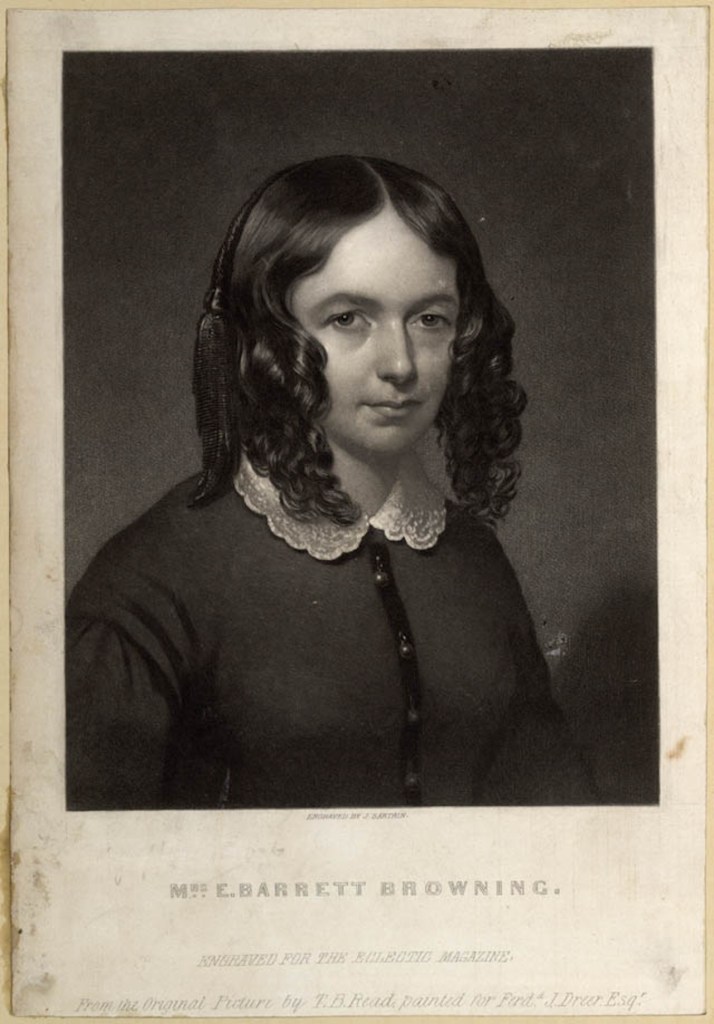
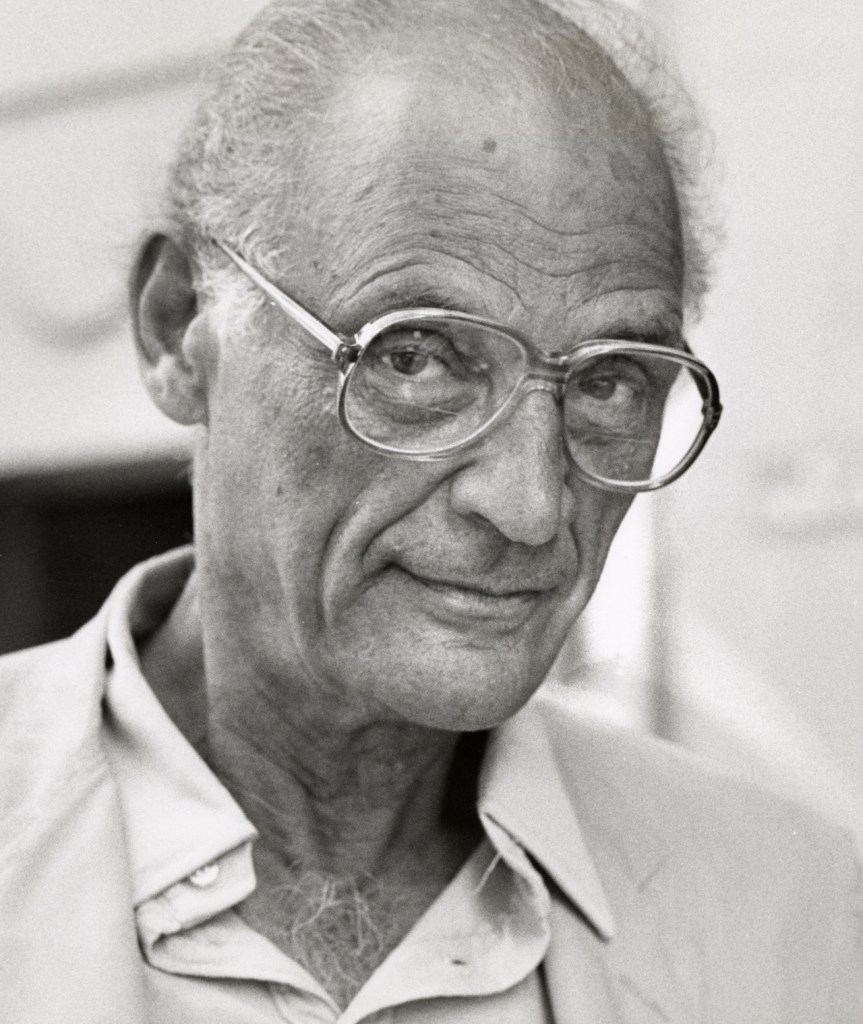
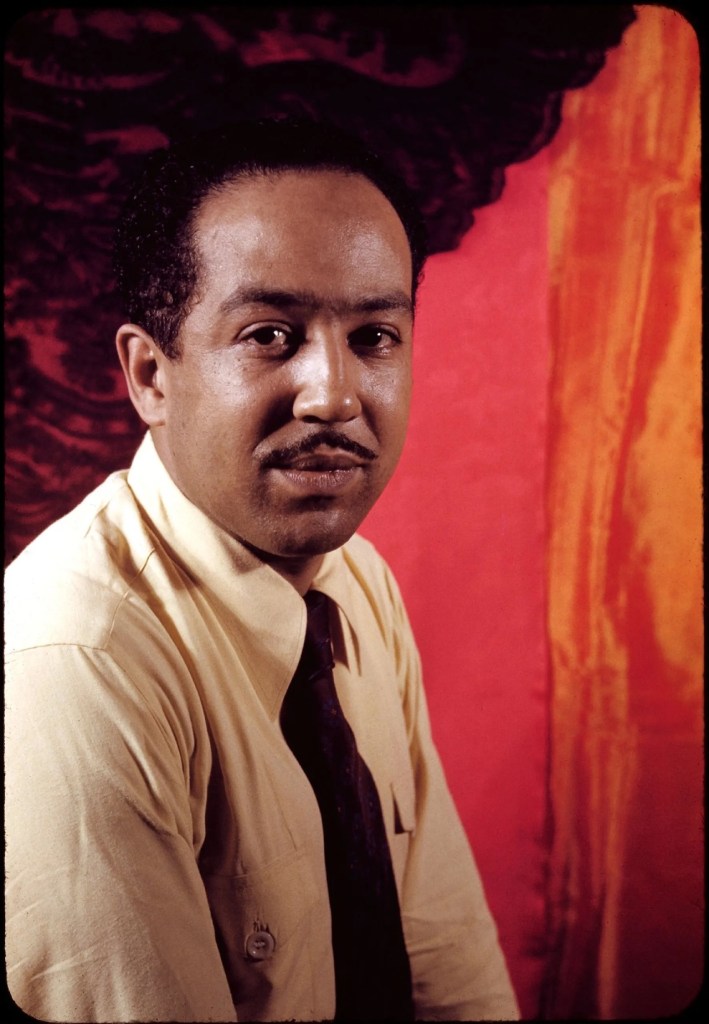
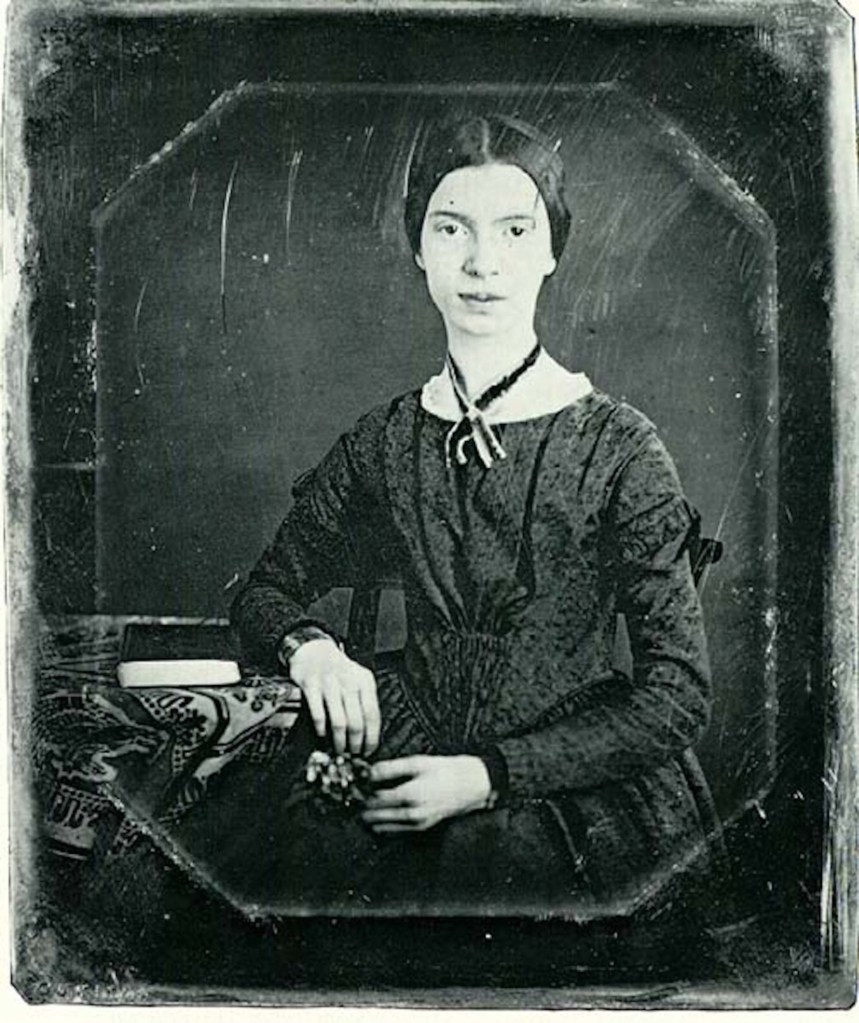

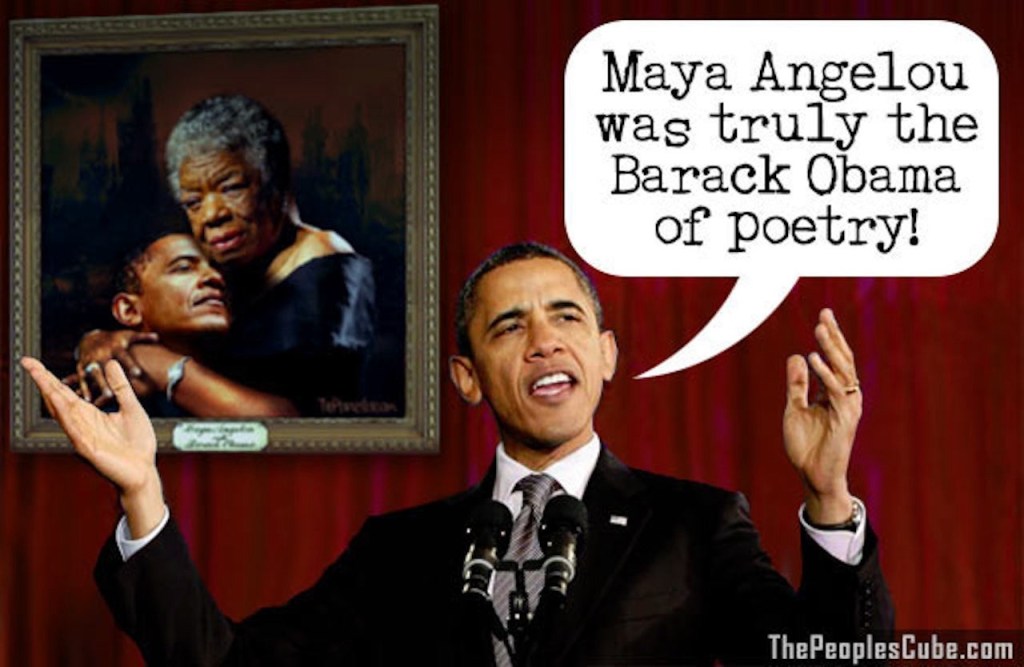
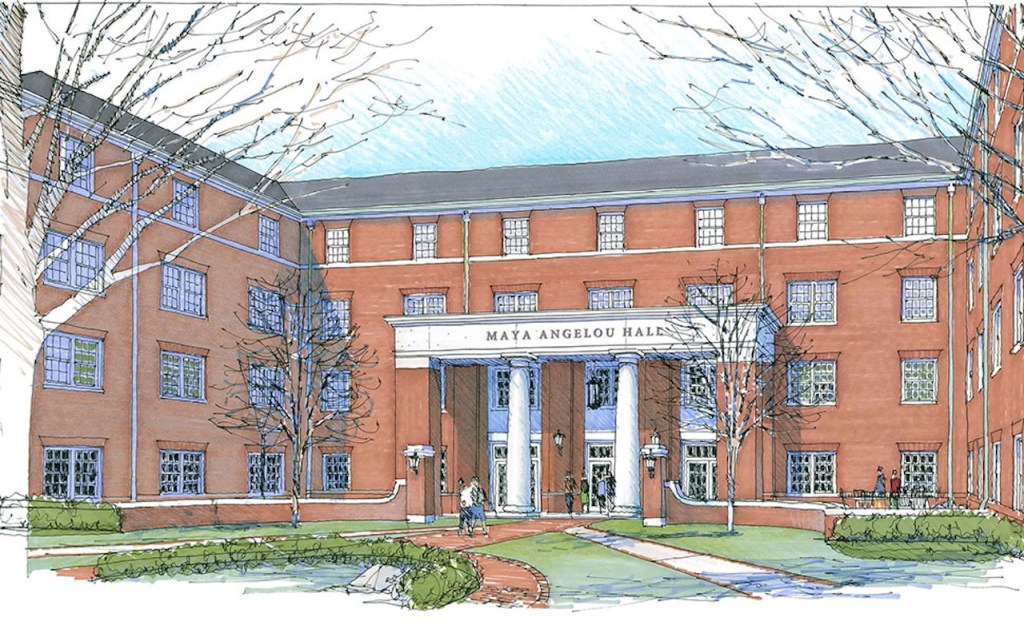

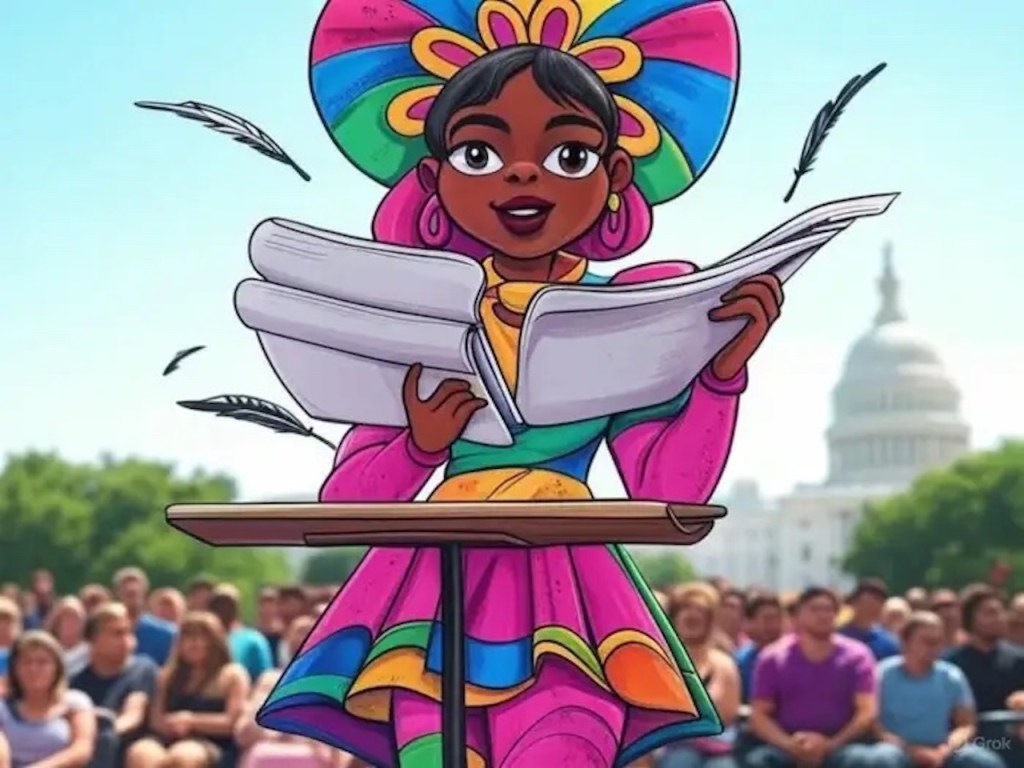
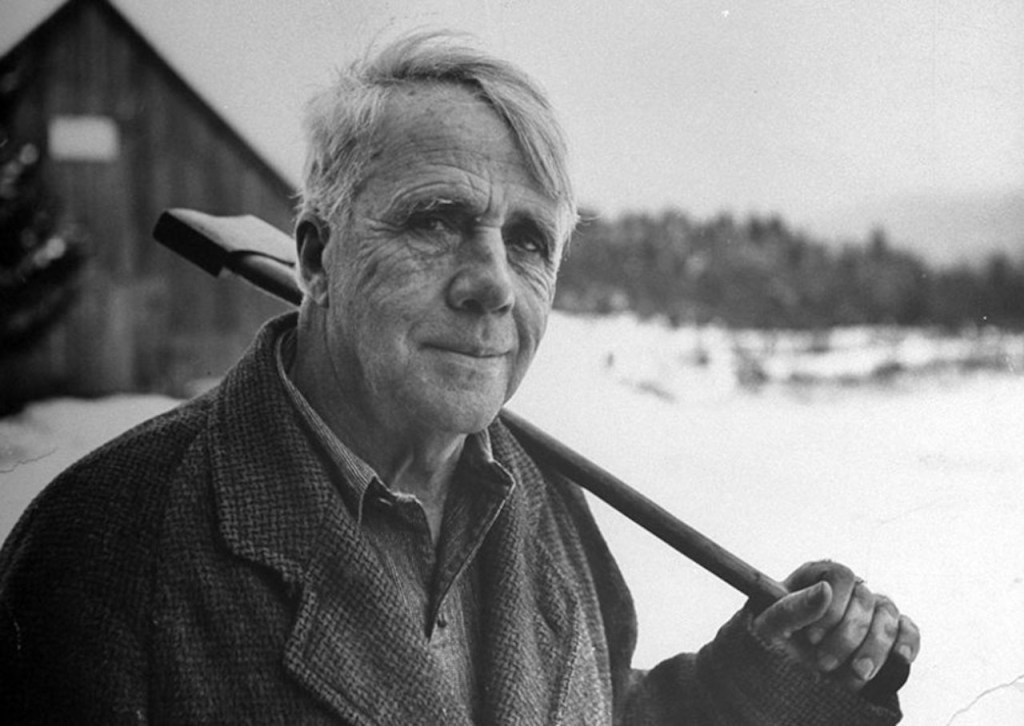

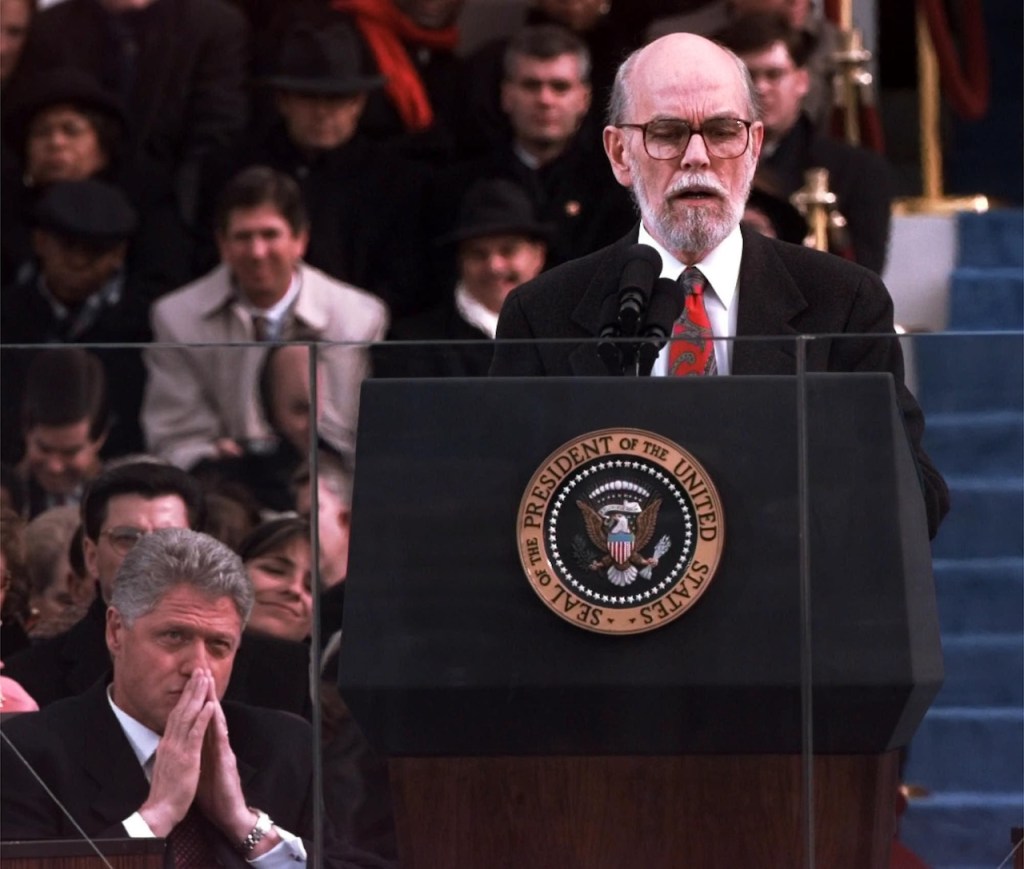
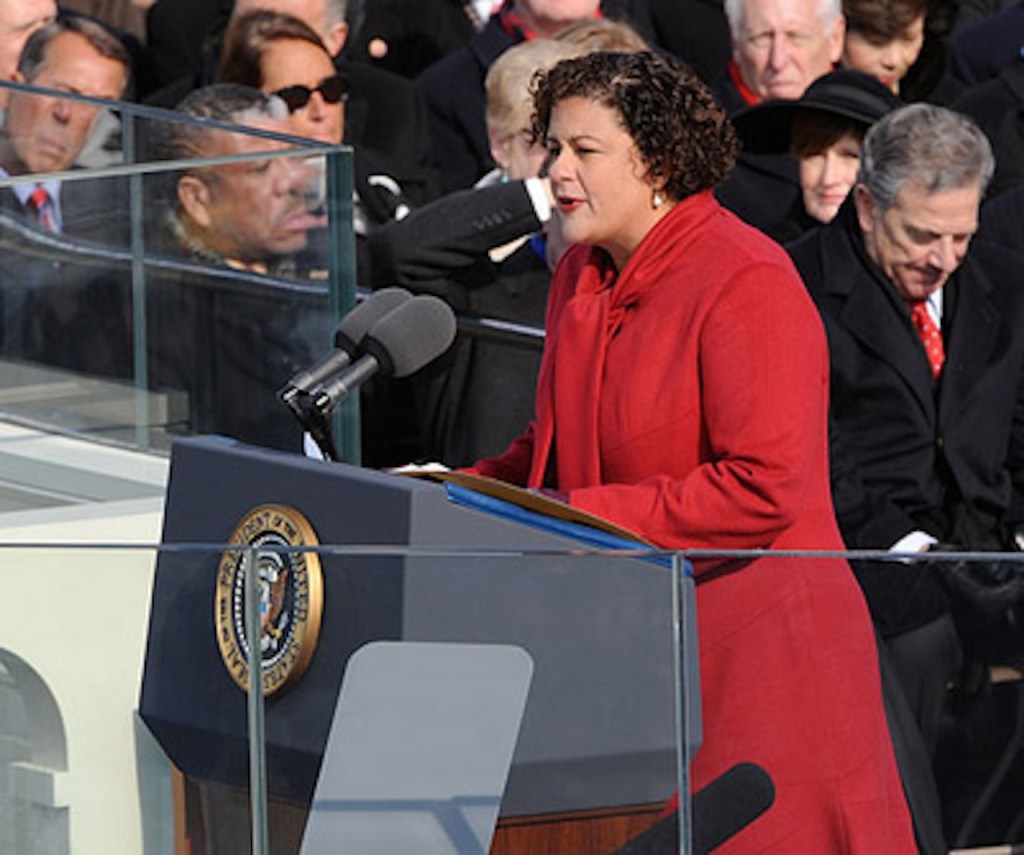
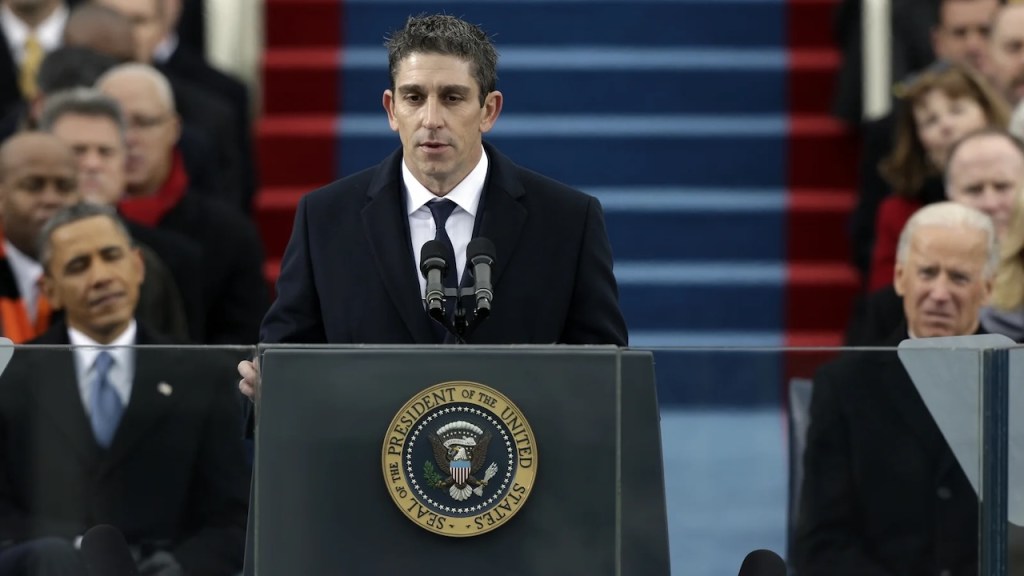
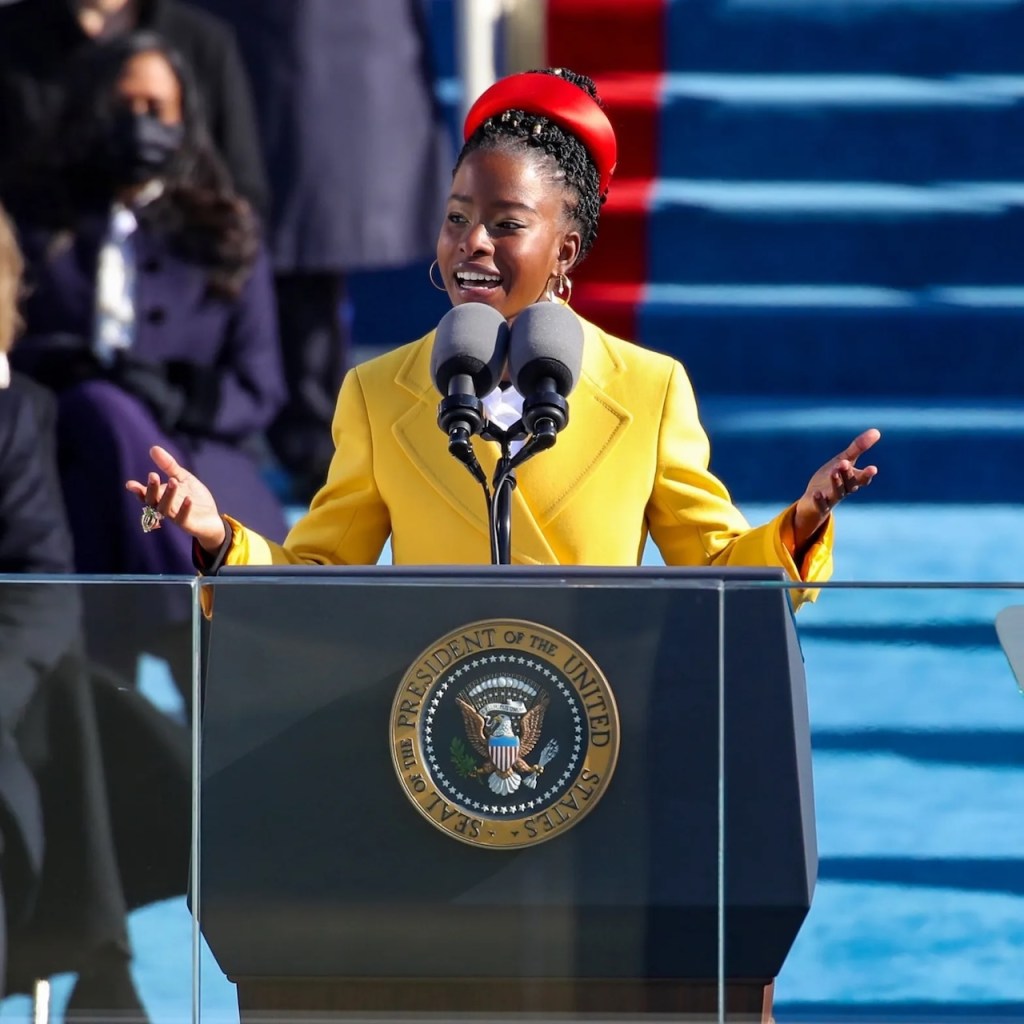


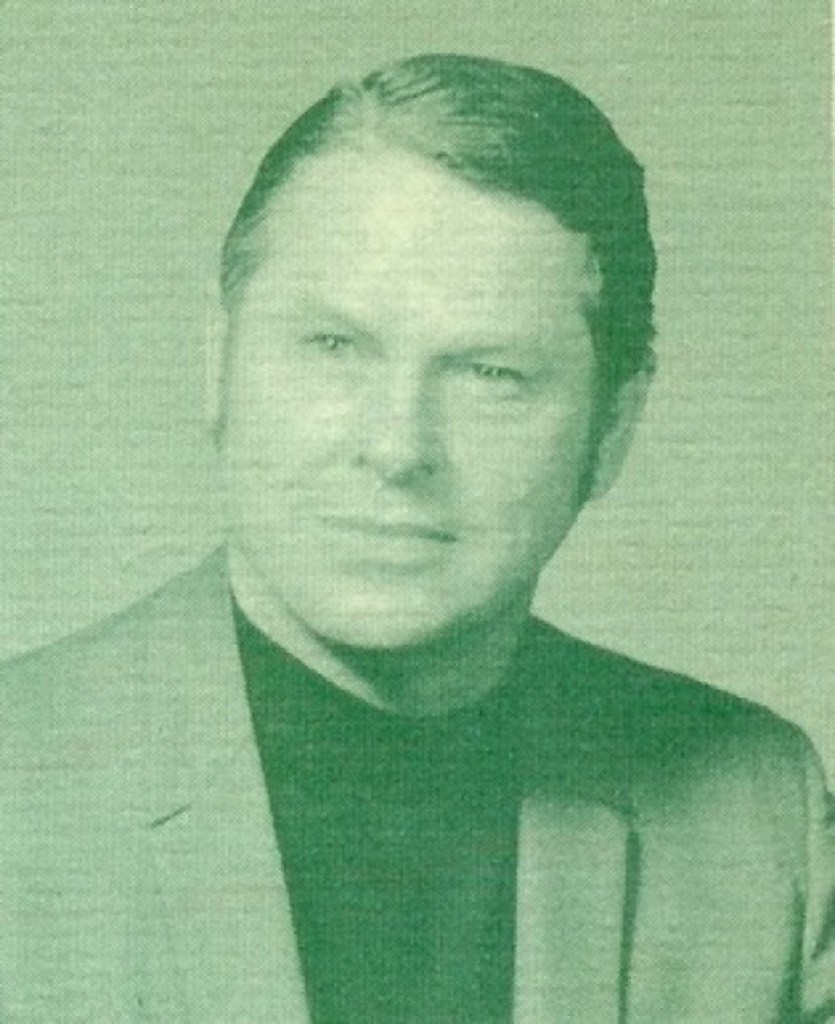

 Linda's Literary Home