Linda's Literary Home

Tag: poetry

  • Elizabeth Barrett Browning’s Sonnet 20 “Beloved, my Beloved, when I think”

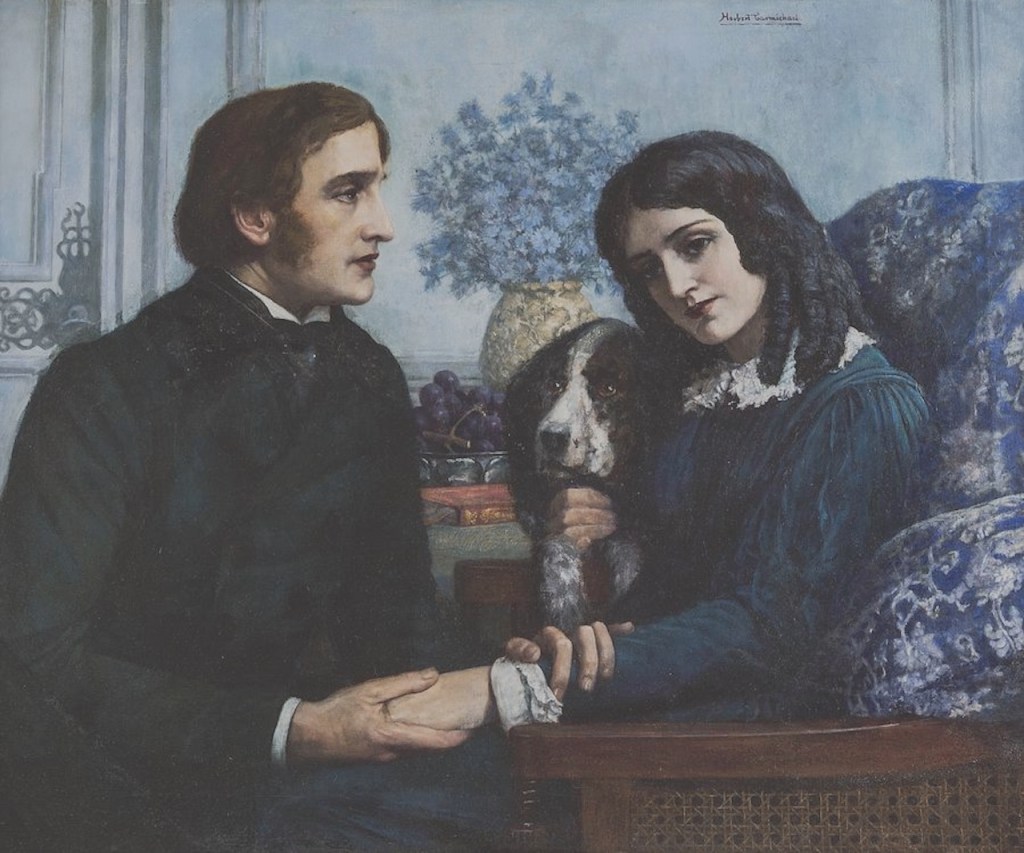
    Image:  Robert Browning visits Elizabeth Barrett at 50 Wimpole Street painting by Celestial Images

    Elizabeth Barrett Browning’s Sonnet 20 “Beloved, my Beloved, when I think”

    Sonnet 20 “Beloved, my Beloved, when I think” from Sonnets from the Portuguese finds the speaker in a pensive mood, dramatizing her awe at the difference a year has made in her life.

    Introduction with Text of Sonnet 20 “Beloved, my Beloved, when I think”

    The speaker in Elizabeth Barrett Browning’s sonnet 20 “Beloved, my Beloved, when I think” from Sonnets from the Portuguese remembers that just year ago she would not have been able to imagine that a love relationship with someone so important as her belovèd would break the chains of sorrow with which she has been bound for many years.

    This sonnet finds the speaker in a pensive mood, dramatizing her awe at the difference a year has made in her life.  The speaker is gaining confidence in her ability to attract and return the kind of love that she has yearned for but heretofore considered herself unworthy of possessing. 

    Sonnet 20 “Beloved, my Beloved, when I think”

    Beloved, my Beloved, when I think
    That thou wast in the world a year ago,
    What time I sate alone here in the snow
    And saw no footprint, heard the silence sink
    No moment at thy voice … but, link by link,
    Went counting all my chains, as if that so
    They never could fall off at any blow
    Struck by thy possible hand … why, thus I drink
    Of life’s great cup of wonder! Wonderful,
    Never to feel thee thrill the day or night
    With personal act or speech,—nor ever cull
    Some prescience of thee with the blossoms white
    Thou sawest growing! Atheists are as dull,
    Who cannot guess God’s presence out of sight.

    Commentary on Sonnet 20 “Beloved, my Beloved, when I think”

    Sonnet 20 “Beloved, my Beloved, when I think” finds the speaker in a pensive mood, dramatizing her awe at the difference a year has made in her life.

    First Quatrain:  The Difference a Year Makes

    Beloved, my Beloved, when I think
    That thou wast in the world a year ago,
    What time I sate alone here in the snow
    And saw no footprint, heard the silence sink 

    The speaker is reminiscing about her feelings “a year ago” before she had met her belovèd. She sat watching the snow that remained without his “footprint.” The silence surrounding her lingered without her hearing his voice. The speaker is structuring her remarks in when/then clauses; she will be saying, “when” this was true, “then” something else was true.

    In the first quatrain, she is thus beginning her clause with “when I think” and what she is thinking about is the time before her belovèd and she had met. She continues the “when” clause until the last line of the second quatrain.

    Second Quatrain:  Never to be Broken Chains

    No moment at thy voice … but, link by link,
    Went counting all my chains, as if that so
    They never could fall off at any blow
    Struck by thy possible hand … why, thus I drink 

    Continuing to recount what she did and how she felt before her ne love came into her life, she reminds her audience that she was bound by “all my chains” which she “went counting” and believing would never be broken.  The speaker makes it clear that her belovèd has, in fact, been responsible for breaking those chains of pain and sorrow that kept her bound and weeping.

    The speaker then moves into the “then” construction, averring that the arrival of her belovèd is, indeed, the reason that she can now look on the world as a place “of wonder.”  At this point, she is simply experiencing the awe of wonder that she should be so fortunate to have her belovèd strike those metaphorical blows against the chains of sorrow that kept her in misery.

    First Tercet:  Near Incredulous

    Of life’s great cup of wonder! Wonderful,
    Never to feel thee thrill the day or night
    With personal act or speech,—nor ever cull 

    The speaker then expounds on what she had not been able to foretell as she remained unable to experience the joy and thrill of living that her belovèd has now afforded her through his acts of kindness and his verbal expressions of affection.  The speaker is nearly incredulous that she could have remained without the love that has become so important to her.

    Second Tercet:  Dull as Atheists

    Some prescience of thee with the blossoms white
    Thou sawest growing! Atheists are as dull,
    Who cannot guess God’s presence out of sight.

    The speaker adds another part of her astonishing “wonder”: that she was not able to sense that such a being might actually be living and amenable to having a relationship with her.  She feels that she should have had some inkling of awareness that such might be the case.

    She sees now that she was “as dull” as “atheists,” those unimaginative souls, “who cannot guess God’s presence out of sight.”   The speaker’s belovèd is such a marvelous work of nature that she imbues him with a certain divine stature, and she considers herself somewhat “dull” for not being about to guess that such a one existed. 

    As atheists are unable to surmise of Supreme Intelligence guiding the ordered cosmos, she was incapable of imagining that one such as her belovèd would come along and free her from her self-induced coma of sadness.

  • Elizabeth Barrett Browning’s Sonnet 19 “The soul’s Rialto hath its merchandise”

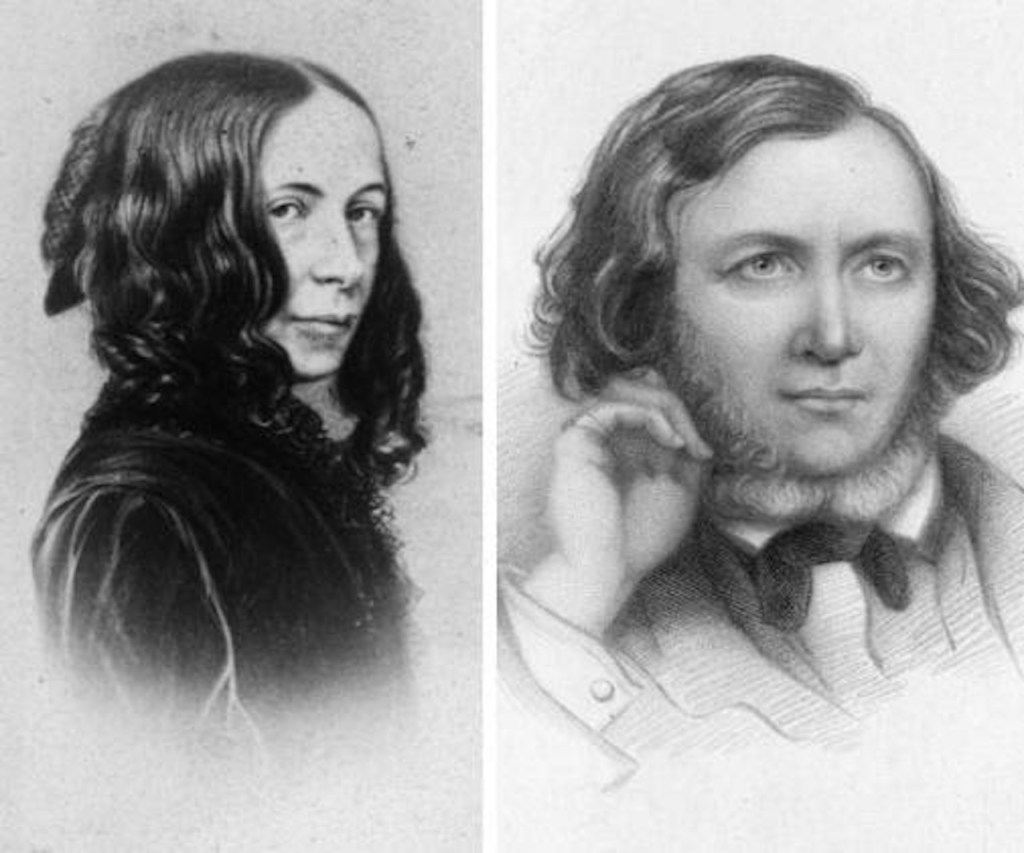
    Image: Elizabeth Barrett Browning and Robert Browning – Global Love Museum

    Elizabeth Barrett Browning’s Sonnet 19 “The soul’s Rialto hath its merchandise”

    The two lovers exchange locks of hair, and the speaker makes a ceremony of the exchange as she again emphasizes the royalty of her lover’s station and talent.

    Introduction with Text of Sonnet 19 “The soul’s Rialto hath its merchandise”

    In sonnet 18 “I never gave a lock of hair away” from Elizabeth Barrett Browning’s Sonnets from the Portuguese, the speaker dramatically celebrates giving a lock of her hair to her belovèd.

    The little drama continues with sonnet 19 “The soul’s Rialto hath its merchandise,” as she receives a lock from him.  The two lovers exchange their locks of hair, and the speaker dramatizes a ceremony of the exchange, as she again celebrates the royalty of her lover’s station and talent.

    Sonnet 19 “The soul’s Rialto hath its merchandise”

    The soul’s Rialto hath its merchandise;
    I barter curl for curl upon that mart,
    And from my poet’s forehead to my heart
    Receive this lock which outweighs argosies,—
    As purply black, as erst to Pindar’s eyes
    The dim purpureal tresses gloomed athwart
    The nine white Muse-brows. For this counterpart,
    The bay-crown’s shade, Belovèd, I surmise,
    Still lingers on thy curl, it is so black!
    Thus, with a fillet of smooth-kissing breath,
    I tie the shadows safe from gliding back,
    And lay the gift where nothing hindereth;
    Here on my heart, as on thy brow, to lack
    No natural heat till mine grows cold in death.

    Commentary on Sonnet 19 “The soul’s Rialto hath its merchandise”

    The two lovers exchange locks of hair, and the speaker makes a ceremony of the exchange as she again emphasizes the royalty of her lover’s station and talent.

    First Quatrain:  Oration and Commemoration

    The soul’s Rialto hath its merchandise;
    I barter curl for curl upon that mart,
    And from my poet’s forehead to my heart
    Receive this lock which outweighs argosies,—

    As in sonnet 18 “I never gave a lock of hair away,” the speaker offers a bit of an oration, commemorating the exchange of locks of hair between the two lovers. She metaphorically compares the soul to a marketplace, the Rialto, an important commercial district in Venice.  The speaker employs a commercial metaphor because of the trading of items that the two lovers are engaging in.

    The speaker then reveals that she is accepting the lock of hair from the head of her beloved with all the enthusiasm that an individual might express if she were presented with large loads of valuable cargoes from vast commercial sailing ships.

    The speaker enhances the value of that lock of hair by stating that it weighs even more than “argosies.” It is even more valuable than all the cargo arriving in vast commercial vessels that travel the seas.

    Second Quatrain:  Purple Black

    As purply black, as erst to Pindar’s eyes
    The dim purpureal tresses gloomed athwart
    The nine white Muse-brows. For this counterpart,
    The bay-crown’s shade, Belovèd, I surmise,

    In the second quatrain, the speaker emphasizes the blackness of her lover’s lock. The “curl,” she claims, is so black that it is “purply black.”  Again, she employs the color of royalty to distinguish the high station of her talented, handsome, accomplished lover.

    The speaker alludes to the ancient Greek poet Pindar, who is considered the greatest of the nine most famous ancient Greek poets, whom she references as “the nine white Muse-brows.”  The speaker’s lover’s lock is as significant because he is as important to the poetry world as those Greek poets are.

    First Tercet:  Pindar Allusion

    Still lingers on thy curl, it is so black!
    Thus, with a fillet of smooth-kissing breath,
    I tie the shadows safe from gliding back,

    The speaker voices her assumption that “the bay-crown’s shade, Beloved / / Still lingers on the curl.” The “bay-crown” refers to that most famous poet, Pindar, whose shadow-presence influences her lover’s talent through his “purpureal tresses.”

    The speaker insists that because of the high value she places on that black lock of hair, she will keep the lock close to her heart to keep it warm.  Likely, the speaker will place it in a locket, but she exaggerates her drama by saying she is binding it with her “smooth-kissing breath” and tying “the shadows safe from gliding back.”

    Second Tercet:  Ceremony of the Lock

    And lay the gift where nothing hindereth;
    Here on my heart, as on thy brow, to lack
    No natural heat till mine grows cold in death.

    In placing the lock next to her heart, the speaker is safe-guarding the “gift where nothing” can disturb it.  Close to the speaker’s heart, the lock will “lack / No natural heat” until, of course, the speaker “grows cold in death.”  The ceremony of the lock exchange is complete, and the love relationship will then progress to the next important stage.

  • Elizabeth Barrett Browning’s Sonnet 17 “My poet, thou canst touch on all the notes”

    Image: Elizabeth Barrett Browning – Getty Images

    Elizabeth Barrett Browning’s Sonnet 17 “My poet, thou canst touch on all the notes”

    In sonnet 17 “My poet, thou canst touch on all the notes,” the poet’s always melancholy speaker muses on the art of poetics in her relationship with her poet/lover.  She considers her role in his art and how they might in future employ imagination to continue to be creatively productive.

    Introduction withText of Sonnet 17 “My poet, thou canst touch on all the notes”

    In sonnet 17 from her classic work Sonnets from the Portuguese, Elizabeth Barrett Browning again allows her speaker to hint at melancholy as she continues her efforts to sustain and understand her new love relationship, and her always melancholy speaker is now musing on the poetics of her relationship with her poet/lover.

    Elizabeth Barrett Browning’s speaker will continue to include a place for doubt as she journeys through her sequence of love songs to her belovèd.   The speaker’s charm remains subtle while always tinged with the possibility of sorrow.  Even as that former sadness in which she dwelt so heavily subsides, its specter seems forever to simmer just below the surface of consciousness.

    Sonnet 17 “My poet, thou canst touch on all the notes”

    My poet, thou canst touch on all the notes
    God set between his After and Before,
    And strike up and strike off the general roar
    Of the rushing worlds a melody that floats
    In a serene air purely. Antidotes
    Of medicated music, answering for
    Mankind’s forlornest uses, thou canst pour
    From thence into their ears. God’s will devotes
    Thine to such ends, and mine to wait on thine.
    How, Dearest, wilt thou have me for most use?
    A hope, to sing by gladly ? or a fine
    Sad memory, with thy songs to interfuse?
    A shade, in which to sing—of palm or pine?
    A grave, on which to rest from singing ? Choose.

    Commentary on Sonnet 17  “My poet, thou canst touch on all the notes”

    In sonnet 17 “My poet, thou canst touch on all the notes,” the poet’s always melancholy speaker muses on the poetics involved in her relationship with her poet/lover. A serious relationship between two poets would necessarily involve the creation of poetry and its ability to bind the lovers in certain literary ways.

    First Quatrain:  Praise for Poetic Prowess

    My poet, thou canst touch on all the notes
    God set between his After and Before,
    And strike up and strike off the general roar
    Of the rushing worlds a melody that floats

    The speaker in Elizabeth Barrett Browning’s sonnet 17 “My poet, thou canst touch on all the notes”  from Sonnets from the Portuguese addresses her belovèd, asserting that he 

    has ability to range far and wide in broaching the music that plays between the two artist/lovers.   She is quietly suggesting that God is bringing the two together through whisper of love that has played in their souls from the time before they even met.

    The speaker’s high praise for her lover’s poetic prowess demonstrates a shift in her observation from her own lowly station to his art. Because the speaker herself is a poet, she has, no doubt, known that she must eventually address the issue that both she and her belovèd share the same avocation.   It might well be expected that she will elevate his while remaining humble about her own, and that expectation is fulfilled in this poetic offering.  

    The speaker credits her belovèd with the ability to create worlds that make the ineffable mystery understandable to the ordinary consciousness; he is able to herald celestial music that contends with the creation of whole worlds of emotion.   The “rushing worlds” may seek to drown love in its massive sound, but her poet/lover’s ability to tame those sound renders the cacophony into melodies that are easily accepts.

    Second Quatrain:   Curing Boredom

    In a serene air purely. Antidotes
    Of medicated music, answering for
    Mankind’s forlornest uses, thou canst pour
    From thence into their ears. God’s will devotes

    The melody glides easily through an atmosphere made pure and serene by the unique ability of her poet/love to convert all chaos into peace, as well as all sadness into contentedness.  Mankind will find his dramatization “medicated music,” which will cure the boredom of “mankind’s forlornest uses.” Her belovèd retains the unique marvelous, unique talent to spill his melodic strains “into their ears.”

    First Tercet:  A Drama Sanctioned by the Divine

    Thine to such ends, and mine to wait on thine.
    How, Dearest, wilt thou have me for most use?
    A hope, to sing by gladly ? or a fine

    The speaker asserts that her greatly talented lover’s drama is, indeed, sanctioned by the Divine, and she is motivated as she patiently expects his creations to flaunt their magic and music to her as well.

    The speaker puts a complicated question to her belovèd: “How, Dearest, wilt thou have me for most use?” In that the speaker would perfectly fulfill her position as muse, she makes clear that she will be right alongside him in his every effort to sustain his God-given abilities.  Regardless of the theme or subject, whether it be “a hope, to sing by gladly,” the speaker suggests that she will continue to praise where necessity takes her.

    Second Tercet:  Useful Powers of Sorrow

    Sad memory, with thy songs to interfuse?
    A shade, in which to sing–of palm or pine?
    A grave, on which to rest from singing ? Choose.

    This speaker is not yet ready to relinquish her references to melancholy; thus her question continues with a set of propositions: perhaps she will offer “a fine / Sad memory.” She will, therefore, not be surprised that her powers of sorrow may be useful to them both in their poetic pursuits.  But the speaker also wonders if death themes might intrude at some point: “A shade, in which to sing—of palm or pine? / A grave, on which to rest from singing?”  

    It just may be that they will both become so satisfied with their comfortable love that they will have to rely more on imagination than they had ever thought. Thus the speaker admonishes her poetically talented belovèd that at some poi

  • Elizabeth Barrett Browning’s Sonnet 16 “And yet, because thou overcomest so”

    Image: Elizabeth Barrett Browning – NPG, London

    Elizabeth Barrett Browning’s Sonnet 16 “And yet, because thou overcomest so”

    The speaker in Elizabeth Barrett Browning’s sonnet 16 “And yet, because thou overcomest so”finally capitulates to the all consuming love that she has tried to deny herself, allowing herself only a speck of doubt.

    Introduction with Text of Sonnet 16 “And yet, because thou overcomest so”

    The speaker in Elizabeth Barrett Browning’s sonnet 16 from Sonnets from the Portuguese is  dramatizing her nearly concluded acceptance of the love from her “noble” king-like suitor.  She establishes  a colorful metaphor of royalty to express her new-found emotions.

    Sonnet 16 “And yet, because thou overcomest so”

    And yet, because thou overcomest so,
    Because thou art more noble and like a king,
    Thou canst prevail against my fears and fling
    Thy purple round me, till my heart shall grow
    Too close against thine heart henceforth to know
    How it shook when alone. Why, conquering
    May prove as lordly and complete a thing
    In lifting upward, as in crushing low!
    And as a vanquished soldier yields his sword
    To one who lifts him from the bloody earth,
    Even so, Belovèd, I at last record,
    Here ends my strife. If thou invite me forth,
    I rise above abasement at the word.
    Make thy love larger to enlarge my worth.

    Commentary on Sonnet 16 “And yet, because thou overcomest so”

    The speaker can finally be seen as capitulating to the all consuming love that she has tried to deny herself, allowing herself only a speck of doubt.

    First Quatrain:   Overcoming Fears and Doubts

    And yet, because thou overcomest so,
    Because thou art more noble and like a king,
    Thou canst prevail against my fears and fling
    Thy purple round me, till my heart shall grow

    The speaker, picking up from prior adversity, can now give in to her belovèd’s advances because he has, at last, been able to overcome her fears and doubts. She again likens him to royalty.  She labels him “noble” and he is able to rule her heart as king would rule his subjects.  

    Her royal suitor is banishing her fears as he places his protective shield “purple” around her life.  All of his noble, royalty-like actions and behaviors all her heart to grow fond of him and life that he has is now so gently guiding. 

    Her lover has the kingly powers of protecting even a doubtful heart such as her own. He can place his royal purple cape around her shoulders and affect the very beating of her heart.

    Second Quatrain:  A Fearful Heart

    Too close against thine heart henceforth to know
    How it shook when alone. Why, conquering
    May prove as lordly and complete a thing
    In lifting upward, as in crushing low!

    As her heart beats close to his, the speaker finds it difficult to grasp that it once felt so afraid of life and living when it found itself solitary and isolated. She has discovered that she can, in fact, imagine herself lifted from her self-imposed prison of melancholy.   The speaker can succumb to upward mobility as readily as she did to the downward spiral, “as in crushing low!”

    First Tercet:  A Bizarre Comparison

    And as a vanquished soldier yields his sword
    To one who lifts him from the bloody earth,
    Even so, Belovèd, I at last record,

    The speaker then dramatically and bizarrely compares her situation metaphorically to a “soldier” who surrenders in battle to “one who lifts him from the bloody earth.” The enemy becomes nurturing once his foe has been vanquished.    But for her, the battle was very real, and thus the metaphor remains quite apt. Thus she can finally and completely surrender.

    Second Tercet:  Reserving a Space to Doubt

    Here ends my strife. If thou invite me forth,
    I rise above abasement at the word.
    Make thy love larger to enlarge my worth.

    The speaker’s handing over of weapons and defensive mechanisms is accompanied by her revelation that her sorrowful struggles are ending.  She is on the verge of a major change of attitude from sadness to happiness, if she has the courage of accept that transformation.

    True to character, however, she must at least reserve some bit of possible future failure by stating her declaration in a conditional clause, “if thou invite me forth.”   She emphasizes “thou,” to make it clear that her belovèd is the only one to whom she could ever say these things.

    The speaker has quite likely almost one hundred per cent become convinced that he has invited her, but she still feels that she has to keep any downturn in her sights.   But if he does, in fact, keep that invitation open for her, she will be able to transcend her pain and rise above all the sorrow that has kept her abased for so many years.

    Once again, the speaker is giving him a great deal of power as she suggests that as her new attitude will “make thy love larger,” it will also “enlarge my worth.”   Thus loving him will increase her own value, not in large part because, in her eyes, his value is as large as a king’s worth. His royalty will become hers.

  • Elizabeth Barrett Browning’s Sonnet 14 “If thou must love me, let it be for nought”

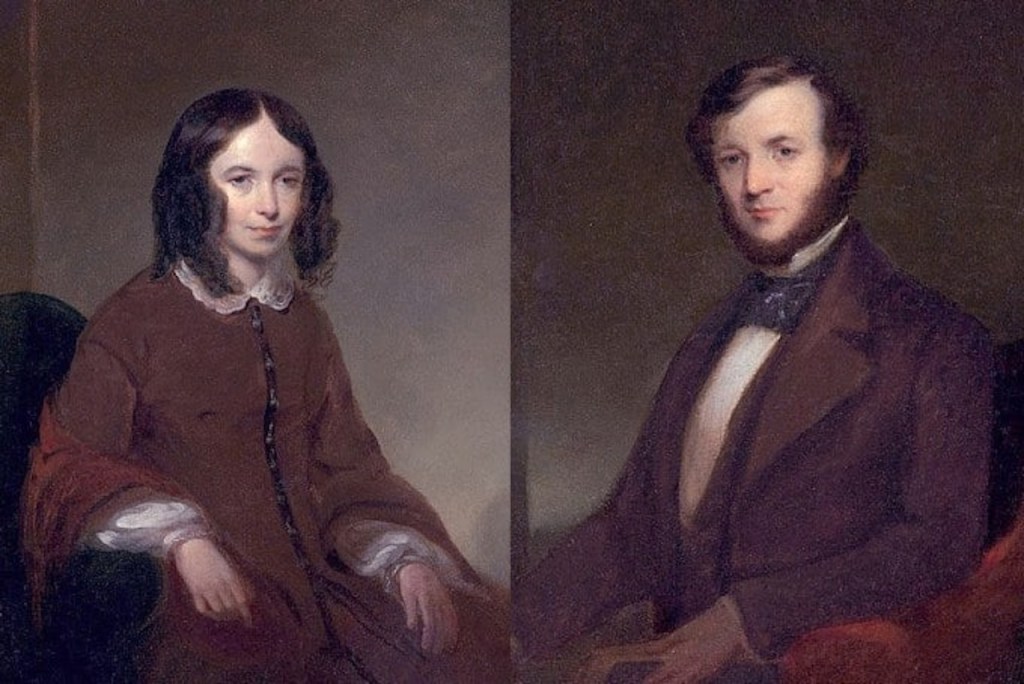
    Image: Elizabeth Barrett Browning and Robert Browning – 1852. Portraits painted by Thomas Buchanan Read

    Elizabeth Barrett Browning’s Sonnet 14 “If thou must love me, let it be for nought”

    In sonnet 14, Elizabeth Barrett Browning’s speaker is insisting that her suitor love her only for the sake of love, not for her physical qualities such as her smiling lips or the soft manner in which she speaks.

    Introduction with Text of Sonnet 14 “If thou must love me, let it be for nought”

    The speaker in this sonnet from Elizabeth Barrett Browning’s classic Sonnets from the Portuguese is now graciously receiving her suitor’s affection.  Nevertheless, she also feels it necessary to make him aware that she expects that their budding relationship should not only continue to grow but should become permanent.  She therefore delineates the nature of the love she anticipates that the two will share.

    Sonnet 14 “If thou must love me, let it be for nought”

    If thou must love me, let it be for nought
    Except for love’s sake only. Do not say
    “I love her for her smile—her look—her way
    Of speaking gently,—for a trick of thought
    That falls in well with mine, and certes brought
    A sense of pleasant ease on such a day”—
    For these things in themselves, Belovèd, may
    Be changed, or change for thee,—and love, so wrought,
    May be unwrought so. Neither love me for
    Thine own dear pity’s wiping my cheeks dry,—
    A creature might forget to weep, who bore
    Thy comfort long, and lose thy love thereby!
    But love me for love’s sake, that evermore
    Thou mayst love on, through love’s eternity.

    Commentary on Sonnet 14 “If thou must love me, let it be for nought”

    The speaker insists that her beloved offer her affection only based on love and not for any physical qualities that she demonstrates, including the way she smiles or the manner in which she speaks.

    First Quatrain:  Continuing to Remain Somewhat Tentative

    If thou must love me, let it be for nought
    Except for love’s sake only. Do not say
    “I love her for her smile—her look—her way
    Of speaking gently,—for a trick of thought

    The speaker’s tentativeness continues,  even though she seems to be contemplating the much desired joy of such a love relationship.  Her continued procrastination remains as a shield for her heart, in case the relationship ends.   She is signaling the likelihood of her acceptance by affirming, “If thou must love me,” but not with the oft-touted insulting phrase, if-you-really-love-me.

    The uncomplicated, single term “must” declares that a change is in the offing.  It demonstrates that she now realizes the true nature of this man’s love, although she cannot bring herself to have total faith that some feature in her nature could never assert itself and thus spoil such a love that seems to be so true.

    The speaker is requesting pragmatically that he love her for love alone, and not because of  the physical, therefore superficial, qualities that too often attract lovers.  She does not desire that her lover to be in love merely with the physical qualities she possesses such as her smile and speaking manner.

    Second Quatrain: Contempt for the Superficial

    That falls in well with mine, and certes brought
    A sense of pleasant ease on such a day”—
    For these things in themselves, Belovèd, may
    Be changed, or change for thee,—and love, so wrought,

    The speaker then is unveiling her reason for being dismayed by superficial kinds of attention that often engages lovers.  Those qualities too often prove to be “a trick of thought.”  Suppose that her smile be pleasant to him one day but not so much the next day.  If he were fixed upon such a smile, she fears his feeling for her would diminish.

    The speaker does not wish that her partner’s love to be guided only by mood.  She suspects that if she offers him a pleasant glance but later offers a melancholy sorrow his love for her may become negatively affected.  

    Also, her speech to him may from time to time vary and not always offer him the same level of delight.  She knows she will not always be able to engage in conversation that is brimming only with joyful pleasantries.

    The speaker comprehends well that love based on change cannot maintain a lasting, steadfast love relationship.  Thus she is letting him know that she is aware that the physical is very likely to change, but true love should not change; love should remain constant.  She wants to let him know that she can only engage in an unconditional love that is founded on unchanging affection.

    First Tercet:  Accepting No Pity

    May be unwrought so. Neither love me for
    Thine own dear pity’s wiping my cheeks dry,—
    A creature might forget to weep, who bore

    The speaker is offering an additional demand that he not love her with pity in his heart.  She has often explored the reaches of the melancholy that has caused her to shed tears often and for long periods of time.  And if his love were tainted with pity and sympathy for her sorrowful lot, what would occur with that pity, were she to “forget to weep”?

    She reasons that if or when she likely becomes a happily, contented woman, her beloved would then have one less reason to continue to love her, if he had allowed his love for her to include the negativity of pity and sympathy.

    Second Tercet:   Love for Love’s Sake Alone

    Thy comfort long, and lose thy love thereby!
    But love me for love’s sake, that evermore
    Thou mayst love on, through love’s eternity.

    The speaker deems it very important to make her paramour aware that she wants to be loved for no reason other than that she exists.  If she is loved because of physical features, or because of the fact that she has deeply suffered and somehow now deserves to be content, true, lasting love could never continue to remain.

    Therefore, if her beloved will love her as she requests and just love her for “love’s sake,” she is convinced that their love will exist “through love’s eternity.”  She has weighed the calamity of false starts, and she makes it clear that she wishes to avoid the pain of a failed relationship.

  • Elizabeth Barrett Browning’s Sonnet 13 “And wilt thou have me fashion into speech”

    Image: Elizabeth Barrett Browning – NPG, London

    Elizabeth Barrett Browning’s Sonnet 13 “And wilt thou have me fashion into speech

    The speaker in sonnet 13 muses on the idea of composing a verse about her newly found emotion but hesitates for fear of touching the grief she suffers. 

    Introduction with Text of Sonnet 13 “And wilt thou have me fashion into speech”

    In Elizabeth Barrett Browning’s sonnet 13 from Sonnets from the Portuguese, the speaker attempts to respond to her suitor’s encouragement to transcribe her feelings for him in a poem, but she does not yet believe she is ready to plumb the depths of her feelings.

    Sonnet 13 “And wilt thou have me fashion into speech”

    And wilt thou have me fashion into speech
    The love I bear thee, finding words enough,
    And hold the torch out, while the winds are rough,
    Between our faces, to cast light on each?
    I drop it at thy feet. I cannot teach
    My hand to hold my spirit so far off
    From myself—me—that I should bring thee proof
    In words, of love hid in me out of reach.
    Nay, let the silence of my womanhood
    Commend my woman-love to thy belief,—
    Seeing that I stand unwon, however wooed,
    And rend the garment of my life, in brief,
    By a most dauntless, voiceless fortitude,
    Lest one touch of this heart convey its grief.

    Commentary on Sonnet 13 “And wilt thou have me fashion into speech”

    The speaker in sonnet 13 muses on the idea of composing a verse about her newly found emotion of love, but she hesitates for she fears touching the grief that still confronts her.

    First Quatrain:  Should She Express Her Love?

    And wilt thou have me fashion into speech
    The love I bear thee, finding words enough,
    And hold the torch out, while the winds are rough,
    Between our faces, to cast light on each?

    The speaker beseeches her beloved wondering if she should “fashion into speech” how she feels about him. She feels that she may not yet be ready to express verbally the feelings that are beginning to move her. Undoubtedly, she believes that outward verbal expression may hamper her unique emotions.

    If she translated her feelings into words, she fears they would behave as a “torch” and would “cast light on each” of their faces.  However, that would happen only if the wind did not blow out their fire. 

    She believes she must protect her increasing emotion from all outside forces; therefore, she opens with a question. She cannot be certain that remaining silent is any longer the proper way to behave.

    Second Quatrain:  Unsteadied by Emotion

    I drop it at thy feet. I cannot teach
    My hand to hold my spirit so far off
    From myself—me—that I should bring thee proof
    In words, of love hid in me out of reach.

    The speaker then dramatically asserts that she, “drop[s] at [his] feet”; she does this because she cannot remain steady in his presence, as she is overcome with emotion. She becomes so agitated with the notion of love, and she cannot calm down in order to write what might be coherent about her intense feelings.

    The sonnet suggests that her beloved has asked the poet/speaker for a poem about her feelings for him; however, she believes that her love is so profoundly heartfelt that she may not be able to shapes its significance in words.

    The speaker feels that she cannot perceive the appropriate images for they are, “hid in me out of reach.” She feels that she must wait for a time when she has found enough tranquility to be able to “fashion into speech” the complex, deep feelings she is experiencing because of her love for this man.

    First Tercet:   Remaining Self-Aware

    Nay, let the silence of my womanhood
    Commend my woman-love to thy belief,—
    Seeing that I stand unwon, however wooed,

    The speaker concludes therefore that “the silence of [her] womanhood” will have to function to persuade him that she does possess those deep feeling of love for him.  She confesses  that she has remained a bit distant from her beloved, when she says she is “unwon.” 

    Although he has “wooed” her, she feels that she must keep a portion of her self out of sight for very deeply personal reasons. She must make sure she stays present and connected in her own self.

    Second Tercet:   Dramatizing the Depth of Pain

    And rend the garment of my life, in brief,
    By a most dauntless, voiceless fortitude,
    Lest one touch of this heart convey its grief.

    The sonnet sequence has dramatized the depth of the pain and melancholy the speaker has endured her entire life-long. She is still suffering that same pain and sadness. She thus again reveals that if she too soon tries to place her feeling into a poem, she would perhaps only “convey [her heart’s] grief.”

    The speaker remains fearful of the notion that “a most dauntless, voiceless fortitude” could impede the power with which she is being propelled toward completely accepting the current relationship with her new-found belovèd.

  • Langston Hughes’ “Theme for English B”

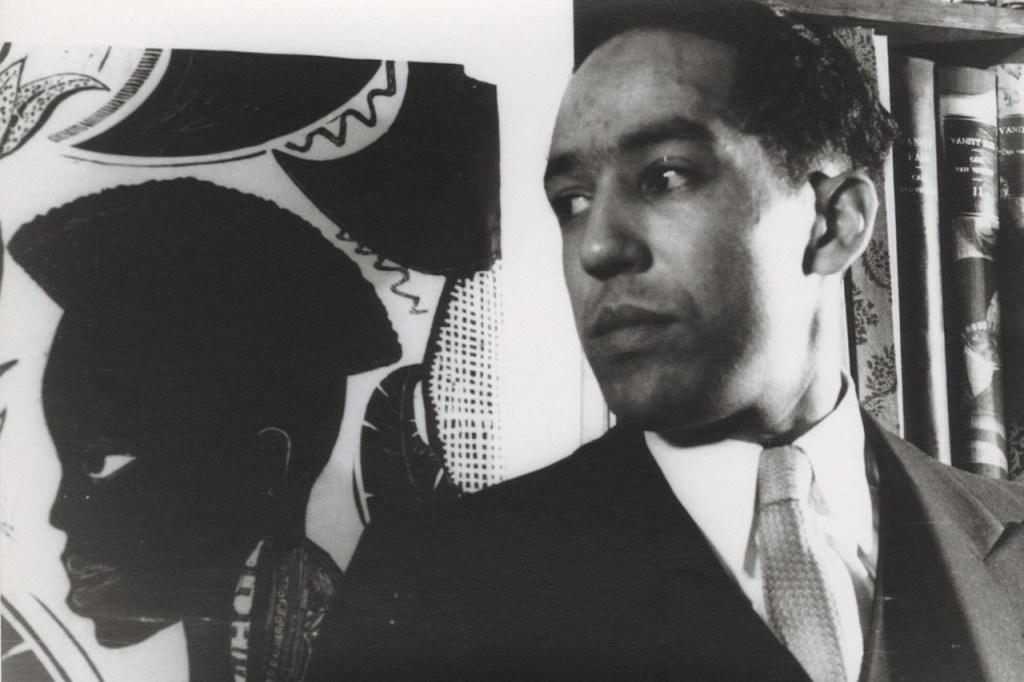
    Image: Langston Hughes – Poetry Foundation

    Langston Hughes’ “Theme for English B”

    Langston Hughes’ “Theme for English B” dramatizes the brainstorming session of a speaker who is a non-traditional college student.  He has been given the assignment to write a paper about himself that is true.  He muses on how to go about producing a page that the instructor will understand.

    Note on Usage: “Negro,” “Colored,” and “Black”: Before the late 1980s in the United States, the terms “Negro,” “colored,” and “black” were accepted widely in American English parlance.   While the term “Negro” had started to lose its popularity in the 1960s, it wasn’t until 1988 that the Reverend Jesse Jackson began insisting that Americans adopt the phrase “African American.”  The earlier, more accurate terms were the custom at the time that Langston Hughes was writing.

    Introduction with Text of “Theme for English B”

    The speaker is a non-traditional, older student in a college English class who has been given the assignment to write a paper that “come[s] out of you.” The instructor has insisted that the paper will be “true” if the student simply writes from his own heart, mind, and experience, but the speaker remains a bit skeptical of that claim, thinking that maybe he is unsure that it is “that simple.

    Theme for English B

    The instructor said,

        Go home and write
        a page tonight.
        And let that page come out of you—
        Then, it will be true.

    I wonder if it’s that simple?
    I am twenty-two, colored, born in Winston-Salem.
    I went to school there, then Durham, then here
    to this college on the hill above Harlem.
    I am the only colored student in my class.
    The steps from the hill lead down into Harlem,
    through a park, then I cross St. Nicholas,
    Eighth Avenue, Seventh, and I come to the Y,
    the Harlem Branch Y, where I take the elevator
    up to my room, sit down, and write this page:

    It’s not easy to know what is true for you or me
    at twenty-two, my age. But I guess I’m what
    I feel and see and hear, Harlem, I hear you:
    hear you, hear me—we two—you, me, talk on this page.
    (I hear New York, too.) Me—who?
    Well, I like to eat, sleep, drink, and be in love.
    I like to work, read, learn, and understand life.
    I like a pipe for a Christmas present,
    or records—Bessie, bop, or Bach.
    I guess being colored doesn’t make me not like
    the same things other folks like who are other races.
    So will my page be colored that I write?

    Being me, it will not be white.
    But it will be
    a part of you, instructor.
    You are white—
    yet a part of me, as I am a part of you.
    That’s American.
    Sometimes perhaps you don’t want to be a part of me.
    Nor do I often want to be a part of you.
    But we are, that’s true!
    As I learn from you,
    I guess you learn from me—
    although you’re older—and white—
    and somewhat more free.

    This is my page for English B.

    Reading of “Theme for English B” 

    Commentary on “Theme for English B”

    In Langston Hughes’ “Theme for English B,” the speaker is musing on how to write a college essay about himself, after receiving the instructor’s assignment in his English class. The issue of race intrudes on the speaker’s thoughts, and he offers his experienced observation about the supposed differences between the races.

    First Movement:  Not a Simple Assignment

    The instructor said,

        Go home and write
        a page tonight.
        And let that page come out of you—
        Then, it will be true.

    I wonder if it’s that simple?
    I am twenty-two, colored, born in Winston-Salem.
    I went to school there, then Durham, then here
    to this college on the hill above Harlem.
    I am the only colored student in my class.

    The speaker begins his musing by brainstorming, listing the reasons that the assignment may not be so simple as the instructor has made it sound. The student/speaker is only “twenty-two,” but he is older than most of the other students in his class.

    He was born in Winston-Salem, North Carolina, where he attended school until he moved to New York. The speaker is now attending college in Harlem. He is the only “colored” student in the class. Despite the fact that the majority of the population of Harlem was African American, it was still a time when few of them attended college.

    Second Movement:  A Brainstorming Tactic

    The steps from the hill lead down into Harlem,
    through a park, then I cross St. Nicholas,
    Eighth Avenue, Seventh, and I come to the Y,
    the Harlem Branch Y, where I take the elevator
    up to my room, sit down, and write this page:

    As the speaker begins to write, he traces the route that he takes from the college to his apartment. This step in his composition process seems to be a delaying tactic—a brainstorming activity just to get started thinking on the issue. He no doubt intuits that during the process of writing one thing leads to another, and he is thereby likely hoping that the trivial will lead to the profound.

    Third Movement:  Musing on What Is True

    It’s not easy to know what is true for you or me
    at twenty-two, my age. But I guess I’m what
    I feel and see and hear, Harlem, I hear you:
    hear you, hear me—we two—you, me, talk on this page.
    (I hear New York, too.) Me—who?

    Well, I like to eat, sleep, drink, and be in love.
    I like to work, read, learn, and understand life.
    I like a pipe for a Christmas present,
    or records—Bessie, bop, or Bach.

    The speaker then turns his attention to what might be “true” for himself and what might be “true” for a white instructor. It crosses his mind that the differences between them might be too great for the instructor to understand and appreciate a “colored” student’s experience.

    Nevertheless, the speaker begins to examine what he feels is genuine for himself. He then guesses that what he sees helps make him what he is—a brilliant recovery from what might have sounded only like stalling in the brainstorming session that began his composition.

    By tracing the route he takes to school, he has opened up the possibilities for what he sees and hears. What he sees and hears is Harlem as he somewhat awkwardly spills out his thinking.  He hears himself, he hears his instructor, and now he has to “talk on this page” to this instructor. He hears “New York,” but then he circles back to himself with a question, implying a query into who he actually is.

    The answer to his question is important because the assignment, after all, is to produce a piece of writing that tells the instructor who the student is, what he hopes for, and what is in his heart and mind.  The instructor has intimated that if the student writer will search his own heart and mind, he will then write what is “true,” that is, what is genuine and accurate without obfuscation and guile. The speaker then moves on to catalogue what he likes: sleeping, eating, drinking, and being in love.

    Furthermore, the speaker enjoys such activities as working, reading, learning, and he likes to “understand life”—all fine qualities that would likely impress a university instructor. He also likes to receive “a pipe for a Christmas present.”

    Finally, the speaker lists other items that he enjoys getting such as records for Christmas because he enjoys listening to music. His taste in music turns out to be rather eclectic from “Bessie, bop, or Bach.” He must be simply gleeful that his music preferences create an interesting sounding alliterative series of names.

    Fourth Movement:  Communication between Black and White

    I guess being colored doesn’t make me not like
    the same things other folks like who are other races.
    So will my page be colored that I write?

    The opening two lines of this movement present the observation that this young man has tentatively made in his life, so he frames that observation as a “guess”—he surmises that race does not dictate what an individual “likes.”

    Still as a young man, the speaker continues to wonder if how he feels and what he says will register with his white instructor. He, therefore, wonders if what he writes will be “colored.”

    The speaker is contemplating what he believes is genuine for himself as the instructor has suggested, but he remains unsure that he can be understood by a white instructor if his words reveal him as “colored.”

    Fifth Movement:   Racial Boundaries

    Being me, it will not be white.
    But it will be
    a part of you, instructor.
    You are white—
    yet a part of me, as I am a part of you.
    That’s American.
    Sometimes perhaps you don’t want to be a part of me.
    Nor do I often want to be a part of you.
    But we are, that’s true!
    As I learn from you,
    I guess you learn from me—
    although you’re older—and white—
    and somewhat more free.

    This is my page for English B.

    The speaker then insists that what he writes will “not be white.” Yet it must still be part of the instructor. Although he is black and the instructor is white, they are surely still part of each other because “That’s American.”

    Yet the speaker does remain aware that often whites do not want to be part of blacks, and he is also aware that the reverse is equally true. Despite those racial boundaries of separation, the speaker believes that they are still part of each other, whether they accept it or not.

    Finally, the speaker concludes with a very significant discernment: the black student learns from the white instructor, and the white instructor can also learn from the black student, even if the instructor is older, white, and “somewhat more free” than the black student.

    The speaker concludes by offering the explicit statement, “This is my page for English B.” He seems to feel that he has likely exhausted his exploration for the true, genuine, and accurate for this English assignment.

    The Speaker of the Poem

    Lest readers are tempted to take this poem as autobiography, a perusal of Hughes’ autobiographical work, The Big Sea, should disabuse them of that error.   In that first autobiography (his second was I Wonder as I Wander), the poet describes his college days at Lincoln University, located in “the rolling hills of Pennsylvania,” not “on the hill above Harlem.” 

    Hughes does not broach any subject as mundane as an English class assignment as he describes his rough and tumble days at Lincoln. Also, Hughes was born in Joplin, Missouri, not “Winston-Salem.”  

    It is useful to remember that poets seldom write autobiographical details; they often create characters, as playwrights do.  Hughes does take the opportunity in this piece to make a statement about race relations, a topic that he explored his whole life.  But the speaker of a poem and the poet are often not the same, and to understand and appreciate the poem that fact must be kept in mind.

    Controversy over the Phrase “African American”

    The controversy surrounding the appellation, “African American,” reached an important pinnacle after Teresa Heinz Kerry, Caucasian wife of the 2004 presidential candidate and former senator John Kerry, identified herself as “African American.”

    Teresa Heinz was born and raised in Mozambique, which is a country in Africa. Having been a resident of the USA since 1963, she qualifies most assuredly as an “African American.” The fact that she is white demonstrates the inaccuracy that Rev. Jackson foisted upon the black population of the United States of America, as he attempted to euphemize terms that need no euphemism.

    Sources

    Video:  Dramatic Interpretation of “Theme for English B”  

  • Amanda Gorman’s “For Renee Nicole Good”

    Image:  Amanda Gorman

    Amanda Gorman’s “For Renee Nicole Good”

    Amanda Gorman’s “For Renee Nicole Good” tries to be an elegy, but it falters in displaying contrived diction, strained prosody, clichéd imagery, and manipulative historical framing—all compromising its position as an elegiac form. 

    Introduction and Text of “For Renee Nicole Good”

    Spurred on by the January 7, 2026, incident in which Renee Nicole Good was fatally shot by an ICE agent in Minneapolis, inaugural poetry reader Amanda Gorman has focused on the unfortunate event for moral and political effect, prioritizing rhetoric over grief and glossing over a complex historical reality.

    Gorman’s piece commemorates Renee Nicole Good, a 37-year-old Minneapolis woman, who was killed during a federal immigration enforcement operation. The incident, widely reported in major media, involved Good ramming her 4,000-pound Honda Pilot into an ICE officer, causing him to suffer internal injuries. Allegedly, the officer reacted by shooting Good in self-defense.  

    Political and media pundits have continued to debate federal characterizations of her actions, including claims that labeled her a “domestic terrorist.”  Talking heads on various media outlets have continued to exploit the dismal affair by interpreting the videos of the event to fit their own narratives.

    Gorman’s piece attempts to position Good’s death as the result of systemic failure couched in moral urgency; however, the literary execution of the piece weakens  Gorman aim at elegy.  The rime is forced and uneven, diction is inflated and often awkward, and imagery slips into abstraction or cliché. 

    The use of figurative language remains symbolic and moralistic, rather than being grounded in Good’s specific circumstances. While the piece attempts elegiac elevation, its rhetorical ornamentation and moral abstraction produce nothing more than mere posturing. 

    The piece remains merely decorative verse lacking emotional precision or nuanced engagement with historical fact.  The piece remains an excellent example of “miselegy”—not elegy.

    For Renee Nicole Good

    Killed by I.C.E. on January 7, 2026

    They say she is no more,
    That there her absence roars,
    Blood-blown like a rose.
    Iced wheels flinched & froze.
    Now, bare riot of candles,
    Dark fury of flowers,
    Pure howling of hymns.

    If for us she arose,
    Somewhere, in the pitched deep of our grief,
    Crouches our power,
    The howl where we begin,
    Straining upon the edge of the crooked crater
    Of the worst of what we’ve been.

    Change is only possible,
    & all the greater,
    When the labour
    & bitter anger of our neighbors
    Is moved by the love
    & better angels of our nature.

    What they call death & void,
    We know is breath & voice;
    In the end, gorgeously,
    Endures our enormity.

    You could believe departed to be the dawn
    When the blank night has so long stood.
    But our bright-fled angels will never be fully gone,
    When they forever are so fiercely Good.

    Commentary on “For Renee Nicole Good”

    Amanda Gorman’s piece is rhetorically inflated and abstract, inflating symbolic moral critique over concrete grief. It glosses over key facts and turns personal tragedy into generalized indictment.  The result is both stylistic weakness and historical distortion.

    First Movement: “They say she is no more”

    They say she is no more,
    That there her absence roars,
    Blood-blown like a rose.
    Iced wheels flinched & froze.
    Now, bare riot of candles,
    Dark fury of flowers,
    Pure howling of hymns.

    If for us she arose,
    Somewhere, in the pitched deep of our grief,
    Crouches our power,
    The howl where we begin,
    Straining upon the edge of the crooked crater
    Of the worst of what we’ve been.

    The piece fails as elegy from its opening lines, with vagueness masquerading as intensity. The vague claim—“They say she is no more”—screams out as a slack, secondhand construction.  The nondescript, distancing phrase “they say” bypasses the elegist’s most important obligation—to bear direct witness to loss. 

    Compare this avoidance to the stark authority of Walt Whitman’s “When Lilacs Last in the Dooryard Bloom’d” or even a simple declarative statement such as  “She is dead”: the circumlocution here drains the death of immediacy before the piece has properly begun.

    The use of figurative language compounds the failure. “Blood-blown like a rose” aspires to vivid compression but achieves only decorative incongruity: ”blood-blown” suggests violence, yet the rose is so overworked a poetic symbol that it softens rather than sharpens what ought to be a disturbing image. Thus, the two terms are pitted against each other. 

    Similarly, “Iced wheels flinched & froze” is so obscure that it remains meaninglessness: wheels, obviously belong to the 4000 pound vehicle, but wheels do not flinch.  The verb “flinch” describes a human reaction of nervousness, and to assign wheels this involuntary recoil is to sentimentalize machinery rather than illuminate human grief.

    The lines “bare riot of candles, / Dark fury of flowers, / Pure howling of hymns” reveal another besetting weakness: the piece’s reliance on oxymoronic abstract nouns to manufacture feeling it has not earned. A riot is not bare; fury is not dark in any illuminating sense; howling is not pure; see Malcolm M. Sedam’s appraisal of Allen Ginsberg’s “Howl.” 

    These contradictions do not exert a useful tension; instead, they simply hint at emotional extremes without grounding them in any specific detail of the occasion, the mourners, or the deceased. Readers learn nothing about who this woman was or who weeps for her.

    The closing lines’ prosody also undermines its ambitions.  The lines “Crouches our power, / The howl where we begin” strain for prophetic weight but the inversion “crouches our power” is merely awkward, and “the howl where we begin” is so abstract as to be empty—begin what? 

    The final image of “the crooked crater / Of the worst of what we’ve been” gestures at collective historical shame but without any specific referent.  Although this piece concerns a real death in a specific circumstance—one involving an officer’s injury and reaction of likely self-defense, the needed context is entirely absent. 

    Elegy, at its best, as in Auden’s “In Memory of W.B. Yeats,” earns any generalization by first anchoring itself in specificity. This piece attempts the reverse, and the result is rhetoric without a foundation that is, nevertheless, loud, shapeless, unmoved and unmoving.

    Second Movement: “Change is only possible”

    Change is only possible,
    & all the greater,
    When the labour
    & bitter anger of our neighbors
    Is moved by the love
    & better angels of our nature.

    What they call death & void,
    We know is breath & voice;
    In the end, gorgeously,
    Endures our enormity.

    The second movement opens with a conditional proposition in the first stanza of the movement, and this proposal immediately reveals the piece’s central confusion of purpose: elegy is not argument. The conditional “when” converts mourning to a political syllogism: grief is admissible only insofar as it produces the correct social outcome. The dead woman has already been subordinated to a thesis.

    The phrase “better angels of our nature” compounds the problem by alluding to Lincoln’s famous phrase without earning it. In Abraham Lincoln’s First Inaugural Address, the phrase carried the weight of a young nation on the verge of civil war; here it is borrowed to lend gravitas to what is essentially a political slogan. The allusion does not illuminate; it appropriates.

    The lines “What they call death & void, / We know is breath & voice” represent the most telling failure in the passage. The opposition of “they” and “we” divides the world into the politically benighted and the enlightened speaker’s community, and in doing so it abandons the elegiac mode entirely. 

    Elegy confronts death as an irreducible, universal fact, intrinsic to the human condition; it does not reframe death as a misperception held by ideological opponents. To argue that death is not merely what the unenlightened “call” it is not consolation; it is evasion dressed as affirmation.

    The closing couplet reaches for the lapidary but lands in obscurity. “Enormity” in precise usage means moral outrage or wickedness, which may be the intended meaning, but then “gorgeously” becomes grotesque in the wrong way, not productively paradoxical but simply muddled. 

    If “enormity” is used loosely to mean vastness or magnitude, the line collapses into vague self-congratulation: we are very large, and we endure. Neither reading redeems the couplet, and neither brings the reader any closer to a specific dead woman, her specific life, or the specific circumstances of her death. The piece has fully exchanged the particular for the rhetorical, and what endures is not grief but posture.

    Third Movement: “You could believe departed to be the dawn”

    You could believe departed to be the dawn
    When the blank night has so long stood.
    But our bright-fled angels will never be fully gone,
    When they forever are so fiercely Good.

    The final movement opens with a conditional that immediately points to its own uncertainty: “You could believe departed to be the dawn.” The addition of the verb “believe” does not signal the tentativeness of honest doubt; it is the tentativeness of a versifier who knows the metaphor is not working. 

    That time of day known as dawn as a poetic device for death’s transcendence is among the most exhausted—therefore clichéd—resources in the elegiac tradition, and to introduce it with “you could believe” rather than committing to it fully exposes an acknowledgment of its staleness. The line asks readers to entertain a consolation that the piece itself does not fully trust.

    The line “The blank night has so long stood” attempts to deepen the light-and-darkness opposition but “blank” is doing no useful work here.  Night is characterized only by the absence of qualities, which is itself an absence of imagination. 

    Compare the productive darkness in elegies that have earned their consolations through prior engagement with specific grief.  For example, Thomas Gray’s “Elegy Written in a Country Churchyard” lingers over the obscurity and stifled potential of the rural dead before arriving at its muted, hard‑won consolations.   The darkness in Gorman’s piece has no particular texture because the woman mourned has never been rendered particular.

    The line “Our bright-fled angels” is symptomatic of the movement’s broader failure. The compound adjective “bright-fled” strains for originality but produces only a vague luminous blur.  Readers cannot see these angels, cannot locate them, cannot feel their specific absence. And “angels,” used here for the second time in the piece, has by this point become the piece’s default finger pointing toward the transcendent, deployed only wherever the sentiment runs short of concrete reality.

    The closing line “When they forever are so fiercely Good” makes the piece’s central substitution explicit and, in doing so, exposes its paucity. The capitalization of “Good” collapses the woman’s surname into a moral abstraction, transforming a specific human being into an emblem of virtue—a claim which is never realized.

    This kind of sleight-of-hand is the opposite of what elegy requires. The great elegies, including Milton’s “Lycidas,” Tennyson’s “In Memoriam A. H. H,” and Wilcox’s “The Queen’s Last Ride,” depend upon the irreplaceable particularity of the lost individual. 

    Here, the decedent’s’ name is conscripted into the piece’s rhetorical argument: she is “Good” [good]; therefore, her death indicts a system that is not. The wordplay, however well-intentioned, subordinates the woman’s personhood to her usefulness as a symbol, which is precisely the charge that the piece is leveling at the broader social forces it purports to critique.

    Taken as a whole, “For Renee Nicole Good” fails as elegy because its every formal and figurative decision moves away from the particular and toward the general, away from grief and toward argument, away from the irreducibly human fact of one woman’s death and toward the consolations of political and moral statement. 

    Doggerel is not merely a matter of clumsy versification; it is verse that reaches beyond its own imaginative and emotional resources. This piece reaches very far and grasps nothing of substance.

    Further Reading

    Cornelius Eady’s “Renée Nicole Good Is Murdered”  Another miselegy targeting the death of Ms Good.

  • Elizabeth Barrett Browning’s Sonnet 8 “What can I give thee back, O liberal”

    Image: Elizabeth Barrett Browning – Getty Images

    Elizabeth Barrett Browning’s Sonnet 8 “What can I give thee back, O liberal”

    The speaker continues to deny her good fortune as she reveals her gratitude for the attention of her illustrious suitor; she begins to accept her lot but reluctantly.

    Introduction and Text of Sonnet 8 “What can I give thee back, O liberal”

    Sonnet 8 from Elizabeth Barrett Browning’s Sonnets from the Portuguese finds the speaker continuing to doubt and deny her great fortune in attracting such an accomplished and generous suitor.  However, she is slowly beginning to accept the possibility that this amazing man could have affection for her.

    Sonnet 8 “What can I give thee back, O liberal”

    What can I give thee back, O liberal
    And princely giver, who hast brought the gold
    And purple of thine heart, unstained, untold,
    And laid them on the outside of the wall
    For such as I to take or leave withal,
    In unexpected largesse? am I cold,
    Ungrateful, that for these most manifold
    High gifts, I render nothing back at all?
    Not so; not cold,—but very poor instead.
    Ask God who knows. For frequent tears have run
    The colors from my life, and left so dead
    And pale a stuff, it were not fitly done
    To give the same as pillow to thy head.
    Go farther! let it serve to trample on.

    Reading 

    Commentary on Sonnet 8 “What can I give thee back, O liberal”

    The speaker continues to deny her good fortune as she reveals her gratitude for the attention of her illustrious suitor; she begins to accept her lot but reluctantly.

    First Quatrain:  Baffled by Attention

    What can I give thee back, O liberal
    And princely giver, who hast brought the gold
    And purple of thine heart, unstained, untold,
    And laid them on the outside of the wall

    The speaker once again finds herself baffled by the attention she receives from one who is so much above her station in life. He has given her so much, being a “liberal / And princely giver.”  The term “liberal” here means openly generous.

    Her suitor has brought his valuable poetry to her along with his own upper-class qualities and manners. She metaphorically assigns all of those gifts to the status of “gold and purple,” the colors of royalty, and she locates them “outside the wall.”

    The suitor romances her by serenading her under her window, and she is astonished by the good fortune she is experiencing.  She cannot comprehend how one so delicate and lowly positioned as herself can merit the attention she continues to garner from this handsome, accomplished poet.

    Second Quatrain:  Rejecting or Accepting

    For such as I to take or leave withal,
    In unexpected largesse? am I cold,
    Ungrateful, that for these most manifold
    High gifts, I render nothing back at all? 

    The handsome suitor provides the speaker with the choice of taking his affections and attentions or rejecting them, and she is very grateful for all she receives even as she regrets that she has nothing to offer in return.  She declaims: “I render nothing back at all?”  She frames her lack into a question that answers itself, implying that even though she may seem “ungrateful,” nothing could be further from the truth.

    The rhetorical intensity achieved through dramatizing her feelings in a rhetorical question enhances not only the sonnet’s artistry but also adds dimension to those same feelings.  The rhetorical question device magnifies the emotion.  Instead of employing overused expressions along the lines of “definitely” or “very,” the speaker uses the rhetorical question  to fuse the poetic tools into a dramatic expression that fairly explodes with emotion.

    First Tercet:  No Lack of Passion

    Not so; not cold,—but very poor instead.
    Ask God who knows. For frequent tears have run
    The colors from my life, and left so dead

    The speaker, however, does not leave the question open to possible misinterpretation; she then quite starkly answers, “No so; not cold.” She does not lack passion about the gifts her suitor bestows upon her; she is merely “very poor instead.”

    She insists that it is “God who knows” the extent of her poverty as well as the depth of her gratitude. She then admits that through much shedding of tears, she has caused the details of her life to fade as clothing rinsed many times in water would become “pale a stuff.”

    Second Tercet:  Low Self Esteem

    And pale a stuff, it were not fitly done
    To give the same as pillow to thy head.
    Go farther! let it serve to trample on.

    The speaker’s lack of a colorful life, her lowly station, her simplicity of expression have all combined to make her denigrate herself before the higher class suitor with whom she feels compelled to contrast herself.

    She is still not able to reconcile her lack to his plenty, and again she wants to urge him to go from her because she feels her lack is worth so little that it might “serve to trample on.”  Her hopes and dreams she will keep hidden until they can override the reality of her personal lack of experience and life station.