Linda's Literary Home

Tag: poetry

  • Emily Dickinson’s “This was a Poet—It is That”

    Image: Emily Dickinson - Amherst College - Daguerrotype of the poet at age 17, circa 1847 - likely the only authentic, extant likeness of the poet
    Image: Emily Dickinson – Amherst College – Daguerrotype of the poet at age 17, circa 1847 – likely the only authentic, extant likeness of the poet

    Emily Dickinson’s “This was a Poet—It is That”

    Emily Dickinson’s “This was a Poet—It is That” dramatizes the speaker’s perception and understanding of the poet as a mystical revealer of hidden reality.

    Introduction and Text of “This was a Poet—It is That”

    Emily Dickinson’s “This was a Poet—It is That” offers one of the poet’s clearest definitions of the poetic art and the role of the genuine poet. The speaker fashions a minimalist musing that reveals the poet’s ability to extract rare significance from ordinary experience and familiar objects.

    Like many Dickinson poems, this lyric functions as a little philosophical drama. The speaker is not merely praising poets in general but is attempting to identify the mysterious process by which poetic vision transforms common reality into spiritual and artistic treasure.

    The speaker’s insight aligns with the mystical intuition described in Paramahansa Yogananda’s teachings on intuition and soul perception, wherein the individual learns to perceive divine meaning hidden beneath material appearances. Dickinson’s speaker similarly insists that the poet sees beyond surfaces into enduring truth.

    This was a Poet—It is That

    This was a Poet—It is That
    Distills amazing sense
    From ordinary Meanings
    And Attar so immense

    From the familiar species
    That perished by the Door
    We wonder it was not Ourselves
    Arrested it—before

    Of Pictures, the Discloser
    The Poet—it is He
    Entitles Us—by Contrast
    To ceaseless Poverty

    Of portion—so unconscious
    The Robbing—could not harm
    Himself—to Him—a Fortune
    Exterior—to Time

    Commentary on “This was a Poet—It is That”

    Emily Dickinson’s “This was a Poet—It is That” reveals the speaker’s conviction that the true poet transforms ordinary existence into spiritual wealth.

    First Stanza:  A Cryptic Announcement

    This was a Poet—It is That
    Distills amazing sense
    From ordinary Meanings
    And Attar so immense

    The speaker begins abruptly and somewhat cryptically by announcing, “This was a Poet—It is That.” The strange phrasing suggests that the poet cannot be defined through ordinary logical categories because poetic identity transcends temporal limitation. 

    Thus, the speaker is implying that the genuine poet remains perpetually alive through the continuing force of deep and universally significant poetic perception.  Such awareness, of course, can only be spoken of as that of  the soul because the physical encasement along with mental faculties remain mortal and pass away.

    The speaker then offers one of Dickinson’s most remarkable metaphors, claiming that the poet “Distills amazing sense / From ordinary Meanings.” The verb “distills” invokes the careful extraction of essence from raw material, suggesting that poetry refines common experience into concentrated wisdom. Much as fragrance may be distilled from flowers, poetic insight may be distilled from commonplace events and objects.

    The term “Attar” strengthens the image of spiritualized refinement because attar refers to concentrated perfume extracted from blossoms. The speaker implies that ordinary life contains hidden fragrance awaiting the poet’s transforming vision. Common reality may appear dull or repetitive to most observers, but the poet discovers within it rare beauty and significance.

    This emphasis on intuition parallels the observations in my “Life Sketch of Emily Dickinson”, where Dickinson’s “active mind and mystical intuition” are identified as central to her poetic achievement. 

    The speaker’s claims also resemble Paramahansa Yogananda’s teaching that intuition perceives truth directly rather than through the senses. The poet’s task, therefore, becomes an act of revelation rather than simple description.

    The speaker’s compact definition of poetry also reveals confidence in the permanence of art. If the poet can extract eternal fragrance from temporal experience, then poetry becomes capable of transcending ordinary decay. The poet preserves essence while physical forms perish.

    Second Stanza:  Addressing a Curious Blindness

    From the familiar species
    That perished by the Door
    We wonder it was not Ourselves
    Arrested it—before

    The speaker next turns attention toward the curious blindness of ordinary human perception. Familiar objects and experiences pass repeatedly “by the Door,” yet people fail to recognize their deeper significance until the poet reveals it. 

    The phrase “familiar species” broadens the reference beyond literal creatures to encompass all ordinary manifestations of earthly existence and even beyond earth life.  Deep thinking human beings are wont to discern the likelihood of creations beyond their ken and that sentient beings no doubt abound on all levels of being. 

    The speaker suggests that meaningful realities have long existed directly before humanity, but most individuals remain too distracted or spiritually dull to apprehend them. Only after the poet arrests attention does the audience suddenly perceive what had always been present. The poet therefore acts as an awakener of dormant awareness.

    The term “Arrested” becomes especially important because it implies both stopping and capturing. The poet halts the rushing stream of ordinary perception and compels observers to contemplate what they would otherwise overlook. Through poetic vision, fleeting reality becomes fixed long enough for contemplation.

    The speaker also introduces a subtle element of self-reproach by wondering why “it was not Ourselves” who noticed these truths earlier. Human beings possess the capacity for insight, yet they often neglect to exercise it. The poet differs not by inhabiting a different universe but by seeing more deeply into the same universe others inhabit inattentively.

    This notion resembles Dickinson’s frequent dramatization of hidden spiritual reality beneath ordinary appearances, as seen throughout my Dickinson commentaries. The speaker continually insists that profound truths surround humanity constantly. The tragedy lies not in absence of truth but in humanity’s failure to perceive it.

    The stanza therefore elevates the poet into the rôle of spiritual intermediary. The poet does not invent reality but reveals its concealed dimensions. Such revelation becomes both artistic and sacred.

    Third Stanza:  Definition of a Poet

    Of Pictures, the Discloser
    The Poet—it is He
    Entitles Us—by Contrast
    To ceaseless Poverty

    The speaker now defines the poet as “Of Pictures, the Discloser.” The poet uncovers meanings embedded within the pictures and scenes of earthly existence. Nature, human experience, and imagination become symbolic landscapes through which deeper truths emerge.

    The word “Discloser” emphasizes unveiling or revelation. The poet removes veils from perception, allowing readers to recognize riches previously hidden from them. Without the poet’s intervention, individuals remain spiritually impoverished because they fail to comprehend the significance of existence.

    The speaker’s assertion that the poet “Entitles Us—by Contrast / To ceaseless Poverty” initially sounds paradoxical. Yet the speaker means that exposure to genuine poetry reveals how poor ordinary perception actually is. Once readers glimpse the poet’s elevated vision, they recognize the limitations of their former understanding.

    The poet’s richness therefore illuminates the audience’s poverty by comparison. Still, this poverty is not merely negative because awareness of limitation may inspire spiritual and intellectual growth. The speaker is thus implying that poetry awakens aspiration toward higher consciousness.

    Such aspiration resembles Yogananda’s insistence that human beings possess hidden divine capacities awaiting development through deeper awareness. The speaker similarly presents poetry as a means of expanding consciousness beyond material appearances. The poet becomes a guide toward subtler perception.

    Dickinson’s speaker also demonstrates humility before poetic genius. The poet’s gift appears mysterious and virtually supernatural in origin. Ordinary language struggles to adequately define the magnitude of the poet’s visionary powers.

    Fourth Stanza:   What a Poet Possesses

    Of portion—so unconscious
    The Robbing—could not harm
    Himself—to Him—a Fortune
    Exterior—to Time

    In the final stanza, the speaker concludes that the poet possesses a “Fortune / Exterior—

    to Time.” Unlike material wealth, poetic and spiritual riches cannot be diminished by temporal change or worldly theft. The poet’s treasure exists beyond ordinary limitation.

    The speaker explains that the poet remains “so unconscious” of any robbery that such theft “could not harm.” Genuine poetic wealth derives from inward realization rather than external possession. 

    Because the poet’s riches arise from consciousness itself, they remain inaccessible to worldly corruption.  (See my commentary on “I robbed the woods” for expansion of this concept.)

    The speaker thus distinguishes between temporal and eternal value. Material fortunes decay, but spiritual and artistic insight survive beyond time’s destructive reach. The poet partakes of permanence precisely because poetic vision connects with enduring truth.

    This conclusion harmonizes with the mystical strain running through many Dickinson poems and noted throughout my discussions of Dickinson’s spirituality. The speaker presents poetry as a vehicle for transcending material limitation and participating in immortal reality.

    The poem finally stands as both tribute and testimony. The speaker honors the poet’s extraordinary powers while simultaneously revealing faith in the permanence of artistic and spiritual vision. Through poetry, ordinary life becomes transformed into enduring revelation.
  • Langston Hughes’ “Night Funeral in Harlem”

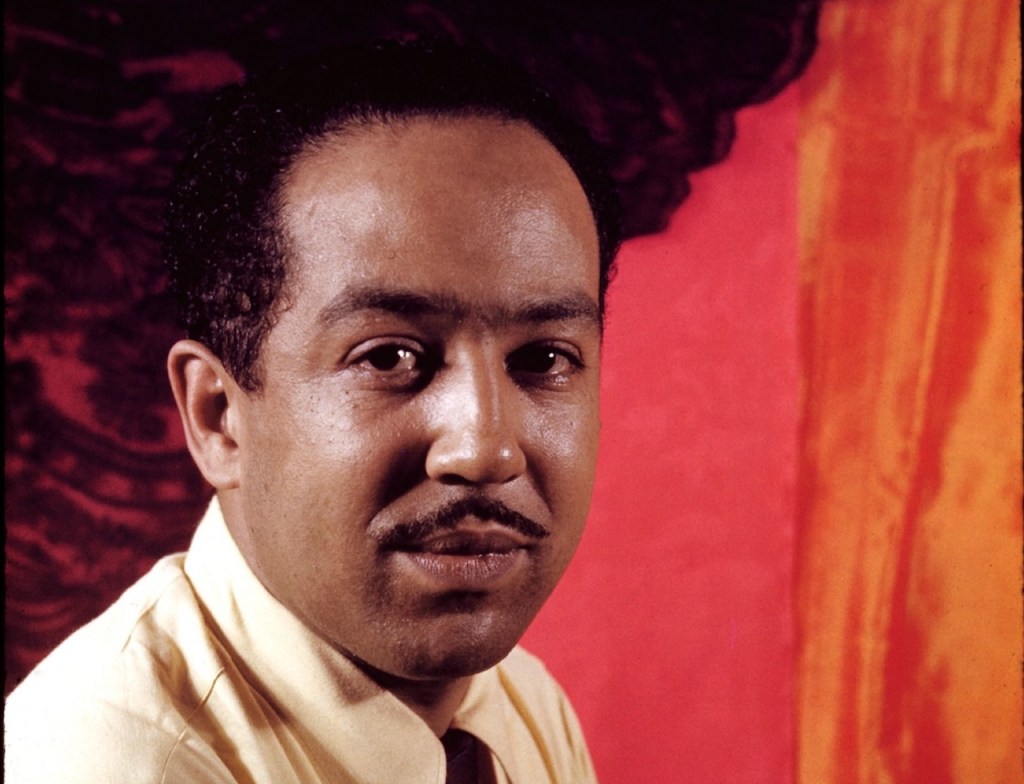
    Langston Hughes - https://www.newyorker.com/magazine/2015/02/23/sojourner - Photograph by Carl Van Vechten / Carl Van Vechten Trust / Beinecke Library, Yale - 1280
    Image: Langston Hughes – Photograph by Carl Van Vechten / Carl Van Vechten Trust / Beinecke Library, Yale – 1280

    Langston Hughes’ “Night Funeral in Harlem”

    The speaker in Langston Hughes’ “Night Funeral in Harlem” wonders how this poor dead boy’s friends and relatives are able to afford such a lavish funeral.

    Introduction and Text of “Night Funeral in Harlem”

    Langston Hughes’ “Night Funeral in Harlem” is an example of the poet’s affinity for the blues. He employs a form that includes the blues flavor, allowing the reader to hear a mournful voice that implies issues that he never actually discusses.

    The speaker’s questions are more than mere decoration, and their implications attempt to make a political and sociological, as well as religious, evaluation. The poem’s form features an inconsistent conglomeration of rimed stanzas, with varied refrains.

    Night Funeral in Harlem

         Night funeral
         In Harlem:

         Where did they get
         Them two fine cars?

    Insurance man, he did not pay—
    His insurance lapsed the other day—
    Yet they got a satin box
    for his head to lay.

         Night funeral
         In Harlem:

         Who was it sent
         That wreath of flowers?

    Them flowers came
    from that poor boy’s friends—
    They’ll want flowers, too,
    When they meet their ends.

         Night funeral
         in Harlem:

         Who preached that
         Black boy to his grave?

    Old preacher man
    Preached that boy away—
    Charged Five Dollars
    His girl friend had to pay.

         Night funeral
         In Harlem:

    When it was all over
    And the lid shut on his head
    and the organ had done played
    and the last prayers been said
    and six pallbearers
    Carried him out for dead
    And off down Lenox Avenue
    That long black hearse done sped,
         The street light
         At his corner
         Shined just like a tear—
    That boy that they was mournin’
    Was so dear, so dear
    To them folks that brought the flowers,
    To that girl who paid the preacher man—
    It was all their tears that made
         That poor boy’s
         Funeral grand.

         Night funeral
         In Harlem.

    Reading:  

    Commentary on “Night Funeral in Harlem”

    The speaker in Langston Hughes’ “Night Funeral in Harlem” jabs insults at these mourners as he wonders how this poor dead boy’s friends and relatives are able to afford such a lavish funeral.

    First Movement:  An Critical Observer

         Night funeral
         In Harlem:

         Where did they get
         Them two fine cars?

    Insurance man, he did not pay—
    His insurance lapsed the other day—
    Yet they got a satin box
    for his head to lay.

         Night funeral
         In Harlem:

         Who was it sent
         That wreath of flowers?

    The speaker begins with his refrain that features his subject, “Night funeral / In Harlem.” He then shoots in his first question that is ultimately insulting to the mourners. The speaker wonders, “Where did they get / Them two fine cars?” 

    The speaker’s dialect is intended to reveal him as an intimate with the mourners, yet his questions actually separate him from them. If he is one of them, why does he have to ask where the cars come from? His concern, therefore, comes across as disingenuous.

    The speaker then introduces the “insurance man,” who might be the reason for the “fine cars,” but no, the poor boy’s “insurance lapsed the other day.” Again, the speaker’s knowledge of the particulars of the situation clash; he knows the people well enough to know that their insurance lapsed, but yet not well enough to know who, in fact, is paying for the lavish funeral. 

    And then the speaker offers a further bit of incongruity that these poor folks have managed to supply a “satin box / for [the deceased’s] head to lay.” The speaker offers these incongruities but never manages to make clear his purpose.

    Second Movement:  A Question of Integrity

    Them flowers came
    from that poor boy’s friends—
    They’ll want flowers, too,
    When they meet their ends.

         Night funeral
         in Harlem:

         Who preached that
         Black boy to his grave?

    The speaker again introduces his next stanza with a variation on the opening refrain: “Night funeral / In Harlem: / / Who was it sent / That wreath of flowers?” Again, the speaker reveals that his distance from the mourners is so great that he has to ask about the flowers. But then he admits that he does actually know that the flowers came from “that poor boy’s friends.”

    But the speaker then insults those friends by accusing them of sending them only because “They’ll want flowers, too, / When they meet their ends,” and also implying that he wonders how those friends paid for the flowers.

    Third Movement:  Is Race Really the Issue?

    Night funeral
      Night funeral
         in Harlem:

         Who preached that
         Black boy to his grave?

    Old preacher man
    Preached that boy away—
    Charged Five Dollars
    His girl friend had to pay.

    The third stanza’s opening varied refrain asks, “Who preached that / Black boy to his grave?” He reveals for the first time that the deceased is black but does not clarify why he should offer the race of the dead at this point.  

    The had been implying that the deceased was black all along by using stereotypical Black English and placing the funeral in Harlem, which was heavily populated by African Americans at the time that the poet was writing.

    The preacher is portrayed then as a money-grubber, charging five dollars to “preach[ ] that boy away,” and the poor boy’s girlfriend had to pay the preacher the five dollar charge.  Again, how it is that the speaker knows the girlfriend paid the preacher, but that he does not know who paid for two limousines, casket, flowers?

    Fourth Movement:   Despite the Insults

        Night funeral
         In Harlem:

    When it was all over
    And the lid shut on his head
    and the organ had done played
    and the last prayers been said
    and six pallbearers
    Carried him out for dead
    And off down Lenox Avenue
    That long black hearse done sped,
         The street light
         At his corner
         Shined just like a tear—
    That boy that they was mournin’
    Was so dear, so dear
    To them folks that brought the flowers,
    To that girl who paid the preacher man—
    It was all their tears that made
         That poor boy’s
         Funeral grand.

         Night funeral
         In Harlem.

    The final stanza is a rather flabby summation of what has happened during this Harlem funeral at night. The opening refrain merely reiterates the subject, “Night funeral / In Harlem.”

    Gone is the additional commentary as appeared in the three opening refrains, but the speaker does leave the affair on a compassionate note; at least he can admit, “It was all their tears that made / That poor boy’s / Funeral grand.”  

    Despite his probing, insulting questions, he finally admits that the importance of the event is that it shows the love the mourners had for their dearly departed.

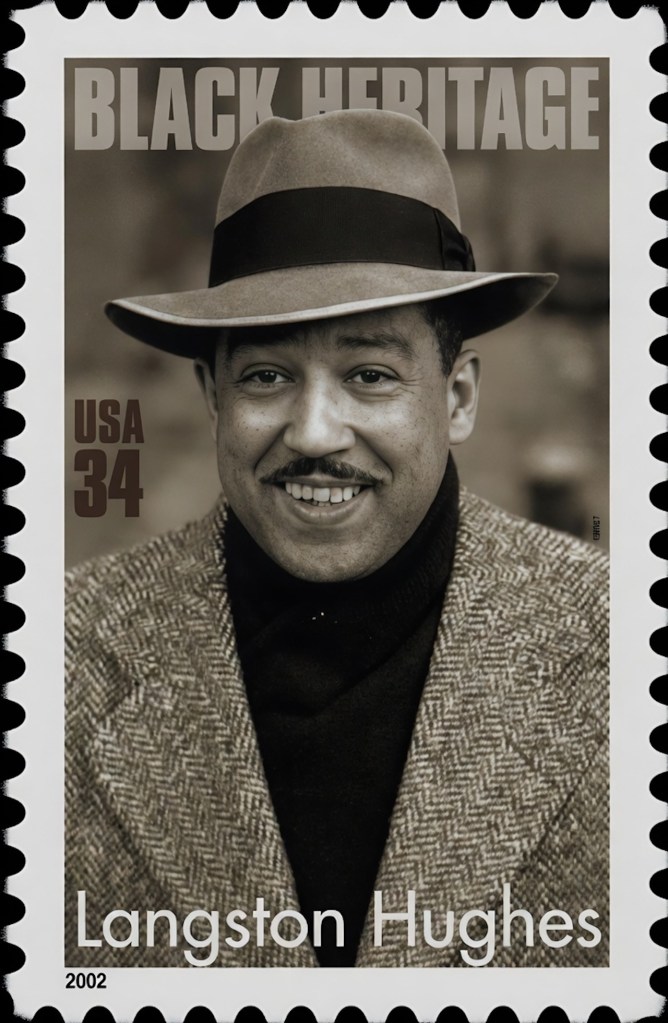
    Image:  Langston Hughes - Commemorative Stamp  http://usstampgallery.com/view.php?id=0787693b268f0944d0264088b300c02721d73814&Langston_Hughes&st=Langston%20Hughes&ss=&t=&s=8&syear=&eyear=  US Stamp Gallery
    Image: Langston Hughes – Commemorative Stamp  – US Stamp Gallery
  • James Weldon Johnson’s “O Black and Unknown Bards”

    Image: James Weldon Johnson - https://www.green-wood.com/event/the-autobiography-of-an-ex-colored-man-110-years-later/
    Image: James Weldon Johnson

    James Weldon Johnson’s “O Black and Unknown Bards”

    Johnson’s speaker dramatizes his amazement that slaves could have produced a music that would uplift of a entire race from debasement to spiritual attunement.

    Introduction and Text of Poem, “O Black and Unknown Bards”

    The speaker in James Weldon Johnson’s “O Black and Unknown Bards” celebrates the important spiritual achievement that mere slaves, oft thought the lowest rung on the ladder of society, managed to leave for future generations.  

    The poet James Weldon Johnson has well understood that through their spiritual singing to the Divine, these slaves were striving to unite their souls with God—the only true way to overcome all adversity.

    O Black and Unknown Bards

    O black and unknown bards of long ago,
    How came your lips to touch the sacred fire?
    How, in your darkness, did you come to know
    The power and beauty of the minstrel’s lyre?
    Who first from midst his bonds lifted his eyes?
    Who first from out the still watch, lone and long,
    Feeling the ancient faith of prophets rise
    Within his dark-kept soul, burst into song? 

    Heart of what slave poured out such melody
    As “Steal away to Jesus”? On its strains
    His spirit must have nightly floated free,
    Though still about his hands he felt his chains.
    Who heard great “Jordan roll”? Whose starward eye
    Saw chariot “swing low”? And who was he
    That breathed that comforting, melodic sigh,
    “Nobody knows de trouble I see”? 

    What merely living clod, what captive thing,
    Could up toward God through all its darkness grope,
    And find within its deadened heart to sing
    These songs of sorrow, love and faith, and hope?
    How did it catch that subtle undertone,
    That note in music heard not with the ears?
    How sound the elusive reed so seldom blown,
    Which stirs the soul or melts the heart to tears. 

    Not that great German master in his dream
    Of harmonies that thundered amongst the stars
    At the creation, ever heard a theme
    Nobler than “Go down, Moses.” Mark its bars
    How like a mighty trumpet-call they stir
    The blood. Such are the notes that men have sung
    Going to valorous deeds; such tones there were
    That helped make history when Time was young. 

    There is a wide, wide wonder in it all,
    That from degraded rest and servile toil
    The fiery spirit of the seer should call
    These simple children of the sun and soil.
    O black slave singers, gone, forgot, unfamed,
    You—you alone, of all the long, long line
    Of those who’ve sung untaught, unknown, unnamed,
    Have stretched out upward, seeking the divine. 

    You sang not deeds of heroes or of kings;
    No chant of bloody war, no exulting pean
    Of arms-won triumphs; but your humble strings
    You touched in chord with music empyrean.
    You sang far better than you knew; the songs
    That for your listeners’ hungry hearts sufficed
    Still live,—but more than this to you belongs:
    You sang a race from wood and stone to Christ.

    Commentary on “O Black and Unknown Bards”

    James Weldon Johnson’s speaker is dramatizing his amazed fascination that slaves could have created a music that would uplift of a downtrodden race from debasement to spiritual attunement.

    First Stanza: The Genius of Slaves

    O black and unknown bards of long ago,
    How came your lips to touch the sacred fire?
    How, in your darkness, did you come to know
    The power and beauty of the minstrel’s lyre?
    Who first from midst his bonds lifted his eyes?
    Who first from out the still watch, lone and long,
    Feeling the ancient faith of prophets rise
    Within his dark-kept soul, burst into song? 

    The speaker wonders how black slaves had the ability to fashion those beautiful, soulfilled songs.  These songs have revealed that these musicians were in tune with a heavenly realm, not of this earth.  They somehow came to understand and create with, “The power and beauty f the minstrel’s lyre.”  

    Although his questions cannot be answered, as they are essentially rhetorical in nature, he uses them to state quite clearly that these individuals were in tune with part of themselves that many fail to realize even exists. 

    The body may be whipped and suffer, but the soul cannot be beaten, nor can it suffer.  The uplifting nature of these wonderful soulful hymns demonstrates the power of the spirit over the body.

    The speaker then queries, “Who first from midst the bonds lifted his eye?”  He knows that instead of lifting the eye, the natural, common tendency is to pity oneself and continue to look downward, become hate filled and angry at one’s fellow humans for their ignorance.

    The speaker is aware that the beautiful songs unveil a spiritual level of being that can only be cherished and treasured for their qualities.  The speaker understands that instead of self-pity and angst, these soul singers were looking to God with a faith that might seem to lost.

    Second Stanza:  A Free Ranging Spirit

    Heart of what slave poured out such melody
    As “Steal away to Jesus”? On its strains
    His spirit must have nightly floated free,
    Though still about his hands he felt his chains.
    Who heard great “Jordan roll”? Whose starward eye
    Saw chariot “swing low”? And who was he
    That breathed that comforting, melodic sigh,
    “Nobody knows de trouble I see”? 

    In the second stanza, the speaker refers to four widely sung spiritual: “Steal Away to Jesus,” “Roll, Jordan, Roll,” and “Swing Low, Sweet Chariot,” and “Nobody Knows the Trouble I’ve Seen,” and he again wonders what slave could have created such an astounding tune. 

    The speaker then guesses that whoever the composer was, “His spirit must have nightly floated free.” The capacity for musical freedom as he continued to suffer his body bound in chains amazes the speaker, who becomes convinced that only a strong, abiding faith could have led the songwriter to such brilliance. 

    The speaker then alludes to the well-known spiritual, “Nobody knows de trouble I see,” as he asserts that the composer of this hymn felt the comforting, melodic sigh deep in his eing. The speaker, through his musing and questioning, is celebrating the wonderfully inspirational tone of these famous hymns. 

    Third Stanza:  The Mystery of Moving in Chains

    What merely living clod, what captive thing,
    Could up toward God through all its darkness grope,
    And find within its deadened heart to sing
    These songs of sorrow, love and faith, and hope?
    How did it catch that subtle undertone,
    That note in music heard not with the ears?
    How sound the elusive reed so seldom blown,
    Which stirs the soul or melts the heart to tears. 

    The speaker reports with his following question that those slave/hymn writers were considered mere property: “What merely living clod, what captive thing, / Could toward God through all it darkness grope . . . ?”

    The question suggests that those slaves were considered little more than mounds of unconscious clay, as they were required to function as the property of other men. 

    In the face of such degradation, these singer/songwriters managed to compose their lyrics that sing eternally Godward.  The divinity of the words cannot be missed by the perceptive observer as James Weldon Johnson was. 

    The speaker wonders how these sufferers with likely “deadened hearts,” managed to produce songs heard “not with the ears.”  He wonders how such suffering souls could have, “sound[ed] the elusive reed so seldom blown.”  He is aware that their sound was so majestic that “melts the heart.”

    Fourth Stanza:  Marvelous Spiritual That Helped Write History

    Not that great German master in his dream
    Of harmonies that thundered amongst the stars
    At the creation, ever heard a theme
    Nobler than “Go down, Moses.” Mark its bars
    How like a mighty trumpet-call they stir
    The blood. Such are the notes that men have sung
    Going to valorous deeds; such tones there were
    That helped make history when Time was young. 

    The speaker avers that is not even likely the great German composer, no doubt referring to Mozart, could have created a song, “Nobler than ‘Go down, Moses’.” He notes that its “bars / How like a mighty trumpet call they stir / The blood.” 

    The speaker compares those notes to the songs that military men have employed as they perform heroic valorous deeds. He states that the music of these marvelous spirituals helped write history. 

    Fifth Stanza: The Fiery Spirit of Servitude

    There is a wide, wide wonder in it all,
    That from degraded rest and servile toil
    The fiery spirit of the seer should call
    These simple children of the sun and soil.
    O black slave singers, gone, forgot, unfamed,
    You—you alone, of all the long, long line
    Of those who’ve sung untaught, unknown, unnamed,
    Have stretched out upward, seeking the divine. 

    The speaker again stresses the strange fact that those so depressed with the servitude of toil were able to display their fiery spirit, these simple children, these black slaves, who are gone, forgotten, unknown, yet they were capable  of “stretch[ing ] out upward, seeking the divine.” 

    They did not allow their souls to become degraded by seeking to acquire only physical comfort; these glorious forbearers looked Godward and acquired a measure of immortality that even the more well-known composers will likely not soon know. 

    Sixth Stanza: Slave Singer and the Blissful Reality of Spirit

    You sang not deeds of heroes or of kings;
    No chant of bloody war, no exulting pean
    Of arms-won triumphs; but your humble strings
    You touched in chord with music empyrean.
    You sang far better than you knew; the songs
    That for your listeners’ hungry hearts sufficed
    Still live,—but more than this to you belongs:
    You sang a race from wood and stone to Christ.

    Finally, the speaker notes that these slave singers did not compose lays about the deeds of kings and cultural heroes. They did not sing for the purpose glorifying battle.  They did not offer “exulting pean.” But they did “touch[ ] in chord with music empyrean.” Yet, they were not aware that they “sang far better than [they] knew.”

    Those slave/singers created hymns that continue to live on. Their musical creations were so vital that they “sang a race from wood and stone to Christ.” Their spiritual songs have lifted their fellows and generations to come from mere physical existence to the blissful reality of spirit.

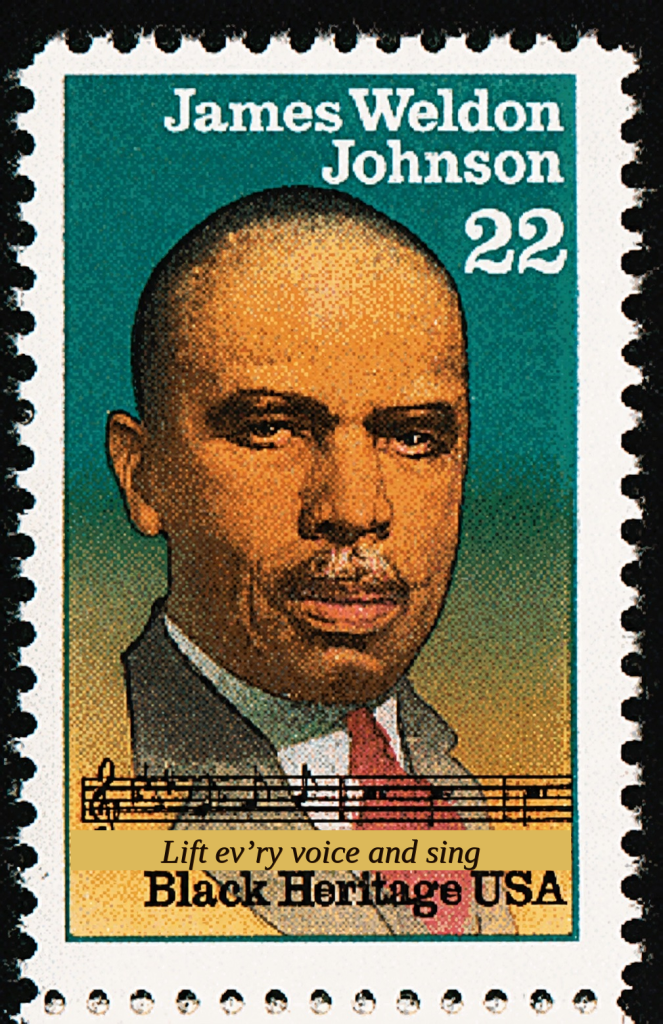
    Image: James Weldon Johnson - Commemorative Stamp - http://usstampgallery.com/view.php?id=e331c006856fe114a9ec83472d926981f48b72ec
    Image: James Weldon Johnson – Commemorative Stamp
  • James Weldon Johnson’s “Mother Night”

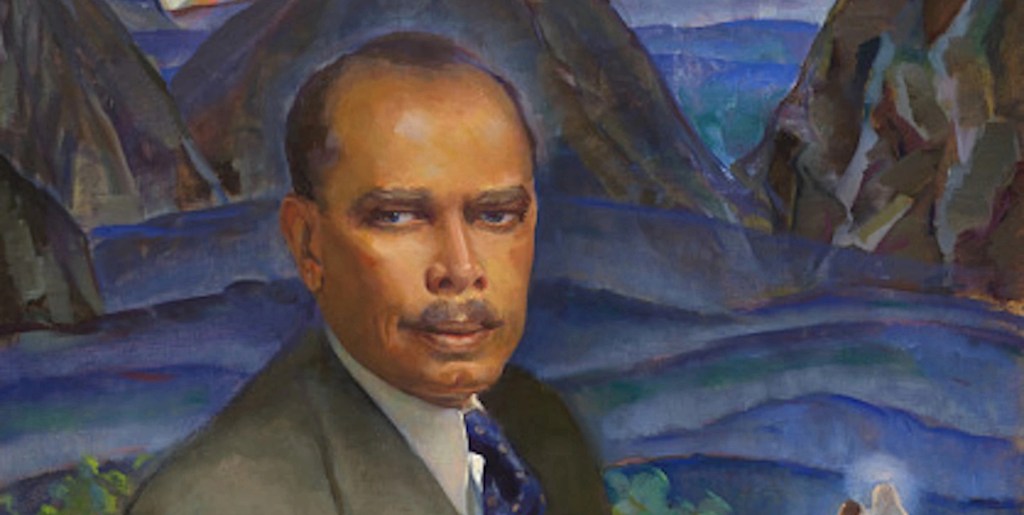
    Image: James Weldon Johnson - Portrait by Laura Wheeler Waring https://npg.si.edu/object/npg_NPG.67.40
    Image: James Weldon Johnson – Portrait by Laura Wheeler Waring

    James Weldon Johnson’s “Mother Night”

    The speaker in Johnson’s sonnet, “Mother Night,” likens his own existence and protection to that of the planets—all are created and protected by the same Divine Entity.  Thus his soul remains a spark from the Original Divine Flame.

    Introduction with Text of “Mother Night”

    James Weldon Johnson’s “Mother Night,” a Petrarchan (or Italian) sonnet, metaphorically dramatizes night as the calm union of the soul with the Oversoul or the individual self with Divine Self.

    The speaker, influenced by Eastern as well as Christian philosophical tenets, draws a parallel between the conflict of day and night in the cosmos and his own struggle with the pairs of opposites in his earthly sojourn.   This sonnet’s form offers polished Petrarchan rime-scheme:  ABBAABBA in the octave, and CDECDE in the sestet.

    Mother Night

    Eternities before the first-born day,
    Or ere the first sun fledged his wings of flame,
    Calm Night, the everlasting and the same,
    A brooding mother over chaos lay.
    And whirling suns shall blaze and then decay,
    Shall run their fiery courses and then claim
    The haven of the darkness whence they came;
    Back to Nirvanic peace shall grope their way. 

    So when my feeble sun of life burns out,
    And sounded is the hour for my long sleep,
    I shall, full weary of the feverish light,
    Welcome the darkness without fear or doubt,
    And heavy-lidded, I shall softly creep
    Into the quiet bosom of the Night.

    Commentary on “Mother Night”

    All creation is protected by its Creator, Who performs in various guises somewhat like a mother bird, who protects her progeny.  Nighttime is the time for rest, peaceful contemplation, and retreat from the hustle and bustle of day time activities.

    Thus, nighttime may be perceived as a protecting entity that offers solace and comfort to those in need and those who wish for such qualities in their lives.

    First Quatrain:  Existence Was Brooding before the First Created Day

    Eternities before the first-born day,
    Or ere the first sun fledged his wings of flame,
    Calm Night, the everlasting and the same,
    A brooding mother over chaos lay.

    Like a brooding mother, that is, a mother bird who is sitting on her brood of eggs and then who continues to protect and keep them warm as baby birds, “Calm Night” kept watch over the unmanifested entity until the first-born day, before the first planets were created and hurled into activity: “ere the first sun fledged his wings of flame.” 

    The mature planet of the sun is like a bird that is now flying off on its own, after having been tenderly nurtured by its mother.

    Mother Night tenderly nurtured the growing cosmos that ultimately resulted in planets and people. Johnson’s metaphoric Night represents the non-vibratory realm of reality where nothing is manifested, and only the mind of God exists in that vibrationless realm.

    There is no creation only a peaceful possibility, a potential. Until God chooses to create beings to populate His cosmos, He simply broods like a mother over chaos. 

    Here the term chaos does not refer to our modern usage of confusion and disorder but to infinite formlessness. The term originates from the Greek Khaos, indicating a dark void from which the gods originated.

    Second Quatrain:  The Projection of Light as It Creates the Cosmos

    And whirling suns shall blaze and then decay,
    Shall run their fiery courses and then claim
    The haven of the darkness whence they came;
    Back to Nirvanic peace shall grope their way. 

    The second quatrain describes the plight of whirling suns as they “blaze and then decay.” Those planets of fire will eventually burn out and after they do, they will return “[b]ack to Nirvanic peace.” 

    The speaker employs the term Nirvanic, adjectival form for “Nirvana,” the Buddhist term for God-union, which is “Samadhi” in  Hinduism, “Salvation” in Christianity, and “Fana” in Sufism, the mystical branch of Islam.

    The speaker cleverly plays by punning “whirling suns,” whereas sun puns son. With God as Mother Night, Her suns (sons) will “run their fiery courses” (live their passionate lives) and then recede back into the arms of the brooding mother or God. 

    First Tercet:  The Individual Self as It Careens Toward Oblivion

    So when my feeble sun of life burns out,
    And sounded is the hour for my long sleep,
    I shall, full weary of the feverish light,

    The sestet then shifts from the cosmos to the speaker himself, a son of the night mother. The speaker vows that he will react to his death a certain way, but he does not clarify that way yet, but merely sets up the conditions for his final claim. 

    As his life comes to an end, as he knows that it “is the hour for [his] long sleep,” he will be fully aware that his life is ebbing.

    Second Tercet:  Faith That Leads the Faithful toward Their True Home

    Welcome the darkness without fear or doubt,
    And heavy-lidded, I shall softly creep
    Into the quiet bosom of the Night.

    And the speaker will “[w]elcome the darkness without fear or doubt.” His strong faith and intuition allow him to realize that his soul is going home. 

    This speaker has mused long and hard upon the profundities that puzzle every thinking brain.  He has contemplated what science has discovered about the nature of the created Cosmos.

    The speaker has likewise compared the knowledge  of scientists to that of the tenets of religion and philosophy.  And the result of his in depth study now allows him to formulate a pathway to Divine Reality.  

    This prescient speaker has come to understand that his own soul is simply a spark of the Divine Flame, Who has fashioned out of chaos a marvelous entity of joy, peace, hope, and love.

    This speaker’s eyelids may droop, but his soul is ever ensconced in the omnipresent protection of the beautiful mother, the Mother Night—who parallels the Blessèd Divine Reality—who will throughout eternity continue to brood over and fiercely guide and guard her beloved son.  

  • Awaken In Me Divine Joy

    Image:  Created by Grok inspired by the poem/chant
    Image: Created by Grok inspired by the poem/chant

    Awaken In Me Divine Joy

    —after “O Thou King of the Infinite”

    Divine Belovèd,
    Awaken in me that joy—
    Bright and sustaining joy

    That comes only in union
    With Thee, O Belovèd Divine,
    Awaken in me that joy!

  • James Weldon Johnson’s “Lift Ev’ry Voice and Sing”

    Image: James Weldon Johnson - Portrait by Laura Wheeler Waring https://npg.si.edu/object/npg_NPG.67.40
    Image: James Weldon Johnson – Portrait by Laura Wheeler Waring

    James Weldon Johnson’s “Lift Ev’ry Voice and Sing”

    James Weldon Johnson penned the poem “Lift Ev’ry Voice and Sing” in 1900 to celebrate the birthday anniversary of the great emancipator, President Abraham Lincoln.

    Introduction and Text of “Lift Ev’ry Voice and Sing”

    After James Weldon Johnson wrote the poem “Lift Ev’ry Voice and Sing” in 1900 to celebrate the birthday anniversary of the great emancipator, President Abraham Lincoln, his brother John Rosamond Johnson composed the musical melody for the poem.

    The song was later entered into the United States Congressional Record, and in 1919, the National Association for Advancement of Colored People (NAACP) selected the song to serve as the “Negro National Hymn (Anthem)”—also referred to as the “Black National Anthem.”   The NAACP employed the song as a cry for unity during the civil rights struggles of the 1950s and 1960s.

    The poem shares a common theme with the American National Anthem, “The Star Spangled Banner”; both works celebrate and offer gratitude to the Divine Belovèd (God) for the rewards of freedom and individual liberty.  

    Johnson’s poem is especially significant for the black experience, including liberation from slavery and the subsequent struggle against the Black Codes and Jim Crow laws that the Democratic Party continued to enforce to foster segregation and denigration of the former slaves and their descendants after the American Civil War (1861–1865).

    Lift Ev’ry Voice and Sing

    Lift every voice and sing,
    Till earth and heaven ring,
    Ring with the harmonies of Liberty;
    Let our rejoicing rise
    High as the list’ning skies,
    Let it resound loud as the rolling sea.
    Sing a song full of the faith that the dark past has taught us,
    Sing a song full of the hope that the present has brought us;
    Facing the rising sun of our new day begun,
    Let us march on till victory is won.

    Stony the road we trod,
    Bitter the chast’ning rod,
    Felt in the days when hope unborn had died;
    Yet with a steady beat,
    Have not our weary feet
    Come to the place for which our fathers sighed?
    We have come over a way that with tears has been watered.
    We have come, treading our path through the blood of the slaughtered,
    Out from the gloomy past,
    Till now we stand at last
    Where the white gleam of our bright star is cast.

    God of our weary years,
    God of our silent tears,
    Thou who hast brought us thus far on the way;
    Thou who hast by Thy might,
    Led us into the light,
    Keep us forever in the path, we pray.
    Lest our feet stray from the places, our God, where we met Thee,
    Lest our hearts, drunk with the wine of the world, we forget Thee;
    Shadowed beneath Thy hand,
    May we forever stand,
    True to our God,
    True to our native land.

    Reading by Phylicia Rashad 

    Commentary on “Lift Ev’ry Voice and Sing”

    James Weldon Johnson’s “Lift Ev’ry Voice and Sing,” also known as the Negro National Anthem and the Negro National Hymn, was sung publicly for the first time on February 2, 1900, by a choir of 500 children at the Stanton School in Jacksonville, Florida.

    Johnson was serving as principal of the school at the time, and the occasion was a celebration of the birthday anniversary of President Abraham Lincoln.

    First Stanza: Sing Joyfully, Loudly with Determination

    Lift every voice and sing,
    Till earth and heaven ring,
    Ring with the harmonies of Liberty;
    Let our rejoicing rise
    High as the list’ning skies,
    Let it resound loud as the rolling sea.
    Sing a song full of the faith that the dark past has taught us,
    Sing a song full of the hope that the present has brought us;
    Facing the rising sun of our new day begun,
    Let us march on till victory is won.

    The speaker begins by enjoining his listeners to sing joyfully and loudly in order to raise their voices to the Heavens.  Such thankful voices should spread throughout the seascape and sky.  The joy of singing about freedom can become infectious, as it uprights the minds and hearts of the downtrodden.

    The singing must be filled with the joy and faith that these people have been taught in the past, even during times that were dark with many shames.  But that singing must also ring out with the hope they must foster as they look to the present and future for better times.

    The speaker/singer encourages his hearers/listeners to continue their struggle until they meet with victory over oppression.  He insists that victory is not the final reward, but victory for freedom will demand constant vigilance, eternally watching and fighting to maintain that precious commodity. 

    The human race in all its various hues and shades has learned nothing, if not that there is never a guarantee of freedom without effort.  Keeping that emphasis on constant effort must remain part of every generation’s thinking and behavior.

    There are always groups afoot, conspiring to take the freedom and property of others.  Lest defeat be snatched from the jaws of victory, each human being must remain watchful to protect their hard-won freedoms.

    As the third American president, Thomas Jefferson, averred in his 1787 letter to the son-in-law of John Adams, William Stephens Smith:

    . . . what country can preserve it’s liberties if their rulers are not warned from time to time that their people preserve the spirit of resistance? Let them take arms. . . .  The tree of liberty must be refreshed from time to time with the blood of patriots and tyrants.

    While celebrating the joy of great accomplishments, it is often prudent to acknowledge that there is no such thing as heaven on earth.  Perfection must be left for heaven, while life on earth will always entail certain risks and require vigilance.

    Second Stanza: Remaining Undeterred by Tears and Death

    Stony the road we trod,
    Bitter the chast’ning rod,
    Felt in the days when hope unborn had died;
    Yet with a steady beat,
    Have not our weary feet
    Come to the place for which our fathers sighed?
    We have come over a way that with tears has been watered.
    We have come, treading our path through the blood of the slaughtered,
    Out from the gloomy past,
    Till now we stand at last
    Where the white gleam of our bright star is cast.

    The speaker reminds his listeners of the difficulties they have faced.  The road has been “stony”—not impossible to travel but not at all easy.  And he does not anticipate the travel will become any easier, especially without the proper attitudes and behavior.

    Their struggles made having hope a weary task, but through unwavering courage and much hard work, they know they have gained certain goals and have the ability to hold on to them; thus, they must celebrate and be thankful for all the strides forward that they have achieved.

    They have continued their march, undeterred by tears and even death.  They have traveled on despite the blood shed, the gloom, and the often dashed hopes and dreams.    

    They now can see that they stand in the much desired light of both hope and faith.  That faith gleams like a “bright star” and casts light on all those who strive for it.  

    They can finally visualize and realize that their struggles have resulted from faith, hope, and have resulted in a certain measure of success in the achievement of freedom.

    Third Stanza: Prayer, Devotion, and Gratitude

    God of our weary years,
    God of our silent tears,
    Thou who hast brought us thus far on the way;
    Thou who hast by Thy might,
    Led us into the light,
    Keep us forever in the path, we pray.
    Lest our feet stray from the places, our God, where we met Thee,
    Lest our hearts, drunk with the wine of the world, we forget Thee;
    Shadowed beneath Thy hand,
    May we forever stand,
    True to our God,
    True to our native land.

    In the  third and final movement, the speaker offers a prayer of gratitude to the Divine Reality (God).  The speaker/singer recognizes that the Creator (God as Father) has always guided them as they have been met with struggles for freedom.  They have come through all the “weary years with silent tears.”  

    The speaker/singer acknowledges that with the love and guidance of the Divine Reality (God), they have been led into the light, and he fervently prays that they will continue down the bright path of righteousness that leads to and maintains individual liberty.

    The speaker asks of his Divine Creator that he have the ability to keep his feet from straying away from His mercy and guidance.  He knows that only his deep faith can continue to guide and guard him through the vicissitudes of life’s trials and tribulations.

    He also petitions the Divine Guide to assist them all and not allow them to descend into drunkenness with worldly affairs that would divert their attention away from the Only Reality.

    With this concluding, holy image—”Shadowed beneath [God’s] hand”—the speaker places his life, his trust, and his faith in the only Hand that matters.    This celebration in song offers a historical glimpse into the enduring qualities that always mattered most in achieving improvements in the human condition.

    As all hymns turn hearts and minds Godward, this important song remains a necessary part of American history, uplifting the spiritual stature of all who experience the performance of its sentiment.

    Rendered in song by the Southern Sons 

    Image:  James Weldon Johnson - Commemorative Stamp - http://usstampgallery.com/view.php?id=e331c006856fe114a9ec83472d926981f48b72ec
    Image: James Weldon Johnson – Commemorative Stamp
  • Emily Dickinson’s “Once more, my now bewildered Dove”

    Image: Emily Dickinson - Amherst College - Daguerrotype of the poet at age 17, circa 1847 - likely the only authentic, extant likeness of the poet
    Image: Emily Dickinson – Amherst College – Daguerrotype of the poet at age 17, circa 1847 – likely the only authentic, extant likeness of the poet

    Emily Dickinson’s “Once more, my now bewildered Dove”

    Emily Dickinson’s “Once more, my now bewildered Dove” dramatizes the soul’s anxious search for spiritual certainty while maintaining courageous hope amid uncertainty and isolation.

    Introduction and Text of “Once more, my now bewildered Dove”

    Emily Dickinson’s “Once more, my now bewildered Dove” employs a minimalist two-stanza structure to portray the soul’s repeated attempts to discover assurance in a troubled world. The speaker draws upon the biblical story of Noah’s dove to symbolize the restless human heart seeking divine confirmation and spiritual refuge. 

    As Paramahansa Yogananda taught, “The nature of Spirit is joy; and the nature of your soul is joy.” The speaker’s dove dramatizes that same longing for safe spiritual harbor within the storms of earthly uncertainty.  

    Once more, my now bewildered Dove

    Once more, my now bewildered Dove
    Bestirs her puzzled wings
    Once more her mistress, on the deep
    Her troubled question flings –

    Thrice to the floating casement
    The Patriarch’s bird returned,
    Courage! My brave Columba!
    There may yet be Land!

    Commentary on “Once more, my now bewildered Dove”

    Emily Dickinson’s “Once more, my now bewildered Dove” reveals the speaker’s spiritual resilience as she dramatizes the soul’s persistent search for divine certainty.

    First Stanza: Soul as Bird

    Once more, my now bewildered Dove
    Bestirs her puzzled wings
    Once more her mistress, on the deep
    Her troubled question flings –

    In the first stanza, the speaker immediately introduces the symbolic “Dove,” a creature long associated with peace, innocence, and spiritual aspiration. Yet this dove appears “bewildered,” suggesting that the soul has encountered confusion while navigating the uncertainties of earthly existence. 

    The speaker’s use of “Once more” emphasizes repetition, implying that this struggle between doubt and faith recurs continually throughout human life.  The dove’s “puzzled wings” suggest not only physical movement but also mental and spiritual agitation. 

    The soul desires elevation and freedom, yet uncertainty hampers its flight. In many Dickinson poems, the speaker dramatizes the soul as yearning to transcend earthly limitation, while simultaneously confronting the painful obscurity that veils spiritual truth from ordinary human perception.

    The phrase “her mistress” identifies the speaker herself as the guiding consciousness behind the dove. The soul and the human personality remain intertwined, even while the personality attempts to direct the soul toward revelation. 

    The speaker’s “troubled question” cast “on the deep” suggests prayer, meditation, or inward spiritual inquiry hurled into the mysterious abyss of existence.  The “deep” carries biblical and mystical implications. 

    The term evokes the vast floodwaters of Genesis while also symbolizing the unknowable dimensions of divine reality. As in many Dickinson riddles, the speaker refuses to explain fully the exact nature of the “question,” allowing readers to intuit the soul’s universal anxieties concerning meaning, permanence, and salvation.

    The speaker’s dramatization resembles concepts frequently emphasized by Paramahansa Yogananda, who taught that the human heart continually seeks reassurance of divine presence amid worldly confusion. 

    Paramahansa Yogananda explained,“The season of failure is the best time for sowing the seeds of success” from The Law of Success: Using the Power of Spirit to Create Health, Prosperity, and Happiness.  The dove’s repeated effort to take wing despite bewilderment reflects precisely such spiritual perseverance. 

    The speaker’s symbolism also recalls observations from my earlier Dickinson commentaries at Linda’s Literary Home regarding the poet’s tendency to dramatize the inner life through compressed metaphysical imagery. 

    Rather than offering abstract philosophical assertions, the speaker embodies spiritual tension through vivid symbolic action. The fluttering dove becomes the visible representation of invisible yearning.

    The stanza’s emotional force arises from the balance between uncertainty and persistence. Although the dove remains bewildered, she nevertheless “bestirs” her wings again. The speaker thus suggests that genuine spiritual seeking requires repeated effort despite the absence of immediate answers or comforting certainties.

    Second Stanza: Allusion of Searching

    Thrice to the floating casement
    The Patriarch’s bird returned,
    Courage! My brave Columba!
    There may yet be Land!

    In the second stanza, the speaker introduces a direct biblical allusion to Noah’s ark. The “Patriarch’s bird” refers to the dove Noah released repeatedly after the floodwaters had submerged the earth. By invoking this familiar narrative, the speaker expands her private spiritual anxiety into a universal drama of humanity searching for signs of divine mercy and renewed stability.

    The word “Thrice” carries symbolic significance, often suggesting spiritual completion or sacred persistence. Noah’s dove returned multiple times before finally discovering evidence of dry land. Likewise, the speaker implies that the soul may endure repeated disappointments before attaining spiritual assurance. The repeated return of the bird dramatizes patience rather than failure.

    The “floating casement” offers an especially striking image. The ark’s window becomes both a literal opening and a symbolic threshold between fear and hope. The dove repeatedly departs from temporary safety into uncertain vastness, only to return again.   Such movement reflects the soul’s oscillation between doubt and renewed aspiration.

    The speaker’s cry, “Courage! My brave Columba!,” introduces sudden tenderness and encouragement. “Columba,” the Latin word for dove, heightens the spiritual dignity of the bird while lending the poem a liturgical tone. At the same time, the term subtly echoes the name “Columbus,” invoking the great explorer who crossed unknown seas searching for a new world.

    That layered allusion enriches the poem’s central drama of spiritual searching. Like Columbus navigating dangerous and uncharted waters, the speaker’s symbolic dove ventures repeatedly into uncertainty, guided largely by intuition and hope rather than visible proof. The soul becomes both sacred dove and courageous explorer, willing to risk bewilderment in pursuit of discovery.

    The speaker addresses the soul compassionately, recognizing both its exhaustion and its bravery in continuing the search. The exclamation “Courage!” therefore functions not merely as comfort but as a rallying cry urging the soul onward despite repeated returns without final resolution. 

    Dickinson’s speaker suggests that spiritual discovery, like earthly exploration, demands perseverance through vast stretches of apparent emptiness before glimpsing the longed-for italics-emphasized “Land.”

    The concluding line, “There may yet be Land!” preserves uncertainty while simultaneously affirming hope. The speaker does not proclaim certainty that land exists; instead, she emphasizes the possibility of deliverance. Dickinson’s speakers often value the sustaining power of hope itself, even when ultimate knowledge remains inaccessible.

    The great Guru Yogananda frequently stressed that spiritual realization demands steadfastness amid periods of apparent silence or darkness. He taught that the devotee must continue seeking divine truth even when external evidence seems absent. The speaker’s encouragement to the “brave Columba” echoes that same spiritual endurance and refusal to surrender to despair.  

    The poem’s final affirmation remains intentionally restrained. The speaker avoids triumphant certainty and instead offers courageous possibility. Such restraint strengthens the poem’s spiritual realism, for authentic faith often survives not through guaranteed answers but through the willingness to continue searching despite bewilderment.

    Like many Dickinson lyrics, this compact poem transforms a brief symbolic scene into a profound musing on the soul’s inward pilgrimage. The dove’s repeated flight over uncertain waters becomes the enduring emblem of humanity’s determination to seek truth, peace, and divine refuge even while surrounded by mystery.

  • James Weldon Johnson’s “A Poet to His Baby Son”

    Image: James Weldon Johnson - https://www.green-wood.com/event/the-autobiography-of-an-ex-colored-man-110-years-later/
    Image: James Weldon Johnson

    James Weldon Johnson‘s “A Poet to His Baby Son”

    The poet James Weldon Johnson has created a speaker whose baby son gets a wild-eyed stare that can look “through the ceiling of the room, and beyond,” leading the father to suspect that he might have a budding poet to contend with.

    Introduction with Text of “A Poet to His Baby Son”

    James Weldon Johnson’s speaker in “A Poet to His Baby Son” offers a tongue-in-cheek complaint that his baby son might be contemplating becoming, like his father, a poet.

    A Poet to His Baby Son

    Tiny bit of humanity,
    Blessed with your mother’s face,  
    And cursed with your father’s mind.

    I say cursed with your father’s mind,
    Because you can lie so long and so quietly on your back,   
    Playing with the dimpled big toe of your left foot,   
    And looking away,
    Through the ceiling of the room, and beyond.
    Can it be that already you are thinking of being a poet?

    Why don’t you kick and howl,   
    And make the neighbors talk about   
    “That damned baby next door,”
    And make up your mind forthwith   
    To grow up and be a banker
    Or a politician or some other sort of go-getter   
    Or—?—whatever you decide upon,   
    Rid yourself of these incipient thoughts   
    About being a poet.

    For poets no longer are makers of songs,   
    Chanters of the gold and purple harvest,  
    Sayers of the glories of earth and sky,   
    Of the sweet pain of love
    And the keen joy of living;
    No longer dreamers of the essential dreams,   
    And interpreters of the eternal truth,   
    Through the eternal beauty.
    Poets these days are unfortunate fellows.   
    Baffled in trying to say old things in a new way   
    Or new things in an old language,   
    They talk abracadabra
    In an unknown tongue,
    Each one fashioning for himself
    A wordy world of shadow problems,
    And as a self-imagined Atlas,
    Struggling under it with puny legs and arms, 
    Groaning out incoherent complaints at his load.

    My son, this is no time nor place for a poet;   
    Grow up and join the big, busy crowd   
    That scrambles for what it thinks it wants   
    Out of this old world which is—as it is—
    And, probably, always will be.

    Take the advice of a father who knows:   
    You cannot begin too young   
    Not to be a poet.

    Commentary on “A Poet to His Baby Son”

    The speaker’s baby son gets a wild-eyed stare that seems so penetrating that it can look through things.  The speaker playfully then muses that the kid might be demonstrating qualities that could lead him to becoming a poet, like his father.  The speaker appears to be somewhat dismayed by that thought, for he is concerned about the current trend in poetry’s emphasis on non-poetic subjects.

    First Stanza:  A Distressing Possibility

    Tiny bit of humanity,
    Blessed with your mother’s face,  
    And cursed with your father’s mind.

    In the opening three-line stanza, the speaker is having a little talk with his infant son. He calls the baby boy a “[t]iny bit of humanity” and describes him as looking like his mother but thinking like his father. The speaker is happy with the first quality but distressed over the second.

    Second Stanza:  Poetry as a Curse

    I say cursed with your father’s mind,
    Because you can lie so long and so quietly on your back,   
    Playing with the dimpled big toe of your left foot,   
    And looking away,
    Through the ceiling of the room, and beyond.
    Can it be that already you are thinking of being a poet?

    The speaker is so distressed over the fact that the baby has his “father’s mind” that he calls the child “cursed” with that quality, repeating that lined in both the opening stanza and the second.

    The speaker then begins his exposition of the reason for thinking the baby  may be cursed. Before dropping the bombshell though, he relates that the baby can do baby things like lying quietly for extended periods on his little back, while playing with toes.  These are a little-baby activities that the speaker finds charming.

    But the speaker also senses a musing quality in the baby’s stare; the little one seems to be staring with such contemplation that he can see through the “ceiling” and “beyond.”  This searching stare suggest to the poet that his baby is contemplating becoming a poet when he grows up.

    Third Stanza:   Anything but Poetry!

    Why don’t you kick and howl,   
    And make the neighbors talk about   
    “That damned baby next door,”
    And make up your mind forthwith   
    To grow up and be a banker
    Or a politician or some other sort of go-getter   
    Or—?—whatever you decide upon,   
    Rid yourself of these incipient thoughts   
    About being a poet.

    The speaker then rhetorically queries his son, suggesting that he “kick and howl” and annoy the neighbors to get them to exclaim and swear because of the unwelcome noise.  Such behavior he suggests would ensure that his son might decide to be a enthusiastic individual and become some professional such as a “banker” or even a “politician.”

    The speaker insists that no matter what the kid does, he should never ever consider the notion of becoming a poet.  Because the father is a poet, he would know all of the disadvantages that profession can confer.

    Fourth Stanza:   The Modernist Bent

    For poets no longer are makers of songs,   
    Chanters of the gold and purple harvest,  
    Sayers of the glories of earth and sky,   
    Of the sweet pain of love
    And the keen joy of living;
    No longer dreamers of the essential dreams,   
    And interpreters of the eternal truth,   
    Through the eternal beauty.
    Poets these days are unfortunate fellows.   
    Baffled in trying to say old things in a new way   
    Or new things in an old language,   
    They talk abracadabra
    In an unknown tongue,
    Each one fashioning for himself
    A wordy world of shadow problems,
    And as a self-imagined Atlas,
    Struggling under it with puny legs and arms, 
    Groaning out incoherent complaints at his load.

    In the longest stanza, the speaker details his reason for dissuading his son from becoming a poet. The poet/speaker is decrying the modernist bent of poets. 

    These modernists do not compose songs of beauty, such as those of “the gold and purple harvest.”  They avoid remarking and making any references to “the glories of earth and sky.”  These poets seem to avoid taking note of their environment.

    But worse still is that these modernist poets are no longer interested in exploring and dramatizing love with all of its joys and sorrows.  They no longer compose songs devoted to revealing the joy just living can offer.   They seem to have ceased dreaming about essential realities.    These new poets avoid interpreting”eternal truth / Through the eternal beauty.”

    Instead of all these endearing qualities that have infused and sustained poetry and poetry lovers for centuries, these new poets have become “unfortunate fellows.” They have become confused and display only befuddlement stammering out ” old things in a new way.”

    The poet describes the claptrap of modernist poetry:  They speak a kind of magician logic in a made-up language.  They are no longer individuals with self-determination.

    These modernists are fabricating a word-salad world of “shadow problems.”  They represent themselves as “a self-imagined Atlas” “with puny legs and arms.” They bitch and moan about their victimhood.

    Fifth Stanza:  Not a Good Place for Poets

    My son, this is no time nor place for a poet;   
    Grow up and join the big, busy crowd   
    That scrambles for what it thinks it wants   
    Out of this old world which is—as it is—
    And, probably, always will be.

    It is then for the reasons spelled out in stanza four that the poet proclaims that in the current environment and with unhealthy, nasty trend, it is simply not a good time nor place to become a poet.v

    He suggests to the infant that he grow up and join the genuine activity of trying to be successful in acquiring what the needs and want, trying to have actual achievements, instead of bemoaning the lie of predetermined failure.  The speaker asserts that this world will always be this same old world.  And this poet/speaker’s experience tells him that it is not currently a place for a poet.

    Sixth Stanza:  The Voice of Experience

    Take the advice of a father who knows:   
    You cannot begin too young   
    Not to be a poet.

    Finally, the poet/father/speaker admonishes the baby son to follow his warning because it is coming from “a father who knows.”  He then cleverly turns his phrasing: “You cannot begin too young / Not to be a poet.”

    The Trend of Victimology in Poetry

    This poem is playful, yet serious. The speaker is only musing on the possibility that his son is contemplating becoming a poet, but he uses the poem as a forum to express his dismay at the way poetry was becoming a cesspool of victimology and self-aggrandizement at the expense of truth and beauty.  This poet was living during the period of time that saw identity politics beginning to take hold of the arts.

    For my own take on art’s decay through post-modernism please visit, “Poetry and Politics under the Influence of Postmodernism.”

  • Emily Dickinson’s “I keep my pledge”

    Image: Emily Dickinson - Amherst College - Daguerrotype of the poet at age 17, circa 1847 - likely the only authentic, extant likeness of the poet
    Image: Emily Dickinson – Amherst College – Daguerrotype of the poet at age 17, circa 1847 – likely the only authentic, extant likeness of the poet

    Emily Dickinson’s “I keep my pledge”

    Emily Dickinson’s “I keep my pledge” dramatizes the speaker’s quiet certainty that life continues beyond death and returns again through the spirituality of nature’s eternal rhythms.

    Introduction and Text of “I keep my pledge”

    Emily Dickinson’s “I keep my pledge” offers a compact but profound musing on immortality, reincarnation, and the soul’s fidelity to divine law. The speaker fashions a little lyrical drama in which nature becomes witness to a sacred vow that transcends earthly death. 

    The poem’s short lines and compressed images intensify the mystical atmosphere as the speaker aligns herself with flowers, bees, and birds to affirm her continuing existence. As in many Dickinson poems, earthly imagery gestures toward a metaphysical reality beyond human sensory perception.

    I keep my pledge

    I keep my pledge.
    I was not called –
    Death did not notice me.
    I bring my Rose.
    I plight again,
    By every sainted Bee –
    By Daisy called from hillside –
    By Bobolink from lane
    Blossom and I –
    Her oath, and mine –
    Will surely come again.

    Commentary on “I keep my pledge”

    The speaker quietly celebrates the immortality of the soul and its inevitable return through metaphorical employment of nature’s recurring cycles.

    First Movement: Making a Vow

    I keep my pledge.
    I was not called –

    Death did not notice me.

    The speaker begins with a declaration of fidelity, insisting that she has remained true to a sacred promise. The claim “I keep my pledge” carries spiritual force because it implies an agreement extending beyond one earthly lifetime. 

    The speaker’s assertion that “Death did not notice me” diminishes death’s supposed authority and portrays the soul as untouched by the loss of the physical encasement.

    The speaker’s attitude recalls Paramahansa Yogananda’s teaching that “This body has come, and it will vanish; but the soul essence within it will never cease to exist.” 

    Dickinson’s speaker similarly refuses to grant death ultimate reality, treating it almost as a distracted figure unable to perceive the immortal essence moving silently beyond material limitation.

    Earlier commentaries on Dickinson’s poetry have often noted that her speakers transform ordinary experience into metaphysical revelation. Here again, the speaker presents death not as annihilation but merely as an interruption in outward form. 

    Her confidence resembles the assurance found in “There is another sky,” where the created spiritual world remains untouched by decay and change.

    Second Movement: Instruments of Faith

    I bring my Rose.
    I plight again,

    The speaker next introduces the “Rose,” a traditional emblem of spiritual beauty and eternal affection. She does not merely observe the flower; she “bring[s]” it, suggesting active participation in the ongoing renewal of life. The rose becomes an offering carried from one incarnation into another.

    The affirmation “I plight again” deepens the sense of recurring vows. To “plight” means to pledge or bind oneself faithfully, and the addition of “again” hints strongly at reincarnation. The soul continues renewing its sacred commitments across repeated cycles of existence.

    Paramahansa Yogananda frequently taught that the soul evolves “through many forms” until it realizes its unity with Spirit. The speaker’s language harmonizes with that spiritual concept, as though she recognizes herself participating in a divine continuity extending far beyond one mortal appearance.

    The rose also resembles the unfading flowers in “There is another sky,” where beauty remains untouched by frost or deterioration. Dickinson’s speakers repeatedly imagine blossoms as symbols of permanent spiritual reality rather than temporary earthly decoration. The flower’s endurance reflects the soul’s endurance.

    Third Movement: By Nature’s People

    By every sainted Bee –
    By Daisy called from hillside –
    By Bobolink from lane

    The speaker now invokes nature itself as witness to her vow. The “sainted Bee,” the daisy, and the bobolink all function as living participants in a sacred universe governed by continuity and renewal. The adjective “sainted” elevates the bee from ordinary insect to spiritual messenger.

    The bee traditionally symbolizes industry and immortality because it continually moves among flowers carrying life-giving pollen. The daisy rising from the hillside represents innocence and recurring seasonal rebirth, while the bobolink’s song fills the landscape with joyful vitality. Together, these natural images create a chorus affirming life’s perpetual return.

    Dickinson’s speakers often treat nature not as separate from humanity but as intimately allied with the soul’s destiny. In earlier Dickinson commentaries, nature frequently appears as a symbolic language through which eternity reveals itself. Here, every creature becomes testimony against death’s supposed permanence.

    Paramahansa Yogananda taught that divine consciousness pervades flowers, birds, and all living forms, declaring, “I am dreaming in the flowers, and I am singing in the birds.” The speaker’s imagery reflects that same intuition of unity between the human soul and the living world surrounding it.

    Fourth Movement: Reincarnation and Karma

    Blossom and I –
    Her oath, and mine –
    Will surely come again.

    In the final movement, the speaker joins herself directly to the “Blossom,” linking human destiny with nature’s recurring cycles. The flower and the speaker share one “oath,” implying that both participate in the same divine law of return and renewal. Spring follows winter just as the soul follows death with rebirth.

    The certainty of “Will surely come again” removes all doubt regarding continuation after physical departure. The speaker utters the line not as speculation but as spiritual knowledge. Her confidence transforms the brief lyric into a powerful affirmation of immortality.

    Paramahansa Yogananda explained that the soul repeatedly returns through reincarnation until it fully realizes its eternal nature. Dickinson’s speaker expresses a remarkably similar vision, perceiving existence as cyclical rather than terminal.

    As in “There is another sky,” the speaker ultimately creates a realm where permanence triumphs over decay. Flowers bloom again, birds sing again, and the soul itself “surely” returns. The little lyric therefore becomes both vow and revelation, affirming the eternal continuity of divine life.