Linda's Literary Home

Tag: poetry

  • Edgar Lee Masters’ “Ollie McGee”and “Fletcher McGee”

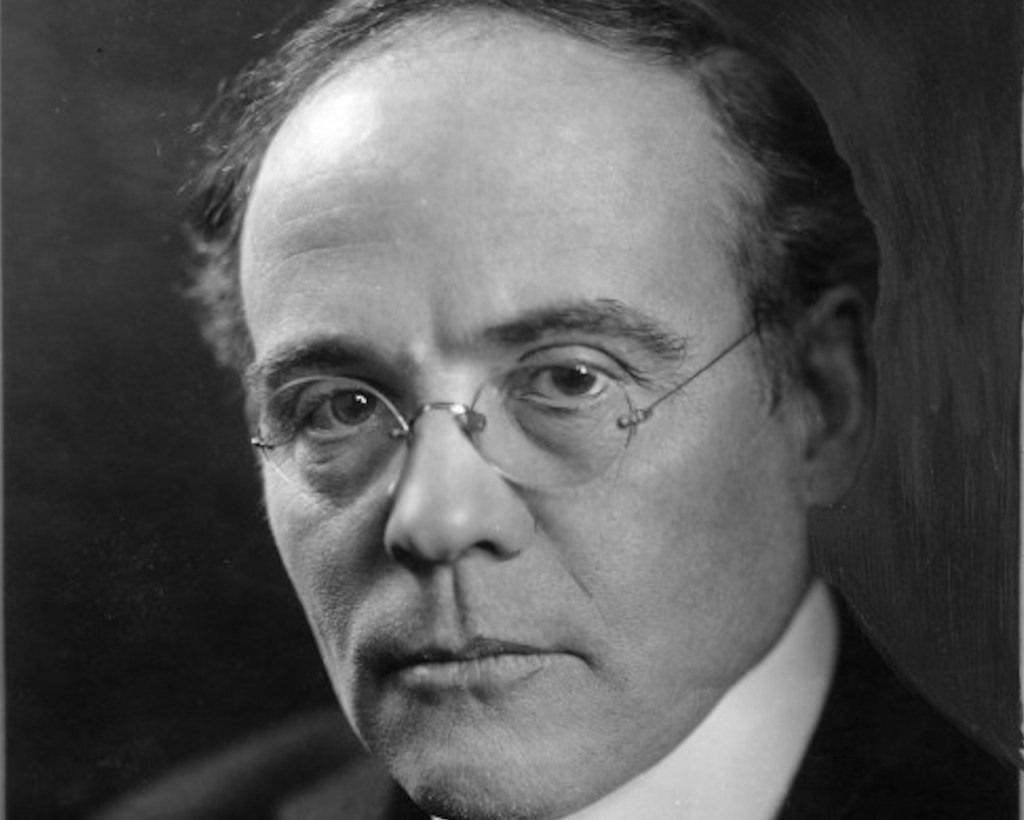
    Image: Edgar Lee Masters https://www.best-poems.net/edgar_lee_masters/index.html#google_vignette
    Image: Edgar Lee Masters

    Edgar Lee Masters’ “Ollie McGee”and “Fletcher McGee”

    “Ollie McGee” and her husband “Fletcher McGee” report their complaints in the third and fourth poems from Masters’ Spoon River Anthology.  The couple elucidates the status of their marriage.

    Ollie McGee Speaks

    Mrs. McGee begins by posing a question and then launches her accusation.

    Ollie McGee 

    Have you seen walking through the village
    A man with downcast eyes and haggard face?
    That is my husband who, by secret cruelty
    Never to be told, robbed me of my youth and my beauty;
    Till at last, wrinkled and with yellow teeth,
    And with broken pride and shameful humility,
    I sank into the grave.  
    But what think you gnaws at my husband’s heart?
    The face of what I was, the face of what he made me!
    These are driving him to the place where I lie.
    In death, therefore, I am avenged.

    Commentary on “Ollie McGee”

    Ollie McGee offers her take on her marriage with Fletcher McGee.

    First Movement:  Question and Accusation

    Have you seen walking through the village
    A man with downcast eyes and haggard face?  
    That is my husband who, by secret cruelty
    Never to be told, robbed me of my youth and my beauty;  
    Till at last, wrinkled and with yellow teeth,
    And with broken pride and shameful humility,
    I sank into the grave.  

    Mrs. “Ollie McGee” begins with a query, wondering if her listeners have observed, “a man with downcast eyes and haggard face,” ambling throughout the village from time to time.  She then admits that that haggard face belongs to the man who was her husband.  

    The speaker then begins to hurl accusations at the man.  The wife reveals that he is guilty of horrifying cruelty: the man took away his wife’s youth as well as her beauty.   This theft continued over the lifetime of their miserable marriage.   Mrs. McGee then died, “wrinkled and with yellow teeth.”  He stole her pride and made her suffer “shameful humility.”

    Second Movement:   Vengeance

    But what think you gnaws at my husband’s heart?
    The face of what I was, the face of what he made me!
    These are driving him to the place where I lie.
    In death, therefore, I am avenged.

    Ollie then offers a further inquiry, as she questions whether her listeners know what “gnaws at my husband’s heart.” She contends that two images likely unsettle her husband’s heart and mind: “the face of what I was”and “the face of what he made me.”    Mrs. McGee asserts that these images are taking his life, “driving him to the place where I lie.”  Thus she has convinced herself that she is getting her revenge in death.

    Fletcher McGee Speaks

    Fletcher McGee offers his own complaint but reveals himself to be a criminal in his own behavior.

    Fletcher McGee 

    She took my strength by minutes,
    She took my life by hours,  
    She drained me like a fevered moon
    That saps the spinning world.
    The days went by like shadows,
    The minutes wheeled like stars.
    She took the pity from my heart,
    And made it into smiles.
    She was a hunk of sculptor’s clay,
    My secret thoughts were fingers:
    They flew behind her pensive brow
    And lined it deep with pain.
    They set the lips, and sagged the cheeks,
    And drooped the eyes with sorrow.
    My soul had entered in the clay,
    Fighting like seven devils.
    It was not mine, it was not hers;
    She held it, but its struggles
    Modeled a face she hated,
    And a face I feared to see.
    I beat the windows, shook the bolts.
    I hid me in a corner—
    And then she died and haunted me,
    And hunted me for life.

    Commentary on “Fletcher McGee”

    Two miserable people made each other miserable, but who was the actual culprit in this dungheap of a marriage?

    First Movement:  Accusations Returned

    She took my strength by minutes,
    She took my life by hours,  
    She drained me like a fevered moon  
    That saps the spinning world.  
    The days went by like shadows,
    The minutes wheeled like stars.

    Mr. “Fletcher McGee” also begins his epitaph with appalling accusations against his wife.  Just as he had done, she had foisted on him unspeakable cruelty:  “she took my strength,””she took my life,” “she drained me.”

    This speaker also includes time measurements to each complaint, in order to increase and compound the pain he claims he suffered at the hands of this woman.   Mr. McGee then asserts, “the days went by like shadows, / the minutes wheeled like stars.”  His days were dark but time seemed to drag on in an other worldly fashion.  He seemed unable to concentrate on anything worthwhile.

    Second Movement:   Vengeance Returned

    She was a hunk of sculptor’s clay,
    My secret thoughts were fingers:
    They flew behind her pensive brow
    And lined it deep with pain.
    They set the lips, and sagged the cheeks,  
    And drooped the eyes with sorrow.
    My soul had entered in the clay,
    Fighting like seven devils.  
    It was not mine, it was not hers;
    She held it, but its struggles
    Modeled a face she hated,
    And a face I feared to see.
    I beat the windows, shook the bolts.  
    I hid me in a corner—
    And then she died and haunted me,
    And hunted me for life.

    After fiercely complaining that Mrs. McGee ruined his life, Mr. McGee freely and somewhat gleefully confesses that he, in fact quite deliberately, ruined hers.   Instead of pitying his wife for her unhappiness and shrewish behavior, he came to possess the ability to smile about her suffering.   His “smiles”grew out of the fact that he had power over her. 

    He came to see her only as “a hunk of sculptor’s clay.”  Thus Mr. McGee went about working to sculpt ugly features onto his wife’s face.  This despicable husband asserts that, “my secret thoughts were fingers.”  He continues with the sculptor metaphor, as he affirms what Ollie has earlier said about the man.   

    The miserable husband freely confesses and describes his fingers as sculptors, motivated by his “secret thoughts”which “lined” “her pensive brow” “deep with pain.”  Mr. McGee again freely admits that he, in fact, “set the lips, and sagged the cheeks, / And drooped the eyes with sorrow.” 

    He then bizarrely asserts that his “soul had entered in the clay.” Thus his soul became the force of evil, “fighting like seven devils.” He appears to have become so hooked on making her miserable that he just could not stop himself.  His evil served him like a dangerous drug.

    Mr. McGee then admits that he actually killed her:  “I beat the windows, shook the bolts.”  He vaguely claims that he hid “in a corner,” and “she died and haunted me / And hunted me for life.”

    He took advantage of his weak, depressed, sorrowful wife. He fully realized what he was doing. Therefore, it becomes clear that Ollie was correct about her lout of a husband, who was in fact a criminal.  

    At least, Mrs. McGee can feel somewhat avenged in death.   But a pathetic irony is laced within these pitiful confessions.  Readers are left to doubt that any vengeance or feeling “haunted”can, in fact, offer these tortured souls any meaningful rest.
  • His Tongue’s Dulcet Tones

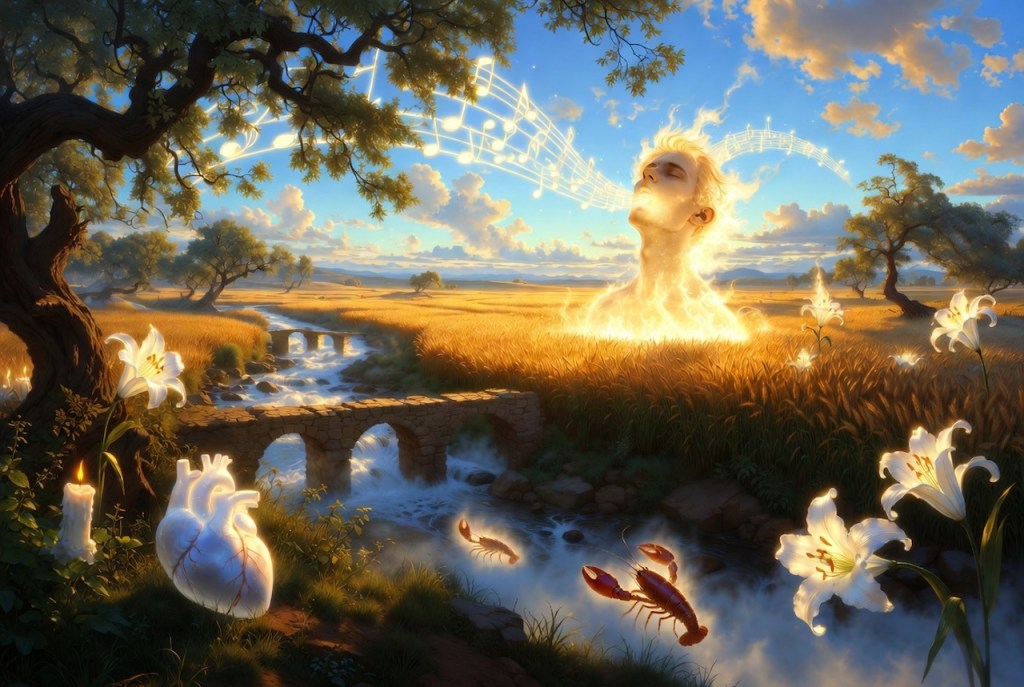
    Image:  Created by Grok inspired by the poem
    Image: Created by Grok inspired by the poem

    His Tongue’s Dulcet Tones

    (Though his path stray far from truth)

    His words did roam through lanes of rustic gold,
    By fields where amber wheat doth kiss the sky,
    Along the river’s bend, both swift and bold,
    O’er arches wrought of stone they softly fly.

    Through wooded snares and breezes light they sweep,
    Above the crawfish in their misty play,
    Each sound ablaze, as if the night to keep,
    A flame of moonshine gilds the fleeting day.

    His phrases dance round lilies of the morn,
    And spark a gleam within mine eyes to shine,
    Like candlewood where autumn shades are born—
    Yet sad to say his wayward soul doth not align.

    Beneath the boughs, my heart did strain to hear,
    His tongue’s dulcet tones, to me now no longer dear.

  • Edgar Lee Masters’ “Hod Putt”

    Image:   Edgar Lee Masters  https://www.best-poems.net/edgar_lee_masters/index.html#google_vignette
    Image: Edgar Lee Masters

    Edgar Lee Masters’ “Hod Putt”

    Hod Putt chafed at his low station in life as an unsuccessful laborer who never seemed able to get ahead. His intense envy of those who were successful lead him down a path to perdition.

    Introduction and Text of “Hod Putt”

    The deceased inhabitants of the fictional village of Spoon River in Edgar Lee Masters’ American classic, Spoon River Anthology, are finally free to let loose their venom on whoever crossed them in life.  They now feel free to testify, but their testimony is only their side of it.  They can say whatever they like without being rebuked, reprimanded, or criticized.

    The advantage of this kind of scenario, masterfully crafted by the poet, is that the dead people have the same stage to make their claims.  The study thus reveals differing points of view, even as the individual speakers sometimes focus on similar circumstances.

    The Spoon River character study begins with an epitaph featuring the character “Hod Putt,” which qualifies as a versanelle, a short, pithy verse with a gripping punch offering a glimpse at human nature. The poem delivers that interesting punch as it reveals a truth about human nature and its desire to justify the unjustifiable to flatter the ego.

    Hod Putt 

    Here I lie close to the grave
    Of Old Bill Piersol,  
    Who grew rich trading with the Indians, and who
    Afterwards took the bankrupt law  
    And emerged from it richer than ever.
    Myself grown tired of toil and poverty
    And beholding how Old Bill and others grew in wealth,
    Robbed a traveler one night near Proctor’s Grove,
    Killing him unwittingly while doing so,
    For the which I was tried and hanged.
    That was my way of going into bankruptcy.
    Now we who took the bankrupt law in our respective ways  
    Sleep peacefully side by side.

    Commentary on “Hod Putt”

    Apparently, considering himself a failure in life’s rat race for riches, this speaker Hod Putt envied those who were successful or at least more successful than he was.

    From his perch in the afterworld, Putt attempts to improve his lack of substance by concocting an equivalence between his moral bankruptcy and the financial bankruptcy experienced by “Old Bill Piersol.”

    Putt belongs to that classification of Spoon River inmates who try to assuage their own guilt by laying a thick blanket of culpability onto others.  Readers can see clearly that these scofflaws are merely cutting off the heads of others so that they may appear to stand taller.

    First Movement:   Blinding Jealousy

    Here I lie close to the grave
    Of Old Bill Piersol,
    Who grew rich trading with the Indians, and who
    Afterwards took the bankrupt law
    And emerged from it richer than ever. 

    Hod Putt informs his audience that his grave lies near the “grave / Of Old Bill Piersol.” He reports that Piersol was an Indian trader who became wealthy through his lucrative trade association.

    Piersol, however, went bankrupt but then recovered his wealth quickly and grew “richer than ever”; these events cause Putt’s jealous nature to overcome his ability to think clearly.

    Second Movement:  A Double Felony

    Myself grown tired of toil and poverty
    And beholding how Old Bill and others grew in wealth,
    Robbed a traveler one night near Proctor’s Grove, 

    Putt implies that he was somewhat lackadaisical with no deep interest in high achievement; just keeping bread on the table caused him to grow “tired of toil and poverty.” While not fond of work, he also found poverty inconvenient.

    Putt assumed that “Old Bill and others” had used the system to become wealthy; thus he assumed he could also use the system for his own purposes.  He, therefore, dreamed up a plan: instead of working for his pay, he would take from others. He began his new endeavor in crime by robbing a traveler “near Proctor’s Grove.”

    Third Movement: Faulty Logic

    Killing him unwittingly while doing so,
    For the which I was tried and hanged.
    That was my way of going into bankruptcy.

    To Putt’s chagrin, he kills the victim while trying to take his property. This felony then gets Putt “tried and hanged.” Like any other act of faulty logic, he asserts that his act just constituted “bankruptcy.”

    He, no doubt, believes he is clever in comparing his crimes to what he assumes to be the crimes of others, as he draw a moral equivalency between financial bankruptcy and moral bankruptcy.  But his utterly counterfeit comparison to businessmen who declare legitimate bankruptcy according to the law demonstrates the criminal nature of Putt’s mind.

    Fourth Movement: Morally Bankrupt

    Now we who took the bankrupt law in our respective ways
    Sleep peacefully side by side.

    Putt shows that he is morally bankrupt; he concocts a moral equivalency between his felonious crimes and those of successful men, in this case, Old Bill Piersol, who merely followed bankruptcy laws.

    The smug Putt claims that he and Piersol “sleep peacefully side by side”; this claim implies that their “bankruptcies” are just the same.

    A Two-Fold Felon

    Readers will understand the difference between the two “bankruptcies”: Hod Putt is a criminal trying to vindicate himself while, in fact, revealing his felonious nature. Bankruptcy laws work within the legal system for those who declare bankruptcy.

    The laws governing bankruptcy do not exist in order to encourage theft but to allow the unfortunate to place their financial endeavor on the path to recovery. Putt declares that he intended to rob a man, but while committing the robbery, he killed the man.

    It is not likely that he intended to kill the man as he was committing his intensional felony.  But then, because of the accidental killing, Putt becomes a two-fold felon, failing to even understand his criminal acts. 

    Now after death, he disingenuously claims to be “sleeping peacefully side by side” with Old Bill Piersol. In his own imagination, Putt is free to believe that his “sleep” after death and that of a legitimate businessman are the same. 

    But imagination does not make it so.  The karma of all individuals dictates how well they rest—not how things may seem at any given time. Apparently, Putt remains blissfully unaware that karma will reckon with him—if not today, nor tomorrow, then sometime in future.

  • Emily Dickinson’s “The reticent volcano keeps”

    Image: Emily Dickinson - Amherst College - Daguerrotype of the poet at age 17, circa 1847 - likely the only authentic, extant likeness of the poet
    Image: Emily Dickinson – Amherst College – Daguerrotype of the poet at age 17, circa 1847 – likely the only authentic, extant likeness of the poet

    Emily Dickinson’s “The reticent volcano keeps”

    The speaker in Emily Dickinson’s “The reticent volcano keeps” is musing on the nature of silence and secrets, transforming metaphorically a volcano into a figure of thoughtful restraint. This idea creates a paradox that challenges the nature and purpose of human speech.

    Introduction and Text of “The reticent volcano keeps”

    The speaker in Emily Dickinson’s “The reticent volcano keeps” is exploring the tense relationship between divine knowledge and human awareness by delving into nature’s ability to keep secrets as opposed to humanity’s driving need to speak out and to be heard by others.

    The poem, thus, is ultimately a study in contrasts. The speaker concocts a parallel universe, in which the forces of nature adhere to perfect discretion as human beings often go off the rails by remaining loquacious and even indiscreet, as they engage loudly in mere gossip.

    The metaphorical volcano becomes the speaker’s prime example of nature’s superior restraint. Unlike explosive human beings, this volcanic force has mastered the art of keeping secrets and thus holds its ever awake strategy in blissful silence.

    The reticent volcano keeps

    The reticent volcano keeps
    His never slumbering plan —
    Confided are his projects pink
    To no precarious man.

    If nature will not tell the tale
    Jehovah told to her
    Can human nature not survive
    Without a listener?

    Admonished by her buckled lips
    Let every babbler be
    The only secret people keep
    Is Immortality.

    Commentary on “The reticent volcano keeps”

    Emily Dickinson’s “The reticent volcano keeps” creates a speaker who comments on the nature of silence and secrets. The speaker employs a metaphor of a volcano to compare the ideas of restraint to the chatty nature of humanity, whose only secret “Is Immortality.”

    First Stanza: The Volcano’s Secret

    The reticent volcano keeps
    His never slumbering plan —
    Confided are his projects pink
    To no precarious man.

    The speaker begins by metaphorically creating the image of a  volcano that keeps secrets.  There is almost a hint of personification of that geologic force, as it is described as “reticent” but capable of deliberately and consciously making the choice to keep its secrets.

    By calling the volcano “reticent,” the speaker gives it a personality with intention. Thus the volcano becomes human-like with the ability to make choices.  And its choice is to stay mum about its purpose for its activities.

    The image of the “never slumbering plan” heralds forth a disturbing tension. On its surface, the volcano seems to remain dormant, yet beneath that quiet surface rumbles a permanent, definite intention. 

    According to this fantasized scenario, the volcano is not experiencing a passive rest but instead is engaging in the restraint of wide-awake watching.  Thus the speaker is implying that actual power comes with restraint, not from revelation. 

    Stated another way:  the volcano’s power lies in what it does not say, or what it refuses to reveal about its hidden activities.  The volcano does not merely have a plan, but it also protects and preserves that plan from outside observation that would cause interference with its intentions.

    The speaker is therefore presenting the volcano as a model of perfect prudence, a power that is capable of destroying the landscape yet chooses to keep its secrets.  The speaker is implying that such choices are the result of self-control.  And that kind of self-control is to be admired.

    The speaker unveils minor details, labeling them “projects pink,” which suggest images of dawn, flowering blossoms, or a gently glowing fire.  Still, the volcano reveals these intimate secrets to no one, definitely not to unreliable human beings.

    The color “pink” brings an unexpected gentleness into the scenario of volcanic force.   The speaker seems to be suggesting that even the most dramatic natural forces contain delicate qualities hidden from view.

    The speaker portrays human beings as “precarious” because they remain basically unreliable and too fickle to be trusted with nature’s serious purposes. Human beings are deemed unworthy to be afforded information about nature’s activities.  

    So, the phrase “confided are” suggests that the volcano’s secrets exist in a state of trust. But such trust is not extended to humans, again because human beings have not proven themselves to be trustworthy.  

    The speaker has thus created a hierarchy of trustworthiness. The volcano is placed at the top of the spectrum and humanity at the bottom. The natural world, as opposed to the human world thus serves as the reliable retainer of divine secrets.

    Second Stanza: Divine Silence

    If nature will not tell the tale
    Jehovah told to her
    Can human nature not survive
    Without a listener?

    The speaker then broadens her view beyond the volcanic keeper of secrets to encompass all of nature in this conspiracy of silence. The speaker suggests that God Himself has shared secrets with the natural world.

    The phrase “the tale / Jehovah told to her” implies the intimate conversational relationship between Creator and creation. The speaker presents this scenario as a whispered confidence that remains eternally unbroken.

    By employing the name “Jehovah,” the speaker invokes one of the most sacred names for God. This raises the conversation beyond casual exchange to profound holiness and therefore deserving of absolute attention.

    In other words, the speaker is implying that nature serves as God’s confidante. Unlike the human being,  who is supposed to be God’s most valuable and honored creation but has fallen short, the natural world has proven itself worthy of divine trust and continues to honor that sacred responsibility.

    The term “tale” points to a narrative or story, most likely mythology. The speaker thus implies that God has shared His most profound stories of creation with nature, stories that remain hidden.

    The speaker presents this divine sharing as a test of loyalty. Nature has passed the test by maintaining perfect silence, while humanity has failed time and again because of its compulsive need to speak.  

    At this point, the speaker poses the poem’s poignant question: If nature can keep divine secrets, why cannot human beings behave honorably, without constantly needing to speak and be heard?

    The term “survive” suggests the strong need for listeners; it is not merely a preference but an existential need. The speaker thus implies that humans require witnesses to their thoughts to maintain their very existence.  

    Ultimately, the speaker is creating a sharp distinction between “nature” and “human nature.”  Nature is capable of self-sufficient silence, while human nature has acquired the bad habit of constant verbal interaction just to function.

    The question becomes philosophical as well as practical. The speaker wonders whether humanity’s need for an audience is weakness or simply part of its essential character as social beings.  

    The speaker implies that humanity’s inability to keep secrets stems from its fundamental need for connection.  Human beings speak because they must be heard to feel that they are living.

    The question rises to a note of near-pathetic bewilderment. The speaker remains genuinely baffled by humanity’s inability to match nature’s perfect discretion and self-contained silence.

    Third Stanza: The Moral Lesson

    Admonished by her buckled lips
    Let every babbler be
    The only secret people keep
    Is Immortality.

    The speaker concludes with nature as an instructor of ethical and moral behavior.   The image of nature’s “buckled lips,” clasped tightly, serves to castigate human compulsive loquaciousness.

    The image of “buckled lips” is also mechanical as well as organic. The speaker suggests that while nature’s silence is instinctive, it is also deliberate, making it a disciplined choice.  

    The speaker chastises “every babbler,” shaming human beings for their inability to hold their tongues. Apparently, they cannot mirror the volcano’s patient discretion or even understand nature’s faithful, enduring silence.

    The term “babbler” is especially damning, reducing human communication to meaningless chatter.  Such constant talk lacks the dignity of nature’s meaningfully purposeful silence.

    The speaker delivers the poem’s most devastating irony. The one secret that humans do manage to keep is “Immortality”—their silence about death and what lies beyond.  This final revelation transforms the entire poem’s earlier criticisms. 

    In this final irony, the speaker both condemns and redeems humanity.  Humans are babblers about everything except what matters most—their own eternal destiny and ultimate meaning.

    But what does the speaker imply by claiming that humanity keeps secrets about Immortality?  Merely the fact that most of humanity speaks and behaves without giving Immortality or what lies beyond the grave much thought.

    The topic of “Immortality” is left up to poets, philosophers, and theologians.  And although these groups have proffered tomes on the issue, their theories go largely unnoticed on the street.  

    The speaker would have talk about life beyond this life become more open to everyone.  She seems to feel that the one secret that humanity continues to keep is the only one that truly matters.  

    She thus would have humanity keep some of its more chatty issues to itself, reorder its thinking, and begin producing volcanic force in conversations that would truly move the culture along to a more open sharing of eternal truths.  But first, of course, she must try to influence humanity to take an interest in profundity instead of petty, chatty gossip.

  • Louder than the Moon

    Image:  Created by Grok inspired by the poem
    Image: Created by Grok inspired by the poem

    Louder than the Moon

    The glow of moon sets me to musing
    On moving in the distance of surprise.

    Fear cannot conquer itself, you might think,
    But how to know courage might also be
    A subject to muse on and to fuse then
    Your sorrow to the ilk of betrayal
    Not searching for the end but the stop.

    The glow of moon sets me again to musing
    On moving surprise into the distance far.

    Doing all I can to state what I mean
    In the space around divided worries
    I will not go beyond words to wield
    The sword of hatred that may blind
    Too many eyeballs blinkered by power.

    The glow of moon musing sets me to wink
    At surprising moves that go the distance.

    After I learn to see and feel and know
    My own will as it exerts itself strong
    I will never sit in the same seat
    Where wrong has overcome right—
    Where night has pretended day.

    The glowing moon is musing on me, inspiring
    Distances with humble, intimate surprises.

    I will question, I will inquire, I will query—
    As I meditate on the glowing light,
    Where I go to transcend, where I move
    And meet this flesh-housed treasure
    That glows louder and brighter than the moon.

  • Emily Dickinson’s “The Only News I know”

    Image: Emily Dickinson - Amherst College - Daguerrotype of the poet at age 17, circa 1847 - likely the only authentic, extant likeness of the poet
    Image: Emily Dickinson – Amherst College – Daguerrotype of the poet at age 17, circa 1847 – likely the only authentic, extant likeness of the poet

    Emily Dickinson’s “The Only News I know”

    In “The Only News I know,” Emily Dickinson creates a speaker who offers a glimpse at the poet’s satisfying daily existence.  She demonstrates how she keeps her consciousness focused only on things of the Divine Realm, thus, avoiding those of the mundane, vulgar, physical existence.

    Introduction with Text of  “The Only News I know”

    The reality of “the news” automatically holds all manner of things that have gone wrong during ordinary life.  Accidents, illness, murders, robberies, war, deceit, political intrigue all figure in the news reports that come to one daily.  

    While these topics tend to agitate, confuse, and sadden most folks who listen to “the news,” seldom does anyone offer an antidote to lessen the pain, frustration, confusion brought about by the bad news reports that accost the citizenry daily.

    Although Emily Dickinson’s poem, “The Only News I know,” is obviously an exaggeration, it, nevertheless, dramatizes the most important topics with which the poet likes to engage: immortality, eternity, and God.   She likes to engage and occupy her thinking and musing with ethereal places and events.  And this creative thinking easily replaces the mundane and vulgar events that daily hem one round.

    The physical world is such a cold and often desolate place for sensitive individuals and once those individuals acquire some inkling of a different world, a spiritual level of existence, or an astral world, they prefer it. 

    They inquire, read, and study about the possibility of a place where the soul lives on after it leaves the gross physical encasement.  Such a place offers the individual the opportunity to live more abundantly and completely without the trammels and trappings of earthly existence. 

    The thought of a “heaven” or an astral existence gives one hope that all the unseemly events reported in “the news” are only temporary and feature only a passing blight that the pure soul must put up with but only for a while.  While the physical reality is only temporary, the soul’s reality is permanent.

    Emily Dickinson’s “The Only News I Know” consists of four tercets, or three-line stanzas that examine the glorious possibility of living in a world of everlasting beauty, with an always blissful feeling, and ever-new joy. 

    Each tercet adheres to its own rime scheme: ABC, ABA, AAB, ABC. Each line displays six syllables, except for the final line in the final tercet, which yields only four syllables.  The four-syllable line gives the poem an abruptness that further enhances the meaning of the content: the speaker makes her claims in crispness and ends with a snap.

    The Only News I know

    The Only News I know
    Is Bulletins all Day
    From Immortality.

    The Only Shows I see  –
    Tomorrow and Today –
    Perchance Eternity –

    The Only One I meet
    Is God – The Only Street –
    Existence – This traversed

    If Other News there be –
    Or Admirabler Show –
    I’ll tell it You –

    Commentary on “The Only News I know”

    In this poem, Emily Dickinson has created a speaker who reports brief glimpses of what it is like to create a satisfying daily existence.   Instead of “bulletins” from news reports on daily misery, her bulletins come from a mystical place where only joy permeates the soul. 

    First Tercet:  Focus on the Spiritual  

    The Only News I know
    Is Bulletins all Day
    From Immortality.

    In the first stanza, the speaker asserts that the only information she recognizes is that which comes from “Immortality.” She claims that she receives brief news headlines during the whole day, implying that these brief reports come to her even as she is working. 

    This speaker is more interested in mystical, that is, spiritual awareness than she is in mundane earthly things.  Thus she can easily space out the mundane and fill it with ethereal blessings.

    Second Tercet:  A Permanent Frame of Mind  

    The Only Shows I see –
    Tomorrow and Today –
    Perchance Eternity –

    The speaker then avers that the only programs or performances she watches are those that pertain similarly to things and events that are everlastingly entertaining.   She then implies that the time frame in which she experiences these blessings is permanent. She leaves open some doubt by inserting the term “[p]erchance” likely only for the sake of skeptical listeners.

    It becomes clear that this speaker entertains no doubt about her claims regarding the landscape of the soul—those topics that obtain for “Immortality” and “Eternity.”   She is not so naïve as to believe that in the physical world these qualities hold fast.  

    If that were so, she would have no need to report on such beyond-earth loci.  She could go about simply revealing all the blessings she detects from earthly pleasures.   But because earthly paradise remains out of possibility, she has to report about mystical places with figurative language, including colorful images and metaphors.

    Third Tercet:   God Alone

    The Only One I meet
    Is God – The Only Street –
    Existence –This traversed

    The speaker then reveals her startling claim, as Dickinson speakers are often wont to do: “The Only One I meet / Is God.”   And instead of further drama or explication on meeting God, she rushes on mid-line to claim that the only path she travels is that of “Existence.” This “street” is the one that she “traverse[s]” freely. 

    Her interest focuses only on being.  She leaves the idea of becoming to others.  While she experiences this great eternal present of being, she remains in a state of blissful confidence. 

    Fourth Tercet:    No Other News

    If Other News there be –
    Or Admirabler Show –
    I’ll tell it You –

    Then the speaker declares that if, in fact, she ever acquires any other significant information, she will let her listeners know about it. But her matter-of-fact declamations have made it quite clear that she does not expect such “Other News” to assail her consciousness. 

    She is aware that she is creating her own garden of verse into which she has the ability to place anything she wishes.  In her garden of creation, she can remain in her mystical state of awareness, meeting only angels and other eternal beings. 

    Every flower, every bird, every blade of grass has become endowed with the grace of the Heavenly Father, the Ultimate Reality, the Divine Being that is God.  The speaker’s dedication to such bliss becomes so full that she is urged to share her state with her audience, and she gladly complies with that urge. 

  • A Sense of Sorrow

    Image:  Created by ChatGPT inspired by the poem
    Image: Created by ChatGPT inspired by the poem

    A Sense of Sorrow

    The darkness and vastness of the center
    Bends over the vastness of each beginning—
    Over the rivers of memory, you spread
    Rivers of sick sorrow to each end.

    The end of each vein springs blood
    And blood seeps into the water of light.
    Water finds its own reference point
    And each point fingers mud on granite.

    The mud that covers your soul
    Will shuck itself in the soul of sorrow.

  • Emily Dickinson’s “A Light exists in Spring”

    Image: Emily Dickinson - Amherst College - Daguerrotype of the poet at age 17, circa 1847 - likely the only authentic, extant likeness of the poet
    Image: Emily Dickinson – Amherst College – Daguerrotype of the poet at age 17, circa 1847 – likely the only authentic, extant likeness of the poet

    Emily Dickinson’s “A Light exists in Spring”

    The speaker in Emily Dickinson’s “A Light exists in Spring” is striving to portray a certain kind of light that “exists [only] in Spring” or very near spring.

    Introduction with Text of “A Light exists in Spring”

    Emily Dickinson’s “A Light exists in Spring” features five quatrains with a somewhat erratic rime scheme.  Each quatrain follows a fairly regular pattern of ABCB with the second quatrain offering the slant rime, “fields / feels,” and the third quatrain offering no rime at all. 

    The final quatrain again features an irregular pair of rimes, “Content / Sacrament.”  The theme of the poem focuses on a special feeling that becomes engendered in the observer as she experiences a certain kind of light.


    A Light exists in Spring

    A Light exists in Spring
    Not present on the Year
    At any other period –
    When March is scarcely here

    A Color stands abroad
    On Solitary Fields
    That Science cannot overtake
    But Human Nature feels.

    It waits upon the Lawn,
    It shows the furthest Tree
    Upon the furthest Slope you know
    It almost speaks to you.

    Then as Horizons step
    Or Noons report away
    Without the Formula of sound
    It passes and we stay –

    A quality of loss
    Affecting our Content
    As Trade had suddenly encroached
    Upon a Sacrament.

    Commentary on “A Light exists in Spring”

    Emily Dickinson has created a speaker in “A Light exists in Spring” who is musing upon and then striving to portray a certain kind of light that becomes visible only during the season of spring or, at least, very near that season of rebirth.

    First Quatrain:  A Particular Light

    A Light exists in Spring
    Not present on the Year
    At any other period —
    When March is scarcely here

    The speaker asserts that this light may be experienced “in Spring,” and this particular light cannot be seen at any other time of the year.  However, the speaker then reports that this light does appear just after the month of March has arrived.

    This claim, therefore, suggests that the light might also appear just before the actual season of spring has arrived.  The season of spring does not begin until the third week of March, not in early March, as the speaker seems to be suggesting.

    Second Quatrain:   Not Identified by Science

    A Color stands abroad
    On Solitary Fields
    That Science cannot overtake
    But Human Nature feels.

    The speaker now claims that it is possible to observe a certain shade of color that has descended upon the “fields.” This extraordinary “color” apparently has not been identified in nature by science.  However, human beings, according to this speaker, are capable of sensing this color without a name for or scientific description of it.

    The speaker, therefore, hints that the color of this special light does not exist at all in nature, and it is perhaps only visible to the human soul—not the mind or even the heart—as  such lights as rainbows or the aura borealis are visible to the human eye.

    Third Quatrain:  Unearthly, Perhaps Mystical

    It waits upon the Lawn,
    It shows the furthest Tree
    Upon the furthest Slope you know
    It almost speaks to you.

    This unearthly—perhaps even mystical—light with its special color may be experienced as it stands “upon the Lawn.” However, the light may also appear in trees that grow very far away and may also be gleaned from faraway, quite distant from the where the speaker views it.  The speaker now reports that this strange mystical light may seem to converse with anyone, but its language would be one only known to the soul.

    The speaker then strives to arouse in her listeners and readers an understanding that would be quite likely impossible to shape into words.  The speaker has been carried to an indescribable place within her own soul.

    This light that is capable of “wait[ing] upon the Lawn” but does not instantly pass across the lawn strongly suggests that it is capable of  halting time for a short period—possibly to allow the observer to contemplate the nature of its existence.

    Fourth Quatrain:  As the Light Passes

    Then as Horizons step
    Or Noons report away
    Without the Formula of sound
    It passes and we stay —

    That time period which comes through experiencing that special light cannot wait long and thus “it passes.”  Of course, the observer remains, that is, this speaker remains where she is while the light passes on.

    The special light thus seems to resemble sunlight after it has passed overhead around the noon hour.  Naturally, its final departure is without fanfare, although the speaker seems to have expected a sound, or some other sign to help her understand the strange feeling that this light has engendered in her.

    Fifth Quatrain:   An Inappropriate Intrusion

    A quality of loss
    Affecting our Content
    As Trade had suddenly encroached
    Upon a Sacrament.

    The speaker then asserts that she feels a kind of deep loss.  It is as if something drastically inappropriate has happened.   The speaker expresses that painful inappropriateness as the same as finding of “Trade” intruding “Upon a Sacrament.”  She feels as wronged as Jesus felt upon encountering the money changers in the temple.  

    Spiritual Clarity

    In Emily Dickinson’s “A Light exists in Spring,” the speaker has made a valiant effort to describe the ineffable.  Such a task is impossible, but it is possible to portray the feelings that this ineffable entity has engendered in the heart and mind of the individual observer of that indescribable entity. 

    Thus the speaker has remained vague about what this light looks like, but she has made it quite clear how it has made her feel, and that is her reason for creating this particular little drama.

    The speaker’s experience viewing this special light has moved her very deeply. Although she cannot portray the light’s physical nature, she can suggest the nature of the way the light has influenced her mentally and spiritually.

  • Options

    Image:  Created by ChatGPT & Grok inspired by the poem
    Image: Created by ChatGPT & Grok inspired by the poem

    Options

    Faces in the wind
    Seeming miles from shore
    A blank page awaits
    Walking fast past the window
    The pane seems real
    As any pain always will
    Slowing down is an option
    But you’d rather get answers
    Than continue to question

    Fleeing is an option
    But a bridge looms large
    As rivers of memories emerge
    Standing is another option
    But the brink seems dangerous
    And a canyon of disdain
    May dismay the heart again

    Leaving the woods
    Is an option
    Faster than crawling over logs
    Seizing the moment seems real
    Until the sunlight pierces the grass
    Then all bets are off and moving goes
    By trees that stand even more still than water
    Turning to ice in the snowy field
    Praying is an option
    Placing your life before the judge
    Allowing your soul to be guarded
    And guided as the weather booms
    And the horizon seems old and worn–
    I will make my bed of leaves, fold my hands
    Calm my heart and mind and the winter
    Storm will not touch my skin

  • Emily Dickinson’s “The Brain – is wider than the Sky”

    Image: Emily Dickinson - Amherst College - Daguerrotype of the poet at age 17, circa 1847 - likely the only authentic, extant likeness of the poet
    Image: Emily Dickinson – Amherst College – Daguerrotype of the poet at age 17, circa 1847 – likely the only authentic, extant likeness of the poet

    Emily Dickinson’s “The Brain – is wider than the Sky”

    Emily Dickinson’s poem, “The Brain – is wider than the Sky,” compares and contrasts the human brain/mind with the sky, the sea, and God.

    Introduction and Text of “The Brain – is wider than the Sky”

    The idea that a human being is made in the image of God was not first conceived by a poet; that claim is found in the ancient text of the Holy Bible, and both Eastern and Western religious philosophical texts expound principles that the image of the Divine Creator exists in the children that He has created.  

    Emily Dickinson possessed a great depth of knowledge of the King James Version of the Bible. Undoubtedly, as she composed this poem, she quite obviously kept in mind the following biblical claim from Genesis 1:26: “And God said, Let us make man in our image, after our likeness.” 

    Dickinson’s poem, “The Brain – is wider than the Sky,” offers a unique expression of understanding regarding the unity of the Godhead and humankind.  Emily Dickinson’s mystical ability allowed her to understand many ideas and concepts about the ineffable levels of being.

    She was, therefore, able to interpret and expound on those ideas and concepts.  However, instead of showcasing her knowledge in treatises, she chose to create little dramas with her poems.

    The Brain – is wider than the Sky

    The Brain – is wider than the Sky –
    For – put them side by side –
    The one the other will contain
    With ease – and You – beside –

    The Brain is deeper than the sea –
    For – hold them – Blue to Blue –
    The one the other will absorb –
    As Sponges – Buckets – do –

    The Brain is just the weight of God –
    For – Heft them – Pound for Pound –
    And they will differ – if they do –
    As Syllable from Sound –

    Commentary on “The Brain – is wider than the Sky”

    Metaphorically referring to the mind as the “Brain,” Dickinson’s speaker offers the essential truth that the Supreme Creator fashioned human beings in His image.

    First Stanza:  Brain Power

    The Brain – is wider than the Sky –
    For – put them side by side –
    The one the other will contain
    With ease – and You – beside –

    The first stanza contrasts the brain/mind with the sky claiming that the brain is wider because it can think about the sky and at the same time can think about the person who is thinking about the sky, and it can perform this operation easily. 

    That the brain can hold the sky reveals that the “Brain” is, indeed, a metaphor for “mind.”  It is the mind, after all that, entertains the thought that is labeled “sky.”  And while the mind is thinking “sky,” it also has the marvelous ability to retain thoughts of “you,” the reader, listener, audience—whoever might be hearing this lyric.

    It will also be noted that the mind—”Brain”—possesses the ability to range even farther than the sky because it is “wider.”  The width of the sky is not known; it is unlimited, thus the “mind” is even beyond unlimited—it being “wider.”  

    Such a quality must give one pause as one considers the possibility of possessing an instrument that can range beyond the limits of visual acuity.  And this speaker is offering many instances that give the reader pause for thought—in order words, to exercise that mighty Brain/mind.

    Second Stanza:  More Brain Power

    The Brain is deeper than the sea –
    For – hold them – Blue to Blue –
    The one the other will absorb –
    As Sponges – Buckets – do –

    The second stanza contrasts the brain with the sea asserting that the brain can take in the sea as a sponge sucks up a bucket of water, once again referencing the vast thinking ability of the brain/mind. 

    If sponges can absorb buckets of water, they must be very large sponges and/or very many of them.  The speaker is asserting again a vastness that is unlimited, even as sponges sucking up buckets of water might be.  

    But because she does not say two buckets, four buckets, or more, being absorbed by twenty or forty sponges, she has again allowed an unlimited number of items to come to mind. As the sky is limitless, those sponges and buckets must remain limitless as well, if their metaphorical likeness to the brain/mind is to remain operative.

    Third Stanza:  The Ultimate Brain Power

    The Brain is just the weight of God –
    For – Heft them – Pound for Pound –
    And they will differ – if they do –
    As Syllable from Sound –

    The third stanza contrasts but also compares the human brain to God. This stanza inflicts an interpretive difficulty; certain readers might mistakenly believe that the speaker is making a blasphemous assertion that the brain and God are the same.  However, as elucidated in the following section, “God Is Not Limited,” such a claim is without merit.

    God—the Unlimited

    All devout believers contend that God is not limited by or to any one item of His creation. Almighty God—the Divine Belovèd and Father of All—is rightly considered to be vastly greater than all His creations taken together.  

    The human brain/mind thus is only one of God’s many creations, so to claim that “The Brain is just the weight of God” may at first without due reflection seem as if the speaker means that they are equal. 

    However, the blasphemy charge can be denied with a closer look at what the poem actually does, especially in the last three lines of the last stanza: 

    For – Heft them – Pound for Pound –
    And they will differ – if they do –
    As Syllable from Sound –

    The speaker does not claim that the brain/mind and God are the exact same; she is concluding that the brain/mind and God are similar because of their vastness which she has demonstrated in her contrasts with the sky and sea.  

    The sky and the sea are massive—virtually cosmic in their proportions to other earthy creations—yet the brain/mind can conceive of them as ideas, which means that the brain/mind can hold them–that is, it can hold the ideas of those enormous entities. 

    As the speaker makes her claim that the brain/mind and God are close in essence, she expresses the reality that they do differ–they differ one from the other as a “syllable” differs from a “sound.” That difference is a solid one because there is a definite difference between a syllable and a sound.  

    The sense of the term “if”—in “if they do”—then becomes more accurately interpreted as “since” or “because.”  She is offering the actual difference which negates the dual property of “if.”

    However, because the aim of her speculation is to celebrate the significance as well as vastness of the brain/mind’s capabilities, the speaker avers that the brain/mind and God are similar.  After all, it is the brain/mind that conceives the notion of God. 

    Still, God remains greater than the brain/mind because while the brain/mind is a “syllable,” God is “sound”; thus, the brain/mind becomes a perceivable symbolic representation of the ineffable God, as a syllable is a representation of sound.   The difference is real, and ultimately, it is immeasurably more vast than the sky and ocean.