Linda's Literary Home

Tag: T. S. Eliot

  • T. S. Eliot’s “The Love Song of J. Alfred Prufrock”

    Image a:  T. S. Eliot https://www.npg.org.uk/collections/search/portrait/mw57757/TS-Eliot  - Ida Kar - National Portrait Gallery, London
    Image a: T. S. Eliot – Ida Kar – National Portrait Gallery, London

    T. S. Eliot’s “The Love Song of J. Alfred Prufrock”

    T. S. Eliot’s “The Love Song of J. Alfred Prufrock” represents a conglomeration of many of the ridiculous traits of humankind—and the literati in particular; therefore, readers cannot take Prufrock seriously and are thus at liberty to laugh and enjoy the nutty things he thinks and says.

    Introduction with Text of “The Love Song of J. Alfred Prufrock”

    T. S. Eliot composed a little volume titled Old Possum’s Book of Practical Cats, which under the influence of composer Andrew Lloyd Webber, became Cats, one of the ten longest running musicals [1] on Broadway.

    How does one reconcile the lavish and hilarious persona responsible for the likes of old possum and the cats with the gloomy, spiritually dry personality of J. Alfred Prufrock and The Waste Land mentality?   That conflation is somewhat like confusing a man with little education and travel experience for the writer of the Shakespearean canon [2].

    The Love Song of J. Alfred Prufrock

    S’io credesse che mia risposta fosse
    A persona che mai tornasse al mondo,
    Questa fiamma staria senza piu scosse.
    Ma percioche giammai di questo fondo
    Non torno vivo alcun, s’i’odo il vero,
    Senza tema d’infamia ti rispondo.

    Let us go then, you and I,
    When the evening is spread out against the sky
    Like a patient etherized upon a table;
    Let us go, through certain half-deserted streets,
    The muttering retreats
    Of restless nights in one-night cheap hotels
    And sawdust restaurants with oyster-shells:
    Streets that follow like a tedious argument
    Of insidious intent
    To lead you to an overwhelming question …
    Oh, do not ask, “What is it?”
    Let us go and make our visit. 

    In the room the women come and go
    Talking of Michelangelo. 

    The yellow fog that rubs its back upon the window-panes,
    The yellow smoke that rubs its muzzle on the window-panes,
    Licked its tongue into the corners of the evening,
    Lingered upon the pools that stand in drains,
    Let fall upon its back the soot that falls from chimneys,
    Slipped by the terrace, made a sudden leap,
    And seeing that it was a soft October night,
    Curled once about the house, and fell asleep. 

    And indeed there will be time
    For the yellow smoke that slides along the street,
    Rubbing its back upon the window-panes;
    There will be time, there will be time
    To prepare a face to meet the faces that you meet;
    There will be time to murder and create,
    And time for all the works and days of hands
    That lift and drop a question on your plate;
    Time for you and time for me,
    And time yet for a hundred indecisions,
    And for a hundred visions and revisions,
    Before the taking of a toast and tea. 

    In the room the women come and go
    Talking of Michelangelo. 

    And indeed there will be time
    To wonder, “Do I dare?” and, “Do I dare?”
    Time to turn back and descend the stair,
    With a bald spot in the middle of my hair —
    (They will say: “How his hair is growing thin!”)
    My morning coat, my collar mounting firmly to the chin,
    My necktie rich and modest, but asserted by a simple pin —
    (They will say: “But how his arms and legs are thin!”)
    Do I dare
    Disturb the universe?
    In a minute there is time
    For decisions and revisions which a minute will reverse. 

    For I have known them all already, known them all:
    Have known the evenings, mornings, afternoons,
    I have measured out my life with coffee spoons;
    I know the voices dying with a dying fall
    Beneath the music from a farther room.
                   So how should I presume?

    And I have known the eyes already, known them all—
    The eyes that fix you in a formulated phrase,
    And when I am formulated, sprawling on a pin,
    When I am pinned and wriggling on the wall,
    Then how should I begin
    To spit out all the butt-ends of my days and ways?
                   And how should I presume? 

    And I have known the arms already, known them all—
    Arms that are braceleted and white and bare
    (But in the lamplight, downed with light brown hair!)
    Is it perfume from a dress
    That makes me so digress?
    Arms that lie along a table, or wrap about a shawl.
                   And should I then presume?
                   And how should I begin? 

    Shall I say, I have gone at dusk through narrow streets
    And watched the smoke that rises from the pipes
    Of lonely men in shirt-sleeves, leaning out of windows? … 

    I should have been a pair of ragged claws
    Scuttling across the floors of silent seas. 

    And the afternoon, the evening, sleeps so peacefully!
    Smoothed by long fingers,
    Asleep … tired … or it malingers,
    Stretched on the floor, here beside you and me.
    Should I, after tea and cakes and ices,
    Have the strength to force the moment to its crisis?
    But though I have wept and fasted, wept and prayed,
    Though I have seen my head (grown slightly bald) brought in upon a platter,
    I am no prophet — and here’s no great matter;
    I have seen the moment of my greatness flicker,
    And I have seen the eternal Footman hold my coat, and snicker,
    And in short, I was afraid. 

    And would it have been worth it, after all,
    After the cups, the marmalade, the tea,
    Among the porcelain, among some talk of you and me,
    Would it have been worth while,
    To have bitten off the matter with a smile,
    To have squeezed the universe into a ball
    To roll it towards some overwhelming question,
    To say: “I am Lazarus, come from the dead,
    Come back to tell you all, I shall tell you all”—
    If one, settling a pillow by her head
                   Should say: “That is not what I meant at all;
                   That is not it, at all.” 

    And would it have been worth it, after all,
    Would it have been worth while,
    After the sunsets and the dooryards and the sprinkled streets,
    After the novels, after the teacups, after the skirts that trail along the floor—
    And this, and so much more?—
    It is impossible to say just what I mean!
    But as if a magic lantern threw the nerves in patterns on a screen:
    Would it have been worth while
    If one, settling a pillow or throwing off a shawl,
    And turning toward the window, should say:
                   “That is not it at all,
                   That is not what I meant, at all.” 

    No! I am not Prince Hamlet, nor was meant to be;
    Am an attendant lord, one that will do
    To swell a progress, start a scene or two,
    Advise the prince; no doubt, an easy tool,
    Deferential, glad to be of use,
    Politic, cautious, and meticulous;
    Full of high sentence, but a bit obtuse;
    At times, indeed, almost ridiculous—
    Almost, at times, the Fool. 

    I grow old … I grow old …
    I shall wear the bottoms of my trousers rolled. 

    Shall I part my hair behind?   Do I dare to eat a peach?
    I shall wear white flannel trousers, and walk upon the beach.
    I have heard the mermaids singing, each to each. 

    I do not think that they will sing to me. 

    I have seen them riding seaward on the waves
    Combing the white hair of the waves blown back
    When the wind blows the water white and black.
    We have lingered in the chambers of the sea
    By sea-girls wreathed with seaweed red and brown
    Till human voices wake us, and we drown.

    Reading by Anthony Hopkins

    Commentary on “The Love Song of J. Alfred Prufrock”

    T. S. Eliot is really a very funny poet. His works are taken way too seriously.  A reader needs to think irony, satire, and sarcasm and then enjoy a few belly laughs when reading Eliot.  And his character J. Alfred Prufrock offers one of the finest examples of Eliot’s humor, as he, at the same time, skewers the direction of art in the 20th century.

    Prufrock Killed Poetry

    The American humorist Garrison Keillor [3] has offered his experience with and opinion of “old Pru,” claiming that the poem is

    a small, dark mopefest of a poem in which old Pru worries about whether to eat a peach or roll up his trousers.  This poem pretty much killed off the pleasure of poetry for millions of people who got dragged through it in high school.

    Keillor and his ilk who learned to hate poetry because of being “dragged through it in high school” might benefit from revisiting the poem and considering it through a lens of irony brushed with satire and sarcasm.

    For a more precise understanding of the poem, it is also important to realize that it is focusing on and providing a critique of the flaws of modernism, the movement that was having demoralizing effects on the art of poetry.

    The ironic humor of the poem clearly rails against the angst-infused positions that were rendering poetry not only unintelligible but ultimately without literary value.

    Who is J. Alfred Prufrock and what does he want?

    Critics regularly note the ironic disjointedness in the title as a love song apparently sung by a man with a business-suit name. But they then descend into the maudlin angst of this poor pathetic creature, and ultimately they take the work as a criticism of modern society in general, instead of a criticism of the skewed direction of art.

    Eliot was poking fun at such criticism and such stances. The poem itself is a mishmash of form, consisting of 131 lines separated into free-verse paragraphs (versagraphs), yet it has rime throughout, delivered in uneven rhythms. 

    The form itself makes fun of free-verse and phony erudition (the many allusions to classic works that seem so out of place) as it floats them down a stream-of-consciousness. 

    Opening Movement:  The Anesthetized Patient

    The first three lines set up the hilarious mood of the poem: 

    Let us go then, you and I,
    When the evening is spread out against the sky
    Like a patient etherised upon a table.

    The first line sounds as if the speaker of the poem is inviting someone to go somewhere in the evening, perhaps a social gathering or just an outing with a lady friend; after all it is a “love song.” 

    But the reader is slammed in the face as the evening is described as a patient on an operating table being prepared for surgery. The romance of supposed “love song” has died by line three.

    The speaker continues to mumble, describing the evening quite negatively, briefly mentioning one night stands in nasty hotels, disgusting eateries, and the boring streets that lead to boring places of ill-repute—yet all this leads on to “an overwhelming question.” 

    But then the speaker cuts off the thought by telling his listener not to bother asking what the “overwhelming question” is but instead says let’s just get going “and make our visit.” Now, it sounds as if the speaker and his companion are definitely going to a social gathering, maybe a dinner party. 

    But the dinner party never materializes, and it becomes quite apparent that the speaker is simply addressing himself, likely while looking at his face in a mirror.   There is no companion; there is no evening engagement, just a musing voice that is making fun of all the modernist techniques that the poet is employing in the poem through this pathetic speaker. 

    The Italian Epigram:  Professing an “Insidious Intent”

    S’io credesse che mia risposta fosse
    A persona che mai tornasse al mondo,
    Questa fiamma staria senza piu scosse.
    Ma percioche giammai di questo fondo
    Non torno vivo alcun, s’i’odo il vero,
    Senza tema d’infamia ti rispondo.

    The epigram that opens the poem alerts the reader to the “insidious intent” of the speaker in the poem.  The six lines feature a quotation from Dante’s Inferno (XXVII, 61–66).  The following is a rough translation from the Italian of the epigram:

    If I believed I was trying to bullshit
    someone who could return to the world,
    I would hold my tongue.
    But since no one ever lives to return
    to life again, at least so they say,
    I will spew forth whatever I please.

    The following is an interpretive paraphrase of the Italian epigram:

    if I thought such nonsense would really be foisted on the world, I would not concoct it, but since those who delve into the avant-garde poetry world have nothing to take back, I have deigned to let it fly

    Modern Boredom:  Vacuous Social Gatherings

    The speaker describes the fog in the metaphorical likeness of a dog: it rubs its back and muzzle on the window-panes, and it “[l]icked its tongue into the corners of the evening.” 

    The speaker is concerned about social gatherings; he has often encountered them, and the lines “In the room the women come and go / Talking of Michelangelo” become a mantra.   

    And the line “I have measured out my life with coffee spoons,” which follows his claim to have known all those bored people in offices, lounges, and evening affairs demonstrates the speaker’s awareness of his own boredom. 

    Floating Down the Stream:  Tricky Man, Very Tricky Man

    The speaker inserts telling images into his stream-of-consciousness descriptions of angst-filled scenes with outrageous images such as “I should have been a pair of ragged claws / Scuttling across the floors of silent seas.”  Another outlandish sight is “I grow old … I grow old … / I shall wear the bottoms of my trousers rolled.”

    And while these are famous lines often cited as showing the modern angst of Prufrock, they are quite humorous when one realizes that the speaker is making fun of the serious tone that critics will take regarding the style and highly allusive nature of the poem.  Eliot’s J. Alfred Prufrock has tricked many readers with his dry, spiritually destitute personality.

    Tricked by Eliot’s J. Alfred Prufrock

    The radio star Garrison Keillor blames “The Love Song of J. Alfred Prufrock” for “kill[ing] off the pleasure of poetry.” Keillor complains that the poem is “a small, dark mopefest of a poem in which old Pru worries about whether to eat a peach or roll up his trousers.” 

    It is somewhat puzzling that Keillor, whose own banter attempts to lace humor with reportage, does not see the humor in “Old Pru.” Robert Frost asserted that his poem “The Road Not Taken” was “a tricky poem—a very tricky poem.” 

    However, many other Frostian poems have turned out to be quite tricky as well. And T. S. Eliot became a master at composing some of the trickiest poems to grace the poetry world.

    The Character of J. Alfred Prufrock 

    The speaker of T. S. Eliot’s most widely anthologized classic is J. Alfred Prufrock himself, and his personality is the theme of the poem; he is a ridiculous character, utterly laughable.   As Roger Mitchell [4] has explained, 

    [Prufock] is the Representative Man of early Modernism. Shy, cultivated, oversensitive, sexually retarded (many have said impotent), ruminative, isolated, self-aware to the point of solipsism.

    In other words, “old Pru” is merely a conglomeration of many of the ridiculous traits of humankind—and the literati in particular; therefore, readers cannot take Prufrock seriously and are thus at liberty to laugh and enjoy the nutty things he thinks and says.

    Failure to Read Closely 

    Keillor refers to the following lines: “I shall wear the bottoms of my trousers rolled,” and “Shall I part my hair behind? Do I dare to eat a peach?”  The former radio personality has been tricked by Eliot’s poem, and in Keillor’s comment about the poem, two assertions demonstrate his misunderstanding.

    The first false assertion about the poem is that it is a “small, dark mopefest of a poem”: this is a false assertion because the poem is too funny to be a “dark mopefest,” plus it is really a longer poem than most lyrics; thus the descriptor “small” remains inaccurate.

    The second false assertion is that, “old Pru worries about whether to eat a peach or roll up his trousers”:  while “old Pru” does ask if he dares “eat a peach,” he does not question whether he will roll up his trousers.  

    These two false assertions suggest the reason that Keillor has been tricked by the poem; he simply has not read it carefully and closely enough, and likely his high school teacher was not adept at comprehending and teaching poetry. 

    Other Funny Lines 

    The opening of the poem, at first, may simply seem startling, but upon further study, the reader can see the hilarity in the absurdity of “the evening [ ] spread out against the sky / Like a patient etherized upon a table.”   The juxtaposition of “evening/sky” and “etherized patient/table” is just so ludicrous that it is laughable.

    “The yellow fog that rubs its back upon the window-panes”: fog becomes a cat or a dog, and the speaker likes that metaphor so well that he repeats it in the next stanza.   Fog as a dog jumps like a frog into the mind as one encounters those lines.

    A close consideration of the lines, “To wonder, ‘Do I dare?’ and, ‘Do I dare?’ / Time to turn back and descend the stair, / With a bald spot in the middle of my hair,”  reveals again the absurdity of taking Keillor’s criticism seriously.

    The jarring juxtaposition of a pathetic creature double questioning his traipsing down a stairway and then hastening to the bald spot in his pate cannot help but elicit a laugh, provided the reader/listener is paying close attention. 

    While Prufrock would be a sympathetic character were he less pitiful, he becomes a caricature, who instead of drawing sympathy draws derision from the reader.  Perhaps by tweaking their reading a bit and by reading closer, Keillor and other casual readers could learn to enjoy the misadventures of J. Alfred Prufrock.

    Sources

    [1] Mark A.Robinson. “Broadway’s 10 Longest-Running Musicals.”  Broadway Direct.  March 24, 2019.
    [2] Linda Sue Grimes. “The “Shakespeare” Writer.”  Linda’s Literary Home.  February 11, 2026.
    [3] Garrison Keillor.   “Choosing the Right Lunch Partners.” The Writer’s Almanac. February 20, 2007.
    [4] Roger Mitchell.  “On ‘The Love Song of J. Alfred Prufrock’.”  Modern American Poetry.  November 2, 2015.

  • Flesh and Desire

    Image:  Created by Grok inspired by the poem
    Image: Created by Grok inspired by the poem

    Flesh and Desire

    “Humankind cannot bear very much reality.”  —T. S. Eliot

    Into the fire of wisdom, thoughts go to perish.
    “Get thee behind me, Satan!” Christ commands.
    But we still wobble behind the Devil
    Hoping to be snatched from the arms of death
    In time for supper and for the many tomorrows
    We image we still possess.
    In the valley of dreck and poison, I have lived
    Even as I knew better or thought I did.
    No, I am not here to testify.
    Although a word or two of testimony
    May slip out every line or so!
    I can pound sand with the best of them.
    But I can also bitch and moan.
    Where is the beginning of joy and rectitude?
    One might ask.  Where is the promise?
    O, come on!  You know where the promise is . . .
    Yes, just testing the waters and they are warm.
    Every time I delay, I am warned.  Just pray
    And wait and listen close and tight to the hum
    In the brain.  I will follow.  I will follow close.
    Yes, I will.  And flesh with its crude desire
    Will no longer taint the years
    With their distractions.
    The mercy of Spirit will wipe my tears. 

  • Emily Dickinson’s “We lose – because we win”

    Image: Emily Dickinson – Amherst College – Daguerrotype of the poet at age 17, circa 1847 – likely the only authentic, extant likeness of the poet

    Emily Dickinson’s “We lose – because we win”

    Emily Dickinson’s “We lose – because we win,” exemplifies a short, quirky observation,  which makes a statement about human behavior that has become compulsive.

    Introduction and Text of “We lose – because we win”

    Emily Dickinson’s “We lose – because we win” features characteristics of a versanelle, a short, usually 20 lines or fewer, dramatic narration that comments on human nature or behavior and may employ any of the usual poetic devices.  I coined this term to designate certain heretofore unclassifiable poems of Robert Frost, Stephen Crane, M. M. Sedam, and others.

    The versanelle remains a natural, philosophical outlet for the poet who entertains a philosophical bent, as most poets do. From Walt Whitman to T. S. Eliot, many American poets from time to time are motivated to fashion a short observations regarding humankind into a poetic drama.

    We lose – because we win

    We lose – because we win –
    Gamblers – recollecting which
    Toss their dice again!

    Commentary on “We lose – because we win”

    Each line of a versanelle exudes thoughts whose meanings in the hand of a less masterful craftsman might take many lines to express.

    First Line:   A Puzzling Paradox

    We lose – because we win –

    The speaker in Dickinson’s three-line versanelle has observed that humankind can become addicted to certain acts.  Thus she chooses the act of winning to state her perceived notion.  

    She states the introduction to her conclusion in a paradox.  At first, the statement seems non-sensical because it seems to contradict itself.  One is tempted to query, how can we lose if she has won?  Are the two not mutually exclusive.  At first blush, it seems that the speaker has placed the acts of losing and winning in the same time frame.  And if that were the case, the statement would have been ludicrous.

    For example, if you placed your bet and won $1,000, no one can dispute that you gambled and won.  In order to remain a winner, however, you must walk away with your winnings.

    Thus the paradox is elucidated by the remaining two lines, which broaden the time frame.  The speaker is not only referring to the short period of time after winning, but she is also encompassing the many years, perhaps, that may follow that unfortunate win that leads to loss.

    Second Line:  Gamblers Remember

    Gamblers – recollecting which

    Thus”Gamblers” do not take their money and walk away.  They become intoxicated by the win, and the memory of winning becomes implanted in their brains.  The pleasure of winning that money has urged the “gambler” to make further choices that will again bring that pleasure.

    Third Line:   Lose After Winning

    Toss their dice again!

    In the attempt to regain the pleasurable feeling of having won that thousand dollars, the “gambler” must gamble again.  And even if he wins, a second time, he will only strengthen the desire to keep winning.

    But as those hooked on the notion of winning continue to “toss their dice,” they will invariably begin to lose.  And it becomes abundantly clear that they will lose many more thousands than they have ever won.  Just ask members of Gamblers Anonymous!

    And not only will the continuation of gambling lead to financial ruin, the seriously addicted gambler may lose his job, family, and friends, along with his self-respect and possibly his life.

    A Broader Application

    While the Dickinson versanelle can be understood to refer to the literal “gambler,” there is no doubt that her speaker wishes to offer a far more wide-ranging application of this adage.  Thus the observation can include any human activity that leads to habitual repetition of an act that leads to negative instead of positive outcomes. 

    Such activities might include those that lead to addiction to alcohol, those that lead to unhealthy eating, those that lead to unwholesome engagement in sex, and also those that lead to psychological malfunction.   

    The human mind and heart are capable of turning a heaven into a hell merely with thoughts that ultimately lead to depravity.  Experiencing a delight in any unhealthy, unwholesome act must be rooted out before it can become habitual.  

    The mood junky can become like a gambler who continues to roll the dice, expecting to experience that happy win again, yet finds himself unable to climb out of his nasty mood because he has come to rely on it, perhaps using it as an excuse for failures that are simply the result of lack of effort.

  • William Butler Yeats’ “Sailing to Byzantium”

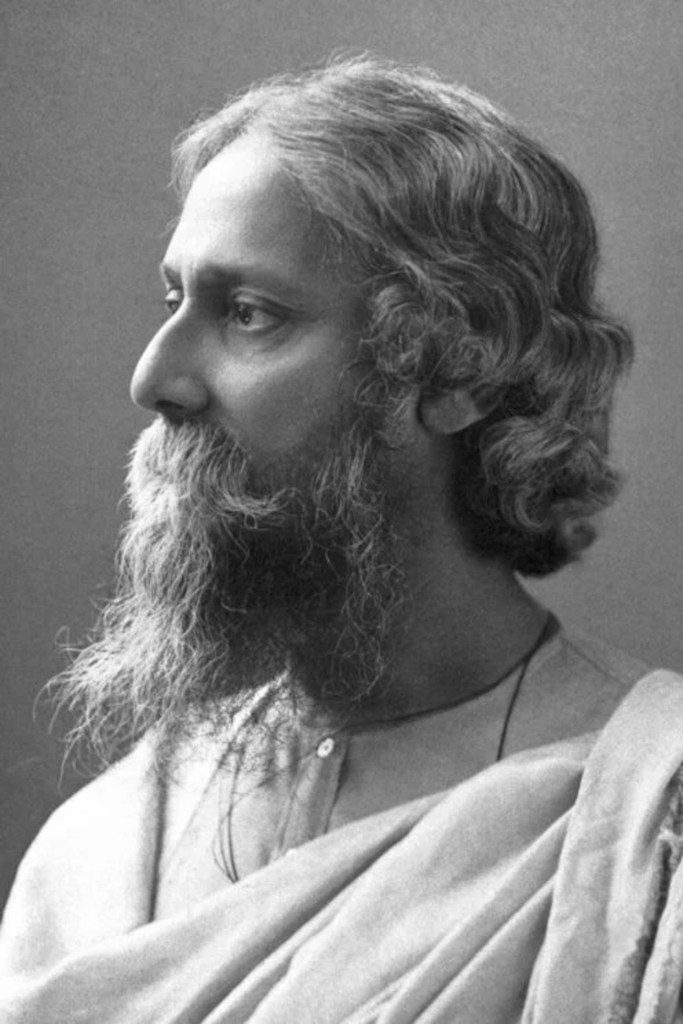
    Image:  William Butler Yeats

    William Butler Yeats’ “Sailing to Byzantium”

    William Butler Yeats’ “Sailing to Byzantium” is a profound meditation on aging, art, and the quest for spiritual transcendence, despite his failure to clearly grasp the Eastern religious/philosophical concepts he strived to portray.

    Introduction and Excerpt from “Sailing to Byzantium”

    William Butler Yeats’ “Sailing to Byzantium” is a profound meditation on aging, art, and the quest for spiritual transcendence. However, despite Yeats’ deep engagement with Eastern religion and philosophy, his interpretation and application of these concepts in his poetry often reveal a “Romantic misunderstanding,” as T.S. Eliot astutely observed. 

    This misunderstanding is clearly evident in “Sailing to Byzantium,” especially in its fourth stanza, where Yeats’ vision of eternal existence through art diverges significantly from Eastern religious/philosophical principles.

    Yeats wrote “Sailing to Byzantium” in 1926, at the age of 61,  as a reflection on the aging process and the spiritual journey required to maintain vitality in the face of physical decline. 

    Sailing to Byzantium

    That is no country for old men. The young
    In one another’s arms, birds in the trees
    —Those dying generations—at their song,
    The salmon-falls, the mackerel-crowded seas,
    Fish, flesh, or fowl, commend all summer long
    Whatever is begotten, born, and dies.
    Caught in that sensual music all neglect
    Monuments of unageing intellect.

    An aged man is but a paltry thing,
    A tattered coat upon a stick, unless
    Soul clap its hands and sing, and louder sing
    For every tatter in its mortal dress,
    Nor is there singing school but studying
    Monuments of its own magnificence;
    And therefore I have sailed the seas and come
    To the holy city of Byzantium.

    O sages standing in God’s holy fire
    As in the gold mosaic of a wall,
    Come from the holy fire, perne in a gyre,
    And be the singing-masters of my soul.
    Consume my heart away; sick with desire
    And fastened to a dying animal
    It knows not what it is; and gather me
    Into the artifice of eternity.

    Once out of nature I shall never take
    My bodily form from any natural thing,
    But such a form as Grecian goldsmiths make
    Of hammered gold and gold enamelling
    To keep a drowsy Emperor awake;
    Or set upon a golden bough to sing
    To lords and ladies of Byzantium
    Of what is past, or passing, or to come.

    Commentary on “Sailing to Byzantium”

    The poem “Sailing to Byzantium” uses a journey to Byzantium (Constantinople now Istanbul,) as a metaphor for a spiritual quest, with the speaker seeking to transcend the limitations of the mortal body and achieve a form of immortality through art.

    First Stanza:  Contrasting Vividly

    That is no country for old men. The young
    In one another’s arms, birds in the trees
    —Those dying generations—at their song,
    The salmon-falls, the mackerel-crowded seas,
    Fish, flesh, or fowl, commend all summer long
    Whatever is begotten, born, and dies.
    Caught in that sensual music all neglect
    Monuments of unageing intellect.

    The opening stanza of “Sailing to Byzantium” presents a vivid contrast between the vitality of youth and the poet’s sense of alienation from the natural world as he ages. Yeats paints a picture of a country teeming with life, where “The young / In one another’s arms, birds in the trees” and “the mackerel-crowded seas” represent the cyclical nature of life and death. 

    The phrase “Those dying generations” underscores the transient nature of all living things, a concept that aligns with Eastern philosophy’s emphasis on impermanence.  However, Yeats’ reaction to this natural cycle reveals a departure from Eastern thought. 

    While Buddhism and Hinduism often advocate for acceptance of life’s impermanence, Yeats expresses a desire to escape it. His assertion that “all neglect / Monuments of unageing intellect” suggests a privileging of human intellect and art over the natural world, a distinctly Western perspective that contradicts the Eastern emphasis on harmony with nature.

    Second Stanza:  Aging and the Quest for Renewal

    An aged man is but a paltry thing,
    A tattered coat upon a stick, unless
    Soul clap its hands and sing, and louder sing
    For every tatter in its mortal dress,
    Nor is there singing school but studying
    Monuments of its own magnificence;
    And therefore I have sailed the seas and come
    To the holy city of Byzantium.

    In the second stanza, Yeats further develops the theme of aging and the quest for spiritual renewal. The image of an aged man as “a paltry thing, / A tattered coat upon a stick” vividly conveys the physical deterioration that comes with age. However, Yeats proposes that this decline can be transcended if the soul can “clap its hands and sing, and louder sing / For every tatter in its mortal dress.”

    This concept of the soul triumphing over bodily decay echoes certain Eastern philosophical ideas, particularly the Hindu concept of the soul, which is the eternal self, transcending the physical body. 

    However, Yeats’ emphasis on the soul’s need to “sing” and study “Monuments of its own magnificence” reveals a more Western, ego-centric approach to spiritual transcendence. In contrast, many Eastern philosophies advocate for the dissolution of the ego and the realization of the soul’s unity with the Divine Reality.

    Third Stanza:  The Concept of Transformation 

    O sages standing in God’s holy fire
    As in the gold mosaic of a wall,
    Come from the holy fire, perne in a gyre,
    And be the singing-masters of my soul.
    Consume my heart away; sick with desire
    And fastened to a dying animal
    It knows not what it is; and gather me
    Into the artifice of eternity.

    The third stanza introduces the “sages standing in God’s holy fire,” whom the speaker implores to be the “singing-masters of my soul.”  This imagery draws on both Western and Eastern concepts, blending Christian imagery of holy fire with the Eastern idea of spiritual masters or gurus. The speaker’s desire to have his heart consumed away and to be gathered into “the artifice of eternity” reflects a yearning for spiritual transformation.

    However, Yeats’ conception of this transformation as an “artifice” created by sages diverges from Eastern philosophical traditions.  In many Eastern spiritual practices, enlightenment or liberation is seen not as an artificial state created by external forces, but as the realization of one’s true nature, of uniting the individual soul with the Oversoul, or God.  Yeats’ portrayal suggests a more Western, interventionist approach to spiritual transformation.

    Fourth Stanza: Romantic Misunderstanding

    Once out of nature I shall never take
    My bodily form from any natural thing,
    But such a form as Grecian goldsmiths make
    Of hammered gold and gold enamelling
    To keep a drowsy Emperor awake;
    Or set upon a golden bough to sing
    To lords and ladies of Byzantium
    Of what is past, or passing, or to come.

    The final stanza of “Sailing to Byzantium” most clearly demonstrates Yeats’ “Romantic misunderstanding” of Eastern philosophy. Here, the speaker envisions his eternal form not as a dissolution into God-consciousness (self-realization), as many Eastern traditions insist, but as a golden artifact created by “Grecian goldsmiths.”  This vision of immortality through art is fundamentally at odds with Eastern concepts of liberation from the cycle of birth and death.

    Yeats’ desire to take a form “Of hammered gold and gold enamelling” to entertain “lords and ladies of Byzantium” reveals a distinctly Western preoccupation with individual identity and artistic legacy. This contrasts sharply with Eastern religious/philosophical concepts such as the Buddhist non-self upon entering nirvana or the Hindu idea of samadhi or liberation from cycles of death and rebirth.

    Furthermore, the speaker’s intention to “sing / To lords and ladies of Byzantium / Of what is past, or passing, or to come” suggests a linear view of time that is more aligned with Western thought than with the cyclical time concepts expounded in Eastern religion/philosophy.

    While “Sailing to Byzantium” is undoubtedly a masterpiece of poetic craft, it also reveals the limitations of Yeats’ understanding and application of Eastern philosophical concepts. 

    His vision of spiritual transcendence, particularly as expressed in the fourth stanza, remains rooted in Western ideas of individual immortality and artistic legacy, rather than the Eastern concepts of ego dissolution and unity with the Divine Creator. 

    This “Romantic misunderstanding” of Eastern philosophy, as Eliot termed it, is indeed on full display in this poem, showcasing both the brilliance of Yeats’ poetic vision and the cultural limitations that shaped his interpretation of Eastern thought.

    🕉

    You are welcome to join me on the following social media:
    TruthSocial, Locals, Gettr, X, Bluesky, Facebook, Pinterest 

    🕉

    Share

  • Quotations

    Image:  Open AI created inspired by the lines “Noise blossoms in the mind / Bursting into a riot of sound color”

    Quotations

    Paramahansa Yogananda:  People interested in developing their memory should avoid the regular use of stimulants such as coffee, tea, and tobacco, which contain caffeine, theine, and nicotine, respectively.* Strictly avoid using strong stimulants such as liquor and drugs.  Such substances intoxicate, drug, and deteriorate the intelligence and memory cells of the brain, preventing them from recording noble ideas and sense impressions in general.  Memory cells that are constantly anesthetized by intoxicants lose their retentive power, and become lazy and inert. Intoxication obliterates the functions of the conscious mind by harmful chemicals, hence injures the cerebral memory-organ.  When the brain is affected the memory is impaired. — SRF Lesson 51:  “Yoga Methods for Developing Memory” (*Editor’s Note: Some modern research indicates that light to moderate use of caffeine improves short-term memory for brief periods.  Yogis, however, assert that continuous use over a long period erodes rather than enhances the capacity of this divine faculty.)

    Paramahansa Yogananda:  In the natural course of evolution through reincarnation, souls are automatically reincarnated by cosmic law in a higher form or species in each incarnation.  The soul is never reborn in the same animal species:  a dog is never a dog again. — SRF Lesson 78: “Conscious Evolution”

    Paramahansa Yogananda:  There is nothing more powerful than will.  Everything in this universe is produced by will.  Physiological changes may even be made to occur in the body by will power.  There is no time element involved; place a thought in the mind and hold it there, and think that the thing is done and your whole body and mind will respond to it.  Nor does it take time to acquire or discard a habit if you exercise sufficient will power.  It is all in your mind. —SRF Lesson S-4 P-79

    Paramahansa Yogananda:   Remember that when you are unhappy it is generally because you do not visualize strongly enough the great things that you definitely want to accomplish in life, nor do you employ steadfastly enough your will power, your creative ability, and your patience until your dreams are materialized. —SRF Lessons and Spiritual Diary, April 22 – Will Power, Creative Ability, & Patience

    Paramahansa Yogananda: The Sanskrit word for ‘musician’ is bhagavathar, “he who sings the praises of God.” —Autobiography of a Yogi

    Sri Yukteswar:  Forget the past.  The vanished lives of all men are dark with many shames.  Human conduct is ever unreliable until man is anchored in the Divine.  Everything in future will improve if you are making a spiritual effort now.   —Autobiography of a Yogi

    Sri Yukteswar: “How can sense slaves enjoy the world? Its subtle flavors escape them while they grovel in primal mud. All nice discriminations are lost to the man of elemental lusts.”  —Autobiography of a Yogi

    Sri Yukteswar:  Sri Yukteswar’s interpretation of the Adam and Eve creation story in Genesis—from Autobiography of a Yogi, pages 169-171, Twelfth Edition, First quality paperback printing 1994:

    Genesis is deeply symbolic, and cannot be grasped by a literal interpretation; its “tree of life” is the human body.  The spinal cord is like an upturned tree, with man’s hair as its roots, and afferent and efferent nerves as branches.  The tree of the nervous system bears many enjoyable fruits, or sensations of sight, sound, smell, taste, and touch.  In these, man may rightfully indulge; but he was forbidden the experience of sex, the “apple” at the center of the body (“in the midst of the garden”).  (my emphasis)

    The “serpent” represents the coiled-up spinal energy that stimulates the sex nerves.  “Adam” is reason, and “Eve” is feeling.  When the emotion or Eve-consciousness in any human being is overpowered by the sex impulse, his reason or Adam also succumbs.

    God created the human species by materializing the bodies of man and woman through the force of His will; He endowed the new species with the power to create children in a similar “immaculate” or divine manner.  Because His manifestation in the individualized soul had hitherto been limited to animals, instinct-bound and lacking the potentialities of full reason, God made the first human bodies, symbolically called Adam and Eve.  To these, for advantageous upward evolution, He transferred the souls or divine essence of two animals.  In Adam or man, reason predominated; in Eve or woman, feeling was ascendant.  Thus was expressed the duality or polarity that underlies the phenomenal worlds.  Reason and feeling remain in the heaven of cooperative joy so long as the human mind is not tricked by the serpentine energy of animal propensities.

    The human body was therefore not solely a result of evolution from beasts, but was produced through an act of special creation by God.  The animal forms were too crude to express full divinity; man was uniquely given the potentially omniscient “thousand-petaled lotus” in the brain, as well as acutely awakened occult centers in the spine.

    God, or the Divine Consciousness present within the first created pair, counseled them to enjoy all human sensibilities, with one exception: sex sensations.  These were banned, lest humanity enmesh itself in the inferior animal method of propagation.  (my emphasis)  The warning not to revive subconsciously present bestial memories was unheeded.  Resuming the way of brute procreation, Adam and Eve fell from the state of heavenly joy natural to the original perfect man.  When “they knew they were naked,” their consciousness of immortality was lost, even as God had warned them; they had placed themselves under the physical law by which bodily birth must be followed by bodily death.

    The knowledge of “good and evil,” promised Eve by the “serpent,” refers to the dualistic and oppositional experiences that mortals under maya must undergo.  Falling into delusion through misuse of his feeling and reason, or Eve- and Adam-consciousness, man relinquishes his right to enter the heavenly garden of divine self-sufficiency.  The personal responsibility of every human being is to restore his “parents” or dual nature to a unified harmony or Eden.

    Alexander Pope: Hope springs eternal in the human breast. —An Essay on Man: “Epistle 1”

    Alexander Pope:  All are but parts of one stupendous whole, / Whose body Nature is, and God the soul. —An Essay on Man: “Epistle 1”

    Alexander Pope: And, spite of pride, in erring reason’s spite, / One truth is clear, Whatever is, is right. —An Essay on Man: “Epistle 1”

    Alexander Pope:  Know then thyself, presume not God to scan; / The proper study of mankind is man.  —An Essay on Man: “Epistle 2”

    Alexander Pope: What Reason weaves, by Passion is undone.  —An Essay on Man: “Epistle 2”

    T. S. Eliot:  Man is man because he can recognize supernatural realities, not because he can invent them.

    Evan Sayet:  “The modern liberal will invariably side with evil over good, wrong over right, and the behaviors that lead to failure over those that lead to success.”