Stephen Crane’s “The Wayfarer” and Other Versanelles
One of novelist Stephen Crane’s most admired versanelles, “The Wayfarer,” makes a profound statement about how rarely the path to “truth” is traveled. The three other versanelles offer interesting though less profound themes.
Introduction: Three Versanelles by Stephen Crane
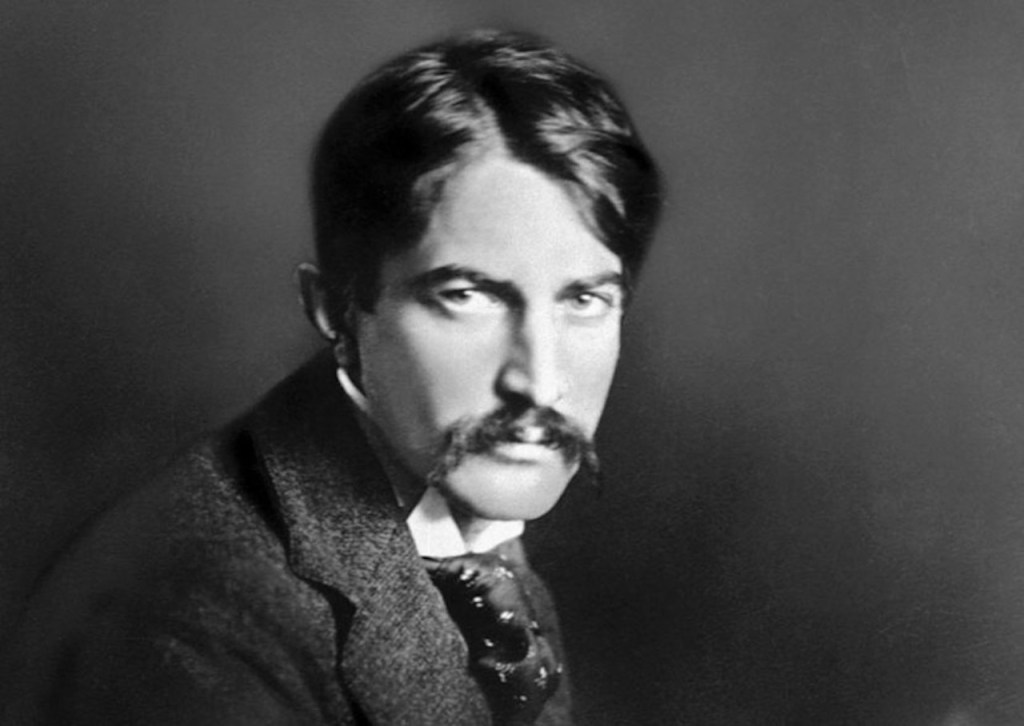
Stephen Crane is most widely noted for his important American Civil War (1861-1865) novel, The Red Badge of Courage. He is credited with the founding of the Naturalist Movement in novel writing through this second novel. About Crane’s literary talent, novelist Ralph Ellison has famously remarked,
The important point is that between Twain and the emergence of the driving honesty and social responsibility of Faulkner, no artist of Crane’s caliber looked so steadily at the wholeness of American life and discovered such far-reaching symbolic equivalents for its unceasing state of civil war. Crane’s work remains fresh today because he was a great artist, but perhaps he became a great artist because under conditions of pressure and panic he stuck to his guns.
Writing in several diverse fields, Crane began his writing career as a journalist, earning the highest salary ever afforded newspaper correspondents for his reporting from Cuba.
In addition to his novel, Red Badge of Courage, he brought out two collections of poems, The Black Riders and Other Lines, published by Copeland & Day in 1895 and War Is Kind published by Frederick A. Stokes in 1899. Cornell University Press published The Complete Poems of Stephen Crane in 1972.
While Crane’s prowess as a novelist has earned him a permanent place in American literary history, his poems do not reach any exalted level. These little dramas are interesting and useful in their ideational configuration, but ultimately they do not bring forth any moment of rare observation.
When a novelist (or even a playwright) tries his hand as poetry, the result is often lackluster, as also may be observed in the poetry of novelist D. H. Lawrence and playwright Tennessee Williams. A notable exception to this rule is the Shakespeare writer, who penned both classic plays as well as poetry.
The Poetry Device “Versanelle”
The versanelle, a term that I coined for use in my commentaries about poems, is usually quite short, twenty lines or fewer; it gathers to an enigmatic punch line that implies an observation about human behavior. It often describes a scene as it tells its very short tale, sometimes quite mysterious and tantalizing, yet often something quite mundane.
It may use ordinary poetic devices such as metaphor, image, personification, metonymy, and simile, or it may simply rely on other colorful language.
Stephen Crane’s Three Important Versanelles
The novelist’s little sequence of poems that appeared in Edmund Clarence Stedman’s An American Anthology demonstrates the useful form, versanelle, that poets from time to time engage.
First Versanelle: “The Wayfarer”
The wayfarer
Perceiving the pathway to truth,
Was struck with astonishment.
It was thickly grown with weeds.
“Ha,” he said,
“I see that none has passed here
In a long time.”
Later he saw that each weed
Was a singular knife.
“Well,” he mumbled at last,
“Doubtless there are other roads.”
Reading of “The Wayfarer”
Commentary on “The Wayfarer”
In novelist Stephen Crane’s much anthologized “The Wayfarer,” the speaker imparts a little tale about a traveler who sets out to travel down the “pathway to truth.” The traveler is at once “struck with astonishment” that the pathway is overgrown with weeds.
So the traveler remarks that obviously nobody has traveled down this path for quite some time. Then he notices that each weed is actually “a singular knife.” It is at this point that the traveler decides he will also abandon this pathway to truth and look for another road.
The implication of this scenario is that like all the others who have tried and then abandoned the way to truth, this traveler will not get to truth either, because he would prefer to travel an easier path.
While the implication remains fascinating and holds a certain amount of accuracy—the pathway to truth seems to be lightly trodden—the reason for this particular traveler to abandon this pathway seems quite prudent. If each weed were a “knife,” he likely could not have reached his goal without considerable damage or even death.
Even though the way to truth may often be difficult, it surely does not offer such a means to damage and death. Only the ignorant would be likely to follow such a path. Obviously, Crane’s philosophical powers met with obstacles of distraction as he attempted to structure his thought into drama.
Second Versanelle: “There was a land where lived no violets”
There was a land where lived no violets.
A traveller at once demanded: “Why?”
The people told him:
“Once the violets of this place spoke thus:
‘Until some woman freely gives her lover
To another woman
We will fight in bloody scuffle.’”
Sadly the people added:
“There are no violets here.”
Reading of “The Violets”:
Commentary on “There was a land where lived no violets”
In “There was a land where lived no violets,” the speaker relates a tale that accounts for there being no violets growing in a certain location. A traveler asks the residents why there are no violets in the area.
They tell him that violets used to proliferate there, but then once upon a time the violets made the odd announcement, “Until some woman freely gives her lover / To another woman / We will fight in bloody scuffle.”
The local residents therefore professed, “There are no violets here.” The absence of violets demonstrated that the violets fought a bloody battle, and the battle continued until the last violet was dead, and thus no more existed to reproduce. Clearly, not all of Crane’s versanelles can be judged a total success!
Third Versanelle: “‘Scaped” (“Once I knew a fine song”)
Once I knew a fine song,
—It is true, believe me,—
It was all of birds,
And I held them in a basket;
When I opened the wicket,
Heavens! they all flew away.
I cried, “Come back, Little Thoughts!”
But they only laughed.
They flew on
Until they were as sand
Thrown between me and the sky.
Reading of “‘Scaped”
Commentary on “‘Scaped” (“Once I knew a fine song”)
In Stephen Crane’s versanelle titled, “‘Scaped,” (also titled “Once I knew a fine song”), the speaker reports that he used to know a “fine song.” He interjects to demand that the listener believe him because “It is true.” He continues, “It was all of birds.” He kept them “in a basket,” and surprisingly, when he opened the basket door, all the birds “flew away.”
The speaker demanded of them, “Come back, Little Thoughts!” But of course, they just “laughed” at him and continued on their flight. Then they suddenly transformed into “sand” that seemed to be, “Thrown between [himself] and the sky.”
Instead of protecting the “fine song” that might have lived in perpetuity in his wonderful mind, he let the grace notes escape, and they devolved into meaninglessness.


Questions, comments, suggestions offered in good faith are always welcome. If you use a pseudonym, please include your real name, if you expect a response.