the sick cat in the clowder calls, (the little girl who loved her lost) wanders in the alley, falls and stiffens like a frozen coat; a powder of November palls on the despair of hunted dusks, a dumb husk of hares; that creature in the corner there sprawling in the drunken chair ringing silver on the table has no business being here and is in trouble.
TETSUMARO HAYASHI
When these feathered sing In fawdled magnolia It is truly spring.
GILLESPIE TOWERS
This winter sun again is centered Above Gillespie Towers where Each dawn discovers lights declaring Early risers there. Infirm and ill and some demented, Why do they rise in winder, staring When each in her cell might bask instead In summer dreams beneath the snows Of memory, secure and somnolent? The weak light rallies, and I know: A car awaits her who is newly dead. I must take leave of this, prepare my readings (Poems of death) for students, show Them the journey we must go.
VALEDICTORY
Not, if nothing else, a free Thing one spends his red time making, Fit words: between you and me (One’s self abides though every shaking Star whipsaw on any side) This talk wrought for all your taking, This song, one’s self abides. There are lives no need to move to laughter One’s debtors dying as alone, To ink one’s name is writ in water: The polished stanza is a stone.
Thus was this is, and this to be Horseman nor hearse in passing see, Or lovers in the quarreling world Read any but their now stones knurled; Nothing but poetry forgives Beauty for being so; we live Until we die, and die until, Rising like any spring a round us, God or godlessness unground us.
to be continued, check back for updates
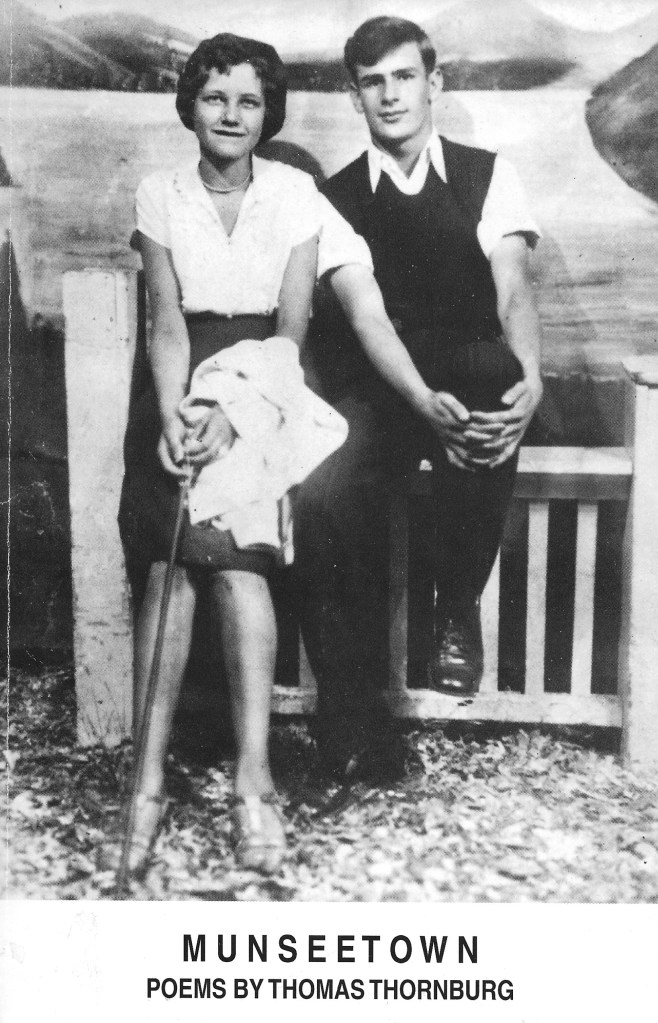
Publication Status of Munseetown
Currently, no copies of Munseetown are available anywhere on the Internet. That status may change, and maybe even with some research, copies may be found. I will continue to search for copies.
One wonders whom the next elected Criminal for these troubled times Will the feckless public, suspect, Lever in the long direction (Between the last war and the next) We take in our quotidian crimes; How long our matrons skirt the leering Lawless on main ways to market; How long our aged folk in fear Imprisoned at their portals peering On them convicted in their derring And that with such cocksureness wear The scutum of their darknesses, Petronius? (I pray you, burn these letters.)
Agrippina
After the last trick had been turned in the game, The bumpers drunk, the galley fallen apart; The lying maid having drunk to a different name A cup for the journey, so to speak, at the start; One wonders whether that harried dame ever thought In terms of that fat man she and she father had wrought. Surely in knowing she would have aborted that plan Before it came forth in this world and assumed the shape of a man, Perhaps. Nine gods were enough of a problem; she laid it on fate; She even exclaimed on how simple it was and absurd (She was dead for some time before they came to kill her, too late) To have birthed and been part of the proof and power of Hate. The guise it assumed and its manner have also endured: Took its place in the capitol, developed a merchant for fire, Was witty and sullen, hired artists to teach it the lyre, Gave games for the people, and like an innocent bird.
Homage to Catullus
1
SWEET Lesbia,would you know the half of all my pleasure when your husband laughs delighted at your flyting and the flashing spite that lights your countenance when we two fight? watch out, my girl, your fat fool’s treasure, I may absent myself and rob the only pleasure he takes in both of us. O, what frustration should I reave your table of my conversation— no, no, do not start up so hastily to weep; this is a lover’s promise not to keep. but still . . . his pleasure when your latest insult flies against me, and the room lights from your brilliant eyes as when I goad you fast between your thighs.
2
OCTAVIA, you bitch, when you deride me in the taverns, it is time you knew you build the envious world you hide in, and every drunkard there suspects the true. why is it now, fat forty, you should blame my cold pursuits at something you’d not give me years ago, now when you wear my best friends’s name? sweet Mercury, the weird world we live in! how you condemn me, now I am a poet who never knew you slim, nor know you fat, so stop pretending, dear, your friends all know it, even they know that.
3
FLAVIVS, do you know rising in the Forum, lisping your meums, tuums, how your colleagues snicker to one another common knowledge about your extra-curricular quorums? could you believe the pupils would not talk you in their graffiti in the public stalls? why have you let the praetors and plebeians mock your courses you offer on the taverns walls? O tempora, mores! we all know you, dear, each several senator and charioteer.
to be continued, check back for updates
Publication Status of Ancient Letters
Amazon currently features one copy available at $7.00. This copy does not feature the original book cover. An additional option is offered by another seller, priced at $85.00 plus shipping.
The following poems are from Thomas Thornburg’s first published collection, Saturday Town & other poems, published in 1976 by Dragon’s Teeth Press.
INTRODUCTION
You, man or woman who hand this book Alive in this red world, looking To your own in your human heart The charged color of my high art, The word made flesh and the fleshed hoarding, Edged as one’s arm is, a supple knifing When knives come out and the thrust is in, Bone and blood is, kith and kinning, Hearth is and homeward, child and wiving Is this samethingness, blood and wording That is my labor, You are only my farthest neighbor.
SATURDAY TOWN
When I was a young stud heeling down The reebing streets of Saturday town The houses mewed and rafters rollicked, And who didn’t know me for a rounder? I played knick-knack while the sun fell, frolicked My heart like seven on the sawdust flooring Where the women boomed and the basses faddled I forked me a singular journey, saddled All the long moon where the dogstar diddled Till the cats closed shop for the dearth of dorking And the town turned over to see such sport; Oh, it was red money I spent indooring. One jig my heart snapped like a locket And I kissed it off to the fat and faring, Buckled my knees to the silver caring And hawsered my heart to an apron pocket. It’s luck I sing to the he and seeing, To the sidewalk shuffle of Saturday town (While the moon turns over and mountains scree) Where the owl and the pussycat buoy their drowning Ding-bat times in a stagging sea— Harts tine where the roe-bucked does are downing— And the Saturday man I used to be.
AS I WALKED OUT IN THUNDERING APRIL
As I walked out in thundering April And all the streets were runing And the day green-good went rilling for me, Freely I strolled in the curtained sunning; The world wave-wet, joyed and easily I nithing was, but not alone; There tulip and crocus and windy anemone Gayed in the giving rains, pleasing The very crows that the black wood cawed me, The trees in the rainy park applauded. As I youthed out in April, latching The careful door of my fathers’s house, A wind turned, catching my fellow slicker And the trafficking plash to market doused My sunday Pants; to the sexy dickering Town I puddled; it was time I forded, The pavement running seaward; There cunning I Brought fisted tulips to a boobing lady Who dawdled in her kinsman’s house; By back-alley ways where the lilac fawdled Rain-heavy blooms on my shoulder, purple; Sheer-bloused there in the corner-nook chair She sang an ancient turtling song, The morning ran over, the tall wood rooking. As I stepped into another April And capped my head, O, the winding day Carried the calling birds who circled In the peevish wet where the woods were graying; My hard-monied house stood still behind me Spelt home to children as they came hilling; It was a luffing wind my hart spilled, From the shrouding hangings of myself came, rilling Tulip and crocus and windy anemone To the hawser nithings, the port of onlies; It was not April ran my face But the figured sum of April tracing: Stood in that cycled hubbing weather Rounding my compassed heart until, My deaths aprilling my august knees, We walked the runing streets together
to be continued, check back for updates
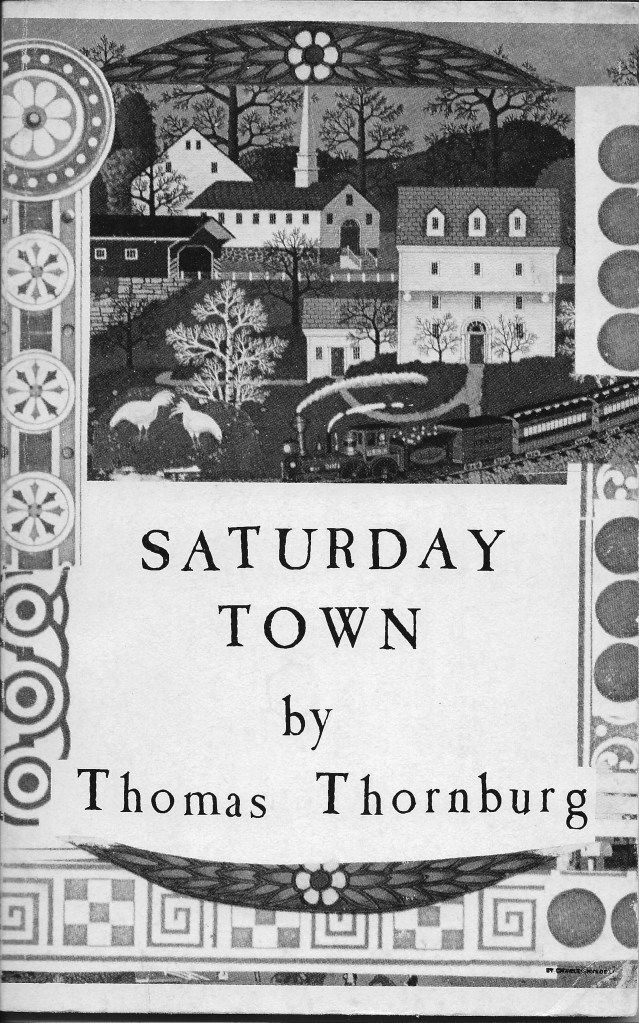
Publication Status of Saturday Town
Currently, no copies of Saturday Town are available anywhere on the Internet. That status may change, and perhaps with some research, copies may be found. I will continue to search for copies.
Elizabeth Barrett Browning’s Sonnet 4 “Thou hast thy calling to some palace-floor”
Elizabeth Barrett Browning’s sonnet 4 from Sonnets from the Portuguese continues with the speaker musing on her new relationship with her suitor, who seems too good to be true.
Introduction with Text of Sonnet 4 “Thou hast thy calling to some palace-floor”
The speaker in Elizabeth Barrett Browning’s sonnet 4 “Thou hast thy calling to some palace-floor” seems to be searching for a reason to believe that such a match with a suitor as distinguished as hers is even possible. She continues to brood in a melancholy line of thought, even as she seems to be becoming enthralled with the notion of having a true love in her life.
The speaker’s past continues to cause her to brood and remain skeptical, as she has difficulty accepting her own accomplishments and poetic talent. Likely, she is aware of her considerable ability, but when compared to her suitor, she feels that she cannot compete equally.
Sonnet 4 “Thou hast thy calling to some palace-floor”
Thou hast thy calling to some palace-floor, Most gracious singer of high poems! where The dancers will break footing, from the care Of watching up thy pregnant lips for more. And dost thou lift this house’s latch too poor For hand of thine? and canst thou think and bear To let thy music drop here unaware In folds of golden fulness at my door? Look up and see the casement broken in, The bats and owlets builders in the roof! My cricket chirps against thy mandolin. Hush, call no echo up in further proof Of desolation! there’s a voice within That weeps … as thou must sing … alone, aloof.
Reading
Commentary on Sonnet 4 “Thou hast thy calling to some palace-floor”
Sonnet 4 marches on with the speaker’s musing on her new relationship with her suitor. She seems to remain skeptical that such a relationship can endure, even as she obviously hopes that it will.
She colorfully compares her lot with that of her suitor, by presenting an image of her dwelling juxtaposed with the image of the royal venue where her beloved is welcomed and where he performs.
First Quatrain: Mesmerizing Kings, Queens, and Royal Guests
Thou hast thy calling to some palace-floor, Most gracious singer of high poems! where The dancers will break footing, from the care Of watching up thy pregnant lips for more.
In Sonnet 4 from Sonnets from the Portuguese, the speaker is addressing directly her suitor, as she continues her metaphorical comparison between the two lovers in a similar vain as she did with Sonnet 3. Once again, she takes note of her suitor’s invitations to perform for royalty, as she colorfully remarks, “Thou hast thy calling to some palace-floor.”
Her illustrious suitor has been a “[m]ost gracious singer of high poems,” and the royal guests curiously stop dancing to listen to him recite his poetry. The speaker visualizes her remarkable suitor at court, mesmerizing the king, queen, and royal guests with his poetic prowess.
Second Quatrain: Rhetorical Musings on Class Distinctions
And dost thou lift this house’s latch too poor For hand of thine? and canst thou think and bear To let thy music drop here unaware In folds of golden fulness at my door?
In the second quatrain, the speaker puts forth a rhetorical question in two-parts:
1. Being one of such high breeding and accomplishment, are you sure that you want to visit one who is lower class than you? 2. Are you sure that you do not mind reciting your substantial and rich poetry in such a low class place with one who is not of your high station?
The questions remain rhetorical only in that the speaker entertains the deep hope that the answer to both parts of the question remains resoundingly in the affirmative. Because readers of this sequence already know how the drama turns out, they must wonder if as she was writing these melancholy thoughts, she secretly held the sentiment of relief, knowing that her skepticism and doubt had been laid to rest.
First Tercet: Contrasting Visual and Auditory Images
Look up and see the casement broken in, The bats and owlets builders in the roof! My cricket chirps against thy mandolin.
The speaker then insists that her royalty-worthy suitor take a good look at where she lives. The windows of her house are in disrepair, and she cannot afford to have “the bats and owlets” removed from the nests that they have built in the roof of her house. The final line of the first sestet offers a marvelous comparison that metaphorically states the difference between the suitor and speaker: “My cricket chirps against thy mandolin.”
On the literal level, she is only a plain woman living in a pastoral setting with simple possessions, while he is the opposite, cosmopolitan and richly endowed. And he is famous enough to be summoned by royalty, possessing the expensive musical instrument with which he can embellish his already distinguished art.
The lowly speaker’s “cricket” also metaphorically represent her own poems, which she likens to herself, poor creatures compared to the “high poems” and royal music of her illustrious suitor. The suitor’s “mandolin,” therefore, literally exemplifies wealth and leisure because it accompanies his poetry performance, and it figuratively serves as a counterpart to the lowly cricket of the speaker.
Second Tercet: A Natural Mode of Expression
Hush, call no echo up in further proof Of desolation! there’s a voice within That weeps … as thou must sing … alone, aloof.
The speaker again makes a gentle demand of her suitor, begging him, please do not be concerned or troubled for my rumblings about poverty and my lowly station. The speaker is asserting her belief that it is simply her natural mode of expression; her “voice within” is one that is given to melancholy, even as his voice is given to singing cheerfully.
The speaker implies that because she has lived “alone, aloof,” it is only natural that her voice would reveal her loneliness and thus contrast herself somewhat negatively with one as illustrious and accomplished as her suitor.
This is my experience of a recurring nightmare that came true.
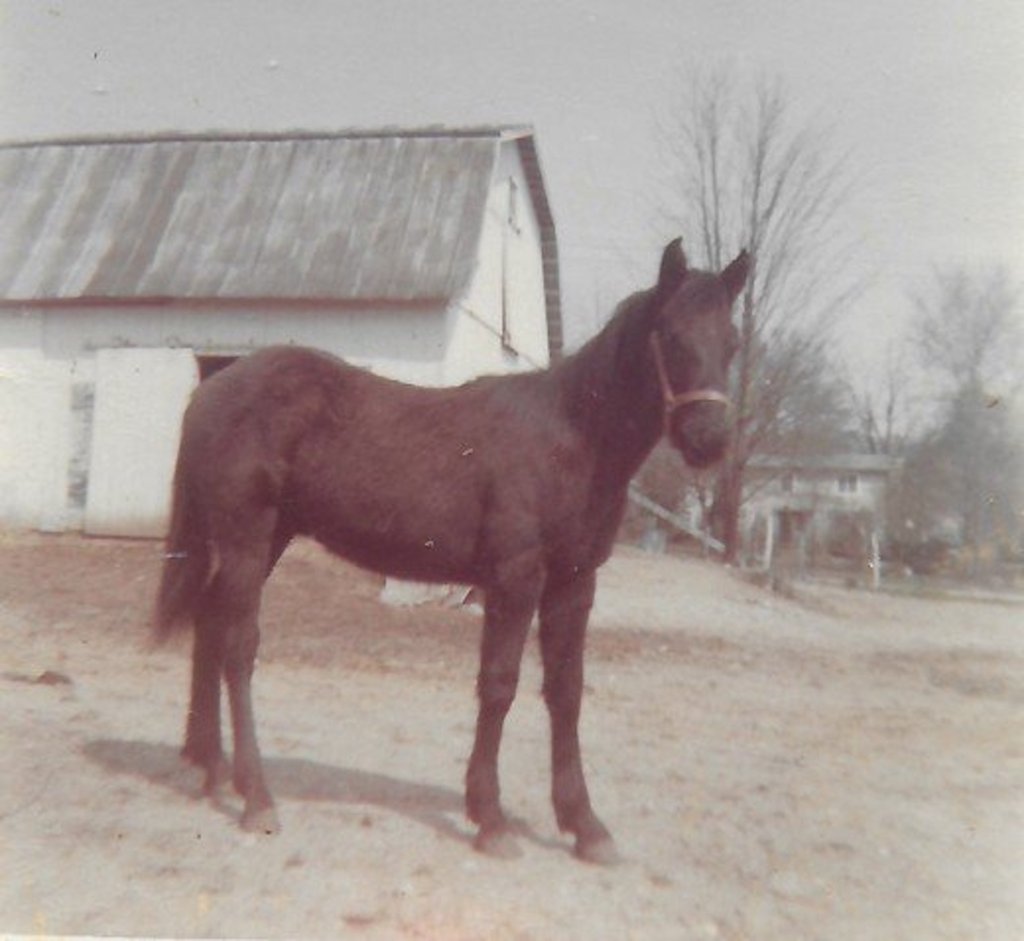
In 1970 I was 16 years old. We lived in a small town in Southeastern Indiana, in a little neighborhood just across the river from town. Our house was on the main road, and we had horses in a barn and pen area on the other side of the neighborhood. To get to the barn, we walked along a path that led past our grandparents’ house. The path led from our driveway, all the way across the neighborhood to the back road.
On the way to the barn, our grandparents’ house was to the right, up a small hill past a yard with lots of trees and beautiful landscaping with flowers and shrubs.
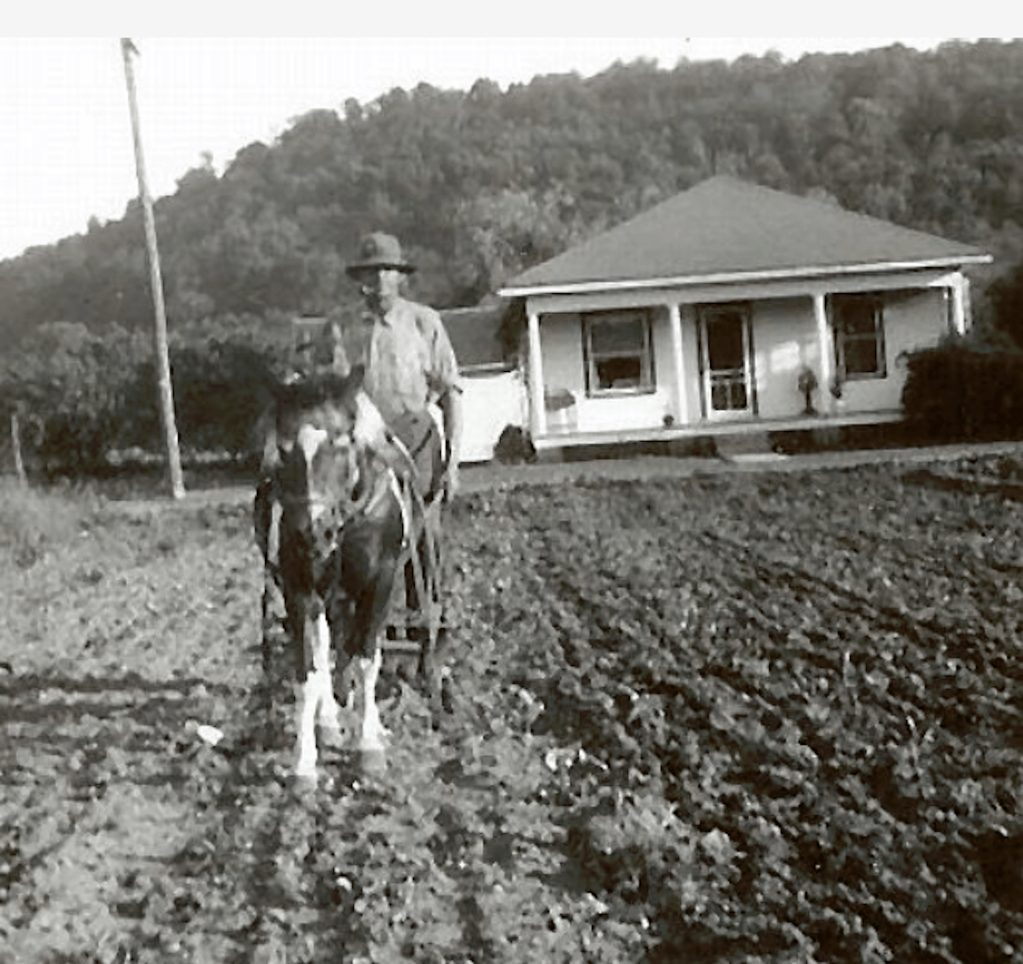
Grandpa Plowing the Garden
On the left side of the path was a huge flower garden with a grape arbor and many shrubs, small trees, and hundreds of flowers that bloomed in spring and summer.
Our Grandparents Loved Animals
When we were very little, our grandparents always had ponies and horses, and many other pets and animals. Grandpa used to take us for pony cart rides.
Picture of grandpa and us on a pony cart ride
Our grandparents had passed away years ago. From them, we inherited our love for animals. We usually had a couple of ponies and horses, as well as several dogs. I loved horses and everything about them, so one of my chores was to feed the horses every morning before school. In the winter, that meant that I had to walk along the path across the neighborhood to the barn in the dark. That didn’t bother me at all. I carried a flashlight so I could see, but I wasn’t afraid of the dark. We knew everyone in the neighborhood, and I always felt completely safe there.
The Nightmare
One night I dreamed that when I went to the barn to feed the horses, there was a man in the barn. In the dream, as I was giving the horses hay, a man came up behind me. It scared me, and I usually woke up right away. I didn’t think too much about it at the time, but then I started having that dream every night. It started to scare me a lot, so I told my mom about the dreams. I told her that I was afraid to go over to the barn.
We had three German Shepherd dogs at the time, and Mom said, “Well, take the dogs with you.” So I started taking the dogs with me every morning. The dogs loved the early morning trek to the barn, and they were always eager to join me. Once I started taking the dogs with me, the dream stopped.
A few weeks later, I started having the dream again. In one of the dreams, when the man in the barn came at me, I grabbed a pitchfork and stabbed him. That only happened in one of the dreams. In all the other dreams, I just saw a man in the barn, it scared me, and I woke up right away.
After a few more nights of these dreams, I told mom that I was having that dream again and that I was afraid to go to the barn even though the dogs were with me. Mom said, “Take Randy with you.” Randy, my younger brother, was 14 years old at the time. He wasn’t obsessed with horses like I was, and he wasn’t exactly thrilled that he had to go out in the dark early morning cold, but he went along anyway. He loved the dogs, and he enjoyed seeing how excited they were to go on our morning excursions.
The Dream Stops for Awhile
After I started taking the dogs, and my brother with me to feed the horses, the dreams stopped, and all was good for a while.
Then one night I had the dream again. I didn’t tell Mom or Randy that I had had the dream again. I didn’t know what else could be done, and since I had been having the dream on and off for several weeks and nothing bad had happened, I wasn’t too worried about it.
That morning as we reached the barn, we noticed that the dogs were excitedly sniffing at the barn doors and running back and forth in front of the doors. I thought that they had probably just caught the scent of an animal, maybe a rabbit or something. I slid open the huge double barn doors, and the dogs immediately ran inside barking and growling. Inside the barn toward the back was the haystack.
A man jumped up out of the hay and yelled as the dogs were at his feet. I couldn’t tell if the dogs bit him, but they were loudly barking and growling. Randy and I screamed and ran as fast as we could back to our house. The back door of our house faced the south side of the neighborhood and it was closest to the barn. The back door opened directly into the kitchen.
My horse in back of the barn
Randy and I ran in through the back door, and we both screamed, at the same time, “There’s a man in the barn!” In the kitchen were our Mom, our older brother Chuck, and our little sister Faye. At this point, I didn’t know if the dogs were still over at the barn, or if they had followed us back home. Our older brother, Chuck, grabbed a baseball bat and said, “Let’s go.” I remember being very impressed that Chuck was so brave.
The dogs had come home, and they joined us as we returned to the barn. When we got to the barn, the man was gone. We could see where he had been sleeping in the hay, and where he had taken a leak on the floor. I fed the horses and we returned home. Mom said that she had called the sheriff, and he said that it was probably a bum just getting out of the cold. Then I felt sorry for the man. It must have been horrible to wake up with dogs attacking you.
I Had Told My Family and Girlfriend About the Dreams
I had told only my family and my girlfriend about those recurring dreams. My girlfriend lived just two houses down the road from our barn, and she loved horses as much as I did.
After school that day, I was walking over to the barn as my girlfriend was walking up the road. When she got to the little hill which was on the back road just in front of the barn, I said, “There was a man in the barn this morning.” She said, “I just pinched myself to make sure I wasn’t dreaming.”
The Dream Stops for Good
I never had that dream again, and after a while, I no longer had to make Randy go with me to feed the horses. I did keep taking the dogs though since they loved going with me, and I enjoyed their company.
I will admit that even though I wasn’t afraid anymore, I think that I was more alert as to my surroundings after that. I often wonder what might have happened if I had not had those dreams and if I had not told my mom about them.
Stephen Vincent Benét’s “The Ballad of William Sycamore”
Not strictly a cowboy poem, Benét’s ballad, however, offers the mind-set of an individual close to the land, preferring the rural life to the urban.
Introduction and Text of “The Ballad of William Sycamore”
Stephen Vincent Benét’s “The Ballad of William Sycamore” features 19 rimed, stanzas of traditional ballad form. The subject is the rustic life of William Sycamore, narrated by Sycamore himself from just before his birth to after his death.
The Ballad of William Sycamore
My father, he was a mountaineer, His fist was a knotty hammer; He was quick on his feet as a running deer, And he spoke with a Yankee stammer.
My mother, she was merry and brave, And so she came to her labor, With a tall green fir for her doctor grave And a stream for her comforting neighbor.
And some are wrapped in the linen fine, And some like a godling’s scion; But I was cradled on twigs of pine In the skin of a mountain lion.
And some remember a white, starched lap And a ewer with silver handles; But I remember a coonskin cap And the smell of bayberry candles.
The cabin logs, with the bark still rough, And my mother who laughed at trifles, And the tall, lank visitors, brown as snuff, With their long, straight squirrel-rifles.
I can hear them dance, like a foggy song, Through the deepest one of my slumbers, The fiddle squeaking the boots along And my father calling the numbers.
The quick feet shaking the puncheon-floor, And the fiddle squealing and squealing, Till the dried herbs rattled above the door And the dust went up to the ceiling.
There are children lucky from dawn till dusk, But never a child so lucky! For I cut my teeth on “Money Musk” In the Bloody Ground of Kentucky!
When I grew as tall as the Indian corn, My father had little to lend me, But he gave me his great, old powder-horn And his woodsman’s skill to befriend me.
With a leather shirt to cover my back, And a redskin nose to unravel Each forest sign, I carried my pack As far as a scout could travel.
Till I lost my boyhood and found my wife, A girl like a Salem clipper! A woman straight as a hunting-knife With eyes as bright as the Dipper!
We cleared our camp where the buffalo feed, Unheard-of streams were our flagons; And I sowed my sons like the apple-seed On the trail of the Western wagons.
They were right, tight boys, never sulky or slow, A fruitful, a goodly muster. The eldest died at the Alamo. The youngest fell with Custer.
The letter that told it burned my hand. Yet we smiled and said, “So be it!” But I could not live when they fenced the land, For it broke my heart to see it.
I saddled a red, unbroken colt And rode him into the day there; And he threw me down like a thunderbolt And rolled on me as I lay there.
The hunter’s whistle hummed in my ear As the city-men tried to move me, And I died in my boots like a pioneer With the whole wide sky above me.
Now I lie in the heart of the fat, black soil, Like the seed of the prairie-thistle; It has washed my bones with honey and oil And picked them clean as a whistle.
And my youth returns, like the rains of Spring, And my sons, like the wild-geese flying; And I lie and hear the meadow-lark sing And have much content in my dying.
Go play with the towns you have built of blocks, The towns where you would have bound me! I sleep in my earth like a tired fox, And my buffalo have found me.
Reading:
Commentary on “The Ballad of William Sycamore”
Speaking from two unlikely locales, William Sycamore narrates a fascinating tale of a fanciful life.
First Movement: Rough and Tumble Parents
The speaker describes his parents as scrappy, rough survivors. His mountaineer father had fists that resembled hammers; he ran as fast as a deer, and had a Yankee accent. His mother was merry and brave and also quite a tough woman, giving birth to the narrator under a tall green fir with no one to help her but “a stream for her comforting neighbor.”
While some folks can boast of clean linen fine to swaddle them, Sycamores cradle was a pile of pine twigs and he was wrapped in the skin of a mountain lion. Instead of “a starched lap / And a ewer with silver handles,” he recalls “a coonskin cap / And the smell of bayberry candles.”
Thus, Sycamore has set the scene of his nativity as rustic and rural, no modern conveniences to spoil him. He idealizes those attributes as he sees them making him strong and capable of surviving in a dangerous world.
Second Movement: Fun in the Cabin
Sycamore describes the cabin in which he grew up by focusing on the fun he saw the adults have when they played music and danced. Their visitors were tall, lank, “brown as snuff,” and they brought their long, straight squirrel rifles with them.
He focuses on the fiddle squealing and the dancing to a foggy song. The raucous partying was so intense that it rattled the herbs hanging over the door and caused a great cloud of dust to rise to the ceiling. He considers himself a lucky child to have experienced such, as well as being able to “cut [his] teeth on ‘Money Musk’ / In the Bloody Ground of Kentucky!”
Third Movement: Tall as Indian Corn
The speaker reports that he grew as tall as the Indian corn, and while his father had little to offer him in things, his father did give him a woodsman skill, which he found helpful. With his homespun gear, a leather shirt on his back, he was able to navigate the woodlands like a profession scout.
Fourth Movement: A Sturdy Wife
Reaching adulthood, Sycamore married a sturdy woman, whom he describes as “straight as a hunting-knife / With eyes as bright as the Dipper!” The couple built their home where the buffalo feed, where the streams had no names. They raised sons who were “right, tight boys, never sulky or slow.”
The oldest son died at the Alamo, and the youngest died with Custer. While the letters delivering the news of their fallen sons “burned [his] hand,” the grieving parents stoically said, “so be it!” and push ahead with their lives. What finally broke the speaker’s heart, however, was the fencing of his land, referring the government parceling land to individual owners.
Fifth Movement: Gutsy, Self-Reliance
The speaker still shows his gutsy, self-reliance in his breaking of a colt that bucked him off and rolled over him. After he recovered, however, he continues to hunt, and while the “city-men tried to move [him],” he refused to be influenced by any city ways. He died “in [his] boots like a pioneer / With the whole wide sky above [him].”
Sixth Movement: Speaking from Beyond
Speaking from beyond the grave somewhat like a Spoon River resident, only with more verve and no regret, William Sycamore describes his astral environment as a fairly heavenly place.
He is young again, reminding him of spring rain that returns every year, and his sons are free souls reminding him of wild geese in flight. He hears the meadow-lark, and he avers that he is very contented in his after-life state.
Sycamore disdained the city, as most rustics do, so he uses his final stanza to get in one last dig: “Go play with the town you have built of blocks.” He then insists that he would never be bound by a town, but instead he sleeps “in my earth like a tired fox, / And my buffalo have found me.” In his peaceful, afterlife existence, William Sycamore differs greatly from the typical Spoon River reporter.
The works of Stephen Vincent Benét (1898–1943) [1] have influenced many other writers. Cowboy poet Joel Nelson claims that “The Ballad of William Sycamore” made him fall in love with poetry. Dee Brown’s title Bury my Heart at Wounded Knee comes directly from the final line of Benét’s poem titled “American Names” [2].
The book-length poem, John Brown’s Body, won him his first Pulitzer Prize in 1929 and remains the poet’s most famous work. Benét first published “The Ballad of William Sycamore” in the New Republic in 1922. Benét’s literary talent extended to other forms, including short fiction and novels. He also excelled in writing screenplays, librettos, an even radio broadcasts.
Born July 22, 1898, in Bethlehem, Pennsylvania [3] Benét graduated from Yale University in 1919 where instead of a typical thesis, he substituted his third collection of poems. His father was a military man who appreciated literary studies. His brother William and his sister Laura both became writers as well.
Benét’s first novel The Beginning of Wisdom was published in 1921, after which he relocated to France to study at the Sorbonne. He married the writer Rosemary Carr, and they returned to the USA in 1923, where his writing career blossomed.
The writer won the O. Henry Story Prize and a Roosevelt Medal, in addition to a second Pulitzer Prize, which was awarded posthumously in 1944 for Western Star. Just a week before spring of 1943, Benét succumbed to a heart attack in New York City; he was four month shy of his 45th birthday.
Sources
[1] Editors. “Stephen Vincent Benét.” Academy of American Poets. Accessed January 13, 2026.
[2] Darla Sue Dollman. “Buy My Heart at Wounded Knee and Stephen Vincent Benét.” Wild West History. October 4, 2013.
A “hard-bitten ol’ cowpoke” experiences a mystical experience that changes his heart in the Christmas ballad. He will carry his new change of heart into his daily cow poking life as he honors “the Great Trail Boss in the Sky.”
Introduction with Text of “Cowboy Christmas Carol”
The speaker in cowboy poet David Althouse’s “Cowboy Christmas Carol” spins a deeply spiritual yarn about an old cowboy whose mystical experience leads him to a state of grace and thankfulness that he had been lacking—even though he had lived a relatively carefree life in the open prairie that he loved.
Cowboy Christmas Carol
For a hard-bitten ol’ cowpoke like me a Christmas ain’t always merry; I’ve spent most of ’em a-ridin’ fences, a-sleepin’ in line cabins out on the prairie. So for most a my hard life the spirit of Christmas did not abide within my heart. How I come to possess the spirit is the story I hafta impart.
Tha year was ’87 and I was a-follerin’ doggie trails, A-drinkin’ rot gut whiskey to forget about my life’s travails. Ih was two days from the line cabin, at a far off lonely place, A-roundin’ up some strays, the snow whippin’ crost my face.
Night came of a-suddin’ so’s I bedded down to rest, A tin can full o’ hot coffee a-restin’ crost my chest. Of a-suddin’ I heard somthin’ a-flutterin’ down from the skies. I taken a closer look an I couldn’t believe my eyes.
It looked to be some kind o’ Christmas Angel from the first I did suspect, What with all the sugar plums a-hangin’ ’round ‘er neck. Holly laced ‘er halo an’ lustrous pearls adorned ‘er wings, An’ ‘er sweet little silver bell voice was a-trillin’ little ting-a-ling-a-lings.
“Cast away your fears, cowboy,” she says, “I’m an Angel sent from on High, And I’m here to do the bidding of the Great Trail Boss in the Sky.” Dadgumit she talked! She’s a bonafide Angel fer shore! Was I’a-goin’ feral or was it that bad hooch I drank the night afore?
“It isn’t the whiskey,” she says, a-readin’ my mind. “You don’t even know it cowboy, but it’s Christmas time.” She had me dead to rights on that one, an’ it caused me much chagrin, Causin’ the last time I partook a Christmas was back in … heck, I don’t know when.
“Why, thar ain’t no time fer Christmas out ‘ere Angel,” I says. “It’s absolut’ absurd. I’ve got fences to mend an’ orn’ry doggies to git back to the herd!” She says, “You’ve sunk lower than the wild beasts, lower than a longhorn steer, For even the furry animals keep Christmas once a year.”
“Critters a-keepin’ Christmas?” I says. “Now this I gotta see!” “Very well, cowboy,” she says. “Come fly the night sky with me.” Well my eyes got as big as poker chips when flyin’ she did suggest. “Just take hold of my arm, cowboy,” she says, “and I’ll do the rest.”
To a quiet faraway meadow we flew, to a lonely stand o’ pines, An’ when I looked down a’neath them trees I was in fer a big surprise. Fer a-layin’ thar a’neath them trees all cuddled up on the ground, Was ever’ kind o’ furry critter anywhere to be found.
Rabbits, squirrels, birds and deer all a-layin’ in one spot, With a coyote, wolf and mountain lion a-standin’ guard over the entire lot. She says, “They’re huddled together because the spirit of Christmas fills the air.” “Mebbe so,” I says, “But them smaller critters should be a-scampin’ outa thar!”
“They’ve nothing of which to worry,” she says. “Peace fill their hearts upon this night.” “Whatever ya thank,” I says, ” but they’d best make dust afore first light.” Yet, as I beheld this miracle, I recollect I shed some tears, A-rememberin’ all the wasted Christmases of my long-gone yesteryears.
I vowed I’d do thangs different, that I’d make another start, That ever’ day I had left I’d keep Christmas merry in my heart. Then I gave thanks to this ‘ere Angel fer a-savin’ me from my demise. She just smiled an angelic smile then she a-fluttered back up to the skies.
A-many a year has passed since I beheld that angelic sight, An’ I’ve tried to keep the promise I made to her upon that night. Now I’m proud to herd these doggies, an watch over ’em with all I know — Like extry hay fer the runt calves, when it’s a-freezin’ an’ a-blowin’ snow.
And now I’m thankful that I’m a cowboy, a-roamin’ the trails a-wild an’ free, A-watchin’ over these orn’ry doggies like the Great Trail Boss a-watches over me.
Commentary on “Cowboy Christmas Carol”
The idea that the sentiment of Christmas belongs in each heart every day of the year and not just on one celebrated day enjoys widespread lip-service, although it is seldom achieved. This old cowboy intends to change that fact, at least, for himself .
First Movement: Cowboy Work Comes First
For a hard-bitten ol’ cowpoke like me a Christmas ain’t always merry; I’ve spent most of ’em a-ridin’ fences, a-sleepin’ in line cabins out on the prairie. So for most a my hard life the spirit of Christmas did not abide within my heart. How I come to possess the spirit is the story I hafta impart.
Tha year was ’87 and I was a-follerin’ doggie trails, A-drinkin’ rot gut whiskey to forget about my life’s travails. Ih was two days from the line cabin, at a far off lonely place, A-roundin’ up some strays, the snow whippin’ crost my face.
The speaker is a cowboy who has been practicing his profession for many years, and he admits that mending fences while tending cattle out on the prairie has not always been conducive to observing and celebrating Christmas. He has felt that his mind and heart had been spiritually dry for a long time, but then something happened to change his heart.
During one Christmas season, the speaker was out on the prairie rounding up some stray “doggies,” drinking “rot gut whiskey,” which helped him forget his hard life. He found himself alone, many miles from the “line cabin.” It was cold with snow whipping about his face.
Second Movement: A Mystical Being Appears
Night came of a-suddin’ so’s I bedded down to rest, A tin can full o’ hot coffee a-restin’ crost my chest. Of a-suddin’ I heard somthin’ a-flutterin’ down from the skies. I taken a closer look an I couldn’t believe my eyes.
It looked to be some kind o’ Christmas Angel from the first I did suspect, What with all the sugar plums a-hangin’ ’round ‘er neck. Holly laced ‘er halo an’ lustrous pearls adorned ‘er wings, An’ ‘er sweet little silver bell voice was a-trillin’ little ting-a-ling-a-lings.
The speaker has bedded down for the night with a tin of hot coffee placed on his chest to help drive out some of the cold. With the night’s seemingly sudden arrival, he sees a celestial being approaching from the sky.
The cowboy describes the being in typical cowboy fashion, mentioning “sugar plums,” decorating the form of what appears to be an angel with “lustrous pearls” on her wings. He even hears her voice that sounds like a “sweet little silver bell.”
Third Movement: Sent by the “Great Trail Boss”
“Cast away your fears, cowboy,” she says, “I’m an Angel sent from on High, And I’m here to do the bidding of the Great Trail Boss in the Sky.” Dadgumit she talked! She’s a bonafide Angel fer shore! Was I’a-goin’ feral or was it that bad hooch I drank the night afore?
“It isn’t the whiskey,” she says, a-readin’ my mind. “You don’t even know it cowboy, but it’s Christmas time.” She had me dead to rights on that one, an’ it caused me much chagrin, Causin’ the last time I partook a Christmas was back in … heck, I don’t know when.
The being does not keep the cowboy guessing who she is; she identifies herself as an “Angel,” and she informs him that she is being sent by the Divine or in cowboy talk that “Great Trail Boss in the Sky.” Furthermore, she instructs him not to fear.
Of course, the speaker is wonderstruck at first that this Angel sent from “on High” would be visiting him. He suspects he is hallucinating from the bad whiskey or that he is just going wild in the brain.
The Angel tells him that her appearance has nothing to do with the whiskey. He knows then he is in the presence of something divine because she is reading his mind. She then informs him that it is Christmas time, insisting that he did not even know that season was upon him.
The cowboy has to admit that she has him “dead to rights”—he had not been aware of Christmas for so long that he had actually forgotten the last time he had thought about that season.
Fourth Movement: Too Busy to Celebrate
“Why, thar ain’t no time fer Christmas out ‘ere Angel,” I says. “It’s absolut’ absurd. I’ve got fences to mend an’ orn’ry doggies to git back to the herd!” She says, “You’ve sunk lower than the wild beasts, lower than a longhorn steer, For even the furry animals keep Christmas once a year.”
“Critters a-keepin’ Christmas?” I says. “Now this I gotta see!” “Very well, cowboy,” she says. “Come fly the night sky with me.” Well my eyes got as big as poker chips when flyin’ she did suggest. “Just take hold of my arm, cowboy,” she says, “and I’ll do the rest.”
Then the speaker protests that there is no opportunity for observing Christmas out here on the prairie with “orn’ry doggies” and “fences to mend.” But to his excuses, the Angel counters that he has allowed himself to sink lower than the animals, adding that at this time of year even the animals celebrate the spirit of Christmas.
The cowboy protests that “critters a-keepin’ Christmas” is something he would have to see to believe. And so the Angel tells him to take hold of her arm, and they will “fly the night sky” to a place where she will prove the truth of her statement. With eyes as big as “poker chips,” the cowboy obeys the Angel, and they fly off.
Fifth Movement: An Astral Meadow
To a quiet faraway meadow we flew, to a lonely stand o’ pines, An’ when I looked down a’neath them trees I was in fer a big surprise. Fer a-layin’ thar a’neath them trees all cuddled up on the ground, Was ever’ kind o’ furry critter anywhere to be found.
Rabbits, squirrels, birds and deer all a-layin’ in one spot, With a coyote, wolf and mountain lion a-standin’ guard over the entire lot. She says, “They’re huddled together because the spirit of Christmas fills the air.” “Mebbe so,” I says, “But them smaller critters should be a-scampin’ outa thar!”
The Angel brings him to an astral meadow that looks very much like a place the cowboy would recognize with a “lonely stand o’ pines.” But when he looks down, he can see “rabbits, squirrels, birds and deer,” and “a coyote, wolf and mountain lion” are guarding them all as they rest peacefully in one area.
This inspiring scene offers an allusion to Isaiah 11:6 (KJV), describing the peace that reigns with the experience of Christ-consciousness:
The wolf also shall dwell with the lamb, and the leopard shall lie down with the kid; and the calf and the young lion and the fatling together; and a little child shall lead them.
The Angel explains that the animals had all huddled together because the spirit of Christmas is filling the atmosphere But the cowboy, practical man that he is, remarks that those little critters ought be scampering away from those bigger, dangerous ones.
Sixth Movement: The Peaceful Night
“They’ve nothing of which to worry,” she says. “Peace fill their hearts upon this night.” “Whatever ya thank,” I says, ” but they’d best make dust afore first light.” Yet, as I beheld this miracle, I recollect I shed some tears, A-rememberin’ all the wasted Christmases of my long-gone yesteryears.
I vowed I’d do thangs different, that I’d make another start, That ever’ day I had left I’d keep Christmas merry in my heart. Then I gave thanks to this ‘ere Angel fer a-savin’ me from my demise. She just smiled an angelic smile then she a-fluttered back up to the skies.
The Angel insists that it is only peace that reigns upon this night; yet the cowboy still insists that those little critter better be making “dust” before dawn. Yet, even in his practical, worldly stance, the cowboy finds himself moved to tears, remembering all of his many past “wasted Christmases.” And he then finds that his heart is changed.
The cowboy vows to keep Christmas in his heart from now on. He knows that his life has been saved from his “demise” by this Angel of God, who after smiling at the cowboy’s gratitude “a-fluttered back up” from whence she came.
Seventh Movement: Thankful for Being a Cowboy
A-many a year has passed since I beheld that angelic sight, An’ I’ve tried to keep the promise I made to her upon that night. Now I’m proud to herd these doggies, an watch over ’em with all I know— Like extry hay fer the runt calves, when it’s a-freezin’ an’ a-blowin’ snow.
And now I’m thankful that I’m a cowboy, a-roamin’ the trails a-wild an’ free, A-watchin’ over these orn’ry doggies like the Great Trail Boss a-watches over me.
The cowboy’s story demonstrates a change of heart, from one who had focused too much on the material world to one who would henceforth keep the spiritual world in his consciousness. Although he had always been a good man, because of the mystical experience of being reminded to keep Christ-Consciousness in his heart, mind, and soul, he becomes even better.
From the moment of that experience on, the speaker becomes thankful for his life. He becomes more aware that “the Great Trail Boss” watches over him the way He watches over the cattle. That mystical experience places God’s essence in the cowboy’s awareness, allowing the cowboy to realize his love for the Divine every day of his life.
This inspirational tale reminds readers of the omnipresence of God. The cowboy speaks his own language and honors his Maker in his own personal terms. The name of God used by the cowpoke—”the Great Trail Boss”—demonstrates the uniqueness and closeness that he personally maintains with his Divine Creator.
The many names for God simply represent God’s different aspects and varied relationships with His children, as only One Divine Being exists and unifies each heart, mind, and soul of humanity.
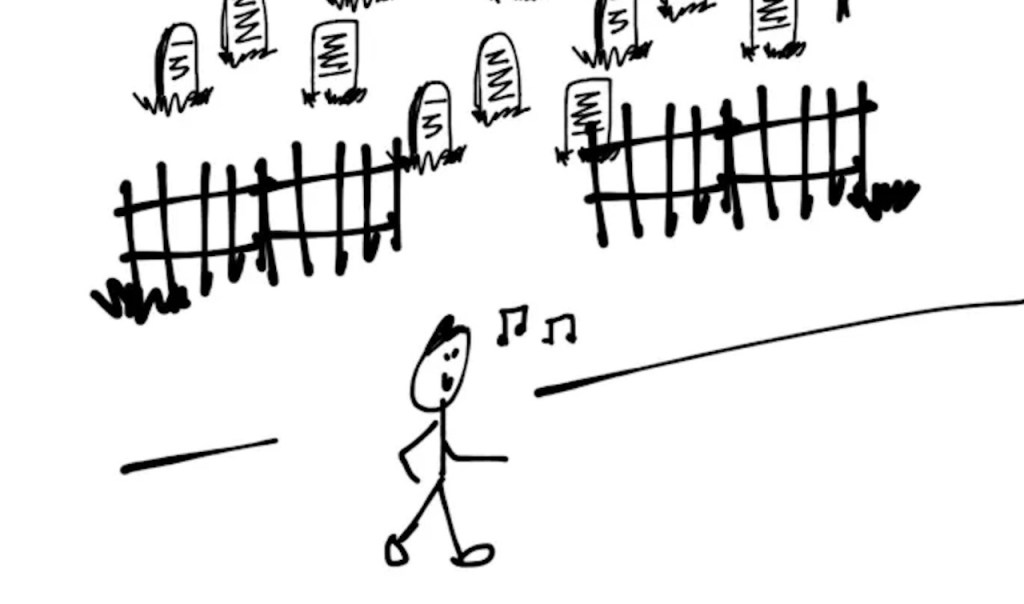
Original Short Fiction: “Graveyard Whistler’s Fourth Flash Fiction Find” (4)
The Graveyard Whistler has become quite enthusiastic about “flash fiction,” offering his fourth installment of the little stories. Stay tuned for a brief bio of “Belmonte Segwic” (aka “The Graveyard Whistler”) coming soon!
Fiction Alert! This story is fiction. It does not depict any real person or actual event.
Introduction by the Graveyard Whistler
Graveyard Whistler at it, again! I continue to find pieces of literature that just blow my mind, so I feel compelled to share them. Thus, I am continuing with this series of little narrations that have come to be known as “flash fiction.”
There are several online sites that offer this genre of literature, but most have upward of a 500 words or more. These little gems that I found seldom break 50, including the title! They exemplify an amazing feat and thus continue to fascinate me! I think I am in love!
And now I am considering a new label for this very, very short narrative. “Flash fiction” does not seem to fit. I’ll get back to you on that. Maybe I could run a contest to get help me rename this genre. Maybe! Maybe! Maybe!
A Bit of Background
The following set of five that I offer here are reconstituted narratives based on a set I found on a site that no longer exists, “Stone Gulch Literary Arts,” also known as “Stone Gulch Literary Home,” whose owner has given me permission to use the literary offerings he had place on the site. He lost his interest in literature and will likely become an attorney once he finishes law school and passes the bar exam.
Interestingly, “Stoney,” my nickname for him because he refuses to reveal his identity, sports a PhD in American Literature and serves as a full professor in the English department at a midwestern state university. He has given me permission to anything I want with his abandoned works.
And I might add, for my purposes, that lit site offers a treasure chest of goodies—from the flash fiction to highly sensual poems to short stories full of dark and dreary twists and turns to airy mystical stuff. It even delves into some political treatises analysis that is quite fascinating even insightful.
Five Flash Fiction Pieces
So, I am continuing to share the flash fiction pieces. Here are the new five. Each story contains only five sentences. But each boasts an opening, a conflict, and a conclusion—a feat which I am finding fascinating!
Getting Forgetful
The unsigned card arrived two days after Edna’s birthday. The card was beautiful and very personal. But it gave no clue as to who had posted it. Edna asked relatives and friends about the card. Six weeks later, Edna’s mother remembered sending the card.
A Country Picnic
I’ll bring the tea, and Sue can bring the cake. Where should we have our picnic this year? Same as last year, at Eddie’s Country Hide-a-Way. But Eddie sold that home. Yeah, I know; I bought it but kept the name!
Poems with Chunks of Ice
Winton wanted so much to become a famous poet. At college she became friends with Ashton and Flannory. Flannory became jealous that Ashton liked Winton’s poems. Winton had no interest in Ashton, Flannory, or their poems. After graduation, Flannory left Ashton for a novelist.
Raising the Pane
Lucette did not understand English well. She hired Johann to help her with her English lessons. Johann asked Lucette for a raise to keep tutoring her. Lucette put up the window. Johann jumped out and never returned.
Of Course, You Don’t Know Me
Candy brought six pies to the reunion banquet at Chicago Town High School. Jackson brought his fiddle and played it for the dancing. Astrid danced and ate pie and conversed with everyone. Martha finally admitted she did not know Astrid. Astrid finally admitted she had crashed the reunion and had actually graduated from a school in Toledo.
A Final Statement from the Graveyard Whistler
This installment features five of these flash fiction pieces. I’ll continue to add more later. But I’ll probably explore into other genres before I continue with these.
I am procrastinating hugely in writing my dissertation because at this point I am not finding as much information as I had anticipated on the topic of irony. I am considering changing my focus to a simple ideas of “variety” in the literary world because I am finding that literature, both ancient and modern contemporary, does offer such a wide array of different topics, genres, issues, attitudes, and styles. I could likely revamp a whole new glossary of literary devices if I put my mind to it, and I might just have to do that!
My advisor is somewhat dismayed at my dilly-dallying but hey, it’s my life—not hers!
The Graveyard Whistler continues with his enthusiasm for his finds in “flash fiction.” He is adding ten more brief stories to the mix. Enjoy!
Fiction Alert! This story is fiction. It does not depict any real person or actual event.
Introduction by the Graveyard Whistler
It’s the Graveyard Whistler again!
The following set of ten that I offer here are also little pieces I have culled from the former literary site that was titled “Stone Gulch Literary Arts.” The owner of that lit site explained that he chose that name because of a sign he had seen as a child down the road from where he lived. The sign belonged to a businessman who operated a machine tool business in the town about eight miles from that country road.
The sign read, “Stony Gulch,” and indicated a club house that the business man operated. The lit site owner had no idea what kind of club it was but he was impressed with the name on the sign so he coopted it changing it only a little.
Ten Flash Fiction Pieces
So, here is the second installment of those “flash” fiction pieces. Remember that each story boasts only five sentences, and each has an opening, a conflict, and a conclusion. I remain convinced that writing these pieces would make a marvelous exercise for a creative writing workshop or class. You’re welcome, instructors!
I Need My Keys, Please
I left my coat hanging on the back of chair in the library with my keys in the pocket. Martha Walls, the librarian, had asked me to help her look for some papers in the backroom. Returning to get my coat, I found it missing. As I was looking for my coat, I saw it walk by on Hillery Glover. Before she could head out the door, I stopped her, told her she had a lovely coat but that I really have to have my keys.
Peaches, Bananas, and an Apple
Albert brought three peaches to school to share with his buddies. Walter brought three bananas and an apple to share with his friends. Johnny wanted the apple but not the peaches or bananas. Walter wanted to keep the apple. Bette Sue swiped the peaches, bananas, and the apple, leaving the boys fruitless.
Jackie Goes Hijacking
The bus to Tulsa was over an hour late. While waiting for his sister, Andy was afraid there might have been an accident. At last, the reason for the delay was announced over the loud speakers. The bus had been hijacked to Palm Beach, FL. Andy’s sister, Jackie, had been talking about going to Palm Beach, FL, but was having trouble raising enough cash for the bus ticket.
The Saga of Edward Lee and Sally Fay
Martin asked Sally Fay to the autumn dinner dance in the village of Braintree. Sally Fay had wished to go to that outing with Edward Lee but said yes to Martin anyway. Maybelle asked Edward Lee to go with her to the dance but he turned her down. Martin then determined to go with Elane. Sally Fay and Edward Lee married the next summer and lived a very happy life together.
It’s a Tea Party
Janie planned a tea party for two of her gal pals—Suzette and Bonnie. Bonnie liked tea parties very much; Suzette—not so much! The tea was hot and ready, and the cookies looked delicious, ready for the guests. Bonnie showed up bringing a bouquet of lovely flowers. Suzette reluctantly appeared 20 minutes later—no flowers, just a bee in her bonnet.
Just Hand Him the Heineken
Ben tells Tony that he was invited to dinner by Lesley. After Lesley fails to show up at the restaurant, Ben decides to walk over to Lissly’s Bar & Grill. Bartender Max sees Ben and begins teasing him about being stood up by Lesley. Tony walks into the bar, sees Ben, and is surprised to see Ben there. Ben keeps his cool; he just tells Bartender Max to hand him a Heineken.
Crossing State Lines
Eugene lands in jail just across the state line for boosting a cell phone from a Radio Shack. Dotty is kind enough to drive over and bail him out of the hoosegow. Noreen had warned Dotty not to bail him out but just let him rot where he is. They stop for gas just shy of the state line, and Eugene lifts three cartons of cigarettes and a dozen Bic lighters from the convenience mart. Now Dotty and Eugene both end up in the hoosegow just across that state line.
At the Purple Penguin Pub
Alice is waiting for her cousin Eddie to bring over her lawn mower that he had borrowed. She waits and then waits some more, really needing he mower. She finally calls Eddie’s house. Eddie’s wife, Dora, tells Alice that Eddie has been gone about five hours. Eddie was sitting quietly on his usual stool enjoying a few beers at the Purple Penguin Pub.
Drowning in Nightmares
Marjorie was dreaming night after night that her four kids gang up and try to drown her in her bathtub. She tells Morry about those hideous nightmares. Morry replies that he thinks that very well might happen, knowing her kids as he does. Marjorie decides that she had keep her kids from drowning her. She tells the police that she thought she had shot four burglars who were breaking into her house.
Ignorance Is Bliss!
Nigel asks Margaret to cease her constant commenting about him on Facebook. But Margaret continues with her comments, more voluminous than before. So Nigel blocks Margaret, and she writes even more about Nigel. Now, however, Nigel is unable to read Margaret’s comments. Nigel is fine with not knowing because he always claims, “Ignorance is bliss!”
An Afterthought from the Graveyard Whistler
This installment continued featuring the flash fiction pieces. As I finish refurbishing them, I’ll add more. I guess my dissertation will change from its lazer-like focus on irony to literary variety. I think when most non-lit folks think of literature, mostly made-up stuff comes to mind, the stuff we call “fiction.”
Because there is such a vast variety of kinds of fiction, kinds of poetry, kinds of every which genre that is generated, I will likely start looking for a common denominator for all that vastness.
I don’t think I’m likely to switch my studies to anything really practical like medicine or law, but then I am a free-wheeling kind of guy who goes where interest takes me. I am having a lot of fun with my research, even if I have not determined exactly what I intend to do with it. Later, Gator!
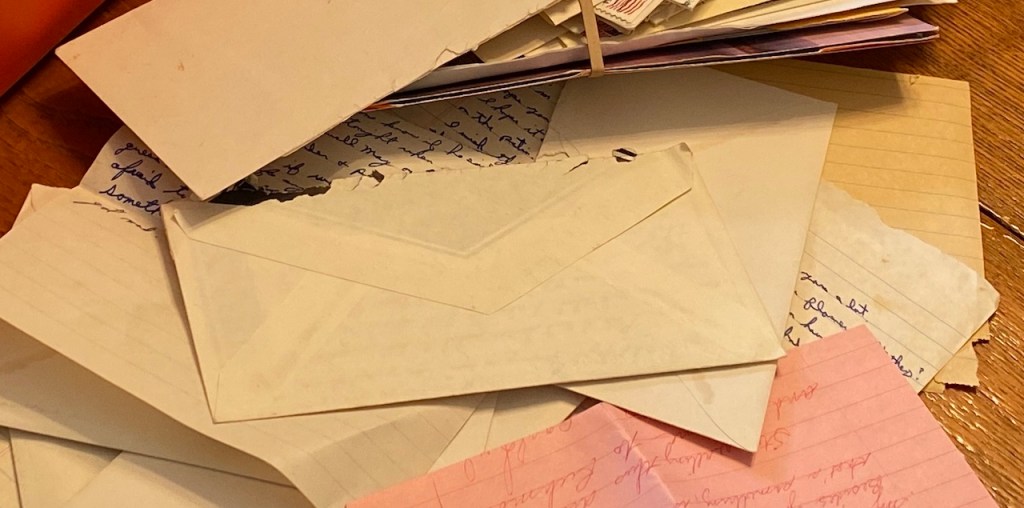
Literary letters have always been a marvelous find in literature. Graveyard Whistler found this series of letters and although they do not address his main interest in irony, they do offer an interesting take on some of life’s most intriguing conflicts.
Fiction Alert! This story is fiction. It does not depict any real person or actual event.
Graveyard Whistler’s Introduction to “The Lucy Light Letters”
As my faithful readers know by now, I am pursuing a PhD in literary history with a concentration on “irony.” The thing is I am finding such marvelous gems that do not actually address the issue of irony but which are just so fascinating I can’t let them drop without exposing their emotional plights to light.
This series of letters offers a delightful exchange between a professor and former student. They are obviously very much in love but have much baggage that prevents their ability to requite that love, that is, until certain unpleasant facts of life are overcome.
I apologize ahead of time for not being able to offer a completely satisfying ending to this story. I know my readers will be left with questions: did LJ succeed in persuading JL to relocate to SoCal.? does their love ever become physical? do they resume writing that corroborative collection that seems to have started this whole thing? and simply, do they live happily ever after?
I know I would like answers to those questions, and I will certainly keep looking for them. But for now, please enjoy the exchange. Their writing includes some clever and quirky turns of phrase. They both were definitely lovers of literary language, and they definitely loved each other with a rare love and affection that many of us only dream about finding on this fuzzy-mudded planet.
Letter #1
April 19, 19— Encinitas CA
Dear Jefferton,
It’s still difficult to call you that, even though I know it would be ridiculous to call you Professor Lawrence, considering our past relationship. I know you must be surprised getting a letter from me now; maybe you are shocked or annoyed, and are not even bothering to read this, so maybe I am writing in vain, but I will continue in the faith that you do still have at least a spark of interest in me and my life.
I owe you a huge apology for just vanishing the way I did, without one word of explanation or even good-bye. I hope you will accept it and know that I am truly sorry. I don’t really understand myself that well even now, but at the time of our relationship, I was thoroughly confused. That confusion—or my desire to try to work it out—is part of the reason I am writing you now. But there are other parts. I hope I will be clear; I’m not even sure I can be.
Before I get into that, I wanted to tell you that when I saw your book on our library’s new arrival shelf, I was tempted to check it out, but then I rushed over to the bookstore and ordered my own copy. You can be sure I will read it carefully and cover to cover as soon as it arrives.
Well, there are some things I have to say, and I might as well jump right into them. At the time we were working on that collection of poems, I was in a constant state of turmoil. I had written what I considered some of my best poems for the collection, but I feared they were too revealing, I mean, I feared they showed too clearly how I felt about you, and our growing closeness. I feared that if anyone we knew (your wife for example, and my parents and brothers) saw those poems, and saw that we, a professor and student, had authored them, they would make assumptions about the nature of our relationship. I could not face that. And I did not have the courage to tell you about my fears. You had such confidence in me, and you thought I was so bright and sophisticated for a twenty-year-old, but I didn’t feel that way, and it scared me and upset me to have you find out. I just couldn’t let you know how weak and insecure I felt, so I transferred to Miami to finish my BA in English.
Living at home was hell, but I’ll tell you about that later, if you are still speaking to me or listening and you still care.
I had thought I’d tell you everything I had been doing and thinking lately in this one letter, but I see that it is getting too long. And I really should not be so presumptuous as to assume you are still interested. Instead, I will just come right out and ask you: Are you still interested in hearing from me? Do you think we can be friends? I have never forgotten you for a minute. I really do love you, and I have missed our talks.
You were always so insightful; I look back now, and realize that I surely could have trusted you with my insecurities back then, but I just didn’t know it then. I am learning, but I am still full of confusion.
I hope you will let me know if it’s all right to write you more. Please let me know soon.
Your “Lucy Light” (I hope still) Lucinda Janson
Letter #2
21 May 19— Muncie, Indiana
My Dear Lucy Light,
I was delighted to get your letter. I have wondered about how you are doing and where you are. I have wondered if I had been the cause of your sudden disappearance and from your letter I gather I must bear some guilt in that regard. I should have realized that you were too young and inexperienced to become equal partners in that endeavor of authorship. But I will never take back what I said about your intelligence; you are still the brightest and most perceptive student ever to sit for my class in Mod Brit Poetry. You are also one of the most creative. I had occasion to teach a creative writing section last fall; as you know, I hated every minute of it, but at least now I know why I hate it so much. Because I totally agree with Auden that artists who take academic positions should do academic work. If I had my way, all creative writing courses would summarily be banished from the university. I have gotten upon my soapbox, and now I shall descend again to finish my lecturing to you alone.
Dear, dear girl—as you have apologized to me, let me say that if you truly think you owe one, then I accept it. But let me apologize to you in return. I am so sorry for what you have been through. I am more than willing to do anything that you feel will help you; I am more than willing to accept you back into my friendship, and may I say this, without pressure, if you feel you would like to resume collaboration on that collection, I would be happy to do it. I put the project away and have not had the heart to pick it up again, since my Lucy Light was extinguished.
I am so glad you are going to read my book; it’s just one of those critical pieces that takes up much more time to write than it is worth. But it did me favors when it came time to apply for promotion, which I did and won full professorship; now I have occupied the Glossmere Distinguished Chair in Rhetoric and Writing for the past five years. Unfortunately, my share of committee work has not lightened, but I do intend to take steps to reduce all outside distractions, so I can concentrate on my own poetry. I have published maybe five poems in the past two years, and I feel that is a disgrace, but as I said, I do plan to remedy that.
So Lucy, as you may have gathered thus far, I will be watching my mailbox with a greedy eye for your letter. Your place in my mind and heart has not been filled by another nor erased by time. Come back into my life, and let’s make life brighter and fuller for both of us.
I too have much news for you, but I wait for yours first. I wait and watch.
Yours for the works, JL
Letter #3
May 30, 19— Encinitas CA
Oh my dear Distinguished Professor,
You have made me so happy for accepting my foolishness and forgiving it. Now I feel relieved and confident that I can tell you my reasons for contacting you.
Do you remember Nathan Glass? He was a student in the Mod Brit Poetry the same semester I was. And maybe you remember that he and I were dating off and on, while you and I were working on that collection. Just before I transferred to Miami, Nathan asked me to marry him. I told him I couldn’t marry him because I was in love with someone else. And he pressured me to tell him who it was, but I never did tell him.
Without my knowing it, he was watching me; he contacted me at Miami, and insisted I see him, and when I did, he told me he knew that you and I were having an affair. I denied it, of course, but he said he had pictures of us. Well, I laughed in his face because I knew that was impossible, but he showed me pictures that looked exactly like us entering the Bevon Motel. He said it didn’t matter if they were real, because they looked so real, real enough to get you fired and divorced. Anyway, he insisted I marry him or he would show those pictures to your wife and department head. So that’s what I did, I married him. I hated him; I feel so guilty now, but I hated every minute of being married to him. Every time he touched me, I wished he were dead. He raped me; he never ever made love to me; he raped me, and he’d call me whore, slut, bitch, in love with that prig of professor, here bitch take this. That’s what he’d say. He would never leave bruises on me, and he bragged that I would never have any proof that he continued to rape me and curse me.
That went on for three years. I was working on my masters at the University of San Diego, and he was an assistant professor in history. At the beginning of last year, his department head gave a party for the new members of the department. It was some kind of record; they hired something like five new members, and they had many more new TAs than usual, so they wanted to celebrate. The department head held the party on his boat, and everyone got real boozed up. Nathan usually never drank, except for beer, and he had told me he was allergic to vodka; this is why I feel so guilty. The bartender set out on a tray three glasses of drinks, two had gin in them, and one had vodka; I picked up the one with vodka and took it to Nathan, and I said, “Here’s your gin.” He was talking to one of his colleagues and didn’t pay any attention and just drank it. About a half hour later, there was a big commotion and people looking over the side of the boat. And a couple of TAs jumped in. I rushed over to see what it was, and it was Nathan in the water. A female TA said he tried to unhook her bra, and she slapped his face, then he told her to watch, he could walk along the edge of the boat like a tight rope, but he couldn’t, and he fell in. They pulled him out, and he was dead.
Oh, Jefferton, I hate myself for these next words, but I can’t help them: I was so relieved, so happy. I cried and cried for days; of course, everyone thought I was crying in mourning for my dead husband, but I was crying in relief for myself.
Of course, I don’t miss him and I’m still glad he’s out of my life, but I also know that I never wished he was dead. I just wished he were a decent human being. But the guilt is eating me up. Jefferton, help me, if you can. I have no friends here yet. I am teaching two classes of composition at MiraCosta College in Oceanside, and I also work as a waitress in a natural foods restaurant. They think I will eventually get hired full time in both jobs. But for now, all I have is two jobs, and I need a friend with some advice.
LJ
Letter #4
1 September 19— Indianapolis IN
Dear Lucy,
I must apologize for not answering your last letter sooner. After I recovered somewhat from the shock of your plight, I discovered that Marie has been having an affair with—well, never mind with whom—but the horrific scene that played itself out at our home on the third of July this year has left me a shambles. I don’t want to go into the details of that yet though, because I know I must attend to your request. Let me just add that Marie and I have finally decided to end our thirty year marriage; you must have noticed my address change. I can no longer live in the town where I was born, the town where I fell in love, the town where I grew to manhood—leaving only to pursue my graduate degrees, and then returning to the town I had taken to my heart for what I thought was a lifetime. No, the very trees here mock me that my Marie would deceive me so, and so I have moved to Indianapolis and become a commuter to my beloved Ball State to finish out my days as Professor of Rhetoric and Writing. I cannot leave my undergraduate alma mater, the university that took me to its bosom to allow me to blossom in my career as professor of English and now Distinguished Professor of Rhetoric and Writing. No, I shall live those fifty miles away and drive to my university every day, and leave as soon as my teaching and other duties are over.
One other thing—Martha-Marie Vandover Lawrence will never teach at this university again. Over and over I thank my God in Heaven that we bore no offspring to suffer this slice of hell on earth.
I just re-read this opening paragraph, and I am tempted to delete it, but no, I want you to know my state of mind, so that you may better judge any “advice” I give you.
First, you are not guilty of anything. That lout simply got what he deserved and in that, you are getting what you deserve: to be rid of him. Yes, I remember that knot-head. His putrid essays left a stench on my fingers; I hated having to mark them, and how I would have reviled having to discuss further with him any point I might have marked, and if I had marked any of his inanities, he would have engaged me after class to elucidate further stupidities. So I always marked him A and let it fall at that, no comment, nothing to invite his further attention.
How I would give anything had you told me that that bastard was blackmailing you. Oh so many years between that blackguard’s deeds and now—but I would not have allowed him to get away with it. Still, nothing we can do to remedy that, except that I convince you that you have no reason for guilt, and you must know that—I insist. Of course, you did not wish him dead, and you did not kill him. His own perversion killed him; his overweening pride, his misogyny, his blatant disregard of decency and humanity.
Lucy, if you could come here I would so cherish a visit from you. I have my own confusions. All the years of my marriage I was never unfaithful to Marie, though I have found out that she was unfaithful many times. But she claims my infidelity was mental and emotional, and she found your letters, and uses them as evidence I was just as guilty of infidelity as she. Maybe I am just old and out of touch, but I do not see it that way. To me there must be a physical consummation to constitute marital infidelity, and you know that we never so much as held hands.
Dear Lucy, if there is anyway you could travel back to Indiana, I would cherish a visit from you. I feel that we both need a balm that we cannot hope to receive from anyone other than each other. I simply must convince you that you must leave any guilt for that villain’s death to the wolves. You deserve to make your life a haven of peace.
I will be waiting for your response with prayer that we may meet soon, resume a blessed friendship, and find the strength to live out the rest of our lives in harmony with each other and the world.
In love and friendship, JL
Letter #5
September 5, 19— Encinitas CA
Dear Jeff,
How to express the relief I feel from your kind words! No, I cannot. I am overwhelmed by the invitation to return to Hoosierland. You can be sure that I will begin immediately making preparations for that return.
It’s all so breathtaking—it makes me dizzy. My work here is not without its perks, and I do love the climate. A thought, maybe a crazy thought!, just popped into my head: how might I persuade you to relocate to southern Cali? No, we can jump off that bridge if and when we come to it. But just maybe your love for your school and native state has run its course?
Now, I am off to make a flight reservation. Before I go further than that, I feel we need to reconnect in person to discuss all the details of my relocation. Please know how grateful I am to you, and that I so look forward to seeing you, listening to your sage advice, and just generally unburdening myself of cares and issues that I know you have the wisdom to address.
I will let you know my flight information as soon as it is confirmed!
Thank you again, dear Professor!
With love and gratitude, LJ
PS/ Just in case, here is my phone number (760) 701-4619.
Letter #6
Post Card 15 Sept 19— Indianapolis IN
Lucy—
Our talk left me stunned and so grateful for our re-connection. Oct 7 cannot come soon enough. See you at the airport!
Always, JL
Final Word from the Graveyard Whistler
This couple remains a mystery. I wonder if they really re-connect and what re-connecting really means to them. Will they remain professor and student? Will they write and publish works together? Will they begin a steamy affair? Will they marry?
That’s the intriguing feature of this sequence: that it heralds more questions than answers. I guess the true value of studying this sequence of letters rests in analyzing the styles of each writer. The professor, for sure, has a unique voice, and the student, his “Lucy Light,” brings off some unique features of her own.
Interestingly, I did not revise a single word in this sequence of letters. Except for blocking out the date, I have left everything exactly the way I found it. I have been asked where I found these letters, but revealing that location would prove problematic for I don’t know if these people are alive or dead.
By the dates, they could very well still be living, and they would be quite old now, and if they happened to learn that their letters were now being spread all over the Internet, they might not approve, and they might even be hurt. So I simply must refuse to divulge the exact source for these letters.
Again, my purpose in publishing these letters is simply to reveal what I think is an interesting, unique professor-student relationship that is conveyed in unique literary language. Who they are is not important for the purpose. If I ever hear from anyone who knows who these people are, I will divulge whatever that individual will allow about the issue.







 Linda's Literary Home