Linda's Literary Home

Tag: writing

  • Introduction to the Shakespeare 154-Sonnet Sequence

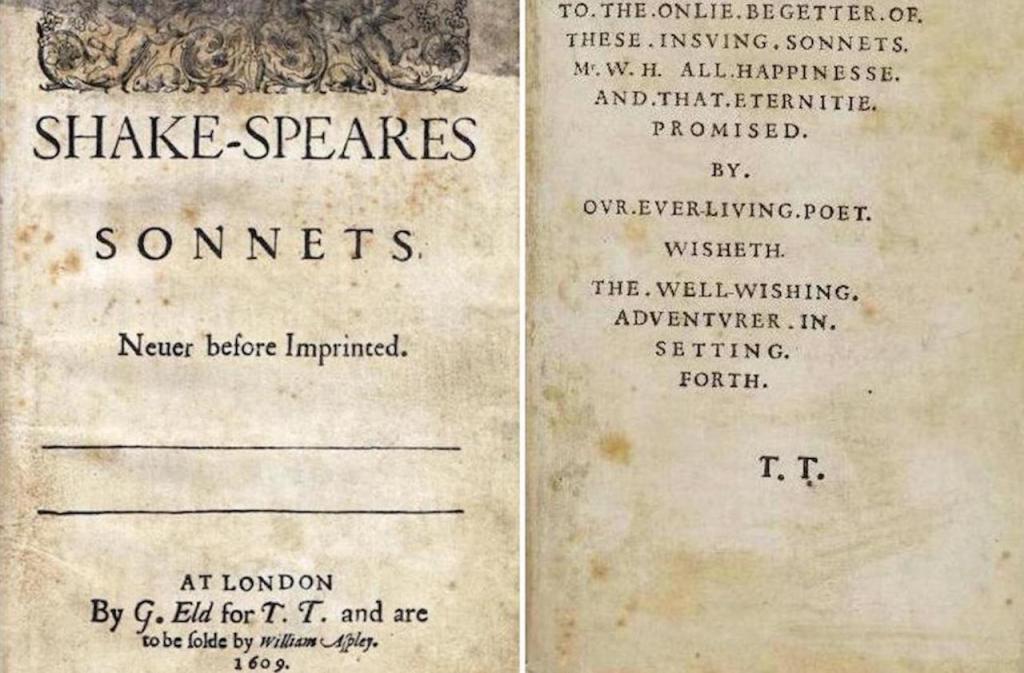
    Image: Shake-speares Sonnets Hank Whittemore’s Shakespeare Blog

    Introduction to the Shakespeare 154-Sonnet Sequence

    The Shakespeare 154-sonnet sequence offers a study of the mind of the poet.   The first 17 have a speaker persuading a young man to marry and produce lovely offspring.  Sonnets 18–126 address issues relating to talent and art creation. The final 28 explore and lament an unhealthy romance.

    Commentaries on the Shakespeare 154-Sonnet Sequence

    My Shakespeare sonnet commentaries are being offered to assist beginning poetry readers and students in understanding and appreciating the Shakespeare sonnet sequence.  Because I argue alongside the Oxfordians regarding the identity of “William Shakespeare,” some of my commentaries on the sonnets include information related to the Shakespeare writer as Edward de Vere, 17th Earl of Oxford.  

    However, consideration of the poet’s biography remains only one small factor in understanding and appreciating his art, especially the sonnets.  The sonnets’ messages are what they are regardless of the biography of who wrote them.   The “Shakespeare” identity is not the only issue with which I take exception to traditional Shakespeare studies.  

    I do not agree with the traditional view that sonnets 18–126 focus on a “fair youth.” I will show that in most of that group of sonnets there is no person at all, much less a “fair youth” or young man.

    I assert instead that those sonnets put on display the theme of the poet’s relationships with his muse, with his own heart and mind, with his art—including his doubts and fears regarding his ability to maintain and perfect his writing abilities.

    The Sonnet Sequence

    Some online Shakespeare sonnet enthusiasts have divided the 154 sequence into two thematic categories:  “The Fair Youth Sonnets” (1–126) and “The Dark Lady Sonnets” (127–154).  Such a categorization remains problematic because there is a distinct change of subject matter from the first section 1-17 to the second 18–126.

    In the first section of sonnets 1–17, the speaker is clearly imploring a young man to marry and procreate; in the second section 18–126, the speaker remains highly contemplative as he muses upon his considerable talent.

    The only feature that the first two categories have in common would be a “fair youth”; however, it is a misinterpretation that assigns a “fair youth” to sonnets 18–126.  As I mentioned above, in most of that group of sonnets there is no person at all.

    In opposition to the two category theory, a number of scholars and critics of Elizabethan literary studies have categorized the Shakespeare 154-sonnet sequence into three thematic groups:

    1.  Marriage Sonnets: 1–17    (17 total)
    2.  Fair Youth Sonnets: 18–126 (109 total)
    3.  Dark Lady Sonnets: 127–154 (28 total)

    Sonnets 1–17:  The Marriage Sonnets

    The group labeled the “Marriage Sonnets” stars a speaker, attempting to persuade a young man to marry and produce beautiful children.  Oxfordians, who hold that the actual Shakespeare writer was Edward de Vere, 17th Earl of Oxford, suggest that the young man is probably Henry Wriothesley, the third Earl of Southhampton and that the speaker of sonnets 1–17 is striving to convince the young earl to marry Elizabeth de Vere, the eldest daughter of Edward de Vere.

    Sonnets 18–126:  The Fair Youth Sonnets

    By tradition, the “Faith Youth Sonnets” are interpreted as further entreaties to a young man.  However, there is no young man in these sonnets; there are no persons at all in that group of sonnets.  Even though sonnets 108 and 126 do address a “sweet boy” or “lovely boy,” they  remain problematic and are likely miscategorized.  

    The Category “Muse Sonnets” Replaces the “Fair Youth Sonnets”

    Instead of speaking directly to a young man, as the “Marriage Sonnets” quite obviously do, the speaker in sonnets 17–126 is musing on, examining, and exploring issues of writing, thinking, and making poetry.  In some of the sonnets, the speaker addresses his muse,  and in others, his talent, and in still others, he is speaking  directly to the sonnet itself. 

    The speaker in sonnet after sonnet is exploring the entire territory of his talent, his dedication to writing and the power of his heart and soul.  He even goes into battle with the bane of a writer’s existence—periods of low inspiration for creating. He also struggles with the ennui and dryness that the writing experience undergoes.

    The result of my understanding and interpretation of this “Fair Youth” category offers a very different line of thinking from the traditionally received position of this issue.  I have, therefore, relabeled the category the “Muse Sonnets”—replacing the traditional “Fair Youth Sonnets.”

    The motive for the continued labeling the bulk of the Shakespeare sonnets “Fair Youth” likely rests with the social justice movement in rehabilitation of the same-sex orientation.  Finding evidence of homosexuality in long respected writers and artists has become a cottage industry, especially for the statist-leaning, higher education system.

    While a number of academics have bloviated in the direction of finding of Shakespeare was “gay,” others have convincingly debunked the notion.  Interestingly, those who favor the gay Shakespeare use the “Fair Youth” sonnets as their main supporting evidence.

    Also interestingly, the debunking of the notion of same-sex orientation in “Shakespeare” would be much easier if those critics assumed the real “Shakespeare” to be Edward de Vere, whose biography is known and well documented, while that of the traditional “Shakespeare,” Gulielmus Shakspere of Stratford, remains rather thin and sketchy.

    Sonnets 127–154:  The Dark Lady Sonnets

    The “Dark Lady” sonnets offer an exploration of an adulterous relationship with a woman who possesses an unsavory character.  The term “dark” is describing the woman’s shady character flaws, rather than the shade or hue of her complexion.

    Six Problematic Sonnets: 108, 126, 99, 130, 153, 154

    Sonnets 108 and 126 offer a different kind of categorization issue.   Most of the “Muse Sonnets” are speaking to writing issues, wherein the speaker examines his talent, dedication, and other issues relating to his artist skills.  There are no other human beings in most of these muse sonnets.

    However, sonnets 108 and 126 do address a young man, calling him “sweet boy” and “lovely boy.” And then poem 126 is not technically a “sonnet.” It plays out in six rimed couplets, not the traditional sonnet form with three quatrains and one couplet.

    The possibility remains that sonnets 108 and 126 have helped cause the misnaming of this group of sonnets as the “Fair Youth Sonnets.”  Those poems should logically reside with the “Marriage Sonnets,” which do address a young man.  

    Sonnets 108 and 126 could also be responsible for some scholars categorizing the sonnets into two groups, instead of three—combining the “Marriage Sonnets” with the “Fair Youth Sonnets” and naming them the “Young Man Sonnets.”  

    However, the two category alternative remains flawed because the bulk of the “Fair Youth Sonnets” do not address a young man, nor do they address any person, except on occasion as the speaker addresses himself. 

    Sonnet 99 contains 15 lines, instead of the traditional sonnet form with 14 lines.  The first quatrain expands to a cinquain, converting its rime scheme from ABAB to ABABA.  The rest of the sonnet continues traditionally, following the rime, rhythm, and function of the traditional sonnet.

    Although sonnet 130 “My mistress’ eyes are nothing like the sun” is grouped with the “Dark Lady” subsequence, it seems to prove an anomaly because in many of the others in this group the lady does not merit such positive effusions as offered in the speaker’s claim that his “love” for her is rare.  

    The “Dark Lady” sonnets explore the negative results of unchecked lust, while the execution of sonnet 130 takes for its purpose the criticism of hyperbolic displays that idealize cosmetic beauty.  This speaker remains consistent in his striving for truth as well as his striving for beauty.

    The Two Final Sonnets

    Sonnets 153 and 154 are problematic also, at least to some extent.  Although they are categorized thematically with the “Dark Lady Sonnets,” they function a bit differently from most of the poems in that thematic group.  Sonnet 154 simply features a paraphrase of sonnet 153, dramatizing identical messaging—the complaint of unrequited love.  

    Those two final sonnets then decorate that complaint with the tinsel of mythological allusion.  The speaker alludes to the force of Cupid, the Roman god of love and the power of the goddess Diana.  

    The speaker thereby maintains a secure distance from his feelings.  He possibly hopes such distancing may liberate him from the oppression of his lust and then re-establish for him the harmonious balance of mind and heart.

    In the majority of the “Dark Lady Sonnets,” the speaker has continued to offer a monologue to the woman, making it clear that he intends for her to hear about that which he is complaining.  

    Finally, in the two concluding sonnets, the speaker is no longer addressing the dark lady.  He does mention her, but instead of speaking directly to her, he is declaiming about her.  He is employing this strategy to engage and demonstrate that he is withdrawing from the woman and her unsavory mannerisms.

    The conclusion of this sequence seems to be dramatizing the fact that the speaker has become disillusioned by and weary from his battle for this disagreeable woman’s love, affection, and respect.

    The speaker concludes that he is determined to fashion a high-principled, classic,  dramatic statement to put an end to this ill-omened relationship, with an unmistakeable  pronouncement that he is finished, it is over, he is through.

    Image: Edward de Vere, 17th Earl of Oxford-The Writer of the Shakespeare Canon
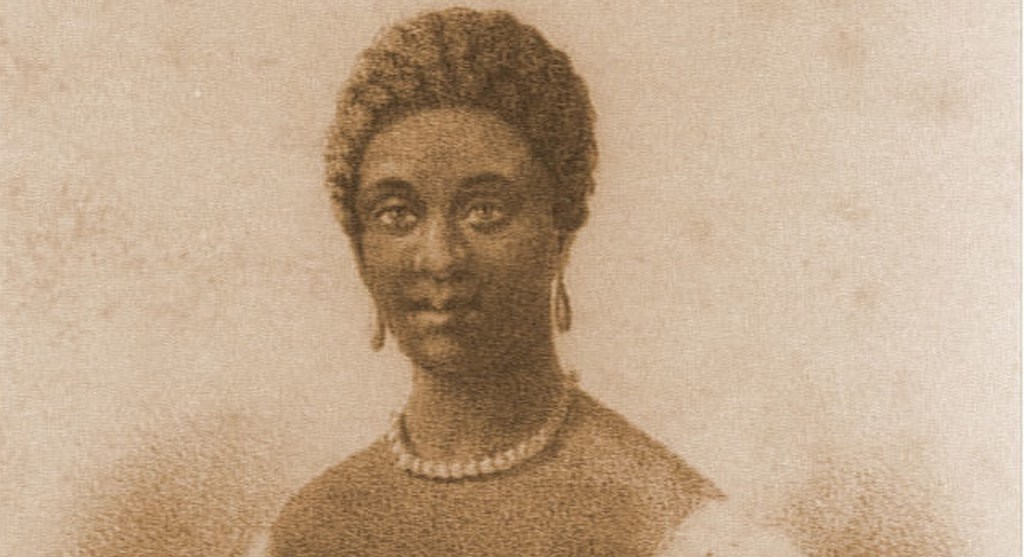
  • Phillis Wheatley’s “An Hymn to the Morning”

    Phillis Wheatley’s “An Hymn to the Morning”

    Phillis Wheatley was influenced by Greek and Roman classical literature, as well as by early 18th century British poets, who were also influenced by that same literature.

    Introduction and Text of “An Hymn to the Morning”

    Phillis Wheatley’s talent was recognized by George Washington, who became a fan of the poet.  Wheatley’s verse has earned her the status of a first class American poet, whose style resembles the great British poets, who were also influenced by the classical literature of the early Greeks and Romans.

    Phillis Wheatley’s poem “An Hymn to the Morning” consists of ten riming couplets, separated into two quatrains (first and fourth stanzas) and two sestets (second and third stanzas).

    An Hymn to the Morning

    Attend my lays, ye ever honour’d nine,
    Assist my labours, and my strains refine;
    In smoothest numbers pour the notes along,
    For bright Aurora now demands my song.

    Aurora hail, and all the thousand dies,
    Which deck thy progress through the vaulted skies:
    The morn awakes, and wide extends her rays,
    On ev’ry leaf the gentle zephyr plays;
    Harmonious lays the feather’d race resume,
    Dart the bright eye, and shake the painted plume.

    Ye shady groves, your verdant gloom display
    To shield your poet from the burning day:
    Calliope awake the sacred lyre,
    While thy fair sisters fan the pleasing fire:
    The bow’rs, the gales, the variegated skies
    In all their pleasures in my bosom rise.

    See in the east th’ illustrious king of day!
    His rising radiance drives the shades away—
    But Oh! I feel his fervid beams too strong,
    And scarce begun, concludes th’ abortive song.

    Commentary “An Hymn to the Morning”

    Phillis Wheatley was influenced by Greek and Roman classical literature, as well as by early 18th century British poets, who were also influenced by that same literature.

    First Quatrain:  Invocation to the Muses

    Attend my lays, ye ever honour’d nine,
    Assist my labours, and my strains refine;
    In smoothest numbers pour the notes along,
    For bright Aurora now demands my song.

    As the early 18th century poets such as Alexander Pope did, the speaker of Wheatley’s poem addresses the nine muses, asking them to guide her hand, heart, and mind as she composes her song.

    The nine muses are the goddesses who guide and guard the various arts and sciences: Cleo (heroes), Urania (astronomy), Calliope (music), Melpomene (tragedy), Euterpe (lyric poetry), Erato (love), Terpsichore (dance), Thalia (comedy), and Polyhymnia (sacred hymns). 

    Then the speaker says that dawn, “Aurora” or goddess of dawn, is motivating her to write her song dedicated to the goddess of morning, and the speaker wants the song to flow smoothly like a gentle brook, so she asks the muses to “pour the notes along.”  The speaker want to be sure her song is worthy of being dedicated to the important morning deity. 

    First Sestet:  Honoring Dawn’s Arrival

    Aurora hail, and all the thousand dies,
    Which deck thy progress through the vaulted skies:
    The morn awakes, and wide extends her rays,
    On ev’ry leaf the gentle zephyr plays;
    Harmonious lays the feather’d race resume,
    Dart the bright eye, and shake the painted plume.

    As morning approaches, the stars recede from view, and the speaker asks the muses to help her honor dawn’s victory of arrival. The speaker describes the morning’s sun with its far-reaching rays of light. She observes that the light is falling on every leaf, and a gentle breeze is playing upon them. 

    The humble speaker pays homage to the songs of the birds as she describes their singing as “harmonious,” and she notes that as the birds are looking around, their eyes are darting about, and they are shaking their feathers as they wake up. 

    Second Sestet:  Playful Foregrounding

    Ye shady groves, your verdant gloom display
    To shield your poet from the burning day:
    Calliope awake the sacred lyre,
    While thy fair sisters fan the pleasing fire:
    The bow’rs, the gales, the variegated skies
    In all their pleasures in my bosom rise.

    The speaker bids the trees to “shield your poet from the burning day.” She is over-emphasizing a bit, calling the shade of the trees, “verdant gloom.” The playful comparison moves in service of  foregrounding the sun’s brightness as well as the colorful morning’s sun rise. 

    She addresses Calliope, the muse of music, to play upon the lyre, while her sisters, the other muses, “fan the pleasing fire.” Fanning fire makes it burn brighter, and she is celebrating the rising sun that becomes warmer and brighter as it becomes more visible. The little drama is pleasing the poet as she composes. 

    Second Quatrain:  Light into the Darkness

    See in the east th’ illustrious king of day!
    His rising radiance drives the shades away—
    But Oh! I feel his fervid beams too strong,
    And scarce begun, concludes th’ abortive song.

    The speaker thinks of leafy alcoves, and gentle breezes, and the sky with its many colors of purple, pink, orange stretching across the vast panorama of blue, and these things give her much pleasure. Then she suddenly exclaims, “look! the sun!,” to whom she refers as the “king of day.”

    As the sun rises, all darkness has gradually faded away. The radiance of the sun inspires the speaker so immensely, but then she feels something of a let down: “But Oh! I feel his fervid beams too strong, / And scarce begun, concludes th’ abortive song.”  As soon as the sun has fully arrived, then the morning is gone, and her song was celebrating morning, and thus the song must end.

  • James Weldon Johnson’s “Sence You Went Away”

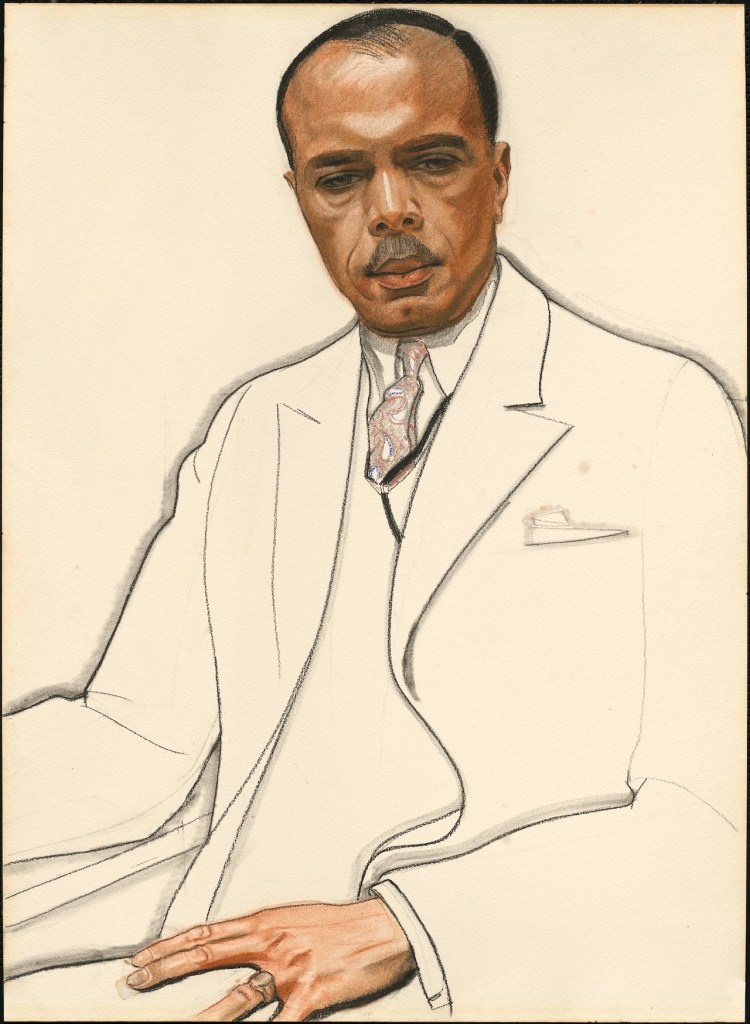
    Image:  James Weldon Johnson – Drawing – Winold Reiss

    James Weldon Johnson’s “Sence You Went Away

    In addition to poetry, James Weldon Johnson also composed many songs that have become popular.  His bluesy poem/song “Sence You Went Away” features a southern dialect and captures the melancholy that surrounds the individual who has lost a loved one.

    Introduction and Text “Sence You Went Away”

    James Weldon Johnson’s “Sence You Went Away” creates a speaker/singer who bemoans the loss of a loved one. The poem/song consists of four stanzas, each with the rime scheme AAAB, wherein the final line constitutes the refrain in which the speaker reveals the reason for his melancholy. 

    The repetition of “seems lak to me” and “sence you went away” emphasizes the pain and sorrow the speaker is experiencing.  The refrain becomes a chant-like repetition as he progresses through his report of all that is making him sad.  And he is addressing his expressions of sorrow to the individual, who is now absent from his life.

    As a poem this works quite well, and as a song it works even more nicely.  The poem/song’s use of dialect gives it an authenticity that increases the communication of pain and sorrow.  The speaker/singer incorporates and inflicts his sorrow on the world around him, while at the same time making it clear that these transformations are happening within himself.

    Sence You Went Away

    Seems lak to me de stars don’t shine so bright,   
    Seems lak to me de sun done loss his light,   
    Seems lak to me der’s nothin’ goin’ right, 
          Sence you went away. 

    Seems lak to me de sky ain’t half so blue,  
    Seems lak to me dat eve’ything wants you,   
    Seems lak to me I don’t know what to do, 
          Sence you went away. 

    Seems lak to me dat eve’ything is wrong,  
    Seems lak to me de day’s jes twice ez long,   
    Seems lak to me de bird’s forgot his song, 
          Sence you went away. 

    Seems lak to me I jes can’t he’p but sigh,   
    Seems lak to me ma th’oat keeps gittin’ dry,   
    Seems lak to me a tear stays in ma eye, 
          Sence you went away.

    Commentary on “Sence You Went Away”

    James Weldon Johnson, an accomplished poet, also composed many songs that have become quite popular. His bluesy “Sence You Went Away” features a southern dialect.  Johnson was a Southerner, having been born in 1871 and raised in Jacksonville, Florida, only relocating to New York in 1901.

    First Stanza:  Expressing Sorrow

    Seems lak to me de stars don’t shine so bright,   
    Seems lak to me de sun done loss his light,   
    Seems lak to me der’s nothin’ goin’ right, 
          Sence you went away. 

    The speaker is addressing an individual, who is likely a former lover or very good friend.  The speaker expresses his sorrow by reporting that both the sun and stars do not seem to be shedding light now because of the absence of the addressee.  The reader/listener learns nothing about the person who has gone away, only that the speaker’s life has been adversely affected by the loved one’s absence. 

    Not only do the speaker’s eyes seem no longer to perceive light, but he also feels that nothing in his life is proceeding correctly.  He makes it clear that he is not asserting that the world itself has changed; he is merely revealing how things “seem” to him as he repeats throughout the poem, “seems lak to me,” that is, “seems like to me.”

    Second Stanza:   Absence of Sun

    Seems lak to me de sky ain’t half so blue,  
    Seems lak to me dat eve’ything wants you,   
    Seems lak to me I don’t know what to do, 
          Sence you went away. 

    The absence of sun and starlight affect the shade of the blue sky, which is now presenting itself as only “half” its normal shade.  Everything reminds him that he is missing his belovèd. It even appears that everything he sees and does yearns to have this individual back in its purview.

    The speaker’s intense exaggeration emphasizes his desire for the return of his missing loved one.  Everywhere he looks he sees merely an absence that causes him pain and suffering.  He even confesses that he feels unable to decide what he should be doing, if anything at all.

    Third Stanza:  Nothing Is Right

    Seems lak to me dat eve’ything is wrong,  
    Seems lak to me de day’s jes twice ez long,   
    Seems lak to me de bird’s forgot his song, 
          Sence you went away. 

    Again, the speaker/singer asserts that nothing seems right for him anymore; thus, he feels that “ev’ything is wrong.” And he reveals that time seems to lag because of his sorrow.  Pain and suffering cause the human mind and heart to feel time as an oppressor, and that kind of oppression makes minutes seem like hours and days like weeks.

    Nature in the form of singing birds is lost on him, and he thus suggests that those birds have even forgotten to sings. His melancholy grays out all of his senses, especially seeing and hearing. Life has lost its luster, light has escaped him, and even pleasant sounds are no longer detectable.  And still again, he repeats the reason for his feeling that everything is so wrong in his life.

    Fourth Stanza:  Fog of Sorrow

    Seems lak to me I jes can’t he’p but sigh,   
    Seems lak to me ma th’oat keeps gittin’ dry,   
    Seems lak to me a tear stays in ma eye, 
          Sence you went away.

    Finally, the speaker reveals his own behavior has been influenced by the sad fact that the addressee has gone away.  He cannot seem to stop sighing, and his throat dries up.  He also continue to weep, as he endures the pain of loss. 

    His physical functions are out of kilter: what needs to be wet is dry, and what needs to be dry is wet.  The speaker’s world has transformed into a melancholy fog of sorrow and disorientation—all because his belovèd has gone away. 

    Kris Delmhorst’s Musical Version of Johnson’s Lyric

    There are extant several different musical versions of James Weldon Johnson’s lyric “Sence You Went Away.”  I suggest that Kris Delmhorst’s rendition fits perfectly with the sentiment and atmosphere of that lyric.  While the other versions are entertaining and well-done, Delmhorst’s version and her singing remain the best in accomplishing the task of capturing the exact feeling of Johnson’s lyric.

    Kris Delmhorst singing her version of Johnson’s “Sense You Went Away”  

  • Robert Frost’s “The Freedom of the Moon”

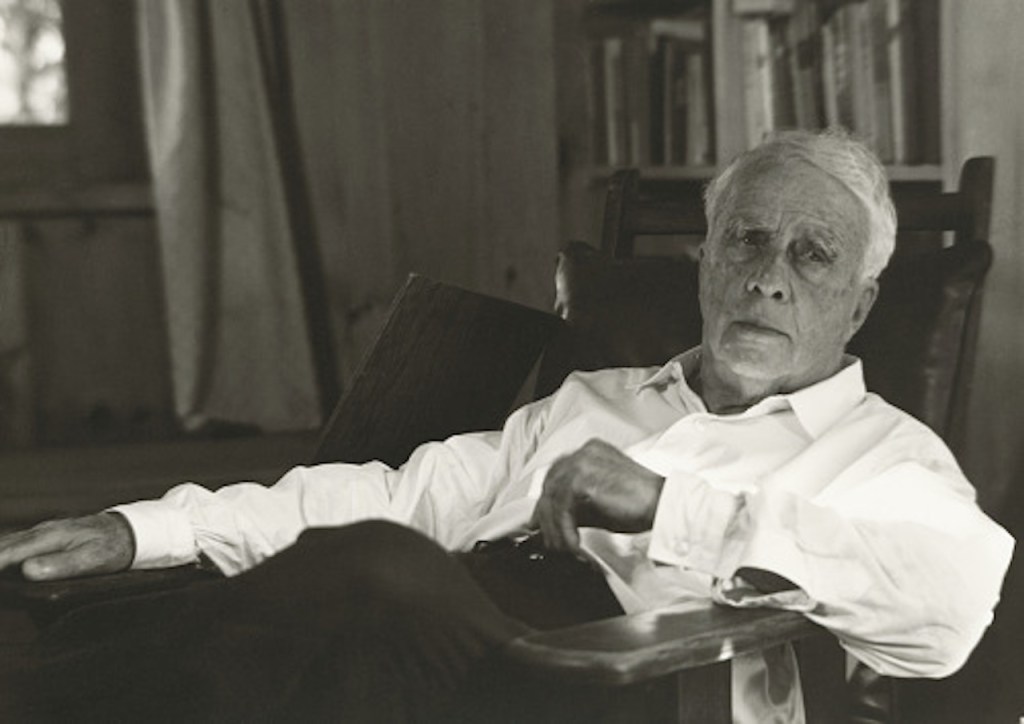
    Image: Robert Frost – Lotte Jacobi – NPG Smithsonian

    Robert Frost’s “The Freedom of the Moon

    Robert Frost’s “The Freedom of the Moon” muses on the nature of the free will possessed by humankind, as the moon’s freedom foreshadows the greater freedom of humankind.

    Introduction and Text of “The Freedom of the Moon”

    Robert Frost’s versanelle*, “The Freedom of the Moon,” consists of two sestets, each with the rime scheme, ABABCC. The poem dramatizes the phases of the moon and makes a statement about human freedom.

    The speaker in Frost poem demonstrates the complete freedom of humanity by dramatizing the ability of the human mind to use its physical body paradoxically to relocate the moon’s positions. The freedom of the moon heralds the greater freedom of humankind.

    *A versanelle isa short lyric, usually 20 lines or fewer, that comments on human nature or behavior, and may employ any of the usual poetic devices (I coined this term specifically for use in my poetry commentaries.

    The Freedom of the Moon

    I’ve tried the new moon tilted in the air
    Above a hazy tree-and-farmhouse cluster
    As you might try a jewel in your hair.
    I’ve tried it fine with little breadth of luster,
    Alone, or in one ornament combining
    With one first-water start almost shining.

    I put it shining anywhere I please.
    By walking slowly on some evening later,
    I’ve pulled it from a crate of crooked trees,
    And brought it over glossy water, greater,
    And dropped it in, and seen the image wallow,
    The color run, all sorts of wonder follow.

    Commentary on “The Freedom of the Moon”

    The important possession of free will extends to metaphor making by poets.

    First Sestet, First Tercet:  Ways of Contemplating the Moon

    I’ve tried the new moon tilted in the air
    Above a hazy tree-and-farmhouse cluster
    As you might try a jewel in your hair.

    Beginning his list of ways he has contemplated the moon, the speaker first asserts that he has “tried the new moon tilted in the air.” At that phase, the orb was hanging over a little clump of trees alongside a farmhouse. He compares his consideration of the moon at that point to his lady companion’s trying a “jewel in [her] hair.” 

    The oddity about the speaker’s claim is that he says he considered the “new moon” which is barely visible. And the moon was tilted in the air. It seems more likely that a crescent phase of the moon would lend itself more accurately to being “tilted.” 

    An explanation for this claim is simply that the particular phase was new to the  speaker; he had been ignoring the moon and when finally he was motivated to observe it, the newness of it prompts him to call it “the new moon.” 

    First Sestet, Second Tercet:  Probing the Nature of the Moon’s Freedom 

    I’ve tried it fine with little breadth of luster,
    Alone, or in one ornament combining
    With one first-water start almost shining.

    The speaker has furthermore probed the nature of the moon’s freedom when it was even in a thinner crescent phase; it was “fine with little breadth of luster.” He has mused on that phase when he saw it without stars and also when he has seen it with one star, a configuration from which the Islamic religion takes its icon.

    The moon at that phase looked like the first burst of water when one turns on a spigot. It was not exactly shining but only “almost shining.” The speaker seems to marvel at the unheavenly ways in which the moon at times may assert its freedom. 

    Second Sestet, First Tercet:  Freeing a Captured Orb

    I put it shining anywhere I please.
    By walking slowly on some evening later,
    I’ve pulled it from a crate of crooked trees,

    The speaker then proclaims that he has placed the moon “anywhere” he pleased, but that placement always occurred while it was bright, allowing him the vitality to work with it. 

    He then cleverly asserts his true theme that he is focusing on human freedom, not moon freedom, when he avers that he was able to place the moon anywhere he wanted because he was able to ambulate.  His ability to walk allowed him the freedom to wander “slowly on some evening later.” He was thus able to “pull[ ] [the moon] from a crate of crooked trees.”

    The trees seemed to be containing the moon as a wooden box would hold onions or melons. But the speaker was able to walk from the tree-contained moon thus metaphorically freeing the captured orb from the tree box. 

    Second Sestet, Second Tercet:   Carrying the Orb to a Lake

    And brought it over glossy water, greater,
    And dropped it in, and seen the image wallow,
    The color run, all sorts of wonder follow.

    After removing the moon from the tree-crate by simply continuing his evening walk, the speaker metaphorically carried the orb to a lake, in which he metaphorically “dropped it in.”  He then watched awestruck by the “wallow[ing]” image; he observed that like a piece of cloth losing its dye in water, the colors of the moon ran leaching out into the lake water. 

    The speaker then commits what is usually a grave poetic error; he makes an open ended statement without a hint of support, “all sorts of wonder follow.” But this speaker can get by with the ordinarily unforgivable poetic sin because of the great and wide implications that all of his lines heretofore have gathered. 

    The speaker, because he has given the moon freedom and has also shown that humankind is blessed with an even more profound freedom, has thus declared that all those “sorts of wonder” that “follow” from the possession of that free will and freedom of expression are indeed blessed with a golden freedom.    He has revealed the unmistakeable and eternal free will of humankind.

  • Robert Frost’s “Two Tramps in Mud Time”

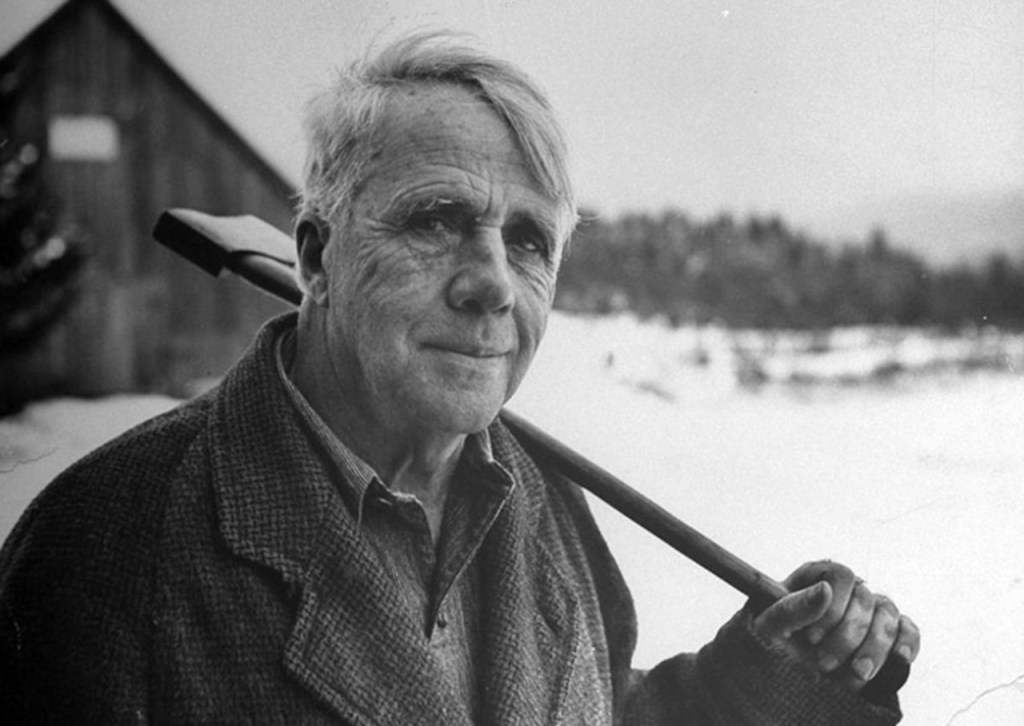
    Image: Robert Frost – Library of America

    Robert Frost’s “Two Tramps in Mud Time”

    The speaker in “Two Tramps in Mud Time” dramatizes his encounter with two unemployed lumberjacks who covet the speaker’s wood-splitting task.  He also features a philosophical take on the situation that leads him to continue chopping, instead of handing the job off to the two tramps.

    Introduction and Text of “Two Tramps in Mud Time”

    The speaker in Robert Frost’s “Two Tramps in Mud Time” fashions his dramatic performance,  focusing on his brief meeting with two unemployed lumberjacks who seek to take over the speaker’s wood-splitting task. Calling them “tramps,” the speaker then provides a fascinating philosophical discussion about his reason for electing to keep on performing his chore, instead of letting these two needy individuals finish it for him.  

    It is likely that at times true altruism might come into play as a part of spiritual progress. And it also likely that the speaker would condescend to this idea.  But the speaker may also have been annoyed that his “aim” at the wood was interrupted by the snide remark voiced by one of the mud tramps.  

    Two Tramps In Mud Time

    Out of the mud two strangers came
    And caught me splitting wood in the yard,
    And one of them put me off my aim
    By hailing cheerily “Hit them hard!”
    I knew pretty well why he had dropped behind
    And let the other go on a way.
    I knew pretty well what he had in mind:
    He wanted to take my job for pay.

    Good blocks of oak it was I split,
    As large around as the chopping block;
    And every piece I squarely hit
    Fell splinterless as a cloven rock.
    The blows that a life of self-control
    Spares to strike for the common good,
    That day, giving a loose my soul,
    I spent on the unimportant wood.v

    The sun was warm but the wind was chill.
    You know how it is with an April day
    When the sun is out and the wind is still,
    You’re one month on in the middle of May.
    But if you so much as dare to speak,
    A cloud comes over the sunlit arch,
    A wind comes off a frozen peak,
    And you’re two months back in the middle of March.

    A bluebird comes tenderly up to alight
    And turns to the wind to unruffle a plume,
    His song so pitched as not to excite
    A single flower as yet to bloom.
    It is snowing a flake; and he half knew
    Winter was only playing possum.
    Except in color he isn’t blue,
    But he wouldn’t advise a thing to blossom.

    The water for which we may have to look
    In summertime with a witching wand,
    In every wheelrut’s now a brook,
    In every print of a hoof a pond.
    Be glad of water, but don’t forget
    The lurking frost in the earth beneath
    That will steal forth after the sun is set
    And show on the water its crystal teeth.

    The time when most I loved my task
    The two must make me love it more
    By coming with what they came to ask.
    You’d think I never had felt before
    The weight of an ax-head poised aloft,
    The grip of earth on outspread feet,
    The life of muscles rocking soft
    And smooth and moist in vernal heat.

    Out of the wood two hulking tramps
    (From sleeping God knows where last night,
    But not long since in the lumber camps).
    They thought all chopping was theirs of right.
    Men of the woods and lumberjacks,
    They judged me by their appropriate tool.
    Except as a fellow handled an ax
    They had no way of knowing a fool.

    Nothing on either side was said.
    They knew they had but to stay their stay
    And all their logic would fill my head:
    As that I had no right to play
    With what was another man’s work for gain.
    My right might be love but theirs was need.
    And where the two exist in twain
    Theirs was the better right–agreed.

    But yield who will to their separation,
    My object in living is to unite
    My avocation and my vocation
    As my two eyes make one in sight.
    Only where love and need are one,
    And the work is play for mortal stakes,
    Is the deed ever really done
    For Heaven and the future’s sakes. 

    Robert Frost Reading  “Two Tramps in Mud Time” 

    Commentary on “Two Tramps in Mud Time”

    The speaker in “Two Tramps in Mud Time” is dramatizing his encounter with two unemployed lumberjacks who would like to relieve the speaker of his wood-splitting task. He offers an interesting take on why he chooses to continue his chore, instead of turning it over to these two needy individuals.

    First Stanza:  Accosted by Two Strangers

    Out of the mud two strangers came
    And caught me splitting wood in the yard,
    And one of them put me off my aim
    By hailing cheerily “Hit them hard!”
    I knew pretty well why he had dropped behind
    And let the other go on a way.
    I knew pretty well what he had in mind:
    He wanted to take my job for pay.

    The speaker in “Two Tramps in Mud Time” is busy cutting logs of oak; he is suddenly accosted by a couple of strangers who seem to appear out from the muddy ground.  One of the strangers calls out to the speaker telling him to hit the oak logs hard.

    The man who called out had lagged behind his companion, and the speaker of the poem believes he does so in order to attempt to take the speaker’s work.  Paying jobs are lacking in this period of American history, and men had to do all they could to get a day’s wage.

    The speaker complains that the sudden call out from the tramp has disturbed his “aim” likely making him miss the split he had planned to make of the log.  The speaker is not happy about the intrusion into his private activity.

    Second Stanza:  The Ability to Split Wood

    Good blocks of oak it was I split,
    As large around as the chopping block;
    And every piece I squarely hit
    Fell splinterless as a cloven rock.
    The blows that a life of self-control
    Spares to strike for the common good,
    That day, giving a loose my soul,
    I spent on the unimportant wood.

    The speaker counters the criticism of the tramp by detailing his own proven ability to split wood.  He describes every piece he cut as “splinter less as a cloven rock.”  The speaker then begins to muse in a philosophical manner.

    Although a well-disciplined individual might think that philanthropy is always in order, today this speaker decides to continue cutting his own wood, despite the fact that the tramp/strangers desperately need cash and could well use what they would earn by cutting the wood.

    The speaker, who normally might be amenable to allowing the two unemployed men to take on the wood-splitting for some pay, is now put off by the remark and continues to concoct reasons for continuing the work himself.

    Third Stanza: Musing on the Weather

    The sun was warm but the wind was chill.
    You know how it is with an April day
    When the sun is out and the wind is still,
    You’re one month on in the middle of May.
    But if you so much as dare to speak,
    A cloud comes over the sunlit arch,
    A wind comes off a frozen peak,
    And you’re two months back in the middle of March.v

    In the third stanza, the speaker muses over the weather. It is a nice warm day even though there is a chilly wind. It’s that Eliotic “cruelest month” of April, when sometimes the weather may seem like the middle of May and then suddenly it’s like the middle of March again.

    The speaker seems to reason that he had no time to turn over the job because by the time he explained what he wanted done and how much he was willing to pay them, the weather might take a turn for the worse and then the job would have to be abandoned.

    Fourth Stanza:  Weather Still On Edge

    A bluebird comes tenderly up to alight
    And turns to the wind to unruffle a plume,
    His song so pitched as not to excite
    A single flower as yet to bloom.
    It is snowing a flake; and he half knew
    Winter was only playing possum.
    Except in color he isn’t blue,
    But he wouldn’t advise a thing to blossom.

    Then the speaker dramatizes the actions and the possible thoughts of a bluebird who ” . . . comes tenderly up to alight / And turns to the wind to unruffle a plume.” The bird sings his song but is not enthusiastic yet, because there are still no flowers blooming. 

    A snowflake appears, and the speaker and the bird realize that, “[w]inter was only playing possum.” The bird is happy enough, but he would not encourage the flowers to bloom yet, because he knows there is still a good chance of frost. Beauties of nature are always contrasted with ugliness, warm with cold, light with dark, soft with sharp.

    Fifth Stanza:  The Philosophy of Weather and The Pairs of Opposites

    The water for which we may have to look
    In summertime with a witching wand,
    In every wheelrut’s now a brook,
    In every print of a hoof a pond.
    Be glad of water, but don’t forget
    The lurking frost in the earth beneath
    That will steal forth after the sun is set
    And show on the water its crystal teeth.

    Water is plentiful in mid-spring, whereas in summer they have to look for it “with a witching wand.” But now it makes a “brook” of “every wheelrut[ ],” and “every print of a hoof” is “a pond.” 

    The speaker offers the advice to be appreciative of the water but admonishes his listeners not to dismiss the notion that frost could still be just beneath the surface and could in a trice spill forth showing “its crystal teeth.”

    The speaker seems to be in a Zen-mood, demonstrating the pairs of opposites that continue to saddle humankind with every possible dilemma.  His philosophical musing has turned up the perennial truth that every good thing has its opposite on this earth.

    Sixth Stanza:   Back to the Tramps

    The time when most I loved my task
    The two must make me love it more
    By coming with what they came to ask.
    You’d think I never had felt before
    The weight of an ax-head poised aloft,
    The grip of earth on outspread feet,
    The life of muscles rocking soft
    And smooth and moist in vernal heat.

    In the sixth stanza, the speaker returns to the issue of the tramps. The speaker loves splitting the oak logs, but when the two tramps come along covertly trying to usurp his beloved task, that “make[s him] love it more.” It makes the speaker feel that he had never done this work before, he is so loathe to give it up.

    Likely, the speaker resents deeply that these two would be so brazen as to try to interrupt his work, much less try to usurp it.  The speaker is doing this work not only because he will need to wood to heat his house but also because he enjoys it.   That anyone would consider relieving him of performing a task he loves makes him realize more intensely that he does, in fact, love the chore.

    Seventh Stanza: Likely Lazy Bums

    Out of the wood two hulking tramps
    (From sleeping God knows where last night,
    But not long since in the lumber camps).
    They thought all chopping was theirs of right.
    Men of the woods and lumberjacks,
    They judged me by their appropriate tool.
    Except as a fellow handled an ax
    They had no way of knowing a fool.

    The speaker knows that these two tramps are likely just lazy bums, even though they had earlier been lumberjacks working at the lumber camps nearby. He knows that they have sized him up and decided they deserved to be performing his beloved task.

    That the speaker refers to these men as “tramps” shows that he has little, if any, respect for them.  The fact that they might have been lumberjacks does not give them the right to judge the speaker and his ability to split wood.  

    That they thought chopping wood was only their purview further infuriates the speaker.  He suspects they think he is just some fool noodling around with tools only they could wield properly.

    Eighth Stanza:  Who Really Has the Better Claim?

    Nothing on either side was said.
    They knew they had but to stay their stay
    And all their logic would fill my head:
    As that I had no right to play
    With what was another man’s work for gain.
    My right might be love but theirs was need.
    And where the two exist in twain
    Theirs was the better right—agreed.

    The speaker and the tramps did not converse. The speaker claims that the tramps knew  they did not have to say anything. They assumed it would be obvious to the speaker they deserved to be splitting the wood. 

    They would split wood because they needed the money, but the speaker is splitting the wood for the love of it. It did not matter that the tramps had “agreed” that they had a better claim.

    The speaker suggests that even if they had the better claim on the job, he could think his way out of this conundrum in order to continue working his wood himself.  He did not owe them anything, despite their superior notions about themselves, their ability, and their present needs.

    Ninth Stanza:  Uniting Love and Need

    But yield who will to their separation,
    My object in living is to unite
    My avocation and my vocation
    As my two eyes make one in sight.
    Only where love and need are one,
    And the work is play for mortal stakes,
    Is the deed ever really done
    For Heaven and the future’s sakes. 

    The speaker philosophically reasons that he has the better claim to his wood-splitting and is, in fact, more deserving of his labor then the mud tramps.  His task is more than just wood-splitting.   He is striving in his life to unite the two aspects of human existence: the physical and spiritual.  He has determined to bring together his “avocation” and his “vocation.”

    The speaker is convinced that only when a human can unite into a spiritual whole his need with his love can the job truly be said to have been accomplished.  The two tramps do not understand this philosophical concept; they want only money.  

    The speaker is actively striving to unite his love and his need together into that significant, spiritual whole.  Maybe sometime in future the two mud tramps too will learn this valuable lesson of conjoining love and need.  But for now they just need to scoot along and leave the speaker to his chores.

  • Robert Frost’s “A Girl’s Garden”

    Image: Robert Frost – Library of America

    Robert Frost’s “A Girl’s Garden”

    Robert Frost’s “A Girl’s Garden” dramatizes a little tale often told by the speaker’s neighbor, who enjoys narrating her little story about her experience in growing and nurturing a garden as a young girl. 

    Introduction and Text of “A Girl’s Garden”

    Robert Frost’s fine little narrative “A Girl’s Garden” reveals that the Frostian speaker enjoys pure narrative offered just for the fun of it. The speaker is recounting an old woman’s experience with a youthful endeavor in gardening on her family’s farm.

    The poem features 12 quatrains displayed in four movements, each quatrain features the rime scheme, ABCB. The nostalgia presented here remains quite lucid without any saccharine overstating or melancholy self-pity that is so prevalent in many postmodern poems of this type: it is a simple tale about a simple girl told by a simple speaker.

    A Girl’s Garden

    A neighbor of mine in the village
    Likes to tell how one spring
    When she was a girl on the farm, she did
    A childlike thing.

    One day she asked her father
    To give her a garden plot
    To plant and tend and reap herself,
    And he said, “Why not?”

    In casting about for a corner
    He thought of an idle bit
    Of walled-off ground where a shop had stood,
    And he said, “Just it.”

    And he said, “That ought to make you
    An ideal one-girl farm,
    And give you a chance to put some strength
    On your slim-jim arm.”

    It was not enough of a garden
    Her father said, to plow;
    So she had to work it all by hand,
    But she don’t mind now.

    She wheeled the dung in a wheelbarrow
    Along a stretch of road;
    But she always ran away and left
    Her not-nice load, 

    And hid from anyone passing.
    And then she begged the seed.
    She says she thinks she planted one
    Of all things but weed.

    A hill each of potatoes,
    Radishes, lettuce, peas,
    Tomatoes, beets, beans, pumpkins, corn,
    And even fruit trees.

    And yes, she has long mistrusted
    That a cider-apple
    In bearing there today is hers,
    Or at least may be.

    Her crop was a miscellany
    When all was said and done,
    A little bit of everything,
    A great deal of none.

    Now when she sees in the village
    How village things go,
    Just when it seems to come in right,
    She says, “I know!

    “It’s as when I was a farmer…”
    Oh never by way of advice!
    And she never sins by telling the tale
    To the same person twice.

    Reading

    Commentary on “A Girl’s Garden”

    Robert Frost’s “A Girl’s Garden” dramatizes a little story often told by the speaker’s neighbor, who enjoys telling her little tale about growing and nurturing a garden when she was just a girl.

    First Movement:  A Conversation With a Neighbor 

    A neighbor of mine in the village
    Likes to tell how one spring
    When she was a girl on the farm, she did
    A childlike thing.

    One day she asked her father
    To give her a garden plot
    To plant and tend and reap herself,
    And he said, “Why not?”

    In casting about for a corner
    He thought of an idle bit
    Of walled-off ground where a shop had stood,
    And he said, “Just it.”

    The first movement finds Robert Frost’s speaker in “A Girl’s Garden” relating a conversation he remembers with his neighbor in the village.  The speaker reports that the woman has always been quite fond of retelling an experience from her childhood about “a childlike thing” she did when she lived on a farm. 

    While still a child, the woman one fine spring season, requests from her father some land upon which she might grow a garden.   The father eagerly agrees, and in the next few days, searches his farm for just the right plot of land for his daughter’s endeavor.

    After finding the little plot of land he deemed just right for his daughter’s gardening experiment, the father tells his daughter about his choice.  The few acres had at one time sported a shop, and it was walled off from the road.  The father thus deemed this little plot a fine place for his daughter’s experiment in gardening.

    Second Movement:  Her Father Hands over a Plot

    And he said, “That ought to make you
    An ideal one-girl farm,
    And give you a chance to put some strength
    On your slim-jim arm.”

    It was not enough of a garden
    Her father said, to plow;
    So she had to work it all by hand,
    But she don’t mind now.

    She wheeled the dung in a wheelbarrow
    Along a stretch of road;
    But she always ran away and left
    Her not-nice load,

    After the father reports his choice to his daughter, telling her that the plot of land should be just right for her “one-girl farm,” he informs her that because the plot is too small to plow, she will have to dig the dirt and get it ready by hand.

    This work would be good for her; it would give her strong arms.  The daughter is delighted to have the plot of land and is very enthusiastic about starting the work.  She does not mind having to ready the soil by hand.

    The woman reports in her narrative that she transported the necessary items to her garden plot with a wheelbarrow.  She adds a comic element, saying the smell of the dung fertilizer made her run away.

    Third Movement:  A Wide Variety of Plants 

    And hid from anyone passing.
    And then she begged the seed.
    She says she thinks she planted one
    Of all things but weed.

    A hill each of potatoes,
    Radishes, lettuce, peas,
    Tomatoes, beets, beans, pumpkins, corn,
    And even fruit trees.

    And yes, she has long mistrusted
    That a cider-apple
    In bearing there today is hers,
    Or at least may be.

    The woman reports that she would then go hide, so no one could observe that she ran away from the dung smell.  She next imparts the information about what she planted.  The story-teller reckons that she planted one of everything, except weeds.  She then lists her plants: “potatoes, radishes, lettuce, peas / Tomatoes, beets, beans, pumpkins, corn, / And even fruit trees.” 

    She further reckons that she planted quite a lot of vegetables and fruits for such a small plot of farmland.  She recounts that today a “cider apple tree”  is growing there, and she harbors the suspicion that the tree might be the result of her farming experiment that year.

    Fourth Movement:  The Poet’s Kind of Storyteller

    Her crop was a miscellany
    When all was said and done,
    A little bit of everything,
    A great deal of none.

    Now when she sees in the village
    How village things go,
    Just when it seems to come in right,
    She says, “I know!

    “It’s as when I was a farmer…”
    Oh never by way of advice!
    And she never sins by telling the tale
    To the same person twice.

    The story-teller reports that she was able to harvest quite a variety of crops, though not very much of each one. After having experienced that summer as a gardener, now as she observes that the useful, abundant gardens the folks in the village have grown on their small plots of land around their homes, she remembers her own experience of growing a garden on her father’s farm when she was just a young girl.

    The speaker, who is recounting the old woman’s story, is amazed that this woman is not the kind of repetitive story-teller that so many seniors of nostalgia are.  He says that though he has heard her tell that story many times, she never repeats the same story to the same villager.  

    That she remembers to whom she has already told her little story indicates that she has a good memory and also that she does not indulge in wasting time.  And the old gal never condescends to be offering advice; she merely adds her quips as fond memories.  The poet/speaker seems to admire that kind of storyteller.

    🕉

    You are welcome to join me on the following social media:
    TruthSocial, Locals, Gettr, X, Bluesky, Facebook, Pinterest 

    🕉

    Share

  • Robert Frost’s “Bereft”

    Image: Robert Frost – Library of America

    Robert Frost’s “Bereft”

    Robert Frost’s poem, “Bereft,” displays one the most amazing metaphors to be encountered in poetry: “Leaves got up in a coil and hissed / Blindly struck at my knee and missed.”  Like “The Road Not Taken,” however, this poem offers up a tricky feature.

    Introduction with Text of “Bereft”

    Robert Frost masterfully guides his metaphor to render his poem “Bereft” a significant American poem. Despite the sadness and seriousness of the poem’s subject, readers will delight in the masterful use of the marvelous metaphor displayed within it.  

    The speaker in this poem is living alone and he is sorrowful.  He says he has “no one left but God.” The odd rime-scheme of the poem—AAAAABBACCDDDEDE— bestows a mesmerizing effect, perfectly complementing the haunting grief of the subject.

    The important metaphor—”Leaves got up in a coil and hissed, / Blindly struck at my knee and missed”—remains one of the best in the English language.  The visual imagery of this metaphor is stark and startling, yet clear and powerful.

    Sometimes the concept and function of metaphor is difficult for beginning poetry students and readers to grasp, and the leaves as snake metaphor should be in every teacher’s toolkit for explaining the concept and function of metaphor to students.

    Serving as a clarifying example, that metaphor is one of the most useful and beneficial to help novices read and understand poetry.  Robert Frost, in this poem, demonstrates his strongest poetic powers.  And he also adds a little trick that has become part of his modus operandi.

    Bereft

    Where had I heard this wind before
    Change like this to a deeper roar?
    What would it take my standing there for,
    Holding open a restive door,
    Looking down hill to a frothy shore?
    Summer was past and the day was past.
    Sombre clouds in the west were massed.
    Out on the porch’s sagging floor,
    Leaves got up in a coil and hissed,
    Blindly struck at my knee and missed.
    Something sinister in the tone
    Told me my secret must be known:
    Word I was in the house alone
    Somehow must have gotten abroad,
    Word I was in my life alone,
    Word I had no one left but God. 

    Reading

    Commentary on “Bereft”

    The speaker in Robert Frost’s “Bereft” expresses his melancholy aloneness.  He is in his life as well as in his house alone.   His haunting description of nature around him bespeak shis utter sorrow, and a mysterious aura seems to hang on his every image.

    First Movement:  A Man Alone in His Life

    Where had I heard this wind before
    Change like this to a deeper roar?
    What would it take my standing there for,
    Holding open a restive door,
    Looking down hill to a frothy shore? 

    In the first two lines, the poem commences with a question as the speaker asks about having heard a similar sound in the wind prior to this moment.  The wind had intensified to a “deeper roar.”  The speaker, who is a man alone in his life, is sharply cognizant of sounds; it is human nature that when one is alone, one seems to hear every little sound.

    Then the speaker poses another question. He wonders what the wind might be thinking of him just standing idly holding the door open, as he stares down at the shore of a body of water, perhaps a lake.   The lake’s waters have been whipped up into a spume that is landing on the bank. 

    He continues  musing on what such a roaring wind would think of his just standing there quietly holding open his door with the wind shoving itself against it.  He continues to give a blank stare down to the lake that looks like a tornado or hurricane is swirling it up in to billows with a roaring wind.  Somehow it feels to him that the wind must be judging him in his odd movements.

    Second Movement: Funereal Clouds

    Summer was past and the day was past.
    Sombre clouds in the west were massed.

    Then in a riming couplet, the speaker observes that summer is over, and the end of the day begins to represent more than the actual season and day.  Those endings take on the function of a symbol as the speaker paints metaphorically his own age: his youth is already gone and old age has taken him.   He intuits that the funereal clouds are heralding his own demise.

    Third Movement: Sagging Life

    Out on the porch’s sagging floor,
    Leaves got up in a coil and hissed,
    Blindly struck at my knee and missed.

    The speaker steps out onto the porch that is sagging, and here is where that magnificent metaphor makes its appearance:  

    Leaves got up in a coil and hissed,
    Blindly struck at my knee and missed.

    The speaker metaphorically likens the leaves to a snake without even employing the word “snake.”  He allows the leaves to make an image of a snake as he dramatizes their action.  The wind whips the leaves up into a coil, and they aim for the speaker’s knee, but before they could strike, the wind lets them drop.

    Fourth Movement: Alone Only with God

    Something sinister in the tone
    Told me my secret must be known:
    Word I was in the house alone
    Somehow must have gotten abroad,
    Word I was in my life alone,
    Word I had no one left but God. 

    The entire scene is sober, as are the clouds that were accumulating in the west.  The speaker describes the scene as “sinister”:  The wind’s deep roar, the sagging porch, the leaves acting snakelike—all calculate as something “sinister” to the speaker.  

    The speaker then guesses that the dark and sinister scene has been effected because word had gotten out that he is alone—he is in this big house alone.  Somehow the secret had gotten out, and now all of nature is conspiring to remind him of his aloneness.  But even more important than the fact that he is living in his house alone is the fact that he is living “in [his] life alone.” 

    The appalling secret that he has “no left but God” is prompting the weather and even the supposedly insensate nature to act in a disturbing manner just because they have the power to do so. And nature along with the weather possesses that power because it is so easy to disturb and intimidate a bereaved individual who is alone in his life. The speaker’s circumstance as a bereaved individual appears to move all of nature to collude against his peace of mind.

    Nevertheless, readers will recall that the speaker has said he has God in his life—even if he had phrased it quite negatively.  Still, if all one has in one’s life is God, that life will, in fact, remain full.

    As usual, Robert Frost has created a very tricky poem.  All the sadness, loneliness, natural wizardry, and lamentation amount to very little when the realization of having God in his life is noted and affirmed. 

  • Robert Frost’s “Stopping by Woods on a Snowy Evening”

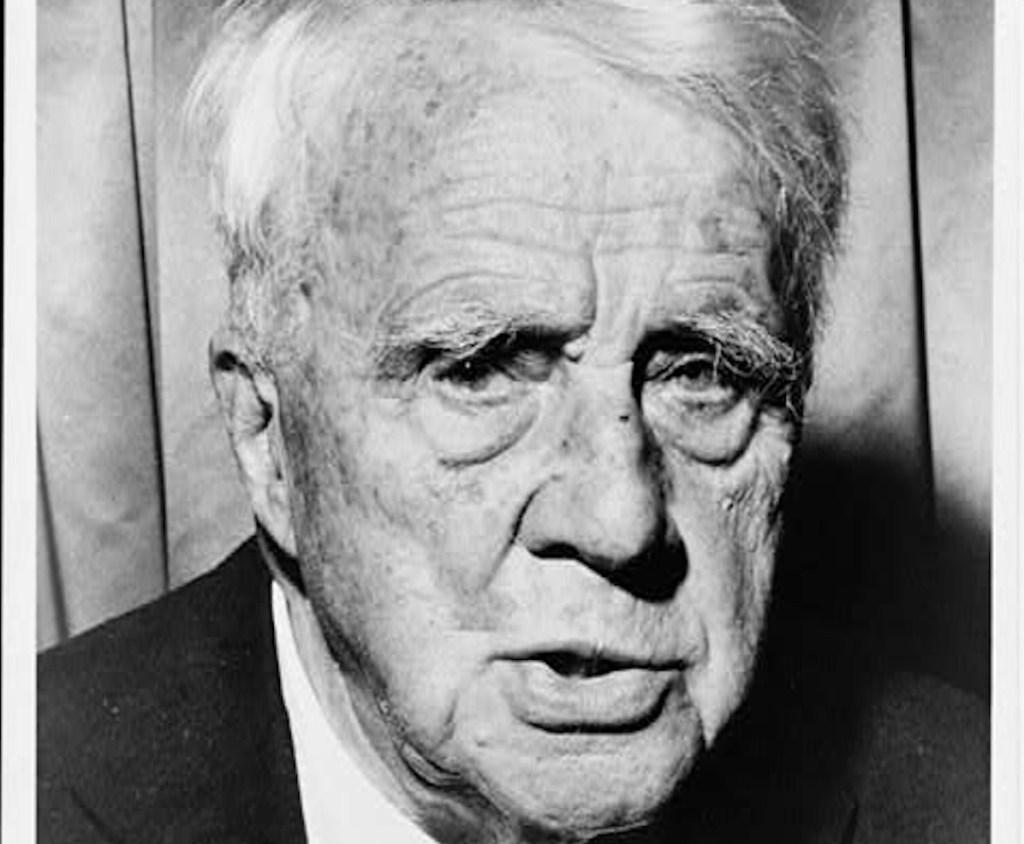
    Image: Robert Frost – Library of Congress

    Robert Frost’s “Stopping by Woods on a Snowy Evening”

    Robert Frost’s “Stopping by Woods on a Snowy Evening” seems simple, but its repeated phrase, “And miles to go before I sleep,” offers room for speculation.  Many of Frost’s poems present a tricky element, as he quipped about “The Road Not Taken” being “very tricky.”

    Introduction with Text of “Stopping by Woods on a Snowy Evening”

    The beloved American poet, Robert Frost, wrote many “tricky poems.” Frost has even quipped that his “The Road Not Taken” is a “very tricky poem.” One might wonder if he also thought that many of his other poems are tricky.  Chiefly because of the final repeated line, his “Stopping by Woods on a Snowy Evening” may also be considered a highly tricky poem.

    The main event of the poem remains uncomplicated: a man has paused his trek home  and sits by a woodland viewing the scene as the snow is piling up in the woods.  And the man’s thoughts as he continues to view the scene and what he expresses as he watches may suggest many questions regarding his thoughts and musings. 

    The speaker’s audience then must remain curious about the speaker’s reasons for stopping to muse: was it only to watch the snow filling up the woods?  Why does he think his stopping is “queer”—a qualification he projected onto his horse?  Why does he care if the owner of the woods would see him?

    The questions raised are only suggested in the speaker’s report but never answered.  Although the poem is very simple and uncomplicated without even the use of a literary device such as metaphor, it encourages much speculation. 

    Then too, a further puzzlement might be: what seemed to cause him to return to his ordinary consciousness from his trance-like musing on the loveliness of snow piling up in the woods?

    Although critics who have interpreted the notion of suicide from the last repeated line can offer nothing concrete for such a bizarre reading,  still that repetition may suggest something other than its literal claim.  Readers are, of course, free to speculate about the difference in meanings of the repeated line, but at the same time they can still enjoy the simple beauty of the poem.

    Stopping by Woods on a Snowy Evening

    Whose woods these are I think I know. 
    His house is in the village though; 
    He will not see me stopping here  
    To watch his woods fill up with snow.   

    My little horse must think it queer   
    To stop without a farmhouse near   
    Between the woods and frozen lake   
    The darkest evening of the year.   

    He gives his harness bells a shake   
    To ask if there is some mistake.
    The only other sound’s the sweep   
    Of easy wind and downy flake.  

    The woods are lovely, dark and deep,   
    But I have promises to keep,   
    And miles to go before I sleep,   
    And miles to go before I sleep.

    Reading


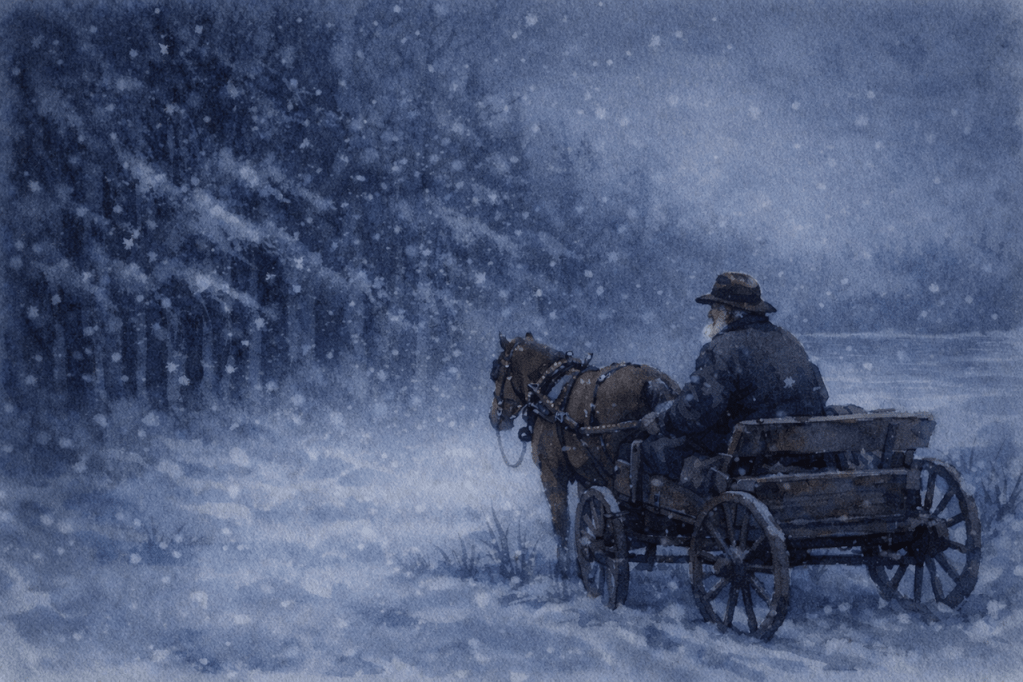
    Image: “Musing on a Snowy Evening” – Created by ChatGPT – Titled by Linda Sue Grimes

    Commentary on “Stopping by Woods on a Snowy Evening”

    One of his tricky poems, Robert Frost’s “Stopping by Woods on a Snowy Evening” seems simple, but the repetition of its nuanced phrase, “And miles to go before I sleep,” offers room for interpretation.

    Stanza 1: The Reason for Stopping

    Whose woods these are I think I know. 
    His house is in the village though; 
    He will not see me stopping here  
    To watch his woods fill up with snow. 

    Robert Frost’s simple poem, “Stopping by Woods on a Snowy Evening,” offers an uncomplicated scene wherein a man who was riding a horse pauses his ride by the roadside near a wooded area to observe as the snow is falling and piling up in the woods.

    The poem is executed without extensive figurative language and literary devices such as metaphor and metonymy.  However, the speaker’s claims do herald questions as noted in the introduction.

    One is likely to wonder if the speaker would not have stopped if he thought the owner of the land would see him.  Because the speaker mentions that fact, the listener cannot help but wonder why.

    Stanza 2:  The Horse Thinks What the Man Thinks

    My little horse must think it queer   
    To stop without a farmhouse near   
    Between the woods and frozen lake   
    The darkest evening of the year.   

    The speaker then reports what he thinks his horse thinks:  he claims that his horse must be thinking it an odd thing to be stopping before reaching home, and equally strange that the man would want to stop beside a woodland and lake while it is becoming dark outside.

    The speaker suggests that the time of year is around December 22, the shortest day of the year and the beginning of winter in the Northern Hemisphere.  That is the reason it is “the darkest evening of the year.”

    It is obvious that it is the speaker himself who thinks his behavior is odd, stopping in the cold, dark winter weather to watch snow falling in a woods.  That he projects his thoughts onto his “little horse” is, of course, merely a ruse that dramatizes his own actions.

    Stanza 3: Soft Breezes and Flaky Snow

    He gives his harness bells a shake   
    To ask if there is some mistake.
    The only other sound’s the sweep   
    Of easy wind and downy flake.  

    In stanza 3, the speaker reveals that he thinks the horse has deemed this stopping as odd because the horse is shaking his head and rattling his harness.  The speaker continues to speculate about what the horse thinks; this time he suggests that his horse thinks he made a “mistake.”  Such speculation about the cogitation of a horse actually becomes rather comical.

    It has become quite clear that all of the thoughts the speaker has speculated about what the horse thinks is simply what the speaker himself is thinking.  He seems to want to suggest that this stopping to watch snow filling up a woods is somehow unseemly or at least “queer”—in the original definition of the term.

    The speaker then notices that other than the rattling of the horse’s harness it is utterly quiet with the only sound he hears being the wind gently blowing as the snowflakes whirl around and into the woodland.

    Stanza 4: Many Miles to Keep Promises

    The woods are lovely, dark and deep,   
    But I have promises to keep,   
    And miles to go before I sleep,   
    And miles to go before I sleep.

    In stanza 4,  the speaker paints the only pictorial details about what he is viewing, as he reports that the woodland is “lovely, dark and deep.”  The bulk of the poem simply offers speculation about who might have seen him and what his little horse may be thinking.  

    Finally, the speaker ends his musing by claiming that he has made promises, and he must keep them.  He must still be a fairly great distance from his residence as he claims that he has miles yet to travel before he can “sleep.”  Those final three lines, actually, state the reason that the speaker must cease his musing on the beauty and quiet of the woodland and continue on with he journey back home.

    But the claim that he “has miles to go before [he] sleep[s]” because it is repeated offers room for interpretation.  Perhaps the second repetition has a different meaning from the first, or just perhaps that is the only way to end poem.

    The Rime Scheme

    It is quite likely that the final repetition has no further meaning from it first iteration.  The rime scheme that the poet has crafted simply offers no way out of the poem except to repeat the line:  AABA BBCB CCDC DDDD.

    Notice that the poet has taken the last word in the third line of the first stanza—”here”—and rimed it with last word in the first—”queer,” second—”near,” and fourth—”year” lines in the second stanza.

    He then repeats that scheme until the end of the poem.  In theory, he could have continued down through the entire alphabet. With such a connected system of riming, there is no useful, harmonious way to end the poem, except the way he actually did.

    Perhaps merely stopping is a option but not as graceful, and too, by the repetition in this particular poem, because of the subject matter, the repetition adds a nuance of meaning, promulgating the suggestion that the first part of the repetition has a different meaning form the second.

    Repeated Line Open to Interpretation

    By repeating the line, “And miles to go before I sleep,” the speaker has crafted an intriguing curiosity that cannot be mollified by the reader, scholar, critic, or commentarian.   The poem offers no support for the idea that the speaker is suggesting he might be thinking about suicide.  That interpretive speculation is overly melodramatic.  

    However, the speaker seems to awaken from a trance-like musing as he watches the snow piling up in the woods, and it does remain unclear what caused him to wake up from that dream-like musing. As laid out in the introduction, the piece does herald questions without providing any concrete answers.

    Because these questions are not answered by the speaker of the poem, but also because Robert Frost called his poem, “The Road Not Taken,” “a tricky poem,” readers may possibly speculate that Frost held that his “Stopping by Woods on a Snowy Evening” was also a “very tricky poem.” 

    Ultimately, answers to those questions do not matter.  The poem offers a serene scene of a man observing nature and then moving on.  The meaningful beauty of the poem, one might argue, is in the lack of details and how a consummate poet can create a stunning, impressive piece of art based on such simplicity.

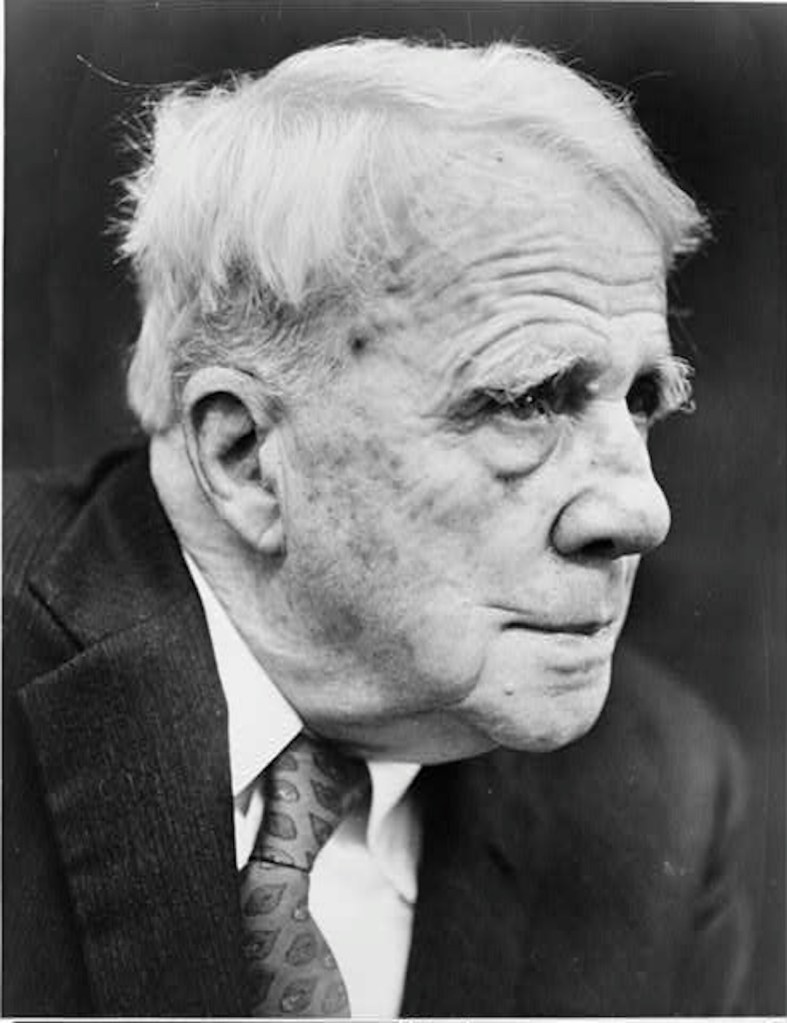
    Image:  Robert Frost – Library of Congress

  • Robert Frost’s “The Road Not Taken”

    Image:   Robert Frost in 1943

    Robert Frost’s “The Road Not Taken”

    Robert Frost’s “The Road Not Taken” is often misinterpreted; it does not encourage nonconformity.  It dramatizes the difficulty of making choices and then living with the consequences. 

    Introduction with Text of “The Road Not Taken”

    Robert Frost’s “The Road Not Taken” has been one of the most anthologized, analyzed, and quoted poems in American poetry.   It has also remained one of the most misunderstood and thus misinterpreted poems in the English language.

    Published in 1916 in Robert Frost’s poetry collection titled, Mountain Interval, the poem has since been interpreted primarily as piece that prompts non-conforming behavior, a philosophy of the efficacy of striking out on one’s own, instead of following the herd.  Thus the poem is often quoted at commencement ceremonies.  However, a close look at the poem reveals a different focus.

    Instead of offering a moralizing piece of advice, the poem merely demonstrates how memory often glamorizes past choices despite the fact that the differences between the choices were not so great.  It also shows how the mind tends to focus on the choice one had to abandon in favor of the one selected.

    Edward Thomas and “The Road Not Taken”

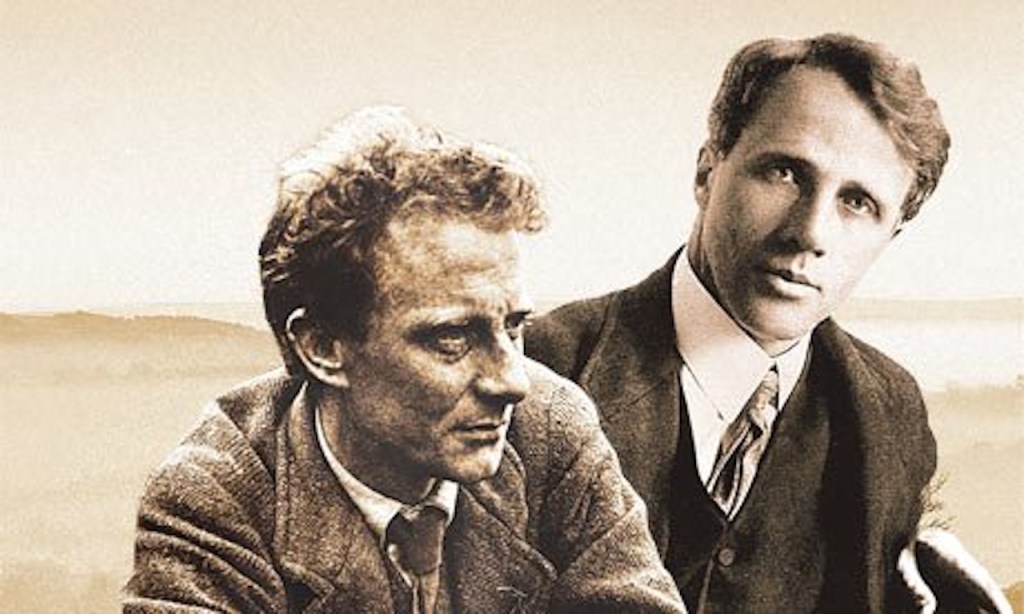
    Robert Frost lived in England from 1912 to 1914; he became fast friends with fellow poet Edward Thomas.  Frost has explained that “The Road Not Taken” was prompted by Thomas, who would continue to fret over the path the couple could not take as they were out walking in the woods near their village.

    The Road Not Taken

    Two roads diverged in a yellow wood,
    And sorry I could not travel both
    And be one traveler, long I stood
    And looked down one as far as I could
    To where it bent in the undergrowth;

    Then took the other, as just as fair,
    And having perhaps the better claim,
    Because it was grassy and wanted wear;
    Though as for that the passing there
    Had worn them really about the same,

    And both that morning equally lay
    In leaves no step had trodden black.
    Oh, I kept the first for another day!
    Yet knowing how way leads on to way,
    I doubted if I should ever come back.

    I shall be telling this with a sigh
    Somewhere ages and ages hence:
    Two roads diverged in a wood, and I—
    I took the one less traveled by,
    And that has made all the difference.

    Robert Frost Reads “The Road Not Taken” 

    Commentary on “The Road Not Taken”

    Robert Frost called “The Road Not Taken” “very tricky.”   Some readers have not heeded his advice to be careful with this one. Thus, a misunderstanding brings this poem into places for which it is not suitable, such as graduation ceremonies, wherein the speaker has taken as his theme the efficacy of strong individualism as opposed to herd conformity.

    First Stanza:  The Decision and the Process of Deciding

    Two roads diverged in a yellow wood,
    And sorry I could not travel both
    And be one traveler, long I stood
    And looked down one as far as I could
    To where it bent in the undergrowth;

    In the first stanza, the speaker reveals that he has been out walking in the woods, and he approaches two diverging pathways; he stops and peers down each path as far as he can.  He then avers that he would like to walk down each path, but he is sure he does not have enough time to experience both.  He knows he must take one path and leave the other behind, and so he commences his decision making process.

    Second Stanza:  The Reluctant Choice

    Then took the other, as just as fair,
    And having perhaps the better claim,
    Because it was grassy and wanted wear;
    Though as for that the passing there
    Had worn them really about the same,

    After scrutinizing both pathways, he decides to start walking down the one that seems “less traveled.” He admits they were “really about the same.”  They were, of course, not exactly the same, but in reality there was not much difference between them as far as he could tell from where he stood. Both paths had been “traveled,” but he fancies that he chooses the one because it was a little less traveled than the other.

    Notice at this point how the actual choice in the poem seems to deviate from the title.  The speaker takes the road less taken, not the one “not taken,” as the title seems to suggest.  That fact was, no doubt, part of the trickiness that Frost mentioned as he discussed the genesis of this poem, calling it “very tricky.”

    The title also lends to  the moralizing interpretation.  The path not taken is the one not taken by the speaker—both roads have been taken by others, but the speaker being just one individual could take only one.

    Third Stanza:  Really More Similar Than Different

    And both that morning equally lay
    In leaves no step had trodden black.
    Oh, I kept the first for another day!
    Yet knowing how way leads on to way,
    I doubted if I should ever come back.

    Because the decision making process can be complex and lengthy, the speaker continues to reveal his thinking about the two paths into the third stanza.  But again he reports how the paths were really more similar than different.

    Fourth Stanza:  The Ambiguous Sigh

    I shall be telling this with a sigh
    Somewhere ages and ages hence:
    Two roads diverged in a wood, and I—
    I took the one less traveled by,
    And that has made all the difference.

    In the final stanza, the speaker projects how he  will look back on his decision in the distant future.  He surmises that he will remember taking a “less traveled” road, and that decision “has made all the difference.”  

    The problem with interpreting the poem as advice for individualism and non-conformity is that the  speaker is only speculating about how his decision will affect his future.  He cannot know for certain that his decision was a wise one, because he has not yet lived it.  

    Even though he predicts that he will think it was a positive choice when he says, it “made all the difference,” a phrase that usually indicates a good difference, in reality, he cannot know for sure.  

    The use of the word “sigh” is also ambiguous.  A sigh can indicate relief or regret——two nearly opposite states of mind.  Therefore, whether the sigh comports with a positive difference or negative cannot be known to the speaker at the time he is musing in the poem.  He simply has not lived the experience yet.  

    “Tricky Poem”

    Frost referred to this poem as a tricky poem, and he admonished readers “to be careful of that one.” He knew that human memory tends to gloss over past mistakes and glamorize the trivial.   He also was aware that a quick, simplistic perusal of the poem could yield an erroneous understanding of it.  

    The poet also has stated that this poem reflects his friend Edward Thomas’ attitude while out walking in the woods near London, England.  Thomas continued to wonder what he might be missing by not being able to walk both paths, thus the title’s emphasis on the road “not taken.”

    “Road” as a Symbol for Life’s “Path”

    In this commentary, readers may notice that I have used the term “path” instead of road in most the references to that entity in the poem.  The poem begins by placing the speaker in a “yellow wood.” Thus, the speaker has encountered two different pathways through the wood because it more likely that a wood has paths (pathways) than roads.  Paths are for walking; roads are for vehicle traffic.  

    Thus, I suggest that the speaker is employing the term “road” as a symbol of one’s pathway through life——not a a literal road in a wood. Even though the speaker had used the term “travel” in the opening lines, he later limits that mode of travel to foot travel when he says, “long I stood” and later, “In leaves no step had trodden black.” He “stood” because he had been walking.  And “step had trodden black” refers to the condition of the leaves having been walked upon. 

    Image:  Robert Frost and Edward Thomas 

  • Emily Dickinson’s “The Soul selects her own Society”

    Image: Emily Dickinson – Amherst College – Daguerrotype of the poet at age 17, circa 1847 – likely the only authentic, extant likeness of the poet

    Emily Dickinson’s “The Soul selects her own Society”

    Emily Dickinson’s “The Soul selects her own Society” portrays the nature of individual self-sufficiency, spiritual power, and the deliberate choice of isolation over social engagement.  The result is a positive statement that the strength of the soul remains ascendent, despite a world of chaos.

    Introduction and Text of “The Soul selects her own Society”

    In only three innovative quatrains, Emily Dickinson’s poem, “The Soul selects her own Society,” reveals the power of the soul’s skill in selecting its companions and rejecting external influences.  

    This profound theme is one of many that similarly focus on issues of individuality in Dickinson’s 1775 span of poems. The poet grappled with questions of personal autonomy and the inner life by creating speakers who address those inquiries in unique, strong voices.

    Emily Dickinson’s themes, poetic techniques, as well as the cultural and philosophical contexts that inform her poems all lend heft to the notion that the poet remained steadfast in her determination to live deliberately and independently.

    The claims that Dickinson’s speaker makes about the soul’s choices illuminate this poem’s celebration of individuality, and those claims offer a subtle critique of societal pressures. This important theme can be found in a number of Dickinson’s poems. The poet continued to create speakers who share her love of privacy.

    The Soul selects her own Society –

    The Soul selects her own Society –
    Then – shuts the Door –
    To her divine Majority –
    Present no more –

    Unmoved – she notes the Chariots – pausing –
    At her low Gate –
    Unmoved – an Emperor be kneeling
    Upon her Mat –

    I’ve known her – from an ample nation –
    Choose One –
    Then – close the Valves of her attention –
    Like Stone –

    Commentary on “The Soul selects her own Society”

    Emily Dickinson’s “The Soul selects her own Society” stands as the emblematic poem for not only the poet’s entire oeuvre but also for her life choice of isolation as well.  She continued to create speakers, whose voices remain strong and unique.  Her elliptical, minimalist expressions demonstrate an economy of language use seldom experienced to such a high degree.

    First Stanza: The Soul’s Decision

    The Soul selects her own Society –
    Then – shuts the Door –
    To her divine Majority –
    Present no more –

    The first stanza establishes the soul’s autonomy and power as the target of the poem. Dickinson’s speaker is personifying the soul as a feminine being, a choice that comports with her frequent portrayal of the self as an introspective consciousness. 

    The verb “selects” remains essential in distinguishing a deliberate act of choice. Unlike passive acceptance or arbitrary selection, the soul’s decision to choose its “Society” reflects a profound exercise of individual agency and strength. 

    The capitalization of “Soul” and “Society” ennobles these terms, attesting to spiritual and metaphysical power.  “Society” indicates a selected group of companions that the soul deems worthy of its attention.

    The second line, “Then – shuts the Door,” introduces an intense metaphor of exclusion. The act of shutting the door symbolizes the rejection of all that lies outside the soul’s chosen circle. 

    This exclusionary image invokes both physical and psychological barriers, making clear that the soul’s decision is not merely a preference but instead remains a absolute act of isolation. 

    The door, a boundary between the inner and outer worlds, becomes an instrument of both inclusion and exclusion, emphasizing the soul’s desire for control over its environment.

    The phrase “divine Majority” in the third line refers to a spiritual unity, such as a divine assembly representing the will of a Higher Power, and the soul accepts that “Majority” and its divinity as evidence of its own affirmative judgment. 

    The “divine Majority” also includes tangentially certain members of the broader societal collective–family and friends–on the earth plane, implying that the soul dismisses the opinions or expectations of the masses but accepts willingly and graciously all those who understand and respect the choices of the speaker.   

    The adjective “divine” imbues this majority with a sacred quality that it must possess, if the speaker is to sanction it.  The final line, “Present no more,” reinforces the irrevocability of this decision. The soul’s chosen society is now its sole focus, and all others are rendered absent, both physically and metaphysically.

    Interestingly, the word “present” can be interpreted as either an adjective or a verb, but either interpretation results in the same meaning of the phrase in this context.  As a verb, it is a command, “Offer no more suggestions for my perusal.”   As an adjective, the speaker is making the simple statement that other than her chosen “divine Majority,” no further admittance is allowed; her group remains complete.

    Dickinson’s use of her liberal spray of dashes throughout the stanza creates a spacing  rhythm, mirroring the deliberate and measured nature of the soul’s actions. These pauses invite readers or listeners to linger on each phrase, reflecting the weight of the soul’s choices. 

    The stanza’s brevity and syntactic compression further enhance its impact, distilling complex ideas into a few carefully chosen words. By framing the soul’s selection as both an act of inclusion and exclusion, the speaker has set the stage for the poem’s expression of individualism and its consequences.

    Second Stanza: Resisting External Influence

    Unmoved – she notes the Chariots – pausing –
    At her low Gate –
    Unmoved – an Emperor be kneeling
    Upon her Mat –

    The second stanza shifts its focus from it affirmative declaration to the soul’s unwavering stance in the face of external temptations, reinforcing the theme of absolute individual sovereignty. 

    The repetition of “Unmoved” at the beginning of the first and third lines serves as a rhetorical anchor, emphasizing the soul’s emotional detachment and unchanging resolve. 

    This word choice suggests not only indifference but also a deliberate refusal to be swayed by external grandeur or authority. The soul’s ability to remain “unmoved” underscores its inner strength, positioning it as a self-sustaining entity invulnerable to worldly, earthly allure.

    The imagery of “Chariots – pausing – / At her low Gate” heralds a scene of pomp and power, seeking entry. Chariots, often associated with military might or royal processions, symbolize societal prestige and influence. 

    This chariots pausing at the soul’s “low Gate” creates a striking contrast between the grandeur of the material world-at-large and the humility of the soul’s inner mystical domain. 

    The adjective “low” suggests simplicity and humility—qualities that perfectly align with Dickinson’s speakers’ recurring portrayal of the self as unpretentious yet profoundly self-aware.  The gate, like the door in the first stanza, functions as a boundary, reinforcing the soul’s control over who may enter its realm.

    The second image of “an Emperor be kneeling / Upon her Mat” magnifies this contrast. The emperor, a figure of supreme authority, is portrayed in a position of supplication—”kneeling” on the soul’s humble mat. 

    This inversion of power dynamics is astonishing: the soul—humble, modest, and tranquil—commands the respect of even the most powerful figures.  The mat, a simple household item, further emphasizes  the soul’s unassuming nature, yet its presence in this context elevates it to a symbol of the soul’s complete sovereignty. 

    The emperor’s kneeling suggests not only deference but also a recognition of the soul’s authority, which transcends all worldly hierarchies. Dickinson’s traditional, abundant splash of dashes in this stanza furthers the pauses, mirroring the soul’s contemplative resistance. Each dash invites the reader to pause and consider the significance of the soul’s indifference to such potent symbols of power. 

    The stanza’s structure, with its parallel clauses beginning with “Unmoved,” reinforces the soul’s consistency and resolve. By juxtaposing the soul’s simplicity with the grandeur of chariots and emperors, the speaker celebrates the power of inner conviction over external splendor, a theme that resonates with the Dickinsonian broader critique of societal conformity.

    Third Stanza: The Final Choice

    I’ve known her – from an ample nation –
    Choose One –
    Then – close the Valves of her attention –
    Like Stone –

    The third stanza shifts to a personal perspective, as the speaker reveals intimate knowledge of the soul’s behavior with the phrase “I’ve known her.” This shift to the first person opens up her deep familiarity, confirming the speaker’s own experience as one who often chooses solitude over societal engagement. 

    The phrase “from an ample nation” implies a vast array of potential companions, whether individuals, ideas, or influences. The word “ample” denotes abundance, yet the soul’s choice is singular and exclusive, as it selects only “One.”  This act of choosing remains both deliberate as well as reductive, narrowing the soul’s focus to a single entity or ideal.

    The metaphor of closing “the Valves of her attention” is particularly salient. The term “Valves” introduces a mechanical image, indicating a controlled and deliberate mechanism for regulating attention.  Unlike the organic imagery of doors or gates, valves imply precision and finality, as if the soul is sealing off its consciousness with mechanical efficacy. 

    The simile, “Like Stone,” further emphasizes this irrevocability, vouchsafing an unyielding, determined state. Stone is nearly immutable and enduring, indicating that the soul’s decision is permanent and secure against change.  This image also carries a sense of weight and stillness, contrasting with the dynamic imagery of chariots and emperors in the previous stanza.

    The stanza’s brevity enhances its impact, as each line dramatically builds toward the final, evocative image of stone. The dashes keep their rhythm punctuating the lines, creating the important pauses that reflect the gravity of the soul’s withdrawal. 

    By framing the soul’s choice as selective—inclusive as well as exclusive—the speaker emphasizes the result of such individual autonomy: the soul expresses its sovereignty, and the less important connection with the broader world is exposed and laid to rest. 

    A Resolute Act of Agency

    Emily Dickinson’s “The Soul selects her own Society” is a masterful exploration of individuality, autonomy, and the consequences of deliberate isolation. Through its three quatrains, the poem traces the soul’s journey from selection to rejection to final withdrawal, each stage completed by a resolute act of agency. 

    The first stanza establishes the soul’s sovereignty through its careful selection of companions, while the second illustrates its resistance to external temptations, and the third underscores the finality of its withdrawal. 

    Dickinson’s use of vivid imagery–doors, gates, chariots, emperors, valves, and stone–creates a rich tapestry of meaning, inviting readers to contemplate the power and cost of personal choice.  The poem’s formal elements, including its concise structure, halting rhythm, and strategic use of dashes, enhance its thematic depth. 

    The dashes, in particular, serve as a stylistic hallmark, creating pauses that mirror the soul’s contemplative resolve and invite readers to engage with the text on a deeper level.

    The capitalization of key terms, such as “Soul,” “Society,” and “Majority,” imbues them with metaphysical significance, elevating the poem’s exploration of individuality to a universal plane.

    Contextually, the poem reflects Dickinson’s own life as a poet who chose solitude over societal engagement. Living in Amherst, Massachusetts, Dickinson maintained a reclusive lifestyle, corresponding with a select few while withdrawing from public life.  This personal context informs the poem’s celebration of inner conviction, as well as its acknowledgment of the isolation that such conviction entails. 

    Philosophically, the poem aligns with transcendentalist ideas of self-reliance, as espoused by contemporaries like Ralph Waldo Emerson, though Dickinson’s perspective is more introspective and less optimistic about the individual’s connection to the broader world.

    Ultimately, “The Soul selects her own Society” is a testament to Dickinson’s ability to distill complex ideas into concise, evocative verse. The poem invites readers to reflect on the nature of choice, the value of autonomy, and the delicate balance between connection and solitude. 

    By portraying the soul as a sovereign entity capable of shaping its own destiny, Dickinson’s speaker has affirmed the power of individuality while acknowledging the profound solitude that accompanies such freedom.