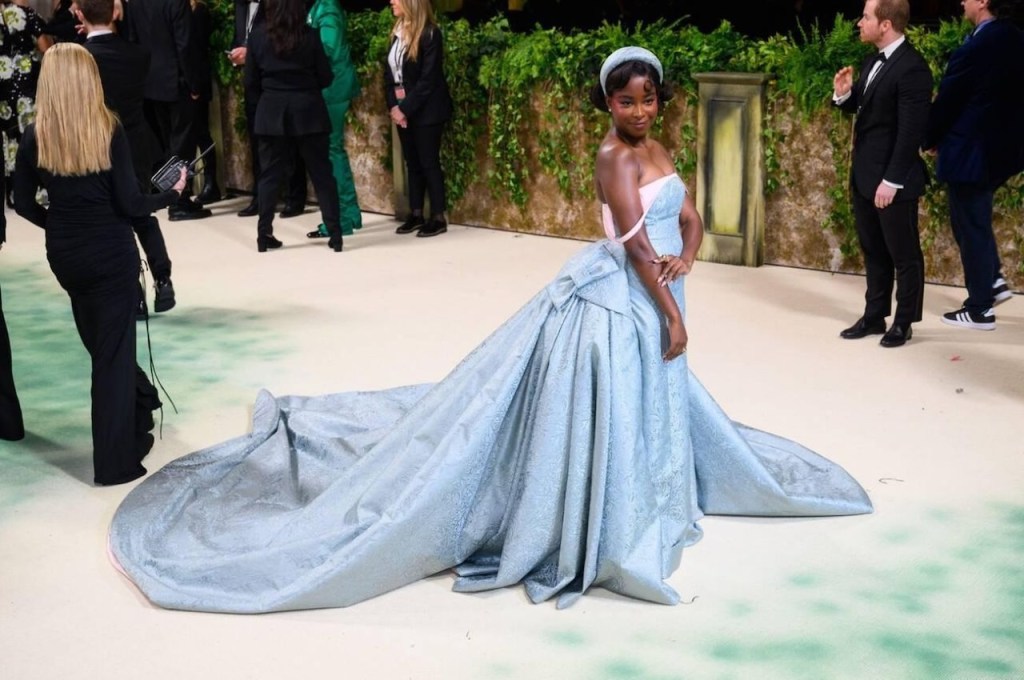
Image: Amanda Gorman
Amanda Gorman’s “For Renee Nicole Good”
Amanda Gorman’s “For Renee Nicole Good” tries to be an elegy, but it falters in displaying contrived diction, strained prosody, clichéd imagery, and manipulative historical framing—all compromising its position as an elegiac form.
Introduction and Text of “For Renee Nicole Good”
Spurred on by the January 7, 2026, incident in which Renee Nicole Good was fatally shot by an ICE agent in Minneapolis, inaugural poetry reader Amanda Gorman has focused on the unfortunate event for moral and political effect, prioritizing rhetoric over grief and glossing over a complex historical reality.
Gorman’s piece commemorates Renee Nicole Good, a 37-year-old Minneapolis woman, who was killed during a federal immigration enforcement operation. The incident, widely reported in major media, involved Good ramming her 4,000-pound Honda Pilot into an ICE officer, causing him to suffer internal injuries. Allegedly, the officer reacted by shooting Good in self-defense.
Political and media pundits have continued to debate federal characterizations of her actions, including claims that labeled her a “domestic terrorist.” Talking heads on various media outlets have continued to exploit the dismal affair by interpreting the videos of the event to fit their own narratives.
Gorman’s piece attempts to position Good’s death as the result of systemic failure couched in moral urgency; however, the literary execution of the piece weakens Gorman aim at elegy. The rime is forced and uneven, diction is inflated and often awkward, and imagery slips into abstraction or cliché.
The use of figurative language remains symbolic and moralistic, rather than being grounded in Good’s specific circumstances. While the piece attempts elegiac elevation, its rhetorical ornamentation and moral abstraction produce nothing more than mere posturing.
The piece remains merely decorative verse lacking emotional precision or nuanced engagement with historical fact. The piece remains an excellent example of “miselegy”—not elegy.
For Renee Nicole Good
Killed by I.C.E. on January 7, 2026
They say she is no more,
That there her absence roars,
Blood-blown like a rose.
Iced wheels flinched & froze.
Now, bare riot of candles,
Dark fury of flowers,
Pure howling of hymns.
If for us she arose,
Somewhere, in the pitched deep of our grief,
Crouches our power,
The howl where we begin,
Straining upon the edge of the crooked crater
Of the worst of what we’ve been.
Change is only possible,
& all the greater,
When the labour
& bitter anger of our neighbors
Is moved by the love
& better angels of our nature.
What they call death & void,
We know is breath & voice;
In the end, gorgeously,
Endures our enormity.
You could believe departed to be the dawn
When the blank night has so long stood.
But our bright-fled angels will never be fully gone,
When they forever are so fiercely Good.
Commentary on “For Renee Nicole Good”
Amanda Gorman’s piece is rhetorically inflated and abstract, inflating symbolic moral critique over concrete grief. It glosses over key facts and turns personal tragedy into generalized indictment. The result is both stylistic weakness and historical distortion.
First Movement: “They say she is no more”
They say she is no more,
That there her absence roars,
Blood-blown like a rose.
Iced wheels flinched & froze.
Now, bare riot of candles,
Dark fury of flowers,
Pure howling of hymns.
If for us she arose,
Somewhere, in the pitched deep of our grief,
Crouches our power,
The howl where we begin,
Straining upon the edge of the crooked crater
Of the worst of what we’ve been.
The piece fails as elegy from its opening lines, with vagueness masquerading as intensity. The vague claim—“They say she is no more”—screams out as a slack, secondhand construction. The nondescript, distancing phrase “they say” bypasses the elegist’s most important obligation—to bear direct witness to loss.
Compare this avoidance to the stark authority of Walt Whitman’s “When Lilacs Last in the Dooryard Bloom’d” or even a simple declarative statement such as “She is dead”: the circumlocution here drains the death of immediacy before the piece has properly begun.
The use of figurative language compounds the failure. “Blood-blown like a rose” aspires to vivid compression but achieves only decorative incongruity: ”blood-blown” suggests violence, yet the rose is so overworked a poetic symbol that it softens rather than sharpens what ought to be a disturbing image. Thus, the two terms are pitted against each other.
Similarly, “Iced wheels flinched & froze” is so obscure that it remains meaninglessness: wheels, obviously belong to the 4000 pound vehicle, but wheels do not flinch. The verb “flinch” describes a human reaction of nervousness, and to assign wheels this involuntary recoil is to sentimentalize machinery rather than illuminate human grief.
The lines “bare riot of candles, / Dark fury of flowers, / Pure howling of hymns” reveal another besetting weakness: the piece’s reliance on oxymoronic abstract nouns to manufacture feeling it has not earned. A riot is not bare; fury is not dark in any illuminating sense; howling is not pure; see Malcolm M. Sedam’s appraisal of Allen Ginsberg’s “Howl.”
These contradictions do not exert a useful tension; instead, they simply hint at emotional extremes without grounding them in any specific detail of the occasion, the mourners, or the deceased. Readers learn nothing about who this woman was or who weeps for her.
The closing lines’ prosody also undermines its ambitions. The lines “Crouches our power, / The howl where we begin” strain for prophetic weight but the inversion “crouches our power” is merely awkward, and “the howl where we begin” is so abstract as to be empty—begin what?
The final image of “the crooked crater / Of the worst of what we’ve been” gestures at collective historical shame but without any specific referent. Although this piece concerns a real death in a specific circumstance—one involving an officer’s injury and reaction of likely self-defense, the needed context is entirely absent.
Elegy, at its best, as in Auden’s “In Memory of W.B. Yeats,” earns any generalization by first anchoring itself in specificity. This piece attempts the reverse, and the result is rhetoric without a foundation that is, nevertheless, loud, shapeless, unmoved and unmoving.
Second Movement: “Change is only possible”
Change is only possible,
& all the greater,
When the labour
& bitter anger of our neighbors
Is moved by the love
& better angels of our nature.
What they call death & void,
We know is breath & voice;
In the end, gorgeously,
Endures our enormity.
The second movement opens with a conditional proposition in the first stanza of the movement, and this proposal immediately reveals the piece’s central confusion of purpose: elegy is not argument. The conditional “when” converts mourning to a political syllogism: grief is admissible only insofar as it produces the correct social outcome. The dead woman has already been subordinated to a thesis.
The phrase “better angels of our nature” compounds the problem by alluding to Lincoln’s famous phrase without earning it. In Abraham Lincoln’s First Inaugural Address, the phrase carried the weight of a young nation on the verge of civil war; here it is borrowed to lend gravitas to what is essentially a political slogan. The allusion does not illuminate; it appropriates.
The lines “What they call death & void, / We know is breath & voice” represent the most telling failure in the passage. The opposition of “they” and “we” divides the world into the politically benighted and the enlightened speaker’s community, and in doing so it abandons the elegiac mode entirely.
Elegy confronts death as an irreducible, universal fact, intrinsic to the human condition; it does not reframe death as a misperception held by ideological opponents. To argue that death is not merely what the unenlightened “call” it is not consolation; it is evasion dressed as affirmation.
The closing couplet reaches for the lapidary but lands in obscurity. “Enormity” in precise usage means moral outrage or wickedness, which may be the intended meaning, but then “gorgeously” becomes grotesque in the wrong way, not productively paradoxical but simply muddled.
If “enormity” is used loosely to mean vastness or magnitude, the line collapses into vague self-congratulation: we are very large, and we endure. Neither reading redeems the couplet, and neither brings the reader any closer to a specific dead woman, her specific life, or the specific circumstances of her death. The piece has fully exchanged the particular for the rhetorical, and what endures is not grief but posture.
Third Movement: “You could believe departed to be the dawn”
You could believe departed to be the dawn
When the blank night has so long stood.
But our bright-fled angels will never be fully gone,
When they forever are so fiercely Good.
The final movement opens with a conditional that immediately points to its own uncertainty: “You could believe departed to be the dawn.” The addition of the verb “believe” does not signal the tentativeness of honest doubt; it is the tentativeness of a versifier who knows the metaphor is not working.
That time of day known as dawn as a poetic device for death’s transcendence is among the most exhausted—therefore clichéd—resources in the elegiac tradition, and to introduce it with “you could believe” rather than committing to it fully exposes an acknowledgment of its staleness. The line asks readers to entertain a consolation that the piece itself does not fully trust.
The line “The blank night has so long stood” attempts to deepen the light-and-darkness opposition but “blank” is doing no useful work here. Night is characterized only by the absence of qualities, which is itself an absence of imagination.
Compare the productive darkness in elegies that have earned their consolations through prior engagement with specific grief. For example, Thomas Gray’s “Elegy Written in a Country Churchyard” lingers over the obscurity and stifled potential of the rural dead before arriving at its muted, hard‑won consolations. The darkness in Gorman’s piece has no particular texture because the woman mourned has never been rendered particular.
The line “Our bright-fled angels” is symptomatic of the movement’s broader failure. The compound adjective “bright-fled” strains for originality but produces only a vague luminous blur. Readers cannot see these angels, cannot locate them, cannot feel their specific absence. And “angels,” used here for the second time in the piece, has by this point become the piece’s default finger pointing toward the transcendent, deployed only wherever the sentiment runs short of concrete reality.
The closing line “When they forever are so fiercely Good” makes the piece’s central substitution explicit and, in doing so, exposes its paucity. The capitalization of “Good” collapses the woman’s surname into a moral abstraction, transforming a specific human being into an emblem of virtue—a claim which is never realized.
This kind of sleight-of-hand is the opposite of what elegy requires. The great elegies, including Milton’s “Lycidas,” Tennyson’s “In Memoriam A. H. H,” and Wilcox’s “The Queen’s Last Ride,” depend upon the irreplaceable particularity of the lost individual.
Here, the decedent’s’ name is conscripted into the piece’s rhetorical argument: she is “Good” [good]; therefore, her death indicts a system that is not. The wordplay, however well-intentioned, subordinates the woman’s personhood to her usefulness as a symbol, which is precisely the charge that the piece is leveling at the broader social forces it purports to critique.
Taken as a whole, “For Renee Nicole Good” fails as elegy because its every formal and figurative decision moves away from the particular and toward the general, away from grief and toward argument, away from the irreducibly human fact of one woman’s death and toward the consolations of political and moral statement.
Doggerel is not merely a matter of clumsy versification; it is verse that reaches beyond its own imaginative and emotional resources. This piece reaches very far and grasps nothing of substance.
Further Reading
Cornelius Eady’s “Renée Nicole Good Is Murdered” Another miselegy targeting the death of Ms Good.
 Linda's Literary Home
Good faith questions and comments welcome!