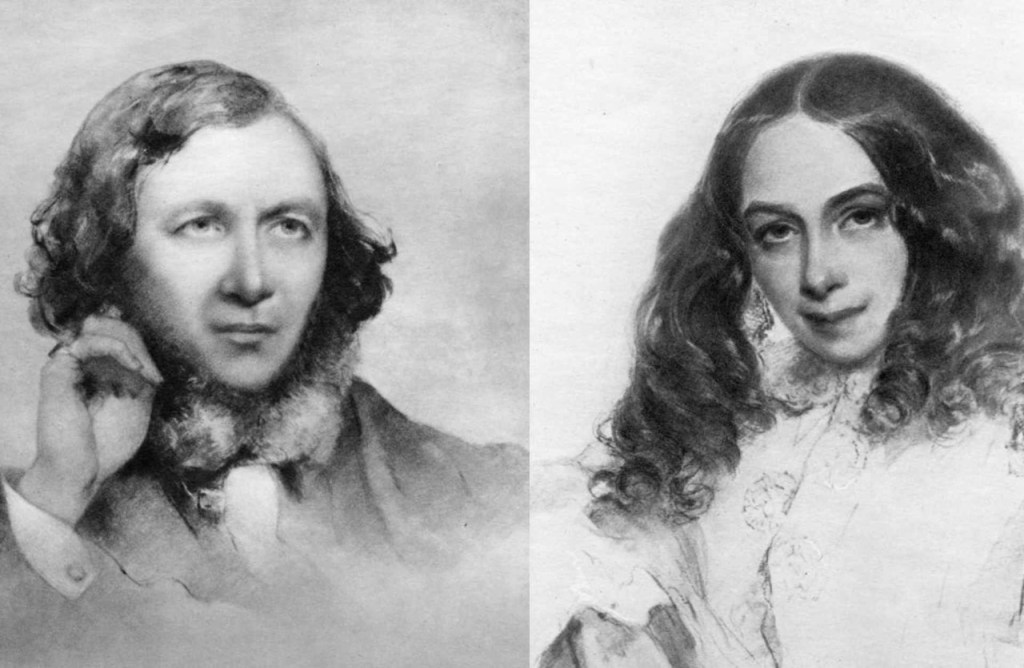
Elizabeth Barrett Browning’s Sonnet 25 “A heavy heart, Belovèd, have I borne”
Elizabeth Barrett Browning’s speaker revisits her former sorrow to contrast her earlier “heavy heart” with the light heartedness she now enjoys because of her belovèd fiancé.
Introduction and Text of Sonnet 25 “A heavy heart, Belovèd, have I borne”
Elizabeth Barrett Browning’s sonnet 25 from Sonnets from the Portuguese dramatizes the transformation of the speaker’s “heavy heart” of misery into a welcoming home of life and love. She credits her belovèd suitor for her ability to transcend her earlier sorrows.
The speaker continues to gain confidence in herself and the possibility that she can be loved by one whose status she deems so far above her own. She began in utter denial of any such luck, but as the muses, prays, and contemplates the motives and the behavior of her beloved, she becomes more convinced of his genuine affection for her.
Elizabeth Barrett Browning’s speaker revisits her former sadness and melancholy in order to contrast that earlier “heavy heart” with the light heartedness she now has begun to enjoy because of the genuine feelings she now detects in her belovèd life partner.
Sonnet 25 “A heavy heart, Belovèd, have I borne”
A heavy heart, Belovèd, have I borne
From year to year until I saw thy face,
And sorrow after sorrow took the place
Of all those natural joys as lightly worn
As the stringed pearls, each lifted in its turn
By a beating heart at dance-time. Hopes apace
Were changed to long despairs, till God’s own grace
Could scarcely lift above the world forlorn
My heavy heart. Then thou didst bid me bring
And let it drop adown thy calmly great
Deep being! Fast it sinketh, as a thing
Which its own nature doth precipitate,
While thine doth close above it, mediating
Betwixt the stars and the unaccomplished fate.
Commentary on Sonnet 25 “A heavy heart, Belovèd, have I borne”
The speaker is revisiting her former sorrow and contrasting her earlier “heavy heart” to the light heartedness she now enjoys because of her belovèd suitor.
First Quatrain: A Storehouse of Metaphors for Misery
A heavy heart, Belovèd, have I borne
From year to year until I saw thy face,
And sorrow after sorrow took the place
Of all those natural joys as lightly worn
The speaker addressing her belovèd recalls that before she “saw [his] face,” she was afflicted with a “heavy heart.” She suffered a long line of sorrows instead of “all those natural joys” that young woman usually experience so easily.
This speaker has so often alluded to her sorrow that the reader is not surprised that it appears again in dramatic form. Her storehouse of metaphors that elucidate her misery is large and varied.
Second Quatrain: Sorrows Like a String of Pearls
As the stringed pearls, each lifted in its turn
By a beating heart at dance-time. Hopes apace
Were changed to long despairs, till God’s own grace
Could scarcely lift above the world forlorn
The speaker compares that long life of “sorrow after sorrow” to a string of pearls and supplies the image of a young woman at a dance, who fingers her pearls as she waits with rapidly “beating heart” to be asked to dance.
The speaker sees herself as a wallflower and as that metaphoric self stood waiting to be chosen, her hopes were dashed and “were changed to long despairs.” She remained alone and lonely until her belovèd, now future life partner, mercifully through the grace of God rescued her.
First Tercet: Love Warm and Soothing
My heavy heart. Then thou didst bid me bring
And let it drop adown thy calmly great
Deep being! Fast it sinketh, as a thing
Inordinately, the speaker was so distressed with her burden of a sad, depressed heart that it was difficult even for “God’s own grace” to raise from her that melancholy. In a pain-producing world, her heart that had felt complete dejection. But fortunately her belovèd appeared. He beckoned her, accepted her, and welcomed her to let go of her suspicion and take into her soul the reality of his love for her.
The speaker’s gentleman friend’s loving affection was like a warm soothing pool of fresh water into which she could drop her painful “heavy heart” to have it washed clean of its sorrowful burden. Her heavy heart sank quickly to bottom of his welcoming comfort as if it belonged in that very place.
Second Tercet: Adoring Care
Which its own nature doth precipitate,
While thine doth close above it, mediating
Betwixt the stars and the unaccomplished fate.
The speaker’s emotional self was thus comforted by her belovèd’s adoring care; she felt that she had come home for the first time. His love enclosed her and lifted her to where she could sense her destiny as majestic as a celestial being “mediating / Betwixt the stars and the unaccomplished fate.”
The speaker has offered her belovèd a dramatic celebration of her change of heart and credited him with transforming her heavy load of sorrow and dejection into a light sensory gift that has become conducive of heaven.
 Linda's Literary Home
Good faith questions and comments welcome!