Linda's Literary Home

Tag: Spoon River Anthology

  • Edgar Lee Masters’ “Robert Fulton Tanner”

    005a Image/Edgar-Lee-Masters-Portrait.jpg
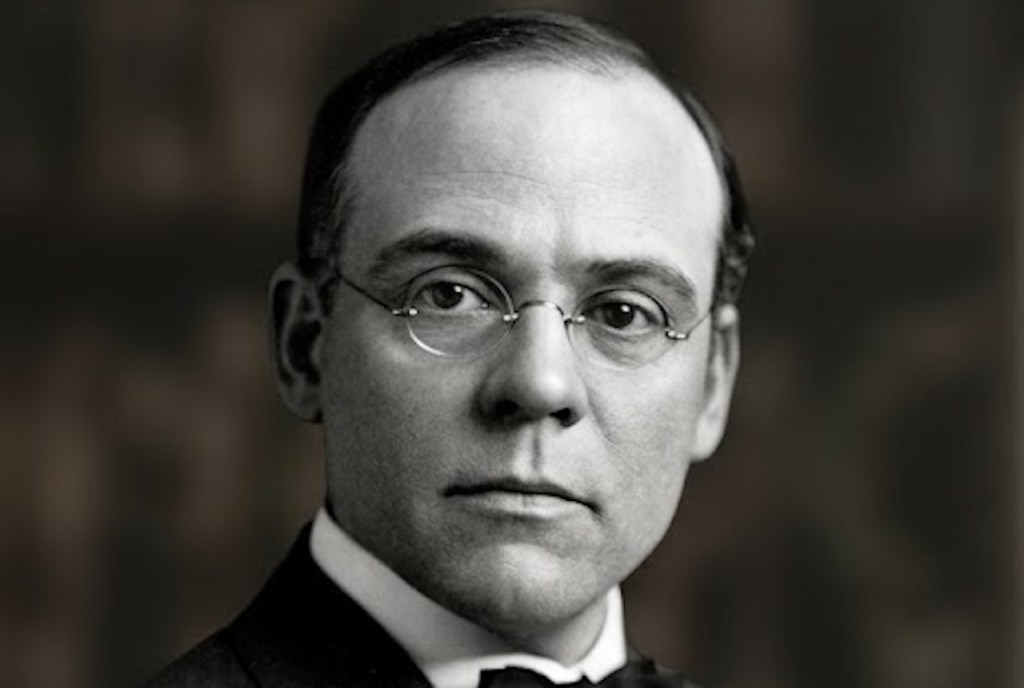
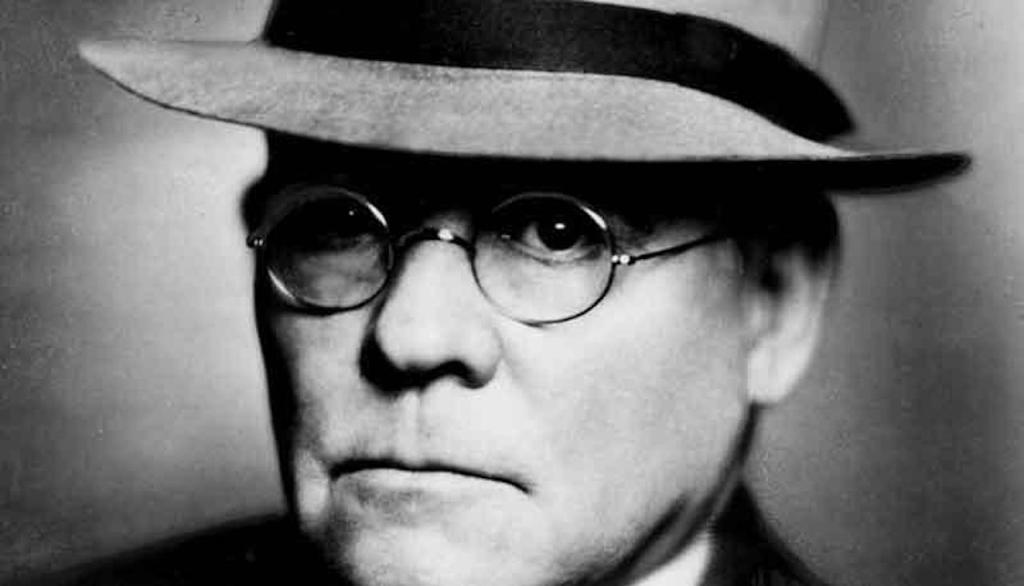
    Image: Edgar Lee Masters

    Edgar Lee Masters’ “Robert Fulton Tanner”

    Representing the fifth epitaph in Masters’  Spoon River Anthology is the character named Robert Fulton Tanner, who compares his life to a rat caught in a trap.

    Introduction and Text of “Robert Fulton Tanner”

    Edgar Lee Masters’ “Robert Fulton Tanner” is the fifth epitaph in the American classic Spoon River Anthology.   Fulton is a pathetic character, who discovers that building a better mouse trap might only get up a cockeyed metaphor to fling at this thing vaguely called “Life.”

    Robert Fulton Tanner 

    If a man could bite the giant hand
    That catches and destroys him,  
    As I was bitten by a rat
    While demonstrating my patent trap,
    In my hardware store that day.
    But a man can never avenge himself  
    On the monstrous ogre Life.
    You enter the room—that’s being born;
    And then you must live—work out your soul,
    Aha! the bait that you crave is in view:
    A woman with money you want to marry,
    Prestige, place, or power in the world.
    But there’s work to do and things to conquer—  
    Oh, yes! the wires that screen the bait.
    At last you get in—but you hear a step:
    The ogre, Life, comes into the room,  
    (He was waiting and heard the clang of the spring)
    To watch you nibble the wondrous cheese,  
    And stare with his burning eyes at you,
    And scowl and laugh, and mock and curse you,
    Running up and down in the trap,
    Until your misery bores him.

    Commentary on “Robert Fulton Tanner”

    The fifth epitaph in Masters’  Spoon River Anthology features the character named Robert Fulton Tanner, who compares his life to a rat caught in a trap.

    First Movement:  Holding a Grudge

    “Robert Fulton Tanner” holds a grudge, and he holds it against “Life.””  He thus blames “Life” for his misery, and he muses on the notion of being able the bite that hand of Life that has bitten him.  If he could have bitten that “giant hand,” then what?  He does not say.  It appears he did not think beyond that luscious ability.  Or perhaps he thinks such biting would be enough to avenge his plight.

    Reader/listeners are free to imagine the consequence of such biting, and the only safe conclusion is that Tanner would feel better if he could have accomplished such a biting.  Likening that “giant hand” to God, as well as Life, Tanner reveals that he is a hardware store owner, who had determined that he had built a better mouse trap.

    But while demonstrating that “patent trap,” a rat bit his hand. And that bitter event unleashed in Tanner’s mind all that would go wrong in his life henceforth.  From that day forth, he would see himself as a victim of the giant hand, which caught him and destroyed him.

    Second Movement:  Biting God’s Hand

    If only one could bite that giant hand—of God, of Life, or of whatever—living would be improved for the man.  Unfortunately, that is never going to happen, and Tanner knows it.

    Tanner then goes on a philosophically tinged discourse, likening being born to entering a room.  He observes that one must “live” and “work out [one’s soul].”  He pities himself for having to do such work, but then transforming himself into the rat seeking bait, he admits that sought to marry a woman who had money.

    And then he marries her for “prestige, place, or power in the world.” The reader’s likely sympathy at this point turns to disgust at the incivility of this speaker.  Who seeks a woman to marry to achieve wealth and power?  Only scoundrels unworthy of the very wealth and power they seek.

    Third Movement:  Life Requires Effort

    Having discovered that all of life requires some kind of effort, he highlights his having to perform and struggle just to get to the woman in order to woo her.  But to him, she is just a piece of rat bait.  He must exert much effort just to get to her.  But like the rat who spies a piece of cheese, he does what it takes to grasp that morsel.

    After achieving his goal of marrying the woman he sought, he finds not the wealth, the power, the prestige he thought he was pursuing, but that that “ogre, Life,” is entering the room again, watching him munch at the bait, while scowling and laughing at him.  

    What has he achieved?  Only more of that monster Life eating at him.  Of course, the reader realizes that the only ogre in this lazy, evil opportunist’s life is Robert Fulton Tanner himself.  He has destroyed his own life because he failed to understand honesty, sincerity, and genuine affection while striving for self-improvement.

    Fourth Movement:  Self-Professed Victims

    Self-professed victims are all the same:  someone else is to blame for their misery.  They have no role in making themselves miserable.  They cannot see that it is exactly what they have done that has resulted in all the misery of their lives.  

    The final image of Robert Fulton “[r]unning up and down in the trap” is most appropriate. But his ignorance of how he got there is the real ogre in his life.   It is not God or “Life” that will become “bored” with his misery; it is his own self who will experience that boredom until he discovers a way out of it.  

  • Edgar Lee Masters’ “Ollie McGee”and “Fletcher McGee”

    Image: Edgar Lee Masters https://www.best-poems.net/edgar_lee_masters/index.html#google_vignette
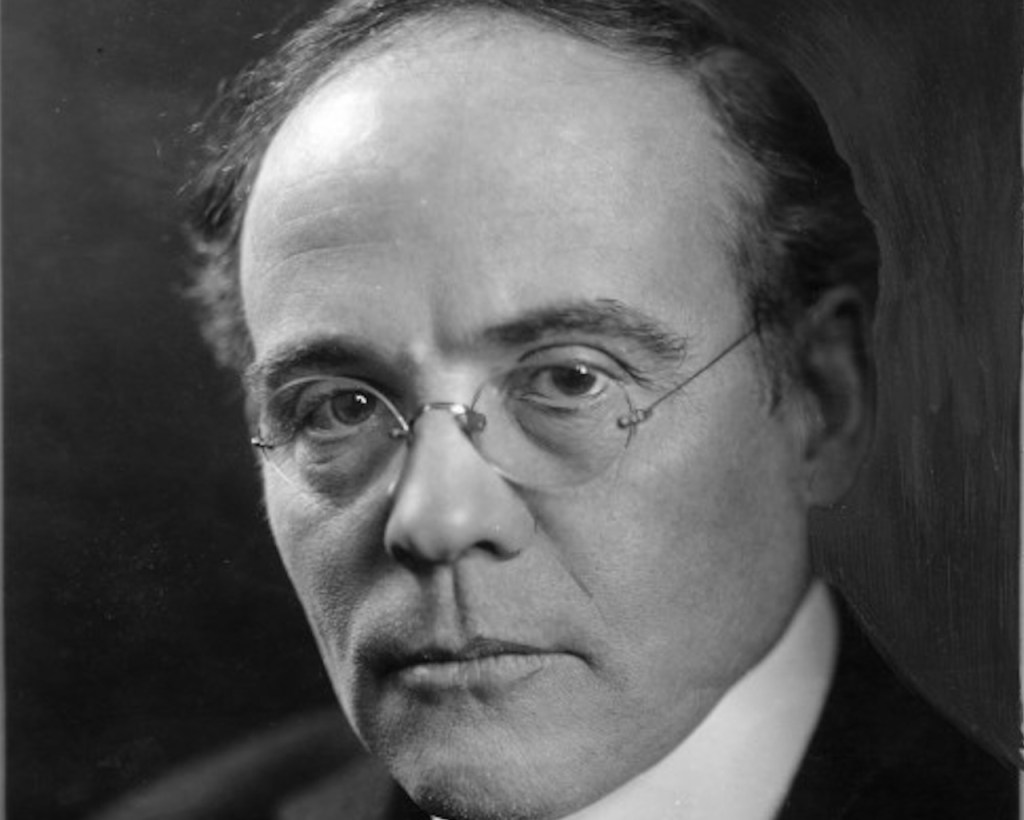
    Image: Edgar Lee Masters

    Edgar Lee Masters’ “Ollie McGee”and “Fletcher McGee”

    “Ollie McGee” and her husband “Fletcher McGeereport their complaints in the third and fourth poems from Masters’ Spoon River Anthology.  The couple elucidates the status of their marriage.

    Ollie McGee Speaks

    Mrs. McGee begins by posing a question and then launches her accusation.

    Ollie McGee 

    Have you seen walking through the village
    A man with downcast eyes and haggard face?
    That is my husband who, by secret cruelty
    Never to be told, robbed me of my youth and my beauty;
    Till at last, wrinkled and with yellow teeth,
    And with broken pride and shameful humility,
    I sank into the grave.  
    But what think you gnaws at my husband’s heart?
    The face of what I was, the face of what he made me!
    These are driving him to the place where I lie.
    In death, therefore, I am avenged.

    Commentary on “Ollie McGee”

    Ollie McGee offers her take on her marriage with Fletcher McGee.

    First Movement:  Question and Accusation

    Have you seen walking through the village
    A man with downcast eyes and haggard face?  
    That is my husband who, by secret cruelty
    Never to be told, robbed me of my youth and my beauty;  
    Till at last, wrinkled and with yellow teeth,
    And with broken pride and shameful humility,
    I sank into the grave.  

    Mrs. “Ollie McGee” begins with a query, wondering if her listeners have observed, “a man with downcast eyes and haggard face,” ambling throughout the village from time to time.  She then admits that that haggard face belongs to the man who was her husband.  

    The speaker then begins to hurl accusations at the man.  The wife reveals that he is guilty of horrifying cruelty: the man took away his wife’s youth as well as her beauty.   This theft continued over the lifetime of their miserable marriage.   Mrs. McGee then died, “wrinkled and with yellow teeth.”  He stole her pride and made her suffer “shameful humility.”

    Second Movement:   Vengeance

    But what think you gnaws at my husband’s heart?
    The face of what I was, the face of what he made me!
    These are driving him to the place where I lie.
    In death, therefore, I am avenged.

    Ollie then offers a further inquiry, as she questions whether her listeners know what “gnaws at my husband’s heart.” She contends that two images likely unsettle her husband’s heart and mind: “the face of what I was”and “the face of what he made me.”    Mrs. McGee asserts that these images are taking his life, “driving him to the place where I lie.”  Thus she has convinced herself that she is getting her revenge in death.

    Fletcher McGee Speaks

    Fletcher McGee offers his own complaint but reveals himself to be a criminal in his own behavior.

    Fletcher McGee 

    She took my strength by minutes,
    She took my life by hours,  
    She drained me like a fevered moon
    That saps the spinning world.
    The days went by like shadows,
    The minutes wheeled like stars.
    She took the pity from my heart,
    And made it into smiles.
    She was a hunk of sculptor’s clay,
    My secret thoughts were fingers:
    They flew behind her pensive brow
    And lined it deep with pain.
    They set the lips, and sagged the cheeks,
    And drooped the eyes with sorrow.
    My soul had entered in the clay,
    Fighting like seven devils.
    It was not mine, it was not hers;
    She held it, but its struggles
    Modeled a face she hated,
    And a face I feared to see.
    I beat the windows, shook the bolts.
    I hid me in a corner—
    And then she died and haunted me,
    And hunted me for life.

    Commentary on “Fletcher McGee”

    Two miserable people made each other miserable, but who was the actual culprit in this dungheap of a marriage?

    First Movement:  Accusations Returned

    She took my strength by minutes,
    She took my life by hours,  
    She drained me like a fevered moon  
    That saps the spinning world.  
    The days went by like shadows,
    The minutes wheeled like stars.

    Mr. “Fletcher McGee” also begins his epitaph with appalling accusations against his wife.  Just as he had done, she had foisted on him unspeakable cruelty:  “she took my strength,””she took my life,” “she drained me.”

    This speaker also includes time measurements to each complaint, in order to increase and compound the pain he claims he suffered at the hands of this woman.   Mr. McGee then asserts, “the days went by like shadows, / the minutes wheeled like stars.”  His days were dark but time seemed to drag on in an other worldly fashion.  He seemed unable to concentrate on anything worthwhile.

    Second Movement:   Vengeance Returned

    She was a hunk of sculptor’s clay,
    My secret thoughts were fingers:
    They flew behind her pensive brow
    And lined it deep with pain.
    They set the lips, and sagged the cheeks,  
    And drooped the eyes with sorrow.
    My soul had entered in the clay,
    Fighting like seven devils.  
    It was not mine, it was not hers;
    She held it, but its struggles
    Modeled a face she hated,
    And a face I feared to see.
    I beat the windows, shook the bolts.  
    I hid me in a corner—
    And then she died and haunted me,
    And hunted me for life.

    After fiercely complaining that Mrs. McGee ruined his life, Mr. McGee freely and somewhat gleefully confesses that he, in fact quite deliberately, ruined hers.   Instead of pitying his wife for her unhappiness and shrewish behavior, he came to possess the ability to smile about her suffering.   His “smiles”grew out of the fact that he had power over her. 

    He came to see her only as “a hunk of sculptor’s clay.”  Thus Mr. McGee went about working to sculpt ugly features onto his wife’s face.  This despicable husband asserts that, “my secret thoughts were fingers.”  He continues with the sculptor metaphor, as he affirms what Ollie has earlier said about the man.   

    The miserable husband freely confesses and describes his fingers as sculptors, motivated by his “secret thoughts”which “lined” “her pensive brow” “deep with pain.”  Mr. McGee again freely admits that he, in fact, “set the lips, and sagged the cheeks, / And drooped the eyes with sorrow.” 

    He then bizarrely asserts that his “soul had entered in the clay.” Thus his soul became the force of evil, “fighting like seven devils.” He appears to have become so hooked on making her miserable that he just could not stop himself.  His evil served him like a dangerous drug.

    Mr. McGee then admits that he actually killed her:  “I beat the windows, shook the bolts.”  He vaguely claims that he hid “in a corner,” and “she died and haunted me / And hunted me for life.”

    He took advantage of his weak, depressed, sorrowful wife. He fully realized what he was doing. Therefore, it becomes clear that Ollie was correct about her lout of a husband, who was in fact a criminal.  

    At least, Mrs. McGee can feel somewhat avenged in death.   But a pathetic irony is laced within these pitiful confessions.  Readers are left to doubt that any vengeance or feeling “haunted”can, in fact, offer these tortured souls any meaningful rest.

  • Edgar Lee Masters’ “The Hill”

    Image:  Edgar Lee Masters https://factfile.org/10-facts-about-edgar-lee-masters#google_vignette
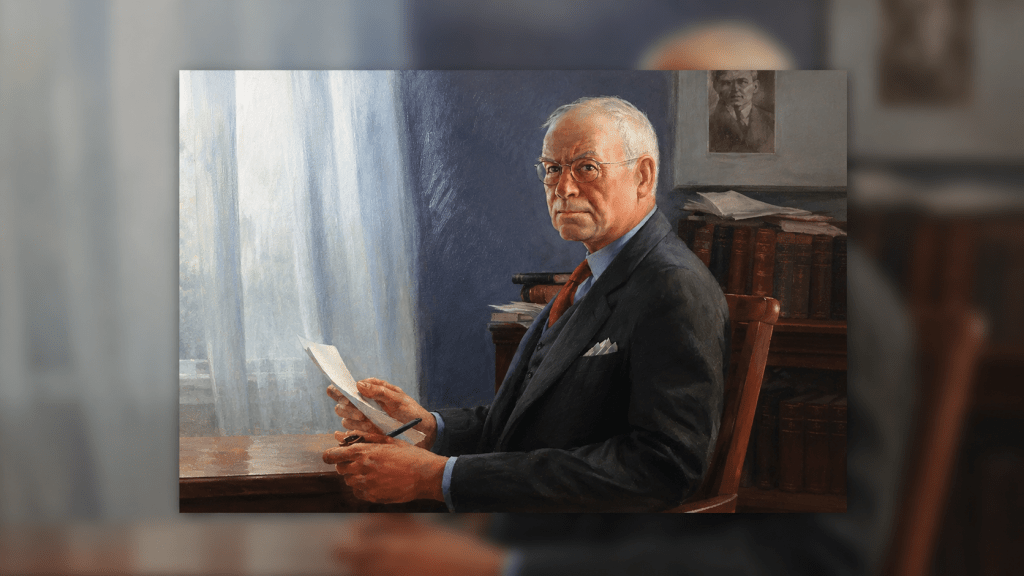
    Image: Edgar Lee Masters

    Edgar Lee Masters’ “The Hill”

    The poem “The Hill” opens Edgar Lee Masters’ American classic Spoon River Anthology, which is told in a series of dramatic epitaphs by the deceased residents of Spoon River, an imaginary town in Illinois. The work might be considered a character study in poetry.

    Introduction and Text of “The Hill”

    Edgar Lee Masters’ Spoon River Anthology has become an American classic in poetry.  The sequence consists of 246 poems, each of which the poet called an “epitaph.”  The following three pieces differ from the predominant form of the relatively short epitaph: 

    #1 “The Hill” locates the cemetery and offers a brief overview of the nature of the characters who will be speaking 

    #245 “The Spooniad,” whose title is a play on Jonathan Swift’s The Dunciad, offers a unifying piece to the disparate nature of the many idiosyncratic voices of the Spoon River cemetery deceased 

    #246 “Epilogue” concludes with several voices waxing philosophical about various and sundry profound topics.

    The bulk of the poems, the remaining 243, feature dramatic epitaphs spoken by the deceased, former residents of the fictional Illinois town Spoon River.   The speakers now all reside in the hill cemetery from which they report their various current states of mind, based primarily on the lives they lived while they were citizens of the fictional town.

    The first offering “The Hill” opens the American classic and features seven free verse paragraphs (versagraphs).  It offers an introduction to some the characters who will be speaking later for themselves.

    The Hill 

    Where are Elmer, Herman, Bert, Tom and Charley,
    The weak of will, the strong of arm, the clown, the boozer, the fighter?
    All, all, are sleeping on the hill.  

    One passed in a fever,
    One was burned in a mine,
    One was killed in a brawl,  
    One died in a jail,
    One fell from a bridge toiling for children and wife—  
    All, all are sleeping, sleeping, sleeping on the hill.

    Where are Ella, Kate, Mag, Lizzie and Edith,
    The tender heart, the simple soul, the loud, the proud, the happy one?—
    All, all, are sleeping on the hill.  

    One died in shameful child-birth,
    One of a thwarted love,
    One at the hands of a brute in a brothel,
    One of a broken pride, in the search for heart’s desire,
    One after life in far-away London and Paris
    Was brought to her little space by Ella and Kate and Mag—
    All, all are sleeping, sleeping, sleeping on the hill.

    Where are Uncle Isaac and Aunt Emily,
    And old Towny Kincaid and Sevigne Houghton,
    And Major Walker who had talked  
    With venerable men of the revolution?—
    All, all, are sleeping on the hill.  

    They brought them dead sons from the war,
    And daughters whom life had crushed,
    And their children fatherless, crying—
    All, all are sleeping, sleeping, sleeping on the hill.

    Where is Old Fiddler Jones
    Who played with life all his ninety years,
    Braving the sleet with bared breast,  
    Drinking, rioting, thinking neither of wife nor kin,
    Nor gold, nor love, nor heaven?  
    Lo! he babbles of the fish-frys of long ago,  
    Of the horse-races of long ago at Clary’s Grove,
    Of what Abe Lincoln said  
    One time at Springfield.

    tom o’bedlam https://www.youtube.com/watch?v=DgDIXF-KR1U&t=33s

    Commentary on “The Hill”

    “The Hill” opens Edgar Lee Masters’ Spoon River Anthology, an American classic.   Spoon River Anthology remains a useful character study, told in a sequence of dramatic epitaphs by the deceased residents of Spoon River, an imaginary town in Illinois.

    First Versagraph:  A Rhetorical Inquiry

    Where are Elmer, Herman, Bert, Tom and Charley,
    The weak of will, the strong of arm, the clown, the boozer, the fighter?
    All, all, are sleeping on the hill.

    In Edgar Lee Masters’ “The Hill,” the speaker begins by inquiring into the whereabouts of five individuals: “Elmer, Herman, Bert, Tom and Charley.”  The speaker then adds a brief description of each man:  one was weak-willed, one had strong arms, one was a clown, one was a drunkard, and one was a brawler. The speaker then answers his original question by reporting that they are all dead, and they are all located on the hill in the Spoon River Cemetery.

    Second Versagraph:   Character Descriptions

    One passed in a fever,
    One was burned in a mine,
    One was killed in a brawl,  
    One died in a jail,
    One fell from a bridge toiling for children and wife—  
    All, all are sleeping, sleeping, sleeping on the hill.

    The speaker continues his description of the men he had earlier named.   He reports how each one died: one died of a fever, one burned to death, one was killed in a fight, one died in jail, which says where but not actually how, and finally, on died after falling from a bridge.  

    Even though they all died under very different circumstances, some obviously more honorably than others, they all are dead, that is, euphemistically “sleeping on the hill.”  The speaker repeats the euphemism “sleeping” to drive home the fact that he is employing the term as a metaphor for “dead.”

    Third Versagraph:    What Happened to the Ladies?

    Where are Ella, Kate, Mag, Lizzie and Edith,
    The tender heart, the simple soul, the loud, the proud, the happy one?—
    All, all, are sleeping on the hill.

    The speaker turns next to five women.  Again, the speaker is seeking to find out the whereabouts of these ladies.  He want to know the location of “Ella, Kate, Mag, Lizzie and Edith.” 

    Also, as with the men, the speaker offers a brief descriptor of each lady: one was tender-hearted, one was a simple soul, one was loud, one was proud, and one was simply happy.

    Fourth Versagraph:   More Biographical Tidbits

    One died in shameful child-birth,
    One of a thwarted love,
    One at the hands of a brute in a brothel,
    One of a broken pride, in the search for heart’s desire,
    One after life in far-away London and Paris
    Was brought to her little space by Ella and Kate and Mag—
    All, all are sleeping, sleeping, sleeping on the hill.

    Also, again, as with the men, the speaker offers a bit more biographical information about each woman, about how each died.  One died giving birth.   One succumbed after being jilted.   Another was killed in a house of prostitution.  One died because of loss of pride and will to live, and one passed while living far away.  

    Apparently, Ella, Kate, and Mag brought home the body of the one who died far away.  And yet again, the women just as the men, are all euphemistically “sleeping on the hill.”

    Fifth Versagraph:   They Are All Dead in the Cemetery

    Where are Uncle Isaac and Aunt Emily,
    And old Towny Kincaid and Sevigne Houghton,
    And Major Walker who had talked  
    With venerable men of the revolution?—
    All, all, are sleeping on the hill.  

    The speaker continues to ask where certain folks are:  Uncle Isaac and Aunt Emily, Towny Kincaid and Sevigne Houghton.    The speaker then wants to know where is the old military man, Major Walker.  The major had spoken with the honorable men “of the revolution.” But yet again, all of these folks are “sleeping on the hill.”

    Sixth Versagraph:   The War Dead

    They brought them dead sons from the war,
    And daughters whom life had crushed,
    And their children fatherless, crying—
    All, all are sleeping, sleeping, sleeping on the hill.

    The speaker then reports that other dead that occupy space in the cemetery on the hill are the war dead.  “They” had to bring the fallen sons home from “the war.”

    The imprecise “they” likely refers to authorities, perhaps military officers responsible for transporting the fallen soldiers back to their home for burial.  But also this indefinite “they” had to bring home “daughters whom life had crushed.”   And children were left “fatherless, crying.”  Again, the speaker reports that they are all “sleeping on the hill.”

    Seventh Versagraph:  A Memorable Character

    Where is Old Fiddler Jones
    Who played with life all his ninety years,
    Braving the sleet with bared breast,  
    Drinking, rioting, thinking neither of wife nor kin,
    Nor gold, nor love, nor heaven?  
    Lo! he babbles of the fish-frys of long ago,  
    Of the horse-races of long ago at Clary’s Grove,
    Of what Abe Lincoln said  
    One time at Springfield.

    The speaker concludes his overview of the cemetery’s residents by asking about one final deceased man, a colorful character called, “Old Fiddler Jones.”  This old fellow lived to be ninety years old.  The speaker claims Fiddler Jones played with life, likely alluding to his playing the fiddle for many of the picnics and other Spoon River gatherings.  

    The speaker seems to recall that Old Fiddler Jones’ liked to repeat stories about “fish-frys” and “horse-races,” and he also liked to report on “what Abe Lincoln said” the time that Lincoln visited Springfield, the capital of Illinois. The poet is engaging the strategic use of literary devices to render his character study more than a mere prose exposition.

    The mundane fact that all of these folks are dead and buried in the cemetery on the hill is rendered poetic and dramatic through the use of the literary devices of metaphor, the rhetorical question, and euphemism.

  • Life Sketch of Edgar Lee Masters and Spoon River Commentaries

    Edgar Lee Masters’ American classic, Spoon River Anthology, brought the poet into the literary world, and no other work from his extensive writings has garnered more attention, including his sequel to the original, The New Spoon River.
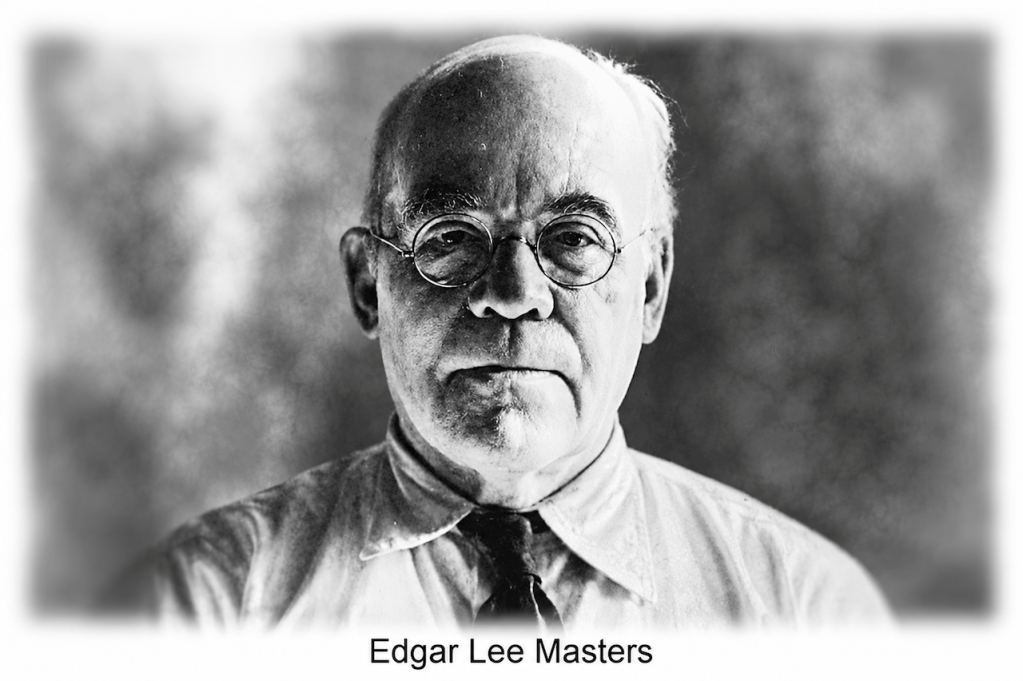
    Image: Edgar Lee Masters – Chicago Literary Hall of Fame

    Life Sketch of Edgar Lee Masters

    Edgar Lee Masters’ American classic, Spoon River Anthology, brought the poet into the literary world, and no other work from his extensive writings has garnered more attention, including his sequel to the original, The New Spoon River.

    Early Life and Education

    Edgar Lee Masters was born on August 23, 1868, to Hardin Wallace Masters and Emma Dexter Masters in Garnett, Kansas, where Hardin Masters had established a law firm [1].  After the failure of his law firm, Masters moved his family to his parents’ farm near Petersburg, IL.  In 1880, the Masters family relocated to Lewistown, Illinois, where Edgar attended high school.

    After high school, Edgar attended the Knox Academy preparatory program offered by Knox College, but he had to drop out because his family was unable to financially support his education.  Despite his lack of a college education, Edgar studied law in his father’s law office and successfully passed the bar in 1891.

    Law Career

    After being admitted to the bar in 1891, Edgar worked in his father’s law firm and then in 1893 joined the firm of Kickham Scanlan.  He later entered a partnership in the law office of Clarence Darrow, whose fame spread far and wide because of the Scopes Trial—The State of Tennessee v. John Thomas Scopes—also known jeeringly as the “Monkey Trial.” At the Darrow firm, Edgar’s worked mainly on cases involving the poor.  

    After his three-year stint in the Darrow firm, Edgar left and formed his own firm.  His years with Darrow has been turbulent owing to arguments with Darrow, as well as Edgar’s own misbehavior of engaging in adulterous affairs, damaging the firm’s reputation.

    Marriage

    In 1898, Edgar married Helen Jenkins, and his marriage brought him nothing but heartache.  In his memoir, Across Spoon River, his wife features prominently in his narrative, but he never reveals her name; he calls Helen the “Golden Aura,” and he is doing so in a derisive tone.  Clearly he hated the woman and all she stood for.

    Edgar and the “Golden Aura” produced three children but finally divorced in 1923.   He had abandoned his marriage by 1920 as well as the practice of law, relocating to New York to concentrate on his writing.  In 1926, he married Ellen Coyne and together they produced one child, Hardin.

    Literary Career

    Edgar Lee Masters wrote and published some 39 books in addition to his American classic, Spoon River Anthology, but nothing in his canon ever gained the wide-spread fame and acclaim that the 243 reports of people speaking from the beyond the grave brought him.  Even the sequel to Spoon River Anthology, titled The New Spoon River [2], failed to garner success equal to the original.

    Even though Spoon River Anthology was banned for a time in his hometown, it returned because of its popularity elsewhere and that fact that it contained some the best poetry even penned in America [3].

    Masters was awarded the Poetry Society of America Award, the Academy Fellowship, the Shelley Memorial Award, and he was also the recipient of a grant from the American Academy of Arts and Letters.

    Edgar Lee Masters had an unpleasant personality. His behavior often bordered on misanthropic in his displays of jealousy and hatred.  He likely diminished his literary reputation through his unseemly, disingenuous portrayal of Abraham Lincoln in his 1931 biographical piece focusing on the sixteenth president, titled Lincoln: The Man.

    Bethany Villaruz [4]  has opined that the Lincoln diatribe was aimed more at Carl Sandburg than the former president:  

    Sandburg’s Lincoln books were “so popular that it was making people think of Sandburg rather than Masters when they spoke of the New Salem-Petersburg area.” Masters regarded Sandburg’s success as an encroachment on the literary landscape that he believed his own work had helped define.

    Carl Sandburg was likely aware of Masters’ petty jealousy and wrote the following in his personal copy of Masters’ Lincoln biography:  “long sustained Copperhead hymn of hate reversing the views of a Masters I knew well 10 and 15 years before he wrote these sickly venomous pages” (my emphasis added.)  

    Agreeing with Sandburg’s estimation, a New York Times reviewer opined that the book featured views that not even a Jefferson Davis would write, but instead sounded more in line with venom spewed by a Ku Klux Klan member.

    Masters had been an admirer of Stephen Douglas and Douglas’ defeat by Lincoln was likely part of Masters’ motivation to trash Lincoln in his book for which he did little to no research.  Regarding Masters’ motivation and the subsequent reception of the Lincoln biography, Matthew D. Norman [5]  has explained, 

    Lincoln: The Man was a product of the Great Depression, written by a disillusioned champion of Stephen A. Douglas and Jeffersonian republicanism. Though Spoon River Anthology was both a critical and commercial success that established Masters’s reputation as a poet, nothing he wrote during the 1920s came close to matching his initial triumph. By early 1930, he and the country were in distress. Masters was far removed from his “spiritual home” of Menard County in the spring of 1930 when he wrote Lincoln: The Man in less than two months while residing at the Hotel Chelsea in New York City.  Lincoln scholar Harry Pratt and Carl Sandburg both believed that Lincoln: The Man revealed much more about Masters’s own personal tribulations than it did about the life of Abraham Lincoln. Pratt concluded that Masters’s financial troubles and conflicts with wives, publishers, and Clarence Darrow caused him to build up so much bile that “It just boiled out on Lincoln by chance.”

    Masters claimed he wanted to present only a true account of the man called Abraham Lincoln, but he completely misread the mood of the nation when he decided to trash Lincoln instead of reveal him.  It is likely that Masters’ reputation took a greater hit than did Lincoln’s, even though those misanthropes who seize on any discourse to denigrate Republicans have put Masters’ nastiness to use.

    Spoon River Anthology

    Spoon River is a fictional town, which is a composite of Lewistown and Petersburg, IL, where Edgar grew up and where his grandparents lived respectively.  Although the town of Spoon River was a fictional creation of Edgar’s imagination, there is an Illinois river named “Spoon River,” which is a tributary of the Illinois River in the west-central part of the state, running a 148-mile-long stretch between Peoria and Galesburg.

    In 1914, Edgar had begun to publish his poems focusing on the rantings of disgruntled dead people interred in the Spoon River Cemetery, located atop a hill overlooking the fictional town of Spoon River.  Edgar had seized on an ancient structural form to have these characters working out their dirty laundry as they speak from beyond the grave.  

    Nevertheless, he published under the pseudonym Webster Ford in Reedy’s Mirror, a literary magazine based in St. Louis.  Likely fearing controversy that would clash with his profession as an attorney, he employed the nom de plume until after he left the legal profession.

    In addition to the individual reports, or “epitaphs,” as Edgar called them, the Anthology sports three other long poems, offering summaries or other material relevant to the cemetery reporters or the atmosphere of the fictional town of Spoon River:  #1 “The Hill,”#245 “The Spooniad,” and #246 “Epilogue.”

    Harriet Monroe, editor of Poetry Magazine in Chicago, encouraged and assisted with the publication of Spoon River Anthology, and the collection became an instant success.  After having been published in 1915, by 1961 the collection had gone through seventy editions.  It has been made into an American play and an Italian opera, performed at La Scala.  Spoon River Anthology has also been translated into eight languages.

    Death

    Five months before turning 82, Edgar Lee Masters died on March 5, 1950, in a nursing facility in Melrose Park, Pennsylvania.  His body was transported back to  Oakland Cemetery in Petersburg, Illinois, for burial.  The following inscription appears on his grave marker:

    Good friends, let’s to the fields . . .
    After a little walk and by your pardon,
    I think I’ll sleep, there is no sweeter thing.
    Nor fate more blessed than to sleep.

    I am a dream out of a blessed sleep —
    Let’s walk, and hear the lark.

    And on a stone nearby his grave,  Masters’ epitaph, “Anne Rutledge,” which contains an ironic dig at Lincoln, the Mastersian nemesis, is carved:

    Ann Rutledge

    Out of me unworthy and unknown
    The vibrations of deathless music;
    “With malice toward none, with charity for all.”
    Out of me the forgiveness of millions toward millions,
    And the beneficent face of a nation
    Shining with justice and truth.
    I am Anne Rutledge who sleep beneath these weeds,
    Beloved in life of Abraham Lincoln,
    Wedded to him, not through union,
    But through separation.
    Bloom forever, O Republic,
    From the dust of my bosom!

    Masters spent his lifetime producing a plethora of writings, including 19 books of poems, 12 plays, six novels, and seven biographies.  His biographies, in addition to the Lincoln embarrassment, include those of Walt Whitman, Mark Twain, and Vachel Lindsay.

    Edgar Lee Masters was the sad little man, but no one can diminish the success he achieved with his Spoon River Anthology, which has risen to the status of an American classic, despite its being filled with disgruntled individuals.  He well understood the nature of those characters, being himself a disgruntled, agitated soul.

    Sources

    [1]  Herbert K. Russell. Edgar Lee Masters: A Biography. University of Illinois Press. 2001.

    [2]  Edgar Lee Masters. The New Spoon River.  Macmillan. New York. 1924. Print.

    [3]  Laura Wolff Scanlan.  “How the Once-Banned Spoon River Anthology Made a Comeback in Lewistown.”  Humanities:  The Magazine for the National Endowment for the Humanities. November/December 2015.

    [4]  Bethany Villaruz.  “The Sangamon, Soured: Lincoln, The Man & Its Twisted Tropes.”  Friends of the Lincoln Collection.  Accessed June 15, 2026..

    [5]  Matthew D. Norman.  “An Illinois Iconoclast: Edgar Lee Masters and the Anti-Lincoln Tradition.”  Journal of the Abraham Lincoln Association.  Winter 2003.

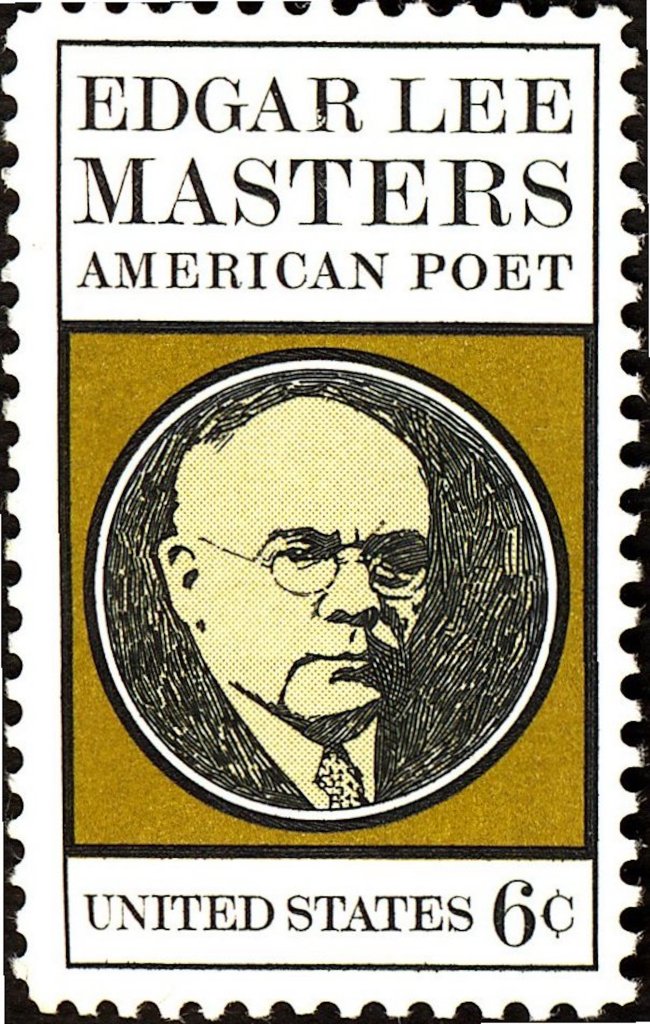
    Image: Edgar Lee Masters – Commemorative Stamp

    Poem Commentaries on Spoon River Anthology

    1. The Hill
    2. Hod Putt
    3. Ollie McGee
    4. Fletcher McGee
    5. Robert Fulton Tanner