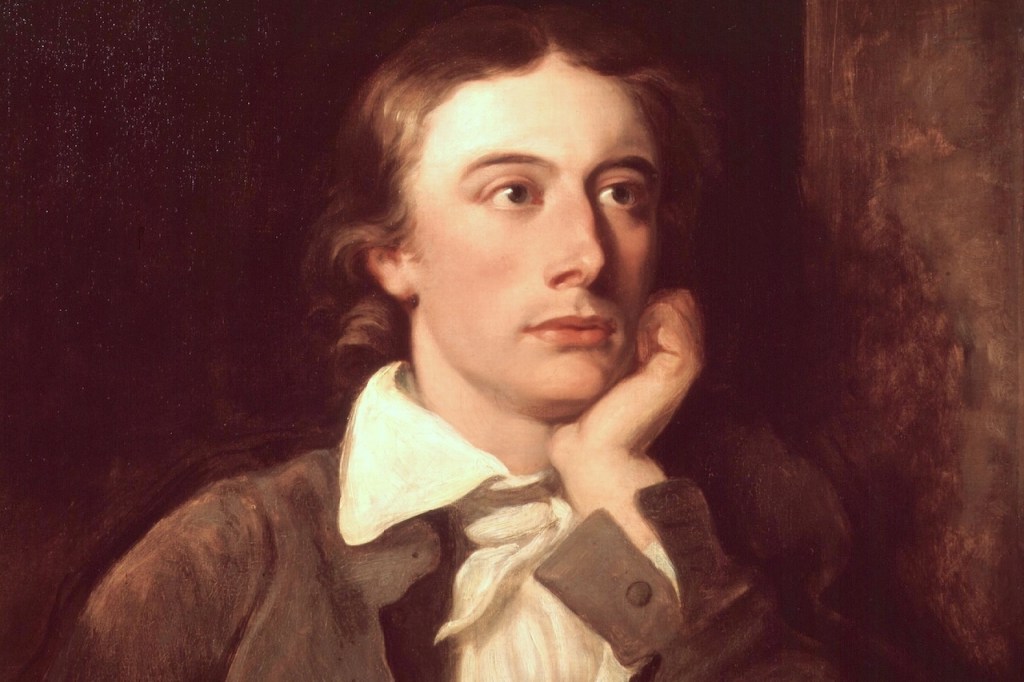
John Keats’ Sonnet XI: “On First Looking into Chapman’s Homer”
Despite John Keats’ historical error, his otherwise well-crafted sonnet XI “On First Looking into Chapman’s Homer” has proven pleasing to many readers since it was first published. This sonnet is one of Keats’ most anthologized poems.
Introduction with Text of Sonnet XI: “On First Looking into Chapman’s Homer”
John Keats’ sonnet XI “On First Looking into Chapman’s Homer” is an Italian sonnet with a traditional Petrarchan rime-scheme in its octave ABBAABBA and its sestet CDCDCD. The speaker communicates his awe at finding this translation of the Iliad and the Odyssey, whose translator was George Chapman, the classical scholar.
Although the speaker of Keats’ sonnet XI “On First Looking into Chapman’s Homer” incorrectly identifies Cortez as the first European to look upon the Pacific Ocean, John Keats’ sonnet nevertheless has continued to garner praise over the centuries for its many pleasing qualities.
Sonnet XI: “On First Looking into Chapman’s Homer”
Much have I travell’d in the realms of gold,
And many goodly states and kingdoms seen;
Round many western islands have I been
Which bards in fealty to Apollo hold.
Oft of one wide expanse had I been told
That deep-brow’d Homer ruled as his demesne;
Yet did I never breathe its pure serene
Till I heard Chapman speak out loud and bold:
Then felt I like some watcher of the skies
When a new planet swims into his ken;
Or like stout Cortez when with eagle eyes
He star’d at the Pacific—and all his men
Look’d at each other with a wild surmise—
Silent, upon a peak in Darien.
Commentary on Sonnet XI: “On First Looking into Chapman’s Homer”
John Keats’ speaker takes his readers on a pleasant literary journey inspired by a new translation of the works of the Greek poet Homer, with whom the literary tradition of the Western world has been deemed to begin.
Octave: Dramatizing His Literary Journeys
Much have I travell’d in the realms of gold,
And many goodly states and kingdoms seen;
Round many western islands have I been
Which bards in fealty to Apollo hold.
Oft of one wide expanse had I been told
That deep-brow’d Homer ruled as his demesne;
Yet did I never breathe its pure serene
Till I heard Chapman speak out loud and bold:
The speaker in the octave’s first quatrain announces that he is widely-read in world literature. He then colorfully and metaphorically dramatizes his literary journeys as traveling through “realms of gold.”
The speaker has thereby visited a vast number of nations, states, and kingdoms owing to his metaphoric travels. He then asserts that he has visited many of the “western islands” off the coast of Greece, where the sun god Apollo was likely to have held court, especially for poets.
The second quatrain finds the speaker reporting that the Greek poet Homer, who has been described as having a set of luxuriant eyebrows, had narrated his verses in those very places, holding court and repeating his stories again and again to his many enchanted audiences.
The speaker then reveals that his appreciation for those magnificent works of Homer’s poetry had been much less enthusiastic until he encountered the translation made by the current translator, George Chapman, whose work is speaking to the Keatsian speaker with definite volume and considerable clarity.
Sestet: An Awe-Inspiring Translation
Then felt I like some watcher of the skies
When a new planet swims into his ken;
Or like stout Cortez when with eagle eyes
He star’d at the Pacific—and all his men
Look’d at each other with a wild surmise—
Silent, upon a peak in Darien.
The speaker then chooses two other bits of information that help him show the drama and depth of awe he has felt with this new, improved translation. He compares that feeling to the feeling of an astronomer as the scientist watches while “a new planet swims” into view.
The elation of observing a new planet for the first time would, no doubt, be very intense, and this speaker’s enthusiasm, he thinks, is equal to that of the astronomer. He also refers to the enthusiasm of the Western explorers who originally discovered the Pacific Ocean. Those explorers had, at first, believed that they had reached the Asian continent, in particular, India.
However, because of their constant push in the westwardly direction, they came to look upon a whole new ocean—one of which heretofore they had remained unaware was separating them from their Asian goal.
The speaker, thus, also believes that his encountering Homer brought to him by the classical scholar George Chapman is equivalent to that magnificent discovery of the new ocean.
The speaker offers an interesting speculation about this delight in having discovered the Chapman translation. He is likely attempting to demonstrate both his knowledge of science and history with such musing upon his own enthusiasm.
Such bravado should be avoided by poets unless they remain meticulous in their research. Keats died at the young age of 25 years, so likely he can be forgiven for his effort in immature self-promotion.
An Unfortunate Error: Balboa not “Cortez”
Actually, the first Spanish explorer to set eyes on the Pacific Ocean from “a peak in Darien” was Vasco Núñez de Balboa (1475–1519), not Hernando Cortés (1485-1547), as the Keatsian speaker claims.
Unfortunately, this otherwise fine poem reveals that the skillful poet, John Keats, entertained a tenuous grasp of history. But the blooper does help emphasize the fact that readers must not rely on poets for historically accurate facts.
Certain critics have posited the notion that the employment of the name “Cortez” suits the rhythm of the line better than the accurate name or that Keats’ excitement caused a lapse in memory.
Thus, some critics are willing to forsake the accuracy of history for the aesthetics of art—an unfortunate and even dangerous stance, which damages the reputation of both art and history.
However, Keats surely did not intend to engage in any perfidy with his mistake; he probably thought he was correct in assigning Cortez the discovery instead of Balboa. Oddly enough, Keats did, however, correctly designate “Darien” as the mountain from which the explorer Balboa first spied the Pacific.


Questions, comments, suggestions offered in good faith are always welcome. If you use a pseudonym, please include your real name, if you expect a response.