Linda's Literary Home

Author: Linda Sue Grimes

  • The Poetaster

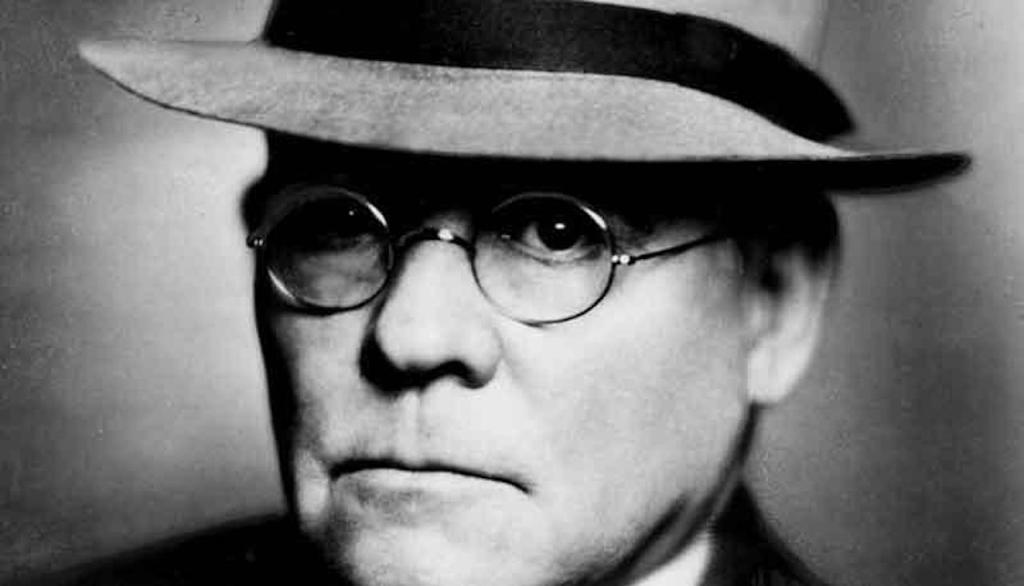
    Image: Created by Grok and ChatGPT from request by the poet. From a photo by Gerard Malanga.

    The Poetaster

    His poetastry sucked long before he wrote one line.
    His windbag approach to speech spews forth
    Rorschach gibberish, a kite loose in the wind.

    He strings together bilge & blather in prosy, broken lines.
    Each syllable a sin against language, he sounds
    Like a broken record swimming in a thesaurus cesspool.

    To him and his ilk, meaning is a four-letter word
    A limitation that blasts his own thing
    Cramps his style, like hippies against the Man.

    Dead poets scald him in their perfection
    He’s not only jealous, he’s incredulous
    That anyone could really write a poem

    His shyster ways are blistering ego trips
    Laid on the gullible who never have cared
    To understand or appreciate what poetry is

    He’s the man behind the curtain
    At the end of yellow bricking
    Fanning his flame to fame.

    A different version focusing on the same theme as this poem appears in my collection titled Turtle Woman & Other Poems.

    Image: Original photo by Linda Sue Grimes, text added by Grok

    A Prose Commentary on My Original Poem “The Poetaster”

    In my poem “The Poetaster,” I have delivered a speaker, who delivers a blow with a pointed critique of a fraudulent artist—someone who takes on the guise of a poet without submitting to the discipline, humility, or responsibility that poetry demands. 

    The poem functions as both satire and indictment, using abrasive diction and exaggerated imagery to reveal the hollowness of pretension masquerading as creativity. In my humble artist opinion, human creativity is the most cherished possession held by the human heart and mind.  

    (Human creativity has resulted in some of humanity’s most important discoveries and inventions, making life on earth both comfortable, profitable, and inspirational.  To degrade that human function with laughable, disgusting, idiotic fakery remains an abomination that corrodes the human spirit, as it mocks God and pretends to superiority it does not deserve.)

    The term “poetaster” itself signals the speaker’s purpose: it is not merely a label for bad poetry but for imitation without substance. The speaker approaches the subject with sharpened disdain, defending the integrity of poetry against those who dilute it.

    The language throughout is deliberately coarse—“windbag,” “bilge & blather,” “cesspool”—so that the revulsion is tangible. This discourse has no intention of remaining a polite literary critique; it is exposure. At the same time, the imagery is controlled, each metaphor reinforcing the disorder and emptiness that define the poetaster’s work.

    First Stanza: Inherent Failure

    The speaker opens by asserting that the poetaster’s failure precedes even the act of writing: “His poetry sucked long before he wrote one line.” The hyperbole suggests that the deficiency is fundamental, not merely technical.

    The description “Rorschach gibberish, a kite loose in the wind” emphasizes randomness and lack of control. A Rorschach blot invites projection rather than meaning, while the loose kite suggests motion without direction. These images mark the poetaster as untethered, someone whose language drifts without intention.

    Second Stanza: Abuse of Language

    Here, the speaker focuses on the poetaster’s relationship to language. The phrases “bilge & blather” and “prosy, broken lines” highlight excess without purpose, the superficial adoption of form without discipline.

    The simile “like a broken record swimming in a thesaurus cesspool” underscores repetition, artificiality, and overreliance on inflated diction. The poetaster does not shape language; he wallows in it. The speaker intends to convey that such writing actively degrades the medium it purports to serve.

    Third Stanza: Rejection of Meaning

    The third stanza identifies the poetaster’s central flaw: a willful rejection of meaning. “Meaning is a four-letter word” frames clarity and coherence as constraints.  

    (Scenario:   One imagines the poor, teenage would-be poetaster sitting in high school English class, unable to ferret out the “meaning” of a line of verse, thus becoming convinced that meaning belongs to the elite, the teacherish class alone can understand “meaning.”  Meaning shmeaning, the hell with that: words, words, words—that’s all I need for my poem.)

    The comparison to “hippies against the Man” introduces cultural satire, suggesting reflexive rebellion without depth. The poetaster mistakes the absence of structure for freedom. The speaker implies that true poetry wrestles with meaning, whereas the poetaster abdicates it.  Meaning—also one of the great necessities for living a decent life on this mud ball of a planet.  To abdicate it is to abdicate life itself!

    Fourth Stanza: Envy of the Canon

    The speaker turns to the poetaster’s relation to literary tradition. “Dead poets scald him in their perfection” conveys both intimidation and resentment. The poetaster cannot reconcile himself to genuine mastery.  Remember that teeny-bopper, would be poet sitting in the high school class, befuddled by the Greats!

    His incredulity—“That anyone could really write a poem”—reveals insecurity. If real poetry exists, his own efforts are exposed as inadequate. Rather than aspiring to that standard, he dismisses it. Envy here becomes corrosive, curdling into denial rather than inspiring growth.

    Fifth Stanza: Manipulation and Audience

    The critique expands to include the poetaster’s audience. The “shyster ways” and “blistering ego trips” indicate a performative dimension: this performance is opportunism, not craft.  

    The poetaster relies on “the gullible who never have cared / To understand or appreciate what poetry is.” The speaker thus implicates the audience as complicit in perpetuating mediocrity. The poetaster survives not only through ego but through uncritical reception; he has become a sacred cow, impervious to criticism.

    Sixth Stanza: Illusion of Grandeur

    In the final stanza, the speaker employs imagery of spectacle and deception. “The man behind the curtain” evokes false authority, manipulating appearances to maintain influence. The reference to “yellow bricking” recalls a journey toward supposed revelation that leads instead to exposure—obvious allusion to The Wizard of Oz.

    “Fanning his flame to fame” captures the poetaster’s self-promotional drive. The flame is ambition and vanity, maintained artificially rather than earned. The poem concludes without redemption: the poetaster remains what he is, sustained by ego and illusion.

    An Afterthought

    In “The Poetaster,” the speaker articulates a broader frustration with a cultural condition in which performance substitutes for substance and standards erode. The poem is intentionally harsh because the stakes are real: poetry, at its best, refines language, sharpens perception, deepens understanding, leading to spiritual rebirth for the human heard and mind. 

    When poetry is reduced to empty display, vitally essential human progress is lost.The speaker, therefore, does not merely condemn; she defends—aggressively—the possibility that poetry can and must still demand rigor, clarity, and truth.

  • Buzzed, Plus Prose Commentary

    Image: Created by ChatGPT inspired by the poem

    Buzzed

    He dances thick from the bottle
    Dazed as a pollenated bee in spring
    Losing brain cells like coins dropping
    Out of pockets full of holes.
    He trickles honey down the tree of life
    Consumed like a cinnamon cookie.
    College taught him nothing
    Schmoozing pig-like by the trough
    Meeting no scholars just other dudes
    From towns like his own, blinded
    By mud monkeys beating out tunes
    In gigs that roll like jelly off
    A ballroom floor deep in cloth
    That smears the night as he concocts
    Stories to throw into his folder—then
    He’s another year older.

    Image: Original photo by Linda Sue Grimes, text added by Grok

    A Prose Commentary on My Original Poem “Buzzed”

    In my poem “Buzzed,” I present a speaker who observes, with a mixture of irony and quiet lament, the spectacle of a man dissolving himself into intoxication, social ritual, and intellectual stagnation. 

    The poem unfolds as a single, breathless unit on the page, mirroring the blurred continuity of the speaker’s subject—yet beneath this apparent formlessness, the poem separates itself into distinct movements, each tracing a stage in the erosion of vitality, intellect, and self-possession.

    My speaker’s  language deliberately oscillates between the sensuous and the grotesque, blending sweetness with decay, animation with depletion. The speaker maintains a controlled tone, allowing the imagery—rather than overt judgment—to carry the philosophical weight.

    First Movement: Intoxication and the Illusion of Vitality

    He dances thick from the bottle
    Dazed as a pollenated bee in spring
    Losing brain cells like coins dropping
    Out of pockets full of holes.

    In these opening lines, the speaker presents a figure whose apparent liveliness is immediately compromised by its source. “He dances thick from the bottle” suggests not fluid grace but a dulled, heavy motion governed by intoxication. The body moves, but the mind lags behind.

    The simile “Dazed as a pollenated bee in spring” initially invokes natural vitality; however, my speaker then distorts this expectation. The bee, ordinarily purposeful and generative, becomes disoriented—its instinctive industry replaced by confusion. What should signal life instead reveals imbalance.

    The final two lines sharpen the critique. “Losing brain cells like coins dropping / Out of pockets full of holes” frames intellectual decline as both careless and continuous. The metaphor of currency emphasizes squandered value: the loss is incremental, unnoticed in the moment, yet cumulatively devastating. The subject does not guard what is precious; he leaks it.

    Second Movement: Consumption, Sweetness, and Self-Reduction

    He trickles honey down the tree of life
    Consumed like a cinnamon cookie.

    Here, my speaker compresses the imagery into a brief but dense meditation on appetite and reversal. “He trickles honey down the tree of life” invokes a traditionally sacred symbol, yet the action is diminished—“trickles” suggests waste rather than nourishment, a careless spilling of sweetness.

    The following line, “Consumed like a cinnamon cookie,” completes the inversion. The man shifts from agent to object; he is no longer the one who consumes but the one being consumed. 

    The image is intentionally domestic and trivial. A cookie is pleasant but disposable, easily devoured and forgotten. The speaker reduces the subject to something momentarily enjoyable but ultimately insignificant.

    Third Movement: Failed Institutions and Social Degradation

    College taught him nothing
    Schmoozing pig-like by the trough
    Meeting no scholars just other dudes
    From towns like his own, blinded
    By mud monkeys beating out tunes

    With “College taught him nothing,” the speaker introduces a blunt evaluative statement, stripping away metaphor to expose a failure of development. This line functions as a hinge, moving the poem from private dissipation to social critique.

    The imagery quickly reverts to the animalistic: “Schmoozing pig-like by the trough.” The trough suggests communal feeding without refinement, reducing social interaction to appetite and noise. The subject’s environment reinforces his stagnation.

    “Meeting no scholars just other dudes / From towns like his own” emphasizes circularity—no expansion of thought, only repetition of the familiar. The phrase “blinded / By mud monkeys beating out tunes” introduces chaotic, degraded performance. “Mud” evokes both earthiness and filth, while “monkeys” suggests mimicry devoid of understanding. Music, rather than elevating, becomes mechanical rhythm—sound without substance.

    Fourth Movement: Dissolution into Performance and Fabrication

    In gigs that roll like jelly off
    A ballroom floor deep in cloth
    That smears the night as he concocts
    Stories to throw into his folder—

    In this movement, the speaker allows the environment itself to become unstable. “Gigs that roll like jelly off / A ballroom floor” collapses what should be structured and elegant into something formless and viscous. The simile of jelly signals a lack of coherence; experience cannot hold its shape.

    “A ballroom floor deep in cloth” introduces a suffocating softness, as though the very ground of social ritual is padded, unreal, incapable of supporting anything firm. The line “That smears the night” further dissolves clarity—time and perception blur into indistinction.

    The act of “concoct[ing] / Stories to throw into his folder” marks a turn toward fabrication. Experience is no longer lived authentically but manufactured, then stored away. The “folder” suggests accumulation without reflection, a hollow archive of moments that fail to transform the self.

    Fifth Movement: Time, Repetition, and the Quiet Erosion of Self

    then
    He’s another year older.

    The final lines arrive stripped of metaphor, almost austere in their simplicity. After the density and excess of the preceding imagery, this statement functions as a collapse into fact.

    “Then / He’s another year older” offers no resolution, no gained wisdom—only the passage of time. The enjambment isolates “then,” emphasizing inevitability, as though all that precedes leads mechanically to this outcome.

    Aging here is not maturation but accumulation without growth. The subject advances in years while remaining fixed in pattern. The poem closes not with revelation but with quiet depletion, underscoring my central concern: that a life filled with motion, indulgence, and noise may still amount to stasis when it lacks awareness and discipline.

    In “Buzzed,” through my speaker, I am ultimately examining the subtle tragedy of self-dissolution through habit and environment. The speaker refrains from overt condemnation, instead presenting a sequence of images that reveal, with increasing clarity, the cost of living without intellectual intention or spiritual purpose.

  • Elizabeth Barrett Browning’s Sonnet 44 “Belovèd, thou hast brought me many flowers”

    Image: Elizabeth Barrett Browning – NPG, London

    Elizabeth Barrett Browning’s Sonnet 44 “Belovèd, thou hast brought me many flowers”

    Elizabeth Barrett Browning’s final sonnet 44 “Belovèd, thou hast brought me many flowers”  from the sequence assures her belovèd that she has finally accepted his gift of love.

    Introduction and Text of Sonnet 44 “Belovèd, thou hast brought me many flowers”

    Elizabeth Barrett Browning’s final sonnet from the Sonnets from the Portuguese sequence assures her belovèd that she has finally accepted his gift of love.  Sonnet 44 “Belovèd, thou hast brought me many flowers” is the final poem, which completes this remarkable sequence of love poems.  

    This sonnet finds the speaker musing on the flowers that her belovèd has brought to her.   The speaker quickly transforms the physical blossoms into metaphysical blooms that symbolize the lovers’ bond.

    After all the handwringing of self-doubt that has plagued the speaker throughout this sequence, she must now find a way to assure both herself and her belovèd that her mind set has transformed itself from the dull negative to a shining positive.  The speaker must show her fiancé that they are bound together with an exceptional love.  She must also make it clear that she understands the strong ties they now possess.

    The speaker’s metaphoric comparison of the love gifts of  physical flowers and the symbolic flowers that she has created from her own heart soil will remain an eternal reminder to both herself and her belovèd as they travel the road of marriage together.

    Sonnet 44 “Belovèd, thou hast brought me many flowers”

    Belovèd, thou hast brought me many flowers
    Plucked in the garden, all the summer through
    And winter, and it seemed as if they grew
    In this close room, nor missed the sun and showers.
    So, in the like name of that love of ours,
    Take back these thoughts which here unfolded too,
    And which on warm and cold days I withdrew
    From my heart’s ground. Indeed, those beds and bowers
    Be overgrown with bitter weeds and rue,
    And wait thy weeding; yet here’s eglantine,
    Here’s ivy!—take them, as I used to do
    Thy flowers, and keep them where they shall not pine
    Instruct thine eyes to keep their colors true,
    And tell thy soul their roots are left in mine.

    Commentary on Sonnet 44 “Belovèd, thou hast brought me many flowers”

    The final sonnet in the sequence assures the speaker’s belovèd that she has finally accepted his gift of love, without any further doubts.

    First Quatrain:  A Gift of Flowers

    Belovèd, thou hast brought me many flowers
    Plucked in the garden, all the summer through
    And winter, and it seemed as if they grew
    In this close room, nor missed the sun and showers.

    The speaker muses about the flowers that her belovèd has given her during summer. To her it seems that the flowers have remained as vibrant indoors in her “close room” as they were outside in the “sun and showers.” 

    These miraculous flowers seem to have remained healthy and glowing even during winter.  The speaker then insists that they “grew / In this close room” and that they did not miss “the sun and showers.” 

    Of course, the physical flowers are just the motivation for the musing, which transforms the physical blooms into flowers of a metaphysical sort—those that have impressed images upon her soul, beyond the image on the retina.

    Second Quatrain:   Sonnets as Flower-Thoughts

    So, in the like name of that love of ours,
    Take back these thoughts which here unfolded too,
    And which on warm and cold days I withdrew
    From my heart’s ground. Indeed, those beds and bowers

    Thus the speaker commands her belovèd to “take back these thoughts which here unfolded too.” She is referring to her sonnets, which are her flower-thoughts given to her belovèd to honor their love. 

    The speaker affirms that she has plucked her sonnet-flowers “from [her] heart’s ground.” And the creative speaker has composed her tributes on “warm and cold days.” 

    The weather in the speaker’s heart and soul was always equal to producing fine blossoms for her loved one.   As the speaker basked in his love, the flower “beds and bowers” produced these poems with floral fragrance and hues.

    First Tercet:  Correcting Her Clumsiness

    Be overgrown with bitter weeds and rue,
    And wait thy weeding; yet here’s eglantine,
    Here’s ivy!—take them, as I used to do

    The speaker then inserts her usual self-deprecatory thoughts, admitting that her floral efforts are surely, “overgrown with bitter weeds and rue,” but she gladly submits them for him to “weed” as needed. 

    The speaker’s gifted and talented belovèd can correct her clumsiness. She names two of her poems “eglantine” and “ivy” and commands him to “take them,” as she used to take his gifts of flowers, and probably gifts of his own poems to her as well.

    Second Tercet:  In His Care

    Thy flowers, and keep them where they shall not pine
    Instruct thine eyes to keep their colors true,
    And tell thy soul their roots are left in mine.

    The speaker commands her belovèd to safeguard her pieces so “they shall not pine.” In his care, she will also not pine.  And the poem will “instruct [his] eyes” to the true feelings she bears for him.

    The speaker’s poems will henceforth remind him that she feels bound to him at the soul.  Soul qualities have always been more important to this speaker than physical and mental qualities.  

    The “colors true” of this speaker’s sonnets will continue to pour forth her love for her belovèd and “tell [his] soul their roots are left in [hers].”   Each sonnet will reinforce their love and celebrate the life they will make together.

  • Elizabeth Barrett Browning’s Sonnet 43 “How do I love thee? Let me count the ways”

    Image: Elizabeth Barrett Browning – Engraving from original Painting by Chappel, 1872. (Photo by: Universal History Archive/Universal Images Group via Getty Images)

    Elizabeth Barrett Browning’s Sonnet 43 “How do I love thee? Let me count the ways

    The sonnet “How do I love thee? Let me count the ways”—number 43 in Sonnets from the Portuguese—remains the most famous and widely read sonnet of the sequence.  The speaker is offering a summary of all the ways she has come to love her soon to be husband.

    Introduction and Text of Sonnet 43 “How do I love thee? Let me count the ways”

    Sonnet 43 “How do I love thee?  Let me count the ways” is the most widely anthologized sonnet from Elizabeth Barrett Browning’s sequence titled Sonnets from the Portuguese. It is likely the many high school or college graduates remember that line but may have remained unaware that it is only #43 from its accompanying sequence of 43 other sonnets.  

    The sonnet is a Petrarchan sonnet as are all of the other sonnets in the sequence.  In the octave, the speaker is musing about how much she loves her belovèd suitor, and she asks the question, “How do I love thee?” 

    Then the speaker proceeds to answer the question, so the reader becomes aware that the speaker is not literally addressing her belovèd, but she is addressing the thought or perhaps even an image of that belovèd.  In the sestet, the speaker counts three definite ways and one possible way that she will love him throughout eternity.

    Sonnet 43 “H0w do I love thee? Let me count the ways”

    How do I love thee? Let me count the ways.
    I love thee to the depth and breadth and height
    My soul can reach, when feeling out of sight
    For the ends of Being and ideal Grace.
    I love thee to the level of everyday’s Most quiet need, by sun and candle-light.
    I love thee freely, as men strive for Right;
    I love thee purely, as they turn from Praise.
    I love thee with the passion put to use
    In my old griefs, and with my childhood’s faith. I love thee with a love I seemed to lose
    With my lost saints,—I love thee with the breath,
    Smiles, tears, of all my life!—and, if God choose,
    I shall but love thee better after death.

    Commentary on Sonnet 43 “How do I love thee? Let me count the ways”  

    Sonnet 43 “How do I love thee? Let me count the ways” remains the most famous and widely read sonnet of the sequence.

    First Quatrain:  An Emphatic Rhetorical Question

    How do I love thee? Let me count the ways.
    I love thee to the depth and breadth and height
    My soul can reach, when feeling out of sight
    For the ends of Being and ideal Grace.

    The speaker asks an obvious rhetorical question that requires only her feeling to fill out; thus she continues, “Let me count the ways.” She loves him with all her soul, as that soul strives for an idealism that has to be left up to faith.  The soul searches in all directions through “depth and breadth and height” for this idealism, which this speaker calls “the ends of Being and ideal Grace.”

    Second Quatrain:  Love and All Levels

    I love thee to the level of everyday’s Most quiet need, by sun and candle-light.
    I love thee freely, as men strive for Right;
    I love thee purely, as they turn from Praise.

    The speaker has begun with the sublime, ethereal level of her love by invoking how she loves her belovèd on the spiritual level.  The speaker then brings herself quickly back to the mundane activities of daily life by saying that another way she loves him is through even the smallest daily act whether that act is performed during the daylight hours or during the night, “by sun and candle-light.”

    The speaker then asserts that her love for her belovèd is spontaneous and “freely” given; therefore, she loves him in the way humankind loves freedom and acts correctly in striving to secure and maintain that freedom. She then claims that her love is as pure as those who are humble when praised.  In the octave, the speaker has signified four ways she loves her belovèd: spiritually, materially, “freely,” and “purely.”

    First Tercet:   All Encompassing Love

    I love thee with the passion put to use
    In my old griefs, and with my childhood’s faith. I love thee with a love I seemed to lose

    The speaker loves him with the same ardor that used to grip her when she faced difficulties, but this “passion” is tempered by the fact that that love is also similar to the love that childhood provided her, an opposite kind of emotion from the one that caused her “old griefs.”  This love includes the polar opposites of fear and love, with love tempering the fear in a balanced and useful way.

    The speaker also loves her belovèd life mate with a kind of respect and admiration that she thought she had outgrown; this group of people could be a fairly large one, including friends, teachers, relatives, and even religious “saints,” the term she uses.  But the key word is that she “seemed” to lose this love, but with her belovèd suitor, that love is returned to her.

    Second Tercet:   Love unto Eternity

    With my lost saints,—I love thee with the breath,
    Smiles, tears, of all my life!—and, if God choose,
    I shall but love thee better after death.

    The next way she loves her belovèd she asserts in a breathless, almost ecstatic pronouncement: “— I love thee with the breath, / Smiles, tears, of all my life! —.”  Placed between dashes, these terms then signal an emphasis of expression.

    This assertion captures the excitement and underscores the passion in the speaker’s claim, while it prepares the reader or listener, for the last breathtaking claim that, “if God choose, I shall but love thee better after death.”

    So in the sestet, the speaker again professes four ways in which she loves the belovèd: with a passion of meeting former challenges but tempered by a childlike faith, with a kind of love she thought she had lost, and with her whole being.  But most importantly for this speaker, she has faith that she will love this belovèd soul mate eternally.

  • Some Bones

    Image:  Created by Grok inspired by the poem

    Some Bones

    Some bones stand like corn stalks
    After late harvest. They bristle in the field.
    They remain unclean though they look
    Bleached and scrubbed.

    Skeletons may hang in closets
    But not these bones—the ones
    That are losing themselves
    As they scream and pound sand.

    Some bones cry for a thinner cloak
    But unlike some hearts
    They have never broken themselves
    Over the pain of this mud ball.

    Some bones slash themselves in early spring
    And cleave to youth too late in summer.
    A young brain cannot pool its dreams
    To yield the pith of adult philosophy.

    Some bones have no star to guide errant ways.
    They may stitch themselves by valves
    But sense no light in the chambers
    That wobble and bleed ugly passions.

    Some bones keep wobbling, sputtering,
    Spitting in the face of any thought
    That might hold them to account
    Lingering in the mud of passing time.

    A Prose Commentary on My Original Poem “Some Bones”

    In my poem “Some Bones,” I have created a speaker who is musing on fragmentation, arrested development, and the failure of inner cohesion, using the recurring image of bones—stripped, exposed, and stubbornly animate—as a controlling metaphor for the human condition when it is cut off from spiritual integration. 

    Unlike the quiet endurance of stone, bone suggests a harsher, more restless existence: something once living that refuses, even in its partial ruin, to settle into peace.  Such failure epitomizes the blocked condition of generations of unhappy, prideful, and dangerous individuals who have remained strangers to themselves.

    The language remains constructively physical—bones, closets, sand, mud, valves—yet it continually gesticulates toward psychological and spiritual disarray. My speaker does not offer consolation; instead, she allows the imagery to confront the reader with a kind of unresolved agitation. Where wisdom might emerge, it does so jarringly, often obstructed by immaturity, illusion, or sheer refusal.

    Underlying the poem is my own sense that without a guiding metaphysical orientation—whether one names it divine light, higher consciousness, or moral clarity—the human being risks becoming disjointed, reactive, and perpetually unfinished.  Such an orientation of mind has been instilled in my mindset by my blessèd Guru Paramahansa Yogananda.

    First Stanza: Residue after Harvest

    In the opening stanza, my speaker presents bones as remnants, likened to corn stalks left standing after harvest. This simile is intentional: what remains is not fruitful but residual, something overlooked, perhaps even abandoned. The bones “bristle,” suggesting defensiveness, a kind of posturing that masks emptiness.

    Though they appear “bleached and scrubbed,” they remain “unclean.” This contradiction establishes a central tension: outward purification does not equate to inner transformation. 

    The bones carry a stain that cannot be washed away by exposure or time alone. I wanted the speaker to imply that mere survival or endurance does not guarantee wisdom; one can persist and yet remain fundamentally unresolved.

    Second Stanza: Refusal of Containment

    Here, my speaker contrasts the familiar idiom of “skeletons in closets” with these bones, which refuse concealment. They are not hidden but actively “losing themselves / As they scream and pound sand.” The image is specifically chaotic and futile—pounding sand accomplishes nothing, yet it expresses frustration and desperation.

    These bones are not passive relics but disintegrating agents, unable to maintain coherence. The phrase “losing themselves” suggests a failure of identity, a dissolution rather than a stable essence. The speaker is emphasizing a kind of existential noise: movement without direction, expression without meaning—a condition that will remind my readers of the influence of postmodernism on poetry.

    Third Stanza: Avoidance of True Suffering

    In this stanza, the bones “cry for a thinner cloak,” desiring relief or escape, yet my speaker contrasts them with hearts that have “broken themselves / Over the pain of this mud ball.” The implication is that these bones have avoided the kind of deep suffering that refines and transforms.

    There is, in my view, a necessary breaking that accompanies genuine emotional or spiritual growth. These bones, however, remain intact in a superficial sense precisely because they have not undergone that process. 

    Their complaint is shallow; they seek comfort without having earned insight. The “mud ball” underscores the earth’s dirty imperfection, a condition that must be confronted rather than evaded.

    Fourth Stanza: Temporal Dislocation and Immaturity

    The fourth stanza examines the misalignment of time and development. The bones “slash themselves in early spring” and “cleave to youth too late in summer,” suggesting a disordered relationship to life’s natural phases. There is both premature self-harm and delayed attachment to youth.

    The concluding line suggests frenetically what the imagery implies: maturity requires synthesis. Dreams alone, without discipline or time, cannot produce wisdom. I wanted the speaker to assert that intellectual and spiritual depth cannot be rushed or improvised; it must be cultivated through experience and reflection.

    Fifth Stanza: Absence of Guiding Light

    Here, my speaker turns sternly to the absence of direction. The image that “Some bones have no star to guide errant ways” invokes the ancient image of navigation by the heavens. Without such a reference point, these bones attempt a kind of self-repair—“stitch themselves by valves”—but the effort is mechanical and insufficient.

    The “chambers” evoke both the heart and the mind, yet they “sense no light.” This lack is crucial: the structure exists, but illumination does not. The result is a system that “wobbles and bleed[s] ugly passions,” governed not by clarity but by disorder. The speaker is averring that without an orienting principle, human faculties become unstable, even grotesque.

    Sixth Stanza: Defiance and Stagnation

    In the final stanza, the bones persist in their agitation—“wobbling, sputtering”—but now their resistance is directed against accountability itself. They reject introspection or discipline.

    The closing image, “Lingering in the mud of passing time,” echoes to the earlier “mud ball,” but now it emphasizes stagnation. Time moves, yet the bones do not progress; they remain mired, neither decaying fully nor transforming. 

    This eventuality is, perhaps, the most severe judgment in the poem: not suffering, not even failure, but refusal—the unwillingness to engage the very processes that might lead to growth.

    An Afterthought

    In “Some Bones,” I have attempted to portray a condition of partial existence—one in which the human being retains structure and motion but lacks integration, direction, and illumination. The bones are not dead, but neither are they fully alive in any meaningful sense.

    Where my earlier musing on stone suggested endurance and the possibility of quiet wisdom, here I explore a more troubled state: persistence without purpose, animation without coherence. 

    The poem ultimately argues, though indirectly, that without a willingness to suffer, to mature, and to orient oneself toward a higher principle, one risks becoming like these bones—restless, exposed, and perpetually incomplete.

  • Elizabeth Barrett Browning’s Sonnet 42 “‘My future will not copy fair my past’”

    Image: Elizabeth Barrett Browning and Robert Browning – Global Love Museum

    Elizabeth Barrett Browning’s Sonnet 42 “‘My future will not copy fair my past’”

    Musing and reflecting over some old pieces of her writing, the speaker in Elizabeth Barrett Browning’s sonnet 42 “‘My future will not copy fair my past’” compares her thoughts from the past to her present state of mind.

    Introduction and Text of Sonnet 42 “‘My future will not copy fair my past‘”

    In Elizabeth Barrett Browning’s sonnet 42 “‘My future will not copy fair my past’,” the speaker has been reading an earlier piece of writing that displays her state of mind back before she had the good fortune to meet her belovèd suitor.   She reveals how extremely hopeless she had been regarding her future. Her heavenly muse had warned her to always take care and seems to agree with her assessment.

    The speaker’s life trajectory, however, has since taken an happy turn. The speaker now has passed much time musing about her good fortune.  In the earlier 41 sonnets, she has often shown her contemplation trying to determine if she, in face, is deserving of the love that has come to her from such a brilliant man of accomplishment.  

    She has often been found musing and reflecting over her new situation. In sonnet 42, she has come up on some old pieces that she earlier had written.  Thus, she begins to compare and contrast her thoughts from yesteryear to her present state of mind.

    Sonnet 42 “‘My future will not copy fair my past‘”

    My future will not copy fair my past“—
    I wrote that once; and thinking at my side
    My ministering life-angel justified
    The word by his appealing look upcast
    To the white throne of God, I turned at last,
    And there, instead, saw thee, not unallied
    To angels in thy soul! Then I, long tried
    By natural ills, received the comfort fast,
    While budding, at thy sight, my pilgrim’s staff
    Gave out green leaves with morning dews impearled.
    I seek no copy now of life’s first half:
    Leave here the pages with long musing curled,
    And write me new my future’s epigraph,
    New angel mine, unhoped for in the world!

    Commentary  on Sonnet 42 “‘My future will not copy fair my past‘”

    The speaker is musing and reflecting over some old pieces of writing; she is comparing her thoughts of the past to her present state of mind.

    First Quatrain:  Then and Now

    My future will not copy fair my past“—
    I wrote that once; and thinking at my side
    My ministering life-angel justified
    The word by his appealing look upcast

    The speaker is musing over a copy of some notes or pieces of memoir that she had written sometime in her past long before she met her belovèd.  At the time she wrote this line, “My future will not copy fair my past,” she believed it was true because her muse which she calls her “ministering life-angel” approved the words by glancing upward. This glance seemed to be a signal that the thought came directly from God.

    Second Quatrain:  Looking to God

    To the white throne of God, I turned at last,
    And there, instead, saw thee, not unallied
    To angels in thy soul! Then I, long tried
    By natural ills, received the comfort fast,

    Later, the speaker looked directly to God, instead of through her muse/angel. She then saw her belovèd who was clearly bound to “angels in [his] soul.”  The speaker’s long journey from suffering and pain had finally led her to a veritable fountain of healing.

    The comforting balm of the speaker’s belovèd quickly revived her spirit, though it took her mind much contemplation and even agitation to understand and finally accept what she had been given by him.

    First Tercet:  Beginning to Live

    While budding, at thy sight, my pilgrim’s staff
    Gave out green leaves with morning dews impearled.
    I seek no copy now of life’s first half:

    During the journey, the speaker’s “pilgrim’s staff / Gave out green leaves with morning dews impearled.”  A youthful freshness revived the speaker’s thinking and inspired her so fully that she finally felt she was beginning to live.

    After at last realizing the beauty and majesty of this man’s feelings for her, the speaker now understands that the second half of her life will be very different from the first half, and she is very grateful for this fortunate change in her situation.  Because of her good fortune, the speaker “seek[s] no copy now of life’s first half.” The pain of the past has been erased, and the future portends brightness and happiness.

    Second Tercet:  The Courage to Hope

    Leave here the pages with long musing curled,
    And write me new my future’s epigraph,
    New angel mine, unhoped for in the world!

    Regarding the “pages with long musing,” the speaker wishes to allow them to yellow and age and remain unremarkable. She can “write [herself] new [her] future’s epigraph.” The speaker credits her belovèd whom she calls, “New angel mine,” with her transformation, as she admits that she had not even had the courage to hope for such a love “in the world.”

  • A Memory of a Mind

    Image: Created by Grok inspired by the poem

    A Memory of a Mind

    for a respected professor

    My heat runs near my heart
    Gathering blooms like daylilies
    In the staunch atmosphere of breath.
    Somewhere a mockingbird is plying
    His abundant score of tunes.
    I listen, an ocean far away washes in.

    My childish wisdom plays dark tones
    Where no one bothers to intrude.
    I have created my shelter with roses
    & sweet notions that cling to my ears.
    Summer strives with more sunshine
    Than evil dares to counter.

    My thoughts flow down river
    Swaying like tulips in a spring breeze.
    You offered me balm from the blight
    Of crooked logic that streams from ignorance.
    Coiffed rhetoric pours acid on tumors
    Growing in idle, pampered brains.

    You played your role imperfectly,
    But I benefited from the jazzed up wisdom
    Slipping out from your tangled sentences.
    Now that you cohabit with a confuddled communist,
    Her codswallop will stunt your mental growth—
    Still your mind will one day bask in freedom.

    A Prose Commentary on My Original Poem “A Memory of a Mind”

    In my poem “A Memory of a Mind,” I fashion a speaker who reflects upon intellectual formation, gratitude, disillusionment, and the fragile persistence of independent thought. The poem operates as both tribute and critique, addressed to a once-respected mentor whose influence remains formative, though not untroubled. 

    I rely on organic and musical imagery—flowers, rivers, birdsong, jazz—to explore the shaping of consciousness, while also introducing harsher, almost corrosive metaphors to examine the distortions of thought imposed by ideology and careless reasoning.

    The speaker’s voice is at once reflective and evaluative, moving between reverence and judgment. As in an earlier poem “Downstream,” I favor a density of figurative language that merges the sensory with the intellectual: breath becomes atmosphere, thought becomes landscape, and rhetoric becomes a physical toxin. 

    The philosophical undercurrent remains concerned with the tension between clarity and confusion, wisdom and corruption, freedom and constraint—an interior drama enacted within the evolving mind.

    As I usually do in my poems and other creative works, I remain aware of the pairs of opposites, discussed and explained by my blessed Guru, Paramahansa Yogananda.  The tension between those pairs is always operative on this mud ball of planet, and my speakers are steeped in that realization.

    First Stanza: Awakening Sensibility and the Music of Distance

    The opening stanza situates the speaker in a state of heightened inward awareness. “My heat runs near my heart” suggests both vitality and emotional immediacy, while the blooming “daylilies” evoke transient beauty—fleeting but recurrent. The “staunch atmosphere of breath” implies a disciplined, almost meditative interiority, where even respiration becomes deliberate and meaningful.

    The introduction of the mockingbird, “plying / His abundant score of tunes,” extends the poem into the auditory realm. This figure embodies both natural creativity and excess—an improvisational intelligence that parallels the workings of the mind. 

    Yet the speaker does not fully inhabit this immediacy; instead, “an ocean far away washes in.” This distance signals a dual consciousness: one part present and attentive, another removed, reflective, and expansive.

    Thus the stanza establishes the central dynamic of the poem: the mind as both participant in and observer of experience, capable of intimacy yet inclined toward detachment.

    Second Stanza: The Construction of Inner Refuge

    In the second stanza, the speaker turns inward more deliberately, recalling a “childish wisdom” that “plays dark tones / Where no one bothers to intrude.” This phrase captures an early intellectual solitude—an imaginative space untested by external critique but rich with private meaning. The darkness here is not wholly negative; it suggests depth, secrecy, and the unrefined beginnings of thought.

    The “shelter with roses & sweet notions” represents a self-fashioned sanctuary, built from aesthetic pleasure and comforting ideas. Yet there is an implicit fragility in such construction: roses, while beautiful, are perishable, and “sweet notions” may lack rigor. 

    The stanza’s closing lines—“Summer strives with more sunshine / Than evil dares to counter”—introduce a provisional optimism, where light appears to dominate darkness. Still, the phrasing (“strives”) hints that this balance is not guaranteed; it must be maintained against encroaching forces.

    Here, I am acknowledging the formative illusions of youth: necessary, perhaps, but ultimately insufficient when confronted with more complex realities.  A corrupted adulthood often confounds the complexities that later snap and struggle in the confusion of time as it relates to space.

    Third Stanza: Intellectual Guidance and the Critique of Corruption

    The third stanza marks a turning point, introducing the addressed figure more directly. The speaker’s thoughts “flow down river,” suggesting maturation—movement shaped by gravity and terrain rather than mere whim. The comparison to “tulips in a spring breeze” retains a softness, but now this motion is guided.

    “You offered me balm from the blight / Of crooked logic that streams from ignorance” positions the mentor as a corrective force. The metaphor of “balm” implies healing, while “blight” evokes disease spreading through faulty reasoning. At this stage, the professor represents clarity, a defense against intellectual decay and kuuntzian* buffoonery .

    However, the stanza quickly darkens: “Coiffed rhetoric pours acid on tumors / Growing in idle, pampered brains.” The imagery becomes aggressive and surgical.

    “Coiffed rhetoric” suggests language that is polished but superficial, while the “acid” both destroys and reveals. The “tumors” symbolize entrenched ignorance, particularly in minds that are “idle” and “pampered”—unused to discipline or challenge.

    This stanza thus captures a dual process: the possibility of intellectual healing through guidance, and the simultaneous presence of corrosive discourse that threatens genuine understanding.

    Fourth Stanza: Imperfect Influence and the Persistence of Hope

    In the final stanza, the speaker adopts a more measured, retrospective tone. “You played your role imperfectly” acknowledges the mentor’s limitations, rejecting any idealization. Yet this imperfection does not negate value: “I benefited from the jazzed up wisdom / Slipping out from your tangled sentences.”

    The metaphor of jazz is crucial here—improvised, irregular, sometimes chaotic, yet capable of producing unexpected insight. Wisdom emerges not from pristine clarity but from complexity, even confusion.

    The poem then introduces a note of critique bordering on satire: “Now that you cohabit with a confuddled communist, / Her codswallop will stunt your mental growth.” The language is deliberately sharp, even colloquial, signaling the speaker’s frustration with what is perceived as ideological distortion. The shift in tone underscores a loss—not only of the mentor’s intellectual independence but of the clarity once admired.

    Yet the poem does not conclude in bitterness. “Still your mind will one day bask in freedom” restores a measure of hope. The speaker ultimately affirms the possibility of intellectual liberation, even after error or misalignment. 

    This closing gesture aligns with the broader philosophical stance evident throughout the poem: that the mind, though vulnerable to confusion and influence, retains an inherent capacity for renewal and clarity.

    A Closing Reflection

    In “A Memory of a Mind,” I attempt to trace the evolution of consciousness as it moves from youthful inwardness, through formative mentorship, into a more critical and autonomous stance. The poem resists both naïve reverence and outright condemnation; instead, it holds both gratitude and disappointment in tension.

    The central belief underlying this work is that intellectual and spiritual growth are inseparable from conflict—between clarity and confusion, influence and independence, admiration and discernment. The mind, like a river or a piece of music, is never static. It is shaped by forces both internal and external, yet it retains the capacity to reorient itself toward truth.

    In this sense, the poem affirms a disciplined optimism: that even amid imperfect guidance and ideological distortion, the individual consciousness can, with effort and discernment, return to a state of freedom.

    *kuuntzian:  a perennially flawed, shadowy, malevolent mindset (I coined this term prompted by the pathetic machinations of a Ball State University professor, whom I hope to save from embarrassment by not spelling out his name)

  • Elizabeth Barrett Browning’s Sonnet 41 “I thank all who have loved me in their hearts”

    Image: Robert Browning visits Elizabeth Barrett at 50 Wimpole Street – painting by Celestial Images

    Elizabeth Barrett Browning’s Sonnet 41 “I thank all who have loved me in their hearts”

    The speaker in Elizabeth Barrett Browning’s sonnet 41 “I thank all who have loved me in their hearts” is expressing her gratitude for all those who have loved her-including, of course, a special debt to her belovèd suitor.

    Introduction and Text of Sonnet 41 “I thank all who have loved me in their hearts”

    The speaker in Elizabeth Barrett Browning’s sonnet 41 “I thank all who have loved me in their hearts” from Sonnets from the Portuguese focuses on gratitude for all who have loved her, while hoping that she will be able to express the extent of her gratitude to her belovèd.  Again, however, this speaker imparts her own short-comings.  She will never be able to act with total confidence in her ability, or so it seems at his point.

    While expressing a special debt to her belovèd suitor, the speaker explores her ability to experience gratitude for all the loves she has known in the past.  Yet, the speaker again places her trust in her belovèd’s ability to teach her true gratitude.  She continues to rely on her suitor to offer her direction in how to feel as well as how to behave.

    Sonnet 41 “I thank all who have loved me in their hearts”

    I thank all who have loved me in their hearts,
    With thanks and love from mine. Deep thanks to all
    Who paused a little near the prison-wall
    To hear my music in its louder parts
    Ere they went onward, each one to the mart’s
    Or temple’s occupation, beyond call.
    But thou, who, in my voice’s sink and fall
    When the sob took it, thy divinest Art’s
    Own instrument didst drop down at thy foot
    To hearken what I said between my tears, …
    Instruct me how to thank thee! Oh, to shoot
    My soul’s full meaning into future years,
    That they should lend it utterance, and salute
    Love that endures, from Life that disappears!

    Commentary on Sonnet 41 “I thank all who have loved me in their hearts”

    In sonnet 41 “I thank all who have loved me in their hearts,” Barrett Browning’s speaker reveals how deep is her gratitude for all those in her life who have loved her.  She has a special expression for her belovèd suitor.

    First Quatrain:  An Expression of Gratitude

    I thank all who have loved me in their hearts,
    With thanks and love from mine. Deep thanks to all
    Who paused a little near the prison-wall
    To hear my music in its louder parts

    The speaker begins with a simple statement to thank all the people she has had surrounding her who have actually loved her deeply. She then offers her own heart’s love in return. Continuing, she reveals her gratitude as “deep thanks” to all those who have paid some attention to her, especially when they listened to her complaints.

    Then, the speaker metaphorically characterizes her tantrumesque outbursts as “music” with “louder parts.”  The speaker nearly always demands decorum for herself that will not allow her to demonize herself even as she freely admits error and sorrowful dissatisfaction.  The pain and sorrow in the speaker’s life has moved her to expressions, as heretofore love never had done.

    Second Quatrain:   A Different Expression of Love

    Ere they went onward, each one to the mart’s
    Or temple’s occupation, beyond call.
    But thou, who, in my voice’s sink and fall
    When the sob took it, thy divinest Art’s

    All the others who had paid the speaker attention, however, were otherwise engaged; some had to scurry off to shopping, others to church, and they all remained far from her. She could not reach them, if she even had needed them.

    Of course, her belovèd fiancé not only is near and able to listening to her pleasant thoughts, but he also lovingly remains to listen to her sorrowful outbursts.   The speaker’s belovèd suitor would cease his own musing to listen to her, and she now feels ready to voice her complete attention to his love, patience and devotion.

    First Tercet:  His Art Divine 

    Own instrument didst drop down at thy foot
    To hearken what I said between my tears, …
    Instruct me how to thank thee! Oh, to shoot

    The speaker is grateful that her belovèd suitor would even interrupt his own work of “divinest Art’s” to attend to her needs and “hearken what I said between my tears.” But in offering such gratitude, the speaker implies that she actually does not know how to thank him for such devotion.

    Thus the speaker demands of him to teach her all he knows about the profound state of gratitude.  She feels she lacks the words to convey such gratitude; her need is so great, and her gratitude seems so paltry to fulfill the debt that she owes this man.

    Second Tercet:   Evidence of Thankfulness

    My soul’s full meaning into future years,
    That they should lend it utterance, and salute
    Love that endures, from Life that disappears!

    The speaker then projects a deep desire that her soul can reveal sometime in future just how grateful she is to her belovèd. She hopes that she can fill her “future years” with evidence of her thankfulness.

    The humble speaker prays that her very being will be able to “salute / Love that endures, from Life that disappears!”  Even though the living are in a state of gradual dying, the speaker prays that the love which she has received will somehow be returned along with the sincere gratitude she now feels.

  • Downstream

    Image: Created by Grok inspired by the poem

    Downstream

    for a belovèd Professor

    Maybe I crept too near my own heat
    Burned my own logic into everyday issues
    But when I looked for your face
    I looked for what every child needs
    From a mother, and from God.
    And you smiled when I offered my childish wisdom
    On matters that were already folded
    And neatly tucked away in the bureau of your mind.

    Once there was a time I thought
    I lost a friend of great value.
    But Paper Mill Bridge
    From which I watched summer canoe downstream
    And fall send ships of leaves downstream
    And winter float chunks of ice downstream
    Taught me, as you teach me now,
    That the flow is downstream—
    Thought, friend, value—all flowing downstream.
    All things, all time, downstream
    Until we all empty into the open ocean
    Until we all flow empty into the mind of God.

    Image: Original photo by Linda Sue Grimes, text added by Grok

    A Prose Commentary on My Poem “Downstream”

    In my poem “Downstream,” I create a speaker who is musing with measured candor on attachment, misperception, and the gradual acceptance of spiritual humility. The controlling metaphor of the poem is the downstream current.

    That important metaphor reflects steadiness, indifference, as well as ultimate unity, through which all human experience, whether intellectual, emotional, or relational, is carried toward unification with a larger, Divine Consciousness. 

    The tone remains restrained, even when approaching confession, and the language is deliberately plainspoken, allowing the philosophical weight to emerge through image rather than ornament.

    At its core, the poem concerns a misalignment of expectation: the speaker’s attempt to locate in another person—specifically, a “belovèd Professor”—a form of nurture or transcendence that properly belongs elsewhere. What emerges is not bitterness but correction, and ultimately, a subdued gratitude.

    First Movement: Projection, Heat, and Misplaced Longing

    In the opening lines, the speaker begins with self-suspicion: “Maybe I crept too near my own heat.” Her “heat” suggests both intellectual intensity and emotional overinvestment. The speaker recognizes that in pressing too closely to her own convictions—her “logic”—she has distorted their proper application, “burning” them into domains where they do not belong, namely “everyday issues.”

    The poem then shifts into a quiet admission of need. When the speaker “looked for your face,” she was not merely seeking intellectual guidance, but something more primal: “what every child needs / From a mother, and from God.” 

    The pairing here is deliberate and revealing. The professor becomes, in the speaker’s perception, a composite figure of paternal authority and divine presence—an impossible fusion that guarantees disappointment, not because the professor fails, but because the expectation itself is miscast.

    Yet the professor’s response is neither rejection nor indulgence. His smile, directed at the speaker’s “childish wisdom,” carries a measured patience. He recognizes both the sincerity and the immaturity of the offering. 

    His mind, described as a “bureau” where matters are already “folded / And neatly tucked away,” suggests order, experience, and containment. In contrast, the speaker’s thought remains provisional—still forming, still seeking validation.  

    The first movement, then, is not accusatory but diagnostic. The speaker identifies her own error: she has confused intellectual admiration with existential dependence.  But she, no doubt, intends to correct her misbegotten mistake.

    Second Movement: The Bridge and the Instruction of Time

    The poem’s second stanza introduces the central image: “Paper Mill Bridge.” The location functions as both a literal and symbolic vantage point. From this fixed position, the speaker observes the continuity of change across seasons—summer canoes, autumn leaves, winter ice—all moving “downstream.”

    The repetition of this motion across temporal variations establishes a principle: while forms differ, the direction remains constant. The downstream flow becomes a visual analogue for time itself, as well as for the procession of human attachments and valuations.

    Initially, the speaker frames her insight through personal loss: “Once there was a time I thought / I lost a friend of great value.” The phrasing is precise—“I thought”—because it signals revision. What was once experienced as loss is now understood as transition within a larger movement. 

    The bridge, and by extension the professor, “taught” the speaker that nothing is truly lost in isolation; rather, all things participate in a continuous passage beyond possession.

    The professor’s role here is restrained but decisive. He does not impose doctrine; instead, he stands as a figure whose presence aligns with the observable order of things. “As you teach me now” suggests that her instruction is ongoing and perhaps indirect, mediated through the speaker’s own disciplined observation.

    Third Movement: Universal Flow and Spiritual Resolution

    In the final lines, the metaphor expands from the personal to the universal. The downstream motion comes to include “Thought, friend, value—all flowing downstream.” The accumulation is deliberate: intellectual constructs, emotional bonds, and systems of worth are all subjected to the same current.

    The progression culminates in a metaphysical conclusion: all things “empty into the open ocean,” and further, “into the mind of God.” The ocean serves as an intermediary image—vast, undifferentiated, absorptive—before the final identification with Divine Consciousness.

    Importantly, the speaker does not present her realization of this natural act as a dramatic revelation but as a quiet acceptance. The repetition of “all” underscores inevitability rather than triumph. 

    Even the phrase “flow empty” carries a dual implication: it suggests both depletion (a relinquishing of individual claim) and purification (a release from the strain of attachment and misvaluation).

    An After-Thought: From Projection to Right Relation

    What the poem ultimately records is a movement from projection to right relation. The speaker begins by seeking to locate absolute meaning—parental, divine, and intellectual—in a single human figure. 

    She ends by recognizing that meaning is not contained within any one person but disclosed through process, time, and disciplined perception.  She also comes to understand that all such action is divinely guided.

    The downstream current becomes both corrective and stabilizing. It denies permanence but affirms continuity; it dissolves possession while preserving participation in a larger whole.

    The professor, in the speaker’s revised understanding, is neither diminished nor idealized. He is clarified. No longer burdened with symbolic excess, he remains what he is: a learned, composed presence whose distance and restraint allow the speaker to reorient herself toward a more valuable understanding of reality.

    The poem’s restraint is essential to its effect. I have tried to avoid dramatization in favor of steady articulation. The central insight—that all things move downstream—carries the full weight of the poem’s philosophical claim without rhetorical excess.

  • Elizabeth Barrett Browning’s Sonnet 40 “Oh, yes! they love through all this world of ours!”

    Image: Elizabeth Barrett Browning – NPG, London

    Elizabeth Barrett Browning’s Sonnet 40 “Oh, yes! they love through all this world of ours!”

    In sonnet 40 “Oh, yes! they love through all this world of ours!,” the speaker is  musing on love as a universal phenomenon and stressing her appreciation for the patient love of her belovèd suitor.

    Introduction and Text of Sonnet 40 “Oh, yes! they love through all this world of ours!”

    In Elizabeth Barrett Browning’s sonnet 40 “Oh, yes! they love through all this world of ours!” from Sonnets from the Portuguese, the speaker has discovered that her belovèd offers her the love that she finds most satisfying.

    This special love demonstrates that it is unlike so many love behaviors and attitudes that have prevailed over the centuries all over the world.  Thus the speaker is musing on love as a general, universal phenomenon.  She then emphasizes her appreciation for the patient love of her belovèd suitor.

    Sonnet 40 “Oh, yes! they love through all this world of ours!”

    Oh, yes! they love through all this world of ours!
    I will not gainsay love, called love forsooth.
    I have heard love talked in my early youth,
    And since, not so long back but that the flowers
    Then gathered, smell still. Mussulmans and Giaours Throw kerchiefs at a smile, and have no ruth
    For any weeping. Polypheme’s white tooth
    Slips on the nut if, after frequent showers,
    The shell is over-smooth,—and not so much
    Will turn the thing called love, aside to hate,
    Or else to oblivion. But thou art not such
    A lover, my Belovèd! thou canst wait
    Through sorrow and sickness, to bring souls to touch,
    And think it soon when others cry “Too late.”

    Commentary on Sonnet 40 “Oh, yes! they love through all this world of ours!”

    The speaker is musing on love as a universal phenomenon and then places a special emphasis on her appreciation for the patient love she is experiencing from her belovèd suitor.

    First Quatrain:  An Excited Outburst

    Oh, yes! they love through all this world of ours!
    I will not gainsay love, called love forsooth.
    I have heard love talked in my early youth,
    And since, not so long back but that the flowers

    The speaker begins with an outburst, “Oh, yes!” She then reports that people love all over the world.   The musing speaker then claims that she will not speak ill of the concept of love, especially when the term is used correctly to mean love and not merely lust or sex.

    The speaker then states that she remembers hearing people talk about love when she still a young girl, and even recently, she has also heard the word bandied about along with the gifts of flowers.   Yet, this speaker is painfully aware that at times that professed love has lasted only as long as the scent of the flowers.

    Second Quatrain:  Different Ideologies on Love

    Then gathered, smell still. Mussulmans and Giaours Throw kerchiefs at a smile, and have no ruth
    For any weeping. Polypheme’s white tooth
    Slips on the nut if, after frequent showers

    Differing ideologies perceive love through varying lenses from the devout exemplified by the “Mussulmans” to the “Giaours” or other faiths considered infidels to the “Mussulmans.”   Each group has its own way of professing and conducting its behavior based on their respective beliefs.

    Fanatics will continue in their fanaticism regardless of the evidence. Once smitten by love some folks will not let go of the object it deems worth its attention.   From classical mythology, the character Polypheme, who was obsessed with Galatea, offers an additional example of the varieties of behaviors motivated by love.

    First Tercet:  Drawing a Contrast

    The shell is over-smooth,—and not so much
    Will turn the thing called love, aside to hate,
    Or else to oblivion. But thou art not such

    Nothing can turn these various lovers from their own folly. The speaker is especially interested in drawing a complete contrast between her lover and those others, whose obsessive and compulsive behaviors are never welcome in the name of love.  By comparing and contrasting the varied love stories through history, the speaker can demonstrate the quiet, gentle nature of her own belovèd inamorato.

    Second Tercet:  Dramatizing a Favored Quality

    A lover, my Belovèd! thou canst wait
    Through sorrow and sickness, to bring souls to touch,
    And think it soon when others cry “Too late.”

    In the final analysis, the speaker dramatizes the best quality of her own belovèd fiancé.   This confident speaker can now assert that, ” . . . thou art not such // A lover, my Belovèd!” He is not one of those who dwell on superficial qualities.  

    This speaker’s suitor practices patience; thus he can “wait / Through sorrow and sickness.”  More importantly, this speaker’s belovèd suitor is capable of looking to the soul to forge his adventure in love, “to bring souls to touch.” 

    The speaker always reveals that she is more interested in the spiritual level of love than in the physical and mental.  This deep-thinking and creative speaker has realized that her belovèd suitor’s thinking is so different from those who seek the petty over the profound.   

    This speaker is pleased to stress that he “think[s] it soon when others cry, ‘Too late’.”   Finding the right soul mate seems soon when one is focusing on the genuine instead of the counterfeit. The speaker is happy to celebrate her belovèd fiancé’s genuine and proper focus.