The Graveyard Whistler’s literary journey now finds him delving into the phenomenon known as “flash fiction.” He also reveals that he is in possession of a literary treasure trove bestowed upon him by a professor who curated a lit site, until he decided to leave academia and go into law.
Fiction Alert! This story is fiction. It does not depict any real person or actual event.
Introduction by the Graveyard Whistler
Graveyard Whistler here again! I keep finding stuff that just blows me away, and I just have to share it. This time it’s a series of little narrations that have come to be known as “flash fiction.” There are several online outfits dabbling in that endeavor.
The following set of ten that I offer here are refurbished narratives based on a set I found on a site that no longer exists. The site was called “Stone Gulch Literary Arts.” I contacted the owner of that site, and he told me he had completely abandoned it along with literary studies in general, despite the fact that he sports a PhD in American Literature and serves as a full professor in the English department at a state university.
He preferred that I not identify him, and he has since taken down the site from the Web. He said he was now studying law, and as soon as he passes the bar exam, he is waving good-bye to academia.
But “Stoney,” my nickname for him because he refuses to reveal his identity, did give me permission to do what I want with anything found there. And I might add, for my purposes, the site remains a treasure trove of goodies, from the flash fiction to highly sensual poems to short stories full of dark and dreary twists and turns to airy mystical stuff. Stoney’s literary treasure trove even sports some political treatises and analyses that are quite fascinating as well as insightful.
So, I begin with the flash fiction pieces.
Ten Flash Fiction Pieces
Here are the first 10. Each story contains only five sentences. But each boasts an opening, a conflict, and a conclusion. Seems that this would make a useful exercise for the creative writing class.
Prison for the Battered
A battered wife, home alone one morning, gives birth to a baby boy. Afraid of the infant, she buries it in the back yard. She didn’t even know she was pregnant! The neighbor’s dogs dig up the body of the infant. The battered wife welcomed prison to escape the beatings from her spouse.
Lucy’s Tunes into Law
Lucy loved music and wrote many songs. She performed her songs on a number of CDs. Lucy’s friend sent two of Beth’s CDs full of songs to a famous singer. The singer ripped off the songs, and left Lucy demoralized. Lucy never wrote another song but decided to go to law school to study copyright law.
Candy’s Dream Job
Candy was poor and couldn’t buy her dream dress on display in Gladys Harper’s Boutique window. Candy tries to spirit the dress away under her winter coat. Gladys’ sharp eye catches Candy’s attempted crime. Gladys requires Candy to work in the boutique to earn money to buy the dress. Years later, Gladys dies, bequeathing to Candy both the boutique and Candy’s dream job.
A Big Heavy Rock
Martin brings the big heavy rock to his room upstairs. Delbert is walking past Martin’s house. Martin then drops the big heavy rock on top of Delbert’s head. Martin panics and then calls an ambulance. Seems unlikely but the two boys became fast friends as Delbert recovers in the clinic.
The Green Marble
Edna carried around her three pretty marbles. She handed over a blue one to her friend, Martha. Annette coveted Edna’s the green marble. Edna let Betty have her green marble. Annette hated Betty from than on.
Old, Dead Guy Waiting
An old guy named Winston Totenfelder was waiting by his mailbox. Unfortunately, the mail was running very late that day. Old man Winston Totenfelder started to worry about his friend, Jack Neuland, the mailman. Jack in his mail truck had crashed into a big buck deer on his mail run. Old Winston Totenfelder gave up waiting, walked back to his house, and in his kitchen near the sink, fell dead.
Pop! Pop! Capped! Capped!
The house looked empty to Stoop and Dreggs. Stoop ran to the back porch, while Dreggs stayed on the front porch. Stoop shouted out to signal to Dreggs—time to break through the doors. Pop! goes the lady of the house, capping Stoop. Dead instantly! Pop! goes the other lady of the house capping Dreggs. Also dead instantly!
Purple Bicycles
Twin boys, Jon and Don, sped on their purple bicycles over to Mortmaker’s Lake. Jon told Mrs. Mortmaker about the heron he saw by the lake. Don spoke to Mr. Mortmaker about riding his bicycle around the lake. Both Mr. and Mrs. Mortmaker utterly despised all children. Those purple bikes were brought up out of the lake, after a ten year search for the twins.
Glazna’s Final Swim
We all carried our lunch pails down to Spork River at high noon. Glazna boasted that she could swim fifteen miles upriver without one stop. Amy replied she was very doubtful that Glazna could do that. Glazna popped up off the rock she sat on, slung off her shoes, and dived into the muddy water of Spork River. A report on the six o’clock news the next day claimed Glazna’s lifeless body was recovered from Spork River after a twelve hour search.
Jimmy and the Hold Up
Jimmy buys himself a nifty water pistol at Jaggly’s Dollar Emporium. Jimmy’s mom tells him not to take the squirt gun to school. Jimmy tucks away his new water weapon into his backpack and ventures off to class. A teacher calls Jimmy’s mom at lunch time. Jimmy had attempted to hold up the secretaries in the main office brandishing his new water pistol.
A Final Comment by the Graveyard Whistler
This installment features only the first 10 of these flash fiction pieces. I’ll add more later. But I’ll probably delve into other genres before I continue with these. I have put off writing my dissertation because at this point I am not finding as much information as I had anticipated on the topic of irony.
Maybe I will change my focus to a simple notion of “variety” in the literary world because I am finding that literature, both ancient and modern contemporary, does sport a wide array of different topics, genres, issues, attitudes, and styles. I could like “coin” a whole new glossary of literary devices if I put my mind to it, and I might just have to do that!
Literary letters have always been a marvelous find in literature. Graveyard Whistler found this series of letters and although they do not address his main interest in irony, they do offer an interesting take on some of life’s most intriguing conflicts.
Fiction Alert! This story is fiction. It does not depict any real person or actual event.
Graveyard Whistler’s Introduction to “The Lucy Light Letters”
As my faithful readers know by now, I am pursuing a PhD in literary history with a concentration on “irony.” The thing is I am finding such marvelous gems that do not actually address the issue of irony but which are just so fascinating I can’t let them drop without exposing their emotional plights to light.
This series of letters offers a delightful exchange between a professor and former student. They are obviously very much in love but have much baggage that prevents their ability to requite that love, that is, until certain unpleasant facts of life are overcome.
I apologize ahead of time for not being able to offer a completely satisfying ending to this story. I know my readers will be left with questions: did LJ succeed in persuading JL to relocate to SoCal.? does their love ever become physical? do they resume writing that corroborative collection that seems to have started this whole thing? and simply, do they live happily ever after?
I know I would like answers to those questions, and I will certainly keep looking for them. But for now, please enjoy the exchange. Their writing includes some clever and quirky turns of phrase. They both were definitely lovers of literary language, and they definitely loved each other with a rare love and affection that many of us only dream about finding on this fuzzy-mudded planet.
Letter #1
April 19, 19— Encinitas CA
Dear Jefferton,
It’s still difficult to call you that, even though I know it would be ridiculous to call you Professor Lawrence, considering our past relationship. I know you must be surprised getting a letter from me now; maybe you are shocked or annoyed, and are not even bothering to read this, so maybe I am writing in vain, but I will continue in the faith that you do still have at least a spark of interest in me and my life.
I owe you a huge apology for just vanishing the way I did, without one word of explanation or even good-bye. I hope you will accept it and know that I am truly sorry. I don’t really understand myself that well even now, but at the time of our relationship, I was thoroughly confused. That confusion—or my desire to try to work it out—is part of the reason I am writing you now. But there are other parts. I hope I will be clear; I’m not even sure I can be.
Before I get into that, I wanted to tell you that when I saw your book on our library’s new arrival shelf, I was tempted to check it out, but then I rushed over to the bookstore and ordered my own copy. You can be sure I will read it carefully and cover to cover as soon as it arrives.
Well, there are some things I have to say, and I might as well jump right into them. At the time we were working on that collection of poems, I was in a constant state of turmoil. I had written what I considered some of my best poems for the collection, but I feared they were too revealing, I mean, I feared they showed too clearly how I felt about you, and our growing closeness. I feared that if anyone we knew (your wife for example, and my parents and brothers) saw those poems, and saw that we, a professor and student, had authored them, they would make assumptions about the nature of our relationship. I could not face that. And I did not have the courage to tell you about my fears. You had such confidence in me, and you thought I was so bright and sophisticated for a twenty-year-old, but I didn’t feel that way, and it scared me and upset me to have you find out. I just couldn’t let you know how weak and insecure I felt, so I transferred to Miami to finish my BA in English.
Living at home was hell, but I’ll tell you about that later, if you are still speaking to me or listening and you still care.
I had thought I’d tell you everything I had been doing and thinking lately in this one letter, but I see that it is getting too long. And I really should not be so presumptuous as to assume you are still interested. Instead, I will just come right out and ask you: Are you still interested in hearing from me? Do you think we can be friends? I have never forgotten you for a minute. I really do love you, and I have missed our talks.
You were always so insightful; I look back now, and realize that I surely could have trusted you with my insecurities back then, but I just didn’t know it then. I am learning, but I am still full of confusion.
I hope you will let me know if it’s all right to write you more. Please let me know soon.
Your “Lucy Light” (I hope still) Lucinda Janson
Letter #2
21 May 19— Muncie, Indiana
My Dear Lucy Light,
I was delighted to get your letter. I have wondered about how you are doing and where you are. I have wondered if I had been the cause of your sudden disappearance and from your letter I gather I must bear some guilt in that regard. I should have realized that you were too young and inexperienced to become equal partners in that endeavor of authorship. But I will never take back what I said about your intelligence; you are still the brightest and most perceptive student ever to sit for my class in Mod Brit Poetry. You are also one of the most creative. I had occasion to teach a creative writing section last fall; as you know, I hated every minute of it, but at least now I know why I hate it so much. Because I totally agree with Auden that artists who take academic positions should do academic work. If I had my way, all creative writing courses would summarily be banished from the university. I have gotten upon my soapbox, and now I shall descend again to finish my lecturing to you alone.
Dear, dear girl—as you have apologized to me, let me say that if you truly think you owe one, then I accept it. But let me apologize to you in return. I am so sorry for what you have been through. I am more than willing to do anything that you feel will help you; I am more than willing to accept you back into my friendship, and may I say this, without pressure, if you feel you would like to resume collaboration on that collection, I would be happy to do it. I put the project away and have not had the heart to pick it up again, since my Lucy Light was extinguished.
I am so glad you are going to read my book; it’s just one of those critical pieces that takes up much more time to write than it is worth. But it did me favors when it came time to apply for promotion, which I did and won full professorship; now I have occupied the Glossmere Distinguished Chair in Rhetoric and Writing for the past five years. Unfortunately, my share of committee work has not lightened, but I do intend to take steps to reduce all outside distractions, so I can concentrate on my own poetry. I have published maybe five poems in the past two years, and I feel that is a disgrace, but as I said, I do plan to remedy that.
So Lucy, as you may have gathered thus far, I will be watching my mailbox with a greedy eye for your letter. Your place in my mind and heart has not been filled by another nor erased by time. Come back into my life, and let’s make life brighter and fuller for both of us.
I too have much news for you, but I wait for yours first. I wait and watch.
Yours for the works, JL
Letter #3
May 30, 19— Encinitas CA
Oh my dear Distinguished Professor,
You have made me so happy for accepting my foolishness and forgiving it. Now I feel relieved and confident that I can tell you my reasons for contacting you.
Do you remember Nathan Glass? He was a student in the Mod Brit Poetry the same semester I was. And maybe you remember that he and I were dating off and on, while you and I were working on that collection. Just before I transferred to Miami, Nathan asked me to marry him. I told him I couldn’t marry him because I was in love with someone else. And he pressured me to tell him who it was, but I never did tell him.
Without my knowing it, he was watching me; he contacted me at Miami, and insisted I see him, and when I did, he told me he knew that you and I were having an affair. I denied it, of course, but he said he had pictures of us. Well, I laughed in his face because I knew that was impossible, but he showed me pictures that looked exactly like us entering the Bevon Motel. He said it didn’t matter if they were real, because they looked so real, real enough to get you fired and divorced. Anyway, he insisted I marry him or he would show those pictures to your wife and department head. So that’s what I did, I married him. I hated him; I feel so guilty now, but I hated every minute of being married to him. Every time he touched me, I wished he were dead. He raped me; he never ever made love to me; he raped me, and he’d call me whore, slut, bitch, in love with that prig of professor, here bitch take this. That’s what he’d say. He would never leave bruises on me, and he bragged that I would never have any proof that he continued to rape me and curse me.
That went on for three years. I was working on my masters at the University of San Diego, and he was an assistant professor in history. At the beginning of last year, his department head gave a party for the new members of the department. It was some kind of record; they hired something like five new members, and they had many more new TAs than usual, so they wanted to celebrate. The department head held the party on his boat, and everyone got real boozed up. Nathan usually never drank, except for beer, and he had told me he was allergic to vodka; this is why I feel so guilty. The bartender set out on a tray three glasses of drinks, two had gin in them, and one had vodka; I picked up the one with vodka and took it to Nathan, and I said, “Here’s your gin.” He was talking to one of his colleagues and didn’t pay any attention and just drank it. About a half hour later, there was a big commotion and people looking over the side of the boat. And a couple of TAs jumped in. I rushed over to see what it was, and it was Nathan in the water. A female TA said he tried to unhook her bra, and she slapped his face, then he told her to watch, he could walk along the edge of the boat like a tight rope, but he couldn’t, and he fell in. They pulled him out, and he was dead.
Oh, Jefferton, I hate myself for these next words, but I can’t help them: I was so relieved, so happy. I cried and cried for days; of course, everyone thought I was crying in mourning for my dead husband, but I was crying in relief for myself.
Of course, I don’t miss him and I’m still glad he’s out of my life, but I also know that I never wished he was dead. I just wished he were a decent human being. But the guilt is eating me up. Jefferton, help me, if you can. I have no friends here yet. I am teaching two classes of composition at MiraCosta College in Oceanside, and I also work as a waitress in a natural foods restaurant. They think I will eventually get hired full time in both jobs. But for now, all I have is two jobs, and I need a friend with some advice.
LJ
Letter #4
1 September 19— Indianapolis IN
Dear Lucy,
I must apologize for not answering your last letter sooner. After I recovered somewhat from the shock of your plight, I discovered that Marie has been having an affair with—well, never mind with whom—but the horrific scene that played itself out at our home on the third of July this year has left me a shambles. I don’t want to go into the details of that yet though, because I know I must attend to your request. Let me just add that Marie and I have finally decided to end our thirty year marriage; you must have noticed my address change. I can no longer live in the town where I was born, the town where I fell in love, the town where I grew to manhood—leaving only to pursue my graduate degrees, and then returning to the town I had taken to my heart for what I thought was a lifetime. No, the very trees here mock me that my Marie would deceive me so, and so I have moved to Indianapolis and become a commuter to my beloved Ball State to finish out my days as Professor of Rhetoric and Writing. I cannot leave my undergraduate alma mater, the university that took me to its bosom to allow me to blossom in my career as professor of English and now Distinguished Professor of Rhetoric and Writing. No, I shall live those fifty miles away and drive to my university every day, and leave as soon as my teaching and other duties are over.
One other thing—Martha-Marie Vandover Lawrence will never teach at this university again. Over and over I thank my God in Heaven that we bore no offspring to suffer this slice of hell on earth.
I just re-read this opening paragraph, and I am tempted to delete it, but no, I want you to know my state of mind, so that you may better judge any “advice” I give you.
First, you are not guilty of anything. That lout simply got what he deserved and in that, you are getting what you deserve: to be rid of him. Yes, I remember that knot-head. His putrid essays left a stench on my fingers; I hated having to mark them, and how I would have reviled having to discuss further with him any point I might have marked, and if I had marked any of his inanities, he would have engaged me after class to elucidate further stupidities. So I always marked him A and let it fall at that, no comment, nothing to invite his further attention.
How I would give anything had you told me that that bastard was blackmailing you. Oh so many years between that blackguard’s deeds and now—but I would not have allowed him to get away with it. Still, nothing we can do to remedy that, except that I convince you that you have no reason for guilt, and you must know that—I insist. Of course, you did not wish him dead, and you did not kill him. His own perversion killed him; his overweening pride, his misogyny, his blatant disregard of decency and humanity.
Lucy, if you could come here I would so cherish a visit from you. I have my own confusions. All the years of my marriage I was never unfaithful to Marie, though I have found out that she was unfaithful many times. But she claims my infidelity was mental and emotional, and she found your letters, and uses them as evidence I was just as guilty of infidelity as she. Maybe I am just old and out of touch, but I do not see it that way. To me there must be a physical consummation to constitute marital infidelity, and you know that we never so much as held hands.
Dear Lucy, if there is anyway you could travel back to Indiana, I would cherish a visit from you. I feel that we both need a balm that we cannot hope to receive from anyone other than each other. I simply must convince you that you must leave any guilt for that villain’s death to the wolves. You deserve to make your life a haven of peace.
I will be waiting for your response with prayer that we may meet soon, resume a blessed friendship, and find the strength to live out the rest of our lives in harmony with each other and the world.
In love and friendship, JL
Letter #5
September 5, 19— Encinitas CA
Dear Jeff,
How to express the relief I feel from your kind words! No, I cannot. I am overwhelmed by the invitation to return to Hoosierland. You can be sure that I will begin immediately making preparations for that return.
It’s all so breathtaking—it makes me dizzy. My work here is not without its perks, and I do love the climate. A thought, maybe a crazy thought!, just popped into my head: how might I persuade you to relocate to southern Cali? No, we can jump off that bridge if and when we come to it. But just maybe your love for your school and native state has run its course?
Now, I am off to make a flight reservation. Before I go further than that, I feel we need to reconnect in person to discuss all the details of my relocation. Please know how grateful I am to you, and that I so look forward to seeing you, listening to your sage advice, and just generally unburdening myself of cares and issues that I know you have the wisdom to address.
I will let you know my flight information as soon as it is confirmed!
Thank you again, dear Professor!
With love and gratitude, LJ
PS/ Just in case, here is my phone number (760) 701-4619.
Letter #6
Post Card 15 Sept 19— Indianapolis IN
Lucy—
Our talk left me stunned and so grateful for our re-connection. Oct 7 cannot come soon enough. See you at the airport!
Always, JL
Final Word from the Graveyard Whistler
This couple remains a mystery. I wonder if they really re-connect and what re-connecting really means to them. Will they remain professor and student? Will they write and publish works together? Will they begin a steamy affair? Will they marry?
That’s the intriguing feature of this sequence: that it heralds more questions than answers. I guess the true value of studying this sequence of letters rests in analyzing the styles of each writer. The professor, for sure, has a unique voice, and the student, his “Lucy Light,” brings off some unique features of her own.
Interestingly, I did not revise a single word in this sequence of letters. Except for blocking out the date, I have left everything exactly the way I found it. I have been asked where I found these letters, but revealing that location would prove problematic for I don’t know if these people are alive or dead.
By the dates, they could very well still be living, and they would be quite old now, and if they happened to learn that their letters were now being spread all over the Internet, they might not approve, and they might even be hurt. So I simply must refuse to divulge the exact source for these letters.
Again, my purpose in publishing these letters is simply to reveal what I think is an interesting, unique professor-student relationship that is conveyed in unique literary language. Who they are is not important for the purpose. If I ever hear from anyone who knows who these people are, I will divulge whatever that individual will allow about the issue.
From that great treasure trove of the former Web site called “Stone Gulch Literary Arts,” the feature offered here is a one act play.
Fiction Alert! Belmonte Segwic, aka Graveyard Whistler, is a fictional character, created to explore the world of literary studies. Thus Graveyard Whistler is free to invent characters, events, and places—all fictional. Any resemblance to real people, living or deceased, to actual events, or to real geographic locations is unintentional.
Introductory Word from Graveyard Whistler
The late owner, Stoney, of the literary site was quite a prolific writer in many different genres. He has a grand total of ten one act plays. I don’t know if I’ll feature all of them here, but I just might.
Just to refresh memories: “Stoney,”—my nickname for him because he requested anonymity—the owner of the Stone Gulch lit site, gave me permission to use any of his essays and original fiction and poetry anyway I choose.
So as I base the pieces on the selections I make, I tinker a bit with them, for example, I always change names. I have no idea if Stoney used names of real people or not, but for my purposes, I intend to keep these entries pure fiction, so my tinkering is geared to mask as much as possible any telling details that someone who knew Stoney might recognize.
The last thing I need is someone from Stoney’s circle of folks to suspect he sees himself and feel he’s being targeted.
The following play features two characters who are engaging in a conversation through letters. It is sparse, but it tells a story about two very different characters revealing their various qualities, strengths, and weakness. It’s funny in some ways but mostly pathetic as it pulls the veil off of a decaying, dying, and possibly dead relationship between the two characters involved.
Its original title was “Two Pathetic Women.” I changed it, alluding to Bob Dylan’s song, “Don’t Think Twice, It’s All Right” because I felt that allusion summed up the tenor of the letters the two women have offered.
Enjoy!
I’ll Just Say, “Fare Thee Well”
A one act play by Stoney
The stage setting features two writing desks, a woman at each with pen and paper. The curtain opens as one is writing, speaking as she writes. The curtain closes then opens as the other woman, writes speaking as she writes. This toggling continues until the final curtain closes.
Two pathetic women are exchanging correspondences.
Pathetic Woman 1: It occurred to me that we could easily lose each other. And if that is what you want, I am willing to accept it and respect it and will not bother you again. But I suspect that deep down you do not want that and deep down I do not want that either. We have a lovely and deeply inspirational childhood that we shared, and that we both cherish. I know that it has seemed to me that when we reminisce about our common past we are most in sync. If any of this rings true with you, please let me know because I have an idea that may keep us in a relationship that we can both accept. If not, just ignore and continue on, I won’t bother you again, and blessings to you.
Pathetic Woman 2: You think you are such a smartass intellectual with you fancy-ass ways of trying to look down on me. I get it. This just another way of saying I am at fault for our lousy relationship. You are the one who left home and left me to take care of our family while they got old and died off. Where were you when meemaw was dying, when peepaw was dying, and all the others I had take care of all by my lonesume. You are a selfish fuckhead. You never come to visit even when you are in town. You never call me. Most people who love each at least stay in touch. As far as I am concerned you can take a flying leap and kiss my ass.
Pathetic Woman 1: I think I understand. As I said, I won’t bother you again. And blessings to you.
Pathetic Woman 2: You think your such a fucking saint with all your “blessing this” and “blessing that.” Your just a hypocrit and fraude and you think of no one but your own godam self. You always try to make me look like I’m wrong when you know down deep I the one who has the common sense—peepaw even said that. He said you had the book learning but I had the real smarts. That what alway pisses you off. You know I right about politiks and shit like that. But just because you have choosen the wrong side you think you can bully me and make me think you are the smart and right one. You don’t know shit. As far as I’m concerned to can rot in hell with all the other crapheads.
Pathetic Woman 1: OK. You’ve convinced me. I’m not worth having relationship with. I annoy you, and I promise from now on I will simply leave you alone. At the risk of flaunting sainthood, I’ll again wish you many blessings and a joyous life. But before I go, one last thing: because you did not yet ask about the idea I had for keeping in touch, I’ll just mention it now. Every week or so we could offer a “blast from the past.” Here is my first one: I was playing my guitar this morning and realized that I have this particular brand of guitar because of Uncle Jedediah.
I asked him on one occasion what the best brand of guitar was, and he said, “Martin.” So that’s the brand of guitar I have.” I thought it would be interesting and helpful for us if we could share such info from time to time, since we both think lovingly upon our past and our family.
However, I can see now that that thought was silly. You would be much better off not keeping up a relationship with someone who is so repugnant to you. So, as Bob Dylan once quipped, “I’ll just say fare thee well.”
Pathetic Woman 2: You know I love you more than anything, but I just wish you were different. I wish you understood how unsafe and stupid I feel every time I have to read what you write. I used to like to read you stories and shit, but now all I see is stupid shit that makes me feel like a looser. I AM NOT A LOOSER – NO MATTER HOW MUCH YOU TRY TO MAKE ME OUT ONE.
Pathetic Woman 1: All right then. I think I’ve got your answer. Won’t bother you again: “I’ll just say fare thee well.”
Pathetic Woman 2: No response.
The curtain closes. One woman lets out a blood curdling scream: the audience is left to wonder who screamed.
Finis
Afterword from Graveyard Whistler
Just a quick note to thank my readers, especially those who offer useful suggestions. I could do without the insults, smears, and ghastly stupidity that gets slung my way, but what the hey!, that’s to be expected by anyone who goes public in anyway. And I do treasure the kind words and helpful comments. Keep them coming, please!
Back to the drawing board, as the old saw goes . . .
The Graveyard Whistler has found a new story with a complex of irony. He is rethinking his profession as literary sleuth. Captivated by the stories he finds, he remains conflicted about continuing with literature. Maybe he will give up and become a lawyer.
Fiction Alert! This story is fiction. It does not depict any real person or actual event.
Graveyard Whistler Offers Some Explanatory Remarks
Hey, hey! It’s been a while since I’ve posted.
The one titled “Literary History and the Art of Irony” brought me a ton of complaints from all the brothers and sisters who enjoy a beautiful, harmonious relationship and deeply resent that I would reveal a set of siblings who scratched at each other like cats in a clothes dryer.
My response was to delete that post, even though the subject was irony, the sibs just provided the example. But hey, I’m not in the business of alienating readers, so I just let it go. The experience did give me some food for thought.
So as I rethink my journey into the literary life, I am finding it discouraging that so many people can’t tell the difference between biography and fiction. What I mean is, a writer creating fiction does not always reveal only what is in his heart and mind: that’s why it’s called “fiction.”
The writer of fiction makes up stuff. If a writer were limited to writing only what he felt and thought, there would be no murder mysteries because only murderers have the knowledge of what it feels like to kill and what thoughts are engendered by that deplorable act.
So as I think though my dilemma, I take comfort in knowing that I will probably never become a creative writer: I write no poetry, no short stories, no plays, no novels. I just write about what poets, fiction writers, playwrights, and novelist have already written.
As I have said, I am especially interested in irony as a literary form and that’s why I wrote about the dysfunctional sibling relationship because the piece I had found had dealt with irony.
The following piece that I found, not on the Internet, but in an ancient, dusty tome at the New Chesterfield Library in Cabot Cove, Maine, features a wacky sea captain and her crew of the Blarney Barnacle, a strange seafaring vessel that ranged up and down the East coast from Maine to Georgia, sometime after the Civil War in the 1870s.
It’s a long and complicated tale but I have excerpted a spot that I found particularly interesting. It was quite a hassle having to type out text, made me very appreciative of the “cut and paste” function on modern word processors.
Without further ado, I present the story to you warts and all—meaning I have not corrected spelling or grammar errors unless they interfered too much with meaning.
The Irony of the Bones
The seas was strictly calm the night that Elizabeth Wayneright ran off from her blackhearted husband.
She hid under the technical tarp on the starboard side and was not detected until we’s way down the coast nearing on Massachusetts.
Cap’n Jane Pickwick, who as you now know, ran a tight ship-shape shippe—actually we wasn’t a shippe, we more a oversize tub but big enough to hold a crew of 9 and sometimes we’d take on passengers who need to travel down the coast.
We started out as usual, Capt. Janey, as we with affection called her, making her rounds, and her first mate, Lt. Maxine Stauttlemeyer, was checking out supplies then ran around the tub, as we with affection called our shippe. Everything in order we start her moving on down the coast.
We’s almost to Massachusetts Bay when a storm busted through, starting to bluster us about something awful. It wasn’t near so bad as it sounded, we’s all used to it and knew we’d be through it in an hour. But the stowaway, Elizabeth Wayneright musta thought we’s headed to perdition.
She came busting out flailing her arms around screaming and yelling, “Oh, God! Oh, God! We’re going to die! We’re going to die! What have I done? What have I done?”
First mate Maxy, as we with affection called her, arrived on the scene, grabbed Lizzy, as we later came to call her with affection, and got her settled own.
She brought Lizzy to Capt. Janey who asked Lizzy all manner of interrogatories, maybe taking hours on into the night.
Capt. put Lizzy in a cabin that had a cot, gave her some tea, and told her that breakfast was at 600 hours. We can only guess if Lizzy slept but next morning as we’s sailing the tub around Mass Bay, we stopped, spread out breakfast and then Lizzy told us her story.
Elizabeth Wayneright was a wife and mother, citizen from a little fishing village about a mile north of Cabot Cove, Maine. She wrote stories for newspapers and magazines. She wrote stuff she just made up, not news reports or journalist-like stuff.
She said she was doing pretty good, making a few extra bucks to help out the family. She had a husband who worked as a lumberjack and blacksmith, depending on what was busy at any given time.
They had one son, who was now grown, married, and living in Augusta, where he did some copyediting work for the state.
She said she worked as a waitress in the local pub while her son was growing up, and that’s how she got the idea to write made-up stories, listening to and talking to all the different types of folk who’d blow into town.
She said she’d been writing her stories for about ten years, sending them off to as far away as California. Said her stories had been published in the same magazine that published biggies like Samuel Clemens, aka Mark Twain.
We’s all really impressed, we hadn’t heard of her, but we did know the man Samuel Clemens, aka Mark Twain.
Going on with her story, she said everything was fine, her money helped so that when her husband couldn’t get enough work, they didn’t ever have to fall into debt or go begging on the streets. Then during a long stretch of workless days, her husband started rifling through the stories she had written.
At first, she was glad to see that he was taking an interest, something he had never done before. She felt a little concerned however because he’d read and then the rest of day not say anything. Then he’d read some more and seemed to get kind of mean toward her.
This went on for a week or so, and then he came busting into their bedroom where she sat writing, and he was shaking a magazine at her, and began to call her all sort of bad woman names, like bitch, whore, trollop.
She asked him what he’s taking about and he said it was all there in black and white. She hated him, she had bedded every stranger who came into town, and now she was planning to kill him. It was all there in black and white, he kept saying.
She tried to explain to him that those were stories she made up, she said she got ideas for those stories from listening to folks who frequented the pub where she used to waitress.
She told him she never wrote any stories about him, herself or anyone else she knew. They were all just fiction, stories she had made up.
He was having none of it. He stated ripping the pages out of the magazine, and throwing them at her. She tried again to reason with him, but again he had the goods on her it was all there in black and white.
He kept this rant up for several days, and then one night as Lizzy was cooking supper, he blasted though the door into the kitchen brandishing a knife. Whore! Trollop! What you think of this. I’ll teach you to make a fool out of Roger Blassing Wayneright.
He struck at her, leaving deep wound in her left arm. Lizzy held up her arm and sure enough a deep wound she said she wrapped up and then packed a little bag, and while Roger was sacked out after supper, she ran from their home and here she was.
We all sat, amazed, by this tale this poor woman was telling. We all said we’d think of how we could help her. She said she knew this tub went down the coast but didn’t know how far.
We told her it goes down to Savannah, Georgia. She asked if she could stay with us until then. We said we’s glad to help anyway we could.
After pulling the tub into Savannah, Lizzy clutching her little bag left the shippe, and we never heard from her again. We kept on sailing the Blarney Barnacle up and down the coast.
Then about thirty years after we’d encountered Lizzy, we all stepped out of our tub near Cabot Cove and went into the little diner where we planned to get a much needed, nearly home-cooked meal.
The place was buzzing with a strange report that was spreading through the little village. Near the old Wayneright place, some pigs has had been plugging into the dirt and unearthed a bunch of bones.
The local sheriff had sent the bones off to the capital for testing. But what grabbed us was the rumors that was buzzing about.
Some people was saying those bones was Roger Blassing Wayneright and that Elizabeth Wayneright had murdered her husband about three decade ago. They was sure it was her that done the nasty deed because one night she went missing and soon after it was discovered that Roger was also missing.
But then other folks saw it different, they said it was Elizabeth’s bones and that Roger had done his wife in. Both stories were floating around and we couldn’t tell which side was right, except for the fact that we’d carried Elizabeth Wayneright down to Savannah. We heard her story, but maybe she left out somethin’?
We had a meetin’ on the tub and tossed around the notion of telling the local authorities about seeing Elizabeth all those years ago. We voted that we should tell and so next day, we fetched ourselves to the sheriff’s office and laid out our tale.
He shocked us though and said that Elizabeth Wayneright had come back to Cabot Cove and she and Roger had patched things up and had been living pretty much a quiet life for at least the past twenty years or so.
So we asked him why the two sides of a story about those bones: some thinking Lizzy killed Roger, and some thinking Roger killed Lizzy. He said, that’s just what people in that town do. There was a third group of folks who knew that both Waynerights had moved to Augusta to be near their grandchildren.
A friend of Elizabeth, fellow writer lady of Cabot Cove who wrote under the name of Janice Baines Longstreet had kept that third group in the know about Elizabeth. So the sheriff could say for sure that those bones belonged to neither Wayneright. And to cap it off, he had funeral notices for both Roger and Elizabeth from when they lived and then died in Augusta.
We asked him why there could be three different version of the Wayneright story floating around this little village when at least two upstanding citizens knew the real skinny.
He just said, people gonna believe what they wanna believe. Don’t matter who says what. Once they choose up a side they just won’t see the other side, no matter the evidence.
Capt. Janey then put out the question we’s all wondering about. How did Elizabeth ever convince her husband that her stories were just stuff she made u? He cut her arm thinking she was going to kill him because of her stories.
The sheriff said that writer lady had a book that tried to answer that question. But he said he thought because it was a novel, it might have fudged the details a bit.
What he knew was that Elizabeth came back because she wanted to keep writing her stories and making money.
Roger had been down on his luck for quite a while, and had to depend on their son to even keep their home, and so when Elizabeth showed up, he knew he’d either have to accept her and her money or eventually sink to the poor house.
He knew their son who had a growing family couldn’t continue to support him. The sheriff said, it’s simple, money talks, and Roger finally accepted the fact that if stories about adultery and murder could make money that was better then no money.
We left again down the coast before the report about the bones came back, but we knew that once it did, no matter what the report said, those two sides would continue their rumors, and the third side, the one that knew the truth would just be so much whistling in the wind.
Graveyard Whistler’s Final Remark on Dramatic/Situational Irony
I asked a friend of mine to proofread this piece and he asked me what is ironic about the bones. Well, at first the reader thinks they must be Roger’s because they know Elizabeth had traveled with the Barnacle crew after running away from him.
Then it shifts to the possibility it could be Elizabeth’s because they learn that she went back to Roger.
But then they finally know that the bones are not Roger or Elizabeth, and they never find whose they are.
It’s a complex of dramatic and situational irony instead of simple verbal irony because the irony is based on situation not just words and the audience does become aware of information that the people in the story will never know.
Graveyard Whistler discovers a treasure trove of literary gems in a website titled “Stone Gulch Literary Forum,” including a piece displaying the literary device “irony,” and he then runs with it.
Fiction Alert! This story is fiction. It does not depict any real person or actual event.
Graveyard Whistler’s Introduction
Hello, to recap a bit—my name is Belmonte Segwic, (aka “Graveyard Whistler,” a handle I used in grad school), and I just recently earned my master of arts in creative writing from the Iowa Writers’ Workshop at the University of Iowa.
After achieving that momentous event, I decided I would go for a PhD in the history of letters. Thus, I had to go searching for a topic about which to attach my literarily waning interest. With a ton of doubt on my mind, I started rummaging the Internet searching for my focus of interest.
Unfortunately, I am still searching for that focus, but I am happy to report that I found an interesting piece that caught my eye because its title contains the term “irony,” and irony is my very, extremely very, favorite literary device.
I happened upon a literary website called “Stone Gulch Literary Forum.” The website owner explained that he was terminally ill and was therefore terminating his site. He thanked all of his readers and wished them well. So I contacted that website owner and discovered some fascinating facts about him.
He was actually the writer and creator of all the pieces offered on the site. I asked him if I could use his pieces in my research, and he gave me complete ownership of all of his works on the site. I have a legal contract and all that!
He asked only that I not divulge his name and that I change any names in the pieces that I reproduced. I gladly agreed and now I am in possession of a treasure trove of short stories, songs, poems, philosophical and political essays, even some drawings and sketches.
A few months after I acquired the Stone Gulch literature, the owner did succumb to his illness, and now when I feel it necessary to refer to this excellent writer, I refer to him only as “Stoney.”
The following short story “Chester Shows Them” is the first offering from Stoney’s treasure trove. It gave me a chill or two! Maybe it will do the same for you.
Chester Shows Them
Chester is sitting near the river, intending to slash his wrists so he would be found in a pool of blood. “That will show them,” he thinks. He sits for a long time brandishing a sharp stick, slashing through the muddy bank leaving long trails of troughs.
He continues to wait, he knows not what for, perhaps the courage to take out his knife and finish the job.
Suddenly, Chester bolts upright, after having dozed off for how long he could not tell. He throws down the sharp stick and starts walking up the riverbank, thinking a new location might inspire him.
A tree root reaches out and wraps itself around his ankle. He cannot move. Then a tree branch grabs him around the neck, squeezing tighter and tighter.
He thinks he may pass out, so he takes out his knife, cuts the tree branch from his neck and then cuts the root from his ankle, and walks on up the riverbank, cursing “Goddam tree!”
Suddenly, the bank is covered in weeds and grass so thick he can hardly walk through them. The grass is slick, and he nearly falls as he continues on, again cursing, “Goddam weeds!” Finally, he sees a place to sit near a large rock.
He feels that the rock may give him courage, and he can take out his knife slash both wrists with deep wide slashes so the blood will gush out, and he will be found in the pool of blood that he continues to envision.
Yes, they will find me in a pool of blood, and they will be sorry for wrecking my life, leaving me helpless, leaving me without any hope, leaving me without any dignity with which I could conduct my life.
They will find me, and they will see what they have done.
While Chester is playing out his drama down by the river, Flora is taking out the last of her money from the checking account she and Chester had shared.
Flora is on her way to a new life without Chester’s constant whining and accusations and sudden temper tantrums that always end with beatings and promises of death and utter destruction for Flora and her parents.
Chester’s brother is helping their parents clean up the mess Chester had left after breaking into their home, stealing money from their wall safe, breaking every mirror in the house, and emptying the food from the refrigerator onto the kitchen floor, where he had apparently stomped the lettuce, yogurt cartons, cheese, and other items until they were flattened, disgusting globs.
Chester’s friend Arthur is listening to his voicemail from Chester, who is ranting uncontrollably about all the times Arthur had tried to pull something over on him. Chester keeps repeating, “you’re going to pay, Artie.”
Chester continues: “You and everyone else is going to be sorry for all the shit you have slung at me over the years. Just wait and see. Kiss my ass, you motherfucker. Kiss my goddam ass. Piss off, fake friend. Friend! Ha! Go to hell!”
Arthur is stunned by this rant. He had seen Chester suffer from dark moods but had never heard Chester talk like that. He runs to his car and speeds over to Chester’s apartment but finds no Chester.
Sitting by the big rock, Chester again takes up a sharp stick and begins craving long trough-like trails through the moist riverbank soil. He carves and carves until he falls asleep.
As Chester sleeps, it begins to rain. It rains the rest of the day into the night as Chester continues to sleep. The river overflows its banks.
By the evening of the next day, the flood waters begin to recede. By this time Chester’s family and Arthur have alerted the police that Chester is missing. A search is put in place, but no one had any idea where Chester might have gone.
After four weeks, the captain of a riverboat sees something bobbing in the water. The riverboat crew haul in the object and realize it is a human body, badly decomposed and unrecognizable.
Chester’s family hears on the news about the riverboat crew finding a body, and they haul themselves down the police headquarters to check on their missing loved one.
Yes, the authorities are aware of the body, and the lab had started DNA tests but with nothing to which they can compare it, they had put the testing on hold. Chester’s brother gives a sample of his DNA for comparison to the corpse.
And his mother turns over a hair brush with Chester’s hair. The test comes back positively identifying the corpse as Chester.
Three days later, the forensic examiners offer their completed report. The victim had died by drowning. It appeared that the victim had fallen asleep sitting quietly by the riverbank. So simple!
So different from the drama that Chester had hoped to leave. No pool of blood! No remorseful gnashing of teeth by the family and friends who feel no compunction about taking any blame for Chester’s accidental drowning.
Graveyard Whistler’s Final Comment
I am kicking around the notion of focusing my dissertation on letters of famous literary figures who have confused their audiences with “irony.” I think that might work. I’ll keep you posted as I continue to research this issue.
Belmonte Segwic, aka Graveyard Whistler, is a persona that I created to tell a story about a unique individual’s interaction with the study of the literary arts.
Fiction Alert!
Belmonte Segwic, aka Graveyard Whistler, is a fictional character, created to explore the world of literary studies. Thus Graveyard Whistler is free to invent characters, events, and places—all fictional. Any resemblance to real people, living or deceased, to actual events or to real geographic locations is unintentional.
Introduction by Graveyard Whistler
“We cannot choose what we are free to love.” —W. H. Auden, “Canzone”
Greetings! My name is Belmonte Segwic, aka “Graveyard Whistler,” a handle I used in my many Internet writings and communications in grad school. I fairly recently completed a master of arts degree in creative writing at the Iowa Writers’ Workshop at the University of Iowa.
After achieving that step in my education, I have been batting around the idea of pursuing a PhD in the history of letters.
Thus, I have transferred to a large university in the eastern United States that will remain nameless. My advisor advised me to keep it nameless because of my intentions to engage heavily on the Internet.
I guess she felt that my style might cramp that of this “prestigious” institution of higher learning.
Being the opinionated fool that I am, I would love nothing better than to engage in poking holes in the inflated balloon of reputation that these Ivy League monstrosities like to float over the heads of their inferiors.
But I will have to save that for another day because now I intend to seek, read, and research, looking backward into the history of literature.
I am particularly drawn to irony as a literary device, and likely I will offer lots of stuff pertaining to that device.
But I’m also easily swayed by intriguing narratives of all sorts, from flash fiction to gigantic tomes that seem never ending.
For my writing purposes though, I will likely stick to mid-sized works that can be handled in 1000 to 4000 words for the Internet, where attention spans diminish daily.
So those honorable mentions represent a brief overview of my literary intentions at the present time, and of course, I reserve the right change directions as speedily as I can close one text and open another.
My apparent lack of direction is somewhat upsetting to my advisor, but I have assured her that I will have a dandy dissertation all tied up in bows by end of the three-year limitation that has been imposed upon me.
A Little Bit about My Background
I was born on an undisclosed day in an undisclosed small hamlet in eastern Kentucky. I’d like nothing more than to disclose those bits of bio, but my parents are important people in Kentucky politics.
And I refuse commit any act that would limit where I will go in my Internet scribblings, which I would most definitely be called upon to do if it got out who my important parents are. No! Forget about it! It ain’t Mitch McConnell or the Pauls.)
Just let me say that they are decent, hard-working folks, highly educated, and even to my own politics-blighted view, important to the societal, cultural, as well as political fabric of Kentucky and the mid-South in general.
I am an only child and feel that I have not missed out on anything important by not having siblings. I did grow up with about a dozen cousins who seemed like siblings, some staying with us for extended visits.
It seems that there were always a cousin or two filling up our extra bedrooms, keeping our refrigerator perpetually empty but offering the best company a young tyke could ask for.
I always enjoyed having those cousins visit, learned a great deal from the older ones and was constantly entertained by the younger ones.
What I remember most is writing and putting on plays. All of cousins loved movies, theater, and books about imaginary characters.
From my age of six to seventeen we must have written and performed a couple hundred plays, all influenced by something some cousin had read and loved.
I hated acting but was always recruited to be one of the main characters. I loved doing the art for the backgrounds and working props like swords, capes, pistols, wands, fairy dust, make-up and other costumes—whatever we needed to make the play more colorful and life-like.
My Favorite Play
The summer after high school graduation when I seventeen, four of my cousins (all of us getting ready for college in the fall) came to stay for the entire summer.
The first few days we just goofed off—swimming, throwing baseballs around, riding bikes, watching TV, and cooking large meals every night.
Then about two weeks into the visit, the oldest cousin blurted out while we were sitting around trying to decide what to do that day, “Let’s do a play!” Everyone shouted in unison, “Of course, a play!”
The next question was—what will it be about? And after batting around ideas for about an hour, we decided it would be a play based on a Shakespeare play.
One girl-cousin then insisted it be based on The Tragedy of Romeo and Juliet, but then the other girl-cousin objected saying that one always made her “cryyy.”
But then a boy-cousin piped up, saying, no, let’s make it a comedy. It doesn’t have to be exactly like the Shakespeare, let’s turn it into a comedy. That will be a barrel of fun to turn a tragedy into a comedy.
To make a really, really long story much shorter than the original, we began right away to write our version of the Shakespeare tragedy into a comedy. We titled it “Raymond and Julie: A Funny Tale with a Happy Ending.”
We worked and worked. I painted sets, helped make costumes, and we then asked the principal of our high school to let us use the auditorium to put on the play. Then we got the brilliant idea of selling tickets.
I typed up a ticket, took it to Kinko’s and ran off a thousand copies. And we sold every one of them!
The auditorium only held 850 people. So on performance night, roughly 200 people had to stand around to watch this amateur group of ragamuffins scuffling across a stage performing their original version of one the great bard’s masterpieces.
Luckily, the play went off without a hitch, the audience loved it, some even asked if we would do it again!
Then all hell broke loose! The county clerk’s office contacted the principal of the high school and asked if a certain unapproved event had taken place at the high school.
The clerk asked for details such as tickets sold, capacity of the room, and what permits the administrators of the event had applied for and obtained.
Well, we had not applied for and obtained any permits, and when the clerk had gathered all that information, he sent the sheriff to our house for a little sit-down with our parents.
The sheriff found that we were in violation of a number of county and city ordinances, and the fines for those violations amounted to $15,000!
We had sold tickets for 50 cents each. We sold a 1000, so that means we took in $500 for the sale of the tickets. My parents were stupefied about all those ordinances and that’s how they got into politics.
They first ran for council positions to try to eliminate the coercive nature of government into the lives of young people who were actually doing good creative work.
But for the time being, before they could actually do anything politically, my parents owed $15,000 in fines for allowing us to perform a play for the community.
Luckily, they were friends with a neighbor who was a tax attorney. He also knew quite a lot about the ordinances that we had violated. He came over to our house one evening to explain what he had found out about satisfying that ridiculous fine.
He told us that we could retro-actively apply for a permit for the play, but that we would have to perform the play again after we received it—that is—if we received it.
He then said that if we apply and receive the permit and re-perform the play, we must turn over the proceeds to a county or city charity. We didn’t have to sell tickets again, we could just turn over the money we had collected from the first performance.
So here is how it went down: we had paid $50 to get the tickets copied. We took in $500 for the first performance of the play, which had left us with $450.
After the lawyer-friend told us about getting the permit, we shelled out $100 for the permit.
It didn’t cost us anything to re-perform the play, and actually we loved getting to do it again, and our audience loved it so much that they donated money because we had not charged them for the second performance.
And they donated big time: the 1000 people who attended, donated roughly $60 each.
That meant after we gave the original $500 to the charity (our three sets of parents made up the $150 missing from the original intake of $500 that paid for the tickets and application for the permit)—we chose to give to the “Little Brothers and Sisters of Saint Francis”—we ended up with roughly $55,000!
We did not have to pay the fines because we donated our $500 to the “Saint Francis” charity, so all that money was ours. So we gave $5000 more to “Saint Francis” and split up the rest of it among ourselves.
We each got $10,000, and we all were entering college in the fall.
When we get together now, we all wonder how we would have managed to enter college that fall without that windfall.
Sometimes we get silly and say things like, we should do that again, I got car payments that could use it, or who knew we could sell our skills so cheap and then reap a big payout like that?
It all seems surreal now, but the play, “Raymond and Julie: A Funny Tale with a Happy Ending,” will always be my favorite. I have a worn-out copy that I take out from time to time when I need a smile or two.
I thus have no doubt about what sealed my interest in the literary arts. Our play had included rich dialog, poems, songs, jokes, biography, and even a play within a play.
Thank you to those who have stayed with me to this point. I will now go off to play in the world of literary arts, and wherever you go off to, I wish you as much fun as I will have in mine.
Given the choice of continuing to suffer beatings from a brutal husband and being held safely behind some unemotional bars, which would you choose?
Man at the best a creature frail and vain, In knowledge ignorant, in strength but weak; Subject to sorrows, losses, sickness, pain. Each storm his state, his mind, his body break; From some of these he never finds cessation, But day or night, within, without, vexation, Troubles from foes, from friends, from dearest, near’st relation. —Anne Bradstreet, from “Contemplations” #29
A Dead Baby
Joyce Ann took the shovel from the shed and dug the hole as quickly as she could in her flustered state. She laid the little thing unceremoniously at the bottom of the hole and started shoveling dirt on it.
She heard a faint whimper and just for the span of a heartbeat felt the urge to grab the thing and clean it off and stick its mouth to her breast. But she ignored that urge and continued to refill the hole.
The second and third and fourth shovels full of dirt were covering the thing but the whimper seemed to get louder, so she shoveled all the more furiously to stifle the noise. Finally, sweating and panting, she heaved a sigh of relief that the thing was gone, out of her life. Not a trace of its existence would follow her back to the house. She was safe now.
She could wash the blood from between her legs and walk to town and sit down at the drug store lunch counter and order herself a Coke, and nothing could stop her. She hoped she would see that soda jerk, Barry Flimstead. She would comb her hair and wear her best pink and white dress now. Now that she looked like her own self again. Maybe Barry would take her for a ride in his ’57 cherry-red Chevy.
Back inside the house cleaning herself up, she had to hurry; it was already past two o’clock, and Jiggs would be trudging in by three-thirty. But today she would not be there. And even if he came to the drug store looking for her, she would not be there either.
She would be out riding with Barry. She knew it would happen, now that she had unloaded that burden she had carried around all those months. Too bad it was born dead, she said to herself. Born dead. Born dead. It was born dead.
“Joyce Ann, where the hell are you?” Jiggs Batston was home early. She looked at the clock again. She was right, she knew she had at least an hour. Why was he home so early? Now her plans were ruined.
“Jiggs,” she answered, as she quickly pulled off her dress and threw on her ratty old housecoat. “Jiggs, I’m up here. I didn’t feel good and I took a nap. I’m coming down.”
“Why is the shovel laying out in the yard. I know damn well I didn’t leave it out. Now just who the hell did?” He grabbed her arm and twisted it and gave her one of those looks that scared the breath out of her.
“Ouch, Jiggs, I don’t know. I never saw any shovel. I been in the house all day. What I know about an old shovel?” She started to cry and pull her arm loose. But Jiggs just shoved her back.
He scowled and barked, “Where’s my goddam supper? I get home a lousy hour early. You damn worthless bitch can’t have my supper a hour early, can you? Hell, no, that’d be just too much for you. And I go work my ass off everyday to give you all this. And you’d better come up with some damn good reason for that shovel being out of the shed. Was it that neighbor Tom Tix fellow that borrows flower vases from you? You’d better come up with something damn good.”
He was more or less talking to himself now, as he headed outside to put the shovel back in the shed. He always did that though. His threats made her shiver, and she’d lived with them for over two years now, and she knew he’d knock her around later. He might even break her arm the way he did the first month he brought her here, but no matter what she told him he wouldn’t believe her.
Four months later Joyce Ann had finally snagged the attention of Barry Flimstead. In his ’57 Cherry-Red Chevy, he drove out along Fern Hill Road with Joyce Ann and pulled off the side of the road into a niche, a love nest for lovers who have no other sanctuary but their cars. Barry pulled Joyce Ann to him immediately.
Wasting no time, he shelled off her dress and underwear and his own pants in what seemed one movement, and he straddled her and began to pump hard and fast. Joyce Ann hardly had time to realize what was happening when Barry peeled off of her and reached to the back seat for a beer.
“Barry, did you like that?” Joyce Ann asked, putting her clothes back on.
“Hell, yes, I like to fuck. Don’t you?”
“Yeah, I do.” But she turned her head to look out the window, and she started to cry. She didn’t want him to see. So she held back as many of the tears as she could. Barry said, “Hey, give me a minute and I’ll pump you again. What d’ya say?”
“I gotta get back. Jiggs’ll be home soon and he’ll kill me if I ain’t there.”
“Well, OK. But I don’t see how he can kill you if you ain’t there.” She didn’t quite get it, so she leaned over to kiss Barry, but he reached back for another beer. Then he started the car and drove back to the drugstore.
She hoped he would kiss her now and ask to see her again soon, but he just parked the car, got out, and went into the drugstore without a word. Joyce Ann watched as he returned to his job behind the counter. She frowned and sighed and then started her walk back home.
As she was approaching the house, she saw a police cruiser with a flashing light and a bunch of men tromping around in the yard. She saw four fierce-looking German shepherds sniffing around. She feared that her secret had been discovered, but she stood back too far away to see that the corpse had actually been exhumed.
She began to think that somehow they found out that the baby wasn’t really dead when she buried it. They would arrest her. She would go to jail. What was she going to do? She decided to hide in the bushes and wait until they left. But they showed no signs of leaving. She thought they must be waiting for someone to show up.
She couldn’t let them catch her. She started walking back to town. But where could she go? She felt the only place she could go would be to Barry. Barry Flimstead and Tom Tix were the only two people she had really talked with, besides her husband, since he had brought her here.
But Barry wasn’t at the drug store. The manager said he took off early, said he had to go help his sister move. She sat at the fountain, drinking a Coke trying to figure out what to do. It was getting late. Jiggs would be home soon. She couldn’t go home now. With the cops there trying to arrest her for murder and Jiggs coming home.
He’d kill her just because she hadn’t been home on time. What a mess? But what if the police tell Jiggs about the baby? He didn’t even know about the baby. All the time she was pregnant he kept condemning her for getting fat. He’d call her a fat bitch. Tell her she’d better lose that weight or he was going to kick her blubber butt out.
He wouldn’t stay married to a tub of lard. When he’d climb on her at night, he always complained that her gut was in the way, mumbling that he couldn’t even get a good fuck out of her anymore.
She never told him she was pregnant, because she didn’t know it either. She also just thought she was getting fat. And the day the baby fell out as she reached up to swat a horsefly off the icebox, she could hardly believe that messy looking thing came out of her.
When she saw it was a baby, a boy, she imagined in a few years that two Jiggs’ would be blackening her eyes and beating her with belts and pushing her into furniture. She remembered her father and her brother used to gang up to teach her mom lessons about obedience.
And she remembered the day they taught her for the last time. At first she felt lucky at age fifteen that Jiggs Batston had come along and rescued her from that house. But less than a month after the rescue, Jiggs had started knocking her around and swearing at her the same way her father had done her mother.
What could she do now? It was very late. Nearly five-thirty and the drug store closed at six. She’d sat there for three hours trying to figure out what to do, and she hadn’t come up with anything. She figured she’d just go walking and think some more.
As she started to leave the drug store, the police cruiser was pulling up the street and when the officer saw her, he stopped the car. He stepped out of the cruiser, and Jiggs got out of the other side. Her face went sickly white, and she nearly fainted.
“Mrs. Batston, are you ill?” the officer asked Joyce Ann, as she stepped back to brace herself against the wall just outside the drug store. She looked at Jiggs. She couldn’t tell what he was thinking. What kind of mood was he in? What would happen now?
“I’m all right. Can I sit down?” She started to slide down the wall. But the officer caught her and led her to the cruiser.
“Mrs. Batston, we need to ask you some questions. This is not going to be pleasant. And if you’d like to have a lawyer present you can. But there are some things we need to know, in light of a report we’ve had from your neighbor, Mrs. Jella Tix.”
“I don’t need a lawyer. Just ask me. What is it?” She looked at Jiggs, who had not said anything yet. But now his face started to show some signs. She saw that same look the day he pushed her down the stairs, and again the day he choked her until she thought she’d never be able to speak again.
His hands were balled up in fists that promised her the beating of her life. And he sneered through his teeth, “Just you wait. Just you wait.” She looked back at the officer and felt a strange, sudden surge of security. She knew what she had to do; she had to make sure she kept that feeling.
A Safe Place
“Mrs. Batston, according to Mrs. Tix, you were pregnant and gave birth to a baby about four or five months ago. Mrs. Tix’s pigs were in your yard today, and they dug up what looks life the corpse of a baby. Now we’ve sent the body down to Richmond for an autopsy. But we’d really like it, Mrs. Batston, and it’d go a lot better for you, if you’d just tell us what happened.”
“What will happen to me after I tell you?”
“Well, that depends. You could be charged with something as minor as an illegal burial to something as serious as murder. Now, Mrs. Batston, the autopsy will show that pretty conclusively. If that baby was alive when you buried him, then you can count on being charged with murder. What you tell me right now determines whether your husband takes you back home tonight, or I take you to jail. So Mrs. Batston, why don’t you just tell me the truth.”
“You mean, if I tell you that the baby was dead before I buried it I go home with Jiggs. And if I tell you the baby was alive when I buried it, I go with you to jail. Does Jiggs go to jail too?”
“No, Mrs. Batston, your husband didn’t even know you were pregnant. Some folks might have some trouble with that one. But it’s not against the law not being able to recognize that your wife’s pregnant.”
“Well, what if I tell you, I didn’t know if the baby was dead or not. That I thought it was, but I wasn’t sure.”
“Is that what you’re telling me?”
“No, I want to know what if I tell you that. Then where do I go?”
“Then I’d have to let you go, but you’d then be arrested or not depending on the autopsy. Mrs. Batston, the only way I could hold you right now is if you admit to murder. Do you understand all this yet?”
“I did it. I murdered it. I heard it whimpering whilst I’s shoveling the dirt in on top of it. I hated it because it made me fat. And it was a little Jiggs. I think it was a little
Jiggs. And I did it. Take me to jail. Take me away from Jiggs. Take me where it’s safe.”
Fiction Alert! This story is fiction. It does not depict any real person or actual event.
Falling Grace
Grace Jackson began her freshman year at Ball State Teachers College with hopes of becoming an English teacher like her favorite high school teacher Mrs. Daisy Slone, an avid Shakespeare fan and scholar.
Grace Goes to College
In the Hoosier heartland of America, where cornfields stretch like the dreams of the early American settlers, stood Ball State Teachers College (later renamed Ball State University), a bastion of teacher education.
There among the ten-thousand or so students and armies of administrators came Grace Jackson, a freshman with eyes like the last autumn leaves—vibrant yet tinged with the inevitability of fall.
Grace was majoring in English, where in a world woven from words, each sentence threaded itself into the tapestry of her young life. She had brought her treasure trove of books in one suitcase, and her clothes in much smaller one. She had marveled at all the gear other students had carted into the dorms.
Her days were spent plumbing the nuances of Shakespeare and the Romantic tropes of Wordsworth, but her heart and hormones were captivated by a different history, one not bound by books but by the circling rhythm of a forbidden dance.
A Professor’s Gaze
Professor Ed Stewart, her professor in general studies American history, possessed eyes that seemed to have witnessed centuries, even as they betrayed the youth of a young scholar, for he was less than a decade older than Grace. In class, he held her gaze, thrilling to smiles this young co-ed flashed his way.
Those lectures became a prelude to the symphony of secrets they would share. They soon began to meet outside of class; at first, she just needed some advice about extra reading. Then they met just to talk and walk and finally . . .
For Grace, their affair became a clandestine sonnet, whispered in the shadows of the old library, where the dust of ancient texts seemed to conspire in silence. Here, time felt suspended, each stolen moment of hand-holding, passionate kissing, and sweet talk—all a defiance against the ticking clock of morality.
The sad fact was that Professor Stewart was a married man with two young daughters, but that marriage had long soured, and he felt unhappily tethered to a life with Darlene, whose laughter had once been the melody of his days, now the echo of a song he no longer sang.
Darlene had become a born-again Christian in a very strict denomination called Hard Shell Baptist, and Ed chafed under her constant nagging that he attend church with her and the girls. At ages 11 and 9, the daughters easily sided with the mother making Ed’s life a constant, bitter struggle with adversity
Moonlight and Shadows
One late evening, when the campus was fairly deserted, under the cloak of a moon that seemed to understand their forbidden desire, Ed led Grace to a secluded alcove in the shadows between the college library and the assembly hall.
The air was lightly scented with the fragrance of burning leaves from the neighborhood surrounding the school, and the stars above whispered secrets only lovers could hear. Here, in this shadowed hide-away, they sought solace that seemed to escape them in the cold light of day
Ed took her hand and whispered, “Now, we are not separated.” Ed’s touch was like the first pages of a cherished book, gentle yet eager to explore. His lips pressed against Grace’s, and she felt that her body would melt into his.
A rustling of clothing and their bodies sealed together in a passionate embrace. Grace felt a stab of virginal pain but then dismissed it as her mind flew into the utter romance of consummation.
Ed quietly spoke of a love that transcends the boundaries of their world. “We are but a footnote in history,” he whispered, his breath warm against her neck, “but let us write our own chapter tonight.” And he took her body again in a passionate rush
Their bodies, entwined like the ivy around the old stone walls, continued to pump with the rhythm of a salacious sonnet. This love scene, hidden from the prying eyes of the world, was their rebellion. They rationalized that it was their silent scream against the life they could not openly claim.
Grace’s Fall
Fall turned to winter, and with the first frost, Grace’s heart and mind hardened. She saw Darlene not as a person but as an obstacle, a leaf that refused to fall, clinging to a tree that should now be hers.
Grace etched her plan. She would feign the need for help with a project, one that she knew was dear to Darlene’s heart, Campus Kids of Christ.
On a Monday night, under a moon that seemed to mourn, Grace visited the Stewart’s modest home, while the professor and the girls were away. The plan was simple, as sinister as the frost that nipped at the earth’s warmth.
Darlene greeted her with a smile, unaware of the storm she harbored. Grace’s words were sweet, like poisoned honey, as she asked for help with a project, to raise money for the group CKC.
In the quiet kitchen, where Darlene turned her back to pour tea, Grace’s hand, guided by a dark resolve, found the handle of the knife. The act was swift, a betrayal that whispered through the steam of the kettle, sealing fate as irrevocably as the first snow seals the ground.
The Frame of an Innocent
Grace stole out quickly into the night that seemed to swallow her like the silence after a gunshot, but in her wake, she planted seeds of deceit. She decided to frame Lester Phillips, a fellow student, whose jealousy over grades made him a plausible suspect. The framing was meticulous, a work of dark art.
First, Grace began to plant clues. She had seen Lester’s disdain for Professor Stewart in class, his bitter accusations of favoritism. She used this knowledge, planting a scarf with Lester’s initials near the crime scene. She had taken it from his locker one day, a small theft that would later become a noose around his neck.
She then concocted a false alibi. She made sure Lester was seen arguing with Darlene at a university event a week before the murder, their voices raised in the heat of academic rivalry. Grace whispered rumors, ensuring this altercation was remembered.
Grace then borrowed several sheets of paper from Lester’s personalized stationery under the guise of needing to write a letter to her mother, and she hadn’t had time to go to the bookstore to purchase her own writing paper.
On Lester’s stationery, she composed and then sent a letter to Darlene; the missive was filled with veiled threats and anger, suggesting a buildup of hostility.
Then finally, in her own room, she left notes about Lester’s supposed obsession with Darlene, scribblings that hinted at an unhealthy fixation, all written in her hand but styled to mimic Lester’s handwriting, as she had done with his stationery. She had practiced Lester’s handwriting style from a paper he left behind in class.
Truth Will Not Hide
Lester, with his loud protests and defensive demeanor, became the scapegoat, his life unraveling like a poorly knitted scarf in the hands of an unjust fate. But shadows, even those cast by the cunning, have a way of revealing their source.
But the college, as a microcosm of the world, was not immune to whispers. The police, methodical in their search for truth, found discrepancies in Grace’s alibi, her motive buried but not deep enough. The poetry of her deception was undone by the prosaic truth of evidence.
Grace could never account satisfactorily for her visit to the Stewart home at the time of Darlene’s murder. Too many roommates in her dorm all knew where she had gone that night. And the blood on her coat and boots proved to be Darlene’s, not her own nose bleed that she had tried to claim.
Sentencing Grace
Grace’s trial was an intense spectacle, the courtroom a stage where her life was dissected with the precision of a scientist. The judge, an old man with eyes that had seen too many stories end badly, announced that the jury had found her guilty.
The judge sentenced her to death, a final act in a drama she had orchestrated but could not control. In addition to the murder, her attempt to frame an innocent man swayed the judge and jury to impose the death penalty.
In her cell, Grace awaited the end, her world now a stark contrast to the vibrant one she had envisioned. In her cell, there were no books, no metaphors to escape into, only the cold reality of bars and the echo of her own heartbeat. She wrote her last poem on the wall, words etched with the stub of a pencil, a confession and a lament:
The gray cell and the black bars seem to pray As I pen my fate: My love has melted away From my heart. His stubborn wife Clinging to my love brought death her way. She fell like a leaf under a cold, hard moon. She stole my innocence, so I die at noon.
The imagery of her life became clear in these lines—her ambitious delusions, her faux love, her crime, all intertwined like the roots of an old oak, now exposed. The poetry that once colored her world was now her shroud, each word a reminder of the affection she sought and the darkness she embraced.
As she continued to think of her former lover, she continued in a depraved solace knowing that although she would never cleave her body to his again, neither would Darlene, who was now nothing more than an object of hatred.
An insane, silent cry kept ringing through her brain that it was all Darlene’s fault that she was now facing death before reaching the age of twenty.
On the day of her execution, the sky was as gray as the walls of her cell, the air heavy with the scent of rain, not unlike the day she first met Professor Stewart. As she walked her final steps, she looked up, perhaps seeking redemption or merely an end to the story she had written with blood instead of ink.
The Legend
The college moved on, its halls echoing with old legends, new stories, new lives, but in the old library, where their affair began, one could almost feel the ghost of Grace Jackson, her passion, her folly, her poetry. The leaves outside turned, year after year, a reminder of life’s cycle, of love’s complexity, and the tragic, tumultuous, terrifying power of desire.
And Ed, left with the weight of his part in this tragedy, returned to his lectures, his words now haunted by the specter of what was once his heart’s desire, turned to pity by the very hands he once held.
He felt that he could not face his daughters after the shame he brought to the family, so when Darlene’s sister Natalie, who lived in Georgia, insisted on seeking custody of the girls, he readily bent to Natalie’s wishes and allowed his daughter to grow up without him.
Thus, the tale of Grace Jackson and Professor Ed Stewart became part of the legend of this Indiana heartland college, a dark narrative woven into the fabric of its history, a cautionary tale of attraction, ambition, and the fatal missteps of those who dare to step outside of the boundaries of moral truth.
Image 1: A Dog Named Spot – Helen Richardson – Family Album
Fiction Alert! This story is fiction. It does not depict any real person or actual event.
Dedalus
“To live, to err, to fall, to triumph, to recreate life out of life!” —James Joyce, A Portrait of the Artist as a Young Man
They had kids. Their kids were their dogs. Their kids may be strange; they had never asked for a dog.
At 4 a.m.
Lane Rushington rolled out of bed at four a.m. as usual, heated her new favorite morning drink orange juice, sewed a patch on her fast-becoming-threadbare jeans, before she began writing. She heated her juice, because she had quit coffee but still craved something hot before breakfast.
She could have drunk herbal beverages, as Jane Ralston had recommended, but she didn’t like those beverages, so she stayed with what she liked—orange juice, and it was working out quite nicely.
It kept her from bouncing back into the caffeine habit. It had worked for a year. So what if the heat destroyed the vitamin C—what did caffeine ever do for her but make her nervous and forgetful and cause her heart to beat funny? At least, she always blamed the caffeine for making her heart beat funny—sort of skip a beat and flutter once in a while. So what? As long as it helped her stay off coffee.
About 6:15 a.m.
About six fifteen right as she was popping bread into the toaster, the phone rang. It was Jane. She was the best friend Lane had in the English department, a college instructor like Lane, who wanted to write great novels that would become best-sellers. Of course, they always complained that great novels do not become best-sellers, but they could hope, couldn’t they?
They had published short stories in literary journals. Jane had even sold one to Redbook, but that was ten years before Lane met her. They both blamed teaching for their slow progress in their writing careers.
They had that complaint in common, but actually little else. It’s the little else that caused Lane to feel not quite the camaraderie with Jane that she might have liked. And except for their riming names, they found little else to joke about.
Lane thought that Jane acted like a victim of a great conspiracy. Jane insisted that her writing was a great calling that would profit mankind—womankind, she always said, that is, if it were ever recognized for its true worth. She disparaged anything new—including the one new thing that could aid her the most in her writing career, the computer.
When Lane got her computer, she didn’t tell Jane for three months. They weren’t close on a personal basis. They never visited each other’s homes. Lane had a husband. Jane had a husband. But they had never met each other’s husband.
A James Joyce Symposium
So that morning, when Jane called, Lane was surprised.
“Hi, where have you been? I haven’t seen you yet this semester. How’s everything?” Lane tried to sound friendly despite the surprise.
“Lane, dear, I need to ask you a big favor and I’m somewhat overcome by, oh, a bit of shyness. I don’t want to take advantage of our quiet friendship,” Jane prefaced her request.
“Oh, well, gee, what is it? I’ll do whatever I can,” she tried to sound willing but not too committed so that she could back out if the favor was too distasteful.
“Jason has to go to Hawaii for a literary convention—a Joyce symposium, and I’m going with him,” Jane explained, sounding somewhat humble at first. “Hawaii, can you imagine what that will do for my repertoire of place names? I’ve longed to cross the Pacific, but the opportunity has thus far eluded me. And Jason is ecstatic that his paper on Joyce was accepted. There are so few opportunities to present the work—the seminal work—Jason is doing on Joyce. We both feel that this trip is much more than the ordinary tourist on holiday. We both feel that this is the opportunity to grow and contribute.”
“Sure, you’re right, what a great chance,” Lane said.
One Concern
“There is one concern, and that’s why I’m calling you. We have a dog, a Dalmatian named Dedalus, and he’s in great need of some loving care while we are gone. We just don’t have the heart to board him. I remember your telling me about a Dalmatian you had when you were growing up, and I recalled the love in your voice as you spoke of him. And when this concern over Dedi arose I thought of you immediately and hoped so much that you could keep him for us. Oh, I do hope you do this, and we will pay you more than the boarding kennel charges. We are just so concerned that our baby gets the best of care. We know that he will miss us terribly.”
“Oh, well, gosh, I haven’t had a dog since Duke—he was a great dog, and I’ve always thought that if I ever had another dog, it would be a Dalmatian like Duke.”
Lane was stalling, unsure about this venture. Keeping a dog. What would Rob think? They’d never thought about having a dog. Of course not. They had kids. Their kids were their dogs. Their kids may be strange; they had never asked for a dog. They only wanted turtles and mice.
Why did their kids never ask for a dog? All kids want dogs. But their kids were twenty-three and twenty-five now. Come to think of it, they both had dogs now. Maybe they should have a dog—she and Rob. Well, if she kept Jane’s dog, they could get a taste of dog ownership. Who knows, maybe it would be an opportunity for them to grow and contribute.
“Well, I just might do it, but I’d better check with Rob first to make sure he doesn’t mind or have some plans that would make it impossible. How soon do you need us as dog-sitters?”
Leaving Next Week
“We leave early next week, let’s see, the 3rd of October and we’ll arrive back the 13th. We’d like to bring him over perhaps the 1st—just in case it doesn’t work out, and we have to make other arrangements.”
“Well, I’ll talk to Rob about it and let you know tonight. I get home around 5:30, and I could call you then, if that’s OK,” replied Lane.
“That will be superb, I’ll be expecting your call around 5:30.”
Later that morning, before Rob left for the hospital, Lane brought up the topic of dog-sitting. After explaining who Jane was, and what she and her husband would be doing in Hawaii, she emphasized their reason for asking her to be in charge of their dog. He thought for a moment and said he had been thinking about getting a dog. And that it was OK with him.
But he added that he thought she would get attached to the animal and not want to give him up, and that she would probably be hoping they never came back. She told him that was just silly, and besides they could get their own dog if they really liked having one around.
No Survivors
Lane called Jane and told her that they would be glad to keep Dedalus. Jane was relieved and couldn’t thank her enough.
Jane and Jason brought Dedalus to Lane’s house as planned on the first of October. Dedalus and Lane fell immediately in love. He followed her everywhere around the house that evening. He ate blackberries from her hand, and Jane and Jason were amazed; they claimed that he ate only the finest cuts of prime steak from Lamphen’s Butcher Shop. But the dog would became a vegetarian in Lane’s house.
Of course, she did not tell Jane and Jason that only vegetarian meals would be served to their dog. Surely, they would have reconsidered letting the animal stay with Lane. But they soon departed, and Dedalus did not grieve or act as if he much cared that they were gone.
On the last day that they were to enjoy each other’s company, Lane got up that morning, as usual, heated her juice, shared some with her charge—she had been calling him Duke, feeling a little guilty, that maybe she and Duke/Dedi had grown too close—and just as she was sitting down to brush him, the phone rang.
It was Martha Cruelling, chairman of the English department; Jason and Jane had left careful emergency instructions for contacting everyone who had anything to do with their trip, and Professor Cruelling was calling to tell Lane that the plane carrying Jason and Jane back to the mainland had crashed near Maui, leaving no survivors.
Fiction Alert! This story is fiction. It does not depict any real person or actual event.
Betty Sue’s Boutique
Betty Sue commits a crime: how will she redeem herself in the eyes of Martha, her best friend, and Sally, her colorful mother?
Betty Sue Martin and Martha Westland were friends all during high school, after they met as freshman enrolled in the Commercial Curriculum Track at Centerville High School. Betty resided on Main Street above the Medix Drug Store; her mother Sally worked as a waitress at the Big Boy drive-in restaurant about half-way between Centerville and Richmond.
Betty Sue’s dad had vanished from Sally’s life when Betty Sue was only five. Sally’s time was taken up mostly with her work, with bowling, and bars rounding out her days. Martha was fascinated by Sally, who would lean back, laugh and go into her spiel about her wacky life.
“You girls better make sure you get yourselves a goddamned fine education, so you don’t have to settle for waiting on sick dicks in cars. But still, Marti, don’t I bitch a lot, but I got me three B’s to take care of, don’t I? My sweet Betty Sue, my kickass bowling, and those smoky, fun-ass bars. I’ve had a damn good whale of a time for a dumb bitch that let her man scurry off. Damn Sam, I’m still partying hearty, ain’t I?” Sally would retort on occasion.
And she’d light up her long Salem, lean back, and exhale the smoke as if she were on top of her game. Martha was enthralled by Betty Sue’s life with such a colorful, off-the-charts mother. Martha grew up on a farm just outside the city limits; her mother Harriet always maintained a perfect house, created perfect pies for her equally perfect husband Christopher and their four hard-working sons, Matthew, Mark, Luke, and John.
Martha, when saying her brothers names always reported, “Matt and John, Luke and Mark”; she used that ploy since the time her third grade class bursted out on laughter after she announced the usual Biblical order.
Strangely enough, Martha’s folks did not attend church regularly, nor were they especially religious, even though their names appeared among membership is the First Christian Church of Abington. Also they had burial plots bought in the cemetery next to the church, with special instructions for the pastor of that church.
Chris and Harriet had no interest in having a “good time”; they focused on the belief that life is filled with work and duty. When the Centerville High School administration adopted a new curriculum plan for the school, including six new courses of study, Chris and Harriet made sure that their sons would be enrolled in the Agriculture Track while their daughter would study in the Commercial Track. Boys and girls must be educated for their future roles in life, after all.
Harriet had learned some typing, shorthand, and bookkeeping at her high school in Hazard, Kentucky, and she always felt blessed that she had been advised to take those courses. They had proved so useful in her quest to serve as a proper wife to their county’s most crucial farmer. Big agribusiness was waxing while the small farm was waning, and the Westlands were there to guide and take advantage of this state of affairs.
After acquiring her driver’s license and luckily after her best aunt gave her a car for her seventeenth birthday, Martha remained at home on the farm as little as she could. Nonetheless, she suffered the disapproval of Dad and Mom and the four gospels, but every time they scolded her about her obligation to the farm, she would just continue to remain out later and later.
Martha passed most of those late nights with Betty Sue because Betty Sue talked so vehemently about realizing a dream, and Martha was curious about how that dream would be realized. Martha also had a vague dream. She just was not quite sure what it was. So she figured she would watch Betty Sue to see what would transpire. Here is what transpired.
Minnie’s Boutique
Minnie Hazelaker was the proprietor of a little clothing store called “Minnie’s Boutique.” The top clique at Centerville High shopped there, and Betty Sue craved to be a part of that in-crowd. But on her slim funds, Betty Sue could not buy anything at Minnie’s Boutique. Minnie had been noticing how Betty Sue was coming and browsing a lot but never buying anything.
Then the C-ville Spring Sock Hop was fast approaching, and Betty Sue had had the good fortune to be invited to the dance by John Bluefield, a member of the male in-crowd. She could not believe how lucky she was. She kept whining to Martha that she had nothing decent to wear on such a momentous occasion.
She insisted that she had to acquire that light sea foam chiffon that dressed the mannequin in Minnie’s display window. She had begged her mom to cough up a few bucks against her allowance, but Sally could let loose only a measly four dollars, meaning Betty Sue’s total equally an inadequate 15 dollars. The dress sold for a whopping forty-seven ninety-nine!
Looking around at the shop about two weeks prior to the dance, Betty Sue stumbled upon a different dress that cost sixty-seven dollars. She took it off the rack, with the thought that this one might work better, even though it did not please as much as the one on the mannequin. Still it would undeniably be easier!
Betty Sue observes Minnie who is working at the cash register, two or three customers are looking at handkerchiefs and belts; and of course, someone is asking Minnie about some item.
Minnie is so well occupied that she will not notice that Betty Sue has dashed with the dress into the dressing room, put on the dress, tucked it into her pants, and made her getaway. Or that is what Betty Sue had thought would be the case. However, as her feet hit the sidewalk, she senses a rushing up to her from behind:
“Excuse me, miss, excuse me, dear, would you please step back into my shop with me a moment. I have an item that I believe is yours,” Minnie explained.
“Oh, no, I didn’t leave anything in your store. I know I didn’t . . . I know I didn’t! ” Betty Sue’s nerves were showing. She felt like running. But she had no reason to believe Minnie suspected her of anything.
Then she thought: “Maybe I’m wrong, maybe I did leave something; better to cooperate and not look suspicious.” She then follows Minnie back into the shop. Inside the store, Minnie had Betty Sue wait for her by the cash register, on a stool right behind the counter.
Minnie walks over to the remaining browsing customers and asks them to leave. After the last one had departed the store, Minnie locks the door and pulls down the shades, and before she could think, Betty Sue finds that little old Minnie Hazelaker is unbuttoning her blouse and her pants, leaving the purloined dress exposed. Minnie takes a step back and peers at Betty Sue and speaks:
“Now, now, my dear. What is this? What can we do to make this situation right?”
That was twenty-seven years ago. Betty Sue made the situation right by serving as Minnie’s employee. Betty Sue promised Minnie that she would work an entire year for free, if Minnie would not press charges against Betty Sue or reveal the theft to Sally.
Minnie had Betty Sue sign a contractual agreement stipulating that if Betty Sue skipped even a day’s work without a good cause, Minnie would both tell Sally and press charges. Betty Sue turned into such a fine employee that Minnie recorded it into her last will and testament that Betty Sue would become sole proprietor of the boutique after Minnie’s death.
After she had inherited the shop, Betty Sue revealed to her mother all the information about her shop-lifting attempt. Martha happened to be present as Betty Sue confessed her crime to her mother:
“Mom, you’ll never know how sorry I am for what I tried to do. I now know how wrong it was, but at that time it seemed like a good idea.” Sally reclined against the back of her blue easy chair, blew out smoke from her long Salem as if she was at the top of the world, and in her relaxed, rustic philosophy, expounded, “Well, who says crime doesn’t pay?”
So how did Martha pass those last twenty-seven years?
Right after graduating from C-ville High, Martha became a cop. Since it was only after becoming the proud owner of Minnie’s Boutique that Betty Sue finally confessed her crime to her mom and to Martha, the statute of limitations had long expired on the petty theft.
But all in all, Betty Sue had more than redeemed herself in the eyes of Martha, her cop friend, and Sally, her colorful mother.

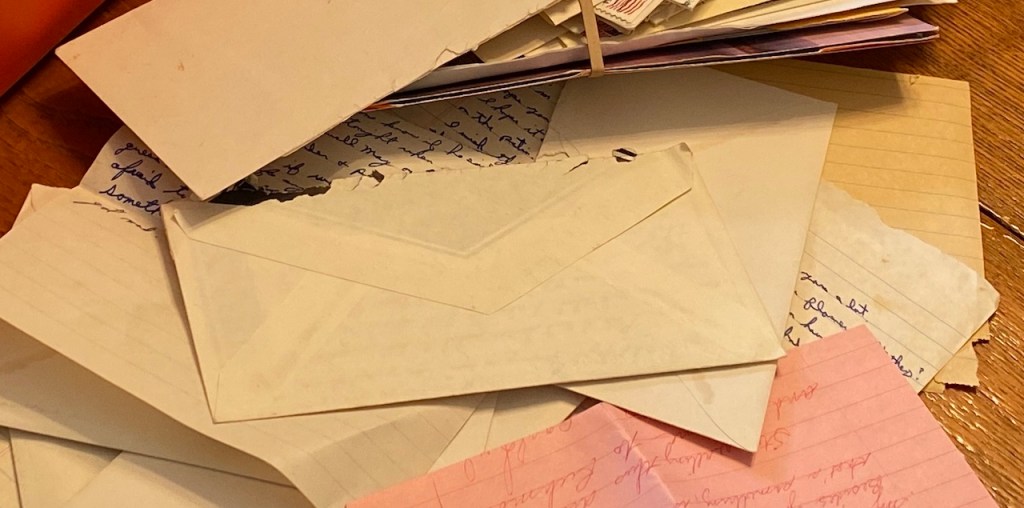






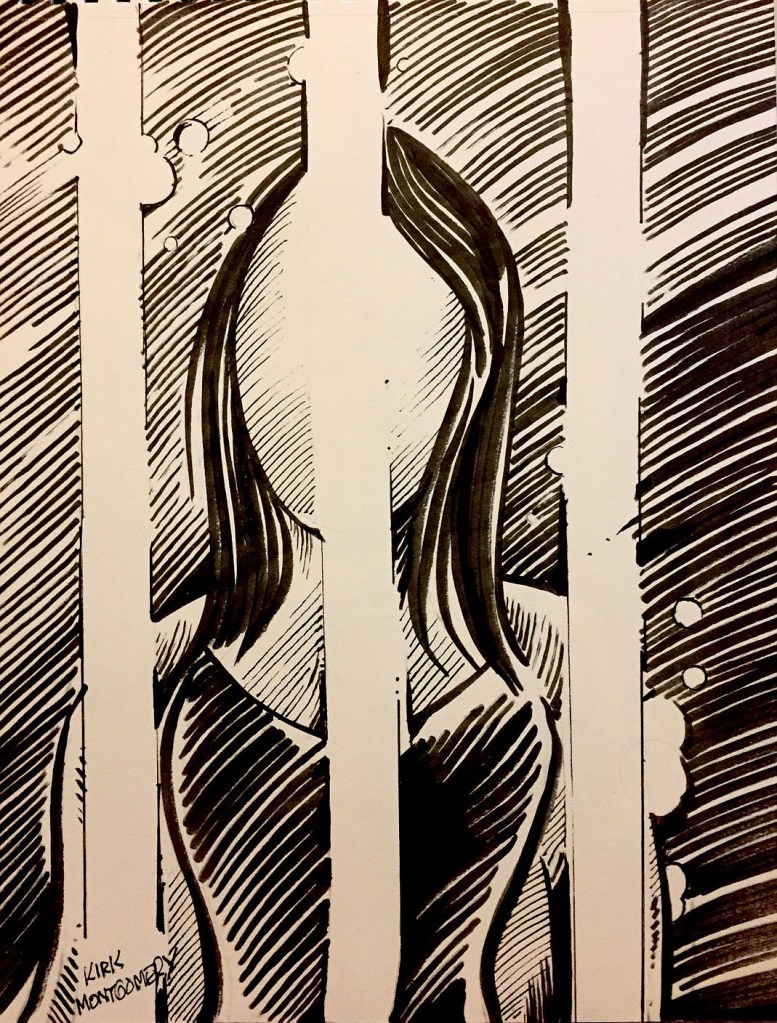

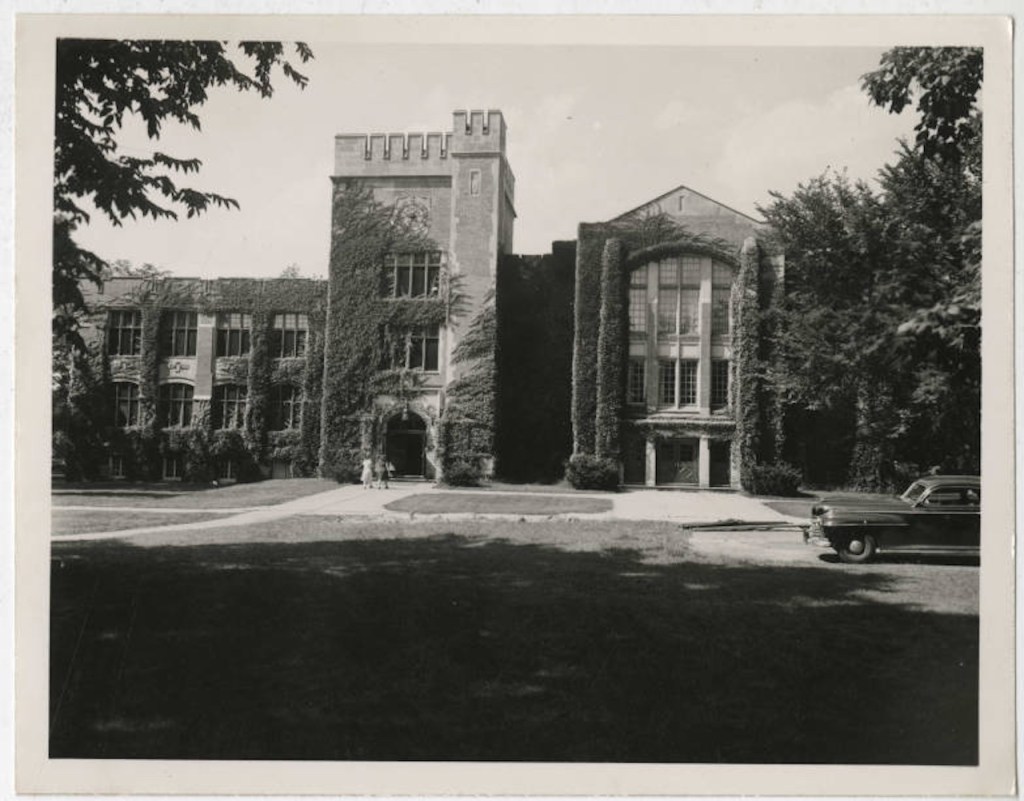

 Linda's Literary Home