Linda's Literary Home

Author: Linda Sue Grimes

  • Elizabeth Barrett Browning’s Sonnet 26 “I lived with visions for my company”

    Image: Elizabeth Barrett Browning – NPG, London

    Elizabeth Barrett Browning’s Sonnet 26 “I lived with visions for my company”

    In sonnet 26 “I lived with visions for my company,” Elizabeth Barrett Browning’s speaker is dramatizing the difference between her early, private fantasy world and her new world of reality as now occasioned by her belovèd, accomplished suitor.

    Introduction and Text of Sonnet 26 “I lived with visions for my company”

    Elizabeth Barrett Browning’s sonnet 26 from Sonnets from the Portuguese dramatizes the marvelous nature of reality as opposed to the fantasy world of daydreaming.   The speaker has discovered that no matter how wonderfully her own imagination creates, it cannot compete with the reality that God grants.

    The speaker’s life had been closed off from the larger world of people and ideas.  As her fantasy dreams began to fade, however, she was fortunate enough to find better dreams that became reality, as her soulmate entered her life.

    Sonnet 26 “I lived with visions for my company”

    I lived with visions for my company
    Instead of men and women, years ago,
    And found them gentle mates, nor thought to know
    A sweeter music than they played to me.
    But soon their trailing purple was not free
    Of this world’s dust, their lutes did silent grow,
    And I myself grew faint and blind below
    Their vanishing eyes. Then THOU didst come—to be,
    Belovèd, what they seemed. Their shining fronts,
    Their songs, their splendors (better, yet the same,
    As river-water hallowed into fonts),
    Met in thee, and from out thee overcame
    My soul with satisfaction of all wants:
    Because God’s gifts put man’s best dreams to shame.

    Commentary on Sonnet 26 “I lived with visions for my company”

    The speaker is dramatizing the difference between her early fantasy world and the world of reality as now represented by her belovèd suitor.

    First Quatrain:  Imagination for Company

    I lived with visions for my company
    Instead of men and women, years ago,
    And found them gentle mates, nor thought to know
    A sweeter music than they played to me.

    The speaker recalls that she once spent her time in the company of “visions,” instead of real, flesh-and-blood people. She is, no doubt, referring to the authors whose works she had read, studied, and translated. 

    The speaker found their company very pleasant and did not ever think to desire any other kind of relationship.  Her lack of self-esteem likely rendered her somewhat helpless, making her think that all she deserved was this completely isolated life.

    The speaker has many times reported on her isolated life. She lived alone and did not seek a human relationship; in her personal sadness, she suffered, but she also assuaged that sadness with literature, enjoying the association of the thoughts and ideas of those literary giants.

    Second Quatrain:  Perfection Showing Its Flaws

    But soon their trailing purple was not free
    Of this world’s dust, their lutes did silent grow,
    And I myself grew faint and blind below
    Their vanishing eyes. Then THOU didst come—to be,

    At first, the speaker thought that such company would sustain her in perpetuity, but she ultimately found that their supposed perfections began to show their flaws.  Their supposed perfection also reveal the unpleasantries of society.  And thus, she began to enjoy and listen to them less and less.

    The utter royalty of the kings and queens of letters started to fade, and their music started to fall on ears grown too satisfied and jaded to continue enjoying those works. She even found herself becoming even more  diminished as she continued to lose interest in that earlier company.

    First Tercet:  The Belovèd Enters

    Belovèd, what they seemed. Their shining fronts,
    Their songs, their splendors (better, yet the same,
    As river-water hallowed into fonts),

    Fortunately for the speaker, her belovèd entered her life, and he became the reality that showed up her fantasy for the less glorious state it was.  She realized that that fantasy has not satisfied her as much as she had earlier thought.   The imagined relationships with the authors of literary works faded as the reality of a real-life, flesh-and-blood poet filled her life.

    The beauty and glimmering presence of magical literary friends flowed through the speaker’s life as “river water hallowed into fonts.” She had modeled her life on the ephemeral glory of thoughts and ideas as they appeared in poems and art.

    Second Tercet:  Metaphysical Beauty and Reality

    Met in thee, and from out thee overcame
    My soul with satisfaction of all wants:
    Because God’s gifts put man’s best dreams to shame.

    All of the metaphysical beauty coupled itself with the thoughts and dreams of a poet and combined, rolling itself into the reality of her belovèd.  His love for her came to represent everything she had ever wanted; he filled “[her] soul with satisfaction of all wants.” When he came into her life, he brought fruition of her earlier dreams and fantasies.

    Despite the stunning dreams that she had allowed to soothe her suffering soul earlier in her life, she can now aver, “God’s gifts put man’s best dreams to shame.” Again, she acknowledges that her belovèd is a gift from God.

  • A Love That Grows Far beneath the Skin

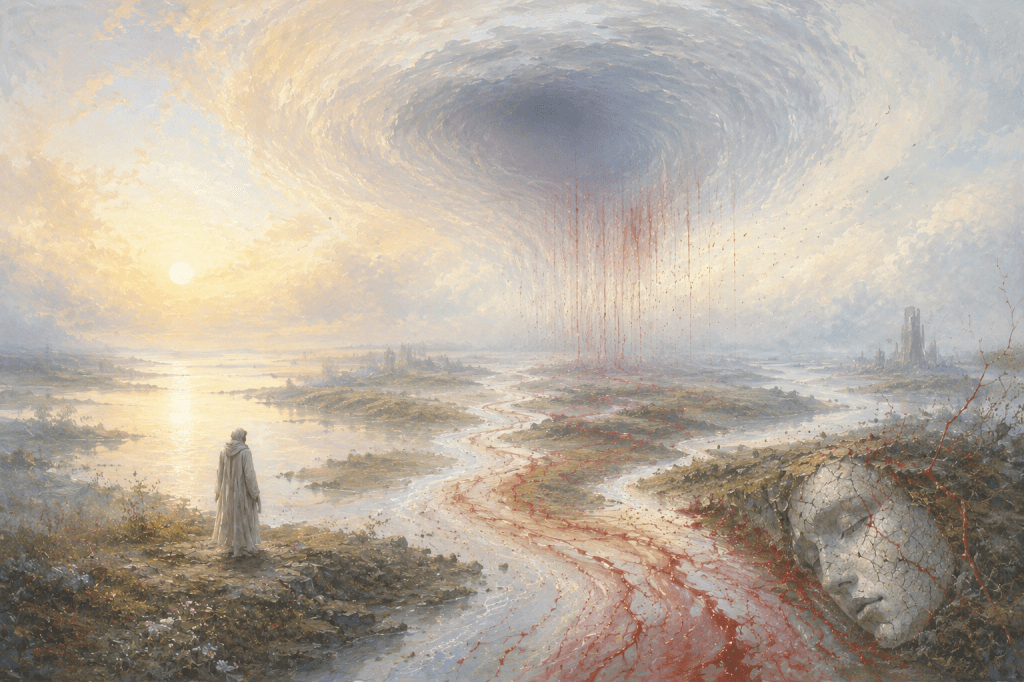
    Image:  Created by ChatGPT inspired by the poem

    for Ron at a computer training conference in Boulder CO   

    A Love That Grows Far beneath the Skin

    for Ron at a computer training conference in Boulder CO   

    Cottonwood feathers swish around the hotel,
    Sometimes in gale-force like a snowstorm.
    After a few claps of thunder, the rain came

    And then stopped after a few minutes.
    I’ve spent five hours alone in this room
    While you attend your training sessions.

    The luxury of five uninterrupted hours—
    Minus roughly a half-hour of housekeeping—
    Shine like diamonds on a freckled neck.

    And I have about three more hours left
    Until your sessions end and you return.
    We will go eat and shop and explore Boulder.

    I will look for things to put in poems, things
    Like mountains or cowboys or the laid-back
    Style of the Colorado college students.

    You’ll look for trinkets to take back to the kids
    And encourage me to buy a dress or another turtle pin.
    Maybe we’ll splurge on rich dessert and coffee.

    Back at the hotel, we’ll maybe take a dip in the pool, 
    Or just relax and converse in the quiet love we cultivate 
    For each other—a love that grows far beneath the skin.

  • Elizabeth Barrett Browning’s Sonnet 25 “A heavy heart, Belovèd, have I borne”

    Image:  Robert Browning and Elizabeth Barrett Browning – history.com

    Elizabeth Barrett Browning’s Sonnet 25 “A heavy heart, Belovèd, have I borne”

    Elizabeth Barrett Browning’s speaker revisits her former sorrow to contrast her earlier “heavy heart” with the light heartedness she now enjoys because of her belovèd fiancé.

    Introduction and Text of Sonnet 25 “A heavy heart, Belovèd, have I borne”

    Elizabeth Barrett Browning’s sonnet 25 from Sonnets from the Portuguese dramatizes the transformation of the speaker’s “heavy heart” of misery into a welcoming home of life and love. She credits her belovèd suitor for her ability to transcend her earlier sorrows.

    The speaker continues to gain confidence in herself and the possibility that she can be loved by one whose status she deems so far above her own.  She began in utter denial of any such luck, but as the muses, prays, and contemplates the motives and the behavior of her beloved, she becomes more convinced of his genuine affection for her.

    Elizabeth Barrett Browning’s speaker revisits her former sadness and melancholy in order to contrast that earlier “heavy heart” with the light heartedness she now has begun to enjoy because of the genuine feelings she now detects in her belovèd life partner.

    Sonnet 25 “A heavy heart, Belovèd, have I borne”

    A heavy heart, Belovèd, have I borne
    From year to year until I saw thy face,
    And sorrow after sorrow took the place
    Of all those natural joys as lightly worn
    As the stringed pearls, each lifted in its turn
    By a beating heart at dance-time. Hopes apace
    Were changed to long despairs, till God’s own grace
    Could scarcely lift above the world forlorn
    My heavy heart. Then thou didst bid me bring
    And let it drop adown thy calmly great
    Deep being! Fast it sinketh, as a thing
    Which its own nature doth precipitate,
    While thine doth close above it, mediating
    Betwixt the stars and the unaccomplished fate.

    Commentary on Sonnet 25 “A heavy heart, Belovèd, have I borne”

    The speaker is revisiting her former sorrow and contrasting her earlier “heavy heart” to the light heartedness she now enjoys because of her belovèd suitor.

    First Quatrain:   A Storehouse of Metaphors for Misery

    A heavy heart, Belovèd, have I borne
    From year to year until I saw thy face,
    And sorrow after sorrow took the place
    Of all those natural joys as lightly worn

    The speaker addressing her belovèd recalls that before she “saw [his] face,” she was afflicted with a “heavy heart.” She suffered a long line of sorrows instead of “all those natural joys” that young woman usually experience so easily.

    This speaker has so often alluded to her sorrow that the reader is not surprised that it appears again in dramatic form. Her storehouse of metaphors that elucidate her misery is large and varied.

    Second Quatrain:  Sorrows Like a String of Pearls

    As the stringed pearls, each lifted in its turn
    By a beating heart at dance-time. Hopes apace
    Were changed to long despairs, till God’s own grace
    Could scarcely lift above the world forlorn

    The speaker compares that long life of “sorrow after sorrow” to a string of pearls and supplies the image of a young woman at a dance, who fingers her pearls as she waits with rapidly “beating heart” to be asked to dance.

    The speaker sees herself as a wallflower and as that metaphoric self stood waiting to be chosen, her hopes were dashed and “were changed to long despairs.” She remained alone and lonely until her belovèd, now future life partner,  mercifully through the grace of God rescued her.

    First Tercet:   Love Warm and Soothing

    My heavy heart. Then thou didst bid me bring
    And let it drop adown thy calmly great
    Deep being! Fast it sinketh, as a thing

    Inordinately, the speaker was so distressed with her burden of a sad, depressed heart that it was difficult even for “God’s own grace” to raise from her that melancholy. In a pain-producing world, her heart that had felt complete dejection. But fortunately her belovèd appeared. He beckoned her, accepted her, and welcomed her to let go of her suspicion and take into her soul the reality of his love for her.

    The speaker’s gentleman friend’s loving affection was like a warm soothing pool of fresh water into which she could drop her painful “heavy heart” to have it washed clean of its sorrowful burden. Her heavy heart sank quickly to bottom of his welcoming comfort as if it belonged in that very place.

    Second Tercet:   Adoring Care

    Which its own nature doth precipitate,
    While thine doth close above it, mediating
    Betwixt the stars and the unaccomplished fate.

    The speaker’s emotional self was thus comforted by her belovèd’s adoring care; she felt that she had come home for the first time. His love enclosed her and lifted her to where she could sense her destiny as majestic as a celestial being “mediating / Betwixt the stars and the unaccomplished fate.”

    The speaker has offered her belovèd a dramatic celebration of her change of heart and credited him with transforming her heavy load of sorrow and dejection into a light sensory gift that has become conducive of heaven.

  • Elizabeth Barrett Browning’s Sonnet 24 “Let the world’s sharpness, like a clasping knife”

    Image: Elizabeth Barrett Browning – Baylor University

    Elizabeth Barrett Browning’s Sonnet 24 “Let the world’s sharpness, like a clasping knife”

    The speaker in Elizabeth Barrett Browning’s sonnet 24 “Let the world’s sharpness, like a clasping knife” compares the negative attitudes of others to a “clasping knife” that she will simply close up to rid her love of danger and damage.

    Introduction and Text of Sonnet 24 “Let the world’s sharpness, like a clasping knife”

    In sonnet 24 from Sonnets from the Portuguese, Elizabeth Barrett Browning’s strategy resembles the metaphysical poet’s use of the strange conceit as she compares the world’s harshness to a clasping knife. 

    John Donne often dramatized with this device in his poems of seduction.  He employed the ghost metaphor in “The Apparition,” and he used blood in the poem, “The Flea.”  Both abundantly odd choices for such a poem that seeks to woo.

    Sonnet 24 “Let the world’s sharpness, like a clasping knife”

    Let the world’s sharpness, like a clasping knife,
    Shut in upon itself and do no harm
    In this close hand of Love, now soft and warm,
    And let us hear no sound of human strife
    After the click of the shutting. Life to life—
    I lean upon thee, Dear, without alarm,
    And feel as safe as guarded by a charm
    Against the stab of worldlings, who if rife
    Are weak to injure. Very whitely still
    The lilies of our lives may reassure
    Their blossoms from their roots, accessible
    Alone to heavenly dews that drop not fewer,
    Growing straight, out of man’s reach, on the hill.
    God only, who made us rich, can make us poor.

    Commentary on Sonnet 24 “Let the world’s sharpness, like a clasping knife”

    Employing an odd conceit often used by the Metaphysical Poets, the speaker in sonnet 24 “Let the world’s sharpness, like a clasping knife” is comparing the oppositional attitudes of others to a “clasping knife” that she will simply close up to protect her love from destructive ideas.

    First Quatrain:  The World’s Intrusion

    Let the world’s sharpness, like a clasping knife,
    Shut in upon itself and do no harm
    In this close hand of Love, now soft and warm,
    And let us hear no sound of human strife

    The speaker engages the conceit of a “clasping knife” to refer to the “world’s sharpness” that would intrude upon the love between herself and her belovèd.   Like the Metaphysical Poets who employed such devices, Barrett Browning follows their lead at times, engaging strange metaphors and similes to express her comparisons.   

    But this speaker allows that the world should just close itself up like that “clasping knife” so that its threat will not interfere with the love she feels for her belovèd. The speaker begs that no “harm” come to “this close hand of Love.” After the knife closes to shut away the sharpness, then there is no danger. She asks for “soft and warm,” without the “sound of human strife.”

    Second Quatrain:  Putting Away Sharpness and Danger

    After the click of the shutting. Life to life—
    I lean upon thee, Dear, without alarm,
    And feel as safe as guarded by a charm
    Against the stab of worldlings, who if rife

    The speaker continues the knife conceit into the second quatrain of the sonnet. After the sharpness and danger are put away, she and her belovèd will exist “without alarm,” and they will be safe.   They will be protected from all adversity and criticism of them by the warmth of feelings that they experience for each other, even though the speaker finds obstacles everywhere. 

    After making progress in overcoming her own inner doubts, she now has to battle the unsympathetic barbs of others.   But by likening the ridicule to a “clasping knife,” the speaker dramatizes her method for overcoming the negativities of other people; she will merely close them off from her consciousness.

    First Tercet:  Too Weak to Cause Pain

    Are weak to injure. Very whitely still
    The lilies of our lives may reassure
    Their blossoms from their roots, accessible

    The knife conceit has worked well because she is able to admit that the stabs of those “worldlings” are many, and they cause pain.  But despite the pain and their number being large, their knife thrusts have remained slight, too weak to disturb the boundaries that bind the lovers.

    She then takes up another conceit which likens the lovers’ relationship to “the lilies of our lives” that “reassure / Their blossoms from their roots.”  The roots of the flower are hidden, but they are strong and sustain the beauty of the blooms. The speaker is dramatizing the love between herself and her belovèd, averring that they possess a strong, hidden core like the flowers.

    Second Tercet:  Growing out of the Reach of Humankind

    Alone to heavenly dews that drop not fewer,
    Growing straight, out of man’s reach, on the hill.
    God only, who made us rich, can make us poor.

    And the source of their love is their deep, inner reservoir of all things determined by their spiritual ties, provided them by their profound faith.  Their love is not something to be placed on a stage and applauded; it is deep and abiding.  Only God can influence the direction of their love and their life together.

    The speaker is echoing the marriage vows as she has done before in sonnet 22 “When our two souls stand up erect and strong.” Those vows affirm: “what God hath joined together, let not man put asunder” (Matthew 19:6).

    Full Image: Elizabeth Barrett Browning – Baylor University

  • John Donne’s “The Flea”

    Image: John Donne Portrait Unknown Artist – National Portrait Gallery, London

    John Donne’s “The Flea”

    John Donne’s “The Flea” is a seduction poem in which the speaker concocts a clever but outrageous notion to persuade his lady friend to engage with him in coitus.  This poem exemplifies Donne’s earlier work that contrasts with his later spiritual works including the Holy Sonnets.

    Introduction with Text of “The Flea”

    John Donne’s “The Flea” represents the subject matter that engaged the poet early on in his life.   Donne continues with similar exploits in other seduction poems such as “The Apparition,” “The Indifferent,” and “The Bait,” which is one of many replies to Christopher Marlowe’s “The Passionate Shepherd to His Love.”

    After Donne decided to forsake the wild side of life and settle into the spiritual life of a preacher, he composed amazing spiritual poetry most notable in the Holy Sonnets. The speaker in John Donne’s “The Flea” uses a twisted kind of reasoning, saying that his blood and that of his lady friend mingling in the flea’s body is not considered “a sin, nor shame” and not loss of virginity. 

    This speaker is dramatizing his clever notion that if he and his sweetheart have intercourse, they would also cause bodily fluids to “mingle” which would be less than the mingling of their blood in the flea.  

    The speaker wants his girlfriend to accept his logic that they have essentially already engaged in coitus by allowing the flea to conjoin their blood.  This type of extended metaphor is labeled a conceit, and the Metaphysical Poets are most known for employing that literary device.

    The Flea

    Mark but this flea, and mark in this,
    How little that which thou deniest me is;
    It sucked me first, and now sucks thee,
    And in this flea our two bloods mingled be;
    Thou know’st that this cannot be said
    A sin, nor shame, nor loss of maidenhead,
        Yet this enjoys before it woo,
        And pampered swells with one blood made of two,
        And this, alas, is more than we would do. 

    Oh stay, three lives in one flea spare,
    Where we almost, nay more than married are.  
    This flea is you and I, and this
    Our mariage bed, and marriage temple is; 
    Though parents grudge, and you, w’are met, 
    And cloistered in these living walls of jet.
        Though use make you apt to kill me,
        Let not to that, self-murder added be,
        And sacrilege, three sins in killing three. 

    Cruel and sudden, hast thou since
    Purpled thy nail, in blood of innocence?
    Wherein could this flea guilty be,
    Except in that drop which it sucked from thee?
    Yet thou triumph’st, and say’st that thou
    Find’st not thy self, nor me the weaker now;v
        ’Tis true; then learn how false, fears be:
        Just so much honor, when thou yield’st to me,
        Will waste, as this flea’s death took life from thee.

    Commentary on “The Flea”

    This seduction poem features the unique employment of the conceit, or extended metaphor, of a flea sucking blood.  The speaker creates an absurd scenario regarding the blood-sucking flea and the blood of the pair of lovers.

    First Stanza:  The Prick of a Flea-Bite

    Mark but this flea, and mark in this,
    How little that which thou deniest me is;
    It sucked me first, and now sucks thee,
    And in this flea our two bloods mingled be;
    Thou know’st that this cannot be said
    A sin, nor shame, nor loss of maidenhead,
        Yet this enjoys before it woo,
        And pampered swells with one blood made of two,
        And this, alas, is more than we would do.

    In the first stanza of John Donne’s “The Flea,” the speaker asks the woman to think about how little and insignificant would be the loss of her virginity. He compares it to the prick of a fleabite.  He then announces that first the flea bit him and then it bit her, both times sucking out some of their blood, which means that their blood is “mingl[ing]” in the flea’s body.

    The speaker then uses a twisted kind of reasoning, saying that their blood mingling in the flea’s body is not considered “a sin, nor shame” and not loss of virginity.  Yet if they had intercourse, they would also cause bodily fluids to “mingle” and that is less than the mingling of blood in the flea.   The speaker wants the girl to accept his reasoning that they have essentially already had sex by allowing the flea to cause their bloods to conjoin.

    Second Stanza:  A Venture in Absurdity

    Oh stay, three lives in one flea spare,
    Where we almost, nay more than married are.  
    This flea is you and I, and this
    Our mariage bed, and marriage temple is; 
    Though parents grudge, and you, w’are met, 
    And cloistered in these living walls of jet.
        Though use make you apt to kill me,
        Let not to that, self-murder added be,
        And sacrilege, three sins in killing three.

    The woman starts to whack the flea, but the speaker stops her and then begins another report of absurdity, likening the flea bite to their having engaged in coitus.  He audaciously groans, begging her not to smash the flea, after all because of that insect they are now “more than married.”   He implores her to spare the three lives. The three lives now living in the flea, of course, are the speaker, the woman, and the flea itself.

    And since they are, in the speaker’s warped reckoning, having sex in the flea’s body, they are, in fact, more married than ever, although they are obviously not married at all.  The speaker claims metaphorically that the flea has become their “marriage bed, and marriage temple.”

    The speaker then dramatizes her attempt to kill the flea by calling her act “self-murder” and “sacrilege” and that she would acquire “three sins in killing three.”  He exaggerates that if she kills the flea, she will be killing not only herself, but also the speaker and the flea.  The lad seems to have become quite desperate.

    Third Stanza: Specious Claim

    Cruel and sudden, hast thou since
    Purpled thy nail, in blood of innocence?
    Wherein could this flea guilty be,
    Except in that drop which it sucked from thee?
    Yet thou triumph’st, and say’st that thou
    Find’st not thy self, nor me the weaker now;v
        ’Tis true; then learn how false, fears be:
        Just so much honor, when thou yield’st to me,
        Will waste, as this flea’s death took life from thee.

    The woman does not fall for the specious claims made by her would-be seducer as she suddenly squashes the flea, which squirts the blood on her fingers.  The speaker acts alarmed that she could be so cruel and that she would be so careless as not to follow the logic of surrendering to him sexually.

    The woman has thrown his logic back in his face by remarking that they are not dead even though the flea is. And while the speaker has to concede that point, he then moves on to another point by turning the argument on her. 

    He says in effect, by killing the flea, she can realize how useless fears are.  She should not fear loss of her honor if she gives in and surrenders her virginity to him.   He argues that the amount of honor she will lose is just the same amount of blood the flea took from her.  He apparently knows the amount of blood a woman’s broken hymen sheds after first experiencing coitus.

  • John Donne’s “The Apparition”

    Image: John Donne Portrait Unknown Artist – National Portrait Gallery, London

    John Donne’s “The Apparition”

    John Donne’s “The Apparition” is similar in theme to his more famous poem, “The Flea.”  “The Apparition” offers a stunningly original metaphor (conceit) for a poem of seduction; the speaker claims that his ghost will haunt the lady if she does not give in to his pleas.

    Introduction with Text of “The Apparition”

    John Donne’s seventeen-line poem, “The Apparition” offers up the rime scheme of ABBABCDCDCEFFGGG.  Similar thematically to “The Flea,” this poem dramatizes the exploits that young men have used to seduce young women over the centuries.  The originality of this shocking strategy for a seduction poem is, however, quite fascinating and definitely unique.

    The Apparition

    When by thy scorn, O murd’ress, I am dead
             And that thou think’st thee free
    From all solicitation from me,
    Then shall my ghost come to thy bed,
    And thee, feign’d vestal, in worse arms shall see;
    Then thy sick taper will begin to wink,
    And he, whose thou art then, being tir’d before,
    Will, if thou stir, or pinch to wake him, think
             Thou call’st for more,
    And in false sleep will from thee shrink;
    And then, poor aspen wretch, neglected thou
    Bath’d in a cold quicksilver sweat wilt lie
             A verier ghost than I.
    What I will say, I will not tell thee now,
    Lest that preserve thee; and since my love is spent,
    I’had rather thou shouldst painfully repent,
    Than by my threat’nings rest still innocent.

    Commentary on “The Apparition”

    John Donne’s earlier poems contained a number of seduction pieces employing the Metaphysical conceit style.  His ability to engage fascinating conceits remains a unique accomplishment in the field of letters.

    One of his most outrageous and fascinating seduction strategies appears in “The Apparition.”  The absolute depravity involved in this poem contrasts mightily with Donne’s later spiritual works, as exemplified by the Holy Sonnets.  However, Donne’s melancholic physical decay as bemoaned in the Holy Sonnets follows karmically from his earlier behavior that resulted in his seduction poems.

    First Movement:  Murder by Abstinence

    When by thy scorn, O murd’ress, I am dead
             And that thou think’st thee free
    From all solicitation from me,
    Then shall my ghost come to thy bed,

    The speaker labels the young lady a murderer for refusing to satisfy his lust. The notion that not giving in to his sexual urges will kill a man has remained an ignorant superstition since the Renaissance era and quite likely even earlier.

    The speaker employs this absurd notion, anticipating that the young woman will be exploitable and therefore accept his ludicrous drivel.  Therefore, he labels her a murderer because he is “dying” to have sex with her.

    The speaker has obviously tried more than once to seduce this lady, but thus far she has succeeded in evading his advances.  Therefore, he cooks up this ghost/murder scheme, attempting to lure her to his bed.  He is insisting that she is killing him now, but his ghost will haunt and perhaps kill her later.

    After the speaker has died, his target lady will, at first, think she is free of him and his constant urgings.  However, he lets her know that his urges are so strong that even his neutered ghost will appear to her to continue his desired ravishment.

    Second Movement:  No Investment in Virginity

    And thee, feign’d vestal, in worse arms shall see;
    Then thy sick taper will begin to wink,
    And he, whose thou art then, being tir’d before,
    Will, if thou stir, or pinch to wake him, think
             Thou call’st for more,
    And in false sleep will from thee shrink;

    The clever, though mightily deluded, speaker then flings at the woman the term “feign’d vestal.” He is not, however, shaming her for not being a virgin.  He has no investment in virginity, hers, his, or anyone else’s.

    The speaker is merely insulting her intelligence again, asserting that she is pretending.  He is convinced that she will not remain a virgin, as the original Roman Vestal Virgin priestesses did for thirty years.  

    He assumes that it logically follows that if she does not remain a virgin, she should not worry about her virginal status now that she has this coitus-ready fellow before her raging to get his member into her nether region.

    Therefore, after she has seen his ghost, after she has killed him, she will be sore afraid.  She will try to awaken her sleeping bed partner, who will fail to pay any attention to her.  The bed partner will have been worn out from earlier love-making and merely think she wants it again.  Thus he will just slough her off.  This speaker’s penchant for the gross and obnoxious knows no bounds.

    Third Movement:  Sweaty Ghost Fear

    And then, poor aspen wretch, neglected thou
    Bath’d in a cold quicksilver sweat wilt lie
             A verier ghost than I.
    What I will say, I will not tell thee now,
    Lest that preserve thee; and since my love is spent,
    I’had rather thou shouldst painfully repent,
    Than by my threat’nings rest still innocent.

    The speaker finally makes the prediction that the object of his lust will transform into a “poor aspen wretch.”  She will turn pale from the fear of this poor wastrel’s ghost; thus, she will be “Bathed in a cold quicksilver sweat.” She will become all sweaty because of her fear of the ghost, the “Apparition.”

    The speaker reports to her that the words his ghost will utter to her when the time comes will make her even more fearful.  He refuses to tell her now what he will say.  He wants the shock and awe value to be greater later at the time they occur.  

    He figures that if he told her now, she could somehow steel herself, and the shock value would be lost.  We want her to suffer mightily for not letting him relieve his lust at the expense of her virginity.

  • Funky Notions

    Image:  Created by Grok and ChatGPT inspired by “Funky Notions”

    Funky Notions

    Nothing needs to come out of this blistered brain
    At least as far as the eye can see—
    Where is the ditch into which the wheel has dug?

    Do I want three lines, or four, or more
    Is all the problem I can muster—Oh, how I must be
    Blessed to have such trivial incongruities?
    Where are the windmills when you need them?

    No, I will not castigate this heart for this—
    It existed way before the lava in my mind began
    To gurgle on the rim of possibilities.

    Hey, granny-woman—you could frimbulage your daughter
    Who has an eye for things you spew forth—
    No matter your heart be sanctuary for the downtrodden

    The unmixed, the ultimately blessed—and wait!
    Where did you just go?  No, I didn’t go there . . .
    Of course, you did, you (stops for a swig of lightning) . . . 

    Anyway, Love is such an all inclusive word . . .
    But then she confessed she did not know what Love is
    And you have always felt that Love is all you know
    Even if you fail along the trail that Love to show!

    Little wonder she doesn’t get you or her own children
    Who must languish because you are afraid
    To offend with your funky . . . notions . . . 

  • Elizabeth Barrett Browning’s Sonnet 23 “Is it indeed so? If I lay here dead”

    Image: Elizabeth Barrett Browning – Engraving from original Painting by Chappel, 1872. (Photo by: Universal History Archive/Universal Images Group via Getty Images)

    Elizabeth Barrett Browning’s Sonnet 23 “Is it indeed so? If I lay here dead”

    The speaker is responding to a sweet love letter from her dear belovèd fiancé.  She concludes that instead of desiring the deliverance by death of her woes, she can remain an earth resident because of the love that has healed her melancholy.

    Introduction and Text of Sonnet 23 “Is it indeed so? If I lay here dead”

    In Elizabeth Barrett Browning’s sonnet 23 “Is it indeed so? If I lay here dead” from Sonnets from the Portuguese, the speaker dramatizes the ever-growing confidence and profound love the speaker is enjoying with her belovèd.  

    She is responding to a love letter from her lover with her usual dazzling, amazement that he can love her so genuinely.  The speaker is finally accepting the still a bit unbelievable fact that she is loved very deeply by this incredible man, whom she still holds in such high esteem.

    Sonnet 23 “Is it indeed so? If I lay here dead”

    Is it indeed so? If I lay here dead,
    Wouldst thou miss any life in losing mine?
    And would the sun for thee more coldly shine
    Because of grave-damps falling round my head?
    I marvelled, my Beloved, when I read
    Thy thought so in the letter. I am thine—
    But . . . so much to thee? Can I pour thy wine
    While my hands tremble ? Then my soul, instead
    Of dreams of death, resumes life’s lower range.
    Then, love me, Love! look on me—breathe on me!
    As brighter ladies do not count it strange,
    For love, to give up acres and degree,
    I yield the grave for thy sake, and exchange
    My near sweet view of Heaven, for earth with thee!

    Commentary on Sonnet 23:  “Is it indeed so? If I lay here dead”

    The speaker inElizabeth Barrett Browning’s sonnet 23 “Is it indeed so? If I lay here dead” is dramatizing her reaction to n affectionate love letter from her dear belovèd suitor.

    First Quatrain:   Framing a Question

    Is it indeed so? If I lay here dead,
    Wouldst thou miss any life in losing mine?
    And would the sun for thee more coldly shine
    Because of grave-damps falling round my head?

    Beginning with a simple, yet somewhat vague at first, question, the speaker asks if something is really true. Next, she supplies the idea that prompts her inquiry, but then appends two additional questions. She is asking her lover if it is really true that he would miss her if she died.

    But the speaker dramatizes this simple notion by asking her questions in such a vivid manner. She wonders if for her belovèd, it would seem that the sun’s warmth had cooled.  Because only cold dampness would be “falling round [her] head” as she lay in the grave, she senses that coldness would also become her lover’s sensibilities. 

    The speaker may be echoing her lover’s words, but she enhances them by placing them in question form.  The eerie image of “grave-damps falling” around her head evokes the mighty contrast between her imagined situation in a coffin and her moving about live upon the earth.

    Second Quatrain:   Filled with Wonder

    I marvelled, my Beloved, when I read
    Thy thought so in the letter. I am thine—
    But . . . so much to thee? Can I pour thy wine
    While my hands tremble ? Then my soul, instead

    Directly addressing her belovèd, the speaker reveals that she was filled with wonder as she was reading the words communicating those very thoughts in a letter that she had received from him.  Thus, the speaker then is creating her sonnet in response to her lover’s effusions in the love-letter, which reveals that the two are at the height of their passion.  

    The speaker has finally accepted that she is loved very deeply by this man, but she still can be overcome with emotion when he speaks to her from his heart. She repeats those long-wished-for, delicious words, “I am thine.” 

    However, the speaker then finds herself in awe that she could mean so much to this accomplished suitor. She lets him know that his admission has touched her so deeply that she is trembling, and thus she queries, wondering if she could even pour wine into a glass as her hands trembled so violently.

    Again, the speaker dramatizes her avowal by placing it in a question.  This emphasis assumes to communicate her still amazement at her good fortune in experiencing love with this wonderful mate.

    First Tercet:  Unique Love

    Of dreams of death, resumes life’s lower range.
    Then, love me, Love! look on me—breathe on me!
    As brighter ladies do not count it strange,

    The speaker, accepting that the answers to her questions are positive, reports that because of this unique love, she is touched to the soul and wants more than ever to live.   Even though the speaker has dreamed of death to quell her misery, she now insists she will dream of life because now, her soul can move through life in a quieter atmosphere, where contentment can hold sway in her moods.

    The speaker then effuses, “Then, love, Love! Look on me—breathe on me!” Her passion is rousing her language; she wants to make him know how strongly her ardor has become.

    Second Tercet:  Earthbound for the Sake of Love

    For love, to give up acres and degree,
    I yield the grave for thy sake, and exchange
    My near sweet view of Heaven, for earth with thee!

    The speaker then asserts that as those women, who are “brighter” than she is, are willing to give up possessions and station for love, she is willing to give up her desire for death to deliver her from her misery.  She has held view that residing her her concept of heaven would be preferable to the life she has been assigned on earth.

    However, now through the blessings of her love relationship with her suitor, she now wishes to give up those heavenly blessings for which she had yearned, and remain earthbound.  She is willing to remain earthbound and keep her physical encasement for his sake.

    Introduction to the Sonnet Sequence

  • After the Affection of a Late Autumn

    Image:  Created by ChatGPT inspired by “After the Affection of a Late Autumn”

    After the Affection of a Late Autumn

    They wore winter
    Like a blazer keeps
    Shoulders square
    Almost military design.

    In the pockets of poems
    They slipped dry ice
    & hung frigid at the end
    Of each line.

    Where they crashed
    Icicles hung naked reminders
    In the window
    Where thawing is dripping to death.

    In the thick of it
    The fabric
    Of a patchwork affair
    Quilted them from each other.

    Yet the dreams that seemed
    To lodge them between sheets of ice
    Caught spring spilling down a mountain
    Glancing off her shoulder

    The glacial waters that fed her amazement
    That anything so cold can move.
    Now that summer runs at the mouth
    Slow as sorghum on the lip of a jar

    She hitches her poems
    To farmers on tractors
    & plows the itch for his love
    Which has scratched her into dirt that burns.

  • Elizabeth Barrett Browning’s Sonnet 22 “When our two souls stand up erect and strong”

    Image: Elizabeth Barrett Browning – Getty Images

    Elizabeth Barrett Browning’s Sonnet 22 “When our two souls stand up erect and strong”

    The speaker in Elizabeth Barrett Browning’s sonnet 22 “When our two souls stand up erect and strong” from “Sonnets from the Portuguese” contrasts the heaven created by the soul force of the lovers with the contrary state of worldly existence.

    Introduction with Text of Sonnet 22 “When our two souls stand up erect and strong”

    The speaker in Elizabeth Barrett Browning’s sonnet 22 “When our two souls stand up erect and strong” from Sonnets from the Portuguese is drawing a contrast between the paradisiacal state effected in the relationship between her beloved and herself and the oppositional state that a worldly existence has erected around them. 

    In order to ennoble their growing relationship to its highest level, the speaker creates a description of the  melding of two souls. Instead of the mere, mundane marriage of minds and physical encasements as most ordinary human beings emphasize, this speaker is concerned with eternal verities. This speaker is engaged in creating a world within a world wherein the spiritual is more real than the material level of existence.

    Sonnet 22 “When our two souls stand up erect and strong”

    When our two souls stand up erect and strong,
    Face to face, silent, drawing nigh and nigher,
    Until the lengthening wings break into fire
    At either curvèd point,—what bitter wrong
    Can the earth do to us, that we should not long
    Be here contented? Think. In mounting higher,
    The angels would press on us and aspire
    To drop some golden orb of perfect song
    Into our deep, dear silence. Let us stay
    Rather on earth, Belovèd,—where the unfit
    Contrarious moods of men recoil away
    And isolate pure spirits, and permit
    A place to stand and love in for a day,
    With darkness and the death-hour rounding it.

    Commentary on Sonnet 22 “When our two souls stand up erect and strong”

    In sonnet 22 “When our two souls stand up erect and strong,” the speaker is waxing ever more fanciful, painting a safe harbor for herself and her beloved as a loving couple whose union is heightened by the power and force of their souls.

    First Quatrain:  Imagining a Wedding

    When our two souls stand up erect and strong,
    Face to face, silent, drawing nigh and nigher,
    Until the lengthening wings break into fire
    At either curvèd point,—what bitter wrong

    The speaker dramatizes the couple’s wedding, fancying that their souls are standing and meeting as they draw closer and closer together in the silence facing each other. The couple resembles two angels who will merge into one. But before they merge, she allows the tips of their wings to catch fire as they form a curve in touching.

    At first, the speaker’s other-worldly depiction seems to imply that she perceives that their love does not belong to this world, but the reader must remember that this speaker’s exaggeration often lowers expectations as much as it elevates them.  

    This speaker is convinced that the two lovers are soul-mates; thus, she would stage their marriage first at the soul level, where nothing on earth could ever detract from their union.

    Second Quatrain:  United by Soul

    Can the earth do to us, that we should not long
    Be here contented? Think. In mounting higher,
    The angels would press on us and aspire
    To drop some golden orb of perfect song

    The speaker then asks the question, what could anyone or anything earthly do to hamper their happiness? Because they are united through soul force, even on earth they can “be here contented.”  Indeed, they could be content anywhere, for as the marriage vow declares, “what God hath joined together, let not man put asunder” (Matthew 19:6).

    The speaker commands her belovèd to “think”; she wants him to reflect on the efficacy of remaining earth-bound in their love relationship.  If they allow themselves to ascend too high, then heavily beings might interfere with their engaging at the soul level with their beloved state of silence.  Silence at the soul level remains the best, most congenial locus for true love.

    If an angel-like being intrudes with even some lovely sounding song, that intrusion would be too much for the couple during the sacred moments wherein they are becoming joined as one.

    First Tercet:  Working out Karma

    Into our deep, dear silence. Let us stay
    Rather on earth, Belovèd,—where the unfit
    Contrarious moods of men recoil away
    And isolate pure spirits, and permit
    A place to stand and love in for a day,
    With darkness and the death-hour rounding it.

    The speaker implies that they are not ready for total perfection; they must remain earthbound and contend with whatever circumstances other individuals might cause.  The negative repercussions that society might place upon this couple will have to be strongly rebuked they the couple in the here and how.

    So they must remain earthbound and practical in order to put down any such rebellions against them.  However, the speaker is certain that the couple will be able to overcome all adversity offered by others, and their love will cause their adversaries to “recoil away.”

    Second Tercet:   Better Together

    And isolate pure spirits, and permit
    A place to stand and love in for a day,
    With darkness and the death-hour rounding it.

    The speaker’s faith in the united soul force of the two lovers deems them “pure spirits,” and they will endure like a strong, self-sustaining island.  Their love will be “a place to stand and love in for a day.” Even though around them the darkness of earthly, worldly existence will trudge on, for them their haven will endure indefinitely.