Linda's Literary Home

Author: Linda Sue Grimes

  • Emily Dickinson’s “Once more, my now bewildered Dove”

    Image: Emily Dickinson - Amherst College - Daguerrotype of the poet at age 17, circa 1847 - likely the only authentic, extant likeness of the poet
    Image: Emily Dickinson – Amherst College – Daguerrotype of the poet at age 17, circa 1847 – likely the only authentic, extant likeness of the poet

    Emily Dickinson’s “Once more, my now bewildered Dove”

    Emily Dickinson’s “Once more, my now bewildered Dove” dramatizes the soul’s anxious search for spiritual certainty while maintaining courageous hope amid uncertainty and isolation.

    Introduction and Text of “Once more, my now bewildered Dove”

    Emily Dickinson’s “Once more, my now bewildered Dove” employs a minimalist two-stanza structure to portray the soul’s repeated attempts to discover assurance in a troubled world. The speaker draws upon the biblical story of Noah’s dove to symbolize the restless human heart seeking divine confirmation and spiritual refuge. 

    As Paramahansa Yogananda taught, “The nature of Spirit is joy; and the nature of your soul is joy.” The speaker’s dove dramatizes that same longing for safe spiritual harbor within the storms of earthly uncertainty.  

    Once more, my now bewildered Dove

    Once more, my now bewildered Dove
    Bestirs her puzzled wings
    Once more her mistress, on the deep
    Her troubled question flings –

    Thrice to the floating casement
    The Patriarch’s bird returned,
    Courage! My brave Columba!
    There may yet be Land!

    Commentary on “Once more, my now bewildered Dove”

    Emily Dickinson’s “Once more, my now bewildered Dove” reveals the speaker’s spiritual resilience as she dramatizes the soul’s persistent search for divine certainty.

    First Stanza: Soul as Bird

    Once more, my now bewildered Dove
    Bestirs her puzzled wings
    Once more her mistress, on the deep
    Her troubled question flings –

    In the first stanza, the speaker immediately introduces the symbolic “Dove,” a creature long associated with peace, innocence, and spiritual aspiration. Yet this dove appears “bewildered,” suggesting that the soul has encountered confusion while navigating the uncertainties of earthly existence. 

    The speaker’s use of “Once more” emphasizes repetition, implying that this struggle between doubt and faith recurs continually throughout human life.  The dove’s “puzzled wings” suggest not only physical movement but also mental and spiritual agitation. 

    The soul desires elevation and freedom, yet uncertainty hampers its flight. In many Dickinson poems, the speaker dramatizes the soul as yearning to transcend earthly limitation, while simultaneously confronting the painful obscurity that veils spiritual truth from ordinary human perception.

    The phrase “her mistress” identifies the speaker herself as the guiding consciousness behind the dove. The soul and the human personality remain intertwined, even while the personality attempts to direct the soul toward revelation. 

    The speaker’s “troubled question” cast “on the deep” suggests prayer, meditation, or inward spiritual inquiry hurled into the mysterious abyss of existence.  The “deep” carries biblical and mystical implications. 

    The term evokes the vast floodwaters of Genesis while also symbolizing the unknowable dimensions of divine reality. As in many Dickinson riddles, the speaker refuses to explain fully the exact nature of the “question,” allowing readers to intuit the soul’s universal anxieties concerning meaning, permanence, and salvation.

    The speaker’s dramatization resembles concepts frequently emphasized by Paramahansa Yogananda, who taught that the human heart continually seeks reassurance of divine presence amid worldly confusion. 

    Paramahansa Yogananda explained,“The season of failure is the best time for sowing the seeds of success” from The Law of Success: Using the Power of Spirit to Create Health, Prosperity, and Happiness.  The dove’s repeated effort to take wing despite bewilderment reflects precisely such spiritual perseverance. 

    The speaker’s symbolism also recalls observations from my earlier Dickinson commentaries at Linda’s Literary Home regarding the poet’s tendency to dramatize the inner life through compressed metaphysical imagery. 

    Rather than offering abstract philosophical assertions, the speaker embodies spiritual tension through vivid symbolic action. The fluttering dove becomes the visible representation of invisible yearning.

    The stanza’s emotional force arises from the balance between uncertainty and persistence. Although the dove remains bewildered, she nevertheless “bestirs” her wings again. The speaker thus suggests that genuine spiritual seeking requires repeated effort despite the absence of immediate answers or comforting certainties.

    Second Stanza: Allusion of Searching

    Thrice to the floating casement
    The Patriarch’s bird returned,
    Courage! My brave Columba!
    There may yet be Land!

    In the second stanza, the speaker introduces a direct biblical allusion to Noah’s ark. The “Patriarch’s bird” refers to the dove Noah released repeatedly after the floodwaters had submerged the earth. By invoking this familiar narrative, the speaker expands her private spiritual anxiety into a universal drama of humanity searching for signs of divine mercy and renewed stability.

    The word “Thrice” carries symbolic significance, often suggesting spiritual completion or sacred persistence. Noah’s dove returned multiple times before finally discovering evidence of dry land. Likewise, the speaker implies that the soul may endure repeated disappointments before attaining spiritual assurance. The repeated return of the bird dramatizes patience rather than failure.

    The “floating casement” offers an especially striking image. The ark’s window becomes both a literal opening and a symbolic threshold between fear and hope. The dove repeatedly departs from temporary safety into uncertain vastness, only to return again.   Such movement reflects the soul’s oscillation between doubt and renewed aspiration.

    The speaker’s cry, “Courage! My brave Columba!,” introduces sudden tenderness and encouragement. “Columba,” the Latin word for dove, heightens the spiritual dignity of the bird while lending the poem a liturgical tone. At the same time, the term subtly echoes the name “Columbus,” invoking the great explorer who crossed unknown seas searching for a new world.

    That layered allusion enriches the poem’s central drama of spiritual searching. Like Columbus navigating dangerous and uncharted waters, the speaker’s symbolic dove ventures repeatedly into uncertainty, guided largely by intuition and hope rather than visible proof. The soul becomes both sacred dove and courageous explorer, willing to risk bewilderment in pursuit of discovery.

    The speaker addresses the soul compassionately, recognizing both its exhaustion and its bravery in continuing the search. The exclamation “Courage!” therefore functions not merely as comfort but as a rallying cry urging the soul onward despite repeated returns without final resolution. 

    Dickinson’s speaker suggests that spiritual discovery, like earthly exploration, demands perseverance through vast stretches of apparent emptiness before glimpsing the longed-for italics-emphasized “Land.”

    The concluding line, “There may yet be Land!” preserves uncertainty while simultaneously affirming hope. The speaker does not proclaim certainty that land exists; instead, she emphasizes the possibility of deliverance. Dickinson’s speakers often value the sustaining power of hope itself, even when ultimate knowledge remains inaccessible.

    The great Guru Yogananda frequently stressed that spiritual realization demands steadfastness amid periods of apparent silence or darkness. He taught that the devotee must continue seeking divine truth even when external evidence seems absent. The speaker’s encouragement to the “brave Columba” echoes that same spiritual endurance and refusal to surrender to despair.  

    The poem’s final affirmation remains intentionally restrained. The speaker avoids triumphant certainty and instead offers courageous possibility. Such restraint strengthens the poem’s spiritual realism, for authentic faith often survives not through guaranteed answers but through the willingness to continue searching despite bewilderment.

    Like many Dickinson lyrics, this compact poem transforms a brief symbolic scene into a profound musing on the soul’s inward pilgrimage. The dove’s repeated flight over uncertain waters becomes the enduring emblem of humanity’s determination to seek truth, peace, and divine refuge even while surrounded by mystery.

  • O Guruji, I Will Follow Thee

     Image:  Created by ChatGPT inspired by the poem
    Image: Created by ChatGPT inspired by the poem

    O Guruji, I Will Follow Thee

    —after “I Will Be Thine Always”

    O Guruji, I will follow Thee
    As long as Thou dost lead.
    No matter where
    Or how long the road, 

    I will follow Thee.
    No matter if others
    Turn away from the path,
    I will follow Thee.

    To the end of all being,
    To the end of all striving,
    I will follow Thee.
    As I move out of this earthly abode,
    The windows of my soul
    Will still be lit with the candle
    Of Thy promise,
    And I will follow Thee,
    O Guruji, I will follow Thee!

  • James Weldon Johnson’s “A Poet to His Baby Son”

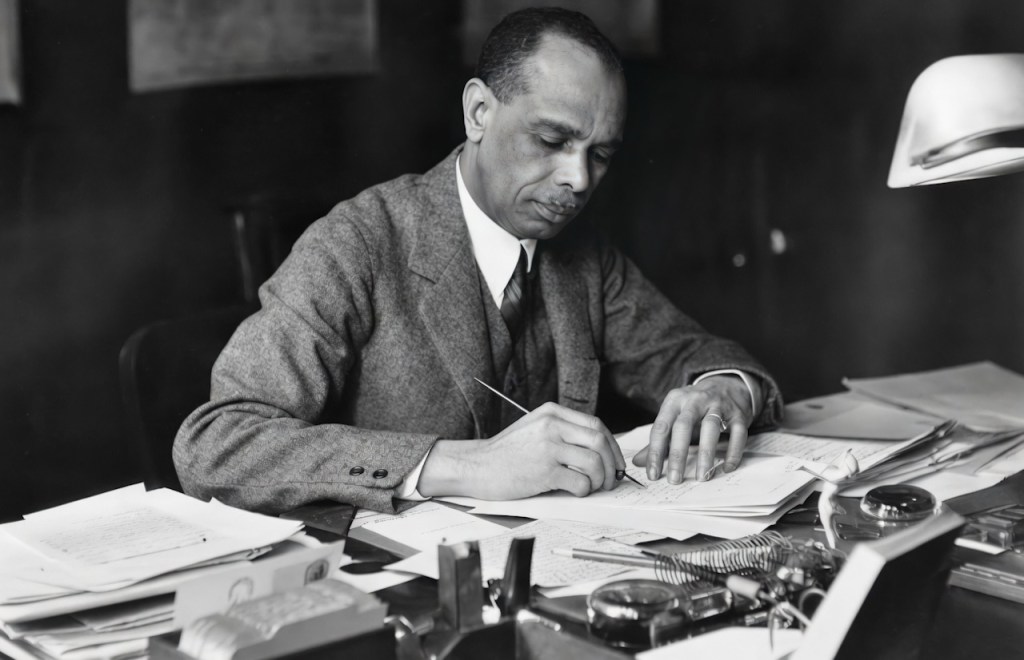
    Image: James Weldon Johnson - https://www.green-wood.com/event/the-autobiography-of-an-ex-colored-man-110-years-later/
    Image: James Weldon Johnson

    James Weldon Johnson‘s “A Poet to His Baby Son”

    The poet James Weldon Johnson has created a speaker whose baby son gets a wild-eyed stare that can look “through the ceiling of the room, and beyond,” leading the father to suspect that he might have a budding poet to contend with.

    Introduction with Text of “A Poet to His Baby Son”

    James Weldon Johnson’s speaker in “A Poet to His Baby Son” offers a tongue-in-cheek complaint that his baby son might be contemplating becoming, like his father, a poet.

    A Poet to His Baby Son

    Tiny bit of humanity,
    Blessed with your mother’s face,  
    And cursed with your father’s mind.

    I say cursed with your father’s mind,
    Because you can lie so long and so quietly on your back,   
    Playing with the dimpled big toe of your left foot,   
    And looking away,
    Through the ceiling of the room, and beyond.
    Can it be that already you are thinking of being a poet?

    Why don’t you kick and howl,   
    And make the neighbors talk about   
    “That damned baby next door,”
    And make up your mind forthwith   
    To grow up and be a banker
    Or a politician or some other sort of go-getter   
    Or—?—whatever you decide upon,   
    Rid yourself of these incipient thoughts   
    About being a poet.

    For poets no longer are makers of songs,   
    Chanters of the gold and purple harvest,  
    Sayers of the glories of earth and sky,   
    Of the sweet pain of love
    And the keen joy of living;
    No longer dreamers of the essential dreams,   
    And interpreters of the eternal truth,   
    Through the eternal beauty.
    Poets these days are unfortunate fellows.   
    Baffled in trying to say old things in a new way   
    Or new things in an old language,   
    They talk abracadabra
    In an unknown tongue,
    Each one fashioning for himself
    A wordy world of shadow problems,
    And as a self-imagined Atlas,
    Struggling under it with puny legs and arms, 
    Groaning out incoherent complaints at his load.

    My son, this is no time nor place for a poet;   
    Grow up and join the big, busy crowd   
    That scrambles for what it thinks it wants   
    Out of this old world which is—as it is—
    And, probably, always will be.

    Take the advice of a father who knows:   
    You cannot begin too young   
    Not to be a poet.

    Commentary on “A Poet to His Baby Son”

    The speaker’s baby son gets a wild-eyed stare that seems so penetrating that it can look through things.  The speaker playfully then muses that the kid might be demonstrating qualities that could lead him to becoming a poet, like his father.  The speaker appears to be somewhat dismayed by that thought, for he is concerned about the current trend in poetry’s emphasis on non-poetic subjects.

    First Stanza:  A Distressing Possibility

    Tiny bit of humanity,
    Blessed with your mother’s face,  
    And cursed with your father’s mind.

    In the opening three-line stanza, the speaker is having a little talk with his infant son. He calls the baby boy a “[t]iny bit of humanity” and describes him as looking like his mother but thinking like his father. The speaker is happy with the first quality but distressed over the second.

    Second Stanza:  Poetry as a Curse

    I say cursed with your father’s mind,
    Because you can lie so long and so quietly on your back,   
    Playing with the dimpled big toe of your left foot,   
    And looking away,
    Through the ceiling of the room, and beyond.
    Can it be that already you are thinking of being a poet?

    The speaker is so distressed over the fact that the baby has his “father’s mind” that he calls the child “cursed” with that quality, repeating that lined in both the opening stanza and the second.

    The speaker then begins his exposition of the reason for thinking the baby  may be cursed. Before dropping the bombshell though, he relates that the baby can do baby things like lying quietly for extended periods on his little back, while playing with toes.  These are a little-baby activities that the speaker finds charming.

    But the speaker also senses a musing quality in the baby’s stare; the little one seems to be staring with such contemplation that he can see through the “ceiling” and “beyond.”  This searching stare suggest to the poet that his baby is contemplating becoming a poet when he grows up.

    Third Stanza:   Anything but Poetry!

    Why don’t you kick and howl,   
    And make the neighbors talk about   
    “That damned baby next door,”
    And make up your mind forthwith   
    To grow up and be a banker
    Or a politician or some other sort of go-getter   
    Or—?—whatever you decide upon,   
    Rid yourself of these incipient thoughts   
    About being a poet.

    The speaker then rhetorically queries his son, suggesting that he “kick and howl” and annoy the neighbors to get them to exclaim and swear because of the unwelcome noise.  Such behavior he suggests would ensure that his son might decide to be a enthusiastic individual and become some professional such as a “banker” or even a “politician.”

    The speaker insists that no matter what the kid does, he should never ever consider the notion of becoming a poet.  Because the father is a poet, he would know all of the disadvantages that profession can confer.

    Fourth Stanza:   The Modernist Bent

    For poets no longer are makers of songs,   
    Chanters of the gold and purple harvest,  
    Sayers of the glories of earth and sky,   
    Of the sweet pain of love
    And the keen joy of living;
    No longer dreamers of the essential dreams,   
    And interpreters of the eternal truth,   
    Through the eternal beauty.
    Poets these days are unfortunate fellows.   
    Baffled in trying to say old things in a new way   
    Or new things in an old language,   
    They talk abracadabra
    In an unknown tongue,
    Each one fashioning for himself
    A wordy world of shadow problems,
    And as a self-imagined Atlas,
    Struggling under it with puny legs and arms, 
    Groaning out incoherent complaints at his load.

    In the longest stanza, the speaker details his reason for dissuading his son from becoming a poet. The poet/speaker is decrying the modernist bent of poets. 

    These modernists do not compose songs of beauty, such as those of “the gold and purple harvest.”  They avoid remarking and making any references to “the glories of earth and sky.”  These poets seem to avoid taking note of their environment.

    But worse still is that these modernist poets are no longer interested in exploring and dramatizing love with all of its joys and sorrows.  They no longer compose songs devoted to revealing the joy just living can offer.   They seem to have ceased dreaming about essential realities.    These new poets avoid interpreting”eternal truth / Through the eternal beauty.”

    Instead of all these endearing qualities that have infused and sustained poetry and poetry lovers for centuries, these new poets have become “unfortunate fellows.” They have become confused and display only befuddlement stammering out ” old things in a new way.”

    The poet describes the claptrap of modernist poetry:  They speak a kind of magician logic in a made-up language.  They are no longer individuals with self-determination.

    These modernists are fabricating a word-salad world of “shadow problems.”  They represent themselves as “a self-imagined Atlas” “with puny legs and arms.” They bitch and moan about their victimhood.

    Fifth Stanza:  Not a Good Place for Poets

    My son, this is no time nor place for a poet;   
    Grow up and join the big, busy crowd   
    That scrambles for what it thinks it wants   
    Out of this old world which is—as it is—
    And, probably, always will be.

    It is then for the reasons spelled out in stanza four that the poet proclaims that in the current environment and with unhealthy, nasty trend, it is simply not a good time nor place to become a poet.v

    He suggests to the infant that he grow up and join the genuine activity of trying to be successful in acquiring what the needs and want, trying to have actual achievements, instead of bemoaning the lie of predetermined failure.  The speaker asserts that this world will always be this same old world.  And this poet/speaker’s experience tells him that it is not currently a place for a poet.

    Sixth Stanza:  The Voice of Experience

    Take the advice of a father who knows:   
    You cannot begin too young   
    Not to be a poet.

    Finally, the poet/father/speaker admonishes the baby son to follow his warning because it is coming from “a father who knows.”  He then cleverly turns his phrasing: “You cannot begin too young / Not to be a poet.”

    The Trend of Victimology in Poetry

    This poem is playful, yet serious. The speaker is only musing on the possibility that his son is contemplating becoming a poet, but he uses the poem as a forum to express his dismay at the way poetry was becoming a cesspool of victimology and self-aggrandizement at the expense of truth and beauty.  This poet was living during the period of time that saw identity politics beginning to take hold of the arts.

    For my own take on art’s decay through post-modernism please visit, “Poetry and Politics under the Influence of Postmodernism.”

  • Emily Dickinson’s “Heart!  We will forget him!”

    Image: Emily Dickinson - Amherst College - Daguerrotype of the poet at age 17, circa 1847 - likely the only authentic, extant likeness of the poet
    Image: Emily Dickinson – Amherst College – Daguerrotype of the poet at age 17, circa 1847 – likely the only authentic, extant likeness of the poet

    Emily Dickinson’s “Heart!  We will forget him!”

    Emily Dickinson’s “Heart! We will forget him!” dramatizes the struggle between emotional attachment and disciplined resolve as the speaker attempts to command memory itself into silence.

    Introduction and Text of “Heart! We will forget him!”

    Emily Dickinson’s “Heart! We will forget him!” consists of two minimalist quatrains in which the speaker stages an internal dialogue between reason and emotion. The little drama reveals how difficult it becomes for the human heart to surrender attachment once affection and memory have become intertwined. 

    As in many Dickinsonian poems, the speaker compresses profound psychological and spiritual conflict into deceptively simple language.

    Heart! We will forget him!

    Heart! We will forget him!
    You and I – tonight!
    You may forget the warmth he gave –
    I will forget the light!

    When you have done, pray tell me
    That I may straight begin!
    Haste! lest while you’re lagging
    I remember him!

    Reading

    Commentary on “Heart! We will forget him!”

    Emily Dickinson’s “Heart! We will forget him!” reveals a speaker attempting to discipline the emotions through force of will while recognizing the nearly impossible task of erasing genuine affection.

    First Stanza: Determination

    Heart! We will forget him!
    You and I – tonight!
    You may forget the warmth he gave–
    I will forget the light!

    The speaker begins abruptly with an exclamation addressed to her own “Heart!” The command sounds forceful and immediate, as though she fears hesitation will weaken her resolve. By pairing herself with her heart—“You and I”—the speaker divides the personality into reasoning consciousness and emotional memory, creating a tiny internal drama that exposes the divided nature of human awareness.

    The declaration “tonight!” intensifies the urgency. The speaker seems to believe that forgetting must occur instantly or not at all. Yet even within the command lies evidence that forgetting cannot be simple, because the speaker must persuade her own heart rather than merely dismiss the beloved naturally.

    The distinction between “warmth” and “light” deepens the poem’s symbolic resonance. Warmth suggests emotional comfort and earthly affection, while “light” implies inspirational guidance, or spiritual illumination. The speaker thus admits that the lost beloved affected not merely her feelings but also her inner vision and consciousness.

    The speaker’s attempt to divide emotional and intellectual remembrance recalls Paramahansa Yogananda’s teaching that attachment clouds spiritual freedom. In Self-Realization Fellowship’s discussion of transcending suffering, the great Guru explains that suffering persists when consciousness remains chained to outward conditions instead of anchored in Divine Reality. 

    Dickinson’s speaker, however, remains suspended between attachment and liberation; she longs to forget but still treasures the very memories she condemns.

    The speaker’s language also resembles the yogic injunction cited in my own sonnet sequence “Forget the Past”: A 10-Sonnet Sequence: “Forget the past. The vanished lives of all men are dark with many shames.” 

    Yet Dickinson’s speaker demonstrates how difficult that command becomes when memory carries emotional radiance instead of mere regret. The beloved’s “light” still shines in the speaker’s awareness even as she attempts to extinguish it.

    The stanza’s brevity heightens the emotional pressure. No explanatory details about the relationship appear because the speaker focuses entirely on the inward struggle. Dickinson’s characteristic minimalist compression permits each word—“Heart,” “warmth,” “light”—to resonate beyond literal meaning into emotional and metaphysical suggestion.

    Second Stanza: Keeping the Vow

    When you have done, pray tell me
    That I may straight begin!
    Haste! lest while you’re lagging
    I remember him!

    In the second stanza, the speaker’s confident command begins to unravel. She now admits that the heart must complete its forgetting before the conscious mind can even “begin.” The reversal subtly reveals that emotion governs memory more powerfully than rational intention.

    The word “pray” introduces an almost desperate tone. Although still addressing her own heart, the speaker sounds less commanding and more pleading. Her urgency increases in “Haste!” because she recognizes that delay threatens the fragile vow she has attempted to establish.

    Ironically, the speaker’s fear of remembering guarantees remembrance. Even while commanding forgetfulness, she continues repeating “him,” thus preserving the beloved through language itself. Dickinson frequently constructs such paradoxes, allowing the speaker’s effort to deny emotion to become proof of emotion’s endurance.

    The phrase “while you’re lagging” personifies the heart as stubborn and reluctant. The speaker understands that emotional attachment cannot simply obey intellectual decree. The human heart retains impressions long after the rational mind wishes to dismiss them.

    This tension resembles teachings found in “The Soul’s Nature Is Love” from Self-Realization Fellowship, where love is described as intrinsic to the soul itself. Dickinson’s speaker demonstrates that affection cannot easily be erased because genuine feeling leaves permanent impressions upon consciousness. The poem therefore becomes not merely a rejection of earthly attachment but also a revelation of love’s persistence.

    A similar emotional undercurrent appears in my original poem “Between Us Is a Whirlwind”, where separated lovers remain psychologically bound despite physical distance. Dickinson’s speaker likewise discovers that inner attachment survives outward separation. The heart continues moving toward remembrance even while the intellect commands retreat.

    The final line lands with remarkable subtlety. “I remember him!” sounds almost involuntary, as though memory has overtaken the speaker before the sentence can finish. 

    The poem closes not with successful forgetting but with the triumph of emotional recollection. Dickinson’s speaker ultimately reveals that the heart obeys its own mysterious laws, and memory itself becomes a testament to the enduring power of love—whether human or divine.

  • James Weldon Johnson’s “Fifty Years”

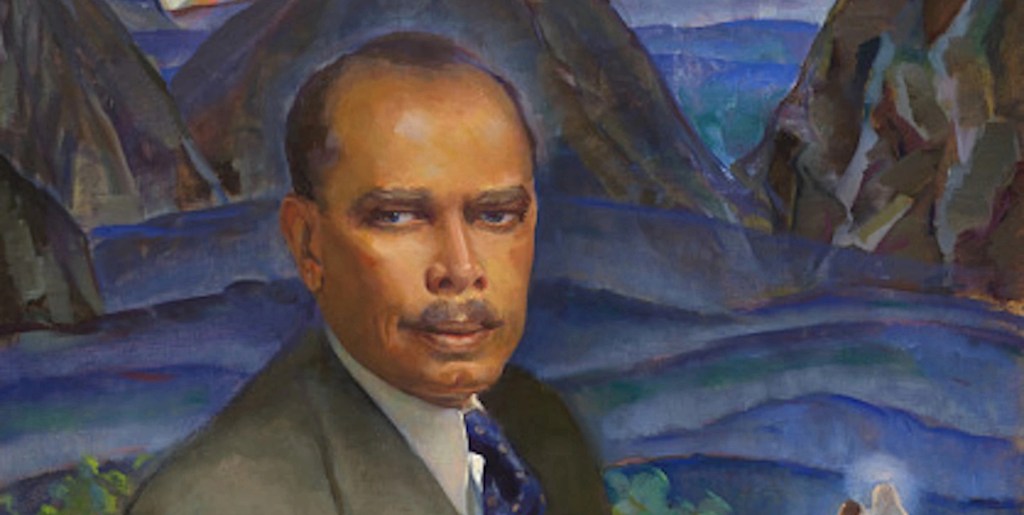
    Image: James Weldon Johnson - Portrait by Laura Wheeler Waring https://npg.si.edu/object/npg_NPG.67.40
    Image: James Weldon Johnson – Portrait by Laura Wheeler Waring

    James Weldon Johnson’s “Fifty Years”

    James Weldon Johnson’s poem, “Fifty Years,” recalls the struggle for civil rights in America that began with President Abraham Lincoln proclaiming the end of slavery with the Emancipation Proclamation.

    Introduction and Text of “Fifty Years”

    James Weldon Johnson begins his commemorative poem, “Fifty Years,” with the epigraph, “(1863–1913) On the Fiftieth Anniversary of the Signing of the Emancipation Proclamation.

    The speaker is paying homage to the many abolitionists who helped end slavery.  And while many citizens still held the view that their black brothers and sisters should remain second class citizens, the speaker offers the rationale for the blessings of equality and respect among all citizens.

    This speaker possesses a cosmic view of historical procedure, and he shares his awareness with his compatriots of all shades of skin color that God is always in control, and freedom must ring for those who seek it and work to maintain it—a view that remains as operative today as it did back in the early twentieth century.

    Fifty Years

    “(1863–1913) On the Fiftieth Anniversary of the Signing of the Emancipation Proclamation.

    O brothers mine, to-day we stand
    Where half a century sweeps our ken,
    Since God, through Lincoln’s ready hand,
    Struck off our bonds and made us men.

    Just fifty years—a winter’s day—
    As runs the history of a race;
    Yet, as we look back o’er the way,
    How distant seems our starting place!

    Look farther back! Three centuries!
    To where a naked, shivering score,
    Snatched from their haunts across the seas,
    Stood, wild-eyed, on Virginia’s shore.

    This land is ours by right of birth,
    This land is ours by right of toil;
    We helped to turn its virgin earth,
    Our sweat is in its fruitful soil.

    Where once the tangled forest stood,—
    Where flourished once rank weed and thorn,—
    Behold the path-traced, peaceful wood,
    The cotton white, the yellow corn.

    To gain these fruits that have been earned,
    To hold these fields that have been won,
    Our arms have strained, our backs have burned,
    Bent bare beneath a ruthless sun.

    That Banner which is now the type
    Of victory on field and flood—
    Remember, its first crimson stripe
    Was dyed by Attuckss’ willing blood.

    And never yet has come the cry—
    When that fair flag has been assailed—
    For men to do, for men to die,
    That we have faltered or have failed.

    We’ve helped to bear it, rent and torn,
    Through many a hot-breath’d battle breeze
    Held in our hands, it has been borne
    And planted far across the seas.

    And never yet,—O haughty Land,
    Let us, at least, for this be praised—
    Has one black, treason-guided hand
    Ever against that flag been raised.

    Then should we speak but servile words,
    Or shall we hang our heads in shame?
    Stand back of new-come foreign hordes,
    And fear our heritage to claim?

    No! stand erect and without fear,
    And for our foes let this suffice—
    We’ve bought a rightful sonship here,
    And we have more than paid the price.

    And yet, my brothers, well I know
    The tethered feet, the pinioned wings,
    The spirit bowed beneath the blow,
    The heart grown faint from wounds and stings;

    The staggering force of brutish might,
    That strikes and leaves us stunned and dazed;
    The long, vain waiting through the night
    To hear some voice for justice raised.

    Full well I know the hour when hope
    Sinks dead, and ’round us everywhere
    Hangs stifling darkness, and we grope
    With hands uplifted in despair.

    Courage! Look out, beyond, and see
    The far horizon’s beckoning span!
    Faith in your God-known destiny!
    We are a part of some great plan.

    Because the tongues of Garrison
    And Phillips now are cold in death,
    Think you their work can be undone?
    Or quenched the fires lit by their breath?

    Think you that John Brown’s spirit stops?
    That Lovejoy was but idly slain?
    Or do you think those precious drops
    From Lincoln’s heart were shed in vain?

    That for which millions prayed and sighed,
    That for which tens of thousands fought,
    For which so many freely died,
    God cannot let it come to naught.

    Commentary on “Fifty Years”

    This speaker of this poem is offering a tribute to the struggle for civil rights in America that began with President Abraham Lincoln proclaiming the end of slavery with the Emancipation Proclamation, as he cites several of the most noted abolitionists.

    Stanza 1 – Stanza 3:   Celebrating 50 Years Since the Emancipation Proclamation

    James Weldon Johnson’s narrator of “Fifty Years” is celebrating the fiftieth anniversary of President Abraham Lincoln’s affixing his signature to the Emancipation Proclamation [1], beginning the long process of ending slavery in the United States.  The speaker addresses the sufferers of slavery as well as his own contemporaries, “brothers,” many who are the descendants of slaves.

    Johnson’s speaker is dramatizing the signing the Emancipation Proclamation, implying that President Lincoln had erased the vicious practice of slavery and raised the status of the slaves to manhood—a status they had been denied.

    The speaker looks back in time as he compares those “fifty years” to a “winter’s day.” Historically, fifty years is, indeed, short, but this half century has been like a very cold season of winter for this Africans and their descendants.

    Johnson then takes the reader/listener even farther back in time with the disconcerting image of the slave standing, “naked, shivering,” who were “[s]natched from their haunts across the seas,” and who “[s]tood, wild-eyed, on Virginia’s shore.”

    Stanza 4 – Stanza 6:   Proudly Claiming a Heritage

    Proudly and rightly, the speaker decrees, “this land is ours by right of birth”; he and his ancestors have developed the fallow earth with their “sweat,” which has resulted in “fruitful soil.”

    Instead of merely,”tangled forest,” now, through their labor there are “peaceful wood,” cotton, and corn fields yielding valuable products for the American people. The speaker claims that to turn this nature-wild land into a domesticated home, “[o]ur arms have strained, our backs have burned, / Bent bare beneath a ruthless sun.”

    Stanza 7 – Stanza 9:  Dramatizing Patriotism   

    The speaker dramatizes the patriotism of his fellows who have died fighting for America even before it recognized them as equal patriots and  full citizens. His allusion to Crispus Attucks [2], the first patriot to die in the American Revolutionary War, offers a stark reminder: “Remember, its first crimson stripe / Was dyed by Attucks’ willing blood.” 

    The speaker highlights the fact that Attucks died willingly for his country, not forced because he was a slave. He stresses that this race of American patriots has always stepped forward to defend America, even in foreign wars.

    Stanza 10 – Stanza 12:   They Have Already Secured Their Rights  

    The speaker is adamant in reporting to a land still roiled in racism (Johnson was writing  this 1913) that at no time has “one black, treason-guided hand / Ever against that flag been raised.” 

    Because of the genuine qualities that his African American brothers and sisters have demonstrated since the founding of America, the speaker maintains that they do not deserve to “hang [their] heads in shame” or “speak but servile word,” or be timid in claiming their heritage as true, patriotic Americans.

    Therefore, the speaker demands that his contemporaries, “stand erect and without fear.” They have procured the right to their “sonship here,” and they have tendered more than should be required of anyone.

    Stanza 13 – Stanza 15:   Affirmation Despite Adversity  

    The speaker never makes light of the black experience in America; he knows very well  the physical and mental humiliation that his fellow patriots have suffered—as well as the broken spirit.  He is aware of the deep levels of discouragement such treatment causes. He understands that there are  always times that all one can rely on is prayer. 

    However, this speaker also understands that such oppression cannot endure. He, therefore, commands his listeners to become fearless and to look forward to the future and retain “[f]aith in your God-known destiny! / We are a part of some great plan.”

    The speaker then alludes to William Lloyd Garrison [3] and Wendell Phillips [4], two strong abolitionists. He inquires, rhetorically, if his fellows believe that the “fire lit by their breath” could be snuffed out. 

    He further asks if his brothers can imagine that the spirit of John Brown [5] and Elijah Lovejoy [6] has become lifeless and departed. He wants them to consider the death of Abraham Lincoln [7] —did the great emancipator die “in vain”?

    The speaker delivers an affirmation that all of those great abolitionists and the great emancipator did not resist only to die in vain. 

    He insists, “millions have prayed” for and “tens of thousands have fought” for and “many freely died,” so that dark-skinned people could know the equality they deserved. And of most importance, he treasures and maintains an abiding faith that, “God cannot let it come to naught.”

     Sources 

    [1]  Editors. “Emancipation Proclamation.”  National Archives.  Last reviewed on January 28, 2022.

    [2]  Editors. “Crispus Attucks.” Biography.com. Updated :June 1, 2020 Original: January 19, 2018.

    [3]   Editors. “William Lloyd Garrison and the Liberator.”  U.S. History. Accessed August 13, 2023..

    [4]   Curators “Wendell Phillips.”  Wendell Phillips High School Hall of Fame. Accessed August 13, 2023.

    [5]   Editors. “John Brown.”  American Battlefield Trust.  Accessed August 13, 2023.

    [6]  Editors. “Elijah Lovejoy.” History News Network.  Accessed August 13, 2023.

    [7]   Editors.  “The Lincoln-Douglas Debates.” History.com.  June 14, 2021 .

  • Original Short Literary Fiction: “Transformation through the Ages: Two Letters to Myself”

    Image-Created by ChatGPT inspired by the text
    Image: Created by ChatGPT inspired by the text

    Original Short Literary Fiction: “Transformation through the Ages: Two Letters to Myself

    The process of aging asks us to move from one version of ourselves into another—slowly learning how to carry memory, change, loss, wisdom, and time within the same person.

    Dear Older Me,

    I’m writing to you from age twenty, which feels impossibly young and impossibly certain all at once, right on the edge of adulthood. Everyone keeps telling me that life will change me, but I still wake up every morning believing I will somehow remain recognizable to myself forever. I wonder if you remember feeling that way.

    Lately I’ve been thinking about aging—not in the dramatic sense of illness or endings, but in the quieter sense of becoming someone new over time. I look at photographs from just a few years ago and already feel strange about them. 

    The girl in those pictures is me, but also not entirely me anymore. Her worries were smaller. Her body was different, plumper, rosier, full of some kind of strange awareness.  But her understanding of herself was unfinished.

    I wonder what it’s like for you now, at nearly ninety, carrying six plus decades of former selves inside you.

    Do you still feel connected to me? Or do I seem like a distant relative you remember fondly but imperfectly?

    People talk so much about youth as though it’s the truest version of a person, and aging as though it’s some slow departure from that truth. But I’m beginning to suspect that every age is temporary, and every version of ourselves eventually becomes a kind of memory.

    That thought frightens me sometimes.

    I notice already how language changes around age. Adults speak of young people with nostalgia, impatience, envy, and tenderness all at once. And young people speak about aging as though it’s something abstract—something happening to other people. Yet every day we are all moving quietly toward another stage of ourselves.

    I wonder what it feels like to look into the mirror at eighty plus. Do you still recognize your expressions even if the face has changed? Do you still feel young somewhere underneath everything time has altered?

    I’ve also been thinking about photographs and memories. Right now, my room is full of snapshots from childhood, school dances, birthdays, awkward haircuts, and vacations that already feel far away. I can’t imagine ever wanting to hide those versions of myself, even the embarrassing ones. But I wonder if, by your age, those images begin to feel less like evidence and more like archaeology.

    Do old photographs comfort you, or do they ache?  I hope you’ve kept them all anyway.

    I hope you understand that the younger versions of yourself were not mistakes. I hope you speak kindly about us—the insecure teenager, the reckless twenty-year-old, the exhausted middle-aged woman trying to hold everything together. I hope you see all of them not as separate people, but as chapters in the same long story.  Most of all, I hope you haven’t become embarrassed by change itself.

    Right now, growing older seems terrifying because everything around me celebrates beginnings and quietly fears decline. But perhaps aging is not a process of disappearing. Maybe it’s a process of accumulation. Maybe the older face simply carries more life within it.  If you could tell me anything from where you are now, I think I’d want reassurance that becoming older does not mean becoming less.

    I hope you still laugh easily.  I hope you still feel wonder.  I hope you still believe your life mattered.  And I hope, somehow, that you are grateful for me too—for this young girl standing at the beginning, trying so hard to understand time before she has truly lived it.

    Love,
    Your Former Self

    Dear Former Self,

    Your letter arrived like a voice carried across water—young, searching, and achingly sincere. I read it slowly, not because age has made me slower, though perhaps it has, but because your words reopened rooms in my memory I had not visited in years.

    Yes, I remember you.  More importantly, I remember being you.

    At twenty, you believe identity is something you must discover once and then defend forever. What age eventually teaches is that the self is not a monument. It is weather. It shifts continuously—sometimes gently, sometimes violently—and survives through adaptation rather than permanence.

    You ask whether I still feel connected to you. I do, though not in the simple way you imagine. You are not buried beneath the years; you are woven through them. I still recognize your idealism, your sensitivity, your fear of being forgotten or diminished by time. Those things remain, though softened now by experience.

    And yes, there are moments when I look into the mirror and feel startled. Aging happens so gradually that you scarcely notice it while living through it, and then suddenly you catch sight of your mother’s face in your own reflection, or your grandmother’s hands resting in your lap.

    The body changes first in obvious ways. The knees complain. The spine stiffens. Sleep becomes lighter. Faces hollow and soften simultaneously. But the deeper transformation  is stranger: the realization that inside the aging body, consciousness remains largely untouched by chronology.

    I am eighty-nine, yet some mornings I still feel eighteen until I stand up.  That is one of the great hidden truths of aging: the young self never fully leaves. She simply becomes surrounded by additional selves gathered over a lifetime.

    You asked whether old photographs comfort or ache. The answer is both.  Photographs become less about appearance and more about vanished worlds. You stop focusing on how pretty you once were and begin noticing who is no longer standing beside you. An old picture can break your heart because time is visible there in a way it never feels while you are living it.

    But keep the photographs anyway.  Keep all of them.  One day you will treasure the evidence that ordinary afternoons once existed at all.

    You fear that aging may mean becoming less. I understand that fear because our culture speaks of aging almost entirely in the language of loss. Loss of beauty. Loss of relevance. Loss of strength. Loss of possibility.

    And yes, there are losses. I will not lie to you about that.  You will lose people you cannot imagine living without.  You will lose certain ambitions.  You will lose versions of your body that once felt effortless.  But aging is not merely subtraction.  It is also refinement.

    At twenty, you experience life intensely because everything is new. At ninety, you experience life intensely because you finally understand how temporary everything always was. A simple morning light across the kitchen table can move you to tears. An ordinary conversation can feel sacred.  Youth burns brightly, but age glows.

    You asked whether I still laugh easily. I do—more easily, in fact. Young people often believe seriousness gives life meaning, but age teaches the opposite. Much of survival depends upon learning when to laugh at yourself gently.

    And wonder? Yes, wonder remains too. Perhaps even more so. The older you become, the more miraculous existence itself begins to feel. Not because life becomes easier, but because you finally understand how improbable it always was.

    As for whether your life mattered: meaning does not arrive as a grand declaration. It accumulates quietly through small acts of love, attention, endurance, forgiveness, and presence. A meaningful life rarely feels monumental from the inside.

    You hoped I would be grateful for you.  I am.

    I am grateful for your impatience, your hunger for understanding, your belief that life must contain something beautiful and true. You carried us forward. Without your courage to begin, I would never have arrived here with so much tenderness intact.

    So let me leave you with this:

    Do not spend your youth mourning age in advance. Become fully each version of yourself when it arrives.

    The frightened girl, the ambitious woman, the joyful grandmother—they all belong to you. None of them are failures of the others. They are simply the many forms a human life must take in order to become complete.

    Love and blessings,
    Myself Now

  • Waltzing on the Rim of Eternity

    Image - Created by ChatGPT inspired by the poem
    Image: Created by ChatGPT inspired by the poem

    Waltzing on the Rim of Eternity

    —after “Spirit and Nature”

    They win as they balance—
    Soul and body.

    Radha, the body.  Krishna, the soul.
    Victorious Radha Govinda! 

    Victory when spring brings flowers
    And God brings rain.

    Spirit and nature locked and balanced,
    Waltzing on the rim of Eternity.

  • Emily Dickinson’s “I keep my pledge”

    Image: Emily Dickinson - Amherst College - Daguerrotype of the poet at age 17, circa 1847 - likely the only authentic, extant likeness of the poet
    Image: Emily Dickinson – Amherst College – Daguerrotype of the poet at age 17, circa 1847 – likely the only authentic, extant likeness of the poet

    Emily Dickinson’s “I keep my pledge”

    Emily Dickinson’s “I keep my pledge” dramatizes the speaker’s quiet certainty that life continues beyond death and returns again through the spirituality of nature’s eternal rhythms.

    Introduction and Text of “I keep my pledge”

    Emily Dickinson’s “I keep my pledge” offers a compact but profound musing on immortality, reincarnation, and the soul’s fidelity to divine law. The speaker fashions a little lyrical drama in which nature becomes witness to a sacred vow that transcends earthly death. 

    The poem’s short lines and compressed images intensify the mystical atmosphere as the speaker aligns herself with flowers, bees, and birds to affirm her continuing existence. As in many Dickinson poems, earthly imagery gestures toward a metaphysical reality beyond human sensory perception.

    I keep my pledge

    I keep my pledge.
    I was not called –
    Death did not notice me.
    I bring my Rose.
    I plight again,
    By every sainted Bee –
    By Daisy called from hillside –
    By Bobolink from lane
    Blossom and I –
    Her oath, and mine –
    Will surely come again.

    Commentary on “I keep my pledge”

    The speaker quietly celebrates the immortality of the soul and its inevitable return through metaphorical employment of nature’s recurring cycles.

    First Movement: Making a Vow

    I keep my pledge.
    I was not called –

    Death did not notice me.

    The speaker begins with a declaration of fidelity, insisting that she has remained true to a sacred promise. The claim “I keep my pledge” carries spiritual force because it implies an agreement extending beyond one earthly lifetime. 

    The speaker’s assertion that “Death did not notice me” diminishes death’s supposed authority and portrays the soul as untouched by the loss of the physical encasement.

    The speaker’s attitude recalls Paramahansa Yogananda’s teaching that “This body has come, and it will vanish; but the soul essence within it will never cease to exist.” 

    Dickinson’s speaker similarly refuses to grant death ultimate reality, treating it almost as a distracted figure unable to perceive the immortal essence moving silently beyond material limitation.

    Earlier commentaries on Dickinson’s poetry have often noted that her speakers transform ordinary experience into metaphysical revelation. Here again, the speaker presents death not as annihilation but merely as an interruption in outward form. 

    Her confidence resembles the assurance found in “There is another sky,” where the created spiritual world remains untouched by decay and change.

    Second Movement: Instruments of Faith

    I bring my Rose.
    I plight again,

    The speaker next introduces the “Rose,” a traditional emblem of spiritual beauty and eternal affection. She does not merely observe the flower; she “bring[s]” it, suggesting active participation in the ongoing renewal of life. The rose becomes an offering carried from one incarnation into another.

    The affirmation “I plight again” deepens the sense of recurring vows. To “plight” means to pledge or bind oneself faithfully, and the addition of “again” hints strongly at reincarnation. The soul continues renewing its sacred commitments across repeated cycles of existence.

    Paramahansa Yogananda frequently taught that the soul evolves “through many forms” until it realizes its unity with Spirit. The speaker’s language harmonizes with that spiritual concept, as though she recognizes herself participating in a divine continuity extending far beyond one mortal appearance.

    The rose also resembles the unfading flowers in “There is another sky,” where beauty remains untouched by frost or deterioration. Dickinson’s speakers repeatedly imagine blossoms as symbols of permanent spiritual reality rather than temporary earthly decoration. The flower’s endurance reflects the soul’s endurance.

    Third Movement: By Nature’s People

    By every sainted Bee –
    By Daisy called from hillside –
    By Bobolink from lane

    The speaker now invokes nature itself as witness to her vow. The “sainted Bee,” the daisy, and the bobolink all function as living participants in a sacred universe governed by continuity and renewal. The adjective “sainted” elevates the bee from ordinary insect to spiritual messenger.

    The bee traditionally symbolizes industry and immortality because it continually moves among flowers carrying life-giving pollen. The daisy rising from the hillside represents innocence and recurring seasonal rebirth, while the bobolink’s song fills the landscape with joyful vitality. Together, these natural images create a chorus affirming life’s perpetual return.

    Dickinson’s speakers often treat nature not as separate from humanity but as intimately allied with the soul’s destiny. In earlier Dickinson commentaries, nature frequently appears as a symbolic language through which eternity reveals itself. Here, every creature becomes testimony against death’s supposed permanence.

    Paramahansa Yogananda taught that divine consciousness pervades flowers, birds, and all living forms, declaring, “I am dreaming in the flowers, and I am singing in the birds.” The speaker’s imagery reflects that same intuition of unity between the human soul and the living world surrounding it.

    Fourth Movement: Reincarnation and Karma

    Blossom and I –
    Her oath, and mine –
    Will surely come again.

    In the final movement, the speaker joins herself directly to the “Blossom,” linking human destiny with nature’s recurring cycles. The flower and the speaker share one “oath,” implying that both participate in the same divine law of return and renewal. Spring follows winter just as the soul follows death with rebirth.

    The certainty of “Will surely come again” removes all doubt regarding continuation after physical departure. The speaker utters the line not as speculation but as spiritual knowledge. Her confidence transforms the brief lyric into a powerful affirmation of immortality.

    Paramahansa Yogananda explained that the soul repeatedly returns through reincarnation until it fully realizes its eternal nature. Dickinson’s speaker expresses a remarkably similar vision, perceiving existence as cyclical rather than terminal.

    As in “There is another sky,” the speaker ultimately creates a realm where permanence triumphs over decay. Flowers bloom again, birds sing again, and the soul itself “surely” returns. The little lyric therefore becomes both vow and revelation, affirming the eternal continuity of divine life.

  • The True Love of My Life

    Image:Created by ChatGPT inspired by the poem
    Image: Created by ChatGPT inspired by the poem

    The True Love of My Life

    —after “Thou Art My Life”

    O Divine Belovèd, Thou art the true love of my life,
    The sweetness that lets me taste joy.

    Thy name on my tongue is sweeter
    Than a thousand well-filled honeycombs.

    Let them know Thee.
    Let them all know Thee.

    In the haven of love, I seek Thee
    Again and again, and repeat
    Again and again:  Thou art the true Love of my life,
    The sweetness that lets me taste joy.

  • Emily Dickinson’s “There’s something quieter than sleep”

    Image: Emily Dickinson - Amherst College - Daguerrotype of the poet at age 17, circa 1847 - likely the only authentic, extant likeness of the poet
    Image: Emily Dickinson – Amherst College – Daguerrotype of the poet at age 17, circa 1847 – likely the only authentic, extant likeness of the poet

    Emily Dickinson’s “There’s something quieter than sleep”

    Emily Dickinson’s “There’s something quieter than sleep” dramatizes the speaker’s reverence for the mystery of death, portraying it as a sacred and nearly mystical transition beyond earthly experience.

    Introduction and Text of “There’s something quieter than sleep”

    Emily Dickinson’s “There’s something quieter than sleep” features four minimalist quatrains that progress from observation to meditation. The speaker contemplates the stillness surrounding death, yet she approaches the subject delicately, refusing crude or noisy emotional excess. 

    Dickinson’s characteristic dashes and slant rimes contribute to the hushed atmosphere, while the speaker’s use of euphemism reveals both awe and uncertainty before the soul’s departure from its physical encasement.

    The poem’s spiritual atmosphere recalls Paramahansa Yogananda’s teaching that death is merely “a sleep of forgetfulness” before the soul awakens again in divine consciousness. 

    There’s something quieter than sleep

    There’s something quieter than sleep
    Within this inner room!
    It wears a sprig upon its breast –
    And will not tell its name.

    Some touch it, and some kiss it–
    Some chafe its idle hand –
    It has a simple gravity
    I do not understand!

    I would not weep if I were they –
    How rude in one to sob!
    Might scare the quiet fairy
    Back to her native wood!

    While simple–hearted neighbors
    Chat of the “Early dead” –
    We – prone to periphrasis,
    Remark that Birds have fled!

    Commentary on “There’s something quieter than sleep”

    The speaker contemplates death as a solemn but peaceful mystery whose stillness transcends ordinary sleep and earthly sorrow.

    Stanza 1: Deeper Than Sleep

    There’s something quieter than sleep
    Within this inner room!
    It wears a sprig upon its breast –
    And will not tell its name.

    The speaker opens by comparing death to sleep, yet she quickly insists that death possesses an even greater silence. The “inner room” suggests both a literal chamber where the deceased lies and the inward spiritual realm where the soul retreats after leaving the body. 

    By refusing to name the condition directly, the speaker creates an atmosphere of reverent uncertainty, as though ordinary language cannot fully contain the mystery before her.

    The “sprig upon its breast” likely refers to a funeral flower or symbolic greenery placed upon the body. Such imagery quietly evokes immortality because evergreen branches traditionally symbolize eternal life. 

    Paramahansa Yogananda frequently taught that the soul remains untouched by bodily death, affirming that spirit “cannot die because it was never born.” The speaker appears instinctively aware that what lies in the room is not annihilation but transition.

    Stanza 2: What Some Do

    Some touch it, and some kiss it–
    Some chafe its idle hand –
    It has a simple gravity
    I do not understand!

    The speaker now observes the behavior of mourners gathered around the deceased. Some touch the body tenderly, while others attempt to warm the “idle hand,” as though reluctant to accept the final stillness. Their gestures reveal humanity’s instinctive resistance to separation and mortality.

    Yet the speaker remains fascinated less by grief than by the strange dignity surrounding the dead. 

    The phrase “simple gravity” conveys both physical stillness and spiritual weight. The body no longer participates in earthly activity, yet it seems surrounded by a quiet authority the speaker cannot explain. 

    Dickinson’s speakers often encounter realities that intuition senses more deeply than reason can analyze, and here her speaker admits openly that death possesses meanings beyond intellectual understanding.  The stanza also reveals the speaker’s restraint. 

    Rather than indulging in emotional display, she studies the scene with contemplative wonder. That attitude resembles Dickinson’s many poetic riddles, in which truth emerges indirectly through symbol, suggestion, and silence rather than declaration.

    Stanza 3: Shy Fairies

    I would not weep if I were they –
    How rude in one to sob!
    Might scare the quiet fairy
    Back to her native wood!

    The speaker gently criticizes loud mourning, suggesting that sobbing is almost discourteous in the presence of death’s delicate mystery. Her use of the term “quiet fairy” transforms death into a shy spiritual visitor rather than a terrifying destroyer. The fairy imagery softens the scene and presents death as something ethereal, elusive, and perhaps even benevolent.

    By imagining that noisy grief could frighten the fairy away, the speaker implies that death deserves calm reverence instead of emotional chaos. The image resembles ancient folklore in which supernatural beings vanish when approached too aggressively. Dickinson’s speaker thus elevates death into a sacred event requiring inward stillness.

    The stanza also reflects the speaker’s intuition that the soul belongs ultimately to another realm, the “native wood.” The earthly body merely hosts the spirit temporarily before it returns to its true home. 

    uch an idea harmonizes with Yogananda’s teaching that the soul journeys through many states of existence while remaining eternally connected to Divine Spirit. 

    Stanza 4: Euphemism and Evasion

    While simple–hearted neighbors
    Chat of the “Early dead” –
    We – prone to periphrasis,
    Remark that Birds have fled!

    In the final stanza, the speaker contrasts ordinary language with poetic circumlocution. The “simple-hearted neighbors” speak plainly of the “Early dead,” employing conventional social terminology without reflection. The speaker, however, admits that “we” prefer “periphrasis,” or indirect expression.

    Instead of saying someone has died, the speaker remarks that “Birds have fled.” The bird symbolizes the departing soul escaping the confinement of the physical encasement. 

    Dickinson often employed birds as emblems of transcendence, freedom, and spiritual aspiration. Here the image beautifully transforms death from grim cessation into graceful departure.

    The stanza closes the poem on a note of mystery rather than despair. The speaker never claims complete knowledge regarding death, but she senses that the soul’s leaving resembles flight more than extinction. 

    Like many Dickinson speakers, this speaker balances uncertainty with spiritual intuition, allowing poetry itself to gesture toward ineffable truths, which ordinary speech cannot fully express.