Image: John Donne – Portrait Unknown Artist – National Portrait Gallery, London
John Donne’s “The Bait”
John Donne’s “The Bait,” which parodies Christopher Marlowe’s famous love poem “The Passionate Shepherd to His Love,” provides the characteristic Donnean passionate plea to win the love of his lady.
Introduction and Text of “The Bait”
John Donne’s “The Bait” is one of many replies to Christopher Marlowe’s “The Passionate Shepherd to His Love.” One of the most famous such “replies” is Sir Walter Ralegh’s “The Nymph’s Reply to the Shepherd.”
Both Marlowe’s and Ralegh’s poems feature six quatrains; each quatrain displays in two riming couplets. Donne adds a quatrain to his parody, while retaining the same display of two riming couplets in each quatrain.
The Bait
Come live with me, and be my love, And we will some new pleasures prove Of golden sands, and crystal brooks, With silken lines, and silver hooks.
There will the river whispering run Warm’d by thy eyes, more than the sun; And there the ‘enamour’d fish will stay, Begging themselves they may betray.
When thou wilt swim in that live bath, Each fish, which every channel hath, Will amorously to thee swim, Gladder to catch thee, than thou him.
If thou, to be so seen, be’st loth, By sun or moon, thou dark’nest both, And if myself have leave to see, I need not their light having thee.
Let others freeze with angling reeds, And cut their legs with shells and weeds, Or treacherously poor fish beset, With strangling snare, or windowy net.
Let coarse bold hands from slimy nest The bedded fish in banks out-wrest; Or curious traitors, sleeve-silk flies, Bewitch poor fishes’ wand’ring eyes.
For thee, thou need’st no such deceit, For thou thyself art thine own bait: That fish, that is not catch’d thereby, Alas, is wiser far than I.
Commentary on “The Bait”
John Donne’s “The Bait” parodies Christopher Marlowe’s famous love poem “The Passionate Shepherd to His Love” as it provides the characteristic Donnean passionate plea to win the love of his lady.
First Stanza: Embellishing a River Scene
Come live with me, and be my love, And we will some new pleasures prove Of golden sands, and crystal brooks, With silken lines, and silver hooks.
John Donne’s first line is a word for word copy of Marlowe’s, and the second line varies by only two words. And while Marlowe’s shepherd concentrates on the “hills and valleys, dale and field,” Donne’s speaker chooses to metaphorically create his scene with fish in “crystal brooks.”
Donne’s speaker, however, embellishes his river/fish scene transforming the sand into gold and fishing gear into “silken lines and silver hooks.” Just as Marlowe’s shepherd fashions a glowing, beautiful life to allure his love, Donne’s speaker also has some temptations to offer the target of his affection.
Second Stanza: Warming the Water
There will the river whispering run Warm’d by thy eyes, more than the sun; And there the ‘enamour’d fish will stay, Begging themselves they may betray.
Donne’s speaker glorifies his lady by giving her the power to warm the “whisp’ring river” with her eyes. He further embellishes her power by asserting that the fish will be enamored by her. The speaker asserts that those fish will be so taken with her that they will betray their own safety by begging to remain close to her.
Third Stanza: Enamored Fish
When thou wilt swim in that live bath, Each fish, which every channel hath, Will amorously to thee swim, Gladder to catch thee, than thou him.
When the speaker’s lady goes swimming among those fish, they will “amorously to thee swim.” Those enamored fish will be more interested in catching the speaker’s lady than the lady will be in catching them.
Fourth Stanza: She Is Light Itself
If thou, to be so seen, be’st loth, By sun or moon, thou dark’nest both, And if myself have leave to see, I need not their light having thee.
If the lady prefers not to be seen in the sunlight or moonlight, such would be understandable because she is light itself and compared to her, both sun and moon remain dark. The speaker’s exaggeration continues as he claims that if he needs any light to see, he would not need the sun and moon because he has this glorious, light-reflecting woman.
Fifth Stanza and Sixth Stanza: A Lover’s Delusion
Let others freeze with angling reeds, And cut their legs with shells and weeds, Or treacherously poor fish beset, With strangling snare, or windowy net.
Let coarse bold hands from slimy nest The bedded fish in banks out-wrest; Or curious traitors, sleeve-silk flies, Bewitch poor fishes’ wand’ring eyes
The speaker then turns from his metaphor making, announcing that he will not engage in the act of literal fishing, which would cause him to become uncomfortably cold and perhaps injure himself, particularly his legs on “shells and weeds.” Instead, he will allow a set of metaphorical hands to wring the fish from their “slimy nest.”
In both stanzas five and six, the speaker describes the real world of fish in rivers or brooks and asserts that those who go fishing cause the “poor fish” much misery by “strangling” and snaring them in a “windowy net.” The speaker makes it clear that the fantasy world of fish pursuing a beautiful lady in a crystal brook and a river warmed solely by the lady’s eye is just a lover’s delusion.
Seventh Stanza: No Need for Exaggeration
For thee, thou need’st no such deceit, For thou thyself art thine own bait: That fish, that is not catch’d thereby, Alas, is wiser far than I.
Not needing to exaggerate his lover’s attraction, the speaker asserts, “For thee, thou need’st no such deceit.” She does not require little lies or big exaggerations to make her the perfect woman she is. The truth is all that needs to be told about this speaker’s lover because “thou thyself art thine own bait.”
She is the attraction, and if any other swain is not caught by her beauty, then the speaker declares that man is “wiser far than” the speaker is. He declares himself thus caught by the lady and therefore, there is no need to embellish as Marlowe’s shepherd had done in pursuit of his love.
“Humankind cannot bear very much reality.” —T. S. Eliot
Into the fire of wisdom, thoughts go to perish. “Get thee behind me, Satan!” Christ commands. But we still wobble behind the Devil Hoping to be snatched from the arms of death In time for supper and for the many tomorrows We image we still possess. In the valley of dreck and poison, I have lived Even as I knew better or thought I did. No, I am not here to testify. Although a word or two of testimony May slip out every line or so! I can pound sand with the best of them. But I can also bitch and moan. Where is the beginning of joy and rectitude? One might ask. Where is the promise? O, come on! You know where the promise is . . . Yes, just testing the waters and they are warm. Every time I delay, I am warned. Just pray And wait and listen close and tight to the hum In the brain. I will follow. I will follow close. Yes, I will. And flesh with its crude desire Will no longer taint the years With their distractions. The mercy of Spirit will wipe my tears.
Image: John Donne – Portrait Unknown Artist – National Portrait Gallery, London –
John Donne’s “The Indifferent”
In the seduction poem “The Indifferent,” John Donne’s speaker is dramatizing an ill-founded philosophy of promiscuity.
Introduction and Text of “The Indifferent”
The speaker in John Donne’s “The Indifferent” dramatizes a free love philosophy. As in “The Flea,” “The Apparition,” and other earlier Donne poems, his speaker professes his free-wheeling notion that there is no virtue in virginity and faithfulness to a mate.
In “The Indifferent,” Donne’s speaker also employs the mythological character, the promiscuous Venus to try to persuade his victim that fidelity is a curse while promiscuity is a virtue.
The Indifferent
I can love both fair and brown, Her whom abundance melts, and her whom want betrays, Her who loves loneness best, and her who masks and plays, Her whom the country formed, and whom the town, Her who believes, and her who tries, Her who still weeps with spongy eyes, And her who is dry cork, and never cries; I can love her, and her, and you, and you, I can love any, so she be not true.
Will no other vice content you? Will it not serve your turn to do as did your mothers? Or have you all old vices spent, and now would find out others? Or doth a fear that men are true torment you? O we are not, be not you so; Let me, and do you, twenty know. Rob me, but bind me not, and let me go. Must I, who came to travail thorough you, Grow your fixed subject, because you are true?
Venus heard me sigh this song, And by love’s sweetest part, variety, she swore, She heard not this till now; and that it should be so no more. She went, examined, and returned ere long, And said, Alas! some two or three Poor heretics in love there be, Which think to ’stablish dangerous constancy. But I have told them, Since you will be true, You shall be true to them who are false to you.
Commentary on “The Indifferent”
John Donne’s complete oeuvre features two diametrically opposed themes: his earlier works, including “The Indifferent,” focus on sensual debauchery; his later works take the theme of spirituality, especially his sonnet sequence “Holy Sonnets.”
First Movement: A Lecher of Inclusivity
I can love both fair and brown, Her whom abundance melts, and her whom want betrays, Her who loves loneness best, and her who masks and plays, Her whom the country formed, and whom the town, Her who believes, and her who tries, Her who still weeps with spongy eyes, And her who is dry cork, and never cries; I can love her, and her, and you, and you, I can love any, so she be not true.
The speaker begins his foray, boasting about and cataloguing the types of women he is capable of loving. Love here is, of course, a euphemism for sexual intercourse; thus whenever the speaker employs that term, he does not imply genuine caring that the real meaning of love entails. The speaker thus boasts that he can have sex with all kinds of women of all types of physical description from fair to brown.
This disgusting speaker can copulate with rich women and poor women, women who live in the country or who live in the city. He can appreciate sex with the woman who believes, and her who tries, and with the woman who cries a lot and those who never do. He can, in fact, lie with anyone, and in case the poor listener has not gotten the message, he adds, I can love her, and her, and you, and you.
But then this degenerate adds, “I can love any, so she be not true.” He insists that he does prefer that the woman be of the same mind as he, and not be steeped in the virtue of fidelity, which for him is not a virtue but a vice.
Second Movement: Scorning Fidelity
Will no other vice content you? Will it not serve your turn to do as did your mothers? Or have you all old vices spent, and now would find out others? Or doth a fear that men are true torment you? O we are not, be not you so; Let me, and do you, twenty know. Rob me, but bind me not, and let me go. Must I, who came to travail thorough you, Grow your fixed subject, because you are true?
The speaker then scorns the virtue of fidelity by posing the question, “Will no other vice content you?” He is complaining that his listener, a woman he is trying to seduce, is engaging the vice of fidelity, or, at least, she does believe that fidelity is a virtue. For the speaker holding the opposite view, her thinking is misguided and evil, and therefore he calls it a vice.
The speaker asks, therefore, if there is no other vice she could be happy with. He then asks her why she cannot be content to act promiscuously as her foremothers have done. He becomes contemptibly insulting when he asks, “Or have you all old vices spent, and now would find out others?” Adding further insult, he taunts her that she may fear that men are true and it might “torment [her].”
By true he means the opposite; they are, in fact, like him and not true or faithful, but rather true to a base, primitive nature which he relishes. He then brags that we men are not true, i.e, not faithful, and commands her, “be not you so.”
Since men are keen for sexual variety, women should also be equally keen, the speaker believes. He scolds her for wanting to control him with fidelity just because she’d rather experience faithfulness: “Must I . . . / Grow your fixed subject, because you are true?”
Third Movement: Allusion to Venus
Venus heard me sigh this song, And by love’s sweetest part, variety, she swore, She heard not this till now; and that it should be so no more. She went, examined, and returned ere long, And said, Alas! some two or three Poor heretics in love there be, Which think to ’stablish dangerous constancy. But I have told them, Since you will be true, You shall be true to them who are false to you.
The speaker then introduces the mythological character Venus, who, he says, had not heard that women prefer fidelity. He reports that Venus, upon hearing his lament, went to research the situation.
After gathering her evidence, Venus claims she found only a handful of women who believed in fidelity, and she chastised those who wanted “to ‘stablish dangerous constancy” by cursing them with unfaithful mates.
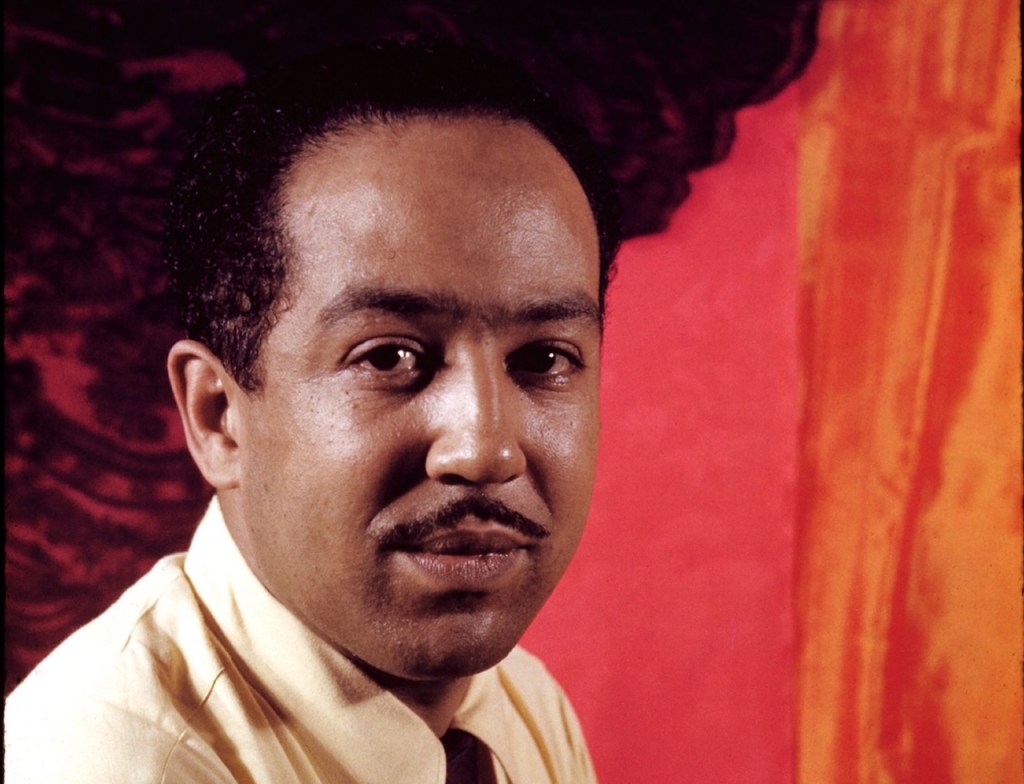
Image: Langston Hughes – Photograph by Carl Van Vechten / Carl Van Vechten Trust / Beinecke Library, Yale – 1280
Langston Hughes’ “Cross”
The speaker in Langston Hughes’ “Cross” laments having been born to biracial parents, a white father and a black mother. But the poem merely dramatizes stereotypes, and that reliance limits its achievement. This poem fails to exemplify the true achievement of this poet.
Introduction with Text of “Cross”
The speaker in Langston Hughes’ “Cross” is lamenting having been born to a mixed racial couple, a white father and a black mother.The title implies two meanings: he is the “cross” between two individuals, as are all human beings a cross between their parents. But this speaker’s special situation of being a cross between two races causes him to suffer a burden, as in the idiom “cross to bear” [1].
The poet, Langston Hughes, who penned this piece, was black and so were both of his parents: about his parents, Hughes has remarked [2], “My father was a darker brown. My mother an olive-yellow.”
Thus, he is not speaking from the experience of a mixed race individual but instead is relying on stereotypes as he explores the possible, and perhaps even, likely feelings of a biracial man.
Cross
My old man’s a white old man And my old mother’s black. If ever I cursed my white old man I take my curses back.
If ever I cursed my black old mother And wished she were in hell, I’m sorry for that evil wish And now I wish her well
My old man died in a fine big house. My ma died in a shack. I wonder where I’m going to die, Being neither white nor black?
Commentary on “Cross”
One of Langston Hughes’ less successful pieces, his poem “Cross” does not dramatize the true feelings of a mixed race man. The piece, instead, relies heavily on mere stereotypes, such as a rich white father and a poor black mother—rich father dying in a mansion, poor mother dying in a shack. Supposedly, this situation leaves the biracial speaker wondering where he will die because he, incongruously, considers himself of neither race (of course, he is of both.)
First Stanza: Cursing the Father
My old man’s a white old man And my old mother’s black. If ever I cursed my white old man I take my curses back.
The speaker commences his lament by reporting that his father is white while his mother is black. The speaker is thus an adult looking back over the events of his life as he remembers them, but it remains unclear how old the speaker may be at the time of his musing.
It may be assumed that he has seen enough of life to find that being a biracial individual can be a burdensome experience; thus, he is claiming he has had a heavy cross to bear during his lifetime.
The speaker then admits that in the past he has spoken ill of his “white old man,” but now he has had a change of heart and wants to retract those inflammatory words. The speaker offers no reason for his changing his mind about his father, but the poem moves along with a fine, rhythmic, well-rimed clip.
While speculation about the motives or intentions [3] of a speaker in poem may remain unhelpful or even counterproductive, one can quietly assume that the speaker has just decided that forgiveness leaves the conscience more peaceful than hanging on to a grievance.
Because the poem relies only on stereotypes of what life is like for a mixed race individual, it is likely that the poet is just configuring his words to fill out his poem with possible riming sounds that move along in a pleasant meter.
Second Stanza: Cursing the Mother
If ever I cursed my black old mother And wished she were in hell, I’m sorry for that evil wish And now I wish her well
As the speaker has formerly “cursed” his father, he has also “cursed” his mother, even wished her to be condemned to “hell.” But again as with his father, he now wants to retract those curses. And with the old black mother, he now even “wishes her well.”
The speaker did not wish his father well; he wished only to take back his curses that he has hurled at the old man. Therefore, the speaker renders a least a tittle more affection for the mother.
This situation is quite understandable: the speaker was likely raised by the mother, thus in reality, he identifies more with his black racial makeup than his white. Plus the very nature of motherhood more than fatherhood lends itself to more affection [4] by most children.
Third Stanza: Remaining in Confusion
My old man died in a fine big house. My ma died in a shack. I wonder where I’m going to die, Being neither white nor black?
Somewhat vaguely, the speaker is suggesting that he was not raised by both parents, perhaps even by neither. Stereotypically, he has his father, the “white old men,” die in a “fine big house.” So he, at least, knows where his father lived, unless he is merely guessing, based on stereotype.
Stereotype again intact, he has his “black old mother” dying “in a shack.” Again, it remains unclear if the speaker was raised by the mother, even though that is likely. If the speaker was raised by his mother, he would likely assume that he would die as she did.
If the speaker had been raised by the father in a “fine big house,” again he would assume that he would die as his father did. These assumptions suggest that the speaker has accomplished a life that is not quite as rich as his father’s but not quite as poor as his mother’s. The speaker’s socio-economic status is ultimately irrelevant, however.
That the speaker sees himself as “neither white nor black” poses an important question, however: why does he not think of himself as both white and black? Biologically, he is, in fact, both white and black. What would that acceptance imply for the speaker’s confusion?
Such speculation goes beyond the scope of this poem or any commentary about it; the poet, Langston Hughes, had no doubt been acquainted with individuals who expressed such mixed feelings.
Still, because Hughes was a master craftsman, who composed many fine, genuine pieces of writing, the poem clips along at an entertaining pace, even though it lacks the luster of a poem [5], such as Hughes’ “The Negro Speaks of Rivers,” which truly offers enlightenment of its subject.
Facts and Feelings
While each individual is entitled to his own feelings, opinions, and thoughts, he is not entitled to the facts surrounding and/or motivating those feelings, opinions, and thoughts. For example, if a black individual claims that he feels depressed, angry, or outraged because racism keeps him from attaining his goal of becoming a lawyer, we must believe his claim that he feels that way.
However, we do not have to accept his reason for his feelings, because lawyers come in all races; there are two black justices currently serving on the U.S. Supreme Court. So he is perfectly free to believe that racism is the cause of his feelings, but just because he believes it does not make it true.
The question then would arise, what is causing him to fail to understand that there must be other reasons—not racism—that he has failed to achieve his goal of entering the legal profession? Similarly, the biracial fellow in “Cross” is entitled to feel that he is confused because he is not black or white. But the fact of the matter is that he is both black and white.
So the next question for him might be, what are you doing to address your ongoing confusion from your black-and-whiteness? One might argue that in all cases, stereotypical responses to issues actually prevent the ability to properly address those issues. One cannot solve a problem that has been misidentified.
Sources
[1] Curators. “cross to bear.” Farlex Dictionary of Idioms. 2015.
The poet Langston Hughes did not experience life as a biracial individual, because both of his parents were black. Thus, the poet has created a character in his poem to attempt to make a statement about biracial individuals.
Hughes’ poem is not entirely successful in making that statement: the poem depends only on a stereotype, the one that offers the notion that biracial individuals will remain confused because they cannot figure out with which race they should identify.
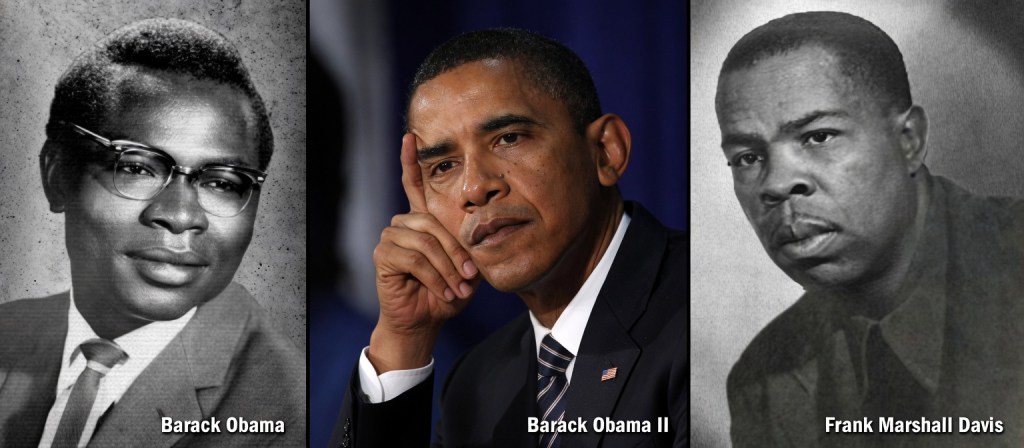
Barack Obama, in his biographical, Bill Ayers-ghost-written Dreams from My Father, claims to have suffered the same confusion, but because he was raised by the white side of his family, he clearly absorbed the values of the white, communist ideological spectrum to which that family ascribed.
Obama’s attempt to identify as “black” came as he discovered the advantages of that now politically advantaged identity group. Also, instead of sporting the name of his likely true biological father, Frank Marshall Davis, Obama achieves an even further boost at being a cosmopolitan, world citizen, with the ability to jokingly assert that he has a “funny name.”
In order to achieve that joking stance, Obama changed the name he had been using, “Barry Soetoro,” to “Barack Obama”—”Barry” just didn’t quite fit the joke of the “funny name.”
The vagueness and hypocrisy of taking a stance with which one is not wholly familiar results in formless, vague imagery. Therefore, in Hughes’ “Cross,” the speaker remains a vague, unformed figure. And such a figure cannot convey a fully formed notion of what it is actually like to have lived life as a biracial individual.
The speaker’s goal in Langston Hughes’ “Cross” like that of “Barack Obama” is to air a grievance in hopes of achieving an unearned status, not to honestly inform. As Obama remains a crepuscular figure on the horizon, Hughes’ poem remains a mere glance at a stereotype—not even close to what a poem needs to be to communicate its message.
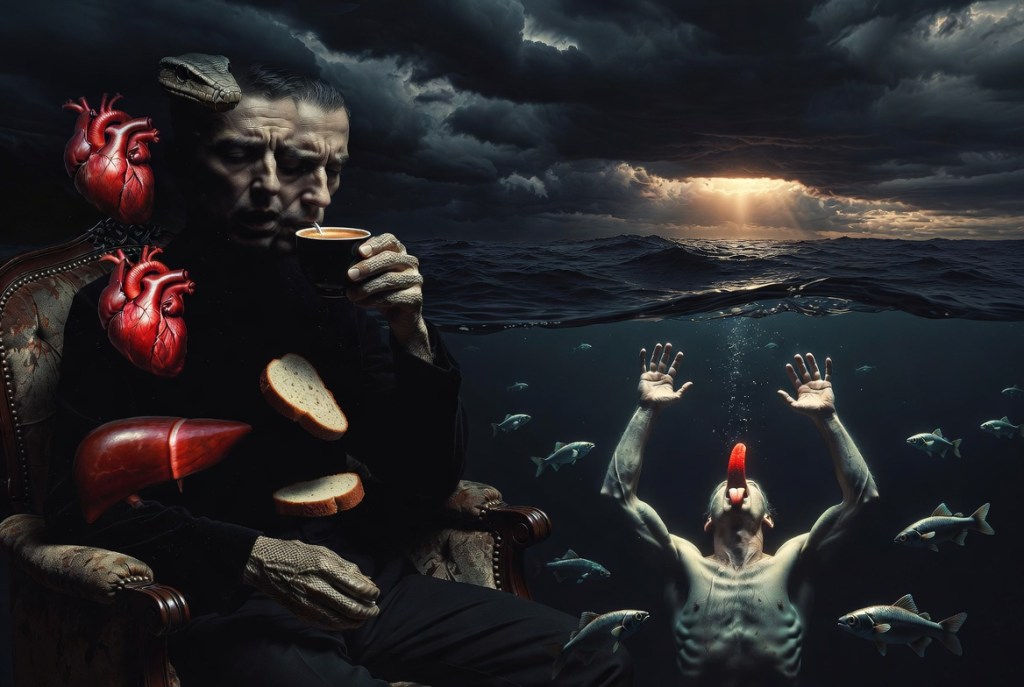
“His tongue cuts / Slices of meat / From the hearts / And livers / Of those / Who would love him . . . ” –from “Between Slices of Bread” in Linda Sue Grimes’ At the End of the Road
I quote myself, well then, I quote myself — I include multitudes — Uncle Walt taught me that much.
The man in the poem Cannot bring himself to say Or to pray about his own lividness He shuts out spaces and commas Lives in his own irrelevance.
He murders his own children With his viper attitude And nibbles the ankles Of prostitutes Who erase his will to power on.
You have seen him Perhaps did not recognize him — He has sat in your parlor Sipping your coffee Dusting off his duplicitous moves —
He fears death but not yours He imagines you at the bottom Of a cold, black ocean Your tongue bait for the fishes His Bolshevik brain conjures.
Your freedom is a fantasy If you remain too close to his heat Get your life back – get your love back Where God made you in His image And you are close to seeing it.
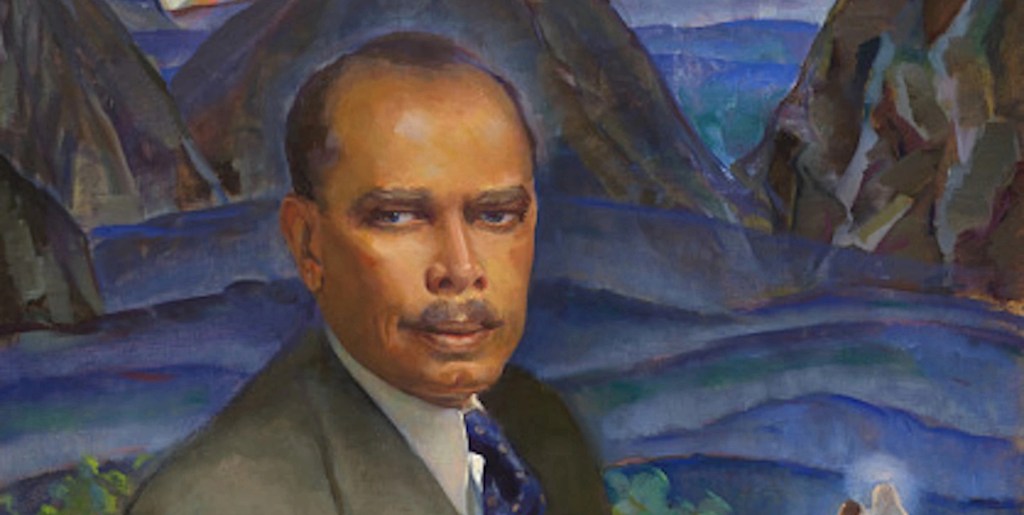
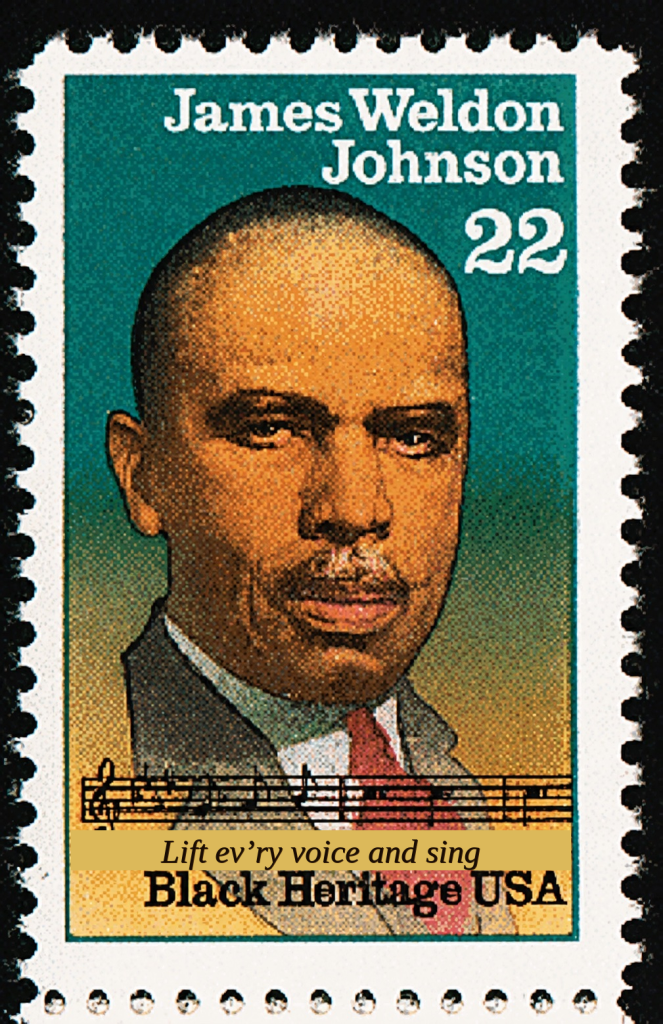
Jacksonville, Florida, native James Weldon Johnson composed his tribute to his adopted New York City in a surprising Petrarchan sonnet. He reveals the features of city life that he came to love and appreciate and that he will sorely miss after he dies.
Introduction with Text of “My City”
James Weldon Johnson’s “My City” is a Petrarchan or Italian sonnet, with the traditional rime scheme: in the octave ABBACDDC and in the sestet DEDEGG. The poem features unexpected claims that diverge radically from what readers have come to anticipate in a poem offering a personal, heartfelt tribute.
Although Johnson was born in Jacksonville, Florida, he lived a portion of his life in New York City, and as this poem attests, he came to love his adopted city. He appreciated even the aspects of city life that many find challenging, for example, the crowd of people throning the streets day and night.
He even appreciated the opportunity to experience the slums that the Manhattan borough had to offer. That his speaker is accounting for what he will miss most by dying, he is offering a unique type of tribute to the city the he came to love and appreciate.
My City
When I come down to sleep death’s endless night, The threshold of the unknown dark to cross, What to me then will be the keenest loss, When this bright world blurs on my fading sight? Will it be that no more I shall see the trees Or smell the flowers or hear the singing birds Or watch the flashing streams or patient herds? No, I am sure it will be none of these.
But, ah! Manhattan’s sights and sounds, her smells, Her crowds, her throbbing force, the thrill that comes From being of her a part, her subtle spells, Her shining towers, her avenues, her slums— O God! the stark, unutterable pity, To be dead, and never again behold my city!
Commentary on “My City”
Poet James Weldon Johnson was a native of Jacksonville, Florida, but this poem offers a tribute to his adopted city, New York City.
Octave: What Will Be His Greatest Loss?
When I come down to sleep death’s endless night, The threshold of the unknown dark to cross, What to me then will be the keenest loss, When this bright world blurs on my fading sight? Will it be that no more I shall see the trees Or smell the flowers or hear the singing birds Or watch the flashing streams or patient herds? No, I am sure it will be none of these.
To begin his tribute to New York City, the speaker poses two questions in the octave: the first question seeks the answer to what he will consider his greatest loss as he experiences death; the second question merely offers a suggestion as to what his great loss might entail.
The speaker asks his first question, posing it poetically: he seeks to ascertain and express what he will feel his greatest loss to be after he has died, leaving “this bright world” but a fading memory in his mind’s eye.
He places on display his abiding love for this world by calling it “this bright world.” By thus labeling the world “bright,” the speaker makes clear that he has a high regard for God’s creation, which he will regret leaving.
He then dramatically and richly portrays death, labeling that state metaphorically “sleep” and giving it the property of “endless night.” He further labels the crossing over from life to death as as “threshold of the unknown dark.”
With the second question, he asks if he might mourn the fact that he no longer has the ability to “see trees,” nor does he possess the capability of “smell[ing] the flowers.”
He continues musing on the possibilities of his greatest losses and avers that the inability to listen to birds singing would also cause him great pain, which might be his greatest loss.
The speaker then adds two further possibilities: “watch[ing] the flashing streams” or unhurriedly observing the “patient herds.” The reader will take note that all of these many possible losses stem from the things of nature, ordinarily observed in a bucolic setting.
Recalling that the title of the poem is “My City,” the reader will not be shocked that the speaker then answers his own question asserting that he is quite certain he will not consider any of these losses his greatest.
Although leaving them will be painful, because he does enjoy all of those natural gifts from God, he know that none of them cause him as much sorrow as some other loss, yet to be named.
Sestet: Losing the Sights, Sound, Smells of His City
But, ah! Manhattan’s sights and sounds, her smells, Her crowds, her throbbing force, the thrill that comes From being of her a part, her subtle spells, Her shining towers, her avenues, her slums— O God! the stark, unutterable pity, To be dead, and never again behold my city!
In the sestet, the speaker pronounces with an emphatic, fervent anguish that it is “Manhattan” that he will most long for, after death has taken him from this world.
The speaker then enumerates the features that entice him and engender in him his deep love for his city: he remains spellbound and holds deep affection the sights, sounds, and smells of “Manhattan,” which is the most densely populated borough of New York City.
Thus, he adores all those crowds of people streaming through the streets of that borough. In addition to all of these Manhattan things, the speaker will also experience the forfeiture of continuing to experience the “shining towers,” the avenues and even the slums.
Although some of the items in this catalogue are not especially beautiful nor are they particularly inspiring, specifically to those engrossed in a rustic setting, this speaker possesses an abiding love for those things. He is, therefore, dreading the fact that death will dispossess him of the continued pleasure they have so long afforded him.
In the speaker’s final outcry, as he verbalizes his mourning, his readers/listeners will understand the melancholy dramatized in his voice. He cries out to his Beloved Lord that it will be such a damnable shame that after he shuffles off the mortal coil, he will never again be able to see his beloved city.
“As soon as you hear the sound of marching in the tops of the trees, then attack, for God has attacked in front of you to defeat the Philistine army.” —2 Samuel 5:25 Common English Bible
–for the moldman, who screeched, “That’s my line!”
No, dude, that is not your line! No matter how many times Or with how much spit You spew it.
Trees and their tops And the words they live in Belong to all of us. Go! Dig your hole–grovel in your slime.
James Weldon Johnson’s “O Black and Unknown Bards”
Johnson’s speaker dramatizes his amazement that slaves could have produced a music that would uplift of a entire race from debasement to spiritual attunement.
Introduction and Text of Poem, “O Black and Unknown Bards”
The speaker in James Weldon Johnson’s “O Black and Unknown Bards” celebrates the important spiritual achievement that mere slaves, oft thought the lowest rung on the ladder of society, managed to leave for future generations.
The poet James Weldon Johnson has well understood that through their spiritual singing to the Divine, these slaves were striving to unite their souls with God—the only true way to overcome all adversity.
O Black and Unknown Bards
O black and unknown bards of long ago, How came your lips to touch the sacred fire? How, in your darkness, did you come to know The power and beauty of the minstrel’s lyre? Who first from midst his bonds lifted his eyes? Who first from out the still watch, lone and long, Feeling the ancient faith of prophets rise Within his dark-kept soul, burst into song?
Heart of what slave poured out such melody As “Steal away to Jesus”? On its strains His spirit must have nightly floated free, Though still about his hands he felt his chains. Who heard great “Jordan roll”? Whose starward eye Saw chariot “swing low”? And who was he That breathed that comforting, melodic sigh, “Nobody knows de trouble I see”?
What merely living clod, what captive thing, Could up toward God through all its darkness grope, And find within its deadened heart to sing These songs of sorrow, love and faith, and hope? How did it catch that subtle undertone, That note in music heard not with the ears? How sound the elusive reed so seldom blown, Which stirs the soul or melts the heart to tears.
Not that great German master in his dream Of harmonies that thundered amongst the stars At the creation, ever heard a theme Nobler than “Go down, Moses.” Mark its bars How like a mighty trumpet-call they stir The blood. Such are the notes that men have sung Going to valorous deeds; such tones there were That helped make history when Time was young.
There is a wide, wide wonder in it all, That from degraded rest and servile toil The fiery spirit of the seer should call These simple children of the sun and soil. O black slave singers, gone, forgot, unfamed, You—you alone, of all the long, long line Of those who’ve sung untaught, unknown, unnamed, Have stretched out upward, seeking the divine.
You sang not deeds of heroes or of kings; No chant of bloody war, no exulting pean Of arms-won triumphs; but your humble strings You touched in chord with music empyrean. You sang far better than you knew; the songs That for your listeners’ hungry hearts sufficed Still live,—but more than this to you belongs: You sang a race from wood and stone to Christ.
Commentary on “O Black and Unknown Bards”
James Weldon Johnson’s speaker is dramatizing his amazed fascination that slaves could have created a music that would uplift of a downtrodden race from debasement to spiritual attunement.
First Stanza: The Genius of Slaves
O black and unknown bards of long ago, How came your lips to touch the sacred fire? How, in your darkness, did you come to know The power and beauty of the minstrel’s lyre? Who first from midst his bonds lifted his eyes? Who first from out the still watch, lone and long, Feeling the ancient faith of prophets rise Within his dark-kept soul, burst into song?
The speaker wonders how black slaves had the ability to fashion those beautiful, soulfilled songs. These songs have revealed that these musicians were in tune with a heavenly realm, not of this earth. They somehow came to understand and create with, “The power and beauty f the minstrel’s lyre.”
Although his questions cannot be answered, as they are essentially rhetorical in nature, he uses them to state quite clearly that these individuals were in tune with part of themselves that many fail to realize even exists.
The body may be whipped and suffer, but the soul cannot be beaten, nor can it suffer. The uplifting nature of these wonderful soulful hymns demonstrates the power of the spirit over the body.
The speaker then queries, “Who first from midst the bonds lifted his eye?” He knows that instead of lifting the eye, the natural, common tendency is to pity oneself and continue to look downward, become hate filled and angry at one’s fellow humans for their ignorance.
The speaker is aware that the beautiful songs unveil a spiritual level of being that can only be cherished and treasured for their qualities. The speaker understands that instead of self-pity and angst, these soul singers were looking to God with a faith that might seem to lost.
Second Stanza: A Free Ranging Spirit
Heart of what slave poured out such melody As “Steal away to Jesus”? On its strains His spirit must have nightly floated free, Though still about his hands he felt his chains. Who heard great “Jordan roll”? Whose starward eye Saw chariot “swing low”? And who was he That breathed that comforting, melodic sigh, “Nobody knows de trouble I see”?
In the second stanza, the speaker refers to four widely sung spiritual: “Steal Away to Jesus,” “Roll, Jordan, Roll,” and “Swing Low, Sweet Chariot,” and “Nobody Knows the Trouble I’ve Seen,” and he again wonders what slave could have created such an astounding tune.
The speaker then guesses that whoever the composer was, “His spirit must have nightly floated free.” The capacity for musical freedom as he continued to suffer his body bound in chains amazes the speaker, who becomes convinced that only a strong, abiding faith could have led the songwriter to such brilliance.
The speaker then alludes to the well-known spiritual, “Nobody knows de trouble I see,” as he asserts that the composer of this hymn felt the comforting, melodic sigh deep in his eing. The speaker, through his musing and questioning, is celebrating the wonderfully inspirational tone of these famous hymns.
Third Stanza: The Mystery of Moving in Chains
What merely living clod, what captive thing, Could up toward God through all its darkness grope, And find within its deadened heart to sing These songs of sorrow, love and faith, and hope? How did it catch that subtle undertone, That note in music heard not with the ears? How sound the elusive reed so seldom blown, Which stirs the soul or melts the heart to tears.
The speaker reports with his following question that those slave/hymn writers were considered mere property: “What merely living clod, what captive thing, / Could toward God through all it darkness grope . . . ?”
The question suggests that those slaves were considered little more than mounds of unconscious clay, as they were required to function as the property of other men.
In the face of such degradation, these singer/songwriters managed to compose their lyrics that sing eternally Godward. The divinity of the words cannot be missed by the perceptive observer as James Weldon Johnson was.
The speaker wonders how these sufferers with likely “deadened hearts,” managed to produce songs heard “not with the ears.” He wonders how such suffering souls could have, “sound[ed] the elusive reed so seldom blown.” He is aware that their sound was so majestic that “melts the heart.”
Fourth Stanza: Marvelous Spiritual That Helped Write History
Not that great German master in his dream Of harmonies that thundered amongst the stars At the creation, ever heard a theme Nobler than “Go down, Moses.” Mark its bars How like a mighty trumpet-call they stir The blood. Such are the notes that men have sung Going to valorous deeds; such tones there were That helped make history when Time was young.
The speaker avers that is not even likely the great German composer, no doubt referring to Mozart, could have created a song, “Nobler than ‘Go down, Moses’.” He notes that its “bars / How like a mighty trumpet call they stir / The blood.”
The speaker compares those notes to the songs that military men have employed as they perform heroic valorous deeds. He states that the music of these marvelous spirituals helped write history.
Fifth Stanza: The Fiery Spirit of Servitude
There is a wide, wide wonder in it all, That from degraded rest and servile toil The fiery spirit of the seer should call These simple children of the sun and soil. O black slave singers, gone, forgot, unfamed, You—you alone, of all the long, long line Of those who’ve sung untaught, unknown, unnamed, Have stretched out upward, seeking the divine.
The speaker again stresses the strange fact that those so depressed with the servitude of toil were able to display their fiery spirit, these simple children, these black slaves, who are gone, forgotten, unknown, yet they were capable of “stretch[ing ] out upward, seeking the divine.”
They did not allow their souls to become degraded by seeking to acquire only physical comfort; these glorious forbearers looked Godward and acquired a measure of immortality that even the more well-known composers will likely not soon know.
Sixth Stanza: Slave Singer and the Blissful Reality of Spirit
You sang not deeds of heroes or of kings; No chant of bloody war, no exulting pean Of arms-won triumphs; but your humble strings You touched in chord with music empyrean. You sang far better than you knew; the songs That for your listeners’ hungry hearts sufficed Still live,—but more than this to you belongs: You sang a race from wood and stone to Christ.
Finally, the speaker notes that these slave singers did not compose lays about the deeds of kings and cultural heroes. They did not sing for the purpose glorifying battle. They did not offer “exulting pean.” But they did “touch[ ] in chord with music empyrean.” Yet, they were not aware that they “sang far better than [they] knew.”
Those slave/singers created hymns that continue to live on. Their musical creations were so vital that they “sang a race from wood and stone to Christ.” Their spiritual songs have lifted their fellows and generations to come from mere physical existence to the blissful reality of spirit.
If my words could rise Like smoke They would form your face In the clouds They would hang In the tops of the trees Looking for a nest Where a mother bird sits On eggs The color of your eyes
🕉
This poem appears in my collection titled If My Words Could Rise, available on Amazon as paperback or Kindle.