Image 1: John Donne Portrait – Unknown Artist – National Portrait Gallery, London
John Donne’s canon features two vastly different themes. One might argue that they are diametrically opposed; his earlier works focus on sensual debauchery. His later works take the theme of spirituality.
Early Life and Education
John Donne was born on June 19, 1572, into a wealthy Catholic family during the period of English history that saw the rise of anti-Catholicism. His father, John Donne, Sr., was a successful, prosperous iron worker. Donne’s mother was related to Sir Thomas More; her father was the noted playwright John Heywood. Donne’s father died in 1576, while the future poet was only four years of age. His mother struggled to raise John, Jr. and his two siblings.
When Donne was 11 years old, he and his younger brother Henry entered school at Hart Hall at Oxford University. John continued his studies at Hart Hall for three years, and then he enrolled in Cambridge University.
Donne rejected taking the mandatory supremacy oath that declared King Henry VIII the head of the church; this declaration remained an abomination in the eyes of truly devout Catholics. And because of this refusal to take that mandated oath, Donne was not permitted to graduate. Donne then studied law as a member of Thavies Inn and Lincoln’s Inn. The influence of the Jesuits remained with Donne throughout his student years [1].
Marriage to Anne More
In 1601, Donne secretly married Anne More, who was only 17 years old at the time. This marriage put an end to Donne’s career in government positions. Anne’s father arranged to have Donne arrested and imprisoned [2] along with Donne’s fellow compatriots who assisted Donne in keeping secret his courtship with Anne.
After losing his government position, Donne remained without gainful employment for nearly a decade. His growing family, including twelve children, struggled with poverty during this period.
Donne quipped about those lean years, “John Donne, Anne Donne, Undone.” The family depended greatly on family and friends for their sustenance. A cousin of Anne’s supplied them with a residence at Pyrford in Surrey. Friends, including Lady Magdalen Herbert, mother of George Herbert, and the Countess of Bedford assisted the family. Those individuals had also assisted Donne in his literary career.
Despite the largess of family and friends, the family struggled bitterly during those years. Donne’s pride was bruised; he was well aware that his intellectual capacity far exceeded those responsible for his poverty. In 1609, Donne’s father-in-law, Sir George More, finally relented and consented to a reconciliation with his son-in-law and his family, whereupon Sir More paid his daughter’s dowry.
Questioning Catholicism
John Donne began to question his Catholic faith after his brother Henry died in prison. The brother had been arrested and sentenced to prison for assisting a Catholic priest [3]. Donne’s first collection of poems titled Satires addresses the issue of the efficacy of faith.
At age forty, Donne composed and published two treatises that denounced the Catholic Church. These publications served as the final statement regarding of his severance from his earlier faith. His polemic titled Pseudo-Martyr asserted that Catholics in England should be permitted to pledge allegiance to the king, James I, without being accused of disavowing their loyalty to the Pope. This publication won Donne favor with King James.
During these same years, Donne was composing his love/lust poems, Songs and Sonnets, from which many of his most widely anthologized poems are taken; three example poems are “The Apparition,” “The Flea,” and “The Indifferent.” John Donne, going by the informal moniker of “Jack,” spent a significant portion of his youth and a sizable amount of an inherited fortune on travel and womanizing. He traveled with Robert Devereux, 2nd Earl of Essex on a naval expedition to Cádiz, Spain.
Donne later journeyed with another expedition to the Azores; from that trip, he was inspired to compose his piece, “The Calm.” After his return to England, he accepted a position as a private secretary to Thomas Egerton, whose status was Lord Keeper of the Great Seal.
Although Donne had renounced Catholicism, King James insisted that Donne could receive no government employment unless it was church related. Donne had continued to refuse to take Anglican orders. However, in 1615, Donne finally entered the ministry and accepted the post of Royal Chaplain.
After completing the doctorate in divinity, he was appointed to the post of Reader in Divinity at Lincoln’s Inn. Donne’s elaborate style of oratory filled with spiritual metaphors and other religious symbols earned for him the reputation as one of the greatest ministers of that period.
Although Donne had also practiced law for several years, his family had remained living at the substance level. Then after he accepted the position of Royal Chaplain, life for the Donnes seemed to be improving [4].
Anne’s Death
However, tragedy struck the family when Anne at age 33 died on August 15, 1617, after giving birth to their twelfth child, who was stillborn. Only seven of the couple’s children survived. The poet mourned his wife’s death in Holy Sonnet XVII: “Since she whom I lov’d hath paid her last debt.”
According to Donne’s most important biographer and friend Izaak Walton [5], after Anne’s death Donne became “crucified to the world.” Although Donne continued to compose his poems, he focused entirely upon the theme of spirituality and the search for meaning.
Poems and Faith
John Donne is often grouped with the Metaphysical poets. However, according to T. S. Eliot, Donne’s poems along with other Metaphysicals such as Henry Vaughan, George Herbert, and Andrew Marvell do not, in fact, possess the attributes of the metaphysical label any “more than other serious poets” [6].
The death of John Donn’e wife Anne exerted a strong influence on his poetic achievement. He started composing his poems of faith, collected in The Holy Sonnets, including “Hymn to God the Father,” “Batter my heart, three-person’d God,” and “Death, be not proud, though some have called thee”—three of the most widely anthologized holy sonnets.
Donne also composed a collection of private meditations, published in 1624 as Devotions upon Emergent Occasions. His collection of private meditations, a classic spiritual work, features “Meditation 17,” from which two of his most famous quotations have been taken: “No man is an island” and “Therefore, send not to know / For whom the bell tolls, / It tolls for thee.”
In 1621, Donne was appointed Dean of St. Paul’s, and in 1624, he took up the position as vicar of St Dunstan’s-in-the-West [7],where he continued to serve as a minister until his death on March 31, 1631. Interestingly, a mythology has grown up around the claim that he preached his own funeral sermon “Death’s Duel” only a few weeks before his death.
A true “Renaissance man,” James Weldon Johnson wrote some the best spiritual poems and songs in the American literary canon. He also held positions as attorney, diplomat, professor, and activist in a political party, fighting for the civil rights of black Americans.
Note on Term Usage: Before the late 1980s in the United States, the terms “Negro,” “colored,” and “black” were accepted widely in American English parlance. While the term “Negro” had started to lose it popularity in the 1960s, it wasn’t until 1988 that the Reverend Jesse Jackson began insisting that Americans adopt the phrase “African American.” The earlier more accurate terms were the custom at the time that James Weldon Johnson was writing.
Early Life and Schooling
James Weldon Johnson was born on June 17, 1871, in Jacksonville, Florida, [1] to James Johnson, of Virginia, who had held a position as headwaiter at a resort hotel, and Helen Louise Dillet, of the Bahamas, who had served as a teacher in Florida.
His parents raised James to be a strong, independent man. The future poet became a free-thinker as his parents encouraged him to understand that he was capable of achieving all the success in life for which he sought to strive.
In 1894, after completing the bachelor’s degree at Atlanta University, he accepted a position as principal at the Edwin M. Stanton School. His mother had taught at that school. In his position as principal of Stanton, he made great improvements in the curriculum, adding grades 9 and 10.
While serving at the Stanton school as principal, Johnson founded the newspaper, The Daily American. The paper remained in publication for only a year, but it served as a lever for Johnson’s role as an activist, bringing him to the attention of Booker T. Washington and W.E.B. DuBois, two of the most influential activists of the civil rights movement.
Johnson began the study of law in Thomas Ledwith’s law office in Jacksonville, Florida, in 1896 [2]. He passed the bar exam in 1898 and was admitted to the Florida bar. He practiced law for several years and then decided to pursue other lines of work.
From New York City to the Diplomatic Corp
To engage a career in songwriting, in 1901 James and his brother Rosamond moved to New York City. They became partners with Bob Cole and accepted a publishing contract which paid a $1200 monthly stipend. That income amounted to a fortune in the early 20th century.
During the next half decade, the Johnson brothers wrote and produced a whopping 200 songs for both Broadway and for other formats. Their substantial list of hits include titles such as “Didn’t He Ramble,” “Under the Bamboo Tree,” and “The Old Flag Never Touched the Ground.”
Along with Bob Cole, the Johnsons earned a outstanding reputation as a musical trio. They became known affectionately as “Those Ebony Offenbachs.” While they eschewed the artistry of the minstrel show stereotypes, they did agree to create simplified versions of black life of rustics for white audiences that seemed to relish such fare.
But their most important contribution includes a suite of six songs titled The Evolution of Ragtime, a documentary which has remained important for recording the black experience in contributing to music. Residing in New York also allowed Johnson the opportunity to attend Columbia University, where he engaged formally in the study literature and creative writing.
Johnson also began his civil rights activism in Republican Party politics. While serving as the treasurer of New York’s Colored Republican Club, he wrote two songs for Theodore Roosevelt’s 1904 presidential campaign. Roosevelt won that campaign, becoming the 26h president of the United States.
The black national civil rights leadership divided into two factions: one remained traditional and was led by Booker T. Washington. The other faction turned radical and was headed up by W.E.B. Du Bois. Johnson chose to follow Washington and the traditionalists.
Washington’s leadership had offered the appropriate influence and had helped Roosevelt win the presidency. Thus, Washington exerted his influence again to have Johnson appointed as the U.S. consulate to Venezuela.
Johnson’s stint in Venezuela afforded him time to create poetry. There he composed his magnificent, nearly perfect sonnet, “Mother Night,” during this time. Also, during this three year period of service as consul on Venezuela, he was able to finish his novel, The Autobiography of an Ex-Coloured Man.
After Johnson’s service in Venezuela, he received a promotion that relocated him to Nicaragua. His job in Nicaragua became more demanding, allowing him less time for literary efforts.
Back to New York and the Harlem Renaissance
In 1900, Johnson composed the hymn “Lift Ev’ry Voice and Sing” for a school celebration of Abraham Lincoln’s birthday [3]. His brother Rosamond later added the melody to the lyric. In 1919, the National Association for Advancement of Colored People (NAACP) designated the song the “Negro National Hymn (Anthem).”
In 1913, because of the inauguration of Woodrow Wilson, a Democrat, Johnson resigned his foreign service position and returned to the U.S.A. In New York, Johnson began writing for New York’s prestigious black newspaper, the New York Age. He wrote essays explaining and promoting the importance of the hard-work ethic and education.
Johnson’s traditionalism kept his position more in line with Booker T. Washington than with the radical militant W.E.B. Du Bois. Despite those differences in ideologies, Johnson remained on good terms with both activists.
In 1916, after Du Bois suggested the position to Johnson, he accepted the role as secretary in the NAACP. In 1920, Johnson led the organization as president. Despite his many activist duties with the NAACP, Johnson dedicated himself to writing full time. In 1917, he published his first collection of poems, Fifty Years and Other Poems. That collection received great critical acclaim and established him as an important voice in the Harem Renaissance Movement.
Johnson continued writing and publishing; he also served as editor for numerous volumes of poetry, such as The Book of American Negro Poetry (1922), The Book of American Negro Spirituals (1925), and The Second Book of Negro Spirituals(1926).
In 1927, Johnson published his second book of poems God’s Trombones: Seven Negro Sermons in Verse [4]. Again, his collection received much praise from critics.Dorothy Canfield Fisher, a best-selling author and activist for education reform, stated in a letter about Johnson’s style:
. . . heart-shakingly beautiful and original, with the peculiar piercing tenderness and intimacy which seems to me special gifts of the Negro. It is a profound satisfaction to find those special qualities so exquisitely expressed.
Back to Teaching
After his retirement from the NAACP, Johnson continued writing. He also served as professor at New York University. Johnson’s stellar reputation again preceded him; as he joined the NYU faculty, Deborah Shapiro testified:
Dr. James Weldon Johnson was already a world-renowned poet, novelist, and educator when he arrived at the School of Education in 1934. His faculty appointment was in the Department of Educational Sociology, yet Johnson’s influence did not end there. As the first black professor at NYU, Johnson broke a crucial color barrier, inspiring further efforts toward racial equality both within and outside the boundaries of Washington Square.
Death
In 1938 at age 67, Johnson was killed in an automobile accident in Wiscasset, Maine, after a train crashed into the vehicle in which the poet was a passenger. His funeral, held in Harlem, New York, was attended by over 2000 individuals.
Johnson’s creative power and activism rendered him a true “Renaissance man,” who lived a full life. He penned some of the finest poetry and songs ever to appear on the American literary and music scenes. Johnson’s life creed bestows on the world an uplifting inspiration after which any individual might choose to chisel his life:
I will not allow one prejudiced person or one million or one hundred million to blight my life. I will not let prejudice or any of its attendant humiliations and injustices bear me down to spiritual defeat. My inner life is mine, and I shall defend and maintain its integrity against all the powers of hell. [5]
The poet’s body is interred in Green-Wood Cemetery in Brooklyn, New York [6]. In an unconventional final expression, his body has been arrayed in his favorite lounging cape, with his hands clutching a copy of his collection God’s Trombones.
Sources
[1] Editors. “James Weldon Johnson.” Famous African Americans. Accessed January 27, 2023.
Continued research seems to be confirming the claim by the Oxfordians that Edward de Vere, 17th Earl of Oxford—not Gulielmus Shakspere of Stratford-upon-Avon as insisted by the Stratfordians—wrote the canon of plays and poems left by the pseudonymous “William Shakespeare.”
Who Is the Authentic “Shakespeare” Writer”?
The mystery regarding the true identity of the writer traditionally known as “William Shakespeare” actually began in Elizabethan England, during the period in which most of the likely candidates for the position lived and wrote.
The controversy [1] has continued, and today there are two main groups that argue the point: the Oxfordians contend that the most likely writer of the Shakespeare canon is Edward de Vere, 17th Earl of Oxford. Arguing the other side are the Stratfordians, who maintain that Gulielmus Shakspere of Stratford-upon-Avon, the traditionally held choice, remains the actual writer.
The first biographical work on “William Shakespeare” appeared in 1769. It focuses on Gulielmus Shakspere, the man from Stratford-upon-Avon in Warwickshire, traditionally hailed as the Shakespeare writer.
That same year, Herbert Lawrence in his work titled, The Life and Adventures of Common Sense, suggests the idea that “William Shakespeare” was likely the nom de plume of some other writer but not the Stratford man.
In 1780 a clergyman/scholar in Warwickshire, James Wilmot, examined records near and surrounding Stratford-upon-Avon, searching for data on William Shakespeare and the Shakespeare works. Wilmot found nothing about the writer or his works.
After Wilmot lacked success in locating any information leading to the identity of the Stratford man as the Shakespeare writer, he floated the notion that Francis Bacon using “William Shakespeare” nom de plume had written those plays and sonnets. Wilmot, to the detriment of historical literary research, mandated that all of his research materials be burned upon his death.
In 1857, Delia Bacon, an American short story writer and Shakespeare enthusiast, offered the suggestion that perhaps a committee and not just one individual had composed the Shakespeare canon. For her suggested committee, Delia Bacon chose Edmund Spencer, Sir Walter Ralegh, and Edward de Vere; she placed Francis Bacon in the committee as its chairman.
Since those early suggestions that an individual other than the Stratford man wrote the Shakespeare canon, the controversy has raged on. Currently, the Oxfordians, who continue to gather evidence for Edward de Vere, 17th Earl of Oxford, as the Shakespeare writer are putting forth the strongest, most convincing argument.
Literary scholars and critics are increasingly coming to the conclusion that the man from Stratford, Gulielmus Shakspere, widely held as the traditional Shakespeare, is the least qualified candidate for playing that authorial rôle. From that conclusion emerges the likelihood that Edward de Vere, 17th Earl of Oxford, is the best candidate for consideration as the Shakespeare writer.
Walt Whitman, one of America’s greatest poets, agrees with the Oxfordians, who argue that the 17th Earl of Oxford is the actual author of the works published under the nom de plume, “William Shakespeare”:
Conceiv’d out of the fullest heat and pulse of European feudalism — personifying in unparalleled ways the medieval aristocracy, its towering spirit of ruthless and gigantic caste, with its own peculiar air and arrogance (no mere imitation) — only one of the “wolfish earls” so plenteous in the plays themselves, or some born descendant and knower, might seem to be the true author of those amazing works — works in some respects greater than anything else in recorded literature. [2]
From other respected writers such as Henry James and Ralph Waldo Emerson to actors such as Charlie Chaplin and Sir Derek Jacobi to supreme court justices such as Harry A. Blackmun and John Paul Stevens, famous individuals have expressed doubt about the tradition identification of the Shakespeare writer [3].
Why the Oxfordians Are Likely Correct
A study of the background of each man—Gulielmus Shakspere of Stratford-upon-Avon and Edward de Vere, 17th Earl of Oxford—reveals evidence that suggests that only Oxford possessed the ability to have produced the complex, historically based, geographically accurate works of the Shakespeare writer.
Gulielmus Shakspere—”Stratford”—was semi-literate; his parents, his wife, and his children were all semi-literate. He likely remained uneducated beyond age 14. No records have been found that demonstrate that he wrote anything more complex than a list of beneficiaries in his last will and testament.
But if the Stratfordians are correct, this semi-literate individual who traveled no farther than to London (if that far) and left no early writings just suddenly commenced the composition of complex historical dramas and perfectly modulated sonnets during the time period Shakespeare scholars call “Shakespeare’s Lost Years.”
In contrast, Edward de Vere—”Oxford”—had received a first class education, had traveled widely throughout the world, and had actually been known to be a writer of plays and poetry.
It remains as unlikely that the man Gulielmus Shakspere could have composed any of the works attributed to “William Shakespeare,” as he could have invented the horseless carriage or discovered the Pacific Ocean.
Life Sketch of Gulielmus Shakspere: Birth Date in Doubt
The biographical documents of “William Shakespeare” are virtually blank pages, upon which scholars, critics, and enthusiasts have written versions of a life, for example, no record exists of the birth date of “William Shakespeare,” even under the name Gulielmus Shakspere. Biographers, therefore, can only speculate [4]:
William Shakespeare was born in Stratford-upon-Avon, England, in April 1564. The exact date of his birth is not recorded, but it is most often celebrated around the world on 23 April. . . . Shakespeare also died on 23 April; in 1616, when he was 52 years of age.
And the speculation continues; the following represents a further example that is typical of any attempt to state when “William Shakespeare” was born:
No birth records exist, but an old church record indicates that a William Shakespeare was baptized at Holy Trinity Church in Stratford-upon-Avon on April 26, 1564.
From this, it is believed he was born on or near April 23, 1564, and this is the date scholars acknowledge as Shakespeare’s birthday. [5]
As would-be biographers speculate about the birth date and other details regarding the Shakespeare writer, they employ the nom de plume “William Shakespeare” instead of Gulielmus Shakspere, the name that appears on the man’s baptismal record.
Remaining a nebulous figure, “William Shakespeare” as Gulielmus Shakspere has no actual day of birth. His speculated birth date is April 23, 1564, as is his death date, April 23, 1616. The fabulous coincidence of any man dying on his unknown birth date further suggests the vulnerability of the claim that Stratford is the actual Shakespeare writer.
The Education of “William Shakespeare”
While uncertainty abounds regarding the birth date of “William Shakespeare,” equal uncertainty persists regarding his education. Again, no records [6] have been found to designate the level of education to which Stratford might have risen.
Supposition and guess-work suggest that Stratford might have attended King Edward VI Grammar School between the ages of seven and fourteen. After age fourteen, his formal education was finished. However, speculation regarding Stratford’s education has been offered as actual biographical history:
Stratford enjoyed a grammar school of good quality, and the education there was free, the schoolmaster’s salary being paid by the borough.
No lists of the pupils who were at the school in the 16th century have survived, but it would be absurd to suppose the bailiff of the town did not send his son there.
The boy’s education would consist mostly of Latin studies—learning to read, write, and speak the language fairly well and studying some of the Classical historians, moralists, and poets.
Shakespeare did not go on to the university, and indeed it is unlikely that the scholarly round of logic, rhetoric, and other studies then followed there would have interested him. (my emphasis on “no lists of the pupils”) [7]
It may seem absurd to deem that the Shakespearean father would not have insisted that his son attend an illustrious grammar school funded by the state. In such a school, the boy would have been immersed in Latin studies and the classics. However, such deeming does not record that boy’s name in documents that reveal that he did actually attend such an illustrious grammar school.
Also, if the son of the town’s bailiff had received such an excellent education and was taught to read and write Latin, which he did “fairly well,” one has to remain perplexed that Gulielmus Shakspere remained unable to write his own name and spell it consistently throughout his lifetime (see below “The Spelling of the Stratford’s Name”).
The Importance of Education
Although no documentation exists to validate the education of Stratford and only speculations are extant that he attended King Edward VI Grammar School in Stratford-upon-Avon, the educational record [8] for Edward de Vere is extensive.
Edward de Vere became a ward of the Crown and was educated by the Royal Court of Wards. He attended Queen’s College, Cambridge, and later underwent training at Gray’s Inn in the study of law.
De Vere was early on considered a wunderkind; his mentor and tutor Laurence Nowell asserted in 1563, as de Vere turned 13 years old, that his “work for the Earl of Oxford cannot be much longer required.” By the next year, at age 14, de Vere had been awarded a Cambridge degree. In 1566, at age 16, he earned a master of arts degree from the universities of Oxford and Cambridge.
Stratfordians like to emphasize the fact that genius can overcome station in life, but such is true only to a point. The late Shakespeare scholar Daniel Wright [9] has elucidated the issue of education vs natural genius:
A writer’s genius can elevate his or her poetry or prose beyond the mundane (indeed, in Shakespeare’s case, it endows his achievement with a magnificence that is almost transcendent in its resplendence), but it cannot of itself impart to any writer—not even to Shakespeare—a knowledge of particular facts.
Genius may animate the hand, but it does not do that which is not its office—it does not, for it cannot, supply the material with which the hand performs its work. Some things even a genius simply must be taught.
The issue of education presents one of the best supports for the fact that Stratford would not have had knowledge of the facts needed to have written the Shakespeare canon. Professor Wright has pointed out that “knowledge of particular facts” cannot come without the input of experience to the mind, even to a genius.
No evidence exists that Stratford had traveled even to London—only 100 miles from Stratford-upon-Avon—much less that he could have traveled a great deal in Italy. Such a set of facts is necessary for the writer, who wrote the plays, to have experienced. Despite natural talent and genius, an intimate knowledge of the Italian landscape cannot simply appear within the mind of said genius.
“The Lost Years”
The concept of “Lost years” in the lives of any biographical target provides a delicious opportunity to the biographer, who then has the opportunity to fill in those lost years. Because “there is no documentary evidence of his life during this period of time,” suitable scenarios may be invented that have little or no relationship to real events. Thus the would-be biographer is allowed to opine as he wishes, such as the following:
‘The Lost Years’ refers to the period of Shakespeare’s life between the baptism of his twins, Hamnet and Judith in 1585 and his apparent arrival on the London theatre scene in 1592.
We do not know when or why William Shakespeare left Stratford-upon-Avon for London, or what he was doing before becoming a professional actor and dramatist in the capital. There are various traditions and stories about the so-called ‘lost years’.
There is no documentary evidence of his life during this period of time. A type of mythology has developed around these mysterious years, and many people have their favourite version of the story. (my emphasis added) [10]
These speculating Shakespearean biographers not only do not know “when or why” Stratford left Stratford-upon-Avon for London, but they also do not even know that he actually did make that trip to London. That Stratford became “a professional actor and dramatist in the capital” remain likely one part of the confusion that has fused aspects from the lives of Stratford and Oxford.
Further Evidence Oxford Is the Real “Shakespeare”
In addition to the issue of the vast differences between the Stratford man and the Oxford earl in education, further issues advocate that Oxford continues to remain the better candidate for the real “Shakespeare” than Stratford.
The Spelling of the Stratford’s Name
The many variations in the spelling of the name “Shakspere” offer further evidence for the claim the Stratford could not have authored the Shakespeare canon. Stratford could barely write his own name, much less a complex literary canon. Stratford’s signature [11] varied, as he affixed his name with six different spellings in four legal documents:
deposition of the lawsuit, Bellott v Mountjoy (1612)
deed for a house sold in Blackfriars, London (1613)
the mortgage document for a house acquired in Blackfriars (1613)
a 3-page Last Will and Testament (1616), which he signed at the bottom of each page.
Interestingly, none of the Stratford man’s many variations on the spelling of his name includes the spelling “Shakespeare” (12).
Thomas Regnier on “Our Ever-Living Poet”
Thomas Regnier, Shakespeare scholar and prominent Oxfordian, delineates the top “18 Reasons Why Edward de Vere, Earl of Oxford, Was “Shakespeare.” Regnier’s Reason 18 clarifies the use of the phrase, “Our ever-living poet,” thus demonstrating that it refers to Oxford instead of Stratford:
Shakespeare’s Sonnets were first published in 1609. There are indications on the dedication page that the author was no longer living at that time.
First, the dedication is signed by the publisher, Thomas Thorpe, not by the author, suggesting that the author was not alive to write the dedication.
More significantly, the dedication refers to the author as “ever-living.” This is a phrase that was used metaphorically to refer to a person who was no longer alive, but who would live on through his works in our minds and hearts.
The Earl of Oxford was no longer living in 1609, while the man from Stratford, who is usually credited with writing the works of Shakespeare, would live on for another seven years. Stratfordian scholars have never been able to explain why the phrase “ever-living” would have been applied to a living person. [13]
The controversy at the heart of the Stratford vs Oxford debate will likely continue because of the simple nature of the past, which perpetually remains in a kind of fog. An unfortunate encumbrance that may interfere with the legitimacy of the debate to ultimately find the truth is that it might come to depend on which side affords the debaters greater financial and prestigious awards.
Questions that could use an airing are: Do university grants go more often to those researchers who contend that Stratford is the real “William Shakespeare”? Does Oxfordianism label one a royalist and an elitist while Stratfordianism offers the veneer of humbleness and dedication to the “little man”?
The Stigma Attached to Oxfordianism
The Stratfordians have in the past attached a stigma to the Oxfordians, for example, in 1920, J. Thomas Looney identified Oxford as the Shakespeare writer and offering the claim that “William Shakespeare” was a pseudonym (pen name or nom de plume.) While Looney’s name is pronounced with a long ō, stigmatizing Stratfordians engaging in the rhetorical fallacy called name-calling revels in calling Looney “loony” (14).
Also if one entertains any lingering doubt that the Stratfordians have an equal argument to wield against the Oxfordians, one might want to have a look at the comments offered on amazon.com after Looney’s book, “Shakespeare” Identified,” a centenary edition edited by James Warren.
John Crowe Ransom’s New Criticism movement of the middle 20th century placed emphasis on the text above biography of the writer:
The central issue that new critical thought brought to literary studies is the emphasis on the text itself, rather than on the biography of the writer or the historical and societal circumstances in which the writer composed. While these issues may be considered overall, the first consideration must be the text itself. [15]
Nevertheless, each scholar, critic, commentarian, or reader has to decided for himself which of the known facts are important and in which direction they point. It is also important to remember that biography is only one portion of the information needed to understand and appreciate any work of literary art.
My Personal View of the Shakespeare Controversy
I have written commentaries on the 154 sonnets in the Shakespeare canon, and I have posted them on this site; thus I feel it necessary to make known my thoughts on the controversy and how they likely impact issues that I focus on in my sonnet commentaries.
After studying the research of Oxfordians such as the late Professor Daniel Wright, Thomas Regnier, and many others, as well as the many who remain traditional Stratford supporters, I conclude that the Oxfordians have the far better argument, and the evidence is clear that the Shakespeare writer is most likely, if not in fact, Edward de Vere, 17th Earl of Oxford.
I agree that the name “William Shakespeare” is most likely the pen name (nom de plume) of the Earl of Oxford. I find no reason that Gulielmus Shakspere should have adopted a pen name, when as it has been fairly established the he seldom put pen to paper.
Edward de Vere, as a ranking nobleman, needed to hide his association with the lower classes who engaged in writing and putting on plays. Thus he did have the need for employing the use of a nom de plume, especially as he began to publish. It is quiet easy to see that de Vere’s choice of a pen name “William Shakespeare” could be confused with the Stratford man’s name “Gulielmus Shakspere.”
Because I find most compelling that argument that “William Shakespeare” is the nom de plume of Edward de Vere, 17th Earl of Oxford, I choose to refer to the works attributed to “William Shakespeare” as the “Shakespeare works” or the “Shakespeare sonnets,” instead of “Shakespeare’s works” or “Shakespeare’s sonnets.”
I suggest that ownership shown by the apostrophe should be reserved for a person, not a nom de plume. In cases such a “Mark Twain” and “Lewis Carroll,” I relent because of their proximity to our contemporary world, and their identities are not in question. In my opinion, however, the sonnets are Edward de Vere’s sonnets, but because they are published and traditionally known as “Shakespeare” sonnets, I refer to them as such.
In 1913, Rabindranath Tagore, Indian Nobel Laureate, won the literature prize for his prose translations of Gitanjali, Bengali for “song offerings.” A true Renaissance man, he served as a poet, social reformer, and founder of a school.
Early Life and Education
Rabindranath Tagore, (in Bengali, Rabīndranāth Ṭhākur), was born May 7, 1861, Calcutta, India, to the religious reformer Debendranath Tagore (1817–1905) and Sarada Devi (1830–1875). Sarada gave birth to fifteen children with Debendranath Tagore [1].
Rabindranath was the youngest of the children and was raised primarily by his oldest sister and servants. His mother fell ill after giving birth to her last child, and she died when Rabindranath was only fourteen years of age.
Tagore came to disdain formal education. He was first enrolled in public education at the Oriental Seminary School in Calcutta. At only seven years of age, he dropped out of school after attending for one month. Students at the school were punished by being beaten with sticks.
After enrolling in the school of Saint Xavier in 1876, he managed to attend for six months but then again left the institution. However, he did retain some pleasant memories of his attendance at Saint Xavier and in 1927, he gifted the school with a statue of Jesus Christ from his personal collection.
Saint Xavier values its relationship with Tagore, despite its brevity, and commemorates his birthday anniversary, even holding their ceremony during the pandemic in 2021:
The principal of the college, Father Dominic Savio, said: “We have decided to remember him on his birthday not only for paying tribute to a true Xaverian, who preached universal humanism but also to get inspiration from his writings, preaching and philosophy, particularly at this trying time”.[2]
Tagore was richly homeschooled by his many accomplished siblings; his brother Hemendranath trained his younger brother in physical culture, having “Rabi” swim in the Ganges and hike through the surrounding hills.
Rabindranath also practiced gymnastics, wresting, and judo, under the watchful eye of his older brother. With other siblings, Tagore studied history, geography, drawing, anatomy, mathematics. Most importantly for his future writing career, he studied Sanskrit and English literature.
Tagore’s contempt for formal schooling was on display when he enrolled in Presidency College but then spent only one day at the school. His philosophy of teaching held that appropriate teaching included fueling curiosity not merely explaining situations.
Founding His Own School
Ironically, Tagore’s later interest in education led him to the founding of his own school in 1901 at Santiniketan (“Peaceful Abode”) in the bucolic countryside in West Bengal. His school was established as an experimental educational institution, which would blend the best features of Eastern and Western traditions in education.
Tagore relocated from Calcutta to reside permanently at his school. In 1921, it became officially known as Visva-Bharati University, an important learning institution still flourishing today. The following is from the school’s mission statement:
The principal of the college, Father Dominic Savio, said: “We have decided to remember him on his birthday not only for paying tribute to a true Xaverian, who preached universal humanism but also to get inspiration from his writings, preaching and philosophy, particularly at this trying time”.[2]
To bring into more intimate relation with one another, through patient study and research, the different cultures of the East on the basis of their underlying unity.
To approach the West from the standpoint of such a unity of the life and thought of Asia.
To seek to realize in a common fellowship of study the meeting of the East and the West, and thus ultimately to strengthen the fundamental conditions of world peace through the establishment of free communication of ideas between the two hemispheres. [3]
Tagore’s keen perception and deep understanding of the areas in which public education had become hopelessly corrupt prompted him to create a learning environment in which his vision of holistic learning could become a reality while continuing to grow and flourish.
The English painter and art critic William Rothenstein [4] became deeply interested in the philosophy and writings of Rabindranath Tagore. The painter especially was attracted to Tagore’s prose poems from Gitanjali, Bengali for “song offerings.” The beauty and charm of these poems compelled Rothenstein to suggest to Tagore that he translate them into English so people in the West could appreciate them.
Tagore, following Rothenstein’s advice, translated his song offerings in Gitanjali into English prose renderings. In 1913, Rabindranath Tagore was awarded the Nobel Prize for literature primarily for this volume of poems. Also in 1913, the publishing house Macmillan brought out the hardcover copy of Tagore’s prose translations of Gitanjali.
William Butler Yeats, the greatest Irish poet, also a Nobel Laureate (1923), penned the introduction to Gitanjali. Yeats reports that this volume of poems “stirred [his] blood as nothing has for years.” About Indian culture in general, Yeats opines, “The work of a supreme culture, they yet appear as much the growth of the common soil as the grass and the rushes.”
Yeats’ interest and perusal of Eastern philosophy intensified, and he was particularly moved by Tagore’s spiritual writing. Yeats avers that Tagore’s tradition was one wherein
poetry and religion are the same thing and that it has passed through the centuries, gathering from learned and unlearned metaphor and emotion, and carried back again to the multitude the thought of the scholar and of the noble. [5]
Yeats later composed many poems based on Eastern concepts, although their subtleties at times evaded him [6]. Nevertheless, Yeats deserves credit for advancing the West’s attention and interest in the spiritual essence of those concepts. Yeats further asserts in his introductory piece to Gitanjali,
If our life was not a continual warfare, we would not have taste, we would not know what is good, we would not find hearers and readers. Four-fifths of our energy is spent in this quarrel with bad taste, whether in our own minds or in the minds of others.
Yeats’ decidedly severe appraisal of Western culture quite accurately reflects the mood of his era: the Irish poet’s birth and death dates (1861-1939) sandwiches his life between two bloody Western wars, the American Civil War (1861–1965) and World War II (1939–1945).
Yeats also accurately speaks to Tagore’s achievement as he reports that Tagore’s songs “are not only respected and admired by scholars, but also they are sung in the fields by peasants.” The Irish poet would have been astonished and delighted if his own poetic efforts had been accepted by such a wide spectrum of the populace.
In Yeats’ poem, “The Fisherman,” he creates a speaker who is asserting the need for such an organic, pastoral style of poetry. He is calling for a poetry that will be meaningful for the common folk.
Yeats reveals his contempt for charlatans, while encouraging an ideal that he feels must guide culture and art. Yeats encouraged a style of art that he felt most closely appealed to the culture of the Irish. Thus, the Irish poet comprehended the beauty and simplicity native to the concept of a poetry for the common folk.
The following prose-poem rendering #7 is representative of the Gitanjali’s form and content:
My song has put off her adornments. She has no pride of dress and decoration. Ornaments would mar our union. They would come between thee and me. Their jingling would drown thy whispers.
My poet’s vanity dies in shame before thy sight. O Master Poet, I have sat down at thy feet. Only let me make my life simple and straight like a flute of reed for thee to fill with music.
This poem unveils a charm that remains humble: it is, in fact, a prayer to soften the poet’s heart to his Belovèd Master Poet (God), without unnecessary words and gestures. A poet steeped in vanity produces only ego-centered poetry, but this guileless poet/devotee seeks only to be open to the simple humbleness of truth that only the Heavenly Father-Creator can bestow upon his soul.
As the Irish poet William Butler Yeats has averred, these songs emerge from a culture in which art and religion have become synonymous. Thus, it comes as no surprise that the offerer of these humble songs is speaking directly to the Divine Belovèd (God) in song after song, and song rendering #7 remains a perfect example.
In the last line of song #7 is a subtle allusion [7] to Bhagavan Krishna. The great yogi/poet Paramahansa Yogananda elucidates the meaning:
Krishna is shown in Hindu art with a flute; on it he plays the enrapturing song that recalls to their true home the human souls wandering in delusion.
Tagore’s employment of religious themes remains a subtle yet integral part of his works. He seldom engages in overtly polemical exposition, only a natural, organic art that inspires even as it educates and entertains.
Renaissance Man
Rabindranath Tagore became an accomplished writer of poetry, essays, plays, and novels. And despite his early disagreeable relationship with schooling, he is also noted for becoming an educator and founder of Visva-Bharati University in Santiniketan, West Bengal, India.
Tagore’ many accomplishments renders him a perfect example of a Renaissance man, who is skilled in many fields of endeavor, including spiritual poetry. Despite being a world traveler, Rabindranath Tagore lived most of his life in the same house in which he was born. On August 7, 1941, he died in that same house, three months after his 80thbirthday.
Rabindranath Tagore’s Gitanjali #48: “The morning sea of silence…” Rabindranath Tagore’s poem elucidating a metaphorical and metaphysical journey is number 48 in his most noted collection titledGitanjali. The poet received the Nobel Prize for Literature in 1913, specifically for that collection.
Rabindranath Tagore’s “Light the Lamp of Thy Love” Rabindranath Tagore’s poem “Light the Lamp of Thy Love” is a devotional lyric that expresses the speaker’s longing for self-realization. Through colorful imagery, the poem explores themes of transformation, redemption, and the transcendence of human limitation through spiritual awakening.
Rabindranath Tagore’s “The Last Bargain” Rabindranath Tagore’s “The Last Bargain” focuses on what seems to be an quandary: how is it that a child’s offering of “nothing” to a seeker becomes the “last bargain” as well as the best bargain?
Original Song: “Twixt Good and Evil” and Prose Commentary
I chose the quotation from Isaiah because it demonstrates the omnipotence and omnipresence of the Almighty Creator. Some religionists, especially Christian, argue that God is all good and therefore could not have created evil. But such a claim limits God’s power and ability—an odd thing to do since they claim that God is omnipotent and omnipresent!
Twixt Good and Evil
“I form the light, and create darkness: I make peace, and create evil: I the Lord do all these things.” —Isaiah 45:7
Chorus
In the fight twixt good and evil Good will always win; For God created the devil Just tempt us all to sin. God doesn’t cause us to bear sorrow; He tries to lead us to His light, And His Word guides our tomorrow If we learn to read It right.
First Verse
Good morning, Satan! Are you doing OK? What kinds of nasty You going to throw at me today? Will my daughter get cancer? Will my son fall off his bike? Will my husband crash his truck? Will my dog lie down and die?
Second Verse
Good morning, Devil! Are you doing just fine? How will you try to tempt me To cross that boundary line? Will you make me think I’m sexy? Will you make me want to flirt? Will you take me to a place I’d never go without your dirt?
Third Verse
Good morning, Lucifer! How’s it going, Old Dude? What you got in store for me today— What kind of rude and crude? Will you shine your light on sorrow? Will you tempt me to believe I’ll be so good tomorrow That today I can misbehave?
Fourth Verse
Good morning, Maya! Of all the things in the fold Which one will grab my thoughts today To divert me from my goal? Will I seize upon another’s mote Though there’s one in my own eye? Will I hurt anyone whose handy? Or will I just sit, sigh, and cry?
Chorus
In the fight twixt good and evil Good will always win; For God created the devil Just tempt us all to sin. God doesn’t cause us to bear sorrow; He tries to lead us to His light, And His Word guides our tomorrow If we learn to read It right.
To listen to the recorded version, please visit “Twixt Good and Evil” on soundcloud.
Commentary on “Twixt Good and Evil”
Epigram: “I form the light, and create darkness: I make peace, and create evil: I the Lord do all these things.” —Isaiah 45:7
I chose this quotation from Isaiah because it demonstrates the omnipotence and omnipresence of the Almighty Creator. Some religionists, especially Christian, argue that God is all good and therefore could not have created evil.
But such a claim limits God’s power and ability and at the same time introduces a second force into being. Because there can be no second force, only God can be responsible for all that exists, including evil. In the Isaiah quotation, God is speaking and He clearly says, “I . . . create evil.”
At first, such a claim may seem paradoxical, but just because God creates evil does not make God evil: it makes Him all powerful, the very quality that Christians believe God to possess.
So with that fact established, the next question is why did/does God create/allow evil? And the answer is so that a physical creation can exist. Without pairs of opposites, there can be so creation: forces rub against forces; conflict pits good and evil against each other.
We cannot recognize a quality unless we have something to which we can compare or contrast it. Image that only good things had happened to you in your life. How would you know that only good things had happened if you had never experienced the less than good or the bad?
Humanity is faced with these forces in order to learn and to evolve. According to Paramahansa Yogananda and other great spiritual leaders, the only purpose of life is to unite the soul with the Over-Soul or God. In order to do that, each human being has to work out its karma, its issues that lead it to believe it is nothing more than a bag of bone and flesh.
Each human being must learn that he or she is essentially a soul that has a physical body. That soul is already perfect but because it lost its divine awareness by being born in a physical encasement, it has to relearn to be divine.
Now, why did God make such a plan, such an existence? Why not just let us keep our divine status and not have to go through incarnations that may take many millennia? Only God knows the answer to that question. Offering one possible explanation, Paramahansa Yogananda contends that creation is God’s lila or play, and He made for his own enjoyment.
Because that explanation may not satisfy, the following exchange between Sri Yukteswar, the guru of Paramahansa Yogananda, and a student suggests additional reasoning:
“Why did God ever join soul and body?” a class student asked one evening. “What was His purpose in setting into initial motion this evolutionary drama of creation?” Countless other men have posed such questions; philosophers have sought, in vain, fully to answer them.
“Leave a few mysteries to explore in Eternity,” Sri Yukteswar used to say with a smile. “How could man’s limited reasoning powers comprehend the inconceivable motives of the Uncreated Absolute? T
he rational faculty in man, tethered by the cause-effect principle of the phenomenal world, is baffled before the enigma of God, the Beginningless, the Uncaused. Nevertheless, though man’s reason cannot fathom the riddles of creation, every mystery will ultimately be solved for the devotee by God Himself.” (my emphasis added)
The opening quotation, therefore, establishes the spiritual nature of the song: a monotheistic worldview in which nothing—light or darkness, peace or evil—exists outside God’s sovereignty.
By invoking Isaiah 45:7, I preempt the simplistic dualism: evil is not an equal rival to God but a force that God Himself created to serve a divine purpose. This contention prepares the listener/reader to understand temptation and suffering not as evidence of God’s absence, but as part of a moral testing ground in which human choice matters.
Thus, although the singer/speaker has undergone all of these tests foisted by Satan, the Devil, Lucifer, and Maya—all of which are simply different names for the same force—she seems to be implying that she is transcending them because she realizes that God only created these forces to tempt his children.
She is also implying that she has learned to read God’s word correctly and now she understands that by not allowing that evil force to dominate her she will no longer suffer.
Chorus: “In the fight twixt good and evil”
In the fight twixt good and evil Good will always win; For God created the devil Just tempt us all to sin. God doesn’t cause us to bear sorrow; He tries to lead us to His light, And His Word guides our tomorrow If we learn to read It right.
The chorus opens the song/poem with its theme, which focuses on the battle between good and evil in the world of humankind. It makes the explicit claim that “good will always win,” and then it explains that the devil is just a tempter—not a separate force— because God Himself “created the devil.”
That “God created the devil / Just to tempt us all to sin” reflects the exact message of the Isaiah quotation. God made the devil to introduce temptation in our lives, but God allows it, and He did not create temptation to make us suffer, at least, not eternally.
We know of God’s intention because God has offered a guide in written scripture, which all religions and spiritual faiths possess. But it is interpreting those pages of guidance that confounds us and keep us in darkness. God wants to lead us to light, and learning to interpret his Word correctly and effectively can lead us there.
First Verse: “Good morning, Satan!”
Good morning, Satan! Are you doing OK? What kinds of nasty You going to throw at me today? Will my daughter get cancer? Will my son fall off his bike? Will my husband crash his truck? Will my dog lie down and die?
The singer/speaker addresses Satan directly, asking quite conversationally how he’s doing? Assuming that he is doing “OK.” Then she pitches a series of questions at him. These question involve “nasty” events that no one wants to experience: a daughter getting cancer, an son falling off his bike, a husband crashing his truck, a dog dying.
The answer to each of these questions is yes: Satan will throw all of these things at me eventually. And I personally have experienced every one of them. So addressing Satan in such a friendly way must be understood a high sarcasm.
Satan will always remain the adversary, but showing him that I can take him lightly lessens his power over me. Besides, I have already told you in the chorus that I know the score on these issues. Satan does not hold the power; God does.
Second Verse: “Good morning, Devil!”
Good morning, Devil! Are you doing just fine? How will you try to tempt me To cross that boundary line? Will you make me think I’m sexy? Will you make me want to flirt? Will you take me to a place I’d never go without your dirt?
Addressing Devil with the same tone expressed when she addressed Satan, the singer/speaker assumes Devil is “doing just fine.” Again, with a series of questions: how are you going to temp the today? will you use sex and promiscuity to make me do things that otherwise I would deplore?
Because vanity and sex lead to so much mischief and depravity in the world, one would likely be a consummate prevaricator to deny having been caught up in such “dirt.” That’s all the personal confession and testimony I will offer for this one. But obviously, again, the from Devil, the answer is “Yep, I’ll get you, my Pretty, and you little dog, too!”
Third Verse: “Good morning, Lucifer!”
Good morning, Lucifer! How’s it going, Old Dude? What you got in store for me today— What kind of rude and crude? Will you shine your light on sorrow? Will you tempt me to believe I’ll be so good tomorrow That today I can misbehave?
Addressing the devil/satan in his light-bearer form, Lucifer, the singer/speaker makes no assumption but simply asks how things are going for the “Old Dude. Then again wants to know that the Light-Bearer has “in store” for her.” She knows that whatever it is it will likely be “rude and crude.” She has learned about this being’s ways in earlier verses.
She wonders if Lucifer will put a spotlight on self-pity and thus allow her to engage in sorrowful feelings. Then abruptly, she shifts to wondering if he will encourage her think she will behave tomorrow so well that today she can engage in all manner of debauchery.
This verse captures the moral danger of self-bargaining and the illusion of future repentance as permission for present wrongdoing.
Fourth Verse:
Good morning, Maya! Of all the things in the fold Which one will grab my thoughts today To divert me from my goal? Will I seize upon another’s mote Though there’s one in my own eye? Will I hurt anyone whose handy? Or will I just sit, sigh, and cry?
In this final verse, I address the evil one as Maya, which means delusion, and is the Hindu concept for Satan/Devil/Lucifer. Maya seems less judgmental and harsh than the Christians concepts, although the end result of “delusion” is the same as the end result of sin. It is delusion that causes us to “misbehave” and therefore “suffer.”
The satanic, evil, mayic force all steer the human being to engage in sense gratification, and such activities divert the person from seeking Divine Awareness, which is the goal of life, according to Paramahansa Yogananda.
When I reference the “mote” and the “beam,” I am, of course, echoing Christ’s teaching on judgment, offering that as the first possible wrong thing I might do today. Then again I continue questions as I wonder what the magic Satan/Maya will do today to “divert me from my goal.”
I might engage in activities that hurt people, or maybe I will just sit, think useless, thought, become maudlin and then “cry.” The negativity supports the wretched influences that has been on display in the entire song/poem.
Chorus: “In the fight twixt good and evil”
In the fight twixt good and evil Good will always win; For God created the devil Just tempt us all to sin. God doesn’t cause us to bear sorrow; He tries to lead us to His light, And His Word guides our tomorrow If we learn to read It right.
What saves the whole mess from languishing in pool of sorrowful dreck is the chorus, which is repeated at the end. Despite the battle each human being has to face each day, eventually according to each person’s karma “good will always win.”
Image: “Whitewater River Songs – Album Cover” Photo by Ron W. G.
Original Song: “River Spirit” and Prose Commentary
I wrote “River Spirit” circa 1980 then made a homemade recording of it around 20 around 2004. In 2023, my husband Ron—whom I call “My Sweet Ron”—created the video featuring his own photos and videos selections along with the song.
Introduction to and Lyric of “River Spirit”
The lyric of “River Spirit” plays out in four stanzas of tercets, with one couplet appearing as the second stanza. It sports no traditional rime-scheme but does offer one set of perfect rime in “hand/sand” in the second and third lines. Other slant—or more accurately ghost rimes—appear in “water/before” in the couplet.
Ghost rimes also make an appearance with “bed/edge” and “changes/images.” The time frame begins in spring, as the singer begins to report what she sees along the river after the cold hard season of winter has given way to the warmth of spring.
The theme of the song is the mystery the singer feels at seeing that the landscape along the river has been radically transformed from what she had observed during the summer before this transforming winter had its sway. The singer poses questions about how the trees got uprooted and the path along the river has shifted, as even the stones are taking on new patterns.
The singer then announces what she had thought to be the agent of the transformations; however, she is ultimately revealing—in the title—that what she “guessed” back in the day, she now knows to be the work of the Divine Reality, the “River Spirit”—or God (see “Names for the Ineffable God”).
(Please note: Dr. Samuel Johnson introduced the form “rhyme” into English in the 18th century, mistakenly thinking that the term was a Greek derivative of “rythmos.” Thus “rhyme” is an etymological error. For my explanation for using only the original form “rime,” please see “Rime vs Rhyme: Dr. Samuel Johnson’s Error.”)
River Spirit
Every spring along the Whitewater River I saw that some mysterious hand Had rearranged the rocks and sand.
The path I followed the summer before Was slipping off into the water. I could not figure out whose force Could drive that water among the reeds & shift the river in its bed
Whose muscles uprooted those trees? Whose fingers patterned those stones Along the edge?
I guessed only that the spring thaw Conjured up the changes In those sleeping river images.
Commentary on “River Spirit”
The time frame is spring, as the singer begins to muse on what she observes along the river after the cold, hard season of winter has given way to the warmth of spring. Her earlier guess about that riverbank rearrangement has now become an article of faith, and she proclaims in the title the answer to her earlier inquiry.
First Movement: The Hand of Mystery
Every spring along the Whitewater River I saw that some mysterious hand Had rearranged the rocks and sand.
The singing narrator launches right into her story by making the claim that she observed a change in the pattern of stones and sand along the river’s edge, and she make this observation “every spring.” She had thus a recollection of having experiences these changes many times.
She colorfully attributes those rearrangements to “some mysterious hand.” At this point, it may sound a bit odd that a river walker would think a hand had been involved in what went on along the riverbank in her absence.
Second Movement: River Features Shifting
The path I followed the summer before Was slipping off into the water.
After setting the stage for mystery and rearrangement of river features, the singer offers a very specific change. She had walk along a path during the preceding summer, and now that path simply veered off into the river water. Such a change would likely be quite jarring for the hiker, who would necessarily be obliged to alter her walking pattern.
Third Movement: Puzzling over the Changes
I could not figure out whose force Could drive that water among the reeds & shift the river in its bed
The singer now inserts her puzzlement. She becomes curious as to how such changes could have occurred. She sees that the river has now shifted its course, plunging into the reeds along the bank.
The mere fact of the river shifting “in its bed” seems Herculean in prospect. The river is such a large body of moving water that the notion of it shifting surely requires a force that strikes the singer an unimaginable at this point.
Fourth Movement: Who Made Those Changes?
Whose muscles uprooted those trees? Whose fingers patterned those stones Along the edge?
The singer then again adds more specificity to her inquiry. She sees that trees have been “uprooted,” and she observes that the stones along the river’s edge have been rearranged in a different pattern from the summer before.
Again, she colorfully attributes those “changes” to a seemingly human agency of “muscles” and “fingers.” But behind those specific agents must lie some metaphysical force that at this point the singer cannot name, cannot even offer a guess about.
Fifth Movement: Guessing at the Conjuring
I guessed only that the spring thaw Conjured up the changes In those sleeping river images.
Now the singer offers what she thought to be an answer to her inquiry: Well, it was likely that not any hands, muscles, or fingers enforced all of these changes; it was simply the process of thawing out from the ice during the warming movements brought on by spring.
Sure, that’s it: the spring movements of thawing influenced those inert river features to alter themselves into differing patterns from the summer before. What else could it be? But the singer is understating what she really believes now. She “guessed” about the “spring thaw”—but that was then, this is now.
Thus the singer through anthropomorphic images of hands, muscles, fingers has proclaimed that a humanlike power has, in fact, mades these changes. Not an actual human being on its own however. But some power that retains in its Being the image of the human form, power, and ingenuity.
Simply, the title of the lyric has already stated what the singer pretends to guess about as she unfurls the song: God (as the “River Spirit”) has performed His magic on these “sleeping river images.” God has “conjured up” those alterations in those river images as they moved from a frozen, winter sleep to vital spring time awakening.
Original Song: “I Wonder if You Ever Think of Me” and Commentary
I wrote this song about 40 years ago, made a homemade studio recording of it about 20 years ago. Recently, my husband Ron created a video using his own photos and videos selections featuring the song.
Introduction, the Lyric, and the Video
The lyric of “I Wonder if You Ever Think of Me” displays in four cinquains and one single line, which concludes the lyric by repeating the chorus-like line, transforming the title from wondering to knowing. The time frame runs from winter to the beginning of spring, with the singer signaling “snow” in the opening line and concluding with winter having turned to spring.
The song follows a lost-love theme, which therefore relies on melancholic images such as “gray sky” in the opening cinquain, “bare branch” in the second, “wind is blowing cold” in the third, “empty house” in the final stanza. Despite the theme of melancholy and the lost-love subject, the rendition maintains a rather fast paced rhythm, which allows room for interpretation regarding the depth of the sorrow that appears to be elucidated.
I Wonder if You Ever Think of Me
Now the snow is on the ground. I walk through the yard. Your footsteps I can’t find. Gray sky is pressing me down, And I wonder if you ever think of me.
Light through my window comes late. I stand and I watch Bare branch against the sky. I take a walk down by the bridge, And I wonder if you ever think of me.
Outside the wind is blowing cold. My heart beats fast To think you may be near. I walk back to my bed, And I wonder if you ever think of me.
Night turns to day, winter to spring. I walk down the road, My dog my only friend. I walk back to the empty house, And I guess I know you never think of me.
I guess I know you never think of me.
Commentary on “I Wonder if You Ever Think of Me”
What may at first blush seem to be a “lost-love” theme filled with sorrow and foreboding can be understood in actuality as quite the opposite—an affirmation of the efficacy of musing, ruminating, and clear-eyed observation.
First Cinquain: Beginning a Winter Tale
Now the snow is on the ground. I walk through the yard. Your footsteps I can’t find. Gray sky is pressing me down, And I wonder if you ever think of me.
The singer begins to set the stage by revealing the season of the year in which she is making her musing. “Snow” likely says, it is winter time. A cold beginning foreshadows the mood of the piece as the singer wonders if the addressee ever thinks of her. Before revealing what she is wondering, she adds two details that set her glum mood.
The sky is gray and causing her mood to be low and likely sad, but more likely the detail responsible for her mood is that she cannot see the footprints of the addressee in the snow. That a natural phenomenon of the gray sky accompanying the lack of footprints of a likely lost loved one is wholly understandable. Human emotion often tinges the nature of things surrounding it.
Second Cinquain: Bare Branch and Gray Sky Compound the Melancholy
Light through my window comes late. I stand and I watch Bare branch against the sky. I take a walk down by the bridge, And I wonder if you ever think of me.
The singer then reveals that she is looking out a window and the sun seems to have delayed its arrival that morning, as it is coming late. She continues to stand at the window looking out at the winter branches on the trees; they are, of course, bare, having experienced the autumn season that preceded the current time frame. The “bare branch” is set “against the sky,” revealing another detail of the melancholy which the singer is experiencing. Bare branches are not considered to be as beautiful as branches full of leaves as in spring and summer.
It has already been revealed that the sky is “gray,” and thus the coupling a gray sky and bare branch work together the compound the melancholy mood of the singer. The singer is then on the move; she walks down to the bridge. She then repeats the chant-like refrain of wondering if the addressee thinks of her. Likely the walk was intended to mitigate the melancholy of her wondering, but it has not helped thus she repeats her refrain.
Third Cinquain: A Fantastic Interlude
Outside the wind is blowing cold. My heart beats fast To think you may be near. I walk back to my bed, And I wonder if you ever think of me.
Instead of supplying any detail of the walk back to her house, the singer just suddenly places herself there as she notices that a cold wind is rustling “outside.” The singer’s continued attempt to mitigate her painful wondering causes her mind to become jerked about, leaving out details that her listeners might want to have as they try to follow her narrative.
Again, the speaker adds an important detail that remains otherworldly; her heart begins to beat fast because the thought has arisen that, in fact, the addressee may actually “be near”—not just in her thought but in physical reality. But instead of rushing to window to look to see if that nearness is likely, she simply “walk[s] back to [her] bed.” Again, her refrain becomes dominant as she “wonder[s] if [the addressee] ever thinks of [her].”
Fourth Cinquain: Winter Bleeds into Spring
Night turns to day, winter to spring. I walk down the road, My dog my only friend. I walk back to the empty house, And I guess I know you never think of me.
Quite a bit of time has passed from the time frame of the first three cinquains; it is now spring. But the singer conflates the changing of the season with nighttime turning to daytime. Her mind is on the passage of time. Time is supposed to possess a healing power. Observing the changing of temporal phenomena may become part of the healing process.
But now the singer reveals that she is on the move again; this time she is simply taking a walk “down the road” and she is accompanied by her dog. She confides that her dog is her “only friend.” Thus her listener can be assured that she is still alone, still missing the addressee, even before she reveals that her house is still empty. Again, the refrain of wondering if the addressee thinks of her becomes a final or near final expression. She has continued to wonder as she wandered from winter to spring, as night becomes day, as she strolls about with or without her dog friend, and as she has continued to observe the things around her.
Final Single Line: The Return of Harmony and Balance
I guess I know you never think of me.
The final single line reveals that the singer has reached a conclusion. She now knows that the addressee does not ever think of her. She does not reveal explicitly how she knows that, but she has made it clear the she has cogitated on the issue for at least a whole season. She began in winter time observing the absence of the addresses by the absence of footprints in the snow. She strolled through the yard, she strolled down the bridge, and she stood at her window watching as night turned to day and one season bled into another.
The listener can then easily assume that as the singer did all of these things, she was musing, turning over in her mind details about the relationship with the addressee. Thus with all of this musing and cogitation, she has reached the conclusive answer to the question, and it is no, the addressee never thinks of her.
The fast pace of the song reveals a certain mood of affirmation despite the melancholy that many of the images impart. The singer has therefore not composed a dirge but a hymn to the importance of musing, cogitation, and observation. The human heart may be persuaded to lighten if the mind of the observer remains focused on achieving balance and harmony.
Original Song: “Astral Mother” with Prose Commentary
This song is dedicated to my beautiful mother, Helen Richardson, whose soul left the physical planet Earth at the age of 58 and now resides in the astral world. By faith and deep love, I visit her there from time to time.
Introduction with Text of “Astral Mother”
My original song, “Astral Mother,” plays out in three verse-movements and two chorus-movements. A traditional verse is a unified set of lines—often four but through innovation the number is not consistent.
Thus, a verse-movement may be any number of lines or stanzas because the emphasis in on the theme of the movement. A movement depends upon theme rather than number of lines or stanzas.
On the astral plane, souls have shed their bodies of chemicals and dust and reside in bodies of light. Although the physical body is also made fundamentally of light, the astral body is perceived as light more easily than the “mud” covering the soul on the earthly plane.
After visiting my mother on the astral plane, I bring back images, ideas, and thoughts that I dedicate to her in poems and songs. The text of the song follows, and you are welcome to listen to the song on SoundCloud.
Astral Mother
In memoriam: Helen Richardson June 27, 1923 — September 5, 1981
for your beautiful soul
You are waiting now . . . A bright star light In the astral world
You have shed the mud That covers the soul On the earthly plane . . . —
Where you were my mother, and I was your child You were my mother, and I was your child . . .
You are watching for me . . . To catch my beam In the astral world
We will live again The love we lived On the earthly plane . . . —
Where you were my mother, and I was your child You were my mother, and I was your child . . .
We will understand the Spirit-made plan . . . That kept us a while . . . In this earthly world . . . —
Where you were my mother, and I was your child You were my mother, and I was your child . . .
O, my Divine Mother, make me Thy Divine Child! O, my Divine Mother, make me Thy Divine Child!
Commentary on “Astral Mother”
A daughter addresses her mother who has departed the earth and now resides in the astral world. Through faith and divine guidance, the daughter visits the mother and creates a tribute to her mother’s beautiful soul of light
First Verse-Movement: Living as Light in the Astral World
You are waiting now . . . A bright star light In the astral world
You have shed the mud That covers the soul On the earthly plane . . . —
From the earthly plane of existence, the singer/narrator is addressing a loved one who is residing on the astral plane of existence.
The soul of the departed loved one is now existing in her astral/causal bodies—where the soul continues without its physical encasement. Paramahansa Yogananda explains this phenomenon:
astral body. Man’s subtle body of light, prana or lifetrons; the second of three sheaths that successively encase the soul: the causal body (q.v.), the astral body, and the physical body. The powers of the astral body enliven the physical body, much as electricity illumines a bulb.
The astral body has nineteen elements: intelligence, ego, feeling, mind (sense consciousness); five instruments of knowledge (the sensory powers within the physical organs of sight, hearing, smell, taste, and touch); five instruments of action (the executive powers in the physical instruments of procreation, excretion, speech, locomotion, and the exercise of manual skill); and five instruments of life force that perform the functions of circulation, metabolization, assimilation, crystallization, and elimination.
The singer/narrator affirms that her loved one—her belovèd mother—is now “waiting” in her body of light as it exists on the astral plane. The singer/narrator in the second part of the movement refers to the physical body as “mud” which the astral mother has now “shed.” The physical body encases the soul on the earthly plane of existence.
The physical body may be metaphorically referred to as “mud” after the Biblical description of the human body:
In the sweat of thy face shalt thou eat bread, till thou return unto the ground; for out of it wast thou taken: for dust thou art, and unto dust shalt thou return. (KJV Genesis 3:19)
But after the soul leaves that physical encasement, it continues its existence in the two other bodies—astral and causal—on the astral plane where it is perceived only as light. Thus, the daughter/speaker has perceived her mother as a body of light, which she designates metaphorically as “a bright star light.”
Second Verse-Movement: Waiting to Spot a Familiar Dot of Light
You are watching for me . . . To catch my beam In the astral world
We will live again The love we lived On the earthly plane . . . —
The singer/narrator then affirms that the astral mother is waiting for her daughter to join her on the astral plane. The daughter will become a “beam” of light after she leaves her own physical encasement, entering the “astral world.”
The singer/narrator then affirms that the mother and daughter will experience that same love that they shared when they were both on the earth together. The “lived” love and they continue to live that love, but after they both are in the same level of existence, they are likely to recognize and have a deeper level of awareness of that love.
Third Verse-Movement: Understanding and Appreciating Love and Light
We will understand the Spirit-made plan . . . That kept us a while . . . In this earthly world . . . —
The singer/narrator finally affirms that after the mother and daughter are reunited, for however briefly that reunion might exist, they will understand more about the divine plan that God has for them.
They were both maintained on the earth planet for while; they no doubt had questions about the meaning of life and all of its vicissitudes. The singer/narrator predicts that after entering the astral plane, both she and her mother will understand more about meaning and purpose then they had before.
Experience is great teacher; and God puts His children in positions from which they may learn what they need in order to meet their karmic demands. The singer/narrator holds great faith that she and her mother on the path that leads to the ultimate enlightenment of union with the Divine.
Chorus-Movement 1: A Simple Statement of Fact
Where you were my mother, and I was your child You were my mother, and I was your child . . .
In the first chorus, the singer/narrator simply states the fact that the addressee in the song was the singer’s mother, and the singer was the child of the mother. On the earth plane, they were mother and daughter.
The simplicity of the statement may be misleading. This simple fact is, however, very important. On the earth plane, they were mother and daughter, but on the astral plane they are only two individual souls that are children of the One Father-Mother-God.
The mother/daughter relationship on earth is likely quite a different one from that relationship as two individual souls on the astral plane. Despite that obvious fact, the important fact to remember is that love exists between the two; it existed on earth and it will exist in the astral world.
Chorus-Movement 2: A Prayer-Chant to the Divine Mother
O, my Divine Mother, make me Thy Divine Child! O, my Divine Mother, make me Thy Divine Child!
The momentousness of the shift from the earth relationship of mother/daughter to Divine Mother/Divine Child cannot be overstated.
By ending with a chant-like prayer, the singer/narrator affirms that through the love relationship between earth mother and daughter, she has come to understand that both mother and daughter are children of the Divine Reality (God).
And the singer/narrator then supplicates to God as Divine Mother to help her realize her soul as that “Divine Child” that she is. The same supplication is offered on behalf of the astral mother, whom the singer/narrator has been addressing.
Both former earth mother and earth daughter are children of the Divine, and they both must one day come to realize that relationship to the Divine—and the singer/narrator prays for that to happen.
Original Song: “These Letters” with Prose Commentary
My original song “These Letters” is a rather uncategorizable love song: it does not exactly fit into the lost love category, nor does it fit into the romantic, idealism of most love songs.
Introduction and Lyric of “These Letters”
The singer and the individual addressed in the song have apparently had a friendly, loving relationship in the past—even likely lived together experiencing the life that the singer suggests with images in the song. However, the addressee at the time of the song remains at some distance from the singer. The fact that they have been exchanging letters reveals that a spacial distance exists between the two parties.
The singer does not reveal the reason for the two being apart, but the fact that she hopes the addressee will return to her leaves open the question for the addressee’s departure and even whether the addressee will ever return. The singer expresses the wish and hope that the addressee will return, and by that expression of that wish/hope, she is implying that the addressee many not ever return.
Interestingly, the mention of being “far apart” is not clear that the singer is referring only to distance in miles, but it is obvious that a spacial distance exists because of the very title of the song. The song cannot be considered a “lost love” song because the singer expresses her love for the distant individual and that she hopes the addressee will return to her. Whether the two reunite remains a mystery because the theme of the song is simply that letters are not sufficient to maintain a close relationship.
These Letters
First Verse
Here I sit with knitting needles Winter drawing near. Mind on fire with old desire Wishing you were here. So I’ll make this sweater To send to you With the love that’s in my heart And I’ll tell you that I long for you ‘Cause we’re so far apart.
Second Verse
The wine in the cellar gets better and better. I wish you could taste some with me. I try not to show The young plants as they grow How empty and sad I can be. The tomato vines hung so full this year I wish you had been here to see. I’ll send you some pictures and strawberry jam And my hopes that you’ll come back to me.
Chorus
These letters can’t take your place, my Love. I hope that you come back to me. No, these letters can’t take your place, my Love. I hope that you come back to me.
Commentary on “These Letters”
Because the title of the song is “These Letters,” the singer is placing great emphasis on that form of writing. But she is letting the recipient of her letters know that she finds such correspondence insufficient to maintain their relationship. While letters cannot take the place of the missing individual, she singer adds her hope their the addressee will return to their her and their life together.
First Verse: A Distant Relationship
Here I sit with knitting needles Winter drawing near. Mind on fire with old desire Wishing you were here. So I’ll make this sweater To send to you With the love that’s in my heart And I’ll tell you that I long for you ‘Cause we’re so far apart.
The singer begins by noting where she is and suggesting what she is doing: she is sitting somewhere, likely in her home, with a pair of “knitting needles.” She then alerts the addressee and her listeners to the fact that the winter season is coming soon.
The fact that the coldest season is nearly upon her prompts her to reveal the reason for her sitting with knitting needles: she is knitting a sweater for the individual, whom she is addressing in the song. She then tells the individual that she is sending the sweater to him/her. She adds the unexpected element that she will also be sending love the person.
Love resides in her heart for the person she is addressing, and she wishes they were not “so far apart.” She reports that she will tell the individual that she “long[s] for [the individual]” because of the vast separation.
Second Verse: Hopes for Return
The wine in the cellar gets better and better. I wish you could taste some with me. I try not to show The young plants as they grow How empty and sad I can be. The tomato vines hung so full this year I wish you had been here to see. I’ll send you some pictures and strawberry jam And my hopes that you’ll come back to me.
The singer then reveals that she and the individual whom she is addressing have made wine together. Their wine gets “better and better” as it rests in the cellar. This set of imagery “wine” and “cellar” implies that the singer and the individual reside in the country, in a bucolic setting as opposed to city living, where cellars are not common, nor is wine-making.
More evidence for the country living is that the singer next mentions the growing of the grapes for the wine, which likely represent other plants that the singer and her friend have formerly grown together.
Now that she and the individual have distance between them, she singer is “empty and sad,” but as the cultivates the garden, she attempts to put on a happier face for the sake of the plants, as plants can be sensitive to the mood of their caretaker.
She then tells her friend that the tomato harvest was especially good this year. And again she expresses the wish that her friend had been there to experience those full-hanging tomato vines. The singer then alerts her friend that she will send the individual pictures—likely images of those garden plants, particularly the tomatoes that grew so abundantly.
In addition to the pictures, she will send “strawberry jam”—another indication that the singer lives out in the country where she has the space to grow strawberries. And again, this singer expresses “hopes”—this time, somewhat more than a mere “wish”—that the individual will return to the singer.
Chorus: What Letters Cannot Do
These letters can’t take your place, my Love. I hope that you come back to me. No, these letters can’t take your place, my Love. I hope that you come back to me.
The chorus which is offered only twice expresses the fact that the two individuals have been exchanging letters. The singer makes her feelings known that letters are not sufficient to maintain the loving relationship that the two had earlier experienced.
The chorus itself even repeats the fact that the letters are not enough. The singer remains hopeful that the now distant former friend and likely housemate will return to her and their life together.
Original Song: “When Morning Looms” with Prose Commentary
If a poet/songwriter employs second person singular, s/he is often addressing not another person but her/himself. Songs are often less dense than poems with a few exceptions; I suggest this one is an exception.
Introduction and Text of “When Morning Looms”
The singing of birds in the morning may herald a day of remembering. Glorious angels surround the seat of contemplation where one who remembers plies her musings. The thought of water always seeking, seeking its own level will remind the pure brain of honesty, forthrightness, and delivery from evil.
Most songs remain dull outposts of themselves as they pander, exaggerate, and often obliterate inspiration in favor of calumny. Yet poems that are transformed into songs may hold a certain magic, if only for the singer/poet.
This song/poem testifies against the “Quacker” who would not only devalue but attempt to obliterate the sun that shines on the flock of lies that quackers often invent in order to elevate their stature. Perennially, Satan remains ready to command: some will always follow, while others never will.
When Morning Looms
“And all the time she didn’t pay the least attention to Quacker . . . ” —Old Granny Fox, Thornton W. Burgess
Chorus
There’s nothing clouds can shake To break the jealous ties The frost in on the fence post The water is still wise
Verse 1
When morning looms And the pepper is hot The turtle will be bright But the sturgeon will not After butterflies spill free And the yellow turns to gold The quirky will stay young The evil will grow old
Verse 2
Nothing to see here, Quacker Nothing to hear at all The moss grows on the wrong side While the bitter reaps the fall You’ve raked the scent of verses And burned them in your nose And dumped your figs on stories That vindicate the rose
Verse 3
The wisdom of the ages Prevails without a brain But nuts and loons and titmice Disturb the worn terrain Nobody gives a damn about A song sung by a saint And plucky hens and misanthropes Still spin their days drug-dazed
Verse 4
O hurry sun and come to all Who wither in the rain And spray your rays to badger them Who lack a civil brain When morning looms And the pepper turns to dawn The turtle will sing on But the sturgeon will be gone
The turtle swims in the wisdom of water. The sturgeon swims as a prisoner of water. The turtle loves the sturgeon but is not fooled by their differences. The sturgeon cannot even perceive the difference or what they mean.
The metaphorical, almost fable-like, engagement of literary devices renders this song somewhat more dense than most songs—perhaps even more dense than most postmodern poems.
Chorus: The Squelch of Ideas
There’s nothing clouds can shake To break the jealous ties The frost in on the fence post The water is still wise
The chorus of the song “When Morning Looms” dramatizes the postmodern squelch of ideas that permeate both weather and the common truth that water, which does nothing other than seek its own level, is “wise.”
Frost on the fence post is, in fact, just another form of water. And how long does frost on the fence post last? Until the sun comes up! Unfortunately, the frost may appear again and again until late into springtime—depending upon the spot on the globe.
Verse 1: A New Beginning
When morning looms And the pepper is hot The turtle will be bright But the sturgeon will not After butterflies spill free And the yellow turns to gold The quirky will stay young The evil will grow old
Every morning offers a new beginning for the children of planet Earth. The sun rises on the innocent and the guilty alike. The singer of this plaintiff song metaphorically compares her essence to that of a “turtle.” Also metaphorically, an oppositional “sturgeon” occupies its own level of being.
The turtle rests nearer the heavens on the ladder of evolution than the sturgeon—not only poetically but scientifically. The turtle treads the land, while the sturgeon still breathes through gills—swimming is its only way of locomotion.
A turtle might swim as it chooses, but it also walks on the ground. Naturally, the “turtle will be bright,” and the “sturgeon will not.” The sturgeon will remain water-bound. No matter how bright the sturgeon might think itself, the fact is that it will remain the prisoner of gills.
Not content to concentrate on stations of life as victim/opposer/prisoner in her worldview to turtle/sturgeon, the singer metaphorically sings in “butterflies.” Butterflies after resting gestationally in the cocoon stage eventually “spill free.”
The color “yellow”—which in some venues equals cowardice—turns to “gold,” as the singer notes she has witnessed that “quirky” folks seem to remain youthful, while “the evil” or those who slander and smear others lose their youthful spirit.
Verse 2: The Vacuousness of Blather, Bilge, and Poppycock
Nothing to see here, Quacker Nothing to hear at all The moss grows on the wrong side While the bitter reaps the fall You’ve raked the scent of verses And burned them in your nose And dumped your figs on stories That vindicate the rose
The speaker then accepts the fact that what she has to sing will have no influence on those who will never understand her “quirky” nature. She now metaphorically names the opposer “Quacker” because for her, all the blathering, bilge, and poppycock she has heard from that quarter is nothing but quacking.
The singer/speaker knows and accepts the fact that nothing she can ever say or do will change the position of the sturgeonesque quacking quacker who would always continue to slander and smear, if she would but allow it. According to the thinking of the singer, the opposer’s bitterness will lead to a reaping of the fall. The opposer’s moss “grows on the wrong side.”
The opposer has deliberately and maliciously slandered and smeared the better angels of the world. The singer/poet muses, creates, sings, and rises above the skank-smoke of earthbound quackery.
Verse 3: Eternal Passing by the Ethereal
The wisdom of the ages Prevails without a brain But nuts and loons and titmice Disturb the worn terrain Nobody gives a damn about A song sung by a saint And plucky hens and misanthropes Still spend their days drug-dazed
The opposer gives no time to seeking the ethereal or the eternal. The singer knows that “the wisdom of the ages” continues despite the pop off platitudes of satan worshipers. But she also sees that gutter snipes can disturb the landscape and mental environment, even of the wider, natural culture. It still remains common knowledge that saints hold little sway over the hide-bound.
Even in the halls of learning and high culture of postmodern society, saints remain passé. And all common, societal drugs spread their mischief over a large percentage of the population. Opposer and opposition unite in the spawn of the death cult.
Verse 4: The Civil Brain of Self-Sufficiency
O hurry sun and come to all Who wither in the rain And spray your rays to badger them Who lack a civil brain When morning looms And the pepper turns to dawn The turtle will sing on But the sturgeon will be gone
The singer then calls on the sun to come to those who have been withering in the life-giving rain. She asks for the giant orb to spray its rays—not necessarily to heal them but to “badger them”—the singer knows that the opposer suffers the indignity of buying into the postmodern, vaccinated pharmaceutical blather. The sun is bad for you—voila! skin cancer!
Just a “civil brain” would be sufficient to understand that far from causing disease, the sun is a healing force for all earthly inhabitant—avoid extreme sunburns but take the free vitamin D in moderate doses, like everything else.
The singer then reprises the first line—mentioning pepper, which was merely “hot” in the opening, but now is turning “to dawn.” Pepper is an enlivening spice; pepper brings food to life, gives it an enchanting flavor. You cannot spell pepper without pep. For this singer, pepper is important, heralding the original notion of the dissension between “turtle” and “sturgeon.”
The turtle/singer moves forward on intuition—swimming in the blessèd, bright realization of soul power that overcomes all darkness in the wise water. The sturgeon will likely lose itself in the muck and muddle that works diligently to keep all sturgeons exactly where they are for the foreseeable slew of incarnations.

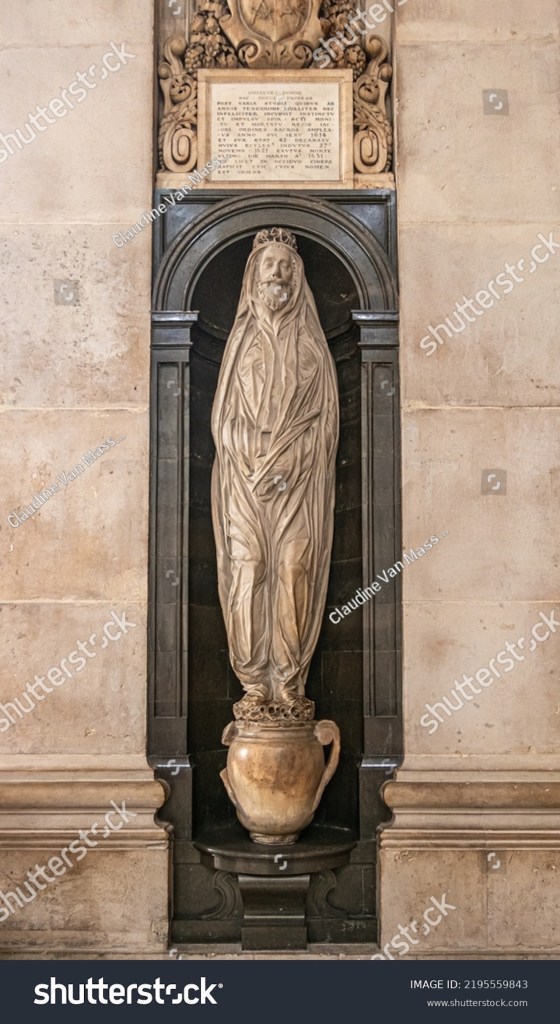

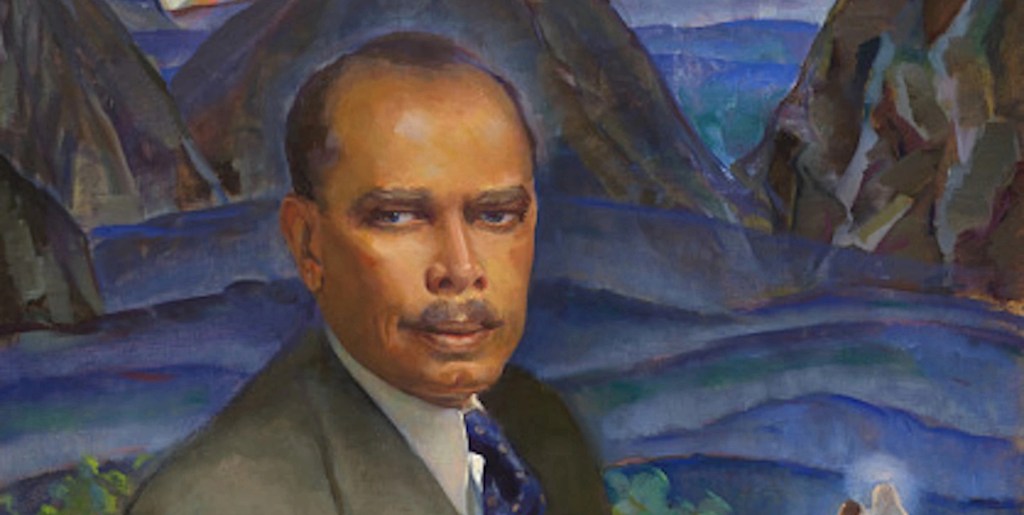


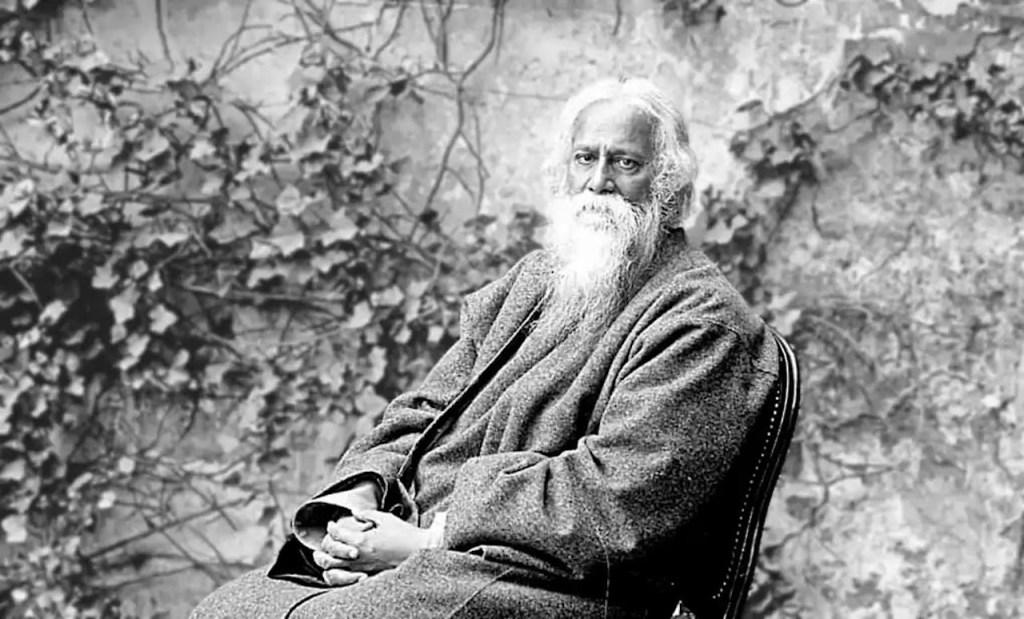
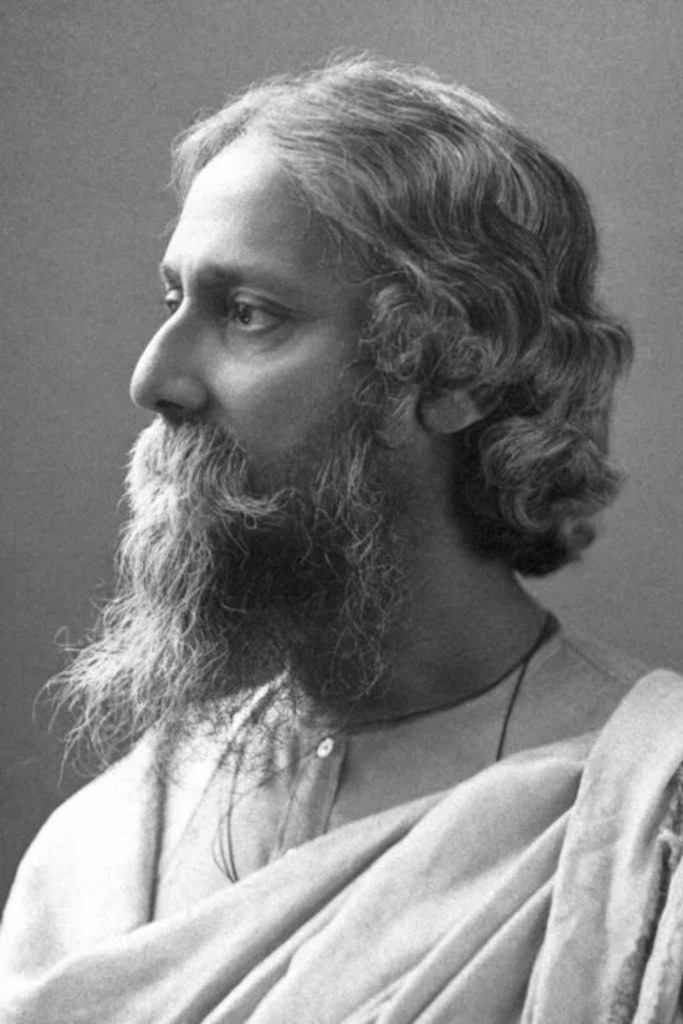
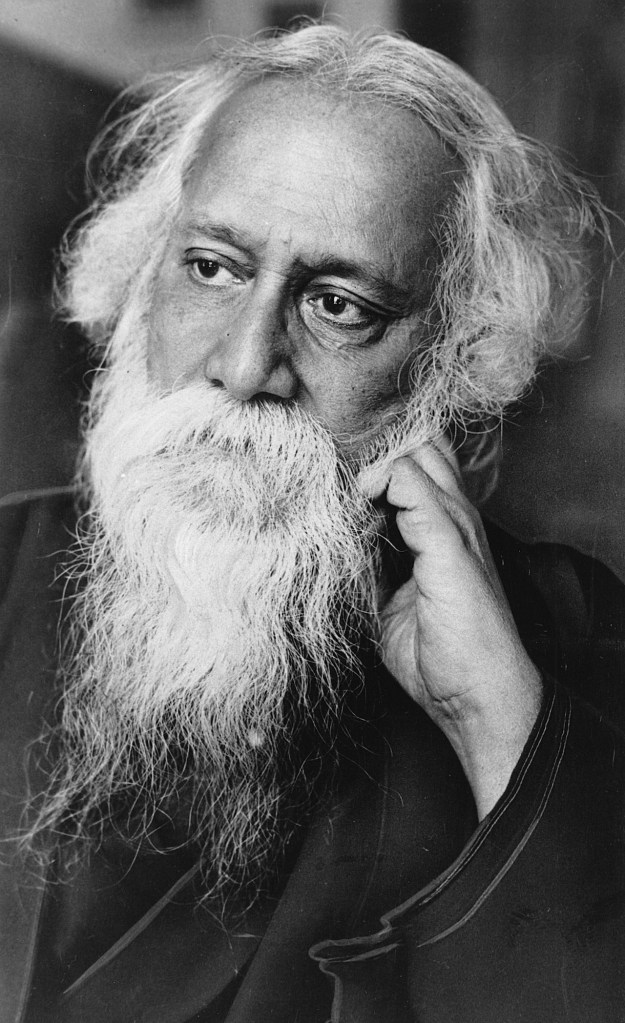






 Linda's Literary Home