Ever since the 18th century, when Edward Jenner experimented with formulating a preventative for small pox, controversy has surrounded the use of vaccines. Vaccines have become a multi-billion dollar enterprise, and vaccine manufacturers now control most of the information about their product.
Edward Jenner’s Theory
In the closing years of the 18th century, a pharmacist named Edward Jenner began experimenting and seeking a preventative for the scourge of small pox, a dreadful disease that killed and maimed many of those who contracted it.
Jenner had heard of milkmaids who had contracted cowpox and then had become immune to small pox; thus, he formulated the theory [1] that has become the basis for vaccination: that small pox immunity could be effected by surviving the cowpox disease.
To test his theory, Jenner secured fluid from Sarah Nelmes, a milkmaid, who had survived cowpox; he injected the fluid into the arm of James Phipps, an eight-year-old boy, who had been healthy.
The boy then suffered cowpox and recuperated, and six weeks later, Jenner injected the boy with fluid taken from a small pox pustule. When the boy failed to suffer small pox, Jenner concluded that his theory had been proved correct.
The problem with this happy tale of science is that the boy, James Phipps, died of tuberculosis at the age of 20. Also, Jenner had injected his own son with his small pox vaccine, who exhibited a negative reaction and began showing signs of mental retardation.
Jenner’s son also died of tuberculosis at age 21. In the 19th century, it was discovered that the small pox vaccination was linked to tuberculosis (consumption). Dr. Alexander Wilder, editor of The New York Medical Times and professor of pathology, explained:
Vaccination is the infusion of contaminating element into the system, and after such contamination you can never be sure of regaining the former purity of the body. Consumption follows in the wake of vaccination as certainly as effect follows cause.
The science of vaccines even in the 21st century has remained unchanged since Jenner’s theory was promulgated in the late 18th century.
While most fields of science have progressed exponentially, for example, from the Earth-centered universe to the Sun-centered galaxy, the equivocal theory of Edward Jenner’s vaccinology has remained the “settled science,” despite the many great strides in understanding of vaccines that have been made in every century since Jenner’s first discovery.
These new discoveries offer an abundance of evidence for questioning the notion that Jenner was correct and that vaccines are, indeed, safe and effective.
Legally Protected Yet “Unavoidably Unsafe”
In the United States, the measles vaccine [2] was introduced in 1963, followed by the mumps vaccine in 1967, and then rubella in 1969. In the early seventies after the three shots were combined into a single MMR dose, schools began requiring that students be vaccinated to enter.
After these mass vaccination programs began, vaccine injuries and death began to skyrocket. During in the the 1970s and 1980s, vaccine-related injuries and death resulted in lawsuits against vaccine makers.
The drug manufacturers were paying out millions of dollars to the plaintiffs of these lawsuits, and they threatened to stop manufacturing vaccines. Health officials became alarmed even though they admit that vaccines can cause both injury and death.
The powerful health care industry lobbied congress and in 1986, the governing body passed the law that prevents vaccine makers from being sued for the injuries and death that result from their products.
In the 2010 court case, Bruesewitz v. Wyeth LLC [3], the Supreme Court guaranteed that vaccine manufacturers, despite the fact that their product is deemed “unavoidably unsafe,” will remain protected from legal action against them.
Instead of suing a vaccine maker, those injured by vaccines can seek compensation from a government program known as the Vaccine Court or the National Vaccine Injury Compensation Program (VICP) after reports to the Vaccine Adverse Event Reporting System (VAERS). According to the Health Resources & Services Administration (HRSA) [4],
Since 1988, over 26,046 petitions have been filed with the VICP. Over that 30-year time period, 22,132 petitions have been adjudicated, with 9,738 of those determined to be compensable, while 12,394 were dismissed. Total compensation paid over the life of the program is approximately $4.9 billion.
Parents with healthy, thriving children who changed into difficult, withdrawn, unhealthy children after a vaccine have begun to speak up and question the heretofore claimed safety and efficacy of those inoculations.
And now with the rushed manufacture of the newest vaccine for COVID-19, the question of vaccine efficacy and safety has taken the spotlight, and more citizens than ever before are faced with the vaccine question. The following issues lead to questioning the safety and efficacy of vaccines:
Controversy has always swirled around the issue of vaccines from the beginning [5].
Vaccines have never been tested in any meaningful way, that is, against a placebo; thus, there is no evidence for the claim that they are safe and effective. RFK,Jr. Lawsuit against HHS [6].
Manufacturers of vaccines cannot be sued [7] when their product causes an injury or death. Therefore, they have no incentive to improve or maintain the purity and safety of their product.
Vaccine ingredients [8] particularly aluminum and mercury have been proven to damage human health.
Rates of autism [9] have increased as the number of vaccines required for children have increased. Not only autism but a host of other illnesses afflict American children, rendering them the sickest in the world, suffering ADD, ADHD, asthma, and SIDS.
The case of Hannah Poling [10].
Dr. Frank DeStefano, former CDC Director of Immunization Safety, has admitted [11] that “vaccines might rarely trigger autism.” “I guess, that, that is a possibility. It’s hard to predict who those children might be, but certainly, individual cases can be studied to look at those possibilities.”
Vaccine Advocates Refuse to Debate
Robert F. Kennedy, Jr., and Alan Dershowitz participated in a debate [12], in which Kennedy presents a well-researched, in depth set of facts about the issue, as Dershowitz shows only how meagre is his own knowledge on the issue.
Dershowitz’s major point focuses only on a legal issue: if vaccines are safe and effective, then the Supreme Court would likely side with the branches of government in requiring all citizens to be vaccinated. But the law professor has nothing to offer to address the questionable claim that vaccines are, in fact, safe and effective. About the debate, Kennedy has said,
I want to thank Alan for participating in this debate. I’ve actually been trying to do a debate on this issue for 15 years. I’ve asked Peter Hotez, I’ve asked Paul Offit, and Ian Lipkin. I’ve asked all of the major leaders who are promoting vaccines to debate me and none of them have. And I think it’s really important for our democracy to be able to have spirited, civil discussions about important issues like this.
If pro-vaccine apologists, such as Drs. Paul Offit [13], Peter Hotez [14], and Ian Lipkin [15] remain so confident about their stance, it seems that they would gladly debate Kennedy in order to demonstrate their superior knowledge and to reassure the public that vaccines are safe and effective.
That the pro-vaccine apologists continue to refuse to debate the issue suggests a weakness that discredits their claims, making it vital that the public become aware of both sides of the issue.
This issue [16] remains controversial, even as new reports on the injuries and deaths from vaccines are being provided daily; yet many current mainstream media often make it difficult to acquire information when it counters the pharmaceutical claims for vaccine safety and efficacy.
The practice of social media platforms such as YouTube, Twitter (until recently converted to X), and Facebook of deleting and canceling alternative voices has become an obstacle to finding reliable resources for data. Despite the difficulty of remaining informed about the vaccine issue, the research is out there. One simply needs to do some digging to find it.
[15] Kent Heckenlively, JD. “The Case Against Ian Lipkin.” BolenReport: Science Based Analysis of the North American Health Care System. Accessed December 30, 2023.
In addition to the sources already cited, the following is a list of links to scientists, physicians, nurses, and activists who have offered analyses on this issue.
Many of these sources originally appeared on YouTube but were later censored and disappeared. Luckily, many of them now exist on rumble, the free speech competitor of YouTube.
The following resources relate specifically to COVID:
J. Roberts/Medical Veritas 5 (2008). “The dangerous impurities of vaccines.” EXCERPT: In 1998 and 1999 scientists representing the World Health Organization (WHO) met with the senior vaccine regulatory scientists of the USA and UK at the National Institutes of Health (NIH) in Washington D.C. to discuss the safety of the manufacturing methods employed to produce vaccines. No journalists were present but official transcripts were kept. What they record is that all the many experts that spoke expressed grave concern over the safety of the manufacturing process currently employed to make the licensed vaccines, such as MMR, flu, yellow fever, and polio. It was reported by leading experts that the vaccines could not be purified, were “primitive,” made on “crude materials,” and the manufacturers could not meet lowered government standards.
Alliance for Human Research Protection. “How the case against Andrew Wakefield was concocted.” EXCERPT: The case against Andrew Wakefield was funded by Murdoch; hatched by Brian Deer; launched in the Sunday Times; magnified by the BMJ.
End All Disease. “Gandhi On Vaccines: ‘One Of The Most Fatal Delusions Of Our Time’.” EXCERPT: Almost one century ago, Gandhi published a book where he deconstructed the dangers and lack of effectiveness of vaccines and the agendas surrounding them. His voice rings true now more than ever.
Highwire. “Dr. McCullough Meets Dr. Geert Vanden Bossche.” EXCERPT: We covered how ill-advised mass vaccination with outdated mRNA vaccines continues to apply non-sterilizing ecological pressures on SARS-CoV-2 which work to: 1) prolong the pandemic 2) drive more mutations 3) increase transmissibility.
Refuting the Big Lie That the “Three/Fifths Compromise” Enshrined Slavery in the U. S. Constitution
The “Three/Fifths Compromise 1787” permitted the Southern slave states to count 60% of their slave population for representation—even though slaves were property, not citizens. That compromise did not state—or even imply—that each slave was only “three/fifths of a person.”
Representation, Not Percentage of Personhood
The delegates to the Constitutional Convention [1] met in Philadelphia from May 25 to September 17, 1787, for the purpose of revising the Articles of Confederation.
That document had proven too weak to address the issues that the newly formed nation was facing. Alexander Hamilton and James Madison had believed that revising the Articles was impossible and that a complete overhaul was necessary.
Thus, the members of the Constitutional Convention scrapped the Articles of Confederation in favor of composing a new document, which, of course, resulted in the Constitution, under which the U.S. has been governed since its ratification.
The convention members were confronted with two problems as they were creating the sections regarding representation in the House of Representatives and the Senate. States with small populations demanded that each state have equal representation, while large states demanded that representation be based of population. The respective demands would guarantee a desired advantage for each state.
The Constitutional conveners thus solved that problem by allowing the upper house to have 2 senators, while the lower house would have a number of representatives based on population.
However, after this fix of representation, a second issue arose: slave states demanded that slaves be counted for purposes of representation, even though slaves would not be afforded the right to vote or otherwise participate in citizenship.
Free states insisted that no slaves be counted because counting non-participating individuals would give the slave states an unfair advantage. That advantage would mean that abolishing slavery would be next to impossible. In effect, if slaves were counted for purposes of representation, that slave count would help perpetuate slavery.
Slaves Were Not Voting Citizens
Slaves possessed no rights of citizenship [2]: they could not vote, run for office, or participate in any civic discussion. Slaves were not citizens; they were property [3] in a similar sense that cattle and cotton were property.
Slave were not even allowed to learn how to read; they were kept illiterate and uneducated in order to keep them subservient. Keeping slaves as property was a priority in the slave states. And by counting slaves, their population would overpower the free states who would seek the end of slavery.
While far from being a perfect solution, the “Three/Fifths Compromise” settled the issue of counting the slave populace: instead of counting the entire population of slaves, it allowed slave states to count three/fifths of that total number for the purpose of representation.
Nowhere in that Compromise or in the Constitution does it state or even imply that each slave is only three/fifths of a person. The sole purpose of the compromise was to determine representation in the House of Representatives, not the percentage of personhood each individual slave possessed.
The slave states demanded full counting of slaves, while the free states demanded that none of the slave population count, because slaves were not citizens.
Following the logic that the “Three/Fifths Compromise” deemed each slave three/fifths of a human, the slave owners were insisting that their slaves were fully human. The free states, who later worked to abolish slavery, were implying that slaves had no personhood at all: Both of those propositions are patently absurd and opposite of the intentions of the slave and free states.
The slave states wanted it both ways essentially: for the purpose of representation, they wanted slaves to be counted as citizens, but in every other capacity, they wanted slaves to remains non-citizens or mere property.
The following excerpt, Article 1, Section 2, Paragraph 3, from the Constitution [4] shows clearly that the “Three/Fifths Compromise” does not refer to the individual personhood of each slave:
Representatives and direct Taxes shall be apportioned among the several States which may be included within this Union, according to their respective Numbers, which shall be determined by adding to the whole Number of free Persons, including those bound to Service for a Number of Years, and excluding Indians not taxed, three fifths of all other Persons. (emphasis added)
The “three fifths of all other Persons” designates the slave population and any other groups not specifically names; it does not designate that the personhood of each person in those groups is only three/fifths that of a free, tax-paying citizen.
The terms “Negroes,” “black,” “slaves,” and “slavery” do not appear in “Three/Fifths Compromise” of the U.S. Constitution.
The term “slavery” appears in the Thirteenth Amendment to “enshrine” the abolition of that evil institution. The term “slave” appears in the Fourteenth Amendment in the phrase “emancipation of any slave.”
The Fourteenth Amendment guaranteed that the former slave-holders could not petition the government for reparations for losing their slaves. Thus, those amendments, added in 1865, were not in place when Frederick Douglass [5], the foremost black abolitionist in the 1840s remarked,
If the Constitution were intended to be by its framers and adopters a slave-holding instrument, then why would neither “slavery,” “slave-holding,” nor “slave” be anywhere found in it?
Image 2: Frederick Douglass Portrait by Greg Groesch/The Washington Times
First Step to the Abolition of Slavery
The founders [6] of the United States of America and framers of the Constitution were well aware of the travesty of slavery and well understood that that institution could not endure, despite the fact that some of them owned plantations supported by slave labor.
However, as it is with most deeply ingrained cultural traditions, that evil societal feature could not be mandated in a document that was needed to help govern the young country.
Possibly, if the free states had insisted that the slave states not count any of their slave population, it would have been impossible to frame the new governing document.
Also possible was the eruption of warring factions that might have resulted in an earlier civil war. Those two eventualities were avoided through the “Three/Fifths Compromise.”
In order to assure that the southern slaves states accept the new document, the framers had to make the concession of allowing those states to count part of their slave population. But that concession can be viewed as the first step toward eradicating slavery from the country. It allowed the Constitution to become the governing document of the young nation.
By the strength of that document’s tenets, the nation was able to end the institution of slavey while remaining unified, after suffering the bloody Civil War that did occur from 1861 to 1865.
The great Founding Father, Frederick Douglass, who worked to abolish slavery understood that the ideals and words of those earlier statesmen had laid the groundwork to eliminate that evil institution. Douglass averred [7],
Notwithstanding the dark picture I have this day presented, of the state of the nation, I do not despair of this country. There are forces in operation, which must inevitably, work the downfall of slavery . . .
Discerning historians, looking back with an open mind, have determined that certain compromises such as the “Three/Fifths Compromise 1787” have, in fact, functioned for “the downfall of slavery.”
The Three/Fifths Big Lie Persists
False notions known as big lies, have staying power because they have been loudly repeated by the perpetrators until they become ingrained in the culture. Even though the phrase, “the big lie” [8], was popularized by Adolf Hitler [9] and his propaganda minister, Joseph Goebbels, American statist politicians have never been immune to employing that concept to smear their opponents.
The “Three/Fifths Compromise 1787” has been widely misrepresented as enshrining slavery in the U. S. Constitution, deeming that a slave was only three/fifths of a person. However, nowhere in the United States Constitution does the text state or even imply that the personhood of each black individual is only “three/fifths of a person.”
That persistent falsehood has been debunked repeatedly, yet it remains part of a popular mythology. The institution of slavery and the decades of Jim Crow Laws and Black Codes remain permanent stains on the history of the United States.
And those issues need to be addressed, explained, and understood, but what Americans do not need is for political operatives to falsify that history to make it more heinous than it was.
The falsehood that blacks were once considered three/fifths of a person needs to be addressed and refuted whenever and wherever it resurfaces. As Malik Simba from BlackPast.org explains,
Often misinterpreted to mean that African Americans as individuals are considered three-fifths of a person or that they are three-fifths of a citizen of the U.S., the three-fifths clause (Article I, Section 2, of the U.S. Constitution of 1787) in fact declared that for purposes of representation in Congress, enslaved blacks in a state would be counted as three-fifths of the number of white inhabitants of that state. [10]
Despite the many explanations and corrections from historians and other Constitutional experts [11], which are widely available online, the false claim that blacks were considered to be only “three/fifths a person” continues to appear regularly.
Some critics assert that the U.S. Constitution enshrined slavery [12] with the “Three/Fifths Compromise of 1787,” and others make the inaccurate statement that blacks in the U.S. were thought to be three/fifths of a person at one point in history.
Two particularly egregious examples of this “big lie” come from two high level, otherwise knowledgeable government officials: Condoleezza Rice [13], 66th Secretary of State and General Mark Milley [14], 20th chairman of the Pentagon’s Joint Chiefs of Staff.
Secretary Rice, in speeches abroad has claimed [15], “In the original U.S. Constitution, I was only three-fifths of a person.” And General Mark Milley, refers to that falsehood, as he mistakes the fraction as “three/fourths” [16] instead of “three/fifths.”
These misstatements by such accomplished and knowledgeable individuals demonstrate how widespread and deep some errors have been carved into the culture. It is past time to discard this “big lie” along with other false notion [17] that the Democratic and Republican Parties switched sides on race.
The accurate teaching of history must become a valued part of education if America is to remain free and prosperous.
Debunking the Big Lie That Democrats and Republicans Switched Sides on Race
Republican failure to refute Democrats’ “big lie” that their parties switched sides on race has allowed that falsehood to spread. Republicans need to refute the Democrats’ lie to reclaim for their Party its history in fighting slavery and racism. The GOP has always been the party of Civil Rights.
The Big Lie and American Politics
The phrase “the big lie” [1] was popularized by Adolf Hitler [2] and his propaganda minister, Joseph Goebbels. The primary purpose of the big lie technique as employed by Hitler and the Nazis was to turn German citizens against the Jews.
The technique worked so well that the Holocaust, resulting in the deaths of upward of eleven million people, including at least six million Jews, became a stain on humanity and a historical reference point.
Unfortunately, American politics has never become immune to the diseased concept of the big lie.
Numerous fabrications have flourished and influenced in heinous ways the relationship between various identities groups that make up the United States of America.
Debunking a Pernicious Myth
One of the biggest of the big lies in American politics is that the two major political parties, Democratic and Republican, switched sides on the issue of race. In Dan O’Donnell’s “The Myth of the Republican-Democrat ‘Switch’,” the writer offers a useful introduction to the issue:
When faced with the sobering reality that Democrats supported slavery, started the Civil War when the abolitionist Republican Party won the Presidency, established the Ku Klux Klan to brutalize newly freed slaves and keep them from voting, opposed the Civil Rights Movement, modern-day liberals reflexively perpetuate the rather pernicious myth—that the racist southern Democrats of the 1950s and 1960s became Republicans, leading to the so-called “switch” of the parties. This is as ridiculous as it is easily debunked. [3]
Because the Republican Party was founded to abolish slavery and has always been the party of Civil Rights—including the struggle for women’s suffrage—in the U.S.A, the Democratic Party seized the issue, turning racism into a Republican problem by claiming that the parties switched sides of race.
The big lie of the parties switching sides on race, however, is not the only falsehood that litters the political landscape. Various factions have filled historical reportage with inaccurate claims that persist; for example, a 2015 Washington Post headline blares, “We used to count black Americans as 3/5 of a person” [4].
Political ideologues and agenda-driven academics often claim that in establishing the Constitution, the Founding Fathers thought that blacks were only three/fifths human because of the three-fifths compromise; however, the “Three/Fifths Compromise” focused on representation to congress not on the humanity of each person.
Even Condoleezza Rice [5], an educated, accomplished former secretary of state, fell for this lie: “In the original U.S. Constitution, I was only three-fifths of a person.” Such a misstatement by a sophisticated and knowledgeable person just shows how widespread and deep some errors have been carved into the culture.
Then there is the false assertion that “Nazis” are right wing. The term “Nazi” is short for National Socialist German Worker Party, translation from the German, “Nationalsozialistische Deutsche Arbeiterpartei.”
The political right has never endorsed “socialism.” Along with “fascism,” the term by definition includes statism or government control of the lives of citizens—the antithesis of the political right’s stance.
Confronting an Inconvenient Past
When confronted with the inconvenient history of their party regarding the issue of race, the American Democratic Party members and its sycophants insist that the Republican and Democratic Parties simply switched positions on race, after the Republicans had ushered in the Civil Rights Act of 1964. This ludicrous claim can easily be laid to rest with a few pertinent facts.
On January 1, 1863, Republican President Abraham Lincoln signed the Emancipation Proclamation, which stated “that all persons held as slaves are, and henceforward shall be free.”
The country had already been suffering two years of a bloody Civi War to end slavery. Democrats had been lobbying for and passing legislation such as the Jim Crow laws and Black Codes for over a century—all designed to keep the black population from enjoying the fruits of citizenship.
President Lyndon Johnson, a Democrat, signed the Civil Right Act of 1964 in to law; however, Johnson himself had labored tirelessly against earlier civil rights legislation.
By signing that bill, Johnson merely demonstrated that he had come to understand that the way for Democrats to acquire and maintain power in future was to pacify and humor blacks, instead of denigrating them and segregating them from whites as the Democrats had always done in the past.
Allegedly, Johnson had quipped, “I’ll have those ni**ers voting Democrat for the next 200 years.” That infamous statement clearly reveals where Johnson’s loyalties lay: with acquiring power for the Democratic Party and not for recognizing African Americans as citizens. Endeavoring to deconstruct Johnson’s racist position, David Emery at snopes.com labels the claim regarding Johnson’s remark “unproven” [6].
But then as he continues his biased analysis, Emery reveals other suggestions that make it clear that Johnson’s beliefs rendered him the consummate racist. For example, Emery offers the report, in which according to Doris Kearns Godwin, Johnson quipped,
These Negroes, they’re getting pretty uppity these days and that’s a problem for us since they’ve got something now they never had before, the political pull to back up their uppityness. Now we’ve got to do something about this, we’ve got to give them a little something, just enough to quiet them down, not enough to make a difference. (my emphasis)
After continued biased bloviating, David Emery admits, “Circling back to the quote with which we started, it wouldn’t have been entirely out of character for LBJ to have said something like, ‘I’ll have those ni**ers voting Democratic (sic) for 200 years’”; however, Emery doubts it, of course.
House and Senate Vote Tally for the Civil Rights Act 1964
The following is a breakdown of the voting tally in the House and Senate [7] for the Civil Rights Act of 1964 of members voting for the bill:
Democrats: House 153 out of 253 = approx. 60% Republicans: House 136 out of 178 = approx. 80% Democrats: Senate 46 out of 67 = 69% Republicans: Senate 27 out of 33 = 82%
While about 80% of the Republicans in the House of Representatives voted for the Civil Rights Act of 1964, only about 60% of the Democrats voted aye. Also while in the Senate, 82% percent of Republicans voted for the bill, only 69% of Democrats did.
Attempting to Rehabilitate by Geography
In order to try to rehabilitate the Democrats’ negative voting record on civil rights, Democrat apologists point out that when one accounts for geographical positioning [8] of the members of the house and senate, the voting tallies this way:
Southern Democrats: 1–20 (5%–95%) (Ralph Yarborough of Texas voted yea) Southern Republicans: 0–1 (0%–100%) (John Tower of Texas voted nay)
Northern Democrats: 45–1 (98%–2%) (Robert Byrd of West Virginia voted nay) Northern Republicans: 27–5 (84%–16%)
This set of votes shows that no southern senate Republicans voted for the act, but there was only one southern Republican in the senate at the time. And also no house Republican voted for the act, but again there were only ten southern Republicans in the house.
This low number of Republicans in the house and senate when converted to percentages skews the reality of the fact that the overall vote, which is the vote that counts, clearly outs the Democrats as opposers of the act. And the Democrats’ main reason for voting against the act was based on race, especially in the south.
However, all of the Republican senators, both north and south, who voted against the act, did so because they favored Senator Barry Goldwater’s position, who remained against the act, not because of racial animus but because of his belief that it was unconstitutional in usurping states’ rights, especially in the area of private business.
The Republican Party was founded, primarily in order to abolish slavery. Yet over a century later, modern-day Democrats such as former house member, Charlie Rangel, continue to spread the big lie that the Republican and Democratic parties simply “changed sides” in the 1960s on civil rights issues.
That excuse is widely exercised by Democrats when confronted with their own undeniably racist past [9]. However, the facts do not support but rather reveal that claim as a big lie.
Three Misrepresented Issues
The persistent inaccuracy that the two parties switched sides is partially based on three significant issues that have been misrepresented by Democrats and their sycophants in the mainstream media:
1.Barry Goldwater’s position regarding the Civil Right Act of 1964. Goldwater [10] did oppose that bill in its final form because he argued that it was unconstitutional, in that it usurped state and individual rights. Goldwater had helped found Arizona’s National Association for the Advancement of Colored People (NAACP), and he had voted for earlier versions of civil rights legislation.
Thus, Goldwater’s opposition was not similar to the Democrats’ opposition based on racism; Goldwater’s opposition was based on his interpretation of the Constitution.
2.The Southern Strategy. With this strategy [11], the Republican Party was attempting to demonstrate to southern Democrats that by continuing to vote for racist/socialist Democrats they were voting against their own economic interests.
What gave Democrats the opening to use this strategy against Republicans was that the Republicans utilized racist political bigots, who were, in fact, Democrats themselves, to help win votes for Republicans.
This strategy prompted the GOP opponents to misrepresent the Republican’s purpose and thus label it primarily racist, when it was, in fact, based on economic growth, not racism.
3. The American South turning to Red from Blue. This claim falls apart with the fact that the “Deep South”—Alabama, Mississippi, Georgia, South Carolina, and Louisiana—took 30 years to begin changing from Democrat to Republican.
It was only in the peripheral South—Florida, Texas, Tennessee, Virginia, North Carolina, and Arkansas—that many working-class transplants, relocating from the northern states as well as from other parts of the United States, understood that the Republican Party offered policies that promoted business, commerce, and entrepreneurial success.
Those transplants, after all, had relocated south to improve their financial status through their new jobs. Gerard Alexander explains in his review:
The myth that links the GOP with racism leads us to expect that the GOP should have advanced first and most strongly where and when the politics of white solidarity were most intense.
The GOP should have entrenched itself first among Deep South whites and only later in the Periphery. The GOP should have appealed at least as much, if not more, therefore, to the less educated, working-class whites who were not its natural voters elsewhere in the country but who were George Wallace’s base.[12]
If the myth of the switched sides were accurate, the Republican Party would have taken hold more strongly first among the traditional racists—that is, the older voters would have become Republicans before the younger ones and the transplants. But that did not happen, because the Republican Party attracted those who were “upwardly mobile” and “non-union.”
After the passage of the Civil Rights Act of 1964, racism in the country’s history had begun to wane as a social and political force. But the Democratic Party continued to foment unrest between the races in order to employ racism as an issue against their opponents in the Republican Party. That tactic is still in place.
After the election of 2020, under the Democratic administration of Joe Biden, the racial unrest began to escalate further with the ideas touted by proponents of Critical Race Theory [13] and the insistence that white supremacy [14] remains the country’s greatest threat.
Poverty Producing Policies
The main reason that the Democratic Party concocted the idea that the parties simply switched positions was to gain power. Reverend Wayne Perryman explains:
Many believed the Democrats had a change of heart and fell in love with blacks. To the contrary, history reveals the Democrats didn’t fall in love with black folks, they fell in love with the black vote knowing this would be their ticket into the White House.[15]
Economist Thomas Sowell [16] has also shed light on the subject: “some of the most devastating policies, in terms of their actual effects on black people, have come from liberal Democrats.”
Sowell emphasizes that the “minimum wage laws” everywhere they have been established have a “track record of increasing unemployment, especially among the young, the less skilled and minorities.”
According to historian Sam Jacobs [17], the 1960s Great Society and War on Poverty, the programs established by the Johnson administration, brought about conditions, which furthered the rise of poverty among black families.
By discouraging marriage, these policies have resulted in out-of-wedlock birthrates that have skyrocketed, “among all demographic groups in the U.S., but most notably African Americans.”
The U.S. out-of-wedlock birthrate in the 1960s hovered around 3% for whites and close to 8% for all Americans; that rate was around 25% for blacks. But, by the mid 1970s, those rates had increased to 10% for whites, 25% for all Americans, and over 50% for blacks.
Then by late 1980s, the birth-rate of unmarried black women had become greater than for married black women. In 2013, the out-of-wedlock birth rate for blacks had climbed to almost 75%.
The Census Bureau [18] maintains that poverty is closely associated with out-of-wedlock births. By instituting a system that keeps blacks at a disadvantage, the Democrats have a captive audience to which they pander for votes.
The Democratic Party stations itself as the protector of blacks and other minorities, not with policies that assist those demographics but with policies that keep them dependent on government.
Unfair Race Policies Unsystematized
Despite the revisionist history and unsupportable claims of the CRT and white supremacy advocates, there is no argument that can refute the fact that racism as an issue of public policy has been unsystematized since the passage of the civil rights acts of the 1960s. No more Jim Crow laws or Black Codes anywhere call for racial discrimination as they had done before the passage of those civil right laws.
Before the passage of those acts, not only did racist laws exist, they were enforced by legal authorities as well as the Ku Klux Klan, which, according the North Carolina historian Allen W. Trelease [19] in his book, White Terror: The Ku Klux Klan Conspiracy and Southern Reconstruction, “The Klan became in effect a terrorist arm of the Democratic Party.”
And Eric Foner [20], Columbia University historian, in his study, A Short History of Reconstruction, 1863–1877, has averred that the KKK was “a military force serving the interests of the Democratic Party.”
Still, statist historians such as Carole Emberton, an associate professor of history at the University at Buffalo, continue to employ the “party lines of the 1860s/1870s are not the party lines of today” [21] bromide attempting to separate the Democratic Party’s engagement from the Ku Klux Klan.
Yet in the same breath, Emberton admits, “that various ‘Klans’ that sprung up around the South acted as a ‘strong arm’ for many local Democratic politicians during Reconstruction.”
Democrats continue to employ the often debunked claim that racism is still a “systemic” problem. They offer this prevarication so they can insist that only the Democratic Party is willing to fight against that “systemic” blight on society.
But again and again, the Democratic Party’s policies have been used, as Lyndon Johnson used them, to placate blacks by making them think they are getting something that no political party even has the power to give: financial security and equality with guaranteed outcomes.
Political parties, when in power, can help the voting public only by instituting policies that encourage financial success and individual freedom. They cannot guarantee that success. They cannot legislate individual success through identity politics.
Strategy to Gain Power
The Democratic Party and its allies continue to employ the big lie that the two parties exchanged positions on race, in an attempt to gain power and to rehabilitate the party’s racist past.
Party members and its minions continue to tie most issues to race because that tactic seems to have worked for gaining power. But when voters look at the basic facts, that claim begins to lose its strength.
For example, citing the voter ID issue as a racist Republican strategy simply bolsters the evidence that Republicans are, in fact, not racist. A majority [22] of black citizens and voters are in favor of the voter ID laws.
However, the Democrats continue to rail against voter ID laws because they know that those laws would impede voter fraud—a demonstrably proven staple in the machine [23] to elect Democrats to government.
Democrats have been attempting to whitewash their racist past for decades; to do so, they often fabricate history. For example, as a candidate for the presidency in 2000, Al Gore falsely stated [24] to the NAACP that his father, Al Gore, Sr., had lost his senate seat because he voted for the Civil Rights Act of 1964.
But Gore, Sr., voted against that act [25], as he supported and joined in the filibuster against that act. Gore, Sr. then sponsored an amendment [26] that would take the teeth out of the enforcement power of that bill, just in case it passed.
Did Dixiecrats Become Republicans?
Democrats also point to the rise of the Dixiecrats that supposedly shows racist Democrats becoming Republicans. However, only two major politicians who had been Dixiecrats switched to the Republican Party.
Fewer than 1% [27] of the more than 1500 Democrats-turned-Dixiecrats left the Democratic Party for the Republican Party. They were prompted to switch party allegiance primarily for economic reasons rather than racial animus.
As the Democratic Party began moving toward socialism, many former Democrats experienced disdain for that socialist impact on business and entrepreneurship.
Senator Strom Thurmond traded in his party alliance with the Democrats to join the Republicans in 1964—not because he continued to support racism, but because he began repudiating it.
Frances Rice [28] explains: “Thurmond was never in the Ku Klux Klan and, after he became a Republican, Thurmond defended blacks against lynching and the discriminatory poll taxes imposed on blacks by Democrats.”
Governor Mills E. Godwin, Jr. of Virginia [29] abandoned the Democrats for the Republican Party in 1974. But again, like Thurmond, Godwin simply abandoned his racist past. Godwin also served as Virginia governor first while a Democrat and then as a Republican.
Hypocrisy about Racist Past
West Virginia’s Robert Byrd, a former Ku Klux Klan Exalted Cyclops and long serving Democratic senator, did renounce his earlier support for segregation and racism. However, Byrd voted against confirmation to the Supreme Court of Justice Thurgood Marshall [30], a Democrat and the first black to be appointed to the high Court.
Byrd also joined 47 of his fellow Democratic senators as he voted against Justice Clarence Thomas [31], a Republican. Neither a black Democrat nor a black Republican could pass muster with the former Klansman.
Senator Christopher Dodd [32] praised Byrd highly by stating that Byrd would have been “a great senator for any moment.” To this potentially inflammatory remark, the Democrats remained silent.
Then later after Senator Trent Lott spoke kind words of Senator Strom Thurmond, the Democrats with their usual hypocrisy lambasted Lott unmercifully. It made no difference that Thurmond had never served as a member of the Ku Klux Klan while Byrd had risen to the high position of Exalted Cyclops.
Regarding Democrat hypocrisy, John Feehery [33] has remarked: “. . . Democrats are super-sizing their hypocrisy to levels never seen. It is their embrace of nihilism that is pushing them to these extremes.”
Policies Harmful to All Citizens
Undoubtedly, the majority of the members of the Democratic Party are not racists today. Yet, it remains unconscionable that so many Democrats label Republicans racists and bigots in pursuit of political power against their opponents.
Democrats cannot legitimately deny the many studies that offer support to the argument proffered by Republicans that Democratic policies are detrimental not only to black citizens but to all citizens.
The current theoretical philosophy of Democratic Party consists of seizing through taxation the financial rewards from “the rich” and giving those rewards to “the poor.” In practice, this Robin Hood scam ultimately means taking from those who earn and redistributing it to friends and allies of the redistributors. Such a system cannot possibly succeed. It can only create victims whose ability to produce becomes atrophied by the false promises of pandering politicians.
Democrats continue to play the race card because they have become utter failures at convincing the majority of the electorate that their policies work. Citizens have become dissatisfied with the actual theft of their earnings, as they have watched as shabby, crime filled cities are, in fact, the result of Democrat policy fecklessness and fraud.
Rose and Milton Friedman Senior Fellow at the Hoover Institution Thomas Sowell has pointed out repeatedly that the policies of Democrats have prevented the black population from rising out of poverty.
Many of the poorest cities in the USA have been run by Democrats for decades. According to Investor’s Business Daily,
When Democrats are in control, cities tend to go soft on crime, reward cronies with public funds, establish hostile business environments, heavily tax the most productive citizens and set up fat pensions for their union friends. Simply put, theirs is a Blue State blueprint for disaster. [34]
Surely, it is time that African Americans, women, and minorities adopt a different mind-set and realize, as Rev. Perryman avers, that the Democratic Party is interested only in their vote, not in their welfare. And, in fact, there seems to be a shift coming in the voting preferences of blacks and Hispanics.
According to Darvio Morrow [35], CEO of the FCB radio network, Democrats for decades have relied on the theory that as the USA grows less white, its voters will become more firmly entrenched as a Democratic Party voting block.
However, Morrow explains, “The problem with this theory is that it relied on the premise that minorities were going to remain solid Democrats. And that premise is turning out to be false.”
American politics is a complex machine, and the force of big lies remains strong. Whether the republic can remain in tact will depend on refuting those lies and in their place establishing a culture of truth, in which facts dominate and falsehoods are rejected.
Despite their fervent support for the Marxist movement touting “Black Lives Matter,” today’s Democrats, including the former occupier of the Oval Office, Joe Biden, [36] continue to support the abortion provider known as Planned Parenthood.
Planned Parenthood is one of the greatest perpetrators of violence against African Americans in this country. It is founded on racism, perpetuates racism, and kills more than 850 African Americans every day. [37]
While blacks constitute roughly 13% of the USA population, they account for 36% of the abortions. Nearly 80% of all Planned Parenthood clinics are located near black neighborhoods [38]. Activists such as Candace Owens [39] and Kanye West [40] have labeled this set of circumstances genocide.
According to the educational website, blackgenocide.org, blacks are the only declining minority population in the USA, and “if the current trend continues, by 2038 the black vote will be insignificant.” Because abortion accounts for most deaths of black lives in the USA [41], those pandering for black votes might want to give that claim some serious thought.
Sources
[1] “Big Lie.” Merriam-Webster Dictionary.com. Accessed May 17, 2023.
Malcolm M. Sedam – Book Cover, The Eye of the Beholder
The Eye of the Beholder
Chronicle Press, Franklin OH, 1975
The following poems are from Mr. Sedam’s third published collection, The Eye of the Beholder.
Declaration by poet
Whatever I am or ever hope to be I am in truth reborn in poetry.
1 ON THE DAYS THAT I SAW CLEARLY
On the days that I saw clearly in the quandary of time’s coming, my intellect strayed and I could not escape I drank intoxicating myths but I created no gods, and then the leaves fell from the tree and I recognized you as the new ghost of the sun –
Though I sensed the contradiction I was afraid to wait while time came circling the seasons and I was renewed in its flight so I have written you into being and if this divine seed should fail so be it, for I was saved when I gave the miracle a chance.
(A slightly different version appears in Between Wars.)
2 ABRAHAM AT MORIAH
Trusting His promise: Unto thy seed will I give this land; I went on and on believing that my descendants would be many like the sands among the sea, that He would make of me a great nation — I sired a son when I was very old, proved I had magical powers perhaps so great I challenged even His, for jealously He asked me for this son —
My will divined the purpose of the Rod, no man would kill his son for any god, and knowing well His promise I had blessed I thought it time to put Him to a test and so with Isaac I traveled to that place and took along a ram just in case.
(A slightly different version appears in Between Wars.)
3 SMOKE SIGNALS
Remembering that lost date of steam’s demise I looked upon my race across the rise as utter foolishness that smoke pall was a diesel in disguise a carboned copy of that trim production-line machine — but still the fact remained here was a reasonable facsimile of a train and so I stayed and watched until the red caboose had traced its path across the plain —
While in the early Western morn I tracked the fading echo of the horn and heard the rising rhetoric of the roar converge upon an elementary point in the objective distance the SD-45’s had been impressive both in strength and size but in the wide reflection their dissonant pronouncements would always be a prose rendition of power —
Then from the East over the sun of some forgotten dawn the black cloud of a whirlwind marked the sky the silver rails resounded with a cry a K4 whistle chimed a holy sigh like a mystic revelation the air became committed to the cause the farmers stood in momentary pause the earth rose up in thunderous applause as the Broadway Limited went flashing by in a golden symphony of speed and sound —
And when the fantasy had passed I stood there smiling to myself as I basked in the wondrous pollution of that day shaking the soot screen from my clothes brushing the cinders from my hair coming face to face again with reality at last I drove away looking for some other telltale smoke knowing I would always find a poem in every lost horizon.
4 SECOND COMING
In the dawn between time and tomorrow I lie awake and watch you as you sleep curled on the pillowed breath of love’s last pleasure your eyelids flutter as you dream and I am filled with a persistence of desire to touch your moon-gold reverie but I do not awaken you for you appear above my senses in another world your beauty silhouettes the morning sky beyond this earthly reality — all good things are at least twice lived I accept you in the dream and fall in love with you again.
(Another very different poem title “Second Coming” appears in Between Wars.)
5 UNDERSTANDINGS
I have heard these aunts before damn their fat Victorian souls who gathered in our house those poor depression days for grand reunions with gossip of the years and I the slender one too young too male to hear that day hid behind the door and combed their conversation for tidbits dear for boys too mean to bore, and in that painful hour they took my subject sex and tore to bloody shreds all acts of manly fire of passion and desire all aunts but one who would become my favorite in the end she said: “The way I see it girls the way you should it don’t hurt me none, and seems to do George a power of good.”
(This poem also appears in The Man in Motion.)
6 THE SHORTEST DAY
Today we live unnaturally in the eye of a peaceful calm where here upon this high and lonely ground our isolated isle defies the storm by the will of the gods a typhoon rages furiously out at sea and for two hundred miles we are surrounded a conspiracy of the clouds has stopped the war —
I should write those details to you now about the great Osaka strike but strangely my hand moves without me as if it were drawing a power outside itself fusing my long since calculated words with imagery that I could not relate when I was so careless with time and so I await watching a tireless soaring gull while Keith is drawing a pencil sketch of me he wants to make a record of this day to contemplate our meaning in the war a mirror of every mission that we fly and this picture is mine when he is finished — “What color shall I make your eyes?” he asks, “What mood do you prefer,” I say, “you have the choice of blue or gray or green to match the shades of my chameleon mind.” He chooses green, the philosophical one to please my faint resemblance to himself he squares the jaw and set the cheekbones high then squints one eye and makes my nose too long but I am pleased that having come this far the small resemblance ends for we are not alike —
Keith’s eye are azure blue his build is slim and frail he has a painter’s fine artistic hands and he is not the fight pilot type which is precisely why I love this man he is the last innocent of the war —
He is almost finished, he says he wants to check the color of my eyes again but when I turn toward the light he frowns perplexed:
“Your eye are now a penetrating blue.” And I am not surprised — for the last hour I have been thinking so clearly of you that you could be lying with me in the sun — I watch the rolling ocean swells rising and falling like the breathing of the world remembering that day beside the lake the towering moment when we soared across the sky in perfect rhythm and our breathing became as one —
“What were you thinking of?” he asks but I do not tell him I was thinking of you It is too intimate, too risqué I say that I am thinking of a land faraway with a valley view and a meadow slope with a sleek smooth runway —
He smile conditionally but not quite satisfied: “I guess your eye are mostly blue,” he says, “I think I’ll change the color of them now,” But I say, “Wait awhile and look again — they’ve always had a mind to change their own.”
He listens to my mood intently and maybe I have given myself away humming to a tune of Tokyo Rose I have written you five poetic lines when I become patiently aware that he is not looking at me at all but staring at the satiated sun and only then do I record the sound of a fighter engine’s high pitched whine —
I watch it knifing through the sky my instincts bristle with the cry the hot blood races to my brain and I am fortified once more for war —
“The mission’s rescheduled for tomorrow,” he says, “we’ll be passing through the outer rim tonight.” And I note a straining distance in his voice — the wind has risen, the surf is crashing near and in the falling light I watch he shadow disappear as he despairs: “I see something about you now I wish I hadn’t seen gray is the color of a killer’s eyes your eye have turned a shade of steely gray”;
I look away I focus on the waves the great repository of the sea I cannot bear to gaze upon his face the premonition of his death engulfs me — “Then what color shall they be?” he asks — I see the blazing guns, a reddening sky the lethal flak that traps the atmosphere I slam the throttle wide and clear the air: “Gray must necessarily be a part of me for I would survive, but color them blue or color them green color them anything but gray.”
The storm is come fast, we turn to go but even in the closing night I know that he will die no gentle boy can live long in this war —
Silently we walk into the wind my arm around him in last affection: “It is finished,” he says, “Here is my gift to you and this is my flesh and blood the soul and spirit of my youth and maybe I can find the way again someday, after it’s over” —
“”What are you thinking?” he asks. “About the picture,” I say, “I’ll treasure it always,” but I do not say: I am thinking of tomorrow . . . how frail is tomorrow.
7 NO GREATER LOVE HATH…
(For Keith Weyland)
Flying toward the strange white night we thought of deliverance from the terror of choice, the difference the splendor of our scheme we could not sleep and refuse tomorrow’s voice; compelled we thrust the unknown with outstretched wings, a naked bond between and then a distant light when we had come alive — a flame burst over the harsh beauty of the sea and Keith was gone.
(A slightly different version appears in Between Wars.)
8 VERTIGO
The sky was down the clouds had closed the chance a vast and inlaid sleep then magnified the trance, so set in power I saw the phantom dance that sent the brain dials spinning . . .
Abruptly the sea cut my remembering and I awoke in flames
9DESAFINADO
(For Allen Ginsberg, et al)
Through this state and on to Kansas more black than May’s tornadoes showering a debris of art — I saw you coming long before you came in paths of twisted fear and hate and dread, uprooted, despising all judgment which is not to say
that the bourgeois should not be judged but by whom and by what, junkies, queers, and rot who sit on their haunches and howl that the race should be free for pot and horny honesty which I would buy if a crisis were ever solved in grossness and minor resolve but for whom and for what?
I protest your protest its hairy irrelevancy, I, who am more anxious than you more plaintive than you more confused than you having more at stake an investment in humanity.
(This poem also appears in The Man in Motion.)
10 MIGRATION
I have walked the hills for years and have never seen a burning bush though I have seen a few miracles so call me a pantheist if you will for I know it makes you feel better to know that I believe in something —
You think that you hear the grass grow, but Genesis and Spinoza told me nothing I saw it! The mosquito drinking may blood the oriole weaving its basket nest and I rose from the reflective trees lemming-like swimming in the sky until I filtered into the plan of orderly defeat and exquisite show —
I breathed the thin pure air and suffocated from the strange loneliness.
(A slightly different version of “Migration” appears in Between Wars.)
11 NOSTALGIA
(For Lee Anne)
Call it the wish of the wind flowing from a dream of dawn through the never-to-be forgotten spring of our years running swiftly as a lifetime flying like a vision borne Slim Indian princess wedded in motion dark hair streaming sunlight and freedom floating on the cadence song drifting shadow-down in the distance my daughter riding bareback on a windy April afternoon.
(A slightly different version of “Nostalgia” appears in The Man in Motion.)
12 GOLGOTHA
(For Mary, One of my Students)
When I proclaim the world is flat and that I’m searching for an edge I am only rounding a vision for you — I stand, a son of man, not God and I could be called Paul as well as Peter — I speak for our sons and daughters and had I known, it should be thus explained that we have all failed in our historical sense there was manipulation at the manger Saul died on the way to Damascus and Simon was wholly afraid —
Only from that shipwreck of faith did l learn to walk upon the water so what matter, then, you call me in this place a heretic, to give the cup and cross for I accept knowing I can live through a long series of deaths believing in your all-essential good and would not change your world in any way except to lead you gently into spring.
(A slightly different version of “Golgotha” appears in Between Wars.)
13 THE GRAND-CHILD
(For Annette)
As of this moment he is the center of life’s celebration the incarnation of the holy seed and all the concentrated joy that love can share in the two short months of his existence — he mostly sleeps contented with his role we say he smiles as if we know but whether he does or why we do not care for all we need to know is that he is dependent upon his mother
And he is greedy for her now that much he feels and understands finding his connection by the stars the moon surrounds his eyes flowing from the land of milk and honey where she clasps him to her firm full breast growing inside of her the fiercest hope as from the moment when he burst from life she offered him up to the world as a sacrifice without blemish or blame and she exists for him holding the frailest heartbeat of his being because he is helpless without her is reason enough for she is his mother bearing the burden of his claim —
When he was forming in her shadow she felt a oneness with his mind the urgent purpose of man’s genius thrusting through the galaxies of time — as he awakened in her psyche he heard the lullaby of her soul the tranquil message of the cosmos answering life’s mysterious call —
But where did her instinct stop and intelligence begin? she cannot tell or explain swelling with the confidence of love her breasts are rounder than the sun and more bountiful her body warms the labor of his breath wrapped in primordial memories she brings a spiritual certainly to the geological past — he sighs across the vastness of creation reaching for his senses in the skies proclaiming everything that’s human the Garden and the Fall the halo round the Manger the handprint on the cavern wall
And whether it was her will or whether or not God planned it that way she is more beautiful than the role she plays she holds our rendezvous with immortality and more the knowledge-blood that links us with the stars and through him she restores our faith and for him we would praise her name she is the Alpha of the Universe, the Soul this woman-child, creator child Grand-Child Earth Mother of us all.
14 OBJECTIVE CASE
From symbols of love I grew a tangle of eyes and feet and could I have stayed there I would have been secure but I insisted on a room with a view — one yank And I came from darkness one smack and I felt tomorrow and falling backwards I cried an eternity.
(A slightly different version of “Objective Case” appears in Between Wars.)
15 REGENERATION
Something in me and the abiding dust Loosed an imprisoned force And I became a man at the age of twelve Proclaiming myself above women I decided to be a trapper up North But tried the near creek first Caught a muskrat that turned me weak Cried boys tears then came back strong Finding maturity was thirteen Growing soft on animals and girls.
(The poem, “Regeneration,” also appears in The Man in Motion.)
16 CLOTHES MAKE THE MAN
I have noticed that we are both impeccably dressed, but that you prefer to make your appearance in black and white, while I prefer a variety of colors. this difference, I believe, stems from the fabric of our hair shirts; yours seems to scratch you while mine only tickles.
(“Clothes Make the Man” was first published in the Ball State Teachers College FORUM, Spring, 1963. A slightly different version appears in Between Wars.)
17 CONCEPTIONS
If I were a woman I would become great with child if only to test my creative power to bring a fertilized egg into being proof positive that my reproductive prowess exists but being a man I can still stare at sperm unbelieving that there is anything great with me having no conception of conception I’m disturbed when she asks me: “Aren’t you proud to be a father?” and I answer yes and no no for the biological act, yes after the fact I fulfilled my responsibilities and earned my right to that to be called Father? no, with no awareness of conception I knew only, still felt only the pleasure, so I would alter the master plan somewhat —
a woman should be wired for light and sound and at the time conception like an exciting pinball machine her body would glow and the lights would come on and bells would ring and out of her navel would pop a card which would say: Big Man with your wondrous sperm this time you the the jackpot! keep this card and in nine months you can collect.
(“Conceptions” also appears in The Man in Motion.)
18 DOWN TWO AND VULNERABLE
Whose knees these are I think I know her husband’s in the kitchen though he will not see me glancing here to watch her eyes light up and glow;
My partner thinks it’s rather queer to hear me bidding loud and clear between the drinks before the take the coldest bridge night of the year;
She give her head a little shake to ask if there is some mistake five no-trump bid, their diamonds deep and one finesse I cannot make;
Those knees are lovely warm and sleek but I have promises to keep and cards to play before I sleep and cards to play before I sleep.
(“Down Two and Vulnerable” also appears in The Man in Motion.)
19 SAINT GEORGE
He says he has a problem and I say: Tell me about it because he’s going to tell me about it anyway so it seems he was making love with his wife last night or thought he was when right in the middle of it she stopped and remembered he hadn’t put out the trash for the trash man the next morning so he asks: What would you have done? and I say: Get up and put out the trash which of course he did but he still doesn’t know why and I reply: You must slay the dragon before there is peace in the land.
(“Saint George” also appears in The Man in Motion.)
20 INCONGRUITY
Theirs is a house, a show place of antiseptic rooms marked: His and Hers with climb marks on his walls and halls that lead to nowhere (they wouldn’t dare) and yet they have three daughters which their friends assure me came naturally.
(“Incongruity” also appears in The Man in Motion.)
21 THE QUICK AND THE DEAD
As friends of the deceased we stood outside the plot and spoke of many things; I said that I was a teacher and it came out he was too, somewhere up North, he said, a good community — good school, no foreigners, Negroes, or Jews in fact, he said, no prejudice of any kind.
(“The Quick and the Dead” also appears in The Man in Motion.)
22 FACES
A funny thing happened in the war and you’ll never believe it but there was this Jap Zero at ten o’clock low so I rolled up in a bank and hauled back on the stick too fast and nearly lost control and when I rolled out again there was this other Jap (He must have been the wingman) flying formation with me.
We flew that way for hours (at least four seconds) having nothing else to do but stare each other down, and then as if by signal we both turned hard away and hauled ass out of there.
We flew that way for hours (at least four seconds) and when I looked again he was gone— but I can still see that oriental face right now somewhere In Tokyo standing in a bar there’s this guy who’s saying: a funny thing happened in the war and you’ll never believe it but there was this American . . .
(“Faces” also appears in The Man in Motion.)
23 MISSION IMPOSSIBLE
My mission, if I choose to accept it (and when did i have the chance to refuse) was to go the the Garden as a secret agent create dissension, subvert their intention and start an intellectual underground development —
And so I went, it was a living (someone had to do the dirty work) disguised myself as a diplomatic snake a suave and beguiling rake who with clever persuasion oozing charm for the occasion engaged the dame in conversation advanced her mind in education convinced her that the world’s salvation was in spreading women’s liberation around but the plan was never sound —
It was not the apple on the tree that bothered Him it was the pair on the ground and when they donned those ridiculous fig leaves I laughed and was found as the lecher of privacy a Devil with primacy — And so it was, and so it shall always be the Secretary has disavowed any knowledge or connection with me.
24 THE GREEN MAN
He came through the Indian summer of my youth a drifter in those bleak depression days dropped off a slowly moving drag freight at the crossing by our house and changed the outer limits of my years —
No ordinary hobo, he was a minstrel with a magic overview wore a derby hat, a green serge suit complete with watch fob and velvet vest and he had a twinkle in his eye for me as I followed him down the shiny tracks wandering through the exploits of his past toward the river and the water tank to the hobo jungle of forbidden ground where all the summer he would disappear then reappear the next week and the next dropping off the slowly moving drag freight, and back into my life again —
The boundaries of my years were marked by rails the bend down by the depot of the West the grade that crossed the trestle to the East until he came and opened far and wide those legendary lands where railroads ran and all the distant places he had been a boomer engineer on the Cleveland, Cincinnati, Chicago and St. Louis see, it’s right there on that car he would say CCC & St. L., the Nickel Plate behind the Santa Fe with every train that passed he told a tale of the Frisco, Seaboard, Burlington, Southern the Lehigh Valley and the Rio Grande he knew the scenic miles of every road and he had run on almost all of them — And so each night I searched the atlas maps until I found the route of every story of his life rebuilt his history and built a greater legend of my own following him around, his worshipping shadow who told him that I liked him as he was as he liked me, he said, because I was still a simple unspoiled boy who had a home and had a family too which seemed to me a burden at the time but it was roots, he called it, a continuity a sense of place where someone cared a somewhere that belonged to me as he would turn me back toward the town and disappear into the jungle on forbidden ground —
But I was left with wondrous smells and sounds of talk behind the leaky water tank of acrid smoke from cooking fat and stronger coffee hot and black of Sterno fumes and bootleg booze and stories of those boomer years from men who drifted down and out and back into our town again until the autumn came and traced a winter path of games and school where I got lost in football and in books forgot the Green Man with the magic overview assumed that he like all his comrades had drifted South to warmer lands as they were prone to do —
And then one day I came home armed with girls and heard my father tell the awful tale about the big explosion that shook the sky that morning about the Green Man it seemed that he had money after all ten thousand in a secret money belt or maybe closer to a thousand, I recall of maybe only several hundred but no matter a legend always outweighs any truth but the truth was he dropped off at our crossing one last time and walked on down the cold December tracks into that jungle of forbidden ground he wrapped himself around some dynamite and blew up every memory of his past burst the boundaries of my boyhood mind and wrecked the world with his exploded view of bones and flesh and greenbacks raining down upon the fields and tracks and people pouring in from miles around to gather the blood-stained money from the ground —
Then I received a letter in the mail the only letter I received that year postmarked that day, a note with one word: Thanks attached, a railroad ticket to St. Louis, and a crips new twenty-dollar bill.
25 NIGHT TRAIN
Loneliness and a faraway whistle loneliness stirring the wind loneliness swelling the moonlight a storm swept song callling calling COMMmmee . . .
He’s hard out of Glenwood now trailing his midnight smoke a symphony on steel coming from someplace, somewhere from places of never before from fabulous lands and scenes dreamed in my book of days closer closer He’s rounding the curve downgrade on rambling thundering rods pulse like my heartbeat pounding pounding he whistles our crossing now his hot steam severs the air COMMmmee . . . COMMmmee . . . A WAY e-e-e
Straight through the town, throttle down deafening sound the summer night made aware screaming upgrade exhaust in staccato rhyme telling the world of his climb rolling on Arlington now high on his whirling wheels gaining the crest of the hill going to someplace, somewhere to fabulous lands and scenes pulse like my heart beat calling calling COMMmmee . . . COMMmmee . . . A WAY e-e-e
(A slightly different version of “Night Train” appears in The Man in Motion.)
26 CATHARSIS
As an incurable romantic and a lover of Indian lore I took every story I read on faith as any good Christian would never once questioning or never thought I should until I was almost twenty -one believing that the fuel behind those frontier prairie fires was the gift of the Great Spirit to his Indian children like manna from heaven or something like that until the realization came quite suddenly one day when I thought of it and the truth that had to be that buffalo chips couldn’t possibly be anything else but excrement or to put it scientifically a turd is a turd is a turd such thinking which prompted me to apply to another sacred tale: how Jonah got out of the whale . . .
27 EXPERIENCE
Then there was that night in Baton Rouge Jack and I went out on the town looking two looking for two and we saw these two broads at the bar and I said there’s two Jack but yours doesn’t look so good but he was game so we grabbed them and wined them and dined them with champagne and steak I remember forty-four bucks to be exact and when we walked out of that place I slipped my arm around the pretty one and whispered let’s go up and she said whadaya think you’re gonna do and I said not a goddam thing and left her flat — but Jack took the dog-face one home and made a two-weeks stand of it and come to think of it I never chose a pretty girl after that.
(A slightly different version of “Experience” appears in The Man in Motion.)
28LEE ANNE
(On Her Seventh Birthday)
Walking this side of her when trees are bare and distance sharpens the cold into a clear necessity a turning goodbye as time reveals her role — what wisdom lies behind the voice when she asks, “Why are we walking his road?”
(A slightly different version of “Lee Anne” appears in Between Wars.)
29 RELATIVITY
Truth is relative, they say, and incest too which would be amusing if it weren’t so close to being true which leaves you laughing when you think of your mixed-up Male emotions watching this lovely in her white bikini rising from the waters of the pool shuddering at the thought of all those lecherous bastards staring at her the same way you stared until you suddenly realized she was you own daughter.
(A different poem by the title, “Relativity,” appears in The Man in Motion.)
30 MYSTIQUE
My thoughts on the ring of morning my insights beholding the sun — I will say she is not beautiful or shall I say no more beautiful than the average of her age an average girl in plain blue sleeveless dress with soft brown sling-back shoes and matching purse but for the silver dragonfly . . . ah yes! the silver dragonfly as delicate as her slender hands her red-gold hair her high-born face or the white lace of her brassiere, which brings my focus to the nearer things the rainbow from the window the warm wet sound of the rain the clean clear air.
31 BLUE ANGELS
And I will rise on wings of splendid fire and trace a thousand love poems for the earth’s desire —
And I will climb through towers of timeless space and lift my ardent longing to the sun’s embrace —
And I will soar across the endless skies and seek the precious moment where the deep heart lies —
And I will glide down halls of velvet white and spread the golden morning with a god’s delight —
Love will I bring to you life will I sing to you beauty becoming you faith to ascend —
You look at me amazed? I will being again . . .
32 CATCH
She trips on her attraction testing the angle of my line “You fishing for something?” she asks alluringly and I answer “No” as matter-of-factly as I can and she says: “Well then you’d better take you pole out of the water.”
33 PENALTY
Our drives arched high and long and out of sight we cleared all obstacles and visualized the green but when we searched we would have settled for the trap because we both found we had an unplayable lie.
34 ADAM
For over a week you have appeared in my sleep and I find myself seeking you endlessly — should I deny what I am,
alone and awake a shadowless man tomorrow his glory gone like a season? and when you close upon my flesh then leave me naked and afraid should I deny what you are the storm of your coming and from its center the heart of emptiness the blood that cannot touch or give until it commands existence? I feel at this moment of birth the death of all things but let God speak honestly the power was given me to weigh with immortality and rather than let this moment pass away I will awake and create a poem which is woman which is life.
(A slightly different version of “Adam” appears in The Man in Motion.)
35 THE PRODIGAL
There was a time when I came here and sang these hymns with a friendly face that was before I was engraved with the beauty of the heavenly clutter and the peaceful rust —
As for my request today I don’t quite remember the name of the song but it goes something like, “Don’t it beat Hell how Jesus loves us.”
36 DEATH OF A MARINE
Watching the imperial call draining away his will the thing I remember most: the incredible blue of his eyes, more than the blood-soaked shirt more than the shell-torn isle more than the greater war of our last words: “You’ll see a better day, ” I started — He smiled and was gone.
(A slightly different version of “Death of a Marine” appears in Between Wars.)
37 MEMORIAL
(To the Fifth Marines)
Dim are the February dead whose memory blooms like monumental flowers fade from the color of red on graves forgotten —
Praise God we are made to forget that yearly rains obliterate the dread and yet each spring by God’s own hand I feel the memory grave cut deeply crocus blooms — blues eyes staring straight ahead.
38 BANZAI
Now in the evening tide the warring clouds have moved on to the west and closing in the purple light the gaping wounds that once were manifest — the moon walks slowly through the mist reflecting sands in prismed dew and wind and wave have reconciled the spring the surf rolls low on Kango Ku — and March lies hopefully subdued a scent of greentime permeates the air Mt. Suribachi spreads her healing shadows and scarred and burned out landmarks disappear —
The island is secure they say our battle lines extend to every beach all pockets of resistance have been neutralized the last revetments have been breached as night descends the tempo of our lives has calmed that violence of the blood is buried deep we settle back content in carefree talk and turn relaxed to almost peaceful sleep —
What was it that awakened us? the moon is down the night breathes heavily without a sound the sulfurous smoke seeps from the sands a cloud of creeping fear expands it reaches out with evil hands what was that tremor underground? or was it the echo of a dream an overflowed subconscious stream that surfaced through the nightmare maze to flood our nights with haunted days our reason drifts upon the waves but instinct warned us of the scheme a shot rings out then ricochets and we come instantly alert!
Something is amiss we search the darkness of the cliffs beyond the anchorage of the reef a solitary ship blinks shadowless then suddenly a blazing trip-flare arches high its eerie light hangs in the sky a terror grips the atmosphere death’s bulging eye stare far and near grey shadows crawl then disappear but we are certain they are lurking in the cave somewhere — In the deceptive silence we seek the solace of our own a wish impossible we are together but alone to face a desperate enemy — like the Apaches of old whose bravery mounted with the light we fear dying in the night a soul released will never find it way and wonder throughout eternity . . . but we embrace the menace by necessity . . . a closer sound, the groan is real a guard lies dying in the sand nearby another trip-flare soars aloft the ghostly shadows multiply a spectre looms against the light our over-anxious guns reply a piercing scream invades the night Banzai! Banzai!
The earth spews out the demon hordes of hell they rise before us everywhere to slash and kill the horror of old tales becoming true — the flash of swords and knives black phantoms leaping from the night’s disguise some are beheaded in the mad surprise of their momentum but we are afraid to move they can disprove our ground of safety we can only wait patiently in darkness Over the chaos a company leader takes command and orders us to hold a line his remarkable poise and presence of mind breaks the confusion but they are committed to the end the smoking sand erupts again Banzai! May you live a thousand years! their fanatical belief has led them on to a sacrificial death more practical than life to die believing in Bushido heaven of sacred war and certain honor they can never surrender — they come on charging, screaming, shouting the incantations of the Samurai they throw themselves upon our guns hysterically for they are determined to die — the battle scatters in sporadic fire they fall like martyrs in their fateful hour that religious discipline Marines inspire has seen us through — Banzaiii . . . was it a whisper or a sigh the distant echo of a lonely cry the endless searching of a soul for immortality?
As dawn prevails our lost alliance with the sun renewed the carnage that the light reveals for us is cold reality but they lie peacefully, their souls secured we toss their lifeless bodies in the trucks like wood this final contest of the gods we have endured the island is ours.
39 ODD MAN OUT
When I think of the whims of capricious gods or should I give myself credit for being in the right place at the right time —
As time went on we gained a confident superiority taking the initiative in search and destroy missions designed by Brass to keep the pressure on targets of opportunity — that day we found one hiding in the trees an armored train, innocent camouflage until we saw the tell-tale blinking lights — we fell upon it in crescendos of sound submerging in the waves of flak joyously surfacing again and again reminiscent of our boyhood games the danger seemed contrived, unreal three passes and nothing happened . . . nothing — we circled out, reformed again and headed for the sea when someone called: “Green Four’s missing, where is he? “Phil – who saw him go down?’
No one – we searched the near perimeter the land lay soft and sullen, contradictory to war no wreckage or conspicuous fires, a clear horizon . . . nothing — we left him there, somewhere, tomorrow’s fate confirmed that there was nothing we could do to save him to acclaim him, to mark his name to say that he was ever there nothing to sustain his mother who later would cry in her anguish that he was made a sacrificial lamb no one to explain how souls disappear in death’s shadows Phil Steinberg, last casualty last man in the strafing run.
40 JOSEPH
Some things were never explained even to me, and of course they would tell it his way but I believed in her because I chose to believe and you may be sure of this: A man’s biological role is small but a god’s can be no more that it was I who was always there to feed him, to clothe him to teach him, and nurture his growth — discount those foolish rumors that bred on holy seed for truly I say unto you: I was the father of Christ.
(A slightly different version of “Joseph” appears in The Man in Motion.)
41 POEM TO MY FATHER
(On His Seventy-fifth Birthday)
And now
after the gift of our friendship when I am alone to see myself for what I am, how slow was my awakening, and it seemed too many years had passed us by but then as I became mature and unafraid we made the bond enduring when we discovered we walked the same valley of age and wisdom respectfully different, feeling the same imprints hearing the same footfalls following the same river to the ultimate sea— foreseeing that day of silence I need no tears to purify the past this was the gift of the gods For as a man stands for love there will remain his legacy, an everlasting moment the memory of the nobility of man.
(A slightly different version of “Poem to My Father” appears in The Man in Motion.)
42 AUGUST EIGHTH
Night and the unfathomable waters night and the killdeer’s cry and for all these years and for all the invisible shadows of one so loved —
Thirty years is barely enough time to forgive that god for the scars that witness the memory clearly this year I came down to the shore again to seek the heat of that oppressive sun to feel the cold awareness still on my voice is the prayer speak to me, teach me, tell me why the soul of that great mystery defies the dead — close upon me now life’s longing the loss of touch the disappearing meaning still the fear of separation find in me the reciprocal force love is my need love is the price I will pay — The sun was almost down we were sitting in the room when the phone rang — they old us: “Albert has drowned.”
(The Lake)
Waiting . . . waiting . . . . a broken circle gathered by the shore – someone said: You will remember the date, 8-8-38. all eights – easy to remember —
he’s down in the north bay about four hours ago the boys were swimming from the boat when the storm came — And for the first time I saw my mother the look upon her face a falling stillness of the waves a mirror deepened by the night like a great heart stopped . . . except in the shadows the splash of oars rowing . . . rowing . . . back and forth back and forth dragging with hooks . . . dragging . . . a tension in the rope a tearing of the flesh the hooks take hold Caught! a confusion of darkness – then shouting – they have found him in twenty feet of water – Gently, lift him gently do not disturb the dead who from their sanctuary would open the question of love — they wrap him in a blanket not before she sees the tightened throat the suffocated eyes Death as it is written! Death by water! God will make an end to all flesh.
(The Funeral)
She sat beside the grave as from the beginning he lay in his blue gabardine suit against a mountain of flowers, none absorbed her beauty or sweating bodies confused her sight with sounds of weeping, and of prayer and of silence and for the first time I saw my mother the cold wet demon shining in her eyes where once her soft smiling covered him a hatred escaped, but controlled, she stayed and held his hand until the last — Before my vision they lowered him away Albert my almost brother the first disintegration an end to all flesh as it was written — They buried him on a treeless hill brutal in the devastating sun where withered flowers fell down and joined the darkness of the earth — Dim in my memory his auburn hair and morning strength his august height, red color of life fading . . . fading . . . Albert, what should I feel after thirty years?
(The Room)
Afterward we gathered together for that final prayer the circle broken and broken again, we asked His blessing knowing it would never be the same, the heavens rent, the sun came down — no sign — no promised rainbow — God will make an end to all flesh! I knew and I would believe no more but she rose as from an ancient strength and said: “Thy will be done” That was all. Gently, treat her gently do not disturb the dead, God was her need God was the price that I paid And through all these years and through all the invisible shadows I remember the face of my mother and the child that died in that room.
43 DAYBREAK
And love shall be death’s alternative —
and when that time has come when there is no tomorrow when the moon has lost its shadows in the sheer disclosure of the stars come then and walk with me above the earth’s illumination you will find my true reflection in the hazel blue of sanguine skies
and I will live again in our beginning of love and beauty unfolding the first opening of my eyes.
44 SUNDAY MORNING
I have looked down that far valley with my country boy’s awe of the city and marveled at their heights spires over stained glass lights bells sending God-like sounds their one great tower inaccessible, echoes redemption but when I think of creation I turn away lifting my eyes unto the hills searching for that one tall tree that I can climb.
45 LONELINESS
On that October afternoon under the maple bordered streets the canopy of memory closed every Godly sound when Billy Lambert died — the rainfall felled and crushed red leaves bled through bitter wine and I drank paralyzed like any man too stunned to reason why too brave to cry, they said, they took my silent grief what sixty pounds could give as proof like theirs, standing for strength — they did not know that I was eleven without faith.
(A slightly different version of “Loneliness” appears in The Man in Motion.)
46 OFF THE RECORD
[for Hart Crane]
You were never a distance swimmer and neither am I and I like you have roamed the world in search of a tribal morn —
but with a bourgeois instinct for survival and an artist’s propensity for the sea I am learning to walk up the water and given any luck and enough time perhaps I can even tell you where the stones are.
47 BLOOD BROTHERS
We who had never learned patience rose from the cloistered walls became the searchers creation born became the sufferers torn from the fact of the sun — Icarus would they believe what you and I have known we dare and fell from grace but we have flown.
(A slightly different version of “Blood Brothers” appears in Between Wars.)
48 INTRIGUE
Wandering on a snow-night with the autumn of things a linden grove in the purple lea of time the heart leaves with her beauty, knowing that snow inevitably covers the nature of things and I never knew her — then why do I grieve?
(A slightly different version of “Intrigue” appears in Between Wars.)
49 WINTER DAWN
At first when the seed opened I found nothing but time and the subtle essence produced a flower then from the dream silence a distant drum throbbed and in a summer mood I was born – was it real? I yielded the pillow and in the red moon I saw the gods depart — it is quiet once more.
(A slightly different version of “Winter Dawn” appears in Between Wars.)
50 EDELWEISS
Then I will tell you about beauty it is the miracle revealed on a winter day that in a careful moment flowers a barren land and leaves tomorrow wherein we walk from snowy graves reborn seven times over, touch me then for that is beauty the only kind I understand what matters now is that I remember for the longest possible time the longest day when beauty is covered with sorrow . . . this too shall pass away.
(The poem, “Edelweiss,” also appears in The Man in Motion.)
51 ICONOCLAST
Time and proximity created the image with an unlikeness to any realness and it stood motionless while the flowers formed from the shadows of a spring song —
Time and propriety weighted its wings with the incense of summer mysteries but it grew restless in the growing storm wondering and searching autumn prophecies —
Time and anxiety tangled and taut tested it magic to tangible touch and it broke with a kiss — and she ran away scattering the pieces in the dying wind.
(A slightly different version of “Iconoclast” appears in Between Wars.)
52 GORDON CHRISTOE
I remember his confident voice his high-flying banter the sound of his chattering guns that echoed his laughter then the Samurai came and shouted his name and Gordon disappeared in a black whisper.
(The poem, “Gordon Christoe,” appears in Between Wars.)
53 AL BARAGHER
When that burst of flak tore off your wing and sent you spinning through the sky, you looked just like a maple seed floating into the water on a bright May-day,
I’m sorry you were chosen to remind me of spring.
(A slightly different version of “Al Baragher” was first published in the Ball State Teachers College FORUM, Spring, 1963.)
54 CASUALTIES
Admission of reality that time can bend a memory am I a victim of my own credulity or did I see the dark blood flow from such savagery . . . unbelievable that I was even there that I remember and forget so easily the brain is lensed like that protects the image sometimes dims forever unless a matching pattern focuses the scene joins two worlds the then and now . . . And then it was no ordinary war a time some unseen power had set the stage for me an unemployed pilot, I happened along a spectator of the invasion until the airplanes came —
Admission . . . They brought the casualties in and laid them on the tables of the ship’s wardroom where only hours before we ate our peaceful fare no white-clad nurses here, no softer graces no operating room decor I would identify but my only experience is a football knee and nothing in the past could conjure this:
A casual wound brings no travail a shattered arm or leg they amputate of mangled flesh in disarray they sew a captain missing half his face the jawbone almost gone what primal instinct saved his life? they can’t decide he crawled back on his own — another with both hands taped down to his arms his wrists nearly severed he says his pistol jammed as he was struck a sword— a more immediate concern, he also has a bullet in his chest, they probe the fevered flesh that forms the hole almost lose him Shock! a call for plasma! the way that nature saves her own or takes in death if the blood is pooled too long, the surgeon quietly explains —
Admission . . . the other details I forget or something doesn’t want me to recall it is only the surgeon who comes through clear to me whose raw exposure captures me record the butchery whose eyes knew me as I stood fascinated by his sight—
At three A.M. they bring the last one in his back a confusion of shrapnel and blood but almost perfect pattern of designs a gaping hole with radiating lines a mortar shell— his face like the grey dawn precipitates the storm he is barely conscious now moving through another world perhaps the only peace he’ll ever know — the stoic surgeon stares and then starts in deadens down with morphine with speed to equal skill and then in rare expression, he’s feeling with his hands searching for something like fish under a log he has a memory now pulls out a bloody jagged hunk smiles and drops it in the pan I’m holding and for the first time notices me and for the time I’ll do a pilot orderly? why not incredible but then how callous I’ve become beside, I can perform and I am remarkably calm he knows, sustains my balance talks of fishing all the while until the fragments are found —
Later much later our two worlds, match again he sews with a feminine stitch hands leading heart compassionate in his touch Surprisingly the human skin is very tough he says cuts easily but punches and tears hard the consistency of leather remembering how my mother sewed my shoe way back there he tugs and pulls, but carefully the sergeant groans from pain I ask? no, reflex action he explains the pain comes later much later More thread! Will he ever get their wounds sewed up? how neat the stitches come a patchwork quilt, a Frankenstein design and finally done his genius shows, he’s made another man but what about his kind and if he lives how does he survive? what cursed the learned doctor after time and after twenty-five years what monster roams to haunt the tortured mind?
Admission . . . It is unbelievable the punishment the human body can absorb or what the mind can hold at least for awhile until the patterns match — The greatest pain comes later . . . much later.
(A slightly different version of “Casualties” appears in The Man in Motion.)
55 LAST LETTER
Before all colors fade before you are gone I’ll hold to this memory of you, I see you in that gown like wine two shades of purple pink and purple red of passion drawn, deep down I wandered weak from want of you then knew your warmth and drank my fill and filled the caverns of my mind and sewed the hills with vineyards fine that I each year might touch the spring again . . .
When you are gone, and surely you are I know it now for the words are beginning to come.
(A slightly different version of “Last Letter” appears in The Man in Motion under the title “Letter.”)
56 NOVEMBER
And you my friend tell me what you will there are some things you will never hold not even their innocent birth or trembling growth or color of life or last breathing;
In the bright façade of June you have said: Time has no end the sun to command has stood still and day and night are one immortal light like this summer I think I know why I hesitate as though I had never known the beauty of which you speak almost as if your voice could alter distance conjure love or call creation’s fire which I cannot believe
When years have hollow eyes I marvel I even remember the flight the scene of desire removed you think I dream what I write but think what you will — I have seen what winter can do.
(A slightly different version of “November” appears in The Man in Motion.)
57 ORIGINAL SIN
“And as life must always contemplate death.”
Now and again in a crowd I’ll see that look in someone’s eye that searching stare of endless pain a desperate longing for the sky . . .
a tremor in the sun, a hurried cry — “This is Blue Four bailing out!”
the convoluting sight, a silver streak the searing flash, a rolling red-orange flame but someone calls: “He’s clear! He’s clear!”
We see him floating free, momentarily safe billowing white against the perfect blue like an angel removed from evil—
God’s merciful arrangement? the decision was never his he is falling into the enemy’s hands and the guilt of war goes with him —
He gathers in his chute, hopelessly alone we circle one more time but none of us can save him, standing on the crest of his years he waves his last goodbye — Paul Williams . . . the loneliest man I ever saw.
(A slightly different version of “Original Sin” appears in The Man in Motion.)
58 RENDEZVOUS AT MT. FUJI
Vectored into eternity the legend fell as the Japanese morning disappeared into the hills we with the look of eagles discovered ourselves skyward taught beyond our will — there in the advent of blood we formed the incongruous ring of our childhood days, we were the smallest things bare understandings circling a stranger god — again the old apprehension turned on the honor point, climbing, throttles forward our endurance shuddered under the weight — heading toward that unknown fastness the sun lined our cry with the last whisper of spring, we were old at twenty-three — it was a good day to die.
(A slightly different version of “Rendezvous at Mt. Fuji” appears in Between Wars.)
59 GOLD STAR MOTHER
Since time has made me generous I would give one more medal for that war to the woman who brought me back alive or so she believed, and still believes and it doesn’t really matter what I believe that I was always more aware than she of all those sons and mothers not so lucky — but she was always more prepared than I secure in her narrow theology that God was on her side which leaves me doubtful and surprised as I was that day when she said benignly: “I knew you were going to come back — I prayed for you”
60 WINTER SOLSTICE
Today there is a brooding softness in the air the snow’s first fall surrounds the hills with heightened sound a silhouette of memory fills the sky lonely floating through the trees like tears lovely when the heart is warm —
I sought the solace of the woods to reminisce the summer’s lost awareness wandering afar upon familiar ground I searched the penetrating cold for meaning breaking a simple path into the white unknown —
Another year and I have gown according to my nature the inner voice I hear is like a bursting heated stone the death I see is real but I have chosen there is a greater poem within me waiting to be born —
As love is more beautiful than death deeper and more compelling I know that where I walk the crusted snow will melt again into the mystery of life transformed once more the earth will call the genius of spring —
This year I feel will be unlike any other today I heard a snowbird sing.
61 AFTER THE STORM
The time was then as now, in April memory washed, the midnight theme running down still perceptive sands the rain in water verse of dark wind hot and wet called to human cry, a faraway loneliness moon strands covering the clouds like imploring hands searching belief, then fatal emptiness halving my age without consent broke on the frozen silence the isle of the beginning where I was born again at twenty-three fully aware of a too vast promise a disbelief
Out of the chaos, inhuman cries moans from a field hospital scent of battle night and sand and violent land volcanic, hot a crater pulsing red, through dark depression of Shrapnel in a man, his age halved unaware of his small boy’s cry that found its voice in pain: “Father I’m scare —stay with me.”
And when I touched him the storm struck fire rolled on waves like thunder guns in crisis and still I touched him wholly afraid to feel his hand believing in my power and still I touched him and because I was the stronger spoke as his father moved his head up from the water and closed the wound, and he slept peacefully, too peacefully I breathed cautiously willing the next heartbeat then felt the failure heard the hurried blood saw the red pool on the sand moon strands covering a face of disbelief then waxy stillness fell upon the sky like blinding grief, condemning life and dream dropped the white-bled hand reached down and touched my own and felt nothing . . . emptiness . . .
Then I awakened fully alert to strangeness past forced to present remembering the storm beside the lake the scent of April night and sand the sleep-out on the shore and from faraway and close, and closer then
again a small boy’s cry: “Father I’m scared — stay with me.”
And when I touched him the storm struck fire burst through terror dream and shadow moon strands lighting the sky with understanding: that love had saved him and still I touched him to feel his hand believing in my power and because I was the stronger withheld the brutal blow and spoke as God and Father resurrection the April dead.
62 BENEDICTION
Then in the evening when the sun comes down slowly and silently to relax quietly in the earth’s enchantment and watch the moon-mist sound and the night protects you and the flower-wind blesses you and the stars grow big around you and the song of the whippoorwill calls to the dawn —
Only such beauty stills my insecurity from too much happiness your arms around me strong and warm to assure me that life is real and eternal that love has survived that truly we are children of God and to sleep now on the meadowed lespedesia* in peace that passeth all understanding.
As with Between Wars and The Man in Motion, finding copies of Mr. Sedam’s The Eye of the Beholder may prove challenging. Currently on Amazon, there are two copies available: 1 used, priced $19.75 and 1 collectible, priced $18.75, and again by checking back from time to time, you may find others become available.
The following sampling of poems are from Mr. Sedam’s second published collection, The Man in Motion.
1 THE QUICK AND THE DEAD
As friends of the deceased we stood outside the plot and spoke of many things; I said that I was a teacher and it came out he was too, somewhere up North, he said, a good community — good school, no foreigners, Negroes, or Jews in fact, he said, no prejudice of any kind.
2 SAINT GEORGE
He says he has a problem and I say: Tell me about it because he’s going to tell me about it anyway so it seems he was making love with his wife last night or thought he was when right in the middle of it she stopped and remembered he hadn’t put out the trash for the trash man the next morning so he asks: What would you have done? and I say: Get up and put out the trash which of course he did but he still doesn’t know why and I reply: You must slay the dragon before there is peace in the land.
3 FACES
A funny thing happened in the war and you’ll never believe it but there was this Jap Zero at ten o’clock low so I rolled up in a bank and hauled back on the stick too fast and nearly lost control and when I rolled out again there was this other Jap (He must have been the wingman) flying formation with me.
We flew that way for hours (at least four seconds) having nothing else to do but stare each other down, and then as if by signal we both turned hard away and hauled ass out of there.
We flew that way for hours (at least four seconds) and when I looked again he was gone— but I can still see that oriental face right now somewhere In Tokyo standing in a bar there’s this guy who’s saying: a funny thing happened in the war and you’ll never believe it but there was this American. . .
4 EXPERIENCE
Then there was that night in Baton Rouge Jack and I went out on the town looking two looking for two And we saw these two broads at the bar and I said There’s two Jack but yours doesn’t look so good but he was game So we grabbed them and wined them and dined them with champagne and steak I remember forty-four bucks to be exact And when we walked out of that place I slipped my arm around the pretty one an whispered let’s go up And she said whadaya think you’re gonna do And I said not a goddam thing and left her flat And Jack took the dog-face one home And made a two-weeks stand of it and come to think of it I never chose a pretty girl after that.
5 NOSTALGIA
(For Lee Anne)
Call it the wish of the wind flowing from a dream of dawn through the never-to-be forgotten spring of our years running swiftly as a lifetime flying like a vision borne Slim Indian princess wedded in motion dark hair streaming sunlight and freedom floating on the cadence song drifting shadow-down in the distance my daughter riding bareback on a windy April afternoon.
6DESAFINADO
(For Allen Ginsberg, et al)
Through this state and on to Kansas more black than May’s tornadoes showering a debris of art — I saw you coming long before you came in paths of twisted fear and hate and dread, uprooted, despising all judgment which is not to say that the bourgeois should not be judged but by whom and by what, junkies, queers, and rot who sit on their haunches and howl that the race should be free for pot and horny honesty? which I would buy if a crisis were ever solved in grossness and minor resolve but for whom and for what?
I protest your protest its hairy irrelevancy, I, who am more anxious than you more plaintive than you more confused than you having more at stake an investment in humanity.
Some things were never explained even to me, and of course they would tell it his way but I believed in her because I chose to believe and you may be sure of this: A man’s biological role is small but a god’s can be no more that it was I who was always there to feed him, to clothe him to teach him, and nurture his growth— discount those foolish rumors that bred on holy seed for truly I say unto you: I was the father of Christ.
At least part of your message is clear, thou shalt not kill except in certain seasons and thou shalt not commit adultery except in certain regions and thou shalt not lie except on incredible things like carrying five tons of tablet stones down mountains.
9 INDIAN COUNTRY
Can it be enough to wake in the morning to find in a land above all others the generosity of spring a summer’s desire the sky like a psalm unfolding a season for lovers?
Stay, do not be afraid walking hand in hand with me through the gentle wilderness the glorious heart of it I know this country better than I know myself better let me share it with you this immortal scene— how can you close your eyes?
10 REGENERATION
Something in me and the abiding dust Loosed an imprisoned force And I became a man at the age of twelve Proclaiming myself above women I decided to be a trapper up North But tried the near creek first Caught a muskrat that turned me weak Cried boys tears then came back strong Finding maturity was thirteen Growing soft on animals and girls.
11 FOREVER CALVIN
Life had seldom been good to him and the cloth he had always denied but faced with the new theology he stood with his beer and replied: “People been sayn’ God is dead but I know that old sonofabitch is still alive.”
12 MYSTIQUE
My thoughts are on the ring of morning my insight beholding the sun— I will say she is not beautiful or shall I say, no more beautiful than the average of her age an average girl in plain blue sleeveless dress with soft brown sling-back shoes and matching purse but for the silver dragonfly . . . ah yes! the silver dragonfly as delicate as her slender hands her red-gold hair her high born face or the white lace of her brassiere, which brings my focus to the nearer things the rainbow from the window the warm wet sound of rain the clear clear air.
13 CASUALTIES
Admission of reality that time can bend a memory am I a victim of my own credulity or did I see the dark blood flow from such savagery . . . unbelievable that I was even there that I remember and forget so easily the brain is lensed like that protects the image sometimes dims forever unless a matching pattern focuses the scene joins two worlds the then and now . . . and then it was no ordinary war a time some unseen power had set the stage for me an unemployed pilot, I happened along a spectator of the invasion until the airplanes came— Admission . . . they brought the casualties in and laid them on the tables of the ship’s wardroom where only hours before we ate our peaceful fare no white-clad nurses here, no softer graces no operating room decor I would identify but my only experience is a football knee and nothing in the past could conjure this: a casual would brings no trail a shattered arm or leg they amputate of mangled flesh in disarray they sew a captain missing half his face the jawbone almost gone what primal instinct saved his life? they can’t decide he crawled back on his own . . . another with both hands taped down to his arms his wrists nearly severed he says his pistol jammed as he was struck a sword— a more immediate concern he also has a bullet in his chest, they probe the fevered flesh that forms the hole almost lose him Shock! a call for plasma the way that nature saves her own or takes in death if the blood is pooled too long the surgeon quietly explains— Admission . . . the other details I forget or something doesn’t want me to recall it is only the surgeon who comes through clear to me whose raw exposure captured me record the butchery whose eyes knew me as I stood fascinated by his sight— at three A.M. they bring the last one in his back a confusion of shrapnel and blood but almost perfect pattern of designs a gaping hole with radiating lines a mortar shell— his face like the grey dawn precipitates the storm he is barely conscious now moving through another world perhaps the only peace he’ll ever know— the stoic surgeon stares and then starts in deadens down with morphine with speed to equal skill and then in rare expression, he’s feeling with his hands searching for something like fish under a log he has a memory now pulls out a bloody jagged hunk smiles and drops it in the pan I’m holding and for the first time notices me and for the time I’ll do a pilot orderly? why not incredible but then how callous I’ve become beside, I can perform and I am remarkably calm he knows, sustains my balance talks of fishing all the while until the fragments are found later much later our two worlds match again he sews with a feminine stitch hands leading heart compassionate in his touch Surprisingly the human skin is very tough he says cuts easily, punches and tears hard the consistency of leather remembering how my mother sewed my shoe way back there he tugs and pulls, but carefully the sergeant groans from pain I ask? no, reflex action he explains the pain comes later much later more thread! will he ever get their wounds sewed up? how neat the stitches come a patchwork quilt, a Frankenstein design and finally done his genius shows, he’s made another man but what about his kind and if he lives how does he survive? what cursed the learned doctor after time and after twenty-five years what monster roams to haunt the tortured mind? Admission . . . it is unbelievable the punishment the human body can absorb or what the mind can hold at least for awhile until the patterns match the greatest pain comes later . . . much later.
14 SELF ANALYSIS
Often I have wondered from where I came something of motion wind and cloud and wing high unity the sky was my medicine dream an identity, I suspect . . . I never was born at all I fell from another world was found by a savage tribe ran through my Indian youth followed rivers and leas talked with birds climbed ancient trees then beholding all things I found creativity— all my years of learning have taught me only what I knew as a child.
15 INCONGRUITY
Theirs is a house, a show place of antiseptic rooms marked: His and Hers with climb marks on his walls and halls that lead to nowhere (they wouldn’t dare) and yet they have three daughters which their friends assure me came naturally.
16 APRIL
Then from the winter grief and the tree’s last clinging the dead leaf falls to be born in time’s intricate weaving from the sentient sleep it awakes to behold life believing . . . and you thought the spring would never come— Arise My Love, arise for love has performed a miracle.
17 HIGH SIERRA
And try as I would today I could not walk that objective distance away to write a universal poem that symbolized all metaphors of love profoundly beautiful sensitive to wordways, more sensitive to height the clearest view the path ran always toward the sunlight always to you, in lines as free as taking you into my arms feeling the flow of your warmth creation smiling upon me.
18 JURISPRUDENCE
Yes, yes, I know the tree belongs to you but your mistake was planting to close to the line— possession being nine-tenths of the law your branches leaning heavily my way, I have picked the apple on this side and I intend to eat every damned on of them.
19 MIRRORS
And now my daughter what shall I say to you when only yesterday I learned to know myself I cannot tell just where I end where you begin or when it was I loved and lost and won the perfect picture of my ego —
I know the cruelty that reprimands your nature you feel too much you love too much you give too much and I would make you man, like me hardened and warm vulnerable and sound hidden between poems doubting . . . believing . . . no, it is not so I would not rule you and corrupt your beauty, you declare in the desperate desire an intimate loneliness a weakness yet laden with power a possible greatness — then what shall I say to you? you have written me a poem, really, it is almost good . . . really, too much like me.
20 ORIGINAL SIN
“And as life must always contemplate death.”
Now and again in a crowd I’ll see that look in someone’s eye that searing stare of endless pain a desperate longing for the sky . . .
a tremor in the sun, a hurried cry — “This is Blue Four bailing out!”
the convoluting sight, a silver streak the searing flash, a rolling red-orange flame but someone calls: “He’s clear! He’s clear!”
we see him floating free, momentarily safe billowing white against the perfect blue like an angel removed from evil—
God’s merciful arrangement? the decision was never his he is falling into the enemy’s hands and the guilt of war goes with him —
he gathers in his chute, hopelessly alone we circle one more time but none of us can save him, standing on the crest of his years he waves his last goodbye — Paul Williams . . . the loneliest man I ever saw.
21 CREATION
I will allow to my plan one dream of man’s own choosing that he may break his earthly bonds and exist beyond reason and Adam and Eve looked upon each other and behold, they were overjoyed!
22 DOWN TWO AND VULNERABLE
Whose knees these are I think I know her husband’s in the kitchen though he will not see me glancing here to watch her eyes light up and glow;
My partner thinks it’s rather queer to hear me bidding loud and clear between the drinks before the take the coldest bridge night of the year;
She give her head a little shake to ask if there is some mistake five no-trump bid, their diamonds deep and one finesse I cannot make;
Those knees are lovely warm and sleek but I have promises to keep and cards to play before I sleep and cards to play before I sleep.
23 UNTOUCHABLES
If you will ride with me in the warm and velvet rain and stay discreetly on your side I will write for you the most beautiful love poem of your life.
24 THE DEATH OF GOD
Look at me Father beneath the grime and blood a soft-faced boy fading in your sight, severed from the power to make the sign one arm dangles, the other grasps my side; Listen to me Father and hear the red flood rain the morning with low moaning black whispers marching in armies of shadows exposing, exploding the expedient lie, the cold thought crawls pain-studded, shouting cutting the sacred threads from all tomorrows;
Time and the sun are staring sending gods and heroes to their places; while yet I live and slowly shed my robe I witness your death as you witness mine.
25 LETTER
Before all colors fade before you are gone I’ll hold to this memory of you, I see you in that gown like wine two shades of purple pink and purple red of passion drawn, deep down I wandered weak from want of you then knew your warmth and drank my fill and filled the caverns of my mind and sewed the hills with vineyards fine that I each year might touch the spring again — when you are gone, and surely you are I know it now for the words are beginning to come.
26 FORGOTTEN SPRING
And I awake in the veil of morning from shadow dreams unfound unknown there is no sight or sound but the rain in the willows and I have forgotten when it was that came in May with the scent of spring and a trace of the forest bloom — I arise and go to the window and search in the darkness to feel the lifeblood touching the night with my hands recalling the smallest things transformed in rain the linden flowers the redbud lane and I return and I am young in my shadows reflecting a sequined day of warmer years when children walked the emerald springs remembering nothing but dreams nothing but sleep sleep Sleep that come a thousand miles beyond a distant sorrow the forest road and garden flowers dissembled torment settled the terror of unearthly storms from sounding dreams of heartbeats falling falling asleep asleep and I awake to know not to know what lonely river fills the tortured mind a soul’s denial why nether light unveils a ghost of time condemns tomorrow somewhere the dead is watching exists is calling something I have lost has troubled me awakens me calls me to sleep sleep the broken frames of memory close asleep open and I awake to the black veil of mourning painfully conscious of that final hour and one forgotten scene the wringing hands the labored breath a tension crowded room the moral madness of his sight the faded flowers the dreaded tomb, but I am old, have shed my tears — sleep! give me sleep! I want no memory of that time and avalanche of lifeblood fallen drowning in a sea of slime the shadow man more child than man was dying . . . dead and life removed is dead calls to me to silence and sleep sleep sleep that goes a thousand miles beyond perpetual dawn the spring was morning the sun had healing powers I stood at the window beside my mother and Albert walked along the garden flowers and called: come, Marcene, let’s go mushroom hunting.
27 EDELWEISS
Then I will tell you about beauty it is the miracle revealed on a winter day that in a careful moment flowers a barren land and leaves tomorrow wherein we walk from snowy graves reborn seven times over, touch me then for that is beauty the only kind I understand what matters now is that I remember for the longest possible time the longest day when beauty is covered with sorrow . . . this too shall pass away.
28 SUMMER PLACE
Still my awareness can say what happened there — there was such a time and such a woman there was a river flowing a blood so dramatically clear there was a windwalk flowering through the trees an endless stream of light that marked the year — how do I measure your loveliness? I see you again like willow wand summer sun shining and free and unashamed love and the slowly spreading leaves care and the greatest gift we claimed — calmer then we knew our way we gathered life around us like a golden cloak and wore it every day.
29 LONELINESS
On that October afternoon under the maple bordered streets the canopy of memory closed every Godly sound when Billy Lambert died — the rainfall felled and crushed red leaves bled through bitter wine and I drank paralyzed like any man too stunned to reason why too brave to cry, they said, they took my silent grief what sixty pounds could give as proof like theirs, standing for strength — they did not know that I was eleven without faith.
30 FARFALLA
It seems inevitable now that I should find you again at mid-summer, when I came down from the spring I walked along in the rain thinking of you your form and being as warm and secure as nature’s cocoon knowing that someday soon you would arrive with the sun beautiful and alive.
31 ALCHEMIST
From the imagery of the past with the metaphorical present the match is made sometimes obvious but more often than not a sixth sense tells us it is there and apparently without reason we know because we have tried — a poem is not tricked not willed into being, with or without us it comes with a mind of it own a substance of rhythm and tone base metal some unknown alchemy has turned to gold.
32 FOR REASONS UNKNOWN
“The Board after review of the crash that took the lives of fifty-eight people, has ruled, the probable cause: a loss of control, for reasons unknown.”
To one who must review the will of impossible gods this crash leaves in its wake man’s torn identity For Reasons Unknown; the probable cause, an altimeter’s difference, an obvious loss of control but who can comfort oneself on finding death at this expense; here in the residue of grief, a coat, a toy, a case the charred remains of lives the lived before the shrouds, once with a burning intensity, a chemistry sublime now an horrendous blending shattered by time For Reasons Unknown; only a few hours before when there was hope we were intrigued by their heights, sensation of pride and power in that moment of brilliance, a soul’s magnificence then a wall and a new dimension of mind; again we have met in this place, the corridor of death where we are no longer strangers to the hard intelligence: that the dream is impenetrable for them and for us and for them it is all or nothing, and if it is nothing . . . but then, how foolish is forever, For Reasons Unknown, cancel flight fifty-eight.
33 CONCEPTIONS
If I were a woman I would become great with child if only to test my creative power to bring a fertilized egg into being proof positive that my reproductive prowess exists but being a man I can still stare at sperm unbelieving that there is anything great with me having no conception of conception I’m disturbed when she asks me: “Aren’t you proud to be a father?” and I answer yes and no no for the biological act, yes after the fact I fulfilled my responsibilities and earned my right to that to be called Father? no, with no awareness of conception I knew only, still felt only the pleasure, so I would alter the master plan somewhat —
a woman should be wired for light and sound and at the time conception like an exciting pinball machine her body would glow and the lights would come on and bells would ring and out of her navel would pop a card which would say: Big Man with your wondrous sperm this time you the the jackpot! keep this card and in nine months you can collect.
34 PHD
I continued upward ignoring signs of the northern sky until I crossed the subtle circle and arrived at the pole; I sat in frozen silence reflecting an impotent sun and when I left that place my direction was necessarily south.
35 DIVINE RIGHT
“And God saw every thing that he had made and behold, it was very good.” Genesis 1:31
All of God’s creatures have purpose they say, including me and even I may prove it yet and even a mosquito proved it once, Texas breed, Matagorda brand he sat upon my hand and sucked my blood, innocently without checking my rank and mismatched as we were he filled too full to fly and fluttered fitfully flopping like a frog, so heavily wing-loaded I smashed him flat than sat back on my throne and praised my bloody competence.
36 PATHFINDER
Two roads diverged in the yellow woods And I knowing I could not travel both impetuously cried: To Hell with decisions! And struck off through the woods.
37 BEAUTY AND THE BEAST
“I thought you were strong for Jenny?” “Well you know how she is— Wears three coats of makeup, Flat chested, legs too short, And without contacts—ugh!”
Which reminded me of the time He introduced me to Jenny— Lavender eyes, satin skin And bosom and legs enough . . .
“Oh yes and another thing You wouldn’t have guessed: We broke up last week.”
38 DISCOVERY
Between the first and the last there is a part of us that lives outside ourselves where we can see held in life’s rhythm our first encounter with immortality, no joy specific could cry that pleasure proclaiming what we are but if we could tell this tale where no one cared to know we would live it again that intimate discovery like Adam and Eve we were the first two people.
39 POEM TO MY FATHER
On His Seventy-fifth Birthday
For as a man stands for love— and now after the gift of our friendship when I am alone to see myself for what I am, how slow was my awakening, and it seemed too many years you had passed us by but then as I became mature and unafraid they made the bond enduring when we discovered we walked the same valley of age and wisdom respectfully different, feeling the same imprints hearing the same footfalls following the same river to the ultimate sea— foreseeing that day of silence I need no tears to purify the past: this was the gift of the gods For as a man stands for love there will remain his legacy an everlasting moment the memory of the nobility of man.
40 YOKOHOMMA MISSION
(After Twenty-fiveYears)
What the years have taken away what I forget to remember and what lasts forever in dreams that burned the imprint on my mind . . .
Flying across that lonely shield of space the interwoven contrails streak the malevolent sun high and clear at twenty thousand feet down a flawless sweep of sky— We have formed to protect the second wave of bombers long-barreled B-29s with huge block letter markings on their tails three hundred in a massive glare but one that stands out over all the letter R Remember How they came the enemy in swarm like magnificent fireflies in black and green with big red suns on their wings confused our aim skywalked our tracers missing four and hitting one he spins away angrier in death then life again the engines strain moving upward climbing to regain ah precious altitude the run is perfectly aligned—
We have broken off momentarily giving way to the black flak highway blanketing the run the first unfolded far behind the second overled the third more accurate scores a bomber falls away, hesitates then dies rolls over slowly explodes the sky churns with debris another in its death throes yet another, and another vectored down the line moving moving onward Here they cone again! scattered, less reckless now they’ll never understand another pass would run our fuel tanks low one almost playfully tags along we clobber him impatiently move on always moving full throttle maximum RPM abuse the trim damn the machine always straining always climbing The name of the game is survive and some are delivered and some luck out and some are determined to die but what is left of skill is gone . . . A Kamikaze! A mid-air! one of theirs and one of ours a final terrible embrace falling falling away unforgiven a cripple falling far behind another going down another R Remember the unbearable emptiness the invisible force of time of sailing, drifting, soaring always moving wind driven by some mysterious mind of wheeling, climbing, floating—
Then suddenly the departure point I turn for one last look at life transfixed in war’s psychotic stare the horrifying tower the hell we made for a million souls in flames that outlast fire the pinpoint accuracy of this day twenty-five years ago, a quarter of a century and Yokohomma is still burning.
41 DIALOGUE INTELLECTUAL
You call that poetry? That was my intention. Well it’s not good poetry. By whose contention? Mine! Which makes you a critic? Yes, now here’s a good line, Whose is it? Mine. Is it part of a poem? No, it’s only a line. You could never finish it? Yes, that’s true. Well add this pseudo intellectual schmaltzy phrase. What’s that? Up you!
42 UNDERSTANDINGS
I had heard these aunts before damn their fat Victorian souls who gathered in our house those poor depression days for grand reunions with gossip of the years and I the slender one too young too male to hear that day hid behind the door and combed their conversation for tidbits dear for boys too mean to bore and in the painful hour they took my subject sex and tore to bloody shreds all acts of manly fire of passion and desire all aunts but one who would become my favorite in the end she said: “The way I see it girls the way you should it don’t hurt me none and seems to do George a power of good.”
43 REFLECTIONS
What would I keep for beauty’s sake to cherish your presence in me not you but the essence of you even more than the intimate part of me you took with you— I smile at your face in the mirror looking at me my countenance radiant, taut-muscled confident and so sure that I am a man, with you I, too, am beautiful.
44 BLOOD ROOT
Then I becoming I considered then the flower from winter’s spring where I was I who found the trail of God’s creation who could hold beauty walking on touching every bloom of nature — it took me a long time to grow up from winter’s need where I was I like love it was a wind fragile flower and when I pick it it bled.
45 GORDON CHRISTOE
I remember his confident voice his high-flying banter the sound of his chattering guns that echoed his laughter then the Samurai came and shouted his name and Gordon disappeared in a black whisper.
46 DEATH OF A FIGHTER PILOT
Falling through legend and sky his vision a flaming mirror spinning away and away all promise of life lost in the lonely cry: I’m going in.
47 RELATIVITY
And so you are real but how long will you last? I have learned not to ask playing these god games to reconcile the past, yes, we’ll make too much of it our pleasure and crowded lament but why not the sands run low on dreadful wisdom.
48 VERTIGO
The sky was down the clouds had closed the chance a vast and inlaid sleep then magnified the trance, so set in power I saw the phantom dance that sent the brain dials spinning . . . abruptly the earth cut my remembering and I awoke in flames.
49 NIGHT TRAIN
Loneliness and a faraway whistle loneliness stirring the wind loneliness swelling the moonlight a storm swept song callling calling COMMmmee . . .
He’s hard out of Glenwood now trailing his midnight smoke a symphony on steel coming from someplace, somewhere from places of never before from fabulous lands and scenes dreamed in my book of days closer closer He’s rounding the curve downgrade on rambling thundering rods pulse like my heartbeat pounding pounding he whistles our crossing now his hot steam severs the air
COMMmmee . . . COMMmmee . . . A WAY e-e-e Straight through the town, throttle down deafening sound the summer night made aware screaming upgrade exhaust in staccato rhyme telling the world of his climb rolling on Arlington now high on his whirling wheels gaining the crest of the hill going to someplace, somewhere to fabulous lands and scenes pulse like my heart beat calling calling COMMmmee . . . COMMmmee . . . A WAY e-e-e
50 SCARLET TANAGER
I look at him as he looks at me in sly appraisal and I think he must be a discriminating bird to choose my woods for his mating show, but still I know that recently he came North from the land of the Chavante* and could it be that he sees in me only the image of another stage?
I knew that I must laugh before they carried me away and then I was carried away with laughter and now they have carried me away.
52 ZIP CODE
From that red restlessness understanding they would accept no compromise they left without a word between.
53 TIPPECANOE BATTLEFIELD
Walking through legend and tale I thought I saw Indians charging in feathered lines and calm Kentuckians gathering war-scalps— wandering too far I saw Harrison the magnificent riding his white stallion and . . . the thing I remember most about war was its bloody confusion.
54 MOON GLOW
So beautifully she could express desire — we had walked along the woods enamored of nature and ourselves; the moon grass an infinite sky the warm repletion a cry — come, she said, the children will be returning.
55 HARVEST
You will remember this time the love that holds this place born from a season of growing when we bled into each other from long histories and found all our futures foretold;
Now it is clear from our height this time is God’s artistic best, the sun revolves in a velvet line the winnowing need drawn from our childhood — Harvest . . . when the seek of the human heart knows assurance.
56 HOMECOMING
No one seemed to know him but he impressed us as he led the vocabulary parade; obviously he was a college man suave in dress submerged in manners and we could se his class ring when he picked his big nose.
57 PERCEPTIVO
If you’ll remember that day we barely met and yet I know all about you, I listened to your poetry but long before that — there is something in every woman that inevitably gives her away and you, my dear, were wearing exquisite pink shoes.
58 HAPPINESS
The storm cometh, the moment grows pale —
nothing in my memory ever dies, I remember our search for the sun that great straining upward formation flying like exotic birds spreading our wings on the day, and then a sudden flame — a terrible calm . . . happiness like a solitary leaf breaks off and falls away.
59 MARTY
(Who came without an appointment)
Softly she came with a folder under her arm, clutched tightly a countenance between a smile and a frown, she could go quickly either way, and then she spoke her mind in metaphor and rhythm, disgressed* in imagery that give her mood away and finally she told me she wrote poetry which I had already discovered before ever reading a word.
*”Disgressed” is an obvious typographical error. I suggest that the best reading of this line would be “dressed in imagery.”
60 ADAM
For over a week you have appeared in my sleep and I find myself seeking you endlessly — should I deny what I am, alone and awake a shadowless man tomorrow his glory gone like a season? and when you close upon my flesh then leave me naked and afraid should I deny what you are the storm of your coming and from its center the heart of emptiness the blood that cannot touch or give until it commands existence? I feel at this moment of birth the death of all things but let God speak honestly the power was given me to weigh with immortality and rather than let this moment pass away I will awake and create a poem which is woman which is life.
61 NOVEMBER
And you my friend tell me what you will there are some things you will never hold not even their innocent birth or trembling growth or color of life or last breathing;
In the bright façade of June you have said: Time has no end the sun to command has stood still and day and night are one immortal light like this summer I think I know why I hesitate as though I had never known the beauty of which you speak almost as if your voice could alter distance conjure love or call creation’s fire which I cannot believe
When years have hollow eyes I marvel I even remember the flight the scene of desire removed you think I dream what I write but think what you will — I have seen what winter can do.
62 GROUND FOG
Her night’s commitment soft and sultry, I touched the quintessence distilled five times fondled the moon disguised five times filtered the sky diffused five times and caught her mood . . . all this while sitting on my hands.
63 SILENT TREATMENT
I would not speak as a matter of fact I was determined not to give in this time because I was By God Right! and I was, I did not speak though I did smile as I carried her up the stairs.
64 INTERSTATE 75
Believing and I would believe against all possible odds against the inroads of roads against the factory walls against all concrete and steel that nature will always be real when I can write poetry at seventy, driving south and trail two lovers through the slow warm passage of time.
65 V J DAY
Appropriately we were airborne during the lull flying in our time testing out and staying sharp just in case when suddenly and literally out of the blue it came the pronouncement: “Iwo Tower to all planes — it’s all over boys — the War’s over!” a stunned long static unbelief before someone broke the spell — “Yahooo! Yahooo!” then everyone turned on how many times we yelled I can’t recall we firewalled all controls and rocked the sky in rollicking release but then the voice of God himself cut in the Squadron Commander: “All right you guys let’s knock it off — Remedy Red leader to all flights join up with me over the island and fly the tightest formation of your life.” we closed in fast and stacked down on his wing locked inside, reset the trim and leveled for the show — he waved how beautiful that square and hawk-nosed face bright like the Leo sun in terrible relief the pain and anxiety gone, drawn dangerously close to sentimental words — I settled back in throttles and controls chose my new horizon aware of every feeling and desire becoming strangely awed by the sight of my hand the flesh and blood that was in me the hope of tomorrow alive at last believing that a miracle had really happened the War was over, that I was human again.
66 THEN SUDDENLY
Then suddenly as if I had always known I loved you as naturally as breathing.
67 AND I
And I lifted against the burning heart of a woman’s heart and I drunk with your beauty.
68 AND LOVE IS
And love is that joy of giving of finding oneself profoundly acceptable in the sight of another.
69 REPRIEVE
On a day that I had chosen to die I was stopped by a child standing in the doorway.
70 ETERNITY
Flying the terraced night among the stars death-mirrored — is it possible I see the hereafter?
71 MEMORIAL — TEN DAYS AFTER
Silence to silence these faded geraniums tell me that happy people have no history.
71 ID 111
Life: Meets hourly, daily A non-credit course.
72 PERFECTION
Listening to a baby’s laughter — perfection . . . a short poem.
73 DISTILLATION REPORT
God: the neutral spirit with which man blends impossible proofs.
74 WEATHER REPORT
Marriage: that marrow exposure a temperature inversion as we grow older.
Publication Status of The Man in Motion
As with Between Wars, securing copies of Mr. Sedam’s The Man in Motion requires some research. Currently, no copies are available on Amazon, but by checking back from time to time, one might become available.
Image: Original Recipe Biscuits- Photo by Linda Sue Grimes
Biscuits & Gravy
These are my original recipes. You might want to experiment with amounts to find the style you like best.
Biscuits
This recipe can easily be converted to a vegan version by simply using vegan butter and almond milk. When I make it as a vegan version, I use Earth Balance vegan butter and 365 Almond Milk.
Ingredients
1 cup whole wheat flour (I use 365 Organic)
1 cup unbleached flour (365 Organic)
4 tsp baking powder
1 tsp baking soda
2 tsp sea salt
2 tsp coarse ground black pepper
3/4 cup dairy or almond milk
1 tbsp apple cider vinegar
1/4 cup dairy or vegan butter
Instructions
Heat oven to 450˚.
Stir vinegar into almond milk and set aside.
Place dry Ingredients into food processor. Pulse until well mixed.
Cut in butter until mixture is crumbly.
Add milk slowly until all moisture is taken up.
Form into ball.
Flatten on floured counter and roll out dough to about 1 inch thick.
Cut out biscuits with biscuit cutter. Makes 12-14 biscuits.
Place in cast iron skillet and bake in 450˚oven for 20 minutes; then, brown under broiler to two minutes.
Image: Gravy in Cast Iron Chicken Fryer – Photo by Linda Sue Grimes
Gravy
This recipe is easily made vegan also by using vegan butter (Earth Balance) and almond milk (365) instead of dairy.
Ingredients
1/4 cup dairy or vegan butter
1 tbsp olive oil
4 cups dairy or almond milk
3/4 cup whole wheat flour, plus 2 tbsp unbleached flour
1 tsp each of sea salt & coarse ground black pepper
Instructions
Over medium heat, melt butter and oil in cast iron skillet. (The deep chicken fryer is perfect for making gravy.)
Add flour, salt, & pepper, whisking until mixture becomes brown and grainy.
Slowly add milk, whisking until mixture is smooth.
Heat over medium burner until mixture begins to simmer.
Lower heat and gently simmer, stirring continuously for 4 minutes.
Image: Avocado Breakfast Sandwich – Photo by Linda Sue Grimes
Avocado Breakfast Sandwich
This recipe is one of my favorites! And it is still my favorite breakfast. The fat and protein of the avocado will keep you satisfied until lunchtime and even beyond.
The flavor of the muffin, the tomato (or salsa), the nutritional yeast, and spices is incomparable. You will savor every bite.
It is easy to prepare! It is beautiful to the eye! What are you waiting for! Go make one! Buon Appetito!
Ingredients
▪ 1 English muffin, toasted
▪ 2 teaspoons butter (or vegan butter)
▪ 1 tsp sesame seeds
▪ 1 tsp nutritional yeast
▪ 1 slice ripe tomato (or salsa if desired)
▪ sea salt & black, coarse ground pepper to taste
▪ 1/2 of a ripe Hass avocado
Instructions
1. Toast English muffin to desired toastiness; then add butter to each half.
2. On one English muffin half, place tomato, sesame seeds, nutritional yeast, salt & pepper.
3. Place avocado on top of tomato/seeds/yeast.
4. Salt & pepper avocado and top it off with the other half of the English muffin.
5. Press down to flatten avocado to make it easier to handle while eating.
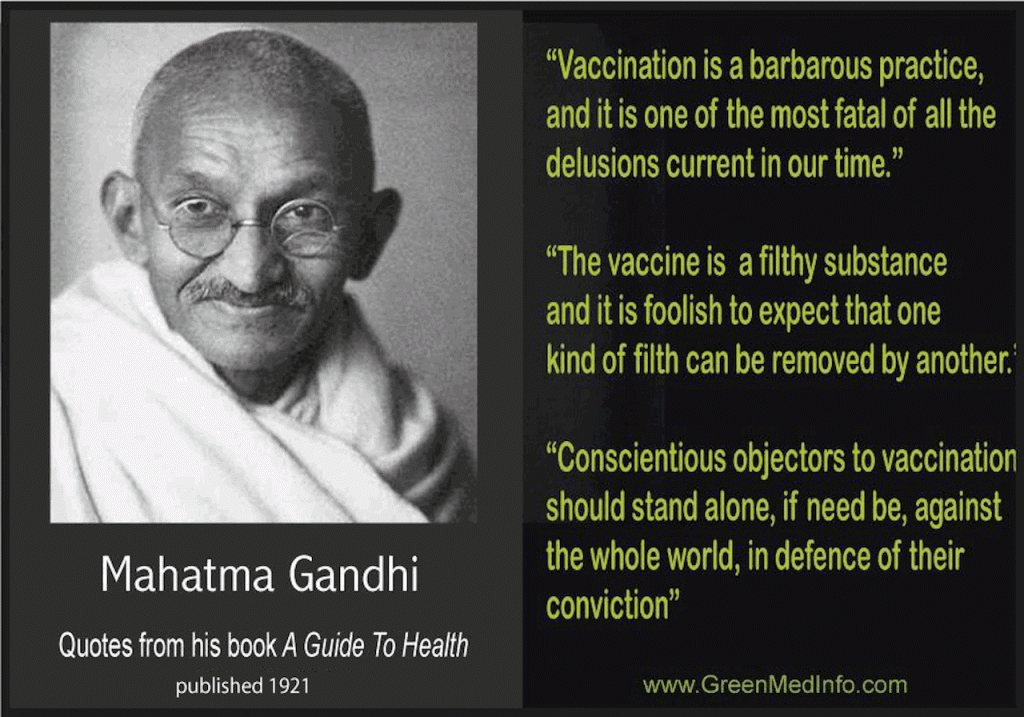


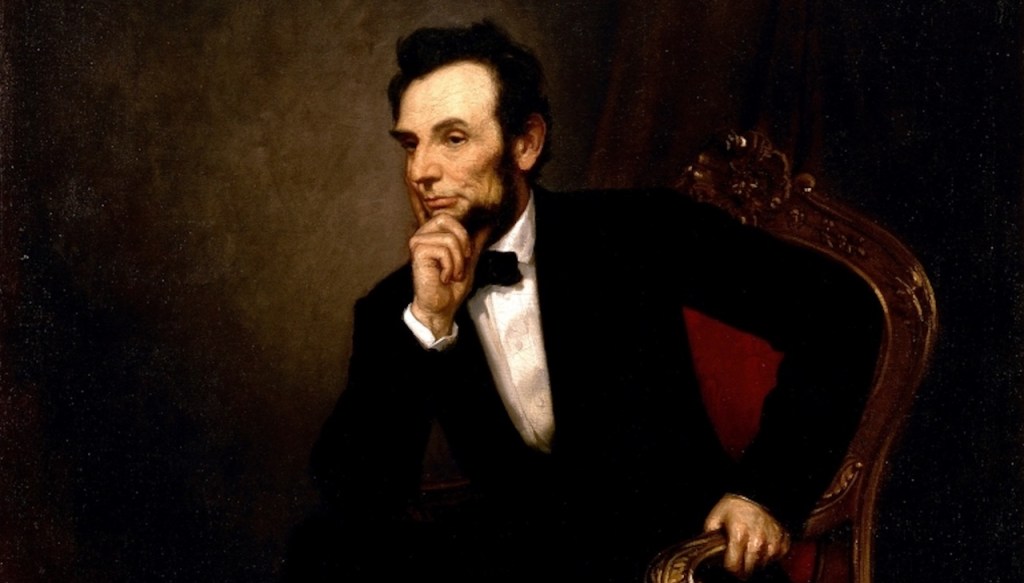
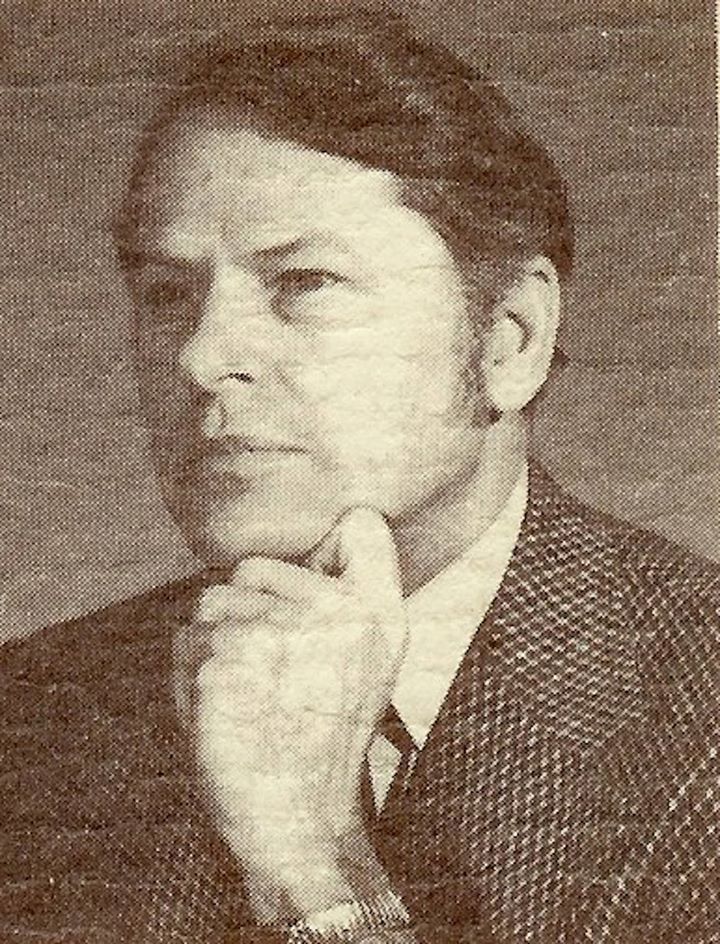
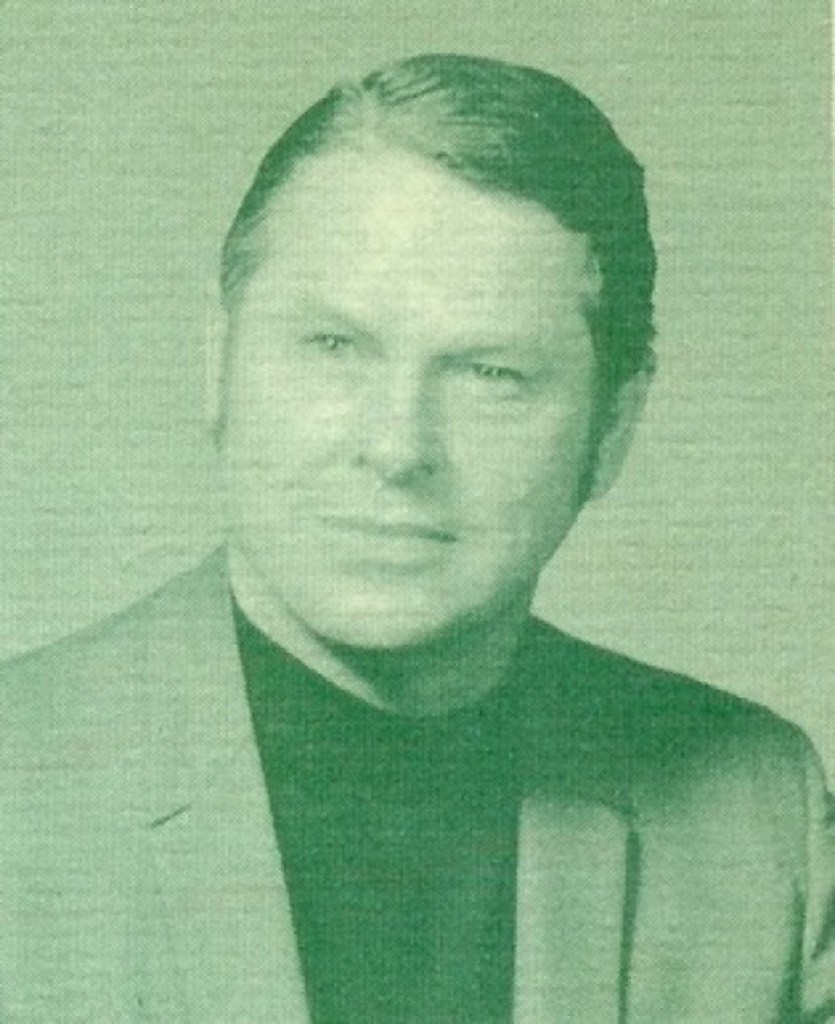




 Linda's Literary Home