Linda's Literary Home

Author: Linda Sue Grimes

  • Elizabeth Barrett Browning’s Sonnet 18 “I never gave a lock of hair away”

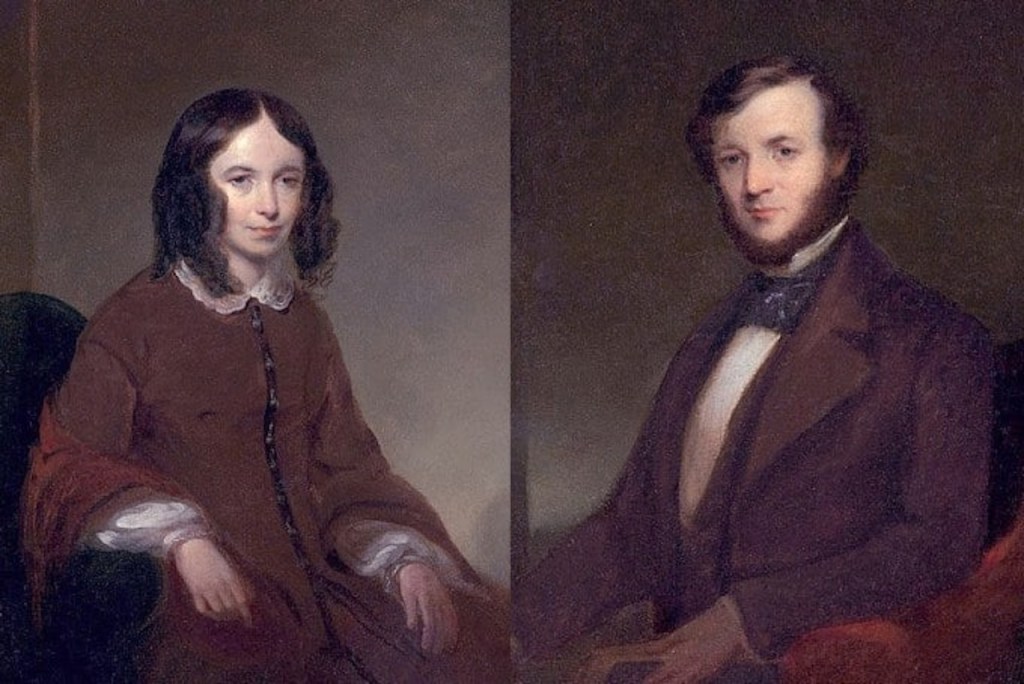
    Image: Elizabeth Barrett Browning and Robert Browning – 1852. Portraits painted by Thomas Buchanan Read

    Elizabeth Barrett Browning’s Sonnet 18 “I never gave a lock of hair away”

    In sonnet 18 “I never gave a lock of hair away” from Elizabeth Barrett Browning’s “Sonnets from the Portuguese,” the speaker dramatizes the simple act of giving a lock of her hair to her belovèd.

    Introduction with Text of Sonnet 18 “I never gave a lock of hair away”

    Sonnet 18 “I never gave a lock of hair away” from Elizabeth Barrett Browning’s Sonnets from the Portuguese reveals the speaker musing on her feelings as she affords her belovèd the gift of a lock of her hair, of which she emphasizes its purity in that no other man has touched it.

    The tentative and lonely speaker continues to create little dramas in her developing relationship with her friend and belovèd, who happens to be a fellow poet.  No doubt her lover appreciates her musing and feels a great sense of pride in having her composing for his benefit.

    And the poet/speaker herself continues to develop from the shy individual whose countenance had thus far bespoken only melancholy, derived from much physical and mental suffering.

    Sonnet 18 “I never gave a lock of hair away”

    I never gave a lock of hair away
    To a man, Dearest, except this to thee,
    Which now upon my fingers thoughtfully,
    I ring out to the full brown length and say
    ‘Take it.’ My day of youth went yesterday;
    My hair no longer bounds to my foot’s glee,
    Nor plant I it from rose or myrtle-tree,
    As girls do, any more: it only may
    Now shade on two pale cheeks the mark of tears,
    Taught drooping from the head that hangs aside
    Through sorrow’s trick. I thought the funeral-shears
    Would take this first, but Love is justified,—
    Take it thou,—finding pure, from all those years,
    The kiss my mother left here when she died.

    Commentary on Sonnet 18  “I never gave a lock of hair away”v

    In sonnet 18 “I never gave a lock of hair away,” the speaker is dramatizing a little ritual of the simple act of giving a lock of her hair to her lover.  Such gift giving was a common occurrence in that era, but to this speaker, it becomes a momentous event owing to her years of solitary confinement and physical as well a mental suffering.

    First Quatrain:  A Virgin Lock

    I never gave a lock of hair away
    To a man, Dearest, except this to thee,
    Which now upon my fingers thoughtfully,
    I ring out to the full brown length and say

    The speaker begins by claiming that she has never given any other man a lock of her hair; it is, therefore, to her a particularly special act that she is now conferring on her lover this special lock. 

    She has excised a few strands that extend are the exact full length of her hair which she designates as brown in color, even though she later affirms that she is no longer a young woman.

    The strands rest upon her “fingers” as she philosophically dramatizes the event by saying a few words over them.  The object takes on a status of a sacred relic as she seems almost prayerful in handling them.

    This speaker is almost always full of drama, from agonizing over her miseries to proclaiming her now vast and growing love and affection for her belovèd. Her life is the stuff and substance of her poetry, and she lives it in each and every moment.

    This speaker’s intensity remains the very stuff of living life “deliberately” as promulgated by Barrett Browning’s contemporary, the American philosopher Henry David Thoreau, who affirmed, “I went to the woods because I wished to live deliberately.”  This speaker, in nurturing a love relationship with a fellow poet, is living deliberately as she composes verses exploring and celebrating that relationship.

    Second Quatrain:  Justifying the Gift

    ‘Take it.’ My day of youth went yesterday;
    My hair no longer bounds to my foot’s glee,
    Nor plant I it from rose or myrtle-tree,
    As girls do, any more: it only may

    The speaker hands the hair to her lover and commands him, “Take it.” She then reveals the fact that she is no longer a young woman.  She emphasizes that her youth has already passed her by.  She no longer runs and jumps and skips thus causing her hair to jostle about as she did when she was a child. 

    The speaker no longer performs little rituals with it such as offering strands of her hair to birds to build their nests.  She needs to justify giving away this lock of hair, just as her personality motivates her to justify everything she does and feels.  Such justification remains part of her notion of living life through deliberate acts.

    First Tercet:  Covering Her Poor Cheeks

    Now shade on two pale cheeks the mark of tears,
    Taught drooping from the head that hangs aside
    Through sorrow’s trick. I thought the funeral-shears

    In the first tercet of the sestet, the speaker then divulges the use to which she has long put her locks of hair, and it is not surprising that that use would be bound closely to her sorrow with which has lived her entire life. 

    The speaker does not disappoint as she reveals that the only use for those locks of brown hair has been to cover her poor cheeks which are so often streaked with tears.  She has shed tears so often and so profusely that she hardly recognizes herself without those streak running down her face.

    Those locks of hair have simply hung down over those tear-stained cheeks, and they have learned to hide the sorrow that urges those tears. She has become habituated to tilting her head a certain way to encourage the hair to act as a curtain to shield her sadness.

    This speaker’s framing of the rituals with simple strands of falling hair reveals the clever artist whose dramatic verse offers such colorful images that unfold the nature of her cloistered life.  Such drama emphasizes the importance of her new relationship with the important belovèd, who can now help her release the past agony with which she has had to contend.

    Second Tercet:  Her Chaste Hair

    Would take this first, but Love is justified,—
    Take it thou,—finding pure, from all those years,
    The kiss my mother left here when she died.

    The speaker’s final dramatic pose reveals that she thought some mortician would be the one to cut her hair. This image again emphasizes the morbidity of the thoughts with which the speaker has had to grapple for so many empty years. 

    But now her lover has came along and “justified” her cutting it herself and presenting it to him.  Her relief from the past morbid imagery becomes palpable.  She is finally free to accept that happiness may actually become a central feature in the existence.

    The speaker then emphasizes again that the hair is as pure as the day her mother left “the kiss” on it before she died.  She is repeating and emphasizing her claim that no other man has had access to her chaste hair.  The purity of this lock of hair becomes symbolic of the purity of the love relationship between the speaker and her belovèd.

  • Elizabeth Barrett Browning’s Sonnet 17 “My poet, thou canst touch on all the notes”

    Image: Elizabeth Barrett Browning – Getty Images

    Elizabeth Barrett Browning’s Sonnet 17 “My poet, thou canst touch on all the notes”

    In sonnet 17 “My poet, thou canst touch on all the notes,” the poet’s always melancholy speaker muses on the art of poetics in her relationship with her poet/lover.  She considers her role in his art and how they might in future employ imagination to continue to be creatively productive.

    Introduction withText of Sonnet 17 “My poet, thou canst touch on all the notes”

    In sonnet 17 from her classic work Sonnets from the Portuguese, Elizabeth Barrett Browning again allows her speaker to hint at melancholy as she continues her efforts to sustain and understand her new love relationship, and her always melancholy speaker is now musing on the poetics of her relationship with her poet/lover.

    Elizabeth Barrett Browning’s speaker will continue to include a place for doubt as she journeys through her sequence of love songs to her belovèd.   The speaker’s charm remains subtle while always tinged with the possibility of sorrow.  Even as that former sadness in which she dwelt so heavily subsides, its specter seems forever to simmer just below the surface of consciousness.

    Sonnet 17 “My poet, thou canst touch on all the notes”

    My poet, thou canst touch on all the notes
    God set between his After and Before,
    And strike up and strike off the general roar
    Of the rushing worlds a melody that floats
    In a serene air purely. Antidotes
    Of medicated music, answering for
    Mankind’s forlornest uses, thou canst pour
    From thence into their ears. God’s will devotes
    Thine to such ends, and mine to wait on thine.
    How, Dearest, wilt thou have me for most use?
    A hope, to sing by gladly ? or a fine
    Sad memory, with thy songs to interfuse?
    A shade, in which to sing—of palm or pine?
    A grave, on which to rest from singing ? Choose.

    Commentary on Sonnet 17  “My poet, thou canst touch on all the notes”

    In sonnet 17 “My poet, thou canst touch on all the notes,” the poet’s always melancholy speaker muses on the poetics involved in her relationship with her poet/lover. A serious relationship between two poets would necessarily involve the creation of poetry and its ability to bind the lovers in certain literary ways.

    First Quatrain:  Praise for Poetic Prowess

    My poet, thou canst touch on all the notes
    God set between his After and Before,
    And strike up and strike off the general roar
    Of the rushing worlds a melody that floats

    The speaker in Elizabeth Barrett Browning’s sonnet 17 “My poet, thou canst touch on all the notes”  from Sonnets from the Portuguese addresses her belovèd, asserting that he 

    has ability to range far and wide in broaching the music that plays between the two artist/lovers.   She is quietly suggesting that God is bringing the two together through whisper of love that has played in their souls from the time before they even met.

    The speaker’s high praise for her lover’s poetic prowess demonstrates a shift in her observation from her own lowly station to his art. Because the speaker herself is a poet, she has, no doubt, known that she must eventually address the issue that both she and her belovèd share the same avocation.   It might well be expected that she will elevate his while remaining humble about her own, and that expectation is fulfilled in this poetic offering.  

    The speaker credits her belovèd with the ability to create worlds that make the ineffable mystery understandable to the ordinary consciousness; he is able to herald celestial music that contends with the creation of whole worlds of emotion.   The “rushing worlds” may seek to drown love in its massive sound, but her poet/lover’s ability to tame those sound renders the cacophony into melodies that are easily accepts.

    Second Quatrain:   Curing Boredom

    In a serene air purely. Antidotes
    Of medicated music, answering for
    Mankind’s forlornest uses, thou canst pour
    From thence into their ears. God’s will devotes

    The melody glides easily through an atmosphere made pure and serene by the unique ability of her poet/love to convert all chaos into peace, as well as all sadness into contentedness.  Mankind will find his dramatization “medicated music,” which will cure the boredom of “mankind’s forlornest uses.” Her belovèd retains the unique marvelous, unique talent to spill his melodic strains “into their ears.”

    First Tercet:  A Drama Sanctioned by the Divine

    Thine to such ends, and mine to wait on thine.
    How, Dearest, wilt thou have me for most use?
    A hope, to sing by gladly ? or a fine

    The speaker asserts that her greatly talented lover’s drama is, indeed, sanctioned by the Divine, and she is motivated as she patiently expects his creations to flaunt their magic and music to her as well.

    The speaker puts a complicated question to her belovèd: “How, Dearest, wilt thou have me for most use?” In that the speaker would perfectly fulfill her position as muse, she makes clear that she will be right alongside him in his every effort to sustain his God-given abilities.  Regardless of the theme or subject, whether it be “a hope, to sing by gladly,” the speaker suggests that she will continue to praise where necessity takes her.

    Second Tercet:  Useful Powers of Sorrow

    Sad memory, with thy songs to interfuse?
    A shade, in which to sing–of palm or pine?
    A grave, on which to rest from singing ? Choose.

    This speaker is not yet ready to relinquish her references to melancholy; thus her question continues with a set of propositions: perhaps she will offer “a fine / Sad memory.” She will, therefore, not be surprised that her powers of sorrow may be useful to them both in their poetic pursuits.  But the speaker also wonders if death themes might intrude at some point: “A shade, in which to sing—of palm or pine? / A grave, on which to rest from singing?”  

    It just may be that they will both become so satisfied with their comfortable love that they will have to rely more on imagination than they had ever thought. Thus the speaker admonishes her poetically talented belovèd that at some poi

  • The Open Window

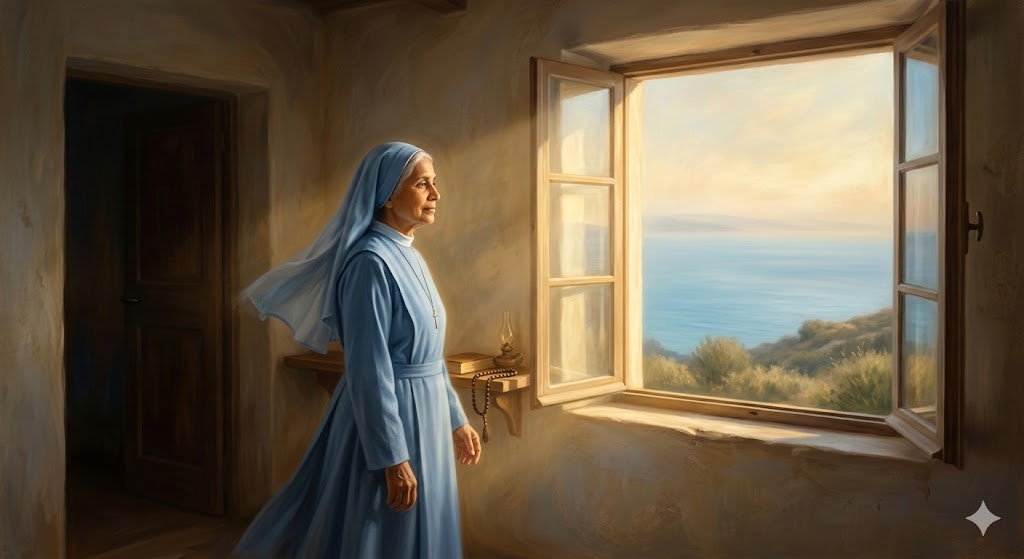
    Image:  Created by Gemini Inspired by “The Open Window”

    The Open Window

    Seven Rimed Couplets for Sister Parvati

    As the Divine Belovèd reveals 
    The closing door, all melodrama repeals 
    Her burden, and to the open window grand, 
    She will step into the light and stand. 
    Peering into the blue of mystic seas, 
    She will bask in the divine restoring breeze. 
    With the Creator of Souls will her soul glow— 
    The Divine Mind her mind the mystery show. 
    He taught her to remember that the soul 
    Through eternal tranquility remains whole  
    Though the mind darts hither and yon 
    And the body equals dust, dusk to dawn.
    She will practice the joy of love night and day, 
    And to earn the bliss of stillness, His word obey.

  • In Our Own Paradise

    Image: Ron & Linda – SRF World Convocation – Lake Shrine – Los Angeles, CA

    In Our Own Paradise

    for my belovèd husband, my sweet Ron

    So, what if the sidewalks were painted yellow?
    Something horribly bright might happen:
    A ball of brine might replace the moon—
    Yet we would still find our favorite table
    At any café in any town we choose to visit.

    You would still smile every time
    You remember where we have been
    Each year as we have followed the map—
    Unfettered, unafraid, roving in Joy.
    Shining mugs clinging to our Solace.

    Scoffers have long been repudiated.
    We have snuffed all their guesses
    That we would part bitter and repentant.
    You have remained my better hero,
    And I have become your solid half.

    Image: Ron & Linda – SRF World Convocation – Meditation Gardens – Encinitas, CA by the Pacific

    I take flight in words to remind you
    Of your quiet beauty, and the stars remind us
    That we were long aligned to follow a shared destiny.
    We have crafted on earth as near a heaven
    As is allowed by this dual-powered Maya delusion.

    Our home allows us to breathe, stretch, and be still,
    Embracing the boundary that holds us
    In the evanescent glory that the larger world tries
    So hard to conceal in pettiness and selfish riots,
    That work so hard at tarnishing with its lies.

    Image: Our Backyard Sanctuary – The Cosmos in Bloom

    From the pocked past, we have grown smooth edges.
    Each a different spiritual identity, united yet unique,
    We go about our days in harmony and balance,
    Practicing spirit as the world traffics in mud-clod ways,
    Stewing in caves of ignorance and deceit.

    Forsaking the past has become a blessing
    And even if we must recall certain evil acts
    Practiced against us, our ark points toward Eternity,
    Where we will abide in the land beyond dreams—
    Yet, for now, in-but-not-of this valley of sorrows.

    We are perfecting skills, leaving this Maya dream behind us;
    Thus, we have learned to breathe in our own paradise.

    Reading

    Image: Our Backyard Sanctuary – Governed by St. Francis, Birds, and Flowers
  • Elizabeth Barrett Browning’s Sonnet 16 “And yet, because thou overcomest so”

    Image: Elizabeth Barrett Browning – NPG, London

    Elizabeth Barrett Browning’s Sonnet 16 “And yet, because thou overcomest so”

    The speaker in Elizabeth Barrett Browning’s sonnet 16 “And yet, because thou overcomest so”finally capitulates to the all consuming love that she has tried to deny herself, allowing herself only a speck of doubt.

    Introduction with Text of Sonnet 16 “And yet, because thou overcomest so”

    The speaker in Elizabeth Barrett Browning’s sonnet 16 from Sonnets from the Portuguese is  dramatizing her nearly concluded acceptance of the love from her “noble” king-like suitor.  She establishes  a colorful metaphor of royalty to express her new-found emotions.

    Sonnet 16 “And yet, because thou overcomest so”

    And yet, because thou overcomest so,
    Because thou art more noble and like a king,
    Thou canst prevail against my fears and fling
    Thy purple round me, till my heart shall grow
    Too close against thine heart henceforth to know
    How it shook when alone. Why, conquering
    May prove as lordly and complete a thing
    In lifting upward, as in crushing low!
    And as a vanquished soldier yields his sword
    To one who lifts him from the bloody earth,
    Even so, Belovèd, I at last record,
    Here ends my strife. If thou invite me forth,
    I rise above abasement at the word.
    Make thy love larger to enlarge my worth.

    Commentary on Sonnet 16 “And yet, because thou overcomest so”

    The speaker can finally be seen as capitulating to the all consuming love that she has tried to deny herself, allowing herself only a speck of doubt.

    First Quatrain:   Overcoming Fears and Doubts

    And yet, because thou overcomest so,
    Because thou art more noble and like a king,
    Thou canst prevail against my fears and fling
    Thy purple round me, till my heart shall grow

    The speaker, picking up from prior adversity, can now give in to her belovèd’s advances because he has, at last, been able to overcome her fears and doubts. She again likens him to royalty.  She labels him “noble” and he is able to rule her heart as king would rule his subjects.  

    Her royal suitor is banishing her fears as he places his protective shield “purple” around her life.  All of his noble, royalty-like actions and behaviors all her heart to grow fond of him and life that he has is now so gently guiding. 

    Her lover has the kingly powers of protecting even a doubtful heart such as her own. He can place his royal purple cape around her shoulders and affect the very beating of her heart.

    Second Quatrain:  A Fearful Heart

    Too close against thine heart henceforth to know
    How it shook when alone. Why, conquering
    May prove as lordly and complete a thing
    In lifting upward, as in crushing low!

    As her heart beats close to his, the speaker finds it difficult to grasp that it once felt so afraid of life and living when it found itself solitary and isolated. She has discovered that she can, in fact, imagine herself lifted from her self-imposed prison of melancholy.   The speaker can succumb to upward mobility as readily as she did to the downward spiral, “as in crushing low!”

    First Tercet:  A Bizarre Comparison

    And as a vanquished soldier yields his sword
    To one who lifts him from the bloody earth,
    Even so, Belovèd, I at last record,

    The speaker then dramatically and bizarrely compares her situation metaphorically to a “soldier” who surrenders in battle to “one who lifts him from the bloody earth.” The enemy becomes nurturing once his foe has been vanquished.    But for her, the battle was very real, and thus the metaphor remains quite apt. Thus she can finally and completely surrender.

    Second Tercet:  Reserving a Space to Doubt

    Here ends my strife. If thou invite me forth,
    I rise above abasement at the word.
    Make thy love larger to enlarge my worth.

    The speaker’s handing over of weapons and defensive mechanisms is accompanied by her revelation that her sorrowful struggles are ending.  She is on the verge of a major change of attitude from sadness to happiness, if she has the courage of accept that transformation.

    True to character, however, she must at least reserve some bit of possible future failure by stating her declaration in a conditional clause, “if thou invite me forth.”   She emphasizes “thou,” to make it clear that her belovèd is the only one to whom she could ever say these things.

    The speaker has quite likely almost one hundred per cent become convinced that he has invited her, but she still feels that she has to keep any downturn in her sights.   But if he does, in fact, keep that invitation open for her, she will be able to transcend her pain and rise above all the sorrow that has kept her abased for so many years.

    Once again, the speaker is giving him a great deal of power as she suggests that as her new attitude will “make thy love larger,” it will also “enlarge my worth.”   Thus loving him will increase her own value, not in large part because, in her eyes, his value is as large as a king’s worth. His royalty will become hers.

  • Crickets in the Morning

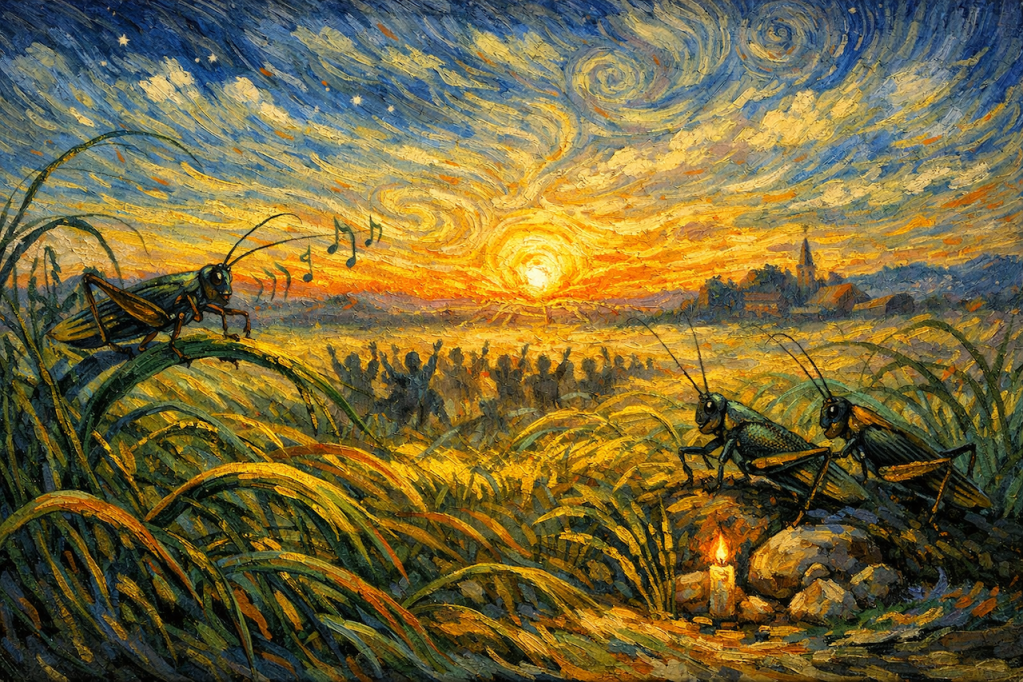
    Image:  “Autumn dawn with crickets and prayers” created by ChatGPT inspired by “Crickets in the Morning”

    Crickets in the Morning

    “It has always seemed to me that autumn crickets are especially loud.”  —anonymous

    The politics of anguish
    Clatters in the voices
    Of the masses
    That would sing in dawn
    Among the grasses.

    When you hear them
    In the morning
    You wonder what
    They did all night.

    And if they prayed for morning.

  • Elizabeth Barrett Browning’s Sonnet 15 “Accuse me not, beseech thee, that I wear”

    Elizabeth Barrett and Robert Browning – Two Poets in Love

    Elizabeth Barrett Browning’s Sonnet 15 “Accuse me not, beseech thee, that I wear”

    The speaker in sonnet 15 concentrates on her ambiguous facial expressions that have yet to catch up with her overflowing heart. She finds it difficult to be happy after being sad for most of her life.

    Introduction with Text of Sonnet 15 “Accuse me not, beseech thee, that I wear”

    Elizabeth Barrett Browning’s sonnet 15 from Sonnets from the Portuguese finds the speaker again on the edge of doubt.   She has lived with a gloomy countenance for so long that she is reluctant to change it to one of sunshine and gaiety, even as her belovèd apparently chides her for the melancholy.

    Sonnet 15 “Accuse me not, beseech thee, that I wear”

    Accuse me not, beseech thee, that I wear
    Too calm and sad a face in front of thine;
    For we two look two ways, and cannot shine
    With the same sunlight on our brow and hair.
    On me thou lookest with no doubting care,
    As on a bee shut in a crystalline;
    Since sorrow hath shut me safe in love’s divine,
    And to spread wing and fly in the outer air
    Were most impossible failure, if I strove
    To fail so. But I look on thee—on thee—
    Beholding, besides love, the end of love,
    Hearing oblivion beyond memory;
    As one who sits and gazes from above,
    Over the rivers to the bitter sea.

    Commentary on Sonnet 15 “Accuse me not, beseech thee, that I wear”

    The speaker has remained in a sad state for so many years that she is now finding it difficult to be happy even as she has so much for which to be happy.  She knows she should be smiling but she is more accustomed to frowning.

    First Quatrain:  A Solemn Expression

    Accuse me not, beseech thee, that I wear
    Too calm and sad a face in front of thine;
    For we two look two ways, and cannot shine
    With the same sunlight on our brow and hair.

    Addressing her belovèd, the speaker begs him not to worry over her solemn expression. She has experienced great difficulty accepting this love relationship, in part because of her penchant for melancholy. 

    She has suffered physically and mentally for so long that it has become a part of her character and continues to disfigure her face.  She laments that she cannot change her facial expression so quickly, even with the shining example of her brilliant lover before her. 

    She dramatically asserts that because the two of them each “look two ways,” they cannot reflect the same kind of sunny disposition.  Their faces will remain according to their earlier penchant for each relevant emotion.

    Second Quatrain:   A Transformative State

    On me thou lookest with no doubting care,
    As on a bee shut in a crystalline;
    Since sorrow hath shut me safe in love’s divine,
    And to spread wing and fly in the outer air

    The speaker avers that her belovèd is able to look at her with great excitement and fervor without doubt or perturbation because he is as content as if he were observing “a bee in a crystalline.” But for her, the experience is still in a transformative state.

    She has been engulfed in “sorrow” for such an extended period of time that she feels she is still “shut [ ] safe in love’s divine.” Thus, still somewhat paralyzed by the full prospect of love, her unexercised limbs are still incapable of functioning well.

    First Tercet:  A Metaphorical Bird

    Were most impossible failure, if I strove
    To fail so. But I look on thee—on thee—
    Beholding, besides love, the end of love,

    The speaker invokes the metaphor of a bird flying or perhaps a bee that would “spread wing and fly,” but she claims that if she tried to “fly,” she would crash in failure.  Such a failure would be so odious that she calls it a “most impossible failure.” And she insists that she does not dare “fail so.” 

    When she looks at her belovèd, she sees such pure love that she thinks she sees through eternity to the “end of love”—not the stoppage of love but the goal of love, or the result that keeps her somewhat cautious.

    Second Tercet:  Transported by Love

    Hearing oblivion beyond memory;
    As one who sits and gazes from above,
    Over the rivers to the bitter sea.

    The speaker senses in her lover’s look a perfection of love that allows her not only to see but to hear “oblivion beyond memory.” She seems to be transported to a height from which she can observe the phenomena below. 

    She can see “the rivers [flowing] to the bitter sea.” The sea remains “bitter” for now, but with all those rivers feeding it, she senses that one day she will look on it with kinder, more confident eyes.

  • Tennyson’s “Come Not, When I Am Dead”

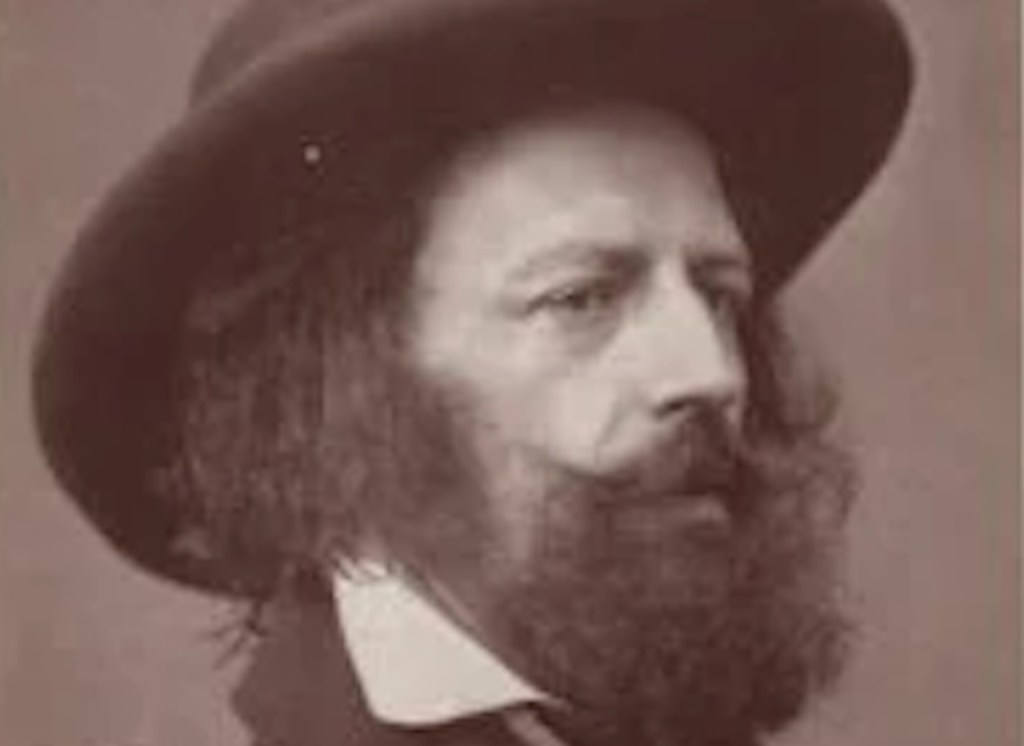
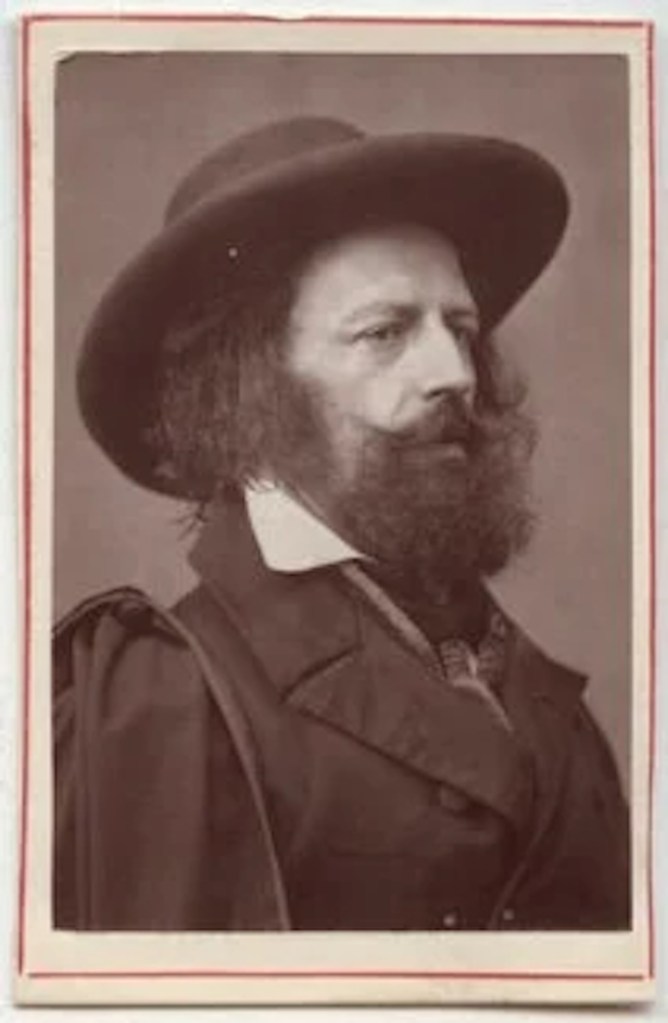
    Image: Alfred, Lord Tennyson –  National Portrait Gallery, London

    Tennyson’s “Come Not, When I Am Dead”

    Alfred, Lord Tennyson’s “Come Not, When I Am Dead” features qualities of the versanelle form, using stark images as it concludes its message in just twelve short lines.

    Introduction and Text of “Come Not, When I Am Dead”

    Alfred, Lord Tennyson’s versanelle, “Come Not,When I am Dead,” features two rimed sestets each with the rime scheme, ABABCC. Each sestet features a concluding couplet with the same rime. The poem dramatizes the theme of a spurned lover who speaks harsh words to the one who has jilted him.

    Come not, When I am Dead

    Come not, when I am dead,
    To drop thy foolish tears upon my grave,
    To trample round my fallen head,
    And vex the unhappy dust thou wouldst not save.
    There let the wind sweep and the plover cry;
    But thou, go by.

    Child, if it were thine error or thy crime
    I care no longer, being all unblest:
    Wed whom thou wilt, but I am sick of Time,
    And I desire to rest.
    Pass on, weak heart, and leave me where I lie:
    Go by, go by.

    Commentary on “Come Not, When I Am Dead”

    The speaker is dramatizing an unusual, acerbic message for a former lover.

    First Sestet: No Visiting

    Come not, when I am dead,
    To drop thy foolish tears upon my grave,
    To trample round my fallen head,
    And vex the unhappy dust thou wouldst not save.
    There let the wind sweep and the plover cry;
    But thou, go by.

    The speaker addresses his former lover with the intention of showing her that she is silly, so silly that after his death, the speaker does not welcome her to come to his grave and mourn his passing. He does not want her to “drop [her] foolish tears upon [his grave].”  

    Furthermore, the speaker does not want her “to trample round [his] fallen head.” He paints her as a graceless person grinding the dirt around his grave into “unhappy dust.” True lovers who truly mourn the loss of a lover would want to scoop up some of that dirt and save it, but not his lover; she would merely cause his grave to look untidy.

    The speaker demands that she not visit his resting place but instead merely “let the wind sweep” in place of her skirts swishing around his grave.  He welcomes a crying bird and imagines its plaint more appropriate than the “foolish tears” of his faithless former love.  Thus, the speaker demands that she “go by.” She should just keep walking past his grave and not stop and pretend to care.

    Second Sestet:  Keep Walking

    Child, if it were thine error or thy crime
    I care no longer, being all unblest:
    Wed whom thou wilt, but I am sick of Time,
    And I desire to rest.
    Pass on, weak heart, and leave me where I lie:
    Go by, go by.

    Continuing his disdain for his fickle lover, the speaker addresses her by calling her “Child.” He speculates that if she was, in fact, the cause of his death, he “care[s] no longer.” Indicating that at one time he cared very much, he makes it clear that now he does not. 

    She abandoned him and caused him to be “unblest” by her love, and even if her departure has killed him, he does not welcome her pretense or acknowledgment that she once cared for him.

    The speaker tells her to “[w]ed whom thou wilt.” By this remark, he is, again, trying to demonstrate his current apathy. But he adds that he is “sick of Time, / And [he] desire[s] to rest.” His protest reveals that the love he lost has taken a mighty toll on him; it has made him not care for anything in life any longer.

    The speaker then commands her once again to keep away, to keep walking, not to stop at his grave, but simply “Go by, go by.” He repeats for a third time that he wants her pass by his grave and not stop to mourn him.

    A Common Theme

    The speaker, of course, has not died but uses the imagined occasion of his death to emphasize how destructive to his heart has been the break with the lover addressed in the poem. This ploy remains a common theme for many lost love poems, but an unusual choice for Tennyson, who is famous for his profundity.

    Full Image: Alfred, Lord Tennyson – National Portrait Gallery, London
  • A Soul Escaping the Soil

    Image: Created by ChatGPT inspired by “A Soul Escaping the Soil”

    A Soul Escaping the Soil

    I’m not the little girl I once knew.
    My womanhood blooming like compost:
    Roses growing from my cheeks.
    My hands pushing up daisies.

    I was always a quiet woman.
    That stone speaks louder than I ever did,
    Announcing my name and age
    To every eye that passes by.

    I’m not the same woman anymore.
    My neighborhood hovering over hers.
    She pulls at me, though, as if I still had heartstrings.
    I left her slowly, the bird accustomed to its cage.

    My skin of light is not hers now.
    She lies stone still in her motion of decomposing.