Linda's Literary Home

Category: Edgar Lee Masters

  • Edgar Lee Masters’  “Benjamin Pantier” and “Mrs. Benjamin Pantier”

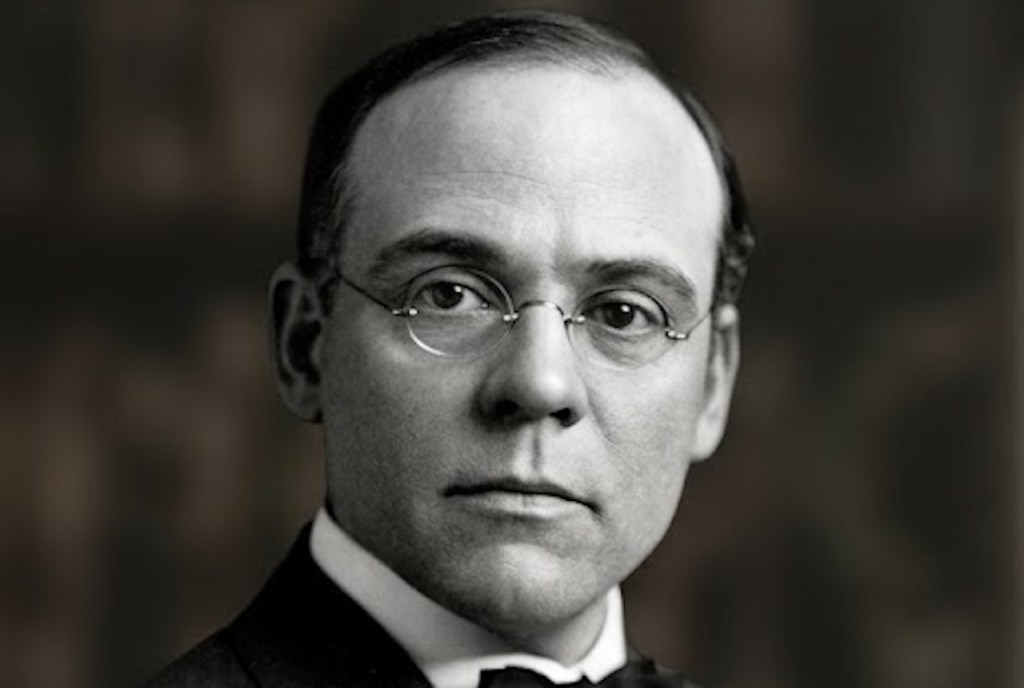
    005a Image/Edgar-Lee-Masters-Portrait.jpg
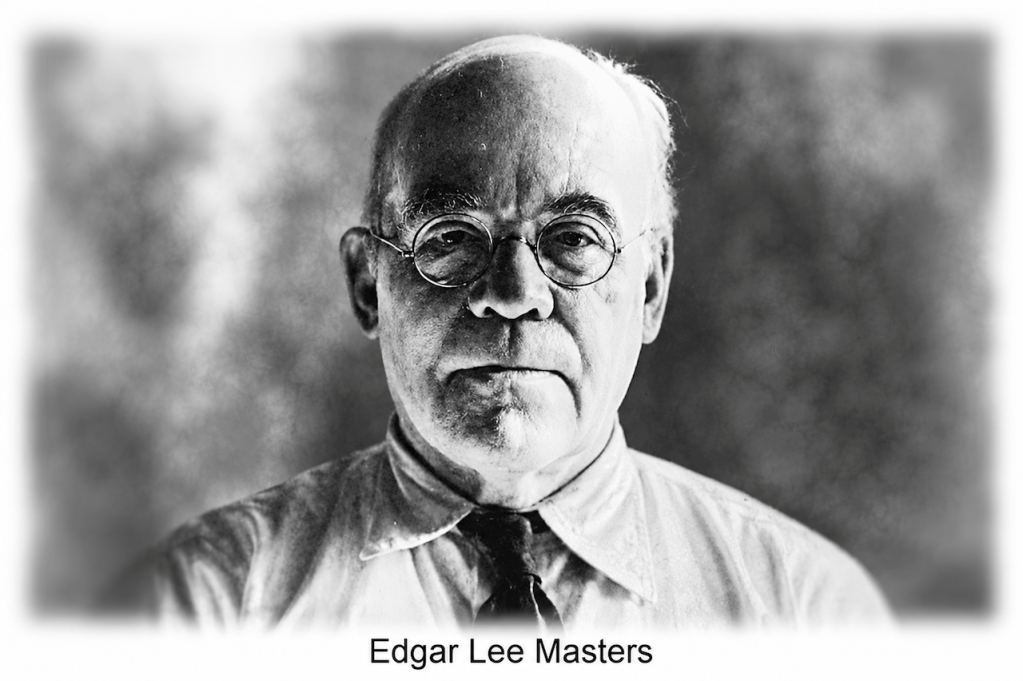
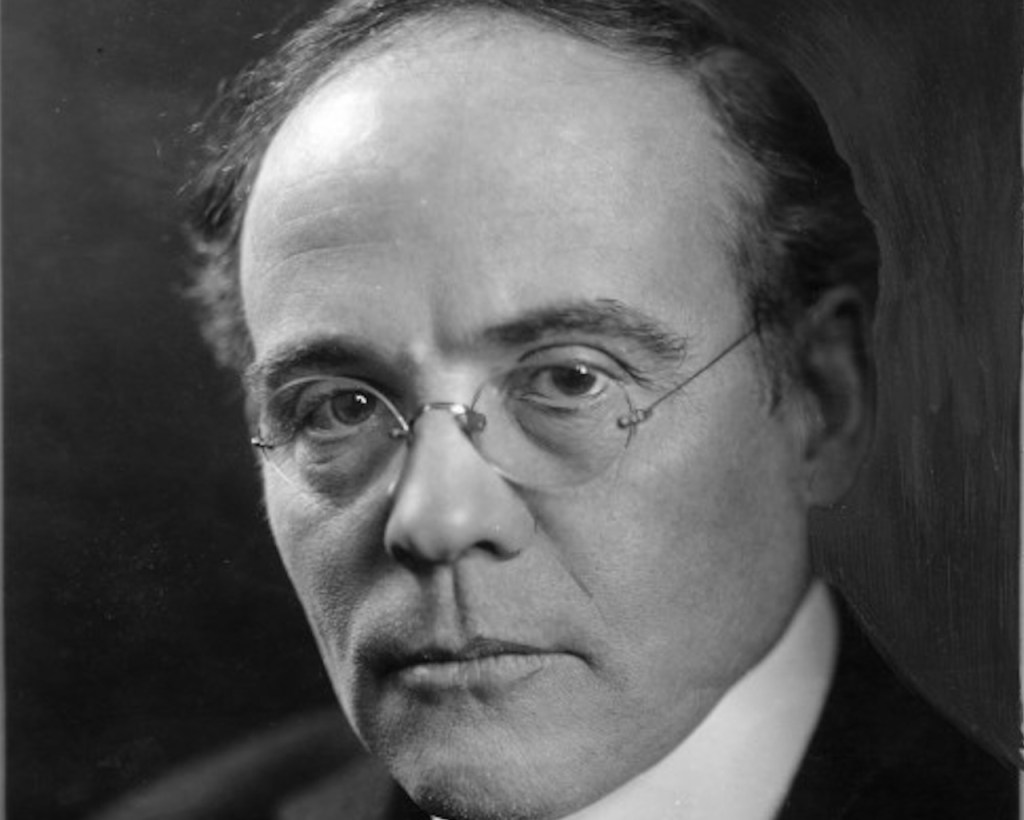
    Image: Edgar Lee Masters

    Edgar Lee Masters’  “Benjamin Pantier” and “Mrs. Benjamin Pantier”

    Feminine unbridled arrogance along with overweening vanity, and masculine weakness have coupled to bring about the destruction of the marriage of Mr. and Mrs. Benjamin Pantier.

    Introduction to the Pantier Sequence

    Edgar Lee Masters’ “Benjamin Pantier” and “Mrs. Benjamin Pantier” from the American classic, Spoon River Anthology, portray the complaint of a husband against his wife and the wife’s response.

    These two poems begin a short sequence that includes installments from “Reuben Pantier,” the couple’s son, “Emily Sparks,” who was Reuben’s teacher, and “Trainor, the Druggist,” from whom readers learn more about the dynamic of the Reubens’ marriage.

    These little sequences give the entire series the feel of reading a novel. But the main emphasis continues to be on the character studies that they provide.

    Benjamin Pantier

    Together in this grave lie Benjamin Pantier, attorney at law,  
    And Nig, his dog, constant companion, solace and friend.
    Down the gray road, friends, children, men and women,
    Passing one by one out of life, left me till I was alone
    With Nig for partner, bed-fellow, comrade in drink.
    In the morning of life I knew aspiration and saw glory.
    Then she, who survives me, snared my soul
    With a snare which bled me to death,
    Till I, once strong of will, lay broken, indifferent,
    Living with Nig in a room back of a dingy office.
    Under my jaw-bone is snuggled the bony nose of Nig—
    Our story is lost in silence. Go by, mad world!

    Interpretive Recitation of “Benjamin Pantier”  

    Commentary on “Benjamin Pantier”

    While Benjamin Pantier does garner sympathy, he also demonstrates a weakness and failure to own at least part of his pathetic life path.

    First Movement:  Buried with His Dog

    Together in this grave lie Benjamin Pantier, attorney at law,  
    And Nig, his dog, constant companion, solace and friend.
    Down the gray road, friends, children, men and women,
    Passing one by one out of life, left me till I was alone
    With Nig for partner, bed-fellow, comrade in drink.
    In the morning of life I knew aspiration and saw glory.

    The speaker is Benjamin Pantier, who announces that he now lies in his grave with his dog, named Nig, who became his “constant companion, solace and friend.”  Benjamin had been an “attorney at law,” yet he now is filled with pity for himself as he describes his lonely lot.

    Benjamin claims that early on his life showed great promise, “in the morning of life I knew aspiration and saw glory.”  But now he emphasizes this lonely lot; “friends, children, men and women” all left his life “one by one” until he was left with no one but Nig “for partner.”  

    Second Movement:  Marriage Blighted His Life

    Then she, who survives me, snared my soul
    With a snare which bled me to death,
    Till I, once strong of will, lay broken, indifferent,
    Living with Nig in a room back of a dingy office.
    Under my jaw-bone is snuggled the bony nose of Nig—
    Our story is lost in silence. Go by, mad world!

    Benjamin’s life looked bright until he married a woman who became the bane of his existence.  His hatred of his marriage partner led him to a soul-sickness that he could never overcome.

    Benjamin now lies in the same grave with his trusty canine friend’s “bony nose” “snuggled under his “jaw-bone.”  He complains bitterly; “our story is lost in silence. Go by, mad world!”  This sentiment of Benjamin’s dramatic final command echoes W. B. Yeats’ “Cast a cold eye / On life, on death. / Horseman, pass by!” 

    Mrs. Benjamin Pantier

    I know that he told that I snared his soul  
    With a snare which bled him to death.
    And all the men loved him,
    And most of the women pitied him.
    But suppose you are really a lady, and have delicate tastes,
    And loathe the smell of whiskey and onions.
    And the rhythm of Wordsworth’s “Ode” runs in your ears,  
    While he goes about from morning till night
    Repeating bits of that common thing;
    “Oh, why should the spirit of mortal be proud?”
    And then, suppose:  
    You are a woman well endowed,
    And the only man with whom the law and morality  
    Permit you to have the marital relation
    Is the very man that fills you with disgust
    Every time you think of it—while you think of it  
    Every time you see him?  
    That’s why I drove him away from home
    To live with his dog in a dingy room  
    Back of his office.

    Interpretive Recitation of  “Mrs. Benjamin Pantier” 

    Commentary on “Mrs. Benjamin Pantier”

    Trying to set the record straight, Mrs. Pantier further demonstrates the accuracy of her husband’s complaint.


    First Movement:  Her Side of the Story

    I know that he told that I snared his soul  
    With a snare which bled him to death.
    And all the men loved him,
    And most of the women pitied him.

    Mrs. Pantier begins her rebuttal to her husband’s accusation by stating that she knows what he has said about her bleeding “him to death.”  She states the issue in such a way that the reader knows immediately that she wants to share her side of the story and that it will surely not coincide with what Mr. Pantier has said.  

    Mrs. Pantier then states categorically, “all the men loved him / And most of the women pitied him,” a remark that does not comport with Mr. Pantier’s claim that he was left alone.  At this point, the reader will probably doubt Mr. Pantier’s assertion.

    Second Movement:   Her Obnoxious Arrogance

    But suppose you are really a lady, and have delicate tastes,
    And loathe the smell of whiskey and onions.
    And the rhythm of Wordsworth’s “Ode” runs in your ears,  
    While he goes about from morning till night
    Repeating bits of that common thing;
    “Oh, why should the spirit of mortal be proud?”
    And then, suppose:  
    You are a woman well endowed,
    And the only man with whom the law and morality  
    Permit you to have the marital relation
    Is the very man that fills you with disgust
    Every time you think of it—while you think of it  
    Every time you see him?  
    That’s why I drove him away from home
    To live with his dog in a dingy room  
    Back of his office.

    However, after Mrs. Pantier begins her defense, the reader understands the self-importance of this woman.  Her paltry defense for driving her husband from his home is that she fancies herself “a lady” with “delicate tastes.” 

    Mrs. Pantier hears strains of Wordsworth‘s “Ode” ringing in her ears, while her husband “goes about from morning till night” quoting lines from Abraham Lincoln’s favorite poem, “Mortality” by William Knox.  

    For Mrs. Pantier, the British Wordsworth signals gentility and the upper-class befitting a lady, while the American Knox implies low-class individualism and struggle for a living.

    Even more gratingly obnoxious is that Mrs. Pantier fancies herself “well endowed,” but legally and morally, she can indulge her well-endowed body only with a man she finds disgusting.  Thus, because of her vanity and arrogance, she feels justified in driving him from his home, causing him to live only with his dog in his office.
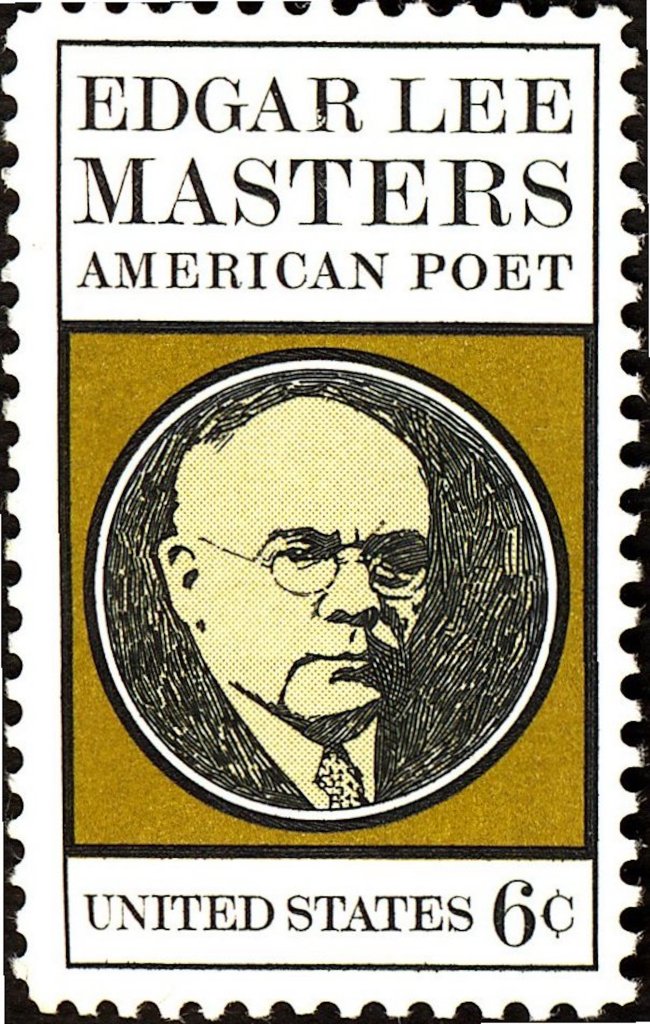
    Image: Edgar Lee Masters – Commemorative Stamp

    The Pantier Sequence

    1.  Benjamin Pantier  A husband who appears to be weakling allowing himself to be cowed by his wife, an arrogant bully.
    2. Mrs. Benjamin Pantier  Unbridled arrogance, overweening vanity along with cowardly weakness have combined to bring about the destruction of the marriage of Mr. and Mrs. Benjamin Pantier.
    3. Reuben Pantier  Reuben Pantier’s colorful character helps dramatize the power of spiritual love for healing the mind, heart, and soul, even through the distance of miles and decades.  Reuben is the son of the dysfunctional couple Mr. and Mrs. Benjamin Pantier.
    4. Emily Sparks  The epitaph is the fourth entry in the sequence of five epitaphs featuring a dysfunctional couple, their son, and the latter’s influential mentor.
    5.  Trainor, the Druggist  This epitaph offers a final installment covering the pitiful story of the Pantiers:  Mr. and Mrs. Benjamin Pantier and their son Reuben.
  • Edgar Lee Masters’ “Kinsey Keene”

    Image:  Edgar Lee Masters -  Alchetron https://alchetron.com/Edgar-Lee-Masters
    Image:  Edgar Lee Masters –  Alchetron

    Edgar Lee Masters’ “Kinsey Keene”

    Edgar Lee Masters’ “Kinsey Keene” offers a unique conundrum as it forces the reader to muse upon the two legendary claims regarding a famous quotation.

    Introduction and Text of “Kinsey Keene”

    Edgar Lee Masters’ “Kinsey Keene” from his American classic Spoon River Anthology focuses on a legendary quotation by the French commander  General Count Etienne Cambronne at the losing end of the Battle at Waterloo.  

    When the British were about to vanquish the Old Guard, British Major-GeneralPeregrine Maitland called for the French to surrender, but Cambronne allegedly responded, “La Garde meurt, elle ne se rend pas!” (“The Guard may die, but it will never surrender”).  Cambronne repudiated the claim that he said those words, and legend has filled in the rest—claiming that he said, “Merde!” which translates variously as “F**k off!” or “Shit!”  

    Now to which legendary quotation Master’s speaker is alluding can be a matter of interpretation:  that he fails to offer the quotation might indicate that he has in mind the obscenity.  However, because he has already quoted the British Major-General’s command, he perhaps is implying the response about no surrender.  Regardless of which quotation the speaker is evoking, the same non-conformist, adversarial attitude is displayed by Kinsey Keene.

    Kinsey Keene

    Your attention, Thomas Rhodes, president of the bank;
    Coolbaugh Whedon, editor of the Argus;  
    Rev. Peet, pastor of the leading church;  
    A. D. Blood, several times Mayor of Spoon River;
    And finally all of you, members of the Social Purity Club—
    Your attention to Cambronne’s dying words,  
    Standing with the heroic remnant  
    Of Napoleon’s guard on Mount Saint Jean
    At the battle field of Waterloo,  
    When Maitland, the Englishman, called to them:
    “Surrender, brave Frenchmen!”—  
    There at close of day with the battle hopelessly lost,  
    And hordes of men no longer the army  
    Of the great Napoleon
    Streamed from the field like ragged strips
    Of thunder clouds in the storm.  
    Well, what Cambronne said to Maitland
    Ere the English fire made smooth the brow of the hill  
    Against the sinking light of day
    Say I to you, and all of you,
    And to you, O world.
    And I charge you to carve it
    Upon my stone.

    Commentary on “Kinsey Keene”

    Edgar Lee Masters’ “Kinsey Keene” offers a unique conundrum which requires readers to ruminate upon the two legendary claims regarding a famous quotation.

    First Movement:  Addressing the Upper Crust

    Your attention, Thomas Rhodes, president of the bank;
    Coolbaugh Whedon, editor of the Argus;  
    Rev. Peet, pastor of the leading church;  
    A. D. Blood, several times Mayor of Spoon River;
    And finally all of you, members of the Social Purity Club—

    Kinsey Keene addresses some of the upper crust of the fictional town of Spoon River: the president of the bank, the editor of the newspaper, the pastor of the leading church, and a “several times” mayor of the town.   He also calls for the attention of “all of you, members of the Social Purity Club”—a fictional club that implies Keene’s disdain for the town’s leaders.

    Second Movement:  Allusion to a Legend

    Your attention to Cambronne’s dying words,  
    Standing with the heroic remnant  
    Of Napoleon’s guard on Mount Saint Jean
    At the battle field of Waterloo,  
    When Maitland, the Englishman, called to them:
    “Surrender, brave Frenchmen!”—  

    The second movement reveals that Keene is drawing attention to those famous, legendary words of the dying French commander, General Count Etienne Cambronne.   Instead of revealing the words, Keene describes the scene:  the French general was “standing with heroic remnant / Of Napoleon’s guard on Mount Saint Jean / At the battle field of Waterloo.” Thus placed, Cambronne was accosted by the command of the British general Maitland, who demanded, “Surrender, brave Frenchmen!”

    Third Movement:  A Lost Battle

    There at close of day with the battle hopelessly lost,  
    And hordes of men no longer the army  
    Of the great Napoleon
    Streamed from the field like ragged strips
    Of thunder clouds in the storm.  

    Again, Keene describes the battlefield.  It is “at close of day,” the battle lost, and the once proud French army of “the great Napoleon” was moving restlessly from the battlefield.  He compares the appearance of  soldiers to “ragged strips / Of thunder clouds in the storm.”  

    Fourth Movement:  What Did Cambronne Say?

    Well, what Cambronne said to Maitland
    Ere the English fire made smooth the brow of the hill  
    Against the sinking light of day
    Say I to you, and all of you,
    And to you, O world.
    And I charge you to carve it
    Upon my stone.

    Keene then inserts the phantom quotation by referring to it with the clause “what Cambronne said to Maitland.”  Before the English continued to demolish the “brow of the hill / Against the sinking light of day,” Cambronne made his famous remark.    Now, Keene defiantly thrusts that same statement at his adversaries and challenges them to engrave the remark upon his grave marker.

    Of course, the French lost the Battle of Waterloo and Napoleon was exiled.  Historians remain uncertain regarding the Cambronne quotation:  perhaps he merely said, “The Guard dies but never surrenders,” or as others have asserted, Cambronne might uttered the obscene, “Merde!”

    This final command to carve the Cambronne quotation upon his stone leaves the reader again with the ambiguity for interpretation:  does Keene want an obscenity carved upon his stone, or just a defiant, “never surrender”?  Either way, he gets his point across—that he never surrendered his own sense of dignity to that of the town’s corrupt leaders.

  • Edgar Lee Masters’ “Judge Somers”

    Image:   Edgar Lee Masters http://www.jackmasters.net/mastelm.html Jack Masters
    Image: Edgar Lee Masters – Jack Masters

    Edgar Lee Masters’ “Judge Somers”

    Judge Somers’ complaint demonstrates that he is jealous of a man whom he deems to occupy a lower rung on the social status ladder than himself. 

    Introduction and Text of “Judge Somers”

    The class warfare that rages in the Spoon River reportage becomes evident as readers make their way through Edgar Lee Masters‘ American classic, Spoon River Anthology.  

    Businessmen, doctors, lawyers, judges, and politicians are the special targets of many of those whose employment ranges from simple shopkeepers, to farmers, to teachers, and householders whose outside job or career is never named.  Of course, preachers and other religious figures seldom come off well in these dramas either, likely owing to the atheist leanings of their creator.

    And the truly lowly dregs of society—murderers, prostitutes, adulterers, drunks, and thieves—are often given a bit too much of the benefit of doubt.  The good-hearted prostitute is often more credible than the banker despite the fact that his heart may be of equal goodness. 

    As in contemporary society where racism remains the primary cudgel of race-baiting hypocrites, back a century or so ago, the -ism du jour was classism, thus the emphasis on class warfare.

    While many of the epitaphs in Edgar Lee Masters’ American classic reveal issues motivated by class warfare, “Judge Somers” offers one of the most pronounced, as the judge deems himself better than his peers.

    The speaker in the epitaph “Judge Somers” is the judge himself, who wants to know why a man of importance, such as himself, has died unnoticed while the town drunk has been well noted.

    Judge Somers

    How does it happen, tell me,
    That I who was the most erudite of lawyers,
    Who knew Blackstone and Coke
    Almost by heart, who made the greatest speech
    The court-house ever heard, and wrote
    A brief that won the praise of Justice Breese—
    How does it happen, tell me,
    That I lie here unmarked, forgotten,
    While Chase Henry, the town drunkard,
    Has a marble block, topped by an urn,
    Wherein Nature, in a mood ironical,
    Has sown a flowering weed? 

    Commentary on “Judge Somers”

    Judge Somers’ complaint demonstrates that he is jealous of a man he deems to occupy a lower rung on the social status ladder than he does.

    First Movement:  Why Me?

    How does it happen, tell me,
    That I who was the most erudite of lawyers,
    Who knew Blackstone and Coke
    Almost by heart, who made the greatest speech
    The court-house ever heard, and wrote
    A brief that won the praise of Justice Breese— 

    This poem consists of two movements each beginning with a command embedded in a question.  The judge is demanding an answer to his question in both instances.  

    Judge Somers begins by asserting his demand/question, posited with “How does it happen, tell me.”  But in the first movement, he does not finish the question proper; he merely prefaces it by reporting all of his achievements.

    The judge feigns no modesty in his self-evaluation but flatly asserts that he was the most brilliant of attorneys.  Part of his erudition and brilliance was due to his having “almost by heart Blackstone and Coke.”  

    The judge is alluding to two British legal writers—Sir William Blackstone (1723-1780), who wrote the Commentaries, and Sir Edward Coke(1552-1634), who wrote and published treatises titled Institutes of the laws of England.

    The judge’s knowledge of these works sounds much more important than it is; a lawyer or judge practicing in a 19th century Illinois rural community would hardly be confronted with issues dealt with in these obscure legal works.

    Judge Somers then boasts that he “made the greatest speech / The court-house ever heard.”  In his own mind, not only was he a great orator, but he also “wrote / A brief that won the praise of Justice Breese.”  

    Again, the fictional speaker Somers alludes to a real-life justice, Justice Sidney Breese, who served on the Illinois Supreme Court as both a judge and as chief justice.  

    Second Movement:  How Does It Happen to Me?

    How does it happen, tell me,
    That I lie here unmarked, forgotten,
    While Chase Henry, the town drunkard,
    Has a marble block, topped by an urn,
    Wherein Nature, in a mood ironical,
    Has sown a flowering weed?

    So with such a shining reputation for accomplishment, the judge again poses his demand/question:  “How does it happen, tell me.”  He then completes the question for he wants to know why he is left to “lie here unmarked, forgotten.”  

    And to make matters worse, that “town drunkard” and scoundrel “Chase Henry” has been afforded “a marble block, topped by an urn.”  The judge adds that, “Nature,” with a splash of irony “has sown a flowering weed.”   

    The jealous judge then takes a bit of comfort from the ironic weed, but still he continues to chafe at the fact that he is forgotten while the town drunk seems to be celebrated.

    The reader knows a secret that the judge obviously does not know: that Henry’s memorial has nothing to do with Henry but can be laid at the door of rivalry between the Protestants and the Catholics.

  • Edgar Lee Masters’ “Harry Carey Goodhue”

    Image:  Edgar Lee Masters - Portrait by Francis J. Quirk https://francisquirk.blogspot.com/2017/03/visit-to-national-portrait-gallery.html
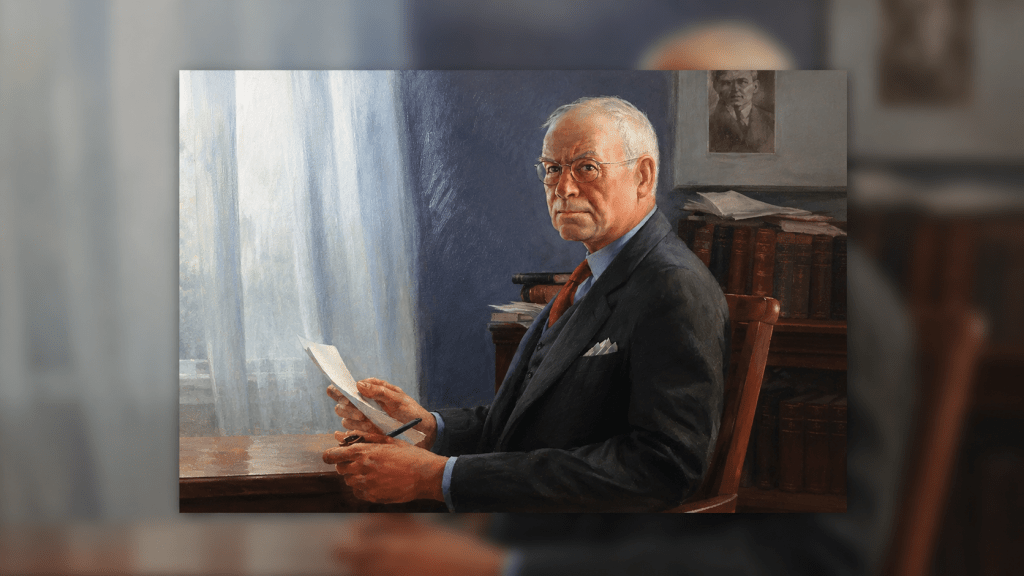
    Image:  Edgar Lee Masters – Portrait by Francis J. Quirk

    Edgar Lee Masters’ “Harry Carey Goodhue”

    Harry Carey Goodhue announces the special grudge he harbors against the citizens of the town of Spoon River while revealing how he finally got his revenge.

    Introduction and Text of “Harry Carey Goodhue”

    In Edgar Lee Masters’ “Harry Carey Goodhue” from his American classic Spoon River Anthology,  the speaker, as many of these speakers do, dramatizes his complaints against the citizens of the town while also announcing how he finally was able to avenge himself.

    Harry Carey Goodhue

    You never marveled, dullards of Spoon River,
    When Chase Henry voted against the saloons
    To revenge himself for being shut off.
    But none of you was keen enough
    To follow my steps, or trace me home
    As Chase’s spiritual brother.
    Do you remember when I fought
    The bank and the courthouse ring,
    For pocketing the interest on public funds?
    And when I fought our leading citizens
    For making the poor the pack-horses of the taxes?
    And when I fought the water works  
    For stealing streets and raising rates?
    And when I fought the business men  
    Who fought me in these fights?
    Then do you remember:
    That staggering up from the wreck of defeat,
    And the wreck of a ruined career,
    I slipped from my cloak my last ideal,
    Hidden from all eyes until then,
    Like the cherished jawbone of an ass,
    And smote the bank and the water works,
    And the business men with prohibition,
    And made Spoon River pay the cost  
    Of the fights that I had lost?

    Commentary on “Harry Carey Goodhue”

    In “Harry Carey Goodhue,” the speaker is dramatizing his complaints against the citizens of the town while also announcing how he finally exacted revenge for himself.

    First Movement:   His Dull Listeners

    You never marveled, dullards of Spoon River,
    When Chase Henry voted against the saloons
    To revenge himself for being shut off.
    But none of you was keen enough
    To follow my steps, or trace me home
    As Chase’s spiritual brother.

    Harry addresses his listeners by calling them “dullards of Spoon River.” He brings to mind that the townspeople “never marveled,” that the alcoholic Chase Henry  had incredulously voted to close down the bars. 

    It might seem odd that a hard-drinker would vote for Prohibition, but the bars had stopped giving Chase credit, and so he could no longer patronize them anyway; therefore, Chase got his revenge by voting to shut them down.

    Harry gives his listeners credit for not finding anything odd about Chase Henry’s revenge, but he then zaps them for their lack of awareness about Harry, who calls himself “Chase’s spiritual brother.”  This appellation alerts the reader that Harry must have rebelled in some way that the townspeople did not recognize.

    Second Movement:   Questions for His Fellows 

    Do you remember when I fought
    The bank and the courthouse ring,
    For pocketing the interest on public funds?
    And when I fought our leading citizens
    For making the poor the pack-horses of the taxes?
    And when I fought the water works  
    For stealing streets and raising rates?
    And when I fought the business men  
    Who fought me in these fights?

    Harry then asks his phantom listeners if they remember when he “fought / The bank and the courthouse ring / For pocketing the interest of public funds?”  Harry does not reveal how he fought these entities, but he continues by asking another question.  He asks if the Spoon River citizens remember when he fought “our leading citizens / For making the poor the pack-horses of the taxes?” 

    Harry also wants to know if they remember when he “fought the water works / For stealing streets and raising rates?” and finally, he wonders if they recall when he “fought the business men / Who fought me in these fights?” 

    Harry leaves his listeners wondering just how he did all of this fighting without their knowing it. And too, his hearers must wonder how successful all that fighting has been.  But Harry saves his surprise until the last few lines for the most impact.

    Third Movement:   Fighting to Defeat

    Then do you remember:
    That staggering up from the wreck of defeat,
    And the wreck of a ruined career,
    I slipped from my cloak my last ideal,
    Hidden from all eyes until then,
    Like the cherished jawbone of an ass,
    And smote the bank and the water works,
    And the business men with prohibition,
    And made Spoon River pay the cost  
    Of the fights that I had lost?

    In a final question, Harry then reveals that all of this fighting resulted in his own defeat: he wonders if anyone saw him “staggering up from the wreck of defeat.”  Harry lost his battle; he even lost his own job, “the wreck of a ruined career.”

    He does not reveal what his career was, just that it was ruined because of his standing up for his ideals. But because of all of this defeat, he “slipped from [his] cloak” his “last ideal,” which he had kept hidden.  This last ideal made him vote for Prohibition along with his “spiritual brother” the drunkard, Chase Henry. 

    Thus,Harry contends that as Samson (Judges 15:16) wielded the “jawbone of an ass” and killed a thousand enemies, Harry did the same with his vote for Prohibition.  He claims that he “smote the bank and the water works, / And the business men.”  With one vote, Harry made Spoon River pay for all “the fights that [he] had lost[.]”

  • Edgar Lee Masters’ “Serepta Mason,” “Amanda Barker,” “Constance Hately,” and “Chase Henry” 

    Image: Edgar Lee Masters https://factfile.org/10-facts-about-edgar-lee-masters#google_vignette
    Image: Edgar Lee Masters

    Edgar Lee Masters’ “Serepta Mason,” “Amanda Barker,” “Constance Hately,” and “Chase Henry” 

    The four characters from Edgar Lee Masters’ Spoon River Anthology—”Serepta Mason,” “Amanda Barker,” “Constance Hately,” and “Chase Henry”— offer very specific complaints against others in the town who affected their lives in deleterious ways.

    Introduction: Four Flawed Characters Reveal Their Thoughts

    Serepta Mason accuses Spoon River residents of stunting her growth, as she likens herself to a flower.  Amanda Barker died in childbirth and blames her husband for killing her because he knew her poor health made her unable to bear a child.

    “Constance Hately” and “Chase Henry” offer brief sketches of two Spoon River curmudgeons.  The poems feature ten and eleven lines respectively.  Both reveal flawed characters who feel the need to unload the thoughts they lived with.  

    As most of the Spoon River characters confess sins, these two are no exception.  Constance seems to be trying to set the record straight, while Chase boasts about the irony that sometimes attaches to good vs evil intentions.

    Text of “Serepta Mason”

    My life’s blossom might have bloomed on all sides
    Save for a bitter wind which stunted my petals
    On the side of me which you in the village could see.
    From the dust I lift a voice of protest:
    My flowering side you never saw!
    Ye living ones, ye are fools indeed
    Who do not know the ways of the wind
    And the unseen forces
    That govern the processes of life.

    Reading of “Serepta Mason”  

    Commentary on “Serepta Mason”

    Serepta complains that the “fools” “in the village” were ever unable to understand that she had a good side as a well as a not so good one.  She begins her lament by announcing that she might have been a well-rounded, fully developed personality if she had not been “stunted” by the nastiness of the people in her town.

    She metaphorically likens her growth to a flower: “my life’s blossom,” which “might have bloomed on all sides.”  But because of the “bitter wind” “her petals” were kept from developing fully, and that “stunted” side of her was all that the villagers saw.

    Therefore, as the other ghosts from the Spoon River cemetery do, she raises her “voice of protest.”  She enlightens the villagers that she did, in fact, have a “flowering side,” but they never saw it.  She foists all the blame on the villagers, not considering her own share of blame that might be part of the equation.

    Serepta concludes her accusation with a rather grandiose philosophical attempt to convince herself that she is, in fact, accurate in her assessment:  she calls the “living ones” “fools” because they “do not know the ways of the wind / And the unseen forces / That govern the processes of life.”  The recurrence of the metaphor “wind” implies that she is castigating the townies for being gossip-mongers.

    Serepta’s complaint implies that she was damaged and her growth stunted by town gossip signified by “wind”:  “a bitter wind which stunted my petals” and “Who do not know the ways of the wind.”  

    Text of “Amanda Barker”

    Henry got me with child,  
    Knowing that I could not bring forth life
    Without losing my own.  
    In my youth therefore I entered the portals of dust.
    Traveler, it is believed in the village where I lived
    That Henry loved me with a husband’s love,
    But I proclaim from the dust
    That he slew me to gratify his hatred.

    Reading of “Amanda Barker” 

    Commentary on “Amanda Barker”

    Unlike Serepta who waxes poetic and philosophical with metaphoric comparison and aphoristic critique, Amanda speaks her mind very plainly and bluntly.  Amanda was married to Henry, who was aware that Amanda could not procreate children. 

    Henry knew that pregnancy would kill Amanda. Henry, however, impregnated Amanda while knowing that deadly fact, and sure enough, Amanda died young:  “In my youth therefore I entered the portals of dust.”

    Calling those who might have stumbled upon her tombstone “traveler,” Amanda offers her lament to those vague persons. She insists that the Spoon River citizens  found nothing wanting in Henry’s love for Amanda, but Amanda knew the truth:  Henry hated her and deliberately killed her out of that hatred. Amanda’s main focus in on having returned to “dust” before having lived her life.

    Constance Hately

    You praise my self-sacrifice, Spoon River,
    In rearing Irene and Mary,
    Orphans of my older sister!
    And you censure Irene and Mary
    For their contempt for me
    But praise not my self-sacrifice,
    And censure not their contempt;
    I reared them, I cared for them, true enough!—
    But I poisoned my benefactions
    With constant reminders of their dependence.

    Reading of “Constance Hately”

    Commentary on “Constance Hately”

    Constance addresses Spoon River residents, calling attention to the fact that they were always commending her for raising “Irene and Mary,” the orphaned daughters of her older sister.  She further reminds them that they also condemned Irene and Mary because they did not offer gratitude for their aunt’s sacrifice.

    Constance now reveals that the citizens’ appraisal of her “self-sacrifice” and the nieces’ attitude was flawed and inaccurate on both counts:  she reports that she does not deserve “praise” for her sacrifice, and the nieces, Irene and Mary, do not deserve the town’s scorn for their disrespect for her.  

    Constance admits that, indeed, she did raise them and she cared for them, but while she was doing so, she “poisoned” the girls’ minds “With constant reminders of the dependence.”  

    Her confession perhaps reveals a measure of remorse for her failure with her nieces, but on the other hand, she seems to be gloating that the town got it so wrong about her relationship with them.


    Text of “Chase Henry”

    In life I was the town drunkard;  
    When I died the priest denied me burial
    In holy ground.  
    The which redounded to my good fortune.  
    For the Protestants bought this lot,
    And buried my body here,  
    Close to the grave of the banker Nicholas,  
    And of his wife Priscilla.  
    Take note, ye prudent and pious souls,
    Of the cross-currents in life
    Which bring honor to the dead, who lived in shame.

    Reading of “Chase Henry”  

    Commentary on “Chase Henry”

    Chase Henry played his role in life as the town drunk, to which he seems gleeful to admit.  Of course, that was “in life.”  Now, he, like many of the Spoon River deceased, can wax philosophical and indignant about how he was treated “in life.”

    Chase’s indignity centers on the fact that after he died, his body was not allowed “burial / In holy ground.”  The priest would not accept the body of an immoral “drunkard” to foul the cemetery of the Catholic Church.

    But Chase deems that he has the last laugh because Protestants defied the Catholics by purchasing a burial plot for the drunkard.  Now he rests “Close to the grave of the banker Nicholas, / And of his wife Priscilla.”  Chase can boast that he has come up in the world—a lowly drunkard buried nearby to a highly regarded banker.

    Chase, in his best condescending, supercilious tone, offers a piece of advice to all “ye prudent and pious souls.”  He warns them that circumstances can change because of the “cross-currents of life,” and those who “lived in shame” can find “honor” in death.

    Image: Edgar Lee Masters – Commemorative Stamp
  • Edgar Lee Masters’ “Cassius Huffier”

    Image:   Edgar Lee Masters, Esq.   https://librarycollections.law.umn.edu/darrow/trials_details.php?id=4   Clarence Darrow Law Library
    Image: Edgar Lee Masters, Esq. – Clarence Darrow Law Library

    Edgar Lee Masters’ “Cassius Huffier”

    From Spoon River Anthology, Edgar Lee Masters’ American classic, the epitaph “Cassius Huffier” is written in the American-Innovative sonnet tradition:  reversing the Petrarchan octave and sestet, while revealing the depravity of the speaker.

    Introduction and Text of “Cassius Hueffer”

    Edgar Lee Masters’ “Cassius Hueffer” from the Spoon River Anthology offers up the acerbic belly-aching of a man who hated life so completely that even after his death, he continues his belly-aching about the epitaph written on his tombstone.

    Cassius Hueffer

    They have chiseled on my stone the words:
    “His life was gentle, and the elements so mixed in him
    That nature might stand up and say to all the world,
    This was a man.”
    Those who knew me smile
    As they read this empty rhetoric.

    My epitaph should have been:
    “Life was not gentle to him,
    And the elements so mixed in him
    That he made warfare on life,
    In the which he was slain.”
    While I lived I could not cope with slanderous tongues,
    Now that I am dead I must submit to an epitaph
    Graven by a fool!

    Commentary on “Cassius Hueffer”

    From Spoon River Anthology, Edgar Lee Masters’ American classic, the epitaph “Cassius Huffier” is written in the American-Innovative sonnet tradition:  reversing the Petrarchan octave and sestet, while revealing the depravity of the speaker.

    The Sestet:  “They have chiseled on my stone the words”

    They have chiseled on my stone the words:
    “His life was gentle, and the elements so mixed in him
    That nature might stand up and say to all the world,
    This was a man.”
    Those who knew me smile
    As they read this empty rhetoric.

    The speaker, Cassius Hueffer, lays out the epitaph that is carved into his grave marker: “His life was gentle, and the elements so mixed in him / That nature might stand up and say to all the world, / This was a man.”

    In order to refute the truth of such a claim, Huffier reports that the statement will make the people who were well acquainted with him “smile” because those folks would know well that those kind words are merely, “empty rhetoric.

    The epitaph states that Hueffer had been a gentle, loving man in whom “the elements” stacked themselves up to render him a genuine “man.”  The epitaph leads people to believe that Cassius Hueffer was a warm man, who always had a kind greeting for those he encountered, and he behaved as a caring soul who was loved and admired by everyone he  met.

    Of course, Hueffer knows otherwise; therefore, he declares that those words are merely “empty rhetoric.”  Huffier is also aware that the people who chafed under his abusive character flaws would comprehend immediately the emptiness of that rhetoric.  

    The Octave:  “My epitaph should have been”

    My epitaph should have been:
    “Life was not gentle to him,
    And the elements so mixed in him
    That he made warfare on life,
    In the which he was slain.”
    While I lived I could not cope with slanderous tongues,
    Now that I am dead I must submit to an epitaph
    Graven by a fool!

    After striking down such a beautiful yet vacuous epitaph as it is written, Hueffer suggests his own version, the one that he knows ought to be chiseled on his  grave marker:  “Life was not gentle to him, / And the elements so mixed in him / That he made warfare on life, / In the which he was slain.” 

    Hueffer contests the idea that his life was “gentle,” but he does not actually dispute the accuracy of the claim that his own life was gentle, just the “idea” that life was gentle “to him.”  

    Hueffer contends that life did not deal gently with him.  He then employs the same form to assert, “the elements” were “mixed in him” in such a way as to urge him always to be at “warfare on life.”  Thus, he battled in life like a warrior, but finally, he “was slain.”

    The speaker does not elaborate about the manner in which he was “slain,” but he does contend that he was not able to abide “with slanderous tongues.”  He continues in his vagueness, however; thus, the reader remains without any information about either the nature of the slander, or how Hueffer left this earth.

    But his last dig at life and society and particularly the person who is responsible for the inaccurately carved epitaph is especially focused as it points an accusing finger:  “Now that I am dead I must submit to an epitaph / Graven by a fool!”

    Resentful in Life, Resentful in Death

    Although many readers of this poem may remain puzzled by the specifics of Hueffer’s life—why he carried on as such a misanthrope?  what was the nature of the slander he actually suffered?  how did he finally die?—such issues, in the long run, are not vital to the message of the poem, which is simply the grievance of a man who lived a resentful life and now undergoes a resentful  death.

  • Edgar Lee Masters’ “Robert Fulton Tanner”

    005a Image/Edgar-Lee-Masters-Portrait.jpg
    Image: Edgar Lee Masters

    Edgar Lee Masters’ “Robert Fulton Tanner”

    Representing the fifth epitaph in Masters’  Spoon River Anthology is the character named Robert Fulton Tanner, who compares his life to a rat caught in a trap.

    Introduction and Text of “Robert Fulton Tanner”

    Edgar Lee Masters’ “Robert Fulton Tanner” is the fifth epitaph in the American classic Spoon River Anthology.   Fulton is a pathetic character, who discovers that building a better mouse trap might only get up a cockeyed metaphor to fling at this thing vaguely called “Life.”

    Robert Fulton Tanner 

    If a man could bite the giant hand
    That catches and destroys him,  
    As I was bitten by a rat
    While demonstrating my patent trap,
    In my hardware store that day.
    But a man can never avenge himself  
    On the monstrous ogre Life.
    You enter the room—that’s being born;
    And then you must live—work out your soul,
    Aha! the bait that you crave is in view:
    A woman with money you want to marry,
    Prestige, place, or power in the world.
    But there’s work to do and things to conquer—  
    Oh, yes! the wires that screen the bait.
    At last you get in—but you hear a step:
    The ogre, Life, comes into the room,  
    (He was waiting and heard the clang of the spring)
    To watch you nibble the wondrous cheese,  
    And stare with his burning eyes at you,
    And scowl and laugh, and mock and curse you,
    Running up and down in the trap,
    Until your misery bores him.

    Commentary on “Robert Fulton Tanner”

    The fifth epitaph in Masters’  Spoon River Anthology features the character named Robert Fulton Tanner, who compares his life to a rat caught in a trap.

    First Movement:  Holding a Grudge

    “Robert Fulton Tanner” holds a grudge, and he holds it against “Life.””  He thus blames “Life” for his misery, and he muses on the notion of being able the bite that hand of Life that has bitten him.  If he could have bitten that “giant hand,” then what?  He does not say.  It appears he did not think beyond that luscious ability.  Or perhaps he thinks such biting would be enough to avenge his plight.

    Reader/listeners are free to imagine the consequence of such biting, and the only safe conclusion is that Tanner would feel better if he could have accomplished such a biting.  Likening that “giant hand” to God, as well as Life, Tanner reveals that he is a hardware store owner, who had determined that he had built a better mouse trap.

    But while demonstrating that “patent trap,” a rat bit his hand. And that bitter event unleashed in Tanner’s mind all that would go wrong in his life henceforth.  From that day forth, he would see himself as a victim of the giant hand, which caught him and destroyed him.

    Second Movement:  Biting God’s Hand

    If only one could bite that giant hand—of God, of Life, or of whatever—living would be improved for the man.  Unfortunately, that is never going to happen, and Tanner knows it.

    Tanner then goes on a philosophically tinged discourse, likening being born to entering a room.  He observes that one must “live” and “work out [one’s soul].”  He pities himself for having to do such work, but then transforming himself into the rat seeking bait, he admits that sought to marry a woman who had money.

    And then he marries her for “prestige, place, or power in the world.” The reader’s likely sympathy at this point turns to disgust at the incivility of this speaker.  Who seeks a woman to marry to achieve wealth and power?  Only scoundrels unworthy of the very wealth and power they seek.

    Third Movement:  Life Requires Effort

    Having discovered that all of life requires some kind of effort, he highlights his having to perform and struggle just to get to the woman in order to woo her.  But to him, she is just a piece of rat bait.  He must exert much effort just to get to her.  But like the rat who spies a piece of cheese, he does what it takes to grasp that morsel.

    After achieving his goal of marrying the woman he sought, he finds not the wealth, the power, the prestige he thought he was pursuing, but that that “ogre, Life,” is entering the room again, watching him munch at the bait, while scowling and laughing at him.  

    What has he achieved?  Only more of that monster Life eating at him.  Of course, the reader realizes that the only ogre in this lazy, evil opportunist’s life is Robert Fulton Tanner himself.  He has destroyed his own life because he failed to understand honesty, sincerity, and genuine affection while striving for self-improvement.

    Fourth Movement:  Self-Professed Victims

    Self-professed victims are all the same:  someone else is to blame for their misery.  They have no role in making themselves miserable.  They cannot see that it is exactly what they have done that has resulted in all the misery of their lives.  

    The final image of Robert Fulton “[r]unning up and down in the trap” is most appropriate. But his ignorance of how he got there is the real ogre in his life.   It is not God or “Life” that will become “bored” with his misery; it is his own self who will experience that boredom until he discovers a way out of it.  

  • Edgar Lee Masters’ “Ollie McGee”and “Fletcher McGee”

    Image: Edgar Lee Masters https://www.best-poems.net/edgar_lee_masters/index.html#google_vignette
    Image: Edgar Lee Masters

    Edgar Lee Masters’ “Ollie McGee”and “Fletcher McGee”

    “Ollie McGee” and her husband “Fletcher McGeereport their complaints in the third and fourth poems from Masters’ Spoon River Anthology.  The couple elucidates the status of their marriage.

    Ollie McGee Speaks

    Mrs. McGee begins by posing a question and then launches her accusation.

    Ollie McGee 

    Have you seen walking through the village
    A man with downcast eyes and haggard face?
    That is my husband who, by secret cruelty
    Never to be told, robbed me of my youth and my beauty;
    Till at last, wrinkled and with yellow teeth,
    And with broken pride and shameful humility,
    I sank into the grave.  
    But what think you gnaws at my husband’s heart?
    The face of what I was, the face of what he made me!
    These are driving him to the place where I lie.
    In death, therefore, I am avenged.

    Commentary on “Ollie McGee”

    Ollie McGee offers her take on her marriage with Fletcher McGee.

    First Movement:  Question and Accusation

    Have you seen walking through the village
    A man with downcast eyes and haggard face?  
    That is my husband who, by secret cruelty
    Never to be told, robbed me of my youth and my beauty;  
    Till at last, wrinkled and with yellow teeth,
    And with broken pride and shameful humility,
    I sank into the grave.  

    Mrs. “Ollie McGee” begins with a query, wondering if her listeners have observed, “a man with downcast eyes and haggard face,” ambling throughout the village from time to time.  She then admits that that haggard face belongs to the man who was her husband.  

    The speaker then begins to hurl accusations at the man.  The wife reveals that he is guilty of horrifying cruelty: the man took away his wife’s youth as well as her beauty.   This theft continued over the lifetime of their miserable marriage.   Mrs. McGee then died, “wrinkled and with yellow teeth.”  He stole her pride and made her suffer “shameful humility.”

    Second Movement:   Vengeance

    But what think you gnaws at my husband’s heart?
    The face of what I was, the face of what he made me!
    These are driving him to the place where I lie.
    In death, therefore, I am avenged.

    Ollie then offers a further inquiry, as she questions whether her listeners know what “gnaws at my husband’s heart.” She contends that two images likely unsettle her husband’s heart and mind: “the face of what I was”and “the face of what he made me.”    Mrs. McGee asserts that these images are taking his life, “driving him to the place where I lie.”  Thus she has convinced herself that she is getting her revenge in death.

    Fletcher McGee Speaks

    Fletcher McGee offers his own complaint but reveals himself to be a criminal in his own behavior.

    Fletcher McGee 

    She took my strength by minutes,
    She took my life by hours,  
    She drained me like a fevered moon
    That saps the spinning world.
    The days went by like shadows,
    The minutes wheeled like stars.
    She took the pity from my heart,
    And made it into smiles.
    She was a hunk of sculptor’s clay,
    My secret thoughts were fingers:
    They flew behind her pensive brow
    And lined it deep with pain.
    They set the lips, and sagged the cheeks,
    And drooped the eyes with sorrow.
    My soul had entered in the clay,
    Fighting like seven devils.
    It was not mine, it was not hers;
    She held it, but its struggles
    Modeled a face she hated,
    And a face I feared to see.
    I beat the windows, shook the bolts.
    I hid me in a corner—
    And then she died and haunted me,
    And hunted me for life.

    Commentary on “Fletcher McGee”

    Two miserable people made each other miserable, but who was the actual culprit in this dungheap of a marriage?

    First Movement:  Accusations Returned

    She took my strength by minutes,
    She took my life by hours,  
    She drained me like a fevered moon  
    That saps the spinning world.  
    The days went by like shadows,
    The minutes wheeled like stars.

    Mr. “Fletcher McGee” also begins his epitaph with appalling accusations against his wife.  Just as he had done, she had foisted on him unspeakable cruelty:  “she took my strength,””she took my life,” “she drained me.”

    This speaker also includes time measurements to each complaint, in order to increase and compound the pain he claims he suffered at the hands of this woman.   Mr. McGee then asserts, “the days went by like shadows, / the minutes wheeled like stars.”  His days were dark but time seemed to drag on in an other worldly fashion.  He seemed unable to concentrate on anything worthwhile.

    Second Movement:   Vengeance Returned

    She was a hunk of sculptor’s clay,
    My secret thoughts were fingers:
    They flew behind her pensive brow
    And lined it deep with pain.
    They set the lips, and sagged the cheeks,  
    And drooped the eyes with sorrow.
    My soul had entered in the clay,
    Fighting like seven devils.  
    It was not mine, it was not hers;
    She held it, but its struggles
    Modeled a face she hated,
    And a face I feared to see.
    I beat the windows, shook the bolts.  
    I hid me in a corner—
    And then she died and haunted me,
    And hunted me for life.

    After fiercely complaining that Mrs. McGee ruined his life, Mr. McGee freely and somewhat gleefully confesses that he, in fact quite deliberately, ruined hers.   Instead of pitying his wife for her unhappiness and shrewish behavior, he came to possess the ability to smile about her suffering.   His “smiles”grew out of the fact that he had power over her. 

    He came to see her only as “a hunk of sculptor’s clay.”  Thus Mr. McGee went about working to sculpt ugly features onto his wife’s face.  This despicable husband asserts that, “my secret thoughts were fingers.”  He continues with the sculptor metaphor, as he affirms what Ollie has earlier said about the man.   

    The miserable husband freely confesses and describes his fingers as sculptors, motivated by his “secret thoughts”which “lined” “her pensive brow” “deep with pain.”  Mr. McGee again freely admits that he, in fact, “set the lips, and sagged the cheeks, / And drooped the eyes with sorrow.” 

    He then bizarrely asserts that his “soul had entered in the clay.” Thus his soul became the force of evil, “fighting like seven devils.” He appears to have become so hooked on making her miserable that he just could not stop himself.  His evil served him like a dangerous drug.

    Mr. McGee then admits that he actually killed her:  “I beat the windows, shook the bolts.”  He vaguely claims that he hid “in a corner,” and “she died and haunted me / And hunted me for life.”

    He took advantage of his weak, depressed, sorrowful wife. He fully realized what he was doing. Therefore, it becomes clear that Ollie was correct about her lout of a husband, who was in fact a criminal.  

    At least, Mrs. McGee can feel somewhat avenged in death.   But a pathetic irony is laced within these pitiful confessions.  Readers are left to doubt that any vengeance or feeling “haunted”can, in fact, offer these tortured souls any meaningful rest.

  • Edgar Lee Masters’ “Hod Putt”

    Image:   Edgar Lee Masters  https://www.best-poems.net/edgar_lee_masters/index.html#google_vignette
    Image: Edgar Lee Masters

    Edgar Lee Masters’ “Hod Putt”

    Hod Putt chafed at his low station in life as an unsuccessful laborer who never seemed able to get ahead. His intense envy of those who were successful lead him down a path to perdition.

    Introduction and Text of “Hod Putt”

    The deceased inhabitants of the fictional village of Spoon River in Edgar Lee Masters’ American classic, Spoon River Anthology, are finally free to let loose their venom on whoever crossed them in life.  They now feel free to testify, but their testimony is only their side of it.  They can say whatever they like without being rebuked, reprimanded, or criticized.

    The advantage of this kind of scenario, masterfully crafted by the poet, is that the dead people have the same stage to make their claims.  The study thus reveals differing points of view, even as the individual speakers sometimes focus on similar circumstances.

    The Spoon River character study begins with an epitaph featuring the character “Hod Putt,” which qualifies as a versanelle, a short, pithy verse with a gripping punch offering a glimpse at human nature. The poem delivers that interesting punch as it reveals a truth about human nature and its desire to justify the unjustifiable to flatter the ego.

    Hod Putt 

    Here I lie close to the grave
    Of Old Bill Piersol,  
    Who grew rich trading with the Indians, and who
    Afterwards took the bankrupt law  
    And emerged from it richer than ever.
    Myself grown tired of toil and poverty
    And beholding how Old Bill and others grew in wealth,
    Robbed a traveler one night near Proctor’s Grove,
    Killing him unwittingly while doing so,
    For the which I was tried and hanged.
    That was my way of going into bankruptcy.
    Now we who took the bankrupt law in our respective ways  
    Sleep peacefully side by side.

    Commentary on “Hod Putt”

    Apparently, considering himself a failure in life’s rat race for riches, this speaker Hod Putt envied those who were successful or at least more successful than he was.

    From his perch in the afterworld, Putt attempts to improve his lack of substance by concocting an equivalence between his moral bankruptcy and the financial bankruptcy experienced by “Old Bill Piersol.”

    Putt belongs to that classification of Spoon River inmates who try to assuage their own guilt by laying a thick blanket of culpability onto others.  Readers can see clearly that these scofflaws are merely cutting off the heads of others so that they may appear to stand taller.

    First Movement:   Blinding Jealousy

    Here I lie close to the grave
    Of Old Bill Piersol,
    Who grew rich trading with the Indians, and who
    Afterwards took the bankrupt law
    And emerged from it richer than ever. 

    Hod Putt informs his audience that his grave lies near the “grave / Of Old Bill Piersol.” He reports that Piersol was an Indian trader who became wealthy through his lucrative trade association.

    Piersol, however, went bankrupt but then recovered his wealth quickly and grew “richer than ever”; these events cause Putt’s jealous nature to overcome his ability to think clearly.

    Second Movement:  A Double Felony

    Myself grown tired of toil and poverty
    And beholding how Old Bill and others grew in wealth,
    Robbed a traveler one night near Proctor’s Grove, 

    Putt implies that he was somewhat lackadaisical with no deep interest in high achievement; just keeping bread on the table caused him to grow “tired of toil and poverty.” While not fond of work, he also found poverty inconvenient.

    Putt assumed that “Old Bill and others” had used the system to become wealthy; thus he assumed he could also use the system for his own purposes.  He, therefore, dreamed up a plan: instead of working for his pay, he would take from others. He began his new endeavor in crime by robbing a traveler “near Proctor’s Grove.”

    Third Movement: Faulty Logic

    Killing him unwittingly while doing so,
    For the which I was tried and hanged.
    That was my way of going into bankruptcy.

    To Putt’s chagrin, he kills the victim while trying to take his property. This felony then gets Putt “tried and hanged.” Like any other act of faulty logic, he asserts that his act just constituted “bankruptcy.”

    He, no doubt, believes he is clever in comparing his crimes to what he assumes to be the crimes of others, as he draw a moral equivalency between financial bankruptcy and moral bankruptcy.  But his utterly counterfeit comparison to businessmen who declare legitimate bankruptcy according to the law demonstrates the criminal nature of Putt’s mind.

    Fourth Movement: Morally Bankrupt

    Now we who took the bankrupt law in our respective ways
    Sleep peacefully side by side.

    Putt shows that he is morally bankrupt; he concocts a moral equivalency between his felonious crimes and those of successful men, in this case, Old Bill Piersol, who merely followed bankruptcy laws.

    The smug Putt claims that he and Piersol “sleep peacefully side by side”; this claim implies that their “bankruptcies” are just the same.

    A Two-Fold Felon

    Readers will understand the difference between the two “bankruptcies”: Hod Putt is a criminal trying to vindicate himself while, in fact, revealing his felonious nature. Bankruptcy laws work within the legal system for those who declare bankruptcy.

    The laws governing bankruptcy do not exist in order to encourage theft but to allow the unfortunate to place their financial endeavor on the path to recovery. Putt declares that he intended to rob a man, but while committing the robbery, he killed the man.

    It is not likely that he intended to kill the man as he was committing his intensional felony.  But then, because of the accidental killing, Putt becomes a two-fold felon, failing to even understand his criminal acts. 

    Now after death, he disingenuously claims to be “sleeping peacefully side by side” with Old Bill Piersol. In his own imagination, Putt is free to believe that his “sleep” after death and that of a legitimate businessman are the same. 

    But imagination does not make it so.  The karma of all individuals dictates how well they rest—not how things may seem at any given time. Apparently, Putt remains blissfully unaware that karma will reckon with him—if not today, nor tomorrow, then sometime in future.

  • Life Sketch of Edgar Lee Masters and Spoon River Commentaries

    Edgar Lee Masters’ American classic, Spoon River Anthology, brought the poet into the literary world, and no other work from his extensive writings has garnered more attention, including his sequel to the original, The New Spoon River.
    Image: Edgar Lee Masters – Chicago Literary Hall of Fame

    Life Sketch of Edgar Lee Masters

    Edgar Lee Masters’ American classic, Spoon River Anthology, brought the poet into the literary world, and no other work from his extensive writings has garnered more attention, including his sequel to the original, The New Spoon River.

    Early Life and Education

    Edgar Lee Masters was born on August 23, 1868, to Hardin Wallace Masters and Emma Dexter Masters in Garnett, Kansas, where Hardin Masters had established a law firm [1].  After the failure of his law firm, Masters moved his family to his parents’ farm near Petersburg, IL.  In 1880, the Masters family relocated to Lewistown, Illinois, where Edgar attended high school.

    After high school, Edgar attended the Knox Academy preparatory program offered by Knox College, but he had to drop out because his family was unable to financially support his education.  Despite his lack of a college education, Edgar studied law in his father’s law office and successfully passed the bar in 1891.

    Law Career

    After being admitted to the bar in 1891, Edgar worked in his father’s law firm and then in 1893 joined the firm of Kickham Scanlan.  He later entered a partnership in the law office of Clarence Darrow, whose fame spread far and wide because of the Scopes Trial—The State of Tennessee v. John Thomas Scopes—also known jeeringly as the “Monkey Trial.” At the Darrow firm, Edgar’s worked mainly on cases involving the poor.  

    After his three-year stint in the Darrow firm, Edgar left and formed his own firm.  His years with Darrow has been turbulent owing to arguments with Darrow, as well as Edgar’s own misbehavior of engaging in adulterous affairs, damaging the firm’s reputation.

    Marriage

    In 1898, Edgar married Helen Jenkins, and his marriage brought him nothing but heartache.  In his memoir, Across Spoon River, his wife features prominently in his narrative, but he never reveals her name; he calls Helen the “Golden Aura,” and he is doing so in a derisive tone.  Clearly he hated the woman and all she stood for.

    Edgar and the “Golden Aura” produced three children but finally divorced in 1923.   He had abandoned his marriage by 1920 as well as the practice of law, relocating to New York to concentrate on his writing.  In 1926, he married Ellen Coyne and together they produced one child, Hardin.

    Literary Career

    Edgar Lee Masters wrote and published some 39 books in addition to his American classic, Spoon River Anthology, but nothing in his canon ever gained the wide-spread fame and acclaim that the 243 reports of people speaking from the beyond the grave brought him.  Even the sequel to Spoon River Anthology, titled The New Spoon River [2], failed to garner success equal to the original.

    Even though Spoon River Anthology was banned for a time in his hometown, it returned because of its popularity elsewhere and that fact that it contained some the best poetry even penned in America [3].

    Masters was awarded the Poetry Society of America Award, the Academy Fellowship, the Shelley Memorial Award, and he was also the recipient of a grant from the American Academy of Arts and Letters.

    Edgar Lee Masters had an unpleasant personality. His behavior often bordered on misanthropic in his displays of jealousy and hatred.  He likely diminished his literary reputation through his unseemly, disingenuous portrayal of Abraham Lincoln in his 1931 biographical piece focusing on the sixteenth president, titled Lincoln: The Man.

    Bethany Villaruz [4]  has opined that the Lincoln diatribe was aimed more at Carl Sandburg than the former president:  

    Sandburg’s Lincoln books were “so popular that it was making people think of Sandburg rather than Masters when they spoke of the New Salem-Petersburg area.” Masters regarded Sandburg’s success as an encroachment on the literary landscape that he believed his own work had helped define.

    Carl Sandburg was likely aware of Masters’ petty jealousy and wrote the following in his personal copy of Masters’ Lincoln biography:  “long sustained Copperhead hymn of hate reversing the views of a Masters I knew well 10 and 15 years before he wrote these sickly venomous pages” (my emphasis added.)  

    Agreeing with Sandburg’s estimation, a New York Times reviewer opined that the book featured views that not even a Jefferson Davis would write, but instead sounded more in line with venom spewed by a Ku Klux Klan member.

    Masters had been an admirer of Stephen Douglas and Douglas’ defeat by Lincoln was likely part of Masters’ motivation to trash Lincoln in his book for which he did little to no research.  Regarding Masters’ motivation and the subsequent reception of the Lincoln biography, Matthew D. Norman [5]  has explained, 

    Lincoln: The Man was a product of the Great Depression, written by a disillusioned champion of Stephen A. Douglas and Jeffersonian republicanism. Though Spoon River Anthology was both a critical and commercial success that established Masters’s reputation as a poet, nothing he wrote during the 1920s came close to matching his initial triumph. By early 1930, he and the country were in distress. Masters was far removed from his “spiritual home” of Menard County in the spring of 1930 when he wrote Lincoln: The Man in less than two months while residing at the Hotel Chelsea in New York City.  Lincoln scholar Harry Pratt and Carl Sandburg both believed that Lincoln: The Man revealed much more about Masters’s own personal tribulations than it did about the life of Abraham Lincoln. Pratt concluded that Masters’s financial troubles and conflicts with wives, publishers, and Clarence Darrow caused him to build up so much bile that “It just boiled out on Lincoln by chance.”

    Masters claimed he wanted to present only a true account of the man called Abraham Lincoln, but he completely misread the mood of the nation when he decided to trash Lincoln instead of reveal him.  It is likely that Masters’ reputation took a greater hit than did Lincoln’s, even though those misanthropes who seize on any discourse to denigrate Republicans have put Masters’ nastiness to use.

    Spoon River Anthology

    Spoon River is a fictional town, which is a composite of Lewistown and Petersburg, IL, where Edgar grew up and where his grandparents lived respectively.  Although the town of Spoon River was a fictional creation of Edgar’s imagination, there is an Illinois river named “Spoon River,” which is a tributary of the Illinois River in the west-central part of the state, running a 148-mile-long stretch between Peoria and Galesburg.

    In 1914, Edgar had begun to publish his poems focusing on the rantings of disgruntled dead people interred in the Spoon River Cemetery, located atop a hill overlooking the fictional town of Spoon River.  Edgar had seized on an ancient structural form to have these characters working out their dirty laundry as they speak from beyond the grave.  

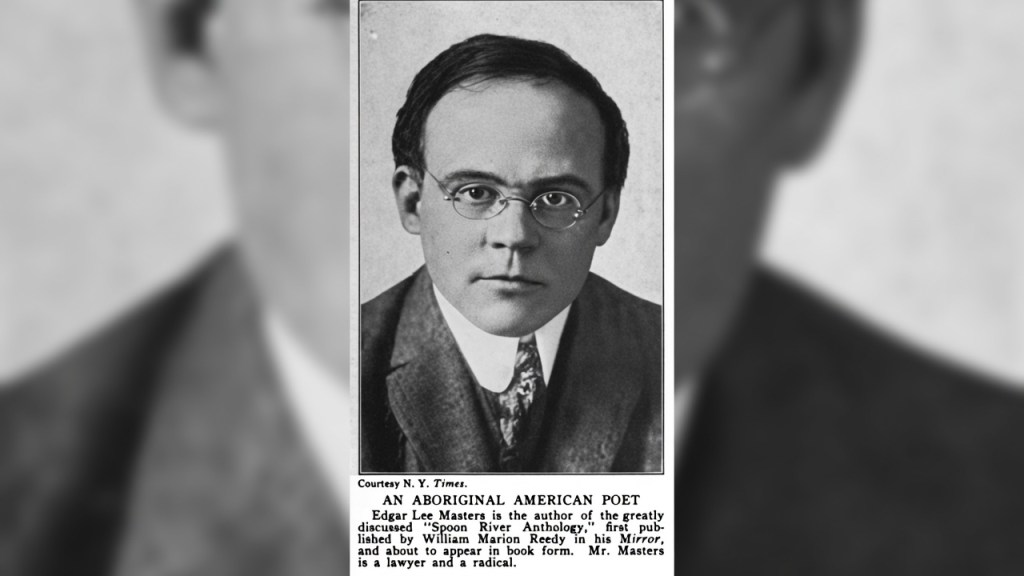
    Nevertheless, he published under the pseudonym Webster Ford in Reedy’s Mirror, a literary magazine based in St. Louis.  Likely fearing controversy that would clash with his profession as an attorney, he employed the nom de plume until after he left the legal profession.

    In addition to the individual reports, or “epitaphs,” as Edgar called them, the Anthology sports three other long poems, offering summaries or other material relevant to the cemetery reporters or the atmosphere of the fictional town of Spoon River:  #1 “The Hill,”#245 “The Spooniad,” and #246 “Epilogue.”

    Harriet Monroe, editor of Poetry Magazine in Chicago, encouraged and assisted with the publication of Spoon River Anthology, and the collection became an instant success.  After having been published in 1915, by 1961 the collection had gone through seventy editions.  It has been made into an American play and an Italian opera, performed at La Scala.  Spoon River Anthology has also been translated into eight languages.

    Death

    Five months before turning 82, Edgar Lee Masters died on March 5, 1950, in a nursing facility in Melrose Park, Pennsylvania.  His body was transported back to  Oakland Cemetery in Petersburg, Illinois, for burial.  The following inscription appears on his grave marker:

    Good friends, let’s to the fields . . .
    After a little walk and by your pardon,
    I think I’ll sleep, there is no sweeter thing.
    Nor fate more blessed than to sleep.

    I am a dream out of a blessed sleep —
    Let’s walk, and hear the lark.

    And on a stone nearby his grave,  Masters’ epitaph, “Anne Rutledge,” which contains an ironic dig at Lincoln, the Mastersian nemesis, is carved:

    Ann Rutledge

    Out of me unworthy and unknown
    The vibrations of deathless music;
    “With malice toward none, with charity for all.”
    Out of me the forgiveness of millions toward millions,
    And the beneficent face of a nation
    Shining with justice and truth.
    I am Anne Rutledge who sleep beneath these weeds,
    Beloved in life of Abraham Lincoln,
    Wedded to him, not through union,
    But through separation.
    Bloom forever, O Republic,
    From the dust of my bosom!

    Masters spent his lifetime producing a plethora of writings, including 19 books of poems, 12 plays, six novels, and seven biographies.  His biographies, in addition to the Lincoln embarrassment, include those of Walt Whitman, Mark Twain, and Vachel Lindsay.

    Edgar Lee Masters was the sad little man, but no one can diminish the success he achieved with his Spoon River Anthology, which has risen to the status of an American classic, despite its being filled with disgruntled individuals.  He well understood the nature of those characters, being himself a disgruntled, agitated soul.

    Sources

    [1]  Herbert K. Russell. Edgar Lee Masters: A Biography. University of Illinois Press. 2001.

    [2]  Edgar Lee Masters. The New Spoon River.  Macmillan. New York. 1924. Print.

    [3]  Laura Wolff Scanlan.  “How the Once-Banned Spoon River Anthology Made a Comeback in Lewistown.”  Humanities:  The Magazine for the National Endowment for the Humanities. November/December 2015.

    [4]  Bethany Villaruz.  “The Sangamon, Soured: Lincoln, The Man & Its Twisted Tropes.”  Friends of the Lincoln Collection.  Accessed June 15, 2026..

    [5]  Matthew D. Norman.  “An Illinois Iconoclast: Edgar Lee Masters and the Anti-Lincoln Tradition.”  Journal of the Abraham Lincoln Association.  Winter 2003.

    Image: Edgar Lee Masters – Commemorative Stamp

    Poem Commentaries on Spoon River Anthology

    1. The Hill
    2. Hod Putt
    3. Ollie McGee
    4. Fletcher McGee
    5. Robert Fulton Tanner
    6. Cassius Hueffer
    7. Serepta Mason
    8. Amanda Barker
    9. Constance Hately
    10. Chase Henry
    11. Harry Carey Goodhue
    12. Judge Somers
    13. Kinsey Keene 
    14. Benjamin Pantier
    15. Mrs. Benjamin Pantier
    16. Reuben Pantier
    17. Emily Sparks
    18. Trainor, the Druggist
    19. Daisy Fraser
    20. Benjamin Fraser
    21. Minerva Jones
    22. “Indignation” Jones
    23. Doctor Meyers
    24. Mrs. Meyers
    25. “Butch” Weldy
    26. Knowlt Hoheimer
    27. Lydia Puckett
    28. Frank Drummer
    29. Hare Drummer
    30. Conrad Siever
    31. Doc Hill
    32. Andy the Night-Watch
    33. Sarah Brown
    34. Percy Bysshe Shelley
    35. Flossie Cabanis
    36. Julia Miller
    37. Johnnie Sayre
    38. Charlie French
    39. Zenas Witt
    40. Theodore the Poet
    41. The Town Marshal
    42. Jack McGuire
    43. Dorcas Gustine
    44. Nicholas Bindle
    45. Jacob Goodpasture
    46. Harold Arnett
    47. Margaret Fuller Slack
    48. George Trimble
    49. Dr. Siegfried Iseman
    50. “Ace” Shaw
    51. Lois Spears
    52. Justice Arnett
    53. Willard Fluke
    54. Aner Clute
    55. Lucius Atherton
    56. Homer Clapp
    57. Deacon Taylor
    58. Sam Hookey
    59. Cooney Potter
    60. Fiddler Jones
    61. Nellie Clark
    62. Louise Smith
    63. Herbert Marshall
    64. George Gray
    65. Hon. Henry Bennett
    66. Griffy the Cooper
    67. Sersmith the Dentist
    68. A. D. Blood
    69. Robert Southey Burke