Linda's Literary Home

Tag: epitaphs

  • Edgar Lee Masters’ “Robert Fulton Tanner”

    005a Image/Edgar-Lee-Masters-Portrait.jpg
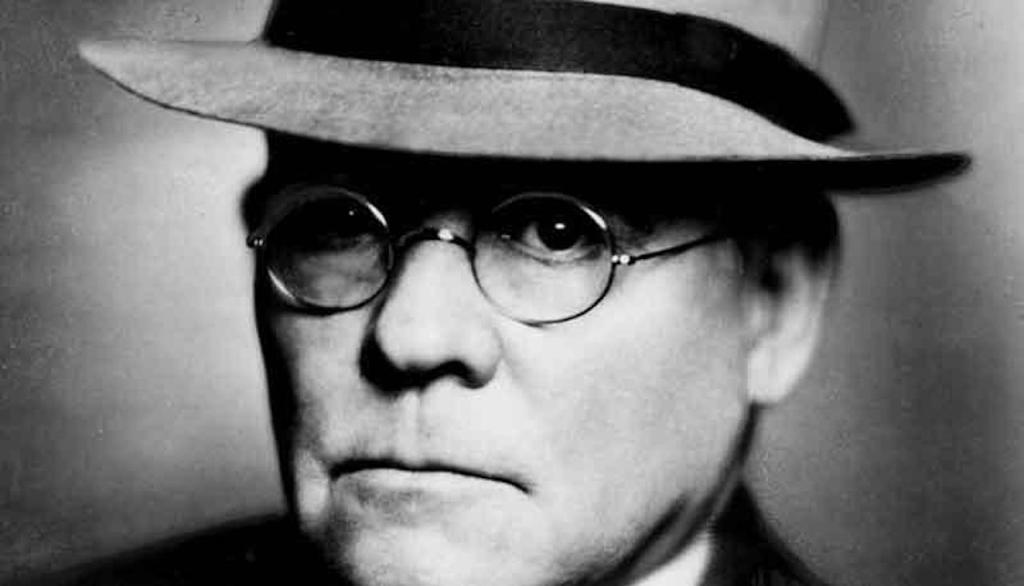
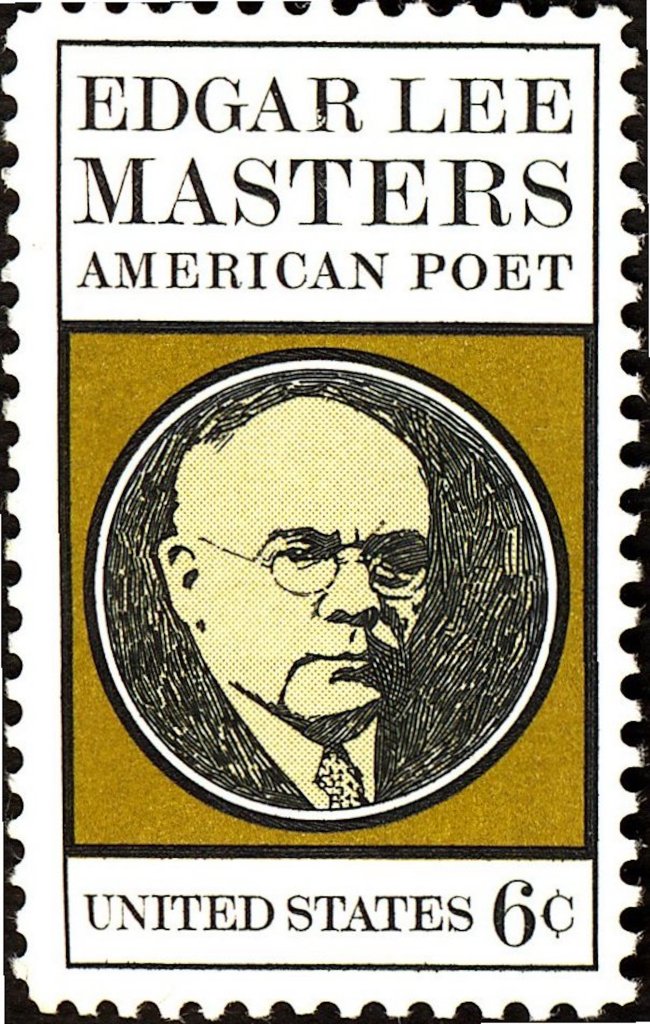
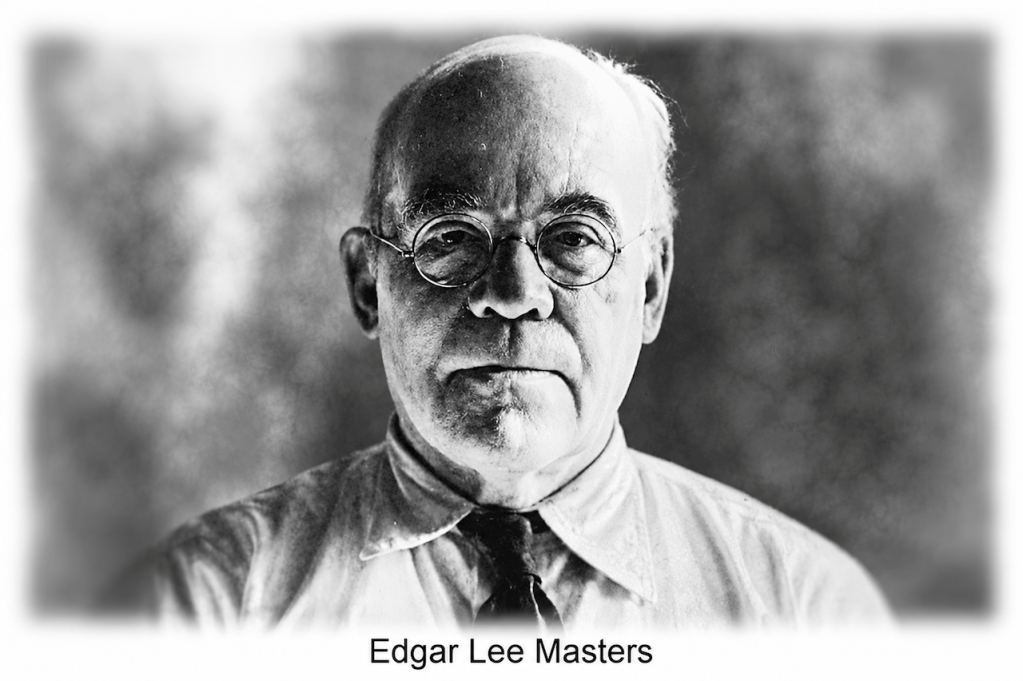
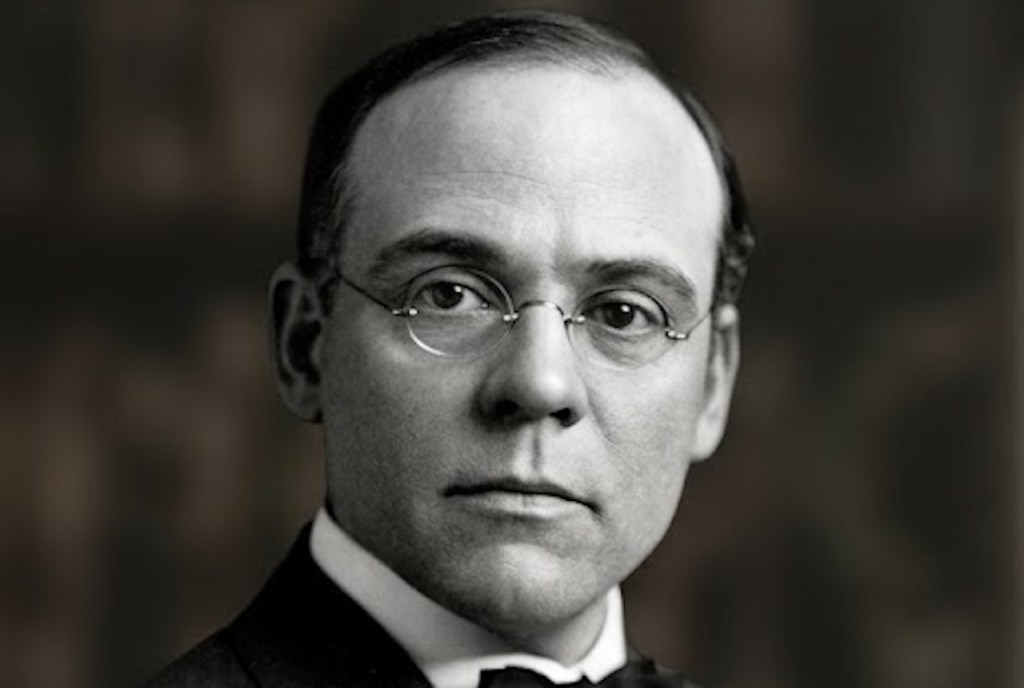
    Image: Edgar Lee Masters

    Edgar Lee Masters’ “Robert Fulton Tanner”

    Representing the fifth epitaph in Masters’  Spoon River Anthology is the character named Robert Fulton Tanner, who compares his life to a rat caught in a trap.

    Introduction and Text of “Robert Fulton Tanner”

    Edgar Lee Masters’ “Robert Fulton Tanner” is the fifth epitaph in the American classic Spoon River Anthology.   Fulton is a pathetic character, who discovers that building a better mouse trap might only get up a cockeyed metaphor to fling at this thing vaguely called “Life.”

    Robert Fulton Tanner 

    If a man could bite the giant hand
    That catches and destroys him,  
    As I was bitten by a rat
    While demonstrating my patent trap,
    In my hardware store that day.
    But a man can never avenge himself  
    On the monstrous ogre Life.
    You enter the room—that’s being born;
    And then you must live—work out your soul,
    Aha! the bait that you crave is in view:
    A woman with money you want to marry,
    Prestige, place, or power in the world.
    But there’s work to do and things to conquer—  
    Oh, yes! the wires that screen the bait.
    At last you get in—but you hear a step:
    The ogre, Life, comes into the room,  
    (He was waiting and heard the clang of the spring)
    To watch you nibble the wondrous cheese,  
    And stare with his burning eyes at you,
    And scowl and laugh, and mock and curse you,
    Running up and down in the trap,
    Until your misery bores him.

    Commentary on “Robert Fulton Tanner”

    The fifth epitaph in Masters’  Spoon River Anthology features the character named Robert Fulton Tanner, who compares his life to a rat caught in a trap.

    First Movement:  Holding a Grudge

    “Robert Fulton Tanner” holds a grudge, and he holds it against “Life.””  He thus blames “Life” for his misery, and he muses on the notion of being able the bite that hand of Life that has bitten him.  If he could have bitten that “giant hand,” then what?  He does not say.  It appears he did not think beyond that luscious ability.  Or perhaps he thinks such biting would be enough to avenge his plight.

    Reader/listeners are free to imagine the consequence of such biting, and the only safe conclusion is that Tanner would feel better if he could have accomplished such a biting.  Likening that “giant hand” to God, as well as Life, Tanner reveals that he is a hardware store owner, who had determined that he had built a better mouse trap.

    But while demonstrating that “patent trap,” a rat bit his hand. And that bitter event unleashed in Tanner’s mind all that would go wrong in his life henceforth.  From that day forth, he would see himself as a victim of the giant hand, which caught him and destroyed him.

    Second Movement:  Biting God’s Hand

    If only one could bite that giant hand—of God, of Life, or of whatever—living would be improved for the man.  Unfortunately, that is never going to happen, and Tanner knows it.

    Tanner then goes on a philosophically tinged discourse, likening being born to entering a room.  He observes that one must “live” and “work out [one’s soul].”  He pities himself for having to do such work, but then transforming himself into the rat seeking bait, he admits that sought to marry a woman who had money.

    And then he marries her for “prestige, place, or power in the world.” The reader’s likely sympathy at this point turns to disgust at the incivility of this speaker.  Who seeks a woman to marry to achieve wealth and power?  Only scoundrels unworthy of the very wealth and power they seek.

    Third Movement:  Life Requires Effort

    Having discovered that all of life requires some kind of effort, he highlights his having to perform and struggle just to get to the woman in order to woo her.  But to him, she is just a piece of rat bait.  He must exert much effort just to get to her.  But like the rat who spies a piece of cheese, he does what it takes to grasp that morsel.

    After achieving his goal of marrying the woman he sought, he finds not the wealth, the power, the prestige he thought he was pursuing, but that that “ogre, Life,” is entering the room again, watching him munch at the bait, while scowling and laughing at him.  

    What has he achieved?  Only more of that monster Life eating at him.  Of course, the reader realizes that the only ogre in this lazy, evil opportunist’s life is Robert Fulton Tanner himself.  He has destroyed his own life because he failed to understand honesty, sincerity, and genuine affection while striving for self-improvement.

    Fourth Movement:  Self-Professed Victims

    Self-professed victims are all the same:  someone else is to blame for their misery.  They have no role in making themselves miserable.  They cannot see that it is exactly what they have done that has resulted in all the misery of their lives.  

    The final image of Robert Fulton “[r]unning up and down in the trap” is most appropriate. But his ignorance of how he got there is the real ogre in his life.   It is not God or “Life” that will become “bored” with his misery; it is his own self who will experience that boredom until he discovers a way out of it.  

  • Edgar Lee Masters’ “Ollie McGee”and “Fletcher McGee”

    Image: Edgar Lee Masters https://www.best-poems.net/edgar_lee_masters/index.html#google_vignette
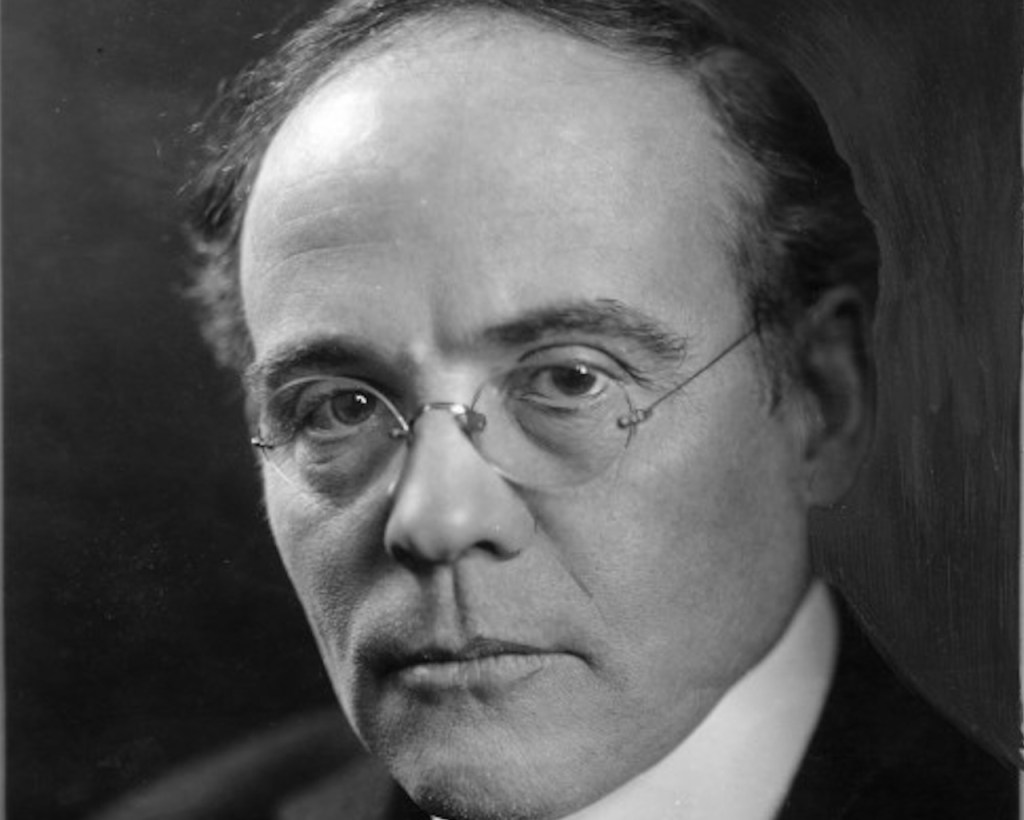
    Image: Edgar Lee Masters

    Edgar Lee Masters’ “Ollie McGee”and “Fletcher McGee”

    “Ollie McGee” and her husband “Fletcher McGeereport their complaints in the third and fourth poems from Masters’ Spoon River Anthology.  The couple elucidates the status of their marriage.

    Ollie McGee Speaks

    Mrs. McGee begins by posing a question and then launches her accusation.

    Ollie McGee 

    Have you seen walking through the village
    A man with downcast eyes and haggard face?
    That is my husband who, by secret cruelty
    Never to be told, robbed me of my youth and my beauty;
    Till at last, wrinkled and with yellow teeth,
    And with broken pride and shameful humility,
    I sank into the grave.  
    But what think you gnaws at my husband’s heart?
    The face of what I was, the face of what he made me!
    These are driving him to the place where I lie.
    In death, therefore, I am avenged.

    Commentary on “Ollie McGee”

    Ollie McGee offers her take on her marriage with Fletcher McGee.

    First Movement:  Question and Accusation

    Have you seen walking through the village
    A man with downcast eyes and haggard face?  
    That is my husband who, by secret cruelty
    Never to be told, robbed me of my youth and my beauty;  
    Till at last, wrinkled and with yellow teeth,
    And with broken pride and shameful humility,
    I sank into the grave.  

    Mrs. “Ollie McGee” begins with a query, wondering if her listeners have observed, “a man with downcast eyes and haggard face,” ambling throughout the village from time to time.  She then admits that that haggard face belongs to the man who was her husband.  

    The speaker then begins to hurl accusations at the man.  The wife reveals that he is guilty of horrifying cruelty: the man took away his wife’s youth as well as her beauty.   This theft continued over the lifetime of their miserable marriage.   Mrs. McGee then died, “wrinkled and with yellow teeth.”  He stole her pride and made her suffer “shameful humility.”

    Second Movement:   Vengeance

    But what think you gnaws at my husband’s heart?
    The face of what I was, the face of what he made me!
    These are driving him to the place where I lie.
    In death, therefore, I am avenged.

    Ollie then offers a further inquiry, as she questions whether her listeners know what “gnaws at my husband’s heart.” She contends that two images likely unsettle her husband’s heart and mind: “the face of what I was”and “the face of what he made me.”    Mrs. McGee asserts that these images are taking his life, “driving him to the place where I lie.”  Thus she has convinced herself that she is getting her revenge in death.

    Fletcher McGee Speaks

    Fletcher McGee offers his own complaint but reveals himself to be a criminal in his own behavior.

    Fletcher McGee 

    She took my strength by minutes,
    She took my life by hours,  
    She drained me like a fevered moon
    That saps the spinning world.
    The days went by like shadows,
    The minutes wheeled like stars.
    She took the pity from my heart,
    And made it into smiles.
    She was a hunk of sculptor’s clay,
    My secret thoughts were fingers:
    They flew behind her pensive brow
    And lined it deep with pain.
    They set the lips, and sagged the cheeks,
    And drooped the eyes with sorrow.
    My soul had entered in the clay,
    Fighting like seven devils.
    It was not mine, it was not hers;
    She held it, but its struggles
    Modeled a face she hated,
    And a face I feared to see.
    I beat the windows, shook the bolts.
    I hid me in a corner—
    And then she died and haunted me,
    And hunted me for life.

    Commentary on “Fletcher McGee”

    Two miserable people made each other miserable, but who was the actual culprit in this dungheap of a marriage?

    First Movement:  Accusations Returned

    She took my strength by minutes,
    She took my life by hours,  
    She drained me like a fevered moon  
    That saps the spinning world.  
    The days went by like shadows,
    The minutes wheeled like stars.

    Mr. “Fletcher McGee” also begins his epitaph with appalling accusations against his wife.  Just as he had done, she had foisted on him unspeakable cruelty:  “she took my strength,””she took my life,” “she drained me.”

    This speaker also includes time measurements to each complaint, in order to increase and compound the pain he claims he suffered at the hands of this woman.   Mr. McGee then asserts, “the days went by like shadows, / the minutes wheeled like stars.”  His days were dark but time seemed to drag on in an other worldly fashion.  He seemed unable to concentrate on anything worthwhile.

    Second Movement:   Vengeance Returned

    She was a hunk of sculptor’s clay,
    My secret thoughts were fingers:
    They flew behind her pensive brow
    And lined it deep with pain.
    They set the lips, and sagged the cheeks,  
    And drooped the eyes with sorrow.
    My soul had entered in the clay,
    Fighting like seven devils.  
    It was not mine, it was not hers;
    She held it, but its struggles
    Modeled a face she hated,
    And a face I feared to see.
    I beat the windows, shook the bolts.  
    I hid me in a corner—
    And then she died and haunted me,
    And hunted me for life.

    After fiercely complaining that Mrs. McGee ruined his life, Mr. McGee freely and somewhat gleefully confesses that he, in fact quite deliberately, ruined hers.   Instead of pitying his wife for her unhappiness and shrewish behavior, he came to possess the ability to smile about her suffering.   His “smiles”grew out of the fact that he had power over her. 

    He came to see her only as “a hunk of sculptor’s clay.”  Thus Mr. McGee went about working to sculpt ugly features onto his wife’s face.  This despicable husband asserts that, “my secret thoughts were fingers.”  He continues with the sculptor metaphor, as he affirms what Ollie has earlier said about the man.   

    The miserable husband freely confesses and describes his fingers as sculptors, motivated by his “secret thoughts”which “lined” “her pensive brow” “deep with pain.”  Mr. McGee again freely admits that he, in fact, “set the lips, and sagged the cheeks, / And drooped the eyes with sorrow.” 

    He then bizarrely asserts that his “soul had entered in the clay.” Thus his soul became the force of evil, “fighting like seven devils.” He appears to have become so hooked on making her miserable that he just could not stop himself.  His evil served him like a dangerous drug.

    Mr. McGee then admits that he actually killed her:  “I beat the windows, shook the bolts.”  He vaguely claims that he hid “in a corner,” and “she died and haunted me / And hunted me for life.”

    He took advantage of his weak, depressed, sorrowful wife. He fully realized what he was doing. Therefore, it becomes clear that Ollie was correct about her lout of a husband, who was in fact a criminal.  

    At least, Mrs. McGee can feel somewhat avenged in death.   But a pathetic irony is laced within these pitiful confessions.  Readers are left to doubt that any vengeance or feeling “haunted”can, in fact, offer these tortured souls any meaningful rest.