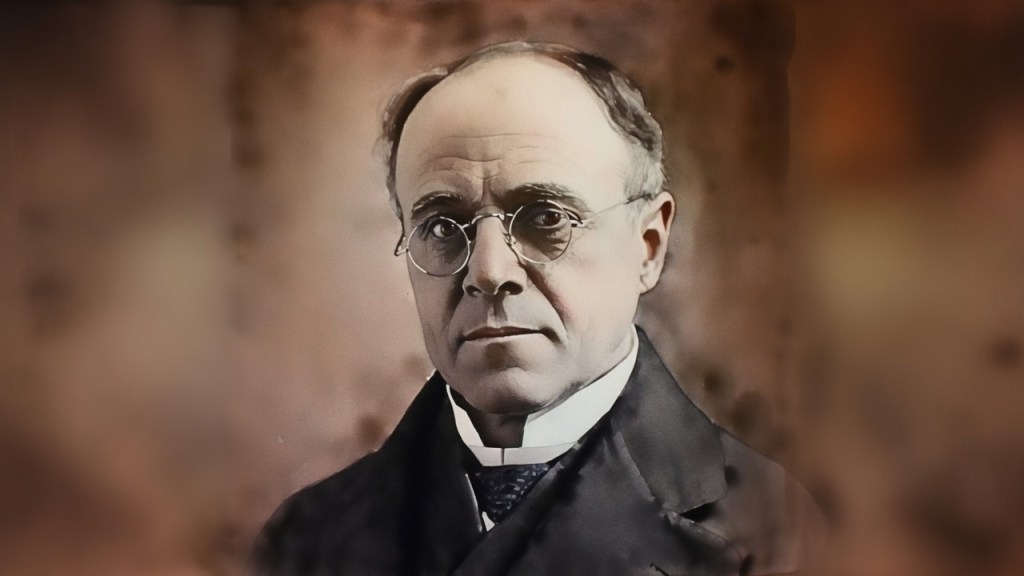
Edgar Lee Masters’ “Knowlt Hoheimer”
Edgar Lee Masters’ “Knowlt Hoheimer” features a 10-line poem (epitaph) with two movements. As usual, this epitaph reveals the character of the speaker, even as he tries to castigate others.
Introduction and Text of “Knowlt Hoheimer”
In Edgar Lee Masters’ Spoon River Anthology, the short poem, or epitaph as Masters called them, “Knowlt Hoheimer” features a man who regrets among other things that he had the misfortune of dying in battle.
Knowlt Hoheimer
I was the first fruits of the battle of Missionary Ridge.
When I felt the bullet enter my heart
I wished I had staid at home and gone to jail
For stealing the hogs of Curl Trenary,
Instead of running away and joining the army.
Rather a thousand times the country jail
Than to lie under this marble figure with wings,
And this granite pedestal
Bearing the words, “Pro Patria.”
What do they mean, anyway?
Commentary on “Knowlt Hoheimer”
According to Knowlt, he simply joined the army to avoid jail. He stole some livestock belonging to another man, and thus faced serving time for the crime.
First Movement: The Costs of Avoiding Jail
I was the first fruits of the battle of Missionary Ridge.
When I felt the bullet enter my heart
I wished I had staid at home and gone to jail
For stealing the hogs of Curl Trenary,
Instead of running away and joining the army.
Knowlt is claiming to have been the first casualty of “the battle of Missionary Ridge.” He died after “the bullet enter[ed his] heart.” Knowlt had signed up with the army and went off to war to avoid being incarcerated. After stealing some farm animals belonging to Curl Trenary, Knowlt simply ran off to join the army.
Because he is now dead, having become the first to die in the battle in which his infantry was engaged, he deeply regrets his choice. He discovers that serving some jail time would be preferable to dying in war.
Second Movement: Regretting a Decision
Rather a thousand times the country jail
Than to lie under this marble figure with wings,
And this granite pedestal
Bearing the words, “Pro Patria.”
What do they mean, anyway?
Knowlt now professes great regret over his deadly decision. He now figures that being jailed a thousand times would be better than dying and now lying under a slab of concrete with an inappropriate angelic symbol marking his grave. Knowlt supposes that he would still be living, had he served his time in jail. He imagines that serving a thousand jail terms would beat dying.
Apparently, Knowlt has been recognized as a war hero. He rests beneath a majestic monument which he describes: “this marble figure with wings, / And this granite pedestal / Bearing the words, “Pro Patria.” Knowlt reveals that he does not even comprehend that “Pro Patria” means “for country.” He asks rather sarcastically, “What do they mean, anyway?”
That he does not even know the Latin phrase suggests that he would not believe the sentiment even if he understood the words in translation. He likely believes along with the speaker in “Dulce et Decorum Est” that Horace’s old adage was a lie. Knowlt, by revealing what he does not know, further reveals his ignorant narcissism.


Questions, comments, suggestions offered in good faith are always welcome. If you use a pseudonym, please include your real name, if you expect a response.