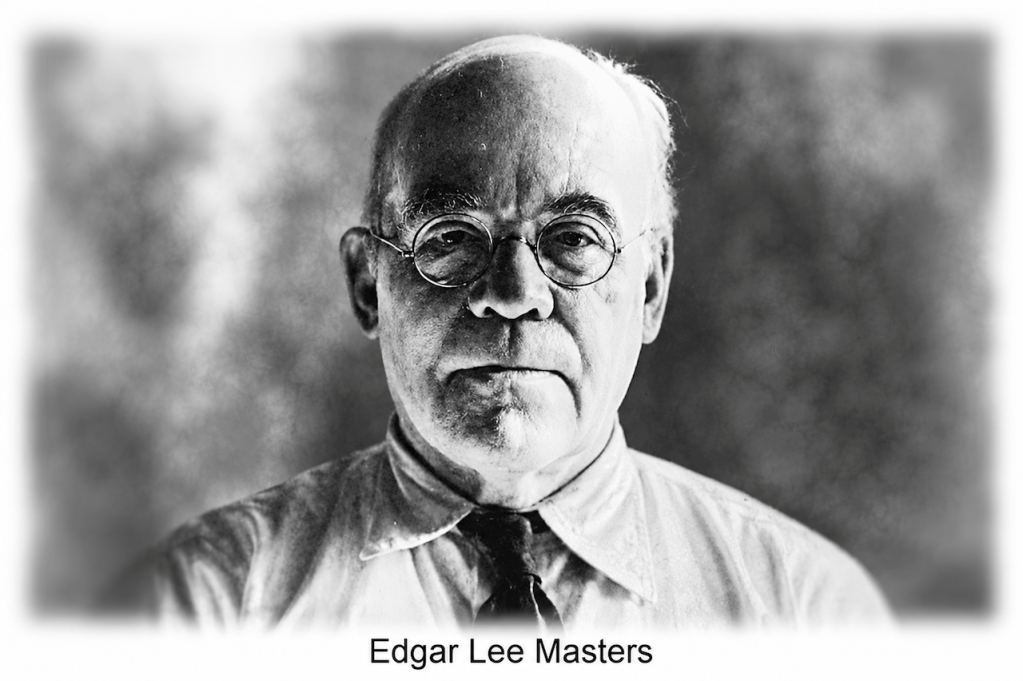
Edgar Lee Masters’ “Judge Somers”
Judge Somers’ complaint demonstrates that he is jealous of a man whom he deems to occupy a lower rung on the social status ladder than himself.
Introduction and Text of “Judge Somers”
The class warfare that rages in the Spoon River reportage becomes evident as readers make their way through Edgar Lee Masters‘ American classic, Spoon River Anthology.
Businessmen, doctors, lawyers, judges, and politicians are the special targets of many of those whose employment ranges from simple shopkeepers, to farmers, to teachers, and householders whose outside job or career is never named. Of course, preachers and other religious figures seldom come off well in these dramas either, likely owing to the atheist leanings of their creator.
And the truly lowly dregs of society—murderers, prostitutes, adulterers, drunks, and thieves—are often given a bit too much of the benefit of doubt. The good-hearted prostitute is often more credible than the banker despite the fact that his heart may be of equal goodness.
As in contemporary society where racism remains the primary cudgel of race-baiting hypocrites, back a century or so ago, the -ism du jour was classism, thus the emphasis on class warfare.
While many of the epitaphs in Edgar Lee Masters’ American classic reveal issues motivated by class warfare, “Judge Somers” offers one of the most pronounced, as the judge deems himself better than his peers.
The speaker in the epitaph “Judge Somers” is the judge himself, who wants to know why a man of importance, such as himself, has died unnoticed while the town drunk has been well noted.
Judge Somers
How does it happen, tell me,
That I who was the most erudite of lawyers,
Who knew Blackstone and Coke
Almost by heart, who made the greatest speech
The court-house ever heard, and wrote
A brief that won the praise of Justice Breese—
How does it happen, tell me,
That I lie here unmarked, forgotten,
While Chase Henry, the town drunkard,
Has a marble block, topped by an urn,
Wherein Nature, in a mood ironical,
Has sown a flowering weed?
Commentary on “Judge Somers”
Judge Somers’ complaint demonstrates that he is jealous of a man he deems to occupy a lower rung on the social status ladder than he does.
First Movement: Why Me?
How does it happen, tell me,
That I who was the most erudite of lawyers,
Who knew Blackstone and Coke
Almost by heart, who made the greatest speech
The court-house ever heard, and wrote
A brief that won the praise of Justice Breese—
This poem consists of two movements each beginning with a command embedded in a question. The judge is demanding an answer to his question in both instances.
Judge Somers begins by asserting his demand/question, posited with “How does it happen, tell me.” But in the first movement, he does not finish the question proper; he merely prefaces it by reporting all of his achievements.
The judge feigns no modesty in his self-evaluation but flatly asserts that he was the most brilliant of attorneys. Part of his erudition and brilliance was due to his having “almost by heart Blackstone and Coke.”
The judge is alluding to two British legal writers—Sir William Blackstone (1723-1780), who wrote the Commentaries, and Sir Edward Coke(1552-1634), who wrote and published treatises titled Institutes of the laws of England.
The judge’s knowledge of these works sounds much more important than it is; a lawyer or judge practicing in a 19th century Illinois rural community would hardly be confronted with issues dealt with in these obscure legal works.
Judge Somers then boasts that he “made the greatest speech / The court-house ever heard.” In his own mind, not only was he a great orator, but he also “wrote / A brief that won the praise of Justice Breese.”
Again, the fictional speaker Somers alludes to a real-life justice, Justice Sidney Breese, who served on the Illinois Supreme Court as both a judge and as chief justice.
Second Movement: How Does It Happen to Me?
How does it happen, tell me,
That I lie here unmarked, forgotten,
While Chase Henry, the town drunkard,
Has a marble block, topped by an urn,
Wherein Nature, in a mood ironical,
Has sown a flowering weed?
So with such a shining reputation for accomplishment, the judge again poses his demand/question: “How does it happen, tell me.” He then completes the question for he wants to know why he is left to “lie here unmarked, forgotten.”
And to make matters worse, that “town drunkard” and scoundrel “Chase Henry” has been afforded “a marble block, topped by an urn.” The judge adds that, “Nature,” with a splash of irony “has sown a flowering weed.”
The jealous judge then takes a bit of comfort from the ironic weed, but still he continues to chafe at the fact that he is forgotten while the town drunk seems to be celebrated.
The reader knows a secret that the judge obviously does not know: that Henry’s memorial has nothing to do with Henry but can be laid at the door of rivalry between the Protestants and the Catholics.


Good faith questions and comments welcome!