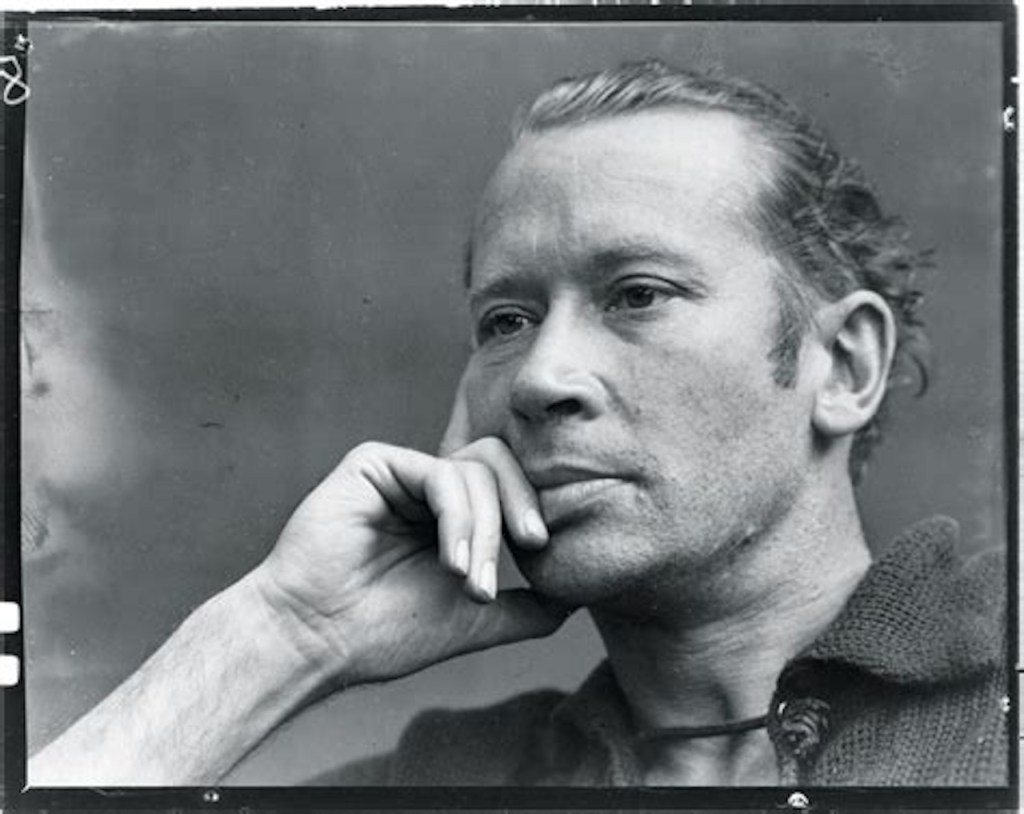
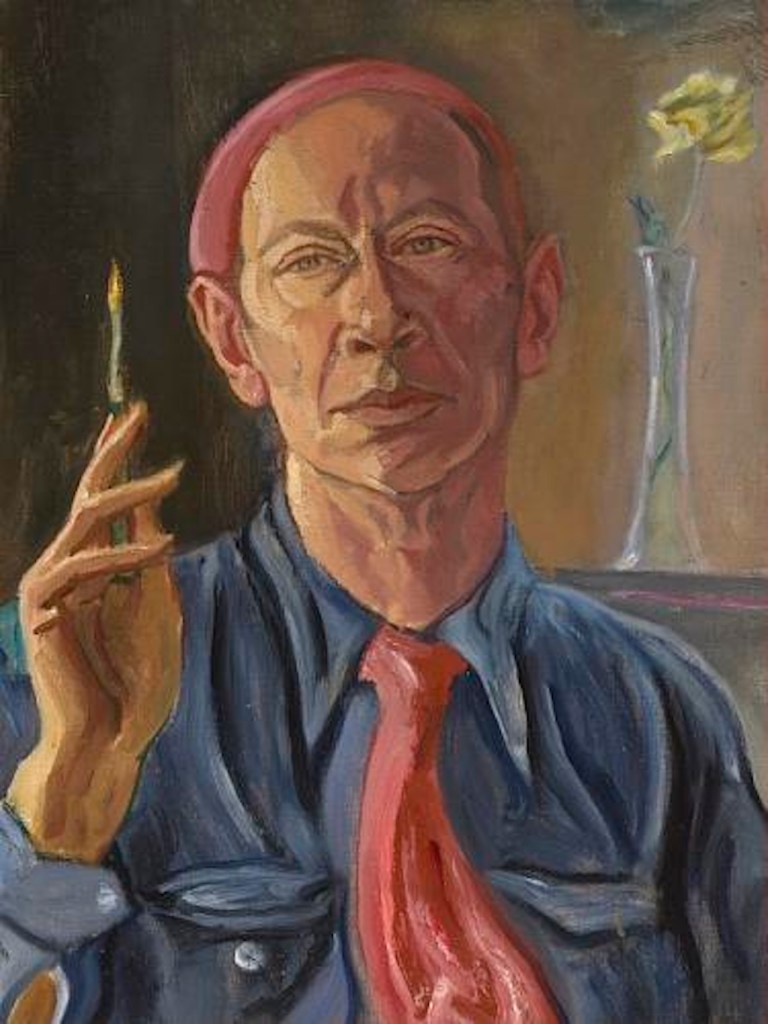
The poetry of E. E. Cummings holds a special place in the literary world. His unique style remains a recognizable and delightful experience for poetry readers. Although he remained quite traditional in his theme and subject choices, his creations on the page virtually always stun and surprise.
Introduction: Non-Traditional Use of Language
About the poetic style of E. E. Cummings, poet Randall Jarrell has averred [1], “No one else has ever made avant-garde, experimental poems so attractive to the general and the special reader.”
E. E. Cummings’ experimentation with language led to a distinct style through his invention of new words and new ways to use words. He even employed novel organizational placings of terms that violated the traditional grammar rules as well as linguistic ordinary sense.
Despite Cummings’ non-traditional use of language, his poems attracted a wide following. Many of his poems became quite popular with readers of all stripes. John Logan, writing about Cummings in Modern American Poetry: Essays in Criticism, declared Cummings as “one of the greatest lyric poets in our language.”
In Standards: A Chronicle of Books for Our Time, Stanley Hyman claimed, “Cummings has written at least a dozen poems that seem to me matchless. Three are among the great love poems of our time or any time.”
Early Life
Edward Estlin Cummings was born [2] in Cambridge, Massachusetts, on October 14, 1894, to Edward Cummings and Rebecca Haswell Clarke. At the Cambridge Latin High School, the future poet studied Greek and Latin. After high school, he attended Harvard, where he earned both the BA and MA degrees. Several of his early poems were published in 1917 in Eight Harvard Poets.
While still a child, Cummings set his sights on becoming a poet, and he instituted for himself the task of composing one poem each day. Thus, between the ages of eight and 22, he explored the many forms and aspects of poetry composition, mostly the traditional poetic forms that had been employed for centuries.
Around 1916 as modernism was taking its place among the literary movements, Cummings began experimenting with forms that ultimately led to his unique language use that has captured the imagination of the generations of poetry readers who followed his own.
War and Marriage
After World War I broke out in Europe in April 1917, Cummings offered his services by volunteering in the Norton-Harjes Ambulance Service in France. This type of service became a common option for many pacifists during the war. Stationed near the border of France and Germany, Cummings met and became fast friends with William Slater Brown, a fellow American.
After inserting veiled comments into letters back home and befriending other soldiers in other units, the pair of friends became suspicious in the eyes the authority and were arrested, charged with treason, and placed in an internment camp in Normandy.
Cummings’ father was able to secure his son’s release from the camp in December 1917, but his friend did not secure release until April 1918. The U.S. Army drafted Cummings into service in July 1918. He went through basic training for six months in Massachusetts.
After his military experience ended, Cummings began an affair with Elaine Thayer, who was married to Schofield Thayer, a friend of Cummings. An enthusiast for open-marriage, Thayer did not object to that relationship. Elaine became pregnant with Cummings’ child, a daughter named Nancy.
Cummings and Elaine married in 1924 after her divorce from Schofield Thayer. Cummings adopted Nancy, who did not find out that Cummings was her biological father until 1948. The Cummings-Thayer marriage lasted only a short time.
Only two months after the wedding, Elaine left America for Europe to settle her sister’s estate. On the ship traveling to Europe, Elaine met and fell in love with another man. She and Cummings divorced in 1925.
In 1929, Cummings married a second time to Anne Minnerly [3], but that marriage lasted only three years with Minnerly seeking a Mexican divorce in 1932. The US did not recognize Mexican divorces until August 1934.
After separation from his second wife, Cummings began a relationship with Marion Morehouse. It remains unclear if the pair ever legally married, but the two lived together until his death in 1962.
Journey to the USSR
Like a number of artists practicing during the 1930s, Cummings had a brief flirtation with communism, thinking the system might offer a better, freer world. He traveled to the USSR in 1931 [4], and it did not take long for the poet to realize that the USSR was governed by the strong arm tactics of a dictatorship. Instead of more freedom, the individual was fiercely ruled by state dictates.
Cummings published his observations of the machinations of dictatorship in his Eimi, a compilation of his journal entries. In that volume, he accused the Soviets of dehumanizing policies. The term, “eimi,” is Greek for “I am.” In this work, he labels the USSR a “uncircus of noncreatures.”
Cummings became especially disgusted after the body of the dictator Vladimir Lenin was laid to rest in its elaborate tomb. This event inspired some of Cummings’ most forceful, impassioned pieces that appear in that work. According to John Peale Bishop, Cummings’ style “reaches its most complete development in the prose of Eimi.” Bishop continues,
Indeed, one might almost say that, without knowing it, Cummings had been acquiring a certain skill over the years, in order that, when occasion arose, he might set down in words the full horror of Lenin’s tomb.
As Cummings kept track of his 35-day journey through the USSR, he employed various allusions to Dante’s Inferno, equating his Soviet experience to a descent into Hell. Only after leaving the USSR and entering the free world was it possible for the poet “to feel like a man” again.
Bishop claims that Cummings’ Soviet experience had led the poet to understand the true nature of freedom: that the quality exists inside the individual. It is the free will with which man is endowed that makes all freedoms possible. According to Rushworth M. Kidder, Eimi is “a report of the grim inhumanities of the Soviet system, of repression, apathy, priggishness, kitsch, and enervating suspicion.”
After the publication of Eimi, Cummings came up against the ignorance of heavily statist-leaning publishers, who refused to publish the already widely noted poet’s works. Thus, Cummings had to self-publish a number of his collections in the late 1930s. Cummings’ experience with censorship demonstrates that one pays a price for disagreeing with statist mind-sets.
The Writing Life
The 1920s proved to be a highly creative period for Cummings. He began his publishing career in 1922 bringing out his first book, The Enormous Room. This fictional account of his experience in the French internment camp is offered in a humorous style, somewhat at odds with the reality of the experience.
Cummings’ free-wheeling style nevertheless demonstrates that his experience in the camp contributed to his growth as an artist. Critics such as David E. Smith, John Dos Passos, and John Peale Bishop have all written glowing reviews of Cummings’ The Enormous Room. As Smith has observed, the emphasis of that work is placed upon what “the initiate has learned from his journey.” Smith continues,
In this instance, the maimed hero can never again regard the outer world (i.e., ‘civilization’) without irony. But the spiritual lesson he learned from his sojourn with a community of brothers will be repeated in his subsequent writings both as an ironical dismissal of the values of his contemporary world, and as a sensitive, almost mystical celebration of the quality of Christian love.
Dos Passos has remarked that the book, “in a style infinitely swift and crisply flexible, an individual not ashamed of his loves and hates, great or trivial, has expressed a bit of the underside of History with indelible vividness.” Bishop added, “The Enormous Room has the effect of making all but a very few comparable books that came out of the War look shoddy and worn.”
Tulips and ChimneysvsTulips & Chimneys
In 1923, Cummings’ next publication, his first collection of poems titled Tulips and Chimneys, was brought out. In this collection, his unique language use is on display. He employed non-traditional spacing, unconventional combinations of terms, fractured grammatical expressions, and many varying combinations of punctuation.
Cummings originally wanted his first collection to be titled Tulips & Chimneys, but the publisher insisted upon employing the word not the ampersand. The publisher had also removed a number of offending poems from the collection. But in 1925, Cummings brought a collection of those excised poems and titled the collection &. In 1925, rather quickly upon the heals of his publication of &, he came out with XLI Poems.
Reviewing this collection in the magazine, The Nation, poet and critic Mark Van Doren averred that Cummings was a poet with “a richly sensuous mind; his verse is distinguished by fluidity and weight; he is equipped to range lustily and long among the major passions.”
By the end of year 1925, Cummings had garnered a prize of $2000 from Dial Magazine, which offered this annual award to an up-and-coming writer. At the time, the $2000 sum was equal to a full year’s income for a writer.
In 1926, in another collection of poems titled Is 5, Cummings for the first time offered an introduction to his philosophy of poetry. He believed that poetry was a “process” not merely a “product.” During this decade, Cummings established his reputation as an experimental artist in the avant-garde. Critics never failed to focus on his unique use of language. Writing in The Modern Poets: A Critical Introduction, M. L. Rosenthal opined,
The chief effect of Cummings’ jugglery with syntax, grammar, and diction was to blow open otherwise trite and bathetic motifs through a dynamic rediscovery of the energies sealed up in conventional usage…. He succeeded masterfully in splitting the atom of the cute commonplace.
Richard P. Blackmur, writing in The Double Agent: Essays in Craft and Elucidation, opines,
Cummings has a fine talent for using familiar, even almost dead words, in such a context as to make them suddenly impervious to every ordinary sense; they become unable to speak, but with a great air of being bursting with something very important and precise to say.
Literary luminaries such as Bethany K. Dumas, S. I. Hayakawa, Norman Friedman, Stephen E. Whicher, and many others have found Cummings a fit focus upon which to opine.
For example, Hayakawa has effused, “No modern poet, to my knowledge, has such a clear, childlike perception as E. E. Cummings—a way of coming smack against things with unaffected delight and wonder. This candor … results in breath-takingly clean vision.”
In 1952, Cummings was honored by being chosen to deliver the Charles Eliot Norton lectures in poetry at Harvard University. That lecture series was published as i: six nonlectures. They featured Cummings’ highly personal stories from his life, and Jenny Penberthy has called them “autobiographical rambles.”
Death of the Poet
On September 3, 1962, E. E. Cummings died [5] at Memorial Hospital in North Conway, New Hampshire, of a brain hemorrhage [6]. He was 67. He is interred at Forest Hills Cemetery in Boston, Massachusetts. At the time of the poet’s death, he was considered the second most widely anthologized, read, and studied American poet, following Robert Frost.
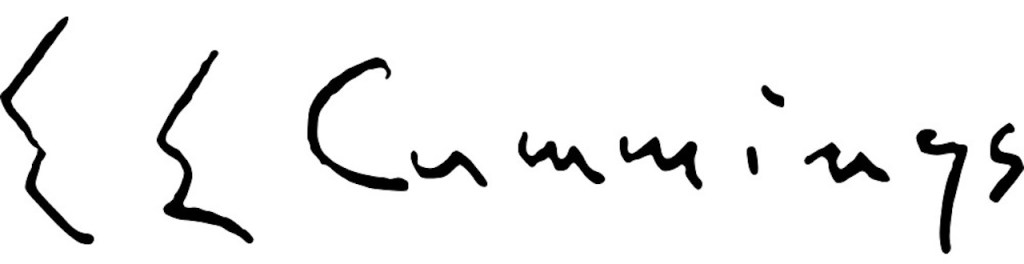
The poet’s name is often expressed in all lower-case letters [7], likely to mimic the poet’s unconventional style. The critic Henry T. Moore erroneously claimed that Cummings legally changed his name to sport all lower-case letter, and Norman Friedman allowed that inaccurate claim to be published in the preface of his book, E. E. Cummings: The Growth of a Writer.
Responding to Moore’s erroneous claim, Cummings’ widow [8] offered Friedman a correction: “You should not have allowed H. Moore to make such a stupid & childish statement about Cummings & his signature.”
Although Cummings did often write his signature in all lower-case letters, he more often used capital letters in the traditional fashion. The lie that needs to be put to rest is that Cummings legally changed his name. As his widow made clear, Cummings did not engage in that “stupid & childish” act.
Sources
[1] Editors. “E. E. Cummings.” Poetry Foundation. Accessed August 24, 2026.
Image: Emily Dickinson – Amherst College – Daguerrotype of the poet at age 17, circa 1847 – likely the only authentic, extant likeness of the poet
Emily Dickinson’s “A little East of Jordan”
Emily Dickinson’s “A little East of Jordan” dramatizes the speaker’s retelling of Jacob’s wrestling match with the angel, transforming a familiar Genesis episode into a study of stubborn, victorious will.
Introduction and Text of “A little East of Jordan”
In “A little East of Jordan,” the speaker reimagines the KJV Genesis 32: 1–32 wrestling match between Jacob and the angel as an athletic contest, casting the angel as a “Gymnast” who ultimately loses to the mortal’s persistence. The speaker’s playful diction transforms sacred narrative into a witty demonstration of the power of unyielding will.
A little East of Jordan
A little East of Jordan, Evangelists record, A Gymnast and an Angel Did wrestle long and hard –
Till morning touching mountain – And Jacob, waxing strong, The Angel begged permission To Breakfast – to return –
Not so, said cunning Jacob! “I will not let thee go Except thou bless me” – Stranger! The which acceded to –
Light swung the silver fleeces “Peniel” Hills beyond, And the bewildered Gymnast Found he had worsted God!
Commentary on “A little East of Jordan”
The speaker recasts a solemn biblical account as a spirited contest, using wit to explore how persistence itself becomes a spiritual discipline capable of overturning even divine resistance.
First Stanza: “A little East of Jordan”
A little East of Jordan, Evangelists record, A Gymnast and an Angel Did wrestle long and hard –
The speaker opens by locating the scene precisely, “a little East of Jordan,” grounding a supernatural encounter in geography familiar to any reader of scripture. The phrase “Evangelists record” signals that the speaker relies on inherited testimony rather than firsthand witness.
Naming the angel a “Gymnast” is the speaker’s first great irreverence. The lofty biblical wrestler becomes an athlete, a figure of muscle and technique rather than pure spirit. This diction lowers the encounter to human scale even while its outcome remains cosmically divine.
The verb “wrestle” and the adverbial pairing “long and hard” emphasize duration and effort. The speaker insists that this contest was no brief skirmish but a sustained trial, foreshadowing that endurance, not strength alone, will determine the victor.
Paramahansa Yogananda explains that persistence carries its own guarantee of fulfillment: “When you persist, refusing to accept failure, the object of will must materialize.” Jacob’s marathon struggle embodies this very principle of sustained, unrelenting will.
In my earlier essays on Dickinsonian poems, I have discussed the speaker’s habit of privileging inner evidence over public display, a habit already visible here in her quiet trust that private struggle yields real spiritual gain.
Second Stanza “Till morning touching mountain”
Till morning touching mountain – And Jacob, waxing strong, The Angel begged permission To Breakfast – to return –
The stanza opens with a striking image, morning itself “touching mountain,” as though dawn were a physical presence arriving to interrupt the combat. Time becomes tactile, marking the passage of an entire night spent in struggle.
Jacob, meanwhile, is “waxing strong,” a phrase borrowed almost directly from scripture yet given new emphasis by the speaker’s placement. Rather than weakening under supernatural assault, the human contestant grows more powerful as the hours pass.
The reversal culminates in the angel’s request: it “begged permission / To Breakfast – to return.” The heavenly being now pleads with the mortal, reduced to requesting release for so mundane a purpose as a meal.
This comic deflation, an angel wanting breakfast, allows the speaker to needle at solemn religious authority while never abandoning the story’s essential gravity. The sacred and the domestic collide, and neither cancels the other.
The speaker’s contemplative musing on this exchange suggests that true power resides not alone in supernatural station but in the will to endure until dawn, a lesson equally applicable to any poet’s own persistent labor.
Third Stanza: “Not so, said cunning Jacob!”
Not so, said cunning Jacob! “I will not let thee go Except thou bless me” – Stranger! The which acceded to –
Jacob’s refusal arrives as direct speech, the poem’s only moment of quoted dialogue. Calling him “cunning” credits the patriarch with strategy rather than mere stubbornness; he recognizes leverage and refuses to relinquish it.
The demand “I will not let thee go / Except thou bless me” reproduces the biblical ultimatum nearly verbatim, yet the speaker’s surrounding commentary, calling the angel “Stranger,” reminds readers that Jacob himself does not yet know with whom he grapples.
That the angel simply “acceded” without further struggle marks the turning point. Divine resistance yields not to force but to a condition, a bargain struck between unequal parties in which the lesser somehow commands the terms.
The speaker’s compression here, four short lines carrying the whole negotiation, mirrors the suddenness of surrender itself. What took a night to accomplish through physical struggle resolves in a single spoken sentence.
Such a bargain illustrates a spiritual economy in which blessing must be actively claimed rather than passively awaited, a principle the speaker elsewhere applies to the poet’s own claims upon poetic immortality.
Fourth Stanza: “Light swung the silver fleeces”
Light swung the silver fleeces “Peniel” Hills beyond, And the bewildered Gymnast Found he had worsted God!
The final stanza opens with an image of dawn clouds, “silver fleeces” swinging with light, a pastoral softness that contrasts sharply with the night’s violence. Nature itself seems to exhale after the long contest concludes.
Naming “Peniel” anchors the scene to its scriptural source, the place where Jacob declares he has seen God face to face. The speaker trusts her reader to recognize the allusion without further explanation, letting the place-name carry its full theological weight.
The angel returns as “bewildered Gymnast,” a phrase that closes the poem’s athletic conceit even as it reveals the being’s astonishment. Losing was never anticipated; the contest’s outcome upends the expected hierarchy between mortal and messenger.
The closing line, “Found he had worsted God,” delivers the poem’s central audacity. The speaker allows the possibility that Jacob’s opponent was divinity itself, and that a mortal, through sheer refusal to release his grip, defeated that divinity.
In my earlier essays on Dickinsonian poems, I have discussed the speaker’s fondness for such theological daring, moments where scripture becomes raw material for testing the boundaries between human will and heavenly authority.
The poem finally suggests that blessing is not simply granted from above but wrested through persistent, even cunning, engagement, a conclusion the speaker offers with characteristic wit rather than solemnity.
Dispelling Postmodern Critical Misreading of Dickinson’s “A little East of Jordan”
Postmodern critics like to argue that Emily Dickinson’s poetry exhibits atheistic tendencies that match their own. Some mask that their claim by calling her “pagan” even using her own hyperbolic and metaphoric claims for support. Others use equally fabulous reasoning to spout their misunderstanding, such as the following exampleshereandhere.
Emily Dickinson’s “A little East of Jordan” is not an atheist text; it is a vivid dramatization of intimate, embodied encounter between the human and the divine.
Far from denying God’s reality or relevance, the poem insists on the nearness of God to His struggling children and on the possibility that persistent human will can wrest blessing from that nearness.
The poem retells KJV Genesis 32: the night-long wrestling of Jacob with the mysterious figure who is finally recognized as God (or God’s messenger). Dickinson’s speaker does not demythologize the episode or reduce it to psychology.
She keeps the biblical geography (“A little East of Jordan”), the scriptural testimony (“Evangelists record”), the place-name Peniel, and the decisive demand for blessing.
The diction is playful—“Gymnast,” “Breakfast,” “cunning Jacob,” “bewildered Gymnast”—but the playfulness is the Dickinsonian mode of seriousness: she lowers the sublime just enough to make the encounter tactile and human-scale without emptying it of its theological weight.
An atheist reading that seizes on the final line (“Found he had worsted God!”) as evidence of divine defeat or absence simply misreads the tone and the tradition. In the biblical narrative, and in Dickinson’s recasting of it, Jacob does not overthrow God; he clings until God yields a blessing.
The “worsting” is the paradoxical victory of the lesser over the greater that is possible only because the greater has drawn near and allowed itself to be held. As Paramahansa Yogananda explains, God can be captured by love.
That nearness is the poem’s central affirmation. Jacob does not pray at a distance or receive an abstract revelation. He grapples through the night with a bodily presence; dawn itself becomes a participant (“morning touching mountain”); the angel must ask permission to leave.
And the human will refuses release “Except thou bless me.” The divine is not remote, impersonal, or optional. It is close enough to be seized, resisted, and finally forced into a covenant of blessing.
Dickinson’s Jacob is “cunning” and “waxing strong,” yet the strength is exercised against and with the divine antagonist. The outcome is not the vanishing of God but the disclosure that God can be engaged, that blessing is not merely bestowed from on high but can be claimed in the struggle itself.
This situation produces a belief system that remains the opposite of atheism. Atheism declares there is no one to wrestle with. Dickinson’s poem shows a God so present that a mortal can refuse to let Him go.
In my commentary on this poem, I have noted the poem’s transformation of solemn narrative into athletic contest and its interest in “stubborn, victorious will.” That will, however, is not autonomous or self-sufficient; it operates inside a relationship that the poem never dissolves.
The angel’s bewilderment and the final recognition that the opponent was God do not mock divinity; they underline the astonishing intimacy of the encounter.
Dickinson’s characteristic theological daring—treating scripture as living material rather than sealed authority—does not erase God; it tests the boundaries of human access to Him and finds those boundaries permeable.
Persistence becomes a spiritual discipline precisely because there is a real Divine Presence against which (and with which) persistence can act.
In short, the poem does not argue that God is absent or irrelevant. It stages the closeness of God to His fallen children: a God who can be met in the dark, held until morning, and compelled by human tenacity to bestow a name and a blessing.
That belief system is not atheism, agnosticism, or even paganism. It is a fierce, witty, and deeply theistic vision of divine-human encounter that expresses deep spiritual conviction that God is real and knowable.
Some dreams signal ghastly deeds In past lives; likely, we prefer Not to be reminded. The exorcism Of karmic fire offers the only cleansing.
Some dream ghosts you grasp: your mother’s Broken heart healed, your public nakedness, robbers Breaking down the door.
But this one recurs and baffles your equilibrium. It is an invasion corrupting your private heart: The one who baffles you
Is neither a father nor a God figure, Just a former acquaintance you never knew well And never touched (at least in this life).
Nor do you touch in the dream, except innocently, Informally, though some strong emotion seems to float Beneath the surface of dream skin.
In your society of thoughts, you flesh out reasons For this intrusion: a past life, too dim to remember, Gives the only succor, as you await enlightenment.
Trying to neutralize resentment, jealousy, or betrayal, Your subconscious may be accusing, judging, condemning, But for what you remain unaware.
Each visit of the form reshapes your conscience And the day crawls on its belly: You feel a sick-sweet love
Coiling and spurning itself until you forget again And get on with other details, but give it days or weeks And the phantom reappears.
It begs exorcism: Burning karmic seeds to release The ghost in smoke. You hope this specter is free of you— You prefer to think this aberration is yours alone.
Original poem appearing in my collection titled “Turtle Woman & Other Poems” under the title “Aberration”
Some dream ghosts whisk by nearly unremarkable: No broken hearts, no public nudity, no murderers Closing in on your heels, just puppies and ice cream,
While others baffle and throw you off kilter. They invade, painting you in a scene You would never have willingly entered.
Why should you couple with this one For whom you have no attraction in the light of day? Who seems to walk out of some distant past
Entering the space occupied by another— Recognized, yet unrecognized, in this dream-mare? Karma is sometimes a bitch that barks at you
And other times growls, trying to get your attention You suppose, but for what purpose? You know you have seeds to burn. You know you could
Have been coupled in a past life. But why Are you forced to revisit it now against your will? Oh, you do know dreams come to you against your will.
You may enjoy some, scorn others; still, they come Spewing forth from the old memory hole. Life is a series of lessons; you have learned that much
From God and experience. You can control What you do with your eyes open, but when you close them And try to rest that brain and its soldiers, you would
Have your rest be peaceful and unfettered by past Emotional, and possibly physical ties, that time And death and life again have broken—
Image: Emily Dickinson – Amherst College – Daguerrotype of the poet at age 17, circa 1847 – likely the only authentic, extant likeness of the poet
Emily Dickinson’s “To venerate the simple days”
Emily Dickinson’s “To venerate the simple days” demonstrates the speaker’s contemplative musing on time, honoring ordinary moments, and framing human physical death as merely a minor threshold.
Introduction and Text of “To venerate the simple days”
Emily Dickinson’s “To venerate the simple days” offers a concise reflection on the fleeting nature of earthly existence. In my earlier essays on Dickinsonian poems, I have discussed the speaker’s habit of privileging inner evidence over public display. The speaker calls for a quiet reverence toward ordinary time.
The poem consists of a single six-line stanza utilizing short lines, delicate cadence, and slant rime. Through this brief structure, the speaker reminds humanity that mortal life passes swiftly; yet, physical death remains a minor event when viewed through the enduring, timeless perspective of spiritual reality and soul consciousness.
To venerate the simple days
To venerate the simple days Which lead the seasons by, Needs but to remember That from you or I, They may take the trifle Termed mortality!
Commentary on “To venerate the simple days”
Emily Dickinson’s “To venerate the simple days” presents a profound observation on honoring daily life while maintaining a detached perspective toward physical departure.
First Movement: “To venerate the simple days”
To venerate the simple days Which lead the seasons by,
The speaker opens by encouraging readers to honor the unassuming, ordinary moments of daily existence. These moments quietly guide the passing seasons forward. Rather than seeking grand public displays or dramatic events, the speaker suggests that profound spiritual value resides within unassuming routine.
In my earlier essays on Dickinsonian poems, I have discussed the speaker’s habit of finding sacred truth within common natural occurrences. These daily routines shape human experience as seasons march steadily onward.
Every passing moment carries quiet dignity. Honoring each humble day allows the mind to achieve inner calm and spiritual perspective. Daily life provides the setting for spiritual growth.
Paramahansa Yogananda explains in his teachings that living with conscious awareness transforms ordinary daily activities into avenues for divine perception. By recognizing the sanctity inherent in simple routines, one cultivates a deep reverence for life. The speaker urges an appreciation for time itself.
Second Movement: “Needs but to remember”
Needs but to remember That from you or I, They may take the trifle Termed mortality!
The speaker provides the motivation for this daily reverence, noting that remembering life’s brevity restores proper perspective. Time eventually eclipses physical existence.
Yet, the speaker boldly labels human physical death as merely a “trifle,” reducing its perceived terror to an insignificant detail.
In my earlier essays on Dickinsonian poems, I have discussed the speaker’s habit of viewing physical mortality as an illusory boundary rather than an ultimate end. The departure from the physical body does not touch the essential nature of the enduring soul. Eternity transcends temporal limits.
Paramahansa Yogananda explains that physical death is merely a transition, as the indestructible soul remains entirely untouched by the body’s dissolution. By viewing mortality as a mere trifle, the speaker inspires freedom from fear. Understanding this truth allows one to cherish each simple day fully.
Image: Emily Dickinson – Amherst College – Daguerrotype of the poet at age 17, circa 1847 – likely the only authentic, extant likeness of the poet
Emily Dickinson’s “Taken from – men this morning”
Emily Dickinson’s “Taken from – men this morning” dramatizes the soul’s transition from earthly life to a metaphysical kingdom, where the departed assume exalted, courtly roles.
Introduction and Text of “Taken from – men this morning”
The speaker in Emily Dickinson’s “Taken from – men this morning” narrates the sudden removal of a young girl from the human realm, portraying death not as an end but as a grand procession escorted by divine beings. In my earlier essays on Dickinsonian poems, I have discussed the poet’s intuitive grasp of the soul’s immortality, a theme central to this work.
Taken from – men this morning
Taken from men – this morning – Carried by men today – Met by the Gods with banners – Who marshalled her away –
One little maid – from playmates – One little mind from school – There must be guests in Eden – All the rooms are full –
Far – as the East from Even – Dim – as the border star – Courtiers quaint, in Kingdoms Our departed are.
Commentary on “Taken from – men this morning”
The speaker presents death as a ceremonial transition, where mortal hands relinquish the body to divine escorts who lead the soul onward.
First Stanza: “Taken from – men this morning”
Taken from men – this morning – Carried by men today – Met by the Gods with banners – Who marshalled her away –
In the first stanza, the speaker establishes a stark contrast between human agency and divine intervention. The repetition of “men” in the opening two lines emphasizes the physical, earthly handling of the deceased: taken and carried by human hands on the same morning. This literal action suggests the funeral procession, where mourners bear the body to its final resting place in the grave.
The phrase “this morning” imparts a sense of immediacy and suddenness, as if the transition occurred without warning, leaving the living to grapple with the swiftness of loss.
However, the tone shifts dramatically in the third line with the introduction of “the Gods with banners.” Here, the speaker introduces a mythic or metaphysical dimension, where divine beings arrive to claim the soul. The image of “banners” evokes a triumphant procession, not a somber burial.
The “Gods” do not come in mourning but in celebration, as if welcoming an honored guest into a higher realm. This portrayal aligns with the teachings of Paramahansa Yogananda, who explains that death is “temporary emancipation,” given when karma determines that the present body has served its purpose.
The verb “marshalled” further reinforces this sense of order and purpose. The “Gods” do not merely collect the soul; they escort it with dignity and direction, guiding it toward its current earned destination. The speaker thus reframes death not as a tragic cessation but as a dignified passage, where the soul is received by celestial hosts.
In my earlier essays on Dickinsonian poems, I have discussed the poet’s employment of riddling imagery to veil profound spiritual truths, inviting readers to contemplate the mystery of what lies beyond the veil.
This stanza also subtly challenges conventional mourning practices. By depicting the “Gods” as the true escorts, the speaker implies that human grief, while natural, may be misplaced. The departed are not lost but are being led to a grander existence.
Paramahansa Yogananda teaches that when a dear one dies, instead of grieving unreasonably, one should realize that he has gone on to a higher plane at the will of God, and rejoice that he is free. The speaker’s vision thus offers comfort, not through denial of loss, but through a reimagining of death as a glorious transition.
The brevity of the lines, with their alternating meter, creates a rhythmic cadence that mimics the steady march of a procession. The short, clipped phrases—”Taken from men,” “Carried by men,” “Met by the Gods”—build a sense of movement, as if the reader is witnessing the soul’s journey in real time. This structural choice enhances the poem’s dramatic effect, drawing the reader into the scene of departure and divine welcome.
Second Stanza: “One little maid – from playmates”
One little maid – from playmates – One little mind from school – There must be guests in Eden – All the rooms are full –
The second stanza narrows the focus to the identity of the departed: “One little maid” and “One little mind.” The repetition of “One” underscores the singularity and preciousness of this young life.
The speaker emphasizes the girl’s youth by referencing her “playmates” and “school,” evoking images of childhood innocence and the abrupt interruption of daily life. The phrase “from playmates” suggests a sudden separation from the joys and companionship of youth, while “from school” implies an early departure from the realm of learning and growth.
Yet, the speaker quickly pivots to a broader, more mystical assertion: “There must be guests in Eden – / All the rooms are full –.” Here, Eden is not depicted as a sparse or exclusive paradise but as a bustling, welcoming place, already filled with departed souls.
The image of “rooms” full of guests suggests a communal afterlife, where the departed are not isolated but are part of a vast, vibrant community. This vision resonates with Paramahansa Yogananda’s description of the astral world, where souls enjoy a freedom such as they never knew during their earthly life.
The phrase “All the rooms are full” also carries a note of gentle irony. On the one hand, it suggests that Eden is so populous that there is barely room for another guest. On the other hand, it implies that the arrival of each new soul is anticipated and welcomed, as if the house of eternity is always ready to receive its next inhabitant. The speaker’s tone is not one of alarm but of quiet assurance, as if the fullness of Eden is a natural and comforting state.
In my earlier essays on Dickinsonian poems, I have discussed the poet’s use of domestic imagery—houses, rooms, gardens—to convey metaphysical concepts. Here, Eden becomes a grand guesthouse, where the departed are honored visitors. This metaphor makes the abstract notion of the afterlife more tangible and relatable, especially for readers who may find comfort in the idea of a welcoming, populated heaven.
The stanza’s structure, with its alternating lines of tetrameter and trimeter, maintains the rhythmic momentum established in the first stanza. The short lines create a sense of intimacy, as if the speaker is confiding a secret truth about the nature of death and the afterlife. The near rime between “school” and “full” provides a subtle sonic link, reinforcing the connection between the girl’s earthly life and her new, eternal home.
Third Stanza: “Far – as the East from Even”
Far – as the East from Even – Dim – as the border star – Courtiers quaint, in Kingdoms Our departed are.
In the final stanza, the speaker shifts to a more abstract, cosmic perspective, describing the distance and mystery of the departed realm. The simile “Far – as the East from Even –” evokes an immense, almost unbridgeable gulf between the world of the living and the world of the dead.
The East, symbolizing dawn and beginnings, stands in stark contrast to Even (evening), representing closure and endings. This spatial metaphor suggests that the departed have moved beyond the cycle of day and night, into a timeless realm where such distinctions no longer apply.
The phrase “Dim – as the border star –” further emphasizes the elusive nature of this realm. The “border star” refers to a star on the edge of visibility, a faint light that marks the boundary between the known and the unknown.
This image captures the speaker’s acknowledgment that the afterlife remains partially veiled from human perception, accessible only through intuition and contemplative musing.
In my earlier essays on Dickinsonian poems, I have discussed the poet’s employment of such liminal imagery to convey the mystery of spiritual truths that lie just beyond the reach of ordinary understanding.
Yet, despite this distance and dimness, the speaker offers a striking vision of the departed: “Courtiers quaint, in Kingdoms / Our departed are.” The word “Courtiers” suggests that the dead assume roles of honor and service in their new existence, attending to the divine in celestial kingdoms.
The adjective “quaint” adds a touch of charm and antiquity, as if the departed have become part of a timeless, elegant order. This portrayal aligns with Paramahansa Yogananda’s teaching that souls in the astral region are clothed in gossamer light, free from the burdens of the physical body.
The speaker’s use of “Kingdoms” (plural) suggests a multiplicity of divine realms, each with its own court and order. This vision resonates with yogic teachings that describe the astral world as a land to which souls go at death, where they enjoy freedom such as they never knew during their earthly life.
Paramahansa Yogananda explains that in the Lord’s dream astral world, souls carry no frail, heavy frames that collide with other crude solids and break; after all, light, even in the material realm, remains indestructible.
The final two lines bring the poem to a close with a gentle, almost matter-of-fact assertion: “Our departed are.” The speaker does not speculate or plead; she simply states the truth as she intuits it.
The departed are not gone; they are present, alive, and active in their own realm. This assertion offers a profound comfort to the bereaved, suggesting that death is not a separation but a transformation, where loved ones continue to exist in a higher, more vibrant state.
The stanza’s structure, with its compact lines and rime between “star” and “are,” creates a sense of closure and resolution. The short, declarative phrases mirror the speaker’s confidence in her vision, as if she has peered beyond the veil and returned with a message of hope and assurance.
The poem thus ends not with a question or a lament, but with a quiet affirmation of the soul’s immortality and the enduring presence of the departed. Thus the speaker’s complete and abiding faith and assured confidence are clearly unveiled.
Edgar Lee Masters’ character Johnnie Sayre speaks to the Divine Belovèd (God), remembering the excruciating pain that resulted in his death, finding grace in his early demise.
Introduction and Text of “Johnnie Sayre”
In Edgar Lee Masters’ “Johnnie Sayre” from his American classic Spoon River Anthology, the speaker is talking to the Divine Creator, while most of the characters address their remarks to the citizens of Spoon River or one of their relatives.
Some of the characters who speak in this remarkable sequence become admirable in the eyes of their readers/listeners, while others invite further disdain, just as they obviously did in their miserable lifetimes.
Johnnie Sayre is one the more admirable characters. He accepts responsibility for his own transgressions in life, and he humbly offers his love and appreciation to the Divine Reality (God) for the soul guidance he understands he is being given.
Johnnie Sayre
Father, thou canst never know The anguish that smote my heart For my disobedience, the moment I felt The remorseless wheel of the engine Sink into the crying flesh of my leg. As they carried me to the home of widow Morris I could see the school-house in the valley To which I played truant to steal rides upon the trains. I prayed to live until I could ask your forgiveness— And then your tears, your broken words of comfort! From the solace of that hour I have gained infinite happiness. Thou wert wise to chisel for me: “Taken from the evil to come.”
Commentary of “Johnnie Sayre”
Masters’ character Johnnie Sayre speaks to the Divine Belovèd, remembering the excruciating pain that resulted in his death, finding grace in his early demise.
First Movement: Addressing His Creator
Father, thou canst never know The anguish that smote my heart For my disobedience, the moment I felt The remorseless wheel of the engine Sink into the crying flesh of my leg.
In a prayerful mode, Johnnie Sayre addresses his Maker, exaggerating that the Creator, Who is both omnipresent and omniscient, cannot know how much Johnnie suffered. Of course, God knows such, but by exclaiming that He cannot, Johnnie implies that the depth is well beyond human comprehension.
Johnnie was stealing a ride on a train, when he finds himself losing his leg to “[t]he remorseless wheel of the engine” that “[sank] into the crying flesh of [his] leg.” Johnnie’s anguish, however, is not that his leg was being crushed.
That unhappy accident merely triggers his guilt over the act of theft. He suddenly becomes aware that he is paying a karmic debt, and his capability to understand and accept that debt causes him great “anguish.”
Second Movement: Remembering His Transgressions
As they carried me to the home of widow Morris I could see the school-house in the valley To which I played truant to steal rides upon the trains.
Johnnie is reminded of his transgression against one of the commandments as he is being transported to the nearby home of the widow Morris. As the rescuers move Johnnie to the woman’s home, he could see his “school-house in the valley.” He admits that he played hooky from school “to steal rides upon the trains.”
Third Movement: Desirous of God’s Forgiveness
I prayed to live until I could ask your forgiveness— And then your tears, your broken words of comfort!
Johnnie confesses that he wanted to live until he could beg God for His forgiveness. He talks to God as he would his human father. Johnnie expects to see God shed tears for His son’s transgression, and he awaits God’s “broken words of comfort!” At this point, Johnnie shows a touching sweetness in his relationship with the Divine.
Johnnie accepts his responsibility for his own behavior; he does not blame God or the Spoon River citizens as so many others in the cemetery do, for example “Minerva Jones” and “Daisy Fraser.”
Fourth Movement: Crediting the Divine Creator
From the solace of that hour I have gained infinite happiness. Thou wert wise to chisel for me: “Taken from the evil to come.”
Johnnie is amply rewarded because of his attitude. He finds “solace” and furthermore “gain[s] infinite happiness.” He credits the Divine Creator for “chisel[ing] for me” a life that he would probably have been too weak to have chosen for himself.
Johnnie realizes that God has rescued him from all the “evil to come”; he knows that the way he was living could have only brought more evil into his life, and through God’s grace, he has been spared that evil, and at the same time given succor.
The metaphorical chiseling also implies that perhaps upon Johnnie’s tombstone is chiseled the phrase, “Taken from the evil to come.” In that case, it becomes clear that Johnnie’s exploits were well known by those close to him, which makes Johnnie’s attitude even more admirable.
Instead of cursing those who knew of his “evil,” he accepts their admonitions and rightly credits Divine Intervention that finally liberates him from further wrongs. Johnnie remains one of the more admirable characters residing in the Spoon River after-life menagerie of characters.
You belong to that world of long braids, and pipesmoke coats papers you pull out of your weathered bag and hand me and riddle my brain. Your poetry is what I think ancient ruins are made of. Gold glimmering from the domes of exotic dreams. Riders on horseback come dragging in the dust of a Montana evening and you capture their essence, and the streets of this Indiana town shine in the rain as it blackens the tree trunks,
then the yard shines, smell that rain and remember when the lilacs first tempted you to spring. Our lives sprawl out before us begging us to inspect them and spindle the corners and ransack the trunks for bits of our living. You have an eye that gathers the corn and when I finally squeeze out a word
about how cold the river was that May, even though the tulips flooded the houses on Main Street, you look so surprised that I remember, and I have to remind you that I have lived here a long time, even longer than when I knew you, took summer classes, drove a car without a license, but I didn’t mean to confess, and I know you
wouldn’t let me confess any real sins, like the ones I committed when I thought feminism had arrived to save the world, before I knew that each soul has to save its own life,
but you didn’t know me then, and I am always so glad, because that was not me, the person you see here and care to listen to; I have news and a flag, and as we walk to the burial ground where the chief proclaimed this land sacred,
I know you feel the stream flowing under our feet and you hear the call to come home.