Linda's Literary Home

Tag: poetry

  • James Weldon Johnson’s “Lift Ev’ry Voice and Sing”

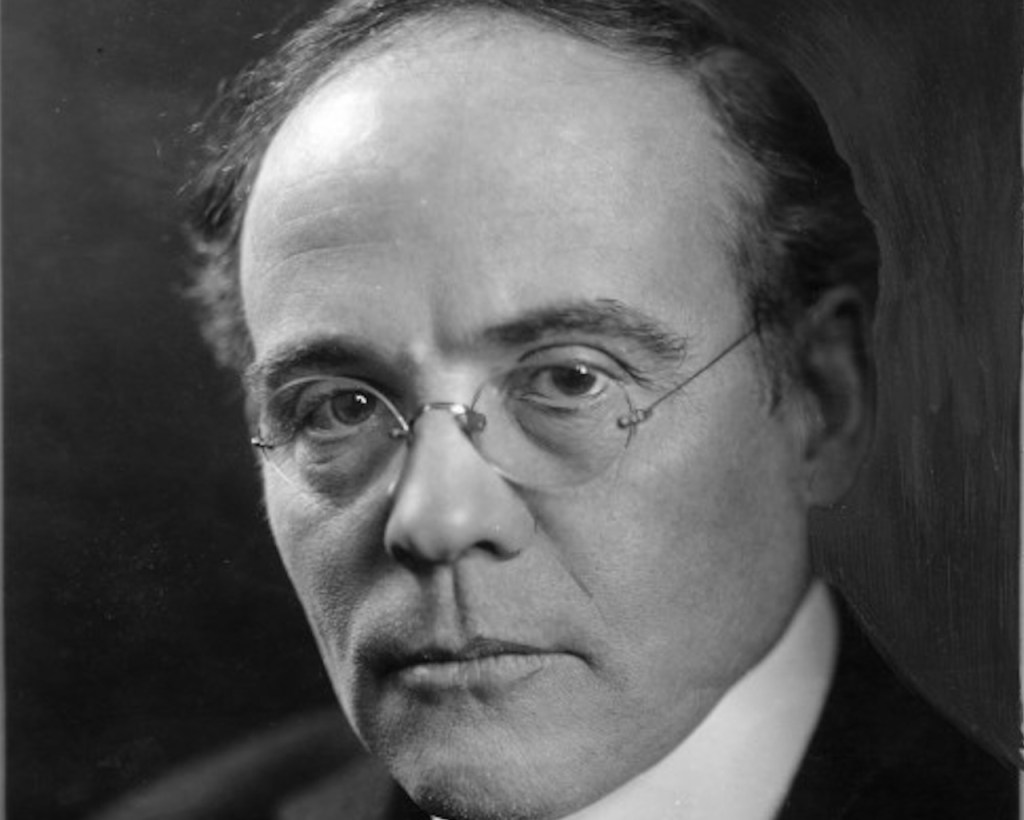
    Image: James Weldon Johnson - Portrait by Laura Wheeler Waring https://npg.si.edu/object/npg_NPG.67.40
    Image: James Weldon Johnson – Portrait by Laura Wheeler Waring

    James Weldon Johnson’s “Lift Ev’ry Voice and Sing”

    James Weldon Johnson penned the poem “Lift Ev’ry Voice and Sing” in 1900 to celebrate the birthday anniversary of the great emancipator, President Abraham Lincoln.

    Introduction and Text of “Lift Ev’ry Voice and Sing”

    After James Weldon Johnson wrote the poem “Lift Ev’ry Voice and Sing” in 1900 to celebrate the birthday anniversary of the great emancipator, President Abraham Lincoln, his brother John Rosamond Johnson composed the musical melody for the poem.

    The song was later entered into the United States Congressional Record, and in 1919, the National Association for Advancement of Colored People (NAACP) selected the song to serve as the “Negro National Hymn (Anthem)”—also referred to as the “Black National Anthem.”   The NAACP employed the song as a cry for unity during the civil rights struggles of the 1950s and 1960s.

    The poem shares a common theme with the American National Anthem, “The Star Spangled Banner”; both works celebrate and offer gratitude to the Divine Belovèd (God) for the rewards of freedom and individual liberty.  

    Johnson’s poem is especially significant for the black experience, including liberation from slavery and the subsequent struggle against the Black Codes and Jim Crow laws that the Democratic Party continued to enforce to foster segregation and denigration of the former slaves and their descendants after the American Civil War (1861–1865).

    Lift Ev’ry Voice and Sing

    Lift every voice and sing,
    Till earth and heaven ring,
    Ring with the harmonies of Liberty;
    Let our rejoicing rise
    High as the list’ning skies,
    Let it resound loud as the rolling sea.
    Sing a song full of the faith that the dark past has taught us,
    Sing a song full of the hope that the present has brought us;
    Facing the rising sun of our new day begun,
    Let us march on till victory is won.

    Stony the road we trod,
    Bitter the chast’ning rod,
    Felt in the days when hope unborn had died;
    Yet with a steady beat,
    Have not our weary feet
    Come to the place for which our fathers sighed?
    We have come over a way that with tears has been watered.
    We have come, treading our path through the blood of the slaughtered,
    Out from the gloomy past,
    Till now we stand at last
    Where the white gleam of our bright star is cast.

    God of our weary years,
    God of our silent tears,
    Thou who hast brought us thus far on the way;
    Thou who hast by Thy might,
    Led us into the light,
    Keep us forever in the path, we pray.
    Lest our feet stray from the places, our God, where we met Thee,
    Lest our hearts, drunk with the wine of the world, we forget Thee;
    Shadowed beneath Thy hand,
    May we forever stand,
    True to our God,
    True to our native land.

    Reading by Phylicia Rashad 

    Commentary on “Lift Ev’ry Voice and Sing”

    James Weldon Johnson’s “Lift Ev’ry Voice and Sing,” also known as the Negro National Anthem and the Negro National Hymn, was sung publicly for the first time on February 2, 1900, by a choir of 500 children at the Stanton School in Jacksonville, Florida.

    Johnson was serving as principal of the school at the time, and the occasion was a celebration of the birthday anniversary of President Abraham Lincoln.

    First Stanza: Sing Joyfully, Loudly with Determination

    Lift every voice and sing,
    Till earth and heaven ring,
    Ring with the harmonies of Liberty;
    Let our rejoicing rise
    High as the list’ning skies,
    Let it resound loud as the rolling sea.
    Sing a song full of the faith that the dark past has taught us,
    Sing a song full of the hope that the present has brought us;
    Facing the rising sun of our new day begun,
    Let us march on till victory is won.

    The speaker begins by enjoining his listeners to sing joyfully and loudly in order to raise their voices to the Heavens.  Such thankful voices should spread throughout the seascape and sky.  The joy of singing about freedom can become infectious, as it uprights the minds and hearts of the downtrodden.

    The singing must be filled with the joy and faith that these people have been taught in the past, even during times that were dark with many shames.  But that singing must also ring out with the hope they must foster as they look to the present and future for better times.

    The speaker/singer encourages his hearers/listeners to continue their struggle until they meet with victory over oppression.  He insists that victory is not the final reward, but victory for freedom will demand constant vigilance, eternally watching and fighting to maintain that precious commodity. 

    The human race in all its various hues and shades has learned nothing, if not that there is never a guarantee of freedom without effort.  Keeping that emphasis on constant effort must remain part of every generation’s thinking and behavior.

    There are always groups afoot, conspiring to take the freedom and property of others.  Lest defeat be snatched from the jaws of victory, each human being must remain watchful to protect their hard-won freedoms.

    As the third American president, Thomas Jefferson, averred in his 1787 letter to the son-in-law of John Adams, William Stephens Smith:

    . . . what country can preserve it’s liberties if their rulers are not warned from time to time that their people preserve the spirit of resistance? Let them take arms. . . .  The tree of liberty must be refreshed from time to time with the blood of patriots and tyrants.

    While celebrating the joy of great accomplishments, it is often prudent to acknowledge that there is no such thing as heaven on earth.  Perfection must be left for heaven, while life on earth will always entail certain risks and require vigilance.

    Second Stanza: Remaining Undeterred by Tears and Death

    Stony the road we trod,
    Bitter the chast’ning rod,
    Felt in the days when hope unborn had died;
    Yet with a steady beat,
    Have not our weary feet
    Come to the place for which our fathers sighed?
    We have come over a way that with tears has been watered.
    We have come, treading our path through the blood of the slaughtered,
    Out from the gloomy past,
    Till now we stand at last
    Where the white gleam of our bright star is cast.

    The speaker reminds his listeners of the difficulties they have faced.  The road has been “stony”—not impossible to travel but not at all easy.  And he does not anticipate the travel will become any easier, especially without the proper attitudes and behavior.

    Their struggles made having hope a weary task, but through unwavering courage and much hard work, they know they have gained certain goals and have the ability to hold on to them; thus, they must celebrate and be thankful for all the strides forward that they have achieved.

    They have continued their march, undeterred by tears and even death.  They have traveled on despite the blood shed, the gloom, and the often dashed hopes and dreams.    

    They now can see that they stand in the much desired light of both hope and faith.  That faith gleams like a “bright star” and casts light on all those who strive for it.  

    They can finally visualize and realize that their struggles have resulted from faith, hope, and have resulted in a certain measure of success in the achievement of freedom.

    Third Stanza: Prayer, Devotion, and Gratitude

    God of our weary years,
    God of our silent tears,
    Thou who hast brought us thus far on the way;
    Thou who hast by Thy might,
    Led us into the light,
    Keep us forever in the path, we pray.
    Lest our feet stray from the places, our God, where we met Thee,
    Lest our hearts, drunk with the wine of the world, we forget Thee;
    Shadowed beneath Thy hand,
    May we forever stand,
    True to our God,
    True to our native land.

    In the  third and final movement, the speaker offers a prayer of gratitude to the Divine Reality (God).  The speaker/singer recognizes that the Creator (God as Father) has always guided them as they have been met with struggles for freedom.  They have come through all the “weary years with silent tears.”  

    The speaker/singer acknowledges that with the love and guidance of the Divine Reality (God), they have been led into the light, and he fervently prays that they will continue down the bright path of righteousness that leads to and maintains individual liberty.

    The speaker asks of his Divine Creator that he have the ability to keep his feet from straying away from His mercy and guidance.  He knows that only his deep faith can continue to guide and guard him through the vicissitudes of life’s trials and tribulations.

    He also petitions the Divine Guide to assist them all and not allow them to descend into drunkenness with worldly affairs that would divert their attention away from the Only Reality.

    With this concluding, holy image—”Shadowed beneath [God’s] hand”—the speaker places his life, his trust, and his faith in the only Hand that matters.    This celebration in song offers a historical glimpse into the enduring qualities that always mattered most in achieving improvements in the human condition.

    As all hymns turn hearts and minds Godward, this important song remains a necessary part of American history, uplifting the spiritual stature of all who experience the performance of its sentiment.

    Rendered in song by the Southern Sons 

    Image:  James Weldon Johnson - Commemorative Stamp - http://usstampgallery.com/view.php?id=e331c006856fe114a9ec83472d926981f48b72ec
    Image: James Weldon Johnson – Commemorative Stamp
  • Emily Dickinson’s “Once more, my now bewildered Dove”

    Image: Emily Dickinson - Amherst College - Daguerrotype of the poet at age 17, circa 1847 - likely the only authentic, extant likeness of the poet
    Image: Emily Dickinson – Amherst College – Daguerrotype of the poet at age 17, circa 1847 – likely the only authentic, extant likeness of the poet

    Emily Dickinson’s “Once more, my now bewildered Dove”

    Emily Dickinson’s “Once more, my now bewildered Dove” dramatizes the soul’s anxious search for spiritual certainty while maintaining courageous hope amid uncertainty and isolation.

    Introduction and Text of “Once more, my now bewildered Dove”

    Emily Dickinson’s “Once more, my now bewildered Dove” employs a minimalist two-stanza structure to portray the soul’s repeated attempts to discover assurance in a troubled world. The speaker draws upon the biblical story of Noah’s dove to symbolize the restless human heart seeking divine confirmation and spiritual refuge. 

    As Paramahansa Yogananda taught, “The nature of Spirit is joy; and the nature of your soul is joy.” The speaker’s dove dramatizes that same longing for safe spiritual harbor within the storms of earthly uncertainty.  

    Once more, my now bewildered Dove

    Once more, my now bewildered Dove
    Bestirs her puzzled wings
    Once more her mistress, on the deep
    Her troubled question flings –

    Thrice to the floating casement
    The Patriarch’s bird returned,
    Courage! My brave Columba!
    There may yet be Land!

    Commentary on “Once more, my now bewildered Dove”

    Emily Dickinson’s “Once more, my now bewildered Dove” reveals the speaker’s spiritual resilience as she dramatizes the soul’s persistent search for divine certainty.

    First Stanza: Soul as Bird

    Once more, my now bewildered Dove
    Bestirs her puzzled wings
    Once more her mistress, on the deep
    Her troubled question flings –

    In the first stanza, the speaker immediately introduces the symbolic “Dove,” a creature long associated with peace, innocence, and spiritual aspiration. Yet this dove appears “bewildered,” suggesting that the soul has encountered confusion while navigating the uncertainties of earthly existence. 

    The speaker’s use of “Once more” emphasizes repetition, implying that this struggle between doubt and faith recurs continually throughout human life.  The dove’s “puzzled wings” suggest not only physical movement but also mental and spiritual agitation. 

    The soul desires elevation and freedom, yet uncertainty hampers its flight. In many Dickinson poems, the speaker dramatizes the soul as yearning to transcend earthly limitation, while simultaneously confronting the painful obscurity that veils spiritual truth from ordinary human perception.

    The phrase “her mistress” identifies the speaker herself as the guiding consciousness behind the dove. The soul and the human personality remain intertwined, even while the personality attempts to direct the soul toward revelation. 

    The speaker’s “troubled question” cast “on the deep” suggests prayer, meditation, or inward spiritual inquiry hurled into the mysterious abyss of existence.  The “deep” carries biblical and mystical implications. 

    The term evokes the vast floodwaters of Genesis while also symbolizing the unknowable dimensions of divine reality. As in many Dickinson riddles, the speaker refuses to explain fully the exact nature of the “question,” allowing readers to intuit the soul’s universal anxieties concerning meaning, permanence, and salvation.

    The speaker’s dramatization resembles concepts frequently emphasized by Paramahansa Yogananda, who taught that the human heart continually seeks reassurance of divine presence amid worldly confusion. 

    Paramahansa Yogananda explained,“The season of failure is the best time for sowing the seeds of success” from The Law of Success: Using the Power of Spirit to Create Health, Prosperity, and Happiness.  The dove’s repeated effort to take wing despite bewilderment reflects precisely such spiritual perseverance. 

    The speaker’s symbolism also recalls observations from my earlier Dickinson commentaries at Linda’s Literary Home regarding the poet’s tendency to dramatize the inner life through compressed metaphysical imagery. 

    Rather than offering abstract philosophical assertions, the speaker embodies spiritual tension through vivid symbolic action. The fluttering dove becomes the visible representation of invisible yearning.

    The stanza’s emotional force arises from the balance between uncertainty and persistence. Although the dove remains bewildered, she nevertheless “bestirs” her wings again. The speaker thus suggests that genuine spiritual seeking requires repeated effort despite the absence of immediate answers or comforting certainties.

    Second Stanza: Allusion of Searching

    Thrice to the floating casement
    The Patriarch’s bird returned,
    Courage! My brave Columba!
    There may yet be Land!

    In the second stanza, the speaker introduces a direct biblical allusion to Noah’s ark. The “Patriarch’s bird” refers to the dove Noah released repeatedly after the floodwaters had submerged the earth. By invoking this familiar narrative, the speaker expands her private spiritual anxiety into a universal drama of humanity searching for signs of divine mercy and renewed stability.

    The word “Thrice” carries symbolic significance, often suggesting spiritual completion or sacred persistence. Noah’s dove returned multiple times before finally discovering evidence of dry land. Likewise, the speaker implies that the soul may endure repeated disappointments before attaining spiritual assurance. The repeated return of the bird dramatizes patience rather than failure.

    The “floating casement” offers an especially striking image. The ark’s window becomes both a literal opening and a symbolic threshold between fear and hope. The dove repeatedly departs from temporary safety into uncertain vastness, only to return again.   Such movement reflects the soul’s oscillation between doubt and renewed aspiration.

    The speaker’s cry, “Courage! My brave Columba!,” introduces sudden tenderness and encouragement. “Columba,” the Latin word for dove, heightens the spiritual dignity of the bird while lending the poem a liturgical tone. At the same time, the term subtly echoes the name “Columbus,” invoking the great explorer who crossed unknown seas searching for a new world.

    That layered allusion enriches the poem’s central drama of spiritual searching. Like Columbus navigating dangerous and uncharted waters, the speaker’s symbolic dove ventures repeatedly into uncertainty, guided largely by intuition and hope rather than visible proof. The soul becomes both sacred dove and courageous explorer, willing to risk bewilderment in pursuit of discovery.

    The speaker addresses the soul compassionately, recognizing both its exhaustion and its bravery in continuing the search. The exclamation “Courage!” therefore functions not merely as comfort but as a rallying cry urging the soul onward despite repeated returns without final resolution. 

    Dickinson’s speaker suggests that spiritual discovery, like earthly exploration, demands perseverance through vast stretches of apparent emptiness before glimpsing the longed-for italics-emphasized “Land.”

    The concluding line, “There may yet be Land!” preserves uncertainty while simultaneously affirming hope. The speaker does not proclaim certainty that land exists; instead, she emphasizes the possibility of deliverance. Dickinson’s speakers often value the sustaining power of hope itself, even when ultimate knowledge remains inaccessible.

    The great Guru Yogananda frequently stressed that spiritual realization demands steadfastness amid periods of apparent silence or darkness. He taught that the devotee must continue seeking divine truth even when external evidence seems absent. The speaker’s encouragement to the “brave Columba” echoes that same spiritual endurance and refusal to surrender to despair.  

    The poem’s final affirmation remains intentionally restrained. The speaker avoids triumphant certainty and instead offers courageous possibility. Such restraint strengthens the poem’s spiritual realism, for authentic faith often survives not through guaranteed answers but through the willingness to continue searching despite bewilderment.

    Like many Dickinson lyrics, this compact poem transforms a brief symbolic scene into a profound musing on the soul’s inward pilgrimage. The dove’s repeated flight over uncertain waters becomes the enduring emblem of humanity’s determination to seek truth, peace, and divine refuge even while surrounded by mystery.

  • James Weldon Johnson’s “A Poet to His Baby Son”

    Image: James Weldon Johnson - https://www.green-wood.com/event/the-autobiography-of-an-ex-colored-man-110-years-later/
    Image: James Weldon Johnson

    James Weldon Johnson‘s “A Poet to His Baby Son”

    The poet James Weldon Johnson has created a speaker whose baby son gets a wild-eyed stare that can look “through the ceiling of the room, and beyond,” leading the father to suspect that he might have a budding poet to contend with.

    Introduction with Text of “A Poet to His Baby Son”

    James Weldon Johnson’s speaker in “A Poet to His Baby Son” offers a tongue-in-cheek complaint that his baby son might be contemplating becoming, like his father, a poet.

    A Poet to His Baby Son

    Tiny bit of humanity,
    Blessed with your mother’s face,  
    And cursed with your father’s mind.

    I say cursed with your father’s mind,
    Because you can lie so long and so quietly on your back,   
    Playing with the dimpled big toe of your left foot,   
    And looking away,
    Through the ceiling of the room, and beyond.
    Can it be that already you are thinking of being a poet?

    Why don’t you kick and howl,   
    And make the neighbors talk about   
    “That damned baby next door,”
    And make up your mind forthwith   
    To grow up and be a banker
    Or a politician or some other sort of go-getter   
    Or—?—whatever you decide upon,   
    Rid yourself of these incipient thoughts   
    About being a poet.

    For poets no longer are makers of songs,   
    Chanters of the gold and purple harvest,  
    Sayers of the glories of earth and sky,   
    Of the sweet pain of love
    And the keen joy of living;
    No longer dreamers of the essential dreams,   
    And interpreters of the eternal truth,   
    Through the eternal beauty.
    Poets these days are unfortunate fellows.   
    Baffled in trying to say old things in a new way   
    Or new things in an old language,   
    They talk abracadabra
    In an unknown tongue,
    Each one fashioning for himself
    A wordy world of shadow problems,
    And as a self-imagined Atlas,
    Struggling under it with puny legs and arms, 
    Groaning out incoherent complaints at his load.

    My son, this is no time nor place for a poet;   
    Grow up and join the big, busy crowd   
    That scrambles for what it thinks it wants   
    Out of this old world which is—as it is—
    And, probably, always will be.

    Take the advice of a father who knows:   
    You cannot begin too young   
    Not to be a poet.

    Commentary on “A Poet to His Baby Son”

    The speaker’s baby son gets a wild-eyed stare that seems so penetrating that it can look through things.  The speaker playfully then muses that the kid might be demonstrating qualities that could lead him to becoming a poet, like his father.  The speaker appears to be somewhat dismayed by that thought, for he is concerned about the current trend in poetry’s emphasis on non-poetic subjects.

    First Stanza:  A Distressing Possibility

    Tiny bit of humanity,
    Blessed with your mother’s face,  
    And cursed with your father’s mind.

    In the opening three-line stanza, the speaker is having a little talk with his infant son. He calls the baby boy a “[t]iny bit of humanity” and describes him as looking like his mother but thinking like his father. The speaker is happy with the first quality but distressed over the second.

    Second Stanza:  Poetry as a Curse

    I say cursed with your father’s mind,
    Because you can lie so long and so quietly on your back,   
    Playing with the dimpled big toe of your left foot,   
    And looking away,
    Through the ceiling of the room, and beyond.
    Can it be that already you are thinking of being a poet?

    The speaker is so distressed over the fact that the baby has his “father’s mind” that he calls the child “cursed” with that quality, repeating that lined in both the opening stanza and the second.

    The speaker then begins his exposition of the reason for thinking the baby  may be cursed. Before dropping the bombshell though, he relates that the baby can do baby things like lying quietly for extended periods on his little back, while playing with toes.  These are a little-baby activities that the speaker finds charming.

    But the speaker also senses a musing quality in the baby’s stare; the little one seems to be staring with such contemplation that he can see through the “ceiling” and “beyond.”  This searching stare suggest to the poet that his baby is contemplating becoming a poet when he grows up.

    Third Stanza:   Anything but Poetry!

    Why don’t you kick and howl,   
    And make the neighbors talk about   
    “That damned baby next door,”
    And make up your mind forthwith   
    To grow up and be a banker
    Or a politician or some other sort of go-getter   
    Or—?—whatever you decide upon,   
    Rid yourself of these incipient thoughts   
    About being a poet.

    The speaker then rhetorically queries his son, suggesting that he “kick and howl” and annoy the neighbors to get them to exclaim and swear because of the unwelcome noise.  Such behavior he suggests would ensure that his son might decide to be a enthusiastic individual and become some professional such as a “banker” or even a “politician.”

    The speaker insists that no matter what the kid does, he should never ever consider the notion of becoming a poet.  Because the father is a poet, he would know all of the disadvantages that profession can confer.

    Fourth Stanza:   The Modernist Bent

    For poets no longer are makers of songs,   
    Chanters of the gold and purple harvest,  
    Sayers of the glories of earth and sky,   
    Of the sweet pain of love
    And the keen joy of living;
    No longer dreamers of the essential dreams,   
    And interpreters of the eternal truth,   
    Through the eternal beauty.
    Poets these days are unfortunate fellows.   
    Baffled in trying to say old things in a new way   
    Or new things in an old language,   
    They talk abracadabra
    In an unknown tongue,
    Each one fashioning for himself
    A wordy world of shadow problems,
    And as a self-imagined Atlas,
    Struggling under it with puny legs and arms, 
    Groaning out incoherent complaints at his load.

    In the longest stanza, the speaker details his reason for dissuading his son from becoming a poet. The poet/speaker is decrying the modernist bent of poets. 

    These modernists do not compose songs of beauty, such as those of “the gold and purple harvest.”  They avoid remarking and making any references to “the glories of earth and sky.”  These poets seem to avoid taking note of their environment.

    But worse still is that these modernist poets are no longer interested in exploring and dramatizing love with all of its joys and sorrows.  They no longer compose songs devoted to revealing the joy just living can offer.   They seem to have ceased dreaming about essential realities.    These new poets avoid interpreting”eternal truth / Through the eternal beauty.”

    Instead of all these endearing qualities that have infused and sustained poetry and poetry lovers for centuries, these new poets have become “unfortunate fellows.” They have become confused and display only befuddlement stammering out ” old things in a new way.”

    The poet describes the claptrap of modernist poetry:  They speak a kind of magician logic in a made-up language.  They are no longer individuals with self-determination.

    These modernists are fabricating a word-salad world of “shadow problems.”  They represent themselves as “a self-imagined Atlas” “with puny legs and arms.” They bitch and moan about their victimhood.

    Fifth Stanza:  Not a Good Place for Poets

    My son, this is no time nor place for a poet;   
    Grow up and join the big, busy crowd   
    That scrambles for what it thinks it wants   
    Out of this old world which is—as it is—
    And, probably, always will be.

    It is then for the reasons spelled out in stanza four that the poet proclaims that in the current environment and with unhealthy, nasty trend, it is simply not a good time nor place to become a poet.v

    He suggests to the infant that he grow up and join the genuine activity of trying to be successful in acquiring what the needs and want, trying to have actual achievements, instead of bemoaning the lie of predetermined failure.  The speaker asserts that this world will always be this same old world.  And this poet/speaker’s experience tells him that it is not currently a place for a poet.

    Sixth Stanza:  The Voice of Experience

    Take the advice of a father who knows:   
    You cannot begin too young   
    Not to be a poet.

    Finally, the poet/father/speaker admonishes the baby son to follow his warning because it is coming from “a father who knows.”  He then cleverly turns his phrasing: “You cannot begin too young / Not to be a poet.”

    The Trend of Victimology in Poetry

    This poem is playful, yet serious. The speaker is only musing on the possibility that his son is contemplating becoming a poet, but he uses the poem as a forum to express his dismay at the way poetry was becoming a cesspool of victimology and self-aggrandizement at the expense of truth and beauty.  This poet was living during the period of time that saw identity politics beginning to take hold of the arts.

    For my own take on art’s decay through post-modernism please visit, “Poetry and Politics under the Influence of Postmodernism.”

  • Emily Dickinson’s “I keep my pledge”

    Image: Emily Dickinson - Amherst College - Daguerrotype of the poet at age 17, circa 1847 - likely the only authentic, extant likeness of the poet
    Image: Emily Dickinson – Amherst College – Daguerrotype of the poet at age 17, circa 1847 – likely the only authentic, extant likeness of the poet

    Emily Dickinson’s “I keep my pledge”

    Emily Dickinson’s “I keep my pledge” dramatizes the speaker’s quiet certainty that life continues beyond death and returns again through the spirituality of nature’s eternal rhythms.

    Introduction and Text of “I keep my pledge”

    Emily Dickinson’s “I keep my pledge” offers a compact but profound musing on immortality, reincarnation, and the soul’s fidelity to divine law. The speaker fashions a little lyrical drama in which nature becomes witness to a sacred vow that transcends earthly death. 

    The poem’s short lines and compressed images intensify the mystical atmosphere as the speaker aligns herself with flowers, bees, and birds to affirm her continuing existence. As in many Dickinson poems, earthly imagery gestures toward a metaphysical reality beyond human sensory perception.

    I keep my pledge

    I keep my pledge.
    I was not called –
    Death did not notice me.
    I bring my Rose.
    I plight again,
    By every sainted Bee –
    By Daisy called from hillside –
    By Bobolink from lane
    Blossom and I –
    Her oath, and mine –
    Will surely come again.

    Commentary on “I keep my pledge”

    The speaker quietly celebrates the immortality of the soul and its inevitable return through metaphorical employment of nature’s recurring cycles.

    First Movement: Making a Vow

    I keep my pledge.
    I was not called –

    Death did not notice me.

    The speaker begins with a declaration of fidelity, insisting that she has remained true to a sacred promise. The claim “I keep my pledge” carries spiritual force because it implies an agreement extending beyond one earthly lifetime. 

    The speaker’s assertion that “Death did not notice me” diminishes death’s supposed authority and portrays the soul as untouched by the loss of the physical encasement.

    The speaker’s attitude recalls Paramahansa Yogananda’s teaching that “This body has come, and it will vanish; but the soul essence within it will never cease to exist.” 

    Dickinson’s speaker similarly refuses to grant death ultimate reality, treating it almost as a distracted figure unable to perceive the immortal essence moving silently beyond material limitation.

    Earlier commentaries on Dickinson’s poetry have often noted that her speakers transform ordinary experience into metaphysical revelation. Here again, the speaker presents death not as annihilation but merely as an interruption in outward form. 

    Her confidence resembles the assurance found in “There is another sky,” where the created spiritual world remains untouched by decay and change.

    Second Movement: Instruments of Faith

    I bring my Rose.
    I plight again,

    The speaker next introduces the “Rose,” a traditional emblem of spiritual beauty and eternal affection. She does not merely observe the flower; she “bring[s]” it, suggesting active participation in the ongoing renewal of life. The rose becomes an offering carried from one incarnation into another.

    The affirmation “I plight again” deepens the sense of recurring vows. To “plight” means to pledge or bind oneself faithfully, and the addition of “again” hints strongly at reincarnation. The soul continues renewing its sacred commitments across repeated cycles of existence.

    Paramahansa Yogananda frequently taught that the soul evolves “through many forms” until it realizes its unity with Spirit. The speaker’s language harmonizes with that spiritual concept, as though she recognizes herself participating in a divine continuity extending far beyond one mortal appearance.

    The rose also resembles the unfading flowers in “There is another sky,” where beauty remains untouched by frost or deterioration. Dickinson’s speakers repeatedly imagine blossoms as symbols of permanent spiritual reality rather than temporary earthly decoration. The flower’s endurance reflects the soul’s endurance.

    Third Movement: By Nature’s People

    By every sainted Bee –
    By Daisy called from hillside –
    By Bobolink from lane

    The speaker now invokes nature itself as witness to her vow. The “sainted Bee,” the daisy, and the bobolink all function as living participants in a sacred universe governed by continuity and renewal. The adjective “sainted” elevates the bee from ordinary insect to spiritual messenger.

    The bee traditionally symbolizes industry and immortality because it continually moves among flowers carrying life-giving pollen. The daisy rising from the hillside represents innocence and recurring seasonal rebirth, while the bobolink’s song fills the landscape with joyful vitality. Together, these natural images create a chorus affirming life’s perpetual return.

    Dickinson’s speakers often treat nature not as separate from humanity but as intimately allied with the soul’s destiny. In earlier Dickinson commentaries, nature frequently appears as a symbolic language through which eternity reveals itself. Here, every creature becomes testimony against death’s supposed permanence.

    Paramahansa Yogananda taught that divine consciousness pervades flowers, birds, and all living forms, declaring, “I am dreaming in the flowers, and I am singing in the birds.” The speaker’s imagery reflects that same intuition of unity between the human soul and the living world surrounding it.

    Fourth Movement: Reincarnation and Karma

    Blossom and I –
    Her oath, and mine –
    Will surely come again.

    In the final movement, the speaker joins herself directly to the “Blossom,” linking human destiny with nature’s recurring cycles. The flower and the speaker share one “oath,” implying that both participate in the same divine law of return and renewal. Spring follows winter just as the soul follows death with rebirth.

    The certainty of “Will surely come again” removes all doubt regarding continuation after physical departure. The speaker utters the line not as speculation but as spiritual knowledge. Her confidence transforms the brief lyric into a powerful affirmation of immortality.

    Paramahansa Yogananda explained that the soul repeatedly returns through reincarnation until it fully realizes its eternal nature. Dickinson’s speaker expresses a remarkably similar vision, perceiving existence as cyclical rather than terminal.

    As in “There is another sky,” the speaker ultimately creates a realm where permanence triumphs over decay. Flowers bloom again, birds sing again, and the soul itself “surely” returns. The little lyric therefore becomes both vow and revelation, affirming the eternal continuity of divine life.

  • Emily Dickinson’s “There’s something quieter than sleep”

    Image: Emily Dickinson - Amherst College - Daguerrotype of the poet at age 17, circa 1847 - likely the only authentic, extant likeness of the poet
    Image: Emily Dickinson – Amherst College – Daguerrotype of the poet at age 17, circa 1847 – likely the only authentic, extant likeness of the poet

    Emily Dickinson’s “There’s something quieter than sleep”

    Emily Dickinson’s “There’s something quieter than sleep” dramatizes the speaker’s reverence for the mystery of death, portraying it as a sacred and nearly mystical transition beyond earthly experience.

    Introduction and Text of “There’s something quieter than sleep”

    Emily Dickinson’s “There’s something quieter than sleep” features four minimalist quatrains that progress from observation to meditation. The speaker contemplates the stillness surrounding death, yet she approaches the subject delicately, refusing crude or noisy emotional excess. 

    Dickinson’s characteristic dashes and slant rimes contribute to the hushed atmosphere, while the speaker’s use of euphemism reveals both awe and uncertainty before the soul’s departure from its physical encasement.

    The poem’s spiritual atmosphere recalls Paramahansa Yogananda’s teaching that death is merely “a sleep of forgetfulness” before the soul awakens again in divine consciousness. 

    There’s something quieter than sleep

    There’s something quieter than sleep
    Within this inner room!
    It wears a sprig upon its breast –
    And will not tell its name.

    Some touch it, and some kiss it–
    Some chafe its idle hand –
    It has a simple gravity
    I do not understand!

    I would not weep if I were they –
    How rude in one to sob!
    Might scare the quiet fairy
    Back to her native wood!

    While simple–hearted neighbors
    Chat of the “Early dead” –
    We – prone to periphrasis,
    Remark that Birds have fled!

    Commentary on “There’s something quieter than sleep”

    The speaker contemplates death as a solemn but peaceful mystery whose stillness transcends ordinary sleep and earthly sorrow.

    Stanza 1: Deeper Than Sleep

    There’s something quieter than sleep
    Within this inner room!
    It wears a sprig upon its breast –
    And will not tell its name.

    The speaker opens by comparing death to sleep, yet she quickly insists that death possesses an even greater silence. The “inner room” suggests both a literal chamber where the deceased lies and the inward spiritual realm where the soul retreats after leaving the body. 

    By refusing to name the condition directly, the speaker creates an atmosphere of reverent uncertainty, as though ordinary language cannot fully contain the mystery before her.

    The “sprig upon its breast” likely refers to a funeral flower or symbolic greenery placed upon the body. Such imagery quietly evokes immortality because evergreen branches traditionally symbolize eternal life. 

    Paramahansa Yogananda frequently taught that the soul remains untouched by bodily death, affirming that spirit “cannot die because it was never born.” The speaker appears instinctively aware that what lies in the room is not annihilation but transition.

    Stanza 2: What Some Do

    Some touch it, and some kiss it–
    Some chafe its idle hand –
    It has a simple gravity
    I do not understand!

    The speaker now observes the behavior of mourners gathered around the deceased. Some touch the body tenderly, while others attempt to warm the “idle hand,” as though reluctant to accept the final stillness. Their gestures reveal humanity’s instinctive resistance to separation and mortality.

    Yet the speaker remains fascinated less by grief than by the strange dignity surrounding the dead. 

    The phrase “simple gravity” conveys both physical stillness and spiritual weight. The body no longer participates in earthly activity, yet it seems surrounded by a quiet authority the speaker cannot explain. 

    Dickinson’s speakers often encounter realities that intuition senses more deeply than reason can analyze, and here her speaker admits openly that death possesses meanings beyond intellectual understanding.  The stanza also reveals the speaker’s restraint. 

    Rather than indulging in emotional display, she studies the scene with contemplative wonder. That attitude resembles Dickinson’s many poetic riddles, in which truth emerges indirectly through symbol, suggestion, and silence rather than declaration.

    Stanza 3: Shy Fairies

    I would not weep if I were they –
    How rude in one to sob!
    Might scare the quiet fairy
    Back to her native wood!

    The speaker gently criticizes loud mourning, suggesting that sobbing is almost discourteous in the presence of death’s delicate mystery. Her use of the term “quiet fairy” transforms death into a shy spiritual visitor rather than a terrifying destroyer. The fairy imagery softens the scene and presents death as something ethereal, elusive, and perhaps even benevolent.

    By imagining that noisy grief could frighten the fairy away, the speaker implies that death deserves calm reverence instead of emotional chaos. The image resembles ancient folklore in which supernatural beings vanish when approached too aggressively. Dickinson’s speaker thus elevates death into a sacred event requiring inward stillness.

    The stanza also reflects the speaker’s intuition that the soul belongs ultimately to another realm, the “native wood.” The earthly body merely hosts the spirit temporarily before it returns to its true home. 

    uch an idea harmonizes with Yogananda’s teaching that the soul journeys through many states of existence while remaining eternally connected to Divine Spirit. 

    Stanza 4: Euphemism and Evasion

    While simple–hearted neighbors
    Chat of the “Early dead” –
    We – prone to periphrasis,
    Remark that Birds have fled!

    In the final stanza, the speaker contrasts ordinary language with poetic circumlocution. The “simple-hearted neighbors” speak plainly of the “Early dead,” employing conventional social terminology without reflection. The speaker, however, admits that “we” prefer “periphrasis,” or indirect expression.

    Instead of saying someone has died, the speaker remarks that “Birds have fled.” The bird symbolizes the departing soul escaping the confinement of the physical encasement. 

    Dickinson often employed birds as emblems of transcendence, freedom, and spiritual aspiration. Here the image beautifully transforms death from grim cessation into graceful departure.

    The stanza closes the poem on a note of mystery rather than despair. The speaker never claims complete knowledge regarding death, but she senses that the soul’s leaving resembles flight more than extinction. 

    Like many Dickinson speakers, this speaker balances uncertainty with spiritual intuition, allowing poetry itself to gesture toward ineffable truths, which ordinary speech cannot fully express.

  • Percy Bysshe Shelley’s “The Sensitive Plant”

    Percy Bysshe Shelley  https://www.npg.org.uk/collections/search/portraitExtended/mw05763/Percy-Bysshe-Shelley?    Amelia Curran  1819 - National Portrait Gallery, London
    Image: Percy Bysshe Shelley  –  Amelia Curran  1819 – National Portrait Gallery, London

    Percy Bysshe Shelley’s “The Sensitive Plant”

    Percy Bysshe Shelley’s “The Sensitive Plant” features a poetic drama of an Eden-like garden with the mimosa plant and a Mother-Nature-like personification, a presence that tends the garden.  After the drama plays out, the speaker engages in a philosophical musing on the meaning of life and death.

    Introduction with Text of “The Sensitive Plant”

    Percy Bysshe Shelley’s “The Sensitive Plant” plays out in three numbered parts and a conclusion.

     Part 1 yields a whopping 28 stanzas: 26 quatrains and 2 cinquains); Part 2 contains 15 quatrains; Part 3 again another whopping 27 quatrains and one cinquain; the Conclusion plays out with only 6 quatrains.  

    The piece is a rather long 311-line poem with its 74 quatrains, each of which consists of two riming couplets, and three cinquains, each featuring a riming couplet and a riming tercet. 

    Shelley’s philosophical bent is on full display in this piece.  While it portends to describe the mimosa plant, whose leaves will move in response to touch, it also offers a statement about humankind by comparison.

    The Sensitive Plant

    Part 1

    A Sensitive Plant in a garden grew,
    And the young winds fed it with silver dew,
    And it opened its fan-like leaves to the light.
    And closed them beneath the kisses of Night.

    And the Spring arose on the garden fair,
    Like the Spirit of Love felt everywhere;
    And each flower and herb on Earth’s dark breast
    Rose from the dreams of its wintry rest.

    But none ever trembled and panted with bliss
    In the garden, the field, or the wilderness,
    Like a doe in the noontide with love’s sweet want,
    As the companionless Sensitive Plant.

    The snowdrop, and then the violet,
    Arose from the ground with warm rain wet,
    And their breath was mixed with fresh odour, sent
    From the turf, like the voice and the instrument.

    Then the pied wind-flowers and the tulip tall,
    And narcissi, the fairest among them all,
    Who gaze on their eyes in the stream’s recess,
    Till they die of their own dear loveliness;

    And the Naiad-like lily of the vale,
    Whom youth makes so fair and passion so pale
    That the light of its tremulous bells is seen
    Through their pavilions of tender green;

    And the hyacinth purple, and white, and blue,
    Which flung from its bells a sweet peal anew
    Of music so delicate, soft, and intense,
    It was felt like an odour within the sense;

    And the rose like a nymph to the bath addressed,
    Which unveiled the depth of her glowing breast,
    Till, fold after fold, to the fainting air
    The soul of her beauty and love lay bare:

    And the wand-like lily, which lifted up,
    As a Maenad, its moonlight-coloured cup,
    Till the fiery star, which is its eye,
    Gazed through clear dew on the tender sky;

    And the jessamine faint, and the sweet tuberose,
    The sweetest flower for scent that blows;
    And all rare blossoms from every clime
    Grew in that garden in perfect prime.

    And on the stream whose inconstant bosom
    Was pranked, under boughs of embowering blossom,
    With golden and green light, slanting through
    Their heaven of many a tangled hue,

    Broad water-lilies lay tremulously,
    And starry river-buds glimmered by,
    And around them the soft stream did glide and dance
    With a motion of sweet sound and radiance.

    And the sinuous paths of lawn and of moss,
    Which led through the garden along and across,
    Some open at once to the sun and the breeze,
    Some lost among bowers of blossoming trees,

    Were all paved with daisies and delicate bells
    As fair as the fabulous asphodels,
    And flow’rets which, drooping as day drooped too,
    Fell into pavilions, white, purple, and blue,
    To roof the glow-worm from the evening dew.

    And from this undefiled Paradise
    The flowers (as an infant’s awakening eyes
    Smile on its mother, whose singing sweet
    Can first lull, and at last must awaken it),

    When Heaven’s blithe winds had unfolded them,
    As mine-lamps enkindle a hidden gem,
    Shone smiling to Heaven, and every one
    Shared joy in the light of the gentle sun;

    For each one was interpenetrated
    With the light and the odour its neighbour shed,
    Like young lovers whom youth and love make dear
    Wrapped and filled by their mutual atmosphere.

    But the Sensitive Plant which could give small fruit
    Of the love which it felt from the leaf to the root,
    Received more than all, it loved more than ever,
    Where none wanted but it, could belong to the giver,—

    For the Sensitive Plant has no bright flower;
    Radiance and odour are not its dower;
    It loves, even like Love, its deep heart is full,
    It desires what it has not, the Beautiful!

    The light winds which from unsustaining wings
    Shed the music of many murmurings;
    The beams which dart from many a star
    Of the flowers whose hues they bear afar;

    The plumed insects swift and free,
    Like golden boats on a sunny sea,
    Laden with light and odour, which pass
    Over the gleam of the living grass;

    The unseen clouds of the dew, which lie
    Like fire in the flowers till the sun rides high,
    Then wander like spirits among the spheres,
    Each cloud faint with the fragrance it bears;

    The quivering vapours of dim noontide,
    Which like a sea o’er the warm earth glide,
    In which every sound, and odour, and beam,
    Move, as reeds in a single stream;

    Each and all like ministering angels were
    For the Sensitive Plant sweet joy to bear,
    Whilst the lagging hours of the day went by
    Like windless clouds o’er a tender sky.

    And when evening descended from Heaven above,
    And the Earth was all rest, and the air was all love,
    And delight, though less bright, was far more deep,
    And the day’s veil fell from the world of sleep,

    And the beasts, and the birds, and the insects were drowned
    In an ocean of dreams without a sound;
    Whose waves never mark, though they ever impress
    The light sand which paves it, consciousness;

    (Only overhead the sweet nightingale
    Ever sang more sweet as the day might fail,
    And snatches of its Elysian chant
    Were mixed with the dreams of the Sensitive Plant);—

    The Sensitive Plant was the earliest
    Upgathered into the bosom of rest;
    A sweet child weary of its delight,
    The feeblest and yet the favourite,
    Cradled within the embrace of Night.

    Part 2

    There was a Power in this sweet place,
    An Eve in this Eden; a ruling Grace
    Which to the flowers, did they waken or dream,
    Was as God is to the starry scheme.

    A Lady, the wonder of her kind,
    Whose form was upborne by a lovely mind
    Which, dilating, had moulded her mien and motion
    Like a sea-flower unfolded beneath the ocean

    Tended the garden from morn to even:
    And the meteors of that sublunar Heaven,
    Like the lamps of the air when Night walks forth,
    Laughed round her footsteps up from the Earth!

    She had no companion of mortal race,
    But her tremulous breath and her flushing face
    Told, whilst the morn kissed the sleep from her eyes,
    That her dreams were less slumber than Paradise:

    As if some bright Spirit for her sweet sake
    Had deserted Heaven while the stars were awake,
    As if yet around her he lingering were,
    Though the veil of daylight concealed him from her.

    Her step seemed to pity the grass it pressed;
    You might hear by the heaving of her breast,
    That the coming and going of the wind
    Brought pleasure there and left passion behind.

    And wherever her aery footstep trod,
    Her trailing hair from the grassy sod
    Erased its light vestige, with shadowy sweep,
    Like a sunny storm o’er the dark green deep.

    I doubt not the flowers of that garden sweet
    Rejoiced in the sound of her gentle feet;
    I doubt not they felt the spirit that came
    From her glowing fingers through all their frame.

    She sprinkled bright water from the stream
    On those that were faint with the sunny beam;
    And out of the cups of the heavy flowers
    She emptied the rain of the thunder-showers.

    She lifted their heads with her tender hands,
    And sustained them with rods and osier-bands;
    If the flowers had been her own infants, she
    Could never have nursed them more tenderly.

    And all killing insects and gnawing worms,
    And things of obscene and unlovely forms,
    She bore, in a basket of Indian woof,
    Into the rough woods far aloof,—

    In a basket, of grasses and wild-flowers full,
    The freshest her gentle hands could pull
    For the poor banished insects, whose intent,
    Although they did ill, was innocent.

    But the bee and the beamlike ephemeris
    Whose path is the lightning’s, and soft moths that kiss
    The sweet lips of the flowers, and harm not, did she
    Make her attendant angels be.

    And many an antenatal tomb,
    Where butterflies dream of the life to come,
    She left clinging round the smooth and dark
    Edge of the odorous cedar bark.

    This fairest creature from earliest Spring
    Thus moved through the garden ministering
    All the sweet season of summer tide,
    And ere the first leaf looked brown—she died!

    Part 3

    Three days the flowers of the garden fair,
    Like stars when the moon is awakened, were,
    Or the waves of Baiae, ere luminous
    She floats up through the smoke of Vesuvius.

    And on the fourth, the Sensitive Plant
    Felt the sound of the funeral chant,
    And the steps of the bearers, heavy and slow,
    And the sobs of the mourners, deep and low;

    The weary sound and the heavy breath,
    And the silent motions of passing death,
    And the smell, cold, oppressive, and dank,
    Sent through the pores of the coffin-plank;

    The dark grass, and the flowers among the grass,
    Were bright with tears as the crowd did pass;
    From their sighs the wind caught a mournful tone,
    And sate in the pines, and gave groan for groan.

    The garden, once fair, became cold and foul,
    Like the corpse of her who had been its soul,
    Which at first was lovely as if in sleep,
    Then slowly changed, till it grew a heap
    To make men tremble who never weep.

    Swift Summer into the Autumn flowed,
    And frost in the mist of the morning rode,
    Though the noonday sun looked clear and bright,
    Mocking the spoil of the secret night.

    The rose-leaves, like flakes of crimson snow,
    Paved the turf and the moss below.
    The lilies were drooping, and white, and wan,
    Like the head and the skin of a dying man.

    And Indian plants, of scent and hue
    The sweetest that ever were fed on dew,
    Leaf by leaf, day after day,
    Were massed into the common clay.

    And the leaves, brown, yellow, and gray, and red,
    And white with the whiteness of what is dead,
    Like troops of ghosts on the dry wind passed;
    Their whistling noise made the birds aghast.

    And the gusty winds waked the winged seeds,
    Out of their birthplace of ugly weeds,
    Till they clung round many a sweet flower’s stem,
    Which rotted into the earth with them.

    The water-blooms under the rivulet
    Fell from the stalks on which they were set;
    And the eddies drove them here and there,
    As the winds did those of the upper air.

    Then the rain came down, and the broken stalks
    Were bent and tangled across the walks;
    And the leafless network of parasite bowers
    Massed into ruin; and all sweet flowers.

    Between the time of the wind and the snow
    All loathliest weeds began to grow,
    Whose coarse leaves were splashed with many a speck,
    Like the water-snake’s belly and the toad’s back.

    And thistles, and nettles, and darnels rank,
    And the dock, and henbane, and hemlock dank,
    Stretched out its long and hollow shank,
    And stifled the air till the dead wind stank.

    And plants, at whose names the verse feels loath,
    Filled the place with a monstrous undergrowth,
    Prickly, and pulpous, and blistering, and blue,
    Livid, and starred with a lurid dew.

    And agarics, and fungi, with mildew and mould
    Started like mist from the wet ground cold;
    Pale, fleshy, as if the decaying dead
    With a spirit of growth had been animated!

    Spawn, weeds, and filth, a leprous scum,
    Made the running rivulet thick and dumb,
    And at its outlet flags huge as stakes
    Dammed it up with roots knotted like water-snakes.

    And hour by hour, when the air was still,
    The vapours arose which have strength to kill;
    At morn they were seen, at noon they were felt,
    At night they were darkness no star could melt.

    And unctuous meteors from spray to spray
    Crept and flitted in broad noonday
    Unseen; every branch on which they alit
    By a venomous blight was burned and bit.

    The Sensitive Plant, like one forbid,
    Wept, and the tears within each lid
    Of its folded leaves, which together grew,
    Were changed to a blight of frozen glue.

    For the leaves soon fell, and the branches soon
    By the heavy axe of the blast were hewn;
    The sap shrank to the root through every pore
    As blood to a heart that will beat no more.

    For Winter came: the wind was his whip:
    One choppy finger was on his lip:
    He had torn the cataracts from the hills
    And they clanked at his girdle like manacles;

    His breath was a chain which without a sound
    The earth, and the air, and the water bound;
    He came, fiercely driven, in his chariot-throne
    By the tenfold blasts of the Arctic zone.

    Then the weeds which were forms of living death
    Fled from the frost to the earth beneath.
    Their decay and sudden flight from frost
    Was but like the vanishing of a ghost!

    And under the roots of the Sensitive Plant
    The moles and the dormice died for want:
    The birds dropped stiff from the frozen air
    And were caught in the branches naked and bare.

    First there came down a thawing rain
    And its dull drops froze on the boughs again;
    Then there steamed up a freezing dew
    Which to the drops of the thaw-rain grew;

    And a northern whirlwind, wandering about
    Like a wolf that had smelt a dead child out,
    Shook the boughs thus laden, and heavy, and stiff,
    And snapped them off with his rigid griff.

    When Winter had gone and Spring came back
    The Sensitive Plant was a leafless wreck;
    But the mandrakes, and toadstools, and docks, and darnels,
    Rose like the dead from their ruined charnels.

    Conclusion

    Whether the Sensitive Plant, or that
    Which within its boughs like a Spirit sat,
    Ere its outward form had known decay,
    Now felt this change, I cannot say.

    Whether that Lady’s gentle mind,
    No longer with the form combined
    Which scattered love, as stars do light,
    Found sadness, where it left delight,

    I dare not guess; but in this life
    Of error, ignorance, and strife,
    Where nothing is, but all things seem,
    And we the shadows of the dream,

    It is a modest creed, and yet
    Pleasant if one considers it,
    To own that death itself must be,
    Like all the rest, a mockery.

    That garden sweet, that lady fair,
    And all sweet shapes and odours there,
    In truth have never passed away:
    ’Tis we, ’tis ours, are changed; not they.

    For love, and beauty, and delight,
    There is no death nor change: their might
    Exceeds our organs, which endure
    No light, being themselves obscure.

    Reading of the poem

    Image:  Mimosa  -   Phillip’s Natural World  https://majikphil.blogspot.com/2011/05/sensitive-plant-and-mimosa.html?_escaped_fragment_ 
    Image: Mimosa  –   Phillip’s Natural World

    Commentary on “The Sensitive Plant”

    Parts 1–3 dramatize spring/summer growth in a garden and fall/winter death and decay.   In the conclusion, the speaker offers his philosophical musing on the meaning of it all.

    Part 1:  Observing a Unique Plant

    In Part 1 of Percy Bysshe Shelley’s long piece, the speaker makes the observation that the mimosa plant is the only one that “tremble[s]” when touched. 

    He adds the claim that when touched, the plant not only trembled, but it also “panted with bliss.”  He calls the “Sensitive Plant” companionless, likely because it is the only plant that produces that movement upon being touched.

    The speaker goes through all manner of machinations to imbue the plant with favorable yet ultimately human qualities.

    An example is in the 26th stanza when the speaker remarks that the plant actually has “consciousness”—not a new idea entirely but one seldom observed in intellectual discourse. 

    Part 2:  The Ministering Lady

    In Part 2 of Shelley’s long drama, the speaker introduces the presence of “A Lady,” who tends the garden.

    This feminine presence is also referred to as “a Power” and an “Eve in this Eden,” whose relationship with the inmates of the garden resembles that of “God [ ] to the starry scheme.”

    While this “Lady” functions as Mother Nature in many ways with her caring for the plants, her own nature departs markedly from Mother Nature, for as summer moves into autumn, the Lady dies.  

    Mother Nature does not die; she continues to minister through all seasons and all weather conditions.  Indeed, Mother Nature is simply a metaphoric mother aspect of the one father God, Who is the Creator of all things.

    Nevertheless, the “Lady,” who ministers in Shelley’s edenic piece, remains a Mother-Nature-like presence; she is the personification of the force that maintains the plants and other garden creations during their heyday of spring and summer.  

    Thus, in this piece, after the Lady dies, autumn brings on what that season always fetches—death and decay.

    Without the presence of this nurturing Lady, a sinister force takes hold and as always happens during the cooling of the weather, the plant kingdom experiences death or dormancy until the reawakening the next spring.

    Part 3: The Lady’s Death Heralds Autumn/Winter

    Part 3 features the continued act of dying and decaying of the plants in the garden. After a three-day respite, the on-set of autumn becomes apparent to the “Sensitive Plant,” which “Felt the sound of the funeral chant.”  

    The speaker reports the mourning of the garden members for the late Lady; her passing has brought about great sorrow in the garden.  

    Images of darkness and dread engulf the atmosphere as the Lady’s dead presence is laid to rest:   “And the smell, cold, oppressive, and dank, / Sent through the pores of the coffin-plank.”  

    The fourth quatrain of Part 3 exemplifies the mood heralded by the passing of the Lady:  the grass is dark; the flowers yielded tears and sighs that resulted in a “mournful tone,” and the pines sent out many groans.

    The speaker then turns the seasonal onset into a drama with images that describe the result from death of the mother-like presence.  

    In the final cinquain, the onset of autumn is revealed: the garden is now “cold and foul” wherein it once was “fair.” It resembles a corpse, having lost its “soul.” It becomes so grievous as to make men tremble.

    Such a change in the countenance of the garden creatures was enough to affect even the most guarded manly qualities of those men who “never weep,” but yet now they “tremble” at the onslaught of the deathly season.

    The remaining quatrains continue to provoke sorrow and loss with such couplets as “Swift Summer into the Autumn flowed, / And frost in the mist of the morning rode” and “Then the rain came down, and the broken stalks / Were bent and tangled across the walks.”  

    And the “Sensitive Plant” itself suffered the changing conditions: it “wept” and the tears caused its “folded leaves” to turn into “a blight of frozen glue.” 

    Then winter arrives: “For Winter came: the wind was his whip: / One choppy finger was on his lip.”  And winter continues to perform his duties of transforming all living things to brown, stiff, still models of their former selves.

    The speaker describes the “weeds” as being “forms of living death” and as those forms flee from the frost, their “decay” is likened to the “vanishing of a ghost!”  

    Again, the speaker returns to the “Sensitive Plant” to describe how under the plant’s roots “mold and dormice died for want.”  And birds simply stiffen and drop from the sky, their lifeless bodies “caught in the branches naked and bare.” 

    After a “thawing rain,” whose “dull drops” immediately froze in the trees, a freezing dew “steamed up” which continued the freeze.   

    The speaker then describes this severe winter with its “northern whirlwind” as a “wolf” that has sniffed out “a dead child.” That wind shook the frozen tree limb so hard they snapped.

    Then suddenly, winter is gone and spring is returning, but the Sensitive Plant is now a “leafless wreck.”  

    However, other woodland creatures, including “the mandrakes, and toadstools, and docks, and darnels,” “rose like the dead from their ruined charnels.”  

    Thus, the speaker has ended his foray into reimagining the changes involved in seasonal moving from spring/summer with its fecund growth and beauty to fall/winter with its death and decay.

    Conclusion:  A Philosophical Musing

    The speaker now engages in a philosophical discourse which includes his musing on his description of the natural occurrence and what it all means.  

    He first confesses that he does not know how the “Sensitive Plant” might have felt about “this change.” 

    Furthermore, he cannot hazard a guess as to how the “Lady” felt about the situation. 

    He wonders if she felt sadness.   And though he dares not guess how the “Sensitive Plant” and the “Lady” felt, he is now ready to offer his own thoughts on the issue of life and death.

    He declares that this life is filled with “error, ignorance, and strife,” and “we” (humanity) seem to be little more than the “shadows of a dream.”  

    Thus, he has determined what he calls a “modest creed” is nevertheless pleasant to consider that “death” is nothing more than a “mockery.” 

    In fact, it is all a mockery.  He then states that all of the sweetness and beauty contained within the Edenic garden, which he has so thoroughly described, remain, that is, those etheric qualities did not and do not change. 

    He says, “’Tis we, ’tis ours, are changed; not they.”

    He then declares that love, beauty, and delight do not die or change.  Those qualities, being ineffable, possess a power (“might”) that surpasses the human ability to comprehend.  

    Our human capacity—presented here by “our organs”—remains in darkness for those “organs” “endure / No light, being themselves obscure.”  

    The speaker is implying that the human heart and mind are, in fact, capable of enduring light.

    But because of a willful blindness, many remain in a state of moribund, abject mental and spiritual poverty—where light cannot penetrate until a change of heart and mind is effected.

    Note: Use of “Rime” vs “Rhyme”

    Dr. Samuel Johnson introduced the form “rhyme” into English in the 18th century, mistakenly thinking that the term was a Greek derivative of “rythmos.”

    Thus, “rhyme” is an etymological error. For my explanation for using only the original form “rime,” please see ““Rime” vs “Rhyme”: Dr. Samuel Johnson’s Error.”)

  • Emily Dickinson’s “Could live – did live”

    Image: Emily Dickinson - Amherst College - Daguerrotype of the poet at age 17, circa 1847 - likely the only authentic, extant likeness of the poet
    Image: Emily Dickinson – Amherst College – Daguerrotype of the poet at age 17, circa 1847 – likely the only authentic, extant likeness of the poet

    Emily Dickinson’s “Could live – did live”

    Emily Dickinson’s speaker in “Could live – did live” is speculating about the possible inner motivation that urged on the heart of an individual acquaintance who has now died.  He did live, she insists, but what drove him?—This man, who seems to have maintained such an even-minded temperament. 

    Introduction and Text of “Could live – did live”

    In Emily Dickinson’s “Could live – did live,” the speaker is speculating about the inner life of an individual who has died.  Because she refers to the deceased as “he” and “his” in the lines, “Through faith in one he met not, / To introduce his soul,” it is safe to assume that the individual is a man or boy—more likely a man because of the nature of the information offered by the speaker.  

    The dead man has experienced enough of life that the speaker, who has observed at least periodically the man living his life, has acquired and retained enough information to make certain assumptions about how he thought and felt and what his inclinations might have been.

    As Dickinson is wont to do, in this poem, the poet is playing with English grammar.  She is employing the conditional mood of verbs.  In the opening two lines, she juxtaposes the conditional mood use with the indicative mood emphatic; thus, she moves from “could live” to  “did live.”  

    That the poet added her own emphasis to the emphatic “did” further highlights her play on the language.  In modern print, the emphasis is shown by italicizing—”did“—while in her handwriting, Dickinson shows that emphasis by underlining–”did.”

    Could live – did live

    Could live – did live –
    Could die – did die –
    Could smile upon the whole
    Through faith in one he met not,
    To introduce his soul.

    Could go from scene familiar
    To an untraversed spot –
    Could contemplate the journey
    With unpuzzled heart –

    Such trust had one among us,
    Among us not today –
    We who saw the launching
    Never sailed the Bay!

    Commentary on “Could live – did live”

    The speaker in this Dickinson gem is offering a somewhat clipped observation about the possible inner life of an individual male acquaintance who has died.  She has observed at least enough of the individual’s comings and going that she remains capable of forming an opinion about him.  

    Interestingly, what the speaker claims about the possible inner life of another more than likely remains even more on target about her own station in life.

    First Stanza:  Conditional Speculation

    Could live – did live –
    Could die – did die –
    Could smile upon the whole
    Through faith in one he met not,
    To introduce his soul.

    The speaker begins by contrasting the difference between the conditional and the indicative moods.  She states elliptically that someone had been able to live —”could”—but then adds immediately that he did, in fact, live.  

    The first proposition is stated with the conditional mood auxiliary verb “could,” and the second half of her statement features the emphatic form “did” of the indicative mood “live.”

    In the second line, she repeats the conditional vs indicative moods again with the opposite of “live.”  Thus she is reporting that someone who could have lived, did, in fact, live, and then this same individual could have died—because he lived, of course—and he, in fact, “did die.”

    By playing with the grammar of the language, the speaker indicates that her own solemn mood may be moving her to speculate and to postpone her grieving for this individual.  But then she launches another conditional mood “could smile,” as she reports the level of the deceased’s faith.  

    The deceased was able to smile upon the whole bewildering commotion of life and death likely remaining quite neutral about any deep meaning those puzzling acts might hold; he, at least, possessed some level of faith to be able to hold such a smile, and his soul thereby has remained an entity without dedication to a higher consciousness.  The speaker, however, is merely reporting, not judging.

    Second Stanza:  Remaining Conditional

    Could go from scene familiar
    To an untraversed spot –
    Could contemplate the journey
    With unpuzzled heart –

    Returning again to the conditional mood, the speaker continues to report on the deceased’s ability to face the various vicissitudes of life.  His temperamental state seems to have remained somewhat even-minded whether he was moving in “familiar” territory or venturing out to parts unknown.

    The speaker asserts that the deceased “could go” and was also able to “contemplate” his travels without his “heart” becoming puzzled, or likely even frazzled.  The speaker is offering only her interpretation of how the deceased felt; thus the continued employment of the conditional mood remains operative and most appropriate.  

    While her uncertainly is not paramount, she, nevertheless, does not wish to sound as though she can make any final pronouncement about how the deceased went about his life and his days upon planet Earth.  

    She knows that too deep a speculation would ultimately amount to judging.  She does imply that she likely would not retain such an even-minded ability throughout her puzzling sojourn through life and death.

    Third Stanza:  Trust and Faith in Life’s Inner Turmoil

    Such trust had one among us,
    Among us not today –
    We who saw the launching
    Never sailed the Bay!

    The speaker finalizes her speculative evaluation of the deceased’s inner mental/heartfelt state by asserting that his trust, which did not rise to level of faith, was as she has thus far described.  He was “among us,” and today he is no longer “among us.”

    The speaker then concludes by remarking that although “we,” the living, have been able to observe the manner in which the deceased passed his days, we cannot know for certain how his experience actually shaped and formed his deep heart’s core and ultimate mental state.

    While we may have observed, an observation is not the actual experience.  The deceased is the only one who has “sailed the Bay”; his friends, family, and acquaintances merely caught certain glimpses of his “launching.”  They remain in state of “should, would, could” as far as the deceased’s inner life is concerned.  

    The speaker offers an observation, however, that may be quite accurate, but in the long run, the accuracy is in her own self-revelation, not necessarily in that of the target of her report.

  • Emily Dickinson’s “A Day! Help! Help! Another Day!”

    Image: Emily Dickinson - Amherst College - Daguerrotype of the poet at age 17, circa 1847 - likely the only authentic, extant likeness of the poet
    Image: Emily Dickinson – Amherst College – Daguerrotype of the poet at age 17, circa 1847 – likely the only authentic, extant likeness of the poet

    Emily Dickinson’s “A Day! Help! Help! Another Day!”

    The speaker in Emily Dickinson’s “A Day! Help! Help! Another Day!” dramatizes the intensity with which an individual may view the simple act of the opening of a day.  She concludes by revealing the superior power of the soul in overcoming all adversity.

    Introduction and Text of “A Day! Help! Help! Another Day!”

    The speaker of Emily Dickinson’s “A Day! Help! Help! Another Day!” opens with an effusion, calling for assistance—another day is here and dire need, calamity, and trials and tribulations are on the horizon.   This speaker has opened her heart and mind to the material level of reality and is reacting to the cant and cacophony that that level brings the sensitive individual.

    After offering a broad scope for consideration of national and worldly events, the speaker concludes with the same heartfelt level of awareness that leads the speaker and her environment of sensitivities back to her garden of soul reality.  The soul triumphs despite upsetting—even disastrous—worldly or national events.  The soul remains able to “stand unshaken amid the crash of breaking worlds.”  

    A Day! Help! Help! Another Day!

    A Day! Help! Help! Another Day!
    Your prayers, oh Passer by!
    From such a common ball as this
    Might date a Victory!
    From marshallings as simple
    The flags of nations swang.
    Steady — my soul: What issues
    Upon thine arrow hang!

    Commentary on “A Day! Help! Help! Another Day!”

    The speaker offers a contrasting movement from effusion at possible impending calamity to revelation of steadfast, complete endurance in the face of all chaos and consternation.

    First Movement:  A Cry of Consternation

    A Day! Help! Help! Another Day!
    Your prayers, oh Passer by!

    The speaker stations herself in an etherial location from which she can contemplate and consider the vicissitudes of life. Upon awakening to the breaking of “Another Day!,” she offers a prayerful command to one who “[p]ass[es] by” her vision, imploring that individual for “Prayers.”   

    At this point, the speaker has offered only a nebulous environment from which she can view activities, contemplate events, and make judgments about them. Little can be fathomed from such an effusive outcry, but she has attracted attention for her discourse.

    The speaker’s opening cry that another day has opened, and then her subsequent cry for “Help! Help!” alerts those around her that all is not well, or at least, not likely to remain so for long. 

    Thus something must be out of order, or some circumstance which eludes her control prompts her to command assistance—all for the simple act of another day arriving.  At first blush, such drama may seem melodramatic, but as the speaker continues, all events, thoughts, and feelings take their appropriate place upon the horizon.

    Second Movement:  The Potential for Winning

    From such a common ball as this
    Might date a Victory!

    The speaker continues to remain somewhat vague, yet at the same time she refers to the planet upon which she takes her breaths and pulses her blood.  Calling Earth a “common ball,” she adds that despite her opening call for help, such a place may offer the scope and time allotment for great winning.

    The “Victory” upon which the speaker may stand remains at this point a forethought, perhaps even an illusion.  She has not yet revealed any specific reason for her opening effusive cry or for implying that some victorious event may occur. 

    As she continues to riddle and minimize, she yet opens her toolkit of ideas, images, and emotions to a vast array of pairs of opposites, such as the trope of winning and losing, and then to opening and closing, weakness and strength, close and far, life and death.

    Third Movement:  A Pride of Being

    From marshallings as simple
    The flags of nations swang.

    The speaker then alludes to national pride—the allowing to swing the banners of nations; thus she indicates that the country has accrued some level of success in some undertaking.  Such prideful acts could include war, treaties with potential enemies, or creating a national harmony that permits citizens to crave out better, more prosperous lives.

    The speaker still has not delineated any specifics, for her purpose remains to make a general statement, a simple remark in passing regarding the nature of reality and how actions and events accrue to yield any given result.  She has, thus far, opened the day with a concerning cry but then yielded to the possibility of victory—which at the same time yields the possibility of utter failure.

    Now by referring to “flags,” the speaker has opened her discourse to the likelihood that she wishes to make a generalized statement about events that in no way remain in the private or personal sphere of reality.  

    The speaker now has only one way to continue this observation—she must bring events into her own sphere, else she will have to abandon any hope making a sensible observation.

    Fourth Movement:  The Soul’s Victory

    Steady — my soul: What issues
    Upon thine arrow hang!

    The speaker then abruptly addresses her own soul, admonishing it to be “Steady.”  She has touched, even if lightly, on activities, events, and possibilities at worldly and national levels.  She has implied that these activities, events, and possibilities may have a detrimental effect on her as an individual.  

    Such detriment would rattle the hearts and minds of any individual, perhaps even to soul level.  Thus the speaker now closes her investigation on those outside possibilities, concentrates on the purely personal, and discovers that she must calm her heart and mind in order for her soul to become once again “Steady.”

    The speaker’s final effusion is the simple remark that profundity clings to the sharp point of soul clarity.  Metaphorically likening the soul to an “arrow” allows her to demonstrate that the soul is the only weapon that can discharge and conquer the “issues” that fluster, confuses, and cause pain and anguish in the hearts and minds of individuals.

    Obsolete Usage: “Swang”

    The term “swang” is the obsolete irregular simple past tense form of “swing,” which apparently was still in use in the Dickinsonian century; current usage requires “swung,” the same form as the past participle “swung.”  Similar verb forms such as “sting,” “sling,” and “fling” have all lost their simple past tense form of “stang,” “slang,” and “flang.”  

    The verb “ring” however retains its irregular simple past tense form of “rang”: “ring, rang, rung” remain the three usages that continue in the current American parlance. 

    The terms, “ding,” which has a similar meaning to “ring,” and “bring” both have different simple past and participle forms:  “ding” follows the regular verb formation by merely adding the suffix “-ed” to the present tense form, while “bring” has the irregular form of “brought” in both simple past and past participle forms.

    A close study of the etymology of these terms would reveal the trajectory of those changes, and they would likely be perfectly sensible, even though a mere glance seems that this change in language usage has no rime or reason.

  • Emily Dickinson’s “I like to see it lap the Miles”

    Image: Emily Dickinson - Amherst College - Daguerrotype of the poet at age 17, circa 1847 - likely the only authentic, extant likeness of the poet
    Image: Emily Dickinson – Amherst College – Daguerrotype of the poet at age 17, circa 1847 – likely the only authentic, extant likeness of the poet

    Emily Dickinson’s “I like to see it lap the Miles”

    Mastercraftsman and talented mystical investigator Emily Dickinson composed several poems that function somewhat like riddles; they do not mention their subject, which can be determined only by correctly interpreting the poetic devices.

    Introduction and Text of “I like to see it lap the Miles”

    Emily Dickinson composed most of her poems, focusing and delving into profound themes: life, death, the afterlife (immortality), and complex human relationships.  However, the reclusive poet also composed a number of poems that show a propensity for pure fun.  

    These poems may be rightfully called riddles as they only suggest the subject, allowing the reader to suss out what the subject is.  “I like to see it lap the Miles” remains one of her most anthologized efforts, which teachers like to use to entice student’s poetic prowess.

    I like to see it lap the Miles

    I like to see it lap the Miles –
    And lick the Valleys up –
    And stop to feed itself at Tanks –
    And then – prodigious step

    Around a Pile of Mountains –
    And supercilious peer
    In Shanties – by the sides of Roads –
    And then a Quarry pare

    To fit its Ribs
    And crawl between
    Complaining all the while
    In horrid – hooting stanza –
    Then chase itself down Hill –

    And neigh like Boanerges –
    Then – punctual as a Star
    Stop – docile and omnipotent
    At its own stable door –

    Commentary on “I like to see it lap the Miles”

    The poem “I like to see it lap the Miles” plays out in four stanzas with the first, second, and fourth containing four lines, and the third five lines.  This poem presents a double metaphor making it also a double riddle.  Two questions arise regarding its contents:  Who (or what) is the actor in the poem?  What is the actor doing?

    First Stanza:  What the Speaker Likes

    I like to see it lap the Miles –
    And lick the Valleys up –
    And stop to feed itself at Tanks –
    And then – prodigious step

    The first stanza finds the speaker asserting that she likes, “to see it lap the Miles / And lick the Valleys up / And stop to feed itself at Tanks.”

    The “it” of this riddle/poem seems to be an animal gulping up water perhaps, and nipping at a salt lick or gobbling food; however, it then does what an animal would never do when it stops to “feed itself at Tanks.”

    Second Stanza:  First Blush Inaccurate

    Around a Pile of Mountains –
    And supercilious peer
    In Shanties – by the sides of Roads –
    And then a Quarry pare

    This subject may at first seem like an animal, likely a horse, but it becomes clear that it is not a horse.  It has to be a subject more powerful; it has the ability to “step” “Around a Pile of Mountains.”

    Third Stanza:  What No Animal Can Do

    To fit its Ribs
    And crawl between
    Complaining all the while
    In horrid – hooting stanza –
    Then chase itself down Hill –

    In addition to gaining speed around a mountain, this subject can peep into the little “shanties” along the way.  Also, this subject can cut out enough room for it to fit the mountain, “To . . . its Ribs.”

    Even though the subject itself could not possibly have carved out its own way through the mountain, and it was necessary for some other object to do so, this procedure was previously accomplished, so the speaker leaves it in something of a blur.

    This stanza affirms that the subject is not an animal: it makes a noise “in horrid – hooting stanza.”  While owls might make hooting sounds, surely no owl could have performed the tasks that this one has already done.  Thus horse clearly presents itself as a candidate as a metaphor for something.   

    Fourth Stanza:  Biblical Allusion

    And neigh like Boanerges –
    Then – punctual as a Star
    Stop – docile and omnipotent
    At its own stable door –

    The final piece of the description shows the subject as it “chase[s] itself down Hill” while it “neigh[s] like Boanerges.”   “Boanerges” is a term found in the King James Version of the Holy Bible at Mark 3:17, indicating “sons of thunder,” an appellation Jesus Christ applied to John and James because they so loudly displayed their zeal for evangelizing.   

    Finally, the subject arrives on time at its destination, heralding the end of this trip.  It becomes “docile and omnipotent / At its own stable door.”   While the metaphor of a horse continued throughout the description in the poem, readers/listeners will at last understand that the subject is, in fact, a train, which is, of course, not a biological horse but is, indeed, an “iron horse.”  

    Thus the answers to the beginning questions:  (1) it is a train (2) traveling through the countryside, ultimately arriving on time at its appointed destination.

  • Emily Dickinson’s “It sifts from Leaden Sieves”

    Image: Emily Dickinson - Amherst College - Daguerrotype of the poet at age 17, circa 1847 - likely the only authentic, extant likeness of the poet
    Image: Emily Dickinson – Amherst College – Daguerrotype of the poet at age 17, circa 1847 – likely the only authentic, extant likeness of the poet https://www.amherst.edu/library/archives/holdings/edickinson

    Emily Dickinson’s “It sifts from Leaden Sieves”

    Emily Dickinson composed several poems that are just pure fun; they work similarly to riddles, not mentioning their subject that can be determined only by a correct interpretation of the poetic devices.

    Introduction and Text of “It sifts from Leaden Sieves”

    It is widely understood that Emily Dickinson fashioned most of her poems to focus on profound themes: life, death, the afterlife (immortality), and complex human relationships.

    However, the Amherst recluse also composed a number of poems that show a propensity for pure fun.  These poems may be validly called riddles as they describe the subject but allow the reader to ferret out what the subject is.

    It sifts from Leaden Sieves

    It sifts from Leaden Sieves –
    It powders all the Wood.
    It fills with Alabaster Wool
    The Wrinkles of the Road –

    It makes an Even Face
    Of Mountain, and of Plain –
    Unbroken Forehead from the East
    Unto the East again –

    It reaches to the Fence –
    It wraps it Rail by Rail
    Till it is lost in Fleeces –
    It deals Celestial Vail

    To Stump, and Stack – and Stem –
    A Summer’s empty Room –
    Acres of Joints, where Harvests were,
    Recordless, but for them–

    It Ruffles Wrists of Posts
    As Ankles of a Queen –
    Then stills its Artisans – like Ghosts –
    Denying they have been –

    Commentary on “It sifts from Leaden Sieves”

    This Dickinson poem functions as a riddle and remains on of her most widely anthologized creations.  The poem displays in 5 four-line stanzas.

    First Stanza:  The Opening Metaphor

    It sifts from Leaden Sieves –
    It powders all the Wood.
    It fills with Alabaster Wool
    The Wrinkles of the Road –

    The speaker begins by metaphorically describing the item as a material that behaves much as does flour that one would use to bake a cake.  The substance that “sifts from Leaden Sieves” is behaving as if a housewife or baker might be doing in sifting flour for baking.

    As the housewife sifts the flour, she places it in a bowl to prepare the dough; then she spreads the flour over a countertop or cutting board so she can roll out the dough.  However, the poem’s sifted substance does not end up in a bowl, not even in the house at all, but in the woods. As it does so, it fills in the cracks in the road and has the appearance of  “Alabaster Wool.”

    Second Stanza:  A Kitchen Metaphor

    It makes an Even Face
    Of Mountain, and of Plain –
    Unbroken Forehead from the East
    Unto the East again –

    Then the kitchen metaphor transforms into a hyperbolic face as the speaker asserts that this substance has piled so high that it creates the illusion that a mountain and the plain that appear level; it is “Unbroken Forehead from the East / Unto the East again.”

    Third Stanza:  Moving Outdoors

    It reaches to the Fence –
    It wraps it Rail by Rail
    Till it is lost in Fleeces –
    It deals Celestial Vail

    The speaker then has the substance reaching to the fence where it forms a ring around the rail, making the fence appear to be wearing wedding gear.  The speaker describes the fields on which the substance has landed as “Summer’s empty Room”; the fields have been harvested and only stubble is still standing. 

    Fourth Stanza:  A Substance That Seems Ubiquitous 

    To Stump, and Stack – and Stem –
    A Summer’s empty Room –
    Acres of Joints, where Harvests were,
    Recordless, but for them–

    Now the substance fills up the empty field.  It become unrecognizable as a field but for the several stalks that still stand up through the white material that has fallen on them like flour over a countertop.

    Fifth Stanza:  The Sifting Powder Made Plain

    It Ruffles Wrists of Posts
    As Ankles of a Queen –
    Then stills its Artisans – like Ghosts –
    Denying they have been –

    In the final stanza, the speaker portrays the substance of some lace-like material that might be worn by a queen, but it is adding ruffles to the “Wrists of Posts.”  Suddenly, the weather changes, it stops snowing, and it seems that craftsmen suddenly ceased their work. 

    The scene has been created, and by this time, readers and listeners will be aware that the substance that “sifts from Leaden Sieves” and “powders” the landscape is none other than snow, which the poem/riddle has never named, but only suggested.