Linda's Literary Home

Tag: poetry

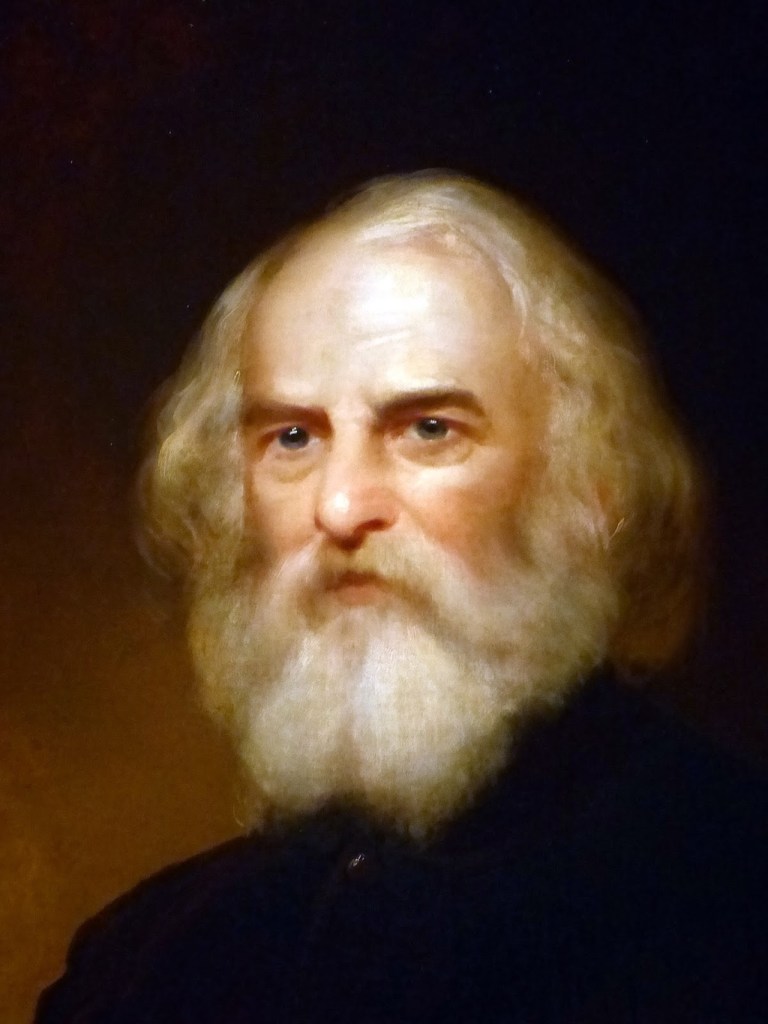
  • Paul Laurence Dunbar’s “Sympathy”

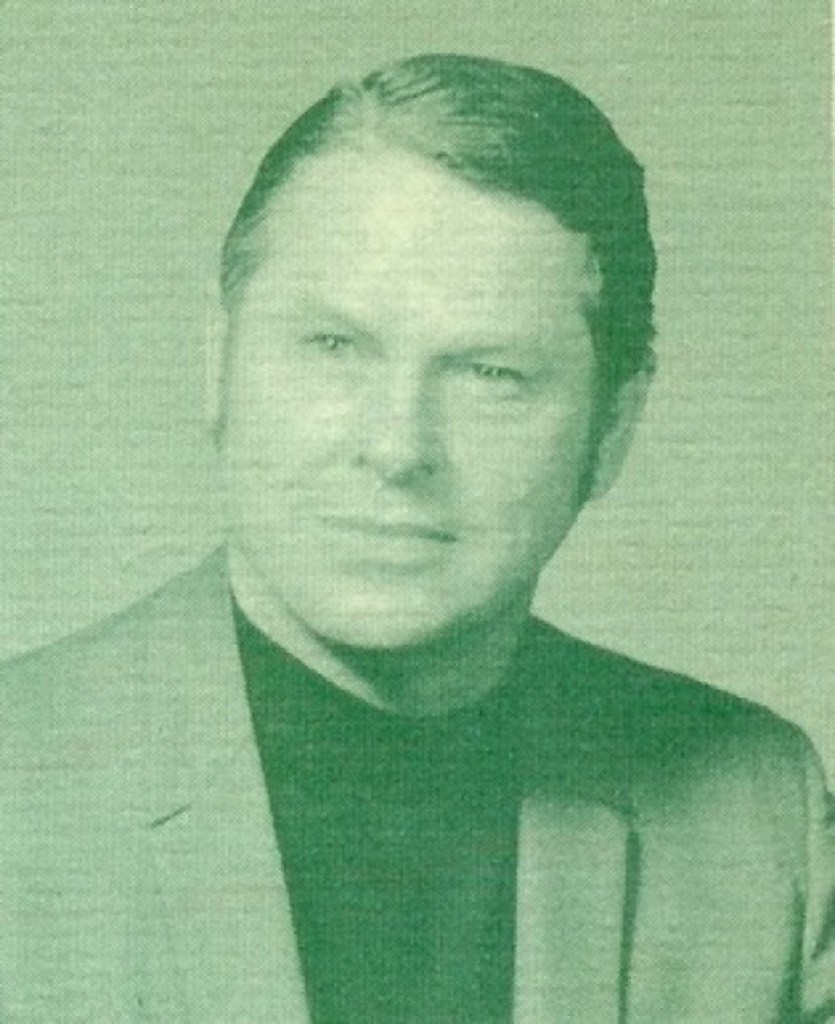
    Image:  Paul Laurence Dunbar

    Paul Laurence Dunbar’s “Sympathy”

    The speaker of Paul Laurence Dunbar’s “Sympathy” metaphorically elucidates, through the employment of a “caged bird,” the stifling condition of a human soul locked in a human body.

    Introduction with Text of “Sympathy”

    Although at the literal level, Paul Laurence Dunbar’s poem “Sympathy” commits the pathetic fallacy [1], it makes a useful and accurate statement about the confinement of the human soul as it becomes aware of its stifling condition of being “caged” in a physical body.

    In the fields of hard science, thinkers and researchers, who once insisted that the soul was only a religious construct or “an object of human belief” [2] are finally catching up with spiritual sages and avatars.

    Spiritual adepts from time immemorial in religious scripture from the major world religions, including Hinduism [3]  Christianity [4] and Islam [5], have explained that the soul, as a essential being of energy, is potentially capable of instantaneous flight to any location of its choice.  The soul grapples with the slow, earth-bound limitations put on it by living in a human body under cosmic delusion.

    Sympathy

    I know what the caged bird feels, alas!
    When the sun is bright on the upland slopes;
    When the wind stirs soft through the springing grass,
    And the river flows like a stream of glass;
    When the first bird sings and the first bud opes,
    And the faint perfume from its chalice steals—

    I know what the caged bird feels!
    I know why the caged bird beats his wing
    Till its blood is red on the cruel bars;
    For he must fly back to his perch and cling
    When he fain would be on the bough a-swing;
    And a pain still throbs in the old, old scars
    And they pulse again with a keener sting—

    I know why he beats his wing!
    I know why the caged bird sings, ah me,
    When his wing is bruised and his bosom sore,—
    When he beats his bars and he would be free;
    It is not a carol of joy or glee,
    But a prayer that he sends from his heart’s deep core,
    But a plea, that upward to Heaven he flings—
    I know why the caged bird sings!

    Maya Angelou recites 

    Commentary on “Sympathy”

    The speaker of Paul Laurence Dunbar’s “Sympathy” employs the metaphor of the “caged bird” to elucidate the machinations of the soul contending with a physical encasement.

    First Septet:  Unfortunate Knowledge

    I know what the caged bird feels, alas!
    When the sun is bright on the upland slopes;
    When the wind stirs soft through the springing grass,
    And the river flows like a stream of glass;
    When the first bird sings and the first bud opes,
    And the faint perfume from its chalice steals—

    The speaker begins by employing the pathetic fallacy, asserting that he understands the feelings of a bird in a cage.  He appends the interjection “Alas!”—indicating that that sensory knowledge is unfortunate.

    Scientifically, the fact remains that the assertion of knowing how the caged bird feels cannot be accurate. Science cannot ascertain that avians and humans “feel” in a comparable manner.  Nevertheless, poetic understanding can circumvent scientific facts, as they describe metaphorically ineffable knowledge.

    Dunbar’s employment of the pathetic fallacy ascends to a level from which it has the ability to elucidate the claimed truth.  Such an inference can be accepted as an appropriate comparison between a human soul incarnated in a human body and a “caged bird.”

    The speaker creates a catalogue of all the beauties of nature that a bird while caged cannot enjoy:  the bright sunshine, sloping hillsides, breezes through the new spring grass, streaming rivers running smooth and clear, the chirping songs of other avians, blossoms opening from buds emitting their “faint perfume.”

    Obviously, the bird in a cage must stay in a limited space; a creature bestowed by its Creator with the enviable capability of flying through the air becomes confined, limiting its movements drastically.

    The human heart and mind find it difficult to succumb to such limitations; thus, it seems nearly impossible to comprehend how the idea of placing bird in cage ever originated.  

    Still, birds in captivity do live longer [6]:  they are afforded a constant and safe food supply and remain protected from predators.  Nevertheless, the essence of human romanticism still craves and clings to the idea of a free ranging life for all living things.  

    To the very heart-core of humanity, it remains that living beings ought never become captives to other living beings.  And as that captivity is observed, only the dreadful aspect of such captivity pings in the consciousness humanity.

    Second Septet:  Bleeding for Freedom

    I know what the caged bird feels!
    I know why the caged bird beats his wing
    Till its blood is red on the cruel bars;
    For he must fly back to his perch and cling
    When he fain would be on the bough a-swing;
    And a pain still throbs in the old, old scars
    And they pulse again with a keener sting—

    In the second stanza, the speaker moves on to the direct negative affects of having a bird caged up, as he laments the activities of the poor avian.  This captive creature will “beat his wings” on the bars of the cage until they begin to bleed.

    After beating his wings to a bloody mess, the poor injured creature can move only onto his perch in the cage; he cannot seek solace in the open branches of nature to where the bird would rather flee.  

    The bird again suffers the wounds of incarceration in addition to the wounds of damaged, bloody wings.  The pain becomes ever more pronounced each time the bird tries to escape his confinement.  

    His memory of freedom may motivate him to continue to free himself, but his inability to access that freedom continues to force him to continue his attempts.  By nature, he must continue his bloody struggles against confinement.

    Third Septet:  Singing for Freedom

    I know why he beats his wing!
    I know why the caged bird sings, ah me,
    When his wing is bruised and his bosom sore,—
    When he beats his bars and he would be free;
    It is not a carol of joy or glee,
    But a prayer that he sends from his heart’s deep core,
    But a plea, that upward to Heaven he flings—
    I know why the caged bird sings!

    The speaker now reiterates what has grown into a refrain; the human speaker knows why this caged bird continually beats his wings and bruises his breast on the hard bars of confinement.  The speaker also understands why the avian sings.  

    The poor singing creature does not sing prompted by “joy or glee.”  His song is not a carol but is instead a prayer of supplication to the Creator for deliverance from his captivity. The bird’s song is, in fact, a plea that the avian is flinging “upward to Heaven.”  Yet, the speaker only implies the reason for that plea.  

    It should become perfectly obvious the reason that this bird is singing.  He hopes that his plea, which is a prayer, will urge the heart of his sympathetic Creator to bring the creature release from his painful incarceration.

    The speaker finalizes his claim, “I know why the caged bird sings!”  With this repeated sentiment, the speaker wishes to make clear his understanding that the poor bird’s frustration is his own.  The speaker thus is offering “Sympathy” to this poor, caged avian.

    The Historical Aberration of Slavery and the Body-Caged Soul

    Human history [7] is replete with despicable institutions of slavery—a people taking another people captive to procure their labor and resources in order to profit the enslavers.

    The Romans [8] enslaved vast portions of the globe under the Roman Empire.  Muslims [9]  enslaved expansive areas of the Middle-East in their empire building era, which included the Ottoman Empire.

    According to Thomas Sowell [10], Rose and Milton Friedman Senior Fellow at Stanford University’s Hoover Institution,

    To me the most staggering thing about the long history of slavery — which encompassed the entire world and every race in it — is that nowhere before the 18th century was there any serious question raised about whether slavery was right or wrong. In the late 18th century, that question arose in Western civilization, but nowhere else. (my emphasis added)

    The list of slave owning societies goes on and on, from Biblical times to the present day in some areas of the world.  However, because of the relatively recent proximity to the enslavement of Africans on plantations in the United States, many history-deficient thinkers associate slavery solely with the American experience [11].

    And the repercussions of that evil institution still vibrate throughout twenty-first century America.

    Because the poet Paul Laurence Dunbar was black, readers may find it difficult to accept that this poem can be elucidating any issue other than black life in  the USA—both before and after the Civil War.  That narrowly interpreted version of the poem, however, limits the poem’s profundity. 

    If a black individual is denied by law or custom the ability to choose and follow his own path in life, his life is then circumscribe in such as way as to liken him to a bird in a cage. That fact cannot be disputed. 

    However, Dunbar’s achievement with his poem “Sympathy”is so much greater than the interpretation of a black life in a cage will allow.  Such a limitation may be even considered racist, as well as reductionist.

    Dunbar’s “Sympathy” expresses a cosmic—not merely cultural—truth. All human souls find representation in that poem—not just the soul of  black individuals. Every human soul that becomes aware of itself encased in a human body feels like that bird in a cage.

    Each human soul suffers the same suffocating confinement that the bird experiences because the bird and the soul are created to be far ranging, throughout the limitless sky of life.

    The human soul has been created by the Divine Creator to be an immortal, eternal entity, with the power and the ability to experience the limitless expanse of Omnipresence. The soul is meant to exist everlastingly without any bindings of flesh or mental trammels that would cage it or hem it round.

    Dunbar’s “Sympathy” features a useful description of the soul lodged in a human body-cage, employing metaphorically the caged bird. The poem’s achievement deserves to be celebrated because of its omnipresent universality and not merely read through a racial, temporal prism of culture.

    The Late Maya Angelou’s First Memoir

    Likely the line, “I know why the caged bird sings,” will be immediately recognized by many readers as the title of the late Maya Angelou’s first memoir.  Maya Angelou gives credit to Abbey Lincoln Roach [12] for titling her book; yet, they both neglect to mention the Dunbar poem, about which one would expect not only a reference but an exact quotation featuring the line. 

    To her credit, Angelou did acknowledge the existence of Dunbar’s poem, and she read an excerpt from it in a PBS interview [13].   Angelou also composed a piece, which she titled, “Caged Bird” [14].  Angelou’s piece sports a sing-song rime and rhythm, pleasing to the ear but lacking the spiritual profundity that Dunbar’s far-superior poem achieves.

    Sources

    [1] Editors. “Pathetic Fallacy.”  LitCharts. Accessed May 16, 2022.

    [2] Robert Lanza, M.D., “Does the Soul Exist? Evidence Says ‘Yes’.”  Psychology Today.  December 21, 2011.

    [3]  Curators. “The Soul.”  Royal Path of Self-Realization.  Accessed September 12, 2023

    [4]  Curators. “50 Bible Verses about The Soul.”  The Bible: Knowing Jesus.  Accessed May 16, 2022.

    [5]  Editors. “Soul in Islamic Philosophy.” Muslim Philosophy.  Accessed September 12, 2023.

    [6]  John C. Mittermeier.  “The Surprisingly Complex Science of Bird Longevity.”  American Bird Converancy.  January 29, 2021.

    [7] Editors.  “Slave Societies.”  Encyclopedia Britannica. Accessed September 12, 2023.

    [8]   Mark Cartwright.  “Slavery in the Roman World.”  World History Encyclopedia.  November 1, 2013.

    [9]  Editors.  “Slavery in Islam.” BBC.  September 7, 2009.

    [10]  Thomas Sowell.  “Ending Slavery.”  Jewish World Review. February, 8, 2005.

    [11]  Curators.  “The Real History of Slavery by Thomas Sowell.”  Internet Archive.  Accessed September 12, 2023.

    [12]Editors. “I Know Why the Caged Bird Sings, page 1.” Read From Net.  Accessed September 12, 2023

    [13]  Curators. “Maya Angelou reads from Paul Dunbar’s poem “Sympathy”?.” PBS. Aired March 28, 2017.

    [14]  Maya Angelou.  “Caged Bird.”  Poetry Foundation.  Accessed September 12, 2023.

    Image:  Paul Laurence Dunbar  SCAD Museum of Art
  • D. H. Lawrence’s “Afternoon in School: The Last Lesson”

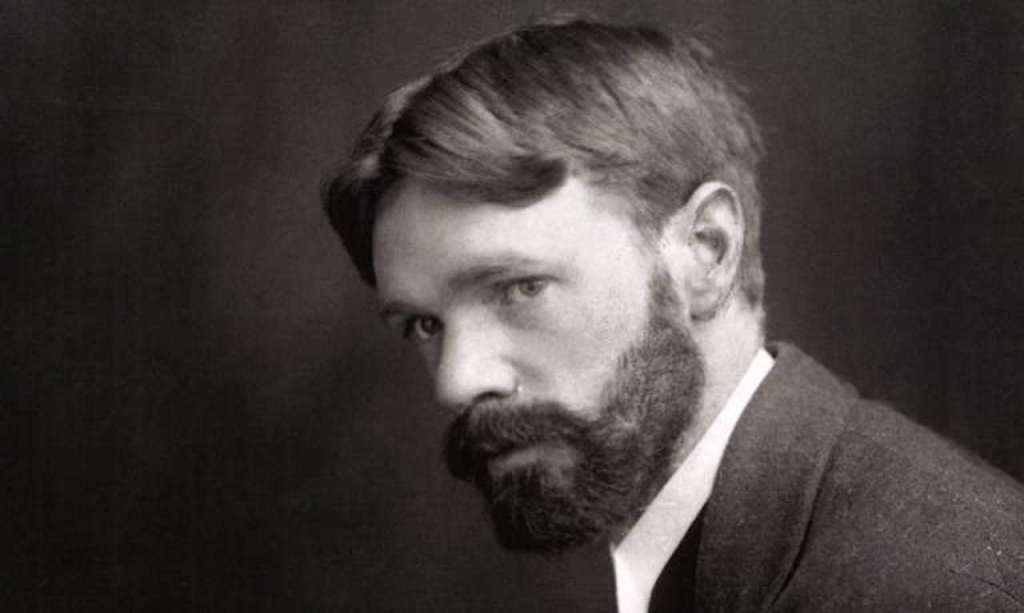
    Image:  D. H. Lawrence 

    D. H. Lawrence’s “Afternoon in School: The Last Lesson”

    In D. H. Lawrence’s “Afternoon in School: The Last Lesson,” an educator is dramatizing the lackluster performance of the students in the classroom.  The teacher’s strength is being sapped by many vain attempts to teach pupils who refuse to learn.

    Introduction with Text of “Afternoon in School: The Last Lesson”

    D. H. Lawrence’s published collection titled Love Poems includes the poem, “Afternoon in School: The Last Lesson,” in the section labeled “The Schoolmaster.”  Two other sections of the collection are “Love Poems” and “Dialect Poems.” The collection of poems, published in New York by Mitchell Kinerley, appeared in 1915.  

    Rime Scheme

    D. H. Lawrence’s “Afternoon in School: The Last Lesson” contains a handful of rimes scattered throughout the piece.  These rimes seem to occur accidentally, and therefore, do not rise to the status of an actual “rime scheme.”   These seemingly random rimes, however, do play well in suggesting the level ennui of the teacher.

    Alliteration

    In the first stanza of D. H. Lawrence’s “Afternoon in School: The Last Lesson,” the following lines feature what upon first impression might be considered “alliteration.” The initial consonants are capitalized, bolded, and italicized for easy recognition:

    Line 1:  When Will the bell ring, and end this Weariness?
    Lines 4 and 5: they Hate to Hunt, / I can Haul them
    Lines 6 and 7: to Bearthe Brunt / Of the Books
    Lines 7, 8, and 9:  Score / Of Several insults of blotted pages and Scrawl / Of Slovenly
    Line 11:  Woodstacks Working Weariedly

    Even though those lines feature repetition of initial consonantal sounds, the poetic purpose for the use of alliteration is not fulfilled in any of those consonant groups, and therefore that true poetic alliteration is not actually employed in this poem.

    Poets and other creative writers employ “alliteration” in both poetry and prose to create a musically rhythmic sound. Alliterative sound renders the flow of words a beauty which attracts the auditory nerves making the language both more enjoyable and more easily remembered.  

    None of this poetic purpose is fulfilled in Lawrence’s lines with the assumed alliteration, especially lines 4–5, 6–7,  and 7–8–9, which spill over onto the next line, thus separating the alliterative group.

    The Six-Stanza Draft of This Poem

    An earlier draft of Lawrence’s “Afternoon in School: The Last Lesson” featuring six stanzas appears on some internet sites.  The six-stanza version is far inferior to the masterfully revised two-stanza version, which is the focus of this commentary. 

    Readers who encounter that earlier six-stanza draft should compare it to the two-stanza, revised version.  They will then understand that the revised two-stanza version is more polished, succinct, and includes the useful metaphor of likening the soul to embers of a fire.  

    Afternoon in School: The Last Lesson

    When will the bell ring, and end this weariness?
    How long have they tugged the leash, and strained apart
    My pack of unruly hounds: I cannot start
    Them again on a quarry of knowledge they hate to hunt,
    I can haul them and urge them no more.
    No more can I endure to bear the brunt
    Of the books that lie out on the desks: a full three score
    Of several insults of blotted pages and scrawl
    Of slovenly work that they have offered me.
    I am sick, and tired more than any thrall
    Upon the woodstacks working weariedly.

    And shall I take
    The last dear fuel and heap it on my soul
    Till I rouse my will like a fire to consume
    Their dross of indifference, and burn the scroll
    Of their insults in punishment? – I will not!
    I will not waste myself to embers for them,
    Not all for them shall the fires of my life be hot,
    For myself a heap of ashes of weariness, till sleep
    Shall have raked the embers clear: I will keep
    Some of my strength for myself, for if I should sell
    It all for them, I should hate them –
    – I will sit and wait for the bell.

    Reading of “Afternoon in School: The Last Lesson”  

    Commentary on “Afternoon in School: The Last Lesson”

    The bored and labor-weary instructor in “Last Lesson of the Afternoon” is dramatizing the fatigue that has resulted from trying to teach lackluster pupils who resist learning.  He, thus, makes a vow to himself that he will simply stop the punishing of his own soul; he will stop wasting his time and effort, trying to teach those who do not want to learn.

    First Stanza: Student Dogs

    When will the bell ring, and end this weariness?
    How long have they tugged the leash, and strained apart
    My pack of unruly hounds: I cannot start
    Them again on a quarry of knowledge they hate to hunt,
    I can haul them and urge them no more.
    No more can I endure to bear the brunt
    Of the books that lie out on the desks: a full three score
    Of several insults of blotted pages and scrawl
    Of slovenly work that they have offered me.
    I am sick, and tired more than any thrall
    Upon the woodstacks working weariedly.

    The drama played out in this poem begins and concludes with the teacher asserting that he will simply sit and wait for the bell to ring—in a sense, he is likening his own behavior to his uninspired pupils. 

    The speaker metaphorically compares his lackluster students to dogs that pull hard and attempt to wrench free from a leash.  The students resist his attempt to teach them; thus, the dog metaphor describes their behavior. They have no desire to learn, and the teacher thus has no desire to continue trying to instruct them. 

    He has arrived at the notion that he can no longer in good faith continue this farce of teaching and learning that is not taking place. He wishes to free himself from the same situation that he thinks his students are undergoing.

    Apparently, this teacher does not possess the patience and love of the young required for working with students. He has become too weary, and he holds no empathy for these students who continue to turn in “slovenly work.” 

    He has come to loathe the job of having to correct the many badly written papers that confront him time and time again. He has become bone tired, and he complains that the whole situation serves neither him nor his students.

    The teacher then declares that it does not matter if they are able to write about what they lack interest in anyway. He finds the situation pointless. Bitterly, he complains repeatedly about the ultimate purpose of all this useless activity.

    Second Stanza: Unjustified Expenditure of Energy

    And shall I take
    The last dear fuel and heap it on my soul
    Till I rouse my will like a fire to consume
    Their dross of indifference, and burn the scroll
    Of their insults in punishment? – I will not!
    I will not waste myself to embers for them,
    Not all for them shall the fires of my life be hot,
    For myself a heap of ashes of weariness, till sleep
    Shall have raked the embers clear: I will keep
    Some of my strength for myself, for if I should sell
    It all for them, I should hate them –
    – I will sit and wait for the bell.

    The teacher then assumes that even if he commits all of his energy and efforts to these students, he cannot justify to himself the expenditure of his energy.  His soul is being wasted and tortured in attempting to teach the unteachable. He senses that he is being insulted by the students’ lack of motivation and desire to achieve.

    He has determined that there is no value in struggling to impart knowledge to a bunch of seemingly braindead urchins who possess not a shred of desire to acquire an education.  This teacher proclaims his intention to stop using up his soul power in vain attempts to teach these recalcitrant unteachables. 

    The speaker/teacher looks fate in the eye and finds that no matter what he does and no matter what they do, it all goes down to the same nothingness. Whether he teaches or not, it does not matter. Whether they learn or not, it does not matter.

    The weary teacher likens his life to “embers” of a fire that is slowly burning out; he insists that he will not allow himself to become a simple ash heap from burning himself out while attempting to accomplish the impossible.  If sleep will rake the embers clear, he will, instead, save his energy for more worthwhile activities that will actually enhance his life, instead of draining it of vitality. 

    He implies that as a teacher, he is obligated to assume responsibly with all his strength, but by doing so, he wastes himself on a futile mission. Thus, he makes a vow to himself to cease this purposeless activity.  Nothing he does can influence these poor souls, so why, he asks himself, should he continue to attempt it?  Why torture himself as he also tortures the undeliverable?

    The speaker/teacher can no longer care, if, in fact, he ever did. He feels that the effort is not worth it. He must move on. Vaguely yet surely, he is implying that teachers are born, not made.  The disgruntled teacher has arrived at his perfect, liberating thought: like the students who resist learning, he has become the teacher who will resist teaching. 

    He will “sit and wait for the bell,” just as his students are doing. If they do not want to learn, then he concludes, why should he want to teach?  He has finished with wasting his efforts on a futile activity. 

    The struggle between the unwilling students and the unenthusiastic teacher ends in a something of a stalemate. The image of them both sitting and waiting for the bell to ring signals a sad scenario of soulless sterility.

    🕉

    You are welcome to join me on the following social media:
    TruthSocial, Locals, Gettr, X, Bluesky, Facebook, Pinterest 

    🕉

    Share

  • Henry Wadsworth Longfellow’s “A Psalm of Life”

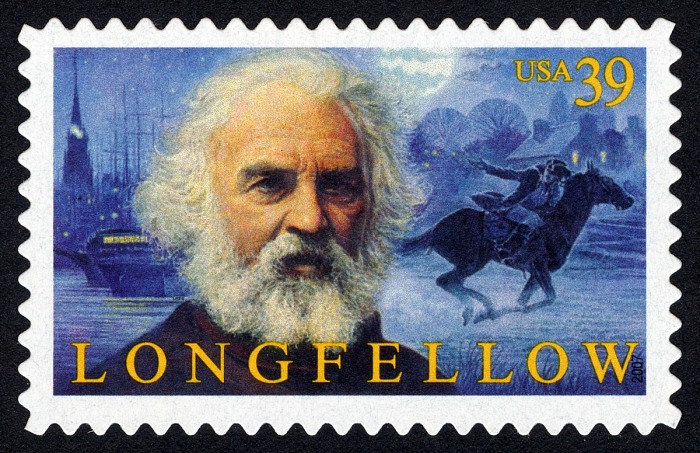
    Image: Henry Wadsworth Longfellow

    Henry Wadsworth Longfellow’s “A Psalm of Life”

    The speaker in Henry Wadsworth Longfellow’s “A Psalm of Life” is offering sage advice regarding the notion that each individual must face life with determination to be successful and fill one’s life with achievements.  The alternative renders the soul dead or simply slumbering without purpose.

    Introduction and Text of “A Psalm of Life”

    Henry Wadsworth Longfellow’s poetry was enormously popular and influential in his own lifetime. Today, most readers have heard his quotations so often that they have become “part of the culture.”

    For example, many readers will recognize the line, “Into each life some rain must fall,” and they will find that line in his poem called “The Rainy Day.” No doubt it is this Longfellow poem that helped spread the use of “rain” as a metaphor for the melancholy times in our lives.

    Longfellow was a careful scholar, and his poems reflect an intuition that allowed him to see into the heart and soul of his subject.  Critic and editor J. D. McClatchy says that Longfellow was “fluent in many languages,” and the poet translated such works as Dante’s The Divine Comedy.

    Other Longfellow translations include “The Good Shepherd” by Lope de Vega, “Santa Teresa’s Book-Mark” by Saint Teresa of Ávila, “The Sea Hath Its Pearls” by Heinrich Heine, and several selections by Michelangelo [1].

    The poet also achieved fame as a novelist with his novel Kavanaugh: A Tale. This work was touted by Ralph Waldo Emerson for its contribution to the development of the American novel.  Longfellow also excelled as an essayist with such works as “The Literary Spirit of Our Country,” “Table Talk,” and “Address on the Death of Washington Irving.”

    The poet’s highly spiritual poem “A Psalm of Life” offers a wise piece of advice regarding the issue of facing life with a proper positive attitude.  The alternative is to allow life to defeat one’s spirit which leads to failure and lack of achievement.  

    Longfellow has said that the poem is “a transcript of my thoughts and feelings at the time I wrote, and of the conviction therein expressed, that Life is something more than an idle dream” [2].

    A Psalm of Life

    What The Heart Of The Young Man Said To The Psalmist.

    Tell me not, in mournful numbers,
    Life is but an empty dream!
    For the soul is dead that slumbers,
    And things are not what they seem.

    Life is real! Life is earnest!
    And the grave is not its goal;
    Dust thou art, to dust returnest,
    Was not spoken of the soul.

    Not enjoyment, and not sorrow,
    Is our destined end or way;
    But to act, that each to-morrow
    Find us farther than to-day.

    Art is long, and Time is fleeting,
    And our hearts, though stout and brave,
    Still, like muffled drums, are beating
    Funeral marches to the grave.

    In the world’s broad field of battle,
    In the bivouac of Life,
    Be not like dumb, driven cattle!
    Be a hero in the strife!

    Trust no Future, howe’er pleasant!
    Let the dead Past bury its dead!
    Act,— act in the living Present!
    Heart within, and God o’erhead!

    Lives of great men all remind us
    We can make our lives sublime,
    And, departing, leave behind us
    Footprints on the sands of time;

    Footprints, that perhaps another,
    Sailing o’er life’s solemn main,
    A forlorn and shipwrecked brother,
    Seeing, shall take heart again.

    Let us, then, be up and doing,
    With a heart for any fate;
    Still achieving, still pursuing,
    Learn to labor and to wait.

    Sources for the Introduction

    [1] J. D. McClatchy, editor.  Longfellow: Poems and Other Writings. The Library of America. 2000.  Print.

    [2] Andrew Hilen, editor. The Letters of Henry Wadsworth Longfellow. Harvard University Press. 1966.

    Commentary on “A Psalm of Life”

    The speaker in Henry Wadsworth Longfellow’s “A Psalm of Life” presents life as an instrument for striving and achievement; he challenges individuals to think and peer beyond the certainty of death and to tirelessly work toward achieving worthwhile goals. 

    The poem urges readers to take inspiration from the lives of great men of high accomplishments, to act in the eternal now, and to leave behind a legacy (“footprints in the sands of time” ) that will inspire others to follow their own goals on their personal paths through life.

    First Stanza:  Confronting and Rebutting Pessimism

    Tell me not, in mournful numbers,
    Life is but an empty dream!
    For the soul is dead that slumbers,
    And things are not what they seem.

    In one of his most widely anthologized poems “A Psalm of Life,” Henry Wadsworth Longfellow creates a speaker who is openly and  directly confronting pessimism.  The command, “Tell me not, in mournful numbers,” immediately heralds a defiant tone, indicating that the speaker eschews the notion that life remains nothing more than an “empty dream.” 

    The speaker opines and asserts that a passive, slumbering soul is “dead” and that appearances can be deceiving—life’s true value is not found in relinquishment of duty or rolling over and playing dead.

    Second Stanza:  A Declaration of  Transcendental Life

    Life is real! Life is earnest!
    And the grave is not its goal;
    Dust thou art, to dust returnest,
    Was not spoken of the soul.

    In the second stanza, the speaker is declaring that life is real and earnest. He refutes the notion that the graveyard is life’s ultimate destinational goal.  By quoting the Biblical injunction, “dust thou art, to dust returnest,” he distinguishes an important, vital difference between the physical encasement and the eternal soul, which confirms that the true purpose of living the life of a human being is to transcend mortality.

    Third Stanza:  Defeating the Pairs of Opposites

    Not enjoyment, and not sorrow,
    Is our destined end or way;
    But to act, that each to-morrow
    Find us farther than to-day.

    The third stanza reveals that pleasure, sorrow, and other sense factors involving the pairs of opposites are also not the ultimate aim of existence. 

    Instead, the speaker calls for active duty and acceptance of responsibilities as the way to progressive evolution. Each day should fulfill some advancement in one’s goal, and not merely remain a repetition of mundane activities or a  stagnation of routine.

    Fourth Stanza:  Time Marches On, but Keep On Keeping On

    Art is long, and Time is fleeting,
    And our hearts, though stout and brave,
    Still, like muffled drums, are beating
    Funeral marches to the grave.

    The speaker then addresses the struggle between human desires and ambition and the relentless onslaught of time as it ticks on and on.  The metaphor of “muffled drums” beating “funeral marches to the grave” emphasizes drearily the inevitability that death continues to approach, yet the speaker continues to urge his fellow human beings to remain “stout and brave” despite these unsavory facts.

    Fifth Stanza:  Confronting the Battlefield of Life

    In the world’s broad field of battle,
    In the bivouac of Life,
    Be not like dumb, driven cattle!
    Be a hero in the strife!

    The speaker in the fifth stanza then turns to a military metaphor, likening life to a battlefield. He exhorts readers again not to remain passive or herd-like (“dumb, driven cattle”), but to always strive heroically as they meet life’s struggles and set-backs.

    Sixth Stanza:  The Importance of the Eternal Now

    Trust no Future, howe’er pleasant!
    Let the dead Past bury its dead!
    Act,— act in the living Present!
    Heart within, and God o’erhead!

    The speaker now is admonishing his fellows against both relying on the future or on dwelling on the past. The command to “act in the living Present” becomes cardinal to the poem’s message. 

    The phrase “Heart within, and God o’erhead!” states in no uncertain terms that inner determination and divine protection and guidance are major sources of the necessary strength required to meet all the challenges that life is apt to throw at the human mind and heart.

    Seventh Stanza:  Emulating the Example of Greatness

    Lives of great men all remind us
    We can make our lives sublime,
    And, departing, leave behind us
    Footprints on the sands of time;

    In the seventh stanza, the speaker is providing the example of great men to inspire the reader.  The lives of great men of the past and present clearly and convincingly demonstrate that it is possible for each human being to achieve greatness and to leave a lasting mark in the fields of endeavor to which they have been called.

    By keeping in clear sight worthy goals and determining to work assiduously to achieve those goal, any individual can surely succeed and leave “footprints on the sands of time.”   Those “footprints” are found in the histories of those great men and women who achieved their goals and gave to humankind tangible tools. 

    One thinks of such people as the Founding Fathers, who worked tirelessly to bestow on their country a document called the Constitution, which would allow the citizens to live in freedom instead of a monarchy or dictatorship.  Or one might bring to mind Thomas Edison with his inventions such as the light bulb that ordinary life uses on a daily basis. 

    Eighth Stanza:  Setting a Positive Example

    Footprints, that perhaps another,
    Sailing o’er life’s solemn main,
    A forlorn and shipwrecked brother,
    Seeing, shall take heart again.

    The speaker then expands on the idea of a life legacy to all others who may just need a boost to continue marching down their own chosen paths.  One need not aim for fame and renown to leave behind those “footprints.” 

    Whatever good one leaves behind can offer hope and encouragement to others who are struggling.  This notion emphasizes the importance of setting a positive example for others because one can never know who might benefit by learning about or seeing how hard we worked for our own goals.

    Ninth Stanza:  Perfecting a Stalwart Attitude 

    Let us, then, be up and doing,
    With a heart for any fate;
    Still achieving, still pursuing,
    Learn to labor and to wait.

    The speaker concludes his psalm with a solemn call to action. He urges his readers to remain focused on their goals and duties, and to remain resilient in facing adversity.  He wants his fellows to pursue their goal with great determination.

    He also wants humanity to nurture perseverance and patience.  He admonishes and urges his audience to be industrious and resilient, to pursue goals with determination, and to cultivate a stalwart attitude.  Each individual must”Learn to labor and to wait” as they continue to pursue and achieve.

    The Power of Longfellow’s Psalm

    Henry Wadsworth Longfellow’s “A Psalm of Life” remains a powerful musing on the human condition, as it performs its function through a pleasant meter, sophisticated rime-scheme, and motivating calls for action. 

    Longfellow’s psalm is not merely an harangue against mortality; it offers instead a set of instructions for deliberate living, as Henry David Thoreau insisted that we went to Walden’s Pond to learn to “live deliberately.”

    The psalm’s abiding appeal is that it has the ability to inspire readers to rise above despair and lethargy, to act courageously, and to hopefully leave a meaningful legacy of guideposts for coming generations.

    Image: Henry Wadsworth Longfellow   Commemorative Stamp

  • Seamus Heaney’s “Whatever You Say, Say Nothing”

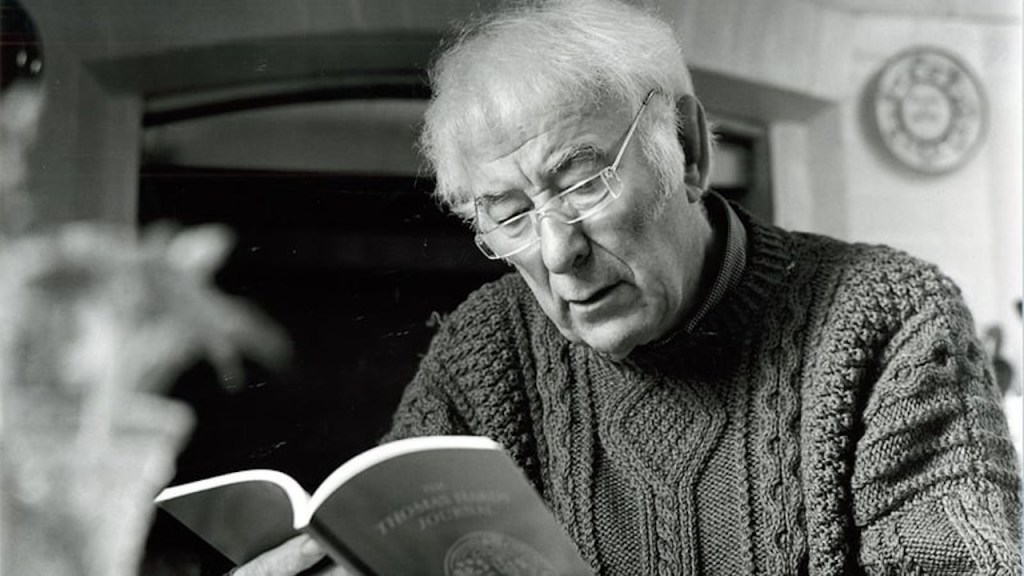
    Image:  Seamus Heaney

    Seamus Heaney’s “Whatever You Say, Say Nothing”

    Seamus Heaney’s “Whatever You Say, Say Nothing” is displayed in four parts. The piece dramatizes a rough-style free verse with an irregularly paced rime scheme. The speaker is describing the events surrounding the command for political operatives to be extremely careful with what they say.

    Introduction and Text of “Whatever You Say, Say Nothing”

    The title, “Whatever You Say, Say Nothing,” originates with the secretive activity of Northern Ireland’s rebel paramilitary that admonished its members with this demand. 

    Its purpose was to advise members to be extremely careful with what they say. If they speak to “civilians” at all, they should make their talk so small that it would reveal nothing about their activity. 

    Whatever You Say, Say Nothing

    I

    I’m writing just after an encounter
    With an English journalist in search of  ‘views
    On the Irish thing’.  I’m back in winter
    Quarters where bad news is no longer news,
    Where media-men and stringers sniff and point,
    Where zoom lenses, recorders and coiled leads
    Litter the hotels. The times are out of joint
    But I incline as much to rosary beads
    As to the jottings and analyses
    Of politicians and newspapermen
    Who’ve scribbled down the long campaign from gas
    And protest to gelignite and Sten,
    Who proved upon their pulses ‘escalate’,
    ‘Backlash’ and ‘crack down’, ‘the provisional wing’,
    ‘Polarization’ and ‘long-standing hate’.
    Yet I live here, I live here too, I sing,
    Expertly civil-tongued with civil neighbours
    On the high wires of first wireless reports,
    Sucking the fake taste, the stony flavours
    Of those sanctioned, old, elaborate retorts:
    ‘Oh, it’s disgraceful, surely, I agree.’
    ‘Where’s it going to end?’ ‘It’s getting worse.’
    ‘They’re murderers.’ ‘Internment, understandably …’
    The ‘voice of sanity’ is getting hoarse.

    II

    Men die at hand. In blasted street and home
    The gelignite’s a common sound effect:
    As the man said when Celtic won, ‘The Pope of Rome’s
    a happy man this night.’ His flock suspect

    In their deepest heart of hearts the heretic
    Has come at last to heel and to the stake.
    We tremble near the flames but want no truck
    With the actual firing. We’re on the make

    As ever. Long sucking the hind tit
    Cold as a witch’s and as hard to swallow
    Still leaves us fork-tongued on the border bit:
    The liberal papist note sounds hollow

    When amplified and mixed in with the bangs
    That shake all hearts and windows day and night.
    (It’s tempting here to rhyme on ‘labour pangs’
    And diagnose a rebirth in our plight

    But that would be to ignore other symptoms.
    Last night you didn’t need a stethoscope
    To hear the eructation of Orange drums
    Allergic equally to Pearse and Pope.)

    On all sides ‘little platoons’ are mustering-
    The phrase is Cruise O’Brien’s via that great
    Backlash, Burke-while I sit here with a pestering
    Drouth for words at once both gaff and bait

    To lure the tribal shoals to epigram
    And order. I believe any of us
    Could draw the line through bigotry and sham
    Given the right line, aere perennius.

    III

    “Religion’s never mentioned here”, of course.
    “You know them by their eyes,” and hold your tongue.
    “One side’s as bad as the other,” never worse.
    Christ, it’s near time that some small leak was sprung
    In the great dykes the Dutchman made
    To dam the dangerous tide that followed Seamus.
    Yet for all this art and sedentary trade
    I am incapable. The famous
    Northern reticence, the tight gag of place
    And times: yes, yes. Of the “wee six” I sing
    Where to be saved you only must save face
    And whatever you say, you say nothing.
    Smoke-signals are loud-mouthed compared with us:
    Manoeuvrings to find out name and school,
    Subtle discrimination by addresses
    With hardly an exception to the rule
    That Norman, Ken and Sidney signalled Prod
    And Seamus (call me Sean) was sure-fire Pape.
    O land of password, handgrip, wink and nod,
    Of open minds as open as a trap,
    Where tongues lie coiled, as under flames lie wicks,
    Where half of us, as in a wooden horse
    Were cabin’d and confined like wily Greeks,
    Besieged within the siege, whispering morse.

    IV

    This morning from a dewy motorway
    I saw the new camp for the internees:
    A bomb had left a crater of fresh clay
    In the roadside, and over in the trees
    Machine-gun posts defined a real stockade.
    There was that white mist you get on a low ground
    And it was déjà-vu, some film made
    Of Stalag 17, a bad dream with no sound.
    Is there a life before death? That’s chalked up
    In Ballymurphy. Competence with pain,
    Coherent miseries, a bite and sup,
    We hug our little destiny again.

    Commentary on “Whatever You Say, Say Nothing”

    The poem, “Whatever You Say, Say Nothing,” is displayed in four parts. The piece dramatizes a rough-style free verse with an irregularly paced rime scheme.

    First Part:  Harassed by Reporters

    I’m writing just after an encounter
    With an English journalist in search of  ‘views
    On the Irish thing’.  I’m back in winter
    Quarters where bad news is no longer news,
    Where media-men and stringers sniff and point,
    Where zoom lenses, recorders and coiled leads
    Litter the hotels. The times are out of joint
    But I incline as much to rosary beads
    As to the jottings and analyses
    Of politicians and newspapermen
    Who’ve scribbled down the long campaign from gas
    And protest to gelignite and Sten,
    Who proved upon their pulses ‘escalate’,
    ‘Backlash’ and ‘crack down’, ‘the provisional wing’,
    ‘Polarization’ and ‘long-standing hate’.
    Yet I live here, I live here too, I sing,
    Expertly civil-tongued with civil neighbours
    On the high wires of first wireless reports,
    Sucking the fake taste, the stony flavours
    Of those sanctioned, old, elaborate retorts:
    ‘Oh, it’s disgraceful, surely, I agree.’
    ‘Where’s it going to end?’ ‘It’s getting worse.’
    ‘They’re murderers.’ ‘Internment, understandably …’
    The ‘voice of sanity’ is getting hoarse.

    In Part I, the speaker reports that he is being harassed by reporters.  They seek information about how the Irish feel about their situation.  The intrusive reporters shove cameras and microphones into the faces of the locals.  They “litter” the localities and disturb the peace.    

    The speaker then describes the chaos of the political situation.  He claims that he leans more toward religion than politics, but because he is also a citizen he has to pay some attention to current events.

    The speaker portrays the situation as fractious and obstreperous.  As the citizens discuss the chaos, each has his own opinion.  But this speaker/observer notes that certain phrases keep popping up as the folks wonder how all the fighting and back-biting will end.   They all agree that the situation is disagreeable even full of disgrace.

    The speaker even hears his neighbors complaining and keening cries about murderers.  They seem to have no recourse to keep themselves safe.  There seems to be no one around them who possesses a healthy attitude.   

    The speaker’s attitude runs the gamut from amusement to sheer philosophical angst as he looks on the chaos.  He becomes Yeastian at times as he marvels, condemns, and pontificates. 

    Second Part:  After Centuries of War Zone Living

    Men die at hand. In blasted street and home
    The gelignite’s a common sound effect:
    As the man said when Celtic won, ‘The Pope of Rome’s
    a happy man this night.’ His flock suspect

    In their deepest heart of hearts the heretic
    Has come at last to heel and to the stake.
    We tremble near the flames but want no truck
    With the actual firing. We’re on the make

    As ever. Long sucking the hind tit
    Cold as a witch’s and as hard to swallow
    Still leaves us fork-tongued on the border bit:
    The liberal papist note sounds hollow

    When amplified and mixed in with the bangs
    That shake all hearts and windows day and night.
    (It’s tempting here to rhyme on ‘labour pangs’
    And diagnose a rebirth in our plight

    But that would be to ignore other symptoms.
    Last night you didn’t need a stethoscope
    To hear the eructation of Orange drums
    Allergic equally to Pearse and Pope.)

    On all sides ‘little platoons’ are mustering-
    The phrase is Cruise O’Brien’s via that great
    Backlash, Burke-while I sit here with a pestering
    Drouth for words at once both gaff and bait

    To lure the tribal shoals to epigram
    And order. I believe any of us
    Could draw the line through bigotry and sham
    Given the right line, aere perennius.

    The speaker is, however, also capable of spouting the same jeremiads that the Irish have spouted for centuries of residing in a war zone.  Understandably, they have become hardened and discouraged seeing people dying around them as homes are bombed and streets are littered with fire power and debris.   

    The speaker claims that a common sound is the explosion of  “gelignite.” He seems fascinated by the term “gelignite,” which he continues to spread liberally throughout his passages. 

    The speaker is also, however, dramatizing the socialist nature of the crowd and manages to fling off a worked-over cliché:  “cold as a witch’s tit” becomes “hind tit / Cold as a witch’s”—his colorful way of dramatizing the angst. 

    The speaker’s colorful portrayals lurch the poem forward, even if the politics gives it a decided lag, as he confounds the papal intrusion with emptiness.   The continued explosions, however, rip the night and rattle the people’s minds and hearts as well as the windows of their houses.

    Of course, the reader is aware that eventual outcomes depend totally upon which side one is shouting for.  The speaker philosophizes that all the citizens could find the correct solution given enough time and space.  

    They would likely be better at cutting through the bigotry and fake political posturing than those seeking personal gain at the expense of others.  Enough time and anything could be accomplished, the speaker wants to suggest. 

    Third Part:  The Resistance vs Authority

    “Religion’s never mentioned here”, of course.
    “You know them by their eyes,” and hold your tongue.
    “One side’s as bad as the other,” never worse.
    Christ, it’s near time that some small leak was sprung
    In the great dykes the Dutchman made
    To dam the dangerous tide that followed Seamus.
    Yet for all this art and sedentary trade
    I am incapable. The famous
    Northern reticence, the tight gag of place
    And times: yes, yes. Of the “wee six” I sing
    Where to be saved you only must save face
    And whatever you say, you say nothing.
    Smoke-signals are loud-mouthed compared with us:
    Manoeuvrings to find out name and school,
    Subtle discrimination by addresses
    With hardly an exception to the rule
    That Norman, Ken and Sidney signalled Prod
    And Seamus (call me Sean) was sure-fire Pape.
    O land of password, handgrip, wink and nod,
    Of open minds as open as a trap,
    Where tongues lie coiled, as under flames lie wicks,
    Where half of us, as in a wooden horse
    Were cabin’d and confined like wily Greeks,
    Besieged within the siege, whispering morse.

    In Part III, the poem’s title appears, warning that the members of the resistance should take great care not to tip their hand.  If they speak to anyone, they must keep their conversation as neutral as possible.

    They must be quiet, so quiet that a smoke-signal would sound louder.  They must keep their talk to a level of mum.  They must not reveal their plans to anyone lest some authority figure get hold of them.

    Fourth Part:  Is There Life Before Death?

    This morning from a dewy motorway
    I saw the new camp for the internees:
    A bomb had left a crater of fresh clay
    In the roadside, and over in the trees
    Machine-gun posts defined a real stockade.
    There was that white mist you get on a low ground
    And it was déjà-vu, some film made
    Of Stalag 17, a bad dream with no sound.
    Is there a life before death? That’s chalked up
    In Ballymurphy. Competence with pain,
    Coherent miseries, a bite and sup,
    We hug our little destiny again.

    In the final part, the speaker describes what he has seen.  He saw a crater in the middle of an internee camp.  The bomb has carved out the crater and the fresh clay has been spewed all over the trees and the road.

    The speaker then sums up his report with a statement filled with questions.  He wonders if there is life before death.  He also questions the notions of pain and competence.  It seems that life is filled with contradictions, that misery can be coherent stands in his mind as a blind trust.  

    If they are to enjoy their dinner, they must grasp their own destiny repeatedly as they wait for each bit of knowledge that will eventually lead them out of chaos. 

    Reading: Seamus Heaney reading Part 3 of his poem:  

  • Ella Wheeler Wilcox’s “The Queen’s Last Ride”

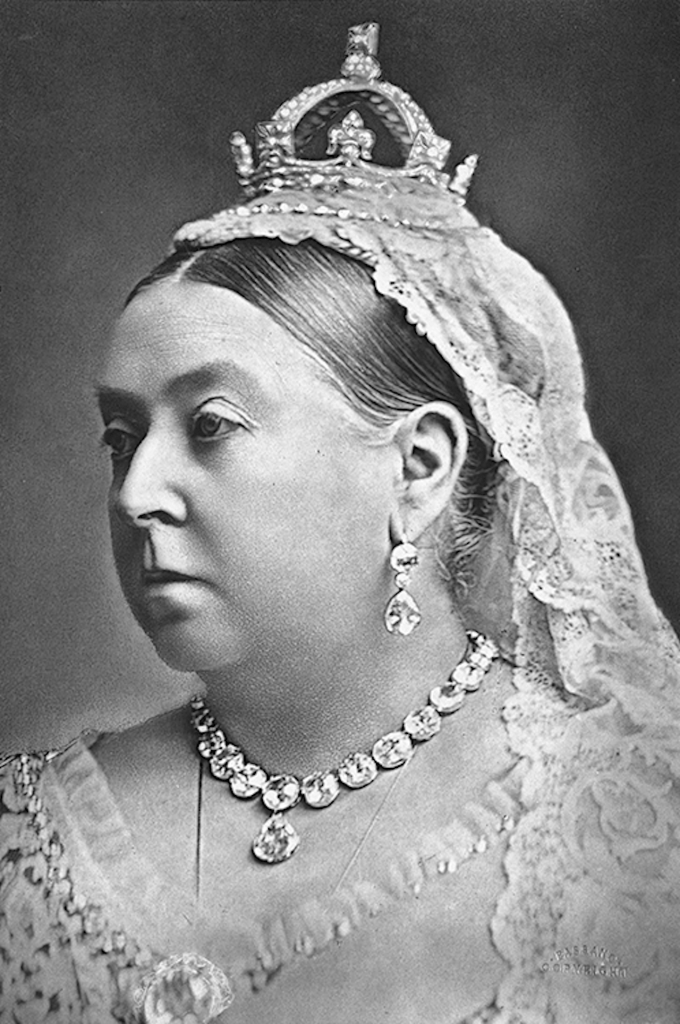
    Image:  Queen Victoria – National Portrait Gallery, London

    Ella Wheeler Wilcox’s “The Queen’s Last Ride”

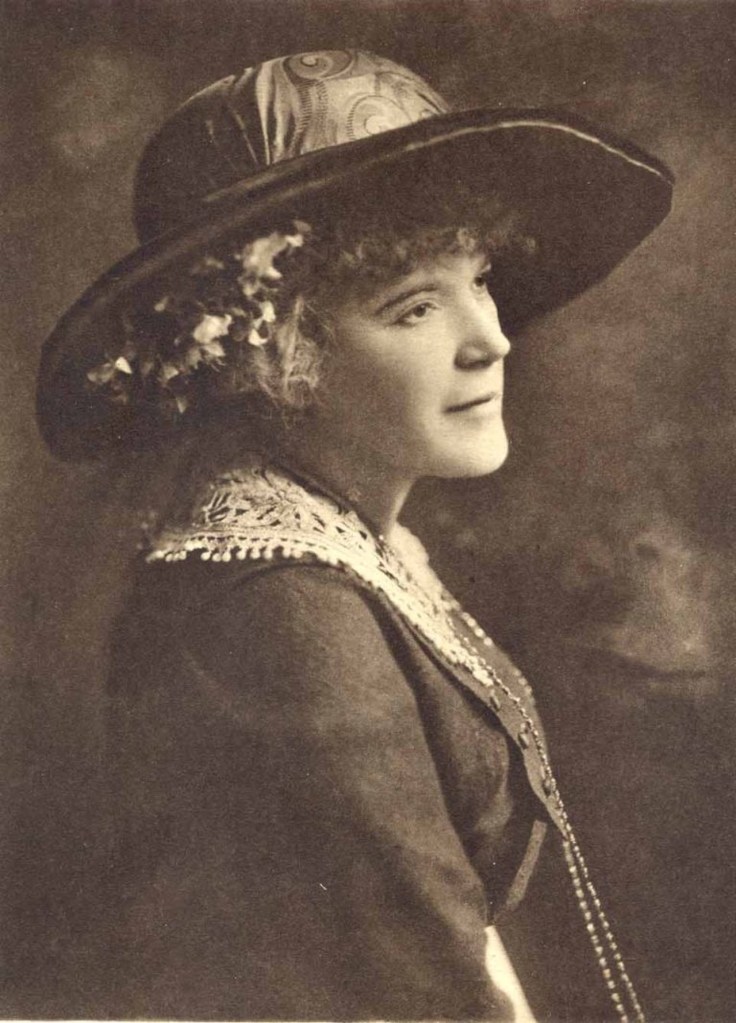
    As the subtitle to the elegy reveals, the poet composed her poem “The Queen’s Last Ride” on the day of Queen Victoria’s funeral on February 2, 1901. The poem retains it special status and a tribute to the queen, whose reign influenced an era.

    Introduction and Text of “The Queen’s Last Ride”

    With its colorful imagery and a strict formal tone, Ella Wheeler Wilcox’s elegy “The Queen’s Last Ride” reveals the serious nature of the occasion.  

    The poem furthermore presents clearly the results of the speaker’s having mused on the themes of mortality, a royal legacy, and spiritual transcendence from the physical level of being to the astral level of being.

    The Queen’s Last Ride

    (Written on the day of Queen Victoria’s funeral)

    The Queen is taking a drive to-day,
    They have hung with purple the carriage-way,
    They have dressed with purple the royal track
    Where the Queen goes forth and never comes back.

    Let no man labour as she goes by
    On her last appearance to mortal eye:
    With heads uncovered let all men wait
    For the Queen to pass, in her regal state.

    Army and Navy shall lead the way
    For that wonderful coach of the Queen’s to-day.
    Kings and Princes and Lords of the land
    Shall ride behind her, a humble band;
    And over the city and over the world
    Shall the Flags of all Nations be half-mast-furled,
    For the silent lady of royal birth
    Who is riding away from the Courts of earth,
    Riding away from the world’s unrest
    To a mystical goal, on a secret quest.

    Though in royal splendour she drives through town,
    Her robes are simple, she wears no crown:
    And yet she wears one, for, widowed no more,
    She is crowned with the love that has gone before,
    And crowned with the love she has left behind
    In the hidden depths of each mourner’s mind.

    Bow low your heads—lift your hearts on high—
    The Queen in silence is driving by!

    Reading of “The Queen’s Last Ride”

    Commentary on “The Queen’s Last Ride”

    On the same day as Queen Victoria’s funeral on February 2, 1901,Ella Wheeler Wilcox composed her most famous and likely most ambitious poem “The Queen’s Last Ride.” The poem is an elegy for the queen’s funeral procession, commingling sentiments of reverence as well as spirituality.

    Stanza 1: A Metaphoric Drive

    They have hung with purple the carriage-way,
    They have dressed with purple the royal track
    Where the Queen goes forth and never comes back.

    The first stanza introduces the poem’s main metaphor: the queen’s funeral procession is portrayed as a “drive,” a term which lightens the formal nature of a royal, state funeral, while it grants the occasion an intimate, personal tone. 

    The repetition of “purple” in “They have hung with purple the carriage-way” and “They have dressed with purple the royal track” implies the color’s two-fold importance as a symbol of royalty and also as a symbol of spirituality [1]. 

    In Victorian England, the color of purple was used to symbolize royal dignity [2]; that hue was often in evidence in ceremonies to signal authority but also to show reverence. 

    The color’s distinction in this poem emphasizes the grave and serious nature of the occasion; it utterly transforms the physical, earthly path of the procession into a symbolic “royal track” that leads to an eternal destination. The implication corresponds to the poem’s spiritual undertones.

    The phrase “Where the Queen goes forth and never comes back” heralds the theme of finality, signaling that death remains an inevitable departure. The word “never” rings in a stark closure, which contrasts mightily with the gentleness suggested by use of the term “drive”; thus a balance of tenderness and inevitability is accomplished.

    The speaker’s employment of the present tense—”The Queen is taking a drive to-day”—creates a feel of immediacy, connecting the poem to the historical moment of February 2, 1901, when the queen’s  funeral procession actually took place [3]. 

    This time-stamped anchoring invites readers to join and observe the event as it is occurring; this invitation encourages a shared sense of mourning. The stanza’s meter and rime scheme (AABB) parallels the orderly movement of the funeral  procession, as it emphasizes the ceremonial tone. 

    Furthermore, the actions stated by “They have hung” and “They have dressed” suggest a shared effort. It is thus implied that the nation—or even the world—is, in fact, participating in arranging this sacred path. 

    That shared agency sets the stage for the poem’s broader exploration of shared grief and reverence; such common sharing places the queen’s act of leaving her physical encasement (death) as a special moment of world-wide importance.

    The imagery of the “carriage-way” and “royal track” further reveals the Victorian fascination with ceremonial processions [4] as well as other public events. 

    Funerals of high-ranking official were very carefully orchestrated events; they were intended to mirror the social order of the community [5]. Wilcox’s speaker’s use of language clearly communicates the Victorian cultural customs. 

    Such subtle linguistic performance is responsible for transforming the physical route of funeral procession into a metaphorical, even metaphysical,  journey from the earthly to the spiritual level of being. 

    Finally, this stanza sets forth the poem’s somber tone while firmly grounding it in the cultural and historical state of Queen Victoria’s unusually long occupation of the throne, which ran through six decades (63 years and 7 months, from June 20, 1837, to her death on January 22, 1901) and left an enduring influence on British identity.

    Stanza 2:  Setting Laboring Duties Aside

    Let no man labour as she goes by
    On her last appearance to mortal eye:
    With heads uncovered let all men wait
    For the Queen to pass, in her regal state.

    The second stanza moves from description to command: it calls for the ceasing of labor and the displaying of respect.  No one should be giving attention to anything else as the queen passes by for the last time.

    This command demonstrates the Victorian era’s stress on decorum, especially during moments of national mourning. The laying aside of work was a common practice during royal funerals. The cessation of labor and other everyday duties was for demonstrating a community pause for the purpose of honoring the deceased. 

    The speaker’s command to stand with “heads uncovered” calls forth a traditional gesture of respect.  This custom became deeply ensconced in British customs of removing any head gear in the presence of royalty or during solemn occasions. 

    This act of removing headgear also carries a democratic undertone, which suggests that all men, regardless of class, remain united in moments of homage.

    The phrase “last appearance to mortal eye” deepens the poem’s musing on mortality; such musing frames death as a leaving off of human sense awareness. 

    The word “mortal” emphasizes the Queen’s humanness, an act that strips away her royal status to concentrate on her shared vulnerability with all other member of humanity. 

    This universal gesture is representative of Wilcoxian poetry in general, which often explores themes of human connection and spiritual continuity. The stanza’s imperative tone—”Let no man labour” and “let all men wait”—creates a sense of common obligation, inviting readers to join in the ritual of mourning. 

    The regular rime and meter continue to parallel the orderly nature of the procession, while the repetition of “let” reinforces the speaker’s authority in guiding the reader’s response.

    The second stanza also subtly critiques the busyness of modern life, a growing concern in Victorian literary arts. By calling for a pause in labor, the speaker elevates the queen’s passing above the everyday concerns of life, placing it as a moment of profound importance. 

    The phrase “her regal state” reinforces Victoria’s continued majesty, even in death, while the act of waiting suggests a open space between life and death, where the living honor those who have left their physical encasements. 

    This stanza thus serves as both a call to action and as a musing on the cultural practices that guided Victorian responses to death, particularly for a queen whose reign set the boundaries of an era.

    Stanza 3: A World-Wide Tribute

    Army and Navy shall lead the way
    For that wonderful coach of the Queen’s to-day.
    Kings and Princes and Lords of the land
    Shall ride behind her, a humble band;
    And over the city and over the world
    Shall the Flags of all Nations be half-mast-furled,
    For the silent lady of royal birth
    Who is riding away from the Courts of earth,
    Riding away from the world’s unrest
    To a mystical goal, on a secret quest.

    The third stanza expands the poem’s reach to a world-wide scale; it depicts a grand procession led by the “Army and Navy,” followed by “Kings and Princes and Lords of the land.” 

    This imagery accurately portrays the historical reality of Queen Victoria’s funeral, which was a carefully orchestrated event, attended by foreign dignitaries, including other European royalty, and further punctuated with military honors. 

    Victoria’s rôle as the “grandmother (or godmother) of Europe” [6], with family ties to many royal houses, transformed her funeral as a diplomatic as well as a ceremonial occasion. 

    The speaker’s introduction of “Kings and Princes” emphasizes the international extent of her influence, while at the same time portraying the Queen as a unifying figure whose impact had been felt beyond national borders.

    The image of “Flags of all Nations” at half-mast further emphasizes the international impact of Victoria’s death. The half-mast flag, a world-wide symbol of mourning, reveals the widespread grief that accompanied the end of her reign, which correlated with the height of British imperial power. 

    The speaker’s claim of “all Nations” suggests the joint act of homage, which reinforces the queen’s rôle as a symbol of stability in an era of rapid expansion of colonies and often uncertain international alliances. 

    The stanza’s language, with its expansive scope and formal diction, parallels the grandeur of the funeral itself, which was formal display of imperial power as well as national unity.

    The latter half of the stanza introduces a spiritual element, as it describes the queen as a “silent lady of royal birth” who is “riding away from the Courts of earth” to a “mystical goal, on a secret quest.” 

    This move from earthly to astral realms corresponds to the Victorian interest in spirituality and the afterlife, a theme  that can be observed in tWilcox’ oeuvre as well. 

    The word “silent” invokes both the solemn nature of the funeral and the ineffable nature of death, while “mystical goal” and “secret quest” suggest a transcendental purpose beyond human understanding. 

    These phrases subtly suffuse the queen’s final journey with an element of divine mystery, which places her death as a possible passage to a higher plane of existence. The stanza thus melds the specifics of history with universal themes, which reflects both the public exhibition of the funeral and the private, spiritual implications for immortality.

    Stanza 4:  Emphasizing Simplicity

    Though in royal splendour she drives through town,
    Her robes are simple, she wears no crown:
    And yet she wears one, for, widowed no more,
    She is crowned with the love that has gone before,
    And crowned with the love she has left behind
    In the hidden depths of each mourner’s mind.

    The fourth stanza juxtaposes the queen’s “royal splendour” with her simplicity, noting that “Her robes are simple, she wears no crown.” (Note the use of the British spelling “splendour.”)

    This contrast furthermore demonstrates the historical portrayal of Victoria in her later years, especially after the death of her husband (consort) Prince Albert of Saxe-Coburg and Gotha in 1861, at which time she adopted a subdued public image; she often publicly appeared n simple black attire [7]. 

    The speaker’s stress on simplicity humanizes the queen and signals that she remained humble. Humility was a Victorian ideal, especially in the facing of death. However, the speaker reimagines the crown by portraying it as a metaphorical one, “crowned with the love that has gone before” and “crowned with the love she has left behind.” 

    This two-fold crowning advances Victoria’s legacy well beyond any material wealth and speeds it on to an enduring emotional and spiritual force.

    The reference to “love that has gone before” likely alludes to Prince Albert, whose death profoundly influenced Victoria’s life as all as her reign. The “love she has left behind” reaches to the mourners, who remain carrying love in the “hidden depths of [their] mind.” 

    This phrase suggests a personal, introspective connection to the queen, emphasizing her rôle as a beloved figure, whose influence continues in shared memory. The imagery of a crown of love elevates the traditional symbol of royalty to a universal emblem of affection and loyalty, which emphasizes the poem’s theme of legacy.

    The stanza’s language, with its emphasis on simplicity and emotional depth, reveals the poet’s skill in combining the personal and the public. 

    The regular rime scheme continues to provide a sense of order, which parallels the structured and controlled nature of the funeral procession, while the shift to metaphorical imagery introduces a more introspective tone. 

    By focusing on the queen’s emotional legacy, the speaker emphasizes the human dimension of her passing, inviting readers to reflect on their own bond with the monarch.

    Final Couplet 5: A Silent Farewell

    Bow low your heads—lift your hearts on high—
    The Queen in silence is driving by!

    The final couplet serves as a touching conclusion, urging readers to bow their heads as in prayer but also to take the occasion into their hearts with great feeling.  This duality speaks to the poem’s balance of grief and hope, a distinctive feature of all successful elegiac poetry. 

    The act of bowing heads signifies humility, respect, and mourning, while lifting hearts suggests a transcendence of earthly, physical plane sorrow, joining with the spiritual undercurrents introduced earlier. 

    The phrase “The Queen in silence is driving by” reinforces the solemn nature of the moment, with “silence” symbolizing both the reverence of the mourners and the ineffable nature of death. The repetition of “driving” ties back to the first stanza, creating a cyclical structure that simulates the the motion of the procession’s journey.

    The stanza’s commanding tone engages readers directly, inviting them to join in the shared act of mourning. This call to action reveals the Victorian practice of community grieving, where public displays of sorrow reinforced social continuity. 

    The upward gesture of lifting hearts also corresponds to the Christian tenet of resurrection and eternal life, which was cardinal to Victorian commemoration culture. 

    By concluding with this hopeful note, the speaker transforms the queen’s death into a moment of spiritual upliftment, an act which strongly suggests that her legacy will endure beyond the physical level of being.

    Wilcox’s Mastery

    Ella Wheeler Wilcox’s “The Queen’s Last Ride” remains a masterful elegy that explores the interaction between public presentation and private grief. 

    As both a historical, literary artifact and a timeless musing on death, “The Queen’s Last Ride” exemplifies Wilcox’s ability to blend individual emotional depth with public formal elegance, offering a fitting tribute to a queen whose reign influenced the culture and customs of an era.

    Sources

    [1]  Editors. “Exploring Purple Symbolism: From Royalty to Spirituality.” The Symbolism Hub. 2025.

    [2]  Greg Gillespie.  “What Does Purple Mean in the Victorian Era?” Vintage Printable Art.  June 23, 2023.

    [3] Curators. “Funeral procession of Queen Victoria, February 1901.”  Todays History.  February 1, 2019.

    [4]  Herman du Toit, editor.  Pageants and Processions: Images and Idiom as Spectacle. Cambridge Scholars Publishing.  2009. pdf.

    [5] Curators. “The History of Funeral Processions.” Sunset.  April 1, 2024.

    [6]  Editors.  “The ‘Godmother of Europe’: Queen Victoria’s Family Ties across the Continent.”  Accessed May 31, 2025.

    [7] Liam Doyle. “Royal Heartbreak: Why Did Queen Victoria Wear Black?Express. September 17, 2020.

    Image:  Ella Wheeler Wilcox 

  • Sharon Olds’ “The Victims”

    Image: Sharon Olds – Illustration by Rebecca Clarke – The New Yorker

    Sharon Olds’ “The Victims”

    In her customary fashion, poetaster Sharon Olds offers up this deeply flawed, dishonest hit-piece, “The Victims,” which does little more for humanity than showcase a handful of stark images.  

    Introduction with Text of  “The Victims”

    According to noted poetry critic, Helen Vendler, Sharon Olds’ poetry comes across as  “self- indulgent, sensationalist, and even pornographic.”  And as former poet laureate Billy Collins averred:  Olds is “a poet of sex and the psyche” “infamous for her subject matter alone.”  

    And even though Collins attempted to add some faint praise, “but her closer readers know her as a poet of constant linguistic surprise,” those linguistic surprises consisting of stark images only function to undermine her attempt to produce any genuine poetry.

    Although “The Victims” is one of Olds’ least “pornographic” efforts, the piece clearly demonstrates egotistical self-indulgence and egregious sensationalism.  Such writing smacks more of loose-mused regurgitation than real cogitation on genuine emotion. 

    This unhappy piece consists of 26 uneven lines of free verse that sit in a lump chunk on the page and suffer from the customary Oldsian haphazard line breaks.

    The Victims

    When Mother divorced you, we were glad. She took it and
    took it in silence, all those years and then
    kicked you out, suddenly, and her
    kids loved it. Then you were fired, and we
    grinned inside, the way people grinned when
    Nixon’s helicopter lifted off the South
    Lawn for the last time. We were tickled
    to think of your office taken away,
    your secretaries taken away,
    your lunches with three double bourbons,
    your pencils, your reams of paper. Would they take your
    suits back, too, those dark
    carcasses hung in your closet, and the black
    noses of your shoes with their large pores?
    She had taught us to take it, to hate you and take it
    until we pricked with her for your
    annihilation, Father. Now I
    pass the bums in doorways, the white
    slugs of their bodies gleaming through slits in their
    suits of compressed silt, the stained
    flippers of their hands, the underwater
    fire of their eyes, ships gone down with the
    lanterns lit, and I wonder who took it and
    took it from them in silence until they had
    given it all away and had nothing
    left but this.

    Commentary on “The Victims”

    The piece breaks into two parts: the first is a description of how the speaker and her family felt way back a few decades when she was a child, and the second part jumps to what the speaker observes and thinks as an adult.

    First Movement:  Hindsight Sometimes Less Than 20/20 

    The speaker of the poem is an adult looking back at the break up of her family roughly around the time that her mother divorced her father. The speaker is addressing the father, telling him how glad she and the family were after the mother divorced the father.  

    The speaker and her siblings were glad because she “took it // in silence, all those years.” What she, and perhaps they, silently endured is left up to the reader to imagine, and that omission is a major flaw that leads the poem astray.  

    No two divorces are alike.  By leaving such an important motive to the imagination of the reader, the speaker weakens the thrust of her accusations against the father. The only hint of the father’s misdeeds is that he enjoyed three alcoholic beverages with his lunch.  

    Admittedly, that could present a problem, but by no means does it always do so.  Some individuals can handle a few drinks better than others, and the fact that the father seemed to have functioned in his job for a considerable period of time hints that he might have been competent in his job.

    On the other hand, the mother influenced her children in a grossly negative way, causing them to hate their father and wish him dead. 

    Apparently, the mother teaches her children to hate their father simply because he had three double bourbons for lunch or so we must assume because no other accusation is leveled against the poor man. 

    Maybe the father was a cruel alcoholic, who beat the mother and children, but there is no evidence to support that idea. And if that were the case, stark images of bruises and broken bones would surely have made an appearance in the little drama.

    The father was fired from his job, but only after the mother kicked him out. Would he have been able to keep his job to that point in his life, if he had been an out of control, cruel drunk?  Perhaps he became depressed and without purpose after being forced to leave his family and sank further into alcohol. 

    The gratuitous allusion to “Nixon’s helicopter,” carrying the newly resigned president from office, further inserts the nastiness of a political hit-piece, adding nothing to the drama except the suggestion that the family likely voted for Democrats.

    One has to wonder if the speaker and her fellow travelers would have “grinned” so readily, if a helicopter had lifted off the South Lawn carrying  Jimmy Carter or Bill Clinton.

    So the reader has no evidence that the father was guilty of anything, but the mother taught the kids to hate the father and wish for his death. The mother comes across as a less sympathetic character than the father.

    Second Movement:  Appalling Prejudice Revealed

    The speaker now begins her report on what she sees and how she thinks in her current life situation that has been tainted by her past.  She begins to observe homeless men sleeping in doorways. 

    It becomes clear that it is those homeless men in the doorway who are reminding the speaker of her father getting kicked out of their home and getting fired from his job.  

    The speaker then speculates about those men about whom readers can be sure she knows absolutely nothing.  She wonders about the lives of those homeless men, whom she calls “bums.”  

    She wonders if their families “took it” from those men the way her family supposedly took it from her father.  But again, the reader remains clueless about what it is the family “took.” 

    What an arrogant reaction! Without one whit of evidence that these “bums” did anything to anyone, the speaker simply presumes that they are like her father, who lost it all because of what he (and now they) supposedly did.

    But the reader still does not even know what the father did. They do know what the mother did; she taught her children to hate the father and wish him dead. 

    Stark, Colorful Images

    This poem, like many of Sharon Olds’ poems, offers some colorful descriptions.  The father’s business suits are rendered “dark / caresses” hanging the closet.  His shoes sport “black / noses //with their large pores.”  

    Those homeless men are name called “bums” because they are lying “in doorways.”  Their bodies are dehumanized and portrayed as “white / slugs.” 

    Those slugs shine “through slits” in compacted dirt, revealing their compromised hygiene after being homeless for a protracted length of time.  Their hands resemble “stained / flippers,” again dehumanized.  

    Their eyes remind this flippant speaker, who lacks compassion for her fellow human beings, of ships that have sunken with their “lanterns lit.”

    Would that all of those colorful images resided in a better place and without the lack of humanity this speaker reveals about herself.   Those “linguistic surprises,” however, function only to render the speaker and the so-called victims as the actual perpetrators of despicable acts.

    Although the speaker wishes to foist bad  behavior onto first her father and then onto homeless men, she cannot escape the rebuttal that she has failed to indict her father and that she knows nothing about those homeless “bums.” 

    This ugly piece remains questionable and appears to have been created solely for the purpose of showcasing a handful of stark, colorful images.

  • Angela Manalang Gloria’s “To the Man I Married”

    Image: Angela Manalang Gloria and her husband

    Angela Manalang Gloria’s “To the Man I Married”

    Angela Manalang Gloria’s poem “To the Man I Married” presents an extended metaphor in which the speaker likens her love for her husband to her existential dependence on the earth. 

    Introduction and Text of “To the Man I Married”

    This metaphor functions on both physical and spiritual levels, suggesting that her partner sustains and orients her life in a manner analogous to the natural elements necessary for survival.

    To the Man I Married

    I

    You are my earth and all the earth implies:
    The gravity that ballasts me in space,
    The air I breathe, the land that stills my cries
    For food and shelter against devouring days.

    You are the earth whose orbit marks my way
    And sets my north and south, my east and west,
    You are the final, elemented clay
    The driven heart must turn to for its rest.

    If in your arms that hold me now so near
    I lift my keening thoughts to Helicon
    As trees long rooted to the earth uprear
    Their quickening leaves and flowers to the sun,

    You who are earth, O never doubt that I
    Need you no less because I need the sky!

    II

    I cannot love you with a love
            That outcompares the boundless sea,
    For that were false, as no such love
            And no such ocean can ever be.
    But I can love you with a love
            As finite as the wave that dies
    And dying holds from crest to crest
            The blue of everlasting skies.

    Section I

    The first section of the poem adheres to the formal structure of the English (or Shakespearean) sonnet, consisting of three quatrains and a concluding couplet.

    First Quatrain: The Husband as Life-Sustaining Force

    You are my earth and all the earth implies:
    The gravity that ballasts me in space,
    The air I breathe, the land that stills my cries
    For food and shelter against devouring days.

    The speaker opens with a striking declaration, asserting her husband’s indispensable role in her existence by comparing him to the earth itself. The metaphor extends through a catalogue of essential elements: gravity, air, land, and sustenance. 

    These earthly necessities are paralleled with emotional and material support offered by her husband, suggesting that her survival—both physical and emotional—depends as much on him as it does on the natural world.

    Second Quatrain: He Provides Orientation and Final Rest

    You are the earth whose orbit marks my way
    And sets my north and south, my east and west,
    You are the final, elemented clay
    The driven heart must turn to for its rest.

    The second quatrain deepens the metaphor, portraying the husband as the source of direction and purpose in the speaker’s life. The reference to cardinal directions implies that her sense of order and orientation derives from their shared life. 

    The closing lines evoke mortality and rest, implying that just as the earth will eventually receive her physical body in death, her husband provides emotional and spiritual repose during life.

    Third Quatrain: Acknowledging Other Affections

    If in your arms that hold me now so near
    I lift my keening thoughts to Helicon
    As trees long rooted to the earth uprear
    Their quickening leaves and flowers to the sun,

    Here, the speaker introduces a subtle shift. While affirming her deep attachment to her husband, she also acknowledges her intellectual and spiritual aspirations. 

    The allusion to Helicon, a mountain sacred to the Muses in Greek mythology, evokes poetic inspiration. Her longing for the transcendent does not diminish her love for her husband; rather, it coexists with it, just as rooted trees still reach toward the sun.

    The Couplet: Coexistence of Earthly and Celestial Needs

    You who are earth, O never doubt that I
    Need you no less because I need the sky!

    The final couplet affirms the central thesis of the poem: the speaker’s need for transcendence (symbolized by “the sky”) does not negate her need for the grounding, stabilizing presence of her husband (symbolized by “the earth”). 

    Instead, both are essential, suggesting a balanced view of human experience as encompassing both the corporeal and the aspirational.

    Section II

    The second part of “To the Man I Married” diverges from the sonnet form and appears in two quatrains, adopting a more reflective tone. Here, the speaker qualifies the grand metaphors of the first section with a more tempered, realistic assessment of love.

    First Quatrain: Rejection of Hyperbolic Metaphors

    I cannot love you with a love
    That outcompares the boundless sea,
    For that were false, as no such love
    And no such ocean can ever be.

    In this stanza, the speaker resists the temptation to describe her love through hyperbole. She dismisses the comparison to the “boundless sea” as false, recognizing the limitations of human emotion and language. 

    This moment of self-awareness introduces a more grounded view of romantic love.

    Second Quatrain: Finite Love Reflecting the Infinite

    But I can love you with a love
    As finite as the wave that dies
    And dying holds from crest to crest
    The blue of everlasting skies.

    Although she renounces the oceanic metaphor, the speaker reintroduces the image of water through the wave. Unlike the sea, the wave is finite and mortal, yet it captures and reflects the sky’s infinity. 

    In this subtle turn, Gloria suggests that even within human limitations, love can embody and reflect transcendence.

  • William Butler Yeats’ “The Second Coming”

    Image: William Butler Yeats – Howard Coster – National Portrait Galley, London

    William Butler Yeats’ “The Second Coming”

    William Butler Yeats’ “The Second Coming” remains one of the most widely misunderstood poems of the 20th century. Many scholars and critics have failed to criticize the exaggeration in the first stanza and the absurd metaphor in the second stanza, which render a potentially fine poem a critical failure.

    Introduction with Text of “The Second Coming”

    Poems, in order to communicate, must be as logical as the purpose and content require. For example, if the poet wishes to comment on or criticize an issue, he must adhere to physical facts in his poetic drama. If the poet wishes to emote, equivocate, or demonstrate the chaotic nature of his cosmic thinking, he may legitimately do so without much seeming sense.

    For example, Robert Bly’s lines—”Sometimes a man walks by a pond, and a hand / Reaches out and pulls him in” / / “The pond was lonely, or needed / Calcium, bones would do,”—are ludicrous [1] on every level.   Even if one explicates the speaker’s personifying the pond, the lines remain absurd, at least in part because if a person needs calcium, grabbing the bones of another human being will not take care of that deficiency. 

    The absurdity of a lake needing “calcium” should be abundantly clear on its face.  Nevertheless, the image of the lake grabbing a man may ultimately be accepted as the funny nonsense that it is.   William Butler Yeats’ “The Second Coming” cannot be dismissed so easily; while the Yeats poem does not depict the universe as totally chaotic, it does bemoan that fact that events seem to be leading society to armageddon.

    The absurdity surrounding the metaphor of the “rough beast” in the Yeats poem renders the musing on world events without practical substance.

    The Second Coming

    Turning and turning in the widening gyre   
    The falcon cannot hear the falconer;
    Things fall apart; the centre cannot hold;
    Mere anarchy is loosed upon the world,
    The blood-dimmed tide is loosed, and everywhere   
    The ceremony of innocence is drowned;
    The best lack all conviction, while the worst   
    Are full of passionate intensity. 

    Surely some revelation is at hand;
    Surely the Second Coming is at hand.   
    The Second Coming! Hardly are those words out  
    When a vast image out of Spiritus Mundi
    Troubles my sight: somewhere in sands of the desert   
    A shape with lion body and the head of a man,   
    A gaze blank and pitiless as the sun,   
    Is moving its slow thighs, while all about it   
    Reel shadows of the indignant desert birds.   
    The darkness drops again; but now I know   
    That twenty centuries of stony sleep
    Were vexed to nightmare by a rocking cradle,  
    And what rough beast, its hour come round at last,   
    Slouches towards Bethlehem to be born? 

    Commentary on “The Second Coming”

    William Butler Yeats’ “The Second Coming” remains one of the most widely anthologized poems in world literature.  Yet its hyperbole in the first stanza and ludicrous “rough beast” metaphor in the second stanza result in a blur of unworkable speculation.

    First Stanza: Sorrowful over Chaos

    Turning and turning in the widening gyre   
    The falcon cannot hear the falconer;
    Things fall apart; the centre cannot hold;
    Mere anarchy is loosed upon the world,
    The blood-dimmed tide is loosed, and everywhere   
    The ceremony of innocence is drowned;
    The best lack all conviction, while the worst   
    Are full of passionate intensity. 

    The speaker is sorrowing over the chaos of world events that have left in their wake many dead people.  Clashes of groups of ideologues have wreaked havoc, and much blood shed has smeared the tranquil lives of innocent people who wish to live quiet, productive lives. 

    The speaker likens the seemingly out of control situation of society to a falconer losing control of the falcon as he attempts to tame it.   Everyday life has become chaotic as corrupt governments have spurred revolutions.  Lack of respect for leadership has left a vacuum which is filled with force and violence.

    The overstated claim that “The best lack all conviction, while the worst / Are full of passionate intensity” should have alerted the poet that he needed to rinse out the generic hyperbole in favor of more accuracy on the world stage.  

    Such a blanket, unqualified statement, especially in a poem, lacks the ring of truth:  it simply cannot be true that the “best lack all conviction.”  Surely, some the best still retain some level of conviction, or else improvement could never be expected.  

    It also cannot be true that all the worst are passionate; some of the worst are likely not passionate at all but remain sycophantic, indifferent followers.  Any reader should be wary of such all-inclusive, absolutist statements in both prose and poetry.  

    Anytime a writer subsumes an entirety with the terms “all,” “none,” “everything,” “everyone,” “always,” or “never,” the reader should question the statement for its accuracy.  All too often such terms are signals for stereotypes, which produce the same inaccuracy as groupthink.

    Second Stanza: What Revelation?

    Surely some revelation is at hand;
    Surely the Second Coming is at hand.   
    The Second Coming! Hardly are those words out  
    When a vast image out of Spiritus Mundi
    Troubles my sight: somewhere in sands of the desert   
    A shape with lion body and the head of a man,   
    A gaze blank and pitiless as the sun,   
    Is moving its slow thighs, while all about it   
    Reel shadows of the indignant desert birds.   
    The darkness drops again; but now I know   
    That twenty centuries of stony sleep
    Were vexed to nightmare by a rocking cradle,  
    And what rough beast, its hour come round at last,   
    Slouches towards Bethlehem to be born? 

    The idea of “some revelation” leads the speaker to the mythological second coming of Christ.  So he speculates on what a second coming might entail.  However, instead of “Christ,” the speaker conjures the notion that an Egyptian-Sphinx-like character with ill-intent might arrive instead.  

    Therefore, in place of a second coming of godliness and virtue, as is the purpose of the original second coming, the speaker wonders:  what if the actual second coming will be more like an Anti-Christ?  What if all this chaos of bloodshed and disarray has been brought on by the opposite of Christian virtue?

    Postmodern Absurdity and the “Rough Beast”

    The “rough beast” in Yeats’ “The Second Coming” is an aberration of imagination, not a viable symbol for what Yeats’ speaker thought he was achieving in his critique of culture. If, as the postmodernists contend, there is no order [2] in the universe and nothing really makes any sense anyway, then it becomes perfectly fine to write nonsense. 

    Because this poet is a contemporary of modernism but not postmodernism [3], William Butler Yeats’ poetry and poetics do not quite devolve to the level of postmodern angst that blankets everything with the nonsensical.  Yet, his manifesto titled A Vision is, undoubtedly, one of the contributing factors to that line of meretricious ideology. 

    Hazarding a Guess Can Be Hazardous

    The first stanza of Yeats’ “The Second Coming” begins by metaphorically comparing a falconer losing control of the falcon to nations and governments losing control because of the current world disorder, in which “[t]hings fall apart; the centre cannot hold.” 

    Political factions employ these lines against their opposition during the time in which their opposition is in power, as they spew forth praise for their own order that somehow magically appears with their taking the seat of power.

    The poem has been co-opted by the political class so often that Dorian Lynskey, overviewing the poem in his essay, “‘Things fall apart’: the Apocalyptic Appeal of WB Yeats’s The Second Coming,” writes, “There was apparently no geopolitical drama to which it could not be applied” [4].

    The second stanza dramatizes the speaker’s musing about a revelation that has popped into his head, and he likens that revelation to the second coming of Christ; however, this time the coming, he speculates, may be something much different.  

    The speaker does not know what the second coming will herald, but he does not mind hazarding a dramatic guess about the possibility.   Thus, he guesses that the entity of a new “second coming” would likely be something that resembles the Egyptian sphinx; it would not be the return of the Christ with the return of virtue but perhaps its opposite—vice. 

    The speaker concludes his guess with an allusion to the birth of such an entity as he likens the Blessed Virgin Mother to the “rough beast.”   The Blessèd Virgin Mother, as a newfangled, postmodern creature, will be “slouching toward Bethlehem” because that is the location to which the first coming came.  

    The allusion to “Bethlehem” functions solely as a vague juxtaposition to the phrase “second coming” in hopes that the reader will make the connection that the first coming and the second coming may have something in common.  The speaker speculates that at this very moment wherein the speaker is doing his speculation some “rough beast” might be pregnant with the creature of the “second coming.” 

    And as the time arrives for the creature to be born, the rough beast will go “slouching” towards its lair to give birth to this “second coming” creature: “its hour come round at last” refers to the rough beast being in labor. 

    The Flaw of Yeats’ “The Second Coming” 

    The speaker then poses the nonsensical question: “And what rough beast, its hour come round at last, / Slouches towards Bethlehem to be born?”   In order to make the case that the speaker wishes to make, these last two lines should be restructured in one of two ways: 

    And what rough beast, its hour come round at last,
    Slouches towards Bethlehem to give birth? 

     or

    And what rough beast’s babe, its time come at last,
    Is in transport to Bethlehem to be born?

    An unborn being cannot “slouch” toward a destination.  The pregnant mother of the unborn being can “slouch” toward a destination.   But the speaker is not contemplating the nature of the rough beast’s mother; he is contemplating the nature of the rough beast itself.  

    The speaker does not suggest that the literal Sphinx will travel to Bethlehem. He is merely implying that a Sphinx-like creature might resemble the creature of the second coming.  Once an individual has discounted the return of Jesus the Christ as a literal or even spiritual fact, one might offer personal speculation about just what a second coming would look like. 

    It is doubtful that anyone would argue that the poem is dramatizing a literal birth, rather than a spiritual or metaphorical one.    It is also unreasonable to argue that the speaker of this poem—or Yeats for that matter—thought that the second coming actually referred to the Sphinx.   A ridiculous image develops from the fabrication of the Sphinx moving toward Bethlehem. Yeats was more prudent than that. 

    Exaggerated Importance of Poem

    William Butler Yeats composed a manifesto to display his worldview and poetics titled A Vision, in which he set down certain tenets of his thoughts on poetry, creativity, and world history.   Although seemingly taken quite seriously by some Yeatsian scholars, A Vision is of little value in understanding either meaning in poetry or the meaning of the world, particularly in terms of historical events.  

    An important example of Yeats’ misunderstanding of world cycles is his explanation of the cyclical nature of history, exemplified with what he called “gyres” (pronounced with a hard “g.”)  Two particular points in the Yeatsian explanation demonstrate the fallacy of his thinking:

    1. In his diagram, Yeats set the position of the gyres inaccurately; they should not be intersecting but instead one should rest  one on top of the other:  cycles shrink and enlarge in scope; they do not overlap, as they would have to do if the Yeatsian model were accurate. 

    Image :  Gyres – Inaccurate Configuration from A Vision

    Image:  Gyres –  Accurate Configuration

    2.  In the traditional Second Coming, Christ is figured to come again but as an adult, not as in infant as is implied in Yeats’ poem “The Second Coming.”

    Of great significance in Yeats’ poem is the “rough beast,” apparently the Anti-Christ, who has not been born yet.  And most problematic is that the rough beast is “slouch[ing] towards Bethlehem to be born.”  The question is, how can such a creature be slouching if it has not yet been born?  There is no indication the speaker wishes to attribute this second coming fiasco to the mother of the rough beast.

    This illogical event is never mentioned by critics who seem to accept the slouching as a possible occurrence.  On this score, it seems critics and scholars have lent the poem an unusually wide and encompassing poetic license.

    The Accurate Meaning of the Second Coming

    Paramahansa Yogananda has explained in depth the original, spiritual meaning of the phrase “the second coming”[5] which does not signify the literal coming again of Jesus the Christ, but the spiritual awakening of each individual soul to its Divine Nature through the Christ Consciousness.  

    Paramahansa Yogananda summarizes his two volume work The Second Coming of Christ: The Resurrection of the Christ Within You:

    In titling this work The Second Coming of Christ, I am not referring to a literal return of Jesus to earth . . . 

    A thousand Christs sent to earth would not redeem its people unless they themselves become Christlike by purifying and expanding their individual consciousness to receive therein the second coming of the Christ Consciousness, as was manifested in Jesus . . . 

    Contact with this Consciousness, experienced in the ever new joy of meditation, will be the real second coming of Christ—and it will take place right in the devotee’s own consciousness. (my emphasis added)

    Interestingly, knowledge of the meaning of that phrase “the second coming” as explained by Paramahansa Yogananda renders unnecessary the musings of Yeats’ poem “The Second Coming”and most other speculation about the subject. Still, the poem as an artifact of 20th century thinking remains an important object for study. 

    Sources

    [1]  Linda Sue Grimes.  “Robert Bly’s ‘The Cat in the Kitchen’ and ‘Driving to Town Late to Mail a Letter’.”  Linda’s Literary Home. December 24, 2025. 

    [2]  David Solway.  “The Origins of Postmodernitis.”  PJ Media.  March 25, 2011.  

    [3]  Linda Sue Grimes. “Poetry and Politics under the Influence of Postmodernism.” Linda’s Literary Home.  Accessed December 3, 2025.

    [4]  Dorian Lynsey. “‘Things fall apart’: the Apocalyptic Appeal of WB Yeats’s The Second Coming.” The Guardian.  May 30, 2020.

    [5]  Editors. “The Truth Hidden in the GospelsSelf-Realization Fellowship. Accessed October 27, 2023.

  • Malcolm M. Sedam’s “The Hill Maiden”

    Image: Malcolm M. Sedam

    Malcolm M. Sedam’s “The Hill Maiden”

    In his poem, “The Hill Maiden,” Malcolm M. Sedam has created a speaker voicing cheerful vaticination that his teenage angst-ridden protégé will one day shed her nihilism and burst into life affirming joy.  The best teachers are those who can inspire as well as instruct their students.  This poem represents a stellar example of that kind of inspirational educator.

    Introduction and Text of “The Hill Maiden”

    Malcolm M. Sedam‘s “The Hill Maiden” features a teacher dramatizing his observations about a particularly inquisitive but melancholy student.  His ultimate purpose is to instill in the student the notion that she will ultimately be able to appreciate the life that she seems to disdain.

    The poem plays out in three movements of unrimed stanzas.  This organization allows the speaker to touch lightly on the physical reality of the subject but then move more intensely to the mental and finally the spiritual possibility of the subject’s inclinations. 

    Because the speaker can only infer certain facts about his student, the poem remains metaphorically and imagistically implicative  instead of unequivocally literal.  For example, the teacher has no exact idea what the student does at her home; thus he places her in an image of “moving among the phantom rocks of reverie.”  

    The teacher/speaker knows from the negativity the student has been expressing to him that she mentally resides among hardness that causes her to imagine that things are worse than they are.

    Mentally she travels like a rocket through her ghostly musings until night fall when she sleeps but likely gets little rest, accounting for the nervous, brittle energy the educator perceives in his young scholar.

    Likely the adolescent girl is simply suffering the turbulence of teenage angst through which most individuals of that age group must travel.  But the best, most effective teachers are those who can inspire as well as instruct their students.  This poem represents a stellar example of that kind of inspirational educator.

    As an educator, Mr. Malcolm M. Sedam wrote poems to many of his students, always with the goal of inspiring them to high thinking and plain living.  Mr. Sedam once said he felt that his function as an educator was “to kick the dirt off of his students.”  By that he meant to help them see life more clearly without the fog of stereotypes, prejudice, and provincialism.  

    The Hill Maiden

    (for Linda, over in the valley)

    She is moving among the phantom
    Rocks of reverie hurtling through
    By mind bringing days into darkness
    Where the pull of growth rings
    The heart and spurs the soul

    Where her wish strings questions
    In the mysterious night of snow
    Bringing a promise that only the hills can sing.
    Her smile waits behind a frown of swords
    That rend her days

    In the melancholy of the deep valley
    Of dreams where she lives among flowers
    Gathering her moods that may bring peace
    Once the sorrow of lonely distance
    Has closed on hands—

    The same hands that Zen-like reach
    To answer each knock at the door of her heart
    Broken to be mended by tender time.
    Her mind is speeding through a galaxy
    Of intensity where the blood rose

    Will speak to her frozen will
    All forgiven by decree in warring winds—
    The nature of her plight?
    Without wings
    She will still spring into flight.

    Commentary on “The Hill Maiden”

    Malcolm M. Sedam’s “The Hill Maiden” features a teacher, who is also a practicing poet, dramatizing his observance of an inquisitively intelligent but extremely melancholy student.  

    His only purpose is to instill in the student the notion that she will ultimately be able to appreciate the life that she seems now to disdain.

    First Movement:  Dreaming amongst the Hills

    She is moving among the phantom
    Rocks of reverie hurtling through
    By mind bringing days into darkness
    Where the pull of growth rings
    The heart and spurs the soul

    Where her wish strings questions
    In the mysterious night of snow
    Bringing a promise that only the hills can sing.

    The speaker begins by placing the object of his speculative musing in an image that implies sharp but dream-like rigidity.  Rocks appear ghost-like through a dream-scape as they bewilder the mental musings of the young girl with whom the mature educator is engaging both as a poetry mentor as well as a teacher.

    Teachers often counsel their students who seek out their advice and direction even in issues outside of the academic sphere as well as within the educational arena.  Those teachers who must essentially become counselors will either direct the students to other professionals, or they will attempt to offer their own gleanings from their life experience.

    The teacher in this poem demonstrates that he is the latter kind of teacher, and he has given the mind of the young student some serious analysis.  Thus he not only describes her environment, but he also speculates and then foreshadows what is likely to befall the girl once she is able to erase her current adolescent fog.

    Until that glowing day arrives, however, the speaker sees that the girl’s maturing process weighs heavily on her heart and soul.  She is full of questions brought on by the mystery of life.  

    The “snow” that brings beauty as it covers the hills also brings bitter cold and slippery conditions the cause the girl to miss the music that her hill-valley home affords her.

    By pointing out these images of beauty and placing them a context of mystery and difficulty, the speaker hopes to allow his charge to contemplate the possibility that life is real and offers hope to those who search its reaches with an open mind and cheerful heart.

    Second Movement:  Frowning Swords

    Her smile waits behind a frown of swords
    That rend her days

    In the melancholy of the deep valley
    Of dreams where she lives among flowers
    Gathering her moods that may bring peace
    Once the sorrow of lonely distance
    Has closed on hands—

    The same hands that Zen-like reach
    To answer each knock at the door of her heart
    Broken to be mended by tender time.

    The speaker has observed the teen’s unwillingness to show a cheerful countenance.   Her bitterness “behind a frown of swords” likely often gives the mentor a shudder at the likelihood that the girl is suffering intensely.

    No doubt, he believes that at this point in her life, she should be dancing merrily among “flowers” and allowing her sorrowful moods to dissolve in the “deep valley of dreams.”

    But again, he returns to prognostication that once she has learned to fold her hands in wonder and listen to the love that knocks at the “door of her heart,” her melancholy will be rendered null and void as “tender time” moves her through the rough spots of her anguish.

    Again, the speaker chooses beauty—”flowers gathering”—to balance the “frown.”  He offers the image of the heart’s door to harmonize with the environment that will reach her with the “Zen-like” hands of mystery and the ultimate gain-of-wisdom.  

    Like a Zen koan, the riddle of life will remain before her as she continues to search for answers to her perplexing questions.  

    Third Movement:  Springing into Flight

    Her mind is speeding through a galaxy
    Of intensity where the blood rose

    Will speak to her frozen will
    All forgiven by decree in warring winds—
    The nature of her plight?
    Without wings
    She will still spring into flight.

    Finally, the speaker makes his most striking vaticination after asserting that his young charge has a strong mind but also a tender heart that is quick to show intense emotion.  

    That the “blood rose” will speak itself undeniably to the girl’s will portends that all of her negativity and nihilism will be “forgiven” as she continues to navigate through the conflicts that life bestows on all searching souls.

    Then the speaker offers the question that he is likely very content to answer.  The frustrating situation that befuddles the young scholar’s mind and heart has been implied by all the imagery that went before, but then what will eventually be the path chosen by and/or for the student?   

    She will be able to navigate through all the trials and tribulations as a bird that so easily lifts it wings to the wind and takes to the air through the abundant space of sky.

    The speaker is not so naïve as to insist that such navigation will come easily, but he does remain assured that the path will open to the girl, and she will become willing to follow it. Thus the speaker can conclude affirmatively that “Without wings, she will still spring into flight.”

    Offered by a beloved and well-respected mentor, such faith in a young scholar’s ability to navigate life is bound to redound in blessings, despite the pitfalls and rough spots that her life, no doubt, will place sphinx-life before her mind and heart.

  • Sterling A. Brown’s “Southern Cop”

    Image:  Sterling A. Brown  Academy of American Poets

    Sterling A. Brown’s “Southern Cop”

    This commentary on Sterling A. Brown’s “Southern Cop” offers an alternative reading to the sycophantic interpretation given by postmodernists who subscribe to the prevailing ideology of victimhood.  The curse of identity politics soft censors such stances; thus they remain rare.

    Introduction with Text of “Southern Cop”

    While the speaker in Sterling Brown’s “Southern Cop” seems to be exposing and rebuking racism, he actually engages in racism himself. This widely anthologized poem features the following scene: A rookie cop named Ty Kendricks has shot a man who was running out of an alley. 

    The poem does not report the reason that the man was running nor the reason that the police officer happened to be at the scene.  However, the report clearly states that the man’s reason for running was not because of any guilt on his part. It is useful to keep in mind that the caveat stating that one is innocent until proven guilty applies to all citizens—even those who are running.

    The speaker of the poem purports to represent the outraged citizenry, whose emotional reaction is so powerful that the speaker must turn to verbal irony in order to convey that outrage. The outraged speaker assumes that his audience is as offended as he is and thus will agree with his statements on all levels. 

    But the speaker also assumes that a racist audience will take him literally, even though brushing away the irony would demonstrate the utter bankruptcy of his intentionally ludicrous exhortations. The ideas that because Ty Kendricks was a rookie in the process of proving himself and that the citizenry should decorate him for shooting an innocent man cannot be taken literally.

    The ideas of proving manhood and decorating a cop for shooting an innocent man are clearly absurd. The ideas are absolutely preposterous, yet the speaker does not suggest the course of action society should take in dealing with Ty Kendricks, the rookie cop, who likely made a mistake, without consideration of the race of the victim. 

    What does this rookie cop deserve? Who is to decide? An angry, disorderly mob? The speaker’s emotion becomes magnified with each stanza from the first line of the first stanza that would appear not to be ironic at all but quite literal to the first line of the last stanza that is undoubtedly filled with irony. 

    About half-way through the poem the irony becomes obvious. And the speaker then sets center stage his ironic barbs in his effusion.

    Southern Cop

    Let us forgive Ty Kendricks.
    The place was Darktown. He was young.
    His nerves were jittery. The day was hot.
    The Negro ran out of the alley.
    And so Ty shot.

    Let us understand Ty Kendricks.
    The Negro must have been dangerous.
    Because he ran;
    And here was a rookie with a chance
    To prove himself a man.

    Let us condone Ty Kendricks
    If we cannot decorate.
    When he found what the Negro was running for,
    It was too late;
    And all we can say for the Negro is
    It was unfortunate.

    Let us pity Ty Kendricks.
    He has been through enough,
    Standing there, his big gun smoking,
    Rabbit-scared, alone,
    Having to hear the wenches wail
    And the dying Negro moan.

    Commentary on “Southern Cop”

    This irony-filled drama portrays a bundle of rage and racism. The attitude of the speaker weighs in at least as heavily as the actual event that the speaker is decrying.

    Stanza 1:  Forgiveness Is Good

    Let us forgive Ty Kendricks.
    The place was Darktown. He was young.
    His nerves were jittery. The day was hot.
    The Negro ran out of the alley.
    And so Ty shot

    The first stanza opens with the speaker seemingly quite controlled as he suggests that he and his milieu “forgive” the young cop named Ty Kendricks. The invocation of the Christian value of forgiveness offers no clue that the speaker would not, in fact, forgive this rookie cop. Of course, the biblical injunction demands that  trespassers be forgiven.

    However, in this particular scenario, what is the speaker suggesting be forgiven? He is urging forgiveness of Ty Kendricks the rookie cop who shot an man because he was running out of an alley.  The speaker does not reveal the reason that the man was running, nor what caused the cop to shoot; the speaker is simply asking that the rookie be forgiven. 

    Stanza 2:  Understanding Is Also a Good Thing

    Let us understand Ty Kendricks.
    The Negro must have been dangerous.
    Because he ran;
    And here was a rookie with a chance
    To prove himself a man.

    Next, the speaker asks that he and his listeners “understand” the rookie cop. Of course, they should try to understand both the perpetrators of crime and the enforcers of law. Otherwise, justice cannot prevail without understanding. 

    But then the speakers’s audience is apprised of what they are being commanded to forgive and to understand: the man was surely dangerous/guilty because he was running.  Not only that, the rookie Ty Kendricks now has the opportunity to show himself to be a man.

    Because running does not equal guilt, and the notion of proving manhood by shooting someone is ludicrous, it now becomes clear that the speaker is engaging in verbal irony to portray his true message.  This speaker does not, in fact, want his audience to forgive nor understand Ty Kendricks, the rookie cop.

    What does the speaker hope to accomplish with his use of irony? He intends to brand Ty Kendricks a racist and elicit sympathy for the man shot by this cop. Of course, the man who was shot deserves sympathy, but the speaker offers no evidence that Ty Kendricks was a racist cop.  

    That fact that Kendricks shot a man running out of an ally does not equal racism, despite the fact that the running man was black. All things being equal, Ty Kendricks would likely have shot any man of any race in this situation.

    Stanza 3:  Condoning the Killing of an Innocent Man

    Let us condone Ty Kendricks
    If we cannot decorate.
    When he found what the Negro was running for,
    It was too late;
    And all we can say for the Negro is
    It was unfortunate.

    Condoning this apparently despicable act of a rookie cop shooting an innocent victim becomes a near surreal request.  But because the speaker is engaging in irony, he does not intend his listeners to “condone” but instead to “condemn” the rookie cop.

    The cop’s reaction of shooting the running man became just another “unfortunate” event by the time the cop learned the reason for the running.  But what is the efficacy of forgiving, condoning, and decorating a cop for a bad shoot? 

    The ironic use of the terms means that the speaker is in reality suggesting that his listeners continue to hold a grudge and to condemn cops, even those who might have mistakenly shot someone. The intensity of this verbal irony may possibly encourage speculation that the speaker is even attempting to instigate rioting, burning buildings, and killing other cops.

    Stanza 4:  Pity for All Involved

    Let us pity Ty Kendricks.
    He has been through enough,
    Standing there, his big gun smoking,
    Rabbit-scared, alone,
    Having to hear the wenches wail
    And the dying Negro moan.

    Finally, the speaker appears to return to some semblance of humanity, asking that he and his listeners “pity” this poor rookie cop.  Of course, the cop deserves pity. Or more accurately, he deserves sympathy and support. Taking the life of a fellow human being causes emotional damage—even to the most well-adjusted veteran law enforcement officer.

    And taking a human life constitutes a serious, deeply spiritual offense against Creation and the Creator, even though that Creator has arranged Creation to require such an offense at times. Even man’s law allows for self-defense.

    But notice that the speaker is still in his own racist venue, as he applies his final acerbic barb of irony: he does not, in fact, want his audience to pity that rookie cop. Instead, he wants his readers to pity only the family of the deceased man: they stood there crying and moaning the loss of their loved one. 

    The speaker asks us to pity the rookie only because that rookie has to listen to that crying and moaning.  By stating ironically that the pity should apply to Ty Kendricks and contrasting his situation with that of the deceased man and his family, the speaker is implying that any loss suffered by the cop remains negligible.

    But suffering cannot be compared and contrasted especially in such a callous way. There is no way of calculating and weighing the suffering on either side: it’s a lose-lose situation.

    Ultimately, there is no pity for Kendricks from this speaker and his ilk—only a hollow attempt to portray the cop as a criminal, not simply a human being who has made a mistake.

    The Issue of Racism in the Poem

    A cursory reading of Sterling A. Brown’s “Southern Cop” may result in the assumption of the stereotypical view that cops shoot young black men because they are black.  An example of such a reading includes the following:

    Sterling A. Brown’s poem “Southern Cop” published in 1936 is an extremely powerful piece of poetry in American history because it cuts at the heart of racism in America. Unfortunately, many of the points Brown makes are still relevant today. In fact, this poem could have been written after any number of recent events, Ferguson perhaps being the most well known, and it would be as pertenant (sic) as ever. [1]

    The claim that this poem parallels the situation in “Ferguson” is patently false.  The shooting in the poem “Southern Cop” and the shooting in Ferguson have nothing in common.  In the “Ferguson” shooting, the race of the cop who shot and the race of the victim are known.  In “Southern Cop,” the race of the cop can only be assumed—and then only prejudicially.

    The “Hands up, don’t shoot!” claim, following the shooting of black teenager Michael Brown by white cop Darren Wilson in Ferguson, Missouri, in August 2014, has been debunked repeatedly; yet its basic impetus has refused to be abated [2] [3] [4] [5].   In fact, the only racism discoverable in the poem”Southern Cop” comes from the speaker, who identifies the victim as a “Negro” but does not ever mention the race of the cop who shot the “Negro.”  

    Because the stereotype of white racist cops, especially southern cops, is so ingrained in the culture, the speaker feels no need to identify the race of Ty Kendricks, who could as likely have been of any race. But because of the assumption that the cop is white, the speaker demonstrates his own racism by his utter contempt; he is deliberately attempting to pit the race of the shooting victim against the race of the shooter. 

    The speaker demonstrates sympathy only for the “Negro” while he attempts to promote hatred and contempt for the cop. 

    Sources

    [1]  WESSWIDEREK.  “Southern Cop.” ENGL 213: Modernist Lit & Culture.  November 14, 2016.

    [2]  Noah Rothman.  “‘Hands up, Don’t Shoot’: The Myth That Refuses to Fade.”  Hotair.  December 03, 2014.

    [3]  Andrew C. Mccarthy. “Progressive Mythography.”  National Review.  November 29, 2014.

    [4]  Nick Gass.  “‘Hands up, Don’t Shoot’ Ranked One of Biggest ‘Pinocchios’ of 2015.”  Politico.  December 14, 2015.

    [5]  William A. Jacobson.  “Reminder: “Hands up, Don’t Shoot” Is a Fabricated Narrative from the Michael Brown Case.”    LI: Legal Insurrection.  June 4, 2020.

    Note on Usage

    Before the late 1980s in the United States, the terms “Negro,” “colored,” and “black” were accepted widely in American English parlance. 

    While the term “Negro” had started to lose it popularity in the 1960s, it wasn’t until 1988 that the Reverend Jesse Jackson began insisting that Americans adopt the phrase “African American.”  The earlier more accurate terms were the custom at the time that Sterling A. Brown was writing.

    Suggestion for Students Writing Papers on Sterling A. Brown’s “Southern Cop” and Other Sensitive Issues

    The following advice applies to students attending most American colleges and universities.  Exceptions are Hillsdale College and a few others, where the First Amendment and other constitutional protections are still operative.

    The current prevailing societal emphasis on identity and the politics of racial victimhood insures that my critical stance in this commentary is deemed unacceptable and will be at least soft censored, if not completely canceled.

    So if you take such a stance in your classes, you are likely to be graded down or even censored—at best.  At worst, you may be labeled racist, even expelled.   

    Therefore, please consider your options when writing on sensitive subjects like this one.  Know your professors’ biases and use caution in crossing them.

    However, the best outcome is that you are in position to take legal action against those professors who violate your constitutional rights. With such endeavors, I wish you all the best success.